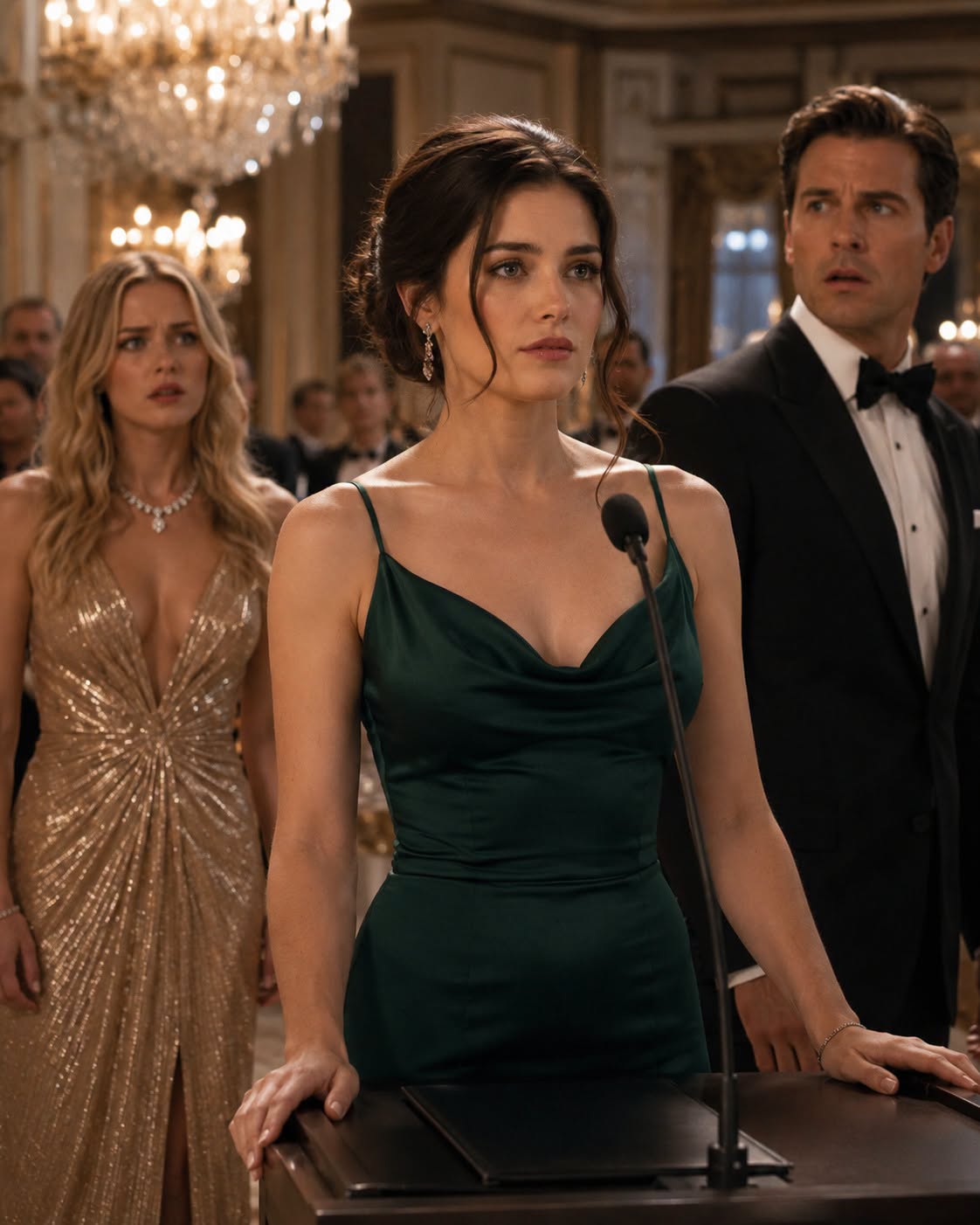
HE GAVE HIS MISTRESS THE KEYS TO MY BEACH HOUSE. BY SUNSET, SHE WAS STANDING AT THE GATE WITH THE POLICE.


HE GAVE HIS MISTRESS THE KEYS TO MY BEACH HOUSE. BY SUNSET, SHE WAS STANDING AT THE GATE WITH THE POLICE.
Preview

At 9:12 on a bright Saturday morning, my husband’s mistress posted a video of herself walking barefoot through my oceanfront home in Montauk.

She lifted a crystal glass toward the camera, smiled from my bedroom balcony, and said, “I finally have the life I deserve.”

My husband, Daniel, appeared behind her wearing the linen shirt I had bought him in Milan.

He wrapped one arm around her waist and laughed.

“Looks better with you in it,” he said.

I watched the video twice from the breakfast room of our Manhattan penthouse.

Then I saved it.

I saved the next video of Vanessa opening the windows in my mother’s bedroom.

I saved the one where she ran her fingers across my grandmother’s piano and called it “old-fashioned.”

I saved the clip where Daniel used a brass key to unlock the private east wing.

And I saved the final video, where Vanessa appeared wearing my late mother’s sapphire necklace.

She tilted her young face toward the sunlight and whispered, “Some women are born into beautiful things.”

Then she smiled.

“Other women know what to do with them.”

I did not scream.

I did not call Daniel.

I did not leave an angry comment beneath the video.

At twenty-eight, I had already learned that rage was most useful when no one could see it coming.

I set my coffee down, smoothed the sleeve of my ivory silk blouse, and called the property manager.

“Graham,” I said, “please activate the gate protocol.”

He went silent for half a second.

“Mrs. Whitmore, Mr. Hale is at the house.”

“I know.”

“There’s a woman with him.”

“I know that too.”

I opened my laptop and forwarded him copies of the deed, the trust documents, and the notice revoking Daniel’s access to the property.

Then I sent the security footage showing Vanessa entering my mother’s locked room.

“Do not confront them,” I said. “Call East Hampton Town Police and send the officers the files.”

Graham cleared his throat.

“You may want to come out here.”

“No.”

My reflection stared back at me from the darkened laptop screen.

I had a smooth, youthful face people often mistook for gentle, long dark hair pinned at the nape of my neck, clear green eyes, and the kind of quiet beauty Daniel had once called expensive.

He had stopped understanding that word.

“Let them finish filming,” I said.

“Mrs. Whitmore…”

“Yes?”

He lowered his voice.

“The police are already waiting at the gate.”

PART ONE: THE WOMAN IN MY BEDROOM

Daniel Hale had married me four years earlier beneath a ceiling of white orchids at the New York Public Library.

Every society page described him as a brilliant hotel entrepreneur and me as the elegant daughter of the late Caroline Whitmore.

The photographs made us look inevitable.

Daniel was tall, polished, and handsome in the controlled way American ambition often was.

He knew how to shake a billionaire’s hand without appearing impressed and how to remember the first name of every waiter in a room when powerful people were watching.

When we met, he owned one struggling boutique hotel in Brooklyn and more confidence than cash.

I owned very little in my own name that the public could see.

That was intentional.

My grandfather had taught my mother that visible wealth attracted admiration, while quiet ownership attracted obedience.

After my parents died, the Whitmore assets were divided among foundations, holding companies, and private trusts.

I became the sole beneficiary of the Caroline Whitmore Coastal Trust, which owned the Montauk house.

I also inherited my mother’s voting authority over Whitmore Capital, although Daniel believed that authority remained with a committee of gray-haired men in Boston.

He knew my family had money.

He never understood how much of it listened when I spoke.

During the first year of our marriage, Daniel was tender with me.

He left handwritten notes beside my tea and called from hotel lobbies just to say the lighting reminded him of my eyes.

When his company nearly collapsed during a cash crisis, I introduced him to a private investment group called CWM Capital.

They provided thirty-two million dollars in emergency financing.

Daniel celebrated the deal with champagne and told me I had finally done something useful with my family connections.

I smiled and kissed his cheek.

I did not tell him that CWM stood for Claire Whitmore Morgan, the name written on my birth certificate before marriage.

I did not tell him that every dollar came from a fund I controlled.

The financing agreement gave CWM Capital the right to convert its debt into sixty-one percent of Daniel’s company if he committed fraud, misused corporate property, or damaged the firm through public misconduct.

Daniel had signed every page without reading past the interest rate.

He trusted his lawyers.

His lawyers had warned him.

He simply believed warnings were for men less charming than he was.

The first time I suspected Vanessa Bennett was not merely his brand consultant, I noticed a hotel bill from Miami.

There was one suite, one king bed, and two room-service breakfasts charged at 6:40 in the morning.

Daniel said the hotel had made a mistake.

I told him I believed him.

The second time, Vanessa wore a vintage Cartier bracelet to a product launch.

It was the bracelet Daniel had given me for our third anniversary, then claimed had been misplaced by our housekeeper.

I complimented Vanessa on it.

Her smile widened.

“Daniel has excellent taste,” she said.

That was when I knew she wanted me to know.

Vanessa was twenty-six, striking, camera-ready, and skilled at making cruelty look aspirational.

She had pale blond hair, sculpted cheekbones, and a social media following built on luxury hotel rooms she rarely paid for.

Her captions were about feminine power.

Her private messages to Daniel were about my money.

I found those later.

I found everything later.

For seven months, I allowed Daniel to believe I knew nothing.

He returned home smelling like Vanessa’s perfume and kissed my forehead as though kindness could erase evidence.

He began calling me predictable.

Then cold.

Then privileged.

The language changed as his affair deepened.

Vanessa needed him to believe I was undeserving, because otherwise she would have been forced to admit she was helping a married man betray a wife who had never harmed her.

Daniel needed the same lie for different reasons.

He told himself I had inherited everything while he had earned everything.

He ignored the fact that my capital paid his employees during the worst quarter in his company’s history.

He ignored the penthouse deed in my name, the cars leased through my family office, and the expense account he treated like a birthright.

Most of all, he ignored our prenuptial agreement.

The agreement was simple.

Assets acquired before marriage remained separate.

Infidelity eliminated spousal support.

Any attempt to hide or transfer marital funds triggered a financial penalty equal to three times the amount concealed.

Daniel had called that clause dramatic when he signed it.

My mother’s lawyer had called it experience.

By the morning Vanessa entered my beach house, I had already documented eighteen months of hotel reservations, private flights, jewelry purchases, and transfers to a shell company she controlled.

The beach house was not the beginning.

It was simply the moment they decided to perform the betrayal in public.

At 10:03, Daniel finally called me.

I let the phone ring six times.

“Claire,” he said when I answered, “there’s been a misunderstanding.”

In the background, I heard Vanessa demanding to know why the gate would not open.

“What kind of misunderstanding?”

“Vanessa and I came out to discuss a campaign.”

“In my bedroom?”

He exhaled.

“You’re watching her stories.”

“Everyone is watching her stories.”

“That’s her job, Claire. She creates engagement.”

“She appears to be creating evidence.”

His voice hardened.

“You need to call off your manager.”

“I haven’t called anyone off in years, Daniel.”

A car door slammed behind him.

Then a man’s voice ordered someone to step away from the vehicle.

Daniel lowered his voice.

“Are those police officers?”

“I assume they introduced themselves.”

“Vanessa is wearing a necklace from the house, but she thought it was costume jewelry.”

“It was inside a locked safe.”

He paused.

“Listen to me carefully. If you turn this into a scandal, it will damage both of us.”

That was the sentence that ended our marriage.

Not the affair.

Not the stolen necklace.

Not even the videos from my bedroom.

It was the certainty in his voice that my dignity remained one of his assets to manage.

“I am listening carefully,” I said.

“We have the White Tide Gala tonight. Investors, board members, the press—everyone will be there.”

“I know.”

“You will attend, smile for the photographs, and say this was a misunderstanding.”

Vanessa shouted in the background that an officer was taking the necklace.

Daniel continued as though she had not spoken.

“After the gala, we can discuss our marriage privately.”

I looked across Manhattan, where morning light flashed against the glass towers like drawn blades.

“Of course,” I said.

His breathing softened.

He thought he had won.

“Thank you.”

“One question, Daniel.”

“What?”

“Will Vanessa be attending the gala?”

A long silence followed.

“Yes.”

“Good.”

I ended the call.

PART TWO: THE HOUSE HE NEVER OWNED

The Montauk house stood above the Atlantic on three acres of dune grass, cedar, and white hydrangeas.

My grandmother bought the land in 1978, when the nearest neighbors considered the wind too harsh and the road too inconvenient.

My mother rebuilt the house after a hurricane, preserving the stone fireplace and the narrow balcony where she used to drink coffee at sunrise.

After her death, I kept everything almost exactly as she had left it.

Daniel hated that.

He wanted an infinity pool, a larger driveway, and a guest wing designed by an architect whose name impressed magazines.

He called the house wasted potential.

I called it home.

Two months before Vanessa’s videos, Daniel had asked me to transfer the property into a hospitality development trust.

See also  She Tried to Steal My Grandmother’s House. Then the Passenger Door Opened.

He wanted to convert it into a private members’ club called The Atlantic House.

He showed me projections with tasting rooms, wellness suites, and annual memberships starting at two hundred thousand dollars.

Vanessa’s branding company had designed the presentation.

On the final page, beneath a watercolor image of my mother’s home, was a slogan.

A New Legacy Begins Here.

I closed the folder and said no.

Daniel spent three days pretending not to be angry.

On the fourth, he began telling board members I was emotionally unstable because of unresolved grief.

I learned that from an audio recording made during a strategy meeting.

The recording was legal under the company’s compliance policy, which Daniel himself had approved.

“I can manage Claire,” he told the room. “She gets sentimental, but she eventually signs whatever I put in front of her.”

No one challenged him.

That silence would cost several people their seats on the board.

After the police stopped Daniel and Vanessa at the Montauk gate, the videos vanished from her account.

It did not matter.

Thousands of people had already watched them, and I had preserved the original files with timestamps, metadata, and screen recordings.

Vanessa’s own camera captured her opening the safe.

Daniel’s voice could be heard giving her the combination.

“Claire uses her mother’s birthday for everything,” he said.

Vanessa laughed.

“That’s almost sad.”

Then she removed the sapphire necklace and fastened it around her throat.

The necklace had belonged to my great-grandmother.

It contained a thirty-two-carat Ceylon sapphire surrounded by diamonds, and it had been insured for more than nine hundred thousand dollars.

Vanessa’s attorney later argued that Daniel had given it to her as a gift.

The problem was that Daniel did not own it.

The second problem was that he had already promised it to someone else.

Three weeks earlier, he had taken photographs of the necklace and sent them to a private jeweler in Geneva.

He wanted a replica made.

His plan was to replace the original, sell the real necklace through an intermediary, and use the money to finance his proposed members’ club.

Vanessa knew.

Her messages proved it.

One read, Once the old stone is gone, she’ll never notice.

Daniel replied, Claire notices people, not objects.

He was wrong about both.

At noon, my attorney, Maya Reynolds, arrived at the penthouse carrying two leather folders and a garment bag.

Maya was thirty-five, razor-sharp, and incapable of wasting a sentence.

“The police released Daniel after questioning,” she said. “Vanessa may be charged with trespass and possession of stolen property pending review.”

“What about Daniel?”

“The district attorney will take a closer look at the attempted sale.”

She placed the first folder on the dining table.

“Your divorce petition is ready.”

The second folder contained the notice converting CWM Capital’s debt into controlling equity.

Maya tapped the signature line.

“This removes him as majority owner the moment the board acknowledges the default.”

“Will they?”

“Three directors have already agreed. Two more will agree after they see the footage.”

“And the gala?”

“The ballroom contract is held by Whitmore Hospitality.”

I looked at her.

“Not Daniel’s company?”

“No.”

A small smile touched her mouth.

“He has been hosting his annual gala in a hotel owned by your family for three years.”

That was almost funny.

Daniel had selected the Larkspur Hotel because he considered it the most elegant ballroom in Manhattan.

He frequently told reporters the hotel treated him like royalty.

They did.

He simply never asked who owned the crown.

At three, a cream envelope arrived by courier.

Inside was a statement from Daniel’s publicist announcing that we had “mutually decided to separate after growing in different directions.”

The statement described Vanessa as Daniel’s longtime creative partner.

It praised her vision, courage, and authenticity.

My name appeared once.

Claire wishes them well.

I read the line twice.

Then I called his publicist.

“I did not approve this.”

She sounded nervous.

“Daniel said you would.”

“Do not release it.”

“It may already be scheduled.”

“Then unschedule it.”

“Claire, I’m caught in the middle.”

“No, Lauren. You are standing exactly where you chose to stand.”

She went quiet.

I continued in the same calm tone.

“Daniel will make an announcement tonight. Allow him to say whatever he has prepared.”

“You want him to announce the separation?”

“I want him to feel completely safe.”

Maya watched me end the call.

“That sounded ominous.”

“It was accurate.”

At six, I dressed for the gala.

The gown was black silk, cut cleanly across my shoulders with no sequins and no dramatic train.

My hair fell in soft waves down my back, and a pair of diamond drops framed my face without competing with it.

In the mirror, I looked young, composed, and almost delicate.

That was useful.

People often expected power to announce itself with age, volume, or visible effort.

Mine had spent years learning to enter quietly.

Before I left, I opened the drawer where I kept my mother’s letters.

One note had been written during the final month of her life.

Never fight for a place at a table built with your own wood.

I folded it and placed it inside my evening bag.

Then I went to watch my husband mistake my silence for surrender.

PART THREE: THE BALLROOM HE THOUGHT WAS HIS

The White Tide Gala raised money for coastal preservation and generated photographs for people who arrived by private jet.

The Larkspur ballroom glowed beneath six chandeliers, each reflected in mirrored walls and towers of white roses.

Women in couture moved between politicians, hedge fund managers, actors, and heirs.

A string quartet played near the marble staircase.

Every detail suggested permanence.

Daniel stood at the center of it all.

He wore a midnight tuxedo and the expression of a man who believed the room had been arranged to confirm his importance.

Vanessa stood beside him in a silver gown with a plunging neckline and a train that required two assistants.

The sapphire necklace was gone.

In its place, she wore a diamond collar Daniel had purchased with company funds.

The invoice was already in Maya’s folder.

When I entered, the room shifted.

It was subtle at first.

A pause in conversation.

A movement of heads.

A widening circle around Daniel and Vanessa.

People had seen the videos.

Society forgave infidelity every day, but it rarely forgave bad staging.

Daniel approached me before the photographers could.

“Thank God,” he murmured.

His hand moved toward my waist.

I stepped aside before he touched me.

“You look beautiful.”

“So does the ballroom.”

He glanced at Vanessa, who was watching us from beside the champagne tower.

“I need you to be civilized tonight.”

“I have never been anything else.”

“This is difficult for everyone.”

“Is it?”

His jaw tightened.

“Vanessa made a mistake by posting those videos.”

“She made several.”

“She was excited.”

“About stealing my mother’s necklace?”

His face lost color for a fraction of a second.

“About stealing my mother’s necklace?”

His face lost color for a fraction of a second.

Then he smiled at a passing donor.

“Not here.”

“You chose here.”

Vanessa approached with the confidence of a woman who believed public attention was a form of protection.

Up close, she looked tired beneath the flawless makeup.

“Claire,” she said softly. “I’m sorry things happened this way.”

“How did you expect them to happen?”

Her eyes flicked toward Daniel.

“We didn’t want to hurt you.”

I looked at the diamond collar around her neck.

“Then your instincts require work.”

She flushed.

Daniel stepped between us.

“This is exactly what I was afraid of.”

I almost smiled.

I had spoken three quiet sentences, yet he needed the room to believe I was the dangerous one.

Vanessa tilted her chin.

“I understand that the house has sentimental value to you.”

“It has legal value too.”

“Daniel told me you were going to sign it over.”

“Daniel says many things about property that belongs to other people.”

A woman nearby turned away to hide her smile.

Daniel’s eyes hardened.

“Enough.”

The quartet continued playing, but the silence around us felt complete.

He lowered his voice.

“You will not humiliate her.”

I studied the husband I had once loved.

He was defending his mistress from the consequences of entering my home, wearing my mother’s jewelry, and broadcasting my humiliation to the world.

He had rewritten the story so completely that my calm existence inside it offended him.

“I agree,” I said.

His shoulders relaxed.

Then I added, “She has done that herself.”

At seven-thirty, guests were asked to take their seats.

Daniel and Vanessa sat together at the center of the head table.

My place card was positioned at the far end beside a retired senator who touched my hand and whispered that I could leave if I wished.

“I appreciate that,” I said.

“But I own the hotel.”

The senator blinked.

Then he leaned back and ordered another drink.

Dinner passed in four elegant courses.

Daniel laughed too loudly.

Vanessa checked her phone beneath the table.

The board members avoided my eyes until dessert, when Maya entered through the service door and took a seat near the stage.

At nine, Daniel walked to the podium.

A wave of applause followed him.

He thanked sponsors, praised his executives, and spoke about protecting coastlines for future generations.

Then he paused.

The room sensed the change.

“There are moments,” he said, “when personal truth and professional purpose meet.”

Vanessa lowered her gaze with carefully rehearsed modesty.

I lifted my champagne glass but did not drink.

“For some time, my marriage has existed more in appearance than in reality.”

Several guests turned toward me.

Cameras rose.

Daniel continued.

“Claire is a remarkable woman, but we have grown apart.”

He smiled in my direction with practiced sadness.

“I will always respect the history we shared.”

History.

Four years of marriage had been reduced to a tasteful noun.

“Tonight, I also want to acknowledge someone who has shown extraordinary courage during a difficult time.”

See also  The Teacher Asked a 7-Year-Old Girl the Question No One Dared to Say Out Loud… But What the Hospital Found Was Even Worse

Vanessa stood.

Applause began in uncertain pockets.

She walked toward the stage as Daniel reached for her hand.

Together, they looked radiant beneath the lights.

He had planned the moment carefully.

My humiliation was meant to become their love story.

“Vanessa has helped me imagine the future of Hale Atlantic Group,” Daniel said. “Beginning next quarter, she will serve as our Chief Creative Officer.”

That was the first announcement.

The second was worse.

“We are also moving forward with our most personal project yet.”

The screen behind him lit up with an image of my Montauk home.

THE ATLANTIC HOUSE.

A NEW LEGACY BEGINS HERE.

The audience went still.

Vanessa smiled.

Daniel looked directly at me.

He wanted witnesses.

He wanted my mother’s home, my marriage, and my silence transformed into proof that he had won.

“The property has been part of Claire’s family for generations,” he said. “She has graciously agreed that its future should serve a larger vision.”

A waiter appeared beside me with a silver tray.

On it were divorce papers and a pen.

Daniel’s voice softened through the speakers.

“Sometimes, the greatest act of love is letting go.”

Every camera in the ballroom turned toward me.

I could hear the mechanical flutter of shutters.

Vanessa looked down from the stage with tears shining beautifully in her eyes.

Daniel waited for me to break.

I rose.

I did not touch the divorce papers.

Instead, I walked toward the stage as slowly as the room required.

The black silk of my gown moved like water behind me.

Daniel held out his hand.

I ignored it and stepped behind the second microphone.

“You’re right about one thing,” I said.

My voice carried through the ballroom.

“Tonight is about letting go.”

PART FOUR: THE PRICE OF A PUBLIC LIE

Daniel smiled carefully.

He thought I was about to grant him freedom with dignity.

Vanessa reached for his arm.

I looked out at the guests.

“My husband has described our separation as mutual.”

No one moved.

“It is not.”

Daniel leaned toward the microphone.

“Claire, perhaps this should remain private.”

“You made it a keynote.”

A few people laughed.

His expression changed.

I opened my evening bag and removed a single sheet of paper.

“This morning, Daniel entered my private residence in Montauk with Vanessa Bennett after his access had been formally revoked.”

Vanessa’s face tightened.

“While inside, Vanessa removed a sapphire necklace from a locked safe.”

“That was a misunderstanding,” Daniel said quickly.

The main screen behind us went black.

Then Vanessa’s video began to play.

She appeared ten feet tall, laughing as she entered my bedroom.

Daniel’s recorded voice filled the ballroom.

Claire uses her mother’s birthday for everything.

The audience watched Vanessa open the safe.

They watched her remove the sapphire necklace.

They heard her call my grief almost sad.

When the video ended, no one applauded.

Daniel stared toward the production booth.

“Turn that off.”

The screen changed.

A second file appeared.

It showed text messages between Daniel and the Geneva jeweler arranging a replica.

Then came the message Vanessa had sent.

Once the old stone is gone, she’ll never notice.

Vanessa stepped away from Daniel.

“You told me it belonged to you.”

Her voice was not picked up by the microphone, but the first rows heard it.

Daniel grabbed her wrist.

“Stop talking.”

She pulled free.

I let the image remain on the screen for several seconds.

Then I addressed the room again.

“The Montauk property has never belonged to Daniel Hale.”

I displayed the deed and trust certification.

“It is owned by the Caroline Whitmore Coastal Trust, of which I am the sole beneficiary and controlling trustee.”

Daniel’s face hardened.

“Claire refused a generous development proposal because she is emotionally attached to an outdated structure.”

I turned to him.

“You mean my home.”

“I mean an asset that could benefit the company.”

“It cannot benefit a company that no longer employs you.”

The ballroom seemed to inhale.

Daniel laughed once.

It was a reflex, not amusement.

“I founded Hale Atlantic.”

“You did.”

“I control the board.”

“You did.”

Maya stood near the stage and handed sealed envelopes to three directors.

Daniel looked from her to me.

“What have you done?”

I pressed a button on the podium.

The screen displayed the financing agreement between Hale Atlantic Group and CWM Capital.

“Four years ago, your company accepted thirty-two million dollars in emergency financing.”

“I know what the agreement says.”

“Do you know who controls CWM Capital?”

His eyes narrowed.

“A private family office.”

“My private family office.”

For the first time that evening, Daniel had no expression at all.

I continued.

“The initials stand for Claire Whitmore Morgan.”

A whisper moved across the ballroom.

“The agreement grants CWM Capital conversion rights following fraud, misuse of corporate assets, or conduct that materially damages the company.”

“This is absurd.”

“Your affair was personal. Using corporate aircraft, hotel suites, jewelry accounts, and employees to finance it was not.”

The screen changed again.

A clean list appeared with dates, amounts, and account numbers.

Private flights to Miami.

Suites in Los Angeles.

A diamond bracelet.

The collar Vanessa was wearing.

Payments to her shell company.

Design fees for a project built around a property Daniel did not own.

The total was $4.8 million.

Vanessa reached for the necklace at her throat as though it had begun to burn.

Daniel stared at the figures.

“You had no right to access those accounts.”

“As majority lender, board member, and spouse whose signature was forged on two reimbursement forms, I had several.”

“Forged?” one director said.Preview

Maya distributed copies.

Daniel looked at the documents and then at Vanessa.

She shook her head.

“Don’t look at me. You signed those.”

He turned back to me.

“You’ve been planning this.”

“No.”

The word came out calm and clear.

“I have been documenting you.”

The distinction landed harder.

I looked toward the board members seated near the stage.

“Minutes ago, CWM Capital converted its debt into equity.”

Maya nodded.

“The conversion is effective immediately.”

“I now control sixty-one percent of Hale Atlantic Group.”

Daniel stepped closer.

“This is my company.”

“It was your opportunity.”

My voice never rose.

“You treated it like a personal credit card.”

One of the board members stood.

“Daniel, the board has voted to suspend you as chief executive pending a full investigation.”

Another director followed.

“The vote was unanimous among eligible members.”

Daniel stared at them.

“You can’t do this here.”

I glanced at the chandeliers, the white roses, and the mirrored walls.

“Why not?”

His eyes moved around the ballroom as though seeking an ally.

He found only witnesses.

“You invited the press,” I reminded him.

Vanessa tried to leave the stage.

Maya stopped her at the stairs.

“The diamond collar is company property purchased through an unauthorized account.”

Vanessa’s face went pale.

“You want me to take it off in front of everyone?”

I met her eyes.

“No one forced you to put it on in front of everyone.”

Her hands shook as she unclasped the necklace.

For the first time since entering my home, she looked less like a conqueror and more like a woman realizing the castle had never belonged to the man who invited her inside.

She placed the diamonds in Maya’s hand.

Then she turned to Daniel.

“You said the company was yours.”

“It is.”

“You said the house would be ours.”

Daniel looked at the cameras.

“Vanessa, not now.”

“You said Claire had no power without you.”

The cruelty in that sentence did not wound me.

It clarified him.

He had not merely betrayed me in private.

He had built their intimacy from stories about my weakness.

I reached into my bag again.

“There is one final recording.”

Daniel’s face changed.

He knew which one.

The audio began.

His voice filled the ballroom.

Once she signs the house over, we announce the separation.

Vanessa answered.

And if she refuses?

Then we make her look unstable.

A pause followed.

Then Daniel laughed.

People believe a calm man before they believe an emotional wife.

The recording ended.

The irony hung above us like another chandelier.

Daniel moved toward the production booth.

Security stepped into his path.

He turned back to me, his control finally cracking.

“Where did you get that?”

“You held the conversation in a company conference room.”

“You recorded me?”

“The compliance system recorded you.”

He looked at the board.

No one helped him.

Then he looked at Vanessa.

She had already stepped away.

Finally, he looked at me.

The woman he had called predictable.

The wife he had expected to cry quietly while he gave her home, her money, and her public identity to someone else.

“Claire,” he said, lowering his voice. “We can fix this.”

There it was.

Not an apology.

A negotiation.

I held his gaze.

“You cannot repair a marriage with the same hands you used to dismantle it.”

His face tightened.

“You loved me.”

“I did.”

The answer seemed to surprise him more than anger would have.

I continued softly.

“That is why I gave you every chance to stop.”

“And now?”

“Now I believe you.”

He glanced toward the divorce papers waiting on the silver tray.

“You want a divorce?”

“No, Daniel.”

I picked up the pen.

“I want the truth to have a legal address.”

I signed the petition.

Then I handed him the pen.

He did not take it.

The ballroom doors opened behind us.

Two investigators from the district attorney’s financial crimes unit entered with uniformed officers.

They were not there because of the affair.

They were there because the attempted sale of my mother’s necklace was connected to forged appraisal documents, fraudulent insurance inquiries, and the movement of corporate funds across state lines.

Daniel looked at Maya.

Then at the officers.

Then at me.

“You brought police to a charity gala?”

I stepped away from the microphone.

“No.”

I gave him the final truth quietly.

See also  MY DAUGHTER SAID HER NEW CLASSMATE LOOKED EXACTLY LIKE HER—WHEN I SAW THE GIRL’S FATHER, I REALIZED THE CHILD I BURIED HAD NEVER DIED

“You brought them when you sold something you never owned.”

PART FIVE: THE KEY THAT OPENED NOTHING

The photographs from the gala went everywhere.

One showed Vanessa removing the diamond collar.

Another showed Daniel standing beneath the projected financing agreement with his mouth slightly open.

The most shared image showed me at the microphone in a black gown, my face calm as the company logo disappeared behind me.

The caption beneath it read:

HE THOUGHT SHE WAS THE WIFE. SHE WAS THE MAJORITY OWNER.

For three days, reporters waited outside the penthouse.

I did not speak to them.

Maya released one statement confirming the divorce, the corporate investigation, and my control of the Montauk property.

No insults.

No accusations beyond what the documents proved.

No public discussion of my private pain.

Daniel gave three interviews.

In the first, he called the affair a complicated love story.

In the second, he blamed the company’s culture.

In the third, he suggested I had manipulated him through financial control.

That interview caused the remaining directors to remove him permanently.

The company’s internal audit uncovered more than seven million dollars in unauthorized spending.

Some of it went to Vanessa.

Some went to failed side projects.

Nearly half had been used to maintain the illusion that Daniel’s personal wealth matched his public image.

The penthouse belonged to my trust.

The house in Montauk belonged to my trust.

The car he drove was leased by the company.

The private club membership was paid through a corporate entertainment account.

Even the watch he wore at the gala had been purchased using a business-development budget.

Daniel had spent years performing ownership.

When the performance ended, he discovered he had very few props of his own.

Vanessa moved out of the apartment Daniel had rented for her within a week.

The rent had been paid six months in advance through her shell company, but the money came from Hale Atlantic.

She hired an attorney and agreed to cooperate with investigators.

Her social media account disappeared.

Before it did, she posted one final message.

I was lied to by someone I trusted.

She did not mention that she had lied with him.

She did not mention my mother’s necklace.

She did not mention the videos she had posted from my bedroom or the pleasure in her voice when she believed my humiliation would become content.

I felt no need to correct her.

Consequences have a way of introducing people to the parts of themselves they edit out.

Daniel came to see me two months after the gala.

The doorman called from the lobby.

“He says he only needs five minutes.”

I almost refused.

Then I looked at the signed divorce settlement on my desk.

The financial terms were brutal because Daniel had written the conditions himself when he believed he would never violate them.

He surrendered his remaining shares.

He waived any claim to my trusts.

He accepted responsibility for the hidden transfers.

In exchange, the company agreed not to pursue additional civil damages beyond what the insurance carrier required.

The criminal matters remained outside my control.

“Send him up,” I said.

Daniel entered the penthouse wearing a navy suit that no longer fit quite right.

He looked older than he had at the gala, although only ten weeks had passed.

Power had once sharpened him.

Its absence revealed the exhaustion underneath.

His eyes moved through the living room.

Nothing had changed.

That seemed to hurt him.

“You kept everything,” he said.

“It was already mine.”

He nodded slowly.

“I deserved that.”

I did not answer.

He stood near the piano but did not sit.

“I signed the settlement.”

“I know.”

“My attorney says the divorce will be final next month.”

“Yes.”

He looked toward the windows.

“Vanessa is cooperating with the prosecutors.”

I waited.

He seemed to expect questions.

I had none.

Finally, he looked at me.

“Did you ever plan to tell me about CWM Capital?”

“I planned to tell you when you stopped needing my money to feel like your own success.”

His jaw tightened.

“So never.”

“That became your decision.”

He walked to the mantel, where a framed photograph from our wedding used to stand.

I had replaced it with a picture of my mother at the Montauk house, laughing into the wind.

“You made me look like a fool,” he said.

The old Daniel surfaced for one last moment.

I met his gaze.

“No.”

My voice stayed gentle.

“I stopped helping you look like something else.”

He flinched.

Outside, evening lights appeared one by one across the city.

“I did love you,” he said.

“I know.”

“Does that make any difference?”

“It makes the betrayal sadder.”

He looked down.

“I thought you would always forgive me.”

“You confused forgiveness with permission.”

“I was angry at you.”

“For what?”

“For never needing me.”

The honesty surprised both of us.

Daniel continued before pride could stop him.

“Every room we entered, someone knew your family. Every door opened because of your name.”

“That bothered you?”

“I wanted to be the reason the door opened.”

“So you tried to take the building.”

A weak laugh escaped him.

“You always did know how to finish a sentence.”

“No, Daniel. I learned how to finish a story.”

He looked toward me with red-rimmed eyes.

“Is there any version of this where we start over?”

For one dangerous second, I saw the man from our first year of marriage.

The man who brought me coffee in bed and danced with me in an empty hotel kitchen after midnight.

Memory is cruel because it preserves people before they become their choices.

Then I remembered his voice in the conference room.

People believe a calm man before they believe an emotional wife.

I remembered Vanessa wearing my mother’s sapphire.

I remembered the divorce papers beneath my champagne glass.

“No,” I said.

He closed his eyes.

When he opened them, there was nothing left to negotiate.

At the door, he reached into his pocket.

He placed a brass key on the marble table.

The key to the Montauk house.

“I suppose this is yours.”

“It always was.”

He nodded.

Then he left.

The key remained on the table after the elevator doors closed.

It was polished, expensive, and completely useless.

I had changed every lock.

CONCLUSION: THE LIFE I ACTUALLY DESERVED

The divorce became final in early spring.

By then, Hale Atlantic Group had a new name, a new executive team, and policies designed to prevent one person from treating the company like an extension of his appetite.

I chose not to become chief executive.

Control did not require sitting in the largest office.

Instead, I became chair of the board and appointed a woman who had spent fifteen years doing the work Daniel took credit for.

Under her leadership, the company recovered.

The Montauk house remained a home.

There would be no members’ club, no tasting room, and no engraved brass sign announcing a new legacy.

I restored my mother’s bedroom and moved the sapphire necklace to a secure private vault.

Then I converted the unused guest wing into a residency for women rebuilding careers after financial abuse, divorce, or family crisis.

The first group arrived in June.

They were founders, artists, teachers, and mothers.

Some came with polished résumés.

Some came with suitcases packed in a hurry.

On their first evening, we ate dinner on the terrace while the Atlantic turned gold beneath the setting sun.

No cameras were allowed.

No one needed to prove they were happy.

A young graphic designer named Lena stood beside me at the railing.

She had left a fiancé who emptied their shared account three weeks before their wedding.

“Does it ever stop feeling like they took something from you?” she asked.

I looked at the waves below us.

“Yes,” I said.

“When?”

“When you realize they only took what you no longer have to carry.”

She considered that.

“Do you hate him?”

“No.”

The answer was true.

Hate would have kept Daniel inside the house long after I changed the locks.

I had loved him once.

Then I had learned him.

Finally, I had released him.

Later that night, after the other women had gone inside, I remained on my mother’s balcony.

The same balcony where Vanessa had raised a glass and announced that she finally had the life she deserved.

For a long time, I had thought revenge would feel like watching Daniel lose everything.

It did not.

The sharpest satisfaction came from understanding that he had never owned the things he used to measure his worth.

Not the company.

Not the house.

Not the room.

And never me.

The ocean wind lifted my dark hair from my shoulders.

Inside, laughter moved through the open windows, warm and unguarded.

I held a cup of tea between my hands and watched the moon rise over the water.

My phone rested on the table.

There were no secret messages to uncover.

No lies waiting beneath hotel charges.

No husband expecting me to make his betrayal look elegant.

Only the house.

Only the sea.

Only the life I had protected by refusing to beg for my place inside it.

Vanessa had posted the proof before I even had to look for it.

Daniel had handed her the keys because he believed possession and ownership were the same thing.

They were not.

A key can open a door.

It cannot rewrite a deed.

It cannot erase a contract.

It cannot turn another woman’s inheritance into your future.

And it can never unlock a life that was not yours to take.

CAPTION:

She posted the proof before I even had to look for it.

He gave his mistress the keys to my beach house, but he forgot one detail—his wife owned the house, the company, and the ending.Preview

Leave a Reply

Your email address will not be published. Required fields are marked *