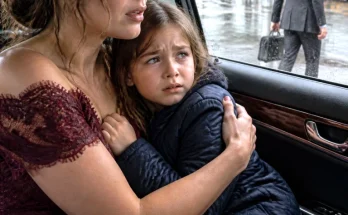
PART 1 — “TAKE YOUR SISTER AND RUN”
My father sent me a text at 2:03 in the morning.
Take your sister and leave immediately. Do not trust your mother.
The light from my phone burned against my eyes in the dark.
For several seconds, I simply stared at the message.
My father, Kevin Brennan, was away in Seattle on one of his regular consulting trips. He was the most careful and predictable person I knew. He never called late unless something was wrong. He never used dramatic language. He measured every sentence as precisely as an engineer checking the weight of a bridge.
So when he told me to run, I believed him.
My name is Zoe. I was seventeen at the time, old enough to recognize the difference between an adult overreacting and an adult who was truly afraid.
Dad’s message carried fear in every word.
I climbed out of bed and pulled on jeans, a sweatshirt, and sneakers. Then I emptied my schoolbooks from my backpack and replaced them with my laptop, a phone charger, and the three hundred dollars I had kept hidden in my desk.
I had never known why I saved that emergency money.
That night, I finally understood.
My twelve-year-old sister, Becca, slept beneath a pile of blankets in the room across the hall. Our mother was downstairs watching television, so I could not risk waking Becca loudly.
I knelt beside her bed, covered her mouth gently, and shook her shoulder.
Her eyes flew open.
I pressed a finger to my lips.
“Dad sent me an emergency message,” I whispered. “He told me to take you and leave without Mom knowing. I don’t understand why, but we need to trust him.”
Becca stared at me through wide, frightened eyes.
Then she nodded.
She pulled clothes over her pajamas while I packed her bag. We could not use the stairs, so I removed the screen from her bedroom window.
The backyard looked much farther away in the darkness.
I lowered Becca as carefully as I could before she dropped onto the grass. Then I followed.
We climbed the fence and crossed several neighboring yards before reaching a street two blocks away.
Only then did we stop.
Becca’s shoelaces were undone. My ankle hurt from the landing. We were both breathing hard, standing beneath a streetlight with no destination and no understanding of what we were escaping.
“What does Dad mean?” Becca asked. “Why can’t we trust Mom?”
“I don’t know.”
I tried calling him.
His phone went directly to voicemail.
I sent a message.
We’re out. Where are you? Please call me.
It showed as delivered, but he never read it.
Then my phone buzzed again.
This time, the message was from Mom.
Where are you girls? I heard something upstairs.
A second message arrived almost immediately.
Come home now or I’m calling the police.
The calm wording made me more nervous than anger would have.
We headed toward a twenty-four-hour convenience store a few blocks away. It offered light, security cameras, and at least one witness while I tried to understand what was happening.
Inside, we stood near the drink coolers while I called Dad again.
Still nothing.
Then Mom called.
I answered on speaker so Becca could hear.
“Zoe, where are you?” Mom demanded. “I woke up and found both bedrooms empty. You are frightening me.”
Her voice sounded worried.
For one dangerous moment, I nearly believed we had made a terrible mistake.
Then I remembered Dad’s message.
“He told us to leave,” I said. “He said not to trust you.”
There was a pause.
Then Mom gave a brittle laugh.
“Your father sent that? He must be having some kind of breakdown.”
“Why would he say something so specific?”
Her tone changed immediately.
The worried mother disappeared, replaced by the firm voice she used when negotiating difficult real-estate deals.
“Your father has been acting paranoid for weeks. I didn’t want to worry you, but he has been accusing me of things that are not true. Come home, and we will deal with this together.”
“I want to speak to Dad first.”
I heard the sound of keys on her end.
“Tell me where you are. I’ll come and get you.”
Every instinct told me not to answer.
“We’re safe,” I said. “We’ll return after we talk to him.”
I ended the call and powered down my phone.
Becca did the same.
We bought two bottles of water with cash and stepped outside.
A silver SUV moved slowly along the road with its headlights dimmed.
It was Mom’s car.
We crouched behind a parked truck and watched her pass.
The glow from her phone lit her face. She did not look frightened or confused.
She looked focused.
She was searching for us.
The expression I saw did not match the concerned voice she had used minutes earlier.
I began to understand what Dad meant.
We waited until the SUV turned the corner, then ran to another block.
At a covered bus stop, I briefly turned my phone back on.
Dozens of messages from Mom appeared, growing increasingly angry.
But one message came from an unknown number.
This is Special Agent Victoria Reeves with the FBI. Your father instructed me to contact you if anything happened. Do not return home. Do not contact local authorities until you speak with me. Call from a secure phone.
I read it twice.
Becca looked over my shoulder.
“The FBI?” she whispered. “What did Mom do?”
Across the street was an old pay phone beside a closed strip mall.
I used it to call the number.
A woman answered immediately.
“This is Agent Reeves.”
“My name is Zoe Brennan. My father told us to run.”
I heard a keyboard clicking in the background.
“Your father has been assisting a federal investigation for three months,” she said. “He discovered evidence that your mother may be involved in a large financial-crime operation connected to her real-estate business.”
I gripped the phone more tightly.
“What kind of operation?”
“Money laundering, fraudulent property transactions, and shell companies. Your father agreed to help us collect evidence.”
The entire world seemed to move sideways.
Dad had been gathering evidence against Mom while living in the same house with her.
“Where is he?”
“We lost contact with him tonight. His phone went offline shortly after he sent you the message.”
“Is he alive?”
“We are trying to confirm that.”
Her hesitation frightened me more than any direct answer could have.
Agent Reeves gave me the address of an FBI field office north of town and told us not to use bank cards or keep our phones on.
“Your father believed you might become leverage if the people involved learned he was cooperating,” she explained. “You need to get to the office as quickly and quietly as possible.”
A taxi company operated from a small building nearby.
The driver was tired and irritated, but cash convinced him to take us.
We had traveled only a few miles when he checked his mirror.
“A car has been following us since the last intersection.”
I turned around.
Mom’s silver SUV was behind us.
And it was getting closer.
PART 2 — THE WOMAN BEHIND THE PERFORMANCE
“That’s our mother,” I told the driver. “Please do not stop.”
He looked at me as if I were joking.
Then Mom accelerated and forced the taxi toward the side of the road.
The driver swore and increased his speed.
Becca grabbed my hand.
Mom pulled alongside us. Her face was no longer the familiar face from breakfast, family photographs, and school events.
She looked determined and desperate.
I called emergency services and tried to explain our location while the driver struggled to keep control of the car.
The pursuit ended when the taxi slid off the road into a shallow ditch.
No one was seriously injured, but we were shaken and disoriented.
Through the damaged window, I saw Mom stop her SUV and step out.
She walked toward us slowly.
“Girls, come with me,” she called. “I’m trying to protect you. Your father and the FBI are lying.”
But nothing she had done felt protective.
I helped Becca out through the opposite door, and we moved into the drainage area beside the road.
We followed a culvert beneath the roadway and emerged on the other side as sirens approached.
Mom heard them too.
She returned to her vehicle and drove away before officers reached the scene.
Becca and I came out with our hands visible.
I explained everything—the text from Dad, Agent Reeves, and Mom’s pursuit.
The officer initially looked uncertain, but his expression changed when I gave him the agent’s name.
He placed us inside his patrol car.
Twenty minutes later, several dark federal vehicles arrived.
Agent Victoria Reeves was a woman in her forties with sharp eyes and a calm voice. She wrapped emergency blankets around our shoulders.
Then she gave us the words we desperately needed.
“Your father is alive.”
I nearly collapsed with relief.
“He was confronted at his hotel,” she explained. “He managed to escape and contact our team. He is now in protective custody.”
Becca began crying.
“Was Mom responsible?”
“We believe her associates discovered that your father was cooperating. When they failed to stop him, they may have tried to use you to pressure him into silence.”
“Where is Mom?”
“She fled. Warrants are being issued, and multiple agencies are looking for her.”
Dad arrived at the field office near dawn.
His face was bruised, one arm was supported in a sling, and he moved carefully. But he was alive.
When he saw us sitting in a conference room wrapped in blankets, he stopped in the doorway.
Then he crossed the room and pulled both of us into his arms.
“I am so sorry,” he kept whispering. “I thought I could protect you without involving you.”
For the first time since seeing his text, I allowed myself to stop being strong.
The complete story came out over the next several hours.
Mom had been running a complex scheme through her real-estate company for nearly five years.
She used shell businesses, false appraisals, and inflated property deals to move money for a criminal network.
Dad discovered the truth by accident while helping her prepare tax documents.
At first, he thought he had found an accounting mistake.
Then he discovered emails, coded files, and records showing that Mom was not merely connected to the operation.
She was one of the people controlling it.
He knew confronting her directly would be dangerous, so he contacted federal investigators.
For three months, he quietly copied records and collected evidence.
He ate dinner across from her.
He slept beside her.
He watched her help Becca with schoolwork and ask about my college applications.
All while knowing she was hiding another life.
“She was not originally planning to hurt either of you,” Dad said. “She wanted to get you before the agents did. She thought you might know something or could be used to keep me from testifying.”
Becca stared down at her hands.
“She made me a birthday cake last month,” she said. “She spent all day decorating it.”
Dad closed his eyes.
“I know.”
The hardest part was trying to fit both versions of Mom into one person.
The woman who attended parent meetings.
The woman who made pancakes.
The woman who remembered our birthdays.
And the woman who had chased us through the night because protecting her operation mattered more than protecting her daughters.
“Was any of it real?” I asked.
Dad looked exhausted.
“I think some of it was,” he answered. “I think she loved you in the only way she knew how. But something else always mattered more to her.”
Mom disappeared for several months.
Investigators tracked financial records, false identities, and border crossings.
Eight months later, she was arrested while trying to leave the country using forged documents.
She had been living under another name in a rented apartment and working once again in real estate.
Even while hiding, she returned to the same world of property, money, and secret transactions.
The authorities had gathered overwhelming evidence.
Millions of dollars had moved through false companies and manipulated sales.
Seventeen other people were charged.
Mom’s attorney challenged procedures but could not explain away the records.
The woman we knew as a suburban mother and successful real-estate agent had been operating a sophisticated financial scheme directly beneath our lives.
At trial, Dad testified for two days.
He described finding the first suspicious tax record and realizing the woman he had married had built an entire hidden structure around their family.
Becca and I sat behind him.
Our childhood photographs, home records, and family accounts became evidence in court.
It felt as though every part of our lives had been opened, numbered, and placed into public files.
Mom never looked at us.
Not while Dad testified.
Not while Becca read a statement about discovering that safety could be a role someone performed.
Not when the judge delivered the sentence.
She received a long prison term for the financial crimes and the danger she created on the night we escaped.
When the courtroom emptied, I finally accepted something I had resisted for months.
The mother I remembered had not been completely imaginary.
But she had been only one part of a woman whose hidden choices ultimately defined her.
PART 3 — RUNNING TOWARD THE TRUTH
After the trial, Dad, Becca, and I moved to another state.
We did not receive entirely new identities, but federal authorities helped us relocate and added security measures to our lives.
Dad started rebuilding his consulting business from a home office.
He positioned his desk where he could see the front door and hear us entering or leaving.
Becca began locking her bedroom window every night.
She checked it twice before sleeping.
For most people, a window was only part of a room.
For her, it had become both a possible escape and a reminder of why we had needed one.
I eventually went to college and chose pre-law.
Watching the legal system process Mom’s crimes changed me.
I became interested in the distance between what people do and the consequences that finally reach them.
I wanted to understand that distance.
Maybe even help make it smaller.
Dad continued blaming himself.
He believed he should have noticed earlier.
He believed he had allowed us to grow up beside danger.
Therapy taught me something I repeated to him often:
You cannot protect people from a truth you do not yet know.
What mattered was what he did after discovering it.
He chose to report the crime even though it meant destroying the comfortable version of our family.
He risked his marriage, career, and safety because pretending would have placed even more people in danger.
That decision saved us.
Not only physically.
It taught Becca and me that truth can be terrifying without being the enemy.
One evening, Becca asked me a question I had secretly asked myself many times.
“What do you think would have happened if you hadn’t believed Dad?”
I had no answer I could safely give her.
I thought about how easy it would have been to dismiss his message.
Dad was hundreds of miles away.
Mom was downstairs behaving normally.
The house was quiet.
We could have decided he was confused.
We could have returned to sleep and waited until morning.
Instead, twelve words changed the direction of our lives.
Take your sister and leave immediately. Do not trust your mother.
Those words separated the life we have now from another ending I do not allow myself to imagine for long.
For years, Dad had measured his language carefully.
That night, he abandoned carefulness because there was no time left for explanations.
He trusted me to recognize fear in his words.
And I trusted him enough to move before I understood.
Sometimes love looks like pancakes, birthday cakes, and help with homework.
But those things alone do not prove that love is honest.
Real love is revealed when the truth becomes dangerous.
It does not ask another person to remain inside a lie for comfort.
It does not protect money, reputation, or appearances at the expense of the people it claims to value.
Real love can be imperfect, frightened, and desperate.
Sometimes it looks like a father sending one message from a dark hotel room, hoping his daughter will believe him.
Sometimes it looks like a seventeen-year-old waking her little sister, climbing through a window, and running toward a truth she does not yet understand.
Dad thought he had failed us by not discovering Mom’s secret sooner.
But when the moment came, he gave us the one thing we needed most.
A warning.
A choice.
And enough truth to survive the night.
THE END