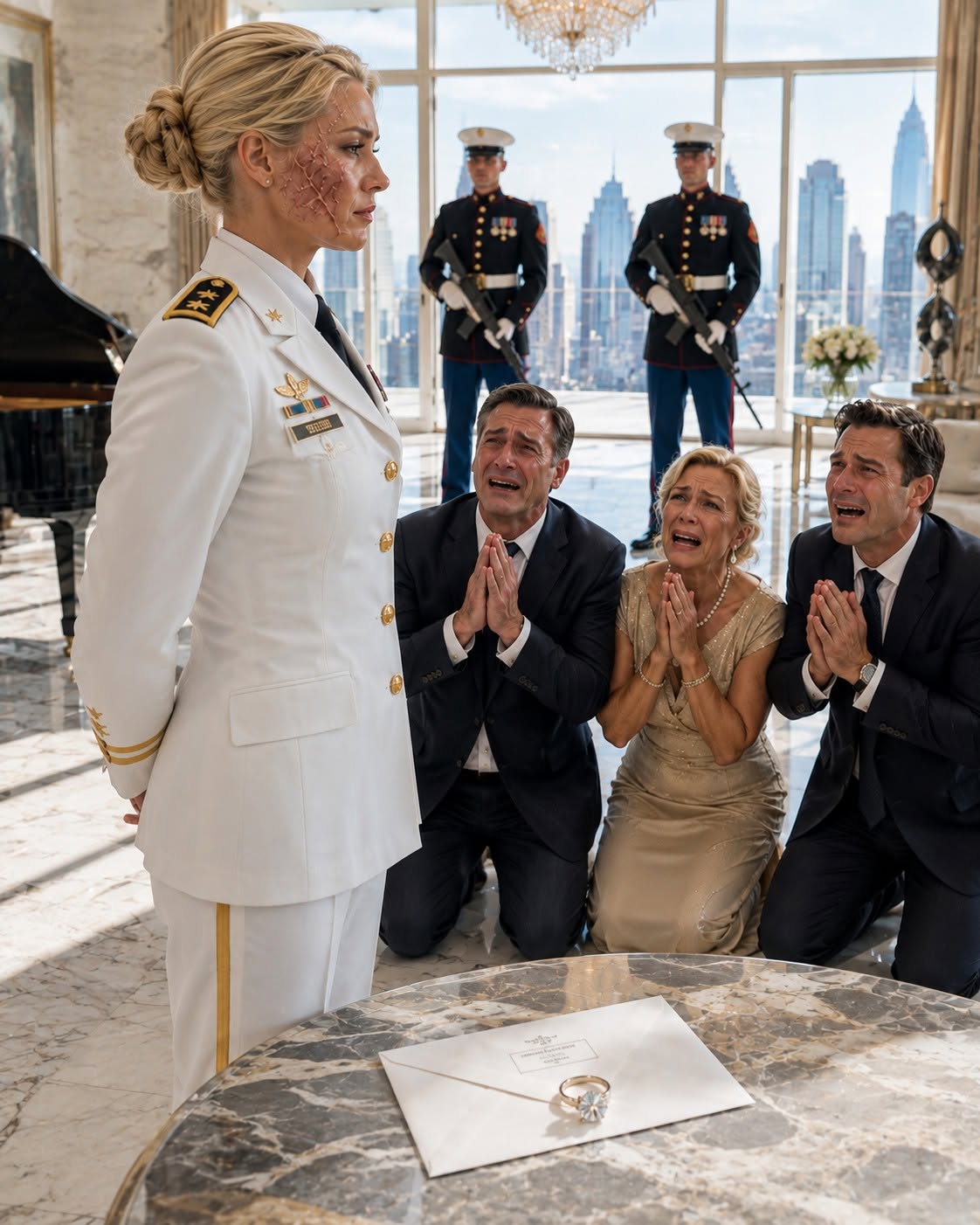
The words on the page made no sense.
My father had been dead for three years.
“That’s impossible,” I whispered.
Nadia’s expression remained steady. She had already anticipated my response.
“My father died of a heart attack in 2022,” I said more firmly.
Major Park leaned across the table. “We confirmed the registration date. The account was opened four months ago.”
The room suddenly felt colder.
“Then someone used his name.”
“Or someone had access to enough of his personal information to pass the verification process,” Nadia said carefully.
I immediately thought of the documents Brian had copied over the years. My mother’s maiden name. My father’s hometown. His birthday. The answers to security questions I had repeated so often that I no longer considered them private.
“Could Brian have created the account?”
“It’s possible,” Major Park replied. “But we do not have enough evidence to say that yet.”
I looked down at the printed email again.
Tell Brian his wife is asking too many questions.
Not “tell your husband.”
Tell Brian.
Whoever wrote the message knew his name. They knew he was involved. They knew I was investigating.
Except I had not been investigating anything.
Until that morning, I had not even known about the defense contractor reception.
The room seemed to contract around me.
“Colonel,” Nadia said, “do you believe your husband knew about the event?”
“I don’t know.”
“Did he ever mention contractor receptions, government networking events, or consulting meetings?”
“No.”
“Did Melissa ever ask you about defense contracts?”
My stomach tightened.
“Once. She asked how much private security consultants could earn. I changed the subject.”
Major Park wrote something in his notebook.
“We need to treat this as an active security threat,” he said. “Someone used your identity to gain access to a government-affiliated event. Someone else responded from an account registered under your deceased father’s name. That is too coordinated to be accidental.”
I nodded slowly.
“I’m recommending that you be placed on administrative leave until we understand the scope of the breach. This is for both your safety and operational security.”
“I understand.”
“You will retain your credentials, but your access to secure facilities will be temporarily restricted.”
The words stung, even though I knew he was right.
“Yes, sir.”
Nadia slid a card across the table.
“If you remember anything unusual, even something that seemed insignificant at the time, call this number directly. Do not use the main office line.”
I placed the card in my purse without looking at it.
Fear, anger, humiliation, and grief twisted together inside me until I could no longer separate one from another.
The drive back to the hotel passed in fragments.
I called Elena from the parking garage.
“Something happened.”
“Tell me.”
I explained the reception, Melissa’s badge photograph, the false registration under my name, and the reply sent from an account linked to my father.
Elena remained silent for several seconds.
“Your father?”
“He’s been dead for three years.”
“Then someone stole his identity.”
“Yes.”
“Do you think Brian did it?”
“I don’t know. He was never good with technology. But Melissa is much more capable than she pretends to be.”
“I agree,” Elena said. “This changes our legal strategy. We are no longer dealing only with assault, infidelity, and marital misconduct. This may involve identity theft, fraud, and unauthorized access to restricted events.”
“A report has already been filed.”
“Good. I’ll send my investigator everything we have and begin tracing the account registration.”
“Thank you.”
“Rachel?”
“Yes?”
“You are not facing this alone.”
I closed my eyes.
“I know.”
But when I entered the hotel room, loneliness wrapped around me anyway.
I locked the door, checked the windows, closed the curtains, and sat on the edge of the bed.
Then I called my mother.
She answered immediately.
“Rachel? Is something wrong?”
“Mom, I need to ask you about Dad.”
“What about him?”
“Did he have any accounts, passwords, or documents that you never closed after he died?”
There was a pause.
“Why are you asking me this?”
“Someone opened an email account using his identity four months ago.”
“That isn’t possible. I closed everything after the funeral. I even canceled the email address he used for household bills.”
“Are you certain?”
“Absolutely.”
“What about the answers to his security questions? Your maiden name, where he was born, the name of his first school?”
“Most of the family knows those things.”
Including Brian.
“Did you ever give Brian information about Dad?”
The silence on the line changed.
“He asked me some questions about six months ago,” she said slowly.
“What kind of questions?”
“He said he was building a family tree for a work presentation. He wanted birthdays, birthplaces, maiden names, and the names of your grandparents.”
My blood turned cold.
“What exactly did you give him?”
“Everything he asked for. I thought he was trying to do something thoughtful.”
He had not been doing anything thoughtful.
He had been collecting pieces of my family’s identity.
Preparing them.
Using them.
I reassured my mother, told her I loved her, and ended the call.
Then I sat alone in the dark.
Brian had been planning something for months.
He had copied my records, questioned my mother, and gathered details about dead relatives who could not object when their names were stolen.
He had taken the most personal parts of my life and converted them into tools.
For months, I had been apologizing for being suspicious while he quietly built a weapon from my history.
Something inside me broke.
Not into sadness.
Into anger.
Clean, steady, controlled anger.
I called my former intelligence colleague, Dana.
“I need a favor.”
“What kind?”
“I need the complete visitor records from the contractor reception. Check-in times, badge images, guest registrations—everything.”
“That information is restricted.”
“I know.”
She was silent for a moment.
“Give me two hours.”
Dana called at 9:47 that night.
“I’m sending an encrypted file. Read it once and delete it.”
“Understood.”
The file arrived three minutes later.
There were forty-seven registered attendees.
Melissa Carter had checked in at 10:14 a.m.
Beneath her name was a second entry.
Guest: Brian Keller.
I stared at the screen until the letters blurred.
Brian had been there.
He had entered with Melissa.
They had used my identity to register.
My own husband had walked into a defense contractor reception pretending to be connected to me professionally.
Someone at that event had noticed enough to send a warning afterward.
Tell Brian his wife is asking too many questions.
But I had not asked anything.
I had known nothing.
So why would anyone think I was getting close?
Unless Brian had told them I was suspicious.
Unless the reception was only one part of something much larger.
I called Elena.
“Brian attended the event with Melissa.”
“What?”
“He was listed as her guest under my registration.”
“He has no security clearance.”
“It was a public contractor reception. He did not need clearance. He needed my name and enough information to make the registration appear legitimate.”
Elena exhaled slowly.
“Then someone may be giving him inside information.”
“Yes.”
“And someone believed you were investigating before you even knew there was anything to investigate.”
“That’s what frightens me.”
The next morning, I drove to Brian’s mother’s home in Palm Beach Gardens.
Melissa’s sedan was parked in the driveway.
Brian’s truck sat behind it.
I crossed the small front garden and knocked.
Melissa opened the door.
The color disappeared from her face.
“What are you doing here?”
“I need to speak with Brian.”
“He isn’t here.”
“His truck is in the driveway.”
Her jaw tightened.
From somewhere behind her, Brian called, “Who is it?”
Melissa tried to close the door.
I stopped it with my hand.
“Brian,” I called, “we need to discuss the defense contractor reception.”
Silence.
Then he appeared behind her.
His eyes were bloodshot. His shirt was wrinkled, and he looked as if he had not slept.
“What are you talking about?”
“You attended a contractor event under my registration.”
“That was a misunderstanding.”
“You impersonated me.”
“No. Melissa registered us incorrectly.”
Melissa turned toward him in disbelief.
I ignored them both.
“Who sent the email?”
Brian’s expression flickered.
“What email?”
“The message telling someone to warn you that your wife was asking too many questions.”
He looked at Melissa.
She lowered her eyes.
“I don’t know anything about that,” he said.
“Who used my father’s identity to create the account?”
His face went pale.
Melissa stepped backward.
“That’s impossible,” Brian whispered.
“It happened. Tell me who did it.”
He shook his head.
“I can’t.”
“You can’t, or you won’t?”
“Both.”
I studied him.
“You have no idea how serious this is.”
“I didn’t do anything.”
“You assaulted me, stole my identity, entered a government-affiliated event under false pretenses, and helped someone use the names of my dead relatives. Which part of that do you consider nothing?”
He had no answer.
Melissa’s face began to crumple.
I turned away.
“Rachel,” Brian called after me.
I kept walking.
“Please.”
I reached my car before he caught up.
“I’m sorry,” he said.
I faced him.
“You’re sorry because you were exposed.”
“No. I’m sorry for all of it.”
“Then tell me who sent the warning.”
His silence was the answer.
“If you refuse to tell me, we are finished.”
I drove away while he stood in the street watching me leave.
That evening, another email arrived.
It came from my father’s original address—the one my mother had canceled after his death.
There was no subject line.
The message contained three words.
Stay out, Rachel.
I forwarded it to Major Park, Nadia, Elena, and Dana.
Then I called my mother.
“I need you to change every password, freeze your credit, and lock down every financial account immediately.”
“What is happening?”
“Someone is using Dad’s identity to threaten me.”
She went silent.
“I’ll do it now.”
“Thank you.”
“Rachel, please be careful.”
“I will.”
After the call, I reopened the photograph from the reception.
Brian and Melissa were smiling near the registration area, fraudulent badges clipped to their jackets.
Behind them stood a man in a gray suit.
He was not looking at them.
He was staring directly toward the camera.
Something about him made my skin tighten.
I enlarged the photograph.
A badge hung from his neck. Most of the text was obscured, but the name was visible.
Robert Hayes.
My grandfather’s name.
My father’s father had been dead for fifteen years.
I stared at the screen.
Someone had attended the same reception using my grandfather’s identity.
It was no longer one stolen name.
It was a pattern.
I called Nadia.
“A man in the event photograph is using my grandfather’s name.”
“Send me the image.”
I did.
She called back three minutes later.
“We’re running facial recognition.”
“How long will that take?”
“Several hours.”
“I don’t have several hours.”
“You need rest.”
I almost laughed.
At 2:13 a.m., my phone vibrated.
A message from an unknown number appeared.
You should have listened.
I replied immediately.
Who is this?
No answer came.
When I called, the number had already been disconnected.
I sat in the darkness, holding the phone.
Someone knew my history.
Someone had access to information about my father and grandfather.
Someone was collecting the identities of people who had died.
And someone wanted me frightened enough to stop.
I did not stop.
The next morning, I requested an audit of every event where my name had been used during the previous three years.
The results arrived six hours later.
There were four events.
Each one involved defense contractors, logistics firms, or government suppliers.
All had taken place in cities I had never visited.
A woman matching Melissa’s description had attended every one.
At three events, a man had registered under the name of one of my deceased relatives.
I printed the list and spread the pages across the hotel desk.
Robert Hayes.
Margaret Keller.
David Hayes.
All dead.
All used as aliases.
At the bottom appeared one final name.
Rachel Keller.
My identity had not been stolen once.
It had been used repeatedly.
Someone was constructing a network of false identities, and mine was the central credential holding it together.
I called Nadia again.
“Did facial recognition identify the gray-haired man?”
“We received a preliminary match, but it is not definitive.”
“Tell me.”
“The face resembles a former defense contractor whose records are now sealed. He disappeared from public databases five years ago.”
“What connection does he have to me?”
“None that we can document. However, his last confirmed location was Washington, D.C., six months ago—the same week as the reception.”
“Who employed him?”
“His final contract was issued through a shell corporation registered in Nevada.”
“And the contact person?”
Nadia paused.
“Margaret Keller.”
My grandmother’s name.
She had been dead for ten years.
The hotel room seemed to tilt.
“We’re still tracing ownership,” Nadia continued. “But whoever created the company deliberately used your family tree as cover.”
I looked at the names on the desk.
Three dead relatives.
My own living identity.
Brian in the center of it all.
“Could Brian have organized this alone?”
“No,” Nadia answered. “It would require advanced technical knowledge, access to secure registration systems, financial infrastructure, and professional identity documents. Your husband does not appear to possess those capabilities.”
“Then someone is using him.”
“That is our working theory.”
The fourth event listed in the audit had not happened yet.
It was scheduled three weeks later in Tampa.
A national defense logistics summit.
My registration had already been approved.
Someone planned to impersonate me again.
I called Elena.
“File restraining orders against Brian and Melissa.”
“On what grounds?”
“Identity theft, harassment, and credible evidence that they intend to impersonate me at another event.”
“Send me the audit.”
I forwarded everything.
Then I called Dana.
“I need to attend the Tampa summit.”
“No.”
“They plan to use my identity there.”
“Then we send an undercover investigator.”
“If they recognize the investigator, they disappear.”
“And your solution is to walk into a trap?”
“I go silent for three weeks. No public calls, no messages, no legal movement they can see. They will think the warning frightened me.”
“And then?”
“I attend under another name and catch them using mine.”
“That is reckless.”
“It is the only chance we may have to identify the people behind them.”
Dana was quiet.
“You could be killed.”
“I am not going to let them erase me while I hide.”
Finally, she said, “Then I’m going with you.”
The following three weeks moved slowly.
I changed my phone number, disappeared from social media, and communicated only through encrypted channels.
Brian called my old number twice, then stopped.
Melissa sent one message.
You are making a serious mistake.
I ignored it.
I studied every available detail about the summit: the venue map, access corridors, exhibitor areas, loading docks, registration procedure, and attendee schedule.
Nadia sent me a list of speakers and invited guests.
One name immediately caught my attention.
Robert Hayes.
Special guest.
No biography.