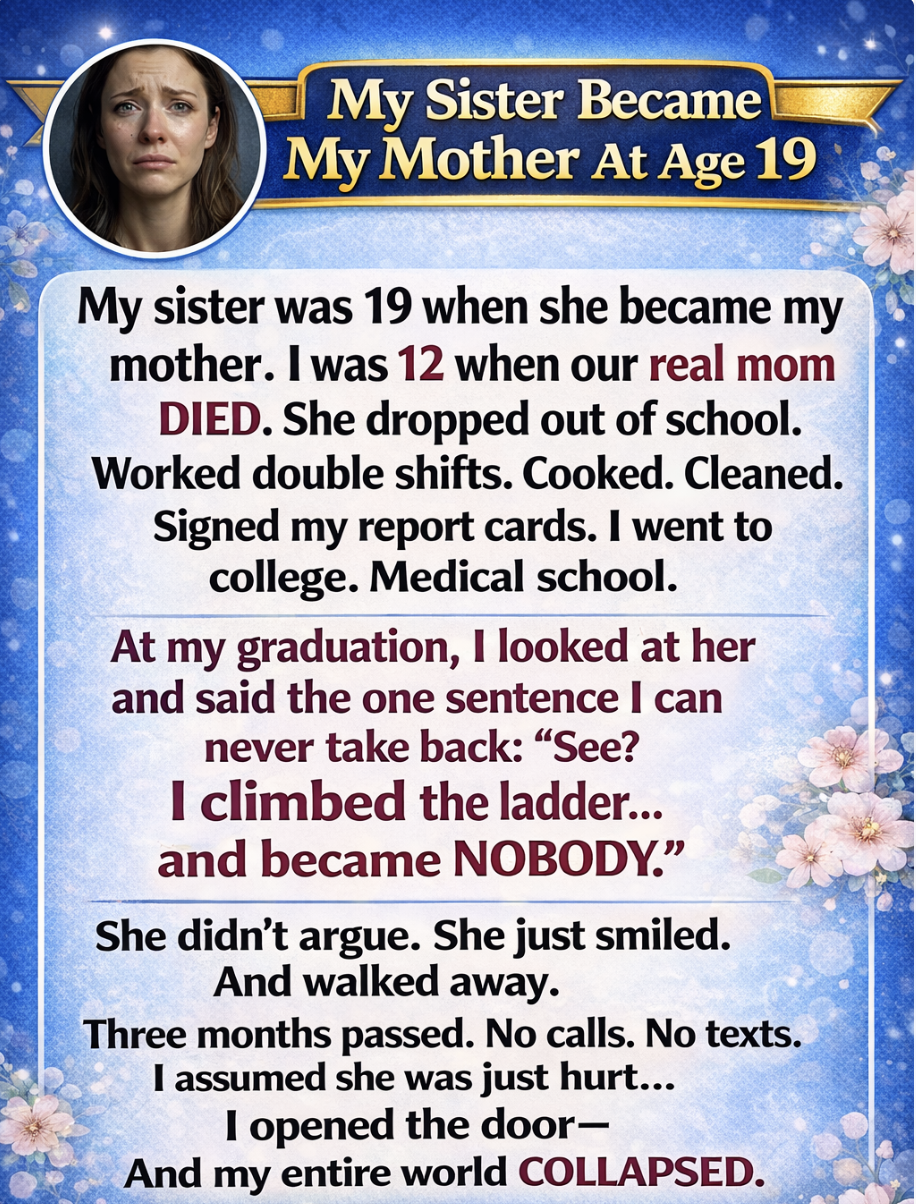
My sister was nineteen when she became my parent.
I was twelve when our mom died.
There was no dramatic family meeting. No long discussion about who would take care of me. It just… happened. She canceled her college plans, took a job at a diner during the day and cleaned offices at night. She learned how to stretch one paycheck into rent, groceries, and school supplies.
She signed my permission slips. Sat in on parent-teacher conferences. Pretended not to cry when I asked why she never went out with friends anymore.
I never understood what she gave up.
I just accepted it.
Years passed. I studied hard. She pushed me harder. “You’re going to have choices,” she used to say. “I want you to have choices.”
I got into college. Then medical school.
She was there every step of the way — sending grocery money she didn’t really have, staying up late to listen to me vent about exams, telling everyone in town, “My little sister is going to be a doctor.”
At my graduation, I was exhausted, proud, and full of myself.
I don’t know what came over me. Maybe it was the applause. Maybe it was insecurity disguised as arrogance.
When she hugged me and said, “I’m so proud of you,” I laughed and said:
“See? I climbed the ladder. You took the easy road and became a nobody.”
The words landed like a slap.
She didn’t argue.
She didn’t cry.
She just smiled — the same tired smile she’d worn for years — and said, “I’m glad you made it.”
Then she left.
Three months went by. No calls. No texts.
I assumed she was hurt. I told myself she’d cool off.
I was busy starting my residency in another city. Long shifts. No sleep. No time.
Eventually, guilt started creeping in.
So I drove back to our hometown for the first time in years.
Her car wasn’t in the driveway.
The house looked smaller than I remembered.
I knocked.
A neighbor answered instead.
“She’s at the clinic,” he said quietly.
“Clinic?” I asked.
“She volunteers there most days.”
I didn’t know what he meant until I walked into the small community health center on Main Street.
And then I went numb.
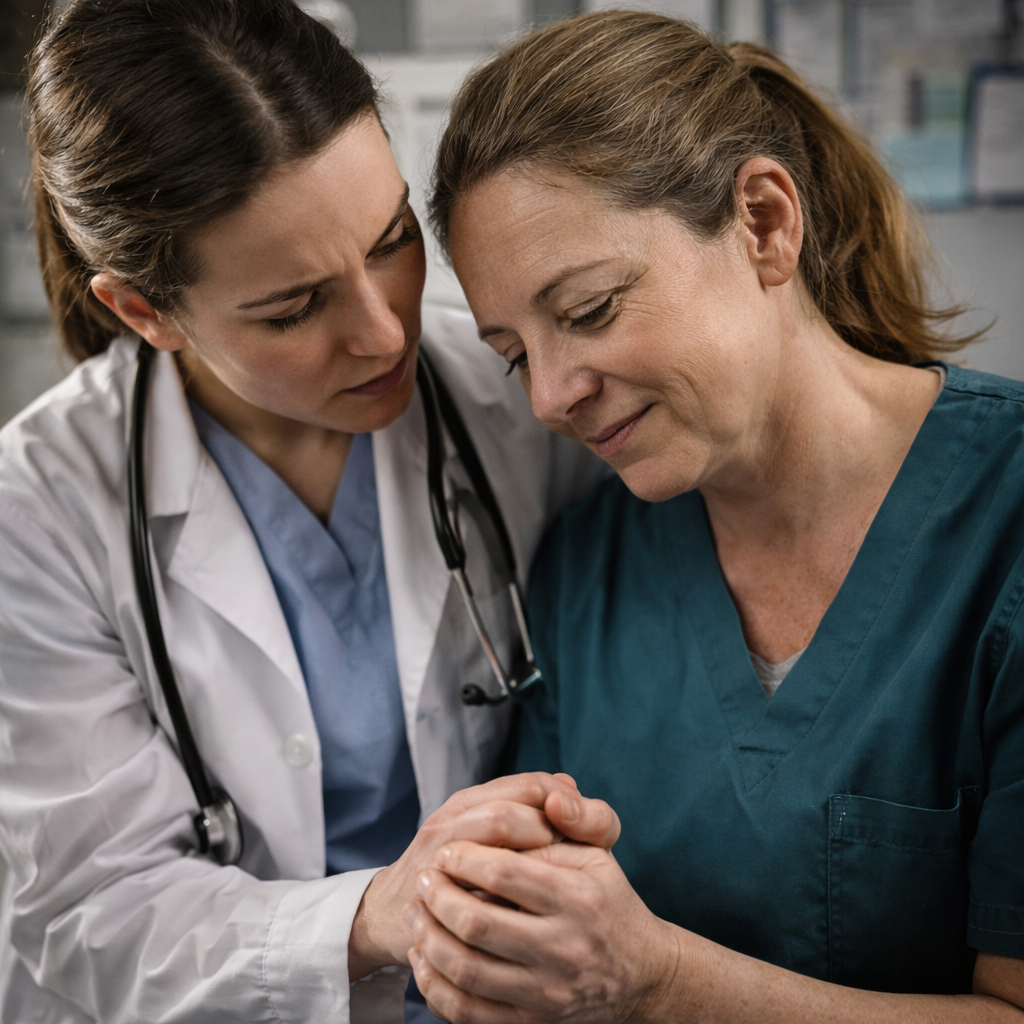
There she was — in scrubs.
Not as a nurse.
As the director.
Photos lined the hallway. Free vaccination drives. Food pantry events. School supply donations.
Her name was on a plaque near the entrance:
“Founded by Sarah Miller — Community Health Initiative.”
A receptionist looked up at me and smiled. “You must be her sister. She talks about you all the time. The doctor.”
My stomach twisted.
When she saw me, she froze for just a second — then smiled.
“You made it back,” she said gently.
I couldn’t even speak at first.
“I didn’t know,” I whispered.
She shrugged. “You were busy saving lives.”
Later that afternoon, I learned the truth.
She hadn’t taken the “easy road.”
She’d built a free clinic in our hometown so families like ours wouldn’t have to choose between groceries and medical bills.
She had spent years applying for grants, organizing fundraisers, convincing retired doctors to volunteer.
She never told me because she didn’t want me distracted from my studies.
That night, we sat at the kitchen table — the same table where she’d once helped me with homework after working sixteen-hour shifts.
“I’m sorry,” I said finally. “I had no idea what you sacrificed.”
She looked at me calmly.
“I didn’t sacrifice,” she said. “I chose. I chose you.”
That’s when it hit me.
She hadn’t failed to climb a ladder.
She built one — for me.
I asked her why she never defended herself when I insulted her.
She smiled softly.
“Because I knew one day you’d understand.”
I cried harder than I had in years.
We don’t talk about that graduation day anymore.
But every time I walk into a hospital, I remember something important:
I may have a title.
I may have letters after my name.
But the strongest person I know is the nineteen-year-old girl who buried her dreams so I could build mine.
And if anyone ever calls her a nobody again —
They’ll have to answer to me.