PART 3:
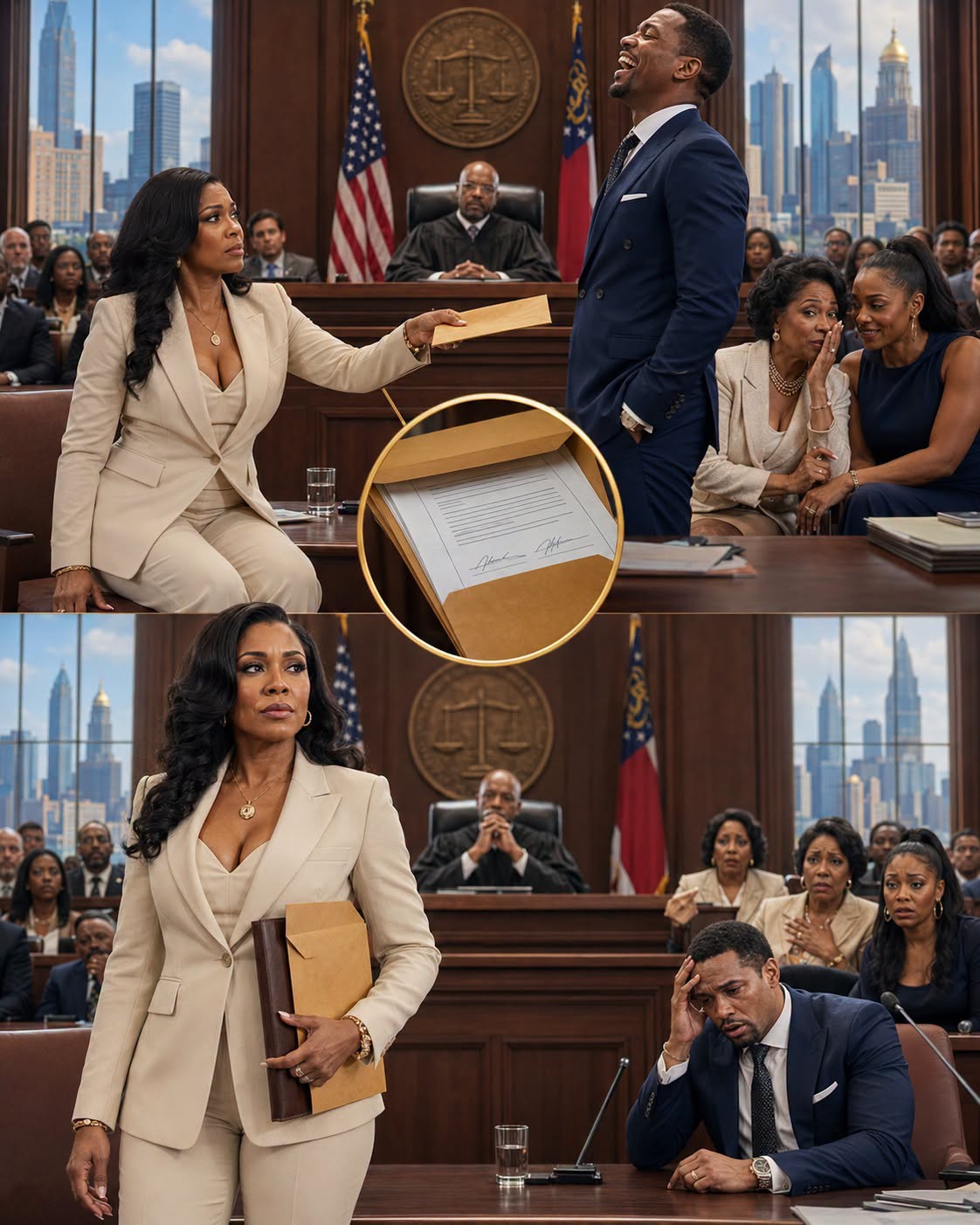
The message appeared on the courtroom monitor in Julian’s own words: “The paper at the house is gone. She won’t be able to prove anything unless Whitmore kept a copy.” He had not only lied about the agreement; he had admitted destroying the copies he could reach. My mother lowered her eyes, and Jasmine covered her mouth. Their trusted ally had just exposed the plan they had all depended on.
Julian tried to recover by claiming the agreement was unfair. Judge Mercer reminded him that he had written it, negotiated it through separate lawyers, and insisted that four originals be preserved. He then argued that he had never expected my company to become so valuable. That answer revealed the truth behind his sudden memory problem: the contract had seemed fair until honoring it meant walking away from twelve million dollars.
When Elias called me to testify, I knew Julian’s lawyer would try to make me look cold. He asked about my work hours, my financial records, and every time I had refused to give my family more money. I answered without hiding anything. I had worked hard, kept records, and eventually stopped treating every manufactured emergency as my personal responsibility.
Then Elias asked how much support I had already given my family. I listed my mother’s mortgage, roof repairs, and medical expenses, along with Jasmine’s student loans, condo down payment, failed boutique, and her husband’s payroll. The amounts filled the courtroom with a silence more painful than any accusation. For years, they had called me controlling while accepting every payment.
“Were those gifts conditioned on loyalty?” Elias asked.
“No,” I said. “But every time I helped, they began believing they had a right to the next thing.”
I told the court about the security alert at 11:43 p.m. and the image of Julian entering my mother’s house with Celeste. I described Jasmine looking directly into the camera before covering the lens. When I repeated my mother’s statement that an unhappy man had a reason to look elsewhere, a woman in the gallery inhaled sharply. My family’s support for Julian no longer looked like concern—it looked like cooperation.
During the recess, my mother rushed toward me and said the case had gone too far. Jasmine claimed Julian had lied to them and promised there would be enough money for everyone. She did not say she regretted helping him betray me. She regretted that the betrayal was no longer going to pay.
“We are still your family,” my mother said.
“You were my family when you chose your seats behind him,” I answered.
Her face hardened, and she used the one weapon that had controlled me since my father died. She said he would hate what I was doing to them. For years, that sentence would have shattered me because my father’s approval had mattered more than anyone’s. This time, I remembered what he had told me from his hospital bed: some people hug you only to measure how much of you they can carry away.
“My father is the reason you cannot take it,” I said.
When court resumed, Elias asked me why I had hidden the fourth original until trial. I looked directly at Julian and told the truth: because he was a lawyer, and if he knew we had it, he would have changed his story. I needed the judge to hear what he was willing to swear when he believed the evidence had been destroyed. Julian’s attorney called it an ambush.
Judge Mercer looked at him and said, “Your client was asked to tell the truth. That is not an ambush.”
Then she turned to the financial records. The apartment Celeste had been living in was not merely an affair expense. Its deposit remained refundable, meaning it was still an asset Julian had concealed under oath. The hidden transfers, false expense labels, and missing disclosures now raised a question far more dangerous than who would receive the house.
Judge Mercer ordered the transcript, exhibits, and sworn affidavits preserved.
Then she announced where copies might be sent.
PART 4:
Judge Mercer said she would not decide that day whether Julian’s conduct required criminal review or professional discipline. However, she ordered the record sent to the appropriate authority responsible for attorney misconduct. Julian closed his eyes for one second, and that was when I knew he finally understood what he had risked. He had entered court trying to take my company and might leave fighting to keep his law license.
Still, the final ruling had not been issued. Julian’s attorney argued that even if the agreement existed, parts of it should be rejected because the difference in our wealth had become too large. He painted Julian as a husband who had supported me emotionally while I built an empire. The argument was polished, and for a few tense minutes, my mother and sister began watching the judge with renewed hope.
Elias answered with Julian’s own documents. The agreement stated that a future difference in wealth would not make it unfair, and every important clause carried Julian’s initials. His emails showed that he had insisted on strong separate-property protection because he wanted to shield his law-firm interests. He had demanded strict rules when he believed those rules would protect him.
Now he wanted mercy because they protected me.
Judge Mercer reviewed the evidence while the courtroom waited. My company employed seventy people, and a forced ownership transfer could affect every one of them. My father’s trust also contained the original interest he had purchased when my business was only a small office above a dry cleaner. This was not simply money to me; it was eighteen years of work and the last boundary my father had created on my behalf.
Julian knew that. My mother knew it too. Yet both had treated the company as a prize that could be divided to solve everyone else’s problems. Their strongest argument was never that they had earned it. Their argument was that I had enough to survive losing it.
During another short recess, Jasmine approached me alone. She said Celeste had convinced her that my marriage was already over and Julian had promised to protect the family. I asked whether she had ever heard me say the marriage was over. She admitted she had not.
“Then you chose the story that paid you,” I said.
She reached for my arm, but I stepped back. For the first time, I saw that my silence had protected her from understanding how deliberate her betrayal had been. She had opened my mother’s door, watched Julian bring Celeste inside, and covered the camera because she knew I might see. Nothing Julian promised could erase that choice.
When we returned, Judge Mercer began reading her findings. She stated that both sides had independent counsel and that no one had been pressured into signing. She confirmed that the agreement was properly witnessed, notarized, archived, and repeatedly acknowledged in Julian’s own communications. Then she paused before reaching the sections that controlled my company and trust.
Julian sat perfectly still. My mother clasped her hands as if praying, while Jasmine stared at the floor. Elias placed the original agreement beside my hand, and I thought about my father insisting that important promises be preserved in more than one place. He had prepared for a danger I had once believed love would make impossible.
Judge Mercer turned the final page.
“The court therefore finds the prenuptial agreement valid and enforceable,” she said.
Then she looked directly at Julian and began explaining exactly what that ruling would cost him.
PART 5: Carter Strategic Solutions remained entirely mine, including every dollar of growth during the marriage. My father’s trust also remained protected, exactly as the agreement required. Julian received his fair share of the real marital estate, but not one piece of the company he had tried to claim. The legal-fee clause he drafted forced him to pay most of the cost of defending his false challenge. Judge Mercer also ordered a full accounting of the money spent on Celeste. The apartment deposit was frozen, the hidden transfers were reviewed, and Julian was required to reimburse a substantial share of the funds used during the affair. Then the court preserved his sworn statements for disciplinary review. He had arrived expecting a financial victory and left facing the possible collapse of his professional reputation. Six weeks later, the final divorce order was entered. The house was sold, the legitimate marital accounts were divided, and Julian resigned from his law firm before the review of his conduct was complete. His relationship with Celeste ended soon afterward when the money and promised settlement disappeared. They blamed each other for believing a future built on my losses. My mother called every day at first. Some messages were angry, some were tearful, and others returned quickly to unpaid taxes, broken air-conditioning, or Jasmine’s mortgage. I finally understood that every family emergency had also been a test: would guilt reopen the door they had closed with betrayal? This time, I did not answer with money. When my mother came to my office, she said she had made mistakes and asked whether I planned to punish her forever. I told her silence was not punishment and refusing financial access was not revenge. They were consequences and boundaries. She asked if we could start over, but some relationships cannot return to innocence after people reveal what they are willing to do for profit. “We can only move forward with what happened,” I told her. “And moving forward will not include access to my money.” Jasmine later sent me a six-page apology. She blamed Celeste, Julian, our mother, and her financial stress before finally writing one honest sentence: “I knew it would hurt you, and I helped them anyway.” I told her I loved her, but I would no longer finance her life. Any future relationship between us would have to survive without money being used as proof of love. Months later, I stood before the employees of Carter Strategic Solutions and told them the ownership dispute was over. The company would remain independent, and no shares would be transferred. Marisol, the woman who had worked beside me since our days above the dry cleaner, began clapping. Soon the entire room joined her. They were not applauding my divorce. They were applauding the fact that we had survived. Afterward, I drove to my father’s grave and told him about the courtroom, the missing copies, and the fourth original he had insisted Elias preserve. I told him I had kept the trust and protected the company. Yet sitting there, I realized the trust had never been only about money. It was my father’s final refusal to let love become a crowbar in someone else’s hands. That night, I returned to my new home and canceled the automatic transfers that had supported relatives who treated my generosity as an entitlement. I kept the college fund I had established for Jasmine’s daughter because the child had done nothing wrong. Everything else ended. For the first time, saying no did not make me feel cruel. Julian believed destroying two copies of an agreement meant he had destroyed the truth. But truth survived in an archive, a notary’s journal, an old email, and the records he was arrogant enough to leave behind. Most of all, it survived inside me after years of being told that keeping anything for myself was selfish. The brown envelope did not make me powerful; it only gave me the chance to stop surrendering the power I had always possessed. I lost a husband, the mother I thought I could trust, and the sister I believed would never choose money over me. Justice did not restore those relationships, but it stopped them from taking more. I kept my father’s trust, my company, and the dignity they expected me to trade for peace. After spending most of my life rescuing everyone else, I finally rescued myself. I’ve shared the complete story, and I truly hope it touched your heart. If it did, you’re welcome to leave a ❤️ so it can reach other readers who may feel the same. Thank you for reading.