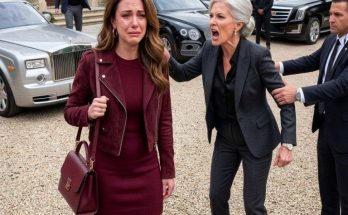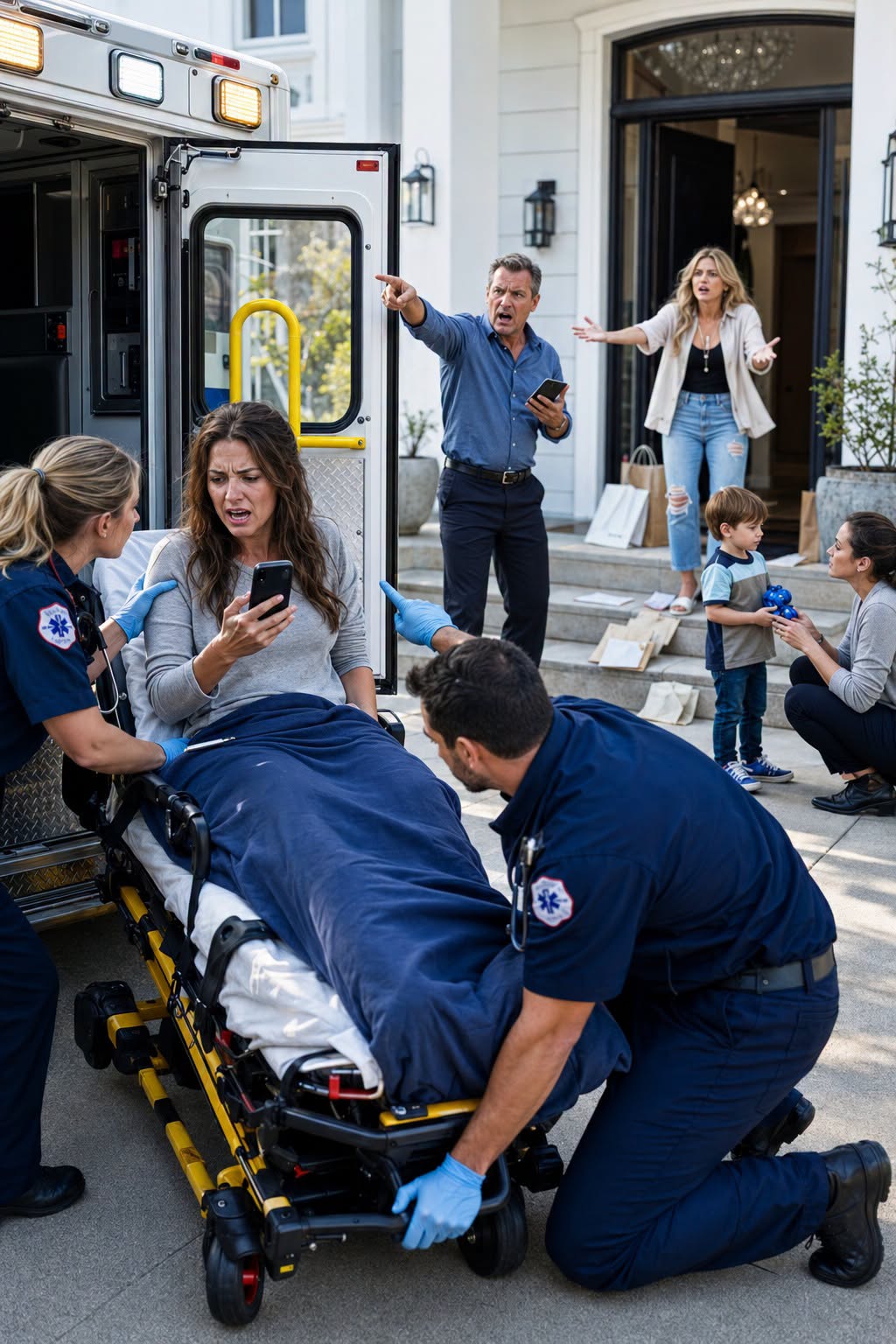
My Sister Refused To Care For My 3-Year-Old Autistic Son While I Was Having A Stroke. “He’s Too Much Work. Not My Problem.” So I Hired Specialized Care From The Ambulance, Cut The $5,000/Month I’d Funded Her Lifestyle For 7 Years—$420,000. Then Dad Found Out…
### Part 1
Eight weeks ago, I was lying on my kitchen floor unable to move the right side of my body while my three-year-old son stood beside me holding a stuffed elephant.
My name is Claire Holloway. I’m thirty-five, a pharmacist, a divorced mother, and until that morning, I thought I understood what exhaustion felt like.
I was wrong.
The kitchen smelled like burnt toast because I’d been making breakfast when the room suddenly tilted. My coffee mug slipped from my hand and shattered near the refrigerator. I tried to bend down, but my right knee folded underneath me.
Then my face went numb.
My vision blurred.
I remember thinking, This is bad.
My son, Owen, stood several feet away, rocking gently on his heels.
Owen is autistic. At three, he communicated mostly through gestures, single words, and routines we had built carefully over months of therapy.
He looked at me on the floor and whispered, “Mama sleeping.”
“No, baby.”
My words came out thick.
“Mama… needs help.”
Somehow, with my left hand, I reached my phone.
I called emergency services.
By the time the paramedics arrived, I could barely speak. They moved quickly, asking me questions while attaching monitors and checking my face and arms.
One paramedic, a woman named Rachel, crouched beside me.
“Claire, we need to take you to the hospital immediately.”
Then she looked at Owen.
“Who can take care of your son?”
Fear hit me harder than whatever was happening inside my brain.
My ex-husband, Grant, lived several states away and barely saw Owen.
My father lived in Nevada, hours from us.
There was only one person nearby.
“My sister.”
Rachel found the contact.
“Brianna?”
I nodded.
She called.
Through the speaker, I heard my younger sister answer with irritation.
“Claire? What is it? I’m walking into an appointment.”
Rachel identified herself.
“Your sister is experiencing a medical emergency. We need to transport her immediately. Her three-year-old son needs an adult with him. Can you come?”
Silence.
Then Brianna laughed nervously.
“A medical emergency? Claire is thirty-five.”
Rachel’s expression hardened.
“This is serious.”
“Well… I can’t just leave.”
I stared toward the phone.
Rachel continued, “Your sister cannot move properly. Your nephew cannot remain here alone.”
Another pause.
Then came the sentence I would remember long after I learned to walk normally again.
“Owen is autistic. He’s too much for me.”
My stomach dropped.
Brianna continued.
“I’m not trained for that. He gets overwhelmed and has meltdowns. Claire should have an emergency babysitter.”
Rachel looked at me.
I could see anger building behind her professional expression.
“Ma’am, your sister may be facing a life-threatening condition.”
“That doesn’t make me qualified to handle Owen.”
“You only need to keep him safe until family arrives.”
“I have plans.”
Rachel’s jaw tightened.
“This is your nephew.”
“And Claire chose to have a child with special needs. That doesn’t automatically make him my responsibility.”
I felt tears slide toward my ear.
Owen was still beside the kitchen counter.
Still clutching his elephant.
Still watching strangers move around his mother.
Rachel said, very slowly, “So you are refusing to come?”
“Yes.”
The call ended.
For a few seconds, nobody spoke.
Then Rachel placed a hand on my shoulder.
“We’ll arrange emergency pediatric care. He will not be left alone. I promise you.”
I wanted to thank her, but my mouth wouldn’t cooperate.
As they lifted me onto the stretcher, Owen began following.
“Mama?”
That one word nearly destroyed me.
And somewhere inside the panic, another thought surfaced.
For seven years, I had sent Brianna five thousand dollars every month.
Five thousand dollars for rent.
Five thousand dollars for car payments, clothes, restaurants, travel, and the polished online lifestyle she called “independence.”
More than four hundred thousand dollars altogether.
I had paid for almost everything she had.
And when I needed one afternoon from her, she had decided my son was too inconvenient.
As the ambulance doors closed, I understood something with terrible clarity.
If I survived, Brianna Holloway was never getting another dollar from me.
What I didn’t know yet was that when my father learned exactly what she had said, losing my money would become the least frightening part of her day.
### Part 2
I woke in a hospital room with fluorescent lights above me and my father sitting beside the bed.
But before he arrived, there were four days I remember mostly in fragments.
Doctors.
Machines.
Physical examinations.
Questions I understood faster than I could answer them.
The stroke had been severe enough to require immediate treatment, and although the doctors were optimistic about recovery, nobody could tell me exactly how much function I would regain.
My right hand barely responded.
My speech sounded like somebody else’s.
The worst part wasn’t the pain.
It was not knowing where Owen was.
Rachel had arranged for a specialized emergency caregiver named Marissa, a woman trained to work with children who had developmental and sensory needs.
When a nurse told me Owen was safe, I cried so hard my heart monitor started alarming.
Marissa sent updates through the hospital staff.
Owen ate his usual crackers.
He slept with his elephant.
He resisted bath time.
He asked for “Mama.”
Every update hurt and healed me at the same time.
Brianna sent nothing.
No message.
No call.
No question about whether I was alive.
On my third day in the hospital, I opened my banking app with my left hand.
The screen looked too bright.
My fingers shook as I navigated through the automatic transfers.
There it was.
BRIANNA HOLLOWAY — MONTHLY TRANSFER — $5,000.
I stared at it for a long time.
Seven years earlier, Brianna had called me crying because she was behind on rent.
Our mother had died when I was nineteen and Brianna was sixteen. After that, I became more than a sister.
I helped her finish school.
Helped her move into college.
Helped her when she wanted to start building a social media career after graduation.
The first emergency had been rent.
Then a camera.
Then a laptop.
Then car trouble.
Then credit cards.
Eventually, five thousand dollars a month became normal.
“Just until I get established,” she always said.
She never got established.
She got comfortable.
She built an online image of rooftop dinners, wellness weekends, stylish apartments, boutique fitness classes, and expensive clothes.
Underneath photographs she sometimes wrote things about discipline, abundance, and creating your own success.
I usually scrolled past those posts.
It felt easier than admitting I was paying for the life she was pretending she had earned.
Meanwhile, my life changed completely.
Owen was diagnosed with autism when he was still very young.
My marriage fell apart not long afterward.
Grant said he “wasn’t built for this kind of parenting.”
He moved away.
His financial support was inconsistent, and his visits became rare enough that Owen hardly reacted when his father appeared.
So there I was.
Working full time.
Managing specialists and therapy schedules.
Learning sensory regulation.
Tracking foods Owen would tolerate.
Waking at night when routines changed and he couldn’t settle.
And every month, without fail, I sent Brianna five thousand dollars.
I told myself it was family.
I told myself Mom would have wanted me to help her.
Now I looked at that automatic payment and remembered Brianna saying, “He’s too much for me.”
I pressed cancel.
A small confirmation box appeared.
Are you sure?
I almost laughed.
Yes.
For the first time in seven years, I was absolutely sure.
The transfer disappeared.
I placed the phone on my chest and closed my eyes.
A strange calm settled over me.
Then, the following afternoon, my father arrived.
Thomas Holloway was sixty-eight, a retired high school principal with silver hair, an old knee injury, and the maddening habit of pretending he never needed help carrying groceries.
When he walked through the hospital room door and saw me, he stopped.
His suitcase slipped from his hand.
“Claire.”
His voice broke.
He came to the bed and held my left hand.
“My girl.”
I had never seen my father cry like that.
After he calmed down, I told him what happened.
Everything.
The kitchen.
The ambulance.
Owen.
Rachel calling Brianna.
Her refusal.
Her exact words.
Dad listened without interrupting.
But when I said, “She told them Owen was too much work,” something changed in his face.
He leaned back slowly.
“She said what?”
I repeated it.
His breathing became shallow.
“While you were having a stroke?”
“Yes.”
“And she knew you were being taken away?”
“Yes.”
“Where was she?”
I swallowed.
“Going to a spa appointment.”
Dad stared at the floor.
Then he reached into his pocket and pulled out his phone.
“What are you doing?”
“Calling your sister.”
He dialed.
Brianna answered casually.
“Hey, Dad. What’s up?”
My father looked at me, and for the first time in my life, I saw genuine fury in his eyes.
“You have one chance,” he said. “Tell me why a stranger had to protect your nephew while your sister was being taken to the hospital.”
There was silence.
And then Brianna made the mistake that changed everything.
She started defending herself.
### Part 3
“Dad, you don’t understand.”
Brianna’s voice came through the phone loudly enough that I could hear every word.
“Owen isn’t like other kids.”
My father’s eyes closed briefly.
“What does that mean?”
“He needs routines. He gets upset. I don’t know how to deal with him.”
“You were asked to keep him safe.”
“I could have done something wrong.”
“So instead, you did nothing.”
“That’s not fair.”
Dad stood.
He walked toward the window because sitting still had become impossible.
“You know what isn’t fair, Brianna? Your sister being unable to move half her body while worrying about whether her three-year-old is alone.”
“I didn’t know it was that serious.”
“The paramedic told you.”
“She said stroke, but Claire is young. I thought maybe they were overreacting.”
I stared at the ceiling.
That lie somehow hurt worse than the original refusal.
Rachel had been explicit.
Brianna knew.
Dad said, “Come to the hospital.”
“I can’t today.”
His head turned sharply.
“What?”
“I have things scheduled.”
“Cancel them.”
“Dad—”
“Come to the hospital.”
She sighed.
That sound did it.
My father’s voice dropped.
“You will come see your sister today, or you and I are going to have a very different relationship after this conversation.”
Brianna finally arrived later that afternoon.
She walked into my room wearing a pale summer dress, oversized sunglasses resting on her head, her hair perfectly styled.
She smelled faintly of expensive perfume.
The first thing she said was, “Wow, Claire. You look terrible.”
Dad stood immediately.
“Sit down.”
Brianna blinked.
“Excuse me?”
“Sit.”
She did.
I had spent my childhood watching my father handle difficult teenagers, angry parents, and school board meetings.
That calm principal voice was always more intimidating than yelling.
He pulled a chair across from her.
“Tell your sister why you refused to take Owen.”
Brianna glanced at me.
“I already explained.”
“Explain again.”
She shifted.
“I was scared.”
I stared at her.
“You said you had plans.”
“I did, but that wasn’t the only reason.”
“You called my son too much work.”
“I shouldn’t have said it like that.”
“How should you have said it?”
Her cheeks reddened.
“Claire, you know he can be difficult.”
The room went silent.
I felt something inside me turn cold.
Not angry.
Cold.
“My son was standing in the kitchen watching me lose control of my body.”
“I know.”
“No. You don’t.”
My speech was still uneven, which made every sentence harder, but I forced the words out.
“He didn’t understand why I was on the floor. He didn’t understand why strangers were touching me. He didn’t understand why I left in an ambulance.”
Brianna looked down.
“And when somebody asked his aunt to come sit with him, you decided your afternoon mattered more.”
“I panicked.”
Dad interrupted.
“You know who didn’t panic? A complete stranger named Marissa.”
Brianna looked confused.
Dad continued.
“She spent days learning Owen’s routines. I arrived, and she taught me what he likes to eat, how he communicates, what noises upset him, how to help when he gets overwhelmed.”
Dad leaned forward.
“I learned because he is my grandson.”
Brianna wiped at one eye.
“Dad, please.”
“No.”
Then he looked at me.
“Claire, how much money have you been giving your sister?”
Brianna froze.
“Dad, that’s private.”
I watched her face.
Something told me she was more afraid of this question than everything that had come before.
“Five thousand a month,” I said.
Dad stared at me.
“For how long?”
“Seven years.”
His eyebrows lifted.
“Seven?”
I nodded.
He reached for his phone and opened the calculator.
Brianna suddenly stood.
“I don’t see how this is relevant.”
“Sit down.”
“Dad—”
“Sit.”
She sat.
His finger moved across the screen.
Then he stopped.
His hand actually began trembling.
Not dramatically.
Just a small, involuntary shake that somehow made the room feel colder.
“Four hundred and twenty thousand dollars.”
Brianna whispered, “She offered.”
Dad stared at her.
“Your sister has given you more than four hundred thousand dollars?”
“It wasn’t all at once.”
“Obviously.”
“She could afford it.”
I almost laughed.
Dad looked at me.
“Could you?”
I thought about medical bills.
Owen’s care.
The home repairs I kept postponing.
The vacations we never took.
The savings account that was far smaller than it should have been.
“I made it work.”
Dad’s expression twisted.
“That’s not what I asked.”
“No,” I said.
The word came out quietly.
“No. Not really.”
Brianna looked at me for the first time with something that might have been guilt.
Dad turned back toward her.
“Do you know what your sister could have done with that money?”
“Dad—”
“She could have hired help.”
His voice cracked.
“She could have rested.”
Brianna’s hands began shaking in her lap.
“She could have had a financial cushion while raising her child alone. Instead, she was paying for your apartment and your car while you posted online about being self-made.”
Brianna went pale.
Then Dad said something I had never heard him say to either of us.
“If your mother could see this version of you, she would not recognize the daughter she raised.”
Brianna’s breath caught.
But my father wasn’t finished.
And the next thing he revealed showed me I wasn’t the only one who had been quietly paying for Brianna’s life.
### Part 4
My father sat back down and rubbed both hands over his face.
For a moment, he looked older than sixty-eight.
Then he said, “I’ve been sending her money too.”
I stared at him.
“What?”
Brianna whispered, “Dad…”
He ignored her.
“Eight hundred dollars most months. Sometimes more when she said there was an emergency.”
My stomach tightened.
“What emergencies?”
Dad gave a bitter laugh.
“Car repairs. Medical expenses. Utility problems. Business opportunities.”
I looked at Brianna.
She stared at the floor.
“Were any of those real?”
“Some were.”
“Some?”
She began crying.
Dad shook his head.
“I thought I was helping my youngest daughter get on her feet.”
I let my head fall against the pillow.
Suddenly, the numbers didn’t matter as much as the pattern.
Brianna hadn’t simply leaned on me.
She had created an entire system where the people who loved her existed to absorb the consequences of every choice she made.
Dad spoke again.
“That money ends today.”
Brianna looked up.
“Dad, please.”
“No.”
Then her eyes moved to me.
“Claire?”
I held her gaze.
“I canceled mine yesterday.”
Her mouth opened.
“You what?”
“The monthly transfer is gone.”
“You can’t just do that.”
That sentence told me more than any apology could have.
Not Why?
Not I’m sorry.
Not Are you sure?
You can’t just do that.
Like my money belonged to her.
“Yes,” I said. “I can.”
“But my apartment—”
“Is yours.”
“My car payment—”
“Also yours.”
“I have contracts.”
“You’re thirty-two.”
She stared at me.
“I can’t suddenly replace five thousand dollars a month.”
Dad said, “Then change how you live.”
Brianna stood again.
“You both are acting like I stole from you.”
I felt my heart rate rise on the monitor.
Dad noticed.
“Sit down and stop upsetting your sister.”
But I raised my left hand.
“No. Let her talk.”
Brianna wiped her face.
“Claire offered to help me. Every month. She never said she was struggling.”
“I shouldn’t have needed to.”
“How was I supposed to know?”
“You could have asked.”
She went quiet.
“One question, Brianna. In seven years, how many times did you ask me if I could still afford to send you money?”
No answer.
“How many times did you ask whether Owen’s therapy was expensive?”
Nothing.
“How many times did you ask whether I needed help after Grant left?”
Her face crumpled.
“I didn’t know what to say.”
“So you said nothing.”
“I thought you were strong.”
The word hit me strangely.
Strong.
People use that word when they want permission not to help you.
I looked toward the window.
“I wasn’t strong. I was trapped.”
Brianna cried harder.
“I never meant to hurt you.”
“You didn’t have to mean to.”
I pointed weakly toward my right arm.
“This is what my life looks like right now. I may spend months rebuilding strength. I don’t know when I’ll work full-time again.”
Her eyes followed my gesture.
“For years, I used money that could have made Owen’s life and mine easier because I thought helping you was what Mom would want.”
Dad whispered, “Claire…”
“But Mom wouldn’t have wanted this.”
Nobody spoke.
I continued.
“She wouldn’t have wanted one daughter bleeding herself dry so the other could pretend to be rich.”
Brianna flinched.
“That’s cruel.”
“No. It’s accurate.”
She picked up her purse.
“I came here because Dad threatened me. I knew this would become an attack.”
My father’s chair scraped against the floor.
“An attack?”
“You’re both blaming me for Claire’s health.”
“I’m not blaming you for my stroke.”
I took a breath.
“I’m blaming you for what you did during it.”
That stopped her.
I could see the difference land.
The stroke wasn’t her fault.
Her choice was.
She walked toward the door.
Before leaving, she turned.
“So that’s it? You’re both just cutting me off?”
“Yes,” Dad said.
She looked at me.
I answered too.
“Yes.”
She left without asking about Owen.
That detail mattered.
More than her tears.
More than the shaking hands.
More than the apology she never really gave.
She walked out of my hospital room knowing my child had spent days without me.
And she never asked, “How is he?”
That was the moment I stopped wondering whether I was being too harsh.
Over the next several days, Brianna contacted me repeatedly.
I ignored every call.
I was learning how to grip a cup again.
Learning to take careful steps.
Learning how to pronounce certain sounds without my mouth fighting me.
Her financial emergency was no longer my emergency.
Then, twelve days after the stroke, I finally went home.
Dad wheeled me through my front door.
The house looked different.
There were safety rails.
Labels.
Printed routines for Owen.
A small ramp.
A basket of sensory items beside the couch.
And then I heard little feet.
Owen appeared from the hallway holding his elephant.
He stopped when he saw me.
For several seconds, he just stared.
Then he moved toward me and said two words I had been waiting months to hear.
“Mama home.”
I broke apart.
Dad did too.
But while I held my son, my father quietly placed an envelope on the kitchen counter.
“I found something while organizing your paperwork,” he said.
I looked at him.
“What?”
His expression made my chest tighten.
“Claire, I think Brianna knew far more about your finances than she ever admitted.”
### Part 5
The envelope had my name written across the front.
Inside were copies of financial documents from several years earlier.
Nothing illegal.
Nothing stolen.
But enough to make me uncomfortable.
Dad had found them in an old folder I kept in a desk drawer—the kind of paperwork you save because you might need it someday and then forget exists.
Several pages contained information about my salary, mortgage, savings, and retirement contributions.
One page had handwriting in the margin.
Brianna’s handwriting.
“How did she get this?”
Dad shook his head.
“I don’t know.”
Then I remembered.
Years earlier, when Grant and I were still married, Brianna had helped me gather documents while we refinanced the house.
She must have seen everything.
I sat at the kitchen table, still unsteady, while Dad made tea.
A horrible possibility settled over me.
All those years, Brianna kept saying things like, “You make so much more than me,” or, “Five thousand barely affects you.”
I thought they were assumptions.
Maybe they weren’t.
Maybe she had calculated what she thought I could spare.
I called her once.
It was the first time I had answered any communication since the hospital.
She picked up immediately.
“Claire? Oh my God, thank you. Please, just listen—”
“Did you go through my financial documents years ago?”
Silence.
“What?”
“The refinance paperwork.”
“I don’t remember.”
“That isn’t an answer.”
“Claire, it was years ago.”
“So you did.”
Another pause.
“I might have seen some things.”
“Did you use that information to decide how much money I could afford to give you?”
“That sounds insane.”
“Did you?”
She exhaled sharply.
“I knew you were financially stable.”
“How?”
“Because you had a career. You owned a house. You and Grant both worked.”
“And after Grant left?”
“You still had a good job.”
I looked toward Owen.
He was sitting on the rug lining up wooden blocks by size.
“You knew exactly what I earned.”
“I didn’t know exactly.”
“My salary was on those pages.”
“Fine. I saw it.”
There it was.
No dramatic confession.
Just irritation at being cornered.
I asked, “Did you ever look at the expenses?”
“What expenses?”
“Owen’s therapies. Childcare. Insurance. The mortgage. Everything else.”
“I didn’t analyze your entire life.”
“That’s the problem.”
She went quiet.
“You analyzed enough to decide I could support you. You just didn’t analyze enough to care what it cost me.”
“Claire, I said I was sorry.”
“No. You said you panicked.”
“That means I’m sorry.”
“It doesn’t mean anything anymore.”
Her voice changed.
Less defensive.
More frightened.
“My rent is due soon.”
I closed my eyes.
There it was again.
Not me.
Not Owen.
Rent.
“I’m not paying it.”
“I’ll be evicted.”
“Then find a cheaper place.”
“You know how difficult that is here.”
“Yes.”
“My credit is already bad.”
“That’s unfortunate.”
“Claire, please. Just one more month. Give me time to adjust.”
For a moment, the old reflex came back.
The reflex to rescue.
The reflex that had been trained into me over years.
Then Owen’s blocks crashed.
The noise startled him.
He covered his ears and began rocking.
I put the phone down immediately.
“Owen.”
I lowered myself carefully to the carpet.
He pressed his elephant against his face.
I stayed near him without touching until he reached for my hand.
Behind me, I could hear Brianna’s distant voice coming from the phone.
“Claire? Claire?”
I picked it up.
“My son needs me.”
“So do I.”
That sentence erased the last of my hesitation.
“No,” I said. “You want my money. That isn’t the same thing.”
I ended the call.
Dad, who had heard most of it, looked at me.
“You okay?”
“I think so.”
He nodded.
Then he sat on the floor beside Owen.
“What does he like to do with these?”
“Sort them.”
Dad picked up one red block.
“Can Grandpa help?”
Owen didn’t answer.
But he pushed one block toward him.
Dad smiled.
It was such a small thing.
Yet watching my father try to enter Owen’s world instead of demanding Owen enter his reminded me how little I had expected from the people around me.
Dad was learning.
Marissa had learned.
Neither had years of experience.
They had willingness.
Brianna had always claimed she wasn’t equipped to handle Owen.
What she really meant was that she had never cared enough to become equipped.
During the following weeks, Dad rented a small apartment near us instead of returning home.
He drove me to therapy.
He learned Owen’s routines.
He packed snacks.
He sat through appointments without checking his phone.
Marissa became a regular caregiver, paid with a fraction of the money I used to send Brianna.
For the first time in years, I had breathing room.
Then Brianna appeared at my front door.
No expensive outfit.
No polished hair.
No perfect makeup.
She looked exhausted.
When I opened the door, she started crying.
“I lost the apartment.”
I said nothing.
“I gave up the car too.”
Still nothing.
“I got a job.”
Dad, standing behind me, raised an eyebrow.
Brianna swallowed.
“I’m trying to change.”
I studied her face.
Part of me wanted to believe her.
But then she said, “I thought maybe if you saw that I was trying, we could go back to being sisters.”
And suddenly I realized we had very different ideas about what “being sisters” meant.
### Part 6
I let Brianna inside because I wanted one final conversation without hospital monitors, pain medication, or doctors interrupting us.
Owen was with Marissa at a therapy appointment, which was probably for the best.
Brianna sat on my couch.
For once, she looked uncomfortable in my house.
She used to walk in without knocking.
Open my refrigerator.
Complain about my coffee.
Ask whether I had ordered something she wanted.
Now she held both hands tightly in her lap.
“I got a real job,” she said.
“What kind?”
“Social media coordination for a local company.”
Dad nodded once.
“That sounds appropriate.”
“It doesn’t pay what I’m used to.”
Nobody responded.
She gave a small, embarrassed laugh.
“I guess that’s the point.”
I looked at her.
“What do you want, Brianna?”
She blinked.
“To apologize.”
“You already apologized.”
“No. I defended myself. I made excuses.”
That was true.
She took a breath.
“What I did was awful.”
I waited.
“You were in danger. Owen needed somebody, and I cared more about being inconvenienced.”
Her eyes filled.
“I thought because he’s autistic I would mess everything up.”
“You could have asked the paramedics what to do.”
“I know.”
“You could have called Dad.”
“I know.”
“You could have gone to my house and waited for somebody trained to arrive.”
“I know.”
Her voice cracked.
“I know all of it now.”
Dad stayed quiet.
This wasn’t his conversation anymore.
Brianna looked at me.
“I was selfish. For years.”
“Yes.”
“I took advantage of you.”
“Yes.”
“I convinced myself you didn’t mind because admitting otherwise would have forced me to look at what I was doing.”
I studied her.
That sounded like something she had spent time thinking about.
Maybe therapy.
Maybe losing her lifestyle.
Maybe both.
“I sold most of the expensive stuff.”
“Good.”
“I moved into a small studio.”
“Good.”
“I’m paying my own bills.”
“That’s what adults do.”
She nodded.
“I know.”
Then she looked toward the hallway.
“I want to learn about Owen.”
My entire body stiffened.
“I want to understand his routines. Go to appointments. Spend time with him.”
“No.”
She stared at me.
“Claire—”
“No.”
“But I’m trying.”
“I believe you.”
She looked surprised.
I continued.
“I believe you might genuinely be trying to become a better person.”
“Then why—”
“Because Owen is not your redemption project.”
That shut her up.
“He is not a test you get to pass to prove you’ve changed.”
“I didn’t mean it like that.”
“Maybe not. But that’s what it would become.”
Her face fell.
“I’m his aunt.”
“You were his aunt when the ambulance called.”
Tears spilled down her cheeks.
“I know.”
“You were his aunt when he was diagnosed.”
“I know.”
“You were his aunt when his father left.”
She wiped her face.
“You were his aunt every single time I went to therapy alone, ate dinner alone, got him through sleepless nights alone, or begged you to visit and you said you were busy.”
“I know.”
“No. You know now because there were consequences.”
That sentence sat between us.
Brianna lowered her head.
After a long silence she asked, “So you’ll never forgive me?”
I thought carefully before answering.
“I might someday stop being angry.”
She looked up.
“That isn’t the same as forgiveness.”
“No.”
“Will we ever be close again?”
“I don’t know.”
The truth was harsher than the answer.
I did know.
We wouldn’t.
Some relationships can be repaired.
Others can only be understood after they break.
“I spent years believing love meant giving you unlimited chances.”
I flexed my right fingers slowly.
They were getting stronger.
“I don’t believe that anymore.”
She whispered, “What does love mean now?”
“Showing up.”
Dad looked down.
Brianna closed her eyes.
I continued.
“Love is Marissa coming into a stranger’s house during a crisis and learning what comforts my child. Love is Dad moving states because I need help. Love is Owen handing me his elephant because that’s how he tells me he trusts me.”
My throat tightened.
“Love is not taking five thousand dollars a month and calling yourself family.”
Brianna nodded slowly.
“I understand.”
“I hope you do.”
She stood.
For the first time, she didn’t ask for money.
She didn’t ask for another chance.
She picked up her purse and walked toward the door.
Before leaving, she turned around.
“I am sorry, Claire.”
I believed she meant it.
That was the strange part.
But believing an apology does not create an obligation to reopen the door that someone broke down.
“I know,” I said.
She waited.
Maybe for “I forgive you.”
Maybe for “Come back.”
I gave her neither.
“Take care of yourself, Brianna.”
Her face crumpled.
Then she left.
Dad quietly closed the door.
I thought that would be the end.
It wasn’t.
Because several days later, Grant called for the first time since hearing about my stroke.
My ex-husband had discovered I was rebuilding my support system.
And apparently, he had decided that meant there might finally be something in my life worth returning to.
### Part 7
Grant’s name appeared on my phone while Dad was making dinner.
I nearly ignored it.
Then I remembered something my therapist had told me.
Avoiding difficult people doesn’t always give you peace. Sometimes boundaries do.
I answered.
“Hello?”
“Claire.”
His voice sounded warm.
Too warm.
“I heard you’re doing better.”
“Who told you?”
“Brianna.”
Of course.
“How are you?”
“Recovering.”
“And Owen?”
The question made me almost laugh.
Now he asked.
“He’s fine.”
“I’ve been thinking about him.”
“Have you?”
Grant exhaled.
“I know I haven’t been around enough.”
“That’s an interesting way to describe moving away after his diagnosis.”
“Claire, don’t start.”
I stared at the wall.
Nothing had changed.
Same irritated tone whenever the past became inconvenient.
“What do you want?”
“I want to come visit.”
“No.”
He went silent.
“You can’t keep me from my son.”
“I’m not discussing custody arrangements over the phone. Follow the legal process if you want changes.”
“Why are you being like this?”
“Because I had a stroke, Grant.”
His tone softened.
“I know. That’s why I’m calling.”
“No. You’re calling because you heard Dad moved nearby and I hired regular help. Parenting looks easier now.”
“That’s not fair.”
The phrase sounded painfully familiar.
Brianna had said the same thing.
People love calling consequences unfair when they finally arrive.
“I’ve always loved Owen.”
“Love isn’t the issue.”
“Then what is?”
“Presence.”
Silence.
I almost laughed at how simple my life had become.
There it was again.
Showing up.
The standard had been embarrassingly low all along.
Grant started talking about stress, fear, not understanding autism, feeling overwhelmed when Owen was diagnosed.
I had heard versions of those excuses before.
From him.
From Brianna.
From myself, honestly, during the first frightening months when every appointment produced another word I didn’t understand.
The difference was that I stayed.
“I was scared too,” I said.
“Claire—”
“I cried in my car after his diagnosis. I stayed awake reading everything I could find. I wondered whether I was doing everything wrong.”
I looked at Owen across the room.
He was pushing a toy bus along the edge of the rug.
“But I stayed.”
Grant went quiet.
“That’s the difference.”
He asked again if he could visit.
I told him he could speak through the proper channels about structured contact that was appropriate for Owen.
I wasn’t going to welcome him back into my life because loneliness had made him nostalgic.
When the call ended, Dad placed a plate of pasta in front of me.
“That sounded unpleasant.”
“It was clarifying.”
He smiled.
“You’re becoming dangerous.”
“What?”
“You finally learned how to say no.”
I laughed.
My speech had almost completely returned by then, but laughter still sounded slightly different to me.
Maybe everything did.
Recovery was strange.
You notice things you used to take for granted.
Turning a doorknob.
Holding a fork.
Carrying a laundry basket.
Walking across a parking lot without calculating every step.
But as my body grew stronger, something else changed too.
I stopped measuring my worth by how useful I was to everyone around me.
The five thousand dollars I no longer sent Brianna transformed my life almost immediately.
I increased Owen’s therapy fund.
I paid Marissa for regular respite care.
I built savings.
I reduced my working hours temporarily without panicking every time I checked my bank balance.
I even bought a chair for the backyard because one afternoon I realized I had never owned anything whose sole purpose was for me to sit comfortably outside.
Dad teased me.
“Luxury lifestyle.”
I laughed.
“Very exclusive.”
One evening, he sat beside me while Owen played in the grass.
“I owe you an apology too,” Dad said.
“For what?”
“For letting you become the responsible one after your mother died.”
I looked at him.
“I was the parent. You weren’t.”
“You were grieving too.”
“I know.”
“I leaned on you because you were capable.”
He looked ashamed.
“And capable people get punished with more responsibility.”
I reached over with my stronger hand.
“You came when I needed you.”
“Four hours away.”
“You came.”
His eyes watered.
That mattered.
Not perfection.
Not rewriting history.
Showing up when it counted.
A month later, Brianna mailed me an envelope.
Inside was a check.
It wasn’t much compared with what I had given her.
There was also a handwritten letter.
I read the first page.
Then the second.
She apologized without excuses.
She said she had started calculating how much money I had sent over the years and felt sick.
She promised to repay what she could over time.
At the bottom she wrote:
“I know money can’t repair what I did. I’m sending this because for once I want to give without asking what I get back.”
I stared at the check.
Then Dad asked the question I had been avoiding.
“Are you going to call her?”
I folded the letter carefully.
“No.”
And for the first time, saying no to my sister didn’t feel cruel.
It felt peaceful.
### Part 8
Six months after my stroke, I returned to the kitchen floor.
Not because I fell.
Because Owen did.
He was sitting cross-legged beside the cabinet, sorting plastic animal figures into neat rows.
Sunlight came through the window, warm and bright against the tile.
I lowered myself beside him.
My right leg still felt slightly stiff after long days, but I could walk normally again.
My right hand had regained most of its strength.
My speech was clear.
Recovery wasn’t complete, but neither was I the woman who had left this kitchen in an ambulance.
Owen held up a plastic elephant.
“Elephant.”
I smiled.
“Just like your stuffed one.”
He looked at me.
Then, slowly, he said, “Mama likes elephant.”
Three words.
Simple.
Perfect.
I kissed his hair.
“I do.”
Dad was outside repairing something that probably didn’t need repairing.
He had moved permanently to California by then, renting a small house fifteen minutes away.
He refused to admit he had become one of those grandfathers whose entire phone gallery consisted of blurry pictures of his grandson.
Marissa still helped several times a week.
Because of her, I could work, attend my own appointments, and sometimes do something revolutionary.
Nothing.
Just sit.
Read.
Drink coffee while it was still warm.
I had spent years treating rest like a reward I hadn’t earned.
Now I treated it like maintenance.
Grant eventually petitioned for more structured visitation.
I didn’t oppose him having a relationship with Owen as long as it was consistent, professionally guided, and centered on what Owen needed rather than what Grant wanted.
That distinction mattered.
Grant and I did not reconcile.
There was no secret spark waiting beneath the resentment.
No late romantic realization.
He had made his choice when life became difficult.
I had simply stopped carrying the consequences for him.
Brianna continued sending small checks.
Sometimes one hundred dollars.
Sometimes two hundred.
Once, five hundred with a note saying she had received a work bonus.
I deposited each one into Owen’s long-term savings.
She wrote letters every few months.
I read them.
I did not reply.
Dad asked once whether that meant I hated her.
“No.”
“Do you forgive her?”
I considered the question.
“I don’t need to decide that anymore.”
He looked curious.
“I spent years thinking forgiveness meant letting somebody back into the same place they hurt you.”
I watched Owen on the swing.
“It doesn’t.”
Dad smiled faintly.
“So what does it mean?”
“For me? It means I don’t spend every day being angry.”
“And Brianna?”
“She lives her life.”
“And you live yours.”
“Exactly.”
I heard through Dad that she kept her job.
Sold almost everything she couldn’t afford.
Moved somewhere smaller.
Stopped posting the fake luxury content.
Apparently, she occasionally volunteered with community organizations and had begun educating herself about autism.
Maybe she changed.
I hope she did.
Not because I planned to reward her by restoring our relationship.
Because becoming better is worthwhile even when nobody gives you your old position back.
Consequences aren’t supposed to disappear when somebody improves.
Sometimes improvement is what you build after accepting that the consequence is permanent.
One Sunday afternoon, Dad and I were sitting outside while Owen played in a small sensory sandbox.
Dad suddenly said, “Your mother would be proud of you.”
I looked at him.
“For recovering?”
“For stopping.”
That surprised me.
He continued.
“You spent half your life giving.”
He counted on his fingers.
“To me after your mother died. To your sister. To Grant. To Owen. To your patients. Everybody.”
He looked toward me.
“You never learned that generosity without limits eventually becomes self-destruction.”
The breeze moved through the trees.
I thought about my old bank statements.
Five thousand dollars.
Again.
Again.
Again.
Each transfer looked harmless when viewed alone.
Together they told the story of a woman trying to purchase peace inside her own family.
“I thought helping people made me good,” I said.
Dad shook his head.
“Helping good people is generosity. Helping people avoid responsibility forever is something else.”
I nodded.
Inside the house, my phone rang.
Brianna.
She still called occasionally.
Usually once every few weeks now.
I watched her name appear.
Then disappear.
No guilt came.
That was how I knew I had finally recovered in a way no neurologist could measure.
Months earlier, I would have felt responsible for her sadness.
Now I could acknowledge it without carrying it.
Owen came running toward me with sand on his knees.
“Mama, look!”
I turned instantly.
He held up a crooked little shape he had made.
“What is it?”
“House.”
“It’s beautiful.”
“Grandpa house.”
Dad laughed.
“What about Mama?”
Owen thought seriously.
Then he smashed the sand flat and began building another one beside it.
“Mama house.”
Two houses.
Close.
Separate.
Both standing.
I don’t know whether Owen understood the metaphor he had created.
Probably not.
But I did.
Family does not mean one person holding everybody else up until she collapses.
Family is a collection of people who stand on their own feet and still choose to walk toward each other when somebody needs help.
My father learned that.
I learned that.
Maybe even Brianna learned it eventually.
But learning a lesson does not erase the day you failed the test that mattered most.
My sister refused to help my autistic son while I was having a stroke.
My father’s words made her hands shake.
Losing my financial support forced her to finally grow up.
But none of those things restored what she broke.
And I’m okay with that.
I survived.
I recovered.
I built a real support system.
I stopped financing people who mistook my generosity for obligation.
Most importantly, I learned something I wish I had understood years earlier.
You do not have to hate someone to remove them from your life.
You do not have to forgive betrayal by pretending it never happened.
And you do not owe unlimited access to someone simply because you share blood.
Sometimes the healthiest ending is not reconciliation.
Sometimes it is quietly closing the door, turning around, and finally giving your energy to the people who actually show up when your world hits the floor.
THE END!