The smell of the room hit me first. It was that specific, heavy scent of expensive sea bass, red wine, and the kind of floor wax they only use in places that charge twenty dollars for a side of asparagus. I had been looking forward to this night for weeks. I had spent nearly every night after work for the last three weeks hunched over my scanner, digitizing thirty-five years of family history. I had restored faded Polaroids of my mother in her wedding dress, cleared the dust spots off images of my sister as a toddler, and typed out captions that I hoped would finally bridge the distance that had grown between us over the years.
My back ached, and my eyes were tired, but I felt a quiet, hopeful pride as I clutched the heavy, leather-bound volume to my chest. I truly thought this would be the bridge.
I pushed through the heavy oak doors, expecting the warm chatter of a celebration. Instead, the room was strangely quiet, save for the clink of silverware against china from a booth toward the back. I saw them immediately. My mother was leaning back in her chair, a flute of champagne in her hand, while my sister was signaling for the dessert menu. My father was looking at his watch, his face etched with that familiar, tired passivity he always wore when Mother was running the show. I hurried over, a soft, nervous smile on my face, ready to apologize for being twenty minutes late due to traffic. But as I reached the table, the air in my lungs just stopped.
There was no fourth chair. There was no water glass, no bread plate, and no napkin set for me.
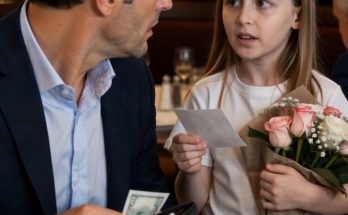
My mother looked up, her gaze scanning me with a clinical, detached precision that I should have been used to by now. She didn’t offer a hug. She didn’t ask how my drive was. She simply gestured with her champagne flute toward the empty space where my chair should have been, now occupied by a single, crisp, white piece of paper. It was a bill. It was folded neatly, the total prominently displayed at the bottom: $512.40. She gave me that tight, practiced smile that never reached her eyes. “You’re here now, honey. You can cover this, right?” My sister didn’t even look up from her phone, but she let out a sharp, dismissive laugh. “At least you’re useful for something,” she muttered, the words landing like stones in the silence.
I didn’t answer right away. I couldn’t. My brain felt like it had been dunked in ice water. I looked at the table, really looked at it. There were empty wine bottles, two of them, both vintage labels that I knew my parents didn’t usually order unless they were trying to impress someone or, as it turned out, making sure I had enough to pay for. There were shells from seafood platters piled high on discarded side plates, and the remnants of three separate desserts. I looked at the bill again. It wasn’t just for the meal. There were charges for gift wrapping, two bottles of wine, and an extra service fee that the restaurant only applied to large, pre-arranged parties. It wasn’t an oversight. It was a calculation.
“You knew I was coming,” I said. My voice sounded thin, almost foreign to my own ears. I looked at my father, hoping for a flicker of shame, a sign that he was being forced into this, but he just studied his napkin with an intensity that was meant to signal his complete lack of involvement. “We didn’t know if you’d make it,” Mother said, her tone breezy, as if she were discussing the weather. “But we wanted to celebrate properly.
It’s 35 years. We shouldn’t have to worry about the logistics of a bill on an anniversary, should we?” She held out her hand, a silent command. My sister laughed again, a sound that was suddenly, brutally ugly to me. “Don’t be a drag. It’s not like you have a husband or kids to spend your money on.”
I felt the weight of the photo album in my arms. It was suddenly impossibly heavy, a burden of memories I had been carrying for people who didn’t even see me as a person. I could have paid it. I had the money in my checking account from a recent project bonus. That was the most painful part of the realization. They knew I had it. They had tracked my life, my promotions, and my small successes, and they had decided that those things were communal property. I turned my head and signaled for the restaurant manager, who had been lingering near the service station. He walked over with a professional, cautious expression, clearly accustomed to the erratic dynamics of the suburban wealthy.
“Is there a problem?” the manager asked, his eyes flickering between the bill on the table and my face. I looked at him, and for the first time that night, I felt the cold, sharp clarity of a blade. “I’d like to know when this bill was generated,” I said, my voice steady now, projecting just enough so the surrounding tables might catch the drift. The manager glanced at my mother, who suddenly looked very busy examining her fingernails. “I believe that bill was prepared when the order was placed,” he said carefully. “The party requested that the balance be split and held on a separate tab for an arriving guest at the start of the evening.”
The silence at the table was total. My sister’s phone clattered onto the tablecloth. My father finally looked up, his face flushing a mottled, unhealthy red. My mother’s smile didn’t just fade; it disintegrated, leaving behind a hard, predatory expression that I had seen a thousand times before but had spent my entire life pretending wasn’t there. “We just thought it would be easier,” she hissed, the charm vanishing. “You’re always so busy with your little projects. We thought we’d save you the trouble of calculating your share.” I looked down at the handmade album in my arms. Three weeks of labor. Three weeks of trying to prove that I was part of this family.
“This bill isn’t mine,” I said to the manager, loud and clear. “And these people aren’t my responsibility.” I didn’t yell. I didn’t throw the album, and I didn’t beg for an explanation. I just set the leather-bound book down on the edge of the table, not in front of them, but on the very rim, as if I were a stranger who had accidentally placed her bag in the wrong spot. I turned to my mother, who was now clutching her purse like a shield. “You wanted a celebration,” I said. “You should have invited people who actually like you.” I felt a sudden, dizzying rush of freedom. It was as if a string that had been tethered to my chest for thirty-five years had finally snapped.
My sister started to stand up, her face twisted in a sneer. “You are such a drama queen,” she spat. “You’re really going to make a scene over a dinner bill?” I didn’t even look at her. I watched the manager, who was looking at my mother with a newfound, icy professional distaste. He had seen the truth of the bill, and he knew exactly what kind of people were sitting in his booth. “I’m not making a scene,” I said softly. “I’m just leaving.” I turned around and began walking toward the door. I didn’t look back to see who was paying, though I could hear my mother’s voice rising, desperate and thin, calling my name, then switching to a hissed, angry command directed at my father to get his credit card out.
I pushed through the revolving doors and stepped out into the cool, damp night air. The city lights were reflecting off the wet pavement, and for the first time in my life, the world felt vast and manageable. I walked to my car, my footsteps sounding loud and confident against the concrete. I reached the driver’s side door and fumbled with my keys, my hands finally shaking now that the performance was over. I opened the door, and as I sat down, I realized I still had the album. I hadn’t left it on the table. In the confusion, I had picked it back up. It was heavy, full of memories that belonged to me now, not to them. I placed it carefully on the passenger seat, buckling it in as if it were something precious that needed protecting.
I sat there for a long moment, watching the lobby doors. I saw my father come out a few minutes later, looking small and defeated, followed by my mother, who was storming toward her car with the kind of frantic energy that told me she was already planning how to rewrite the story of this night for the rest of the family. I didn’t feel hurt anymore. I didn’t feel lonely. I just felt clean. I started the engine, the sound a low, steady hum in the quiet night. I didn’t look in the rearview mirror. I put the car in drive and pulled away from the restaurant, turning toward the highway that led back to my own home, my own life, and the quiet, empty apartment that was finally, truly mine. I wasn’t their ATM anymore. I was just me. And that was enough.