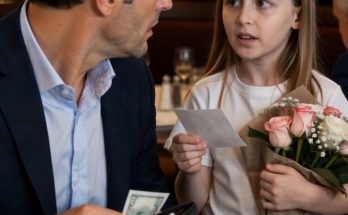
The Christmas Morning I Finally Saw the Truth
By the time my daughter was seven, she had learned something no child should have to learn: sometimes an adult can make you feel unwanted without ever saying the words directly.
My name is Natalie Mercer, and my daughter’s name is Lila.
Lila was four when I married my husband, Grant Mercer. Her biological father had not been an active part of her everyday life for years, but Grant never treated her as though she arrived with an invisible label attached to her.
From the beginning, he simply became Dad.
He packed her lunches before work and remembered that she hated tomatoes but loved strawberries cut in half. He knew she could not sleep unless her stuffed rabbit, Clover, was sitting upright on the little chair beside her bed.
Most importantly, Grant knew my daughter well enough to recognize the difference between her real laugh and the careful little laugh she used when she was uncomfortable.
His mother, Diane Mercer, knew that difference too.
She simply chose to ignore it.
Diane never openly said that Lila was not family. She was far too clever for that.
Instead, she called her “Natalie’s daughter,” “Grant’s little girl,” or occasionally “our holiday visitor.”
The words always sounded harmless when repeated individually.
Together, however, they created a message Lila understood perfectly.
You are welcome here, but you do not belong here.
For nearly three years, Grant and I tried to handle the situation quietly. We corrected Diane. We talked to her privately. Grant reminded her that he considered Lila his daughter in every meaningful sense of the word.
Diane would smile and answer, “Of course I know that. You two take everything so seriously.”
Then she would do it again.
That Christmas, we traveled from our home in Eugene, Oregon, to Diane’s house outside Bend.
Before we entered the house, Grant crouched beside Lila and wiped a tiny mark from her black shoe.
“There,” he said, smiling. “Perfect.”
Lila giggled.
“It was already perfect, Dad.”
Grant kissed her forehead.
“So are you.”
I remember watching them and wishing that simple love would be enough to protect her from everything waiting on the other side of Diane’s front door.
I had no idea Grant had already prepared for the possibility that it would not be.
A Four-Dollar Gift With a Priceless Message

Christmas morning began beautifully.
Snow covered the evergreens beyond Diane’s windows, cinnamon rolls filled the kitchen with their warm scent, and almost twenty relatives gathered around the large living room.
Diane loved Christmas because she loved being at the center of things.
At exactly nine o’clock, she began distributing presents.
Her biological grandchildren received generous gifts.
Eleven-year-old Carter opened a brand-new tablet.
His younger sister received one too.
The teenagers received envelopes containing several hundred dollars each. There were headphones, sneakers, gift cards and expensive winter jackets.
Lila sat beside Grant in her deep green holiday dress, watching everyone with a patient smile.
Eventually, Diane looked toward her.
“Oh! Almost forgot.”
She reached behind an armchair and pulled out a small paper bag from a local pharmacy.
“This is for you, sweetheart. I certainly wouldn’t want you feeling left out.”
Something in Grant’s expression changed.
Lila did not notice.
She accepted the bag politely.
“Thank you, Grandma.”
She removed the tissue paper and found a small vanilla candle.
It probably cost less than five dollars.
But the price was not what bothered me.
Lila loved inexpensive things. A pretty rock from a hiking trail could make her happier than an expensive toy.
Then I saw the tag tied around the candle.
Diane had written it herself.
“To Grant’s Girl.”
The room became strangely quiet.
One relative suddenly became very interested in his coffee. Another began collecting wrapping paper even though nobody had asked her to.
Grant stared at the tag.
The paper cup in his hand bent beneath his fingers.
I leaned toward him.
“Grant.”
He did not look at me.
“If she does it again, Lila has something for her.”
I frowned.
“What are you talking about?”
“The red velvet box in Lila’s overnight bag.”
I stared at him.
“You knew this would happen?”
Finally, he turned toward me.
“I hoped it wouldn’t.”
Then he added quietly:
“But hoping isn’t the same as protecting her.”
The Question That Broke My Heart

We did not create a scene.
That surprised Diane more than anything.
She seemed almost disappointed when Grant simply placed an arm around Lila and continued with Christmas morning.
The rest of the day passed beneath a layer of artificial cheerfulness.
That evening, I found Lila sitting on the guest-room bed.
The candle rested beside her.
She was holding the tag between her fingers.
“Mom?”
“Yeah, sweetheart?”
She hesitated.
Then came the question I had been afraid she would eventually ask.
“Am I only Dad’s girl because I’m not really his daughter?”
My heart sank.
Before I could answer, Grant appeared in the doorway.
He had heard her.
He crossed the room, knelt in front of her and gently took both her hands.
“Look at me, Lila.”
She raised her eyes.
“You are my daughter.”
She blinked.
Grant continued.
“I didn’t meet you on the day you were born, but being your father isn’t about one day. It’s about every day after that. It’s pancakes on Saturday. It’s helping with homework. It’s sitting beside you when you’re sick. It’s cheering too loudly at your school plays.”
A tiny smile appeared on her face.
“You do cheer too loudly.”
“Exactly. That’s fatherhood.”
Then Grant reached into her overnight bag.
He removed a small red velvet jewelry box.
I had never seen it before.
He placed it in Lila’s hands.
“What’s this?” she asked.
“A boundary.”
She frowned because the word was unfamiliar.
Grant smiled gently.
“It means nobody gets to keep hurting you just because they’re related to us.”
He explained that if Diane deliberately excluded her again, Lila could give her the box.
She did not have to.
The choice belonged to her.
Lila looked nervous.
“Will Grandma be angry?”
“Probably.”
Then she asked something that nearly broke Grant.
“If she’s angry with me, will you still be my dad?”
His face changed instantly.
He pulled her into his arms.
“There is nothing my mother can say, do or feel that will change the fact that I’m your father. Nothing.”
Lila hugged him tightly.
That night, she placed the red velvet box inside her little purse.
One Word at the Breakfast Table
The next morning, Diane hosted her traditional post-Christmas brunch.
She treated place settings like military assignments.
White dishes.
Polished silverware.
Folded napkins.
And handwritten name cards placed carefully above every plate.
I found mine.
“Natalie.”
Beside it was Grant’s.
Across the table were names belonging to cousins, aunts, uncles and grandchildren.
Then I found Lila’s seat.
There was no name.
The card said:
“GUEST.”
For a moment, anger rushed through me so quickly that I nearly grabbed the card myself.
Then Grant touched my arm.
He wasn’t looking at Diane.
He was looking at Lila.
She had already seen it.
The room gradually became quiet.
Lila looked at the card.
Then at Diane.
Then at her father.
Grant said nothing.
Neither did I.
This time, the decision belonged to her.
Lila reached into her purse.
When her hand emerged, she was holding the red velvet box.
Diane noticed it.
Her confident expression disappeared for half a second.
Lila pushed back her chair and walked across the dining room.
She stopped beside Diane.
“Grandma?”
Diane looked up.
“Yes?”
Lila held out the box.
“Dad said I could give this to you if you made me feel like I didn’t belong again.”
Several relatives looked toward Grant.
He stood and walked behind Lila.
Diane gave an uncomfortable laugh.
“Oh, Grant. Really? We’re doing this because of a place card?”
Grant’s voice remained calm.
“Open it, Mom.”
The Key Inside the Red Box
Diane reluctantly opened the lid.
Inside was an ordinary brass house key.
Underneath it was a folded card.
The moment Diane saw the key, her face changed.
She recognized it.
For years, she had possessed a spare key to our home.
Grant had given it to her long before I met him.
She had used it whenever she visited Eugene, sometimes entering without calling because, as she frequently reminded us, “A mother shouldn’t need an appointment to visit her son.”
Diane picked up the folded note.
Her hands were suddenly less steady.
She opened it.
Grant had written the message himself.
It explained that the locks on our house had already been changed.
Diane’s spare key no longer worked.
She would no longer enter our home without an invitation.
Most importantly, if she wanted to rebuild a relationship with our household, it would begin with acknowledging Lila as a full member of the family.
Diane stared at her son.
“You’re removing your own mother from your home because of her?”
Grant immediately stepped beside Lila.
“No.”
His answer was remarkably calm.
“I’m changing your access to our home because of you.”
Diane looked stunned.
“She’s seven years old!”
“Exactly.”
Grant pointed toward the place card.
“She’s seven, Mom. You’re an adult. And somehow you’ve spent three years expecting a seven-year-old child to carry the emotional weight of your choices.”
Nobody spoke.
Diane looked around the table, expecting support.
None came.
For years, relatives had watched her small comments and exclusions but remained silent because challenging Diane always seemed more exhausting than tolerating her behavior.
Now everyone could see where that silence had led.
“You Chose Her Over Me”
Diane stood.
Her voice trembled.
“So that’s it? You’re choosing Natalie and her daughter over your own family?”
Grant shook his head.
“You’re still misunderstanding this.”
He put one hand gently on Lila’s shoulder.
“Natalie is my wife. Lila is my daughter. They are my family.”
Diane stared at him.
“But she isn’t your blood.”
Grant’s expression hardened.
“Neither is my wife. Do you think that makes our marriage imaginary?”
Nobody moved.
He continued.
“Family isn’t a ranking system based on DNA. You don’t get to decide that one child deserves tablets and hundreds of dollars while another deserves a cheap candle with a label reminding her she came from somewhere else.”
Diane tried to interrupt.
Grant raised one hand.
“The candle wasn’t the problem. If you’d given every grandchild a five-dollar candle, nobody would care. The problem was the message.”
He picked up Lila’s place card.
“And this confirms that message.”
Diane’s eyes filled with frustration.
“You’re humiliating me in my own house.”
Lila suddenly spoke.
Her voice was quiet.
“Grandma, I didn’t want to embarrass you.”
Everyone turned toward her.
She looked down at her shoes.
“I just wanted my name on the card.”
That simple sentence accomplished what every adult argument had failed to accomplish.
Diane had no clever response.
What Lila Decided
We left shortly after brunch.
Nobody shouted.
Nobody slammed doors.
Grant simply carried our bags to the car while I helped Lila put on her coat.
Before leaving, Lila turned toward Diane.
“Can Grandma still come to our house someday?”
Grant crouched beside her.
“That’s something we’ll decide together when everyone is ready to treat one another properly.”
Lila thought about it.
Then she walked back toward Diane.
“Grandma?”
Diane looked at her.
“You can call me when you’re ready.”
Diane’s eyes widened.
Lila continued.
“But my name is Lila. Not Guest. And not Grant’s girl.”
Grant lowered his head for a moment, overwhelmed.
Diane said nothing.
Lila returned to us.
During the drive home, she fell asleep with her head against the window and Clover, her stuffed rabbit, tucked under one arm.
Grant drove silently for almost an hour.
Eventually, I reached across the console and took his hand.
“How long ago did you change the locks?”
“Three weeks ago.”
I laughed softly.
“You really prepared for this.”
Grant looked at our sleeping daughter in the rearview mirror.
“I spent too many years hoping Mom would change because I explained things nicely enough.”
He squeezed my hand.
“Then I realized Lila shouldn’t have to keep getting hurt while adults wait for another adult to become kinder.”
What Happened After Christmas

Diane did not contact us for almost two months.
At first, she sent messages to relatives insisting that Grant had overreacted.
But something unexpected happened.
Nobody rushed to reassure her.
Several family members finally told her what they had been afraid to say for years.
They had noticed the separate gifts.
They had noticed the photographs where Lila was mysteriously missing.
They had noticed the strange labels.
They had simply remained silent.
In early March, Diane called Grant.
She did not ask for her key back.
Instead, she asked to speak with Lila.
Grant stayed nearby while they talked.
Diane’s apology was not perfect.
Real apologies rarely are.
But for the first time, she did not defend herself.
She said:
“Lila, I made you feel like you were visiting a family that was supposed to be yours. That was wrong.”
Lila listened.
Then she asked:
“Will you use my name now?”
Diane paused.
“Yes, Lila.”
Months later, we invited her to our home.
She knocked.
That mattered.
Grant opened the door, but Diane did not immediately walk inside.
She waited.
Lila came running from the kitchen.
Diane smiled nervously.
“Hi, granddaughter.”
Lila looked at Grant.
Then at me.
Finally, she smiled.
“Hi, Grandma.”
The old brass key was never returned.
It did not need to be.
Because the lesson had never really been about a lock.
It was about understanding that access to someone’s life is not automatically guaranteed by a family title.
Sometimes love means opening a door.
Sometimes love means closing one until everyone on the other side understands how they are expected to treat the people inside.
A child may forget the price of a Christmas gift, but they can remember for decades the painful feeling of watching everyone else be openly welcomed while they are quietly reminded that they stand outside the circle.
Becoming a parent is not defined only by biology, because the person who consistently shows up, prepares lunches, comforts fears, celebrates small victories and protects a child’s dignity can build a bond stronger than any label.
Small acts of exclusion should never be dismissed simply because they appear harmless to adults, because repeated words, separate seats and carefully chosen labels can slowly teach a child that their presence is tolerated rather than treasured.
Keeping peace in a family does not mean allowing one person to repeatedly disrespect everyone else, because genuine peace requires mutual respect rather than the silence of people who are afraid to challenge uncomfortable behavior.
Boundaries are not automatically acts of punishment or rejection; sometimes they are simply clear instructions explaining what behavior is necessary if someone wants the privilege of remaining close to the people they love.
Grant’s greatest act of fatherhood was not changing a lock or writing a note, but making certain that Lila understood she never had to earn the right to be his daughter by remaining quiet when someone treated her as less important.
Adults should be especially careful about the language they use around children, because a seemingly insignificant word like “guest” can carry an enormous emotional meaning when a child has already spent years wondering whether they truly belong.
Family relationships become healthier when people stop protecting appearances and begin protecting one another, even when doing so requires uncomfortable conversations, changed traditions and consequences that some relatives initially refuse to understand.
Forgiveness can be meaningful without erasing boundaries, because welcoming someone back into your life after sincere change does not require pretending that the behavior that caused the separation was acceptable.
The most important gift Lila received that Christmas was not hidden beneath wrapping paper at all; it was the certainty that when someone questioned her place in the family, her mother and father would stand beside her and say clearly, without hesitation, “You belong with us.”