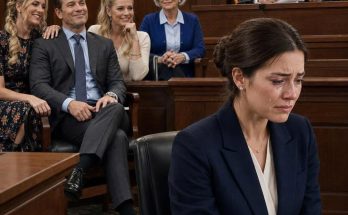
I had sent them $18,000 to care for my daughter. Now I was about to find out where every dollar had gone—and why my little girl had been living like she had nothing.
PART 1

My name is Megan Carter, and I’m a 32-year-old combat medic in the U.S. Army.
For nine months, I lived thousands of miles away from home, sleeping in unfamiliar places, working exhausting shifts, and counting down the days until I could see my daughter again.
Every night before bed, I looked at the same picture on my phone.
My fourteen-year-old daughter, Emma, smiling beside me.
That picture was the reason I kept going.
When I deployed, I had no choice but to leave Emma with my parents in Baton Rouge, Louisiana. They promised me she would be safe, loved, and cared for.
“I raised you,” my mother, Linda, had told me before I left. “You don’t have to worry about your daughter. She’s our granddaughter. We’ll treat her like our own.”
I believed her.
I trusted my parents enough to send them $2,000 every month for Emma’s expenses.
Food.
Clothes.
School supplies.
Sports.
Medical needs.
Anything she needed.
I even told them to put whatever was left into a savings account for her future.
Over nine months, I sent them $18,000.
I never questioned where the money went.
I never asked for receipts.
They were my parents.
They were supposed to be the people I trusted most.
That trust lasted until the day I came home.
And the first thing my daughter said to me was something I will never forget.
“What money?”
Five years earlier, my life had fallen apart.
My husband, Daniel, died in a car accident when he was only thirty.
I was twenty-seven.
Emma was nine.
One day, I was a wife and mother.
The next, I was a widow raising a little girl alone.
I remember standing in our kitchen after the funeral, staring at Daniel’s coffee mug still sitting beside the sink.
Emma was crying in the hallway.
I wanted to collapse.
Instead, I held her.
“We’re going to be okay,” I whispered.
I had no idea how.
But I knew I had to find a way.
Joining the Army became that way.
It gave me stability, a career, and something to fight for when my personal life had already been destroyed.
Emma was proud of me.
She used to tell everyone at school, “My mom saves people.”
I never corrected her.
Maybe, in a way, she was right.
I spent years learning how to keep other people alive.
But nothing prepared me for what happened to my own daughter.
When my deployment orders arrived, I was terrified.
Not of the deployment itself.
I was terrified of leaving Emma.
My parents immediately volunteered to take her.
“Let her stay with us,” my father, Robert, said. “She’ll have her own room. She’ll be comfortable.”
My mother hugged Emma.
“You won’t even miss your mom,” she joked.
Emma laughed.
I didn’t.
I knew how hard separation would be.
Before I left, I helped Emma decorate her room at my parents’ house. We bought new curtains, framed pictures, and put a little desk near the window where she could do her homework.
On my last night, Emma crawled into bed beside me.
“Mom?”
“Yeah?”
“Are you scared?”
I swallowed.
“A little.”
“Are you coming back?”
“Always.”
She hugged me tightly.
“I’ll wait.”
The next morning, when I drove away, she stood in my parents’ driveway crying.
I had to force myself not to turn around.
I told myself she was safe.
My parents loved her.
And I could provide everything she needed.
So every month, I sent $2,000.
I never missed a payment.
When my deployment finally ended, I felt like I could breathe again.
I landed back in the United States exhausted, carrying one duffel bag and thinking about one thing.
Emma.
My younger sister, Rachel, picked me up from the airport.
She hugged me, but something about her felt different.
“You’re finally home,” she said.
“I can’t wait to see Emma.”
Rachel hesitated.
“She’s grown a lot.”
I laughed.
“That’s what kids do.”
Rachel smiled weakly.
“You’ll see.”
I didn’t understand what she meant until we pulled into my parents’ driveway.
The house looked completely different.
There was a brand-new SUV parked outside.
The front porch had been renovated.
Through the windows, I could see expensive furniture that hadn’t been there before.
I barely noticed any of it.
Emma came running through the front door.
“Mom!”
I dropped my bag.
She jumped into my arms, and I held her so tightly that neither of us spoke for several seconds.
She smelled like the shampoo I used to buy her.
I closed my eyes.
I was home.
But as I held her, something felt wrong.
She had gotten taller.
Much taller.
But she looked thinner.
Her clothes seemed too small.
Her sneakers were worn out.
Her phone screen was cracked.
“Look at you,” I whispered. “You’re so big.”
She smiled.
“I missed you.”
“I missed you too.”
Then I noticed the backpack hanging from her shoulder.
The zipper was broken.
I touched it.
“What’s wrong with your backpack?”
She shrugged.
“It still works.”
That answer bothered me.
At dinner, I tried to catch up on everything I’d missed.
“How’s soccer?”
Emma looked down at her plate.
“I don’t play anymore.”
“What?”
“I quit.”
“Why?”
She shrugged again.
“I couldn’t afford the uniform.”
My fork stopped halfway to my mouth.
“What do you mean you couldn’t afford it?”
Before Emma could answer, my mother interrupted.
“She wasn’t that interested anymore.”
I looked at Emma.
“Is that true?”
Emma stared at her plate.
“Sort of.”
I felt something cold settle in my stomach.
Later that night, after everyone went to bed, I opened my banking app.
There they were.
Nine transfers.
$2,000 each.
$18,000 total.
Every transfer had gone through.
Not one had been returned.
I stared at the screen for several minutes.
Then I asked myself a question I didn’t want to ask.
Where was the money?
The next morning, Emma came downstairs before school.
She made herself toast and cut up an apple.
“Where’s Grandma?”
“Still sleeping.”
I noticed there was barely anything in the refrigerator.