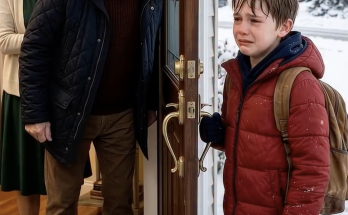
During bath time, my six-year-old daughter suddenly burst into tears. “Mommy… it really hurts when I pee. Please don’t touch me there.”

I rushed her to the hospital convinced she had a urinary infection. But after examining her, the doctor’s face went pale.

She pulled me into the hallway and lowered her voice. “Mrs. Carter, I need you to call the police.” I froze. Then my phone buzzed.

It was a message from my husband. And what he wrote told me something terrifying…

PART 1

“Mommy… it burns when I pee.”

My six-year-old daughter, Lily, was sitting in the bathtub when she said it.

Then she started crying.

“Please don’t touch me there.”

The washcloth slipped from my hand.

For a moment, I simply stared at her.

That evening had started like hundreds of others in our quiet suburban home outside Seattle.

Lily had eaten half a grilled-cheese sandwich, negotiated her way into two bedtime stories instead of one, and happily climbed into a bathtub overflowing with bubbles.

Nothing seemed unusual.

I was distracted, thinking about laundry, groceries, and everything else I still needed to do before bed.

Three years earlier, I had worked as an operations coordinator for a shipping company.

I quit after my husband, Daniel, received a major promotion.

“There’s no reason for both of us to be exhausted all the time,” he told me. “I’ll take care of the money. You focus on Lily.”

At the time, it sounded like a gift.

Eventually, Daniel began traveling more.

Late meetings.

Business dinners.

Entire weekends supposedly spent with investors.

I became used to handling almost everything alone.

But that night, when I gently tried to help Lily wash, her entire body tensed.

Then she cried out.

This wasn’t a tantrum.

She was hurting.

I immediately wrapped her in a towel and held her against me.

“Did you fall at school?”

She shook her head.

“Did somebody hurt you?”

Her small arms tightened around my neck.

“I don’t know, Mommy.”

Then, almost inaudibly:

“I don’t want to talk about it.”

My stomach dropped.

I called Daniel.

His phone was off.

I tried again.

And again.

Five calls.

Nothing.

I dressed Lily and drove straight to the pediatric emergency department at a nearby hospital.

After nearly forty minutes, a physician named Dr. Rebecca Lawson came into the room.

At first, I kept telling myself the same thing.

Urinary tract infection.

That had to be it.

Something ordinary.

Something treatable.

Something that would let us go home.

But during Lily’s examination, I watched Dr. Lawson’s expression change.

She stopped.

Looked at the nurse.

Then looked at me.

“Mrs. Carter, could you come into the hallway with me for a moment?”

A nurse stayed beside Lily while I followed the doctor outside.

“We need to run some additional tests,” she said quietly.

“Is it an infection?”

Dr. Lawson didn’t answer immediately.

That silence frightened me more than any answer could have.

“There are findings that don’t appear consistent with a routine infection.”

My ears began ringing.

“What are you saying?”

She glanced toward Lily’s room before continuing.

“I don’t want to make assumptions before the appropriate specialists evaluate her. But we need to consider the possibility that someone may have harmed your daughter.”

For several seconds, I couldn’t speak.

My mind rejected the sentence.

“Who?”

“That is something investigators may need to determine.”

“That’s impossible. Lily is always with me.”

The doctor held my gaze.

“Always?”

One word.

That was all it took.

Because suddenly I remembered something.

Three weeks earlier, my mother had needed me to drive her to a medical appointment across town.

Daniel had unexpectedly canceled a meeting and offered to stay home with Lily.

When I returned, Lily was asleep.

At seven in the evening.

“She wore herself out playing,” Daniel had said.

Then it happened again the following week.

And around that same time, Lily had started asking me to leave her bedroom door open at night.

She stopped wanting to sit beside her father at dinner.

Once, when Daniel tried to carry her upstairs, she pulled away.

I had dismissed it as a phase.

Standing in that hospital hallway, those little moments suddenly didn’t feel little anymore.

Dr. Lawson handed me several forms.

“We need additional testing and a specialized pediatric evaluation. We also need to activate the hospital’s child-protection protocol.”

My mouth went dry.

“Child protection?”

She lowered her voice.

“If the evaluation supports our concerns, law enforcement and child protective services will need to be involved.”

I looked through the small window in the door.

Lily was sitting on the hospital bed hugging her stuffed rabbit.

Six years old.

Tiny pink socks.

Messy brown hair.

Terrified eyes.

Then my phone vibrated.

Daniel.

Where are you? I’m home. Bring Lily back.

My hands started shaking.

But not because of the message.

Because Lily had seen his name appear on my screen.

Her face changed instantly.

She climbed off the bed, hurried behind me, and grabbed my sweater.

“No, Mommy.”

“Sweetheart?”

Her voice became desperate.

“I don’t want to go home.”

Then she whispered:

“I don’t want to go with Daddy.”

And at that moment, I realized the night was only beginning.

PART 2

The testing took a little over an hour.

It felt like an entire night.

Lily eventually fell asleep against my chest while I sat in a hard plastic chair beneath the fluorescent lights.

When Dr. Lawson returned, another specialist was with her.

I knew before either woman spoke.

There would be no simple explanation.

“Emily,” Dr. Lawson said gently, “we found injuries that require a formal investigation. Evidence was also collected that will need to be examined by forensic specialists.”

The room seemed to tilt.

I couldn’t breathe properly.

This wasn’t an infection.

It wasn’t an accident.

Someone had hurt my daughter.

The hospital contacted law enforcement, and officers arrived along with a specialist trained to work with children.

Eventually, they asked me a question I will never forget.

“Who has been alone with Lily during the past few months?”

I gave them every name I could think of.

Daniel’s father.

His brother.

An occasional babysitter.

Family friends.

And finally—

Daniel.

The second I said my husband’s name, Lily stirred against me.

Her fingers tightened around my shirt.

One of the investigators noticed.

“Where is your husband now?”

“At home.”

“Does he know why Lily is here?”

“No. I only told him she wasn’t feeling well.”

They advised me not to return home that night.

I agreed immediately.

A few hours earlier, I might have driven home and demanded answers.

Now I understood something more important.

My daughter didn’t need confrontation.

She needed protection.

That night, we stayed with my best friend, Rachel, an attorney who lived about twenty minutes away.

Lily eventually slept.

I didn’t.

At eight the next morning, Daniel started calling.

Eleven missed calls.

Then the messages began.

What’s wrong with Lily?

Why aren’t you answering?

Tell me which hospital you went to.

I’m coming to get you both.

I didn’t respond.

Then another message appeared.

I read it once.

Then again.

My blood went cold.

Emily, don’t do anything stupid. There are things you could misunderstand.

I stared at the screen.

There was one enormous problem with that sentence.

I had never told Daniel what the doctors suspected.

Not once.

As far as he knew, Lily had gone to the hospital because she was sick.

So what exactly did he think I could “misunderstand”?

I handed my phone to Rachel.

She read the message.

Her expression immediately changed.

“Don’t answer him.”

She handed the phone back.

“Send this to the detective.”

I did.

A few hours later, investigators contacted me again.

They were taking steps to examine our home.

Then I remembered something I hadn’t thought about in weeks.

A month earlier, Daniel had bought Lily a smart night-light shaped like a cloud.

He had installed it himself.

“It tracks temperature, humidity, and sleep patterns,” he’d told me proudly.

“I can control everything from my phone.”

I thought it was excessive.

Lily loved it because the cloud changed colors.

I mentioned it to the investigators.

There was silence on the other end of the phone.

“Mrs. Carter,” the detective finally asked, “does that device have a camera?”

“Daniel told me it didn’t.”

That afternoon, investigators entered our home under the appropriate legal authorization.

Lily and I stayed with Rachel.

Just after six, my phone rang.

It was the detective.

“Mrs. Carter, we found something inside the night-light.”

I had to sit down.

“What?”

“A component that doesn’t belong to the commercial model.”

My hand tightened around the phone.

“What kind of component?”

“A concealed camera module.”

For a moment, I couldn’t hear anything except my own heartbeat.

But the investigators weren’t finished.

They had also examined devices associated with Daniel’s home office.

They discovered records of remote connections.

Dates.

Times.

Late-night activity.

And several of those timestamps appeared to correspond with nights when Lily had awakened crying or suddenly asked to sleep in my room.

Then the detective told me something even stranger.

“There’s another detail you should know.”

I gripped the edge of the kitchen table.

“What?”

“Not all of the remote connections originated from your home.”

I stopped breathing.

“Where did they come from?”

There was a short pause.

“Several appear to have originated from your husband’s office.”

Before I could respond, I heard small footsteps behind me.

Lily stood in the doorway.

Her stuffed rabbit was tucked beneath one arm.

“Mommy?”

I immediately ended the conversation and knelt in front of her.

“What is it, sweetheart?”

She looked down the hallway.

Then over her shoulder.

Almost as if she needed to make sure nobody else could hear.

She leaned closer.

And in a trembling whisper, my six-year-old daughter said the words that ended my marriage:

“Daddy said it was our secret.”

PART 3

“Daddy said it was our secret.”

For a few seconds, I couldn’t move.

I stayed on my knees in Rachel’s kitchen, staring into my daughter’s frightened eyes while those six words repeated inside my head.

Our secret.

I wanted to ask her a hundred questions.

What secret?

When did he say that?

What happened?

But the specialist at the hospital had warned me about this.

Don’t interrogate her.

Don’t suggest answers.

Don’t make her repeat anything unnecessarily.

So I swallowed every question burning inside me.

I simply opened my arms.

Lily stepped into them.

“You never have to keep a secret that makes you scared,” I whispered. “You can always tell me anything.”

She buried her face against my shoulder.

Then she said something else.

Something I didn’t understand at first.

“Daddy said the cloud was watching.”

I went completely still.

“The cloud?”

She nodded.

Her night-light.

The one investigators had just discovered contained a concealed camera.

I texted the detective immediately.

His reply came less than a minute later.

Don’t ask her anything else about it. We’ll have the child interviewer handle this properly.

I followed his instructions.

That afternoon, Lily met with a trained forensic interviewer in a child-friendly facility.

I wasn’t allowed inside the interview room.

At first, that terrified me.

But they explained that it was important for Lily to speak freely without seeing my reactions.

So I sat outside with Rachel.

And waited.

Forty-three minutes.

I counted every one.

When the door finally opened, Lily came running toward me.

I hugged her.

The interviewer spoke privately with the detective afterward.

Nobody gave me every detail.

They didn’t need to.

The detective’s face told me enough.

Then he asked me a question I wasn’t expecting.

“Mrs. Carter, does your husband have access to any other properties?”

I thought about it.

“His company has a small executive apartment downtown. They use it for employees working late or visiting clients.”

“Do you know the address?”

“Yes.”

He wrote it down.

“Anything else?”

I almost said no.

Then I remembered the lake house.

Daniel’s father owned a small vacation property about two hours outside Seattle.

Daniel sometimes used it for “business weekends.”

I gave them that address too.

That evening, I received no more calls from Daniel.

No messages.

Nothing.

The silence was worse.

At 9:17 p.m., the detective called.

“Emily, where are you right now?”

“At my friend’s house.”

“Is Lily with you?”

“Yes.”

“Keep the doors locked. Don’t leave tonight unless we tell you otherwise.”

My heart started pounding.

“Why?”

There was a pause.

“We went to speak with your husband.”

“And?”

“He wasn’t at the house.”

My stomach dropped.

“Where is he?”

“We don’t know.”

Daniel’s car was gone.

His work phone had been turned off.

And according to investigators, he hadn’t used any of his credit cards since that morning.

It looked like he had disappeared.

I immediately checked the windows.

Rachel locked the back door.

For the first time since this nightmare began, I wasn’t just afraid of what Daniel might have done.

I was afraid of what he might do next.

Then, at 10:06 p.m., my phone buzzed.

Unknown number.

One message.

You have no idea what you’re doing.

I showed Rachel.

She didn’t even hesitate.

“Detective. Now.”

I forwarded it.

The response came quickly.

Do not reply.

Another message arrived.

You’re destroying our family over something you don’t understand.

Then another.

Call me before this goes too far.

My hands shook so badly that Rachel took the phone from me.

But then a fourth message appeared.

This one was different.

Ask Rachel why she’s helping you.

Rachel went pale.

I looked at her.

“What does that mean?”

“I don’t know.”

But she said it too quickly.

“Rachel.”

She stood up and walked toward the kitchen.

“Emily, this isn’t the time.”

I followed her.

“What does he mean?”

She turned around.

And the expression on her face made my stomach tighten.

There was something she hadn’t told me.

“Three months ago,” she finally said, “Daniel called me.”

I stared at her.

“What?”

“He wanted legal advice.”

“About what?”

“He was vague. He asked hypothetical questions about surveillance laws, digital privacy, and whether recordings made inside a person’s own home could be used in court.”

My skin prickled.

“You never told me?”

“I didn’t know any of this was happening. He said it involved a dispute at work.”

“And you believed him?”

“For about ten minutes.”

Rachel walked to a drawer and pulled out an old phone.

“I thought the conversation was strange enough that I wrote down what he asked me afterward.”

She opened a note.

The date was from three months earlier.

One line stood out:

If someone installs a recording device in their own house without telling their spouse, who legally owns the recordings?

I felt sick.

But beneath that question was another note.

One I hadn’t expected.

Asked whether deleting cloud backups permanently removes them from company servers.

I looked at Rachel.

“Cloud backups?”

She nodded slowly.

And suddenly, we both understood the same thing.

If Daniel had been trying to delete something—

maybe he hadn’t succeeded.

The investigators received Rachel’s notes that night.

By morning, they had obtained additional legal authorization to preserve records associated with several accounts and devices.

And that’s when the investigation changed completely.

Because Daniel had made one enormous mistake.

He thought deleting files meant they were gone.

They weren’t.

Investigators recovered metadata associated with the hidden device.

Connection logs.

Account identifiers.

Device registrations.

Backup activity.

And one account appeared repeatedly.

It belonged to Daniel.

But then investigators found something I never expected.

Another account had accessed the system too.

Someone else knew about the camera.

Someone else had logged in.

When the detective told me the name connected to that second account, I had to ask him to repeat it.

Because it wasn’t a stranger.

It wasn’t Daniel’s father.

It wasn’t his brother.

It was someone who had eaten dinner at our house.

Someone Lily trusted.

Someone I had trusted too.

Daniel’s business partner.

Mark Reynolds.

And suddenly Daniel’s endless “investor meetings” began to look very different.

But there was still one question nobody could answer.

Where was my husband?

The answer came at 6:40 that evening.

A state trooper had located Daniel’s SUV.

It was parked outside his father’s lake house.

And Daniel wasn’t alone.

Mark’s car was parked beside it.


FINAL PART

Police reached the lake house before midnight.

Daniel and Mark were both there.

I wasn’t.

And I’m grateful for that.

For days, part of me had imagined confronting my husband.

I imagined screaming at him.

Demanding answers.

Asking how the man who once cried when Lily was born could become someone my daughter was afraid to be around.

But when the moment finally came, I realized I didn’t want to see him.

I wanted him far away from Lily.

That was enough.

Both men were detained while investigators continued examining the evidence.

The case didn’t resolve overnight.

Real investigations don’t.

There were interviews.

Search warrants.

Digital examinations.

Attorneys.

Court hearings.

Weeks became months.

I learned quickly that the justice system moves nothing like television.

Evidence has to be authenticated.

Devices have to be examined.

Timelines have to be reconstructed.

And most importantly, Lily had to be protected from being forced to relive everything again and again.

The hidden camera became one of the central pieces of the investigation.

Digital records linked Daniel to the device.

Additional records linked Mark to remote access.

But investigators also discovered something that finally explained Daniel’s bizarre message that morning:

There are things you could misunderstand.

He hadn’t been guessing.

He knew the hospital visit could expose him.

And he’d panicked.

The investigators reconstructed the timeline using messages, device logs, location records, and other evidence.

I won’t describe everything they uncovered.

Some details belong to Lily.

They aren’t mine to turn into a story.

But I can tell you this:

My daughter had been telling me something was wrong long before she ever found the words to say it.

The open bedroom door.

The sudden fear at bedtime.

Pulling away from her father.

The nights she woke up crying.

The way she clung to me when his name appeared on my phone.

Children don’t always explain fear the way adults expect them to.

Sometimes they show you.

And I hadn’t understood what I was seeing.

That realization nearly destroyed me.

For months, I replayed every moment.

Why hadn’t I noticed sooner?

Why hadn’t I questioned Daniel?

Why had I accepted every explanation?

One afternoon, Lily’s therapist said something that changed the way I thought about it.

“You can’t go backward and become the mother who knew then what you know now. You can only be the mother she needs today.”

So that became my job.

Not revenge.

Not obsession.

Lily.

I filed for divorce.

Through my attorney, I requested protective orders and temporary sole custody while the criminal case proceeded.

I returned to work.

Not because I suddenly felt strong.

I didn’t.

I returned because I needed to rebuild a life that Daniel could no longer control financially.

Rachel helped me find a small rental house in a quiet neighborhood.

The first night there, Lily walked through every room inspecting it.

Then she chose the bedroom with the yellow walls.

I expected her to ask me to leave the door open.

Instead, she looked at me and asked:

“Can we get a normal night-light?”

I nearly cried.

“Of course.”

We bought one shaped like a little moon.

No Wi-Fi.

No app.

No camera.

Just a switch.

On.

Off.

That was it.

Months later, the criminal proceedings reached their conclusion.

The evidence against Daniel and Mark resulted in serious charges, and both ultimately faced legal consequences through the court system.

I won’t pretend that a courtroom ending fixed everything.

It didn’t.

There was no magical moment when Lily suddenly became the child she had been before.

Healing came quietly.

She started sleeping through the night again.

She stopped checking whether the front door was locked.

She made friends at her new school.

She joined an art class.

She began singing while brushing her teeth.

Little things.

Beautifully ordinary things.

Almost a year after that night at the hospital, I was helping Lily clean her room when I found her old stuffed rabbit beneath the bed.

The same rabbit she’d been holding when the doctor first pulled me into the hallway.

I picked it up.

“Do you still want this?”

Lily looked at it for a moment.

Then she smiled.

“Yeah.”

She took the rabbit from me.

“But I don’t need him to protect me anymore.”

My throat tightened.

“No?”

She shook her head.

Then she wrapped her arms around my waist.

“I have you.”

That night, after she fell asleep, I stood outside her bedroom.

The door was closed.

Not because she was frightened.

Because she wanted it closed.

Her little moon night-light glowed softly beside the bed.

I thought about the woman I had been one year earlier.

The woman standing in a hospital hallway desperately hoping the doctor would say:

It’s only an infection.

I thought about Daniel’s first message.

Bring Lily home.

And the message that exposed what he knew.

There are things you could misunderstand.

For a long time, I hated myself for not recognizing the warning signs sooner.

Eventually, I understood something.

The most important decision of my life wasn’t figuring everything out immediately.

It was believing my daughter when she was finally able to tell me she was afraid.

I didn’t take her home that night.

I listened.

And that single decision changed the rest of her life.

Before I went to bed, I checked on her one last time.

Lily was sleeping peacefully.

No tears.

No frightened whispers.

No asking me to leave the hallway light on.

Just my little girl, safe in her own bed.

I started to close the door.

Half asleep, she murmured:

“Mommy?”

I stopped.

“Yes, sweetheart?”

Her eyes stayed closed.

“I love our new house.”

I smiled through my tears.

“I love it too.”

Then I closed the door.

And for the first time in a very long time, neither of us was afraid of what might be on the other side.

Leave a Reply

Your email address will not be published. Required fields are marked *