Part 2 – The Photograph Behind the Silence
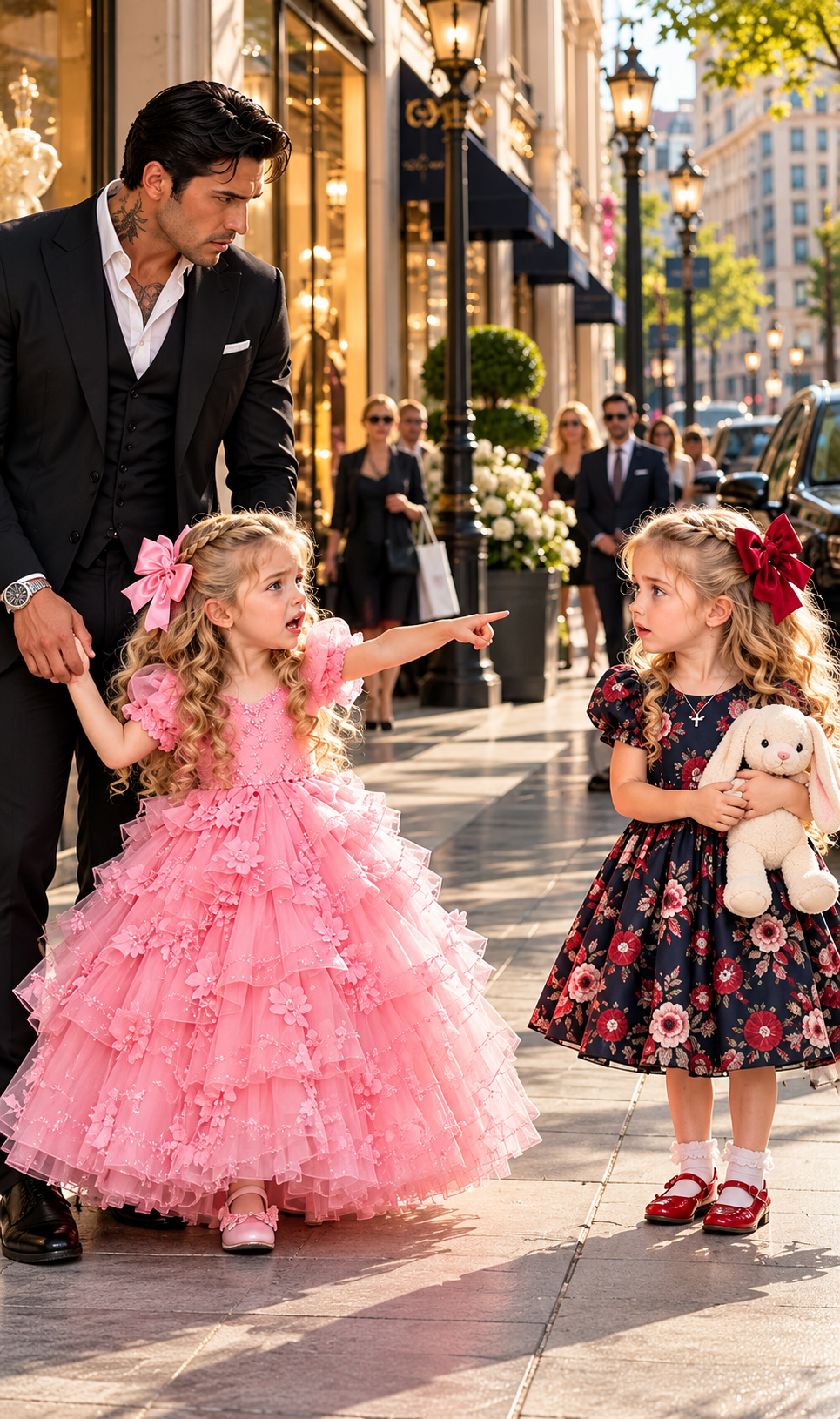
For several seconds, nobody in Adrian Moretti’s drawing room moved.
The afternoon sunlight still fell through the tall windows, warm and ordinary, illuminating the photograph in Adrian’s hand as though it were nothing more than an old family snapshot.
Yet nothing about it felt ordinary.
Sofia stood near a stone fountain in the picture, wearing the pale blue coat Adrian remembered from the winter before she disappeared. Beside her stood Vivienne’s father, Charles Whitmore.
Charles was not touching Sofia. He was not threatening her. In fact, both of them appeared to be looking toward someone beyond the frame.
But Sofia’s expression troubled Adrian.
She looked worried.
Not frightened.
Worried.
There was a difference, and Adrian knew her well enough to recognize it.
Rosie leaned against his leg, hugging her stuffed bunny.
Adrian immediately crouched so he was at her level.
“Sweetheart,” he said softly, controlling the confusion in his voice, “when did Mommy give you this photograph?”
Rosie frowned with the serious concentration of a three-year-old trying to organize memories into words.
“Before she went away.”
Adrian’s breath caught.
Vivienne stared at the child.
“You remember that?”
Rosie nodded.
“Mommy put Bunny on my bed. She said Bunny had a secret.”
Adrian’s heart twisted.
Rosie had been very young when Sofia disappeared. Some of what she remembered might have come from dreams, repeated stories, or fragments of genuine memory.
He refused to interrogate her.
Instead he kissed her forehead.
“You did exactly what Mommy asked. Thank you.”
Rosie relaxed.
Then she looked at Vivienne’s ring again.
“That belongs to Mommy.”
Vivienne slowly removed it.
Her hands were trembling now.
“I didn’t know.”
Adrian stood.
“You told me your father gave it to you.”
“He did.”
“When?”
“Six months ago.”
Adrian stared at her.
Vivienne placed the ring carefully on the table between them.
“He said it belonged to my grandmother. He said he had kept it after she died.”
Adrian’s expression hardened, but his voice remained quiet.
“That ring never belonged to your grandmother.”
“I know that now.”
She looked almost as shaken as he felt.
Adrian wanted answers immediately.
Instead, he looked toward Rosie.
Whatever this mystery was, his daughter would not be asked to carry it.
He called Maria, the housekeeper who had known Rosie since infancy.
“Would you take Rosie into the garden for me?”
Maria sensed the tension immediately.
“Of course.”
Rosie hesitated.
“Daddy?”
Adrian smiled.
“I’m staying right here.”
“You promise?”
“I promise.”
Rosie took Maria’s hand and walked away, Bunny tucked beneath her arm.
Only after the door closed did Adrian turn back to Vivienne.
“Call your father.”
Vivienne swallowed.
“He’s at the Whitmore Foundation offices.”
“Then we’ll go there.”
“Adrian—”
“I need the truth.”
“So do I.”
That answer made him pause.
Vivienne was pale, but there was something in her expression he had not expected.
Betrayal.
Not guilt.
At least, not the kind he had imagined.
Twenty minutes later, Adrian and Vivienne sat in the back of his car traveling across the city.
Neither spoke for several blocks.
Eventually Vivienne said, “There’s something I should have told you.”
Adrian looked out the window.
“That sentence isn’t comforting today.”
“I know.”
She clasped her hands together.
“My father knew Sofia.”
“That much is obvious.”
“No. I mean before she disappeared.”
Adrian turned toward her.
Vivienne continued carefully.
“They worked together on something.”
“What?”
“I don’t know exactly.”
Adrian gave a humorless laugh.
“You expect me to believe that?”
“I expect you to believe whatever the evidence tells you. But I’m not going to invent an explanation just because you want one.”
There was strength in her response.
The Vivienne he knew had always been composed, sometimes too composed. She disliked emotional scenes and dealt with difficulty by organizing it.
Adrian had once admired that quality.
Now he found himself wondering how much composure could conceal.
“What did your father tell you?” he asked.
“That Sofia contacted him about the foundation.”
“The Whitmore Foundation?”
Vivienne nodded.
The Whitmore Foundation funded women’s shelters, education programs, and small community clinics. Charles had spent years building its reputation.
“Sofia was a volunteer consultant,” Vivienne said. “At least, that was what Father told me.”
“She never mentioned it.”
“That bothered me too.”
“Yet you never asked me?”
“I did ask Father. He said Sofia wanted privacy because she was working with families involved in confidential legal cases.”
Adrian looked back at the photograph.
Sofia and Charles.
The fountain behind them.
He suddenly recognized it.
“That’s outside St. Gabriel’s.”
Vivienne leaned closer.
“The family services center?”
“Yes.”
St. Gabriel’s was a nonprofit center offering counseling, temporary housing, legal referrals, and family mediation.
Why had Sofia been there?
And why had she hidden evidence of it?
Charles Whitmore was standing beside the window when they entered his office.
At sixty-four, he remained an elegant man with silver hair, tailored suits, and the careful manners of someone accustomed to philanthropic dinners and boardrooms.
When he saw the photograph, his face changed.
Not dramatically.
But enough.
“You found it,” Charles said.
Adrian placed the photograph on his desk.
“So you knew it existed.”
Charles looked at his daughter.
Vivienne removed the ring and placed it beside the photograph.
“And this?”
For perhaps the first time in Vivienne’s life, her father appeared to have no immediate answer.
She stared at him.
“You told me this belonged to Grandmother.”
Charles closed his eyes briefly.
“I shouldn’t have.”
“No,” Vivienne replied. “You shouldn’t have.”
Adrian stepped forward.
“Where did you get my wife’s ring?”
Charles looked at him.
“From Sofia.”
The room became still.
Adrian’s voice dropped.
“When?”
“Three days before she disappeared.”
Adrian gripped the back of a chair.
“Why would my wife give you her wedding ring?”
“She didn’t give it to me permanently. She asked me to keep it.”
“For what reason?”
Charles moved behind his desk and opened a drawer.
He removed a brown envelope.
“I suppose there is no longer any reason to protect what she asked me to protect.”
Vivienne stared at him.
“Protect from whom?”
Charles looked toward Adrian.
“Not from you.”
He slid the envelope across the desk.
Inside were copies of documents.
Adrian read the first page.
It was a letter from Sofia.
Charles,
I know this is an unusual request, but until I understand what is happening, I need you to keep several things somewhere Adrian cannot accidentally find them.
Please understand that I am not afraid of my husband.
I am afraid that if Adrian learns what I have discovered before I have proof, he will try to solve everything himself.
He already carries too much responsibility.
I need to know the truth first.
Adrian lowered the page.
“What truth?”
Charles gestured toward the remaining documents.
There were financial records.
Bank transfers.
Property documents.
And several letters involving someone Adrian had not thought about in years.
His older half-brother, Julian.
Adrian stared.
Julian Moretti had left the family business after a bitter dispute with their father. He and Adrian had barely spoken afterward.
“What does Julian have to do with Sofia?”
“Very little,” Charles said. “At first.”
Adrian waited.
Charles sat down.
“Several months before Sofia disappeared, she learned that money from a charitable trust connected to your family company had been redirected.”
Adrian frowned.
“That’s impossible.”
“That was Sofia’s first reaction.”
The trust had been created by Adrian’s mother to fund scholarships and housing assistance.
Adrian himself had assumed oversight after his father’s death.
“Who redirected it?”
Charles shook his head.
“Sofia never determined that conclusively.”
Adrian examined the records.
Some bore signatures from financial officers who no longer worked for Moretti Holdings.
One signature made him stop.
Julian Moretti.
“My brother stole from the trust?”
“No,” Charles said. “That was what Sofia initially believed. Then she discovered Julian’s signature had probably been copied from older documents.”
Adrian looked up.
“So somebody wanted it to appear that Julian did it.”
“Yes.”
Vivienne crossed her arms.
“And Sofia brought this to you?”
Charles nodded.
“She didn’t know whom inside the company she could trust. The transfers had been taking place for years.”
Adrian thought about the period before Sofia vanished.
Her distracted evenings.
The phone calls she sometimes took outside.
The folder he once found in her study that she quickly closed.
At the time, he assumed she was planning his birthday.
He felt suddenly foolish.
“Why didn’t she come to me?”
Charles studied him quietly.
“Because she loved you.”
“That makes no sense.”
“It made sense to her.”
Charles opened another document.
“At that time, your company was fighting a difficult takeover attempt. You were sleeping four hours a night. Your father had recently died. Rosie had been ill for several weeks.”
“Nothing serious,” Adrian said automatically.
“No. But Sofia knew how worried you were.”
Charles leaned back.
“She told me that if she came to you with an accusation she couldn’t prove, you would abandon everything else and investigate personally.”
Adrian wanted to argue.
He couldn’t.
That was exactly what he would have done.
Vivienne glanced at her father.
“What happened afterward?”
“Sofia discovered that the money had not actually been stolen.”
Adrian blinked.
“What?”
“It had been rerouted temporarily into several private accounts, then returned.”
“That still makes no sense.”
“It was accounting fraud. Someone was using the charitable fund to conceal short-term corporate losses.”
Adrian felt sick.
Not because of the money.
Because it had happened inside a company carrying his family’s name.
“Who?”
Charles hesitated.
“Sofia suspected your former chief financial officer.”
“Daniel Mercer?”
“Yes.”
Adrian remembered Mercer resigning shortly after Sofia disappeared.
He had claimed health problems.
“Why wasn’t any of this reported?”
“Because Sofia wanted absolute proof first.”
Adrian looked toward the photograph again.
“And the day this was taken?”
“She had just met a retired accountant who had worked under Mercer.”
Charles tapped the fountain visible behind them.
“She asked me to accompany her.”
Rosie’s words returned to Adrian.
That’s the man who took Mommy.
Adrian stared at Charles.
“My daughter remembers you.”
Charles’s face softened.
“I know.”
“You saw Rosie that day?”
“Yes.”
“Where?”
Charles said quietly, “At your house.”
Adrian felt the floor shift beneath him again.
“Explain.”
“The evening before Sofia disappeared, she called me. She said she had finally located something important and wanted to meet.”
“Where?”
“At St. Gabriel’s.”
“And Rosie?”
“Sofia brought her because your nanny had already gone home, and you were attending a board dinner.”
Adrian remembered that dinner.
He had nearly canceled because Sofia seemed distracted.
She had kissed him at the door.
Go, she had said. I’m fine.
Those had been among the last words he remembered hearing from her.
Charles continued.
“I drove Sofia and Rosie back home afterward.”
Rosie, looking through the front window, might have seen Charles’s car leaving.
A toddler’s memory could easily transform “the man who drove Mommy somewhere” into “the man who took Mommy.”
Adrian looked down.
It was a less sinister explanation.
But it did not explain Sofia’s disappearance.
“Where did Sofia go afterward?”
“I don’t know.”
Adrian’s gaze sharpened.
Charles met it steadily.
“I drove them home at eight thirty. Sofia called me shortly after ten. She said she had received information that changed everything.”
“What information?”
“She wouldn’t tell me over the phone.”
“And then?”
“She asked whether St. Gabriel’s could arrange somewhere private for someone to stay.”
Adrian felt his pulse quicken.
“For Sofia?”
Charles hesitated.
“That was what I assumed.”
Vivienne whispered, “Father…”
“She said somebody needed help.”
“Who?”
“I never learned.”
Adrian walked toward the window.
For years he had reconstructed Sofia’s final evening in his mind.
Now every certainty was dissolving.
Her abandoned car had been found near the river two days later.
There had been heavy rain.
A damaged barrier.
Personal belongings discovered downstream.
Investigators concluded that she had probably gone into the water, though her body was never recovered.
Adrian had accepted the conclusion because grief eventually exhausted the ability to keep questioning.
But perhaps Sofia had never been in the car when it reached the river.
“Charles,” Adrian said without turning, “did you help my wife disappear?”
“No.”
“Did you know she intended to leave?”
“No.”
“Did you know she was alive after the night she vanished?”
Silence.
Adrian slowly turned.
Charles was looking at the desk.
Vivienne noticed it too.
“Dad?”
Charles’s composure finally cracked.
“There was a letter.”
Adrian stepped closer.
“What letter?”
“It arrived almost four months after Sofia vanished.”
Adrian’s voice barely emerged.
“From her?”
“Yes.”
The word was quiet.
Devastating.
Hope was sometimes more painful than grief.
“You received proof that my wife was alive,” Adrian said, “and you told me nothing?”
Charles looked ashamed.
“The letter didn’t say where she was.”
“You told me nothing.”
“She specifically asked me not to.”
“And you obeyed?”
“I believed she had a reason.”
“She had a husband. She had a daughter.”
“I know.”
“You let us mourn her.”
“I know.”
Vivienne looked at her father as if she no longer recognized him.
Charles reached into the locked cabinet behind his desk.
He removed another envelope.
“I told myself for years that respecting her request was the right decision. Eventually I realized it was simply the decision I had already made, and admitting it was wrong would mean accepting what it had cost you.”
Adrian stared at him.
There was no defense in Charles’s tone.
Only regret.
“Why give Sofia’s ring to Vivienne?”
Charles looked at the diamond.
“That was another mistake.”
He exhaled slowly.
“When Sofia gave it to me, she said she was removing anything that might identify her quickly if she needed to travel discreetly for a few days. After the letter arrived, I kept it in my safe.”
Vivienne’s expression hardened.
“And six months ago?”
“I found it while reorganizing old files. I told myself Sofia had been gone so long that returning it would only reopen Adrian’s grief.”
“So you gave it to me?”
“I wanted something beautiful to come from something painful.”
Vivienne shook her head.
“You wanted to make the past disappear.”
Charles did not argue.
He handed the sealed envelope to Adrian.
On the front was handwriting Adrian would have recognized anywhere.
Sofia Moretti.
His fingers trembled as he opened it.
Inside was a short letter.
Charles,
I am safe.
Please believe that leaving was not what I planned.
Something happened that night that made returning immediately impossible. I am trying to correct it.
Do not tell Adrian yet. If I contact him before I understand who can be trusted, I may bring trouble directly back to him and Rosie.
Please tell no one.
Most importantly, do not let Rosie believe I chose to leave her. I did not.
I carry them both with me every day.
S.
Adrian read the final sentence twice.
Then a third time.
Vivienne quietly left the office and returned with a glass of water.
He didn’t drink it.
“Where was this mailed?”
Charles showed him the envelope.
Boston.
No return address.
“Did you investigate?”
“Privately.”
“And?”
“The postal marking led nowhere.”
Adrian looked through the documents again.
Then he noticed something written lightly in pencil along the bottom of Sofia’s letter.
Not part of the message.
Three words.
Ask Eleanor Vale.
“Who is Eleanor Vale?” Vivienne asked.
Charles frowned.
“I don’t know.”
Adrian did.
At least, he knew the name.
Years ago, when Sofia was pregnant with Rosie, she had mentioned a university friend named Eleanor.
A quiet woman who had become a family-law attorney.
They had lost touch.
Or so Adrian had believed.
His phone was already in his hand.
He searched his old contacts.
Nothing.
Vivienne opened her laptop.
Within minutes, they found Eleanor Vale practicing law in a small coastal town three hours away.
Adrian called the office.
A receptionist answered.
“Vale Legal Services.”
“My name is Adrian Moretti. I need to speak with Eleanor Vale.”
There was a pause.
“May I ask what this concerns?”
He stared at Sofia’s handwriting.
“An old friend named Sofia.”
Another pause.
Longer this time.
Then a woman came onto the line.
Her voice was calm.
“Mr. Moretti?”
“Yes.”
“I wondered whether this day would ever come.”
Adrian closed his eyes.
“You knew my wife.”
“I did.”
“After she disappeared?”
“Yes.”
The room seemed suddenly too small.
“Where is she?”
Eleanor was silent for several seconds.
Then she said the words Adrian had stopped allowing himself to imagine years ago.
“Adrian, before I answer that, there is something you need to understand.”
His fingers tightened around the phone.
“What?”
“Sofia did not abandon you.”
“I know.”
“No,” Eleanor said gently. “You don’t know the whole of it.”
Adrian looked toward Vivienne and Charles.
Eleanor continued.
“She spent years trying to find a safe, lawful way back to the life she lost.”
Adrian could barely breathe.
“Spent years?”
“Yes.”
He whispered, “Are you saying she survived?”
Another silence.
Then Eleanor answered.
“Yes.”
Adrian closed his eyes.
For years he had imagined hearing such a word.
He had dreamed it.
Begged for it.
Feared hoping for it.
Yet when it finally arrived, it did not feel like joy.
Not yet.
It felt like standing before a door that had been sealed for years and discovering someone had just placed a key in his hand.
And somewhere beyond that door was the woman he had buried without ever finding her grave.
-END OF PART 2, –PRESS NEX PART IN BOTTOM OF PAGE TO READ NEXT PART
Part 3 – The Years Sofia Could Not Explain
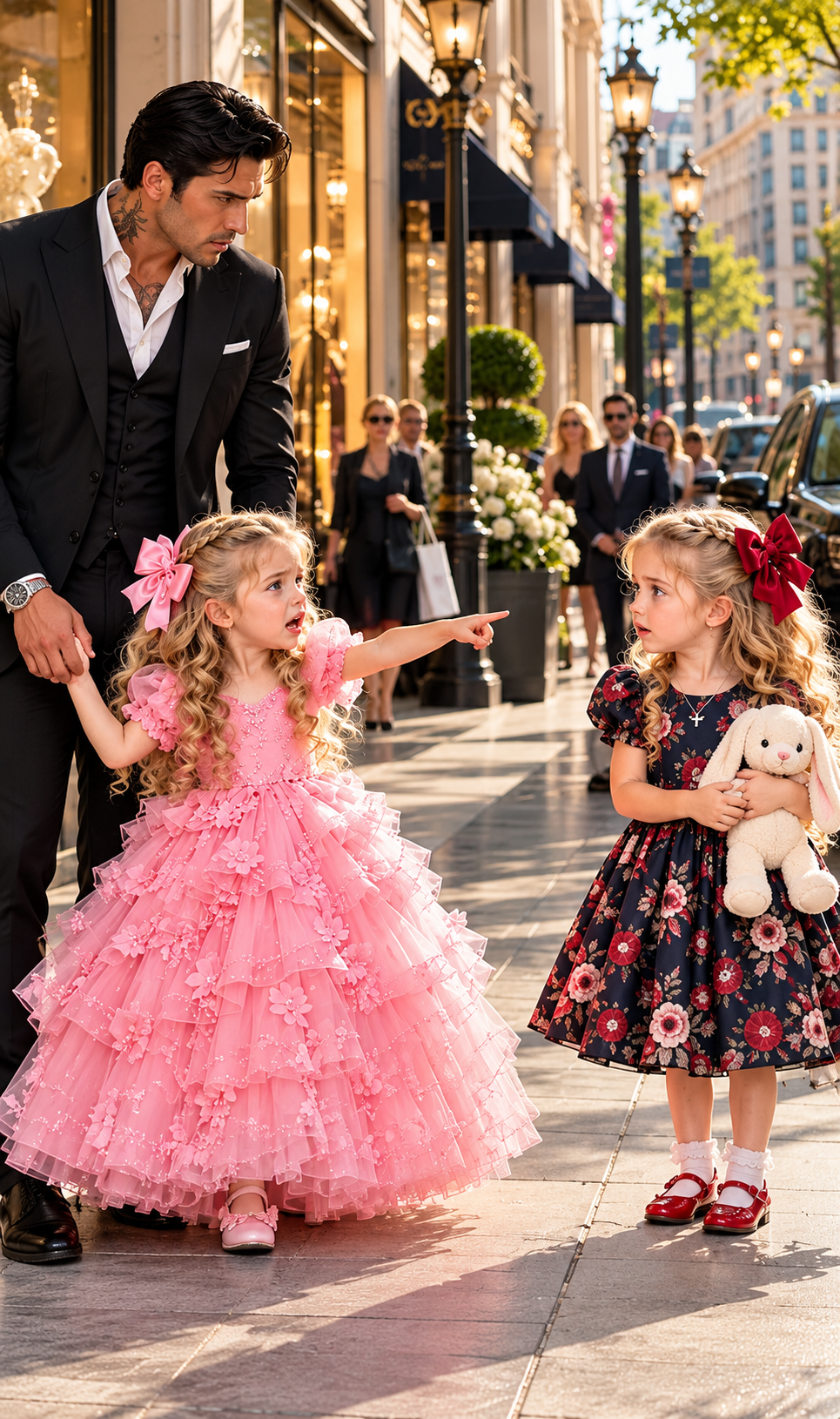
Adrian did not ask Eleanor Vale for Sofia’s address.
Not immediately.
A younger version of himself would have demanded it.
He would have ordered a driver, canceled every appointment, and gone wherever the road led.
But nearly four years of raising Rosie had changed him.
Fatherhood had taught him that urgency and wisdom were not always the same thing.
So Adrian sat in Charles Whitmore’s office with Sofia’s letter in his hand and asked one question.
“Is she safe?”
“Yes,” Eleanor answered.
“Is she ill?”
There was a pause.
“She has been.”
Adrian’s stomach tightened.
“Seriously?”
“She recovered.”
He closed his eyes.
Vivienne sat silently across from him.
Charles remained near the window.
“Does Sofia know I’m speaking to you?”
“No.”
“Then tell me what you can.”
Eleanor hesitated.
“I would rather do this in person.”
“When?”
“Tomorrow.”
Adrian glanced at the clock.
“Today.”
Eleanor sighed softly.
“I thought you might say that.”
Three hours later, Adrian entered a modest law office overlooking a harbor where fishing boats moved slowly through gray-blue water.
He had left Rosie at home with Maria and Adrian’s sister, Francesca, who arrived after receiving a deliberately simple explanation.
There is something important I need to investigate. Rosie is safe. Please stay with her.
Francesca did not press him.
She merely hugged him and said, “Go.”
Vivienne had come with him.
Adrian had almost asked her not to.
Then he reconsidered.
Whatever Charles had concealed had affected her too.
Eleanor Vale was fifty, with short dark hair threaded by silver and a calm face that suggested years spent helping people through difficult decisions.
She greeted Adrian without pretending they were strangers.
“I attended your wedding.”
He studied her.
Then recognition came.
“You wore a green dress.”
A faint smile touched Eleanor’s face.
“Sofia said it made me look like a curtain.”
Despite everything, Adrian laughed.
The sound surprised him.
Eleanor led them into a conference room.
On the table sat a thick folder.
Vivienne looked at it.
“Is that about Sofia?”
“Yes.”
Adrian remained standing.
“Tell me where she is.”
Eleanor met his eyes.
“She lives under her own name now, about forty miles from here.”
Adrian gripped the chair.
“She’s that close?”
“She wasn’t always.”
“Does she know about Rosie?”
“Yes.”
His voice sharpened.
“Does she know Rosie thinks she’s dead?”
Pain crossed Eleanor’s face.
“Yes.”
Adrian finally sat down.
“How could she allow that?”
“I think Sofia should answer that herself.”
“Then why am I here?”
“Because if you go to her carrying only the story you’ve believed for four years, both of you will spend the first hour accusing one another of choices neither fully understands.”
Adrian said nothing.
Eleanor opened the folder.
“The night Sofia disappeared, she was supposed to meet Daniel Mercer.”
The former chief financial officer.
“He contacted her,” Eleanor continued. “He wanted to confess his role in the accounting scheme.”
Adrian leaned forward.
“So Mercer was responsible?”
“Partly.”
The scheme, Eleanor explained, had begun as an attempt to hide temporary losses in one division of Moretti Holdings.
Mercer had believed the losses would be recovered quickly.
They were not.
So he moved money through accounts connected to the family charitable trust to disguise the shortfall from auditors.
Julian’s old authorization records were used to make some transactions appear legitimate.
“When Sofia discovered it,” Eleanor said, “Mercer panicked.”
Vivienne asked, “Did he threaten her?”
“No.”
Adrian looked surprised.
Eleanor continued.
“That was what Sofia feared at first. But Mercer contacted her because he wanted help exposing what he had done without destroying innocent employees or scholarship programs.”
“Then why did she disappear?”
“Because someone else was involved.”
Adrian waited.
“Who?”
“Your father’s longtime attorney, Samuel Keene.”
Adrian stared.
Samuel Keene had advised the Moretti family for more than twenty years.
He had died two years after Sofia vanished.
“Keene?”
“He helped Mercer conceal the transactions.”
“Why?”
“To protect the company during a financial crisis. At least, that was how he justified it.”
Adrian leaned back slowly.
There had been no criminal mastermind.
No elaborate plot.
Only respected men making compromises, then making larger compromises to conceal the first ones.
It was almost worse.
Eleanor continued.
“On the night Sofia vanished, Mercer asked her to meet him at a motel outside the city. He had records he intended to give her.”
“What happened?”
“He never arrived.”
“Why?”
“He changed his mind.”
Adrian frowned.
“Then Sofia simply left?”
“She was driving home during the storm when another vehicle lost control near the river road.”
Adrian’s expression changed.
The reports had always focused on Sofia’s car.
Eleanor nodded.
“Sofia stopped to help.”
The other driver was an elderly woman named Margaret Vale.
Eleanor’s mother.
Vivienne looked at her.
“Your mother?”
Eleanor nodded.
“She suffered a medical emergency while driving. Sofia got her out of the car before conditions worsened.”
Adrian listened, confused.
“That still doesn’t explain Sofia’s car being found near the river.”
“No. Because Sofia never drove it there.”
The answer came from a far more ordinary mistake than Adrian expected.
While Sofia waited with Margaret for emergency assistance, she called a roadside service because her own car had developed an electrical problem after sitting in heavy rain.
The tow operator collected the wrong vehicle from the shoulder later that night.
Sofia’s keys had been left with a service attendant.
During transport, the car slipped from an improperly secured trailer near the damaged riverside barrier.
The towing company, already facing violations, falsified portions of its report.
“Investigators found the car near the river and assumed Sofia had been driving it,” Eleanor said. “By the time the towing error was discovered, everything else had become complicated.”
Adrian stared at her.
“Everything else?”
“Sofia went to the hospital with my mother.”
“She could have called me.”
“Yes.”
Eleanor did not defend her.
“She intended to.”
“What stopped her?”
“At the hospital she found Mercer waiting.”
Adrian frowned.
“He went there?”
“He had followed news of the accident because he knew Sofia used that road. When he found her, he told her Keene had learned about their planned meeting.”
Adrian’s jaw tightened.
Again Eleanor raised a hand slightly.
“Keene never threatened Sofia physically. But he told Mercer he intended to portray Sofia as part of the financial scheme if she went public without evidence.”
Vivienne looked horrified.
“He was going to blame her?”
“He had enough scattered documents to create doubt.”
Adrian understood immediately.
Sofia had no formal role in company finances.
But she had reviewed charitable programs.
Her name appeared on correspondence.
If Keene manipulated the chronology, he could create a scandal before Sofia could prove anything.
“Why not come to me?” Adrian asked.
“She tried.”
Eleanor reached into the folder.
“Your phone records.”
Adrian looked down.
Seven calls made to him between 1:12 and 2:04 in the morning.
His phone had been off.
The board dinner had turned into an overnight strategy meeting at a private club where phones were prohibited in one conference room.
Adrian remembered finding several missed calls the next morning.
By then Sofia had already been reported missing.
“I thought those calls came before the accident.”
“They came from the hospital.”
Adrian covered his face.
For years he had tortured himself over those missed calls.
Now he knew Sofia had been alive on the other end.
“She left me a voicemail.”
“Yes.”
“There was nothing on it.”
“She couldn’t speak freely. Mercer was beside her, and she was still trying to understand what had happened.”
Adrian lowered his hands.
“What happened next?”
“Sofia made a bad decision for understandable reasons.”
Eleanor spoke without dramatizing it.
“She decided to disappear for forty-eight hours.”
Vivienne exhaled.
“Only forty-eight?”
“That was the plan.”
Sofia went with Eleanor to a small guesthouse owned by Eleanor’s aunt.
She intended to gather Mercer’s documents, contact an independent regulator, and return once she had secured copies no one could erase.
But during those two days, the missing-person investigation became public.
Sofia’s car was discovered.
News outlets reported the likely river accident.
Then Mercer vanished.
“Where?”
“Canada. He panicked.”
“And Sofia?”
“She realized returning suddenly would force her to explain why she had hidden while hundreds of people searched for her.”
Adrian shook his head.
“That is not a reason to abandon your family.”
“No,” Eleanor said. “It isn’t.”
Her agreement took some of the anger from him.
“She knew that too.”
“Then why didn’t she return?”
“Because on the third day she collapsed.”
Adrian went still.
“From what?”
“A heart condition she didn’t know she had.”
Sofia had experienced complications after Rosie’s birth that were assumed to have resolved. The stress, lack of sleep, and untreated condition triggered a serious cardiac episode.
“She spent nearly three weeks in the hospital,” Eleanor said. “Then several months recovering.”
Adrian’s anger gave way to stunned silence.
“Why wasn’t I contacted?”
“Sofia refused.”
“Why?”
“She believed the investigation around Moretti Holdings could still damage you. She also believed that appearing after everyone thought she was dead would create a media frenzy around Rosie.”
Vivienne said quietly, “That sounds like Sofia trying to protect everyone and making everything worse.”
Eleanor looked at her.
“That is almost exactly how Sofia describes it now.”
Adrian stood and walked toward the harbor-facing window.
He could understand the first forty-eight hours.
He could understand fear.
Illness.
Confusion.
But four years?
Eleanor seemed to read his thoughts.
“The longer she waited, the harder returning became.”
“That’s cowardice.”
“Yes,” Eleanor said softly. “Partly.”
Adrian turned.
Again, no defense.
“No excuse?”
“Explanations are not always excuses.”
That sentence stayed with him.
Eleanor opened another section of the folder.
“After she recovered, Sofia began working with regulators through an attorney.”
“You?”
“Yes.”
The investigation remained confidential because Moretti Holdings was cooperating quietly through outside auditors without Adrian personally knowing its origin.
Several employees were cleared.
Mercer eventually returned and gave testimony.
The misdirected charitable funds were restored permanently.
Keene resigned from several boards before his death.
“And Julian?” Adrian asked.
“Cleared completely.”
Adrian sat down again.
“My brother never knew?”
“No.”
He felt another wave of regret.
Adrian had spent years quietly believing Julian might have damaged the family trust.
He had never accused him directly.
But mistrust had widened the distance between them.
“Where is Sofia now?”
Eleanor closed the folder.
“She teaches art at a community center.”
That sounded so much like Sofia that Adrian’s throat tightened.
“She still paints?”
“Yes.”
“Is she married?”
“No.”
“In a relationship?”
Eleanor almost smiled.
“No.”
Adrian looked away, embarrassed by his own question.
Vivienne did not react.
Instead, she asked the harder one.
“Does Sofia want to come back?”
Eleanor’s eyes shifted toward Adrian.
“She wants Rosie to know her.”
The answer hurt more than Adrian expected.
“And me?”
“She believes you hate her.”
“I don’t even know what I feel.”
“That’s probably healthier than pretending.”
Adrian sat silently.
Then Vivienne reached for the ring.
She had carried it in a small velvet pouch.
“Can you give this to her?”
Adrian looked at her.
Vivienne placed the pouch in front of Eleanor.
“It belongs to Sofia.”
“You could return it yourself,” Eleanor said.
Vivienne shook her head.
“No. Adrian should decide what happens next without having to consider my feelings.”
Adrian stared at her.
“Vivienne…”
She met his eyes.
“We were planning a marriage, Adrian. But we were planning it around a life we thought no longer existed.”
“That doesn’t make what we had meaningless.”
“I know.”
Her voice trembled slightly, but she remained composed.
“And because it wasn’t meaningless, I won’t make you choose anything today.”
She stood.
“I’m going home.”
“Vivienne.”
She stopped.
He did not know what to say.
Thank you sounded inadequate.
I’m sorry sounded premature.
She seemed to understand.
“Go see her,” Vivienne said.
Then she left.
Eleanor watched the door close.
“She’s stronger than her father gives her credit for.”
Adrian nodded.
“Stronger than I gave her credit for too.”
Twenty minutes later, Eleanor drove Adrian along a narrow coastal road.
The sea appeared between cedar trees.
They stopped outside a small white cottage with a blue door.
Adrian remained seated.
His hands would not move.
Four years.
He had imagined Sofia dead.
He had spoken to her photograph.
Celebrated anniversaries alone.
Told Rosie stories about her mother.
And now Sofia was behind an ordinary blue door.
“What do I say?” he whispered.
Eleanor looked at him.
“The truth.”
“What truth?”
“That you don’t know what to say.”
Adrian stepped from the car.
He walked toward the cottage.
Before he reached the porch, the door opened.
A woman stood there.
Her hair was shorter.
There were faint lines around her eyes that had not existed four years ago.
She was thinner.
Older.
Real.
Adrian stopped.
Sofia gripped the edge of the door.
Neither spoke.
Every memory Adrian possessed collided with the woman standing before him.
The bride laughing because rain had ruined their wedding photographs.
The young mother asleep beside Rosie’s crib.
The woman kissing him goodbye before a board dinner.
The face in every framed photograph in Rosie’s room.
“Sofia,” he finally whispered.
Her eyes filled.
“Adrian.”
He had imagined this moment as an embrace.
Or an argument.
Instead they stood ten feet apart, unable to cross the years between them.
Finally Sofia said, “How is Rosie?”
Adrian closed his eyes.
The first question.
Of course it was.
“She’s wonderful.”
Sofia covered her mouth.
Adrian took one step closer.
“She has your laugh.”
A tear slipped down Sofia’s cheek.
“Does she?”
“She loves strawberries and refuses to eat peas. She sleeps with Bunny every night.”
Sofia smiled through her tears.
“Still?”
“Still.”
Adrian’s voice cracked.
“She remembers you.”
Sofia looked down.
“I hoped she wouldn’t remember enough to hurt.”
“She remembers love.”
That made Sofia cry.
Quietly.
No dramatic collapse.
Just years of restrained grief finally reaching the surface.
Adrian did not touch her.
Not yet.
After a while, Sofia invited him inside.
The cottage was simple.
Books.
Paintbrushes.
Plants near the windows.
On one wall were dozens of small paintings.
Adrian walked toward them.
Every painting was of Rosie.
Not Rosie as Sofia actually knew her.
Rosie as Sofia imagined she might have grown.
A toddler carrying flowers.
A little girl on a swing.
A child wearing yellow rain boots.
Adrian stared.
“You painted her every year.”
“Every month,” Sofia whispered.
He turned.
“Why didn’t you come home?”
Sofia looked at him for a long time.
Then she gave the only answer Adrian could accept as a beginning.
“Because eventually I was more afraid of asking you to forgive me than I was of staying away.”
Adrian nodded slowly.
“That isn’t enough.”
“I know.”
“It may never be enough.”
“I know.”
“But Rosie deserves the truth.”
“Yes.”
“And if you come back into her life, you cannot disappear again because things become difficult.”
Sofia’s eyes met his.
“I won’t.”
“You don’t get to promise that casually.”
“I’m not.”
They sat at the small kitchen table.
For two hours Sofia told him the parts Eleanor could not.
The shame after the first week.
The illness.
The investigation.
The letters written and never mailed.
The birthday presents bought for Rosie and stored in boxes because Sofia could not decide whether sending them would help or hurt.
She did not ask Adrian to excuse her choices.
That mattered.
Near sunset, Adrian asked, “Why now?”
Sofia looked toward the paintings.
“Because the investigation officially closed six weeks ago.”
Adrian frowned.
“And?”
“And I finally wrote to you.”
His heart stopped.
“What?”
“I mailed a letter to the mansion.”
“When?”
“Five weeks ago.”
Adrian had never received it.
Sofia went to a desk and removed a photocopy.
Adrian,
There is no sentence that can make the years I lost with you and Rosie understandable.
I am alive.
I am sorry.
If you are willing, I would like to tell you everything.
Sofia.
Adrian read it twice.
“It never arrived.”
Sofia stared at him.
“I sent it by registered mail.”
“Who signed for it?”
She retrieved the receipt.
Adrian looked at the signature.
C. Whitmore.
Charles.
For the second time that day, Adrian understood that Sofia’s silence had not been the only silence surrounding him.
Charles Whitmore had received proof five weeks earlier that Sofia intended to return.
And he had hidden that too.
But why?
-END OF PART 3–PRESS NEX PART IN BOTTOM OF PAGE TO READ NEXT PART
Part 4 – The Choice to Become a Family Again
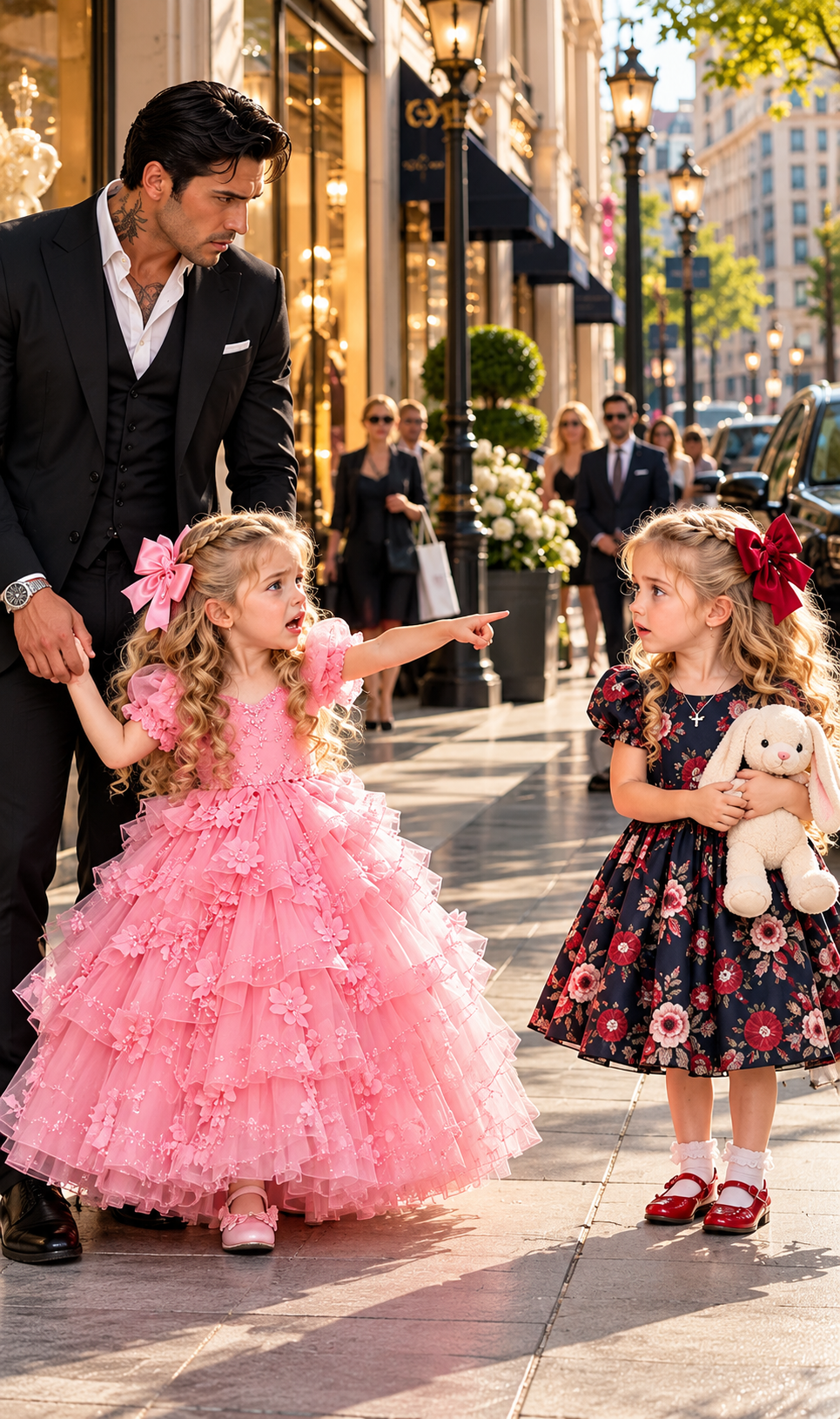
Adrian returned to the mansion after dark.
He did not go to Charles Whitmore first.
He went upstairs.
Rosie was sitting cross-legged on her bed while Francesca read her a story about a bear searching for honey.
When Rosie saw her father, she immediately lifted both arms.
Adrian picked her up.
“Did you find your important thing?” she asked.
He held her close.
“Yes.”
“What was it?”
He glanced at Francesca.
His sister read something in his face and quietly closed the book.
Adrian sat beside Rosie.
He had spent the entire drive home thinking about what to say.
In the end, simplicity seemed kindest.
“Sweetheart, I learned something about Mommy today.”
Rosie’s eyes widened.
“Mommy?”
“Yes.”
He brushed a strand of hair from her forehead.
“For a long time, Daddy believed Mommy went to heaven.”
Rosie nodded solemnly.
“But sometimes grown-ups learn that something they believed was wrong.”
She waited.
Adrian smiled gently.
“Mommy is alive.”
Rosie stared at him.
Children did not process impossible news the way adults did.
She did not ask where Sofia had been for four years.
She did not ask who had lied.
Instead she asked, “Can she come to breakfast?”
Adrian laughed and cried at the same time.
Francesca covered her mouth.
“Maybe not breakfast tomorrow,” Adrian said. “But I think we can see her soon.”
Rosie considered this.
“Can Bunny come?”
“Absolutely.”
“Does Mommy still like pancakes?”
Adrian smiled.
“I think we’ll have to ask her.”
Rosie accepted this new reality with the practical confidence children sometimes possessed.
Then she asked, “Is she happy?”
The question struck Adrian deeply.
“I think she will be happier when she sees you.”
Rosie nodded.
“Okay.”
That night, after Rosie fell asleep, Francesca followed Adrian downstairs.
He told her everything.
Not every financial detail, but enough.
When he finished, Francesca sat in silence.
“Sofia is alive,” she finally said.
“Yes.”
“And Charles knew.”
“Yes.”
“For years?”
“Enough to have told us.”
Francesca shook her head.
“What are you going to do?”
Adrian poured himself water.
“Talk to him.”
“You’re remarkably calm.”
“I’m not.”
He looked toward the staircase.
“But Rosie is asleep upstairs. Sofia is alive. Somehow those two facts make every other problem feel like something that can be solved with words.”
The following morning, Charles arrived before Adrian called him.
Vivienne came with him.
Charles looked exhausted.
Vivienne looked composed but distant from her father.
Adrian led them into the library.
On the desk lay Sofia’s registered-mail receipt.
Charles saw it immediately.
His shoulders lowered.
“So you know.”
“Why?”
Charles remained standing.
“I don’t have an answer that will make you forgive me.”
“Try the true one.”
Vivienne glanced at her father.
Charles sat down.
“When Sofia’s letter arrived five weeks ago, I panicked.”
Adrian frowned.
“Why?”
“Because you and Vivienne had just announced your engagement.”
Silence filled the room.
Charles looked at his daughter.
“I convinced myself that Sofia returning would destroy two lives that had finally become stable.”
Vivienne’s face changed.
“My life?”
“And Adrian’s.”
“You intercepted a letter to protect my engagement?”
“Yes.”
Vivienne stood.
“No.”
Charles looked at her.
“You did it because you were afraid.”
He said nothing.
“You were afraid Adrian would leave me.”
Charles lowered his eyes.
Vivienne’s voice softened.
“And you were afraid I would blame you.”
That landed harder.
Charles nodded.
“Yes.”
He explained that when he first received Sofia’s letter years earlier, he had believed temporary secrecy might genuinely protect everyone while the financial investigation unfolded.
Then months became years.
Every year made confession harder.
When Adrian and Vivienne grew close, Charles began to see their relationship as proof that perhaps silence had eventually produced something good.
“That was convenient,” Adrian said.
“Yes.”
Charles did not object.
“And the ring?”
“I found it again after you became engaged. I imagined giving it to Vivienne as a symbol that the past had somehow made peace with the future.”
Vivienne shook her head.
“You cannot make peace on someone else’s behalf.”
“No.”
Charles looked older than Adrian had ever seen him.
“I understand that now.”
Adrian expected anger to rise.
Some did.
But it no longer controlled the room.
There had been too many mistaken attempts at protection.
Sofia protecting Adrian.
Mercer protecting the company.
Keene protecting reputations.
Charles protecting Vivienne.
Each person had convinced themselves that withholding truth was kindness.
The cost had accumulated quietly.
Adrian looked at Charles.
“You should have trusted me with my own life.”
“Yes.”
“And Sofia with hers.”
“Yes.”
“And Vivienne with hers.”
Charles looked at his daughter.
“Yes.”
Adrian pushed the registered receipt toward him.
“I’m not interested in punishment.”
Charles looked surprised.
“I’m interested in boundaries.”
He explained them plainly.
Charles would no longer involve himself in Adrian’s private decisions.
He would give Adrian every remaining document connected to Sofia.
He would tell Vivienne the truth even when he believed the truth might disappoint her.
And when Sofia was ready, Charles would apologize to her himself.
Charles nodded.
“All right.”
Adrian looked toward Vivienne.
“There’s something we need to discuss too.”
Vivienne already knew.
She removed their engagement ring.
Not Sofia’s ring.
The one Adrian had actually given her.
She placed it carefully on the table.
“I think we should end the engagement.”
Adrian’s chest tightened.
“I don’t want you to think you were only filling Sofia’s place.”
“I don’t.”
Vivienne gave a sad smile.
“You cared about me.”
“I still do.”
“I care about you too.”
She glanced upstairs.
“And Rosie.”
“She adores you.”
“I adore her.”
Vivienne took a breath.
“But you found out yesterday that your wife is alive.”
“She has been absent for four years.”
“I know.”
“And there’s no guarantee Sofia and I can repair anything.”
“I know that too.”
Vivienne met his eyes.
“This isn’t about guaranteeing you return to Sofia. It’s about allowing all of us to make choices with the truth in front of us.”
Adrian looked at her for a long time.
Then he nodded.
“You deserved that truth sooner.”
“So did you.”
Vivienne picked up her purse.
Before leaving, she paused beside him.
“For what it’s worth, Adrian, I hope Sofia and Rosie find each other again.”
Adrian smiled faintly.
“And you?”
Vivienne considered the question.
“I think I need to find out what my life looks like when I’m not trying to keep everyone comfortable.”
Her father looked at her.
There was both sadness and pride in his expression.
“That sounds like your mother,” he said.
Vivienne’s smile was small.
“Then perhaps you should have listened to her more often too.”
Charles almost laughed.
A week later, Sofia saw Rosie.
They did not meet at the mansion.
Adrian and Sofia agreed that somewhere neutral would be gentler.
Eleanor suggested the community garden beside the art center where Sofia worked.
There were flowers, benches, and a small fountain where children sometimes floated leaves like boats.
Sofia arrived first.
She wore a soft gray sweater and held nothing in her hands.
No pile of presents.
No attempt to compensate for four missing birthdays.
Adrian appreciated that.
Rosie walked beside him holding Bunny.
When they entered the garden, Sofia stood.
Rosie stopped.
Sofia did not rush toward her.
She crouched several feet away.
“Hello, Rosie.”
Rosie studied her carefully.
Adrian had shown Rosie recent photographs beforehand so she would not expect the exact face preserved in old pictures.
“You’re Mommy?”
Sofia smiled through visible emotion.
“Yes.”
Rosie looked at Adrian.
He nodded.
Then she walked toward Sofia.
Not running.
Not dramatically.
Just cautiously.
When she reached her, Rosie held up Bunny.
“You remember him?”
Sofia laughed softly.
“I do.”
“He still has your secret pocket.”
“I remember that too.”
Rosie smiled.
That was enough.
Within twenty minutes, they were feeding leaves into the fountain and watching them drift.
Adrian sat on a bench nearby.
Sofia did not try to claim years she had missed.
She asked questions.
What stories Rosie liked.
Whether she preferred crayons or paint.
What she called the moon.
Rosie asked equally important questions.
“Do you have a toothbrush?”
“Yes.”
“Do you have pajamas?”
“Yes.”
“Do you have cereal?”
“Two kinds.”
Rosie appeared impressed.
At one point she leaned toward Sofia.
“Daddy said you went away because grown-ups made mistakes.”
Sofia glanced at Adrian.
He had chosen his words carefully.
“Yes,” Sofia said.
“I made some mistakes.”
Rosie thought about this.
“I spill milk sometimes.”
Sofia smiled.
“So do I.”
Rosie nodded, satisfied that common ground had been established.
Their relationship did not repair itself that afternoon.
It began.
There was a difference.
Sofia visited twice the following week.
Then three times.
At first Adrian remained present.
Later, Francesca occasionally joined them.
Sofia and Rosie painted together.
They visited the library.
They ate pancakes on a Saturday morning, during which Rosie confirmed that Sofia still liked them.
There were difficult moments too.
One evening Rosie became upset when Sofia prepared to leave.
“Are you coming back?”
The question hurt everyone in the room.
Sofia knelt.
“Yes.”
“When?”
“Tuesday after lunch.”
“Promise?”
Sofia looked at Adrian before answering.
Then she said, “I promise to do everything I can to be here Tuesday. And if anything changes, Daddy and I will tell you.”
Adrian noticed the difference.
Not impossible guarantees.
Reliability.
Tuesday afternoon, Sofia arrived ten minutes early.
Over the next several months, Adrian and Sofia began counseling together.
Not because Adrian had decided they would reunite.
Because they had to learn how to become parents together.
Some sessions were uncomfortable.
Adrian admitted he resented Sofia.
Sofia admitted she had expected forgiveness simply because she had suffered too.
Their counselor challenged that assumption.
Pain did not erase responsibility.
Love did not automatically restore trust.
Trust would have to be built through small, repeated choices.
So Sofia made those choices.
She arrived when she said she would.
She told the truth when the truth was uncomfortable.
She answered Adrian’s questions without asking him to hurry.
Adrian made choices too.
He stopped using silence as punishment.
He allowed Sofia to form her own relationship with Rosie rather than supervising every moment.
And gradually, they began remembering something beneath the damage.
They still liked one another.
One evening, six months after their reunion, Sofia and Adrian sat on the back terrace while Rosie chased fireflies across the lawn with Francesca.
“I used to imagine coming back here,” Sofia said.
Adrian looked toward the garden.
“What did you imagine?”
“You opening the door.”
“And?”
“Some days you hugged me.”
“Other days?”
“You closed it.”
Adrian smiled faintly.
“Reality was less dramatic.”
“Reality usually is.”
They sat quietly.
Sofia looked toward her left hand.
She was wearing no ring.
Adrian had kept her wedding ring in his desk since Eleanor returned it.
Neither of them had discussed it.
“I don’t expect our old marriage back,” Sofia said.
Adrian looked at her.
“It doesn’t exist anymore.”
She nodded.
“I know.”
He watched Rosie laughing in the grass.
“But perhaps that isn’t entirely bad.”
Sofia turned.
Adrian continued.
“We were happy. But we also thought loving someone meant protecting them from every difficult truth.”
“We were terrible at that.”
“We were.”
She laughed softly.
Adrian smiled.
“I don’t want to rebuild what we had.”
Sofia’s expression became uncertain.
He reached across the table and took her hand.
“I want to see whether we can build something better.”
Tears filled her eyes.
“Slowly?”
“Very slowly.”
“How slowly?”
“Rosie should probably be in college before I completely trust you.”
Sofia laughed through her tears.
“That seems fair.”
Adrian squeezed her hand.
“But dinner tomorrow would be a start.”
“A date?”
“A conversation involving pasta.”
“That sounds safer.”
A year later, Charles Whitmore retired from daily leadership of his foundation.
Not because Adrian demanded it.
Charles decided himself that he had spent too many years believing authority made his judgment superior to other people’s choices.
He remained involved as an adviser.
Vivienne joined the board and gradually transformed several programs to include stronger transparency policies.
She and Sofia eventually met.
Their first conversation was awkward.
Vivienne returned the velvet pouch personally even though Sofia had already received the ring from Adrian.
“I know this sounds strange,” Vivienne said, “but I wanted to apologize for wearing it.”
“You didn’t know.”
“I still became part of something painful.”
Sofia looked at her.
“So did I.”
That honesty eased something between them.
They were never close friends.
They did not need to be.
But they treated one another with kindness.
Vivienne later opened a small design studio with a friend and discovered she preferred building her own business to attending foundation dinners.
Adrian supported the launch quietly as a customer, not an investor.
They remained friends.
Julian Moretti returned to the city after Adrian finally called him.
Their first conversation lasted eighteen minutes.
The second lasted two hours.
Adrian apologized for allowing suspicion to become distance.
Julian admitted pride had helped keep them apart.
It took time, but eventually Uncle Julian became one of Rosie’s favorite people because he knew how to make enormous soap bubbles in the garden.
As for Daniel Mercer, he accepted professional consequences for his role in the accounting scheme and later worked with a nonprofit teaching financial ethics.
There was no grand villain in the end.
Only people who had made fearful choices and then lived inside the consequences.
Two years after Sofia first walked back into Rosie’s life, Adrian took Rosie to the community garden.
Sofia was waiting beside the fountain.
Rosie, now old enough to read simple chapter books by herself, ran ahead.
Adrian followed more slowly.
In his pocket was a small box.
Sofia noticed his expression.
“What?”
“Nothing.”
“That is absolutely your something-is-happening face.”
Rosie giggled.
“Daddy has a secret.”
“Rosie.”
“What? You said secrets are bad when they make people sad.”
Sofia laughed.
“She has you there.”
Adrian sighed theatrically.
“So much for my carefully planned moment.”
He removed the box.
Inside was Sofia’s wedding ring.
The tiny blue sapphire still rested beneath the diamond.
Sofia stared at it.
“I don’t want you to put this on because it belonged to our old life,” Adrian said.
Her eyes filled.
“I want you to wear it only if you want it to belong to the life we’re choosing now.”
Sofia looked at Rosie.
Rosie whispered loudly, “Say yes.”
Adrian laughed.
“Absolutely no pressure from the audience.”
Sofia picked up the ring.
“I have one condition.”
“What?”
“No disappearing when things get difficult.”
Adrian smiled.
“For either of us.”
“For either of us.”
“And no protecting each other with secrets.”
“Agreed.”
“And if something hurts?”
“We say it.”
“If we’re afraid?”
“We say that too.”
Adrian held out his hand.
Sofia placed hers in it.
“Yes.”
He slipped the ring onto her finger.
Rosie clapped.
Then she frowned thoughtfully.
“So are you married now?”
Adrian looked at Sofia.
“We technically still are.”
Rosie appeared deeply confused.
“Grown-ups are weird.”
Sofia laughed.
“That may be the truest thing anyone has said about this family.”
They did not hold another enormous wedding.
Instead, the following spring, Adrian and Sofia renewed their vows in the garden behind the mansion.
Francesca stood beside Rosie.
Julian brought flowers.
Eleanor cried before the ceremony even began.
Vivienne attended with a man she had been seeing for several months, a quiet architect named Thomas who made her laugh far more often than Adrian remembered her laughing before.
Charles sat in the second row.
Before the ceremony, he approached Sofia.
“I owe you an apology that is several years late.”
Sofia looked at him.
“Yes.”
Charles nodded.
“I thought keeping your confidence meant honoring you. Later, I knew it was wrong and continued anyway because correcting it would expose my mistake.”
Sofia listened.
“I’m sorry.”
She did not say it didn’t matter.
It did.
Instead she said, “Thank you for finally telling the truth.”
Charles smiled faintly.
“I’m learning.”
“So are the rest of us.”
During the ceremony Rosie carried the rings.
This time there were no secrets hidden beneath diamonds.
No photographs tucked inside toys.
No truths waiting in locked drawers.
When Adrian looked at Sofia, he did not see the woman he had lost.
He saw the woman who had returned.
Changed.
Imperfect.
Braver than before.
Sofia looked at him the same way.
They could not recover four missing years.
They stopped trying.
Instead, they filled the years ahead.
Sunday breakfasts became a family ritual.
Rosie eventually stopped asking whether Sofia would be there Tuesday because she learned that her mother stayed.
Adrian learned that forgiveness was not forgetting what happened.
It was choosing not to make yesterday the only story available to tomorrow.
Sofia learned that love did not require carrying every burden alone.
Vivienne learned that an ending could become a beginning without anyone having to be the villain.
Charles learned that good intentions did not excuse taking choices away from the people he loved.
And Rosie grew up surrounded not by a perfect family, but by something far more durable.
A family willing to tell the truth.
Years later, when Rosie was old enough to understand the entire story, she asked Adrian about the photograph she had once hidden inside Bunny.
“Were you angry when you found it?”
Adrian smiled.
“Very.”
“At Grandpa Charles?”
“At a lot of people.”
Rosie looked toward the garden, where Sofia was trimming roses.
“What changed?”
Adrian thought about it.
“The truth got bigger.”
Rosie frowned.
“What does that mean?”
“It means when I knew only one piece of the story, everything looked simple. Someone had to be guilty. Someone had to be innocent. Someone had to be blamed.”
“And after?”
“After I learned everything, I realized people had been afraid, confused, stubborn, loving, selfish, generous, and mistaken—sometimes all at once.”
Rosie smiled.
“That sounds complicated.”
“Families usually are.”
Sofia called them from the garden.
“Are you two planning to help me or just discuss philosophy?”
Rosie grinned.
“Coming!”
She ran toward her mother.
Adrian followed.
At the edge of the terrace, he paused for a moment.
Years earlier, this house had felt like a museum of everything he had lost.
Now the doors stood open.
Music drifted from the kitchen.
Rosie’s laughter crossed the lawn.
Sofia turned toward him, sunlight catching the small blue sapphire hidden beneath her ring.
Adrian smiled.
The same ring that once seemed to prove betrayal had ultimately led him toward the truth.
Not a perfect truth.
A human one.
And in the end, that was enough.
He walked into the garden where his family was waiting.
This time, no one was leaving.
– END OF PART 4 - LET SAY YES AND LIKE, SHARE THIS POST IN FACEBOOK SO THAT WE HAVE THE MOTIVATION TO SHARE MORE STORIES