PART 3: The concrete vault held her torment.

The wooden steps groaned under my boots with every frantic step downward.
The beam of my phone’s flashlight sliced through the swirling concrete dust, illuminating the unfinished stone foundations of our 1920s craftsman home.
“Natalie!” I shouted into the cavernous cellar. “Where are you?”
A faint, metallic rattle answered me from the far eastern corner—behind the heavy cedar partition where the old coal chute had been bricked over forty years ago.
I sprinted across the cold concrete floor, my boots kicking aside cardboard moving boxes that had never been unpacked.
I rounded the corner of the cedar wall.
What the light beam revealed stopped my heart dead in my chest.
Natalie was slumped against the cold fieldstone foundation, sitting on a damp wool moving blanket spread across the bare floor.
Her wrists were pulled behind an exposed vertical steel support beam, bound together with heavy yellow polypropylene tow straps and secured with a three-foot length of rusted link chain locked with a secondary padlock.
Her face was swollen, bruised a violent shade of plum beneath her left eye, and dried blood was crusted around her nostrils and across her split lower lip.
Her once-vibrant strawberry-blonde hair was matted with concrete dust and cobwebs, plastered against her sweat-streaked temples.
She wore a torn green knit cardigan—the one she had worn on Sophie’s first birthday—now filthy and soaked around the collar.
At her feet lay her canvas tote bag, overturned, its contents strewn across the floor: Sophie’s favorite board books, a box of animal crackers, and a small plastic container of sliced strawberries that had spoiled in the damp air.
“Natalie!” I dropped to my knees beside her, my hands shaking so violently I nearly dropped the phone.
Her head rolled weakly to the side.
Her hazel eyes—normally so bright, so expressive, so full of gentle chaotic laughter—struggled to focus on my face through swollen eyelids.
“Owen…?” she whispered, her lips cracked and bleeding. “Sophie… did she hear me? Did she tap back?”
“She heard you, Natalie,” I choked out, tears burning my eyes, spilling over my cheeks.
“She brought me right to you. Sophie saved you.”
A fragile, broken smile flickered across Natalie’s lips before a spasm of pain made her arch her back with a low, agonizing groan.
“She… she pushed me down the stairs, Owen,” Natalie whispered, every word costing an enormous expenditure of energy.
“Around nine this morning… I came to the back door to drop off Sophie’s winter boots. Vanessa smiled… told me to come in. Then she hit me from behind with something heavy. I woke up down here… chained to the post.”
Natalie coughed, a wet, rattling sound that shook her thin frame.
“She came down at noon… told me you and Sophie were moving to Seattle. Told me she filed emergency court papers claiming I abandoned our daughter. She said… she said by tomorrow morning, the deed to my father’s property would be transferred, and no one would ever look for me.”
My stomach heaved with sickening, violent clarity.
My father’s property.
Natalie’s late father had owned forty acres of pristine commercial riverfront property just outside the city limits—land that had been placed into an irrevocable trust for Sophie, with Natalie serving as sole trustee until our daughter turned twenty-five.
Vanessa had spent the last four months obsessing over that land.
She was a commercial real estate developer for Vanguard Holdings, a private equity consortium that had been desperately trying to secure that exact riverfront parcel for a twenty-million-dollar distribution hub.
Every conversation over dinner.
Every subtle suggestion about Natalie’s “unstable mental state.”
Every gentle, poisonous comment that Natalie was “drifting away” and “neglecting Sophie’s future.”
It hadn’t been concern.
It had been a calculated, methodical corporate execution designed to declare Natalie legally incompetent or deceased, leaving me as Sophie’s sole guardian—and Vanessa with full power of attorney to liquidate the twenty-million-dollar trust.
“Hang on, Natalie,” I said, my voice hardening into pure, unyielding granite. “I’m getting you out of here.”
I grabbed the heavy tow strap binding her wrists, pulling with all my strength, trying to work the thick woven fibers over the rusted steel links.
Suddenly, from the top of the basement stairs, the heavy wooden door slammed shut with a deafening THUD.
CLICK.
The sound of an exterior sliding deadbolt sliding home echoed through the empty floor joists above our heads.
Then came the frantic, muffled thud of little hands banging on the other side of the wood.
“DADDY! MOMMY!” Sophie screamed from the kitchen above.
Then, Vanessa’s voice, sharp and high, cutting through the ceiling planks:
“Be quiet, Sophie! Get in the car right now!”
PART 4: The burning floor traps us alive.
The realization struck me like a physical blow to the chest: Vanessa was taking Sophie.
“Owen!” Natalie gasped from the floor, her eyes widening in sheer, motherly panic that cut right through her physical exhaustion.
“She has Sophie! Don’t let her take our baby!”
I scrambled to my feet, sprinted across the dark basement, and threw myself against the wooden door at the top of the stairs.
BOOM!
The heavy oak rattled, but the new secondary exterior deadbolt held fast against the reinforced frame.
“VANESSA!” I roared, slamming my shoulder into the wood with concussive force.
“OPEN THIS DOOR! IF YOU TOUCH MY DAUGHTER, I WILL TEAR YOUR LIFE TO ASHES!”
Through the thick wood, I heard Sophie’s piercing, terrified wail:
“DADDY! BUNNY! DADDY, OPEN!”
Then came the violent scuffle of feet across the kitchen tile, followed by the sound of the back patio door sliding open and the distinct chime of Vanessa’s key fob unlocking her luxury SUV in the driveway.
“Vanessa, please!” I begged, pounding my fists against the wood until my knuckles cracked and bled against the grain.
“Take the land! Take every dollar in the bank! Leave Sophie! Just leave my daughter!”
No answer came.
Only the heavy slam of the SUV’s passenger door outside, followed by the throaty roar of a twin-turbo V8 engine igniting in the driveway.
Then, from the kitchen directly on the other side of the basement door, I heard a sound that made my blood run colder than winter ice:
Hiss.
A soft, rhythmic clicking sound.
Click. Click. Click.
The unmistakable sound of the electronic igniter on our commercial six-burner gas range.
A second later, the sharp, pungent odor of unburned mercaptan—natural gas—began seeping through the gaps around the doorframe, heavy, suffocating, and terrifyingly concentrated.
Vanessa hadn’t just locked us down here to buy time.
She had turned on the gas valves.
And on the kitchen floor, right next to the shattered glass and the leaking gas line, sat the heavy iron Dutch oven I had used to break the hasp—resting dangerously close to the frayed, exposed copper wires of the light switch I had ripped apart.
She wasn’t just running with Sophie.
She was leveling the house.
She was staging a catastrophic natural gas explosion that would incinerate the evidence, incinerate Natalie, and incinerate me—leaving Vanessa as the grieving stepmother and sole legal guardian of Sophie and her twenty-million-dollar trust.
I turned around and vaulted down the basement stairs three steps at a time.
“Natalie! We have less than two minutes!”
“The old coal chute!” Natalie shouted, pointing her chin toward the bricked-over wall in the far corner.
“Owen, when we bought the house… remember? The delivery grate behind the hydrangeas! The mortar was crumbling!”
I ran to the east wall.
Five years ago, during our home inspection, the inspector had noted that the masonry around the cast-iron coal delivery door on the outside foundation had severely deteriorated from water intrusion.
Natalie and I had planned to repair it ourselves, but life had gotten in the way; we had simply stacked a row of concrete cinder blocks against the inside opening to keep the draft out.
I grabbed the first cinder block, tossing it aside into the dark.
CRASH.
I grabbed the second, then the third, ripping the loose masonry away with my bare hands until the old rectangular iron chute door was exposed.
Through the rusted iron seams, I could see the cold twilight sky of our backyard and smell the crisp, freezing autumn air.
The latch was rusted solid, fused by decades of iron oxide.
I turned back to Natalie.
Her chains were still secured around the vertical steel beam, but the tow strap holding her wrists was anchored to a heavy steel eyelet bolted into the concrete floor.
I sprinted to my workbench on the south wall.
My fingers clawed through the darkness, knocking over coffee cans filled with nails and screws, until my palm found the heavy, two-foot steel wrecking bar I had used to pry up patio stones last spring.
I sprinted back to Natalie.
“Cover your face!” I shouted.
I wedged the chisel end of the crowbar into the open link of the rusted padlock holding her chain to the support beam.
I braced both boots against the steel column, set my jaw, and threw my entire two-hundred-pound frame backward with a violent, animal roar.
CRACK!
The ancient, brittle iron of the padlock shackle snapped like a frozen twig.
The chain whipped free, clattering onto the concrete floor.
Natalie’s arms fell limp to her sides, freed from the column, though her wrists remained bound tightly by the yellow tow strap.
Above our heads, through the floorboards, a loud, concussive WHOOSH shook the entire foundation.
A blast of orange heat rippled through the ceiling seams.
The gas had ignited.
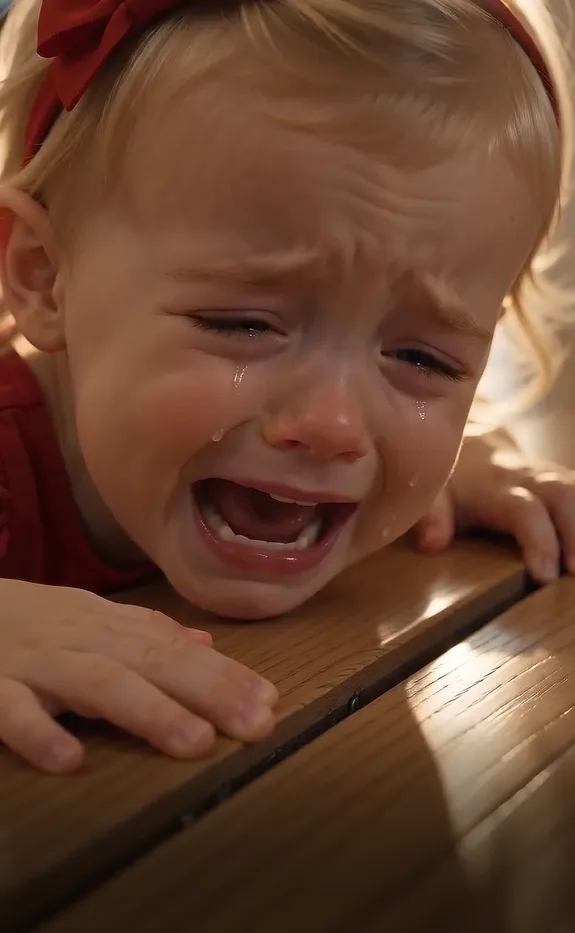 PART 5: The frozen highway becomes our pursuit.
The explosion in the kitchen tore through the floor joists with a concussive shockwave that showered us in burning plaster, shattered tile, and glowing splinters of pine.
Smoke—thick, black, and choked with the toxic stench of burning synthetic cabinetry—rolled down the basement stairs like an avalanche.
I grabbed the heavy crowbar, turned to the coal chute, and swung with everything I had left in my body.
BOOM!
The iron delivery door burst outward into the frosty evening air, tearing the rotted wooden frame and ancient mortar completely out of the foundation.
A freezing rush of November wind hit my face.
I dropped the bar, grabbed Natalie beneath her arms, and hauled her upward through the narrow opening, shoving her through the frozen dirt and overgrown hydrangea bushes onto the back lawn.
I scrambled out behind her, scraping my shoulders against the jagged brick edges, tumbling onto the frost-covered grass just as a wall of orange fire blew out the first-floor kitchen windows behind us with a deafening CRACK.
The house was engulfed in roaring flames, smoke billowing into the evening sky.
Natalie was on her knees in the grass, coughing violently, her wrists still bound tightly with the yellow strap.
I pulled my pocketknife from my jeans, sliced through the heavy woven fibers with two frantic sawing motions, and pulled the ropes free.
Her hands were purple, her skin cold as ice.
“Sophie…” Natalie wept, looking toward the empty driveway where twin tire marks were burned into the frosty gravel.
“Owen… she took our baby!”
“Get in the truck!” I barked, grabbing her hand and pulling her toward our detached garage sixty feet away from the burning house.
My beat-up 2018 Ford F-150 sat parked inside, untouched by the fire.
I threw Natalie into the passenger seat, slammed the door, vaulted behind the wheel, and turned the key.
The five-liter V8 engine roared to life with a deep, mechanical growl.
I jammed the column shifter into reverse, slammed my boot onto the gas, and backed out of the garage at forty miles an hour, spinning the steering wheel until the truck drifted across the frozen lawn and straightened onto the private access road.
On the dashboard console, my phone—which had automatically connected to the truck’s Bluetooth system—pinged with a live GPS notification.
VANGUARD SECURE TRACKING: SOPHIE’S BUNNY LOCATED.
My breath caught in my throat.
Six months ago, after Sophie had dropped her favorite stuffed rabbit at a crowded zoo, Natalie had sewn a miniature, waterproof Apple AirTag deep inside the rabbit’s belly stuffing, right beneath its embroidered pink heart.
Vanessa didn’t know about it.
To Vanessa, that tattered, dirty stuffed rabbit was just a cheap piece of junk Sophie refused to let go of.
On the navigation screen, a bright green beacon pulsed steadily three miles north on Route 9, moving at seventy-five miles an hour toward the interstate interchange leading to the private executive airfield in Teterboro.
“She’s heading for the airstrip,” I growled, shifting the transmission into four-wheel-drive as the truck hit the icy blacktop of the state highway.
“Vanguard Holdings has private corporate hangars at Teterboro.”
“She’s taking Sophie out of the country,” Natalie cried, her swollen face illuminated by the green glow of the GPS screen, her hands gripping the dashboard with white-knuckled intensity.
“If she gets her on a private jet to a non-extradition territory, we will never see our daughter again!”
“She’s not getting on that plane,” I swore through clenched teeth.
I mashed the accelerator to the floorboards.
The heavy truck surged forward like a charging bull, its all-terrain tires chewing through the patches of black ice on the winding two-lane mountain highway.
The trees on either side of the road blurred into dark, skeletal streaks beneath the freezing November stars.
Mile four.
Mile five.
The green beacon on the screen was closing fast—two miles ahead, then one mile, then half a mile.
We crested the long granite ridge overlooking the valley.
Down below, tearing down the four-lane divided highway at nearly ninety miles an hour, were the distinctive, razor-sharp LED taillights of Vanessa’s white Range Rover.
Her hazard lights were flashing erratically, her heavy SUV swerving across the center lane markers on the icy asphalt.
Natalie leaned forward, pressing her face against the passenger window.
“There she is! Owen, that’s her!”
Through the tinted rear glass of the speeding Range Rover ahead, illuminated by the dashboard display, I caught a brief, heartbreaking glimpse of a tiny silhouette in the back seat.
Sophie.
Sitting in her booster seat, clutching her stuffed bunny against her chest, her little face pressed against the side window, staring out into the dark highway.
“Hold on!” I shouted to Natalie.
I dropped the truck into third gear, pulled into the passing lane, and surged alongside the luxury SUV, matching its ninety-mile-an-hour speed on the frozen bridge over the Delaware River.
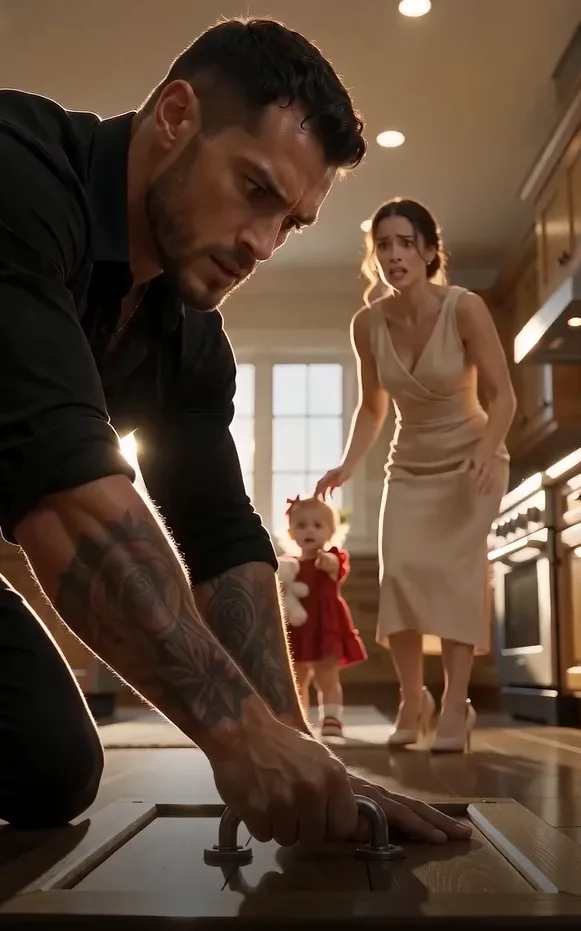 PART 6: The river bridge seals her fate.
The howling wind off the freezing Delaware River whipped blinding flurries of sleet across the four-lane steel truss bridge.
The steel grating of the bridge deck rattled violently beneath our tires, slippery with invisible sheets of black ice.
I pulled the heavy Ford truck directly alongside the driver’s side of the Range Rover, only three feet separating our mirrors at eighty-five miles an hour.
I looked through the side window.
Vanessa was gripping the leather steering wheel with both hands, her face illuminated by the bright blue glow of her navigation screen, her eyes wide, manic, completely consumed by the frantic frenzy of an unraveling criminal.
Her auburn hair was wildly disheveled, her teeth bared in an ugly snarl as she turned her head and saw me staring at her through the glass.
Her jaw dropped in absolute, horrifying disbelief.
She thought I was dead.
She thought Natalie and I were suffocating in the burning cellar two miles behind her.
Seeing the man she had tried to incinerate driving alongside her in a three-ton steel truck broke whatever fragile tether of sanity Vanessa had left.
Instead of hitting the brakes, she yanked the Range Rover’s steering wheel hard to the left.
CRASH!
The heavy British SUV slammed directly into the passenger side of my truck with concussive, bone-jarring force.
Sparks erupted between the steel panels, showering the frozen bridge deck in brilliant white arcs of fire.
Natalie screamed, bracing her hands against the dash as the truck fishtailed across the icy steel grating.
I fought the steering wheel with every muscle in my forearms, pumping the anti-lock brakes, letting the four-wheel-drive system bite into the traction strips until the truck stabilized.
“She’s trying to pit us into the bridge railing!” Natalie yelled.
In the back seat of the Range Rover, Sophie was sobbing hysterically, her small arms wrapped tightly around her stuffed rabbit, her terrified blue eyes locked onto mine through the parallel windows.
“I’m ending this,” I growled.
Ahead of us, at the far end of the half-mile bridge, the red-and-blue emergency strobes of four New Jersey State Police interceptors were already deploying across the toll plaza, forming an impenetrable iron roadblock.
Vanessa saw the police cruisers.
She panicked.
She slammed both feet on the brake pedal, attempting to execute a violent, suicidal U-turn on the slick steel deck.
The four-ton Range Rover lost all hydraulic traction on the ice.
The vehicle spun violently out of control, doing two complete three-sixty rotations across the four lanes before its reinforced rear bumper slammed into the massive concrete abutment of the bridge support tower.
BOOM!
The impact sheared the rear axle completely off the frame, crumpling the tailgate like an aluminum soda can, deploying every side-curtain airbag in a cloud of white talcum powder.
The SUV spun twice more and came to a dead stop against the steel guardrail, its front end steaming, radiator fluid hissing onto the frozen bridge deck.
I slammed the truck into park twenty feet away, threw my door open into the freezing sleet, and sprinted across the ice.
Natalie was right beside me, ignoring the agony in her bruised ribs, running with the wild, unstoppable ferocity of a mother reclaiming her young.
The Range Rover’s driver’s side door was jammed shut against the guardrail.
I grabbed the rear passenger door handle.
It was locked.
I didn’t hesitate.
I pulled the heavy steel wrecking bar from the back of my truck, drove the chisel tip directly through the tempered glass of the small rear triangular window, and reached inside, manually flipping the child-safety lock from the interior frame.
I yanked the heavy door open.
Sitting in her car seat, covered in powdery airbag dust but completely physically unharmed, was Sophie.
She was clutching her stuffed rabbit with white knuckles, her little chest heaving with silent, hiccuping sobs.
When she saw Natalie’s bruised, bloody, dirt-streaked face appear in the open doorframe, Sophie let out a piercing, joyous wail that cut right through the howling wind:
“MOMMY! DADDY!”
Natalie threw her arms into the vehicle, unbuckling the five-point safety harness with trembling fingers, pulling Sophie out into the freezing air, burying her face into her daughter’s neck.
“I have you, baby,” Natalie wept uncontrollably, sinking to her knees on the icy asphalt, rocking Sophie back and forth against her chest.
“Mommy has you. You’re safe. Nobody is ever going to take you again.”
Sophie wrapped her tiny arms around Natalie’s neck, her small fingers tangling into her mother’s matted hair, kissing Natalie’s bruised cheek with frantic toddler kisses.
“Mommy knock,” Sophie whispered through her tears, smiling as she pressed her little hand against Natalie’s cheek.
“Sophie hear Mommy.”
I fell to my knees beside them on the frozen bridge, wrapping my arms around both of them, shielding my family from the biting wind with my broad shoulders, pressing my forehead against Natalie’s, letting our tears freeze together on our cheeks.
Behind us, the driver’s door of the ruined Range Rover was kicked open from the inside.
Vanessa crawled out onto the icy road on her hands and knees.
Her cashmere sweater was torn, her designer trousers ruined with grease and radiator fluid, a bloody gash running from her hairline down into her left eyebrow.
She looked at the three of us huddled together on the bridge.
She looked at Sophie safe in Natalie’s arms.
Then she looked up at the eight state troopers advancing across the bridge deck with tactical flashlights and drawn weapons.
“NEW JERSEY STATE POLICE! DO NOT MOVE! GET ON THE GROUND NOW!”
Vanessa didn’t run.
She couldn’t.
She collapsed flat onto her stomach on the frozen steel grating, clawing at the cold metal with her manicured fingernails, letting out a shrill, animal wail of absolute, total defeat as the heavy steel handcuffs clicked shut around her wrists.
PART 7: The high courtroom held absolute justice.
Nine months after that frozen night on the Delaware River bridge, the grand ceremonial courtroom of the Mercer County Superior Courthouse in Trenton was packed to its legal capacity.
Over two hundred spectators—commercial real estate developers, investigative journalists from every major New York and Philadelphia news syndicate, child welfare advocates, and members of the local community—filled the dark walnut pews beneath soaring acoustic plaster arches.
Morning sunlight streamed through the thirty-foot arched windows, illuminating the Great Seal of the State of New Jersey carved behind the judicial bench: LIBERTY AND PROSPERITY.
Sitting at the defense table was Vanessa Sterling Hale.
She was completely, horrifyingly unrecognizable from the glamorous, polished corporate executive who had once commanded boardroom meetings in Manhattan.
Her bespoke beige cashmere sweaters and designer dresses had been replaced by a standard-issue bright orange jumpsuit from the Edna Mahan Correctional Facility, her wrists and ankles bound in heavy carbon-steel transit chains connected to a leather waist belt that forced her arms to remain pinned against her hips.
Her once-immaculate auburn hair was dull, uncombed, cut into an uneven shoulder-length bob with dark roots showing two inches of growth; her frame was shrunken, having lost thirty pounds under the crushing weight of twenty-two state and federal felony indictments; and her eyes were fixed permanently on the oak tabletop, unable to lift her head even once to face the gallery.
Beside her sat her court-appointed public defender, who looked like a man attempting to hold back an avalanche with an umbrella.
Across the center aisle, sitting at the prosecution table beside Deputy Attorney General Marcus Vance and Lead Detective Thomas Reynolds, were Natalie and me.
Natalie looked breathtaking.
She wore an immaculate cream tailored dress of fine wool, her strawberry-blonde hair falling past her shoulders in thick, healthy waves, completely healed from the bruises and lacerations of the cellar.
Her posture was straight, commanding, and radiating an unshakeable, tranquil dignity that commanded absolute silence from the entire courtroom.
Beside her sat me, dressed in a tailored charcoal three-piece suit, my large hand resting gently over hers on the oak table, our fingers interlaced with an unbreakable, permanent strength.
And sitting in the front row of the spectator gallery, between Natalie’s elderly aunt and an off-duty child protection advocate, was three-year-old Sophie.
She was dressed in a neat navy blue jumper over a white lace blouse, kicking her shiny black patent-leather shoes against the wooden pew with quiet, patient curiosity.
In her small lap, resting safely on a velvet cushion, sat her beloved stuffed bunny—freshly washed, its seams repaired, its little pink nose held high.
The heavy mahogany door behind the bench swung open.
“All rise for the Honorable Presiding Judge Katherine Ross,” the bailiff barked.
Judge Ross—a formidable state jurist in her late sixties known throughout the Third Circuit for her zero-tolerance stance on corporate corruption, contract kidnapping, and violence against families—took her seat beneath the American flag.
She opened the thick, leather-bound presentencing memorandum resting before her.
“We are here for final sentencing in the matter of State of New Jersey v. Vanessa Sterling Hale,” Judge Ross announced, her voice echoing off the limestone walls with the cold, absolute finality of an iron gavel striking granite.
“The defendant has entered unconditional guilty pleas to all counts of the state indictment, including Attempted First-Degree Premeditated Murder under Title 2C, Aggravated Kidnapping of a Minor, First-Degree Arson Resulting in Catastrophic Property Destruction, and Corporate Extortion exceeding twenty million dollars.”
Vanessa’s defense attorney stood up slowly at the podium, his voice lacking all conviction.
“Your Honor, my client has surrendered all contested stock options in Vanguard Holdings, forfeited her personal real estate portfolio, and cooperated with the state in the recovery of the forged trust documents. We ask the court to consider her clean prior record and grant a sentence of confinement at a minimum-security medical camp—”
“Sit down, counsel,” Judge Ross cut him off with an icy glare that made the veteran litigator freeze in his tracks.
The judge adjusted her reading glasses, looking directly down from the bench at Vanessa.
Vanessa shrank back into her chair, the heavy transit chains rattling loudly against the wood.
“Mrs. Hale,” Judge Ross said, each word falling like an iron anvil upon the defense table.
“You entered a home, smiled at a two-year-old child, and systematically orchestrated the execution of her biological mother for a parcel of riverfront commercial land.”
The judge leaned forward, her voice rising with controlled, righteous fury.
“You chained that woman to a concrete post in a dark cellar, turned on the gas valves to incinerate her and her former husband alive, and dragged a terrified toddler onto an icy interstate at ninety miles an hour. The calculated, sociopathic, cold-blooded depravity of your conduct shocks the conscience of this court.”
Judge Ross lifted her heavy wooden gavel.
“This court finds no mitigating circumstances that justify mercy. Pursuant to Title 2C of the New Jersey Code of Criminal Justice, this court sentences you, Vanessa Sterling Hale, to forty-five years of imprisonment without the possibility of parole in the custody of the Department of Corrections.”
Vanessa let out a sharp, choked shriek, her head dropping onto the defense table as her chained hands clawed at her prison denim.
“No! Please… Your Honor! I will die in there!”
“You will serve this sentence at the Edna Mahan Correctional Facility,” Judge Ross continued, ignoring the weeping woman.
“With zero possibility of state parole, early release, or sentence commutation. Furthermore, under the Racketeer Influenced and Corrupt Organizations Act, all seized personal property, bank accounts, and corporate equity belonging to the defendant—totaling fourteen million dollars—are hereby forfeited unconditionally to the Sophie Hale Pediatric Trauma and Family Protection Foundation.”
BANG.
The gavel struck the sound block with an explosive, concussive crack that echoed through the room like an artillery shot.
“Court is adjourned,” the judge said, standing up and sweeping out through the rear chamber.
Two state correction officers hauled Vanessa to her feet by her upper arms.
She thrashed against their grip, her chains clanking loudly against her waist belt, her bloodshot, terrified eyes darting toward our table, locking onto Natalie’s face.
Natalie did not look away.
She did not flinch.
She looked into the eyes of the woman who had tried to bury her in the dark, feeling nothing but a profound, peaceful silence settle deep into her soul.
“Take her away,” Natalie said softly, her clear voice carrying across the quiet courtroom.
“Her dark work is finished.”
The heavy steel holding door slammed shut.
Vanessa Hale was gone forever.
I stood up, taking Natalie’s hand in mine, lifting her knuckles to my lips, kissing them with a deep, reverent tenderness that brought tears of pure joy to her eyes.
Beside us, Sophie ran down the center aisle of the courtroom, her patent-leather shoes clicking happily against the marble floor, throwing her small arms around both of our knees.
“Mommy! Daddy! Can we go see the baby ducks at the pond now?”
I laughed—a deep, booming, unburdened sound that filled the grand judicial hall.
I scooped three-year-old Sophie into my arms, lifted her high into the golden summer sunlight streaming through the arched windows, wrapped my free arm around Natalie’s waist, and walked down the center aisle surrounded by our community and our family, stepping out into the bright afternoon sun, leaving the shadows of the past behind forever.
PART 8: The morning sun brought new life.
One year after the trial at the Mercer County Courthouse, the late summer sun over the Delaware River valley was a warm, liquid gold that painted the rolling meadows of Hopewell in brilliant amber light.
The old burned-out craftsman home on Elm Street had been completely demolished.
In its place—built on the gentle granite bluff overlooking the forty acres of pristine riverfront property that her father had preserved—stood a magnificent, two-story timber-frame home surrounded by wraparound porches, stone fireplaces, and sprawling gardens of blooming lavender, sweet honeysuckle, and white hydrangeas.
Down on the private pebble beach below the orchard, the rhythmic, soothing murmur of the river current was accompanied by the sweetest music on this earth:
Laughter.
Boundless, fearless, joyful laughter.
Running across the soft green clover of the lawn below, chasing an eight-month-old golden retriever puppy with wild, ecstatic energy, was Sophie.
She was nearly four now.
A tall, graceful, bright-eyed young girl with her mother’s radiant strawberry-blonde curls and an infectious, fearless laugh, currently wearing a bright yellow sundress that fluttered in the river breeze.
The puppy—named Barnaby—barked happily, tumbling over his own paws, snatching a red rubber ball before trotting proudly back across the clover to deposit it directly at Sophie’s feet.
“Good boy, Barnaby!” Sophie cheered, dropping to her knees on the grass, hugging the wet dog around his neck, burying her face into his soft golden fur.
Sitting on a rustic cedar bench on the stone patio overlooking the water, with his bare feet resting on the sun-warmed flagstones, was me.
I wore an open-collared navy linen shirt with the sleeves rolled up to my forearms, khaki shorts, and sunglasses pushed up into my dark hair.
My face was relaxed, deeply tanned from months of woodworking and gardening, ten years younger than the exhausted, terrified father who had stood in that burning kitchen two years earlier.
I had officially retired from corporate project management six months earlier, dedicating my time to managing the construction of the Sophie Hale Nature and Wildlife Sanctuary across the riverfront acreage.
I was no longer the distracted man who checked work emails at midnight.
I was a father who made blueberry pancakes on Saturday mornings, who taught a little girl how to build birdhouses, and who knew the exact sequence of bedtime stories that brought peace to a healed home.
I was holding a whittling knife, carefully carving a miniature wooden rabbit from a piece of weathered cedar I had found on the riverbank that morning.
Walking down the stone steps from the terrace, carrying a wooden tray with two tall glasses of fresh lemonade and a plate of warm peach scones made from her grandmother’s recipe, was Natalie.
She was pregnant now.
Four months along, wearing a soft white linen maternity dress that fluttered gently in the breeze, her strawberry-blonde hair pulled back in a loose, elegant braid.
On her left ring finger, catching the golden sunlight like a prism, rested a brand-new platinum band set with three flawless emerald-cut diamonds—a ring I had placed on her finger six months ago in a quiet stone chapel overlooking the river, where we had renewed our vows before God, surrounded only by our closest family and friends.
She set the tray on the low cedar table beside me, leaning down to press a soft, affectionate kiss to my sun-warmed temple.
“Refreshments for the chief woodcarver,” Natalie smiled, resting her warm hand over my broad shoulder.
I set my whittling knife aside, reaching up with my large hand to interlace my fingers with hers, lifting her knuckles to my lips with a tender, unhurried reverence.
“Thank you, my love,” I smiled, pulling her gently down until she was sitting beside me on the warm bench.
Natalie leaned her head against my chest, listening to the steady, rhythmic beating of my heart beneath the linen shirt, feeling the gentle, precious warmth of the new life growing beneath her dress.
“Look at her, Owen,” Natalie whispered softly, her hazel eyes shining with sweet, peaceful remembrance.
“Two years ago… she was pressing her little hands against the floorboards, whispering that Mommy was down there.”
I wrapped my strong arm around her waist, holding her close against my heart, looking down at the lawn where Sophie was currently balancing a yellow dandelion on top of the puppy’s head.
“She saved our lives because an angel taught her how to listen, Natalie,” I answered softly, my voice rich with an eternal, boundless gratitude.
“She brought truth into a house of shadows. She taught a blind man what real love looks like.”
I reached into the pocket of my linen shirt.
I pulled out a small, flat silver shadowbox that we had commissioned for our wedding anniversary last month.
Inside the glass frame rested the tiny, worn brass key from the original basement padlock—now neutralized, mounted against a background of dried white rose petals from our garden.
Engraved along the silver rim of the frame were five words:
THE TRUTH BROUGHT US HOME.
I held the box between our hands, looking at the brass key, then looking into Natalie’s eyes with an eternal, unyielding devotion that words could never measure.
Across the lawn, Sophie spotted us on the bench.
She scrambled to her feet, kicked through the clover in bare feet, and came sprinting up the stone steps toward the patio, with Barnaby barking happily at her heels.
She didn’t slow down.
She launched herself directly into Natalie and my laps, throwing her small arms around both of our necks, pressing her warm, sun-kissed cheek between our collars.
“Daddy! Mommy!” Sophie giggled happily, her small fingers gently tugging at my shirt.
“Yes, my brave little captain?” I laughed—a deep, booming, unburdened sound that echoed across the entire river valley.
I scooped our daughter into my arms, spinning her around until she squealed with wild, unrestrained joy that reached the open waters of the Delaware.
I set her gently between Natalie and me on the cedar bench.
Sophie looked out over the sparkling blue waters—waters that stretched out to the horizon without a single storm cloud in sight.
She reached out with her small hand, resting her fingers over Natalie’s belly, feeling the faint, gentle flutter of her baby brother growing inside.
Then, with a mischievous, brilliant smile, Sophie raised her small knuckles and tapped against my cedar armrest.
Tap. Tap. Tap.
A pause.
Tap. Tap.
Natalie laughed—a clear, silver sound that filled the warm afternoon air—and tapped her fingers right back against Sophie’s knee.
“Daddy?” Sophie whispered softly, looking up into my loving eyes.
“Yes, sweetheart?”
“Is Mommy ever going to be under the floor again?”
I wrapped my strong, armored arms around both Natalie and Sophie, pulling our family into a single, unbreakable circle of love, truth, and generational protection.
“Never again, Sophie,” I answered softly, each word carved from granite and bound by an eternal covenant.
“Because as long as the sun rises over this river… our home will always be filled with light.”
Sophie smiled, closing her eyes, resting her head comfortably against my chest, listening to the steady, rhythmic beating of her father’s heart.
Around us, the river breeze rustled through the weeping willows, carrying the sweet scent of water, blooming clover, and warm cedar across the lawn.
The dark cellars were forgotten.
The padlocks were turned to dust.
The predators had been defeated forever.
And under the vast blue dome of an American sky, bathed in the brilliant warmth of an endless summer day, a family sat together in the light—unbroken, unafraid, and finally, wonderfully home.

