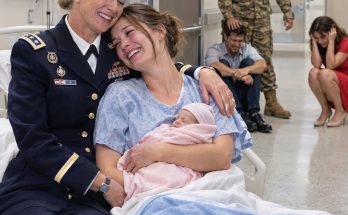
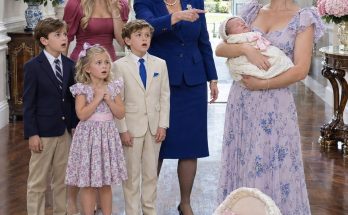
Every New Year, My Parents Took My Brother on Lavish Vacations and Left Me Behind. On My 15th Birthday, I Found Three Tickets to Los Angeles. “You’re Too Old for Family Trips,” Mom Said. I Left With Just $17 and Found Refuge Near an Army Base—And They Never Came Looking. Eighteen Years Later, They Begged Me to Save My Brother’s $12 Million Deal. I Set One Sealed Document on the Table, and My Father Went Pale When He Saw the Signature…

Three Tickets and Seventeen Dollars

On the evening my parents asked me to save my brother’s twelve-million-dollar development project, I carried a sealed envelope into a quiet room and placed it on the table between us. My father stared at the court stamp on its cover, while my mother’s hands tightened around the strap of her purse. Eighteen years earlier, they had left me behind on my fifteenth birthday with seventeen dollars and a reminder about the trash cans. Now they wanted me to put my name behind my brother’s business.

Before I tell you what was inside that envelope, I need to go back to the morning I learned that three plane tickets could say more than a thousand words.

It was New Year’s Eve in Columbus, Georgia. A cold rain tapped against the kitchen windows, and the bare branches outside shone beneath the streetlights. I was fifteen, wearing flannel pajamas and staring at three ticket sleeves on the granite island.

My father, Martin Hale, had one. My mother, Elaine, had another. My younger brother, Tyler, had the third. They were flying first class to Los Angeles the next morning.

I looked beneath the sleeves, then lifted them one at a time, hoping my ticket had somehow been tucked underneath. The counter was empty.

“Where’s mine?” I asked.

My mother didn’t look up from the grocery-store cake she was cutting. The bakery had misspelled my name in blue icing, but she had already begun dividing the cake into slices.

“You’re too old for family trips now,” she said. “Tyler still gets excited about movie studios and palm trees. You’d probably spend the whole trip sitting in the hotel room.”

I had heard some version of that explanation every New Year. One year, my parents took Tyler skiing. Another year, they went to Miami. The year before, they visited New York. Each time, I had been told there would be another trip later.

“You said I could come this year,” I said.

My father entered from the hallway, carrying two new suitcases. He managed a regional car dealership and wore a soft cashmere sweater that looked more expensive than anything in my closet.

“Don’t turn your birthday into an argument,” he said. “You’re staying with Aunt Lydia. We’ll be back next week.”

My stomach tightened. “Did Aunt Lydia agree to that?”

My mother set the knife down. “I left her a message.”

Tyler came down the stairs in the leather jacket our parents had bought him for Christmas. He saw the tickets and counted them, then looked at me.

“She’s not coming?”

“Eat your cake,” my father said. “Your sister needs to learn that the world doesn’t revolve around her.”

I could have argued. I could have reminded them that the family trips had always included everyone except me. I could have asked why the money was enough for three first-class seats but not a fourth. Instead, I looked at the cake, at the misspelled name, and at the space where my ticket should have been.

“All right,” I said. “Have a good trip.”

My father nodded, pleased that I had stopped making things difficult.

They left before sunrise. I watched their SUV disappear into the gray morning from behind the living-room curtains. No one came upstairs to say goodbye. No one left food or emergency numbers. On the kitchen counter, there was a note reminding me to take the trash bins to the curb on Thursday and keep the thermostat low.

I went to my room and emptied the ceramic jar where I kept the money I had earned doing yard work for a neighbor. I counted it twice: one ten-dollar bill, one five, and two crumpled singles. Seventeen dollars.

I packed two sweaters, jeans, my winter coat, and a notebook into an old canvas backpack. Then I wheeled my bicycle out of the garage and rode toward the small businesses near the Army installation outside town.

A diner called Bell’s Kitchen had a cardboard sign taped inside its window: HELP WANTED. My hands were numb by the time I pushed open the door. A bell rang overhead, and warm air carried the smell of coffee, bacon, and biscuits toward me.

The owner, a silver-haired woman named June Bell, looked up from behind the counter. She took in my wet shoes, red cheeks, and backpack.

“Honey, you look like you rode through a rainstorm on purpose,” she said.

“I’m looking for work,” I replied. “I can clean tables or wash dishes.”

She poured hot chocolate and placed it on the table before asking anything else. After a while, she sat across from me.

“Where are your parents?”

“California.”

“And you’re here?”

I nodded.

June brought me eggs and warm biscuits. When I tried to pay with one of my crumpled bills, she pushed my hand gently back toward me.

“Keep it. It’s your birthday, isn’t it?”

The words softened something I had been holding tight since the night before. Before I could answer, a customer recognized me as Martin Hale’s daughter. He mentioned that my father had told people I had chosen to stay home because I wanted to spend New Year’s with my friends.

I hadn’t chosen anything. I hadn’t even been asked.

June waited until the customer left, then leaned toward me.

“Finish breakfast,” she said. “Then we’ll call your aunt together.”

When Aunt Lydia answered, she sounded confused. My mother had never called her.

That afternoon, a picture arrived on the cheap phone my parents had given me. My parents and Tyler were smiling in front of a theme-park sign under a bright California sky. Beneath the picture, my mother had written: Don’t forget the trash cans Thursday. Keep the thermostat low.

They hadn’t checked whether I had food, whether I had somewhere warm to sleep, or whether my aunt knew I was supposed to stay with her. They had simply assumed I would take care of the house.

The People Who Made Room for Me

Aunt Lydia drove to the diner that evening and took me to her home. The next week, she went to my parents’ house to speak with them. When she returned, her jaw was tight, and she didn’t repeat everything my father had said. I understood enough: he hadn’t asked to see me.

Within a few weeks, Lydia arranged temporary guardianship so she could enroll me in school and approve a part-time job. My father signed the papers without asking to meet with me. For the next few years, my parents sent no birthday cards and offered no help with school expenses.

June hired me within the limits of the law, giving me small jobs after school and on weekends. I wiped tables, rolled silverware, greeted customers, and helped at the register when the diner was quiet. She paid me fairly and insisted I put some of my earnings into a savings account with my aunt.

“You’re not going to work all day and forget to eat,” she would say, sliding soup across the counter. “You can study after lunch.”

The diner was full of people passing through the area: service members, military families, and residents who had lived in town for decades. I learned how care could show up in ordinary gestures. June remembered which customers wanted their coffee black. She made sure young service members had a hot meal before a long drive. She asked about my classes and listened closely to the answers.

During my sophomore year, I was stuck on an algebra assignment when a woman in Army uniform stopped beside my booth.

“Are you trying to intimidate that equation,” she asked, “or would you like another set of eyes?”

She introduced herself as Major Dana Keller, a logistics officer who often came to the diner after work. She showed me where I had carried a negative sign incorrectly. She didn’t make me feel foolish for missing it.

“Small details can change the whole plan,” she said. “Take your time and check your work.”

After that, Dana became a steady presence in my life. She asked what I liked studying, encouraged me to think through problems, and explained how students could move from ROTC into Army service. She never tried to make the choice for me.

At sixteen, I entered a regional science fair with a design for reducing energy use in old commercial buildings. The idea came from watching the diner’s aging refrigerator work through a Georgia summer. I won first place. I had mailed an invitation to my parents, and I still found myself looking toward the auditorium doors until the ceremony began.

They never came.

June and Aunt Lydia sat near the front. Major Keller applauded from the aisle. The next morning, June framed my certificate and hung it beside the register.

“You’ve got a sharp mind,” she told me. “Use it for something you care about.”

I began preparing for an Army ROTC scholarship, running before school and studying late into the evening. By the spring of senior year, I had earned a full scholarship to Georgia State University.

My parents heard about it through neighbors. One woman congratulated me at the grocery store and said my mother had been telling people how much she and my father had sacrificed to help me get into college. I thanked her, then continued shopping with a knot in my stomach. My parents had not paid for my books or shoes, yet they were happy to accept praise for my success.

The night before I left for college, June gave me a wooden recipe box filled with her biscuit and peach cobbler recipes. A photograph of me standing beside my old bicycle was tucked into the back. On its reverse, June had written: You always had a place here.

That evening, Aunt Lydia gave me something else: a yellowed envelope sealed with red wax. She had found it among the papers of my grandfather, Walter Hale, after he passed away. It was addressed to me.

“He asked that you receive it when you were eighteen and living on your own,” Lydia said. “I don’t know what’s inside. Your father always said Walter left everything to him, but I never believed that was the whole story.”

I placed the envelope in the recipe box and carried both to college.

The Uniform I Chose

College was a demanding mix of early physical training, business classes, and careful budgeting. I shared an apartment with Rachel Dunn, an accounting student who could turn a bag of pasta into several meals and make me laugh when I took myself too seriously.

“You know a B-plus won’t get you evicted, right?” she asked one night, finding me studying after midnight.

“I know.”

“Good. Then go to bed like someone who knows.”

In 2015, I graduated with honors and commissioned as a Second Lieutenant in the Army Quartermaster Corps. June, Aunt Lydia, and Major Keller came to the ceremony. My parents did not. A few weeks later, a greeting card arrived with a small amount of cash inside and a note congratulating me on finishing school. It didn’t mention my commission.

I built my career one assignment at a time, learning to oversee supply operations, manage contracts, and lead people through demanding inspections. I made mistakes, corrected them, and learned to ask for a second review when the details mattered. I became a First Lieutenant, then a Captain, and later a Major.

From a distance, I saw that my parents’ life had grown more polished. They moved into a large home in an upscale neighborhood. Every New Year, my mother sent a card with photographs from a different trip. My brother tried one business after another, and my father seemed to provide the money that kept each new idea afloat.

In late 2025, I received orders for a senior logistics assignment back near Columbus. I returned to Georgia that November, eighteen years after cycling away from my parents’ house with seventeen dollars.

On my first free Saturday, I drove to Bell’s Kitchen. The booths were still red, and the coffee machine still rattled. June, now in her late seventies, came out from behind the counter and hugged me.

“Look at you,” she said. “A Major. And I’m still going to tell you to eat more.”

Over coffee, I learned the diner was under financial pressure from rising costs and repairs. June brushed away my offer to help, but I noticed a formal letter beside the register. It came from a company called Hale Corridor Partners, run by my brother, Tyler.

The letter listed Bell’s Kitchen as part of a proposed redevelopment project. It implied that June had agreed to sell her property.

“I haven’t signed anything,” she told me.

That evening, I called Rachel, who had become a forensic accountant. She looked into the company and called me back quickly. Tyler’s firm was presenting a twelve-million-dollar development plan to investors. Its materials listed me as a military adviser and displayed my official Army photograph. The company had also used property connected to a private family trust as collateral.

Rachel found the original trust records in the county archive. The funds had been transferred in February 2008, just weeks after my fifteenth birthday. The grantor’s name was my grandfather Walter’s.

I looked toward the recipe box on the shelf. The sealed envelope was still inside.

The Envelope and the Invitation

I kept the envelope sealed while I gathered the facts. In the Army, I had learned not to make a decision based on the first report. I contacted my command’s ethics office and told them my image and rank were being used without permission. I also contacted the coordinator of a veterans’ charity gala where Tyler’s company planned to appear as a sponsor. The coordinator agreed to correct the program publicly.

Then my mother called.

“Nora, sweetheart, we heard you’re back,” Elaine said in a warmth I hadn’t heard in years. “Your father and I would love to have you over for dinner. It’s time we were a family again.”

I accepted the invitation.

Their house had white columns, carefully trimmed hedges, and a bronze sign by the door that read Family Is Everything. Dinner began with talk about the weather and my assignment. My father poured wine, and Tyler described his project as if the deal were already complete.

After the meal, my father leaned toward me.

“Tyler needs a few introductions,” he said. “You know people on the installation. Your presence at a meeting would reassure investors.”

“I can’t use my position to help a private company,” I replied. “My name and photograph should not be in your presentation.”

My brother’s smile slipped.

“It’s just a few meetings,” he said. “Dad already told the investors you were supporting us.”

“Then Dad shouldn’t have told them that.”

My mother pulled out a photo album and opened it to pictures from the Los Angeles trip.

“We thought about you the whole time,” she said. “You wanted to stay home, remember?”

For a moment, I looked at the three of them and saw the story they had told themselves for eighteen years. I stood and reached for my coat.

“I’m not endorsing the project,” I said. “And June Bell has not agreed to sell her diner.”

My brother’s expression changed.

“If this deal falls through, I’m in trouble,” he said.

“Then you should tell the investors the truth.”

The next morning, I reported the misuse of my image through the proper Army channels. My command documented the matter and confirmed I had done the right thing by raising it promptly. The gala coordinator prepared a correction. Meanwhile, Rachel and an attorney named Paul Mercer reviewed the company’s claims about the local property owners. They learned Tyler had told several business owners that others had already signed, even though no one had.

That evening, I sat with June and Paul at my kitchen table. The envelope had followed me from college to one home after another, its wax seal still intact. I broke it open.

Inside was a certified copy of my grandfather’s trust. He had placed a substantial amount of money and a stretch of commercial land in my name, to be held until I turned twenty-one. My father had been named as custodian, with strict limits on how he could use it. A separate letter, written in my grandfather’s hand, said he wanted me to have the chance to build something lasting.

Rachel checked the county records again. The trust had been closed through a transfer document bearing my signature, dated when I was fifteen. I could not have signed such a transfer on my own, and the notary named on the paperwork had later lost his license for misconduct.

The money had moved into a company controlled by my father. Some of it was now tied to Tyler’s development project.

I looked at Paul.

“How quickly can we get the records verified and file a claim to protect the property?”

He studied the papers.

“If the handwriting review supports what we’re seeing, we can act quickly.”

The Gala

The veterans’ gala took place in early January, eighteen years after I had ridden away from home. I wore a cream blouse and navy trousers, not my uniform, and carried a leather portfolio with the court filings inside. June came with me, as did Major Keller, now retired from the Army.

The ballroom was full of local residents, service members, and business owners. A large display showed Tyler’s plan for the redevelopment corridor. The drawing replaced Bell’s Kitchen with a sleek coffee shop.

June examined the picture.

“They didn’t even leave me the awning,” she murmured.

My parents and Tyler stood with investors near the stage. When my brother saw me, he hurried over.

“Nora, I knew you’d come around,” he said. “The investors are at table two. Just say hello and tell them you’re advising us.”

“I’m here for the veterans’ transportation fund,” I replied. “I’m not connected to your company.”

His expression changed.

Before Tyler could respond, the gala coordinator took the microphone and announced that I had not approved the use of my photograph, rank, or name and did not endorse the redevelopment project.

The investors exchanged looks.

When Tyler presented his plan, one of them stood and asked whether the company had signed purchase agreements with the local owners.

“We’ve had encouraging conversations,” Tyler said.

June rose from her seat.

“I own Bell’s Kitchen,” she said clearly. “I have not agreed to sell it. My attorney has already sent your company a written notice.”

An auto repair shop owner stood as well and said he had made no agreement. A dry cleaner’s owner added that Tyler had told her the diner was already part of the project.

The investor closed his folder.

“We’re pausing our commitment until we can review these claims,” he said.

My father crossed the room toward me.

“You brought everyone here to embarrass your brother,” he said.

“I didn’t put false agreements in his presentation,” I replied. “And I didn’t give him my photograph.”

My mother caught my arm.

“Please, Nora. The bank could call the loan. We put the house up as collateral. Tyler could lose everything.”

I looked at her hand on my sleeve and remembered the birthday morning when they had left without checking whether I was safe.

“We can talk,” I said.

I led them to a small lounge off the ballroom. When the door closed, my father’s voice softened.

“The bank may act on Monday,” he said. “If you tell the investors this was a misunderstanding, we can buy ourselves time.”

“I won’t do that.”

“We’re your parents,” my mother said, her voice trembling.

I opened my portfolio and placed a court filing on the table. The document sought to restore the trust and challenge the transfer that bore my name.

“You asked what belongs to this family,” I said. “Read the first page.”

My father looked down at the filing, then at the trust record. My mother leaned over his shoulder. Tyler stared at them both.

The document laid out the date of the transfer, the amount held in trust, and the signature that had supposedly released it when I was fifteen. My father’s face drained of color.

“You told me that land was yours,” Tyler said.

I kept my voice level.

“It was left to me. The court filing also gives the bank notice that the collateral may have been transferred improperly.”

For once, no one tried to tell me what I had wanted, what I remembered, or what I was supposed to do next.

What I Kept

The dispute moved through lawyers’ offices and county records over the following weeks. The handwriting review supported the conclusion that my signature on the transfer document was not genuine. Faced with the trust papers and the notary records, my parents agreed to a civil settlement. They surrendered the property and used the remaining assets to address the financial obligations tied to the disputed transfer.

Tyler’s company dissolved. He found a job with a local supply distributor, doing warehouse logistics. When he asked to meet, he came without asking me for money.

“I got used to Dad fixing things for me,” he said. “I should never have used your name or told people you were behind the project. I’m sorry.”

“You can choose what you do from here,” I told him.

He nodded. It was not a repaired relationship, but it was an honest conversation.

My mother asked to meet me at a coffee shop. She wore a plain wool coat and sat with a cup of tea she barely touched.

“I knew we were failing you,” she said. “When you left, I was relieved because I didn’t have to look at what I’d done. Then I told people you had chosen to stay home. I protected that story for years.”

I let her finish.

“Why didn’t you ever say you were sorry?” I asked.

“I was afraid you’d never speak to me again.”

“You were afraid I’d leave, so you gave me every reason to go.”

She lowered her eyes. I told her I wasn’t ready to pretend we were a happy family, and that any future conversation would have to be honest. She said she understood.

That spring, June told me she was retiring from the diner. She had arranged for her longtime manager, Elise Warren, to take over the business through a small loan. June would keep the building and lease it to Elise at a fair rate.

“I thought I could buy the place for you,” I said.

“I know you would have,” June replied. “But you don’t have to rescue everyone you love. Sometimes the best thing is to let someone else build their own life.”

At the handover celebration, the red booths were full again. Major Keller came in from nearby, and Rachel drove down from Atlanta. June wore her favorite blue cardigan and pretended the gathering was making too much fuss, though she smiled through the whole afternoon.

Outside, she handed me the recipe box. The old photograph was still inside: a fifteen-year-old girl beside a rusted bicycle, carrying a small backpack.

“You turned out all right,” June said.

“I had people who showed up,” I answered.

I used part of my recovered trust to establish a scholarship for military dependents and young people who need help paying for school. I named it in honor of my grandfather and Aunt Lydia. I kept the rest invested and built a life on my own terms.

For years, I thought the point was to make my parents regret leaving me. Standing outside the diner with the people who had made room for me, I understood that their regret was theirs to carry. What mattered was that I had found a place where I could belong, and learned that I did not have to earn it by carrying everyone else.

Leave a Reply

Your email address will not be published. Required fields are marked *