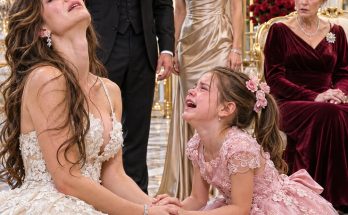
My mother sl@p//ped my 13-year-old son across the face after dragging him out of his hospital bed just two days after emergency surgery. “Get up and stop pretending!” she screamed before slapping him. I didn’t waste time arguing with her. I rushed to pull her away, but then the nurse in charge stepped in, and what the doctors discovered changed everything…

PART 1

“Get up, Ethan! Stop pretending you’re invalid! At your age, your father was already working a paper route, and you can’t even get out of bed!”

Those were the exact words coming out of my mother’s mouth—Evelyn Miller—as she yanked my thirteen-year-old son out of his hospital bed barely forty-eight hours after emergency surgery.

I was walking back down the hall with a cup of ice chips when I saw Ethan collapse onto his knees on the linoleum floor. He pressed both hands over his abdomen and let out a scream I still hear whenever I close my eyes.

“Grandma, please… it hurts so bad.”

My mother slapped him hard across the face.

“Stop crying like a little girl!”

Before I tell you what happened next, I need to explain why that woman was ever left alone with my son.

My name is Arthur Miller. I’m forty-three years old and live in Columbus, Ohio. Since Ethan turned five, I’ve practically raised him on my own. His mother took off for Miami with another man. For the first few months she called occasionally; then she started missing birthdays, and eventually she vanished from our lives altogether.

My mother became our main support system.

She watched Ethan while I worked long shifts managing an auto parts distribution center. She cooked his dinners, picked him up from middle school, and often stayed until I got home.

Evelyn, however, had always held a rigid, unforgiving view of parenting. To her, a well-behaved child didn’t cry, didn’t complain, and never questioned an adult.

When Ethan was nine, he injured his wrist during a school field trip. My mother insisted he was exaggerating just to get out of class. The urgent care X-ray showed a clean hairline fracture. She never apologized.

I used to excuse her behavior by telling myself she simply belonged to a tougher generation. I’m ashamed to admit that now.

Ethan was a gentle, quiet, deeply sensitive kid. He loved sketching animals and always gave his best drawings to his grandmother, even though she constantly mocked him for being “too soft.”

Everything changed one Thursday in October.

Ethan woke up with excruciating abdominal pain. By the time we reached Nationwide Children’s Hospital, doctors discovered a perforated appendix and a severe abdominal infection that required immediate emergency surgery.

Dr. Grant explained afterward that the operation had been complicated. Ethan needed IV antibiotics, close monitoring, and physical assistance from the nursing staff before attempting to stand.

On Friday afternoon, I had to go into the warehouse for a few hours to handle a payroll audit. My mother offered to sit with him.

When I returned that evening, Ethan was unusually quiet.

“Feeling okay, buddy?”

“Yeah, Dad.”

Immediately, his eyes darted toward his grandmother.

“He’s milking it,” Evelyn cut in briskly. “Doctors nowadays turn kids into helpless babies.”

That night, after she went home, Ethan asked me quietly, “Dad… do you think I’m a coward?”

I promised him he wasn’t. I told him I would talk to my mother, though I still had no idea how terrified my son truly was of her.

On Saturday morning, I stepped down to the nurses’ station for a few minutes to ask about his pain medication schedule.

As I headed back, shouting echoed down the corridor.

I turned the corner just in time to see my mother gripping Ethan by his upper arm, hauling him upright, and practically throwing him onto the floor. Then came the slap.

I sprinted toward them while a nurse shouted from the doorway, “Ma’am, let go of that child right now!”

Before I could reach them, Ethan lifted his face. A thin line of blood trickled from his split lower lip. Instead of asking me for help, he whispered words that broke my heart in two:

“Dad, I’m sorry… please don’t tell Grandma I told on her.”

In that split second, I realized this hadn’t started in the hospital—and I hadn’t even begun to imagine what my own son had been hiding from me for years.

PART 2

By the time I reached my mother, her hand was raised to strike Ethan again.

I caught her wrist mid-air.

“Don’t you ever touch him again.”

Evelyn stared at me in shock.

“Arthur, let go of me. That boy needs discipline.”

“He just came out of surgery!”

“Which is precisely why he needs to get moving! They’re turning him into a cripple!”

Charge Nurse Brenda, a seasoned pediatric nurse in her fifties, knelt immediately beside my son.

“Ethan, sweetheart, don’t try to sit up. Stay still—we’ve got you.”

She reached up and pressed the emergency call button on the wall. Within moments, doctors, orderlies, and two uniformed hospital security officers rushed into the room.

I stood beside the bed, shaking from head to toe.

Dr. Grant carefully examined Ethan’s surgical site. His expression darkened when he saw that an internal suture had likely torn and the surgical drain had been pulled partially out of place. He ordered an immediate stat CT scan.

My mother tried to step forward.

“Doctor, don’t make a federal case out of this. I was only trying to get him on his feet.”

Nurse Brenda stepped cleanly between them.

“Ma’am, you need to leave this room immediately.”

“I am his grandmother!”

“And he is my patient.”

Hospital security escorted her off the floor. Before stepping into the elevator, Evelyn shot one final threat over her shoulder: “You’re going to regret humiliating me in front of strangers.”

I didn’t answer her. I was focused entirely on my son, who was crying silently while gripping the hospital sheet in his fists.

“I’m sorry, Dad,” he whispered.

“Why on earth are you apologizing to me?”

“Because I made Grandma mad.”

Something inside my chest shattered completely.

Later that afternoon, surgeons confirmed Ethan needed a second procedure to repair the internal damage caused by the fall. I asked the medical team to photograph and document every injury and requested an immediate consult with the hospital social worker.

That evening, I walked into the Columbus Police Department precinct to file a formal assault report. Hospital administration preserved Ethan’s medical charts along with the hallway security footage.

My mother began calling my phone nonstop. At first she sobbed; then her tone turned venomous, accusing me of tearing our family apart over a “manipulative, dramatic kid.” I saved every single voicemail.

On Sunday morning, my younger sister, Claire, called me from Cincinnati.

“Arthur, I need to ask you something,” she said quietly. “Did Mom really hit Ethan?”

I told her everything. For several long seconds, the line went dead silent. Finally, Claire began to cry.

“She used to do the exact same thing to me when we were kids.”

I went cold.

“What are you talking about?”

“She’d yank my hair, lock me in the laundry room, and hit me whenever I cried. Afterward, she forced me to tell Dad I’d tripped on the stairs. You never knew because she always treated you differently.”

Her confession triggered a flood of memories I had willfully ignored—all the mornings Ethan begged not to stay at Grandma’s house, his sudden stomachaches before visits, his habit of apologizing even when he hadn’t done anything wrong.

Two days later, once Ethan was stable after his second surgery, a pediatric psychologist came to speak with him. When their session ended, she asked if we could look through a spiral sketchbook tucked inside his backpack—the drawing pad my son never let anyone touch.

Between sketches of wolves, red-tailed hawks, and fantasy characters were several pages that stopped my breath.

One drawing showed a woman gripping a small boy tightly by the arm. Written underneath in neat pencil were the words: If Dad asks, I have to say I fell.

Another page showed our house, with a boy crying behind a closed bedroom door.

The worst was tucked inside the back cover—a folded letter addressed to me.

The psychologist asked me to sit down before I opened it. Its opening line read: Dad, if anything ever happens to me while I’m with Grandma, please don’t believe her when she says it was my fault.

As I kept reading, I uncovered a truth that forever changed how I remembered the last four years of my life.

PART 3

The letter was written in Ethan’s small, slightly slanted handwriting. I recognized faint smudge marks where he had erased and rewritten words—the exact same handwriting I had looked over hundreds of times while helping him with middle school homework.

A date was written in the top right corner: six months before his surgery.

I kept reading.

Dad, I know you work really hard and Grandma helps out so we can afford groceries and keep the house. That’s why I never wanted to make trouble for you. Still, sometimes I’m scared to stay with her. When she gets mad, she squeezes my arms until they bruise and tells me I’m weak just like my mom. She says if I tell you, you’ll have to quit your job to watch me and it’ll be my fault if we go broke.

I had to pause just to breathe. Dr. Sarah Jenkins, the child psychologist, sat quietly across from me without interrupting.

I forced myself to finish.

The day I hurt my wrist, Grandma told me to stop whining. When I asked her to call you, she locked me out on the back patio until I stopped crying. Later she told you it was an accident. I didn’t want to lie to you, Dad. I was just scared you’d be mad at me too.

I remembered that afternoon vividly. Ethan had come home with red, swollen eyes and his wrist tucked inside his hoodie sleeve. My mother assured me he had tripped playing in the yard, and I accepted her word without question. I even remembered telling my son, “You need to listen to your grandmother. She only wants what’s best for you.”

Now those words felt unbearable.

The final paragraph hurt the most.

I don’t want you to stop loving Grandma because of me. I love her too when she’s in a good mood. Sometimes she makes cinnamon rice pudding and lets me pick a movie. I wish she could be like that all the time. I’m sorry I’m not as tough as you want me to be.

I buried my face in my hands. For years I had prided myself on raising a polite, well-mannered boy. Now I saw the truth: his silence hadn’t been calmness. It had been fear.

Dr. Jenkins let me cry before speaking gently.

“Mr. Miller, I need you to understand something. Ethan didn’t hide this to deceive you. He was trying to protect the stability of his family.”

“I should have seen it.”

“You can’t change yesterday, Arthur. What matters now is that you listen to him and protect him. That’s what he needs most.”

That afternoon, I walked back into Ethan’s hospital room. He was propped against his pillows, watching autumn rain streak down the windowpane.

I pulled a chair up beside his bed.

“I found your letter, buddy.”

His eyes widened in panic.

“Are you mad at me?”

A sharp ache tore through my chest.

“No, son. Never.”

“Is Grandma mad?”

“It doesn’t matter what Grandma thinks.”

Ethan looked down at his hands.

“I didn’t want you guys to fight.”

I took his hand gently in mine.

“Listen to me carefully. You did nothing wrong. It was never your job to endure pain so I could keep working. I’m the adult. Protecting you was always my responsibility.”

His lower lip began to tremble.

“You always said she helped us so much.”

“And I made a terrible mistake thinking that helping with groceries or rides gave anyone the right to hurt you.”

Then Ethan asked a question that still haunts me to this day.

“Even though she’s your mom… are you going to believe me?”

I leaned over and wrapped my arms carefully around his shoulders, mindful of his surgical incisions.

“I believe you, son. And you will never again have to prove to me that you deserve to be safe.”

For the first time since the operation, Ethan cried without covering his mouth to muffle the sound. I didn’t tell him to stop. I held him and let him cry for as long as he needed.

The weeks that followed tested every ounce of resolve I had.

Ethan stayed in the hospital longer than originally planned. The second surgery succeeded, though he needed extended IV antibiotics to clear the infection triggered by the fall.

Meanwhile, my mother began spreading an entirely different story across the family. According to her, Ethan had tried climbing out of bed on his own, lost his balance, and I had framed her because the hospital needed a scapegoat.

Relatives started blowing up my phone. My Uncle Frank called first.

“Arthur, your mother is nearly seventy years old. Are you seriously pressing criminal charges over a slap?”

“It wasn’t just a slap, Frank.”

“Kids today are wrapped in bubble wrap.”

“My son’s abdomen had just been stitched back together after emergency surgery. She dragged him onto the floor.”

“She’s still your mother.”

I took a slow breath.

“And Ethan is my son.”

Silence fell on the other end.

“If you want, we can sit down and look at the surgical report and the hallway video together.”

He never brought it up again.

Other relatives insisted we should handle things “quietly inside the family.” I told them child abuse doesn’t become acceptable just because it happens behind closed doors. Several aunts and cousins stopped speaking to me. For the first time in my life, I didn’t care.

My sister Claire took a week off work and drove up from Cincinnati to help us settle back home. One night, while we were making coffee in my kitchen, she shared something she had carried for over thirty years.

“When we were kids, I genuinely believed Mom treated me that way because there was something defective about me.”

I looked at her helplessly.

“I had no idea.”

“I know. Still, I remember whenever I cried, you used to whisper at me not to make her angry.”

Shame washed over me. Claire hadn’t said it to wound me; she said it so I could finally see the family pattern clearly. My mother ruled through intimidation. Everyone else learned to tiptoe around her temper—and whenever someone got hurt, we asked the victim to keep the peace instead of stopping the person causing the harm.

That night, I realized I had spent decades confusing fear with respect.

The legal investigation moved steadily forward. Once Ethan recovered enough, trained forensic interviewers spoke with him at the child advocacy center. Franklin County prosecutors compiled his statement, the surgical records, nurse depositions, and security footage. Child Protective Services also opened an independent safety review and issued an immediate no-contact order barring my mother from approaching Ethan.

Evelyn reacted with pure outrage. She left a voicemail I listened to only once:

“Arthur, I sacrificed my life for you kids. I raised you, fed you, and made sure you never went without. Is this how you repay me? Letting a spoiled boy destroy his own grandmother?”

I archived the audio file and didn’t reply.

Three weeks later, another text came through: If Ethan hadn’t been so dramatic, none of this would have happened.

That was the exact moment I stopped hoping for an apology. My mother genuinely believed the tragedy wasn’t injuring her grandson—it was that someone finally held her accountable.

Months later, the case reached a formal hearing in court. Claire sat beside me in the gallery. Ethan didn’t have to face his grandmother in the courtroom; his testimony was entered through protected forensic protocols designed for minors.

My mother arrived wearing a crisp white blouse and the navy blazer she wore to church every Sunday. Her attorney emphasized her age, her clean record, and decades of helping raise her grandson. Prosecutors countered with the surgical photos, Dr. Grant’s medical testimony, and Nurse Brenda’s eyewitness account.

When questioned, my mother insisted she had only been trying to instill discipline. When the prosecutor read aloud Ethan’s plea for her to stop, she briefly lowered her eyes. For a fleeting second, I wondered if remorse had finally broken through.

Then she lifted her chin.

“I raised three children that exact way,” she stated firmly. “Not one of them died from it.”

Hearing those words filled me with a sorrow that’s hard to put into words—not because her answer surprised me, but because even standing before a judge, she remained completely incapable of recognizing my son’s pain.

The court entered a conviction for misdemeanor child endangering, ordered restitution for Ethan’s second surgery and therapy costs, placed her on probation, and issued a long-term protective order barring all contact.

I felt no triumph walking out of the courthouse. No ruling could give Ethan back the years he had spent walking on eggshells around his own grandmother. Still, it drew a hard line I had failed to draw myself.

Outside in the courthouse lobby, I saw my mother sitting alone on a bench beneath a tall window. For a brief second, I remembered the woman who used to walk me to the bus stop, bake pies at Thanksgiving, and sit beside my bed dabbing my forehead whenever I ran a fever. That woman had existed too—and acknowledging that didn’t excuse a single thing she had done.

She looked up as I approached.

“Are you satisfied now, Arthur?”

I didn’t answer right away.

“You took my grandson away from me,” she continued bitterly. “You humiliated me in front of the entire family.”

“Mom, Ethan ended up back on an operating table because you hurt him.”

“I only wanted to make him strong.”

I met her gaze steadily.

“My son was already strong. Strong enough to endure years of your cruelty and still draw birthday cards for you every single year.”

Her lips trembled slightly.

“Everything I ever did was for this family.”

“Then tell me one thing. Can you admit you hurt him—without making a single excuse?”

Silence stretched between us. I waited.

Finally, she spoke.

“One day that boy will grow up and understand what raising children actually takes.”

In that moment, I knew we were saying goodbye.

“Maybe one day he’ll decide he wants to talk to you,” I said quietly. “If he does, that will be entirely his choice. I will never again force my son to be near someone who makes him afraid.”

I turned and walked away before she could answer. It didn’t feel like winning; it simply felt like the first time in my life I chose to protect someone I loved without asking my mother’s permission.

The months that followed taught me that physical incisions heal long before fear does.

Ethan regained his strength, went back to middle school, and slowly got his appetite back. Yet small habits lingered. He asked permission just to pour himself a glass of milk. He flinched whenever someone raised their voice in another room. If he accidentally spilled juice, he rushed to apologize as if expecting punishment.

One evening while helping me unload the dishwasher, a ceramic plate slipped from his hands and shattered across the kitchen tile.

I turned around at the crash. Ethan stood frozen, staring down at the broken pieces.

“I’m sorry, Dad. I swear I didn’t mean to drop it.”

I knelt beside him on the floor.

“Hey—it’s okay. Let’s grab the broom and sweep it up carefully so nobody gets cut.”

“You’re not mad?”

“It was an accident, bud. A plate costs five dollars; you can’t be replaced.”

He stared at me as though I had just said something miraculous. That night, I cried behind my closed bedroom door, realizing how long it takes to unteach a child that accidents don’t deserve cruelty.

Both of us started attending regular counseling. I needed help unpacking why I had normalized behaviors I now saw clearly as abusive. Through therapy, I learned that loving our parents doesn’t mean obeying them blindly, appreciating their help doesn’t mean handing them a blank check, and a child should never have to pay with his safety to keep the family peace.

One rainy Sunday afternoon, Ethan walked out of his bedroom carrying his sketchbook and sat beside me on the couch.

“Dad, I want to show you something.”

He opened to a fresh page. On it, he had drawn a hospital room—a small boy lying in bed, and standing in the doorway, a broad-shouldered man with his arms stretched wide.

“That’s you,” Ethan said softly.

I looked at the drawing for several seconds.

“You drew me way bigger than I am.”

Ethan smiled.

“That’s how big you looked to me that day.”

Tears stung my eyes.

“I should have protected you a lot sooner.”

My son thought about that for a moment before leaning his head against my shoulder.

“Yeah. Still… you showed up, Dad.”

I didn’t know what to say, because he was right about both things. I had shown up that Saturday—yet I had also missed warning signs for years that deserved my attention. Both truths existed side by side, and carrying that accountability became part of being the father he deserved.

Two years have passed since that October.

Ethan is fifteen now and nearly as tall as I am. He still draws every single day. Last spring, he won first place in a regional high school art competition across central Ohio. His winning piece depicted a warm, brightly lit house standing firm in the middle of a violent storm.

When the judges asked what the painting represented, Ethan answered clearly: “A place where you know you’re safe, no matter how rough things get outside.”

Sitting in the auditorium among the parents, I watched him walk onto the stage. When they called his name, Ethan scanned the crowd until he found me, lifted his award, and grinned. He didn’t glance around nervously for approval. He didn’t look worried about making a mistake. He simply looked happy—and that single moment meant more to me than anything I had ever achieved in my life.

My mother still tries to reach out through relatives from time to time. A few months ago, an envelope arrived in the mail—six handwritten pages talking about how lonely she felt, her arthritis, and how much she missed her grandson. Not a single sentence acknowledged what she had done to Ethan.

I tucked the letter into a drawer and never replied. If Ethan ever chooses to reopen contact once he’s older, I’ll stand beside him and help him navigate that decision safely. Until then, I will never pressure him to forgive someone simply because they share the same last name.

Claire and I talk on the phone every week now. Sometimes we share stories from growing up; other times we just talk about Ethan’s art projects or our dad’s old chili recipe. We’re finally learning how to be brother and sister without editing our memories to protect our mother’s image.

Not long ago, a greeting card arrived in our mailbox from Nurse Brenda. She had seen Ethan’s name in the local paper after the art competition.

Inside, she wrote: I’m so proud to see you’re still drawing. Never forget that your voice matters, and asking for help is one of the bravest things a person can do.

Ethan read her note twice before propping it up beside his trophy on his bookshelf.

That night over dinner, he looked across the table and asked, “Dad… do you think Grandma ever actually loved me?”

I set my fork down, determined never to lie to him again.

“I think she loved you the only way she knew how, son. Still, loving someone never excuses hurting them.”

Ethan sat quietly for a moment.

“What if I miss her sometimes?”

“Then you’re allowed to miss her. You’re allowed to remember the good days—and you’re also allowed to decide you never want to see her again. None of those feelings make you a bad person.”

He nodded slowly and went back to eating. It was a brief conversation, yet it showed me just how far we had come. Before, Ethan swallowed every emotion just to survive; now he could speak his heart out loud without fear.

For years, I believed my duty was to hold my family together at any cost—even if it meant enduring tension, biting my tongue, and overlooking cruelty. Today I know better. A family isn’t held together by forcing the most vulnerable person in the room to absorb the pain. It’s built when everyone under that roof feels safe, respected, and heard.

I still remember that hospital hallway. I remember the cup of ice slipping from my fingers, my son’s scream, and the sight of my own mother raising her hand to strike him again. For decades she had taught me that a good son never stands up to his mother. That Saturday, I learned something she never taught me: sometimes becoming a good father means refusing to remain an obedient son.

And if I ever had to choose again between keeping peace with my mother and protecting Ethan, I wouldn’t hesitate for a heartbeat. Because no child should grow up believing they have to tolerate abuse to earn family love—and no adult should ever hide behind the words “I’m your mother,” “I’m your father,” or “I’m your grandmother” to justify cruelty.

There are still people who tell me I went too far, that I should have forgiven her and kept things private. Whenever I hear that, I picture my thirteen-year-old son kneeling on a cold hospital floor, begging for the pain to stop.

And I ask myself a question every parent ought to answer honestly: if the person hurting your child were the very person who gave you life, would you have the courage to stop them—even if it meant losing them forever?

Leave a Reply

Your email address will not be published. Required fields are marked *