The Three Days I Couldn’t Get Back

My daughter, Willa, had a way of making strangers smile. At five months old, she had round cheeks, bright blue eyes, and a high, delighted squeal that seemed to come from somewhere much bigger than her little body. In the grocery store, people would hear her from the next aisle and turn around. More than once, someone had laughed and told me she sounded as if she had just heard the best joke in the world.
I was an insurance coordinator at a dental practice outside Columbus, Ohio, and my husband, Peter, managed technology projects for a regional bank. We were still learning how to fit a baby into the ordinary shape of our days: bottles, laundry, appointments, work schedules, and the quiet negotiations that come with deciding who gets up when Willa cries at two in the morning.
Peter’s mother, Marjorie, had raised four children. She was proud of that, and I understood why. She had worked hard, kept a household running, and remembered a time when no one had a phone in their pocket to look up every question that came to mind. But she believed her experience settled arguments before they began.
“We didn’t have all these rules when my kids were babies,” she would say. “They turned out just fine.”
She considered infant car seats too fussy, though she eventually agreed to buckle Willa in whenever she drove. She thought babies should sleep on their stomachs, and she liked to remind us that pediatricians made simple things sound complicated. Whenever she offered her opinion, I tried to answer calmly. Then I followed the advice Willa’s doctor had given us.
I knew that Peter loved his mother, and I didn’t want every visit to become a contest over who remembered the past more clearly. Still, there were moments when I wished he would speak up before I had to. He usually said his mother meant well, and that it was easier to let her talk than to turn a small disagreement into a family argument.
In October, Peter had to travel to Raleigh for work, and I had a three-day training course required by my job. My usual babysitter was unavailable, and there was no one else nearby I could ask on such short notice. So I called Marjorie.
Before she came to our house, I wrote out a page of instructions. I listed Willa’s feeding schedule, her nap routine, the number for our pediatrician, and the emergency contacts. At the top, I printed the most important directions in large letters: formula only, no solid foods, no water, and no honey before her first birthday.
I had included the warning about honey because I knew Marjorie had used old home remedies with her own children. I had heard her tell the story before, usually with a smile, about dabbing honey on a pacifier when a baby was fussy.
When I showed her the page, she read it quickly and looked up at me.
“You wrote down the honey thing, too?”
“Yes. Willa is too young for it. Her pediatrician was very clear.”
Marjorie gave a small laugh. “I used honey with all of mine when they were teething. It’s natural.”
“I know you did, but this is different. Please don’t give her any.”
She lifted both hands as if I had asked her to sign a contract. “All right, all right. I promise.”
I wanted to believe that was enough. I had no reason, at the time, to think it wasn’t.
The first two days of training were tiring but ordinary. I sat through presentations, took notes, and checked my phone during breaks to see Peter’s messages. Marjorie sent me a picture of Willa sleeping in her crib and another of her smiling after a bottle. I felt relieved each time I saw them. I called before bed, and Marjorie told me everything was fine.
By the third afternoon, I was looking forward to getting home. I had missed the familiar weight of Willa against my shoulder, the way she tucked her fingers into my shirt when she was sleepy, and the sound she made when I leaned over her crib and said hello.
When I arrived at Marjorie’s house, she was sitting in the living room with the television on. Willa was in her bassinet nearby. I could see her face, but she was so still that my first thought was that she must be asleep.
I set down my bag and went over to her.
“Hi, sweet girl,” I said as I lifted her carefully into my arms.
She didn’t smile. She didn’t make her usual little squeal. Her head tipped backward against my forearm, and her body seemed to sink into me without any strength of its own.
For one confused second, I tried to explain it away. Maybe she had just woken up. Maybe she was worn out after a busy few days. Then I remembered how well she had held up her head before I left, how she had pushed herself upright when I held her against my chest.
“Marjorie, what’s wrong?”
My mother-in-law glanced over from the sofa. “She’s just tired. She’s been sleepy most of the day. Teething takes a lot out of them.”
“She can’t hold her head up.”
“Babies change from day to day.”
I held Willa against me and tried to catch her eye. Her eyelids were partly open, but she didn’t seem to focus on my face. Her mouth moved as if she wanted to cry, and a thin, faint sound came out.
I felt my stomach tighten.
“Has she been eating?”
“A little. She hasn’t wanted much today.”
“Did she finish a bottle?”
Marjorie hesitated. “Not really. She was too tired to suck properly.”
I looked at the diaper bag on the chair and then back at her. “Has she had a wet diaper? Has she had a bowel movement?”
She considered it for a moment. “I don’t think she’s had one since yesterday.”
I was used to keeping a steady voice at work, but I could hear it beginning to shake. I knew enough about babies to know this was more than an inconvenient stretch of sleep. I also knew that waiting to see how she looked in the morning was not an option.
As I gathered Willa’s blanket, I noticed her pacifier on the kitchen counter near the sink. I picked it up. It felt tacky against my fingertips.
Beside it stood a large jar of raw honey, the kind sold at a farm stand, with a spoon resting on the rim. A small bottle of whiskey sat farther back on the counter.
I looked at Marjorie. “Did you put honey on her pacifier?”
She crossed her arms. “Just a little. Her gums were bothering her.”
“I asked you not to.”
“And I used a drop of whiskey on her gums one night. It helped her settle.”
For a moment, all I could do was stare at her. The page of instructions was still folded on the kitchen table. I could see my own handwriting through the top sheet.
“Marjorie, I told you she couldn’t have honey.”
“It’s a tiny amount. My children had it, and they were fine. You’re making this into something it isn’t.”
I was angry, but anger could wait. Willa could not.
“I’m taking her to the hospital.”
I didn’t stop to argue when Marjorie called after me. I strapped Willa into her car seat and drove to the children’s hospital, speaking to her at every red light, hoping she would open her eyes wider or make a sound that felt more like herself.
The emergency department nurse took one look at Willa and brought us back quickly. A doctor named Dr. Sutter examined her, checking her eyes, her reflexes, and the way her mouth moved when he offered a gloved finger. Willa tried to suck, but she couldn’t keep up the motion.
When he asked whether she might have eaten anything unusual, I told him about the honey. As soon as I said it, his expression changed. He asked the nurse to call the pediatric intensive care team and began giving instructions in a brisk voice I couldn’t follow.
He turned back to me and lowered his tone.
“I’m concerned that Willa may have infant botulism.”
I had heard of botulism, but I had never imagined it in a child so small. “What does that mean?”
Dr. Sutter looked toward the monitor beside her bed. Willa’s breathing was shallow, and the numbers on the screen seemed to matter to everyone in the room.
“It can affect the muscles, including the muscles she needs to breathe. We need to support her breathing and start treatment as quickly as possible.”
Then the monitor began to sound an alarm.
The Longest Night

The medical team moved around Willa’s bed with calm, practiced urgency. One nurse placed a small mask over her face, while another used a bag to help move air into her lungs. A staff member touched my elbow.
“Mom, I need you to step back with me for a moment.”
Her name tag said Hannah. She guided me toward the wall, slowly enough that I could keep watching the bed. My legs felt loose beneath me, as if they had forgotten what they were meant to do.
The doctors placed a breathing tube to help Willa. I stood with my hands over my mouth, unable to make a sound. In my mind, I kept hearing my own voice from three days earlier: no honey, please, promise me.
When they wheeled her toward the intensive care unit, I followed alongside the bed. The elevator doors opened, and then closed behind us on the emergency department, leaving me in a quiet hallway with people I had never met and the child who had filled my home with laughter just a few days before.
The intensive care unit was on the fourth floor. It was quieter than the emergency department, but the silence had its own weight. Every person there seemed to be listening—to a monitor, a breathing machine, a nurse’s footsteps, or the next update.
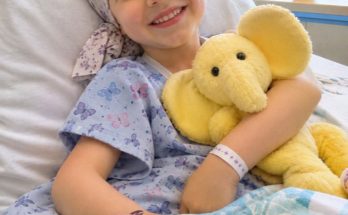
Willa was placed in a room with a glass wall. The ventilator beside her bed made a soft, regular sound as it helped her breathe. Wires ran from small patches on her chest to the monitor, an IV was secured to the back of her hand, and tape held the breathing tube in place against her cheek.
She looked impossibly small beneath the blanket. I sat in the chair next to her bed and held her fingers as carefully as I could.
Dr. Sutter came to speak with me after an hour. He pulled a stool close and sat down so we were looking at each other at the same level.
“I want to explain what we’re seeing,” he said. “Infant botulism can happen when a baby swallows spores from a certain kind of bacteria. They can be found in the environment, and honey is one possible source. A baby’s digestive system is still developing, so the spores can grow there and produce a toxin.”
I looked at Willa, then back at him. “And that affects her muscles?”
“Yes. It interferes with the messages between the nerves and the muscles. That can make a baby unusually weak, make sucking and crying difficult, and slow the muscles in the digestive system. It can also affect breathing.”
I felt a wave of nausea when I thought of Marjorie telling me Willa had been too tired to finish her bottles. I had not known what those details might mean. I had only known something was wrong when I picked her up.
“Can you treat it?”
“There is a medicine specifically used for infant botulism called BabyBIG. We’ve contacted the program that supplies it, and we’re arranging to have it brought here tonight.”
I tried to take in his words, but one question pushed past all the others.
“Will she be all right?”
Dr. Sutter paused. He didn’t rush to reassure me, and somehow that made me trust him more.
“The medicine can help stop the condition from progressing, but it takes time for the body to recover. She may need breathing support while that happens. Many babies who receive treatment recover well. The important thing right now is that you brought her in when you saw she wasn’t acting like herself.”
He leaned forward slightly.
“You did the right thing. Please remember that when the next few days feel long.”
The medicine arrived at three in the morning in an insulated case. A hospital pharmacist met the courier at the unit entrance, and I watched through the glass as the team checked the package and confirmed the medication. I knew the rhythm of those checks from my own work. I had spent years watching people verify information carefully before anything was handed over. From the other side of the glass, I wanted to tell everyone to move faster, though I knew they were already doing everything they could.
They began the treatment soon afterward. Hannah adjusted the equipment and updated the board near Willa’s bed.
“Now we wait,” she said gently.
I had never disliked two words so much.
Peter arrived at six in the morning after taking the first flight he could find from Raleigh. He came through the intensive care doors still wearing his work badge. When he saw Willa through the glass, he stopped. His eyes moved from the breathing tube to the wires and the small shape beneath the blanket.
He caught the edge of a chair and sat down hard.
“What happened?” he asked. “How did this happen?”
I told him what I knew: Willa had been weak, she hadn’t been feeding well, Marjorie had used honey on the pacifier and whiskey on her gums, and the doctor was treating her for infant botulism.
Peter listened without interrupting. When I finished, he stared at the floor for a while. I could almost see him going through the same details I had been replaying all night: the instructions, the promise, the three days, the moment I lifted Willa and felt her head fall back.
He took out his phone and called his mother. He put the call on speaker without seeming to notice.
Marjorie answered after several rings, sounding half asleep.
“Peter? It’s very early. Is everything all right?”
“Mom, Willa’s in the intensive care unit. She’s on a breathing machine because she can’t breathe well enough by herself.”
There was a pause.
“Oh, no. She must have caught something. I told Marnie she ought to be more careful about taking her around people.”
“The doctors think she has infant botulism.”
Marjorie gave a short, incredulous laugh. “From what? Something Marnie gave her?”
“From the honey.”
The silence that followed lasted long enough for me to hear the ventilator through the glass.
“Peter, I gave her the tiniest bit on her pacifier. It couldn’t have done this. All my children had honey, and they’re fine. Marnie worries about every little thing.”
Peter’s face went still.
“Mom, don’t try to explain this away. The doctors are treating her for a condition associated with honey.”
“I was only trying to help her gums.”
“You promised Marnie you wouldn’t give Willa any. Don’t come to the hospital right now. Don’t call her. I’ll contact you when I’m ready.”
Marjorie’s voice rose. “You can’t tell me I’m not allowed to see my granddaughter.”
Peter ended the call.
For several seconds, he held the phone against his knee without moving. Then he looked at me.
“I should have listened to you,” he said. “Every time she ignored something you asked, I told you, ‘That’s just how Mom is.’ I should have stood beside you.”
I reached for his hand. I wanted to tell him that everything was fine, to make the moment easier for both of us, but everything was not fine.
“I’m glad you’re here now,” I said.
One Small Movement

The next days blended together. Willa remained on the ventilator while the team monitored her breathing, her heart rate, her feeding, and the slow return of her digestive system. Since she couldn’t swallow safely, the nurses gave her nutrition through a small tube.
Every morning, doctors and nurses gathered near her bed to discuss how she was doing. I listened closely, taking notes in the small notebook I kept in my bag. My job had taught me to ask clear questions and make sure I understood the answers, so I asked about medication, the equipment, and what each change on the monitor meant. Hannah began answering me with the kind of shorthand she used with the other staff, and I found comfort in being treated as someone who could keep up.
I also learned how hard it was to sit beside your child and do nothing that looked like help. I could bring water for Peter, speak softly to Willa, and tell the nurses when something seemed different. I could not make her fingers move. I could not make her eyes open. I could not take the place of the machine that breathed for her.
On the third day, a representative from the county health department came to speak with us. Her name was Mrs. Keene. She asked where the honey had come from, when it had been opened, and how it had been used. She was kind, but careful with every question.
“We follow up on infant botulism cases so we can learn more about possible sources,” she explained. “Would you be able to give us the jar and the pacifier?”
I had placed both in a grocery bag before leaving Marjorie’s house. Even then, I couldn’t have explained why. I only knew the items might matter later.
“Yes,” I said. “I brought them with me.”
Mrs. Keene sealed them in separate bags and wrote down the details.
A week later, she called with the result: the honey had tested positive for the spores associated with botulism.
Peter took the call in the family waiting area. He thanked her, ended the conversation, and set his phone facedown on the table. Then he walked into the restroom and closed the door. I heard the faucet run for a long time.
The result didn’t change what we already suspected, but it made the situation feel more solid, more difficult to push away. It was one thing to believe that Marjorie’s decision had contributed to Willa’s condition. It was another to hear a health official confirm that the jar itself contained the spores.
Marjorie called again and again. Peter didn’t answer. His sisters and brother called, too, asking what was happening and why their mother was so upset. Peter told them what we knew, repeating the story as simply as he could: Willa had become very weak, Marjorie had given her honey after promising not to, and the hospital was treating her for infant botulism.
I thought I would feel furious enough to shout. Instead, my emotions seemed packed away behind a wall of exhaustion. I was too tired to decide what I felt about Marjorie. I had room for only one hope: that Willa would open her eyes and recognize my voice.
On the ninth day, Dr. Sutter came to the foot of the bed and spoke with the steady warmth he had shown us from the beginning.
“We’re starting to see movement.”
I pressed my face close to the glass. Willa’s right hand rested near the edge of her blanket. The fingers curled, just slightly, then relaxed.
It was a small movement. It was enough to undo me.
I started crying so hard that Hannah brought over a chair and waited beside me until I could sit down.
After that, her strength returned in pieces, not all at once. First came more movement in her hands, then her toes. On the eleventh day, she turned her head a little when I spoke. Two days later, she opened her eyes fully.
I leaned close to the bed.
“Hi, sweet girl. I’m right here.”
She blinked at me. Her gaze didn’t stay for long, but it was the first time since I had brought her to the hospital that I felt she was truly looking back.
For the next few days, the team watched her closely and adjusted the breathing support as she grew stronger. On the fourteenth day, they decided she was ready to try breathing without the tube. Dr. Sutter explained what would happen and asked whether I wanted to stay in the room.
“I’m staying,” I said.
I stood by the wall with one hand over my mouth. Peter stood beside me, holding my elbow. A respiratory therapist carefully removed the tube.
Willa coughed. She made a small, rough sound, then drew a breath on her own. For one suspended second, everyone waited.
Then she opened her mouth and let out an enormous, indignant cry.
The sound filled the room and seemed to travel down the hallway. Someone outside laughed in relief. Hannah clapped once, then covered her smile with her hand. Peter made a sound that was half laugh and half sob, and I began crying all over again.
Willa was upset. Her throat was sore, the room was unfamiliar, and she had spent two weeks with people checking on her every hour. I wanted her to keep crying. I would have listened to that little voice all day.
Coming Home
The emergency had passed, but recovery was gradual. Willa needed time to learn to suck and swallow comfortably again. She had to build up her strength and practice holding her head steady. A therapist worked with her daily, and a soft foam wedge helped support her during short periods of tummy time.
For the first week, she cried through nearly every exercise. I celebrated every cry.
“That’s it, Willa,” I told her, smiling through my tears. “You tell them exactly how you feel.”
Peter and I took turns staying at the hospital and sleeping at home. When I went home, I moved around the nursery with a restless energy, washing clothes that were already clean and checking the crib as if its familiar shape could somehow keep her safe. When I returned to the hospital, I brought her the stuffed giraffe that had been waiting beside her crib since she was born.
She came home after three weeks.
I had cleaned the house from top to bottom, though the nurses had already told me there was no special cleaning I needed to do. I think I wanted the rooms to look ready for her. Peter placed the giraffe in the crib, and we stood together in the nursery doorway while Willa slept.
For the first time in weeks, I noticed my shoulders had lowered. I hadn’t realized how tightly I had been holding them.
“The doctors think she’ll recover fully,” I whispered.
Peter rested his forehead against mine.
“Say it again.”
“They think she’ll recover fully.”
He closed his eyes and held my hands. We stood that way until Willa stirred in her sleep.
Marjorie did not come to the house. Peter had told her he would call when he was ready, and he kept his word. For four weeks, he didn’t speak with her. His sister later told us their mother had stopped visiting friends and barely answered the phone. I’m not sharing that to excuse what she had done. I’m sharing it because people are rarely only one thing. A person can cause real harm through arrogance and still have the capacity to regret it.
A month after Willa came home, on a gray Saturday in late November, the doorbell rang.
Peter looked at me. I nodded, and he went to answer it.
Marjorie stood on the porch in her good wool coat, holding a brown paper grocery bag against her chest. Her hair, which she usually arranged in careful curls, hung loosely around her face. She looked tired.
“I won’t come in unless you ask me to,” she said.
Peter glanced at the bag. “What did you bring?”
She held it out. Peter took it and looked inside before turning it so I could see.
There were jars of honey, a bottle of whiskey, a tin of teething powder, and a jar of strong-smelling chest rub. Marjorie had gathered the things she had once used on babies because she believed they were harmless.
“This is everything in my pantry that I used on children,” she said. Her voice trembled. “I’m getting rid of it. I wanted you both to see that I understand now.”
She began to cry quietly, the sort of crying that comes after a person has tried to hold everything in for too long.
“I was wrong,” she said. “I was proud of raising my children, and I acted as if that meant I knew better than you. I looked you in the eye and promised I wouldn’t give Willa honey, then I did it anyway. I’m so sorry.”
She looked at me.
“I could have put her in much greater danger. I know that now.”
For weeks, I had rehearsed what I might say if she apologized. Some versions were sharp; others were so cool they felt like a door closing. But none of those speeches came to mind when I saw her on the porch with her hands shaking around an empty paper bag.
I stepped aside.
“Come in.”
Marjorie crossed the threshold slowly. Peter took her coat. She stood in the living room with her hands clasped in front of her while Willa rested in her bouncer near the window. When the baby turned her head toward the sound, Marjorie’s chin began to tremble again.
“May I hold her?” she asked.
“Wash your hands first,” I said. “Then sit on the couch. Peter can bring her over.”
She nodded. There was no eye-rolling, no teasing about new rules. She went to the sink and washed her hands carefully, following the steps I had shown her. Then she sat stiffly on the couch and waited.
Peter lifted Willa from the bouncer and settled her into his mother’s arms.
Marjorie held her as if she were something precious and fragile. She looked down at Willa’s round cheeks and wide blue eyes.
“I’m sorry, little one,” she whispered. “Grandma is so sorry.”
Willa studied her with a serious expression, the way babies sometimes do when they are considering a new face. Then she reached up with one chubby hand and grabbed Marjorie’s nose.
Willa let out her familiar squeal.
Marjorie laughed and cried at the same time.
“There you are,” she said. “There’s my girl.”
I sat beside them. For a while, none of us spoke.
I didn’t forgive Marjorie in a single afternoon. Trust doesn’t return just because someone says the right thing, and an apology doesn’t erase the days in the hospital. For the next few months, she saw Willa only at our house, with either Peter or me in the room. She never asked to be left alone with her. She seemed to understand why.
She came to Willa’s follow-up appointments and waited with us in the clinic. She brought a book each time but rarely turned a page. When Dr. Sutter finally told us Willa was doing well and that no further treatment was needed, Marjorie cried in the parking lot.
Over time, her questions changed. She stopped telling us what she had done with her own children and started asking what we were doing now.
“Can you show me how you fasten this seat?” she asked one afternoon.
“Of course.”
“And why don’t babies need water yet?”
I explained what I understood, and she listened. Once, I found her in my kitchen reading the label on a jar of baby food as carefully as if she were checking a complicated form at work.
“I’m learning,” she said without looking up. “A lot has changed since I had a baby in the house.”
“It has.”
She set down the jar. “And some things I thought were old wives’ tales weren’t myths at all.”
I didn’t answer right away. Then I said, “I’m glad you’re asking.”
The Note on Her Refrigerator
Willa’s first birthday arrived in May. We kept the celebration small, with a cake, one pink balloon, and the family gathered around the dining room table. Willa wore a pale dress and spent more time reaching for the frosting than eating it. By the end, there was a smear across her cheek and a little bit in her hair.
Dr. Sutter had sent a card. Hannah mailed a stuffed owl. Mrs. Keene sent a note saying she hoped Willa was thriving. We put everything on the mantel, where I could see it from the sofa.
Marjorie arrived with a gift bag and the small spiral notebook she had begun carrying to appointments. She asked if I would look at something she had brought.
It was the instruction page I had written before the training course. The paper had been laminated, and a magnet was fixed to the back.
“I put it on my refrigerator,” she said. “Right at eye level. I read it every morning.”
At the top of the page, beneath my original heading, Marjorie had added a sentence in thick red marker. The letters were large and uneven.
NO HONEY UNTIL ONE.
Willa was one now. I looked from the note to Marjorie, then toward my daughter, who was watching the cake with great concentration.
I took a small spoon and dipped it into the jar on the counter. Then I held out a tiny taste for Willa, who reached eagerly and gave me a gummy smile.
“Happy birthday, baby girl,” I said.
Marjorie began to cry again, though this time she was smiling.
That moment didn’t make the past disappear. It didn’t mean I would forget how frightening those three days had been, or how carefully we had to rebuild trust afterward. But it showed me that Marjorie had finally understood the difference between remembering how she had raised her children and listening to the parents raising Willa now.
She still came over often. She still brought her notebook. She still asked questions before offering advice.
And when Willa squealed, Marjorie turned toward her every time.