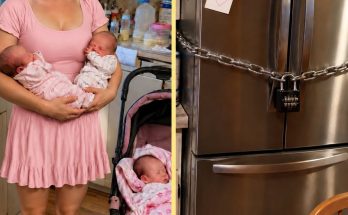
I was only two days out of my C-section when my mother-in-law stormed into my hospital room and pressed hard against my surgical wound. “You’re lying in bed on the day of our family gathering preparations? Get up!” she shouted in front of the other patients. I could barely move, let alone call for help. But when my husband appeared in the doorway and saw what his mother was doing, everyone in the room froze…

PART 1

“Don’t play delicate! Having a baby doesn’t make you a queen! Get out of that bed and go start on the casseroles!”

Those were the words my mother-in-law screamed at me just forty-eight hours after an emergency C-section. What she did next nearly cost me my life.

My name is Carly. I’m thirty-seven, and I’ve been married for ten years to Jared, an architect in Columbus, Ohio. During our marriage we lost seven pregnancies. Seven times we heard a tiny heart beating, and seven times we came home from the hospital with empty arms.

Each loss broke me a little more.

Jared always held me and said, “I don’t need a child to be happy with you. You’re my family.”

But his mother, Donna, felt differently.

“A woman who can’t give a man children isn’t good for much,” she’d say in front of relatives.

My sister-in-law, Brianna, never missed a chance to humiliate me either.

“With everything you two have spent on treatments, you could’ve bought me a new truck.”

I stayed quiet to avoid trouble. Jared had grown up without a father and felt an enormous sense of responsibility toward his mother and his younger sister. So for ten years we sent them eight hundred dollars a month for their expenses and the family gatherings.

Last year, our miracle happened.

After another round of fertility treatment, I finally got pregnant. Jared cried on his knees when he saw the positive test. For nine months we lived from ultrasound to ultrasound, every kick and every doctor’s instruction.

But there was a problem.

My due date fell right around the preparations for the memorial service for Jared’s grandfather. Every year, Donna organized a service and a luncheon for nearly eighty relatives. And, as always, she expected me to make the ham, the mac and cheese, the green bean casseroles, and everything else.

“This time you’ll have to hire someone,” Jared told her. “Carly needs complete rest.”

My mother-in-law answered furiously: “Women in my day gave birth and were back in the kitchen the next morning! Your wife is just making excuses!”

Ten days before my due date, my water broke in the middle of the night. At the hospital, they discovered our baby’s heart rate was dropping dangerously. The doctors decided to perform an emergency C-section.

When I heard my daughter cry for the first time, I felt that ten years of suffering finally made sense.

We named her Hazel.

Jared kissed her forehead, then mine, and cried without shame.

But when he called his mother to announce the birth, she didn’t even ask how we were.

“So who’s going to cook for the memorial lunch now?” she demanded.

Jared hung up, disgusted.

The next morning he stepped out for a few minutes to buy diapers and things we needed. I was still hooked to an IV, with a catheter, in so much pain I could barely move.

Then I heard heels coming down the hallway.

The door flew open.

It was Donna, perfectly made up, carrying a designer handbag.

“Vacation’s over, Carly! You’re coming with me right now!”

“Donna, please… I just had surgery.”

She yanked the blanket off my legs.

“I’m going to teach you what it means to respect your elders!”

I tried to reach the call button for the nurse. But my mother-in-law grabbed my wrist.

And then, in front of the horrified eyes of the other patients, she placed her hand directly over my surgical incision.

What happened in the next few seconds would change our family’s fate forever.

PART 2

“If you’ve got the strength to complain, you’ve got the strength to work!” Donna shouted.

Before I could defend myself, she pressed down on my abdomen with the full weight of her arm.

The pain was so intense that I stopped breathing. Everything went white. I tried to scream but managed only a moan. I could barely lift my hand to point at the wound.

“Let go of her! She just had surgery!” cried the woman in the next bed.

Another patient ran out to find help.

My mother-in-law was still furious. “She’s my daughter-in-law and I know how to raise her! Stay out of it!”

A nurse rushed in and tried to pull her away. Donna fought her and yanked on my arm, tugging painfully at my catheter. Finally, two staff members managed to pull her off me.

I was trembling, unable to control my body. Five people had watched the whole thing: the two women in the neighboring beds, the nurse, an aide, and a visitor standing in the doorway.

That was the moment Jared walked back in.

He carried a bag of diapers and a bottle of water. When he saw me curled on the bed, pale and crying, he dropped everything.

“Carly? What happened?”

His mother answered as though nothing extraordinary had occurred. “Good, you’re here. Your wife’s making a scene because she won’t help me.”

One of the patients spoke up. “Sir, your mother just pressed on her surgical incision. We all saw it.”

Jared looked at my abdomen, then at his mother. I’ll never forget his face.

“Did you do that to her?” His voice cracked.

“Don’t exaggerate! It’s not like I killed her!”

What happened next left everyone in the room speechless. My husband, who in ten years had never once raised his voice to his mother, did not shout. He went completely still. He walked over, took her handbag off the chair, and set it in the hallway. Then he held the door open for her.

“You will leave this room right now,” he said quietly. “And you will never touch my wife again.”

The silence was so heavy that no one dared move. The nurse stared at him. The woman in the next bed whispered, “Thank God.”

Then Jared turned toward the hallway and called out for help in a voice I’d never heard from him.

Doctors rushed me to an exam room. The pressure had caused bleeding and a complication around the incision. Thankfully they stabilized me without another surgery. While they worked on me, Jared called the police.

Donna burst into tears. “You’re going to report your own mother? I gave you life!”

“And Carly almost lost hers because of you,” he answered.

Brianna arrived soon after, furious that her brother had called the authorities. “You’re destroying our family over that woman!”

But then something none of them expected happened. The husband of one of the patients had recorded part of the attack on his phone. Several people were willing to give statements.

Donna stopped shouting when the officers watched the video. Before they took her aside to make a statement, Brianna pulled Jared close.

“And who’s going to help us with expenses now? Mom can’t get into legal trouble!”

That sentence made my husband go quiet.

That night, while I rested, I told him something I’d overheard before the attack. Donna had taken a call from Brianna and promised to pay off her credit card again.

“Jared, where does your mom get all that money? She always says she barely has enough to eat.”

My husband opened his laptop. He began with the records of the eight hundred dollars we sent each month. Years earlier he had helped his mother set up her online banking, and he still had authorized access to a shared account. What he found left him motionless. Almost immediately after each of our deposits, a transfer went out to Brianna.

It wasn’t occasional. It had been happening for years.

He then pulled out an old family tablet his mother had left at our house months earlier. Saved on it were several conversations between Donna and Brianna. There were photos of expensive handbags, credit card payments, and messages about us.

One of them caught his attention immediately. It was dated the very day I lost our sixth baby. Jared opened it, read the first lines, and covered his mouth.

“Carly,” he whispered. “I don’t know how to tell you this.”

When he showed me the screen, I understood that the attack in the hospital hadn’t been my mother-in-law’s worst cruelty. Something far more terrible had been hiding in those messages.

PART 3

The message Jared found read:

Mom, she lost another one? Good. If they ever have a kid, my brother will stop supporting us. Better he keeps wasting money on treatments instead of diapers.

Donna’s reply was even crueler.

You’re right, honey. I don’t know why she keeps trying when her body is useless. As long as they have no kids, Jared will keep having money to help us. Don’t worry.

I read those words three times. Then I set the phone on the bed. I couldn’t cry. I couldn’t even speak.

I remembered that day perfectly. It was a rainy afternoon in November. I’d come home from the hospital with a grief I didn’t know how to explain. That same night, Donna called to ask if I could help cook for a family gathering. When I told her I needed rest, she said, “Well, it’s not like you did much.”

For years I believed she was simply insensitive. Now I discovered that our tragedies were convenient for her.

Jared kept reading. Each message was more shameful than the last. There were photos of Brianna showing off designer bags, expensive shoes, and trips to Cabo. Her mother cheered every purchase and promised to send more.

In another conversation they discussed the family gatherings.

Mom, don’t spend so much on food. Let Carly make the ham and the casseroles. That’s what she’s for. Just give me what’s left over.

Of course, my queen. Your sister-in-law does everything for free. I only buy the cheapest ingredients.

I felt the air leave my lungs. For ten years I had spent entire days cooking for relatives who barely said hello. I got up before dawn, scrubbed enormous pots, and ended up with burned hands. Meanwhile my mother-in-law bragged to everyone about the sacrifices she made to host those gatherings. And the money we sent to help her was paying for Brianna’s luxuries.

Jared used a calculator. Eight hundred dollars a month for ten years: ninety-six thousand dollars. Not all of it had ended up with his sister, but the account activity and the messages showed that a considerable portion had paid for her debts and personal purchases. We had sold our second car to pay for fertility treatments. We had canceled vacations and postponed fixing our roof. And they had laughed at our sacrifices.

He closed the laptop.

“My mother didn’t just treat you badly, Carly. She used us for ten years.”

I looked at him as his eyes filled with tears.

“You always wanted to help her,” I said.

“I did. But I confused helping with letting them destroy you. And that’s over.”

That night we cried together. Not over the money. We cried for the seven babies we never got to hold, for the insults I swallowed in silence, and for all the time we wasted trying to earn the love of people who saw us only as a source of income.

The next morning, Jared made a decision. First he called an attorney to formalize the complaint about the assault. The video, the witness statements, and the medical report would be crucial. We also requested protective measures, because I was afraid Donna would come back to the hospital and try to get near Hazel. Then Jared canceled the monthly transfers.

Brianna was the first to call.

“Hey, bro, Mom says you didn’t deposit anything this month.”

“That’s right.”

“What do you mean, ‘that’s right’? I have a credit card bill due Friday!”

“Then you’ll have to find a way to pay it.”

She burst out laughing. “Oh, Jared, don’t be ridiculous. You’ve always helped us.”

“And that’s why you thought you could do whatever you wanted to my wife.”

“Carly is manipulating you!”

“Carly almost died because of our mother. And you’re worried about a credit card.”

Brianna started insulting me, and Jared ended the call. It was the first time I saw him set a boundary without feeling obligated to explain himself endlessly.

There was still one more matter: the house where Donna lived. It was a small two-story home Jared had bought years earlier, with great effort, and let his mother live in rent-free. She had been there so long she spoke of it as though it were hers. Jared consulted the attorney again. He didn’t want to act illegally or give her a reason to invent another accusation. So he began the proper legal process to end her permission to occupy the property, served formal notice, and gave her the time period the lawyer specified. He also made clear he would not change the locks or remove her belongings while she remained lawfully in possession.

When Donna received the notice, she called at once.

“Jared! What is this letter? You want to take my house?”

“The house is in my name, Mom. I let you live there so you’d be comfortable. I need it back, and I’m doing it the legal way.”

“I’m your mother! You can’t do this to me!”

Jared was silent for a few seconds.

“And Carly is the mother of my daughter. That didn’t matter to you when you pressed on a freshly sutured incision.”

My mother-in-law started to cry. “I made a mistake. Can’t you forgive me?”

“A mistake is forgetting a date. What you did was assault a defenseless woman.” Then he added, “And I know about the money. I know how much you gave Brianna, and what you two said while we were losing our babies.”

On the other end there was absolute silence. For the first time, Donna had no answer.

Several weeks passed. I kept recovering from the surgery. Jared took care of Hazel, cooked, and went with me to appointments. Some nights I woke up startled, remembering his mother’s hand on my abdomen. My husband turned on the light, sat beside me, and reminded me we were safe.

Meanwhile, Donna tried to convince relatives that we had abandoned her. But when one of Jared’s aunts learned what happened at the hospital, she was the one who answered.

“Donna, arguing with your daughter-in-law is one thing. Putting her life in danger is something else. You should be grateful that girl survived.”

My mother-in-law stopped speaking to her.

Finally, advised by a relative, she agreed to hand over the property by the agreed date and signed the paperwork to avoid a court fight over the house. Everything was inventoried and documented. Jared received the keys through his lawyer.

Donna, convinced her daughter would welcome her with open arms, showed up at the apartment Brianna rented in Dublin. She carried two suitcases and a bag of medications. She rang the bell. When Brianna opened the door, her expression changed instantly.

“Mom, what are you doing here with all that stuff?”

“Your brother made me leave the house. I need to stay with you a while, sweetheart.”

Brianna looked at the suitcases. “Here? In my apartment?”

“Just until I find something. You know I don’t have much money.”

Her daughter laughed nervously. “Mom, I barely have room for myself. Plus I owe so much on my cards.”

“But I’ve helped you for years.”

“Exactly! And now Jared stopped depositing because of this whole scandal!”

Donna stood frozen. “Are you telling me you won’t take me in?”

“I’m telling you I can’t support you. Find somewhere else.”

My mother-in-law began to sob. “Brianna, I’m your mother. I gave you everything I had.”

Then her daughter said the words that finished her.

“Well, that was your problem. I never asked you to fight with Jared. Now figure it out yourself.”

Donna tried to push inside, but Brianna blocked the doorway. They argued so loudly that neighbors came out into the hall. Donna listed every expense she’d covered, every handbag, every trip, every debt. Brianna insisted all that money had been a gift.

“After everything I did for you!” Donna cried.

“You don’t have anything left to give me, Mom! Understand that!”

That sentence was the most painful of all. The woman who had spent years scorning her daughter-in-law for not giving her grandchildren was now rejected by the daughter she had favored above everyone. The neighbors finally separated them when they began tugging at the suitcases. Brianna shut the door, and Donna was left alone in the hallway.

We learned what happened days later, when Brianna called Jared demanding he take care of their mother.

“It’s your duty! You’re the oldest!”

“For ten years you benefited from the money I gave her,” Jared said. “Now that she needs help, you won’t even lend her a couch.”

“That’s not my problem!”

“Then stop telling me it’s only mine.”

And he hung up.

Donna ended up renting a modest room in a boarding house. She had a small pension, but it no longer covered her old lifestyle or her daughter’s. The woman who once flaunted designer handbags now had to budget carefully for food, medicine, and rent.

I felt no joy hearing it. I thought about how different everything could have been if she had welcomed our daughter with love. She could have been a present grandmother. She could have stood beside us during our first days as parents and enjoyed the family we had dreamed of building for so long. Instead, she chose money, appearances, and control.

Months later came the hearing on the assault. I had to testify. Reliving that moment was terrible; my hands shook as I described how she had gripped me and pressed on my wound. But this time I wasn’t defenseless. Jared sat beside me. We had the statements of the people who helped me, the hospital records, and the video.

Donna tried to claim she had only wanted to help me out of bed and that it was all a misunderstanding. But the footage showed something very different. The case ended with a court ruling for the injuries she caused and a protective order barring her from approaching or contacting me while it remained in effect. She also had to accept the financial and legal consequences set by the court.

Outside the courtroom, my mother-in-law approached as far as the order allowed and looked at Jared with wet eyes.

“Son, please. Don’t leave me alone.”

My husband squeezed my hand.

“Mom, I tried to take care of you my whole life. But you mistook my love for an obligation to obey you.”

She began to cry. “And I’ll never meet my granddaughter?”

Jared took a while to answer.

“Right now, what our daughter needs is to be safe. And that’s what we’re going to guarantee.”

We left without arguing. That afternoon I understood that setting boundaries doesn’t always bring satisfaction. Sometimes it hurts, because it means accepting that some people will never be the family you wished you had.

As the months passed, my body finished healing, though the emotional scars took longer. I began seeing a therapist. Jared sought help too, to understand why he had tolerated his family’s demands for so many years. It wasn’t easy. Some days I felt guilty for having allowed so much humiliation. Other days I seethed remembering that our happiness had been treated as a financial threat. But every time I looked at Hazel, I found a reason to keep going.

One evening, when our daughter was almost six months old, Jared came home with a small cake.

“What are we celebrating?” I asked.

He smiled. “Six months since our girl came into the world.”

We lit a candle. Hazel sat in her high chair, banging the tray with her little hands and laughing at our faces. Jared lifted her carefully.

“Happy half-birthday, princess.”

Then he looked at me. “Thank you for not giving up, Carly.”

My eyes filled with tears. “We’re both still here. That’s what matters.”

That night the three of us ate dinner in our small kitchen. There was no table crowded with expensive dishes, no eighty relatives waiting to be served. There were grilled cheese sandwiches, a simple cake, and a baby who giggled every time her daddy tickled her. For the first time in a long while, our home was completely at peace.

Jared laid Hazel in her crib and came back to hold me.

“Forgive me for taking so long to stand up for you,” he whispered.

I looked straight at him. “What matters is that we understood our daughter shouldn’t grow up watching her mother endure mistreatment to keep the family happy.”

He nodded.

That night I thought about everything I had lived through. The seven lost pregnancies. The hospital nights. The cruel words. The fear of never having a child. The long work hours to pay for treatments and help a family that never seemed satisfied. For ten years I believed being a good wife meant putting up with everything. I thought answering back was disrespectful, that refusing to cook was selfish, that defending my needs meant causing trouble.

I was wrong. Respect doesn’t mean obeying someone who hurts you. Family is not an excuse to use someone, humiliate them, or take over their money and their body. And a mother’s love should never depend on how much she can extract from her children.

I don’t know if Donna will ever fully understand the harm she caused, or if Brianna will ever feel remorse for her words. That is no longer in my hands. What I do know is that my daughter will grow up learning something different. She’ll learn she can say no. That no one has the right to hurt her, even if they share her blood. That helping others is beautiful, but must never mean destroying yourself.

Before going to bed, I walked to the crib. Hazel’s tiny fists were curled, her breathing calm. I stroked her cheek.

“My love, you’ll never have to earn our affection,” I whispered. “You won’t have to be perfect, or obey out of fear, or endure injustice to be loved.”

Jared put his arms around me from behind. We stood watching her in silence. After ten years of waiting for a miracle, we finally had it right in front of us.

And I understood that our greatest victory wasn’t watching my mother-in-law face the consequences of her actions. It wasn’t getting our finances back or distancing ourselves from the people who hurt us. Our real victory was that little girl sleeping in peace, in a home where no one would ever have to mistake fear for respect.

Because a family isn’t built only from blood, last names, or traditions. It’s built from love, protection, and dignity. And if protecting your child means walking away from someone who shares your blood, that doesn’t make you a bad person. Sometimes, it is exactly what it means to be a good parent.

Leave a Reply

Your email address will not be published. Required fields are marked *