By the time I turned thirty-two, my name—Rachel Bennett—had become another word for convenience.
I was the invisible support beam holding my family together. If a cousin needed a ride to the airport before sunrise, my phone rang. If an aunt forgot she had promised cupcakes for a school fundraiser, I got the text. I organized. I cleaned up. I absorbed everyone’s chaos and turned it into silence.
I am a pediatric nurse at Meadowbrook Medical Center. My life is measured in vital signs, medication charts, and the terrifying seconds between a monitor alarming and a child stabilizing. My husband, Daniel, is a physical therapist, the kind of man whose hands are strong enough to guide someone through pain and gentle enough to tie ribbons in our daughter’s hair.
We have two children. Lily is five, with wide brown eyes that notice everything. Noah is seven, quiet and thoughtful, a little old soul in a child’s body.
Because I had always been the caretaker in my family, I learned young that asking for care in return was the fastest way to feel invisible. When Noah scored his first winning goal in soccer, my mother, Carol, found out weeks later through a random Facebook post. I had stopped expecting them to show up. Low expectations had become my armor.
But that Tuesday was supposed to be different.
Just four hours.
My gallbladder had been torturing me for six months, turning my twelve-hour shifts into marathons of nausea and sharp abdominal pain. The surgery was scheduled for Tuesday morning, exactly when Daniel had to attend a professional conference in Phoenix. He offered to cancel.
“No,” I told him while packing his suitcase. “Mom and Dad will watch the kids. It’s fine.”
It’s fine.
The most dangerous phrase of my life.
I called my mother the Thursday before to arrange everything. Carol never accepted favors like a normal grandmother. She granted them like royal mercy.
“Of course, sweetheart,” she said. “Bring them over at six-thirty. We’ll make blueberry pancakes. Don’t worry about a thing.”
On the morning of the surgery, I packed the kids’ overnight bag with nurse-level precision: clothes, toothbrushes, Noah’s book, Lily’s stuffed bunny, allergy notes, emergency numbers, insurance copies. I placed everything inside a manila folder and set it on the counter so I wouldn’t forget.
I didn’t know that folder would become the weapon that finally cut my family out of my life.
At 6:45 AM, I pulled into the driveway of the pale blue colonial on Willow Street where I had grown up. My father, Frank, opened the door in a bathrobe. Frank was a retired mail carrier who had never raised his voice at me—and had never defended me either. His talent was neutrality so spineless it almost looked peaceful.
Inside, the kitchen smelled like butter. Mom hugged me carefully, took the folder from my hand, and waved a spatula.
“We’ve got it handled.”
I knelt on the floor. Lily clung to my sweatpants, her little fingers tight and scared.
“Mommy will be back after lunch,” I whispered, kissing her hair.
Just then, Mom’s phone buzzed on the counter. She glanced at the screen, and I saw a flicker of calculation cross her face before she quickly turned it over.
“Who was that?” I asked.
“Oh, just Megan,” she said lightly. “Something about her stylist.”
Megan.
My younger sister. The golden child. The woman who needed applause for breathing.
I barely thought about it. I was too focused on the surgery.
Two hours later, I was lying in pre-op, staring at the stained ceiling tiles while the anesthesiologist pushed medication into my IV. Warmth spread through my veins. My last thought before darkness took me was simple and foolish.
My babies are safe.
I woke up in pieces.
First, the beeping monitor. Then the harsh fluorescent lights. Then the pain, deep and brutal under my ribs, like someone had dropped a stone inside my body.
The clock said 2:47 PM.
My phone was on the bedside table. I reached for it with heavy, clumsy fingers.
Fourteen missed calls.
All from Eleanor Grant.
Eleanor was my sixty-seven-year-old neighbor, a retired schoolteacher who lived beside us, grew hydrangeas, and never involved herself in other people’s business unless something was seriously wrong.
My stomach turned before I opened the messages.
11:15 AM: I’m worried. The kids are okay, but please call me.
12:18 PM: Rachel, honey, your kids are at my house. Your parents left.
12:34 PM: Please call me. Noah is upset.
The recovery room tilted.
I called her back with shaking hands.
She answered instantly. “Oh, thank God.”
“What happened?” I rasped.
“Listen carefully,” Eleanor said, her voice tight with controlled panic. “Your parents left around eleven-thirty. I thought they were going to the store. Then I saw Noah and Lily sitting alone on their front porch. Lily was crying.”
Pain shot through my incisions as my body tensed.
“My kids were on the porch?”
“I went straight over. Noah had his arm around her. He said your grandfather promised they would be back in an hour.”
Three hours.
My five-year-old and seven-year-old had been left on a concrete porch in May heat for three hours.
“They’re safe now,” Eleanor rushed to say. “They’re at my kitchen table. Noah made Lily a peanut butter sandwich.”
A seven-year-old boy had made lunch for his little sister because the adults trusted with them had disappeared.
“I’ll come get them,” I whispered.
I hung up and called my mother.
She answered on the third ring, cheerful as a summer morning.
“Hi, sweetheart! How are you feeling?”
“Where are my children?”
There was a pause. Tiny, but I heard it. I had spent three decades studying the language of my mother’s manipulation. That silence meant she was rearranging reality.
“Oh,” she said. “I guess Eleanor called.”
“Where are my children?”
“Rachel, lower your voice,” she snapped. “Your father took Megan to her salon appointment. She had a last-minute opening with Antonio, and you know how hard he is to book. The kids were asleep when we left. Your father checked.”
“They were not asleep,” I said, gripping the bedrail. “They were on the porch. Lily was sobbing.”
“Well, Eleanor is right next door. She’s perfectly capable.”
“Why did you leave them?”
And then my mother said the words that ended everything.
“Your sister needed us more, Rachel. She had a hair appointment.”
I didn’t scream.
I didn’t curse.
I simply lay back against the hospital pillow and let the clarity of those words settle into my bones.
My sister needed us more.
She had a hair appointment.
I hung up.
As the IV dripped beside me, the math of my entire life finally balanced. When I won a science fair ribbon at ten, they missed it because Megan had ballet. When I graduated nursing school with honors, they arrived forty minutes late because Megan had a migraine. When I married Daniel, we had a backyard barbecue while my mother left early to take Megan to an art gallery opening. But when Megan got engaged to a man she had known for a year, they took out a loan to help fund her party.
I had not been neglected by accident.
I had been trained to believe my needs were less important than my sister’s preferences.
The hospital discharged me at five. I drove myself home because I had no one else to call.
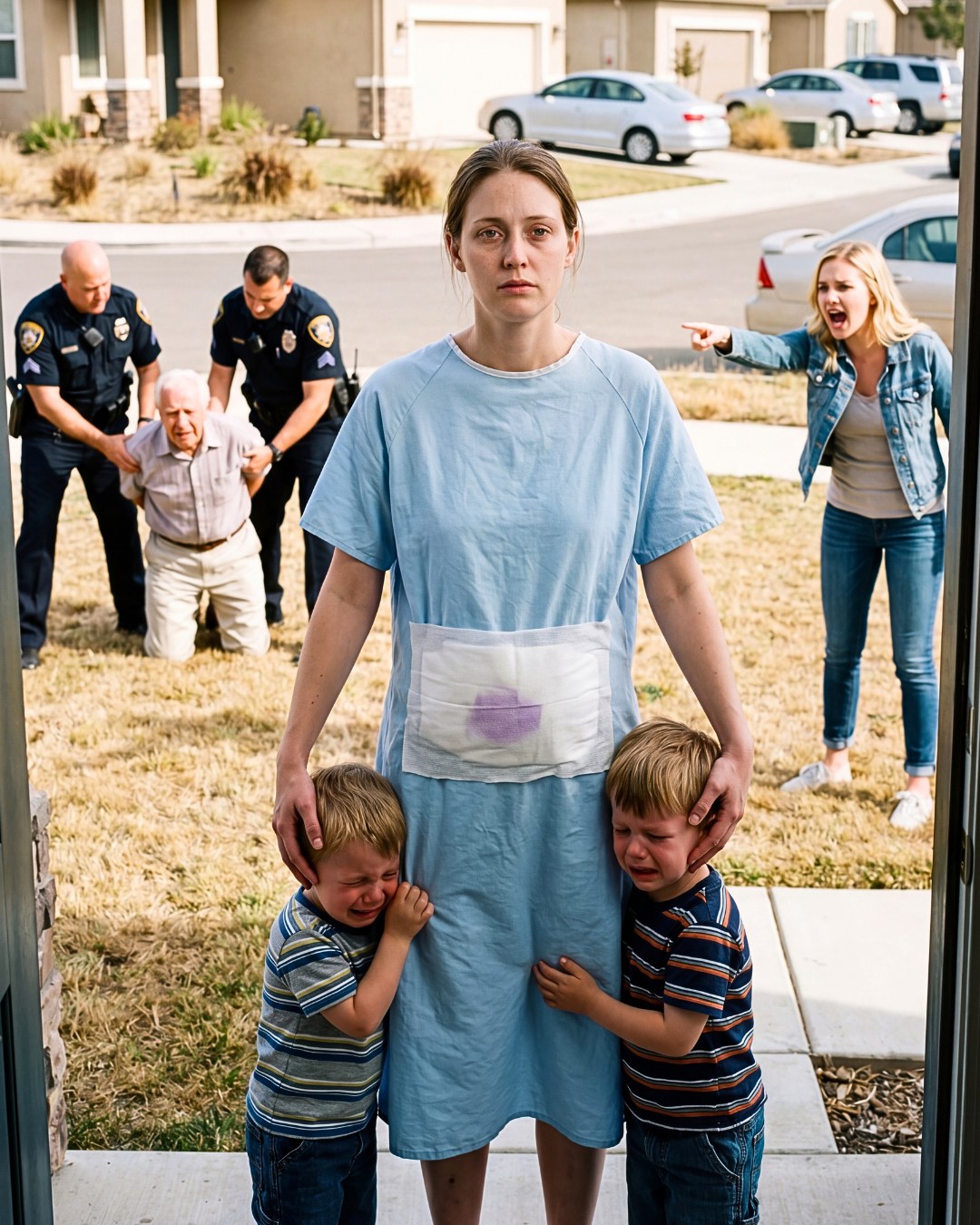
When I pulled into the driveway, Eleanor was walking my children across the grass. Lily ran into my legs and buried her tear-stained face against me. Noah came slower, shoulders tight with stress no seven-year-old should carry.
“Mom,” he asked quietly, “are you okay? I held her hand the whole time.”
I dropped to my knees on the driveway, ignoring the pain tearing through my abdomen, and pulled them both into me.
“You did so good, my brave boy,” I cried into his hair.
Lily looked up at me.
“Mommy? Grandma said Aunt Megan needed her more.”
That night, after the kids were asleep, I sat at my kitchen table and opened my laptop.
Megan’s Instagram was the first place I went.
There it was.
Posted at 10:48 AM, while I was being cut open: Megan in a salon chair, wrapped in a black cape.
Emergency glam session! Mom saved the day!
My mother had commented beneath it:
Anything for my girl. 
I kept scrolling.
At 1:30 PM, Megan had posted two iced coffees on a marble café table.
Post-salon brunch with my bestie, aka Mom.
At 1:30 PM, I was waking up to fourteen missed calls. At 1:30 PM, Noah was making a peanut butter sandwich in a neighbor’s kitchen.
I took screenshots.
Then I opened the manila folder.
Revenge, I realized that night, does not need to be loud. It does not need screaming, crying, or dramatic speeches in front yards.
The most permanent revenge is administrative.
On the inside cover of the folder, I wrote a list.
- Locks.
- School pickup authorization.
- Will.
- Power of attorney.
- Medical directives.
- Life insurance beneficiaries.
Six walls between my children and the people who had abandoned them.
Wednesday morning, I called Brookside Lock & Key. A quiet man named Carl arrived before ten. He replaced the front and back locks, reprogrammed the garage keypad, and handed me three new keys.
One went on my keychain.
One went to Eleanor.
One went into an envelope for Daniel at his hotel.
There would be no more spare key under the ceramic frog for Carol.
Item one: done.
Thursday morning, I went to Brookside Elementary. The office smelled like floor wax and printer paper. Mrs. Hanley, the secretary, looked up from her desk.
“What can we do for you today?”
“I need to update Noah and Lily’s emergency contacts and authorized pickup list immediately.”
She brought out the file.
There they were.
Carol Bennett. Grandmother.
Frank Bennett. Grandfather.
I drew a hard line through both names.
Beneath them, I wrote Eleanor Grant and Daniel’s sister, Paige, who lived in Raleigh.
Mrs. Hanley looked at the crossed-out names but did not ask questions. She had worked in schools long enough to recognize quiet family disasters.
“I’ll update this before lunch,” she said softly.
As of 9:43 AM, my parents no longer existed in the eyes of my children’s school.
Item two: done.
Friday, I sat in the office of Linda Carter, our family attorney. She had drafted our original will when Noah was born. I placed the folder on her desk.
“I need to amend everything,” I said. “Remove Carol and Frank Bennett from our guardianship nominations, power of attorney, and medical directives. Replace them with Paige.”
Linda stopped typing.
“Both of them? In every capacity?”
“Every single one.”
The only sound was her keyboard.
Thirty minutes later, I signed the new documents in blue ink. The notary stamp hit the paper like a courtroom gavel.
Items three, four, and five: done.
Saturday morning, after twenty minutes of hold music, I removed my mother as the contingent beneficiary on my life insurance and replaced her with Paige.
Item six: done.
The architecture of my revenge was complete.
Meanwhile, my mother’s messages piled up.
First sweet.
Then confused.
Then angry.
“This is ridiculous, Rachel. I am your mother. I don’t know what you think happened, but this silent treatment is childish.”
Then Megan texted.
Mom’s been crying all week. You’re being dramatic. It was just a few hours. Call her.
They were not sorry they had endangered my children.
They were angry I had stopped playing my assigned role.
On Sunday afternoon, Daniel came home early from Phoenix. He had canceled the rest of his conference after I told him everything.
He sat at the kitchen table, reading the folder. The school forms. The new will. The medical directives. The screenshots.
Daniel is a man of few words, but his words carry weight. He closed the folder and placed his hand over mine.
“You did the right thing,” he said.
I exhaled a breath I felt like I had been holding for thirty-two years.
Then I looked at the clock.
5:00 PM.
Sunday dinner.
I knew my mother. She could not tolerate a conflict where she looked like the villain. She was coming to force the story back into place.
And she would use pot roast to do it.
At 5:15, her silver Camry rolled into our driveway. Megan’s red Civic pulled in behind it.
The tribunal had arrived.
I stood in the hallway with the manila folder against my hip. My blouse was crisp. My spine was straight. I was not the bleeding woman they had abandoned on Tuesday.
I was a locked door.
Through the glass, I watched my mother walk up the path carrying a heavy Pyrex dish. Her Sunday pot roast. Rosemary, garlic, gravy—the edible apology she used whenever she wanted a family sin buried.
She did not ring the bell.
She reached into her purse, took out her brass key, and slid it into the lock.
It did not turn.
She frowned, pulled it out, blew on it, and tried again.
Nothing.
“Frank,” she snapped. “The lock is jammed.”
Dad came up, took the key, jiggled the handle, and sighed.
“This isn’t the right key.”
From the bottom of the steps, Megan rolled her eyes.
“Just ring the bell. She’s probably inside sulking.”
The bell rang.
I counted to three and opened the door.
My mother instantly arranged her face into warmth.
“Rachel! We brought pot roast. I made extra gravy, just the way you—”
“Your key doesn’t work,” I said.
Her smile twitched. “What do you mean?”
“I changed the locks on Wednesday.”
Dad blinked. “Rachel, what is this? Can we just come in and eat? Your mother cooked all afternoon.”
“No.”
One word.
A full wall.
My mother recoiled.
“Stop this nonsense,” she hissed, glancing toward Eleanor’s house. “We came to apologize for the miscommunication.”
“There was no miscommunication.”
I opened the folder.
“This is the updated authorization form for Brookside Elementary. Your names have been removed. You are no longer allowed to pick up my children.”
My mother stared at the paper. The color drained from her face.
“Rachel… you didn’t.”