The pain didn’t arrive like lightning. It came slowly, quietly, almost politely, building inside me for weeks before it finally tried to kill me.
At first, it was only a dull pressure low in my abdomen, the kind of ache I blamed on stress, bad sleep, too much coffee, and too many hours spent pretending I was fine. I had been ignoring my body the same way I had ignored my own needs for most of my life—because someone else always needed something louder.
But that morning, standing in the parking lot of a polished wedding venue outside Dayton, the dull ache sharpened into something vicious. It twisted beneath my ribs, deep and hot, stealing the air from my lungs. One second I was trying to follow my sister toward the entrance for another wedding appointment. The next, my knees buckled.
The pavement rushed up. Gravel scraped my palms. My vision narrowed to a thin, bright tunnel.
Then everything went black.
When consciousness came back, it came in pieces.
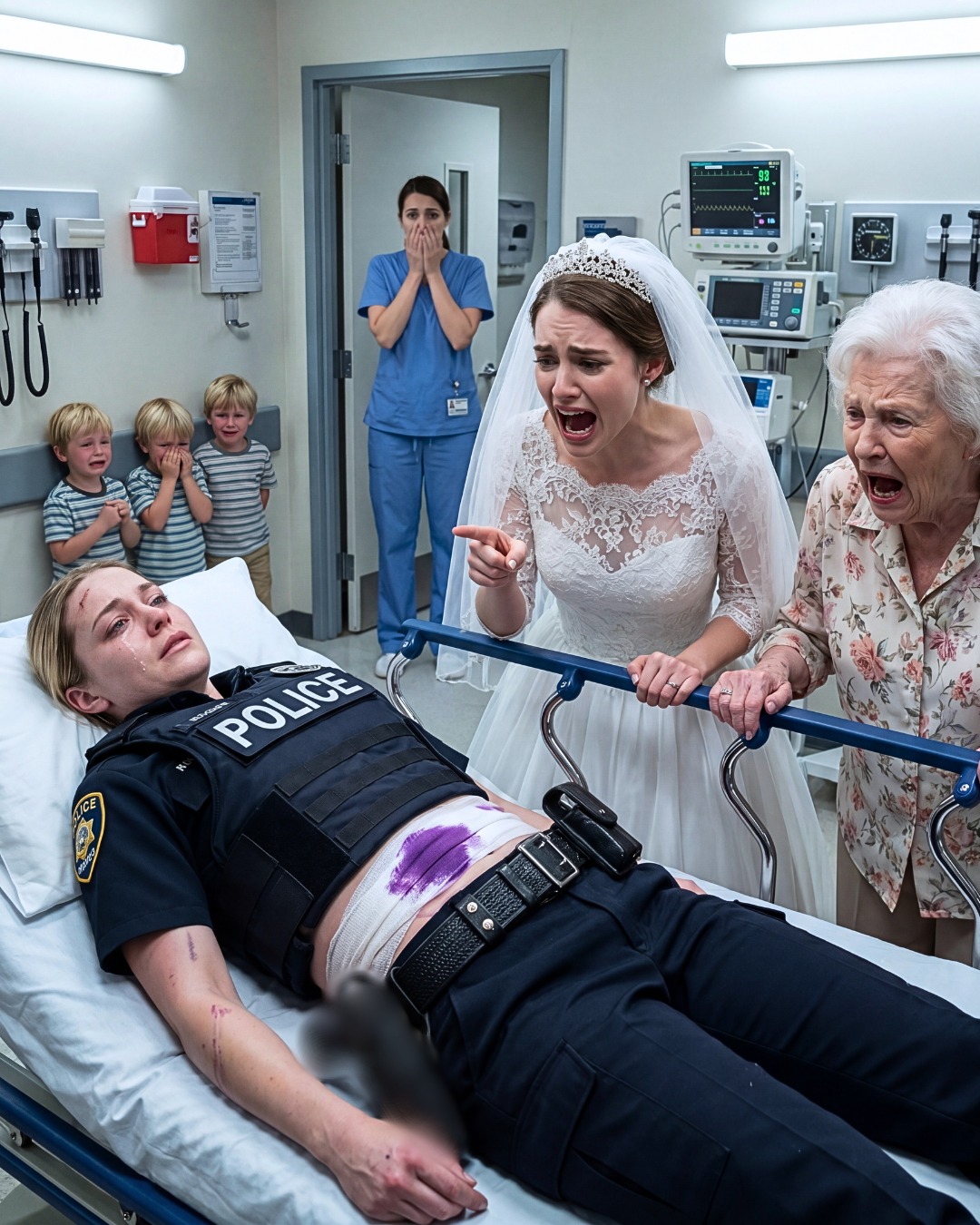
A ceiling of harsh fluorescent lights. The metallic rattle of wheels over hospital tile. Voices above me, urgent and clipped. A blood pressure cuff squeezing my arm. My abdomen felt like it had been split open from the inside, like fire was leaking through me with every shallow breath.
“Thirty-year-old female,” a paramedic said somewhere near my head. “Collapsed at a wedding venue parking lot. Severe abdominal pain. Blood pressure dangerously low.”
I tried to speak, but all that came out was a broken sound.
Then I heard Madison.
“She does this,” my sister said with a brittle little laugh, the kind she used when she wanted strangers to know she was embarrassed by me. “Not exactly this, obviously, but she gets dramatic when she’s overwhelmed.”
Even through the pain, the humiliation landed.
I forced my eyes open. “I’m not—” My throat burned. “I’m not faking.”
A nurse leaned into my blurry line of sight. “Ma’am, on a scale of one to ten, how bad is the pain?”
“Ten,” I whispered. Then another wave ripped through me. “Eleven.”
Madison stood near the curtain in a cream-colored sweater and designer boots, arms folded tightly across her chest. Her engagement ring flashed under the hospital lights like a tiny weapon. Six days from now, she was supposed to get married in the kind of wedding our mother had treated like a national event.
And then my mother arrived.
Not terrified. Not pale with worry.
Irritated.
“What happened now, Avery?” Diane demanded.
Even in that moment, half-conscious and shaking, I almost laughed. Of course that was her first sentence. Not Are you okay? Not What did the doctors say? Just What happened now?—as if my body collapsing was another inconvenience on her wedding checklist.
Madison sighed. “We were at the venue finalizing flowers. She just dropped right by valet. I told her she should have stayed home if she was going to make this week about herself.”
I tried to lift my hand. My fingers caught weakly on the sleeve of my faded army-green field jacket, the one lying over my lap. I wore it everywhere. It had deep pockets, strong seams, and a kind of battered practicality that suited the life I had built—military years, logistics work, contract jobs, and a family that always expected me to carry the weight.
“Please,” I breathed. “Doctor.”
A man in navy scrubs stepped beside the bed. Calm eyes. Steady voice. Dr. Bennett.
“Avery, look at me,” he said. “When did the pain start?”
“This morning,” Madison answered before I could.
“No,” I forced out. “Weeks.”
His expression changed immediately. “Weeks?”
“Worse today. Dizzy. Nauseous. Feels like something tore.”
That got his full attention.
“Labs, fluids, type and cross,” he ordered. “I want a CT abdomen and pelvis now.”
My mother stepped forward. “Wait. A CT scan? Isn’t that expensive? Avery is between contracts right now. She doesn’t exactly have premium insurance.”
Dr. Bennett didn’t look at her. “Her blood pressure is dropping, and she’s in severe pain. She needs imaging.”
“She catastrophizes,” Diane insisted. “Her sister’s wedding is Saturday. We cannot approve unnecessary tests because Avery is having another episode.”
I stared at her.
That was the moment something colder than pain moved through me. My mother was standing beside my hospital bed, watching me shiver and gasp, and her first instinct was still to protect the wedding budget.
“Mom,” I whispered. “Stop.”
Madison turned to the nurse with a sweet, fake smile. “Can’t you please focus on people who are actually in danger? She’s probably dehydrated. We have a cake tasting later.”
The nurse froze. “Excuse me?”
Dr. Bennett’s voice cut through the room. “My only concern right now is my patient.” He looked directly at me. “Avery, do you consent to the CT?”
“Yes,” I whispered.
My mother clicked her tongue. “You’re not thinking clearly.”
“No,” I said, barely able to breathe. “You just never let me.”
Then the pain exploded.
My fingers went numb. My grip slipped from the jacket. The edges of the room darkened, and the monitors began screaming.
I heard Dr. Bennett calling for a crash cart. I heard nurses moving fast around me.
And above all of it, clear and cruel, I heard my mother hiss, “Her sister’s wedding is in six days. She needs the money more than this.”
As the darkness swallowed me, the thought came with perfect clarity.
Of course.
Even now.
Even while I was dying.
I didn’t disappear completely. I floated somewhere beneath the noise, trapped inside a body that was losing the fight.
There were footsteps. Velcro ripping. Plastic snapping. A nurse’s urgent voice.
“We need her ID for the blood bank. Check her jacket.”
The jacket.
I tried to speak, but my tongue felt too heavy.
For eight months, that jacket had carried my life in its hidden pockets. I wore it because it was useful. Durable. Practical. But that day, it held two things that were about to expose everything my family had refused to see.
In one hidden pocket was a medical packet from a low-cost imaging clinic I had visited three hours earlier.
In the other was a thick bank envelope sealed with tape.
I had gone to the clinic that morning because the pain had become impossible to ignore. The physician assistant who did the ultrasound had turned pale while looking at the screen. She handed me a packet with GO TO ER NOW written in red marker across the front.
She said I might be bleeding internally.
She said I needed emergency care immediately.
But Madison had already sent six texts threatening to remove me from the wedding party if I missed the final appointments. My mother had left two voicemails about how I always ruined important moments.
So I made a stupid, desperate plan.
I would meet them at the venue, hand Madison the envelope, smile through the appointments, and then drive myself to the hospital afterward.
I never made it past valet.
Something hit the floor with a heavy slap.
“Oh my God,” a nurse whispered.
I forced my eyes open.
Nurse Carla stood near my bed holding my jacket. The hidden pockets had spilled open. My ID. The medical packet. A handwritten note on thick cream stationery. The sealed bank envelope.
Dr. Bennett snatched up the medical report. His face darkened as he read.
“Get radiology ready,” he barked. “Page vascular surgery now.”
My mother blinked. “What is that?”
For one satisfying second, no one answered her.
Then Dr. Bennett turned slowly. His voice was cold.
“It’s a report from an imaging center. Your daughter was told to come to the ER three hours ago for active internal bleeding and a suspected splenic artery aneurysm.”
The room went silent except for the frantic beeping of the monitor.
“The labs support it,” he continued. “This was not dehydration. It was not panic. And it was not dramatics.”
Nurse Carla picked up the note and the bank envelope. She handed them to Madison.
I knew every word written on that paper because I had written it in my car with shaking hands.
Madison—
For the venue, flowers, band, or anything that makes your day perfect. Mom says I never show up for you. I hope this proves I do.
Love, Avery.
Inside the envelope were cashier’s checks totaling twenty-three thousand dollars.
I had sold my motorcycle, the one thing I owned that was truly mine. I had worked double shifts, taken extra contracts, eaten cheap noodles, skipped holidays, and run myself into the ground for eight months to gather that money.
Not because anyone asked nicely.
Because some broken part of me still believed that if I gave enough, maybe they would finally love me.
Madison read the note. Her face drained of color. For the first time all day, she looked less annoyed than afraid.
My mother stepped toward the envelope. “That’s… for the wedding?”
Not Are you going to survive?
Not Avery, I’m sorry.
Just That’s for the wedding?
“It was,” I rasped.
Dr. Bennett moved between us. “This conversation is over. She is going to surgery. Everyone who is not medical staff needs to leave.”
“I’m her mother,” Diane snapped.
He didn’t blink. “Then act like it.”
Everything after that moved too fast. CT confirmed what the clinic had warned: the aneurysm was leaking. I was unstable. There was no time.
“We have to operate now,” Dr. Bennett told me.
Through the glass doors, I saw Madison and my mother standing in the hallway. Madison still held the envelope like it was the only thing keeping her upright.
A strange calm settled over me.
“Doctor,” I whispered, grabbing his wrist with what little strength I had left. “Tell her not to touch that money. Not one dollar.”
The operating room doors swung shut.
The anesthesia entered my veins, warm and heavy.
I closed my eyes, not knowing if I would ever open them again.
Surgery felt like a missing chapter of my life.
One moment there were lights above me. The next, I was clawing my way up through a thick fog, my throat raw, my body heavy, my stomach packed with a deep, brutal ache.
A monitor beeped steadily beside me.
“Welcome back,” Nurse Carla said softly, adjusting my IV.
“Did I make it?” I croaked.
She smiled, tired but kind. “You did. It was close, but you made it.”
Later that evening, Dr. Bennett explained everything. They repaired the artery before a full rupture. I had lost a dangerous amount of blood, but I was stable.
Then he hesitated.
“Your family is in the waiting room,” he said. “Your sister cried. Your mother had questions.”
“What kind of questions?”
His face became carefully neutral. “Billing. Visitor policies. And whether a patient’s personal property can be released to next-of-kin.”
I laughed once, and the pain in my stitches nearly took my breath away.
“Of course she did.”
He watched me closely. “Do you want to see them?”
I looked toward the window. Outside, the Cincinnati skyline glittered in the dark, distant and indifferent.
“No,” I said. “Ban them from the floor.”
He nodded. “Done.”
For the next few days, my mother tried to get around that boundary like it was an insult instead of a medical necessity. She called the nurses’ station under fake names. Madison sent flowers I was allergic to, then a giant fruit basket, then a long text explaining that “wedding stress makes people say things they don’t mean.”
Only Ethan, Madison’s fiancé, sent something that sounded human.
ETHAN: I just found out about the money and what happened in the ER. I’m sick over it. I had no idea. Please focus on healing.
On the fourth day, the hospital social worker came in with an estimate of my bills.
The number was painful to look at.
My belongings bag sat in the chair beside the bed. Inside it was the bank envelope—the same money I had nearly died trying to give away.
“Can I use my cashier’s checks to pay my hospital balance?” I asked.
The social worker smiled gently. “If they’re in your name and not endorsed, yes.”
There was no dramatic speech. No music swelling. No perfect movie moment.
Just math.
The money I had saved to buy my family’s love would now pay for the surgery that saved my life.
That night, Madison sent the message that finally cut the last thread.
MADISON: Avery, I know you’re hurt, but if you can’t give the whole $23k, can you at least cover the venue balance? They’re threatening to cancel. We’ll pay you back after the honeymoon.
I read it three times.
Then I typed back.
ME: You watched me bleed out on a gurney, and you still think I owe you centerpieces.
I blocked her number.
Then I blocked my mother’s.
The next morning, I called the bank, canceled the checks, and redirected every dollar toward my medical bills and recovery.
For years, I had mistaken usefulness for love. I thought if I worked harder, sacrificed more, stayed quiet longer, they would finally see me. But lying in that hospital bed, I understood the truth with a clarity that hurt worse than any incision.
Love that only accepts your labor is not love.
It is access.
It is ownership dressed up as family.
When I was discharged, I needed a ride home. In the past, I would have called my mother, apologized for being a burden, and listened to her complain the entire way.
This time, I texted Jordan.
Jordan was a former army medic I knew through logistics contracts. She was blunt, practical, and allergic to emotional nonsense—but she had shown me more loyalty in three years than my family had shown me in thirty.
She arrived wearing an oversized hoodie and carrying a huge duffel bag.
“What’s in there?” I asked as she helped me into the wheelchair.
“Soup, gauze, electrolyte drinks, and one of those grabber tools so you don’t rip a stitch trying to pick up your remote,” she said. “Don’t make it weird.”
I almost cried.
Not because it was grand.
Because it was simple.
She drove me home, helped me settle on the couch, and warmed the soup in my kitchen. We had barely sat down when someone hammered on my apartment door.
My stomach tightened.
I knew that knock.
Jordan looked through the peephole. “Older woman. Expensive bag. Looks furious. Want me to tell her to leave?”
I took a slow breath. My abdomen throbbed under the blanket.