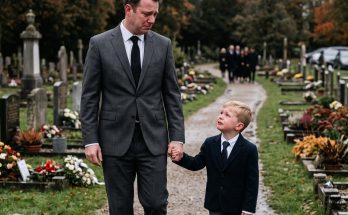
At Thanksgiving, My Uncle, A Retired Colonel, Was Discussing Strategy. He Cut Me Off: “Sweetheart, We’re Talking About Real Operations. You Wouldn’t Understand The Complexity. Leave It To Us Men.” Then His Phone Buzzed With A Text From His Old Unit. He Read It And Looked Up At Me, Stunned.
### Part 1
The Thanksgiving invitation came on a Tuesday afternoon, right between a classified threat matrix update and a briefing request that had already ruined the rest of my week.
Mom sent it in the family group chat like it was a royal summons.
Family Thanksgiving at my house. 2:00 p.m. sharp. Uncle Frank is coming. He wants to see everyone.
I stared at the screen for longer than I should have.
Outside my office window, the Anacostia River looked dull and gray under November clouds. Inside, my desk was covered with maps, cables, briefing folders, and one coffee cup that had gone cold around 9:13 that morning. My secure phone sat beside my personal phone like a loaded weapon pretending to be a paperweight.
I typed, I’ll try to make it, work permitting.
Mom replied so fast I could practically hear her sigh.
Sweetheart, it’s Thanksgiving. Surely they can give you the day off.
They.
That was what my family called the Defense Intelligence Agency. They. As if I worked for a dentist’s office or a county permit department. As if my boss could glance at a wall calendar, shrug, and say, “Sure, Tanya, global instability can wait until Monday.”
I wrote, I’ll do my best.
Then I put the phone facedown and returned to the map glowing on the secure display.
My name is Tanya Granger. I’m forty-two years old, single by choice, tired by profession, and very good at hearing what people don’t say out loud. For the past sixteen years, I’ve worked in defense intelligence. More specifically, I’m a senior intelligence officer focused on Middle East operations.
My family knew the first half of that sentence and misunderstood the rest.
To them, I was “Tanya from the Pentagon,” which sounded impressive enough at Christmas but vague enough to ignore. My mother imagined me in a cubicle, organizing reports and answering emails. My brother Jason thought I helped prepare PowerPoint slides for military people. My cousins assumed I wore sensible shoes and carried folders down long hallways.
Uncle Frank, retired Army colonel, career infantry officer, assumed I was a paper pusher.
He never said it with cruelty. That was almost worse. Cruelty you can push back against. Pity with a smile is harder to fight without looking defensive.
When I first got the job after Georgetown, Mom threw a little dinner at her house. She made lasagna. Jason brought grocery-store cupcakes. Uncle Frank came wearing his Army ring and the expression he always wore around young people entering “serious work,” half proud, half prepared to correct us.
“Defense intelligence,” he’d said, patting my shoulder. “Good start. Everyone starts somewhere.”
I had smiled because I was twenty-six, eager, and already learning the first rule of my world.
You don’t tell people more than they need to know.
At first, the misunderstanding was useful. Later, it became habit. Eventually, it hardened into a family truth.
Tanya works at the Pentagon.
Tanya does paperwork.
Tanya wouldn’t understand.
The first time Uncle Frank said that last part, I was thirty. It was Christmas dinner. Snow tapped against the windows, and Mom had lit too many cinnamon candles, so the whole dining room smelled like a bakery on fire.
We were talking about a bombing overseas. My cousin Tyler, who had never served a day in uniform but owned three military history podcasts’ worth of confidence, said something wildly wrong about tribal alliances.
I corrected him gently.
Uncle Frank gave me that patient smile.
“It’s not that women can’t serve,” he said, as if answering an argument nobody had made. “It’s just that real combat operations require a certain mindset. You have to understand tactics, terrain, command pressure. You have to have been there.”
Two weeks earlier, I had helped build the intelligence assessment that supported an operation against a terrorist cell planning attacks on American facilities overseas.
But sure.
I hadn’t been there.
I nodded, drank my wine, and let him keep talking.
That became the rhythm of our family gatherings. Uncle Frank held court. My male cousins leaned in. Jason asked questions he could have Googled. Mom beamed because her brother was important and her daughter was polite.
And I sat there, carrying secrets heavier than the serving dishes, pretending mashed potatoes required all my attention.
By the time Thanksgiving rolled around that year, I had gotten very good at being underestimated.
What I didn’t know was that one careless group chat notification was about to do what sixteen years of my own restraint never had.
It was going to drag the truth into my mother’s dining room, set it on the table between the turkey and the cranberry sauce, and make everyone look directly at it.
And once they saw me clearly, I wasn’t sure any of us would know what to do next.
### Part 2
The Tuesday before Thanksgiving, I briefed three generals, one admiral, and a deputy assistant secretary who had the unnerving habit of blinking only when someone else was speaking.
The room was cold enough to keep milk fresh. Every secure briefing room I had ever worked in seemed to have been designed by someone who believed comfort was a security risk. Fluorescent lights hummed overhead. A faint smell of burned coffee and printer toner clung to the air. The long table was crowded with folders, tablets, water bottles, and people who could move entire fleets with a sentence.
My slides were projected on the wall behind me.
Militia movement.
Weapons flow.
Communications patterns.
Likely intent.
Probable timeline.
I stood at the front in a navy blazer, low heels, and the calm expression I had spent sixteen years sharpening into armor.
“Our assessment is that Iranian-backed proxy activity along the Euphrates corridor will increase within the next thirty days,” I said. “Not isolated harassment. Coordinated pressure.”
General Morrison leaned back in his chair. He was silver-haired, sharp-eyed, and famous for making briefers regret adjectives.
“Confidence level?”
“High.”
“What supports that?”
“Multiple independent streams. Human reporting, regional logistics indicators, financial movement, and recent changes in command messaging. None of it is conclusive alone. Together, the pattern is clear.”
The admiral from CENTCOM tapped his pen once against the table. “You’re saying brigade-level coordination?”
“I’m saying someone wants it to look decentralized while the timing suggests central guidance.”
The deputy assistant secretary finally blinked.
General Morrison looked at the slide for three seconds. Then he looked back at me.
“Recommendations?”
“Increase ISR coverage. Quietly reposition quick reaction capability within range. Coordinate with local partners for ground verification, but do not signal alarm publicly. If we show our concern too early, they’ll shift tempo and we lose visibility.”
A junior colonel across the table frowned. “You’re assuming they’re watching for our reaction.”
“No,” I said. “I’m assuming they are capable of basic pattern recognition. We should give adversaries credit for competence until they prove otherwise.”
That earned the smallest smile from the admiral.
Morrison nodded. “Approved. Refine the decision tree and get it to my staff by end of day.”
“It’s already in your packet, tab six.”
He glanced down, found it, and gave a short laugh. “Of course it is.”
The meeting ended with the usual scrape of chairs, murmured side conversations, and the quiet rush of people already thinking about the next crisis. I gathered my folders, erased the board, and unplugged the secure cable.
As I was leaving, Admiral Peterson caught up with me near the door.
“That was a clean brief, Granger.”
“Thank you, sir.”
“When do you brief the National Security Advisor?”
“Friday morning.”
“She’ll ask about leadership calculus.”
“I have the psychological profile work prepared.”
He studied me for a moment, then nodded with something like approval. “You always do.”
That should have felt good.
It did, in the practical way that a functioning engine feels good when you’re already on the highway. Recognition mattered professionally. Accuracy mattered more. I had built my career on the difference.
Back in my office, I shut the door and let the silence settle.
My office was not glamorous. People imagined intelligence work as glass walls, sleek screens, and dramatic nighttime calls from presidents. Mine had a dented filing cabinet, a window with a view of a parking structure, and three maps on the wall marked at classification levels my family would never know existed.
On the corner of my desk sat a framed photo from Jason’s wedding. Mom, smiling. Jason, flushed with champagne. Uncle Frank, broad-shouldered and proud in a dark suit. Me, standing at the edge of the group, looking like the kind of woman who remembered where the exits were.
My personal phone buzzed.
Mom again.
Are you coming Thursday? Frank is so excited to see you. He wants to hear about your work.
I stared at that last sentence until it almost became funny.
Uncle Frank did not want to hear about my work. He wanted to hear enough to correct it. He wanted me to say “Pentagon” so he could say “chain of command.” He wanted me to mention “analysis” so he could explain “ground truth.” He wanted to feel useful, authoritative, necessary.
Maybe that was unkind.
Maybe it was also accurate.
I typed, I’ll be there.
Before I could set the phone down, a secure alert lit up beside it.
Baghdad channel monitoring increased chatter. No action yet.
I read it twice. My face didn’t change. That was another habit.
Thanksgiving, apparently, was arriving with company.
I placed both phones side by side and looked at them.
One carried my mother’s expectation of turkey, pie, and family performance.
The other carried the kind of information that could wake me at 3:00 a.m. and change the lives of strangers I would never meet.
For a second, I wondered which phone would ruin the holiday first.
By Thursday evening, I would have my answer.
### Part 3
Thanksgiving morning started at 5:02 a.m. with a vibration against my nightstand.
Not the soft buzz of my personal phone.
The other one.
I opened my eyes in the dark and reached for it before I was fully awake. My apartment was cold. I had forgotten to adjust the heat before bed, and the hardwood floor bit at my feet as I sat up.
The message was short.
Situation developing near embassy compound. Possible threat indicators. Monitoring. Will update.
I read it, then stared at the bedroom window. Arlington was still black outside, the city not quite ready to admit morning existed. Somewhere, a delivery truck groaned down the street. Somewhere farther away, people were already making decisions that could become headlines if we failed.
I typed, Keep me informed. I’m with family today but available.
The reply came within a minute.
Enjoy your turkey. We’ve got it unless it escalates.
That was the lie we told each other to stay human.
I showered, dressed in jeans and a cream sweater, and stood in front of the bathroom mirror trying to make myself look like someone who belonged at a family holiday instead of a secure operations floor. I put on mascara. Took it off because it made me look too tired. Put on less.
In the kitchen, coffee hissed into the pot. My apartment smelled like toast and laundry detergent. On the counter sat the pumpkin pie I had promised Mom I’d bring, still in the bakery box with a little orange sticker sealing the lid.
Normal objects. Normal morning. Normal daughter.
I put my secure phone in my purse beside my wallet, keys, and a small emergency pouch I carried out of habit. Then I drove to Fairfax under a sky the color of wet cement.
Mom’s neighborhood looked exactly as it always had in November. Bare trees. Basketball hoops. American flags. Lawns dusted with leaves nobody had gotten around to raking. Her house sat at the end of a quiet cul-de-sac, white trim freshly painted, porch decorated with pumpkins and a wreath that said Give Thanks in looping fake-calligraphy letters.
The smell hit me as soon as she opened the door.
Turkey. Sage. Butter. Something sweet bubbling in the oven.
“Tanya!” Mom pulled me into a hug before I could lift the pie. “You made it.”
“I said I would.”
“You said you’d try.”
“In my line of work, that’s a promise.”
She laughed because she thought I was joking.
The house was already loud. Football from the living room. Dishes clattering in the kitchen. My cousin Tyler laughing too hard at something. Jason’s two kids racing down the hallway in socks, nearly taking out a side table.
Then I saw Uncle Frank by the fireplace.
He was wearing his Army veteran cap, a flannel shirt, and the same posture he had always carried, as if every room came with an invisible command position and he naturally occupied it. Jason stood beside him, beer in hand, nodding with the intense focus of a younger man trying to absorb borrowed importance.
“Tanya,” Uncle Frank called. “There she is. Pentagon worker.”
I walked over and kissed his cheek. He smelled like aftershave and wood smoke.
“Happy Thanksgiving, Uncle Frank.”
“How’s the paperwork treating you?”
“Still paper. Still work.”
He laughed, delighted by the answer because it confirmed what he already believed.
“I was just telling Jason about Fallujah,” he said. “Urban combat. House to house. You wouldn’t believe the tactical complexity.”
“I’m sure.”
He lifted one finger, warming to the subject. “People think war is just firepower. It’s not. It’s movement, timing, morale, terrain. You have to read a street like a living thing.”
That, at least, was true.
I had read the after-action reports. I had studied the failures, the successes, the intelligence gaps, the human cost. I had seen grainy footage, diagrams, interviews, casualty assessments. I knew enough to respect what he had lived through.
I also knew enough to understand where memory became mythology.
My secure phone vibrated inside my purse.
I kept my expression neutral and shifted the strap higher on my shoulder.
Uncle Frank noticed.
“Work email on Thanksgiving?” he asked, amused. “Even paper pushers deserve a day off.”
“Just staying informed.”
“That’s the problem with your generation. Always connected. You need to disconnect and be present.”
I looked at his cap, his beer, the fireplace, my mother smiling from the kitchen doorway because everyone she loved was under one roof.
“You’re probably right,” I said.
The phone vibrated again.
For one sharp second, the whole room seemed to narrow around the sound.
Then Mom clapped her hands and announced dinner would be ready in twenty minutes.
I followed everyone toward the dining room, carrying a pie in one hand and a secret in the other, while my purse buzzed softly against my hip like a warning no one else could hear.
### Part 4
Mom’s dining room had always been too small for Thanksgiving, which was part of its charm until you needed to leave quickly.
The table stretched from one wall almost to the china cabinet, covered with a linen cloth she ironed once a year and protected like national infrastructure. Candles flickered in the center between bowls of mashed potatoes, stuffing, green bean casserole, glossy cranberry sauce, rolls under a towel, and a turkey so golden it looked staged for a magazine.
We squeezed into our assigned places.
Mom at one end. Uncle Frank at the other.
Of course.
I sat halfway down, between Jason and Tyler’s wife, Melissa, who sold real estate and always smelled faintly of expensive vanilla. My chair was angled awkwardly near the wall. If I had to step out to answer my secure phone, three people would need to move.
Bad positioning.
I noticed that automatically and hated myself for it.
Mom said grace. Her voice softened over the table, thanking God for family, health, food, and safe travels. Uncle Frank bowed his head with military solemnity. The kids fidgeted. Tyler peeked at the turkey.
When Mom said amen, the room exhaled.
For the first ten minutes, everything was harmless.
Pass the gravy.
Who wants dark meat?
Jason, don’t give the kids soda before pie.
The Commanders are having a terrible season.
My secure phone stayed quiet. My breathing loosened.
Then Mom said, “Frank, Jason was asking about Afghanistan earlier.”
I felt the air shift.
Uncle Frank put down his fork and leaned back, not because he was done eating but because a stage had been offered.
“Well,” he said, “Afghanistan was a lesson in what happens when Washington thinks paperwork equals understanding.”
Tyler nodded immediately. “Exactly.”
I cut a small piece of turkey. The knife made a soft scraping sound against the plate.
Uncle Frank continued. “You had politicians, bureaucrats, analysts, all reading reports in air-conditioned offices, thinking they understood tribal dynamics. But unless you’re on the ground, unless you’re dealing with village elders and supply routes and terrain, you don’t really know.”
There it was.
The annual sermon.
Jason glanced at me, then back at Uncle Frank. “Was the intelligence bad?”
Uncle Frank gave a thoughtful grunt. “Some of it. Some of it was useful. But most analysts don’t understand pressure. They don’t understand what decisions look like when people are shooting at you.”
I took a sip of water.
The glass was cold against my fingers.
The intelligence community had reported the fragility of Afghan institutions for years. There were assessments, warnings, dissenting views, trend analyses, red-team reviews. Some had been ignored. Some had been softened for policy audiences. Some had been inconvenient, which in Washington is often worse than being wrong.
But none of that belonged at Mom’s Thanksgiving table.
Tyler jumped in. “I read this article saying everyone was shocked by how fast things collapsed.”
“People who were paying attention weren’t shocked,” I said before I could stop myself.
The table quieted.
Not completely. Forks still moved. One of the kids whispered about rolls. But the adult conversation tilted toward me.
Uncle Frank smiled gently.
“That’s what the media said afterward,” he said. “But the real story is always more complex.”
I met his eyes.
“I’m sure it is.”
“No offense, sweetheart. I know you see things from the Pentagon side. Reports, summaries, official language. But complexity in the field is different.”
Jason shifted beside me.
Mom gave me a tiny look. Please don’t start.
I wasn’t starting. That was the funny part. I had spent sixteen years not starting.
Uncle Frank pointed his fork slightly, not at me exactly, but in my direction. “Take tribal politics. You can’t learn that from charts. You need relationships. Ground truth. Human instincts.”
I thought about the seventy-page assessment I had written years ago on Pashtun tribal networks and Taliban influence patterns. I thought about the source meetings, the translated interviews, the raw reporting, the debates with regional specialists, the nights I spent trying to understand not just what people did, but what they believed they had no choice but to do.
“I agree ground truth matters,” I said.
He smiled wider, pleased that I had arrived at his conclusion.
“Exactly. See, that’s all I mean. Your work is important. Somebody has to organize the information. But strategy requires a different level of experience.”
The words settled over my plate.
A different level.
My secure phone vibrated once inside my purse.
Then again.
I set my fork down carefully.
Mom noticed. “Everything okay?”
“Yes,” I said.
Uncle Frank chuckled. “More paperwork?”
I stood. “Excuse me for a second.”
Three chairs scraped as people shifted to let me out. I carried my purse down the hall to the guest bathroom and locked the door behind me.
The message glowed on the secure screen.
Baghdad indicators increasing. Reviewing possible embassy threat vector.
I read the attached summary. My pulse stayed even, but my jaw tightened.
Outside the bathroom, I could hear laughter from the dining room.
Inside, the fluorescent light buzzed overhead, and the mirror showed me exactly what I was.
A woman in a cream sweater at Thanksgiving dinner, standing between cranberry sauce and a possible attack overseas.
Then a new message appeared.
Need your read.
And just like that, Uncle Frank’s lecture was no longer the most dangerous thing in the house.
### Part 5
I spent seven minutes in Mom’s guest bathroom reading threat indicators while a ceramic turkey watched me from the back of the toilet.
That was the part nobody imagined about intelligence work.
Not the movie version. Not the dark room, dramatic music, urgent men in suits shouting into headsets.
Sometimes it was you, standing on a bath mat shaped like a leaf, scrolling through reporting with one thumb while your family ate stuffing down the hall.
The Baghdad situation was concerning, but not yet definitive. Increased chatter. Suspicious movement. A possible vehicle pattern near an access route. Local security reporting that could mean something or nothing. In my world, the space between something and nothing was where people either stayed alive or didn’t.
I sent my assessment in clipped sentences.
Do not overreact yet. Elevate posture discreetly. Watch secondary route. Indicators suggest probing or intimidation more likely than immediate breach, but timeline could compress.
A reply came back almost instantly.
Copy. That matches field read. Stay available?
I typed, Yes.
Then I locked the phone, put it back in my purse, and looked at myself in the mirror.
My lipstick had faded. A small strand of hair had escaped near my temple. I looked older than I had that morning.
I washed my hands slowly, mostly to buy myself ten seconds of quiet.
When I returned to the dining room, Uncle Frank was in the middle of a story about convoy discipline.
Mom had saved my plate under foil. Jason gave me a questioning look. I gave him nothing back.
“Everything all right at the office?” Uncle Frank asked.
There was no malice in it. That was what made it land so cleanly.
“It’s handled.”
He laughed. “That’s government for you. Always something.”
“Always,” I said, sitting down.
Tyler leaned forward. “Uncle Frank was saying private contractors messed up half the logistics in Afghanistan.”
That launched another ten minutes. Contracts, convoys, supply depots, command decisions. Some of what Uncle Frank said was insightful. Some was outdated. Some was wrong in the way firsthand experience can be wrong when it mistakes proximity for completeness.
I listened.
I asked one neutral question about local partner reliability.
Uncle Frank answered for five minutes, then ended with, “But again, that’s the kind of thing that’s hard to explain if you haven’t commanded troops.”
Melissa, who had been silent most of the meal, glanced at me. Her eyes narrowed slightly, not in suspicion, but curiosity.
She was a good real estate agent. She noticed rooms.
I took a bite of stuffing.
It tasted like sage and butter and restraint.
Dessert arrived around four. Mom cleared plates with unnecessary cheer, refusing help until everyone ignored her and helped anyway. The kids escaped to the living room. Football roared again. Coffee brewed in the kitchen, filling the air with a bitter, comforting smell.
For a little while, the mood softened.
Pumpkin pie can do that.
I stood near the sink rinsing serving spoons when Mom came up beside me.
“Are you okay, sweetheart?”
“I’m fine.”
“You seemed distracted.”
“Work thing. It’s settled for now.”
She lowered her voice. “Frank doesn’t mean anything by what he says.”
I smiled without looking at her. “I know.”
“He’s from a different world.”
“No, Mom,” I said gently. “He and I work around the same world. He just doesn’t know it.”
She blinked, confused.
Before she could ask, Jason called from the dining room, “Mom, where do you keep the extra coffee filters?”
“In the pantry, second shelf!”
The moment vanished.
I dried my hands and returned to the dining room with the coffee pot.
Uncle Frank sat at the table, phone in hand, grinning at something.
“Old unit group chat,” he said to nobody in particular. “Bunch of retired troublemakers and a few still in. They’re arguing about who had the worst Thanksgiving MRE.”
Tyler laughed. “What’s the winner?”
“Anything with turkey printed on the pouch.”
Uncle Frank scrolled, amused. The candlelight flickered across his face. His thumb moved once, twice, then stopped.
The smile faded.
It didn’t disappear all at once. It drained slowly, like someone had pulled a plug behind his eyes.
He leaned closer to the screen.
His brow tightened.
Then he looked up.
Not at Tyler. Not at Jason.
At me.
The room continued around us for two seconds too long. Coffee poured. A child shouted from the living room. Mom opened a cabinet.
Uncle Frank’s voice came out careful and low.
“Tanya,” he said, “what exactly do you do at DIA?”
The coffee pot felt suddenly heavy in my hand.
And every sound in the house seemed to stop at once.
### Part 6
I set the coffee pot down before I answered.
Not because I needed time.
Because if my hand shook, even slightly, Uncle Frank would see it.
“I’m a senior intelligence officer,” I said.
The words landed softly, almost politely, but the room felt them. Jason turned from the pantry. Mom froze with a stack of dessert plates in her hands. Tyler looked between us, still half-smiling because he didn’t yet understand the shape of the moment.
Uncle Frank stared at me.
“Senior,” he repeated.
“Yes.”
His phone was still in his hand. His knuckles had gone pale around it.
“How senior?”
I could have deflected. I had done it a thousand times. A little shrug. A joke. A phrase like, “Government titles always sound more important than they are.” I could have protected the old arrangement, the one where they underestimated me and I let them because it was easier.
But something had shifted.
Maybe it was the bathroom mirror.
Maybe it was the ceramic turkey.
Maybe it was sixteen years of being told what I couldn’t understand by people who had never once asked what I did.
“I brief senior military leadership,” I said. “Flag officers. Sometimes interagency principals. Occasionally the National Security Advisor, depending on the issue.”
No one moved.
Tyler’s fork clinked against his plate.
Uncle Frank looked back at his phone. His mouth opened slightly, then closed. When he spoke again, his voice had changed. The command was gone.
“You’re the Granger who briefed General Morrison?”
“Yes.”
“The Granger who gave the Syria assessment this week?”
I kept my face neutral. “Yes.”
He swallowed.
Jason stepped closer. “What’s happening?”
Uncle Frank didn’t answer him. He lifted the phone a few inches, not to show me the screen, but like it had become evidence.
“My old XO is at CENTCOM now,” he said. “He just posted in the group chat.”
Mom’s voice was tiny. “Posted what?”
Uncle Frank read from the phone, each word slower than the last.
“Just sat in on one of the best intelligence briefings I’ve seen in thirty years. DIA officer named Granger broke down Iranian proxy operations like she was reading their playbook. Made a room full of generals look like privates asking where the map was.”
The silence after that sentence had weight.
Uncle Frank looked at me.
“That’s you?”
“Yes.”
Jason whispered, “Holy—”
“Jason,” Mom said automatically, though she was still staring at me.
Uncle Frank sat back as if the chair had moved underneath him.
“You briefed CENTCOM.”
“This week, yes.”
“On Iranian operations.”
“Among other things.”
“General Morrison was there.”
“Yes.”
“The General Morrison.”
“There are several, but probably the one you mean.”
No one laughed.
Mom set the dessert plates down too quickly. They knocked together with a brittle sound.
“Tanya,” she said, “why didn’t you tell us?”
I had known that question would come first. Not “Are you safe?” Not “Is this why you’re always tired?” Not “How much have we missed?” But why didn’t you tell us, because families often mistake access for love.
“Operational security,” I said. “The less people know about my work, the better.”
“But we’re your family.”
“That’s part of why.”
Her face tightened, wounded.
I softened my voice. “Family members are common vulnerabilities. Not because they’re bad people. Because they talk. They’re proud. They mention things casually. They don’t know what matters.”
Jason ran a hand through his hair. “So all this time, when you said work was busy…”
“It was busy.”
“When you missed birthdays?”
“I was usually not allowed to explain why.”
“When you left Christmas early two years ago?”
“There was a crisis.”
Mom pressed her fingers to her mouth.
Uncle Frank was still staring at the phone. Then he looked at me with an expression I had never seen on his face.
Not anger.
Not pride.
Horror.
“I’ve been explaining military strategy to you for sixteen years.”
I said nothing.
His face flushed, then went pale again.
“I told you,” he said slowly, “at this table, less than an hour ago, that you wouldn’t understand tactical complexity.”
“You did.”
“I said real expertise comes from command.”
“Yes.”
“I said analysts were sitting in air-conditioned offices reading reports.”
“That was also today.”
Jason made a sound like he wanted to disappear under the table.
Uncle Frank set the phone down carefully, as if sudden movement might break something.
“You let me say all that.”
“I did.”
“Why?”
The question should have been easy.
Security. Privacy. Professional discipline.
All true.
None complete.
I looked around the dining room. At my mother’s candles burning low. At the turkey bones on the platter. At the family photos on the wall, including one of me at twenty-six, smiling beside Uncle Frank with his hand proudly on my shoulder.
“Because your opinion of my work didn’t change the work,” I said. “The people who needed to know what I did knew. Everyone else was noise.”
Uncle Frank flinched.
That was when his phone buzzed again.
He looked down, read the new message, and whispered one word so quietly I almost missed it.
“Jesus.”
And I knew, before he said anything, that the group chat had not finished with us yet.
### Part 7
Uncle Frank picked up his phone like it had become heavier.
His thumb hovered over the screen. He read silently, his jaw working once, twice. The rest of us stayed frozen around him. It was strange how quickly a family dining room could turn into a briefing room when the right information entered it.
Tyler finally broke.
“What does it say?”
Uncle Frank didn’t answer right away. He looked at me first, as if asking permission.
That, more than the shock, told me the world had tilted.
“You can read it,” I said. “As long as it doesn’t include classified details.”
He gave a short, humorless laugh. “I don’t think they’re cleared for that either.”
Then he read.
“Morrison just joined the thread. Apparently someone tagged him.” He swallowed. “He says, ‘If you’re talking about Tanya Granger at DIA, yes. Best intelligence officer I’ve worked with in my career. Her threat assessments have saved lives.’”
Mom sat down.
Not gracefully. Not dramatically. She just lowered herself into the nearest chair like her knees had stopped reporting to her.
Jason stared at me. “Saved lives?”
I looked at the table. “Sometimes good analysis helps people make better decisions.”
“That’s not an answer.”
“It’s the answer I can give.”
Melissa exhaled slowly. “Oh my God.”
Uncle Frank was still reading. “He says, ‘She sees patterns before most people know there’s a pattern.’”
“That’s generous,” I said.
Uncle Frank looked up sharply. “Is it?”
I didn’t answer.
Because generosity from powerful people was one thing. Facts were another. I had been wrong before. Everyone in intelligence had. Anyone who said otherwise was either lying or too junior to know better. But I had been right often enough that senior leaders called when the room got quiet.
Mom reached for my hand across the table.
I let her take it.
Her fingers were warm and slightly flour-dusted.
“All this time,” she said. “You were doing this kind of work.”
“Yes.”
“And I kept telling you they should give you days off.”
A tired smile pulled at my mouth. “You’re my mother. That’s your job.”
Her eyes filled. “I thought you were alone in some office doing paperwork.”
“I am alone in an office doing paperwork sometimes.”
“Tanya.”
I squeezed her hand once.
Uncle Frank leaned forward, elbows on the table, the posture of a man trying to stabilize himself.
“How long?” he asked.
“Sixteen years.”
“No, I mean how long at this level?”
“That depends on what you mean by this level.”
He gave me a look, and for the first time all day, it wasn’t condescending. It was professional.
“Briefing flag officers. Shaping operational decisions.”
“Roughly eight years in senior roles. Five in my current focus area.”
Tyler made a low whistle. “And you never said anything?”
I looked at him. “At your Fourth of July barbecue last year, you told me the entire intelligence community was useless because of something you saw on cable news. What exactly was I supposed to say?”
His face turned red.
Melissa coughed into her napkin.
Jason almost smiled, then wisely decided not to.
Uncle Frank rubbed both hands over his face. When he lowered them, he looked older.
“All those conversations,” he said. “Middle East politics. Afghanistan. Syria. Iran. I sat there correcting you.”
“You shared your perspective.”
“No. Don’t make it nicer than it was.”
I said nothing.
He turned toward the window. Outside, late afternoon light had gone thin and blue. The reflection of the dining room floated in the glass: candles, plates, stunned faces, my uncle’s veteran cap sitting beside his coffee cup.
“I dismissed you,” he said. “Again and again.”
“You didn’t know.”
“I didn’t ask.”
That was the first truly honest thing he had said.
The room sat with it.
My secure phone buzzed inside my purse.
Everyone heard it this time.
Mom’s fingers tightened around mine. Uncle Frank’s eyes moved to the purse, then back to me.
“Do you need to get that?” he asked.
No joke. No paper pusher comment. No lecture about being present.
Just the question.
“Yes,” I said.
I stood, and this time nobody made me squeeze past chairs. Jason moved immediately. Tyler stood too fast and bumped the table. Melissa grabbed a wineglass before it tipped.
I took the phone from my purse and stepped toward the hallway.
Before I left the room, Uncle Frank said my name.
I turned.
His voice was rough. “Is it Baghdad?”
I looked at him for one second too long.
Then I said, “I can’t discuss that.”
His face changed again.
Because that answer told him enough.
I walked down the hall while my family sat behind me with the first real understanding of what my silence had cost.
And when I opened the message, the update was worse than I’d hoped.
### Part 8
The guest bedroom was the only quiet room in the house.
Mom had turned it into a storage space for spare linens, Christmas wrapping paper, and old family albums nobody looked at unless someone died. I shut the door behind me and sat on the edge of the bed. The quilt smelled faintly of cedar and lavender sachets.
My secure phone showed three new messages.
The posture adjustment had worked. Local security flagged a suspicious vehicle before it reached the outer route. No breach. Threat disrupted. Embassy secure.
I read that twice.
Then the next one.
Your earlier read on secondary route was correct. Good call.
And the last.
Enjoy Thanksgiving. For real this time.
I let my shoulders drop.
There was no dramatic music. No applause. No one outside that small chain would ever know the difference between what happened and what might have happened. That was often the best outcome in my work. The absence of tragedy. The headline that never got written.
I typed, Copy. Maintain watch through evening. Good work by field team.
Then I sat there for another thirty seconds, phone in both hands, breathing through the exhaustion that arrived after danger stepped back.
On the dresser stood a framed photo from a beach trip when I was twelve. Mom in sunglasses. Jason with a sunburn. Me holding a plastic bucket. Uncle Frank kneeling beside us, younger and broader, one arm around my shoulders. I remembered that day. He had taught me how to watch the water before stepping in, how waves came in sets, how the calm surface could still pull your feet from under you.
Situational awareness, he had called it.
Maybe he had been teaching me my job before either of us knew it.
When I returned to the dining room, nobody pretended not to notice.
That was almost funny. My family had never been subtle. They were trying now, which made them look like bad actors in a church play.
Mom stood. “Coffee?”
“I’m okay.”
“Pie?”
“I already had some.”
“You had half a bite.”
“Mom.”
She sat back down.
Uncle Frank was standing near the fireplace, phone no longer in his hand. He had removed his veteran cap and was turning it slowly between both palms.
“Tanya,” he said. “Can we talk?”
The room tightened again.
“In the kitchen?” he added.
I followed him.
The kitchen was warm and cluttered, every counter crowded with evidence of the meal. Roasting pans soaking in the sink. A half-carved turkey under foil. A bowl of whipped cream melting slightly near the toaster. The window over the sink had fogged at the edges.
Uncle Frank stood beside the island and looked at me like he was trying to match the woman in front of him with the niece he thought he knew.
“I need you to understand something,” he said.
“All right.”
“When I said those things over the years, about combat experience, about complexity, I thought I was helping.”
“I know.”
He blinked. “You know?”
“Yes.”
“I thought if I guided you away from subjects you didn’t really understand, you wouldn’t embarrass yourself. I thought I was being kind.”
“I know.”
Saying it out loud felt strange. Not forgiving. Not exactly. Just naming.
His mouth twisted. “That sounds even worse when you say it back.”
“It wasn’t great.”
“No.”
The refrigerator hummed. From the dining room came a low murmur, Jason probably explaining to the kids that no, Aunt Tanya was not a spy in the way movies meant.
Uncle Frank stared at the floor.
“I built a whole picture of you,” he said. “And whenever evidence didn’t fit, I ignored it. You were calm when conversations got complicated. You asked precise questions. You knew names and places most people mispronounce. I should have noticed.”
“You noticed what confirmed your assumptions.”
He looked up.
“That’s what analysts call mirror imaging,” I said. “Or confirmation bias, depending on the situation.”
A faint, painful smile crossed his face. “Are you analyzing me now?”
“A little.”
“Fair.”
I leaned against the counter. My feet hurt. I suddenly wanted to be home in sweatpants, sitting in silence.
Uncle Frank set his cap on the island.
“I’m sorry,” he said. “Not because Morrison said you’re important. Not because my buddies are impressed. I’m sorry because you were sitting right in front of me, and I made you smaller so I could stay comfortable.”
I wasn’t prepared for that.
An apology can be easy to reject when it’s vague. Harder when it lands exactly where the bruise is.
I looked toward the sink, at the turkey pan clouding the water with grease.
“Thank you,” I said.
“No. More than that.” His voice thickened. “I’m proud of you.”
My throat tightened unexpectedly.
“That’s kind of you.”
“It’s late.”
“Yes,” I said. “It is.”
He accepted that without flinching.
For a moment, we stood in the kitchen with all the years between us, not erased, not healed, but finally visible.
Then his phone buzzed from the dining room table.
He glanced toward it and sighed. “If that’s Morrison again, I may throw the damn thing in the yard.”
I almost laughed.
But when Jason walked into the kitchen holding Uncle Frank’s phone, his face was pale.
“Uncle Frank,” he said, “you need to see this.”
And just like that, the day tilted again.
### Part 9
Jason held out the phone carefully, like it might explode.
Uncle Frank took it. “What?”
Jason looked at me first.
That was new too.
“I don’t think it’s bad,” Jason said. “But everyone in the group chat is asking if Tanya is your niece.”
Uncle Frank looked at the screen. A muscle jumped in his cheek.
I could imagine the messages without seeing them.
No way.
Frank, that your Granger?
You never said your niece was DIA.
Can she brief our reunion next year?
Is she single?
Men who had spent their lives speaking in acronyms and insults, suddenly realizing the quiet niece at Thanksgiving was not what her uncle had implied.
Uncle Frank’s thumb hovered over the keyboard.
“What do I say?” he asked.
The question was directed at me.
Everyone had gathered near the kitchen now, pretending they weren’t gathered. Mom by the doorway. Melissa behind her. Tyler with his hands in his pockets, looking like a man who wanted to apologize but hadn’t found the courage or vocabulary.
“You can say I’m your niece,” I said. “My employment isn’t classified. Just don’t describe specifics beyond what they already know.”
Uncle Frank nodded.
Then he typed slowly.
I watched his face as he wrote. Shame, pride, concentration, all fighting for space.
“What did you say?” Mom asked.
He read it aloud.
“Yes. Tanya Granger is my niece. And apparently I’ve spent sixteen years underestimating one of the sharpest intelligence professionals in the country. That’s on me.”
No one spoke.
Then Tyler muttered, “Damn.”
Mom whispered, “Frank.”
Uncle Frank set the phone down. “It’s true.”
The response came almost immediately. His phone buzzed once, twice, then erupted into a small storm of notifications.
He looked at the screen and actually laughed, but it broke halfway through.
“What?” I asked.
“My old platoon sergeant says, ‘Colonel, respectfully, you always were slow on recon when family was involved.’”
Jason laughed first. Then Melissa. Then Mom, weakly. Even Tyler managed a nervous smile.
The pressure in the room eased by one degree.
Uncle Frank looked at me. “He’s not wrong.”
“No,” I said. “He’s not.”
Mom stepped into the kitchen fully now. Her eyes were red, but her voice had steadied.
“Tanya, I want to ask you something, and if you can’t answer, just say so.”
“All right.”
“Have you been in danger?”
I looked at her hands. They were twisting a dish towel.
“Not in the way you’re imagining.”
“That’s not comforting.”
“I know.”
“Have people threatened you?”
“Mom.”
She closed her eyes. “Right. You can’t say.”
“It’s not only that. I don’t want you carrying fears you can’t do anything with.”
Her face crumpled slightly, and for the first time all day, guilt hit me hard.
Because I had told myself my silence protected them. It did, professionally. But emotionally, it also kept them outside a locked room where they could only guess the shape of me through the door.
Jason leaned against the counter. “So who knows? Like, in the family?”
“No one.”
“Not even Mom?”
“No.”
Mom absorbed that.
“And Dad would have known?”
The question slipped out before she could stop it.
Dad had been dead eleven years. A heart attack on an ordinary Thursday. He had been the quieter parent, the one who noticed when I was tired and didn’t demand explanations. Sometimes I wondered if he had known more than he said.
“I don’t know,” I answered honestly. “Dad noticed things.”
Mom smiled through tears. “He did.”
Uncle Frank’s phone buzzed again, but he ignored it.
“Tanya,” Tyler said suddenly.
I turned.
His face had gone blotchy with embarrassment. “At Fourth of July, when I said intelligence people were useless…”
“Yes?”
He swallowed. “I was being an idiot.”
“Yes.”
Melissa covered her mouth.
Tyler nodded. “Fair.”
“I don’t need everyone to apologize tonight,” I said.
Uncle Frank gave me a look. “You might deserve it.”
“Maybe. But what I’d rather have is different behavior.”
That quieted them more than anger would have.
Jason nodded slowly. “Ask instead of assume.”
“That would be a good start.”
Mom looked down at the dish towel. “I assumed too.”
“You assumed the least frightening version of my job,” I said. “That’s what mothers do.”
“No,” she said softly. “I assumed the version that required the least curiosity from me.”
The words hurt because they were true, and because she had said them herself.
Before I could answer, Uncle Frank’s phone buzzed again.
This time he glanced down, and his expression shifted.
“What now?” Jason asked.
Uncle Frank looked from the phone to me.
“Morrison says,” he read slowly, “Granger doesn’t just brief generals. She changes what generals do.”
The room went still again.
And for the first time, I wished the phone had never rung.
### Part 10
Praise is dangerous when it reaches the wrong room.
Inside a secure facility, praise had structure. It came attached to performance, consequence, and accountability. A good assessment meant someone might act on it. A strong briefing meant a decision-maker might trust you next time. Compliments were not decorations. They were weights.
But in my mother’s kitchen, General Morrison’s words became something else.
They became awe.
And awe can turn a person into a stranger faster than contempt.
Jason looked at me as if I had grown taller. Tyler looked like he regretted every opinion he had ever spoken near me. Melissa watched quietly, the way she watched houses before deciding which walls were load-bearing. Mom seemed torn between pride and grief.
Uncle Frank, though, looked wrecked.
He set his phone facedown.
“I don’t want to keep doing this,” he said.
“Doing what?” Mom asked.
“Turning her into a story before we’ve even heard her.”
That stopped me.
He looked at everyone. “We just found out Tanya’s work is more serious than we understood. That doesn’t mean we get to crowd her with questions she can’t answer or make her perform importance for us.”
I studied him.
The correction was late. It was also right.
Jason rubbed the back of his neck. “Yeah. Sorry.”
Mom nodded, wiping under one eye.
I let out a breath I hadn’t realized I was holding.
“Thank you,” I said.
Uncle Frank turned back to me. “Can I ask one thing?”
“You can ask.”
“Do you like it?”
That was not the question I expected.
I could have answered quickly. Yes, because the work mattered. No, because it consumed too much. Both would be true and incomplete.
I looked around the kitchen. At the cooling turkey. At my mother’s old yellow mixing bowl. At Jason’s kids peeking from the hallway, wide-eyed and confused. At the family that had loved a simplified version of me because that was the only version I had allowed them to hold.
“I believe in it,” I said. “That’s not always the same as liking it.”
Uncle Frank nodded like he understood that better than anyone else in the room.
“Some days,” I continued, “the work feels meaningful. Some days it feels like standing under a ceiling that never stops leaking and trying to decide which bucket matters most.”
Mom made a small sound.
I softened my voice. “But yes. I chose it. I keep choosing it.”
Jason looked at the floor. “And we thought you were just bad at answering texts.”
“I am also bad at answering texts.”
A laugh moved through the room, fragile but real.
For the next hour, the family rearranged itself around the truth.
Not smoothly. Not perfectly.
Tyler asked whether I had ever met the president. I said, “That is not a useful question.” Melissa smacked his arm.
Jason asked how someone gets into intelligence work, and I told him about Georgetown, language study, regional specialization, analytic tradecraft, the long apprenticeship of learning how to be precise when everyone wanted certainty.
Mom asked if I had friends at work. That one nearly undid me.
“Yes,” I said. “Good ones.”
“Do they know when you’re tired?”
“Sometimes before I do.”
She seemed relieved by that.
Uncle Frank mostly listened.
That may have been the most shocking part of the evening.
He did not interrupt. He did not translate my answers into his own experience. He did not explain. He asked one question at a time, then waited.
At one point, Tyler began to say, “But isn’t the real problem with Iran—”
Uncle Frank lifted one hand.
“Maybe let Tanya finish.”
Tyler closed his mouth.
I stared into my coffee so no one would see my expression.
By seven, the kids were cranky, dishes were stacked, and the house had that post-holiday smell of coffee, gravy, and extinguished candles. I gathered my purse and hugged Mom near the front door.
She held me longer than usual.
“I’m sorry I didn’t see you,” she whispered.
I closed my eyes.
“You saw what I let you see.”
“That’s kind, sweetheart. But not all of it.”
No. Not all of it.
Uncle Frank walked me to my car. The porch light cast his shadow long across the driveway. The night air smelled like damp leaves and distant fireplaces.
At my Honda, he stopped.
“One more question,” he said.
“All right.”
“The Syria assessment Morrison mentioned. Is it going to prevent something bad?”
I looked at him in the dim light. For once, he wasn’t asking to test me. He was asking because he understood enough to be afraid.
“If they follow the recommendations,” I said, “yes.”
“How bad?”
“I can’t give details.”
He nodded. “But bad.”
“Yes.”
He looked toward the street, then back at me.
“Thank you for your service,” he said.
The words were simple. Familiar. Said too often in airports and grocery stores. But from him, in that driveway, they landed differently.
I opened my car door.
“You said something like that when I first got the job.”
“No,” he said. “I said everyone starts somewhere. That’s not the same.”
I had no answer.
As I drove away, I saw him in the rearview mirror, standing under the porch light with one hand raised.
Then my secure phone buzzed from the passenger seat.
I pulled over half a mile from Mom’s house, heart already tightening.
The message was short.
Baghdad situation resolved. Embassy secure. Good call on threat assessment.
I sat in the dark parking lot of a closed pharmacy and stared at the screen until the words blurred.
Then another message arrived.
Also, heard your Thanksgiving got interesting.
For the first time that day, I laughed so hard I had to put my head against the steering wheel.
But when the laughter faded, I was left with a question I could no longer avoid.
If my family had finally seen me, why did I feel more alone than before?
### Part 11
I did not go home right away.
Instead, I sat in the pharmacy parking lot with the engine running and the heat blowing against my ankles, watching traffic move along the wet road. Headlights smeared white and red across the pavement. A plastic bag skittered along the curb, lifted by wind, then collapsed.
My personal phone buzzed first.
Mom.
I’m proud of you. I love you. I’m sorry.
Then Jason.
So are we allowed to call you when we have geopolitical questions now or is there a form?
I smiled despite myself.
Then Melissa.
For what it’s worth, I always knew you were more interesting than you let on.
Tyler sent nothing.
That was probably wise.
Uncle Frank’s message came last.
I meant what I said. I’m proud of you. Not because Morrison said it. Because I should have been paying attention.
I read that one several times.
Then I put the phone down.
The problem with being underestimated for a long time is that you build a life around not needing recognition. You tell yourself it doesn’t matter. You repeat it until it becomes part of your posture. Shoulders back. Chin level. Let them think what they want.
And mostly, it works.
Until recognition arrives late, carrying apologies, and you realize some small younger part of you had been waiting by the door the whole time.
I hated that part.
I pitied her too.
At home, my apartment was exactly as I had left it. Coat on the chair. Mug in the sink. A stack of unread journals on the table. The silence welcomed me without questions.
I changed into sweatpants, washed off my makeup, and ate a forkful of leftover pumpkin pie directly from the bakery box. Then I sat on the couch with both phones beside me.
The secure one stayed quiet.
The personal one did not.
The family group chat, dormant most of the year except for birthday reminders and weather complaints, had become a live battlefield of emotional processing.
Mom sent a photo from dinner. I was in the background, half-turned, holding the coffee pot. Uncle Frank sat at the table, looking at his phone seconds before the world changed.
Jason wrote, This picture belongs in a museum.
Melissa replied, Title: Man Discovers Niece Has Been Smarter Than Him for 16 Years.
To my shock, Uncle Frank responded.
Accurate.
Then, after a long pause, Tyler wrote, I deserved that.
Another pause.
Then he added, Sorry, Tanya. I’ve been loud about things I didn’t understand.
I typed, Apology accepted. Curiosity recommended.
Jason sent three laughing emojis. Mom sent a heart. Uncle Frank wrote, Put that on a coin.
I set the phone down, but my chest felt lighter.
Not healed.
Lighter.
The next morning, Friday, I was at the office before sunrise.
The building was quiet in the way secure buildings are quiet, never truly asleep, only speaking in lower tones. I badged through, placed my personal items where they belonged, and entered the SCIF. The air smelled like coffee, electronics, and recycled focus.
My deputy, Marisol Chen, looked up from her workstation.
“You survived Thanksgiving?”
“Barely.”
“Family?”
“And CENTCOM group chat interference.”
Her eyebrows rose. “That sounds classified and hilarious.”
“My uncle found out what I actually do.”
“The colonel uncle?”
I stopped. “I told you about him?”
“Many times, though usually with your jaw clenched.”
I sighed. “Apparently he’s connected to half the people I briefed this week.”
Marisol leaned back. “How did he take it?”
“He apologized.”
“Immediately or after making it worse?”
“Immediately.”
“Huh. Growth.”
I dropped my bag by my desk. “Don’t sound so disappointed.”
“I had a whole speech prepared about emotionally fragile retired officers.”
“You can save it. There will be others.”
She handed me a folder. “Speaking of fragile men, Morrison wants refinements before the NSA brief. He specifically asked for you.”
“Of course he did.”
“And Peterson left a note that says, ‘Excellent call on Baghdad.’”
I took the folder.
There it was. The real rhythm returning. Threats, assessments, decisions. No candles. No cranberry sauce. No family revelations. Just work.
Good.
I opened the file and began reading.
The overnight reporting confirmed increased movement along the Euphrates corridor. Not random. Not noise. The pattern had sharpened.
My Thanksgiving had changed, but the world had not paused to respect it.
By 8:30, I was in another secure room, building another brief.
At 9:12, my personal phone buzzed in the locker outside the SCIF, where I would not see it for hours.
Later, I would find a message from Uncle Frank.
Tanya, when you have time, I’d like to understand how to ask better questions.
That was the first message from him that did not begin with an assumption.
And it scared me more than the apology.
Because apologies look backward.
Questions ask for a future.
### Part 12
I did not answer Uncle Frank’s message until Sunday.
Partly because I was busy.
Mostly because I wanted to respond as the woman I was now, not the niece who still remembered being patted on the shoulder at twenty-six and told everyone starts somewhere.
Saturday passed in fragments.
Laundry. Intelligence summaries. Grocery store. A call from Mom that began with casual talk about leftovers and ended with her crying quietly because she had found old photos of me at Georgetown and wondered what else she had missed.
“You were so young,” she said.
“I was twenty-six.”
“That feels young now.”
“It felt young then too.”
“Were you scared?”
I stood in the produce section holding a bag of lemons.
“Yes,” I said. “Sometimes.”
She inhaled shakily. “And I didn’t know.”
“No.”
“I wish I had.”
I looked at the lemons, bright and ordinary under fluorescent light.
“I don’t know if that would have made it easier,” I said.
“I could have been proud properly.”
That hurt in a place I had not reinforced.
“You were proud in your way.”
“My way was lazy.”
“Mom.”
“No, sweetheart. Let me say it. I was proud of the outline. I didn’t ask about the person inside it.”
A woman beside me reached for cilantro. The grocery store speaker played some cheerful song about holiday sales. Life continued rudely around other people’s grief.
“We can do better now,” I said.
Mom cried harder at that.
On Sunday morning, I made coffee and finally opened Uncle Frank’s message again.
I’d like to understand how to ask better questions.
I typed three different responses and deleted them all.
The first was too formal.
The second was too forgiving.
The third was too sharp.
Finally, I wrote:
Start by asking what someone sees that you don’t. Then listen to the whole answer before connecting it to what you already know.
He replied twenty minutes later.
That sounds simple.
I wrote back:
It is not.
His answer came quickly.
No. I guess it wouldn’t be.
Then another message.
Can I take you to coffee next weekend? Not to interrogate. To listen.
I stared at the screen.
The old Tanya would have said yes because peacekeeping was easier than boundary-setting. The newer Tanya, who was actually the old Tanya with better lighting, understood something important.
A repaired relationship still needed terms.
I wrote:
Coffee is fine. But I’m not going to spend the whole time proving I deserved your respect.
The typing dots appeared, disappeared, appeared again.
Then:
Understood. You already did. I was late noticing.
I sat back.
That was probably the best answer he could have given.
Monday morning, the NSA brief went well.
Well, in my world, meant nobody shouted, nobody misread the map, and the recommendations survived contact with policy preferences. The National Security Advisor asked exactly the question I expected about decision-making calculus. I answered with more caveats than she wanted and more confidence than my junior analyst expected.
Afterward, Morrison caught me in the hallway.
“Granger.”
“Sir.”
“Hell of a week for you.”
“I’ve had quieter.”
His mouth twitched. “Your uncle doing all right?”
I should have known that group chat had grown legs.
“He’s adjusting.”
“Frank’s a good officer. Stubborn as a mule, but good.”
“Yes, sir.”
“He talked about you years ago, you know.”
That stopped me.
“He did?”
“Not by name I remembered. Said he had a niece at DIA. Said she was doing admin work but seemed bright.”
The hallway seemed to cool around me.
Morrison must have seen something in my face because his expression shifted.
“Sorry,” he said. “That came out wrong.”
“No, sir. It sounds exactly right.”
“He didn’t know.”
“No. He didn’t ask.”
Morrison nodded once. “That matters.”
“Yes, sir. It does.”
He glanced down the hall, then back at me.
“For what it’s worth, nobody in that room last week thought of you as Frank’s niece. They thought of him as Granger’s uncle.”
I laughed once, surprised.
“I’ll try not to tell him that.”
“Tell him. It’ll be good for him.”
Then Morrison walked away, leaving me in the corridor with a folder against my chest and an old wound pressed by a new hand.
That evening, Uncle Frank called.
I almost let it go to voicemail.
Then I answered.
“Hi, Uncle Frank.”
His voice was quieter than usual. “Tanya. Do you have a minute?”
“I have a minute.”
“I heard from Morrison.”
“Of course you did.”
“He said something I can’t stop thinking about.”
I waited.
“He said when you briefed, people listened because you didn’t need to sound like the smartest person in the room. You just were prepared enough that the room got smarter.”
I looked out my apartment window at the lights across the street.
“That sounds like him.”
“I spent years trying to sound like the smartest person in the room,” Uncle Frank said.
“Yes.”
He gave a low laugh. “You don’t soften much, do you?”
“Not when accuracy is available.”
Another pause.
Then he said, “Good.”
For the first time, silence between us did not feel like a battlefield.
It felt like two people standing on opposite sides of a bridge, deciding whether it could hold weight.
Then he said something I did not expect.
“I told the group chat the full truth today.”
My hand tightened around the phone.
“What full truth?”
“That I had dismissed you for years. That I used my experience as a wall instead of a window. That if any of them were doing that to younger officers, analysts, women, civilians, whoever, they needed to knock it off.”
I sat very still.
“How did they respond?”
He exhaled.
“Some jokes. Some agreement. One guy got defensive.”
“And?”
“I asked him what he saw that I didn’t.”
I closed my eyes.
There it was.
A beginning.
Not redemption. Not yet.
But a beginning.
### Part 13
Coffee with Uncle Frank happened the Saturday after Thanksgiving at a small place in Alexandria with scratched wooden tables and a pastry case full of things neither of us ordered.
He arrived before me.
That alone felt significant.
Uncle Frank had always made entrances. Family dinners, birthdays, backyard cookouts. He showed up five minutes late and filled the room before taking off his coat. But that morning, he was already seated near the window, two coffees untouched on the table, his veteran cap resting beside them.
He stood when I approached.
I gave him a look.
He sat back down. “Right. Too formal?”
“A little.”
“Nervous habit.”
I took off my coat and sat across from him.
The café smelled like espresso, cinnamon, and wet wool. Outside, people moved along the sidewalk bundled in scarves, carrying shopping bags and Saturday errands. Inside, a toddler was negotiating loudly with his mother over a muffin.
For a minute, neither of us spoke.
Then Uncle Frank pushed one coffee toward me. “Black, right?”
I blinked.
“Yes.”
“I do pay attention sometimes.”
“Noted.”
He smiled faintly. Then the smile faded.
“I don’t want this to be another apology tour,” he said.
“Good.”
“I also don’t want to act like one conversation fixes sixteen years.”
“Better.”
He nodded. “I made a list.”
“Of course you did.”
He pulled a folded piece of paper from his jacket pocket.
I stared at it. “Is that an agenda?”
“I’m retired military. Be grateful there’s no PowerPoint.”
That time, I laughed.
He unfolded the paper, then seemed to think better of it and set it facedown.
“No,” he said. “I don’t need notes for this.”
The toddler won the muffin.
Uncle Frank looked out the window.
“When I came home from my last deployment, I didn’t know what to do with all the things I knew,” he said. “People asked simple questions. Was it scary? Did you shoot anyone? Did you miss home? They wanted answers that fit in a living room. I hated it.”
I said nothing.
“So I became the one who explained. Strategy. Tactics. Leadership. War. If I was explaining, I didn’t have to feel how much nobody really understood.”
The coffee warmed my hands.
“That makes sense,” I said.
“It doesn’t excuse it.”
“No.”
He looked back at me. “You really don’t let people hide.”
“Occupational hazard.”
“I think I turned my experience into currency,” he said. “And when you entered a field close to mine, I treated you like a threat to its value.”
That was more honest than I expected him to be before noon.
“You also treated combat experience as the only doorway to understanding,” I said.
“Yes.”
“But it is a doorway. Just not the only one.”
He nodded slowly. “That distinction would have saved me a lot of stupidity.”
“Most distinctions do.”
He laughed into his coffee.
For the next hour, we talked.
Not about classified operations. Not about Syria in any detail. Not about Baghdad beyond what had already been said. We talked about how people know things. How institutions fail. How pride disguises fear. How women in rooms full of men learn to keep their faces still. How older men sometimes mistake volume for authority because nobody taught them another language.
At one point, he asked, “Did you ever want to correct me?”
“Every time.”
“Why didn’t you?”
I looked out the window.
“Sometimes because I couldn’t. Sometimes because I was tired. Sometimes because I knew you wouldn’t hear me unless someone you respected said it first.”
He absorbed that.
“That’s the part I hate most,” he said. “That Morrison’s word opened my ears when yours should have been enough.”
“Yes,” I said. “That’s the part.”
He did not defend himself.
That mattered.
When we left the café, the air was sharp and bright. Uncle Frank walked me to my car again, but this time it didn’t feel like escorting. It felt like walking.
At the curb, he said, “Christmas is at your mother’s again.”
“I know.”
“I’m not holding court.”
“You’ll hold court a little.”
He grimaced. “Probably.”
“Just leave room for other people at the table.”
He nodded. “I can do that.”
I believed he meant it.
Belief was not the same as certainty. In my work, certainty was rare and usually suspicious. What I trusted were patterns, indicators, repeated behavior over time.
Uncle Frank had one good week of indicators.
That was all.
But it was more than he’d had before.
Christmas came with snow flurries and fewer assumptions.
Not none.
Families don’t transform like movie endings. Tyler still began one sentence with, “I was reading online,” and Melissa still kicked him under the table. Mom still hovered when my phone buzzed. Jason still made jokes about needing clearance to ask me what I wanted for dessert.
But Uncle Frank asked questions.
Real ones.
“What are people missing when they talk about that region?”
“What makes an assessment reliable?”
“How do you know when your own experience is getting in the way?”
He listened to the answers.
Not perfectly. But visibly.
Late that night, after dishes and gifts and Mom’s annual insistence that everyone take leftovers, Uncle Frank raised his glass.
“I want to say something,” he said.
The room quieted.
I braced myself.
He looked at me, then at everyone else.
“For a long time, I thought experience made me wise. Turns out it only gave me material. Wisdom depends on what you’re willing to learn after.”
No one teased him.
No one interrupted.
He lifted his glass slightly.
“To Tanya,” he said. “Who was doing important work whether we noticed or not.”
My throat tightened.
Everyone drank.
I did too.
But I did not forgive the years just because the toast was beautiful.
That was important.
People like tidy endings. They like apologies that erase harm, revelations that fix families, pride arriving just in time to replace pain. Real life is less generous. Some things can be acknowledged and still leave scars. Some love arrives late and must accept that it no longer gets the best seat in the house.
I loved my family.
I let them know me more.
I did not hand them every locked room.
And Uncle Frank, to his credit, stopped asking for keys he had not earned.
Months later, the Syria assessment became one of many files in a long chain of events nobody outside certain rooms would ever fully understand. The recommendations were followed. Forces shifted quietly. Partner warnings went out. A planned escalation lost momentum before it became something worse.
No headline.
No public credit.
Just lives continuing somewhere because people in windowless rooms had paid attention.
On an ordinary Monday morning, I sat in the SCIF reviewing overnight reports when Marisol dropped a coffee on my desk.
“Your uncle sent something to the public affairs inbox,” she said.
I looked up. “What?”
“Relax. Nothing classified. It’s an invitation. Veterans’ leadership panel. They want someone to talk about intelligence analysis and decision-making.”
“No.”
“He specifically said, and I quote, ‘Preferably someone who can explain what old commanders fail to see.’”
I stared at her.
Marisol grinned. “Growth.”
I shook my head, but I was smiling.
My secure screen refreshed with new reporting. Another region. Another pattern. Another leak in the ceiling needing a bucket.
I turned back to the work.
That was where I belonged.
Not because my family finally understood.
Not because Uncle Frank finally approved.
But because long before a phone buzzed at Thanksgiving and made everyone stare, I had built myself in rooms they never saw.
I was Tanya Granger.
Senior intelligence officer.
Daughter. Sister. Niece.
Not a paper pusher.
Not a secret waiting for permission to matter.
And when powerful men leaned over polished tables and asked what I saw coming next, I told them the truth as clearly as I could.
Because complexity had never frightened me.
Being underestimated had never stopped me.
And recognition, however late, was never the thing that made me real.
THE END!