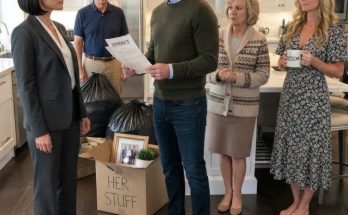
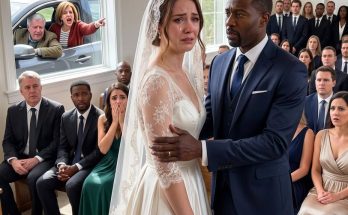
My Wife Said We Needed A Romantic Getaway To Fix Our Marriage. But At Midnight, She Slipped Out Of Bed And Barred The Door. As The Flames Started Climbing The Walls, I Saw Her Holding Hands With A Stranger Outside. “Goodbye, Mason,” She Whispered, Watching Me Burn. She Didn’t Know I Could Hear Her. She Didn’t Know I Dug My Way Out With My Bare Hands. Now, I’m Sitting At My Own Funeral In A Disguise, Watching Her Fake Tears. She Thinks She’s A Widow With 4 Million Dollars.
“Execution Day Is Here.”
### Part 1
The sound that woke me wasn’t the fire.
It wasn’t the roar climbing through the walls, or the crack of dry timber splitting open in the heat. It was the click of the deadbolt sliding shut from the outside of our bedroom door.
For one stupid second, I thought I was dreaming.
Then the smoke hit my lungs.
I rolled out of bed hard, shoulder slamming into the floorboards, coughing before I even understood why my eyes were burning. The room was black from the waist up, thick smoke crawling along the ceiling beams like something alive. Heat pulsed against the door. Orange light flickered underneath it, thin at first, then brighter, meaner.
“Ivy!”
My voice came out broken.
Her side of the bed was empty.
The sheet was cold.
That was when fear stopped being fear and became something sharper. I crawled to the door, staying low, one hand over my mouth. The brass knob was hot enough to make me jerk back. I grabbed it again with the edge of the quilt, twisted, shoved.
Nothing.
I slammed my shoulder into the door once, then twice. Solid oak. Reinforced frame. I knew that because I had built it myself.
“Ivy! Open the door!”
No answer.
Only the fire.
The cabin groaned around me, old beams popping overhead. Smoke clawed down my throat. I crawled to the window, grabbed the lamp from the nightstand, and smashed the glass. Cold mountain air rushed in so hard it felt like mercy. I leaned out, gulping it down, eyes streaming.
Then I looked below.
Ivy wasn’t running for help.
She wasn’t screaming my name.
She was standing beside her car in the gravel drive, wrapped in my old gray coat, her face lit by the flames eating through the cabin behind me.
A man stood beside her.
Dominic Hayes.
The stranger who had shown up at our cabin less than six hours earlier with a dead radiator and a perfect smile.
He had one arm around my wife’s waist. In his other hand, swinging loosely like a joke, was a red gas can.
Ivy looked up.
For one breath, we stared at each other through firelight, smoke, and the broken window between us. I expected guilt. Panic. Horror. Anything human.
She only watched me.
Then Dominic turned her chin toward him and kissed her.
Slow. Deep. Celebratory.
Behind me, something in the hallway burst with a whoosh, and heat slapped my back so hard I dropped to one knee.
That was the moment I understood: my wife hadn’t left me to die.
She had brought me here for it.
Forty-eight hours earlier, I had been driving us into the mountains with a cooler full of steaks, a bottle of anniversary wine, and the pathetic hope that maybe silence could be repaired if you took it somewhere beautiful.
“You missed the turn,” Ivy said from the passenger seat.
She didn’t look up from her phone.
“I know the way,” I said. “I built the place, remember?”
Her thumbs kept moving. Fast. Angry. Then the screen went dark and she turned it face down in her lap.
The cabin sat deep in the Appalachian woods, on land my grandfather bought when everybody else thought that ridge was useless rock and pine. I spent two summers after the Army building it with my own hands. The rough beams, the stone fireplace, the second-story bedroom with windows facing east.
It was supposed to be a sanctuary.
When we pulled up, the sun was bleeding out behind the trees. Ivy stepped out before I even killed the engine, lifting her phone toward the sky.
“No signal,” I said.
“I got one bar.”
“Who are you calling?”
“My mother.”
The lie came too easily.
I carried the bags inside. Pine dust, cold ashes, old cedar. Usually that smell settled me. That evening it felt like walking into a place that already knew something I didn’t.
Then I heard tires on gravel.
A black sedan rolled up beside my truck.
The driver stepped out wearing a leather jacket too clean for the mountain road and a smile too relaxed for a lost man.
Ivy’s face changed before she spoke.
“Dominic? What are you doing here?”
It was the worst acting I had ever seen.
He said his GPS sent him wrong. Said his radiator overheated. Said he had no service and couldn’t make it back before dark.
I looked at the sedan. No steam. No smell. No leak on the gravel.
“I didn’t see smoke from your hood,” I said.
Dominic smiled wider.
“Must’ve cooled down.”
Ivy touched my arm.
“We can’t send him out in the dark, Mason.”
The way she said my name made it sound like I was already the villain.
So I let him stay.
And that was my first mistake.
By dinner, I knew something was wrong. Ivy laughed too easily at his jokes. Dominic looked around the cabin like he was measuring it. Every time I stepped onto the porch, their voices dropped.
After dinner, I said I was checking the generator.
Instead, I circled behind the cabin and stood in the dark beside the porch wall.
Dominic’s voice came low through the wood.
“He suspects something.”
Ivy answered colder than I had ever heard her.
“He’s jealous. That’s all. Mason sees what’s in front of him. He doesn’t look for hidden angles.”
“Are you sure about the policy?”
I stopped breathing.
“It’s done,” she whispered. “Four million. Double indemnity for accidental death. But we have to be careful.”
My hands curled into fists so tight my nails cut skin.
Four million.
Accidental death.
The cabin creaked in the wind. Somewhere far off, an owl called once and went silent.
I walked away before rage made me stupid.
That night, Ivy came to bed without touching me. She turned her back, pulled the quilt to her chin, and pretended to sleep.
I stared at the beams above us and listened to her breathing.
I told myself I would stay awake.
I told myself I would watch.
But exhaustion is a quiet traitor.
When I opened my eyes again, the room was full of smoke, the door was locked from the outside, and my wife was standing below with another man, watching me burn.
And as the floorboards beneath my knees began to heat, I realized the only thing more dangerous than dying was surviving without proof.
### Part 2
The window was the obvious way out.
That was why I couldn’t use it.
Dominic was watching the window. Ivy was watching me. If I jumped, even if I survived the fall, I would land broken in the gravel with them standing ten yards away and a gas can between us.
The fire behind me roared harder, hungry for the cold air rushing through the broken glass. The bedroom door bowed inward. Smoke rolled over me so thick the room disappeared in pieces: bedpost, chair, dresser, gone and back again in flickers of orange.
I pressed my face to the floor and forced myself to think.
I built this place.
That thought cut through the panic.
I knew every joist. Every seam. Every shortcut I had taken and every repair I had promised myself I would finish someday. Under the bedroom floor was a crawl space, eighteen inches of dirt, rock, spiderwebs, and air. On the far side of the foundation, hidden behind wild blackberry canes, was a vent I had never properly screened.
I crawled to the corner near the old cedar chest.
My hands slapped blindly over the floorboards. Heat baked down on my neck. My lungs burned like broken glass.
There.
One board slightly softer than the rest. A replacement from the summer a pipe burst and warped the subfloor.
I jammed my fingers into the seam.
Nothing.
I grabbed the metal poker from beside the small bedroom stove, wedged the tip under the board, and pulled. The wood groaned. I pulled again. The first nail screamed loose.
Behind me, the door cracked.
A strip of flame curled into the room like a tongue.
I planted both feet, shoved the poker deeper, and tore upward with everything I had. The board ripped free. Splinters opened my palms. Smoke poured down into the gap.
I didn’t hesitate.
I dropped flat, shoved one arm through, then my head, twisting sideways until my shoulder scraped through the hole. For a second I stuck there, chest wedged, smoke above me, dirt below me, fire at my back.
I thought, not like this.
Then the ceiling groaned.
That sound moved me.
I exhaled every bit of air I had and forced myself down through the gap. The edge tore my shirt. A nail caught the skin along my ribs. I hit cold dirt shoulder-first and nearly passed out from the shock of clean air trapped beneath the cabin.
Above me, the bedroom collapsed.
The sound was thunder in a box.
Dust and embers rained through the hole behind me.
I crawled.
Not on hands and knees. There wasn’t room. I dragged myself with elbows and toes, cheek grinding against dirt, ribs screaming, smoke following me in thin black ribbons through cracks overhead.
The crawl space smelled like wet earth, mold, and old animal nests.
It smelled like life.
Every few feet, I stopped to listen.
Outside, over the fire, I heard faint voices. Dominic, maybe. Ivy, maybe. I couldn’t make out words. I imagined them staring up at the empty window, waiting for my body to fall or for the room to take me.
I kept crawling.
The foundation vent appeared as a pale rectangle ahead, moonlight behind blackberry vines. I kicked at it twice. Three times. The rusted screws gave way and the vent popped loose into the brush.
I squeezed through, skin catching on metal, and fell onto frozen pine needles.
For a minute, I could only breathe.
The cabin was fully alive with flame now. Fire climbed through the roof, turning the windows into bright orange mouths. Embers lifted into the dark sky. The place I built with my hands was being erased board by board.
I stayed low and crawled into the tree line.
Training took over because emotion would have killed me.
Observe. Assess. Survive.
I made it behind a thick oak fifty yards from the drive and looked back.
Ivy stood near the car, arms wrapped around herself. Dominic checked his watch. The red gas can was gone now. Hidden or thrown into the woods. He said something to her, sharp and quick.
She nodded.
Then she splashed water on her face from a bottle, smeared ash across one cheek, and dropped to her knees.
By the time the first sirens reached the mountain road, my wife was sobbing like the world had ended.
Two fire trucks came first, then a sheriff’s cruiser throwing red and blue light across the trees. Men shouted. Hoses unrolled. Water hit flames with a hiss that sounded almost useless.
A young deputy ran to Ivy.
“Ma’am, is anyone inside?”
“My husband,” she cried. “Mason. He’s still in there. I tried. I tried to wake him.”
Dominic knelt beside her, one hand on her back.
“She barely made it out,” he said. “I had to pull her away. She tried to go back for him.”
I almost stood.
My body moved before my mind caught it. One hand pushed against the frozen ground. Every ruined part of me wanted to walk into those flashing lights and say, I’m here. She lied. He lied. They tried to kill me.
But then the deputy wrote down Dominic’s statement.
He believed him.
Of course he did.
They had the grieving widow. The heroic friend. The burning cabin. The dead husband everyone assumed was trapped inside.
I had bloodied hands, burns, no phone, no recording, and a story that sounded impossible.
If I came back right then, they would adjust.
People like Ivy adjusted fast. People like Dominic planned second attempts.
So I stayed behind the oak and watched my own death become official.
When the fire was finally beaten down to glowing bones, the deputy helped Ivy into Dominic’s sedan. She leaned her forehead against the window as they drove away, tears still on command.
I waited until the last fire truck left.
Then I stood, shaking from cold, pain, and something deeper.
Mason Carter had died in that cabin.
At least, that was what they needed to believe.
I walked deeper into the woods before dawn found me, leaving bloody prints on frost-covered leaves. My lungs rattled. My hands throbbed. Each breath carried the taste of smoke and betrayal.
By sunrise, I found a service road.
By midmorning, I found an empty vacation cabin with a lockbox on the front door and frost untouched in the driveway. I broke a laundry room window, crawled inside, and drank water from the kitchen faucet until my stomach cramped.
In the bathroom mirror, I met the man Ivy had failed to kill.
His eyes were red. His face was gray with soot. A thin burn marked his jaw. His hands were wrapped in clumsy gauze from a first-aid kit under the sink.
He looked half dead.
But half dead was still alive.
I turned on the small television in the bedroom and found my face on the local news before noon.
“Mason Carter, thirty-eight, presumed dead after a tragic cabin fire…”
They showed Ivy wrapped in a blanket on the back of an ambulance.
“I thought he was right behind me,” she whispered to the camera. “Dominic saved my life. Mason would have wanted him to.”
The reporter said investigators saw no evidence of foul play.
I turned the TV off.
The silence afterward was heavier than the smoke.
No evidence.
That was the phrase that saved them.
And it was the phrase I would spend every waking second destroying.
### Part 3
Hiding is not the same thing as resting.
For three days, I lived inside that empty rental cabin like a burglar in someone else’s dream. I kept the curtains closed. I moved only after dark. During daylight, I sat on the floor with my back against the bed and listened for tires on gravel.
Pain gave time shape.
Morning was coughing black into a sink. Afternoon was peeling gauze from my palms and rewrapping them with shaking fingers. Night was walking the property line, memorizing roads, watching headlights pass far away through the trees.
I found clothes in a bedroom closet. Jeans a little too tight. A dark hoodie. A beanie. Work boots half a size too small that rubbed my heels raw. I found a prepaid phone in a junk drawer with no service and an old laptop that belonged to the property owner but had been wiped clean.
I found food in cans.
I found a bottle of cheap whiskey under the sink.
I poured it out.
I needed my mind sharp.
On the second night, I walked six miles to a corner store outside Maple Ridge. I kept my head down and bought a burner phone, a charger, protein bars, and sunglasses with cash from a coffee tin in the rental kitchen. The clerk barely looked at me. To him, I was just another rough man passing through mountain country with smoke in his clothes and no interest in conversation.
Back at the cabin, I searched my own name.
That is a strange thing to do when you are alive.
Mason Carter obituary.
Mason Carter cabin fire.
Local engineer dies in tragic accident.
The funeral home had already posted arrangements.
Saturday, 11:00 a.m.
Celebration of Life for Mason Daniel Carter.
A smiling photo from three years ago sat under the announcement. Ivy had picked that picture. I knew because she always liked it when I looked softer, cleaner, less like the man who came back from war and more like the husband she could display at company dinners.
I stared at the words celebration of life until they blurred.
Then I laughed once.
It sounded ugly in the empty room.
Ivy was efficient when appearances mattered. She had arranged my funeral before my burns stopped blistering.
The morning of the service, I left before dawn.
I walked back roads and cut through wooded lots whenever traffic came. The church sat near the old courthouse, white steeple, red doors, parking lot full of cars by ten-thirty. I didn’t go near the entrance. I climbed the hill behind the cemetery and crouched behind a cedar tree with a clear view of the side doors.
People came in dark coats, holding tissues, speaking softly.
Coworkers. Neighbors. A few of Ivy’s friends who had never liked me because I made them uncomfortable without trying. Men from job sites. Mrs. Callahan from two houses down, carrying a casserole dish like grief required baking.
Then Ivy arrived.
Black dress. Hair pinned low. My grandmother’s pearl earrings in her ears.
A delicate silver necklace rested against her throat. I bought it for our fifth anniversary, back when I still believed a good gift could fix a bad silence.
Dominic stepped out beside her.
He wore a black suit and my watch.
I saw it immediately.
Stainless steel. Scratched near the clasp. The same watch I wore on deployment, the same watch I wore when I married Ivy, the same watch I thought had burned with me.
Dominic adjusted his cuff, letting it catch the light.
Something in me tried to climb out of my skin.
I gripped the cedar bark until it cut through the gauze on my palm.
They rolled out a closed casket.
Closed, because there was no body.
Closed, because the lie needed weight.
Closed, because people trust polished wood and brass nameplates more than they trust the absence underneath.
The name on the plate was mine.
Mason Daniel Carter.
I watched them carry an empty box into church while my wife leaned on the man who had tried to murder me.
That sight did something useful.
It burned away the last soft piece of me.
After the funeral, they lowered the casket into the ground. Ivy dropped a white rose onto the lid. Dominic stood close enough behind her that his hand brushed her waist. When people hugged her, she trembled beautifully.
I stayed on the hill until everyone left.
Then I went to the one place Ivy wouldn’t expect a dead man to visit.
My office.
Carter Engineering sat at the end of a small industrial strip between a plumbing warehouse and a tax preparer with sun-faded signs. I had built the company after leaving the Army with my friend Logan Pierce. We weren’t rich, but we were steady. Remodels, municipal bids, structural inspections, repairs nobody else wanted to crawl under houses to do.
I waited until midnight.
The back door still had the deadbolt I installed myself. The spare key was still under the fake rock by the dumpster because Ivy never cared enough about my work to learn the small details.
Inside smelled like coffee, printer ink, dust, and old takeout.
I didn’t turn on lights.
My desk looked untouched.
Too untouched.
The bottom drawer where I kept personal files was empty. The side drawer too. The cabinet by the wall had been cleaned out and relocked.
I forced it open anyway.
Nothing useful.
Ivy had been here.
Of course she had.
But Ivy knew only the version of me she could manage. She did not know the version trained to assume any place could be compromised.
In the corner sat a dented old filing cabinet that had been there before I leased the building. Everyone thought it was junk. Even Logan used it only to stack blueprint tubes.
I opened the bottom drawer and pressed along the back panel.
The false bottom popped loose.
Inside was a fireproof document pouch.
My hands shook as I unzipped it.
Copies of tax filings. Cabin deed. Bank records. Business insurance. Personal insurance.
The original life policy was simple. Two hundred thousand dollars to Ivy if I died. Standard coverage. Reasonable.
Stapled behind it was an amendment dated six weeks earlier.
Coverage increased to four million dollars.
Double indemnity for accidental death.
Beneficiary: Ivy Carter.
At the bottom was my signature.
Only it wasn’t mine.
It looked close. Very close. But the M was too wide, and the tail of the R curled wrong.
My wife had learned my handwriting well enough to kill me with it.
Behind the policy sat a bank statement for an account in my name that I had never opened. A P.O. box address I didn’t recognize. Large deposits over four months. Twenty thousand. Thirty thousand. Forty.
Notes marked as loan repayment.
One line had initials beside it.
D.H.
Dominic Hayes.
I photographed everything.
Then I found the envelope.
It was creased, unopened, addressed to me at the office but never mailed out. No return address. Inside was one printed page.
Mason,
I know what she’s planning. Meet me at Sullivan’s Diner on Route 9. Noon Saturday. I can help.
D.
The date was two days before the fire.
My body went cold in a way the mountain air had never managed.
Someone had tried to warn me.
Someone knew.
But the initial D left me with a question that felt like a trap.
Dominic?
Or someone worse?
### Part 4
Sullivan’s Diner looked like a place time had forgotten on purpose.
Red vinyl booths cracked at the corners. Chrome stools lined the counter. A bell over the door gave a tired little ring every time someone came in. The air smelled like burnt coffee, fryer grease, and rain trapped in old coats.
I sat in the booth nearest the back exit with my collar up and sunglasses on even though the sky outside was gray.
Noon on Saturday.
Weeks late.
The note in my pocket had softened from how many times I unfolded it.
I ordered black coffee and watched every face.
A trucker in a seed-company cap. Two teenagers sharing fries. An old woman with blue hair counting coins beside a bowl of soup. A man in work boots reading the classifieds even though nobody read classifieds anymore.
Nobody looked like a warning.
Twenty minutes became thirty.
My coffee went cold.
I had almost convinced myself the note was bait when the doorbell rang again.
A woman stepped inside wearing a blue diner uniform under a heavy coat. Late thirties, maybe. Sharp cheekbones. Tired eyes. Hair pulled back so tight it looked painful. She paused just inside the door and scanned the room like she expected someone to jump out from behind the pie case.
She took a booth near the window.
Ordered water.
No food.
Her hands wouldn’t stay still.
I waited ten more minutes, then stood and walked over.
“Seat taken?”
She flinched so hard her elbow hit the wall.
“I’m waiting for someone.”
“So am I,” I said. “I’m looking for D.”
The color left her face.
Her fingers closed around the phone on the table.
“Who are you?”
I slid into the booth across from her.
“The man who was supposed to meet you here before the fire.”
Her eyes narrowed first.
Then widened.
Her lips parted. One hand rose slowly to her mouth.
“Oh my God,” she whispered. “Mason.”
I took off the sunglasses.
She stared at the burns near my ear, the healing cuts on my hands, the face that had been printed in the obituary.
“The news said you were dead.”
“The news was misinformed.”
She covered her face, and for a second I thought she was going to sob. Instead, she pulled herself together with visible effort.
“I tried to warn you. I swear I did.”
“Who are you?”
“Daphne Hayes.”
Hayes.
The name landed hard.
“Dominic’s sister?”
Her mouth twisted.
“Ex-wife.”
That changed the room.
She glanced toward the window before leaning in.
“Dominic calls when he wants something. Money, mostly. Or when he’s drunk enough to confuse bragging with confessing. A month before your fire, he told me he had a big score coming. Said he found a woman with a husband worth more dead than alive.”
“Ivy.”
Daphne nodded.
“He said she was bored, angry, and greedy. His favorite combination.”
The waitress refilled my coffee. Neither of us spoke until she left.
“Did he say how?” I asked.
“Not at first. Later, he mentioned a cabin. Said accidents happen in old places. Bad wiring. Chimneys. Gas leaks.” Her fingers tightened around her glass. “I sent the note to your office because I didn’t have your personal number. Then I lost my nerve. I told myself maybe he was just talking.”
“He wasn’t.”
“I know.”
Her eyes filled now, but she blinked the tears back.
“I have a son with him. Leo. Seven years old. Dominic hasn’t paid support in years, but suddenly he started saying he’d have money soon. Real money. Enough to take me back to court. Enough to take Leo away.”
That explained the fear.
Not all of it, but enough.
“What does Ivy know about you?”
“Nothing. Dominic keeps his old life separate when it doesn’t flatter him.”
“And you came here today because?”
“Because after the fire, I saw him on TV behind your wife. Wearing that fake hero face.” Her jaw hardened. “Then he texted me. Said soon I wouldn’t have to worry about money. Said maybe Leo should get used to spending time with his father.”
I believed her.
Not because she looked innocent. Innocent people can lie too.
I believed her because fear for a child has a sound. I had heard it in villages overseas, in hospital rooms, beside wrecked cars. It cuts through performance.
“Where are they now?” I asked.
“At your house.”
The coffee cup stopped halfway to my mouth.
“What?”
“They’re staying there. His car was in your driveway yesterday. They’re playing house.”
For a moment, the diner vanished.
I saw Ivy in our kitchen. Dominic wearing my watch. My clothes in my closet. My tools in my garage. My bed.
The rage came so hot and fast I had to close my eyes.
Daphne noticed.
“Don’t go there angry.”
“I’m not going angry.”
That was only half a lie.
“I need eyes and ears inside.”
She hesitated, then reached into her purse. She pulled out a keychain remote with worn buttons.
“Dominic bought this years ago. It clones garage signals. He used it when he was stealing tools from job sites. If you can get close enough when someone opens the garage, it should copy the code.”
I took it.
“Why give me this?”
“Because I don’t want revenge,” she said. “I want my son safe. If Dominic goes down, he never takes Leo from me.”
“He won’t.”
“You can’t promise that.”
I looked at her across the sticky diner table.
“I can promise I won’t stop until he has no life left to threaten yours with.”
For the first time, something like hope moved through her face.
I left through the back exit and stood in the alley behind the diner, cold air sliding under my collar.
I had proof of money.
Proof of forgery.
A witness with motive to help.
And now, a way into my own house.
But as I looked at the remote in my palm, I felt the shape of the trap changing.
Ivy had tried to turn me into a ghost.
She hadn’t understood that ghosts could walk through walls.
### Part 5
My house sat on a hill above town, wide porch facing the valley, cedar siding silvering with age, kitchen windows catching morning light.
I built that house for Ivy because she once said she wanted windows big enough to make the sky feel close.
Now I lay in the crawl space beneath it while Dominic Hayes laughed at my kitchen table.
The first time I got close enough to clone the garage signal, I almost ruined everything.
I waited in the woods behind the property until Ivy came home from the grocery store. The garage door rumbled open. I pressed Daphne’s remote, watched the tiny red light blink, and heard two soft beeps.
Copied.
I stayed hidden while Ivy carried bags inside.
Dominic came out a minute later in sweatpants and one of my old work jackets.
Mine.
He took a beer from the garage fridge, looked across the backyard like he sensed something, then smiled to himself and went back inside.
That night, I entered the house through the garage.
No lights. No shoes. No sound.
Every room smelled familiar in the worst way. Lemon cleaner. Ivy’s perfume. Coffee. Dominic’s leather cologne. My home had been invaded, but not ransacked. That made it worse. My things were still there, arranged around their new life like props.
A stack of renovation catalogs sat on the kitchen island.
Pool designs.
Luxury bathroom fixtures.
Outdoor kitchen layouts.
On the top page, Ivy had written: After payout clears.
I photographed it.
Then I got to work.
Small listening devices went into air vents. One under the kitchen island. One behind the bedroom dresser. A tiny camera replaced the smoke detector in the living room, angled toward the sofa and the hallway.
I moved like I was clearing a building.
Slow. Deliberate. Touch nothing longer than necessary.
In the bedroom, Ivy had moved my clothes into boxes labeled donation.
Dominic’s shirts hung in my closet.
On the nightstand, beside Ivy’s sleeping pills and hand cream, sat a framed wedding photo turned face down.
I nearly picked it up.
Instead, I left it exactly as it was.
By dawn, I was back in the woods, watching the live feed on my burner phone.
The first useful conversation came at breakfast.
Dominic sat at the island eating cereal from one of my bowls. Ivy paced in my robe, phone pressed to her ear.
“No, Preston, I understand,” she said. “But how long does an insurance review usually take?”
Preston.
I knew that name.
William Preston had handled my business contracts for six years. Smooth hair, smooth suits, smooth lies if the price was right. He had drafted my will. He had reviewed the cabin deed. He knew exactly what I owned and what Ivy would inherit.
I sat straighter against the pine tree.
Ivy listened, jaw tight.
“Fine. But Dominic is getting impatient.”
Dominic looked up.
“Tell him not to say my name.”
Ivy waved him quiet.
“Okay. Tomorrow. Yes. We’ll both be there.”
She hung up.
Dominic slammed the spoon into the bowl.
“I told you not to involve lawyers.”
“You involved Preston before I did.”
“For paperwork,” he snapped. “Not babysitting.”
“He says Quinn is asking questions.”
“Insurance investigators ask questions. That’s their job.”
“He has concerns about the policy amendment.”
Dominic went still.
“What concerns?”
“He didn’t say.”
Dominic stood so fast the stool scraped the floor.
“You told me the signature was clean.”
“It was clean.”
“Then why is Quinn asking?”
“I don’t know.”
Fear entered the room like a third person.
I watched them circle each other for the rest of the day. Ivy checking locks. Dominic drinking too early. Both pretending their nerves were someone else’s fault.
That night, I gave them their first ghost.
I had built the smart home system myself. Ivy never understood it beyond asking speakers to play jazz during dinner. But the automation hub still recognized my old admin access when I got close enough to the Wi-Fi from the tree line.
At 2:13 a.m., I lowered the thermostat.
Seventy-two.
Sixty.
Fifty-five.
The mountain cold slipped into the house fast.
Then I opened the sound system and found our wedding playlist.
Unchained Melody.
I set the volume to five percent.
Barely there.
A whisper from the walls.
Through the bedroom microphone, sheets rustled.
“Dom,” Ivy whispered.
“What?”
“Do you hear that?”
“No.”
“It’s music.”
“Go to sleep.”
I raised the volume to eight percent.
Ivy gasped.
“That’s our song.”
Dominic’s feet hit the floor. He stormed into the hall.
I stopped the music.
“See?” he shouted. “Nothing.”
“It was playing.”
“The system glitched.”
“It’s freezing in here.”
“The thermostat reset.”
“Both at once?”
He didn’t answer.
I waited twenty minutes.
Then I slipped through the garage again, crossed the mudroom, and entered the kitchen.
On the island, Ivy had left a yellow notepad.
Things to do after settlement.
I placed a charred splinter from the cabin ruins directly across the words.
It still smelled like smoke.
Before leaving, I turned one framed photo on the living room mantel face down.
The next morning, Ivy screamed so loudly birds burst from the trees.
Dominic ran into the kitchen with a gun in his hand.
That mattered.
I watched him lift the charred wood from the notepad, sniff it, and go pale.
“It smells like the fire,” he whispered.
Ivy backed against the refrigerator.
“He’s here.”
“He’s dead.”
“You don’t know that.”
“I saw the roof come down.”
“You said nobody could get out.”
“Nobody could.”
Ivy’s voice cracked.
“Then explain this.”
Dominic threw the splinter into the sink.
“You’re losing it.”
“I am not crazy.”
“Maybe you’re guilty,” he shouted. “Maybe your conscience is playing tricks because you burned your husband alive.”
The room went silent.
My phone recorded every word.
And for the first time since the fire, I smiled.
Not because I was happy.
Because monsters always made mistakes when they started fearing the dark.
### Part 6
Insurance investigators are suspicious by profession.
All I had to do was give one a reason.
Quinn’s number was easy to find. His card had been tossed in Ivy’s office trash, bent at one corner, probably from the day he came to ask polite questions. Martin Quinn, senior claims investigator. Former state police, according to a search result. That helped.
Men like Quinn knew the difference between grief and theater, but knowing and proving were different things.
I called from a pay phone outside a laundromat two towns over.
When he answered, his voice was rough and tired.
“Quinn.”
I said nothing.
I played ten seconds from the recording.
Ivy’s voice came through clear.
“Four million. Double indemnity for accidental death. But we have to be careful.”
Then Dominic.
“He suspects something.”
I hung up.
A seed only needs dirt.
By afternoon, Ivy’s phone rang while she and Dominic argued in the kitchen.
She put Quinn on speaker.
“Mrs. Carter, I need you and Mr. Hayes in my office tomorrow morning.”
Dominic leaned over the phone.
“Why both of us?”
“There has been a development.”
“What kind of development?” Ivy asked.
“I’ll explain in person.”
The line went dead.
Dominic turned on her instantly.
“What did you do?”
“I didn’t do anything.”
“You talked.”
“To who?”
“I don’t know. Your mother. Your friends. That lawyer.”
“You’re the one who drinks and brags.”
His face hardened.
“Be careful.”
“Or what?”
The silence after that was ugly.
I watched from the camera feed, noting every shift. Their partnership had depended on a fantasy: fast money, clean exit, shared guilt sealed by desire. Now suspicion ate through it.
I needed more.
The next morning, they left for Quinn’s office in Ivy’s white SUV. Dominic drove. Ivy sat rigid in the passenger seat, sunglasses hiding her eyes though the day was cloudy.
The moment they disappeared down the hill, I went in.
I had twenty minutes. Maybe thirty.
I started with Ivy’s laptop.
It sat open on the bed, her search history still up.
Can insurance deny accidental death claim?
How long after death certificate life insurance payout?
Can grief cause hallucinations?
I plugged in a USB drive Daphne had brought me. Her cousin worked IT for a school district and owed her a favor. The program copied documents, photos, email backups, browser history. I didn’t need to understand every file yet. I needed the net wide.
While it ran, I searched drawers.
In the top dresser, beneath silk scarves, I found a folded copy of the fake policy amendment. Beside it, a sticky note in Preston’s handwriting.
Do not discuss over text. Bring original signatures.
I photographed it.
The USB blinked green.
Done.
I moved to Dominic’s side.
His phone was on the nightstand, charging.
No password.
Arrogance is just stupidity wearing cologne.
Most messages were useless. Complaints. Flirtations. Threats from men with names like Ricky and Sal. Then I found a thread labeled P.
Dominic: It’s happening this weekend. Just like we planned.
P: Good. Make sure there are no loose ends.
Dominic: What about the wife if she gets nervous?
P: Keep her focused on payout. Fear can wait until after.
Dominic: And my money?
P: When he is confirmed dead.
My breath slowed.
P wasn’t just legal counsel.
P was the architect.
I screenshotted everything and sent it to the encrypted account Daphne had helped me set up.
Then I found one more message.
P: Evan remains interested in the land. If widow transfers quickly, development group will move fast. Everyone gets paid.
Evan.
My brother.
For several seconds, the bedroom seemed to tilt around me.
Evan Carter was three years younger than me, all charm where I was discipline, all bright ideas and bad endings. I paid part of his college tuition. Covered fifteen thousand dollars when his first startup collapsed. Gave him work after his second business failed and watched him quit after three weeks because site inspections were “beneath his skill set.”
He was also my best man.
I had blamed distance between us on adulthood.
I had not imagined murder sitting quietly inside that distance.
A car engine sounded outside.
Too soon.
I restored the phone exactly as I found it, yanked the USB, and slipped through the garage into the backyard.
I made it to the tree line as Ivy’s SUV pulled in.
They came inside furious.
Quinn had frozen the payout pending investigation.
The phrase hit them like a bat.
Dominic threw a glass against the wall.
Ivy cried, then stopped crying, then began calculating out loud.
“We need Preston.”
“We need to leave,” Dominic said.
“Running makes us look guilty.”
“We are guilty.”
“Don’t say that.”
“Why? The walls listening?”
Yes, I thought.
They were.
That afternoon, Daphne called me from a blocked number.
“I went to Quinn’s office like you asked,” she said. “I pretended to be looking for someone from a car accident claim. I couldn’t hear much, but I saw somebody leave through the back door.”
“Who?”
She hesitated.
“Your brother. Evan.”
The confirmation felt worse than suspicion.
I spent the next hour digging through Ivy’s stolen files.
The emails were not hidden well. Ivy had assumed dead men didn’t search inboxes.
Eight months earlier:
Ivy: Mason won’t sell his half of the ridge land.
Evan: Keep working on him. If something happens, you inherit, right?
Ivy: Eventually.
Evan: Then maybe something should happen.
Two months later:
Evan: Once estate clears, I’ll buy at 40 percent market. Fast cash for you. Development rights for me.
Ivy: Deal. Don’t mention this to anyone.
Evan: I’m not an idiot.
I stared at that sentence until my eyes burned.
I’m not an idiot.
No, Evan.
You were worse.
You were family.
And family knows where to put the knife so it hurts before it kills.
### Part 7
I found Evan at a sandwich shop two blocks from his office.
He sat by the window in a navy blazer, laughing into his phone, looking like a man whose brother had died tragically but not inconveniently. His hair was perfect. His watch was expensive. His shoes had never touched mud unless it was at a resort.
I stood outside for a minute and watched him.
Some part of me wanted him to look haunted.
He didn’t.
He ordered turkey on rye, no onions, extra mustard. Same as when we were kids and Mom packed our lunches before she got sick. That memory irritated me more than it softened me.
I walked inside, hood up, sunglasses on.
The lunch crowd was loud enough to cover movement. I sat across from him without asking.
He frowned before looking up.
“Sorry, this seat is—”
I removed the sunglasses.
His phone slipped from his hand and hit the table.
All the blood left his face.
“Mason.”
“Hello, Evan.”
His eyes darted around the restaurant.
“You’re supposed to be dead.”
“I’ve heard that a lot lately.”
He swallowed hard.
“This is impossible.”
“Not for lack of trying.”
“I didn’t—”
“You didn’t pour gasoline. You didn’t lock the door. You just encouraged my wife to imagine a world where I was easier to deal with as a corpse.”
Tears came fast.
Evan had always cried fast when caught.
“Mason, I swear, I didn’t know she was going to kill you.”
“You knew she wanted me gone.”
“I thought divorce. I thought she’d scare you. I thought maybe she’d use the insurance thing as leverage somehow.”
“That sentence doesn’t even make sense.”
“I was desperate.”
“There it is.”
His mouth trembled.
“The business is dying. I owe investors. If I could get the ridge land, the development group would save me. I wasn’t thinking clearly.”
“You were thinking clearly enough to negotiate forty percent market value.”
He flinched.
“You read the emails.”
“All of them.”
He covered his face.
“I’m sorry.”
I leaned closer.
“No, you’re caught. Sorry is what people say when they still want something.”
He looked up then, and for the first time I saw real fear.
“What do you want?”
“The truth.”
“I’ll tell you anything.”
“You’ll tell Quinn.”
He shook his head immediately.
“No. No, I can’t. Ivy will destroy me. Preston too.”
“Preston is already exposed.”
His eyes widened.
“What?”
“I know about him. I know he helped with the policy. I know he coordinated with Dominic. I know there’s a development group waiting on our family land.”
Evan sagged back in the booth.
The waitress walked by and glanced at us. I smiled politely until she moved on.
“You’re going to meet Ivy,” I said. “You’re going to wear a recorder. You’re going to get her to discuss the land deal and what she expected after my death.”
“No.”
“Yes.”
“She’ll know.”
“She thinks you’re weak. Use that.”
A wounded look crossed his face.
“She’s right.”
For one second, I almost felt pity.
Then I remembered Ivy’s face below the window.
“Maybe. But weak men still get to choose what they do next.”
Evan stared down at his untouched sandwich.
“What happens to me?”
“That depends on how honest you are.”
“You’ll forgive me?”
The question came so softly I nearly missed it.
And there it was.
The old family sickness.
People wanting forgiveness before consequences.
“No,” I said.
His face crumpled.
“I’ll tell the truth,” he whispered.
“Good.”
“But Mason…”
I stood.
“What?”
“When this comes out, the land will be tied up. Probate, investigations, lawsuits. Developers will come harder.”
“Let them.”
“You can’t protect it alone.”
I looked at my brother, the boy I once carried home after he broke his ankle jumping from the creek bridge because I dared him to fly.
“I’ve been alone since the night of the fire. I’m getting used to it.”
I left him there with cold turkey on rye and the ruined expression of a man finally understanding the bill had arrived.
That evening, Daphne met me in the parking lot of a closed hardware store. Her son Leo sat in the back seat wearing headphones and playing a handheld game. He had Dominic’s dark eyes and Daphne’s guarded mouth.
“He doesn’t know who you are,” she said.
“Good.”
She handed me a folder.
“I printed everything you sent. Multiple copies. One set goes to Quinn. One set goes somewhere safe.”
“You shouldn’t be this involved.”
“Too late.”
Through the windshield, Leo laughed softly at something on his screen.
I looked away.
“Dominic threatened to take him?”
“More than once.”
“He won’t.”
Daphne studied me.
“You keep saying things like that like you can control the whole world now.”
“I can’t.”
“Then what can you control?”
I looked down at the folder in my hands.
“The moment they realize the world they built is gone.”
Her expression softened just a little.
“You’re not the same man from the obituary photo.”
“No.”
“Good.”
The next day, Evan met Ivy at a wine bar downtown.
Quinn had arranged the recorder. Daphne waited with me in my rented car three blocks away, listening through an earpiece to the delayed feed Quinn agreed to share once he accepted the evidence.
Ivy sounded annoyed from the first word.
“Why did you want to meet here?”
Evan’s voice shook but held.
“I’m scared.”
“You should be. Quinn is digging.”
“I can still help with the land. But I need to know what happens if the insurance gets delayed.”
“It won’t.”
“What if Mason’s body is a problem?”
A pause.
Then Ivy, cold as the creek in January:
“There won’t be a body. The cabin burned too hot. That was the point.”
Daphne inhaled beside me.
My hands tightened around the steering wheel.
Evan pushed.
“And Dominic?”
“Dominic is temporary.”
That silence was different.
Even through the feed, I felt it sharpen.
“He thinks you’re leaving with him?” Evan asked.
“Dominic thinks many things. Once the money clears, I won’t need him.”
“And Preston?”
“Preston gets his cut and disappears.”
“And me?”
“You get the land cheap if you stop whining and do exactly what I tell you.”
Evan’s voice cracked.
“Mason trusted us.”
Ivy laughed once.
It was small and cruel.
“Mason trusted everybody. That was his problem.”
I closed my eyes.
There it was.
Not guilt. Not panic. Not grief.
Truth.
When the recording ended, Quinn called me.
“We have enough to bring them in for questioning,” he said. “But if Preston is involved, I want him in the room. He’s careful. We need him comfortable.”
“Then let’s make him comfortable.”
“What are you suggesting, Mr. Carter?”
I looked at the darkening street ahead.
“Invite everyone to a meeting about the payout.”
“And you?”
“I’ll come in through the back.”
Quinn was quiet for a moment.
“You understand once you walk in, there’s no ghost anymore.”
“I know.”
“Are you ready for that?”
I thought of the locked bedroom door.
“I’ve been ready since the click.”
### Part 8
The morning I came back from the dead, I shaved with a disposable razor in a motel bathroom while sirens wailed somewhere far away.
For a few seconds, I wondered if they were for me.
Then they faded.
I kept shaving.
The man in the mirror looked unfamiliar in pieces. Shorter hair from where Daphne had trimmed the burned ends. Clean jaw. Pale scars near my ear and along the side of my neck. Eyes that did not look tired so much as finished with pretending.
Daphne had found me a dark suit at a thrift store. The sleeves were a little short. The shoulders were close enough. I tied a plain gray tie and buttoned the jacket.
In the mirror, I did not look like the man Ivy married.
That man had believed effort was love.
He had built houses, fixed leaks, balanced accounts, remembered anniversaries, and assumed vows meant something because he meant them.
The man in the mirror knew better.
My phone buzzed.
Quinn: Everyone confirmed. 11:00. Preston’s office. Use service entrance.
Evan: I’m there. Don’t make me regret this.
Daphne: Leo asked why I’m nervous. I told him grown-ups sometimes have to be brave too. Finish it.
I read that last message twice.
Then I left.
Preston’s office occupied the twelfth floor of a glass building downtown where the lobby had marble floors and a sculpture that looked like twisted metal pretending to be wisdom. I didn’t enter through the front. Quinn had arranged for a building maintenance worker to leave the service door unlatched.
I took the elevator to eleven, then the stairs to twelve.
The stairwell smelled like concrete dust and cleaning solution. Through the metal fire door, voices drifted from the conference room.
Preston first.
“Detective, my client has cooperated fully.”
Client.
He was already distancing himself from whoever was most flammable.
Quinn’s voice stayed calm.
“I appreciate that.”
Dominic snapped, “No, you don’t. You froze the money based on some anonymous garbage.”
“Mr. Hayes, you are not the beneficiary.”
“I was there.”
“Yes,” Quinn said. “You were.”
I could almost hear Dominic realizing too late that those three words had weight.
Ivy spoke next, soft and wounded.
“My husband is dead. Every day this continues, you make me relive it.”
A chair creaked.
Preston cleared his throat.
“Unless you have concrete evidence of fraud, I suggest the company proceed with the claim. Mrs. Carter has suffered enough.”
My hand closed around the stair rail.
Enough.
Quinn let the silence stretch.
“Let’s review the issues. The policy amendment increased coverage from two hundred thousand dollars to four million six weeks before Mr. Carter’s death. The signature is disputed by our handwriting consultant.”
Preston answered smoothly.
“Mason injured his hand previously. His signature varied.”
“Then there are deposits into an account in Mr. Carter’s name, apparently connected to Mr. Hayes.”
Dominic said, “Private loan.”
“For what purpose?”
“Personal.”
“Strange that Mr. Carter never accessed the funds.”
“Ask him.”
Nobody laughed.
Quinn said, “We also have communications involving Mr. Preston.”
Preston’s voice cooled.
“I advise you to choose your words carefully.”
“I am.”
Paper slid across the table.
“And communications involving Evan Carter.”
I heard my brother breathe too hard.
Ivy’s voice sharpened.
“Evan is confused.”
“No,” Evan said.
That one word surprised me.
It sounded small, but it stood.
“No, Ivy. I’m done being confused.”
“You don’t know what you’re saying.”
“I know you wanted the land. I know you wanted Mason out of the way. I know you promised to sell it to me after the estate cleared.”
“You pathetic coward,” she hissed.
Quinn cut in.
“Mrs. Carter.”
“I lost my husband.”
“No,” Quinn said. “You misplaced him.”
The room went quiet.
My heart slowed.
That was the signal.
Quinn continued, voice lower now.
“You all built a story around one assumption: that Mason Carter died in that cabin. But there’s a problem with your story.”
I opened the stairwell door.
The hallway beyond was bright, carpeted, absurdly peaceful. My steps made almost no sound.
Through the glass conference room wall, I saw them.
Ivy sat with perfect posture in a cream blouse and black blazer, widowhood styled for business hours.
Dominic sat beside her, jaw clenched, one knee bouncing under the table.
Preston stood at the head like a conductor losing control of his orchestra.
Evan looked pale enough to faint.
Quinn faced the door.
He nodded once.
I opened it.
Everyone turned.
Ivy’s expression moved through irritation first.
Then recognition.
Then something close to animal terror.
Her glass tipped over. Water spread across the polished table toward Preston’s legal pad.
Dominic shoved back from the table so hard his chair hit the wall.
“No.”
I stepped inside.
“Afternoon.”
Nobody spoke.
“Sorry I’m late,” I said. “Hard to get here when you’ve already been buried.”
Preston whispered, “Impossible.”
I looked at him.
“That word keeps disappointing people.”
Ivy stood slowly, one hand gripping the table.
“Mason.”
My name in her mouth used to mean home.
Now it sounded like a locked door.
“You saw me at the window,” I said. “You watched.”
Her lips trembled.
“I was scared.”
“No. You were calm.”
Dominic moved suddenly toward the door.
Two plainclothes officers stepped in from the reception area before he reached it. One blocked his path. The other watched his right hand.
Quinn’s voice sharpened.
“Do not reach under your jacket, Mr. Hayes.”
Dominic froze.
The officer lifted the edge of Dominic’s coat and removed the gun.
Ivy started crying.
Not pretty news-camera tears. Real ones. Ugly, frightened, selfish tears.
“Mason, please. You don’t understand.”
“I understand the policy. The forged signature. The fake account. The gasoline. The locked door. The way you kissed him while the roof came down.”
She shook her head wildly.
“He made me do it.”
Dominic barked a laugh.
“Me? You planned the whole thing.”
“You poured it.”
“You locked the door.”
“You smiled.”
The officers let them talk.
So did I.
Because every accusation was another nail.
Preston finally tried to recover.
“My client is clearly in shock. Any statements made under these circumstances—”
“Counselor,” Quinn interrupted, “your own messages are part of the record.”
Preston went still.
I turned to him.
“You taught me to read contracts before signing anything. Good advice. You should have followed it before making yourself part of a murder.”
His face hardened.
“Mason, we can discuss this privately.”
“No.”
That word felt clean.
“No private meetings. No deals in hallways. No quiet corrections. You don’t get to smooth this over.”
I looked at Ivy last.
She reached toward me.
“Mason, I’m your wife.”
“No,” I said. “My wife died before the fire. You’re just the person who locked the door.”
The officer cuffed Dominic first.
He cursed Daphne’s name when Quinn mentioned her statement.
Then Preston, who looked smaller with metal around his wrists.
Then Ivy.
She kept staring at me as if I might still save her from the consequences she built.
“Mason,” she whispered. “Tell them you forgive me.”
I thought about that.
I really did.
Then I stepped closer, close enough to see the tiny pulse jumping in her throat.
“I survived you,” I said. “Don’t confuse that with forgiveness.”
They led her out.
The door closed behind them.
For the first time in months, the room was quiet without being dangerous.
And I was standing in the light.
### Part 9
After arrests, people expect relief to arrive like weather.
It doesn’t.
Relief comes in scraps.
A full breath in a parking garage. A night without checking every window. The first cup of coffee you drink because you want it, not because exhaustion is hunting you.
Quinn warned me outside Preston’s building.
“This is the beginning, not the end. There will be hearings. Lawyers. Reporters. Ivy will change her story. Dominic will change his twice before lunch. Preston will act like he was merely advising clients. Evan will try to look remorseful.”
“He is remorseful.”
Quinn glanced at me.
“Maybe. But remorse after exposure is tricky.”
“I know.”
The sun was bright enough to hurt.
Across the street, people moved through ordinary lives. A woman argued into her phone. A courier balanced boxes against his hip. A child dragged a red backpack along the sidewalk while his mother told him to pick it up.
The world had continued while I was dead.
That felt insulting at first.
Then comforting.
I drove to the cabin site that afternoon.
No one stopped me. Yellow tape still hung from two trees, faded and twisted. The driveway was scarred by tire tracks from emergency vehicles. Where the cabin once stood, there was only a blackened foundation, collapsed metal, ash, and the stone fireplace standing stubbornly at one end like an old soldier who refused to fall.
I walked through what had been the front door.
The floor was gone, but I knew where every room had been.
Kitchen to the left.
Living room straight ahead.
Stairs along the wall.
Bedroom above.
The crawl space vent where I escaped was half buried under debris and blackberry vines.
I knelt beside it.
For a long time, I listened.
Wind moved through pine needles. Somewhere down the ridge, a crow called. The air still carried a faint bitter smell of char even after all those weeks.
I pressed one hand against the cold foundation.
“We’re done here,” I said.
But that wasn’t true.
Places like that don’t finish with you just because you leave.
The months before trial were a different kind of fire.
I gave statements until my throat hurt. I sat in rooms with prosecutors while they lined up evidence in neat stacks as if neatness could make betrayal understandable. I identified my own forged signature. I described the deadbolt, the smoke, the window, the kiss.
Every telling took something.
Every telling gave something back.
The news found out quickly.
DEAD HUSBAND RETURNS IN INSURANCE MURDER PLOT.
The headline was everywhere for a week.
Reporters stood outside my office, my house, the courthouse. They shouted questions about Ivy, about Dominic, about how it felt to attend my own funeral.
I never answered them.
Logan did, once.
He walked out of Carter Engineering carrying a wrench and told a camera crew that if they didn’t get off the property, they’d need structural repairs done to places not covered by insurance.
That was the first time I laughed without tasting smoke.
He had cried when I finally called him.
Not polite tears. Angry ones.
“You idiot,” he said over and over. “You absolute idiot. You should have come to me.”
“I couldn’t risk it.”
“You could always risk me.”
That sentence stayed with me.
I thought I had no one.
I had been wrong.
Daphne testified before the grand jury. So did Evan. Daphne was steady. Evan shook so badly the prosecutor had to let him stop twice. When he came out, he saw me in the hallway and walked over.
“I told the truth,” he said.
“Good.”
“Does it change anything?”
“It changes the case.”
His face fell.
“But not us.”
I didn’t answer.
He nodded like he deserved that and walked away.
The trial began in October.
Leaves had gone red along the courthouse square, bright enough to look fake. Ivy arrived every day in conservative dresses, hair smooth, face pale. She never looked at Dominic unless his lawyer blamed her. Dominic blamed Ivy. Ivy blamed Dominic. Preston blamed both of them and called himself a professional who had been misled by emotionally unstable clients.
The jury heard everything.
The policy.
The forged signature.
The bank account.
The recordings.
The messages.
Daphne’s warning.
Evan’s land deal.
My testimony.
When I took the stand, Ivy finally looked at me.
Her eyes were wet.
I didn’t look away.
The prosecutor asked me to describe the moment I realized the door was locked from the outside.
The courtroom became so quiet I could hear someone’s pen stop moving.
I told them about the click.
Not the flames.
The click.
Because fire is chaos.
A locked door is a decision.
Ivy looked down first.
The verdict came after nine hours.
Guilty.
Conspiracy to commit murder.
Attempted murder.
Insurance fraud.
Forgery.
Arson.
Preston was convicted on conspiracy, fraud, and obstruction. Dominic took an additional weapons charge after trying to carry a gun into the insurance meeting. Ivy stood still as the verdicts were read, her face blank in that old terrifying way.
At sentencing, she asked to speak.
The judge allowed it.
Ivy turned toward me.
“Mason, I know I can never undo what happened. I was lost. I was manipulated. I forgot who I was.”
I almost smiled.
Forgot.
As if murder were misplaced keys.
She continued.
“I hope someday you can remember the good years.”
When it was my turn, I stood.
I had prepared three pages.
I used none of them.
“I do remember the good years,” I said. “That’s why what you did was not just attempted murder. It was the murder of every memory I trusted. You didn’t act in one bad moment. You planned. You forged. You lied. You watched. And when I survived, you asked me to forgive you because consequences frightened you more than fire frightened me.”
The judge watched silently.
I looked at Ivy one last time.
“I don’t forgive you. I don’t hate you either. Hate would keep me in that room. I am leaving you there alone.”
She cried then.
The judge was not moved.
The sentences were long.
Dominic would be old before he saw free air. Preston lost his license before he lost his freedom. Ivy received enough years that youth would be a memory by the time she stepped outside without permission.
I didn’t celebrate.
I walked out of court into cold sunlight and stood on the steps until Logan came beside me.
“You okay?”
“No.”
He nodded.
“Want coffee?”
“Yes.”
That was how life began again.
Not with victory.
With coffee.
With one ordinary step after another, taken by a man everyone thought was dead, learning how to live without asking ashes for permission.
### Part 10
I sold the house on the hill.
People expected me to keep it out of pride, or burn it out of symbolism, or turn it into some dramatic monument to survival. I did none of that. I hired cleaners, boxed what still belonged to me, threw away the rest, and put it on the market through an agent who knew not to ask personal questions.
The day I walked through it for the last time, the rooms echoed.
No Ivy.
No Dominic.
No hidden cameras.
No whispers through vents.
Just sunlight on hardwood and dust in corners.
In the bedroom, the wall still held a faint rectangle where our wedding photo had hung. I stood there a while, not grieving the marriage exactly, but grieving the man who had believed it could be saved by a weekend away and a good steak dinner.
I left my key on the kitchen island.
The ridge land was harder.
Developers came, of course. Evan’s collapse had made the property even more attractive. Men in polished boots wanted to walk it with me. They talked about luxury cabins, resort access, private roads, investment potential.
I told each one no.
Eventually, I placed most of the acreage into a conservation trust with strict limits. No resort. No subdivision. No shiny brochure promising wilderness with heated driveways.
Logan stood beside me when I signed.
“Your grandfather would approve.”
“He’d ask why it took paperwork to do what a handshake used to.”
“Then he’d approve louder.”
Evan sent a letter after the trust became public.
I didn’t open it for three days.
When I finally did, I found four pages of apology written in his careful business handwriting. He said prison wasn’t in his future because he had cooperated early and pleaded to lesser charges, but probation, restitution, and public disgrace had stripped him down. He said losing the land deal saved him from becoming someone even worse.
At the end, he wrote:
I know you don’t owe me forgiveness. I’m trying to become someone who stops asking for things he hasn’t earned.
I folded the letter and put it in a drawer.
Not forgiveness.
Not yet.
But not fire either.
Daphne got full custody.
Dominic’s threats became useless once they were printed in court records. Leo stayed with her. She moved to a smaller town two counties over and started managing a diner instead of waiting tables at one.
We kept in touch carefully.
At first it was case updates. Then check-ins. Then, months later, coffee in public places where neither of us had to explain why we sat facing doors.
She never treated me like a hero.
I appreciated that.
Heroes are just people strangers use to make pain sound clean.
One evening, almost a year after the fire, Daphne and Leo met me at the edge of the ridge trail. The trust had opened part of the land for public hiking, and Leo wanted to see “the place with the big rocks,” as he called it.
He ran ahead with Logan’s old compass in his hand, convinced he was leading an expedition.
Daphne walked beside me.
“You ever think about rebuilding the cabin?”
“No.”
“Never?”
I looked through the trees toward where the foundation sat hidden beyond a rise.
“I thought about it. But rebuilding there feels like arguing with a grave.”
She nodded.
“What will you do with it?”
“Let the forest take it.”
“That sounds healthy.”
“Don’t sound so surprised.”
She smiled.
The sun dropped lower, throwing gold through the branches. Leo shouted from ahead that he had found a perfect walking stick. Daphne called back that every stick could not be perfect.
I watched them and felt something quiet move in my chest.
Not love.
Not yet.
Something gentler.
Proof that the world still offered sounds other than locks and flames.
That winter, Carter Engineering expanded.
Logan and I hired two apprentices, both veterans who needed steady work and fewer people asking if they were “adjusting.” We took city contracts, bridge inspections, school renovations. I spent long days in hard hats and cold mud, checking beams, measuring loads, trusting math because math had never betrayed me.
Sometimes clients recognized me.
A few asked.
Most didn’t.
The scars faded from red to pale.
The dreams took longer.
In them, I was always back in that bedroom. Smoke thick. Door locked. Ivy below the window. But as months passed, the dream changed. At first I woke choking before I reached the floorboards. Later, I reached the crawl space. Later still, I crawled out.
One night, I dreamed I stood outside the burning cabin and simply walked away.
I woke before dawn, calm.
On the anniversary of the fire, I drove alone to the ridge.
Snow dusted the ground. The foundation was half-hidden under dead leaves and white powder. Small green shoots had already begun pushing through cracks in the charred soil near the fireplace.
I stood there without speaking.
For a long time, I thought survival meant proving what happened.
Then I thought it meant punishment.
Then distance.
That morning, I understood survival was quieter than all of that.
It was choosing breakfast.
Answering calls.
Paying bills.
Laughing without guilt.
Letting a day be ordinary.
I took my old watch from my pocket.
The police had returned it after trial, sealed in an evidence bag. Dominic had worn it like a trophy. I had kept it in a drawer for months, unsure whether it was still mine.
I fastened it around my wrist.
The clasp clicked softly.
Not like a lock.
Like something closing properly.
I walked back to the truck as the sun rose over the Appalachian ridge, turning the snow pink and gold.
Behind me, the ashes stayed where they belonged.
Ahead, the road curved down toward town, toward work, toward coffee with Logan, toward a message from Daphne asking if I knew how to fix a loose shelf at the diner because apparently surviving attempted murder made people assume you owned every tool in America.
I smiled when I read it.
Then I started the engine.
Ivy had tried to make my life end in fire.
She failed.
The trap turned against her, but the best revenge was not the verdict, the headlines, or the years she would spend behind locked doors.
The best revenge was this:
I drove away alive.
And I did not look back.
THE END!