The room went silent so violently I heard the heart monitor skip.
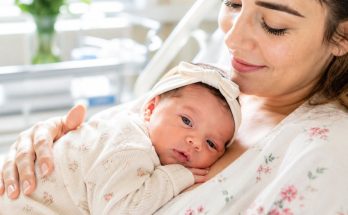
Five newborns slept beneath warm hospital lights, their tiny fingers curled like unanswered prayers. I was still weak from surgery, barely able to lift my head, when my husband stepped backward as if the babies were something contagious.
“Benjamin,” I whispered. “Please.”
But Benjamin Whitmore’s face had already hardened into something cruel and unfamiliar.
Behind him stood his mother, Victoria Whitmore, wrapped in pearls and expensive perfume, staring at the bassinets with cold disgust.
“This family will not raise another man’s children,” she said sharply.
“They are yours,” I whispered. “They’re your grandchildren.”
Benjamin laughed under his breath.
“The doctors can run whatever tests they want,” he snapped. “I know what I’m looking at.”
A nurse shifted uncomfortably near the door. Another quietly pulled the privacy curtain halfway closed, as though humiliation could somehow be hidden behind fabric.
Victoria stepped closer to my bed.
“You’ll sign the divorce papers quietly,” she murmured. “No interviews. No claims. No scandal. We’ll say the stress of childbirth affected your judgment.”
I stared at my babies.
Their beautiful dark skin shocked everyone except me.
Months earlier, specialists had explained the rare genetic inheritance hidden in my family line—ancestry my husband had mocked whenever I tried to discuss it seriously. Benjamin dismissed it as “meaningless old family stories.”
Now those same genes stood sleeping inside five bassinets.
Benjamin ripped off his hospital bracelet and threw it into the trash.
“I’m done,” he said.
Then he walked out of the room without touching a single child.
Victoria lingered only long enough to whisper one final thing.
“You should thank us for leaving quietly.”
Then she followed him.
The door clicked shut.
And just like that, I was alone with five newborns.
I reached into the nearest bassinet and touched my daughter’s tiny hand.
“My babies,” I whispered through tears, “your father just made the worst mistake of his life.”
Because before I became Mrs. Whitmore…
Before I entered their world of old money and polished cruelty…
I had been one of the best contract attorneys in Chicago.
And unlike Benjamin—
I read every line before I signed anything.
For the first two years, the Whitmores pretended we no longer existed.
Benjamin’s attorneys flooded my mailbox with threats. Defamation warnings. Demands to stop using the Whitmore name. Quiet offers of money if I agreed to disappear permanently.
Meanwhile, Victoria controlled the narrative.
In charity galas and magazine interviews, she painted herself as a mother protecting her son from “a tragic deception.”
Benjamin became a public victim.
Then, eighteen months later, he remarried.
Her name was Claire Holloway. Blonde, wealthy, camera-ready. The kind of woman Victoria proudly displayed beside her at fundraisers.
At their wedding reception, a reporter jokingly asked Benjamin if he wanted children someday.
He smiled and answered:
“Real ones.”
I watched the interview at three in the morning while feeding twin boys and rocking one daughter with my foot.
That night, I stopped crying for good.
Instead, I started saving everything.
Every article.
Every interview.
Every voicemail.
Every legal threat.
I built folders and archives while raising five children alone in a small townhouse on the north side of the city.
Benjamin never paid child support.
Not one cent.
That became his second mistake.
His first was leaving the hospital before the mandatory DNA samples were finalized—a protocol automatically triggered because quintuple births required extensive medical documentation.
Science had confirmed the truth before he ever walked away.
By the time my children turned ten, Victoria tried a different tactic.
She arrived at my house in a black sedan one rainy afternoon carrying a leather briefcase.
“Three million dollars,” she said calmly after sitting at my kitchen table. “You and the children disappear permanently. No lawsuits. No inheritance claims. No future contact.”
My oldest daughter, Simone, stood silently in the hallway listening.
I poured Victoria tea.
Then I smiled.
“No.”
For the first time in years, uncertainty crossed her face.
“You think those children belong in our family?” she asked coldly.
I looked toward the staircase where my children were laughing upstairs.
“No,” I answered softly. “I think your family never deserved them.”
My children grew into extraordinary adults.
Simone became a civil rights attorney.
Julian created medical software used in neonatal hospitals across the country.
Elijah became a forensic accountant.
Micah became an investigative journalist.
And little Ava—the quietest of them all—became a genetic researcher.
I never taught them revenge.
I taught them truth.
Then, thirty years after Benjamin abandoned us, everything changed.
Claire never gave him children.
Victoria’s health collapsed.
And the Whitmore family trust contained one devastating clause:
Control of the estate required verified biological descendants.
Suddenly, the children Benjamin once rejected became very important.
A letter arrived requesting “reconciliation.”
No apology.
No regret.
Just business.
I laughed so hard I cried.
Then I gathered my children around the dining room table and placed one document in front of them:
The original hospital DNA report.
Benjamin Whitmore had been confirmed as their biological father thirty years earlier.
He had abandoned his own children anyway.
Simone looked at me quietly.
“What do we do now?”
I closed the folder gently.
“Now,” I said, “we let him meet the truth.”
Benjamin arrived at the courthouse wearing a navy suit and rehearsed remorse.
News cameras crowded the entrance because Micah had published an article that morning:
“Business Magnate Seeks Recognition From Children He Publicly Denied.”
Inside the courtroom, Benjamin smiled carefully when he saw us.
“Catherine,” he said softly. “Children…”