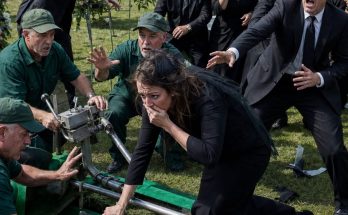
My Parents Refused When I Asked For $10,000 To Save My Seven-Year-Old Daughter’s Leg. My Father Said, “We Just Bought A Boat.” My Mother Said, “A Limp Will Teach Her Responsibility.” My Rich Older Brother Laughed… But My Broke Younger Brother Showed Up With $800 And Said, “I Sold My Tools.” None Of Them Knew What That One Envelope Was About To Start.
“My parents refused when I asked for $10,000 to save my daughter’s leg. Dad said, “We just bought a boat.”
Mom said, “A limp will teach you responsibility.”
My older brother laughed, “You’ll manage.”
Then my younger brother came along:
“I’ve sold all my tools. Here’s $800.”
He didn’t know what was coming…”
I am Joshua, 34 years old, and my parents chose a 50-foot fiberglass boat over my 7-year-old daughter’s ability to walk. To understand why I did what I did, why I eventually became the villain in their story to be the hero in mine, you have to understand the fear.
Real fear isn’t a horror movie. Real fear isn’t a jump scare. Real fear is the smell of antiseptic in a hospital hallway and the look on a doctor’s face when he takes off his glasses and rubs the bridge of his nose. I was standing in the corridor of St. Jude’s Medical Center, staring at the scuff marks on the linoleum floor. My daughter Chloe was in the room behind me, sleeping fitfully. She had been born with a congenital condition in her tibia, something we had been monitoring for years.
We knew it was delicate. We knew we had to be careful. But 3 days ago, she fell on the playground. It wasn’t a bad fall. It was just a trip over a mulch barrier. But when you have bones like hers, a simple trip changes the trajectory of your entire life. Dr. Carter came out of the room looking tired. He was a good man, the kind of doctor who didn’t look at his Rolex when you asked questions, even though I knew he was overworked.
But today, he wasn’t looking at me with patience. He was looking at me with urgency. Joshua, he said, his voice low so it wouldn’t carry to the nurse’s station. We have a window but it is closing fast. The fracture has compromised the blood supply to the lower tibia. We are seeing early signs of necrosis. We need to operate to stabilize the bone and graft the area.
My stomach dropped. I felt like I was physically falling.
Okay, I said my voice cracking. Do it. Schedule it.
Dr. Carter hesitated. He looked down at his clipboard then back at me.
There’s an issue with the approval. I just got off the phone with your insurance provider. They are classifying this as a reconstructive procedure, not emergency trauma because of the pre-existing condition. They’ve denied the claim for the immediate surgery. I felt the blood drain from my face.
Denied. Her bone is dying. How is that not an emergency?
I argued with them for 20 minutes, Dr. Carter said, and I believed him. They need a peer-to-peer review, which takes weeks. We don’t have weeks. We have 48 hours, maybe less. If we don’t restore that blood flow, Joshua, we’re looking at permanent disability.
Worst case scenario, amputation below the knee.
The word hanging in the air was heavy.
Amputation.
Chloe was seven. She loved to dance. She was just starting to learn soccer.
So, what do I do? I asked.
The hospital administration requires a down payment to book the OR and the specialist team without insurance clearance. Dr. Carter said, hating every word coming out of his mouth. It’s $10,000 upfront.
$10,000.
It might as well have been 10 million.
I nodded, trying to maintain composure.
Okay, give me an hour.
I walked out to the parking lot, sat in my rusted 2014 Ford F-150, and screamed until my throat burned. I hit the steering wheel until my knuckles were bruised. Then I pulled out my phone and opened my banking app.
Checking account, $43,218, savings account, $50.
I stared at the numbers. It was pathetic. I was a landscape architect for God’s sake. I had a degree. I worked 60 hours a week designing gardens for people who spent more on koi ponds than I made in a year. But life had hit me hard. My wife Sarah passed away 18 months ago from ovarian cancer. The battle had been long, brutal, and expensive.
The insurance had covered some, but not the experimental treatments we tried at the end. Desperate to buy her more time with Chloe. Then came the funeral costs. Then came the grief counseling for Chloe. Then came the reality of being a single dad, cutting back my hours to pick her up from school because I couldn’t afford a nanny. I had maxed out every credit card I owned just to keep the lights on and food on the table.
I was drowning and now I needed 10 grand or my daughter would lose her leg. I scrolled through my contacts, friends. Most of them were living paycheck to paycheck like me. my colleagues. I couldn’t ask them.
My thumb hovered over a contact named Dad. I hadn’t spoken to my parents, Robert and Catherine, in nearly two years. The last time we spoke, it was at Sarah’s funeral. My mother had worn white, who wears white, to a funeral. She had leaned in to hug me and whispered, “At least now you can focus on your career again, Joshua.” Sarah was a sweet girl, but she was expensive.
I had walked away and never looked back.
They lived in Emerald Hills, a gated community where the grass was manicured with scissors and the trash cans were hidden behind ivy trellises. My father had made a fortune in commercial real estate. They were multi-millionaires.
$10,000 was a rounding error for them.
It was a weekend trip to Napa. I knew they looked down on me. I was the disappointment. The one who wanted to build gardens instead of skyscrapers. The one who married a teacher instead of a debutant. The one who was soft. But for Chloe, for Chloe’s leg, I would swallow my pride. I would crawl over broken glass.
I started the truck. The engine sputtered. A belt squealing loudly before catching. I backed out of the hospital spot. I had 48 hours. The clock was ticking. The drive to Emerald Hills took 40 minutes. And every minute felt like a tightening noose around my neck.
As I approached the main gate, the security guard eyed my truck with suspicion. The paint was peeling on the hood and the bumper was held on by hope and zip ties.
Name? He asked, looking at his clipboard, clearly ready to turn me away.
Joshua? I said, I’m Robert’s son.
He raised an eyebrow, checked the list, and then reluctantly buzzed me in. As the iron gates swung open, I entered a different world. The streets were perfectly paved. The air even smelled richer, like jasmine and fresh money.
I pulled into my parents’ circular driveway. And there it was, the display of wealth that made my stomach turn. Parked right in front was a brand new Ferrari Roma, metallic gray, shining under the afternoon sun, that belonged to Nathan, my older brother, the golden child.
Nathan was 38, worked as a consultant for dad’s firm, which mostly meant he took clients to lunch and played golf. Next to it was my parents’ Rolls-Royce Ghost. My truck looked like a piece of debris that had washed up on their pristine shore. I parked, took a deep breath, and walked to the front door.
I didn’t knock. I still had a key, though I hadn’t used it in years. I unlocked the heavy oak door and stepped into the foyer.
Laughter.
I could hear clinking glasses and laughter coming from the patio in the back. I walked through the house. Marble floors, chandeliers that cost more than my college education. Art on the walls that was insured for millions. I stepped out onto the patio. They were all there.
Dad was wearing a linen suit holding a crystal glass of scotch. Mom was in a silk dress, looking younger than her 62 years thanks to a fresh round of Botox. and Nathan was sitting with his feet up smoking a cigar.
The conversation stopped as soon as they saw me.
Joshua, mom said, her tone somewhere between surprise and annoyance. We weren’t expecting you. Is everything all right? You look terrible.
I need help, I said.
No pleasantries, no warm-up. I didn’t have time. Dad took a sip of his scotch.
Hello to you, too, son. Nice of you to visit after two years of silence.
It’s Chloe, I said, stepping closer. She fell. Her tibia is fractured. The bone is dying, Dad. She needs surgery within 48 hours or or she might lose the lower part of her leg.
Mom gasped, bringing a hand to her chest.
Oh, that’s terrible.
The insurance denied it, I continued, my voice shaking. They’re calling it elective until a review happens. I don’t have time for a review. The hospital needs $10,000 to start. I need to borrow it. I’ll pay you back. I’ll sign whatever you want with interest, please.
Silence descended on the patio. The only sound was the fountain bubbling in the corner.
Dad swirled the ice in his glass. He didn’t look at me. He looked at the view of the lake behind the house.
10,000? Dad repeated.
Yes, just 10,000.
Dad sighed. A long dramatic exhale.
Joshua, your timing is impeccable as always. Look at this brochure on the table.
He pointed to a glossy pamphlet sitting next to the ice bucket. I looked down. It was for an Azimut 50 flybridge yacht.
We just closed on it this morning, Dad said, a swell of pride in his voice. A beauty. We named her the Catherine. The down payment was substantial and with the market being what it is, our liquidity is tied up.
I stared at him.
You bought a boat? You’re telling me you can’t help your granddaughter save her leg because you bought a boat.
It’s not just the boat, Dad said, his voice hardening. It’s the principle, Joshua. You’re 34 years old. You chose your path. You chose to marry a woman with no financial background. You chose a career digging in the dirt. If you don’t have $10,000 in an emergency fund, that is a failure of your planning, not mine.
I felt heat rising up my neck.
Dad, this isn’t about planning. Sarah’s cancer wiped me out. You know that everyone has excuses.
Nathan chimed in. He blew a ring of smoke into the air.
I mean, come on, Josh. 10 grand? You really don’t have 10 grand? What have you been doing?
Raising a child alone? I snapped at him. Something you wouldn’t know anything about.
Nathan laughed.
Touchy.
I turned to mom.
Mom, please. This is Chloe, your granddaughter.
Mom looked at Dad. Then back at me. She smoothed her silk dress.
Sweetheart, she said, her voice dripping with that fake sweetness I hated. Your father is right. We can’t just bail you out every time life gets hard. Besides, she paused, taking a sip of her mimosa. If Chloe ends up with a limp, well, a limp will teach her responsibility. It will build character. She’s been coddled too much.
I froze.
Did you just say a limp will teach her responsibility?
Adversity creates strength. Mom said, nodding sagely. Look at us. We built this empire through struggle.
They inherited their money from grandfather. They hadn’t struggled a day in their lives.
She’s seven, I whispered. She’s 7 years old.
Nathan chuckled, checking his phone.
She’ll just have a wobble, Josh. Don’t be dramatic. You’ll manage. You always figure out how to scrape by.
The rage that hit me was blinding. I wanted to flip the table. I wanted to smash that bottle of scotch against the wall, but I knew if I did, they would call the police, and I couldn’t help Chloe from a jail cell.
“So, the answer is no,” I asked, my voice deadly quiet.
“The answer is,” Dad said, standing up to signal the conversation was over. “We are not a bank, and frankly, that truck of yours is an eyesore in the driveway. The neighbors are going to start talking. You should probably go.”
I looked at them. Really looked at them.
My father bloated with arrogance. My mother hollowed out by vanity. My brother a parasite in a designer suit.
Okay, I said. I’ll go, but remember this moment. Remember that you chose a boat over family.
Enjoy the drive. Nathan called out as I turned my back.
I walked out of that house. I didn’t slam the door. I just closed it. I got into my truck, drove through the perfectly manicured streets of Emerald Hills, and pulled over as soon as I was outside the gates. I leaned my head against the steering wheel and wept.
I had failed.
I had 36 hours left, and I had absolutely nothing. I drove back to my apartment complex on the east side of town. It was a gray concrete block of a building where the elevator worked 3 days a week and the smell of boiled cabbage was permanently etched into the hallway carpet.
I sat on my sagging couch staring at the wall. The silence of the apartment was deafening without Chloe. Her toys were scattered on the rug, a half-finished Lego castle, a coloring book.
I had tried two banks on the way home.
Rejection.
My credit score had tanked to the mid500s after the medical bills went to collections. I had tried a payday loan place. They offered me $500. It wasn’t enough.
Then there was a knock at the door. I wiped my face, expecting it to be the landlord asking for the rent I was already laid on. I opened the door.
It was Caleb.
Caleb was my younger brother, 26 years old. He was the black sheep of the family, even more than me. He had dropped out of college to become a mechanic. Dad had called him a grease monkey, and hadn’t invited him to Thanksgiving in 3 years.
Caleb lived in a trailer park, worked at a local auto shop, and had the biggest heart of anyone I knew. He was standing there in his work coveralls, oil stains on his knees, his hands rough and scarred. He looked tired.
“Hey,” he said. “I heard.”
“Heard what?” I asked, stepping aside to let him in.
I called the house to speak to mom. See if I could get a invite to the yacht party just to see their faces. Caleb said with a grimace. Nathan picked up. He was laughing. Said you came by begging for cash for Chloe’s leg and they kicked you out.
I sank onto the couch.
Yeah, that’s about right.
Caleb shook his head, his jaw tight.
Bastards. Total bastards.
He reached into the deep pocket of his coveralls and pulled out a thick, messy envelope. He tossed it onto the coffee table.
“It’s not 10 grand,” Caleb said quietly. “But it’s what I got.”
I picked up the envelope. It was heavy. Inside was a stack of cash, 20s, 50s, some hundreds. It smelled like motor oil and sweat.
“Caleb,” I asked. Where did you get this? You barely make rent.
He wouldn’t meet my eyes. He looked at his boots.
“I sold my tools.”
My heart stopped.
“What? I sold the chest?” he said, shrugging like it was nothing. The snap-on rolling cabinet, the diagnostic scanner, the impact wrenches, my whole kit.
I knew what that meant. A mechanic’s tools are his livelihood. That was years of collecting. That was thousands of dollars of investment. Without his own tools, he couldn’t work as a master tech. He’d be demoted to a lube tech or a shop hand using the communal garbage tools.
Caleb, no, I said, trying to hand the envelope back. That’s your career. That’s your life.
Chloe is family, Caleb said, pushing my hand away. Tools are just metal. I can turn wrenches with cheap stuff from Harbor Freight until I save up again. It’s $800. I know it’s not enough, but it’s a start.
Tears pricked my eyes again, but this time they weren’t from despair. They were from gratitude. My wealthy parents wouldn’t give up a bottle of wine. My broke brother gave up his future.
“Thank you,” I choked out. “I swear I’ll pay you back. Just fix the kid,” Caleb said, patting my shoulder.
“So, how much are we short?”
“9,200,” I said.
Caleb sighed.
We can’t raise that selling plasma.
No, I said. A dark thought had been forming in the back of my mind since I left my parents’ house. A desperate thought. But I know where to get it.
Caleb looked at me and he saw the look in my eye.
Josh, don’t. Not Mason.
I don’t have a choice, Caleb. The clock is ticking.
Mason was a loan shark who operated out of the back of a pawn shop on Fourth Street. Everyone knew him. Everyone feared him. He didn’t report to credit bureaus. He reported to his enforcers.
“I’m coming with you,” Caleb said.
We drove to the pawn shop in silence. The sun was setting, casting long, jagged shadows across the street. We walked through the shop, past the rows of stolen guitars and pawned wedding rings to the steel door in the back.
Mason was sitting behind a metal desk. He was a small man, bald with glasses that magnified his eyes. He looked like an accountant, but the two men standing in the corner with biceps the size of tree trunks told a different story.
Joshua Mason said, smiling without showing teeth. I haven’t seen you since high school. To what do I owe the pleasure?
I need $9,200. I said cash tonight.
Mason raised an eyebrow.
That’s a very specific number and a very urgent request.
It’s for my daughter. Medical emergency.
I’m not a charity, Joshua. You know my rates.
I don’t care about the rates.
Mason typed something into his computer.
I see you have no collateral, no house equity. Your truck is worthless. Your credit is shot.
I have a job. I said, I’m a landscape architect. I make steady money. I just need a bridge.
Mason leaned back.
Here’s the deal. I’ll give you the money. 10,000 just to make it a round number, but the interest is 20%. Weekly.
20% weekly.
That was insanity. That was a debt trap I would never escape. And Mason added, “I need a co-signer. No, that’s not right. I need assurance. If you miss a payment, well, you work with your hands, don’t you? It would be a shame if you couldn’t hold a pencil anymore.
Caleb stepped forward.
Hey, back off.
Mason’s goons stepped forward, too. I put a hand on Caleb’s chest.
I’ll take it, I said.
Josh, you can’t. Caleb hissed.
I’ll take it, I repeated, staring Mason in the eyes. Give me the pen.
I signed the paper. My hand didn’t shake. I was signing away my financial freedom, maybe my physical safety, but I was buying Chloe’s leg.
Mason opened a safe and counted out the stacks. He slid them across the desk.
First payment is due in 7 days. Mason said, “Don’t be late.”
I grabbed the cash, grabbed Caleb, and walked out. I felt nauseous, terrified, and incredibly relieved.
The surgery was a success. I stood in the recovery room watching Chloe sleep. Her leg was encased in a heavy cast, elevated on pillows. Dr. Carter said the blood flow was fully restored. She would need physical therapy, but she would walk. She would run. For a moment, the world was perfect.
Then reality set in.
The next month was a blur of exhaustion. I worked my regular job from 7:00 a.m. to 4:00 p.m. Then I picked up under the table landscaping gigs until dark. Then I drove Uber until 2:00 a.m. I slept 3 hours a night. Every cent I made went to Mason.
That 20% weekly interest was a killer. I was paying $2,000 a week just in interest, barely touching the principal. I was losing weight. My eyes had dark circles that looked like bruises.
Meanwhile, social media was my torture chamber. I saw photos of my parents on their new boat. The Catherine dad holding a Marlin he caught mom drinking champagne with her friends Nathan posing in his Ferrari with a caption grinding hard # success they were living the dream while I was dying by inches it was a Tuesday for weeks after the surgery I had just finished a landscaping job hauling rocks for 10 hours my back was screaming I stopped at a gas station to fill up the truck I had exactly $12 in my pocket.
Mason’s payment was due tomorrow and I was short by 500 bucks. I didn’t know what I was going to do. I was terrified.
I went inside to pay for $5 of gas.
Anything else? The clerk asked. He was a teenager chewing gum looking bored.
I looked at the counter. There was a roll of scratch off tickets. Golden Riches, $10 a ticket. Usually, I never gambled. Gambling was attacks on the desperate. But in that moment, staring at the abyss, I felt a strange pull, a whisper in my head.
“Give me a number seven,” I said. “And keep the change.”
I took the ticket out to the truck. I grabbed a penny from the cup holder. I didn’t pray. I didn’t have the energy to pray.
I just scratched.
Matched the number to win.
First line, nothing. Second line, nothing. Third line, number 14, match. I looked at the prize amount below it. I blinked. I rubbed my eyes with my dirty hands.
$500,000.
I sat there frozen. The gas station lights buzzed overhead. A semi-truck roared past on the highway. I stared at the ticket until my vision blurred.
$500,000.
I ran back inside.
“Check this!” I shouted, shoving the ticket at the kid. Check this right now.
The kid scanned it. The machine played a little jingle.
Winner. Claim it lottery HQ.
Whoa, dude. The kid said, “You won 500K.”
I fell to my knees right there on the dirty Linoleum floor of the Quick EMart. I laughed. I cried. I probably looked insane. After taxes, it came out to about $320,000.
The check arrived 2 weeks later. The first stop I made was Mason’s Pawn Shop. I walked in with a duffel bag. Mason looked up, expecting me to beg for an extension.
“I’m late,” I said.
“You are?” Mason said, signaling his guys. “That’s unfortunate.”
I unzipped the bag and dumped $15,000 cash on his desk.
“Principle, interest, and a tip for not breaking my legs.”
Mason stopped. He looked at the money, then at me. A look of genuine respect crossed his face.
You’re done here, he said. We’re square.
One more thing, I said, leaning in. If you ever come near me or my family again, I’ll buy this building and evict you. Understand?
Mason nodded slowly.
Understood.
My second stop was the auto shop where Caleb worked. I walked into the bay. Caleb was under a Honda Civic, struggling with a rusted bolt using a cheap, worn out wrench.
“Hey,” I said.
Caleb slid out.
“Josh, is everything okay with Mason?”
“Mason is history,” I said.
I signaled to the delivery truck that had pulled up behind me. Two guys started unloading a brand new massive professional-grade Snap-on tool chest. The kind that cost more than a car, loaded with every diagnostic tool, every wrench, every socket imaginable.
Caleb looked at the chest, then at me. His mouth hung open.
Josh, what? How?
I got lucky, I said. But you you didn’t need luck. You just had heart. This is yours. paid in full.
Caleb walked over to the chest, running his hand over the red metal. He had tears in his eyes.
“It’s too much,” he whispered.
“It’s not enough,” I said. “Now get cleaned up. We have work to do.”
“What work?”
I hired a lawyer, I said, my voice turning cold. “We’re going to find out exactly why mom and dad couldn’t spare 10 grand.
I hired Julian, a forensic accountant and attorney who specialized in high net worth disputes. He was expensive, costing me a chunk of my winnings, but he was a shark. I told him I wanted to know everything about my parents’ finances.
If they are as rich as they say, Julian told me in his glasswalled office, then refusing you was just cruelty. But if they aren’t, then it’s something else.
A week later, Julian called me back.
You need to come in. Bring Caleb.
We sat in Julian’s conference room. He slid a thick file across the table.
Your parents are broke, Julian said flatly.
I frowned. That’s impossible. The house, the cars, the boat.
Leverage, Julian said. Smoke and mirrors. The house has three mortgages on it. They are underwater. The cars are leased. And that boat, they financed it using a predatory lender because no bank would touch them.
So they really didn’t have the 10,000. Caleb asked.
Oh, they had it? Julian corrected. They just spent it on the down payment for the boat. But that’s not the worst part.
Julian pulled out a specific document. It was a bank statement from a trust fund.
Your grandfather left a trust, Julian explained. For the grandchildren. It was supposed to unlock when the youngest grandchild turned 21 or in case of medical emergency.
My blood ran cold.
Grandpa left money for Chloe?
Yes. And for Caleb’s future kids. The fund had $200,000 in it. Had I asked. It’s gone. Julian said empty. Withdrawn 2 months ago.
He showed me a withdrawal slip. It had three signatures at the bottom.
Robert, Joshua, Caleb.
I never signed this, I whispered, staring at my forged signature.
Me neither, Caleb said, his fists clenching.
Your father forged your signatures, Julian said. He drained the grandchildren’s trust fund to buy that boat and keep up appearances at the country club. That’s felony fraud, embezzlement, grand larceny.
The room spun.
They hadn’t just refused to help Chloe. They had stolen Chloe’s money to buy the boat they refused to sell to help her. It was a level of evil I couldn’t comprehend.
“I want them in jail,” Caleb said, standing up.
“Sit down,” I said.
My voice was calm. “Too calm.” A plan was forming in my mind. “A plan far more painful than jail. Jail is too easy. They’ll play the victim. They’ll say it was a misunderstanding.”
I looked at Julian who holds the debt on their house, a holding company called West Layout. They’re looking to offload it because your parents have missed two payments. Foreclosure is imminent. And the boat, a maritime lender, also shaky.
I leaned forward.
How much to buy the debt? All of it. The mortgage notes. The boat note.
Julian did some quick math.
With the cash you have left, plus leveraging the assets themselves, we can form an LLC. We can buy their debt for pennies on the dollar because the banks want out. You would effectively become their bank, their landlord.
Do it. I said, “Start the company. Call it Phoenix Ventures. Keep my name off everything. I want total anonymity.”
Julian smiled. It was a wolf’s smile.
I like where this is going.
Two weeks later, the trap was set. My parents received a notice that their mortgage had been sold to Phoenix Ventures LLC. Along with it came a demand for immediate payment of arrears or face foreclosure within 72 hours.
They panicked. Julian told me later that dad called the Phoenix Ventures office screaming, threatening to sue everyone. Julian, posing as the cold, faceless corporate representative, gave them an out. The sale and lease back agreement.
The deal was this.
Phoenix Ventures would take the title of the house and the boat. In exchange, my parents could stay in the home and keep the boat, renting them back for a monthly fee. It allowed them to keep up appearances. To the neighbors, nothing would change. They would still look rich.
But the terms were brutal. Zero tolerance. One missed payment late by even one minute resulted in immediate eviction and repossession. asset freeze. They couldn’t sell or move any assets.
They signed it.
Of course, they signed it. They were desperate to save face. They didn’t know they were signing their souls over to the son they had discarded.
Then came the second part of my plan, the test.
I knew my family. I knew their habits. And I knew Nathan.
Nathan was a gambler, not a good one. He loved the highstakes tables at the casino downtown. The first month’s rent payment for the lease back was due on the 1st. My father busy trying to shuffle money around. Gave the cash $8,000 to Nathan to deposit into the Phoenix Ventures account.
I sat in my truck outside the casino that afternoon. I watched the Ferrari pull up. I saw Nathan walk in with a bulging envelope.
I waited.
3 hours later, Nathan walked out. He looked sick. He was sweating. He was walking fast, looking over his shoulder. He got into the Ferrari and sped off.
He hadn’t gone to the bank.
I pulled out my phone and called Julian.
Did the deposit hit?
Negative, Julian said. The account is empty.
Wait until midnight. I said, “Let the contract breach officially.”
At 12:01 a.m., the notification came through.
Payment default.
I smiled. It was a sad smile, but it was final.
They had done it to themselves.
Prepare the eviction notice, I told Julian. And the police report for the trust fund fraud. We’re going to the party.
My parents were hosting a christening party for the boat that Saturday. They were going to celebrate the vessel bought with my daughter’s stolen future. They had no idea that the owner of that boat, the owner of their house, and the man holding the evidence of their crimes was about to walk up the gangplank.
Saturday arrived with a sky the color of a bruised peach. It was the kind of sunset that rich people paid millions of dollars to view from their balconies. Convinced that the beauty of the world belonged specifically to them, I parked my truck three blocks away from the Emerald Hills Marina. I didn’t want them to see the rust bucket coming.
Today wasn’t about looking poor. It was about wielding power.
Caleb and Julian were with me. We walked down the pier, the wooden planks thumping dully under our boots. The marina was a parking lot for egos. Massive white vessels bobbed in the water. named things like CEO, liquid assets, and second wind. But the star of the evening was at the end of the dock, the Catherine.
It was a 50-foot azimuth fly bridge. Sleek Italian design, gleaming white gel coat, and chrome railings that caught the dying sun. It was a beautiful machine. It was also the physical manifestation of my daughter’s potential disability. Every inch of that fiberglass represented a dollar stolen from Chloe’s future.
A crowd had gathered on the dock and the aft deck. I recognized them. They were the friends my parents had curated over a lifetime of social climbing. The vice president of the country club. The women my mother played bridge with who judged people by the size of their diamonds.
There was music playing. Some soft jazz saxophone that sounded like money. Waiters were circulating with trays of champagne and hors d’oeuvres.
And there they were.
Robert, my father, stood at the helm on the upper deck, wearing a captain’s hat that looked ridiculous on him, holding a microphone. He was flushed with alcohol and adoration. Catherine, my mother, was draped in a shawl that probably cost more than my entire wardrobe, accepting compliments from a woman in a sequin dress.
and Nathan, my brother, was leaning against the railing on the lower deck, holding a martini, laughing loudly at his own joke. He looked confident. He looked untouchable. He had no idea that the ground beneath his Gucci loafers had already dissolved.
We reached the velvet rope at the base of the gangplank. A security guard, a beefy guy in a blazer, stepped in front of us.
private event,” he grunted, looking at my jeans and work boots. “Guest list only.”
Julian stepped forward. He was wearing a suit that cost $5,000, and he carried a leather attach case. He didn’t look like he belonged with us. He looked like he owned the marina.
“We aren’t guests,” Julian said, his voice cutting through the jazz music. “We are the owners.”
The guard blinked.
Excuse me.
Step aside, Julian said.
It wasn’t a request. It was a command issued with the absolute certainty of the law. The guard hesitated, then stepped back.
We walked up the gangplank.
The sound of our boots on the fiberglass deck turned heads. The jazz music seemed to falter as people noticed the three intruders. The chatter died down, rippling into silence from the back of the boat to the front. My father looked down from the fly bridge. His smile vanished. He tapped the microphone, creating a screech of feedback that made everyone wince.
Joshua. He boomed over the speakers. What the hell are you doing here?
I didn’t answer. I just kept walking until I reached the center of the main deck. Caleb stood to my right, his arms crossed, his face a mask of stone. Julian stood to my left, opening his briefcase.
I said, “What are you doing here?”
Dad shouted, coming down the stairs, his face turning a dangerous shade of purple. Mom followed him, looking horrified.
“This is a private celebration. You were not invited, and you brought him,” she gestured at Caleb like he was a stray dog. “Get off my boat,” Dad spat, pointing a trembling finger at the dock. “Get off before I call the police and have you dragged off.”
I looked at him. I looked at the fear in his eyes masked by anger. I looked at the crowd of socialites watching the drama unfold, hungry for gossip.
“I’m not going anywhere, Robert,” I said. My voice was calm, steady, and loud enough for everyone to hear. “I’m here to inspect my property.”
A ripple of confused whispers went through the crowd.
“Your property?” Dad laughed. A nervous barking sound. You’re delusional. The stress has finally cracked you. Go home, Joshua. Take your grease monkey brother and go back to your trailer park.
I’m afraid Mr. Joshua is correct. Julian interjected. Stepping forward. He pulled a sheath of documents from his case. As of 72 hours ago, the ownership of this vessel Hall identification number A50-998 was transferred to Phoenix Ventures LLC due to default on the underlying loan note.
Dad froze. The color drained from his face so fast he looked like a wax figure.
Phoenix Ventures. That’s the company that bought the mortgage. But we have an agreement. A leaseback agreement.
Indeed, Julian said, an agreement with very specific terms. Clause 4, section A, the zero tolerance payment policy. The monthly lease payment of $8,000 was due on the first of the month by 5 p.m. It is now the fourth.
But I paid it,” Dad stammered, looking around wildly. “I sent the cash. I gave it to He stopped. His eyes slowly traveled to Nathan.
Nathan was trying to melt into the bulkhead. He had put his martini down. He was looking at his shoes, at the sky, anywhere but at his father.
Nathan, Dad said, his voice barely a whisper. Nathan, tell them. Tell them you deposited the money on Tuesday. Tell them it’s a banking error.
The silence that stretched out was agonizing. The jazz band had stopped playing. The waves lapping against the hull sounded like thunder.
Nathan. Dad roared.
Nathan flinched.
Dad, I I meant to. I really did. But I got a tip. A sure thing. I thought if I could just double it, we could pay off the house entirely.
And you gambled it? Mom shrieked.
The glass of champagne slipped from her hand and shattered on the teak deck.
You gambled the rent money?
I was going to win it back. Nathan yelled, sweat pouring down his face. I just had a bad run. I was going to fix it next week.
There is no next week, I said.
I stepped toward Nathan.
Because of you, the lease is void. The grace period is over. This boat is mine. The house is mine. And everything inside it mine.
The crowd gasped. I saw the vice president of the country club whispering to his wife, pulling out his phone.
This was the end of their social life.
You? Dad turned to me, his eyes bulging. “You own Phoenix Ventures?”
“You. I told you I’d figure it out,” I said cold. “You told me to manage. I managed. I managed to buy the debt you couldn’t pay.”
“How?” Mom whispered. “You have nothing. You are nothing.
I won the lottery,” I said. “But that’s not important. What’s important is what you did to get this boat.”
I signaled to Julian. He pulled out the second document, the one that would bury them.
Ladies and gentlemen, I said, turning to the crowd, you’re all enjoying the hospitality of Robert and Catherine, but you should know who really paid for the champagne you’re drinking. It wasn’t them. It was my 7-year-old daughter and Caleb’s unborn children.
Stop it.
Dad lunged at me, but Caleb stepped in. Caleb was younger, stronger, and had a lifetime of rage fueling him. He shoved Dad back effortlessly. Dad stumbled and fell onto a deck chair.
“This is a bank record,” I said, holding up the paper from the trust fund my grandfather left for his grandchildren. “$200,000 stolen, withdrawn two months ago with forged signatures.
I looked at my mother.
You told me a limp would teach Chloe responsibility. What lesson were you trying to teach when you stole her medical fund to buy a floating party barge? Greed? Vanity?
We didn’t steal it. Mom sobbed, grabbing my arm. I shook her off. We borrowed it. We were going to pay it back when the market turned. We just needed to maintain our image.
Your image is bought with fraud, Julian stated. And under the state penal code, forgery of a financial instrument exceeding $100,000 is a class B felony carrying a mandatory minimum sentence.
You you called the police? Nathan asked, his voice trembling.
Look toward the parking lot, I said.
Blue and red lights were flashing against the twilight sky. Two squad cars had pulled up to the pier for officers were walking down the dock.
The panic that set in was primal. Dad tried to stand up, but his legs gave out. He sat there, an old man in a captain’s hat, watching his doom approach.
“Mom was wailing, a high-pitched sound that made my skin crawl.”
“Josua, please!” she screamed. “We are your parents. You can’t let them take us. Stop them. Tell them it was a mistake. We’ll give you the boat. Take the boat. Just don’t let them arrest us.
I don’t need you to give me the boat, I said, looking down at her. I already own it.
The police officers boarded. They knew who they were looking for. Julian had filed the report hours ago with the district attorney.
Robert Daniels. Catherine Daniels? The lead officer asked.
No, no, please. Dad whimpered as they pulled him up. I have a heart condition. You can’t do this.
You have the right to remain silent. the officer recited, spinning Dad around and clicking the handcuffs onto his wrists.
The sound of that metal ratcheting shut was the loudest sound in the world. They handcuffed mom, too. She was hysterical, begging her friends to help her, but the crowd recoiled. No one wanted to be associated with embezzlers. They turned their backs, sipping their drinks, watching the spectacle like it was a play.
As they dragged my parents down the gangplank, Nathan tried to sneak away toward the back of the boat.
“Hey!” I shouted. “Where are you going?”
Nathan froze.
“I I didn’t sign the trust documents, Josh. That was all them. I’m clean.”
“Maybe,” I said. “But you’re trespassing on my vessel.”
“Get off,” Nathan scowled, adjusting his jacket. “Fine, I’m leaving. I’ll take the Ferrari. And ah Julian interrupted.
About that,
Nathan stopped.
What?
The Ferrari Roma? Julian said, checking his notes. It’s leased under the family business name. Correct. The same business whose assets were used as collateral for the housing loan. The loan that is now in default.
Nathan’s face went pale.
Technically, Julian said, “The car is part of the liquidated assets seized by Phoenix Ventures to cover the outstanding debt balance. It’s company property.”
I held out my hand.
“Keys now. You can’t be serious,” Nathan spat. “That’s my car. I customized the interior. It’s my car,” I said. “And I don’t want you scratching the leather keys.”
Nathan looked at me. He looked at Caleb, who was cracking his knuckles. He looked at the police on the dock. He reached into his pocket and slammed the heavy key fob into my hand.
I hate you, Nathan hissed. You’ve ruined everything. You’re a monster.
No, Nathan, I said, closing my fist around the keys. I’m just the guy who finally stopped paying for your mistakes.
Now walk home. It’ll teach you responsibility.
I watched him stomp down the gangplank, pushing past the stunned guests. I watched the police cars drive away with my parents in the back. The party was over. The guests started to scatter, muttering apologies, placing their half-eaten appetizers on tables, fleeing the scene of the social crime.
I stood there on the deck of the Catherine. The sun had fully set now. The water was black and glassy. Caleb walked up to me and handed me a beer he had snagged from the bar.
Well, Caleb said, taking a long sip. That happened.
Yeah, I said. It did.
Do you feel bad? Caleb asked.
I looked at the empty spot on the dock where the police cars had been. I thought about the hospital room. I thought about the fear in Dr. Carter’s eyes. I thought about the smell of the pawn shop.
No, I said, “I don’t feel bad. I feel light.
The aftermath of a family implosion isn’t like the movies. The credits don’t roll immediately. There is paperwork. There are lawyers. And there is the silence where obligation used to be.
Took 3 months for the dust to settle. Robert and Catherine plead guilty. The evidence Julian had compiled was overwhelming. The forged signatures, the bank transfers, the emails discussing how to hide the money, it was all there. To avoid a lengthy trial that would have exposed even more of their dirty laundry, they took a plea deal.
18 months in minimum security for dad, 12 months of house arrest, and 5 years of probation for mom. They were also ordered to pay full restitution to the trust fund. But since they had no money left, the restitution came from the liquidation of their assets.
I didn’t keep the house in Emerald Hills. I walked through it one last time after the eviction. It smelled of stale perfume and pretension. I saw the empty spot on the wall where the expensive art used to hang. I saw the marks on the carpet where the furniture had been repossessed. It was just a shell, a monument to people who cared more about how things looked than how things were.
I sold it.
I sold the boat, the Catherine, to a dentist from Florida who didn’t know its history. I sold the furniture. I sold the Ferrari. Every dime went into two accounts. The first was a new irrevocable trust for Chloe and Caleb’s future children. I restored the stolen $200,000 and added another $100,000 to it.
The second account was for CJ Automotive.
Caleb finally got his dream. We found an old warehouse on the edge of town. Brick walls, high ceilings. We renovated it. We installed three hydraulic lifts. We filled it with the best equipment money could buy. Caleb wasn’t just a mechanic anymore. He was the owner. He hired two guys to work under him. He was the boss.
The first time I saw him in his office wearing a shirt with his name embroidered on it, looking over invoices instead of scrubbing grease off the floor, I knew it was worth every penny.
As for me, I bought a small house. Not a mansion, just a four-bedroom place with a big backyard. It had oak trees and a space for a vegetable garden. It was quiet, but the past has a way of trying to claw its way back in.
One rainy Tuesday afternoon, 6 months after the arrest, my doorbell rang. I opened it to find my mother standing on the porch. She looked smaller. The Botox had worn off, revealing deep lines of stress around her mouth. She wasn’t wearing silk. She was wearing a raincoat from Target. She had taken an Uber here because she no longer had a car.
Joshua, she said. Her voice was thin.
Catherine, I said.
I didn’t call her mom. Couldn’t.
Can I come in? It’s raining.
I hesitated, then stepped aside. Briefly, she walked into my living room. She looked around at the modest furniture, the toys scattered on the floor, the smell of beef stew cooking in the kitchen.
It’s cozy, she said.
What do you want, Catherine?
She turned to me and for a second I saw a flash of the old arrogance, but it was quickly extinguished by desperation.
“Your father is not doing well in inside,” she said. “He’s losing weight. He’s depressed. He’s in prison.”
I said, “It’s not supposed to be a spa.
We have nothing left, Joshua.” she said, tears welling up. The house arrest. I’m living in a studio apartment.
A studio?
I’m sleeping on a pullout couch. Nathan won’t help. He’s working at a car rental agency and blames us for everything. He won’t even answer my calls.
Nathan is finally learning to stand on his own feet. I said, “Good for him.”
She took a step closer, reaching out a hand.
Joshua, please. I know you made money from the sale of the house. I know you have the lottery winnings. I’m not asking for a lot, just enough to get a proper apartment, a car, just a little help. We are family. Doesn’t that mean anything?
I looked at her hand, the hand that had held a champagne glass while I begged for my daughter’s life.
Family, I repeated.
Yes, she said eagerly. We made mistakes. We know that. But you can’t leave us like this. You’ve made your point. You’ve punished us. Now show some mercy. Show some responsibility toward your parents.
The word hung in the air.
Responsibility.
I laughed. It was a dry, humorless sound.
You want to talk about responsibility? I asked. I walked over to the hallway. Chloe, come here for a second, sweetie.
We heard the thumping of feet. Fast rhythmic thumping. Chloe ran into the room. She was wearing pink leggings and a t-shirt. She wasn’t limping. She wasn’t wobbling. She was running.
She stopped when she saw Catherine. She didn’t recognize her at first. It had been years.
Grandma, Chloe asked, confused.
Look at her legs, Catherine. I said, my mother looked down. She saw the faint scars on Chloe’s shins where the surgery had taken place, but mostly she saw strength.
She can run. I said she takes ballet on Thursdays. She plays soccer on Saturdays. She can do that because I didn’t listen to you. I didn’t let her learn responsibility through pain. I protected her.
I knelt down and hugged Chloe.
Go play in your room, honey. Daddy needs to finish talking.
Chloe ran off. her laughter echoing down the hall. I stood up and faced my mother. The softness was gone from my face.
“You asked for help,” I said. “You asked for money. You said we are family.”
“Yes,” she whispered.
“When I came to you,” I said, my voice shaking with the memory. “I didn’t ask for a yacht. I didn’t ask for a handout to buy a Ferrari. I asked for my child’s health. And you told me a limp would build character.”
I walked to the door and opened it. The rain was coming down harder now.
This poverty you’re feeling, I said. The studio apartment, the bus rides, the shame.
She stared at me, her eyes wide.
It will teach you responsibility. I said, “It will build character. You’ve been coddled by money for too long, Catherine. I’m doing this for your own good.”
Her mouth opened, but no sound came out. She realized I was using her own poison against her.
“Get out,” I said.
She stared at me for one last moment, searching for the son she had bullied and controlled for 30 years.
He wasn’t there.
Only a father was there.
She walked out into the rain. I closed the door. I locked the deadbolt. And for the first time in my life, I felt completely safe.
That evening, I drove over to Caleb’s shop. It was late, but the lights were still on. I walked in. Caleb was under the hood of a vintage Mustang whistling. He looked happy. Not just content, but deeply, soulfully happy.
“Hey, boss,” I said.
Caleb wiped his hands on a rag.
“Hey, you okay? You look like you saw a ghost.
I saw mom today,” I said.
Caleb stopped wiping.
“Yeah, she asked for money.”
“Yep.”
“What did you say?”
I told her to manage, I said.
Caleb grinned. It was a wide, toothy grin.
Good.
We sat on the tailgate of my truck. I had finally traded the rusted Ford for a newer model, though still a truck, and drank a beer. We watched the rain fall outside the bay doors.
You know, Caleb said quietly. I never thought we’d get here. I thought they would always win. I thought the guys with the gold always made the rules.
They do make the rules, I said. Until they break them, then we rewrite them.
I thought about the lottery ticket. It was luck, yes, but the luck only mattered because we had already decided to fight. If I hadn’t gone to Mason, if Caleb hadn’t sold his tools, if we hadn’t been willing to burn ourselves to the ground to save Chloe, the lottery ticket would have just been money.
It wouldn’t have been justice.
What are you going to do now? Caleb asked. You don’t have to work. Really? You could retire?
I’m not retiring, I said. I like landscaping. I like making things grow, but I’m going to change how I do it. I’m going to start a program, community gardens for neighborhoods that can’t afford them. Teaching kids how to grow their own food.
That sounds like you, Caleb said.
And I added, I’m going to make sure Chloe never ever feels like she has to beg for love. She’s going to know every single day that she is the most important thing in the world. Not a boat, not a reputation. Her.
The rain cleared up as we finished our beers. The clouds parted, revealing a sliver of moon. I drove home. I walked into Chloe’s room. She was asleep, one leg dangling off the bed. I gently lifted it and tucked it under the covers. I looked at her sleeping face.
I thought about the journey, the hospital hallway, the humiliation at the mansion, the pawn shop, the lottery, the courtroom, the eviction. It had been a war. But looking at her now, sleeping without pain, I knew I would do it all again.
I would sell my soul to a thousand Masons. I would fight a thousand Roberts. Because being a parent isn’t about what you can buy them, it’s about what you’re willing to sacrifice for them. My parents had money, but they were bankrupt in the only currency that matters. Caleb and I, we were rich long before the lottery ticket. We just didn’t know it yet.
I turned off the lamp, whispering into the darkness.
Sleep tight, baby girl. Daddy’s here and daddy’s not going anywhere.
If you came here from Facebook because this story pulled you in, please go back to the Facebook post, hit like, and comment exactly “Powerful” to support the storyteller. That one small action means more than it looks, and it helps give the writer the motivation to keep bringing you more stories like this.