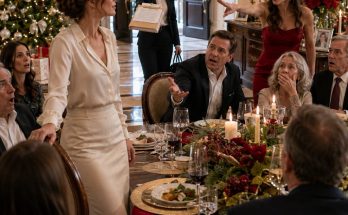
“Fix your collar, or I’ll rip those ridiculous medals right off your chest,” my mother hissed.
Her manicured fingers dug violently into my shoulder.
I did not flinch.
The hotel lobby smelled like champagne, polished mahogany, rain-soaked wool, and the white lilies Chloe had ordered by the thousand because she wanted her Virginia wedding to look “presidential.”

My dress blues were immaculate.
My medals were aligned.
My spine was straight.
As a United States Army Major General, I had survived roadside IEDs in Fallujah, grueling political warfare in Washington, and rooms full of men who smiled while sharpening knives under conference tables.
But nothing had ever prepared me for the sheer malice radiating from Beatrice Vance.
My mother.
Her hand remained on my shoulder.
Too hard.
Too familiar.
For a second, I was not fifty-one years old with stars on my uniform.
I was twelve again, standing in the hallway while Beatrice adjusted Chloe’s recital bow and told me to stop blocking the mirror.
Then the weight of the medals settled against my chest.
Steel.
Ribbon.
History.
Proof.
I reached up and removed her hand from my shoulder.
Carefully.
Quietly.
“Do not touch my uniform again.”
Beatrice’s mouth tightened.
“You always were dramatic.”
That was her favorite word for boundaries.
Dramatic.
I am Jordan Vance.
For six agonizing years, my family treated me like a ghost, completely cutting me off after a blast nearly took my hearing.
Not after I failed.
Not after I disgraced them.
After I survived.
Fallujah did not take my life, but it took enough for my family to decide I was inconvenient.
One moment, I was their military daughter, useful for Christmas cards and campaign dinners.
The next, I was the damaged one who needed subtitles in crowded rooms and sometimes missed the first word in a sentence if people spoke behind me.
Beatrice hated repeating herself.
My father, Charles Vance, hated discomfort.
My younger sister, Chloe, hated anything that took attention from her.
So they stopped calling.
Not all at once.
That would have been honest.
First, they said holidays would be too loud.
Then family dinners became complicated.
Then birthdays passed with flowers from assistants.
Then the flowers stopped too.
For six years, I learned how quiet family can become when they decide your pain embarrasses them.
Then, out of nowhere, came Chloe’s wedding invitation.
Cream cardstock.
Embossed gold lettering.
A watercolor sketch of the country club chapel.
No note of reconciliation.
No apology.
Just a handwritten warning across the bottom.
Behave.
I stared at that word for a long time.
Behave.
As if I were a dog.
As if I were a scandal.
As if I had not spent my entire adult life under command structures stricter than anything Beatrice could imagine.
I placed the invitation in my desk drawer.
Then took it out.
Then placed it back again.
For three days, I considered not going.
Then I looked at the uniform hanging in my closet.
Not the one for ceremonies in Washington.
The one I had worn when families of fallen soldiers needed to see that someone had stood with their sons and daughters until the very end.
I decided I would attend.
Not because Chloe deserved me there.
Because I deserved to walk into that room without hiding.
The country club in Virginia sat behind iron gates and manicured hedges, all white columns, polished glass, and staff moving quickly enough to remain invisible.
Rain had begun before I arrived.
Thin, cold, persistent.
The kind of rain that turns expensive hair into strategy.
Inside, the lobby glowed gold.
Chandeliers.
Marble floors.
White lilies everywhere.
A string quartet warming up behind the ballroom doors.
Guests in evening gowns and dark suits spoke in careful voices that rose half an octave whenever someone more important entered.
I checked in at the reception table.
The young woman searched the seating chart.
Her smile faltered.
“Major General Vance?”
“Yes.”
She looked down again.
Then her cheeks went pink.
“I’m sorry. Your card says…”
She hesitated.
I extended my hand.
She gave it to me.
J. Vance, staff overflow.
That was the first artifact.
My family had not made a mistake.
Mistakes do not arrive in calligraphy.
I slipped the card into my pocket.
Next to the wedding invitation marked Behave.
The second artifact.
The third was a folded commendation letter I had carried since Fallujah.
Not because I needed proof of my service.
Because my family had spent six years pretending I had none.
The letter was from a command that knew exactly what happened during the blast.
Exactly which convoy I pulled out.
Exactly which soldiers reached safety because we refused to leave anyone behind.
I did not carry it for pride.
I carried it because memory becomes armor when people rewrite you.
A waiter escorted me toward the back of the ballroom.
Not just the back.
The kitchen doors.
The swinging metal doors opened and closed behind my assigned chair, pushing out gusts of garlic, butter, hot oil, and dishwasher steam.
A server bumped my chair twice before the salads were served.
He apologized both times.
The people who placed me there did not.
At the head table, Chloe glittered beneath chandeliers.
Diamonds on her throat.
Diamonds at her wrists.
Diamonds catching in her veil like she had been dipped in approval.
Beatrice sat beside her, wearing silver silk and triumph.
My father sat with one hand wrapped around a whiskey glass.
He saw me.
Then looked away.
That was his specialty.
Looking away at exactly the moment courage was required.
The groom stood beside Chloe.
Logan Mercer.
Decorated combat veteran.
I recognized the posture before I knew the name.
Not the parade-ground performance.
The other kind.
The stillness that remains in some bodies after they have learned where explosions come from.
Logan had the composed face of a man who had seen enough to dislike noise, but he smiled when Chloe touched his arm.
He looked happy.
Or he wanted to be.
That distinction mattered later.
I had never met him.
Chloe had never bothered introducing us.
The meal began.
People toasted.
Chloe laughed.
Beatrice floated from table to table collecting admiration like tribute.
Nobody came to mine.
That was fine.
I had learned to eat alone in worse places.
Then Chloe grabbed the microphone.
She stood at center stage, diamonds catching the chandelier light.
Her smile was sweet enough to poison tea.
“I’m so thrilled everyone made it,” Chloe cooed, her eyes locking onto my corner with predatory glee. “Even my big sister Jordan managed to drag herself away from whatever backwater gate she’s currently guarding.”
A wave of snickers rippled through the high-society crowd.
Not all of them.
Enough.
My hand tightened around the water glass.
The ice clicked once.
Beatrice stood from the head table, raising her champagne flute with a cruel smirk.
“She’s always been our family’s greatest disgrace,” she said, “but hey, at least the guard dog showed up on time tonight!”
The entire room erupted into roaring laughter.
Humiliation burned hot in my chest.
Not because I believed them.
Because a part of me still remembered wanting them not to be like this.
That is the cruelest trick of family.
Even after they show you the knife, some small child inside you hopes they brought a bandage.
The laughter grew.
A man near the bar raised his phone.
One of Chloe’s bridesmaids covered her mouth and giggled.
Two older women looked down at their napkins.
The waiter behind me froze with a tray of champagne flutes.
A young server near the kitchen door stared at my medals, then at Beatrice, confused by the shape of the insult.
Nobody moved.
That silence around the laughter said more than the laughter itself.
Complicity rarely needs volume.
I stood up.
My chair legs scraped the floor.
The sound cut cleanly through the ballroom.
I adjusted nothing.
I apologized for nothing.
My dress blues were immaculate.
My hearing aid was discreet behind my right ear.
My medals did not need their permission to exist.
“The people I guard,” I said, my voice cutting through the noise like steel, “hold ranks higher than anyone breathing in this room.”
The laughter died unevenly.
First near the kitchen.
Then near the bar.
Then at the head table.
Chloe’s smile froze.
Beatrice lifted her chin.
My father closed his eyes.
But Logan changed most.
His face went pale.
He looked at my uniform.
My ribbons.
My stars.
My name.
His hand slowly left Chloe’s.
For a second, I saw memory hit him.
Not recognition from society pages.
Not surprise.
Memory.
Then Logan broke away from Chloe’s grasp.
He shoved a chair aside so hard the silverware jumped.
He crossed the ballroom fast, eyes wide with a mixture of terror and reverence.
His hand rose as he reached me.
For one split second, Beatrice smiled like she thought the groom was coming to throw me out.
Instead, Logan stopped three feet away.
His hand snapped up.
Not a fist.
Not a strike.
A salute.
Clean.
Sharp.
Instinctive.
His voice shook.
“Ma’am,” he said. “Major General Vance.”
The ballroom died.
Not quieted.
Died.
Chloe whispered, “Logan, what are you doing?”
He did not look at her.
His eyes remained on me.
“Captain Logan Mercer,” he said.
Then he corrected himself with a bitter half laugh.
“Former Captain. 2nd Battalion.”
I knew then.
Not his face.
Not immediately.
But the unit.
Fallujah.
The eastern route.
The smoke.
The radio failure.
The second vehicle burning.
A young officer shouting for extraction through static before the blast took half my hearing and every illusion I had left about clean endings.
“Mercer,” I said.
His throat moved.
“You got us out.”
The room was silent enough for every word to land.
“Logan,” Chloe whispered again, sharper now. “Stop it.”
He turned slowly toward his bride.
“You told me she was a disgraced gate officer.”
Chloe’s face lost color.
Beatrice’s champagne glass stopped halfway to her mouth.
Logan looked from Chloe to Beatrice.
“This woman pulled my unit out of a kill zone after the Fallujah blast you just mocked.”
My father opened his eyes.
Too late.
Logan’s voice grew harder.
“Do you understand what you just laughed at?”
Chloe reached for him.
“Baby, I didn’t know.”
He stepped back before she touched him.
“You didn’t know what? Her rank? Her service? Or the fact that humiliating a decorated officer in front of my family would be a problem?”
Chloe looked around the room, realizing the audience had shifted.
The guests who had laughed now looked uncomfortable.
The ones who had not laughed looked vindicated.
The reporter hired to cover the wedding for society pages had lowered her champagne and raised her phone.
Beatrice moved first.
“Logan, darling,” she said, her voice taking on the gentle tone she used when manipulating donors, “this is a family misunderstanding.”
Logan looked at her.
“No, ma’am. This is character.”
Something in Beatrice’s face cracked.
She was not used to men refusing her.
Especially not men in tuxedos she had approved for her daughter.
Chloe grabbed his arm.
“Don’t you dare embarrass me.”
He looked down at her hand.
Then at her face.
“You already did.”
Then he removed his wedding ring.
Gasps spread through the ballroom like flame through dry grass.
Chloe’s mouth opened.
No sound came out.
Logan placed the ring on the nearest table.
“I want an annulment.”
The word hit harder than a shout.
Annulment.
Not divorce.
Not separation.
Annulment.
A declaration that the marriage should never have existed.
Chloe slapped him.
That sound brought the room back into motion.
A bridesmaid screamed.
Beatrice lunged toward Chloe.
My father stood.
Logan did not touch his cheek.
He simply looked at Chloe with a sadness that seemed older than the marriage by decades.
“You lied about your own sister to make cruelty easier,” he said. “I cannot build a life with that.”
Then he turned to me.
“Ma’am, I’m sorry.”
He should not have apologized.
Not to me.
But I nodded once.
It was the only mercy I had available.
By midnight, the wedding was over.
The cake remained uncut.
The champagne toast never happened.
Guests left in clusters, whispering beneath umbrellas as valet attendants scrambled to bring cars forward.
Chloe locked herself in the bridal suite and sobbed so loudly the corridor staff pretended not to hear.
Logan contacted his attorney before he changed out of his tuxedo.
His family left with him.
My father sat alone in the bar with a glass of whiskey he did not drink.
Beatrice did what Beatrice always did when consequences arrived.
She found someone else to blame.
I was standing in the hotel lobby near a polished mahogany table, holding my cap under one arm, when she came for me.
Her heels struck the marble like gunfire.
“This is your fault,” she hissed.
I turned slowly.
The lobby was still full of witnesses pretending not to watch.
Hotel staff near the desk.
Two bridesmaids by the staircase.
A groomsman waiting for a rideshare.
The wedding planner speaking into a headset with the expression of a woman trying not to cry until she got paid.
My mother’s face was white with rage.
“You ruined your sister’s life.”
“No,” I said. “Chloe made a speech.”
“She was joking.”
“She lied.”
“You provoked Logan.”
“I stood up.”
Beatrice stepped closer.
“You always do this. You drag your uniform into every room and expect people to bow.”
I looked at her.
“For six years, I stayed out of your rooms.”
“Not long enough.”
That sentence landed quietly.
I absorbed it.
Not because I deserved it.
Because I wanted to remember it accurately.
Memory matters.
Then my mother raised her hand.
She tried to slap me in the hotel lobby after her precious daughter’s wedding ended in disaster.
She blamed me for the groom demanding an immediate annulment.
Instead of taking the hit, I grabbed her wrist.
The slap never landed.
Her fingers trembled inside my grip.
For the first time in my life, Beatrice looked physically startled by my refusal to be struck.
I reached into my coat with my free hand.
Then I pulled out the single document I had been carrying all night and dropped it on the polished table between us.
A certified copy.
Blue seal.
Raised stamp.
Six pages.
Beatrice looked down.
Her face drained completely white.
Because the first line did not mention Chloe’s wedding.
It mentioned the seven-year secret she had buried under my name.
The document was not a speech.
It was worse.
A certified copy of the Vance Family Trust amendment, signed seven years earlier by my grandfather before he died.
Beat three came when Beatrice read the clause aloud without meaning to.
“If my daughter Beatrice or granddaughter Chloe attempts to discredit, isolate, or financially benefit from Jordan Vance’s military disability, Jordan becomes sole controlling trustee.”
My father staggered back.
I had not heard him approach.
Chloe appeared at the top of the lobby stairs in her torn veil, mascara streaked down her face.
“What does that mean?” she screamed.
I looked at my mother’s wrist still trapped in my hand.
“It means when you cut me off after Fallujah, you thought I lost the family.”
Then Logan stepped into the lobby behind Chloe, his annulment attorney already on speakerphone.
“It means,” he said coldly, “they lost it instead.”
My mother lunged for the paper.
I let go of her wrist and slid the document to the hotel manager, who had been standing there pretending not to breathe.
He took it like it might explode.
The second climax came when my father whispered, “Beatrice… the estate accounts.”
Her eyes flew to his.
Because she understood before anyone else did.
The country club membership.
The Virginia house.
The investment account funding Chloe’s wedding.
All of it had been tied to a trust she never controlled outright.
And because she had just mocked my service publicly, on video, in front of the groom whose life my unit had helped save, the buried clause had teeth.
I picked up my cap.
“Behave,” I said softly.
Then my mother screamed.
Not grief.
Not regret.
Rage.
The ugly kind.
The kind that rises when a person realizes they did not merely lose control of the room.
They lost ownership of the story.
“You knew?” Beatrice shrieked.
“Yes.”
“For how long?”
“Since three weeks after Grandfather died.”
My father stared at me.
“You never said.”
“You never called.”
That silenced him.
Only for a second.
But I enjoyed the second.
Chloe rushed down the stairs, veil dragging behind her.
“You can’t do this. That trust pays for the house.”
“I know.”
“My wedding—”
“I know.”
“My life—”
I turned toward her.
“Chloe, your life was funded by a trust created by a man who knew exactly who your mother was.”
She flinched.
“Grandfather loved me.”
“He loved the version of you he hoped might become better.”
That was cruel.
It was also true.
My grandfather, Elias Vance, had been a difficult man.
Old Virginia money.
Old habits.
Old mistakes.
But he had been the only person in my family who visited me after Fallujah.
He came to Walter Reed with a cane, a navy overcoat, and a face that looked carved from regret.
He did not bring flowers.
He brought a legal pad.
“Your mother is telling people you are unstable,” he said.
I was still recovering then.
Still learning how to hear around the ringing in my right ear.
Still waking from dreams where smoke filled my mouth.
“What?”
“She says you are not yourself. That the blast changed you. That you should not be burdened with family matters.”
Family matters.
That was what Beatrice called money when she wanted it hidden.
Grandfather sat beside my bed.
“She asked me to revise the trust.”
My head ached.
“Let me guess. Away from me.”
His mouth tightened.
“Yes.”
I looked toward the window.
Rain blurred the glass.
I remember thinking Virginia rain looked too gentle after desert dust.
“What did you say?”
“I told her she had mistaken injury for weakness.”
Then he placed his hand over mine.
It was the only tender thing I remember him doing.
“I failed your mother,” he said. “I may fail to fix it. But I will not let her profit from abandoning you.”
Two weeks later, he amended the trust.
Six months later, he died.
Beatrice assumed she had won because the visible structure remained the same.
She controlled the house.
The accounts paid expenses.
Chloe enjoyed the benefits.
My father did not ask questions because not asking questions was how he preserved comfort.
But the amendment waited.
Seven years.
Silent.
Patient.
More disciplined than any of them.
It did not activate because they were rude.
It did not activate because they excluded me.
It activated upon documented attempts to discredit, isolate, or financially benefit from my disability.
For years, I let it sit.
Not because I was forgiving.
Because I was busy living.
I had commands.
Hearings.
Deployments.
Policy fights.
Therapy.
A life larger than the rooms that had rejected me.
But when Chloe’s invitation arrived with Behave written across the bottom, I called my attorney.
When my seating card placed me at staff overflow, I photographed it.
When my mother threatened to rip medals from my chest, I made a note.
And when Beatrice and Chloe mocked my service in front of a ballroom full of cameras, the clause finally had what lawyers love most.
Evidence.
The hotel lobby became very still.
Logan’s attorney spoke through the phone, tinny and sharp.
“Mr. Mercer, do you want me to proceed with the annulment filing tonight?”
Chloe sobbed.
“Logan, please.”
He looked exhausted.
Not angry anymore.
Worse.
Done.
“Yes,” he said.
Beatrice turned on him.
“You self-righteous little soldier.”
Logan’s face hardened.
“Careful.”
I stepped slightly between them.
Not to protect Beatrice.
To prevent Logan from giving her anything useful.
“Don’t,” I said quietly.
He heard the command under it.
He nodded once.
“Ma’am.”
That word landed in the lobby like another slap Beatrice could not return.
My father finally found his voice.
“Jordan, this is too much.”
I looked at him.
He looked older than he had at dinner.
Smaller too.
Maybe he had always been small, and I had needed distance to see it.
“You watched her threaten my uniform.”
His mouth opened.
“You watched Chloe mock my service.”
He closed it.
“You watched them cut me out for six years.”
His shoulders dropped.
“You watched because watching has always cost you less than choosing.”
That hurt him.
Good.
Not because I wanted pain for sport.
Because some truths are anesthetic only when spoken late.
My attorney arrived twenty minutes later.
I had called her from the hallway after Chloe’s speech, before Logan crossed the ballroom.
Colonel-turned-civilian counsel Patricia Ames did not run.
She never ran.
She arrived in a dark coat, took in the lobby with one sweep, and placed her briefcase on the mahogany table.
“Mrs. Beatrice Vance,” she said, “you have been formally noticed.”
Beatrice’s eyes narrowed.
“Noticed for what?”
“Immediate review and suspension of discretionary distributions under the Vance Family Trust pending trustee transition.”
Chloe screamed, “You can’t suspend my accounts.”
Patricia looked at her.
“I can’t. The trust can.”
The hotel manager chose that moment to step back.
Wise man.
Beatrice grabbed my father’s arm.
“Charles, say something.”
He looked at her.
Then at me.
Then at Chloe.
He said nothing.
The family talent continued.
The next morning, the wedding disaster had spread through three overlapping worlds.
Virginia society.
Military circles.
Corporate legal circles.
The first video posted before breakfast.
Chloe’s joke.
Beatrice’s guard dog toast.
My response.
Logan’s salute.
The ring removal.
By noon, someone had matched my name to public military records.
By evening, the headlines had sharpened.
Bride’s Family Mocked Major General Sister Before Groom Demanded Annulment.
They got some details wrong.
They always do.
But the heart of it was true.
Chloe called me nineteen times.
Beatrice called eleven.
My father called once.
I answered none.
Patricia handled the trust.
Logan handled the annulment.
The hotel handled damage control.
I returned to Washington and put my uniform back in its place.
For three days, I heard my mother’s scream in my head.
Then I stopped.
Not completely.
But enough.
The trust transition took months.
Beatrice challenged the amendment.
Chloe joined.
They claimed confusion.
Emotional distress.
Family misunderstanding.
They claimed my disability had never been a factor.
Then Patricia played the wedding video in the hearing.
Beatrice’s face on screen.
“She’s always been our family’s greatest disgrace, but hey, at least the guard dog showed up on time tonight!”
Chloe’s voice.
“Whatever backwater gate she’s currently guarding.”
My mother’s earlier threat, captured on lobby security audio because hotels record more than arrogant people remember.
“Fix your collar, or I’ll rip those ridiculous medals right off your chest.”
Then the invitation.
Behave.
Then the seating card.
J. Vance, staff overflow.
Then six years of unanswered emails.
Three holiday exclusion texts.
One note from Beatrice’s assistant stating that “Mrs. Vance prefers no references to Jordan’s service-related condition at family events.”
Evidence does not get tired.
Evidence does not forgive because someone cries.
The court upheld the amendment.
I became controlling trustee.
The Virginia house did not vanish from under them overnight.
That is not how adults handle power.
I did not throw my parents onto the street because cruelty had taught me what not to become.
But I did remove Beatrice’s discretionary control.
I terminated Chloe’s wedding reimbursements.
I froze the foundation account she had used for “family appearance expenses.”
I ordered an audit.
That audit found more than arrogance.
It found transfers.
Event deposits.
Personal luxuries coded as charitable outreach.
A consulting fee paid to one of Chloe’s friends for “veteran engagement strategy,” though no veteran had ever been engaged.
That one made Patricia smile.
Not kindly.
Beatrice had spent years using military language while trying to erase me from the family.
The irony was almost generous.
Chloe’s annulment became final.
Logan never spoke to her again outside counsel.
He wrote me once.
A letter.
Handwritten.
No drama.
No attempt at closeness.
He thanked me for what I had done in Fallujah and apologized for not knowing sooner who he had married.
I replied with two sentences.
You could not know what was hidden from you. Live clean.
That was enough.
My father requested lunch six months after the wedding.
I agreed because Patricia said trust matters required one practical conversation.
We met at a quiet restaurant in Alexandria.
He looked tired.
Not beautifully remorseful.
Just tired.
“I failed you,” he said before the waiter brought water.
I looked at him for a long time.
“Yes.”
His eyes reddened.
“I thought keeping peace was the best I could do.”
“No,” I said. “It was the easiest you could do.”
He nodded.
That surprised me.
“I know that now.”
I did not comfort him.
He had my mother for comfort.
Or he had chosen her for so long that comfort was no longer available anywhere else.
“I don’t expect forgiveness,” he said.
“Good.”
He flinched.
Then nodded again.
We discussed the trust.
The house.
The audit.
The foundation.
At the end, he asked if I would ever come for Christmas.
I stood.
“No.”
His face fell.
I added, “Maybe one day I will meet you for coffee. That is what you have earned so far.”
He accepted that.
Another surprise.
Maybe old men learn when the bill finally arrives.
Beatrice never apologized.
Of course she didn’t.
She sent letters through lawyers.
Then through friends.
Then through a priest she had not visited in fifteen years.
Finally, she sent a box to my office.
Inside was the original seating chart from Chloe’s wedding.
My name at staff overflow circled in red.
No note.
Just the chart.
I called Patricia.
She said, “That is either intimidation or stupidity.”
“Can it be both?”
“With your mother? Certainly.”
We added it to the file.
Chloe moved out of the Virginia house after the trust cut her discretionary distributions.
She posted vague quotes about betrayal, jealousy, and strong women surviving toxic relatives.
I almost admired the efficiency.
In her version, she was always the bride.
Never the woman holding the microphone.
Never the person who laughed.
Never the sister who wrote Behave.
But versions are not verdicts.
I had the documents.
I had the video.
I had my life.
One year after the wedding, I attended a ceremony at a military hospital.
A young captain receiving recognition asked to meet me.
He had partial hearing loss from an explosion.
He looked embarrassed by the hearing aid.
I told him mine had better battery life than most colonels.
He laughed.
Then he asked whether people ever treated me differently after injury.
“Yes,” I said.
“What do you do?”
I thought of Beatrice.
Chloe.
The ballroom.
The lobby.
The trust document.
The slap that never landed.
“I let them reveal themselves,” I said. “Then I keep records.”
He grinned.
“That sounds like strategy.”
“It is.”
My mother tried to slap me in the hotel lobby after her precious daughter’s wedding ended in a massive disaster. She blamed me for the groom demanding an immediate annulment. Instead of taking the hit, I grabbed her wrist and dropped a single document on the table. Her reaction was absolutely priceless…
That is the version people repeat because it sounds satisfying.
The insult.
The salute.
The groom removing his ring.
The annulment.
The trust clause.
My mother’s scream in the lobby.
But the real story is not about revenge.
It is about proof.
For six years, my family tried to reduce my service to embarrassment.
They thought hearing loss made me less military.
Less useful.
Less visible.
Less theirs.
They were wrong.
The blast took part of my hearing.
It did not take my memory.
It did not take my rank.
It did not take the lives we pulled out of Fallujah.
It did not take my grandfather’s final act of protection.
And it did not take my right to stand in a room full of people laughing at me and speak in my own voice.
I still have the invitation.
Cream cardstock.
Gold lettering.
Behave.
It sits in a frame in my office beside the commendation letter and the seating card marked staff overflow.
People ask why I keep them.
I tell them they are operational reminders.
Know the terrain.
Identify hostile actors.
Preserve evidence.
Never surrender ground you earned.
And above all, never mistake a family’s rejection for a command.
Beatrice wanted me to behave.
So I did.
I stood straight.
I kept my voice calm.
I stopped the strike.
Then I let the truth follow the chain of command.