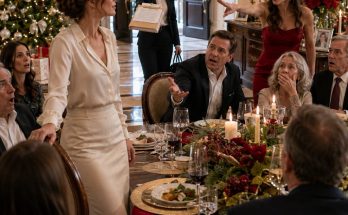
My Son Showed Up At My Base, Face Destroyed, Jaw Broken. “Dad, My Stepmom’s Family Did This.” 17 People Beat Him On Christmas Eve. My Ex-Wife Filmed It. I Train Special Forces To Kill. I Asked My Current Class, “Who Wants Extra Credit?” 32 Hands Went Up. I Gave Them Addresses. “Remember, No Mercy…” Within 10 Days, All 17 Went Missing. My Ex-Wife Checked Into Psychiatric Care. Her Sheriff Father Called, “I Know You Did This…” I Just Said, “Prove It… Crybaby…”
### Part 1
Christmas morning on Fort Liberty has a sound most people never notice unless they have spent half their life on a military base.
It is quiet, but not peaceful.
The roads are too clean. The pine trees stand too straight. Somewhere far off, a generator hums behind a locked fence, and the cold air smells like wet grass, diesel, and coffee from the twenty-four-hour station near the gate.
I was standing in my kitchen at 6:18 a.m., holding a mug I had forgotten to drink from, when my phone rang.
The caller ID said Main Gate Security.
That alone made my chest tighten.
“Colonel Sutton?” the young MP said.
“Yes.”
“Sir, there’s a civilian here asking for you. Says he’s your son.”
My coffee went cold in my hand.
“My son has gate access.”
There was a pause. Not a long one, but long enough for my body to understand before my mind did.
“Sir,” the MP said, softer now. “You need to come down here.”
I did not ask another question. I grabbed my jacket, my keys, and drove through the gray morning with my headlights cutting across empty streets. I remember the little Christmas wreaths tied to the lamp posts. I remember thinking some private’s wife had spent time on those red bows, trying to make the base feel like home.
Then I saw my son.
Jake was standing just inside the gate with two MPs beside him, but standing was too generous a word. He was folded forward, one arm wrapped around his ribs, his face swollen so badly that for one second I did not recognize him.
That one second still haunts me.
Then he lifted his head.
“Dad.”
The word came out wet and broken.
I was out of the truck before I remembered stopping it. My boots hit the pavement hard. One of the MPs tried to tell me something, but I brushed past him and caught Jake just as his knees gave out.
He collapsed against me like he was six years old again, except this time his blood soaked through my shirt.
His jaw hung wrong. One eye was nearly closed. Purple bruising spread down his neck. His lips were split, and his fingers were trembling against my sleeve as if he was still trying to hold onto something.
“Who did this?” I asked.
He tried to answer. His breath hitched. His eyes rolled with pain.
“Mom’s…” he whispered.
I went still.
“What?”
“Her family,” he said, each word dragging broken glass through his mouth. “All of them.”
Then he passed out in my arms.
I carried him myself.
The MPs shouted for medical. A siren chirped somewhere behind me. I do not remember the run to the emergency entrance clearly. I remember the weight of him. I remember the smell of blood and cold air. I remember looking down at his face and seeing the same boy who used to fall asleep on my chest after cartoons.
Only now someone had tried to erase him.
At the hospital, the doctors moved fast. I stood back because I knew better than to interfere, but every part of me wanted to tear the room apart. They cut off his hoodie. His ribs were mottled black and red. There were shoe prints on his side.
Not bruises shaped like accidents.
Shoe prints.
A trauma surgeon named Dr. Amelia Ross looked at me once and did not waste time with soft words.
“Broken jaw. Fractured orbital bone. At least three cracked ribs. Possible internal bleeding. Concussion. We’re taking him back.”
I nodded.
My hands were steady.
That worried me more than if they had been shaking.
People think rage is loud. Sometimes it is. Sometimes it screams and throws chairs and makes threats in crowded rooms.
Mine went quiet.
Mine took inventory.
When they wheeled Jake away, I stood in the hallway with his blood drying on my shirt. Nurses moved around me. A Christmas song played faintly from a radio at the front desk, something cheerful about bells and snow.
My phone buzzed.
Unknown number.
I almost ignored it. Then I saw the thumbnail.
Jake’s car.
In a driveway I knew.
Rebecca’s house in Pinehurst.
My ex-wife had moved there after she married Wayne Dolan, a man with thick hands, a louder laugh than sense, and a family that treated the county like it had been printed with their last name across it.
The message contained one video.
Seventeen minutes long.
For a moment I stood there staring at the screen, hearing only the beep of machines behind closed doors and the thud of my own heart.
Then I pressed play.
And by the time the first scream came through the tiny speaker, I knew Christmas was over. I just did not yet know how many lives were about to be destroyed.
### Part 2
The video started crooked.
Whoever filmed it was standing near the staircase inside Rebecca’s house, half-hidden behind garland and cheap gold ribbon. The living room looked warm in the recording. Yellow lamps. A fake tree. Stockings on the mantel. A tray of cookies on the coffee table.
Jake stood near the front door holding two wrapped presents.
One blue.
One silver.
His shoulders were tense, but he was trying to smile.
That was Jake. Even when he was uncomfortable, even when he knew better, he tried to be decent.
“Hey,” he said in the video. “Merry Christmas.”
Rebecca came into frame wearing a red sweater and earrings that flashed when she moved. She looked older than the last time I had seen her, thinner around the mouth, but the smile was the same one I remembered from court hearings.
Sweet on the surface.
Rotten underneath.
“My baby came home,” she said, arms open.
Jake hesitated.
That hesitation gutted me.
He wanted a mother so badly that he ignored the warning in his own body.
He stepped forward. She hugged him with one arm and looked over his shoulder.
The front door closed.
A lock clicked.
Jake turned his head.
“Why’d you lock it?”
Wayne Dolan stepped into view from the kitchen. He was a big man, heavy in the chest, with a belt buckle the size of an ashtray and a grin that did not reach his eyes.
“Cold outside,” Wayne said.
Then more people entered.
At first, two. Then four. Then more.
Men from the hallway. Women from the dining room. A cousin I recognized from old custody pickups. Wayne’s brother Spencer, with a pawnshop tattoo on his forearm. Rebecca’s father, Sheriff Chester Dolan, was not there, but his shadow was in every face in that room.
Seventeen people.
I counted them once.
Then again.
Then a third time.
Jake backed toward the door.
“What’s going on?”
Rebecca stepped away from him.
No one answered.
Wayne hit him first.
A short punch to the stomach. Jake folded. Someone grabbed his arms. Someone laughed. The silver present hit the floor and slid under the coffee table.
I stopped breathing.
Not because I had never seen violence. I had seen more of it than any man should. I had seen men fall in dust, in alleys, in rooms that smelled like cordite and fear.
But watching your child take a punch while his mother stands there smiling is a different kind of war.
Jake tried to defend himself. He did not know how. He had taken one self-defense class because I insisted, but Jake was not built for cruelty. He shoved one man away. Another struck him from the side.
Rebecca’s voice floated through the video.
“That’s what you get for thinking you’re better than us.”
Jake shouted something I could not make out.
Then I saw it.
His backpack.
One of the women, a thin blonde with sharp elbows, snatched it from beside the door and carried it toward the hallway.
Jake saw her too.
“No,” he yelled. “Don’t touch that.”
That was the first clue.
Not the beating. Not the insults. Not Wayne’s fist.
The backpack.
Whatever this was, it was not just anger.
They wanted something.
The video shook as the person filming moved. For two seconds, the lens caught a mirror over the mantel. In it, I saw the filmer’s hands.
Not Rebecca’s.
Young hands.
Dark nail polish.
A silver ring shaped like a moon.
Then the camera turned back to Jake as Spencer kicked him hard enough to make the sound distort. My son’s head snapped sideways. Blood hit the white rug.
Rebecca laughed.
Actually laughed.
I watched the full seventeen minutes.
Then I watched it again.
By the third time, I had stopped feeling like a father and started thinking like the man the Army had built out of me.
Names.
Faces.
Positions.
The angle of the room.
Who struck him.
Who blocked the door.
Who took the backpack.
Who only watched.
Watching was not innocence.
The doctors came out after the third viewing. Jake was sedated. They had stabilized him. Surgery would wait until the swelling came down, but he was alive.
Alive.
That word was supposed to comfort me.
It did not.
I called the Judge Advocate General’s office first. Then I called a federal contact whose number I had never used for personal reasons. I sent the video through secure channels, along with a message.
My son was assaulted by seventeen people at this address. Local sheriff is family-connected. Evidence attached. Preserve chain of custody.
After that, I went to Jake’s room.
He looked smaller under the white blanket. His face was wrapped. Tubes ran from his arm. The monitor beside him beeped with steady indifference.
I sat down and took his hand carefully.
“I’m here,” I said.
His eyelids fluttered.
“Dad,” he mumbled.
“You’re safe.”
His fingers moved against mine.
“Backpack,” he whispered.
I leaned closer.
“What about it?”
His swollen eye opened just enough for me to see terror inside it.
“They took it,” he breathed. “But they didn’t find the copy.”
Before I could ask him what copy, a nurse appeared in the doorway, pale and stiff.
“Colonel Sutton,” she said. “There’s a sheriff here to see you.”
And just like that, I knew the wolves were not waiting in Pinehurst.
One of them had walked straight into my son’s hospital.
### Part 3
Sheriff Chester Dolan filled the doorway like he owned the hospital.
He was tall, wide, and soft in the middle, with a gray mustache trimmed too neatly and a uniform stretched tight across his stomach. His badge caught the fluorescent light when he shifted his weight.
I had known Chester for thirteen years.
I had never once trusted him.
When Rebecca and I divorced, he had sat behind her in court every day, staring at me like the custody judge was just a formality and family blood would settle the matter afterward. He had believed a soldier who was gone half the year could not beat a mother with tears in her eyes.
He was wrong.
Jake had been six then. He used to hide toy soldiers in my boots before I deployed so I would “have backup.”
Rebecca left anyway.
Wayne Dolan was already waiting.
She fought for custody, but even her own lawyer flinched when my attorney produced records, messages, and witnesses. Rebecca did not want motherhood. She wanted a monthly payment and a victory over me.
She got neither.
Now Chester looked past me at Jake’s bed.
“Well,” he said, “looks like the boy got himself into something.”
I stood.
The chair legs scraped the tile.
“He was beaten by seventeen people in your daughter’s house.”
Chester’s face did not move.
“That so?”
“I have the video.”
His eyes flicked to mine.
There it was. Not surprise. Calculation.
“Videos can be misleading,” he said.
“So can badges.”
His jaw tightened.
He stepped into the room, but only one pace. Men like Chester understood lines even when they pretended not to.
“I’m here in an official capacity.”
“No, you’re not.”
“This happened in my county.”
“This is a federal military hospital. You have no jurisdiction here.”
“My daughter says your boy came into her home threatening people.”
I looked at Jake.
At the wires.
At the bruises.
Then I looked back at Chester.
“Your daughter lies badly when she’s scared.”
Chester’s hand shifted near his belt.
It was not enough to be called drawing. Just enough to be called a reminder.
I stepped closer until he had to raise his chin.
“I have spent my adult life teaching controlled men how not to become monsters,” I said quietly. “Do not come into my son’s room and test whether I remember my own lessons.”
For the first time, Chester Dolan looked uncertain.
Only for a second.
Then the sheriff came back over his face.
“You better be careful, Colonel. A man with your background, your temper, your access to soldiers… people might start asking questions if my family gets harassed.”
“Your family attempted murder.”
“Big accusation.”
“Big video.”
He smiled then. A small ugly thing.
“Maybe it disappears.”
I let the silence sit.
Behind him, a nurse stopped walking. She had heard it. Chester realized that at the same time I did.
I smiled back.
“Thank you,” I said.
“For what?”
“For making the threat in front of a witness.”
The nurse looked down fast and pretended to read a chart.
Chester’s face darkened.
“You think you scare me?”
“No,” I said. “But I should.”
He left after that, boots hitting the hall too hard.
I stood at the doorway until he turned the corner. Then I pulled out my phone and made three calls.
The first went to General Raymond Cross, my base commander. He and I had served together long enough that we did not waste time pretending not to understand each other.
“Ray,” I said. “My son was attacked. Local law enforcement is compromised. I need this clean.”
There was a pause.
“How bad?”
“Bad enough that I’m calling you before I do something I can’t take back.”
His voice changed.
“Come to my office in twenty minutes.”
The second call went to Major Helen Voss in JAG. She had the kind of calm that made guilty men start sweating.
“I need warrants, preservation letters, and a federal referral,” I said.
“Already saw the video,” she replied. “Who sent it?”
“I don’t know yet.”
“Find out. Whoever filmed it may be the key.”
The third call went to the training wing.
My current class had thirty-two students.
Rangers, SEALs, Raiders, Air Force Special Tactics, people who could read a room the way other people read weather. They were halfway through advanced unconventional operations. I had taught them that the hardest mission was not the one with the most weapons.
It was the one where your anger wanted to lead.
At 0900, I stood in front of them in a briefing room that smelled like burnt coffee, dry erase markers, and wet boots.
They rose when I entered.
“Sit down,” I said.
No one moved for half a second. They knew my voice.
Then they sat.
I played the video.
I did not introduce it. I did not explain. I let them watch my son walk into a trap with Christmas presents in his hands. I let them hear Rebecca laugh. I let them count the seventeen people.
When the screen went black, no one spoke.
I looked at them.
“That is my son,” I said. “He is nineteen. Engineering student. No criminal record. No history of violence. The people who did this are protected by a local sheriff. I will not ask any of you to break the law.”
A few eyes shifted.
I saw what they had expected.
Maybe what part of me had wanted.
“But I am assigning a voluntary evidence reconstruction exercise. Legal channels only. Open-source research, timeline building, witness identification, video enhancement, background checks through approved contacts, and preservation of anything that could disappear.”
I let my gaze move across the room.
“We are not going after bodies. We are going after lies.”
Every hand went up.
All thirty-two.
Not one hesitation.
I should have felt proud.
Instead I felt the dangerous relief of a man handing his anger to people trained to carry heavy things.
By noon, the room had become a war board. Photos. Maps. Names. Public records. Property transfers. Old arrest reports. Social media posts where the Dolans bragged too freely with beer cans in hand and stolen confidence in their smiles.
Then Sergeant Adam Kline, a quiet SEAL candidate from Kentucky, paused the video at minute 04:12.
“Sir,” he said, pointing at the screen. “That woman there. She isn’t hitting him.”
The frame showed the blonde carrying Jake’s backpack.
“She’s looking for something,” Adam said. “And she’s scared.”
I stepped closer.
On the screen, her mouth was half-open, as if she had just seen a ghost inside my son’s bag.
Then Adam zoomed in.
There, tucked beneath the tree, was the torn corner of a blue envelope.
Jake had not gone to Rebecca’s house only to deliver gifts.
He had carried something that made seventeen people decide beating him was safer than letting him leave.
### Part 4
I went back to Jake’s room with the blue envelope frozen in my mind.
The hospital had that late-morning brightness that makes everything look too clean to be real. Sunlight slid through the blinds and cut pale stripes across Jake’s blanket. Somewhere down the hall, a child was crying. A nurse laughed softly at the station, then stopped when she saw me pass.
People on base already knew.
They did not know the details, but bases are villages with fences. Word moves through them like smoke.
Jake was awake.
Barely.
His jaw was wired, and one side of his face looked like it belonged to someone else. Dr. Ross had warned me not to push him. She stood near the foot of the bed, arms folded, watching me with surgeon’s eyes.
“You get five minutes,” she said.
“I need two.”
Jake’s gaze found mine.
I sat beside him.
“You told me they took your backpack.”
His fingers twitched against the blanket.
“Yes,” he whispered.
“What was in it?”
His throat worked. Speaking hurt. Not speaking hurt worse.
“Papers.”
“What papers?”
His eye watered.
“Mom said… she had something to show me. About you.”
My stomach tightened.
Rebecca had always been good at using old wounds as bait.
“What about me?”
“She said you lied. Said you kept money from her. Said there was an account with my name on it.”
I did not move.
There was an account with Jake’s name on it. College money, started before he was born, protected from Rebecca during the divorce. It had paid his tuition at UNC. Every statement went to me and to the bank trustee.
Rebecca had no access.
“She wanted you to sign something?” I asked.
Jake blinked slowly.
“At first. Then I saw another folder.”
He swallowed, and I reached for the water sponge, touching it to his cracked lips.
He breathed through the pain.
“Names,” he said. “Veterans. Donations. Your picture.”
Dr. Ross shifted behind me.
I leaned closer.
“My picture?”
“Old photo. From ceremony. On a website.”
I knew the photo. Me shaking hands with a senator after a charity event I had attended once and regretted immediately because men in suits kept calling wounded soldiers “inspiring” while standing nowhere near the cost.
Jake’s hand moved weakly toward the bedside table. I followed his eyes.
His phone was there in a plastic evidence bag.
“The copy,” he whispered.
I picked it up.
“Password?”
He gave me six numbers with difficulty.
His birthday.
Of course.
I unlocked the phone. The screen was cracked. Dried blood sat in the edges like rust.
There was a draft email addressed to me.
No subject.
Attachment icons lined the bottom.
Photos of documents. Bank transfers. A screenshot of a website called Homefront Hearts Foundation. My photo on the front page. My name in a quote I had never given.
Colonel Victor Sutton believes every veteran deserves a second chance.
I read the sentence three times.
My son watched my face.
Rebecca had used me.
Not just my name. My service. My dead friends. Men who never came home. Men whose wives sat through folded flags and casseroles while people like Rebecca learned how to monetize sympathy.
The attached documents showed donation reports, grant applications, and signatures that looked close enough to mine to fool someone who wanted to be fooled.
Then I saw Jake’s signature too.
On forms dated when he had been away at school.
My vision narrowed.
Dr. Ross touched the rail of the bed.
“Colonel.”
I looked up.
She saw something in my face and did not finish.
Jake whispered again.
“They wanted my phone. I hid it under the couch when Wayne hit me. I grabbed it when I crawled out.”
I looked back at the screen.
The video.
The backpack.
The forged documents.
This was bigger than a Christmas beating. The beating was panic wearing boots.
“They knew you saw the files,” I said.
Jake closed his good eye.
“Mom said I should have stayed stupid.”
That sentence entered me like a blade.
I stepped into the hallway because I would not let him watch what it did to me.
Major Voss answered on the first ring.
“I’m sending you evidence of fraud,” I said. “Charity fraud, forged signatures, possibly federal grant theft. Rebecca and Wayne are involved. Maybe the whole family.”
“Send it now.”
“I need my son’s phone preserved.”
“I’ll have CID pick it up within the hour.”
I hung up and stared through the hospital window.
Outside, two young soldiers walked across the parking lot carrying wrapped gifts. One wore a Santa hat over his patrol cap. They were laughing about something that would not matter tomorrow.
My phone buzzed.
Adam Kline.
Sir, found Homefront Hearts corporate filings. Board members include Rebecca Dolan, Wayne Dolan, Spencer Dolan, and Sheriff Chester Dolan listed as community liaison.
Then another message came in.
Sir, website updated last night. Your name removed.
I looked at the time stamp.
11:43 p.m.
Minutes after Jake had been beaten.
They were already cleaning blood off more than the rug.
But they had missed one thing.
At the bottom of Jake’s draft email was an audio file.
The file name was simple.
Mom_confession_kitchen.m4a
I pressed play.
Rebecca’s voice came through soft and clear.
“If your father finds out, we all go down.”
Then Wayne’s voice answered.
“Then make sure the boy doesn’t leave with that phone.”
I stood in the hospital hallway with my son’s blood still under my fingernails and realized the Dolans had not made one mistake.
They had made hundreds.
And my thirty-two students were about to find every single one.
### Part 5
By evening, the training wing looked less like a classroom and more like the nerve center of a storm.
Whiteboards covered three walls. The first held the assault timeline, broken into seconds. The second held the charity fraud. The third held the Dolan family tree, which looked less like genealogy and more like a spiderweb built by criminals with matching last names.
Every name had a color.
Red for physical assault.
Blue for financial connection.
Yellow for witness.
Black for law enforcement compromise.
There were too many black marks.
The students worked in silence, except for the soft tapping of keyboards and the occasional scrape of a chair. No one joked. No one performed anger. That was why I trusted them.
Anger makes noise.
Discipline makes results.
Adam Kline stood at the financial board with Staff Sergeant Mia Ortega, a Marine Raider who had grown up in Tucson and could find hidden relationships in public records faster than most investigators could find their own passwords.
She pointed to a string of property transfers.
“Sir, Homefront Hearts collected donations for housing wounded veterans. The money went into three shell vendors. Two are registered to Wayne’s cousins. One is registered to a woman named Linda Haskins.”
“The blonde with the backpack,” I said.
Mia nodded.
“She is listed as volunteer treasurer. But look here.”
She handed me a printout.
Linda had filed bankruptcy eighteen months earlier. No assets. No steady income. Yet three months ago she had purchased a lake house through a holding company.
“Jake found this?” I asked.
“Looks like he found enough.”
Adam moved to the video board.
“At 02:31, Wayne says something after the first punch. We isolated it.”
He played the audio.
Wayne’s voice came through rough and low.
“Where’s the drive, college boy?”
I closed my eyes.
The flash drive.
That was why they kept hitting him after he was already down. They were not just punishing him. They were searching him.
“Did Jake mention a drive?” Mia asked.
“No.”
But I remembered the blue envelope under the tree.
Rebecca had told Jake there was something about me. He brought presents. Maybe he brought something else. Maybe he had planned to confront her quietly, then send me the evidence if she lied.
That was my son.
Still believing one honest conversation could save people who had sold their souls for comfort.
General Cross arrived just after 1900.
He did not enter like a commander inspecting a training event. He entered like a father walking into another father’s nightmare.
His hair was silver at the temples. His expression had not changed much since Baghdad, where I had once watched him carry a bleeding private across a street under fire because the medics were pinned down.
He studied the boards.
Then he looked at me.
“Tell me you’re staying legal.”
“I am.”
“Tell me again.”
“I am staying legal.”
He held my gaze a moment longer.
“All right.”
Major Voss came in behind him with two CID agents and a federal prosecutor on speakerphone. Suddenly the room changed. Not softer. Sharper.
What had been rage became a case.
The prosecutor, a woman named Denise Hart, listened without interrupting as Mia laid out the charity filings, Adam summarized the assault video, and another student named Brewer explained how deleted website pages had been archived before the Dolans wiped them.
When we finished, Hart said, “This is not local anymore.”
“No,” Major Voss said. “It isn’t.”
“Charity fraud, wire fraud, conspiracy, assault, obstruction, forged federal grant documents, impersonating a decorated officer for fundraising, possible misuse of sheriff’s office resources. I’ll need clean evidence and living witnesses.”
“Living?” Adam asked.
Hart’s voice cooled.
“Do not misunderstand me, Sergeant. I don’t need martyrs. I need defendants.”
That was when I realized everyone in the room had been waiting for that line.
Including me.
Because beneath all my discipline, there was still a version of me standing in that hospital hallway wishing the world had no laws.
I looked at my students.
“You heard her. We are building a case. Nobody touches anyone. Nobody threatens anyone. Nobody plays hero in a parking lot. We finish them in court, in public, where their mothers, pastors, neighbors, and business partners can see exactly what they are.”
Nobody objected.
But I could feel the disappointment in some corners of the room.
Not because they wanted violence.
Because after watching Jake crawl through blood, court felt too clean.
That night I drove to Pinehurst alone.
Not to confront anyone.
To look.
Pinehurst dressed itself well. Nice lawns. White fences. Porch lights glowing gold against the cold. The kind of town where people whispered about addiction and divorce but smiled hard enough to crack their teeth at church.
Rebecca’s house sat at the end of a cul-de-sac with two wreaths on the door and one dark stain on the porch boards.
Someone had scrubbed it.
Not well enough.
A local patrol car rolled slowly past while I stood on the sidewalk.
It stopped.
The window lowered.
A deputy I did not know leaned out.
“You lost, Colonel?”
I looked at him.
He looked too young to have earned the hatred in his voice.
“Just looking at Christmas decorations,” I said.
“Private property.”
“I’m on the sidewalk.”
“Sheriff says you ought to head back to your base.”
“Sheriff says a lot of things.”
The deputy’s hand tightened on the steering wheel.
For one second, I thought he might step out.
Then a porch light flicked on across the street.
An old woman in a blue robe stood behind her storm door, watching.
The deputy saw her too.
He drove away.
I stayed another minute.
Then my phone vibrated.
Unknown number again.
A text this time.
You don’t know the whole truth. Rebecca didn’t send the video. I did.
Below it was a photo.
The silver moon ring.
And one sentence that made the cold air feel suddenly thin.
I know where Jake hid the drive.
### Part 6
I did not answer the unknown number.
That was the first rule of wanting answers from someone afraid: do not chase too fast. Fear runs from pressure. It sometimes walks toward patience.
I took a screenshot, forwarded it to Major Voss, then drove back to base with both hands steady on the wheel.
Pine trees blurred past my headlights. The road between Pinehurst and Fort Liberty felt longer than usual, black and empty except for the occasional gas station glowing like a fish tank in the dark.
Rebecca had not sent the video.
That mattered.
For hours, I had imagined her filming Jake and sending it to me as a trophy. It fit the Rebecca I knew, or thought I knew. Cruel, dramatic, always wanting an audience.
But the mirror in the video had shown young hands. Dark nail polish. A silver moon ring.
Someone inside that room had risked everything.
Someone watched my son nearly die and chose, too late but not never, to send proof.
When I reached the hospital, Jake was asleep. Dr. Ross stood outside his room, reading a chart.
“You look like a man deciding whether to jump off a cliff,” she said.
“I’m deciding whether the cliff deserves it.”
She did not smile.
“You military men think that sounds charming.”
“It wasn’t meant to.”
“No,” she said. “It sounded honest.”
I looked through the glass at Jake.
“He’s nineteen.”
“I know.”
“He still keeps a Lego astronaut on his desk because I bought it before my second deployment.”
“I know.”
I turned to her.
She held up one hand.
“He told me earlier. He was worried someone would steal it from his dorm.”
For the first time that day, something inside me cracked in a direction that was not rage.
Dr. Ross lowered her voice.
“You can love him and still not become the worst thing that ever happened to the people who hurt him.”
I almost laughed.
Not because it was funny.
Because she had said exactly what General Cross had been trying not to say.
“My job is to stop monsters,” I said.
“No,” she replied. “Your job right now is to be here when your son opens his eyes.”
I had no answer.
So I went in and sat beside him.
At 2:13 a.m., Jake woke up enough to squeeze my fingers.
“Dad?”
“I’m here.”
“Did she come?”
I knew who he meant.
“No.”
His good eye closed again.
“I thought she would.”
That was the second time that day I nearly lost control.
Not when I saw the video. Not when Chester threatened me. But when my son, beaten almost to death by his mother’s new family, still sounded disappointed that she had not come to check whether he was alive.
“She doesn’t get to hurt you anymore,” I said.
He breathed slowly through his nose.
“I wanted to believe her.”
“I know.”
“She cried on the phone. Said she missed birthdays. Said she kept my drawings.”
Rebecca probably had. She kept evidence of love the way some people keep old receipts, not because they value them, but because they may need to prove a purchase later.
“She said you made her leave,” Jake whispered.
I closed my eyes.
There it was.
The old poison.
“I never made her leave you.”
“I know.”
But he had not always known.
That was the thing about lies told to children. Even when truth arrives later, it finds the room already furnished.
Jake shifted and winced.
“I hid the drive,” he said.
My eyes opened.
“Where?”
“Blue present.”
The blue present.
The one that had stayed near the door in the video. The one nobody seemed to care about because they were too busy searching his backpack.
“What was on it?”
“Everything I found. Website backups. Bank stuff. Audio. Pictures.” He paused, breathing through pain. “And a list.”
“What list?”
His fingers tightened.
“People they took money from.”
I sat very still.
“Veterans?”
He nodded slightly.
“Families too. Widows. One guy with no legs. Mom called him a gold mine.”
I had heard bullets pass close enough to clip fabric. I had seen men make decisions in rooms where one wrong word could burn a village.
Nothing prepared me for hearing my ex-wife call a disabled veteran a gold mine.
“Jake,” I said carefully, “who told you to look into the foundation?”
He opened his eye.
For a second, he looked afraid.
Then ashamed.
“Rebecca’s stepdaughter,” he whispered. “Natalie.”
Wayne’s daughter from his first marriage.
I barely remembered her. A quiet girl, maybe fourteen when Rebecca married Wayne, always standing behind adults as if she hoped to be mistaken for furniture.
“She texted me,” Jake said. “Said if I loved my mom, I should stop her before Wayne got them all arrested.”
The unknown number.
The silver moon ring.
Natalie.
I stepped back into the hallway and called Major Voss.
“We need to find Natalie Dolan before her family does.”
Voss was silent for half a beat.
“Already trying. No public address after last year. Phone is prepaid. Last ping near Pinehurst.”
I looked toward the hospital exit.
“Send Adam and Mia to work her digital trail. Quietly. If she has the drive location, she’s a witness.”
“She may also be in danger,” Voss said.
I thought of the text.
You don’t know the whole truth.
Then another message arrived.
Unknown number.
They know I sent it. I have the blue present. I’m sorry I waited so long.
A second later, a photo came through.
A storage unit door.
And in the reflection of the metal handle, barely visible behind Natalie’s shoulder, stood a man in a sheriff’s jacket.
### Part 7
We found Natalie because she wanted to be found.
That was what Mia said after tracing three burner messages through coffee shop Wi-Fi, a closed gas station camera, and a payment app account with four dollars and seventeen cents left in it.
“She’s not hiding from us,” Mia told me. “She’s hiding from them while leaving breadcrumbs.”
“Where?”
“Storage units off Highway 15. Pinehurst edge.”
Major Voss did not let me go.
That was not a request. It was an order wrapped in professional courtesy.
“You show up,” she said, “and every defense lawyer in North Carolina gets a gift. You stay here.”
“My son’s evidence is there.”
“And federal agents are going to recover it.”
I hated that she was right.
I hated many correct things that week.
The recovery team went at dawn. Federal agents, CID, and two local officers from outside Chester’s county. Adam and Mia were attached as technical observers under supervision, which was Voss’s way of using their skills without giving anyone room to claim we had built a private army.
I watched from a secure video feed in General Cross’s office.
The storage facility looked abandoned in the morning fog. Rows of orange doors. Gravel damp with frost. A plastic Santa lay tipped over near the office, still smiling.
The agents approached unit C-19.
The lock was already open.
Inside, they found the blue present sitting on a folding chair.
The wrapping paper was torn at one corner. Jake’s handwriting was still on the tag.
To Mom, because Christmas should mean something.
I had to look away.
General Cross noticed but said nothing.
Inside the box was a cheap blue scarf, a Christmas card, and beneath the cardboard insert, a flash drive taped flat.
Natalie had done exactly what Jake asked.
Or so we thought.
Then Adam’s voice came through the feed.
“Stop. There’s something else.”
An agent lifted the scarf.
Under it was a phone.
Not Jake’s.
Natalie’s.
The screen was cracked. The case had a silver moon sticker on it.
A note was taped to the back.
I made a copy. If I disappear, look at the courthouse Christmas charity gala. Rebecca didn’t start this. Chester did.
The office went silent.
General Cross leaned forward.
“Chester?”
I stared at the screen.
The sheriff had been more than protection. More than a corrupt relative cleaning up messes.
He was the center.
The gala clue broke the case open.
Three years of charity events. Photos of Chester in dress uniform beside donation boxes. Rebecca smiling beside him. Wayne shaking hands with businessmen. Disabled veterans in wheelchairs positioned near banners. Widows handed flowers under bright lights while checks moved quietly behind the curtains.
Mia found archived programs.
Adam found vendor records.
Brewer found a pattern in the names of “beneficiaries” who never received funds.
By noon, Major Voss had the flash drive authenticated. By 1400, Prosecutor Hart had convened a federal task meeting. By 1600, the FBI was no longer asking whether there was a case.
They were asking how wide the net had to be.
The answer was ugly.
Seventeen people were in the room when Jake was beaten.
But at least twenty-six had profited from the fraud.
Some had signed documents. Some had cashed checks. Some had intimidated victims into silence. Some had provided fake invoices. One judge had dismissed a complaint from a veteran’s widow six months earlier after Chester personally called him.
And Rebecca?
Rebecca was not the mastermind.
That did not save her.
She had recruited donors using my name. She had forged my signature. She had cried on stage beside men whose pain she turned into income. She had lured Jake to the house when she realized he had evidence.
She had laughed while they beat him.
There are sins of leadership and sins of appetite.
Rebecca had both.
That night, she finally came to the hospital.
I was in the hallway when the elevator opened.
She stepped out wearing sunglasses despite the hour, her hair pulled back too tightly, her lipstick bright enough to look desperate. A man in a leather jacket stood behind her. Not Wayne. Some cousin, maybe. Dolans rarely traveled without witnesses who could lie later.
She saw me and froze.
For a second, I saw the woman I married at twenty-six, barefoot in my first apartment, eating cereal from a pot because we had not bought bowls yet. Then she tilted her chin, and the memory died.
“I want to see my son,” she said.
“No.”
“I’m his mother.”
“You stopped being his mother when you locked the door.”
Her mouth trembled.
“That wasn’t supposed to happen.”
That sentence told me more than an apology would have.
“What was supposed to happen, Rebecca?”
She glanced toward the man behind her.
He shifted.
I stepped forward.
“Careful. Your audience is smaller here.”
Her eyes filled, but I knew Rebecca’s tears. Some were real. Most were tools.
“Wayne got angry,” she whispered. “Everyone got angry. Jake was threatening us.”
“He found your fraud.”
“He doesn’t understand what we were trying to build.”
I laughed once.
It sounded nothing like me.
“You built a charity on wounded men and dead marriages.”
She flinched.
“I want to explain to him.”
“No.”
“You can’t keep me from my child forever.”
I leaned close enough that she could smell the hospital soap on my hands.
“Yes,” I said. “I can.”
The man behind her took one step forward.
Two MPs appeared at the end of the hall before I even turned my head. General Cross had posted them quietly.
Rebecca looked from them to me.
For the first time, she understood the old rules no longer applied.
No sheriff father. No county judge. No family room full of people willing to swear the sky was green if Chester told them to.
Just her.
Just what she had done.
She backed toward the elevator.
As the doors opened, she whispered, “You don’t know what Chester will do.”
The doors began to close.
I caught them with my hand.
“What did he do to Natalie?”
Rebecca’s face drained of color.
Then the doors shut between us.
And I knew the girl with the moon ring had not gone quiet by choice.
### Part 8
Natalie was found two days later in a church basement outside Aberdeen.
She had walked there in the rain with no coat, no phone, and one shoe.
The pastor called the number she gave him.
Not 911.
Mine.
That told me how frightened she was of Chester.
By the time I arrived, federal agents were already there. Major Voss had warned me to stay back, and I did, though every step down those basement stairs felt like walking through wet cement.
The church smelled like old coffee, floor wax, and damp hymnals. Fluorescent lights buzzed overhead. A Christmas pageant backdrop leaned against one wall, painted angels smiling down at folding tables.
Natalie sat with a blanket around her shoulders.
She was twenty-two, maybe twenty-three. Thin. Dark hair cut unevenly at her chin. The silver moon ring sat on her thumb now, as if her hands had gotten smaller from fear.
When she saw me, she started crying.
“I’m sorry,” she said.
Those were the first words.
Not hello. Not explanation.
I stopped six feet away.
“You sent the video.”
She nodded.
“I filmed it because I thought if I didn’t, nobody would believe Jake. Then I kept filming because I froze.” She pressed her palms against her eyes. “I hate myself for that.”
I wanted to hate her too.
Part of me did.
But then I remembered the mirror. The angle. How she had stayed just hidden enough to survive the room and still show the truth.
“Why did you call Jake?” I asked.
She wiped her face.
“Because Rebecca was scared. She and Wayne were fighting all the time. Chester kept saying the foundation books had to be cleaned before New Year’s. Jake’s name was on some forms. Yours too. I knew he didn’t sign them.”
“How?”
“Jake signs his J like a hook. Rebecca practiced it wrong.”
That small detail hit me harder than I expected.
A fake signature caught by a girl nobody in that house bothered to notice.
Natalie looked down.
“I thought if Jake came, Rebecca might listen to him. She always acted like losing him was the tragedy of her life.”
“She acted,” I said.
Natalie did not argue.
“She told Wayne Jake had the drive. Wayne called everyone over. Said they needed to scare him, get it back, make sure he kept quiet.” Her voice broke. “I didn’t know they would do that.”
I believed her.
I did not forgive her.
Those are different things.
Major Voss stepped in gently.
“Natalie, you said Chester took you after the storage unit.”
Natalie’s fingers tightened around the blanket.
“He didn’t take me. He had Deputy Carl do it. Chester came later. He said I had embarrassed the family. Said if I talked, they’d tell everyone I helped set Jake up.” She looked at me. “Maybe I did.”
The room was quiet.
The pastor’s old refrigerator clicked on in the corner.
“What happened?” Voss asked.
“They locked me in a hunting cabin. No windows except one bathroom window painted shut. I got it open with a towel bar. Ran through the woods.” She swallowed. “I heard them looking for me.”
The federal agent beside Voss wrote quickly.
I looked at Natalie’s socked foot, gray with mud.
“Why call me?”
“Because Jake trusted you.”
There it was.
Not because I was powerful. Not because I trained soldiers. Not because I could scare men like Chester.
Because my son, even after everything, had told her his father would come.
I looked away before she could see my face change.
Natalie gave a statement for four hours. She named every person in the room. She named accounts. She named the gala donors. She named Chester as the man who told them the sheriff’s office could make complaints disappear.
Then she asked to see Jake.
I said no.
Her face crumpled, but she nodded.
“I understand.”
“He may choose differently later,” I said. “But today he heals.”
She looked at me through tears.
“That’s fair.”
Fair.
What a small, clean word for a world that had turned filthy.
The next morning, the first warrants were prepared.
Prosecutor Hart wanted simultaneous arrests. Seventeen assault suspects. Nine financial conspirators. Chester separately, because arresting a sitting sheriff required choreography and spine.
The FBI wanted more time.
Major Voss did not.
General Cross gave one sentence that settled the room.
“Every hour you wait is an hour they can run or hurt another witness.”
So they moved.
Not with my students kicking doors.
Not with revenge in the dark.
With federal warrants, body cameras, outside agencies, and every document duplicated so no county clerk could lose a page.
Still, I sent my thirty-two students into the operation.
Not as muscle.
As eyes.
They reviewed footage in real time. They tracked warrant execution checklists. They sat with victim families. They secured digital evidence as it came in. They watched for leaks, inconsistencies, missing names.
They finished the Dolans by making sure nobody could bury the truth.
At 5:40 a.m., the first arrest happened.
Wayne Dolan opened his door in pajama pants, saw the jackets, and tried to smile like it was a misunderstanding.
By 5:42, he was face down on his own porch.
At 5:49, Spencer Dolan ran out the back of his pawnshop and straight into two state troopers.
At 6:03, Linda Haskins was arrested with Jake’s backpack still in her closet.
At 6:17, Rebecca was taken from a motel room outside Raleigh with three thousand dollars cash, a burner phone, and my forged signature in her purse.
I watched the feed from the base command center.
Then the Chester warrant team reached the sheriff’s office.
The camera showed Chester standing behind his desk, uniform perfect, coffee steaming beside his hand.
He looked at the agents.
Then he smiled.
And I knew he had been waiting.
### Part 9
Chester did not resist arrest.
That was the first thing that bothered me.
Men like Chester performed innocence loudly. They slammed desks. They demanded supervisors. They called judges by first names. They said things like “Do you know who I am?” because for most of their lives, everybody had.
But on the body camera feed, Chester simply stood behind his desk and lifted both hands.
“Gentlemen,” he said, “I believe you’re making a mistake.”
Calm.
Too calm.
The lead agent read the warrant. Chester listened with mild interest, as if someone were explaining a weather delay.
When they cuffed him, he looked directly into the camera.
Not at the agent.
At the camera.
At me.
His smile widened.
Then the feed glitched.
Only half a second.
A burst of digital snow.
When the picture returned, Chester was being led out, still smiling.
Mia noticed the glitch first.
“Run that back,” she said.
The technician replayed it.
Snow.
Half a second.
Nothing obvious.
Again.
Snow.
Mia leaned closer to the monitor.
“That wasn’t signal loss.”
Adam frowned.
“What was it?”
“A device ping. Maybe something in the office triggered when the camera came near.”
Major Voss turned.
“English, Sergeant.”
Mia was already typing.
“It could be a dead-man switch. Not explosives,” she added quickly when everyone stiffened. “Data. Auto-send. Auto-delete. Something digital.”
My phone rang.
Unknown number.
The command center went silent.
I answered on speaker.
For two seconds there was only breathing.
Then Rebecca’s voice came through.
Not live.
Recorded.
“If you’re hearing this, Victor, then Daddy was arrested.”
The room froze.
The recording continued.
“You always thought you were better than us. Better father. Better soldier. Better person. But you don’t know what Jake found. You don’t know what’s really on that drive.”
I looked at Major Voss.
Her expression sharpened.
Rebecca’s recorded voice grew thinner.
“Chester said if anything happened, everything goes public. Not the charity. Something else. Something that will ruin Jake. Something he won’t survive.”
The line clicked dead.
For one second, nobody moved.
Then every screen in the room refreshed.
Emails began arriving.
To local news outlets.
To blogs.
To Jake’s university.
To donors.
To my command.
Subject line: The Truth About Jake Sutton.
My body went cold.
Not because I believed Rebecca.
Because I knew Jake had been living near people who would manufacture truth if reality did not serve them.
Mia opened the first attachment in a sandboxed system.
Photos.
Jake at Rebecca’s house months earlier, smiling awkwardly beside her.
A fake statement claiming Jake had helped create Homefront Hearts accounts.
Forged messages.
Edited audio.
Documents with his signature pasted from legitimate college paperwork.
They were framing my son as a co-conspirator.
That was Chester’s final move.
If he went down, he would drag the beaten boy with him.
I left the room before anyone could stop me.
Not to do anything stupid.
To get to Jake before the internet did.
He was sitting up in bed when I arrived, watching a nurse adjust his IV. His swelling had started to change colors, purple fading into green and yellow at the edges. He looked better, which somehow made the fear worse. Healing skin could still be cut open.
He saw my face.
“What happened?”
I closed the door.
“Chester released forged documents. They’re trying to blame you.”
Jake stared at me.
For a moment he looked confused.
Then something old and exhausted moved across his face.
“Of course they are.”
That broke me more than panic would have.
He was nineteen and already unsurprised by betrayal.
“They won’t succeed,” I said.
His good eye filled, but he did not cry.
“What if people believe it?”
“They won’t.”
“What if UNC sees it? What if my friends see it? Dad, my name is on those forms.”
“Forged forms.”
“People don’t wait for proof.”
He was right.
I had trained men for battlefields, but my son lived in a world where a lie could outrun a warrant.
I sat beside him.
“Listen to me. You did nothing wrong.”
“I went there,” he whispered.
“Because your mother manipulated you.”
“I brought the drive.”
“Because you were brave.”
“I should’ve told you first.”
“You are not responsible for what criminals did after you found their crimes.”
He looked away.
Outside the window, morning light touched the parking lot. A woman walked by carrying balloons shaped like stars.
Jake’s voice was small.
“I don’t want everyone looking at me like I’m dirty.”
I took his hand.
“Then we make them look at the truth first.”
That afternoon, Prosecutor Hart held a press conference.
Not a vague one. Not a cautious one.
She released the assault charges. The charity fraud charges. The existence of forged signatures. The fact that Jake Sutton was a victim and cooperating witness. She did not release the beating video, but she described it in enough detail that every reporter in the room went quiet.
Then Natalie stepped forward.
She looked terrified.
But she spoke.
“I filmed what they did to Jake,” she said into a forest of microphones. “He did not attack anyone. He tried to leave. They beat him because he found evidence that Homefront Hearts was stealing from veterans and families. Jake tried to stop it.”
Questions exploded.
Natalie flinched but stayed.
I watched from Jake’s room.
He watched too, silent, his jaw tight.
Then one reporter asked, “Were you part of the assault?”
Natalie closed her eyes.
“I was in the room,” she said. “I did not hit him. But I did not stop them. I will live with that for the rest of my life.”
Jake reached for the remote and turned off the TV.
For a while, there was only the sound of his monitor.
Then he whispered, “She told the truth.”
“Yes.”
“That doesn’t make us even.”
“No,” I said. “It doesn’t.”
My phone buzzed again.
This time it was Adam.
Sir, Chester is asking for you. Says he’ll trade evidence for one conversation.
A second message followed.
He says it concerns Rebecca and the night she left Jake years ago.
I looked at my son.
He was staring at the blank TV screen, unaware that another old lie had just crawled out of the dark.
### Part 10
I met Chester in a federal interview room that smelled like stale coffee and disinfectant.
He wore an orange jumpsuit instead of his sheriff’s uniform. Without the badge, he looked smaller, but not weaker. Some men draw power from cloth and metal. Chester drew his from believing other people were temporary obstacles.
He sat with cuffed hands folded on the table.
A camera watched from the corner.
Major Voss stood behind the glass. Prosecutor Hart was present. Chester’s lawyer sat beside him, sweating through a gray suit that cost too much and fit too poorly.
I did not sit at first.
Chester smiled.
“Colonel Sutton.”
“Dolan.”
“You look tired.”
“You look arrested.”
His smile twitched.
The lawyer cleared his throat.
“My client has information relevant to the government’s investigation. He requested Colonel Sutton be present as a condition of cooperation.”
“No,” Hart said. “He requested. We did not agree to conditions. He can talk or he can enjoy sentencing.”
Chester chuckled.
“I like her.”
I sat.
“You said this concerns Rebecca leaving Jake.”
Chester leaned back as far as the cuffs allowed.
“You ever wonder why she didn’t fight harder after the first custody hearing?”
“She lost.”
“She quit.”
I said nothing.
“She was going to take the boy,” Chester said. “Run south. Start over. Wayne had people who could help. But then she found something.”
“What?”
“Your insurance papers. Deployment beneficiary forms. College account protections. That boy was worth more with you alive and angry than with her broke and responsible.”
My hands stayed still on the table.
Chester watched them.
“She didn’t leave because she was brokenhearted, Victor. She left because raising him was work, and using him from a distance was easier.”
There was nothing surprising in that.
That was the cruelty of it.
Sometimes the truth does not shock you. It simply confirms the shape of the scar.
“What evidence?” Hart asked.
Chester looked at her.
“Old recordings. Messages. Wayne kept everything. Insurance, threats, plans. Rebecca talking about forging signatures as far back as the divorce.”
“Where?” Hart asked.
Chester smiled again.
“Deal first.”
Hart stood.
“No.”
His smile faded.
“You don’t know what I have.”
“I know what you are,” she said. “And I know men like you overvalue themselves the moment they lose control.”
She gathered her folder.
Chester looked at me quickly.
“Ask him,” he snapped. “Ask the father if he wants to know.”
I stood too.
“I already know enough.”
For the first time, Chester’s eyes changed.
“You don’t want the truth?”
“I want convictions.”
“You want revenge.”
“Yes,” I said.
The lawyer went still.
Hart looked at me sharply.
I leaned over the table.
“I want revenge every time I see my son breathe through pain. I want revenge every time I remember Rebecca laughing. I want revenge so badly I can taste it. But unlike you, Chester, I do not let every ugly thing I want become somebody else’s blood.”
His face hardened.
“You think court is justice?”
“No. I think court is where cowards like you lose the ability to pretend.”
I walked out before he could answer.
Behind the glass, Major Voss looked at me with something like approval and warning mixed together.
“That was close,” she said.
“I know.”
“Don’t get close again.”
“I know that too.”
Chester eventually talked.
Not because of me.
Because Rebecca did.
Once she learned Chester was considering trading evidence, she tried to trade faster. That was Rebecca at her purest: loyalty lasting only until the door started closing.
Her attorney approached Hart with boxes from a storage locker in Southern Pines.
Inside were old hard drives, donor lists, checkbooks, and recordings.
Wayne had kept them as leverage.
Rebecca had stolen them as insurance.
Chester had known about both.
The evidence reached back years. Not just fraud. Intimidation. False police reports. A widow threatened after asking where her husband’s memorial fund went. A veteran shamed publicly as unstable after questioning a missing grant.
The Dolans had not made a mistake.
They had built a machine.
Jake had stumbled into the gears.
By the time indictments expanded, the story had gone national. Not because of my rank, though that helped the headlines. Not because of the beating, though people were hungry for horror.
It went national because of the charity.
Americans forgive many things slowly. Stealing from wounded veterans is not one of them.
Homefront Hearts became a phrase people spat.
Reporters camped outside the courthouse. Donors gave interviews with red eyes and shaking hands. A retired corporal named Mason Bell told a camera he had slept in his truck while the foundation used his photo in fundraising emails.
Jake watched that interview three times.
Then he asked to meet him.
“Not yet,” I said.
“I need to apologize.”
“For what?”
“For not finding it sooner.”
I almost argued.
Then I saw his face.
He was not blaming himself in the old way. He was choosing responsibility for what came next.
So when doctors cleared him for limited visitors, Mason Bell came to the hospital.
He rolled in with a prosthetic leg, a battered ball cap, and the dry humor of a man who had survived too much to be impressed by pity.
Jake looked nervous.
“I’m sorry,” he said immediately.
Mason stared at him.
“For getting beat half to death by criminals?”
Jake blinked.
Mason snorted.
“Kid, don’t steal my thunder. I came here to thank you.”
Jake’s mouth trembled around the wires.
Mason leaned forward.
“You did what a lot of grown men were too scared to do. You asked where the money went.”
After Mason left, Jake sat quietly for a long time.
Then he said, “I want to testify.”
I looked at him.
“You don’t have to decide now.”
“I decided when they locked the door.”
I nodded.
But that night, while Jake slept, Major Voss came to the hospital with her face tight.
“What?” I asked.
She handed me a printed motion.
Rebecca’s lawyer was petitioning for a reduced charge, claiming she was a manipulated spouse and a grieving mother desperate to reconnect with her son.
At the bottom was a request.
She wanted a private reconciliation meeting with Jake before trial.
I read the page once.
Then again.
The old Rebecca had found a new stage.
And this time, she wanted my injured son to become her prop.
### Part 11
Jake read the motion in silence.
I had considered hiding it from him for a day, maybe two. Then I remembered every lie Rebecca had ever told him started with an adult deciding what he was too young or too fragile to know.
So I handed it to him.
He sat by the hospital window in a gray hoodie, thinner than he had been on Christmas Eve, sunlight pale across his bruised face. His jaw was still wired, so his expression had to do the work his mouth could not.
Rebecca’s petition trembled slightly in his hands.
Not from weakness.
From recognition.
“She says she wants healing,” he whispered.
“Yes.”
“She means a better sentence.”
“Yes.”
He stared at the paper.
“She called herself grieving.”
I said nothing.
Jake gave a small broken laugh.
“I’m alive.”
“She grieves consequences.”
He looked at me then, and for a second I saw the child he had been after Rebecca missed his eighth birthday. He had sat on the porch steps holding a cupcake, refusing to go inside because “maybe she got lost.”
That little boy was still in him.
But he was no longer waiting on the steps.
“No,” Jake said.
I nodded.
“No meeting.”
“No letter. No call. No message through lawyers. Nothing.”
“I’ll tell Hart.”
Jake looked back at the page.
“She’ll cry in court.”
“Probably.”
“She’ll say she loves me.”
“Probably.”
His eye hardened.
“Can I say something back?”
“You can say whatever truth you can live with.”
The trial did not happen quickly. Trials never do. First came hearings, motions, delays, new charges, plea offers, rejected plea offers, and Dolan cousins discovering that family loyalty weakens when federal prison becomes personal.
By March, seven had pleaded guilty.
By April, twelve.
Linda Haskins turned over the original backpack, with Jake’s blood still in the fabric near one zipper. Spencer tried to blame Wayne. Wayne tried to blame Chester. Chester tried to blame “community pressure,” as if the county itself had forged signatures and kicked my son in the ribs.
Rebecca held out longest.
She thought she could still perform.
The courtroom was packed the day she changed her plea.
I sat beside Jake in the front row. He wore a navy suit that hung slightly loose at the shoulders. His bruises had faded, but his face was different now. Not worse. Sharper. As if pain had carved away the last soft belief that blood meant safety.
Rebecca entered in a cream blouse, hair smooth, eyes already wet.
She looked at Jake immediately.
He looked at the judge.
That was my son’s first victory.
The prosecutor read the facts. Rebecca had knowingly participated in fraud. Rebecca had forged signatures. Rebecca had lured Jake to the house after learning he possessed evidence. Rebecca had stood by during the assault and encouraged it.
Rebecca’s shoulders shook.
When asked for her statement, she stood and turned slightly toward Jake.
“I was lost,” she began. “I was scared. I made terrible choices, but I never stopped loving my son.”
Jake’s hand tightened on his knee.
She continued, voice breaking beautifully.
“I hope one day he can understand that his mother was trapped by stronger personalities, by fear, by a husband who controlled so much of my life.”
Wayne cursed under his breath from the defense table.
The judge snapped at him.
Rebecca pressed a tissue under one eye.
“I just want my baby to know I am sorry.”
The courtroom seemed to hold its breath.
Jake stood.
Not because anyone had called him yet.
Because he was done sitting inside her version of the world.
The judge looked at him.
“Mr. Sutton, you’ll have your chance at sentencing.”
Jake’s voice was quiet but clear enough.
“Your Honor, I don’t need long.”
The judge paused.
Then nodded.
Jake turned toward Rebecca.
For the first time since Christmas Eve, mother and son looked directly at each other.
“You are not sorry you hurt me,” Jake said. “You are sorry I survived with proof.”
Rebecca made a sound like he had slapped her.
He kept going.
“You told them I thought I was better than you. I didn’t. I came because I thought maybe you missed me. I brought you a scarf because I remembered you got cold in church when I was little.”
Her face crumpled.
This time, maybe the tears were real.
Too late.
Jake swallowed.
“I don’t forgive you. I don’t want letters. I don’t want visits. I don’t want you using the word mother like it fixes what you did. My mother was the person I kept hoping you’d become. She never existed.”
The courtroom was silent.
Even the reporters stopped writing.
Jake turned back to the judge.
“That’s all.”
He sat down.
I put one hand on his shoulder.
Rebecca was crying openly now, but no one moved to comfort her.
That was her sentence before the sentence.
Chester went to trial in May.
He should have taken the deal.
He could not help himself. Men like Chester need one last room to command, even when the room belongs to a judge.
Natalie testified first. Then Mason Bell. Then financial experts. Then deputies who decided pension mattered more than loyalty. Then Jake.
My son walked to the stand with his shoulders straight.
He described the phone call from Rebecca. The documents. The blue present. The locked door. The first punch. The sound of his own jaw breaking. The way his mother laughed.
Chester watched without expression.
But when the prosecutor played the audio of Chester telling Rebecca, “Scare the boy quiet,” his face finally changed.
Not guilt.
Hate.
The jury saw it.
By the time closing arguments ended, Chester looked less like a sheriff and more like a man standing in the ruins of a house he had burned himself.
The jury came back in four hours.
Guilty.
On every major count.
Outside the courthouse, cameras flashed so brightly the afternoon looked like lightning.
A reporter shouted, “Colonel Sutton, do you feel justice was served?”
I stopped.
Jake stood beside me.
Thirty-two of my students were scattered through the crowd, not in uniform, not obvious, but there. Watching exits. Watching hands. Watching my son.
I looked at the cameras.
“No,” I said. “Justice would be my son walking into that house and leaving with his Christmas gifts. This is accountability. It will have to do.”
Then we walked away.
But before we reached the car, Jake stopped.
Across the courthouse steps, Natalie stood alone.
She lifted one hand slightly.
Not asking.
Just acknowledging.
Jake looked at her for a long moment.
Then he turned away.
And for once, no one asked him to be kinder than his wounds.
### Part 12
Jake came home with me for the summer.
Not because he needed watching, though I watched him anyway.
He came because his apartment near campus had too many corners, too many sudden noises, too many well-meaning friends who did not know what to do with a person after the headlines faded.
The house was quiet in June. Warm light on hardwood floors. Cicadas screaming in the trees. The smell of cut grass drifting through open windows.
Jake slept badly at first.
Some nights I found him sitting at the kitchen table at 3:00 a.m., one hand around a glass of water, staring at nothing. Other nights I heard him walking the hallway, checking the front door lock, then the back, then the front again.
I never told him to stop.
I only started leaving a small lamp on in the living room.
One night he found me on the porch cleaning an old fishing reel I had not used in years.
“You knew I was up,” he said.
“I know most things in my house.”
He sat beside me.
For a while we listened to the night insects and the distant rush of a truck on the highway.
“Do you ever miss who you were before?” he asked.
I did not answer quickly.
“Before what?”
“War. Mom. Everything.”
I turned the reel in my hands.
“No.”
He looked at me, surprised.
“I miss people,” I said. “I miss moments. But I don’t miss being naïve. Naïve men leave doors unlocked and call it virtue.”
Jake nodded slowly.
“I miss thinking she might change.”
“That’s a hard thing to lose.”
“It makes me feel stupid.”
“It means you had hope.”
“Same thing sometimes.”
I could not argue.
The trials ended in pieces over the summer. Wayne received decades. Spencer slightly less after cooperating badly and too late. Linda went to prison. Others followed. Some got shorter sentences for testimony, but none walked away clean.
Rebecca received twelve years.
At sentencing, she tried one more time.
A letter.
Not to Jake directly, because the court had blocked that.
To be read aloud.
The judge allowed a portion.
My son did not attend. He went fishing with Mason Bell instead.
I sat in the courtroom and listened as Rebecca wrote about regret, motherhood, fear, and the “complicated love” she claimed had guided her worst choices.
When it ended, the judge removed his glasses.
“Ms. Dolan,” he said, “love that requires a locked door and seventeen attackers is not complicated. It is absent.”
That line made the evening news.
Jake watched it once, then turned off the television.
“Good,” he said.
Nothing more.
In August, he returned to UNC.
I helped carry boxes into his apartment. The Lego astronaut went on his desk first. Then textbooks. Then a framed photo of us from his high school graduation.
No photos of Rebecca.
No old birthday cards.
No scarf.
Before I left, he stood in the doorway with his arms crossed.
“I’m scared,” he said.
The honesty caught me by the throat.
“I know.”
“But I’m going to stay.”
“I know that too.”
He looked past me at the parking lot, where students laughed beside overpacked cars, their lives messy in ordinary ways.
“I don’t want them to own the rest of me.”
“They don’t.”
“Feels like they do sometimes.”
“Feelings are weather,” I said. “You still choose where to build.”
He smiled faintly.
“That sounds like something you’d put on an ugly Army poster.”
“It would be a very effective poster.”
He laughed.
A real laugh.
Small, but real.
I hugged him carefully. His ribs had healed, but some part of me still treated him like glass. He hugged back harder than I expected.
“Thank you,” he said.
“For what?”
“For not becoming what they said you were.”
I closed my eyes.
There are medals in boxes in my house. Commendations. Coins. Letters from commanders. None of them ever weighed as much as that sentence.
I drove back to base alone.
The training wing had a new class coming in. Thirty-two students had graduated and scattered to assignments they could not talk about. Before they left, they gave me a framed photo.
Not of themselves.
Of the whiteboard from the case, after everything had been solved.
In the corner, Adam had written one sentence.
We finished the mission without losing the man.
I kept it in my office where only I could see it.
In September, I received one final letter.
No return address.
The handwriting was Natalie’s.
Colonel Sutton,
I know Jake does not owe me forgiveness. Neither do you. I am going into witness relocation for a while. I testified because Jake deserved the truth, but I should have acted sooner. I hope someday I become the kind of person who acts before the damage is done.
Please tell him only if you think it helps.
Natalie.
I did not tell Jake.
Not then.
Maybe someday he would ask.
Maybe not.
Some truths belong to the injured person, not the people standing around with opinions.
That evening, I sat on my porch until the sky turned purple. Dr. Amelia Ross came by after her shift with takeout Thai food and two cans of ginger ale. We had become friends slowly, then something quieter and more dangerous than friendship.
She handed me a container.
“You look like a man thinking too hard.”
“Occupational hazard.”
She sat beside me.
“Jake okay?”
“Getting there.”
“You?”
I watched fireflies blink over the lawn.
“Same answer.”
She nodded.
We ate in comfortable silence.
After a while, she said, “You know, accountability is not the opposite of mercy.”
I looked at her.
“It isn’t?”
“No. Mercy is what comes after truth. Not before.”
I thought of Rebecca crying in court. Chester smiling in cuffs. Jake standing in his apartment doorway, afraid but staying.
“Then I guess mercy can wait,” I said.
Amelia did not correct me.
She only touched my hand once, gently, and left it there.
For the first time since Christmas morning, I slept through the night.
### Part 13
The following May, Jake graduated with honors.
The ceremony took place under a bright Carolina sky, the kind of blue that makes every photograph look cleaner than real life. Families crowded the lawn with flowers, balloons, and sunburned smiles. Somewhere behind me, a little girl complained that her shoes hurt. A father opened a bottle of water too loudly. Normal sounds. Beautiful sounds.
I sat in the audience with Amelia beside me.
Not as a surgeon this time.
As the woman who had stayed.
When Jake’s name was called, I stood before I realized I had moved.
He crossed the stage in a black gown, shoulders straight, engineering stole bright against his chest. For one sharp second, I saw him stumbling through the gate again, blood on his hoodie, trying to say Dad through broken teeth.
Then he turned toward the crowd and smiled.
Not for the cameras.
For me.
I clapped until my hands hurt.
Afterward, he found us near an oak tree where families were taking pictures. Mason Bell was there too, leaning on his cane, pretending not to get emotional. Natalie was not there. Rebecca was in prison. Chester had died of a heart attack six months into his sentence, angry to the end according to a guard who had no reason to lie.
Wayne, Spencer, Linda, and the rest remained behind bars or under supervision.
The Dolan name no longer opened doors in Moore County.
It closed them.
Jake hugged Amelia first. Then Mason. Then me.
He held on longer than usual.
“I did it,” he said.
“You did.”
“I didn’t think I would.”
“I did.”
He pulled back, eyes bright.
“No, you hoped.”
That was true.
Hope and certainty are cousins, but they are not twins.
“I hoped hard,” I said.
He laughed.
We took pictures. In one, Jake held his diploma up while Mason saluted badly and Amelia laughed. In another, Jake and I stood shoulder to shoulder. He looked like himself again, but not the old self. A stronger one. A sadder one. A real one.
Later, after lunch, Jake and I walked alone near the edge of campus.
Students moved around us carrying boxes and flowers. The air smelled like sunscreen, hot pavement, and cut magnolia. A church bell rang somewhere far off.
“I got an offer,” Jake said.
“Job?”
“Denver. Engineering firm. Renewable infrastructure.”
“That’s good.”
“Yeah.”
He kicked a pebble off the sidewalk.
“I’m taking it.”
I felt the old father’s instinct rise up. Too far. Too soon. New city. No support. What if—
Then I let it pass.
“That’s good,” I said again.
He smiled.
“You already said that.”
“I liked it both times.”
We stopped near a low brick wall. Jake leaned against it.
“I need to build a life that has nothing to do with them.”
“Yes.”
“And not everything to do with what happened.”
“That may take time.”
“I know.” He looked at me. “I’m not forgiving her.”
“I never asked you to.”
“People will.”
“People like clean endings.”
“This isn’t one.”
“No,” I said. “But it is an ending.”
He nodded.
Then he reached into his jacket pocket and pulled out something small.
The Lego astronaut.
Its white helmet was scratched. One arm was loose.
“I’m taking him to Denver,” Jake said.
“He’s got deployment experience.”
“Exactly.”
We walked back toward the crowd.
At the parking lot, Amelia took Jake’s photo one more time. Mason hugged him hard and told him Denver winters built character, which was rich coming from a man who wore a jacket when the temperature dropped below seventy.
Before Jake got into his car, he looked at me.
“You sent thirty-two students after them,” he said.
I went still.
He had never said it that plainly.
“They helped build the case,” I replied.
“I know.”
His eyes held mine.
“I also know what you could have done.”
The wind moved through the trees. Somewhere, a family cheered for another graduate.
Jake stepped closer.
“Thank you for choosing the version of justice I could survive.”
I could not speak for a moment.
So I nodded.
He hugged me once more, then got into his car and drove away toward the next part of his life.
I watched until his taillights disappeared.
Amelia came to stand beside me.
“You okay?”
“No,” I said.
She took my hand.
I breathed in the warm air.
“But I will be.”
Years from now, people would tell the story differently.
Some would say Colonel Sutton used his Special Forces students to destroy seventeen people who beat his son. Some would make it darker. Some would make it cleaner. People like stories where fathers become weapons and villains vanish neatly.
The truth was harder.
I wanted blood.
I chose evidence.
I wanted fear.
I chose testimony.
I wanted Rebecca to feel every second Jake felt on that floor.
Instead, I watched my son stand in court, in sunlight, in graduation robes, and take back his own name.
That was not mercy.
It was not forgiveness.
It was not peace, exactly.
It was the only victory that did not require my son to lose me too.
And in the end, I did send thirty-two students to finish them.
They finished the lies.
They finished the cover-ups.
They finished a family empire built on stolen sympathy and protected cruelty.
As for me, I remained what I had always been on my best days and failed to be on my worst.
A soldier.
A father.
A man standing at the edge of rage, choosing not to step off because my son was watching.
THE END!