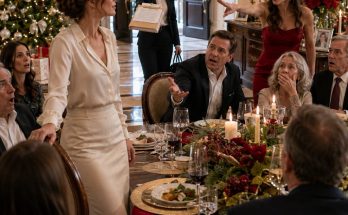
My Father Left Me A Sealed Envelope. My Family Intercepted It And Handed Everything To My Stepsister Instead. At Christmas Dinner, She Opened It In Front Of Everyone, Laughing. But Halfway Through Reading… Her Hands Started Shaking Uncontrollably.
### Part 1
I still remember the sound of the box hitting the floor.
It wasn’t loud like a gunshot or dramatic like in movies. It was a heavy, ugly thud, the kind of sound that makes everybody’s shoulders jump before their minds catch up. The cedar chest landed on one corner, bounced once, and slid across the polished hardwood of my stepfather’s lake house living room. Papers spilled out like white birds with broken wings.
For a second, nobody breathed.
My stepsister Vanessa stood over it in her champagne silk dress, her mouth half open, one hand still curved in the air where the box had been. Her diamond bracelet trembled against her wrist. My mother sat frozen on the cream sofa with both hands clamped around her wineglass. Richard, my stepfather, had gone so pale that the red flush he always carried around his nose disappeared completely.
And me?
I sat in the armchair by the fireplace, my knees crossed, my hands folded in my lap, and I smiled.
Not because I was cruel. Not because I enjoyed seeing people fall apart.
I smiled because after fifteen years of being treated like a mistake in my own family, they had finally opened the inheritance they stole from me.
And whatever was inside that box had just scared them more than I ever could.
The room smelled like expensive roast beef, spilled red wine, and the cedar oil Vanessa had rubbed into that old chest earlier because she wanted it to “look nice for pictures.” Outside, Lake Michigan slapped softly against the private dock. Inside, the chandelier glittered above us like nothing bad had ever happened under it.
Vanessa bent down first. She always moved first when there was attention to claim. Her blond hair slid over one shoulder as she snatched up a sheet from the floor.
Then her face changed.
It was small at first. Just a tightening around her mouth. A flicker in her eyes. Then all the color drained from her cheeks.
“What is this?” she whispered.
My mother made a tiny sound. Not a question. More like a warning.
Richard stepped forward so fast his wineglass tipped off the side table and shattered. Red wine spread across the pale rug like a wound.
“Give me that,” he snapped.
Vanessa jerked the paper away from him, suddenly protective of something she didn’t understand. “Why does it have Claire’s name on it?”
My name sounded strange in her mouth. She usually said it with a little curl of amusement, like I was a stain she had learned to ignore.
The lawyer sitting near the window stood slowly. Mr. Harris was older now than when I’d last seen him, thinner through the shoulders, with silver hair and glasses that kept sliding down his nose. He looked at the page Vanessa was holding.
Then he looked at me.
“Claire,” he said carefully, “do you know what this is?”
I didn’t answer right away.
Because the truth was, I didn’t. Not exactly. I recognized Grandma Eleanor’s handwriting on one envelope. I recognized the carved initials on the chest: E.H., worn smooth by age and polish. I recognized the smell of cedar because that box had sat at the foot of her bed when I was little, holding letters, old photographs, and secrets she never let anyone rush her into telling.
But I didn’t know why my name was on a deed in Vanessa’s hand.
I didn’t know why my mother looked like she was about to faint.
And I didn’t know why Richard, the loudest man in every room, had suddenly gone silent.
Vanessa turned another page.
This time, she didn’t whisper.
“No,” she said. “No, this is impossible.”
That was when I felt the first true crack open in the life they had built without me. Not a clean break. A deep one.
Because whatever my grandmother had hidden in that chest, Vanessa had opened it believing it would make her richer.
Instead, it had just asked the question I had been too afraid to ask for fifteen years.
What did Grandma Eleanor really leave behind for me?
### Part 2
Before Richard and Vanessa came into our lives, our house on Ashland Avenue was old, drafty, and warm in the way only old family houses can be.
The radiators clanked at night. The kitchen window stuck in the summer. My father kept a blue coffee mug by the sink and never let anyone else use it. My mother sang while folding laundry, mostly off-key, mostly old country songs she claimed she hated. And every Sunday afternoon, Grandma Eleanor arrived with a paper bag full of groceries and a lipstick kiss already waiting for my forehead.
I was eleven when my father died.
Heart attack, sudden, right there in the parking lot outside the hardware store. One minute he was buying screws for a loose cabinet hinge. The next, a stranger was calling my mother from his phone.
People say grief comes in waves. Mine came in sounds.
The hollow ring of the phone. My mother screaming into her hands. The scrape of folding chairs at the funeral home. Dirt landing on the top of my father’s coffin in dull little pats.
Grandma Eleanor held my hand through all of it. Her fingers were thin but strong, and she smelled like lavender soap and peppermint candies. When the funeral guests leaned down to tell me I had to be brave for my mother, Grandma cut them off.
“She’s a child,” she said, her voice sharp enough to slice bread. “Let her cry.”
After that, I decided Grandma was the safest person in the world.
She lived in a brick townhouse in Oak Park with tall windows and creaky stairs. I spent weekends there whenever Mom had “appointments,” which usually meant sitting in the dark bedroom with the curtains closed. Grandma never forced cheerfulness on me. She made soup. She put extra blankets on the couch. She let me read old mystery novels until midnight and never asked why I kept my father’s watch under my pillow.
“People show you who they are when money, grief, or pride gets involved,” she told me once while peeling apples.
I was twelve then, too young to understand, old enough to remember.
“Which one is the worst?” I asked.
Grandma smiled without humor. “Pride. Money can be earned again. Grief can soften. Pride will let people burn down a house and blame the smoke.”
Three years after my father died, Mom met Richard Holloway.
He came into our life wearing polished shoes and too much cologne, with a booming laugh that filled the doorway before his body did. He was a real estate developer, which he said like it was a royal title. He owned buildings, knew judges, played golf with men who put their names on hospitals. He brought flowers for my mother and a silver necklace for me, even though we had only met twice.
My mother wore makeup again after Richard. She laughed again. At first, I was grateful.
Then I met Vanessa.
She was sixteen, two years older than me, with perfect blond hair and the bored expression of a girl who had already decided the world owed her better lighting. She looked around our living room the first day she visited and said, “It’s cute. Kind of small, though.”
Mom laughed nervously. “It has character.”
Vanessa glanced at me. “So do thrift stores.”
Richard chuckled. My mother smiled like she hadn’t heard.
That was the first time I felt something shift under my feet.
It wasn’t one big cruelty at first. It was little adjustments. Vanessa needed the larger bedroom because she had “more clothes.” Vanessa needed quiet, so I stopped practicing flute in the afternoons. Vanessa didn’t like the smell of my mother’s tuna casserole, so we stopped making it. Richard thought the house needed “adult energy,” so my father’s framed photos disappeared from the hallway and ended up in a box in the basement.
When I cried, Mom said, “Claire, honey, don’t be so sensitive.”
Sensitive became my new name.
Not grieving. Not lonely. Not displaced.
Sensitive.
Grandma noticed before anyone else admitted there was something to notice.
One Sunday, she picked me up and parked two blocks away instead of pulling into the driveway. Rain tapped against the windshield. She didn’t turn off the engine.
“Tell me the truth,” she said. “Are they kind to you?”
I stared at my wet sneakers. My throat closed.
Grandma didn’t push. She just reached over and placed a warm hand on my knee.
That was when I almost told her everything.
But through the rain-streaked glass, I saw Richard’s black SUV turn the corner behind us, slow down, and pause at the end of the street.
Grandma saw it too.
Her hand tightened on my knee, and for the first time in my life, I saw fear pass across her face.
### Part 3
Richard did not shout at first.
That came later, after he married my mother and stopped treating our house like a guest room. In the beginning, he specialized in pressure that sounded like advice.
“Claire should toughen up.”
“Claire needs to learn that life isn’t fair.”
“Claire can’t keep using her father’s death as an excuse.”
He always said these things while buttering toast or straightening his cufflinks, as if cruelty became reasonable when delivered casually.
Mom would glance at me, then at him, and choose the easier silence.
Vanessa learned from both of them.
By seventeen, she had mastered the art of humiliating me without technically doing anything wrong. She borrowed my sweaters and returned them smelling like perfume and cigarette smoke from parties I wasn’t invited to. She called me “Nurse Claire” before I even chose nursing, because I liked helping people and she thought caring was a personality defect. She left my father’s old watch on the kitchen counter once with a sticky note that said, Does this still work or is it just depressing?
I found it before Mom did.
I didn’t cry in the kitchen. I took the watch upstairs, locked myself in the bathroom, and cried into a towel so no one would accuse me of performing.
That night, Grandma called.
“Come over this weekend,” she said. “I’m making chicken and dumplings.”
“How did you know I needed that?”
“I listen between words,” she said.
Grandma’s house became the only place where I could breathe normally. She kept my father’s childhood drawings in a tin box. She remembered that I hated mushrooms and loved lemon cake. She asked about my grades like they mattered, not because they could be bragged about at parties, but because I mattered.
When I was eighteen and got accepted into a nursing program, Grandma cried harder than my mother did.
Mom said, “That’s wonderful, honey. It’ll be stable.”
Richard said, “Nurses work terrible hours.”
Vanessa said, “So basically you’ll clean up after doctors?”
Grandma said, “Your father would be proud enough to burst.”
I held onto that sentence through every overnight shift, every exam, every loan form I filled out while Vanessa posted photos from Miami with captions about “healing season” after dropping out of college for the second time.
The strange thing was, Grandma never openly attacked Richard. She watched him. That was worse.
At holiday dinners, she’d sit back with her tea while he explained property values or taxes or how “legacy families” protected wealth. Her eyes followed his hands. His tone. The way he interrupted my mother. The way Vanessa leaned toward him when he praised her and smirked when he dismissed me.
Once, I walked into the kitchen and found Grandma standing at the sink with Richard behind her, speaking low.
“I know what you’re trying to do,” she said.
Richard laughed softly. “Eleanor, you’re getting dramatic in your old age.”
“I am old,” Grandma said. “Not stupid.”
The faucet ran between them. Steam clouded the window. I stood in the doorway with a stack of dessert plates, suddenly aware that I was hearing something I was not supposed to hear.
Richard noticed me first.
His smile came back instantly. “Claire. There you are. Your grandmother and I were just discussing estate planning.”
Grandma turned off the water.
Her face looked calm, but one hand gripped the counter so hard her knuckles had gone white.
Later that night, when I helped her into her coat, she pressed something into my palm. A small brass key.
“What’s this?” I asked.
“For a box,” she whispered.
“What box?”
She looked past my shoulder. Vanessa was laughing in the living room, draped across the arm of Richard’s chair like a princess in a painting.
Grandma closed my fingers around the key. “Not yet.”
I wore that key on a chain under my shirt for two years.
Then, during my final semester of nursing school, it disappeared.
I tore my tiny apartment apart looking for it. Checked drawers, coat pockets, laundry baskets, even the vacuum bag. Nothing.
When I told my mother, she frowned like I had misplaced a receipt.
“Oh, Claire. You’re always losing things when you’re stressed.”
But I knew I hadn’t lost it.
Because two days before it vanished, Vanessa had hugged me for the first time in years.
And while she smiled against my cheek, I had felt her hand brush the chain at my neck.
### Part 4
Grandma Eleanor got sick in January.
Not the dramatic kind of sick people rally around with casseroles and hopeful sayings. It started quietly. Missed calls. Uneaten toast. A tremor in her right hand when she poured tea. By spring, the doctors used serious voices and soft shoes. By summer, she was in a hospice bed near the window of her townhouse, watching cardinals hop along the fence.
I visited after shifts with my scrubs still smelling like antiseptic and cafeteria coffee. I would wash my hands in her tiny bathroom, change into the sweater she liked, and sit beside her while the late sun striped the blanket across her legs.
She got thinner every week, but her eyes stayed sharp.
One evening, she woke from a nap and said, “Claire, did you ever find the key?”
I froze.
“No.”
Her mouth tightened.
“I didn’t lose it,” I said quickly. “I swear I didn’t.”
“I know.” She turned her face toward the window. “I was afraid of that.”
“Afraid of what?”
She took so long to answer that I thought she had drifted off. Then she whispered, “One day, they’ll show you exactly who they are. When they do, don’t waste your life begging them to become different people.”
I leaned closer. “Grandma, who?”
But the nurse came in to check her medication schedule, and the moment passed. Grandma never brought it up again.
At her funeral, Vanessa cried louder than anyone.
It was almost impressive. She wore black sunglasses indoors, dabbed at dry cheeks with a lace handkerchief, and accepted hugs from elderly relatives who barely knew her. Richard kept a hand on her shoulder like she was the grieving granddaughter and I was a guest who had wandered into the wrong service.
I stood by the casket and stared at Grandma’s hands folded over a rosary.
They had painted her nails pale pink. She would have hated that. She liked clear polish and practical shoes. I wanted to tell someone, but there was nobody left who would care.
After the service, we gathered at Mr. Harris’s office for the reading of the estate.
The office smelled like old paper and lemon furniture polish. Rain streaked the windows. I sat in a leather chair that squeaked whenever I moved. My mother sat beside Richard. Vanessa sat across from me, checking her reflection in the dark glass of her phone.
Mr. Harris cleared his throat.
There were properties. Investments. Jewelry. Accounts I hadn’t known existed. Grandma, it turned out, had been much wealthier than she ever acted. She clipped coupons, wore coats until the lining frayed, and drove the same silver Buick for fourteen years.
Then Mr. Harris read the part that ruined me.
“The majority of the estate is assigned to Vanessa Holloway.”
My ears rang.
I looked up, waiting for him to correct himself. Maybe he had said the wrong name. Maybe there was another Vanessa. Maybe grief had bent the room and I was hearing nonsense.
But Vanessa sat straighter.
“Oh my God,” she breathed.
Richard exhaled like a man who had been waiting for a verdict. My mother stared at her lap.
Mr. Harris continued. “There is also a smaller educational trust designated for Claire Bennett.”
“Educational?” I said. My voice sounded far away. “I already finished school.”
Mr. Harris looked uncomfortable. “Yes. The trust terms are… somewhat unusual.”
Vanessa gave a soft laugh. Not loud. Just enough for me.
“Well,” she said, “Grandma really knew who deserved it.”
Something broke inside me so cleanly I almost didn’t feel it at first.
I stood up. My chair scraped the floor.
“Claire,” Mom said, finally looking at me.
I didn’t wait to hear whatever came next. I walked out of the office, down the hallway, into the parking garage. The concrete smelled like rainwater and oil. I made it to my car before I started sobbing so hard I couldn’t unlock the door.
For years, I carried that moment like a stone under my ribs.
Grandma had seen me. Loved me. Protected me.
And then, at the end, she had given everything to Vanessa.
At least, that was the story they wanted me to believe.
But as I sat crying in the parking garage, I noticed something I had missed in the office.
My mother hadn’t looked surprised.
She had looked ashamed.
### Part 5
Fifteen years is a long time to live with a question you’re too tired to ask.
I became an ER nurse because emergencies made sense to me. Bleeding needed pressure. Fever needed fluids. A heart monitor told you the truth whether you liked it or not. In the hospital, nobody cared if I was sensitive. Sensitivity was useful when a scared child needed distracting, when an elderly man was pretending he wasn’t terrified, when a wife needed someone to explain what the doctor had said in normal human words.
I worked nights. I paid off loans slowly. I rented a small apartment above a bakery where the stairwell smelled like yeast at dawn. I bought secondhand furniture and learned which grocery stores marked down meat on Tuesdays. My life was not glamorous, but it belonged to me.
Vanessa’s life belonged to Instagram.
Every few months, someone would send me a screenshot, usually a cousin who claimed they “thought I’d want to know.” Vanessa in front of a beach house. Vanessa holding keys to a luxury condo. Vanessa on a boat with champagne. Vanessa in Grandma Eleanor’s pearl earrings, captioned: Legacy looks good on me.
I blocked her eventually.
Then I blocked Richard.
My mother was harder.
She called on birthdays and major holidays, always with the same careful sadness.
“We miss you at Thanksgiving.”
“Richard asks about you.”
“Vanessa is doing so well.”
I would sit on the edge of my bed after twelve-hour shifts, shoes still on, and listen to my mother talk around the hole in our relationship without ever stepping into it.
Once, I asked directly.
“Mom, did Grandma ever say why?”
Silence.
Then she sighed. “Claire, people make decisions we don’t understand.”
“That’s not an answer.”
“It’s the only one I have.”
I wanted to believe her. That was my weakness. Not forgiveness exactly, but hunger. Some childish part of me kept waiting for my mother to choose me late, as if late love could somehow travel backward and repair the years.
Then I met Daniel.
He was a paramedic, calm under pressure, with kind eyes and a crooked front tooth from a high school hockey accident. The first time we worked the same trauma intake, a drunk patient threw up on his boots and Daniel said, “Well, they were already ugly,” which made me laugh for the first time that week.
We became friends first. Coffee after shifts. Walks by the river. Quiet dinners where neither of us performed. When I finally told him about my family, I expected pity. Instead, he listened with the steady attention of someone checking a pulse.
At the end, he said, “They trained you to doubt what you know.”
That sentence scared me because it was true.
Two years later, Daniel proposed in our kitchen while I was wearing sweatpants and burning grilled cheese. He said he wanted our real life, not a staged one. I cried into his shoulder while the smoke detector screamed above us.
When my mother heard we were engaged, she sounded genuinely happy.
“Oh, Claire. That’s wonderful. You should come to the lake house soon. Everyone should celebrate.”
I almost said no.
Then, three weeks later, she called again.
“Richard’s turning seventy,” she said. “We’re having dinner at the lake house. Just family. Vanessa will be there.”
I laughed before I could stop myself. “That’s not a selling point.”
“Please,” Mom said.
One word. Small. Tired. Almost human.
Daniel watched me from across the kitchen. I had the phone pressed to my ear and one hand in a bowl of half-washed lettuce. Rain tapped against the window. The apartment smelled like garlic and dish soap.
“I don’t know,” I said.
Mom lowered her voice. “There are things we should talk about.”
My fingers went still in the water.
“What things?”
A pause.
Then Richard’s voice boomed faintly in the background, asking who she was talking to. My mother’s tone changed instantly.
“Nothing serious,” she said too brightly. “Just come if you can.”
The call ended with a click.
Daniel didn’t push. He dried a plate, set it in the rack, and said, “Do you want to know?”
I stared at the phone.
Because I did.
God help me, after fifteen years, I still did.
And that was how I ended up driving back toward the lake house, toward Vanessa, toward Richard, and toward the cedar box I thought had vanished forever.
### Part 6
The lake house looked exactly like Vanessa’s pictures and nothing like Grandma.
It sat at the end of a private road, all glass walls and gray stone, with landscaping so perfect it seemed afraid of weather. Path lights glowed along the driveway even though the sun hadn’t fully set. Two black SUVs were parked near the garage. A valet in a wool coat opened my door like I was arriving at a hotel, not a family dinner.
I almost turned around.
Daniel touched my wrist. “We can leave anytime.”
Inside, the house smelled like rosemary, money, and candles that probably cost more than my first couch. The living room faced the lake through windows tall enough to make a person feel small. Music played softly from hidden speakers. On the mantel sat a silver-framed photo of Richard, Mom, and Vanessa at some charity gala.
No photo of me.
Mom came toward us in a navy dress, thinner than I remembered, her smile stretched tight.
“Claire,” she said, hugging me carefully, like I might crack or bite. “You look beautiful.”
That startled me. My mother rarely complimented me without correcting something afterward.
“Thanks,” I said.
Richard approached with a glass of scotch in one hand. At seventy, he still looked broad and expensive, his white hair thick, his tan too even for Chicago. He kissed the air near my cheek.
“Claire. Still at the hospital?”
“Yes.”
“Hard work,” he said. “Honest work.”
He made it sound like a polite insult.
Vanessa arrived twenty minutes late, naturally.
The front door opened, cold air swept in, and there she was in a cream coat with a fur collar, diamonds flashing at her ears. She kissed Richard, hugged my mother, and looked me over from shoes to hair.
“Claire,” she said. “You came.”
“Vanessa,” I replied. “You noticed.”
Daniel coughed into his hand. Vanessa’s smile tightened.
Dinner was served at a long table set with linen napkins, crystal glasses, and little place cards written in gold ink. Mine was near the end, beside Daniel, far from Mom. Vanessa sat to Richard’s right, the queen’s chair. She spent the first course talking about renovating “one of Grandma’s properties,” as if she had personally built the foundation with her manicured hands.
“The contractors are a nightmare,” she said, slicing her salmon. “Nobody wants to work anymore.”
I thought of my swollen feet after fourteen hours in the ER and took a slow sip of water.
Richard made a toast halfway through dinner.
“To family legacy,” he said, raising his glass. “To knowing what we build, what we protect, and who deserves to carry it forward.”
His eyes touched Vanessa, then slid past me.
The table laughed politely.
My mother didn’t.
She looked down at her plate, pushing a piece of asparagus through sauce she hadn’t eaten. Her hand trembled slightly. For the first time that night, I noticed a bruise-colored shadow under her makeup near her jaw. Not a bruise, maybe. Bad lighting. Age. Exhaustion. A red herring my mind grabbed because it wanted something visible to explain invisible things.
Then Vanessa stood.
“Actually,” she said, tapping her glass with a fork, “I have a surprise.”
Richard looked annoyed. “Vanessa.”
“Oh, don’t be boring, Daddy.” She smiled at the room. “It’s time.”
My mother’s fork fell against her plate with a tiny clatter.
Two movers came in from the hallway carrying something between them.
At first, all I saw was dark wood.
Then the shape registered.
A cedar chest. Old brass hinges. Scratches along the lid. Two carved initials on the front.
E.H.
My stomach dropped so hard I gripped the edge of the table.
Daniel leaned close. “Claire?”
I couldn’t answer.
Vanessa glowed under the chandelier. “Grandma Eleanor left instructions that this private box should stay sealed until my thirty-fifth birthday. Since I turned thirty-five last month, I thought tonight was perfect. A family legacy moment.”
The movers placed the chest on a side table near the fireplace.
I could smell cedar from ten feet away.
My mother whispered, “Vanessa, don’t.”
Vanessa laughed. “Relax. It’s probably jewelry.”
Richard stood halfway from his chair. “This is unnecessary.”
That made Vanessa pause. Just for a second.
Then pride won.
She looked straight at me, her eyes bright with old cruelty.
“Don’t worry, Claire. If there’s anything educational inside, I’ll let you know.”
People chuckled.
I didn’t.
Because beneath the table, my mother had reached for her napkin and twisted it until the fabric nearly tore.
And Richard, who had built his life on control, looked afraid of a locked box.
### Part 7
Vanessa made everyone move into the living room for the opening.
Of course she did. The dining table wasn’t theatrical enough. She wanted the lake behind her, the fireplace beside her, the chandelier above her. She wanted a stage.
I sat in an armchair near the hearth with Daniel standing behind me, one hand resting lightly on my shoulder. Mr. Harris, the old estate lawyer, had been invited for Richard’s birthday because wealthy people seemed to enjoy keeping lawyers within arm’s reach. He took a seat near the windows, looking mildly confused and more than mildly uncomfortable.
“I don’t recall this chest being part of the formal inventory,” he said.
Vanessa waved him off. “It was private. Grandma wanted me to have a special moment.”
The word Grandma in her mouth made my skin crawl.
Mom stood near the sofa, arms folded tightly. Richard hovered behind Vanessa, his jaw working as if he were grinding his teeth.
“Maybe we should do this another time,” he said.
Vanessa turned, amused. “Why? Afraid Grandma left me more than you expected?”
Richard’s face hardened. “Don’t be ridiculous.”
She loved that. She loved making powerful people react. It made her feel powerful too.
The chest was placed on the coffee table. Its surface was darker than I remembered, polished until the old scratches shone. I could still see a tiny burn mark near the left hinge from when Grandma had dropped a cigarette there in the seventies, back before she quit and pretended she never smoked.
Vanessa ran her fingers over the brass latch.
“No key?” Daniel asked quietly.
Vanessa smiled. “The lock was old. I had it opened professionally.”
Something cold moved through me.
Professionally.
I remembered the brass key on a chain under my shirt. Vanessa’s unexpected hug. The missing key. Grandma’s warning. The way Mom told me I lost things when stressed.
I looked at my mother.
She looked away.
Vanessa lifted the lid.
The smell hit me first. Cedar and paper and dust. Not unpleasant. Old. Intimate. Like opening a room that had been sealed around someone’s breath.
Inside were folders tied with ribbon, several envelopes, a small cassette tape in a cracked plastic case, and a velvet pouch. Vanessa went for the pouch first. Of course.
She loosened the drawstring and tipped it into her palm.
A ring fell out. Gold. Simple. With a small blue stone.
My father’s birthstone ring.
I stood before I realized I had moved.
“That was Dad’s,” I said.
Vanessa blinked. “Was it?”
“You know it was.”
She gave me a sweet, poisonous smile. “Well, inheritance is complicated.”
I took one step forward. Daniel’s hand touched my back, not stopping me, just reminding me I wasn’t alone.
Mr. Harris cleared his throat. “May I see the contents before anything is distributed?”
Vanessa rolled her eyes but handed him the ring. Then she grabbed the top envelope.
It was thick, cream-colored, and sealed with wax that had cracked along the edges. On the front, in Grandma Eleanor’s sharp handwriting, was one word.
Vanessa.
She held it up like proof.
“See?”
Richard said, “Vanessa, put that down.”
But she had already opened it.
Her smile lasted three seconds.
Then it vanished.
She pulled out a sheet, scanned the first lines, and frowned.
“This isn’t funny.”
“What?” Mom whispered.
Vanessa flipped to the next page. Then the next. Her breathing changed.
Mr. Harris stood. “What does it say?”
Vanessa didn’t answer.
A single page slipped from her hand and landed face-up on the rug near my shoes.
I looked down.
At the top was a property deed.
Below it, in typed legal language, was my full name.
Claire Bennett.
Not Vanessa. Not Richard. Not my mother.
Me.
The room seemed to tilt. The fire crackled too loudly. Somewhere in the kitchen, a dish clanged and a server murmured an apology.
I bent down slowly and picked up the page.
My hands were steady, which surprised me.
“What is this?” I asked.
Nobody answered.
Then Mr. Harris took the paper from me, read it once, then again. His face changed in a way I had only seen in hospital waiting rooms when doctors realized the scan was worse than expected.
“Oh my God,” he said.
Richard lunged toward him. “Give me that.”
Mr. Harris stepped back.
Vanessa’s voice rose, sharp and panicked. “Why is her name on Grandma’s property?”
And for the first time in fifteen years, no one called me sensitive.
### Part 8
The living room split into two kinds of silence.
There was my silence, which felt like standing at the edge of a cliff and seeing a bridge appear through fog.
And there was their silence, which felt like a locked door being kicked open from the other side.
Mr. Harris spread the papers across the coffee table with the care of a man handling evidence. The firelight flickered over legal stamps, signatures, notary seals, dates. I saw Grandma’s name again and again. Eleanor Holloway. Eleanor Holloway. Eleanor Holloway.
My name appeared beside hers more than once.
Claire Bennett, sole beneficiary.
Sole.
The word glowed on the page.
Vanessa snatched another folder from the chest. “No. There has to be another explanation.”
“Don’t touch anything else,” Mr. Harris said.
She ignored him, ripping the ribbon from a stack of documents. “This is fake. It has to be fake.”
Richard’s voice came low and dangerous. “Vanessa, stop.”
That did it. She turned on him.
“Why are you so scared?”
My mother covered her mouth.
I watched all of them, and suddenly memories rearranged themselves.
Richard telling Grandma she was dramatic. Mom refusing to answer why Grandma had left me so little. Vanessa appearing at my apartment with fake affection before the key vanished. The educational trust that made no sense. The lake house renovations Vanessa bragged about, funded by property income I had never seen.
The truth was still hidden, but its shape pressed against the fabric.
Mr. Harris found a blue folder at the bottom of the chest. His hands slowed when he opened it.
“This is an original estate directive,” he said.
Richard laughed once. It was a terrible sound. “Original? You handled the estate yourself, Harris.”
“Yes,” Mr. Harris said, without looking up. “Based on documents submitted to my office after Eleanor’s death.”
Mom sat down hard on the sofa.
I heard the breath leave her.
“Submitted by whom?” Daniel asked.
Mr. Harris adjusted his glasses. His face had gone gray. “I need a moment.”
Vanessa pointed at me. “You brought him here for this, didn’t you?”
I stared at her. “I didn’t even know the box existed.”
“You expect me to believe that?”
“You expected me to believe Grandma loved you more than me.”
Her mouth snapped shut.
The words surprised both of us. They had come out calm. Not shouted. Not broken. Just true.
Mr. Harris lifted a page.
“This directive names Claire as primary beneficiary of the real estate portfolio, investment accounts, personal effects, and residual estate,” he said. “It also establishes a temporary administrative trust until she reached twenty-five.”
“I was twenty-three when Grandma died,” I said.
“Yes.” He swallowed. “The trust was designed to protect the estate until you were older.”
Richard scoffed. “This is absurd.”
Mr. Harris turned another page. “There’s an amendment here. Signed two weeks before Eleanor passed.”
My heart beat so hard I felt it in my throat.
“Read it,” I said.
Mom whispered, “Claire, please.”
That please was different from the one that got me to the dinner. This one was desperate. This one had claws.
Mr. Harris read silently first, then aloud.
“If any previously dated or subsequently submitted document contradicts the terms herein, such document should be treated as suspicious and reviewed against the materials enclosed in my cedar chest.”
The room went cold.
Vanessa gave a short, nervous laugh. “Suspicious? What does that even mean?”
Daniel answered before anyone else could.
“It means she expected someone to lie.”
Richard’s face twisted. “You don’t know what you’re talking about.”
“No,” Daniel said evenly. “But I’m starting to.”
Mr. Harris reached into the chest again and removed the cassette tape.
A small white label had been stuck to the front. The ink had faded, but I could still read it.
For Claire, when the truth comes out.
My knees weakened.
For Claire.
Grandma had written to me.
Vanessa saw the label and made a strangled sound. “No. That’s mine. The envelope said my name.”
Mr. Harris looked back at the opened envelope. Then he pulled out the first page Vanessa had skimmed and read the top line carefully.
His expression shifted again.
“It says Vanessa because Eleanor intended for her to open it,” he said.
Vanessa lifted her chin, vindicated.
Then Mr. Harris finished.
“Not because it belongs to her. Because Eleanor believed Vanessa would be arrogant enough to reveal it in public.”
For one perfect second, nobody moved.
Then the cassette tape slipped from his fingers onto the coffee table.
And my mother began to cry like someone had finally run out of lies.
### Part 9
The tape player came from Richard’s study.
Daniel found it on a shelf between golf trophies and leather-bound books nobody had ever opened. It was old, black, and dusty, with silver buttons that clicked loudly when Mr. Harris tested them. While he plugged it in near the fireplace, nobody spoke.
Vanessa paced.
Her heels struck the hardwood in sharp, uneven beats. Click. Click. Click. She kept rubbing her thumb against the place where her bracelet clasped, a nervous habit I remembered from childhood. Back then, she did it when she knew she had gone too far and was waiting to see if an adult would punish her.
They never did.
Richard stood near the bar cart, both hands braced on the polished edge. He looked older than he had an hour ago. Not softer. Just exposed.
Mom sat on the sofa with mascara streaking down her cheeks, her napkin crushed in one fist.
I wanted to feel triumphant.
Instead, I felt sick.
Because if Grandma had been right, then the last fifteen years of my life had not been an accident, not a misunderstanding, not some painful mystery I was too emotional to accept.
They had been stolen.
Mr. Harris inserted the cassette. The machine clicked, hissed, and whirred. For a moment there was only static.
Then Grandma Eleanor’s voice filled the room.
Weak. Scratchy. Familiar.
“If this recording is being played, then Claire finally found the truth.”
My breath broke.
Daniel’s hand found mine.
On the tape, Grandma inhaled slowly. I could hear the faint beep of hospice equipment in the background, the squeak of her bed, maybe the soft hum of the window fan she always used because she hated stale air.
“Claire, sweetheart,” she continued, “I’m sorry I had to do this in such an ugly way. I wanted to hand everything to you cleanly. I wanted to sit you down with tea and explain every account, every property, every decision. But I have learned that some people do not become honest just because a dying woman asks nicely.”
Richard slammed his palm on the bar. “Turn it off.”
Nobody moved.
Grandma’s voice went on.
“I saw how Richard watched the estate. I saw how Margaret looked away. I saw how Vanessa treated what was yours as something she deserved simply because she wanted it.”
Vanessa whispered, “She’s lying.”
I almost laughed. Even dead, Grandma was lying now? That was Vanessa’s first defense against any truth that didn’t flatter her.
“The estate is yours, Claire,” Grandma said. “The properties, the investment accounts, the lake holdings, the jewelry from your father’s side, and the private accounts listed in the attached documents. I placed safeguards because I feared Richard would pressure your mother and try to confuse you in your grief.”
Mom sobbed once, a sound so raw it made my stomach tighten.
Grandma paused on the tape, then said something that changed the air in the room.
“Margaret, if you are hearing this, then you failed her.”
My mother bent forward as if struck.
I closed my eyes.
Part of me wanted to comfort her. That old reflex rose automatically. Don’t make Mom sad. Don’t make things harder. Be good. Be quiet. Be less.
I opened my eyes and let the reflex die.
Grandma continued.
“I hope I am wrong. I hope this box remains sealed because everyone behaved with decency. But if it does not, Mr. Harris, the blue folder contains a fraud report prepared with supporting documents. It should be turned over to the appropriate authorities immediately.”
Richard moved.
Not toward me. Not toward my mother.
Toward the box.
He reached for the blue folder with a speed that made Vanessa gasp. Daniel stepped in front of him before I fully understood what was happening.
“Don’t,” Daniel said.
Richard’s eyes bulged. “Get out of my way.”
“This isn’t your house,” Daniel replied.
The words landed strangely.
Richard laughed, but it cracked in the middle.
Mr. Harris held up one page from the folder.
“Bank transfers,” he said quietly. “Signature comparisons. Copies of correspondence. Account routing information. My God, Eleanor documented everything.”
Vanessa stared at her father. “Dad?”
Richard didn’t answer.
She turned to my mother. “What did you do?”
Mom shook her head, crying harder. “I didn’t know it was this much.”
That sentence stopped me colder than any confession could have.
Not I didn’t know.
I didn’t know it was this much.
I stepped toward her slowly.
“What exactly did you know?” I asked.
My mother looked up at me with ruined makeup, trembling lips, and eyes full of fear.
And then, after fifteen years, she finally told the truth badly.
### Part 10
“Richard said it was temporary,” my mother whispered.
The room was so quiet I could hear the tape still spinning inside the player, clicking softly at the end.
“Temporary,” I repeated.
Mom nodded too fast. “He said your grandmother was confused near the end. He said the documents weren’t right. He said you were grieving and young and overwhelmed, and if you got everything at once, people would take advantage of you.”
I stared at her.
“People,” I said. “Meaning him?”
She flinched.
Richard pointed at her. “Margaret, shut your mouth.”
That was the first time I saw my mother look at him with something close to hatred.
“No,” she said. The word was small, but it was there. “No, Richard. I won’t.”
Vanessa laughed again, brittle and sharp. “This is insane. You’re both insane.”
Mr. Harris was reading faster now, sorting documents into piles. His lawyer face had returned, but underneath it was shock. “There are notarized copies here that do not match the documents filed after Eleanor’s death. The signatures on the submitted estate instructions appear inconsistent. There are transfers from estate accounts into property management entities controlled by Richard Holloway.”
“Allegedly,” Richard snapped.
Mr. Harris looked at him. “You should call an attorney.”
The color left Richard’s face again.
That was when I understood something important. Richard was not shocked by the accusation. He was calculating the exposure.
Vanessa grabbed the back of a chair. “Wait. Are you saying the lake house—”
Mr. Harris turned a page. “The lake house was part of Eleanor’s lakefront portfolio.”
“No,” Vanessa said.
“It appears title was supposed to transfer to Claire through the administrative trust.”
“No.”
“Vanessa,” Richard barked.
“No!” she screamed. The sound cracked against the windows. “This is my house. My money paid for the renovations.”
Mr. Harris looked at another document. “According to these records, the renovations were paid through income generated by the portfolio.”
“Which was mine,” I said.
My voice didn’t shake.
Vanessa looked at me like she wanted to peel my skin off. “You did this.”
I almost couldn’t believe her.
“Me?”
“You always hated me.”
“I was a child when this started.”
“You wanted Grandma to love you more.”
“She did love me,” I said. “That was the problem, wasn’t it?”
Vanessa slapped the documents off the coffee table.
Papers flew everywhere. One sheet drifted into the fireplace and curled at the edge before Daniel grabbed it with the poker and dragged it away from the flame.
“Stop it!” Mr. Harris shouted.
But Vanessa was crying now, real tears this time, furious tears.
“You don’t even know what to do with money like this,” she said to me. “You live in some tiny apartment and work yourself to death. I maintained the properties. I kept the family name visible. I hosted events. I made it worth something.”
“You spent it,” I said.
Her eyes flashed. “I elevated it.”
The old me might have shrunk under that tone. The old me might have wondered if she was right, if maybe money did belong with people who knew how to shine under chandeliers.
But I saw the ring on the table. My father’s ring. Treated like a trinket in her show.
Something inside me hardened.
“Pack your things,” I said.
Vanessa blinked. “Excuse me?”
I looked at Mr. Harris. “If the lake house is legally part of the estate Grandma left to me, what happens now?”
He hesitated. “There will be a legal process. We’ll need emergency filings, injunctions, forensic accounting. But based on what I’m seeing, you have a strong claim to immediate control of estate assets.”
Richard exploded.
“You ungrateful little—”
Daniel stepped forward. “Finish that sentence carefully.”
Richard’s mouth twisted. He was used to frightening women. Daniel did not frighten easily.
My mother stood, reaching toward me. “Claire, please. We can talk about this as a family.”
I looked at her hand.
I remembered that hand brushing hair from my forehead when I had fevers. Signing school forms. Holding Richard’s at parties. Doing nothing when I cried in parking garages.
“No,” I said. “We can talk through lawyers.”
Her hand fell.
Vanessa stared at me with pure disbelief. “You would destroy your own family over money?”
I looked around the room. At the spilled wine. The scattered papers. The cedar chest. My grandmother’s dead voice still hanging in the air.
“No,” I said. “You destroyed it over mine.”
That was the moment the front door opened.
A cold gust swept through the living room, and the private security guard Richard always kept on weekends stepped inside, looking uncomfortable.
“Mr. Holloway,” he said, “there are two men at the gate asking for you.”
Richard frowned. “Who?”
The guard looked at the papers on the floor, then back at him.
“They said they’re federal investigators.”
### Part 11
For one heartbeat, Richard looked almost ordinary.
Not powerful. Not rich. Not intimidating. Just an old man in a tailored jacket, staring at the doorway like he had heard his name called from the bottom of a grave.
Then the mask came back.
“Tell them to leave,” he said.
The security guard shifted. “Sir, they have badges.”
Mr. Harris stood immediately. “Nobody speaks to anyone without counsel.”
Richard rounded on him. “You work for me.”
“No,” Mr. Harris said. “I represented Eleanor’s estate. And right now, I am very concerned about what was done to it.”
Vanessa looked from one man to the other, panic blooming across her face. “Daddy?”
He didn’t comfort her.
That told me plenty.
The next hour happened in fragments.
Two investigators entered in dark coats, polite and unsmiling. Mr. Harris spoke with them in the foyer. Richard called someone and shouted behind the closed study door until one of the investigators knocked and told him not to destroy or remove any documents. Vanessa tried to carry the cedar chest upstairs and Daniel blocked her without touching her.
“You can’t keep me from my grandmother’s things,” she hissed.
“She wasn’t your grandmother,” I said.
The words were harsher than I expected, but I didn’t regret them.
Vanessa spun toward me. “She married into my family.”
“No,” I said. “You moved into mine.”
Her face crumpled for half a second, not from pain but from insult. Vanessa could survive cruelty. She could not survive being put in her place.
Mom sat alone on the sofa, staring at her hands. Nobody went to her. Not Richard. Not Vanessa. Not me.
At midnight, Mr. Harris told me to take the ring, the cassette, and copies of the key documents. The originals would be secured. He spoke gently now, as if I were a patient who had just been given a diagnosis.
“There will be a fight,” he said. “But Eleanor prepared well.”
“Did you know?” I asked.
His face tightened. “No. I knew Eleanor had concerns near the end, but the documents submitted after her death appeared valid enough at the time. I should have looked harder.”
That was more accountability than my own mother had given me in fifteen years.
Outside, the lake was black and restless. Daniel and I stood near the car while wind pushed cold air through my coat.
“Are you okay?” he asked.
I laughed once, then covered my mouth because the laugh sounded too close to a sob.
“No.”
He nodded. “That makes sense.”
I turned back toward the house.
Through the windows, I could see Vanessa pacing like a trapped animal. Richard stood near the fireplace with a phone pressed to his ear. Mom remained on the sofa, small beneath the expensive lights.
For years, I thought being excluded meant I had lost.
But watching them inside that house, I realized something else.
They had been trapped together in the lie.
I slept badly that night at a hotel off the highway. The room smelled like bleach and stale carpet. Daniel snored softly beside me, one hand open on the blanket between us. I lay awake until dawn, Grandma’s ring on the nightstand, the cassette tape beside it.
At 6:14 a.m., my phone buzzed.
Mom.
I let it ring.
Then came a voicemail.
Then another.
Then a text.
Claire, please. You don’t understand what he was like back then.
I stared at the screen until it blurred.
Another text arrived.
I tried to protect you.
That one made me sit up.
Because it was not only a lie.
It was an insult.
I called Mr. Harris instead of calling her back. By noon, emergency legal filings had begun. By the end of the week, accounts connected to Grandma’s estate were frozen. Property managers were notified. Richard’s companies received preservation notices. Vanessa’s access cards stopped working.
That was when she came to my hospital.
I was coming off a double shift, my hair flattened from a surgical cap, my feet aching, my brain full of alarms and blood pressure numbers. I stepped outside into the ambulance bay and found Vanessa leaning against a white Mercedes in oversized sunglasses.
She looked wildly out of place among the exhaust fumes and vending machine coffee cups.
“We need to talk,” she said.
“I have nothing to say to you.”
She removed her sunglasses. Her eyes were red, but her makeup was perfect. “You’re enjoying this.”
“I’m exhausted.”
“You’re punishing me for something my father did.”
That almost worked. Not because it was true, but because I had spent my whole life being trained to separate Vanessa from consequences.
Then I remembered her smirk in Mr. Harris’s office.
Grandma really knew who deserved it.
“You opened that box to humiliate me,” I said.
Her jaw tightened.
“You wore my grandmother’s jewelry. You lived off my inheritance. You mocked me with it for fifteen years.”
“I didn’t know.”
“You didn’t ask.”
A siren wailed behind us as an ambulance pulled in. Red lights flashed across Vanessa’s face, making her look briefly monstrous, then scared, then young.
“I’ll lose everything,” she said.
I looked at her designer coat, her car, her diamond studs.
“No,” I said. “You’ll lose everything that wasn’t yours.”
She stepped closer.
For the first time in my life, Vanessa lowered her voice and begged.
And what she offered me next proved she still had no idea who Grandma had raised me to become.
### Part 12
Vanessa offered me a deal in the ambulance bay.
Not an apology. Not the truth. A deal.
“Let me keep the lake house,” she said. “And the Gold Coast condo. You can have the smaller properties and whatever cash is left after the accounts are reviewed.”
I stared at her, too tired to react.
She mistook my silence for consideration and kept going.
“You don’t even like that lifestyle, Claire. You’d be miserable managing all of it. I know the contractors. I know the tenants. I know the charity boards. I can keep things smooth.”
The automatic doors opened behind me. Warm hospital air rushed out, carrying the smells of disinfectant, coffee, and wet wool. A paramedic rolled an empty stretcher past us. Life kept happening around Vanessa’s crisis, which seemed to offend her.
“You really don’t understand,” I said.
She crossed her arms. “Then explain it.”
“It was never just money.”
“Oh, please.”
That right there. That little flash of contempt. That was Vanessa stripped to the studs.
I stepped closer, close enough to see the fine lines around her eyes she probably hated.
“You got my room. My mother’s attention. My father’s house erased. My grandmother’s estate. My grief turned into a joke. Every time I tried to ask why, I was called sensitive. And now you want me to hand you comfort because consequences feel uncomfortable?”
Her mouth opened, then closed.
“No,” I said. “The answer is no.”
She looked past me toward the hospital doors, maybe hoping Daniel would appear and soften me. He didn’t. Daniel had learned something my family never did: I could speak for myself.
Vanessa put her sunglasses back on.
“You’ll regret this.”
“I’ve regretted silence,” I said. “This feels different.”
She drove away fast enough for her tires to squeal.
That night, I went home and listened to every voicemail from my mother.
There were eleven.
At first, she cried. Then she explained. Then she blamed Richard. Then she blamed Grandma for making things “complicated.” Then she blamed me for refusing to answer. By the ninth message, her voice had gone flat with exhaustion.
“I was scared,” she said. “You don’t know what it was like being married to him.”
I sat on my kitchen floor with my back against the cabinets, phone in my lap, the refrigerator humming beside me.
I believed that she had been scared.
I also believed she had let me be hurt because protecting me would have cost her comfort.
Both could be true.
That was the part nobody tells you about betrayal. The person who wounds you may have their own wounds. But understanding the knife does not mean you have to keep bleeding for the hand that held it.
The legal process took months.
Forensic accountants found more than even Mr. Harris expected. Rental income redirected. Maintenance accounts drained. Jewelry sold and quietly replaced with imitations. Properties refinanced under shell companies connected to Richard. Vanessa had signed documents too. Maybe she didn’t understand all of them. Maybe she understood enough.
Richard’s attorneys tried to paint Grandma as confused. Then Mr. Harris produced medical evaluations showing she had been fully competent when she prepared the chest. They tried to argue that I had abandoned the family. Then my attorneys showed years of unanswered questions, minimized trust notices, and estate communications sent to addresses where I had never lived.
My mother gave a deposition.
I was not in the room, but I read the transcript.
Question: Did you know Claire Bennett was intended to receive the majority of Eleanor Holloway’s estate?
Answer: Yes.
I stopped reading there for almost ten minutes.
Yes.
Not maybe. Not I suspected. Not Richard handled that.
Yes.
When I finally continued, there were more words. Explanations. Fear. Pressure. Shame. But none of them changed the first answer.
Yes.
The settlement discussions began after Richard learned criminal charges were being considered. Suddenly, everyone wanted peace. Suddenly, family mattered. Suddenly, I was asked to be reasonable by people who had built unreasonable lives out of my loss.
I got the lake house back first.
Daniel and I drove there on a gray Saturday in November. The air smelled like wet leaves and cold water. The security gate opened under my temporary code. My temporary code. I parked in the driveway and sat with both hands on the steering wheel.
“You don’t have to go in today,” Daniel said.
“Yes,” I said. “I do.”
The house was empty. Vanessa had taken the furniture she could prove she bought and left behind the things too large or too connected to the property to remove. Sunlight fell through the huge windows onto pale rectangles where rugs used to be. The silence felt bruised.
Upstairs, in a guest room Vanessa had used as a closet, I found boxes of old estate items stacked behind garment bags.
Most were dusty. Some were mislabeled. One cardboard box simply said Misc.
Inside were framed photos from Grandma’s townhouse. My father as a boy with missing front teeth. Grandma in sunglasses beside a red convertible. Me at eight years old, sitting on her kitchen counter with flour on my nose.
At the bottom was a cedar drawer insert wrapped in newspaper.
Daniel helped me carry it to the bed. One side had a loose panel. When I touched it, the wood shifted.
A folded note slid out.
Grandma’s handwriting shook across the page.
Claire, when you find this, I hope you already know the truth.
I sat down hard.
Daniel knelt in front of me, but he didn’t touch the note. He knew this belonged to me first.
I unfolded the rest.
And Grandma, even after death, had one more thing to say about love, courage, and the family I still wasn’t sure how to survive losing.
### Part 13
Grandma’s final note was only one page.
No legal language. No account numbers. No instructions about property or lawyers or revenge.
Just her voice, written in blue ink.
Claire,
The ugly truth about families is that love without courage becomes cruelty. People will tell you they loved you while they stood aside and watched you be harmed. Maybe they did love you in whatever small, frightened way they were capable of. But small love cannot be allowed to make large decisions about your life.
If they take what is yours, take it back.
If they ask forgiveness only after consequences arrive, listen carefully. They may not miss you. They may miss what your silence gave them.
Build a life where you do not have to shrink to be kept.
I read it three times before the tears came.
Not the wild crying from the parking garage fifteen years earlier. Not the shocked tears from hearing her voice on the tape. These were quieter. Heavier. They felt less like breaking and more like something frozen finally thawing.
Daniel sat beside me on the bare mattress.
“She knew you,” he said.
I nodded, pressing the note to my chest.
“She knew all of them too.”
By spring, the legal picture had sharpened.
Richard resigned from two boards before he could be removed. His company became toxic overnight, not because wealthy men suddenly developed morals, but because fraud investigations make investors nervous. He sold assets to cover legal exposure. His name disappeared from charity invitations and appeared in court filings instead.
Vanessa lost the lake house, the condo, and access to the property income she had treated as oxygen. She moved into a luxury apartment paid for by money her attorneys swore came from “personal sources.” Maybe that was true. Maybe it wasn’t. I stopped caring once the estate accounts were secured.
My mother moved out of Richard’s house six months after the chest opened.
She sent me a letter.
A real one, handwritten, twelve pages long. She apologized. She admitted she had failed me. She said fear made her weak and comfort made her weaker. She said she knew she did not deserve another chance, but she hoped one day I would let her hear my voice again.
I kept the letter in a drawer for two weeks.
Then I answered with three sentences.
I believe you are sorry. I am not ready to have you in my life. Please do not contact me unless it is through my attorney.
I cried after sending it.
But I did not regret it.
People love stories where forgiveness fixes everything. They like the scene where the mother sobs, the daughter collapses into her arms, and years of betrayal melt under soft music. Real life is less polite. In real life, late love often arrives carrying the bill for the damage it ignored.
I did not make myself pay it.
Daniel and I kept the lake house, but not as a trophy. The first thing I did was remove the giant portrait of Richard from the study. The second was hang my father’s photographs in the hallway. Not hidden in a basement box. Not apologized for. Hung where morning light could touch them.
We sold some properties, stabilized others, and used part of the recovered money to create a nursing scholarship in Grandma Eleanor’s name. Not because I wanted applause. Because Grandma believed money should protect people, not crown them.
On summer mornings, I sit on the back deck with coffee and watch the lake change colors. Gray at dawn. Silver by seven. Blue when the sun gets brave. The wind carries the smell of water and pine from the trees near the dock. Sometimes Daniel makes pancakes. Sometimes I work in the garden. Sometimes I still wake up angry.
Healing did not make me gentle about what they did.
It made me honest.
Vanessa tried one more time.
A year after the dinner, she sent an email with the subject line: Grandma Would Hate This.
I opened it against my better judgment.
She wrote that I had become cold. That I had let money change me. That family should matter more than old documents. That Grandma would be ashamed of how I had “torn everyone apart.”
I replied with a scanned copy of Grandma’s note.
Nothing else.
She never wrote again.
On the first anniversary of the night she opened the cedar chest, I invited a few friends to the lake house. Nurses, paramedics, people who knew how to laugh loudly and clean up after themselves. We grilled burgers. Someone brought cheap beer. Daniel dropped an entire bowl of potato salad and bowed like he had meant to do it. I laughed until my ribs hurt.
Later, after everyone left, I walked through the quiet living room.
The hardwood had been repaired where the chest hit the floor. If you didn’t know where to look, you’d never see the faint difference in the grain. But I knew. I stopped there, barefoot, holding a mug of tea, and remembered Vanessa’s face as the papers spilled out.
She had opened that box expecting treasure.
She found truth instead.
For years, I thought the inheritance was the money, the houses, the accounts, the things they took and dressed up as destiny.
I was wrong.
The real inheritance was Grandma’s final lesson: never confuse being excluded with being powerless.
My family gave my inheritance to my stepsister.
Then she opened it.
And when the truth came out, I didn’t beg for a place in their family anymore.
I took back my name, my house, my future, and my peace.
That was the ending they never expected.
It was also the first life that truly felt like mine.
THE END!