THE NIGHT MY DAUGHTER-IN-LAW LAID HANDS ON ME, SHE DIDN’T KNOW MY LATE HUSBAND’S HOUSE HAD BEEN WAITING FOR HER
My daughter-in-law lost her composure at exactly 8:17 on a Sunday evening.
I know the time because the grandfather clock in the hallway had just chimed once for the quarter hour, late as always by two minutes, and Thomas had never let me forget that I refused to pay a man four hundred dollars to adjust a clock that still knew more or less what evening meant.
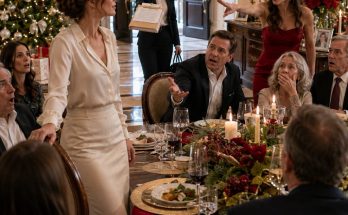
Crystal had been standing on the far side of the dining table, her palms flat against the linen as if she needed the furniture to hold her in place. Her parents were behind her, Frank with one hand on the back of his chair, Linda clutching a wineglass so tightly I worried for the stem. My son Daniel stood between the dining room and the hall, wide-shouldered and pale, caught in that familiar posture of his: body present, conscience delayed.
“You’ve always done this,” Crystal said.
Her voice had gone low, the soft pleasant tone stripped off at last. The polite daughter-in-law, the concerned wife, the woman who sent birthday cards with watercolor flowers and signed them “Love always,” had stepped aside. What remained was sharper, truer.
“Done what?” I asked.
“Made Daniel feel small.”
Daniel’s eyes flicked to mine and then away.
The pot roast still sat in the center of the table, half carved, surrounded by carrots, potatoes, and the good blue-rimmed plates Thomas and I only used on holidays. I had cooked his mother’s recipe that afternoon, the one written in faded ink on an index card taped inside the cabinet door. The whole kitchen smelled of rosemary, onions, browned butter, and the kind of Sunday dinners people remember more generously than they actually lived them.
Thomas used to say every family meal had two courses: the food people ate and the truth they avoided.
That night, the second course arrived hot.
“Crystal,” Daniel said, but there was no command in it.
She turned just enough to silence him with her eyes.
“No, Daniel. She needs to hear it. She sits in this house like it’s a shrine, like no one else has a right to breathe in it unless Thomas personally approved them from the grave.”
The mention of my husband moved through me quietly. Not like a knife. Not anymore. Grief changes shape after two years. It becomes less sharp in public and more dangerous in private places. It sits in eyeglasses left on an end table. In a sweater you cannot give away. In the worn mark on the floor where a man used to stand every morning making coffee, one hip against the counter, reading headlines aloud like the country had personally requested his opinion.
I looked at my daughter-in-law and folded my hands in my lap.
“Do not bring Thomas into this.”
“Why not?” Crystal gave a short laugh. “Everything in this house is Thomas. Thomas’s books. Thomas’s chair. Thomas’s study. Thomas’s trees. Thomas’s pot roast. Thomas’s clock. Thomas’s precious memories.”
Frank cleared his throat.
“Now, Crystal—”
“No,” she snapped, and he stopped.
That interested me.
Frank Hargrove was not a quiet man. He had spent dinner filling every empty space with opinions: about interest rates, about property taxes, about how Charlotte had “changed too fast,” about how retirees on fixed income were being “squeezed out” by people buying second homes and turning neighborhoods into investments. He had spoken with the particular authority of a man who had lost three different financial battles but still considered himself an expert in money.
Yet when his daughter told him no, he obeyed.
I filed that away with all the other things I had been filing away for six months.
Crystal came around the table.
“You say you love Daniel,” she said. “You say family matters. But the minute your own family needs you, you lock yourself behind legal language and memories and act like we’re strangers asking for charity.”
“You are asking for my house,” I said.
Linda gasped softly, as if the word house had offended her.
“No one said that,” Crystal replied.
“You said deed.”
“I said updating the deed could protect everyone.”
“It would protect you.”
Her mouth tightened.
Daniel looked up then.
“Mom.”
There it was. Not outrage. Not defense. Not even shame, really. Just that one syllable said with quiet pleading, as if my failure to cooperate were the embarrassing part of the evening.
I turned toward him.
“Tell me I misunderstood.”
His face changed.
I waited.
Thirty-seven years of motherhood can make waiting feel like breathing. You wait for fevers to break. You wait in school pickup lines. You wait for teenagers to come home with headlights sweeping across the ceiling at 12:43 a.m. You wait for apologies that may never arrive. You wait for your adult child to become, even briefly, the person you remember raising.
Daniel’s mouth opened.
Then closed.
Crystal saw it too, and victory flickered across her face.
That was when I understood the evening had reached the place I had been preparing for and dreading in equal measure.
I stood carefully.
My knees were not what they used to be, though I still disliked admitting that to furniture. The dining room chair scraped softly beneath me. Behind me, the window reflected the room back at itself: the long table, the candlelight, Frank’s red face, Linda’s wide anxious eyes, Daniel in the doorway, Crystal approaching with that controlled, heated certainty.
“I think,” I said, “it is time for everyone to go home.”
For one second, she smiled.
Not because she found it funny.
Because she thought I had retreated.
Then I added, “And none of you will be moving into this house. Not temporarily. Not practically. Not gradually. Not under any arrangement that naturally evolves. The answer is no.”
The room went still.
Outside, a car moved slowly down Birwood Lane, headlights sliding across the front windows and disappearing. Somewhere in the kitchen, the dishwasher changed cycles. The grandfather clock ticked in the hall, counting off the seconds with the irritating confidence of an object that had survived three generations of Callaways and would probably survive me.
Crystal’s face emptied of the last of its softness.
“You bitter old woman,” she said.
Daniel flinched.
Not enough.
“Crystal,” he whispered.
She did not look at him.
“You want to sit here alone with a house full of dead man’s furniture and pretend that makes you noble? Fine. Do it. Stay here. Lock every door. Polish every plate. Talk to his chair. Sleep beside his ghost.”
Linda made a small sound.
Frank muttered, “Enough.”
But no one stepped forward.
No one crossed the room.
No one stood between her anger and my body.
Crystal took one more step.
I could smell her perfume now, something expensive and floral with a bitter edge underneath. Her hands lifted before I fully believed she would use them.
Then she pushed me.
Not a slap. Not a dramatic shove like people imagine when they hear a story later and start arranging it for television. It was two hands into my shoulders, fast and hard, born from a rage that had been waiting for permission. I stumbled back, struck the edge of the dining table along my left ribs, and went down onto the hardwood floor Thomas had refinished with his own hands the summer before he got sick.
Pain flashed white through my side.
The room disappeared for half a breath.
Then it returned in pieces.
The underside of the table. The leg of Daniel’s chair. A dropped linen napkin. The scuffed toe of Frank’s brown loafer. Crystal’s hand pressed to her own mouth, not in horror but calculation. Linda frozen near the sideboard. Daniel still in the doorway, his hand braced against the frame.
He had not moved.
Not one step.
I pressed my palm to my ribs and drew in air slowly.
It hurt.
It hurt tremendously.
But beneath the pain, beneath the humiliation of being on the floor in my own dining room, beneath the terrible clarity of seeing my son choose inaction when action mattered, there was something else.
A cold, clean recognition.
Six months of patience had just paid off in one foolish, perfect mistake.
I looked up at Crystal.
Then at Daniel.
And I smiled.
Not widely. Not cruelly. Just enough.
Enough for Crystal to see it.
Enough for uncertainty to enter her face.
“Mom?” Daniel said at last.
There was fear in his voice now.
Late, but present.
“I’m fine,” I said.
My voice sounded steadier than I felt. That pleased me. At sixty-seven, a woman learns to take pride where she can find it.
“Mom, let me—”
“No.” I lifted one hand. “I just need a moment.”
Crystal stepped back.
“I didn’t mean—”
“Of course.”
“I barely touched you.”
“Of course.”
“That was an accident.”
I looked at her.
“Of course it was.”
The silence that followed told me she had finally noticed the smile.
Daniel moved then, not toward me but toward his wife, his hands hovering near her elbows as if she were the injured party.
“Crystal, come on. Sit down.”
“Don’t touch me,” she hissed.
He dropped his hands.
I got myself up slowly. Pride makes a poor cane but a useful one. The table edge bit into my palm as I rose. Pain spread along my ribs with each breath, but I had known worse things than pain. Pain at least tells the truth.
I walked into the kitchen.
The overhead light was softer there. The counters were clean, the way I liked them. Thomas’s mug still hung from the hook beneath the cabinet, blue ceramic chipped near the handle. I had not used it since he died. I had washed it once a week anyway.
Behind me, voices rose and fell in the dining room.
Crystal’s, sharp and frantic.
Daniel’s, low and urgent.
Frank’s, defensive.
Linda’s, near tears.
No one followed me.
Good.
I poured a glass of water from the sink, set it on the counter, and took my phone from the drawer where I had placed it before dinner.
My hands were steady.
I opened the encrypted thread with Patricia Wells.
Patricia had been my friend longer than she had been my attorney. We had met in a courthouse hallway in 1998, both wearing navy suits and the same expression of controlled disgust after watching two brothers fight over their mother’s jewelry while she was still alive in a hospice bed across town. Patricia practiced probate litigation with the calm of a surgeon and the patience of a church organist. I had trusted her with my clients for twenty years.
Now I trusted her with my son.
I typed three words.
They took the bait.
The message showed delivered.
A second later, three dots appeared.
Then her reply.
Are you hurt?
I looked down at my side, where the pain had settled into a bright, pulsing line.
Not badly enough.
Her next message came fast.
Leave now. Clinic first. I’m already moving.
I slipped the phone into my purse.
Then I picked up my water and returned to the dining room.
Crystal was sitting now, face pale, arms crossed tightly. Daniel stood behind her chair, looking at me with the expression of a boy who had broken something expensive and was waiting to see if punishment would arrive. Frank and Linda had shifted toward the hallway, coats already in hand though no one had invited them to retrieve them.
“I’m going to step out for some air,” I said.
Daniel frowned.
“You shouldn’t drive.”
“I am capable of driving.”
“Mom, you fell.”
“I was pushed.”
Crystal’s head snapped up.
“Margaret, I told you, I didn’t—”
“Daniel,” I said.
He stopped.
I let him hear his name in the room. Let him carry the weight of it.
“I need a little time to clear my head. You can all finish your coffee. The front door will lock automatically behind me, but I won’t be long.”
Frank looked toward the foyer.
“Lock automatically?”
“Thomas installed the timer years ago.”
Daniel’s brows drew together.
“I thought you stopped using that.”
“I started again.”
Crystal watched me.
There was suspicion in her eyes now, but not enough knowledge to give it shape.
That was the problem with people who thought older women were merely sentimental. They imagined our memories made us weak. They forgot memory is also a filing system.
I took my coat from the hall closet, the camel wool one Thomas bought me after I won the McIntyre estate case and said I should own something that looked as expensive as my hourly rate. I put it on slowly, button by button.
“Mom,” Daniel said again.
I turned.
For a moment, he looked like himself. Not Crystal’s husband. Not a frightened man cornered by debt and pride. My son. The boy who used to leave LEGO pieces in my shoes and apologize with cereal in his hair. The young man who sobbed into Thomas’s shoulder after losing his first serious girlfriend. The fatherless son who had held my hand beside a hospital bed two years ago while the kindest man I had ever known slipped out of the world.
“What?” I asked softly.
He looked at Crystal.
Then at me.
“Are you sure you’re okay?”
It was not enough.
But it was something.
“I am exactly as okay as this family has allowed me to be,” I said.
Then I left.
The March air outside was cool and damp, the kind that made Charlotte smell faintly of wet leaves and early pollen. Birwood Lane was quiet. The houses glowed behind curtains and porch lamps. Somewhere down the block, a dog barked once and gave up.
I got into my car and sat for three breaths before starting the engine.
One.
Pain.
Two.
Anger.
Three.
Thomas.
I could almost hear him.
Careful, Maggie.
He was the only person who had ever called me Maggie and survived it. The first time he tried, on our third date, I told him it sounded like a waitress in a diner asking if he wanted pie. He said, “I always want pie,” and somehow that was that. Forty-one years of marriage later, I still corrected everyone else.
I drove to the urgent care clinic on Elm Street, two miles away.
Dr. Anita Rosario was young, efficient, and observant in the way good doctors are when they understand that bodies often tell stories people are trying to edit. She examined my side, asked what happened, and listened without interrupting.
“Who pushed you?” she asked.
“My daughter-in-law.”
Her hand paused over the chart.
“Full name?”
“Crystal Hargrove Callaway.”
She typed it carefully.
“Any loss of consciousness?”
“No.”
“Shortness of breath?”
“Only when annoyed.”
For the first time, she smiled.
Then she took photographs of the bruising already beginning to rise along my ribs, documented the contusion, recorded the time of my arrival, and asked whether I wanted the notes released if law enforcement requested them.
“Yes,” I said.
Her eyes lifted to mine.
“Are you safe going home?”
I thought about the locked house. The camera in the dining room. The recorder in my pen. The folder in Thomas’s study. Patricia already moving through the night like a storm with a bar number.
“Yes,” I said. “For the first time in months, I believe I am.”
When I stepped out of the clinic, Patricia’s black Lexus was waiting near the far end of the parking lot.
She stood beside it in dark slacks, a gray coat, and the expression she wore when she had already decided how events would end and was merely waiting for people to catch up. Her silver hair was pulled back neatly. Her reading glasses hung from a chain around her neck. She looked like a retired judge in a mood to reopen proceedings.
“How bad?” she asked.
“Bruised. Documented. Photographed.”
“Good.”
“You say that with unsettling ease.”
“I said it professionally.”
“You said it like you were pleased.”
“I am pleased with the documentation. Not the injury.”
“That distinction is why people hate lawyers.”
“That distinction is why people need lawyers.”
Despite myself, I smiled.
She opened the passenger door for me.
“Carl says they’re still inside.”
I sat carefully, wincing as the seat belt crossed my ribs.
“Daniel called?”
“Twice.”
“Crystal?”
“No.”
“That tracks.”
Patricia walked around and got in. Her laptop sat open on the center console, angled toward her. On the screen was a grainy but clear view of my foyer. Daniel stood near the stairs, phone in hand. Linda paced behind him. Frank had planted himself on the sofa like a man trying to look innocent through furniture. Crystal was not visible.
“Where is she?” I asked.
“Wait for it.”
As if summoned by the question, Crystal appeared at the edge of the frame, moving from the dining room toward the hall.
Fast.
Too fast for someone merely looking for a bathroom.
Patricia clicked to another camera.
The hallway outside Thomas’s study came into view.
My breath caught despite myself.
Thomas’s study had been the heart of the house. He had built the bookshelves himself, badly at first and then better after watching three hours of tutorials and declaring the internet “occasionally useful.” He kept his history books arranged by era, then by mood, a system only he understood. His desk still held the green banker’s lamp, his brass letter opener, and the small wooden box where he stored letters from former students.
I had left the study door unlocked.
On purpose.
I had left the filing cabinet unlocked.
On purpose.
I had placed a folder in the second drawer, labeled in clean black letters:
PROPERTY DOCUMENTS — BIRWOOD LANE.
On purpose.
Crystal entered the study.
Patricia and I watched in silence.
For a moment, she stood in the doorway, listening. Then she stepped inside, closed the door halfway, and went directly to the filing cabinet.
“No hesitation,” Patricia said.
“None.”
“She knew where to look.”
“Yes.”
My voice did not shake, but something inside me did.
There are betrayals you can predict and still feel. I had expected Crystal to search. I had expected Frank, perhaps. I had expected Linda to hover near the kitchen pretending to call someone. But watching it happen on a screen—watching my late husband’s study reduced to a target—sent a quiet rage through me so cold it cleared my head.
Crystal opened the drawer.
Pulled out the folder.
Spread the documents across Thomas’s desk.
She photographed each page with her phone.
Then she slipped the entire folder into her tote bag.
Patricia inhaled once through her nose.
“There it is.”
The trap had been simple because greed often refuses complexity. The documents in that folder were copies of an old deed showing title in my and Thomas’s names, with no trust language, no protective clauses, nothing that would alarm someone who wanted to believe the house could still be reached. They were not active documents. Not relevant documents. Not dangerous documents.
Unless stolen.
Unless photographed.
Unless placed in a tote bag by a woman who had spent dinner pretending concern.
The real documents—the Callaway Family Trust, the amendments, the letters of instruction, the foundation language Thomas and I had drafted during the final months of his illness—were in a safe deposit box under Patricia’s firm account and in two separate secured digital archives.
The house had been protected before Thomas died.
Before the funeral.
Before Crystal ever used the word “simplifying.”
But legal protection was not the same as truth.
And I had needed truth.
Patricia took out her phone.
“Are you ready?”
I looked at the screen.
Crystal was still in the study, one hand pressed against Thomas’s desk, breathing hard. Daniel appeared in the hallway outside, stopped, and looked in.
He saw her.
He saw the folder.
He said something the camera could not capture.
Crystal turned sharply.
Daniel stepped inside and closed the door.
Patricia looked at me.
I thought about Thomas signing the trust documents at our kitchen table, his hands thinner than they had been, his glasses low on his nose.
You’re thinking about Daniel, he had said.
I had not answered.
I had not needed to.
He signed anyway.
Because Thomas, more than anyone I ever loved, understood that trust is not built from ignorance. It is built from seeing clearly and loving anyway.
“Yes,” I said. “Now.”
Patricia made the call.
Detective Warren Cole arrived six minutes later with a uniformed officer behind him.
Patricia had briefed him the previous Thursday, carefully, professionally, without drama. I had known Warren Cole from a conservatorship case years earlier. He was the sort of detective who looked like he had been born tired but still believed details mattered. He knocked on my front door at 9:08 p.m.
We watched Daniel answer.
Even through the camera, I saw the color leave my son’s face when he saw the badge.
Patricia closed the laptop.
“Time to go back.”
The drive from the clinic parking lot to Birwood Lane took seven minutes.
Neither of us spoke.
When my house came into view, the porch lights glowed warmly against the damp street. From outside, it looked as it always had: brick façade, white trim, magnolia tree in the yard, Thomas’s hand-built bench near the front walk. A house that had held Christmas mornings and report cards, arguments over paint colors, Daniel’s graduation party, Thomas’s retirement dinner, the quiet hospice bed in the downstairs room when the stairs became too much.
A life.
Not an asset.
Not an opportunity.
Not an evolving arrangement.
Patricia pulled into the driveway behind Detective Cole’s car.
“You don’t have to say much,” she told me.
“I know.”
“Let me handle the first part.”
“I know.”
“And Margaret?”
I looked at her.
Her voice softened.
“Whatever happens in there, remember that Daniel made choices. So did Crystal. So did you. Do not pick up everyone else’s share.”
For a moment, the night blurred.
Not from tears.
From the effort of refusing them.
“I hate how often you’re right.”
“I bill accordingly.”
I laughed once, and it hurt my ribs.
We did not use the front door.
I entered through the secondary keypad at the back, the one Thomas had installed after I told him no woman who had spent her life handling estates should be locked out of her own kitchen by a dead battery or a bad decision. Daniel had never known the code. Neither had Crystal.
There are things about your own home it is prudent to keep to yourself.
We stepped into the kitchen.
The pot roast smell lingered, now heavy and stale. The plates were still stacked near the sink. Two wineglasses sat abandoned on the counter. My water glass remained where I had left it.
Voices came from the living room.
Detective Cole’s, calm and even.
Crystal’s, tight.
Daniel’s, barely audible.
Patricia walked first.
I followed.
Everyone turned when we entered.
Frank sat on Thomas’s couch, both hands on his knees, face gray. Linda stood near the window, clutching her purse against her chest. Crystal was beside the fireplace, hair slightly loosened from its clip, eyes bright and furious. Daniel sat in Thomas’s armchair.
That stopped me.
Of all the things I had prepared for, I had not prepared for that.
Thomas’s chair.
His chair.
The brown leather one by the lamp, worn smooth on the arms from decades of reading, grading, thinking, napping with books open on his chest. Daniel sat there like a man who had reached for the nearest place to collapse and accidentally chosen judgment.
He saw me see it.
He stood immediately.
“Mom.”
I did not answer.
Detective Cole turned.
“Mrs. Callaway.”
“Detective.”
His eyes moved briefly to the way I held my side, then to Patricia.
“Ms. Wells.”
Patricia nodded.
“I understand you’ve begun.”
“We have.”
Crystal laughed sharply.
“Begun what? This is ridiculous. Margaret invited us to dinner and then locked us in her house.”
“Nobody locked you in,” Patricia said.
“The doors wouldn’t open.”
“The front door timer engaged. The back door was deadbolted from inside before Margaret left. You were free to call emergency services at any time.”
Crystal’s eyes flashed.
“We didn’t need emergency services. We needed her to answer her phone.”
“I was receiving medical care,” I said.
For the first time, Daniel looked at my side.
His face changed.
“Medical?”
“Yes.”
“Mom, I didn’t—”
“No,” I said. “You didn’t.”
The sentence landed where it needed to.
Detective Cole held a small evidence bag.
Inside was the folder.
My folder.
The bait.
“Mrs. Hargrove Callaway,” he said, turning to Crystal, “I’m going to ask you one more time. Did you remove these documents from the filing cabinet in Dr. Thomas Callaway’s study and place them in your bag?”
Crystal’s jaw tightened.
“I was trying to understand what was going on.”
“That wasn’t the question.”
“I was worried about Margaret.”
“Still not the question.”
Frank shifted on the couch.
Linda whispered, “Crystal, honey.”
“Don’t,” Crystal snapped.
Daniel stared at the folder.
“What documents?”
No one answered him.
Not yet.
Patricia set her briefcase on the coffee table and opened it with a clean metallic click.
The sound seemed to rearrange the room.
Crystal looked at the briefcase.
Then at Patricia.
Then at me.
And finally, finally, she understood that the evening had not slipped out of her control when Detective Cole arrived.
It had never been in her control at all.
Patricia removed a tablet, a thin stack of papers, and a pen-shaped recorder sealed in plastic.
She placed each item on the coffee table with careful spacing, like exhibits waiting for a jury.
Daniel’s eyes moved over them.
The tablet.
The papers.
The recorder.
The evidence bag.
His face went slack.
“Mom,” he said, voice barely above a whisper. “What is all this?”
I looked at my son.
At the man I had raised.
At the man who had stood still.
At the man who had entered my home with a plan and was now seeing, for the first time, the outline of mine.
The grandfather clock began to chime in the hallway.
Nine-thirty.
Each note moved through the house Thomas had loved.
Patricia touched the tablet screen.
The first frozen frame appeared.
My dining room.
Crystal standing.
Me falling.
Daniel in the doorway.
Still as stone.
Crystal took one step back.
Daniel stopped breathing.
And I knew the room was finally ready to hear the truth.