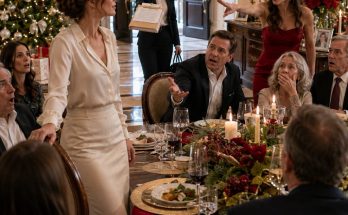
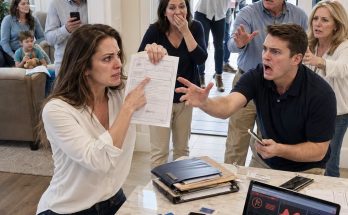
At A Christmas Party, I Overheard That My Parents Had Remodeled My Vacation Home Without Permission And Were Planning To Let My Brother’s Family Live There For Free. I Smiled And Kept Quiet, But The Next Morning, I Had 99 Voicemails From My Parents: “Hey! The Police Are Here!”
### Part 1
I came home for Christmas with snow still melting on the hood of my rental car and six months of Dubai dust still caught somewhere deep in my lungs.
My name is Joshua Davison. I was thirty-five that winter, old enough to know better, but apparently still young enough to believe my family might be happy to see me for reasons that had nothing to do with money.
The house I pulled up to was a two-story colonial in Colorado Springs with white shutters, a sagging wreath on the front door, and warm yellow light spilling across the snow. Five years earlier, I had paid off the mortgage for my parents. My mother cried when I handed them the paperwork. My father hugged me like he was proud.
I should have noticed that the hug lasted exactly until he understood the house was in their name, not mine.
That night, I parked the rented Rolls-Royce behind my father’s pickup. I had brought gifts because I was still doing that stupid thing where you try to buy peace from people who keep moving the price. A vintage watch for Dad. A designer handbag for Mom. Tablets and headphones for my nephews. A new gaming setup for Caleb, my younger brother, though he was thirty years old and still allergic to full-time work.
Mom opened the door before I knocked.
“Joshua, finally,” she said, hugging me with one arm while looking past my shoulder. “Did you bring the gifts?”
“Good to see you too, Mom.”
She laughed like I was joking. I wasn’t.
Inside, the house smelled like roast turkey, cinnamon candles, and the lemon polish Mom only used when she wanted people to think she lived cleaner than she did. The heat was turned up too high. My wool coat felt heavy on my shoulders. Somewhere in the living room, Caleb was laughing too loudly.
“There he is,” Caleb called from the couch. He had a beer in one hand and my nephew’s tablet box already half-open in the other. “The international man of money.”
Dad came in behind him, wearing a red sweater with a reindeer on it and the expression of a man inspecting a delivery.
“Long flight?” he asked.
“Long six months.”
“Must’ve been worth it,” he said. “Dubai money, right?”
That was Dad. He could turn any conversation into a financial audit.
Dinner was noisy. Caleb bragged about a “business pivot” involving crypto equipment he didn’t own and investors he wouldn’t name. Mom kept saying how blessed we were, while checking the handbag label twice under the table. Dad wore the watch immediately, then complained that expensive things were never built like they used to be.
No one asked me what Dubai was like. No one asked if I was tired. No one asked why my hands shook slightly when I poured water.
After two hours of pretending to enjoy myself, I went to the kitchen for another bottle of wine. The kitchen was dim except for the light above the stove. Steam fogged the window over the sink, blurring the snow outside into a soft white smear.
That was when I heard my mother’s voice through the cracked dining-room door.
“Thomas, are you sure Joshua won’t come up there?”
I stopped with my hand on the wine rack.
“He won’t,” Dad said. “He’s always somewhere else. Dubai, New York, Tokyo. That mountain house just sits empty.”
My mountain house.
My vacation home in the Rockies. The one thing I had bought only for myself. Stone fireplace, cedar beams, floor-to-ceiling windows, a study lined with mahogany shelves. It wasn’t just a property. It was the first place in my life where nobody asked me for anything.
Mom lowered her voice. “But the study is his favorite room.”
Dad scoffed. “It’s wasted space. Caleb needs a proper master suite. The boys need a playroom. Joshua has enough. He can buy another office.”
My fingers tightened around the neck of the wine bottle.
Then Caleb’s voice drifted in, smug and lazy.
“Anthony’s crew already started stripping the upstairs floors. We just need Josh out of the way until New Year’s.”
The room tilted slightly.
They weren’t planning to ask.
They weren’t even planning anymore.
They had already started.
For one second, all I could hear was the refrigerator humming and my own pulse beating hard in my ears. I imagined my study gutted. My books boxed. My desk dragged across the floor. My home being carved up like a turkey while my family smiled at me over dinner.
I wanted to kick the door open.
Instead, I set the wine bottle down carefully, wiped my palms on a dish towel, and looked at my reflection in the microwave door.
My face was calm.
Too calm.
I picked the wine back up and walked into the dining room.
Mom jumped. Dad slid something under his placemat. A folded paper. A blueprint, maybe.
“Found it,” I said.
My voice sounded normal.
That scared me more than anger would have.
I poured wine into my father’s glass and raised my own.
“To family,” I said.
They smiled like thieves standing over an unlocked safe.
But as the wine touched my tongue, my phone vibrated in my pocket. One silent security alert from my vacation home.
Front entry motion detected.
And suddenly I knew dinner was only the beginning.
### Part 2
I kept my phone in my pocket and my eyes on the table.
That was harder than it sounds. When a security alert hits your phone from a house your parents just admitted they were secretly remodeling, every instinct in your body wants to look. But I had built my career on waiting. On reading rooms. On letting people talk until they handed me the rope themselves.
So I cut my turkey into neat little squares and listened.
Caleb was still talking about money. He had switched from crypto mining to “real estate leverage,” which was a phrase he used the way toddlers use scissors. With confidence and no understanding of the damage possible.
“All I’m saying,” he said, waving his fork, “is assets should work for the family. Josh has this big mountain place sitting empty, and we’re crammed into a rental with two kids.”
“You chose that rental,” I said.
His smile thinned. “Because some of us didn’t get handed life on a silver platter.”
I almost laughed.
When I was eighteen, Grandpa’s college fund was supposed to be split between me and Caleb. I found out two weeks before freshman orientation that my half had been used for Caleb’s private school tuition because, according to Mom, “he needed support” and I was “strong enough to figure things out.”
So I figured it out. Warehouse nights. Engineering classes by day. Coffee so bitter it felt medicinal. I graduated with honors while Caleb failed out of three colleges funded by the people now calling me selfish.
Dad cleared his throat.
“So, Josh,” he said, too casually. “What are your plans after tonight? Flying back to New York?”
“I was thinking about driving up to the lodge tomorrow,” I said.
The change at the table was immediate.
Mom’s fork slipped from her hand and hit the plate with a sharp clink. Caleb froze mid-chew. Dad’s face tightened like somebody had pulled a string behind his ears.
“No,” Dad said.
I raised an eyebrow. “No?”
“I mean, you shouldn’t.” He coughed, reached for his wine, missed the glass, then grabbed it. “Road’s blocked. Big storm up there. Tree came down near the access road. Power lines too, I heard.”
“That’s strange,” I said. “Weather looked clear.”
“Apps don’t know the mountains,” Caleb said quickly. “Local stuff, bro.”
Mom leaned forward, eyes wide with fake concern. “Honey, you could freeze. Stay in town. Get a nice hotel. You work so hard. Let yourself relax.”
They were all lying in rhythm. That was the part that chilled me. No hesitation. No shame. Just three people performing concern while workers tore apart my house.
I nodded slowly.
“You’re right,” I said. “I’ll stay at the Ritz tonight and fly back in a couple days.”
The relief in the room was so obvious it was almost embarrassing. Mom’s shoulders dropped. Caleb grinned into his beer. Dad patted the table like he had successfully repaired a leak.
“Smart man,” he said. “The lodge will still be there.”
I looked at him.
“Yeah,” I said. “It will.”
I left twenty minutes later. Mom tried to hug me at the door, but I turned the movement into a quick shoulder squeeze. Dad told me again to stay away from the mountains. Caleb called out, “Don’t work too hard, moneybags,” and laughed like he had earned the right.
Outside, the cold hit my face clean and hard.
I got into the car and drove toward Denver.
At the Ritz, the lobby smelled like pine garland and expensive perfume. A pianist was playing “Have Yourself a Merry Little Christmas” near a thirty-foot tree. People in nice coats laughed around me. I checked in, rode the elevator up, and didn’t breathe properly until the suite door locked behind me.
Then I opened my laptop.
My vacation home wasn’t protected by a cheap doorbell camera. I traveled too much for that. It had interior cameras, motion sensors, smart locks, garage temperature alerts, and cloud backup. Most people called it excessive. I called it sleeping at night.
The live feed loaded.
For a second, I didn’t understand what I was seeing.
My living room floor was gone. The hand-scraped oak I had chosen plank by plank had been ripped up and stacked in broken pieces near the fireplace. Boxes of cheap gray laminate leaned against the wall like an insult.
I clicked to the garage camera.
My Porsche 911 GT3 RS was outside under a blue tarp, half-covered in snow. Inside the garage, where the car belonged, someone had stored plastic slides, bikes, and a huge box labeled bounce house.
My throat tightened.
Then I clicked on the study.
Two men stood in the middle of the room drinking beer. One set his can on my antique drafting table. My books were in cardboard boxes marked donate/trash. Bright yellow paint had been rolled across one wall, covering the dark wood paneling I had spent months restoring.
I hit record.
My hands were no longer shaking. Something colder had replaced the shock.
Then I checked county records.
There, attached to my property address, was a pending quitclaim deed. Supposedly signed by me three days earlier. It transferred half the vacation home to my father and half to Caleb for one dollar.
The signature looked close.
Not perfect.
Forged.
I stared at the document until the words stopped being words and became a line in the sand.
At 11:42 p.m., I called David, my attorney.
He answered on the second ring, groggy. “Joshua?”
“They forged my name,” I said. “They’re inside my house right now.”
The silence on his end sharpened.
Then he said, “Tell me everything.”
I started talking, but on the camera, one of the workers opened a box of my rare books and tossed them like firewood onto the floor.
That was when I stopped feeling betrayed and started preparing for war.
### Part 3
David did not tell me to calm down.
That was why I paid him more than some people paid surgeons.
He listened. He asked clean questions. What records did I have? Were the cameras backed up? Had anyone entered with written permission? Was the property held personally or under the JM Trust? Had the forged deed been accepted yet or only submitted?
“Submitted,” I said, scrolling through the county portal. “Pending review.”
“Good,” David said. “Then we can freeze it before it becomes a nightmare.”
“It’s already a nightmare.”
“No,” he said. “This is evidence. A nightmare is what happens when people destroy your life and leave no fingerprints.”
I looked at the live feed. A contractor had peeled back the rug in my study. Another man was prying trim from the wall. The room looked wounded.
David’s voice softened, just slightly.
“Joshua, I have to ask. These are your parents and your brother. Once I file, this stops being family drama. It becomes criminal.”
“They made that choice before I got here.”
“I know. But you need to say it out loud.”
I watched Caleb walk through the living room on camera with a slice of pizza in his hand. He wiped his fingers on my leather sofa.
“File everything,” I said.
David exhaled. “All right. I’ll wake Judge Miller if I have to. Emergency injunction, writ of possession, criminal complaint. Send me the recordings and the deed copy. Do not contact your family.”
“I want to be there.”
“Joshua—”
“I want to see their faces when they learn I’m not soft anymore.”
He was quiet for a moment.
“Then meet me near Summit County in the morning. But don’t go in alone.”
I didn’t sleep. I sat in the suite with the laptop open, watching strangers destroy the only place that had ever felt fully mine. Outside, downtown Denver glowed under Christmas lights. Inside, my coffee went cold three times.
At 6:17 a.m., David texted.
Judge signed emergency order. Sheriff Hunter notified. Evidence packet received. We move today.
Sheriff Hunter and I had gone to high school together. He had been a linebacker with a quiet temper and a strong sense of right and wrong. If there was one man in Colorado who would not shrug off property theft as a “family misunderstanding,” it was him.
I checked out before sunrise.
This time, I didn’t take the Rolls. Too noticeable. I rented a black Chevy Tahoe, the kind of vehicle that looked like it belonged to someone carrying paperwork no one wanted to see. The sky above the mountains was clear and blue, the exact opposite of my father’s fake storm.
Halfway west, my phone buzzed.
Mom.
Morning, honey. Hope you slept well. We’re having a quiet day at home. Stay safe and don’t go near that mountain road. Love you.
I read it twice.
A quiet day at home.
Then I opened the GPS tracker on Dad’s truck.
One year earlier, Dad had borrowed my spare truck “for an hour” and returned it two days later with mud on the tires and an empty tank. After that, I installed a tracker. Back then, I told myself it was practical.
Now the little blue dot was moving west on I-70.
I laughed once, without humor.
“Quiet day,” I said to the empty Tahoe.
I drove to Sally’s Place, a greasy diner five miles below the road to my vacation home. It smelled like bacon grease, burnt coffee, and old vinyl booths. A waitress with tired eyes poured me black coffee without asking if I wanted cream.
I sat by the window with my cap low and waited.
Ten minutes later, Dad’s pickup rolled past, followed by Caleb’s SUV. Jessica sat in the passenger seat, scrolling her phone. My nephews were not with them, thank God. Caleb leaned out the window, laughing at something, his face bright with ownership.
I waited until they disappeared up the road. Then I paid, left a twenty under the mug, and followed.
The road wound through pine trees heavy with snow. Sunlight flashed through branches. My hands were steady on the wheel. My stomach felt hollow.
I parked off a service trail and walked through knee-deep snow until I reached a ridge above the house.
The view stole the air from my lungs.
My front door was open. Three contractor vans sat in the driveway. Men carried lumber across the porch. Power saws screamed from inside. My mother was dragging black trash bags out of the house and piling them near the fire pit.
My things.
Dad stood on the porch with a clipboard, pointing like a foreman. Caleb stood near my Porsche with Jessica beside him.
Then Caleb took a key from his pocket.
He ran it slowly along the driver’s side of my Porsche.
Jessica laughed.
The sound didn’t reach me, but I saw her shoulders shake.
Something inside me went perfectly still.
I called Sheriff Hunter.
“They’re all there,” I said. “My parents. Caleb. The crew. They’re destroying the house now.”
“We’re two minutes out,” Hunter said. “Stay hidden.”
“I’m done hiding,” I said.
But I stayed where I was just long enough to hear the sirens rise through the trees.
And for the first time that morning, my family looked scared.
### Part 4
The sirens changed everything.
One moment, my father was pointing at the porch railing like he owned the mountain. The next, he was frozen with his clipboard halfway in the air. The workers stopped moving. The saws died one by one until the only sound was wind through the pines and the distant growl of engines climbing the road.
Four sheriff’s cruisers came around the bend with lights flashing red and blue against the snow.
They didn’t creep in. They took the driveway like a team that knew exactly where the exits were. One cruiser blocked the gate. Another pulled beside Caleb’s SUV. Deputies stepped out with hands near their belts and eyes sharp.
Sheriff Hunter’s voice boomed through a speaker.
“Sheriff’s Department. Drop your tools. Hands where we can see them.”
A crow lifted from a pine tree and vanished over the roof.
For a second, nobody moved.
Then chaos cracked open.
One contractor dropped a pry bar. Another raised both hands so fast his hard hat fell off. Anthony, the foreman, stumbled backward into a stack of plywood. Mom screamed my father’s name. Caleb tried to step behind Jessica like she was a shield.
Dad recovered first.
“This is private property,” he shouted. “I’m the owner.”
Hunter stepped out of his cruiser wearing a dark jacket and the expression of a man who had read every page twice.
“Thomas Davison?”
“Yes,” Dad snapped. “And you’re trespassing.”
“No, sir,” Hunter said. “We’re responding to an active burglary, felony destruction of property, and suspected deed fraud.”
Dad pointed toward the house. “This is a family renovation. My son authorized it. Call Joshua.”
That was my cue.
I stepped out from the tree line.
Snow crunched under my boots as I walked down the driveway. Every head turned. My mother’s face flooded with relief first, which would have been funny if it hadn’t hurt so much. She thought I had arrived to rescue her.
“Joshua,” she cried. “Thank God. Tell them this is a misunderstanding.”
Dad’s face tightened, but he forced a laugh.
“There he is,” he said to Hunter. “My son. Tell this sheriff we have permission.”
I stopped beside Hunter.
The house looked worse up close. Splintered trim. Mud tracked over exposed plywood. Yellow paint smeared on a drop cloth near the study window. My leather armchair sat outside in the snow like a dead animal.
I took off my sunglasses.
“I did not authorize this renovation,” I said clearly. “I did not transfer ownership. I did not give anyone permission to enter this property.”
Mom’s mouth opened.
Dad’s color drained.
Caleb whispered something I couldn’t hear.
“Joshua,” Dad said, lowering his voice into that old warning tone. “Don’t do this.”
That tone had worked when I was twelve. It had worked when I was eighteen and asking where my college fund went. It had worked when I was twenty-four and paying Caleb’s car loan because Mom said he was depressed.
It did not work anymore.
“You forged my signature,” I said. “You broke into my house. You destroyed my property.”
“I had a key,” Dad snapped, grabbing at the first excuse he could find. “You left a key in the family safe. That means permission.”
I almost smiled.
“The key,” I said. “Right.”
He didn’t like my tone.
Six months before Dubai, I had noticed little things. A financial folder moved. A bank envelope opened and tucked back incorrectly. Dad asking oddly specific questions about the lodge’s insurance policy. So before I left, I changed the locks to biometric smart locks and left the old key in the safe.
Not because I wanted to trap them.
Because some part of me still hoped they would pass the test.
“That key doesn’t open the front door,” I said. “It opens the storage shed now.”
Dad blinked.
I pointed at the splintered frame. “The cameras show you trying the key. It failed. Then Anthony drilled the lock while you stood beside him.”
Anthony made a small choking sound.
“You set us up,” Mom whispered.
“No,” I said. “I protected myself. You just happened to prove why I needed to.”
Hunter stepped forward.
“Thomas Davison, Sarah Davison, Caleb Davison, you are being detained pending investigation into criminal trespass, property destruction, and fraud.”
Mom began sobbing before the deputy touched her wrists.
Dad looked at me with disbelief shifting into rage. Caleb panicked. He bolted toward the side yard, made it three steps, slipped on the snow, and went down hard. A deputy cuffed him while he yelled into the slush.
“I need that house,” Caleb screamed. “You don’t understand. I promised them collateral.”
Them.
The word cut through the cold.
I looked at my brother, face pressed into dirty snow, and realized this theft was bigger than jealousy.
Caleb wasn’t just trying to move in.
He was trying to survive something he hadn’t told anyone about.
### Part 5
The deputies loaded my family into separate cruisers.
That should have felt satisfying. In some ugly, simple way, maybe it did for about three seconds. Then I watched my mother duck her head as a neighbor’s truck slowed near the gate, and I felt only tired. Tired in my bones. Tired in the old places, the places where a child keeps hoping the people who raised him will become better if he just explains the hurt clearly enough.
Dad didn’t look ashamed.
That helped.
As the cruiser door closed, he looked through the window with pure hate. Not regret. Not fear for what he had done to me. Hate because I had embarrassed him. Hate because I had taken control of the story.
Hunter came over while deputies secured the contractors.
“You okay, Josh?”
I looked at the house.
“No.”
He nodded like that was the only honest answer.
We walked through the damage together. I had built hotels in three countries. I knew what demolition looked like. This wasn’t clean work. This was rushed, careless, mean.
In the living room, the oak flooring had been ripped up with no attempt to preserve it. My stone fireplace had a gouge near the base. Someone had dragged something heavy across the hearth. In the kitchen, cabinet doors hung open. My copper pans were gone. Mom had probably packed them for Caleb.
Upstairs, I stopped in the doorway of my study.
For a moment, I couldn’t step inside.
The room smelled like wet paint, sawdust, beer, and cold air from the broken window latch. My mahogany shelves were half-empty. Books lay in boxes, spines cracked, pages bent. A first-edition engineering manual I had bought in London was open on the floor with a boot print across the diagram of a bridge.
The yellow wall glowed obscenely in the winter light.
Hunter took off his hat.
“Damn,” he said quietly.
That one word nearly broke me.
David arrived an hour later with a folder under his arm and his tie crooked from rushing. He didn’t give me a speech. He just stood in the study, looked around, and said, “We’ll document everything.”
By noon, the contractors had given statements. Most claimed Dad showed them paperwork and said I approved the remodel as a Christmas surprise. Anthony looked like a man watching his business burn down in real time.
“Your father said it was family property,” he told me, wringing his hands. “He said you were too busy to deal with details.”
“Did you call me?”
“No.”
“Did you check the trust records?”
He looked at the floor.
“Then you weren’t too busy for demolition,” I said. “Only for due diligence.”
At the sheriff’s station later, the fluorescent lights made everything look sick. David led me into a side office and closed the door.
“There’s more,” he said.
I knew from his face that I wouldn’t like it.
“Caleb owes money,” he continued. “A lot. Around two hundred thousand.”
“To who?”
“Private lenders in Denver. Not banks. Not friendly people.”
The pieces clicked together so sharply I could almost hear them.
“The deed,” I said. “He was going to borrow against the house.”
David nodded. “Hard-money loan. The forged deed would show him and your father as owners. He planned to use the property as collateral, pay off one debt by creating a bigger one, and then probably default.”
“And I would lose the house.”
“Or spend years fighting foreclosure.”
I sat down.
The chair was hard plastic. It creaked under me. Somewhere down the hall, someone laughed at something unrelated, and the normalness of that sound made me feel dizzy.
“Did my parents know?”
David hesitated.
“Your father admitted they knew Caleb was in trouble. He says they were trying to save him.”
“By feeding me to the wolves.”
David didn’t answer.
I asked to see them.
He told me not to. I went anyway.
They were in holding, separated but close enough to hear one another. Mom’s mascara had run down her face. Dad gripped the bars like a man still expecting the world to obey. Caleb sat on a bench, bouncing one knee, eyes red and wild.
Dad spoke first.
“You need to drop the charges.”
I almost laughed. Not because it was funny, but because he truly believed orders still belonged in his mouth.
“Do I?”
“This has gone far enough,” he said. “Your brother is in danger. Real danger. If you don’t help, whatever happens is on you.”
Mom sobbed. “What kind of son chooses a house over family?”
“The kind who finally understands the house was never the issue,” I said.
Caleb stood. “Josh, please. I can fix it. Just bail me out. Just this once.”
Just this once.
The family anthem.
I looked at my father. “You could have told me the truth.”
“You would’ve judged him.”
“I would’ve protected my property.”
“You have so much,” Dad snapped. “Caleb has nothing.”
“Caleb has had everything you took from me.”
Mom flinched, but Dad only leaned closer.
“You were never supposed to know until after New Year’s,” he hissed.
There it was.
Not panic. Not misunderstanding.
A plan.
I turned to David.
“File the restraining orders,” I said. “All of them.”
Behind me, my mother screamed my name like I was abandoning her.
But the strangest part was that, for the first time, I did not turn around.
### Part 6
The first night after the arrests, I slept at the lodge.
David told me to stay in town. Hunter offered to have a deputy posted at the gate. Even the insurance adjuster, who had seen enough damaged properties to grow a second layer of skin, looked around and said, “You sure you want to be here tonight?”
I was sure.
Not because it was comfortable. The front door had a temporary lock. The heat was uneven. The study smelled like chemicals and wet wood. My Porsche had been towed to Denver with a long silver scar down its side. Half my furniture sat under tarps.
But it was mine.
I made coffee in a chipped mug I found at the back of the pantry and sat on the living room floor where the oak used to be. Snow fell outside in thick, quiet sheets. The house creaked around me. Not like it was dying. Like it was settling after a fight.
Around midnight, my phone buzzed.
Unknown number.
Your brother made promises. We expect a conversation.
I stared at the message until the screen dimmed.
A year earlier, I might have felt a responsibility rise in my chest. Family trouble, family solution. Joshua fixes it. Joshua pays. Joshua makes the ugliness go away so everyone else can pretend to be decent.
Instead, I forwarded the message to David and Sheriff Hunter.
Then I blocked the number.
The next few weeks moved like a legal machine with sharp teeth. Insurance claims. Police reports. Contractor statements. Forensic review of the forged deed. Security footage copied and authenticated. Every day brought another detail that made the betrayal less emotional and more precise.
Precision helped.
Pain is fog. Evidence is a map.
Anthony’s crew admitted Dad told them I was “too busy to sign every little paper” and that the deed transfer was “basically done.” Mom admitted she had packed some of my kitchenware because “Caleb and Jessica would need it more.” Caleb refused to talk unless someone gave him a lawyer he didn’t have to pay for.
Dad kept insisting it was a family matter.
Then Uncle Robert called.
Robert was my father’s younger brother, the one Dad always dismissed as “just a mechanic,” as if honest work under a hood was shameful. I hadn’t seen him much since Aunt Linda died. But when she passed, I paid for the funeral because Robert was too proud to ask and too broke to hide it. He never forgot. I never expected him to repay me.
“Can you meet?” he asked. His voice sounded rough. “There’s something you need to see.”
We met at a diner halfway between Denver and the mountains. The place had red vinyl seats, chrome-edged tables, and pie rotating in a glass case. Robert wore a flannel jacket with oil stains on the cuffs. He looked nervous, which made me nervous.
He slid his phone across the table.
“I was added by mistake,” he said. “They thought I’d agree with them because Thomas is my brother.”
“What is this?”
“Family group chat,” he said. “The one without you.”
The words landed softly. The meaning didn’t.
I opened the thread.
Mom: If we do it while he’s overseas, we can say we believed the lodge was for family use.
Caleb: Need deed first. I know a guy who can handle notary stuff.
Dad: Joshua won’t fight us. He needs approval too much.
Mom: Make the upstairs warm for the boys. His office feels gloomy anyway.
Caleb: Once we’re in, he won’t kick out kids at Christmas.
I stopped scrolling.
The diner noise faded. Forks against plates. Someone laughing near the counter. Coffee pouring into ceramic cups. All of it became distant.
Robert looked down at his hands.
“I’m sorry, Josh.”
I kept reading.
Dad: If he complains, we remind him how much we sacrificed.
Mom: He always comes around.
Caleb: Soft target.
Soft target.
That was the phrase that did it.
Not son. Not brother. Not family.
Target.
I handed the phone back, but Robert pushed it toward me again.
“Keep it,” he said. “Give it to your lawyer.”
“Why help me?”
His eyes shone.
“When Linda died, your father said funerals were too expensive and people should plan better. You sent the money without making me beg.” He swallowed. “Blood doesn’t mean much if it only flows one way.”
I left that diner with the phone in my coat pocket and a strange emptiness in my chest.
By then, I no longer needed to wonder whether my family had lost their way.
They had drawn the map themselves.
And now I had a copy.
### Part 7
The group chat changed everything.
Before that, my parents still had a story they could tell themselves. They were desperate. They were confused. They believed I wouldn’t mind. They had acted rashly for Caleb’s sake. It was ugly, but human.
The messages stripped all that away.
They had discussed timing. They had discussed leverage. They had discussed my emotional weaknesses like project variables. My need for approval had been a tool in their hands for years, and seeing it written in Dad’s blunt little texts made me feel both humiliated and strangely awake.
David’s reaction was immediate.
“This destroys their misunderstanding defense,” he said, reading the printouts in his office. “Premeditation. Intent. Knowledge that you would object. Attempt to use children as emotional shields. It’s all here.”
I sat across from him with a paper cup of coffee cooling between my hands.
“Good.”
He looked at me carefully. “It may also destroy whatever possibility existed of a quiet settlement.”
“There was never going to be a quiet settlement.”
“There could be pressure.”
“There already is.”
He nodded because he knew.
The pressure came from everywhere.
Cousins I had not spoken to in years suddenly found my number. One aunt left a voicemail saying Christmas was about forgiveness, which was interesting because she had not invited me to Christmas in a decade. A family friend wrote that parents make mistakes and successful children should be generous. Someone from my father’s church sent a message beginning with “As a Christian man,” which I deleted before finishing.
Mom tried letters.
The first one arrived in a white envelope with my name written in her careful cursive. I recognized the handwriting before I touched it. My stomach reacted like I had smelled spoiled milk.
David told me not to read it. I read it anyway.
It was exactly what I expected.
She missed me. She couldn’t sleep. Dad’s blood pressure was high. Caleb was terrified. The apartment they were staying in temporarily was cold. Hadn’t they loved me? Hadn’t they fed me? Didn’t I remember my mother making pancakes when I was little?
There was one sentence about the house.
We should have talked to you first.
Not, We should not have forged your name.
Not, We should not have broken in.
Just, We should have talked to you first.
As if the crime was poor communication.
I folded the letter and put it in a drawer marked evidence.
My goal during those months was simple: stay focused. Restore the house. Protect the trust. Cooperate with law enforcement. Keep working.
The conflict was that grief is sneaky. It doesn’t arrive only when you’re alone in the dark. It shows up in grocery stores when you see someone buying the cereal your mother used to buy. It hits during conference calls when your father’s name flashes across an old document. It sits beside you in your car when you pass a family loading Christmas lights into a cart.
I did not miss who they were.
I missed who I kept wishing they could be.
One afternoon, while reviewing repair estimates at the lodge, I found a box the crew had missed. It was shoved behind insulation in the mudroom. Inside were things Mom had packed from my study.
Not valuable things.
Personal things.
My engineering medal from college. A photograph of me at twenty-two, grinning beside my first completed bridge project. A small wooden plane Grandpa carved for me when I was eight.
On top was a sticky note in Mom’s handwriting.
Trash unless Caleb wants.
I sat on the floor for a long time holding that wooden plane.
That was the emotional reversal nobody saw. The arrests made me angry. The forged deed made me cold. But that box made me mourn.
Because they had not only tried to take my property.
They had sorted through my life and decided what parts could be discarded.
When I told Robert, he drove up that weekend without being asked. He brought tools, sandwiches, and a thermos of coffee strong enough to strip paint.
We repaired the mudroom shelves together in silence.
At one point, he said, “Your dad always hated when you succeeded without needing him.”
I looked over.
Robert kept sanding a board. “Some men want sons. Some men want mirrors.”
That sentence stayed with me.
A week later, David called.
“Sentencing date is set,” he said. “March 24.”
I looked out at the mountains, white and clean under the afternoon sun.
“Good,” I said.
But my hand tightened around the phone, because justice was coming.
And I still didn’t know whether seeing them in court would free me or finish breaking what was left.
### Part 8
The courthouse smelled like wet wool, old paper, and floor cleaner.
March in the mountains is not spring. Not really. The snow melts during the day, turns gray at the edges, then freezes again by dusk into ridges that catch your shoes. I remember stepping over a dirty pile of slush outside the courthouse and thinking it looked like everything I felt: something once clean, now mixed with grit.
David walked beside me in a charcoal overcoat.
“You don’t have to speak if you don’t want to,” he said.
“I want to.”
“That doesn’t mean it’ll feel good.”
“I know.”
Inside, the courtroom was smaller than I expected. Wooden benches. A flag in the corner. Fluorescent light buzzing overhead. A few locals sat in the back because small towns treat scandal like community theater.
My parents were already there.
Dad had lost weight. His suit hung loose at the shoulders. He looked older, but not softer. Mom wore a pale blue sweater and clutched a tissue like a prop. Caleb sat beside them, pale and twitchy, eyes darting toward the doors every time someone entered.
For a moment, I saw them as strangers.
Then Mom turned, saw me, and began crying.
That used to work.
I sat behind the prosecution table and looked forward.
Their public defender tried the family angle first. He described a “misguided attempt to help a struggling young family.” He said my parents were elderly, though Dad was sixty-two and still strong enough to direct a demolition crew. He said incarceration would be devastating. He said family disputes should not be criminalized.
Judge Miller listened without blinking.
Then the prosecutor played the footage.
Dad at my door, trying the old key.
Anthony drilling the lock.
Mom carrying out bags of my belongings.
Caleb scratching my Porsche.
The courtroom went silent during that part. Even the defender looked down.
Then David submitted the group chat.
I watched Dad’s jaw tighten as his own words were read aloud.
Joshua won’t fight us. He needs approval too much.
Soft target.
Mom began sobbing harder.
Caleb whispered, “Oh, come on,” under his breath, like the truth had personally inconvenienced him.
When it was my turn, I stood.
My hands were steady, but my mouth had gone dry.
“My family says this was about need,” I began. “But need does not forge a signature. Need does not drill a lock. Need does not throw someone’s books into trash bags and paint over the room he built for peace.”
I looked at my father.
“I spent most of my life believing that if I helped enough, paid enough, forgave enough, I would finally be treated like a son instead of a resource. This crime was not a sudden mistake. It was the final version of a pattern. They took my college fund for Caleb. They took my money for Caleb. They took my boundaries for Caleb. Then they tried to take my home.”
Mom covered her face.
I kept going.
“I am not asking the court to punish them because they hurt my feelings. I am asking the court to recognize that family does not erase fraud. Blood does not create ownership. And love, if it ever existed here, does not look like theft.”
I sat down.
My father stood before anyone told him to.
“He has so much,” Dad said, voice shaking with anger. “You don’t understand. Joshua always had the ability. Caleb struggled. We were trying to level the playing field.”
Judge Miller’s face hardened.
“Sit down, Mr. Davison.”
“But—”
“Sit down.”
He did.
The sentence was not what some people expected. Because they were first-time offenders, and because the forged deed had been stopped before completion, they avoided long prison time. Suspended sentences. Probation. Criminal records. Permanent restraining orders.
But then came restitution.
Every repair. Every legal fee. Every damaged item that could be valued. Every dollar tied to the Porsche. Every cost created by the break-in.
One hundred eighty-five thousand dollars.
Mom made a sound like she had been struck.
Dad stared at the judge.
Caleb looked at me with naked panic.
They did not have that money. Caleb had drained them for years. Dad’s pension was not enough. Their savings were gone. The house I had paid off for them was their last real asset.
Judge Miller read the final order.
If restitution was not paid, assets could be seized.
The gavel came down.
I felt no joy.
Only the heavy click of a door locking behind a chapter of my life.
Outside the courtroom, Mom tried to approach me, but David stepped between us.
“Joshua,” she sobbed. “Please. We’ll lose the house.”
I looked at her.
For the first time, she understood that I could save them and might choose not to.
That fear in her eyes told me the real sentencing had only just begun.
### Part 9
The bank notice arrived two weeks later.
I was in my New York office, looking down at traffic crawling along Sixth Avenue, when the email appeared. The subject line was dry and official. Asset seizure. Restitution enforcement. Davison residence.
My childhood home was going to auction.
I stared at the screen for a long time.
That house had not been perfect. Not even close. It held too many bad memories under its roof. But memory is complicated. The same kitchen where Dad told me my college fund was gone was also where Grandpa taught me to make pancakes before he died. The same hallway where Mom ignored me for three days after I refused to lend Caleb money was where I measured my height in pencil marks until I was fourteen.
I could have stopped the auction with one wire transfer.
One.
The old Joshua would have done it before lunch. He would have called David, complained about the unfairness, then saved everyone because letting my parents suffer would have felt unbearable. He would have told himself he was being kind.
But kindness without boundaries is just self-harm with better branding.
I deleted the email.
Then I went back to work.
That night, I sat alone in my apartment with takeout I barely touched. Snow tapped against the windows. My phone stayed silent because their numbers were blocked. The silence should have felt peaceful. Instead, it felt like standing after a loud machine shuts off. You don’t realize how much noise you lived with until it stops.
Robert called around nine.
“I heard,” he said.
“About the auction?”
“Yeah.”
I waited for him to tell me I should reconsider.
He didn’t.
“All I’ll say,” he continued, “is don’t set yourself on fire to keep people warm when they’re holding matches.”
I laughed softly.
“Did you make that up?”
“No. Saw it on a bumper sticker at the shop.”
That made me laugh for real, which surprised me.
A month later, the house sold.
I did not attend the auction. I did not watch online. David sent a short message afterward. Sold. Restitution partially satisfied. Remaining balance attached to future income/assets.
My parents moved into a two-bedroom rental apartment on the outskirts of town, in a complex Dad used to mock when we drove past it years earlier. Thin walls. Rusted stair rails. A parking lot that collected dirty snow in uneven piles.
Caleb moved into their second bedroom after Jessica filed for divorce.
I heard about that through David too. Jessica took Noah and Liam to Ohio to live with her parents. She filed for full custody, citing Caleb’s criminal record, financial instability, and the danger surrounding his debts. I did not blame her. If anything, I wondered why she waited so long.
The golden child ended up sleeping on a futon in the same apartment as the parents who had ruined themselves trying to protect him from consequences.
There was symmetry in that.
Not justice, exactly. Justice is cleaner in stories than in life.
In real life, justice still leaves stains.
One Saturday in May, I drove past the old colonial.
I told myself it was because I had business nearby. That was a lie. I wanted to see it once.
The new owners had painted the shutters dark green. The wreath was gone. A child’s bicycle lay in the driveway. Someone had planted tulips near the porch.
For a moment, I felt a sharp, childish ache. Not for my parents. Not even for the house. For the version of me who once believed that paying off that mortgage would make them finally see me.
Then I noticed something at the curb.
A cardboard box.
On top of it sat one of Caleb’s old baseball trophies.
I parked, got out, and looked inside.
The box was full of things the new owners had probably cleared from the garage. Caleb’s trophies. Dad’s fishing magazines. A cracked Christmas ornament with my name misspelled as “Joshwa” in glitter glue. At the bottom, wrapped in newspaper, was a framed photo of me at my college graduation.
I was standing alone in my cap and gown.
My parents had not attended because Caleb had “a crisis” that weekend.
I picked up the photo.
For years, I thought that picture hurt because they weren’t in it.
Now I realized it was proof.
I had already survived without them.
I placed the photo back in the box and walked away.
By the time I reached my car, I felt lighter, but not healed.
Healing, I was learning, was not one clean break.
It was choosing, again and again, not to crawl back into the cage just because the door was familiar.
### Part 10
Restoring the lodge took six months.
The first crew I hired after the disaster was not cheap, and I did not want cheap. Cheap had already stood in my study drinking beer on my antique table. Cheap had already torn up oak and called it renovation. This time, every worker was licensed, insured, vetted, and watched by cameras they knew existed.
Some people might call that paranoid.
I call it education.
By late summer, the living room floor had been replaced with hand-scraped hickory. The grain was darker than the original oak, warmer somehow, with knots that looked like old eyes. The stone fireplace was repaired. The kitchen cabinets were refinished. The copper pans Mom packed for Caleb were replaced with better ones.
The Porsche took four months at a specialist shop in Denver. When I finally saw it under the garage lights again, polished and perfect, I ran my hand along the repaired side and felt nothing under my fingers.
But I knew.
That became true of a lot of things.
From the outside, my life looked untouched. Better, even. Dubai had been a success. The North American board had noticed. My accounts were healthy. My suits fit. My voice was calm in meetings.
Under the paint, there were scars.
The study was the last room finished.
I made that choice on purpose.
For weeks, I left it half-empty and raw. Sanded walls. Bare shelves. Drop cloths folded in the corner. I needed to stop seeing it as a crime scene before I rebuilt it as a sanctuary.
When the new stain finally went on, the room smelled like cedar, oil, and fresh beginnings. I replaced the broken drafting lamp with one from an antique dealer in Boston. I found new copies of some lost books. Others were gone forever, and I let them stay gone. Not every empty space needs to be filled immediately.
Robert came up the weekend I moved back in fully.
He arrived in his old truck with a cooler of steaks, two fishing rods, and a toolbox he insisted on bringing even though nothing needed fixing.
“Something always needs fixing,” he said.
He was right, but not in the way he meant.
That Saturday morning, we drank coffee on the deck while fog lifted from the valley. The air smelled like pine, damp earth, and smoke from the fireplace. My phone buzzed with a message from Elijah Ward, the CEO of Aurora Developments and the man who had taught me how to negotiate with billionaires without blinking.
Landing in twenty. Still have that scotch?
I smiled.
“Elijah’s coming,” I told Robert.
“The helicopter guy?”
“That’s one way to describe him.”
The thumping started as a low pulse beyond the ridge, then grew until the trees trembled. A black helicopter came over the mountain and descended toward the pad in the lower meadow. Robert grinned like a kid watching fireworks.
Elijah stepped out in a navy suit, somehow looking untouched by rotor wind.
“Joshua,” he called, shaking my hand. “So this is the fortress.”
“It’s just a house.”
He looked at the timber beams, the stone chimney, the wide windows catching mountain light.
“No,” he said. “It’s a statement.”
I walked him through the property. Elijah noticed everything. The joinery. The sightlines. The way the lodge sat with the land instead of on top of it. He did not ask many personal questions. I appreciated that.
In the study, he ran one hand along the restored wood paneling.
“You rebuilt it better,” he said.
“I had motivation.”
“So I’ve heard.”
We stood by the window looking out at the valley.
“When you told me last winter you had a legal emergency,” he said, “I expected delays. Instead, you delivered Dubai ahead of schedule while handling all this.”
“I compartmentalize.”
“No,” he said. “You execute under pressure. There’s a difference.”
He handed me an envelope.
Inside was an offer.
Managing partner. New luxury resort division. Equity stake. Full autonomy. Ten properties across the Rockies and Sierras inspired by the design principles of my lodge.
I read the page twice.
Robert whistled softly behind me.
Elijah smiled. “You built yourself a sanctuary, Joshua. I want you to build more.”
For the first time in a long time, ambition did not feel like escape.
It felt like expansion.
I accepted before dessert.
That night, the three of us sat in the restored living room drinking thirty-year scotch while the fire cracked and snow began falling early outside.
I looked at Robert laughing at one of Elijah’s dry jokes and realized something simple.
This was the Christmas table I had wanted all along.
Not perfect people.
Just people who did not need to steal from me to feel close.
### Part 11
The first letter came in November.
No return address, but I knew Mom’s handwriting before I picked it up. The loops were sharper now. More pressure in the pen. Even her cursive looked desperate.
I stood in the mudroom holding the envelope while snow slid from my boots onto the mat.
For almost a year, I had blocked numbers, filtered emails, ignored secondhand updates, and let lawyers handle anything necessary. But paper has a way of feeling more personal than a voicemail. It sits in your hand with weight. It asks to be opened.
I carried it to the study.
The fire was already going. Outside, evening pressed blue against the windows. Inside, the room glowed amber and smelled like leather, wood smoke, and coffee. My drafting table held blueprints for the first Aurora resort project. My shelves were full again, though not the same as before.
Neither was I.
I set the letter on the desk and stared at it.
I imagined the contents.
Your father is not well.
Caleb is trying.
We are still your parents.
Christmas is coming.
How can you be so cruel?
The old guilt moved in me, but weakly, like a ghost trying a locked door.
I thought of pancakes. I thought of Mom smoothing my hair before elementary school. I thought of Dad teaching me how to change a tire. Then I thought of the group chat.
Soft target.
Memory is a dangerous lawyer. It argues both sides.
My phone buzzed.
David.
I answered.
“Tell me you’re not reading another letter,” he said.
“How did you know?”
“Because your mother mailed one to my office too.”
I looked at the envelope. “What did yours say?”
“That I’ve poisoned you against your family.”
“That tracks.”
“And that you’re abandoning them in their darkest hour.”
I almost smiled. “Their darkest hour seems to have lasted my entire adult life.”
David was quiet a moment.
“Joshua, you don’t owe them a performance of forgiveness.”
I leaned back in the chair.
That sentence settled over me like a blanket.
“What if I’m becoming cold?” I asked.
“You’re not cold. Cold would be wanting them destroyed. You want them away from you. That’s different.”
After we hung up, I carried the letter to the fireplace.
I did not open it.
The flames caught one corner, then another. Mom’s handwriting curled black. The envelope folded in on itself, glowed orange, and broke apart into ash.
I expected to feel guilty.
Instead, I felt calm.
Not happy. Not triumphant. Just calm in the way a locked door is calm.
Later that night, Robert called. He had started calling every Sunday, usually pretending he needed to ask about some tool or sports score before admitting he just wanted to check on me.
“You doing Christmas up there?” he asked.
“Thinking about it.”
“Alone?”
“Maybe.”
He snorted. “That’s dumb.”
“Excuse me?”
“I said what I said. I’ll bring ribs. You provide heat and that expensive coffee that tastes like dirt but in a rich way.”
I laughed.
“Deal.”
The next day, David sent another message.
Update: Caleb’s creditors were arrested in Denver. Larger financial crimes case. He should be physically safe now.
I read it twice.
I was glad.
That surprised me less than I expected. I did not want Caleb dead. I did not even want him hunted. I just wanted him to live with consequences that did not require my wallet, my house, or my soul as collateral.
I texted back.
Good. Thank you for telling me.
Then I put the phone down and looked at the blueprints on my desk.
For years, my life had been built around emergency repairs for other people’s disasters. Caleb failed, I paid. Dad demanded, I bent. Mom cried, I apologized. Every crisis was a fire, and I was the extinguisher.
Now, for the first time, I was building something that did not begin with damage.
The first resort would sit beside a lake in Montana. Stone, timber, glass, silence. A place for people who needed to breathe. I knew exactly how to design it because I knew exactly what peace cost.
That night, I stood at the window while snow covered the valley.
No tire tracks. No contractor vans. No police lights.
Just clean white land under a dark sky.
I whispered, “Merry Christmas, Joshua,” to my reflection in the glass.
And this time, it sounded less like survival and more like a promise.
### Part 12
Christmas morning arrived with three feet of snow and a sky so bright it hurt.
I woke before sunrise, not because of an alarm, but because the house was quiet in a way that invited me to be awake. No shouting from downstairs. No Caleb laughing too loud. No Dad turning the television volume up to win an argument nobody else had joined. No Mom clattering dishes while sighing loudly enough to be praised for working.
Just the wind.
And the slow crackle of last night’s embers.
I made coffee and stood barefoot in the kitchen, watching steam rise from the mug. The counters were clean. The copper pans hung above the island. The window over the sink framed a clean field of snow broken only by deer tracks.
For years, Christmas had been a performance review.
Did I bring enough? Spend enough? Forgive enough? Smile enough? Was I successful in a way that benefited everyone but me?
This Christmas had no audience.
By noon, Robert arrived in his truck with snow chains on the tires and a cooler in the back.
“You know,” he said, stomping snow from his boots, “normal people spend Christmas somewhere easier to reach.”
“Normal people don’t bring ribs through a blizzard.”
“Fair.”
David came two hours later with his wife, Mara, whom I had met only once before and instantly liked because she looked around the lodge and said, “This place feels like it knows how to keep a secret.”
Elijah sent a case of wine and a note that read, Don’t work today. I ignored the first sentence and appreciated the second.
We cooked too much food. Robert burned the first batch of ribs and blamed the altitude. Mara made green beans with almonds. David opened wine like he was cross-examining the cork. I made mashed potatoes from scratch because Grandpa had taught me, and some memories deserved to be kept.
There was laughter at the table.
Not the sharp kind my family used, where every joke had a victim.
Real laughter.
The kind that warmed the room without asking anyone to bleed for it.
After dinner, Robert helped me carry wood to the porch. The air outside was bitter, stars beginning to show over the ridge. Smoke rose from the chimney in a thin gray line.
“You heard from them?” he asked.
I knew who he meant.
“No.”
“Good.”
“I burned Mom’s letter.”
He nodded slowly. “How’d that feel?”
“Quiet.”
“That’s better than good sometimes.”
We stood there a while, two men watching snow reflect moonlight.
Then he said, “Your dad called me last week.”
I looked at him.
“What did he want?”
“To complain. To ask if I’d talk sense into you. To say you ruined the family.”
I waited.
Robert shrugged. “I told him he ruined his own family when he confused your kindness with weakness.”
My throat tightened.
“Thank you.”
“Don’t thank me. Took me sixty years to say it to him.”
Inside, Mara had started music. David was laughing at something. The lodge windows glowed gold against the dark.
I thought of my parents in their apartment. Caleb on a futon. Mom maybe crying over a cheap artificial tree. Dad blaming me because blame was easier than reflection.
I did not feel happy about their misery.
But I no longer mistook their misery for my assignment.
That was the difference.
Before bed, I went into the study alone.
The fire was low. The room smelled like smoke and paper. On the desk sat three things: the blueprint for the Montana resort, the photo from my college graduation, and the wooden plane Grandpa had carved for me.
I picked up the photo.
For years, I saw absence in it.
Now I saw evidence of strength.
A young man stood alone in a cap and gown, smiling because no one had come but he had made it anyway.
I placed it on the shelf where I could see it from my desk.
Then I picked up the wooden plane and ran my thumb along the worn wing.
My sanctuary was never just the house. That was the lesson I had nearly paid a million dollars to learn. Wood can be replaced. Stone can be repaired. Cars can be repainted. Books can be bought again, mostly.
A sanctuary is the line you finally stop letting people cross.
It is the locked door.
The honest friend.
The chosen table.
The courage to let people call you cruel while you save your own life.
I turned off the study lamp and looked once more through the window. Snow kept falling, soft and steady, covering the old tire tracks, the old footprints, the old damage.
By morning, the valley would look untouched.
I knew better.
Under all that white, the ground remembered everything.
So did I.
But remembering was no longer the same as hurting.
I closed the door gently behind me, walked toward the sound of my real family laughing by the fire, and left the past outside where it belonged.
THE END!
Disclaimer: Our stories are inspired by real-life events but are carefully rewritten for entertainment. Any resemblance to actual people or situations is purely coincidental.