At My Sister-In-Law’s Family Dinner, My Brother-In-Law Smirked: “So… You’re In The Navy? What’s Your Nickname?” “Mad Dog,” I Said. The Groom’s Uncle Froze Mid-Sip And Said: “Apologize. Now.” His Face Went Pale.
### Part 1
I almost turned the car around three times before I reached the house.
Fairfax, Virginia, has a way of looking harmless in the early evening. Wide streets, trimmed lawns, basketball hoops at the end of driveways, American flags clipped neatly to porch columns. The kind of neighborhood where sprinklers tick over grass and people wave like they don’t have secrets stacked behind their front doors.
My sister Jenna had texted me the address twice, then called once.
You’re still coming, right?
I had told her yes.
That was before I sat outside Mark’s parents’ house with both hands on the steering wheel, listening to my engine idle while the windows fogged faintly at the edges.
The rehearsal dinner was supposed to be simple. Family only. Some roast chicken, some speeches, probably too many questions from people who thought military service was either a movie trailer or a patriotic bumper sticker. I had survived worse rooms. I had survived rooms with no windows, no exits, and men who smiled for reasons that made your spine go cold.
Still, I stayed in the car.
Normal had always felt like a jacket I borrowed from someone else. It fit if I stood still. If I moved too quickly, people noticed the seams.
I checked myself in the rearview mirror. Hair pinned back. Navy blouse. Small silver earrings Jenna had mailed me with a note that said, “Please wear something that makes you feel pretty.” I had laughed when I read it, not because it was funny, but because pretty had not been a requirement in my life for a very long time.
I shut off the engine.
“Just dinner,” I whispered.
Inside, the house smelled like garlic, lemon, warm bread, and the apple pie somebody had already set cooling near the kitchen window. Voices overlapped from the dining room. A dog barked once from somewhere upstairs. Silverware clinked. Someone laughed too loudly.
Jenna saw me first.
“Evie!” she said, rushing across the foyer in a cream dress that made her look younger than thirty-one. She hugged me hard.
I stood stiff for half a second, then hugged her back.
“You came,” she said into my shoulder.
“I said I would.”
“You say a lot of things when you’re trying to avoid feelings.”
“That’s my brand.”
She laughed, but her eyes checked my face the way sisters do, like she was reading weather damage.
Mark appeared behind her, leaning against the doorway with a whiskey glass in his hand. The groom. Jenna’s almost-husband. I had met him twice before, both times briefly, both times in public places where he could be charming without effort.
He was handsome in a clean, suburban way. Good haircut. Expensive watch. Smile trained for sales meetings and golf clubs. He looked at me like I was a résumé he had not finished reading.
“Evie,” he said. “Glad you made it.”
“Mark.”
He stepped forward and shook my hand. His palm was dry, grip firm, a little too long.
“Jenna said you were Navy.”
“Was.”
“Retired already?” His eyebrows lifted. “You don’t look old enough.”
“I’m not.”
He smiled like he had found a loose thread. “Must’ve been a desk job.”
The foyer went a shade quieter.
Jenna looked at him. “Mark.”
“What?” He laughed. “I’m kidding.”
I let my hand slide free. “People usually are.”
That should have been the first warning.
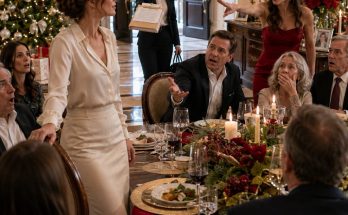
Dinner began at a long polished table under a chandelier bright enough to make every water glass sparkle. Mark’s parents sat near the head. Jenna sat beside him, glowing and nervous. I took a seat halfway down, between an aunt who smelled like rose perfume and a cousin who kept checking football scores under the table.
Across from me sat an older man I did not know.
Late seventies, maybe early eighties. White hair cut short. Straight back. Hands still. He wore a dark sport coat and no tie, and he watched the room with a steadiness I recognized before I knew why.
Jenna leaned toward me. “That’s Uncle Frank. Mark’s uncle.”
I nodded politely. “Ma’am,” I said to the aunt beside me, then, “Sir,” to Frank.
His mouth twitched, not quite a smile. “Evening.”
Conversation started harmlessly. Wedding flowers. Traffic on I-66. A cousin’s delayed flight from Chicago. Mark’s father complained about catering prices. Jenna’s mother asked if anyone needed more rolls.
I answered when spoken to and kept my water glass near my right hand.
Halfway through the meal, after the salad plates had been cleared and the chicken came out glossy with herbs, someone asked, “So, Evie, what exactly did you do in the Navy?”
I felt Jenna tense beside Mark.
“Special operations,” I said.
The words landed, as they always did, in that awkward space between curiosity and caution.
Most people know enough not to push.
Mark did not.
“Special operations,” he repeated, leaning back. “That sounds intentionally vague.”
“It is.”
A few people chuckled.
He smiled wider. “Come on. We’re family now. You can tell us something.”
“Not much worth telling at dinner.”
“Oh, I doubt that.” He lifted his glass. “Everybody in the military has a nickname, right?”
Uncle Frank’s fork stopped moving.
I noticed because I notice things like that.
Mark pointed at me with two fingers around the glass. “What was yours?”
Jenna said softly, “Mark, don’t.”
“It’s just a question.”
The room waited.
I could have lied. Could have said Ace or Blue or something harmless. Could have smiled and let him keep believing whatever he wanted to believe.
But sometimes you get tired of shrinking yourself to make careless people comfortable.
I set my napkin beside my plate and looked directly at him.
“Mad Dog,” I said.
For one second, nothing happened.
Then a few people laughed. Small, uncertain laughs, like they were checking each other for permission.
Mark grinned. “Mad Dog?”
But across from me, Uncle Frank had gone perfectly still.
His glass stopped halfway to his mouth. His eyes locked on mine, not confused, not amused.
Certain.
Like he had opened a door and found someone standing there from a dream he had tried to forget.
Then he turned his head toward Mark.
“Apologize. Now.”
And every sound in that room died at once.
### Part 2
Mark laughed because he thought laughter would save him.
Not a real laugh. Not the kind that comes from humor. It was a short, dry sound meant to tell the room this was ridiculous and everyone should join him before things got uncomfortable.
Nobody joined him.
“Uncle Frank,” Mark said, still smiling, “come on. It’s just a nickname.”
Frank lowered his glass to the table without spilling a drop.
“That wasn’t a joke to ask,” he said.
Mark glanced around the table. “Did I miss something?”
The chandelier hummed faintly overhead. In the kitchen, something beeped once, then again. Jenna’s mother stood too quickly and hurried out to silence it, grateful for any excuse to move.
I kept my hands folded in my lap.
There are moments when leaving would be easy, and staying would be smarter. I had learned the difference late, after paying for it early. Leaving now would make me the story. Staying gave the room a chance to become something else.
“I’m fine,” I said.
Frank did not look at me. “No, you’re not.”
That was the problem with men like him. The old ones who had seen enough to understand the weight behind a person’s stillness. They did not mistake quiet for comfort.
Mark’s smile thinned. “Seriously, what is happening?”
Jenna reached for his wrist under the table. “Maybe just say sorry.”
“For asking a question?”
“For how you asked it,” I said.
He turned to me. “How did I ask it?”
“Like you already knew the answer was fake.”
That landed harder than I expected.
The cousin with the football scores set his phone face down. Aunt Louise, Frank’s wife, looked between us with her lips pressed together. Mark’s mother stared at her plate as if the chicken had suddenly become fascinating.
Mark lifted both hands. “Okay. I wasn’t trying to insult you.”
“You were trying to measure me,” I said. “That’s different.”
His face reddened.
Frank finally looked at me. “Did I hear you right?”
I met his eyes. “You did.”
He inhaled slowly through his nose. The sound was almost painful.
“Frank,” Aunt Louise said carefully, “do you know Evelyn?”
Nobody called me Evelyn except people who did not know me.
Frank shook his head. “No.”
Then he looked back at me.
“But I know the name.”
The air changed again.
Mark leaned forward, elbows on the table, irritation pushing past embarrassment. “Okay, now I need somebody to explain. What, is this some kind of secret club thing?”
“No,” Frank said. “It is not.”
“Then what?”
Frank did not answer right away. He studied the table, the plates, the little dish of butter shaped like a rose. His fingers brushed the edge of his napkin, folding it once, then unfolding it.
I recognized the delay. He was choosing what belonged to him to say.
That gave me a grudging respect for him.
Most people, once they realize they know something rare, rush to prove it. They hold it up like a prize they can use to make themselves interesting. Frank did not do that. He treated information like a loaded weapon. Carefully. Muzzle down.
“I served Navy,” he said at last. “Long before most of you were old enough to know what the word meant.”
Mark frowned. “Vietnam?”
Frank nodded once. “Among other things.”
I saw Mark’s expression shift. He loved his uncle, that much was obvious, but he also had that modern impatience with old pain. Like history was something stored in museums and family anecdotes, not in the bodies sitting across from you.
Frank continued, “After I came home, I spent years working with veterans groups. Then contractors. Then families who were trying to find answers nobody wanted to give them.”
I felt the first cold thread move under my ribs.
He did know something.
Not everything. Nobody at that table knew everything. But he knew enough.
“The name came up once,” Frank said. “Maybe twice. Never loudly. Never in a way that invited questions.”
Aunt Louise whispered, “Mad Dog?”
Frank nodded without taking his eyes off me.
Mark gave a small scoff. “You’re telling me people actually called her that with a straight face?”
Frank’s gaze snapped to him.
“I’m telling you,” he said, “that some names are not decorations.”
The room went still again.
I could smell the rosemary on the chicken, the sweet crust of the pie cooling somewhere behind us, the faint lemon polish on the table. Ordinary smells. Safe smells. The kind of details your mind grabs when the ground beneath a conversation starts giving way.
Jenna looked at me. “Evie?”
I gave her the smallest possible smile. “It’s okay.”
“No, it isn’t,” she said.
That surprised me.
Jenna hated conflict. When we were kids, she used to cry if Mom and Dad argued about money in the kitchen. She believed peace was something you could create if you folded yourself small enough.
But now she looked at Mark like he had dropped something precious.
Mark noticed too. His jaw tightened.
“I said I wasn’t trying to insult her,” he said.
Frank’s voice went low. “Then apologize like a man who understands that.”
Mark pushed back from the table. His chair legs scraped the wood.
“For what?” he demanded. “For not knowing some old military rumor?”
Frank did not blink.
“For assuming ignorance gave you permission.”
That was the first time I saw Mark’s confidence crack.
Not shatter. Not yet. But crack.
And then Frank said the sentence that made my blood turn cold.
“The last time I heard that nickname, three families were waiting beside a phone, praying the person wearing it was still alive.”
### Part 3
Nobody ate after that.
Aunt Louise reached for her water and missed the glass by half an inch. Jenna’s father cleared his throat, then seemed to think better of whatever he wanted to say. The cousin at the end of the table looked like he wanted to disappear into his chair.
Mark stood with one hand on the back of his chair.
The anger had not left his face, but it had lost its direction.
“What does that even mean?” he asked.
Frank leaned back. “It means you are standing at the edge of a story you have no right to kick open.”
I felt that one in my chest.
Because the truth was, Mark had already kicked it open. Not all the way. Not enough for the full dark to spill out. But enough that everyone could feel cold air coming through.
I reached for my water glass and took a slow sip. My mouth was dry.
Jenna watched me with wide eyes. “You never told me any of this.”
“I know.”
“We’re sisters.”
“I know that too.”
Hurt flashed across her face, quick and honest.
That was the part people didn’t understand. Silence can protect, but it also wounds. Sometimes the same wall that keeps nightmares inside keeps love outside too.
Mark sat down slowly.
His voice changed, not softer exactly, but more careful. “So, what? She’s famous?”
I almost laughed.
Famous.
It was such a civilian word.
“No,” I said. “I’m not famous.”
Frank’s mouth tightened. “Good people rarely are for the things that matter.”
Mark rubbed his forehead. “This is insane.”
“No,” I said. “It’s dinner.”
His eyes flicked to me.
“And you made the mistake of thinking dinner meant everything at this table had to be easy.”
Jenna’s mother returned from the kitchen and stood behind her chair, hands damp from the sink. “Maybe we should all take a breath.”
“I’d love to,” Mark said. “But apparently my bride’s sister has some legendary Navy name, and I’m the villain for not knowing it.”
“You’re not the villain,” I said.
He looked almost relieved.
Then I added, “You’re just careless.”
The relief vanished.
Frank gave a quiet sound that might have been approval.
Jenna said my name softly, not to stop me, but because she knew when I was done being polite.
I had not raised my voice. I rarely did. Volume is for people who think force and control are the same thing. I had learned early they were not.
Mark leaned toward me. “Okay. Then help me understand. Why answer at all? Why not say nothing?”
“Because you asked in front of everyone.”
“And?”
“And I’m tired of pretending I’m obligated to soften every sharp edge of my life so people can handle it.”
That one quieted him.
Outside, headlights moved across the dining room wall as a car turned into the driveway next door. For a second, light washed over Frank’s face. It made him look older. Not weak. Just carved.
Aunt Louise spoke carefully. “Frank, when did you hear the name?”
His eyes lowered.
“A long time ago,” he said. “A veterans benefit in Norfolk. A man was there with his daughter. I remember because she had a little scar through her eyebrow and carried herself like someone who hated being looked at.”
I felt my fingers tighten under the table.
Frank looked at me just long enough to confirm he had noticed.
“He said a team had gone in after civilians. Contractors, aid workers, two embassy people, maybe more. Bad information. Bad situation. The kind of thing that gets cleaned up in official language until nobody can see the blood underneath.”
Jenna inhaled sharply.
I looked at my plate.
Frank continued, each word measured. “He said they were told not everyone was coming home. Then he said somebody went back.”
Mark stopped moving.
The room seemed to tilt toward me.
I stared at the untouched chicken on my plate, at the golden skin gone dull as it cooled. Memory does not always arrive like a flashback. Sometimes it starts with something stupid. A smell. A word. A fork beside a plate.
I heard a radio crackle in my head.
Then a voice saying my last name like a warning.
I blinked once, and the dining room came back.
“Evie,” Jenna whispered.
“I’m here,” I said.
But I was not fully there.
Mark noticed. For once, he did not speak.
Frank’s voice lowered. “That father called her Mad Dog because he said she refused to let go.”
I looked up then.
Not at Mark. Not at Jenna.
At Frank.
“You heard that from him?”
Frank nodded.
“And you remembered?”
His face softened with something close to grief.
“Some things stay,” he said.
Mark sat motionless.
The man who had smirked in the foyer was gone. In his place was a groom three days from his wedding, staring across the table at the woman he had reduced to a punchline before dinner was even served.
Still, pride does not die easily.
He swallowed, then said, “If all that is true, why has nobody heard about it?”
I looked at him.
“Because not every true thing is for sale.”
His face flushed again, but this time not with anger.
With shame.
Then he asked the question I had hoped nobody would ask.
“What happened on that mission?”
My fork was still beside my plate. My napkin was still folded on my lap. The house was still warm, suburban, ordinary.
But the night had already chosen its direction.
And I knew if I answered him, even carefully, I might not be able to stop.
### Part 4
I did not answer right away.
Some questions look small until you pick them up. Then you feel the weight and realize they have roots.
The room waited. Not the nosy kind of waiting anymore. Something had changed after Frank spoke. Curiosity was still there, but it had been disciplined by shame. Even Mark seemed to understand that if I gave them anything, it would not be because they were entitled to it.
I looked at Jenna.
Her eyes were wet, but she did not push me.
That helped.
“It wasn’t one moment,” I said finally. “People like one moment. It makes stories cleaner.”
Frank nodded once, almost invisibly.
“It started with bad information,” I continued. “That’s usually how the worst things start. Not with evil. Not with drama. Just a report that was wrong in three places and too late in two others.”
I could feel the table listening.
“We were told there were civilians being held outside a coastal city. Americans. A few locals. Mixed group. Time sensitive. We were told the location was small, poorly guarded, and unstable.”
Mark’s voice was low. “Was it?”
“No.”
Nobody spoke.
“The building was larger. The number of people inside was wrong. The routes in and out were wrong. The resistance was wrong. Everything was wrong except the fact that people needed us.”
Jenna’s fingers curled around her napkin.
I kept my voice steady. I did not give them country names. I did not give them unit names. I did not give them details that belonged in sealed files or in the memories of people who had earned the right to keep them.
But I gave them enough.
“We went in before dawn. It was hot even then. Dust everywhere. That fine kind that gets into your teeth and stays there. There was a generator somewhere coughing like it was dying. Dogs barking in the distance. One light swinging over a doorway.”
My hands remembered the texture of my gloves.
My ears remembered the sound before my mind did.
“We expected confusion,” I said. “We did not expect betrayal.”
Mark looked up sharply.
I shook my head once. “Not from our people. Not like that. Just someone feeding bad information to the wrong side. Enough that when we moved, they were ready.”
Aunt Louise whispered, “Lord.”
“We made contact fast. Too fast. You train for noise, but training never captures how strange it feels when noise becomes the whole world. Shouting. Metal. Radios stepping on each other. You see pieces instead of whole things. A hand. A doorway. Dust. Someone falling. Someone yelling your name from behind you.”
Jenna covered her mouth.
I hated that.
Not because she was wrong to react, but because my sister was supposed to remember me teaching her to drive in an empty school parking lot. She was supposed to remember us eating cereal on the floor when Mom and Dad fought upstairs. She was not supposed to imagine me there.
But stories, once opened, do not ask permission.
“The first attempt failed,” I said.
The words were flat, and somehow that made them worse.
Mark frowned. “Failed how?”
I looked at him.
He understood before I answered.
“We had wounded. Communications were bad. We were out of position, and the hostages had been moved deeper than expected. Command ordered us to pull back and regroup.”
“And the civilians?” Caleb asked from the end of the table.
Everyone seemed to have forgotten he was there.
I did not soften it. “Still inside.”
The silence after that was different. Not dramatic. Human.
Mark’s voice came out rough. “You left them.”
“Yes.”
Jenna flinched.
I let that hurt stand because it should hurt.
“There are moments when the right decision and the bearable decision are not the same thing,” I said. “Pulling back was the right decision. We had injured people. We had incomplete information. We could have lost everyone.”
Frank’s gaze stayed on the table.
“But?” Mark asked.
I looked at him.
“But I could still hear them.”
Nobody moved.
“That’s the part reports don’t carry well. Sound. A woman calling out. A man praying. A child crying like he was trying not to get in trouble for it. We pulled back behind cover, and everyone was talking at once, and I remember thinking, if we leave now, I will hear this for the rest of my life.”
Jenna’s tears slipped down her face.
I wanted to stop.
Then Frank said quietly, “You don’t have to continue.”
I believed him. That was why I did.
“I was ordered to stay put,” I said. “I did not.”
Mark stared at me.
“You disobeyed an order?”
“Yes.”
His face shifted through disbelief, judgment, then something more complicated.
“I don’t recommend it,” I said. “It makes paperwork unpleasant.”
A tiny, broken laugh moved through the table, and then vanished.
Jenna looked horrified and proud at the same time. “Evie…”
“I knew what it could cost me,” I said. “Career. Rank. Prison, maybe, depending on how angry people wanted to be afterward. I knew.”
Mark leaned forward slowly.
“And you went back?”
I looked at the water glass in front of me. A bead of condensation slid down onto the table.
“Yes.”
He asked the next question in a whisper.
“Alone?”
And just like that, the room understood why Frank had gone pale when he heard the name.
### Part 5
“No one plans to go back alone,” I said.
I needed them to understand that part.
Movies love one person doing impossible things while music rises in the background. Real life is mostly bad angles, worse timing, and the sick knowledge that if you misjudge one hallway, someone else pays for your confidence.
“I wasn’t trying to be brave,” I continued. “I was trying to be fast.”
Frank’s eyes narrowed slightly, not in suspicion, but memory. He understood the difference.
Mark sat with both hands clasped in front of him now. The whiskey glass had been pushed away.
“I knew enough of the layout to know where they probably moved the civilians,” I said. “Not because the intel was good. Because fear has patterns. People guarding hostages do certain things when they panic. They move them away from exits. They bunch them together. They think control means distance from doors.”
Caleb swallowed audibly.
“I went through a service entrance on the east side. Small corridor. Broken tile. Smelled like bleach, fuel, and old water. There was music playing somewhere. Not loud. Just enough to make the whole place feel wrong.”
Jenna whispered, “Music?”
I nodded. “A radio. Local station, maybe. I don’t know. It kept cutting in and out.”
My throat tightened.
“For years afterward, if I heard static under music, I’d leave grocery stores.”
Nobody said anything.
“That’s what people don’t picture,” I said. “They imagine nightmares. They don’t imagine abandoning a cart full of oranges because a speaker above the produce section crackles the wrong way.”
Jenna wiped her cheek.
Mark looked down.
Good, I thought. Look down. Feel the floor under you.
“I found two civilians first,” I said. “A contractor with a broken wrist and an older local man who kept apologizing in English even though none of it was his fault. They were hiding behind storage shelves. I got them moving toward the exit.”
“Just two?” Mark asked.
“At first.”
He nodded quickly. “Sorry.”
I watched him correct himself in real time. That mattered more than a perfect sentence.
“The others were deeper in. I could hear them before I saw them. There was a woman trying to keep everyone quiet. She had a calm voice. Too calm. People do that when they’re close to breaking. They become gentle with everyone except themselves.”
I remembered her hand on a child’s shoulder. Her knuckles white.
“There were six in the back room,” I said. “Three Americans. Two locals. One boy.”
Jenna closed her eyes.
“The door was jammed from the outside. Not locked properly, just blocked. I had to force it open. When I did, the woman looked at me like she didn’t trust hope anymore.”
I took a breath.
“Getting them out was not clean. It took too long. One man couldn’t walk without help. The boy had gone silent in that dangerous way children do when they know adults are scared. The woman kept asking me if another team was coming.”
Mark’s voice was barely there. “Was one?”
“Not soon enough.”
Frank’s jaw tightened.
“I moved them in pieces. Two forward, back for one. Then back again. I don’t remember deciding each time. I just remember thinking, one more. Get one more to the corridor. Then one more after that.”
The room had disappeared around the edges. All I could see was the hallway again, the dust, the flickering light, the boy’s small fingers gripping my sleeve so hard it hurt.
“That was when someone on comms called me off,” I said. “Clear order. Pull out. Leave the remaining. The building was becoming impossible to hold.”
Mark stared.
“What did you do?”
“I turned the radio down.”
The answer hit the table like a dropped plate.
Frank looked at me with an expression I could not read.
Maybe sorrow.
Maybe recognition.
Maybe both.
“I am not proud of that part,” I said. “People mistake defiance for courage. Sometimes it is. Sometimes it’s arrogance. Sometimes it’s panic wearing a uniform. I have spent years asking myself which one mine was.”
Jenna shook her head. “You saved them.”
“I saved some of them.”
Her face changed.
The room went colder.
“Not all?” Mark asked.
I looked at him, and this time I let him see the truth without any decoration.
“No.”
His mouth opened, then closed.
There it was. The part nobody wants in the story. The part that refuses to become inspirational. The part that keeps a nickname from becoming a trophy.
I continued because I had already come this far.
“When people called me Mad Dog afterward, it wasn’t because I was fearless. It was because I would not release my grip. Not on the mission. Not on the people. Not on the guilt.”
Frank’s eyes glistened under the chandelier.
Mark whispered, “Who didn’t make it?”
I looked down at my hands.
And the answer I gave them was not the one they expected.
“The person who gave me the nickname.”
### Part 6
Jenna made a sound like my name had caught in her throat.
I could not look at her.
The dining room felt too bright now. Every polished surface reflected too much. The chandelier. The plates. The silverware. My own face in the dark window behind Frank, pale and composed like a stranger who had borrowed my skin.
“His name was Alvarez,” I said.
I had not said his name out loud in months.
Maybe longer.
“He was on our team?” Mark asked, then corrected himself. “Your team.”
I nodded.
“Alvarez had a voice like gravel and a laugh that made officers suspicious. He called everyone by ridiculous names. Sunshine. Princess. Professor. If he liked you, he insulted you creatively. If he didn’t like you, he got very polite.”
Aunt Louise gave a sad little smile.
“He started calling me Mad Dog during training because I wouldn’t let go of a rope on an obstacle course after tearing up both hands. He said I had the good sense of a rabid raccoon.”
That time, a few people laughed softly.
It felt right. Alvarez would have wanted at least one laugh.
“The name stuck in small ways. Not official. Not everywhere. Just with certain people.” I paused. “After the mission, it changed.”
Frank looked down.
“He was one of the wounded during the first attempt,” I said. “He should have gone out with the others. Instead, he stayed close enough to help guide people through when I started bringing them out.”
Jenna whispered, “He helped you?”
“Yes.”
I remembered his hand pressed against his side, his face gray under dust, his voice still rough with humor.
Move, Mad Dog. You planning to adopt all of them?
“I told him to get out,” I said. “He told me he was allergic to good advice.”
Mark’s eyes lowered.
“On the last pass, the corridor filled with smoke. Not thick at first, just enough to make everything uncertain. Alvarez had the boy. I had the woman who had kept everyone calm. We were maybe thirty feet from the service exit.”
I stopped.
Nobody breathed.
“We heard movement behind us. I turned. Alvarez pushed the boy toward me and said, ‘Take him.’”
My fingers tightened so hard around my napkin that the fabric twisted.
“I took him.”
The sentence was small. The cost was not.
“We got the boy out. We got the woman out. Alvarez did not come through the door.”
Jenna was crying openly now.
Mark pressed both hands over his mouth.
“I went back as far as I could,” I said. “Twice. Maybe three times. Memory gets unreliable when your body is making decisions faster than your mind can record them. Someone pulled me out the last time. I fought them. Hard.”
Frank closed his eyes.
“That’s when someone said it,” I continued. “Not like a cheer. Not like a compliment. More like anger. ‘Get Mad Dog out of there before she gets herself killed too.’”
I looked at Mark.
“That’s the name you asked me to perform for you.”
He flinched.
Not dramatically. Just enough.
“I didn’t know,” he said.
“I know.”
The silence after that was not punishment. It was understanding beginning to do its ugly work.
Mark looked smaller, but not in a humiliating way. More like something inflated had finally lost air.
Frank spoke softly. “Alvarez.”
I turned to him.
“You knew the name?”
“Not his,” Frank said. “But I knew there was a man who didn’t make it out. The father I mentioned said the woman who saved his daughter refused to take thanks because she kept naming the one who stayed behind.”
I swallowed.
“That sounds like me.”
Jenna reached across the table this time and took my hand. I let her.
Her palm was warm. Damp. Familiar.
“I hate that you carried this without us,” she said.
“I didn’t know how to carry it with you.”
That broke something in her face, but she nodded.
Mark pushed his chair back and stood.
For one second, I thought he was leaving.
Instead, he walked around the table.
Everyone watched him. He stopped beside me, not too close.
“I owe you an apology,” he said.
“You already said that.”
“No.” His voice shook. “I said words because Uncle Frank told me to. I owe you the real thing.”
I did not make it easy for him. I looked up and waited.
He swallowed.
“I treated you like you were trying to impress us before you had done anything except sit down at my family’s table. I made your service into a joke because I was uncomfortable not being the one who knew the most in the room.”
Nobody moved.
“And when you didn’t explain yourself, I decided that meant you had something to prove. That was arrogant. It was disrespectful. And I am sorry.”
The house was quiet enough that I could hear the refrigerator hum in the kitchen.
I studied his face.
This time there was no performance in it.
“Thank you,” I said.
His shoulders dropped a little.
But Frank had not relaxed.
He was staring at Mark with an expression I could not place.
Then he said, “There is one more thing you need to understand.”
Mark turned.
Frank’s eyes moved to me.
“And I should have said it the moment I recognized her.”
### Part 7
A strange look passed over Frank’s face.
Not guilt exactly. Not fear either. Something older, folded and kept too long.
Aunt Louise noticed it before anyone else. “Frank?”
He rubbed one hand over his knee.
“I heard the name at that benefit, yes,” he said. “But that wasn’t the only time.”
My stomach tightened.
He looked at me. “There was a letter.”
I went still.
“What letter?”
Frank’s mouth pressed into a thin line. “Not addressed to me. Not originally.”
The room shifted again. Every time I thought the night had settled, another board gave way beneath us.
Mark sat back down slowly.
Frank continued, “One of the rescued civilians, the woman with the calm voice, tried for years to find the person who pulled her out. She didn’t have your full name. Only the nickname. Mad Dog. Female Navy operator. That was all.”
I could not breathe for a second.
I knew who he meant.
Her name had been Diane Mercer. I had seen it once on a list after the mission, then avoided it every time it appeared again. Married. Two daughters. Aid logistics consultant. Forty-two at the time.
Calm voice.
White knuckles.
“You knew Diane?” I asked.
Frank’s eyes softened.
“No. Her father.”
The dining room blurred slightly at the edges.
“He came through one of the veterans networks I worked with,” Frank said. “Not asking for classified information. Just trying to pass along a message. He said his daughter needed the person called Mad Dog to know something.”
Jenna’s hand tightened around mine.
I pulled away gently because suddenly I needed my hand back.
“What message?”
Frank looked ashamed.
“I never got it to you.”
The words landed harder than I expected.
Not because he had failed me. He had never owed me anything. But because some part of me, a part I had kept locked away and starved, had wanted to know that woman lived a life after that room. That she went home. That she drank coffee in a kitchen. That she argued about bills. That she watched her daughters grow. Ordinary proof.
“What happened to the letter?” I asked.
Frank’s lips parted, then closed.
Aunt Louise answered for him quietly. “It’s in his study.”
Every head turned.
Frank gave her a look.
She did not back down. “You kept it.”
“I kept a copy,” he said. “The original went through channels. Or was supposed to.”
“Frank,” Mark said, stunned. “You’ve had this all along?”
“I didn’t know who she was,” Frank snapped, then immediately looked regretful. “I didn’t know her name. I didn’t know where she was. I only had a nickname nobody would confirm. And after a while…” He looked at me. “After a while, I told myself maybe some doors should stay closed.”
I understood that too well to hate him for it.
The room waited for me to be angry.
I was not.
Anger would have been simpler.
Instead, I felt something far more dangerous.
Hope.
“Is she alive?” I asked.
Frank swallowed.
He did not answer fast enough.
Jenna whispered, “Oh no.”
Frank shook his head. “She passed three years ago. Cancer.”
My chest hollowed.
The house disappeared again for half a breath. The table, the food, the wedding favors stacked on the sideboard, all of it slid backward.
Diane Mercer had survived that building. She had survived fear. She had survived being dragged through smoke with one arm around my shoulder and her voice still telling a child it would be okay.
And then life had taken her anyway, quietly, years later, in some hospital room far from the mission that had nearly ended her.
I looked down.
“Did she have time?” I asked.
Frank understood. “Yes.”
I closed my eyes.
That mattered.
God help me, that mattered.
“She raised her girls,” he said. “That’s what her father told me. She came home different, but she came home. She wanted you to know that.”
I pressed my fingers against the edge of the table.
Mark’s voice was quiet. “Uncle Frank, can you get the letter?”
Frank looked at me first. “Only if she wants it.”
Everyone turned toward me.
I did not want it.
I wanted it more than I had wanted anything in years.
“Yes,” I said.
Frank pushed himself up from the table. His chair creaked. He moved slower now, down the hallway toward the study.
Nobody spoke while he was gone.
The apple pie sat untouched. The candles burned low. Somewhere upstairs, the dog scratched at a door.
When Frank came back, he held a folded envelope in his hand.
My name was not on it.
Only two words, written in careful blue ink.
For Mad Dog.
### Part 8
I did not touch the envelope at first.
It lay on the table between the mashed potatoes and an untouched basket of rolls, and somehow it looked more dangerous than anything I had faced overseas.
Paper can do that.
People think paper is harmless because it folds. But orders are paper. Death notices are paper. Medical reports. Divorce papers. Apology letters that come too late. A folded sheet can hold more damage than a loaded gun.
Frank stood beside his chair, one hand resting on the back of it.
“This is a copy,” he said. “The original was sent where her father was told to send it. I don’t know if it reached anyone.”
I almost smiled.
Bureaucracy had probably swallowed it whole.
Jenna’s voice was small. “Evie?”
“I’m okay.”
That was a lie, but not a cruel one. Sometimes “I’m okay” just means “I am not falling apart in a way you can fix.”
I picked up the envelope.
The paper was soft at the corners from years of handling. Frank had kept it carefully, but he had read it. More than once, probably. I could tell from the crease.
“May I?” I asked.
Frank looked surprised I had asked him. “It’s yours.”
I slid one finger under the flap.
Inside was a single folded page.
The handwriting matched the envelope. Careful. Slanted. The hand of someone who had thought hard about each word.
I read the first line silently.
Then I stopped.
Jenna watched my face.
I could not read the whole thing out loud. Not there. Not with the room leaning toward me, however gently.
But I read enough to feel the years shift.
Mad Dog,
I do not know your real name, and maybe I am not supposed to. I only know you smelled like smoke, spoke like you had no time to be scared, and told me to keep my eyes on the light.
I remembered that.
I remembered saying it.
Not because it was profound. Because the service exit had been ahead, one rectangle of pale morning, and Diane’s legs were failing beneath her.
Keep your eyes on the light.
She had.
I lowered the letter.
“I can’t read it all right now,” I said.
“No one expects you to,” Frank replied.
But Mark looked like he had expected everything from me earlier and was only now realizing what that had demanded.
I folded the page carefully and slid it back into the envelope.
“Thank you,” I said to Frank.
His eyes shone. “I’m sorry it took this long.”
I believed him.
That did not erase the years, but it changed them. It gave one sealed room in my mind a window.
Jenna stood suddenly.
“I’m making coffee,” she said, voice breaking.
Nobody needed coffee. Everyone let her go because sometimes a woman needs a task before she can cry.
Aunt Louise followed her into the kitchen.
The men stayed at the table, uncomfortable in the particular way men get when grief enters without asking permission.
Mark stared at the envelope.
“I don’t know what to say,” he said.
“That’s usually a good sign,” I replied.
He gave a weak laugh and rubbed both hands over his face.
“I was such an ass.”
“Yes.”
He looked at me, startled.
I shrugged. “You were.”
For the first time all night, the room laughed honestly. Quietly, but honestly.
Even Frank.
Mark nodded. “Fair.”
Jenna returned with coffee no one had asked for and mugs that did not match. One said World’s Best Dad. One had a chipped rim. Mine had a faded blue crab on it, probably from some beach vacation before I ever knew Mark existed.
The coffee smelled burnt, strong, perfect.
We moved from dinner into something else. Not normal. Better than normal, maybe. Less polished. More real.
People asked fewer questions. When they did ask, they asked about safe things. Where I lived now. Whether I still ran in the mornings. What I thought of Virginia summers.
I told them Virginia summers were proof humidity had a personal grudge against humanity.
Caleb laughed too hard, grateful for permission.
The night softened.
But it did not end.
After dessert, when the pie had finally been cut and the ice cream had melted into sweet white pools, I stepped onto the front porch for air.
The street was quiet. Porch lights glowed in neat rows. A car rolled past slowly, tires whispering over asphalt. Somewhere, someone’s sprinkler clicked in the dark.
I held Diane’s letter in one hand.
The door opened behind me.
I expected Jenna.
It was Mark.
He stepped out and closed the door softly.
For once, he did not speak first.
That made me more nervous than his questions had.
Finally, he said, “There’s something I haven’t told you.”
### Part 9
I looked at him without turning my body fully.
Old habits. Keep the street in view. Keep the door in the corner of your eye. Know where everyone is, even when everyone is family and the only weapon nearby is a porch swing with one squeaky chain.
Mark noticed.
Maybe for the first time, he really noticed.
“I’m not going to ask another mission question,” he said.
“That’s wise.”
He nodded, took the small hit, and kept going.
“When Jenna first told me about you, I made assumptions.”
“I gathered.”
“No, I mean before tonight. Before the desk-job comment. Before all of it.”
The porch light cast half his face in gold and half in shadow. Inside, through the window, I could see Jenna at the table with Aunt Louise, both women leaning close over their coffee mugs. Frank sat with his hands folded, staring at nothing.
Mark leaned against the porch railing a few feet away.
“My best friend growing up lied about serving,” he said. “Not a little. Full stories. Medals he never earned. Places he never went. He did it for years. Got sympathy, free drinks, attention. Then it came out.”
I said nothing.
“He embarrassed everyone who believed him. My family donated money to a fundraiser he made up. Uncle Frank was furious. My dad was humiliated. And I think somewhere along the way, I decided the safest thing was to doubt first.”
The breeze moved through the trees.
There it was.
Not an excuse.
A root.
People always have roots. Ugly behavior rarely grows from nowhere. That does not make it acceptable. It makes it harder to dismiss.
“So when Jenna said you didn’t talk much about your service,” Mark continued, “I thought… I don’t know. I thought maybe you were using mystery the way he used lies.”
I looked at him.
“That was unfair,” he said quickly. “I know that. I knew it before tonight, probably. But I let it sit in me because it made me feel smarter than being fooled again.”
I folded Diane’s letter once against my palm.
“Being fooled hurts,” I said.
His eyes lifted.
“That doesn’t give you the right to make every quiet person prove they’re honest.”
“I know.”
“Do you?”
“Yes,” he said. “Now I do.”
I studied him.
Mark was not suddenly noble. I did not believe in sudden transformations. People are not bad at 6:00 and enlightened by 10:00 because of one dramatic dinner. Real change is smaller and more stubborn than that.
But I saw something real in him.
Not perfection.
Humility.
That was rarer.
“Jenna loves you,” I said.
His face softened immediately. “I love her.”
“She spent her whole childhood trying to make rooms peaceful.”
“I know.”
“No,” I said. “You know she’s sweet. That’s not the same thing.”
He looked down.
“When she gets quiet, don’t mistake it for agreement. Sometimes she’s disappearing so other people can stay comfortable.”
His jaw tightened, not defensively this time.
“You think I do that to her?”
“I think you’re used to being the loudest certainty in the room.”
He absorbed that like a man taking a blow he had chosen not to dodge.
“Fair,” he said.
“Marriage will punish you for that if you don’t learn fast.”
That got a brief, surprised smile from him. “You give wedding advice like a threat.”
“I give all advice like a threat.”
He laughed softly.
Then the silence settled again.
Inside, someone called for Mark, but he did not move yet.
“I don’t want tomorrow to be strange,” he said.
“It will be.”
He winced.
I softened slightly. “But strange isn’t always bad.”
He turned toward me. “Will you still come?”
That question showed me how much the night had shaken him.
Not because he needed me for the seating chart. Because he understood, at last, that I had the right to walk away.
“I said I would.”
“And you keep your word?”
“When possible.”
He nodded.
Then the front door opened again, and Uncle Frank stepped out with his coat over one arm.
He looked between us.
“Good,” he said.
Mark frowned. “Good?”
Frank’s eyes stayed on him.
“You’re learning before the wedding instead of after. That may save you ten years of apologizing.”
Mark gave a tired laugh. “Thanks, Uncle Frank.”
“I’m not joking.”
“I know.”
Frank stepped beside me at the railing.
The three of us looked out over the quiet street.
Then Frank said, “Tomorrow, people will talk. Someone always does. The question is whether you let them turn her into entertainment again.”
Mark’s face changed.
Because he knew exactly who at his wedding might try.
And so did I, though I had not met them yet.
### Part 10
I slept in Jenna’s old room that night.
Not well, but more than I expected.
The room had pale yellow walls, white curtains, and a bookshelf full of things that made me ache in quiet places. High school yearbooks. A cracked snow globe from Ocean City. A framed picture of Jenna and me at sixteen and twenty, sunburned, windblown, pretending we were not terrified of becoming adults.
I sat on the edge of the bed and read Diane’s letter at 1:17 in the morning.
Not all at once.
I read a paragraph, stopped, breathed, then read another.
She had written about light. About her daughters. About the first time she made pancakes after coming home and cried because the batter smelled normal. She wrote that she had spent months angry at the sound of doors closing. She wrote that her youngest daughter slept on a mattress beside her bed for almost a year.
Then she wrote the line that made me put the page down.
You gave me back ordinary mornings, and I need you to know I did not waste them.
I sat there in Jenna’s childhood room with the letter open on my lap and cried without sound.
Not the clean movie kind. Not a single tear sliding down with dignity. The ugly, silent kind where your face twists and your ribs hurt and you keep one hand over your mouth even though nobody is there to hear you.
For years, I had carried the unfinished version of Diane. Diane in the room. Diane in the smoke. Diane gripping my arm. Diane stumbling toward the light.
I had never let myself imagine Diane at a kitchen stove.
Diane braiding her daughter’s hair.
Diane burning pancakes.
Diane wasting nothing.
At some point before dawn, I folded the letter and placed it on the nightstand beside my phone.
When morning came, the house smelled like coffee and bacon.
I went downstairs in jeans and a gray sweater, hair still damp from the shower. Jenna was at the stove, barefoot, moving scrambled eggs around a pan with too much concentration.
She glanced over. “Morning.”
“Morning.”
“You look like you slept horribly.”
“You look like you’re about to attack those eggs.”
She looked down. “They’re sticking.”
“Lower heat.”
“Oh. Right.”
I took the spatula from her gently, turned the burner down, and rescued breakfast from becoming a crime scene.
For a few minutes, we worked without talking. I buttered toast. She poured coffee. Plates clinked. The ordinary motions steadied me.
Then she said, “I read once that when people come home from war, their families don’t know which version of them came back.”
I looked at her.
She stared at the pan. “I think I kept waiting for the version of you from before. The one who stole my sweaters and sang badly in the car.”
“I still sing badly.”
She smiled, but it trembled.
“I missed you,” she said.
“I was here.”
“No,” she said. “You visited. You answered texts. You sent gift cards. But you weren’t here.”
I had no defense.
So I used the truth.
“I didn’t know how to be.”
She nodded, and a tear slid down her cheek. She wiped it quickly with the back of her wrist like she was embarrassed.
“I don’t want to lose more time,” she said.
That hurt worse than accusation.
“You’re getting married tomorrow,” I said. “Time is about to get very loud.”
“I’m serious.”
“So am I.”
She turned off the burner and faced me fully.
“Stay after the wedding,” she said. “A few days. No big talks if you don’t want. We can sit in sweatpants and watch bad home renovation shows. We can say nothing.”
That sounded terrifying.
It also sounded like mercy.
“I’ll think about it,” I said.
Her smile was small but real. “That means maybe.”
“It means I’ll think about it.”
Mark walked in before she could push.
He had the careful look of a man entering a room where he knew he had broken something yesterday and was hoping not to step on the pieces.
“Morning,” he said.
“Morning,” I replied.
He poured coffee, black, then stood there holding the mug.
“I talked to Uncle Frank again,” he said.
Jenna gave him a warning look. “Before coffee?”
“He was already awake.”
“Frank is always already awake,” I said.
Mark almost smiled.
Then his face went serious.
“There’s someone coming to the reception tomorrow,” he said. “A friend of my dad’s. Leonard. He’s loud, political, thinks every veteran exists to validate whatever opinion he brought to the room.”
I stared at him.
“He asks questions,” Mark added. “The wrong kind.”
Jenna muttered, “Oh no.”
Mark looked at me, shame and determination fighting in his face.
“I won’t let him do what I did.”
That should have comforted me.
Instead, I felt the old familiar tightening under my ribs.
Because men like Leonard did not need permission to make a scene.
They only needed an audience.
### Part 11
The wedding day arrived bright and hot.
Virginia in late spring can pretend to be gentle until noon. Then the humidity rolls in, thick as wet wool, and everyone in formal clothes starts secretly bargaining with God.
Jenna got ready in an upstairs bedroom at the venue, a renovated farmhouse with white siding, brick paths, and a barn that had never seen an actual farm animal in its expensive second life. The bridesmaids moved around her in satin robes, carrying curling irons, makeup bags, champagne flutes, and panic.
I stood near the window holding a sewing kit because a button had come loose on someone’s dress and apparently my years of special operations had prepared me mainly for emergency alterations.
Jenna watched me through the mirror.
“You okay?” she asked.
I threaded a needle. “I’m armed with tiny scissors. I feel powerful.”
She smiled. “That’s not an answer.”
“It’s the answer you get before your ceremony.”
She turned on the stool, veil half-pinned. “Evie.”
I looked at her then.
She looked beautiful. Not perfect-magazine beautiful. Better. Human beautiful. Nervous, glowing, too warm, lipstick not quite dry, one curl already escaping near her ear. My little sister, about to walk into a promise with a man who had nearly ruined dinner and then done the harder thing: admitted it.
“I’m okay,” I said. “Really.”
She studied me, then nodded.
Downstairs, guests gathered under strings of lights and white flowers. I saw Mark near the aisle in a navy suit, speaking with Frank. He looked over once and found me at the edge of the bridal room window.
He did not wave dramatically.
He just nodded.
Respectfully.
That was enough.
The ceremony itself was short. Jenna cried before she reached the aisle. Mark cried when he saw her. His father pretended not to. Frank stood in the front row with both hands on his cane and a face like carved stone, though I saw him blink hard when Jenna said her vows.
For forty minutes, everything was exactly what it should be.
Then came the reception.
The barn was all polished wood, white linens, mason jar lights, and the smell of barbecue, butter, perfume, and fresh flowers. People drank too fast because weddings make them sentimental and thirsty. Music played. Children slid across the floor in dress shoes. Somebody’s grandmother claimed the best seat near the fan and defended it like territory.
I found my place at a table near Frank and Aunt Louise.
Mark’s father came by to say hello, warmer than he had been at dinner, but still a little unsure what to do with me. That was fine. I preferred unsure over careless.
For nearly an hour, I relaxed.
Then Leonard arrived at our table.
I knew it was him before anyone said his name.
Late sixties. Red face. Loud tie. Voice designed to travel across restaurants. He clapped Mark’s father on the shoulder, made a joke about marriage being a trap, then turned to Frank.
“Frank! Heard we’ve got another Navy type here.”
My fork paused halfway to my plate.
Frank’s expression went blank.
A warning.
Leonard’s eyes found me. “You must be the sister. Evelyn, right?”
“Evie.”
“Right, right. Mark told me you served.”
Across the room, Mark turned his head.
That was the first thing I noticed.
He had heard.
Leonard pulled out the empty chair beside me without asking and sat. “So what’d you do? Logistics? Intelligence? One of those classified things nobody can talk about?”
I set my fork down.
“Something like that.”
He laughed. “That always means desk.”
Frank said, “Leonard.”
But Leonard was already performing.
Every table has a man like that if you are unlucky. A man who thinks discomfort is proof he is interesting. A man who mistakes other people’s boundaries for challenges.
“Come on,” he said. “Give us one war story. Weddings need entertainment.”
The old me would have disappeared.
The younger me would have embarrassed him.
The woman I was now simply looked at him and said, “No.”
He blinked.
A few people nearby turned.
Leonard laughed too loudly. “No?”
“No.”
His smile tightened. “Well, that’s direct.”
“It was meant to be.”
Frank’s hand curled around his cane.
Then Leonard said the thing that made the room tilt.
“Mark said you had some crazy nickname. What was it? Dog something?”
Before I could answer, a microphone squealed at the front of the barn.
Everyone turned.
Mark stood near the DJ booth, one hand around the mic, his face pale and furious.
Not at me.
At Leonard.
“Before dinner starts,” Mark said, voice carrying across the room, “I need to say something.”
My stomach dropped.
Because I knew, with a cold certainty, that one way or another, he was about to decide who he really was.
### Part 12
Jenna stood near the cake table, bouquet still in her hand.
Her smile vanished when she saw Mark’s face.
Guests quieted in that uneven way crowds do, conversation breaking in patches until the whole room becomes aware of itself. Leonard leaned back in his chair, amused, clearly assuming he was about to be included in some joke.
He was not.
Mark looked straight at him first.
Then at me.
Then at his bride.
“I’m going to keep this short,” he said.
The room settled.
“I learned something this weekend that I should have learned a long time ago. Some people carry stories we have not earned the right to hear.”
My pulse slowed by one careful beat.
He was not going to say it.
Not the nickname. Not the mission. Not Alvarez. Not Diane. He was walking the edge without pushing me over it.
Mark continued, voice steadying. “And sometimes curiosity is just disrespect wearing a nicer shirt.”
A few people laughed softly, unsure if they were allowed.
Leonard did not.
Mark looked around the reception hall.
“So tonight, if you meet someone at these tables and find out they served, or lost someone, or survived something, or simply don’t want to explain every piece of themselves to you over brisket and champagne, here is my request as the groom.”
He paused.
“Believe that their silence belongs to them.”
The room went quiet in a different way.
Jenna’s eyes filled.
Frank looked down at his hands.
Mark swallowed. “I failed at that this weekend. Someone was gracious enough to correct me without walking out of my life, and I am grateful. I don’t deserve credit for learning late, but I can at least do better from here.”
Then he turned toward Jenna.
“And I’m marrying a woman who has been teaching me, patiently and not so patiently, that love without humility is just pride with flowers on it.”
That got real laughter.
Jenna laughed through tears.
Mark raised his glass.
“To my wife. To family. To the stories we share, and the ones we protect.”
The room lifted glasses.
I lifted mine too.
Across the table, Leonard stared at his napkin as if it had insulted him.
Frank leaned toward him and said, not quietly enough, “That means stop talking.”
For the first time all night, Leonard obeyed.
Dinner moved on.
Not perfectly. Weddings never do. The chicken was slightly dry. Someone spilled red wine near the gift table. A toddler had a full spiritual crisis over being denied a second cupcake. The DJ played the wrong first-dance song for six horrifying seconds before correcting it.
It was wonderful.
Later, Jenna found me outside near the edge of the lawn, where the music softened and fireflies blinked over the grass.
“You heard his toast?” she asked.
“I did.”
“He asked me first,” she said. “Before he gave it. He said he wanted to make sure it protected you.”
I looked through the open barn doors at Mark, who was dancing badly with his mother while she laughed at him.
“He did all right.”
“That is your highest praise.”
“Don’t tell him. He’ll get confident.”
Jenna slipped her arm through mine.
For a while, we watched the reception.
Then she rested her head against my shoulder like she used to when we were girls waiting for Dad to pick us up late from school.
“I want you in my life,” she said.
“I’m here.”
“I mean really.”
I watched a firefly blink once, vanish, then blink farther away.
“I know.”
“Stay a few days.”
This time, I did not say I would think about it.
“Okay,” I said.
Her arm tightened around mine.
Behind us, Frank’s cane tapped softly on the brick path.
He approached with Aunt Louise beside him and a small folded card in his hand.
“I didn’t want to give you this at dinner,” he said.
I looked at the card.
“What is it?”
“Diane’s father wrote his number on the back of the copy he gave me,” Frank said. “He passed last year. But Diane’s oldest daughter contacted me once, years ago. I still have her address.”
My throat tightened.
Frank held the card out.
“She asked me, if I ever found Mad Dog, to tell her something.”
I did not take the card yet.
The night air smelled like cut grass, barbecue smoke, and rain coming from somewhere west.
“What?”
Frank’s face softened.
“She named her son Evan,” he said. “After the name she thought she heard someone call you.”
The world went very quiet.
My hand closed around the card.
And for the second time that weekend, a door I thought had been sealed for life opened in front of me.
### Part 13
I stayed after the wedding.
Three days became five.
Nobody made a dramatic announcement about it. Jenna simply washed the sheets in the guest room, Mark bought the coffee I liked, and Frank came by the morning after the reception with bagels and the particular expression of an old man pretending he had not come over to check on me.
It was strange at first.
Strange to sit at Jenna’s kitchen island in sweatpants while she complained about thank-you cards. Strange to watch Mark burn toast and accept correction without turning it into a debate. Strange to hear neighborhood kids shouting outside and not measure every sound for threat.
But strange became bearable.
Then, in small moments, it became good.
On the fourth morning, I called Diane’s daughter.
Her name was Rachel. She lived in Ohio, had two kids, and answered the phone with the guarded brightness of someone who had learned not to trust unknown numbers.
I told her my first name.
Then I told her the nickname.
There was silence on the line.
Not empty silence.
Full silence.
“Oh my God,” she whispered.
I closed my eyes.
We did not talk long. Neither of us could have survived that. She told me her mother had kept a small lamp on in the kitchen every night after coming home because darkness behind doors bothered her. She told me Diane loved terrible crime shows, hated cilantro, and cried at every school concert as if each one were a miracle.
“She said you told her to keep her eyes on the light,” Rachel said.
“I did.”
“She told us that whenever things got hard.”
I pressed my fist gently against my sternum.
Rachel’s voice broke. “She had twenty-one more years because of you.”
I looked out Jenna’s kitchen window at a squirrel on the fence, at sunlight on wet grass, at the ridiculous normal world Diane had fought her way back into.
“Because of a lot of people,” I said.
Including Alvarez.
Always including Alvarez.
Rachel understood enough not to argue.
Before we hung up, she asked if she could send me a picture of Evan, her son. He was eight, missing both front teeth, holding a baseball bat too large for him, grinning like life had made no promises it could not keep.
I saved the photo.
Then I sat alone in Jenna’s kitchen and let myself cry again.
That afternoon, Mark found me on the back porch.
He had learned, by then, not to rush into my silence.
He set a mug of coffee beside me and leaned on the railing.
“I won’t ask if you’re okay,” he said.
“Good.”
“I’ll ask if the coffee is okay.”
I took a sip. “Better than your toast.”
“Low bar.”
I smiled.
He looked out over the yard. “I keep thinking about how close I came to making you leave that first night.”
“You didn’t make me do anything.”
“No,” he said. “But I made staying harder.”
That was true.
I appreciated that he said it without asking me to comfort him.
“I’m trying,” he added.
“I can see that.”
“I know trying doesn’t erase it.”
“No.”
He nodded.
Then, after a moment, I said, “But it changes what happens next.”
He looked at me, and the relief in his face was careful, not greedy.
That mattered.
The following week, I drove back to my apartment with Diane’s letter in my bag, Rachel’s number in my phone, and Jenna’s key on my key ring.
I had not planned on accepting the key. Jenna pressed it into my hand in the driveway and said, “Don’t make it weird.”
So I said, “You’re making it weird.”
Then I kept it.
Frank hugged me before I left. Briefly. Firmly.
“Take care of yourself,” he said.
“I’m learning.”
“That counts.”
Mark stood beside Jenna, one arm around her shoulders.
“Evie,” he said.
I paused at my car.
He looked nervous, but he did not hide from it.
“Thank you for coming to the wedding.”
“You’re welcome.”
“And for staying.”
I glanced at Jenna, then back at him.
“You gave me a reason to.”
That answer seemed to hit him exactly where it needed to.
On the drive home, I thought about the nickname.
Mad Dog.
For years, I had treated it like a locked box full of smoke, guilt, and teeth. A thing other people whispered about while I tried to become ordinary enough to pass through grocery stores, family dinners, weddings, mornings.
I still did not love the name.
I never would.
It was not a medal. It was not a legend. It was not a story for loud men at reception tables or curious relatives over chicken and pie.
It was a receipt.
Proof that people had lived.
Proof that people had not.
Proof that I had once refused to let go, and proof that refusing still did not save everyone.
But Diane had not wasted her mornings.
Rachel had a son named Evan.
Jenna had a husband who was learning humility before pride could rot the marriage from the inside.
Frank had carried a letter until it found its way home.
And I had a key on my ring to a house where I could show up without performing the strongest version of myself.
That did not fix everything.
Life rarely gives you clean repairs.
But it gave me something better than closure.
It gave me a next morning.
A month later, I started volunteering two days a week with a veterans support group outside Arlington. Not as a speaker. Not as a symbol. Just as a woman who knew how to make coffee, stack chairs, sit quietly, and recognize when someone was pretending to be fine because falling apart felt impolite.
Sometimes people asked about my service.
Sometimes I answered.
Sometimes I said, “Not today.”
And the good ones understood.
The last time I visited Jenna and Mark, we ate dinner at the same long table in Fairfax. Roast chicken again. Apple pie again. Frank sat across from me again, his hands steady around a coffee mug.
At one point, Caleb started to ask something, caught himself, and said instead, “You want more potatoes?”
I laughed.
Not politely.
Really.
Mark looked at me from the far end of the table and smiled like he knew exactly how much that sound was worth.
Later, as I stepped onto the porch, Frank joined me.
The street was quiet. Same porch lights. Same trimmed lawns. Same ordinary American night.
“You doing all right?” he asked.
I thought about Diane’s letter in my desk drawer. Alvarez’s name on the inside of my wrist where memory kept its own ink. Jenna’s key. Rachel’s texts. The support group coffee pot that always leaked no matter who tried to fix it.
“I’m doing next,” I said.
Frank nodded slowly.
“That’s enough.”
He was right.
People do not need to understand every room you survived. They do not need every name, every scar, every ghost. They only need to respect the door when you choose not to open it.
And if they are lucky, if they are humble, if they learn before it costs them someone they love, they may be invited in far enough to sit at the table.
Not to own the story.
Just to honor the person still living after it.
THE END!
Disclaimer: Our stories are inspired by real-life events but are carefully rewritten for entertainment. Any resemblance to actual people or situations is purely coincidental.