The phone call that destroyed my life came at 2:47 on a Tuesday afternoon, while I was standing in a construction trailer with red pen on my fingers, correcting an electrical layout for a building that would probably still be standing long after my family fell apart.
I remember the smell of that trailer before I remember the words. Wet plywood. Burnt coffee. Dust from the concrete pour outside. The faint metallic bite of spring rain on steel beams. A space heater rattled under the plan table even though the day was warm enough not to need it, and one of the electricians had left muddy boot prints across the floor after arguing about a conduit run for twenty minutes.
I was bent over the blueprints, circling a conflict between the fire alarm wiring and HVAC chase, when my phone buzzed against the table.
Mercy General Hospital.
The name appeared on the screen like a warning light.
Every parent knows that feeling. Your body understands before your mind does. The blood pulls away from your hands. Your stomach drops. A hundred small images flash through you at once: a school bus, a playground, a bike, a child not answering when you call up the stairs.
I answered before the second ring.
“Thomas Brennan.”
“Mr. Brennan?” A woman’s voice, calm but too careful. “This is Mercy General. Your son Kyle was involved in an accident.”
My red pen rolled off the blueprint and hit the floor.
“How bad?”
“He was struck by a car while riding his bicycle near Roosevelt Middle School. He is conscious and stable, but he has significant blood loss and may need surgery. We need a parent here as soon as possible.”
I was already moving.
“Is he awake?”
“Yes.”
“Is my wife there?”
“She has been notified and is on her way.”
“I’ll be there in twenty minutes.”
I did not remember hanging up. I did not remember telling Paulie, my foreman, to take over. I did not remember grabbing my keys. But I remembered the drive. Every red light looked like an insult. Every slow car became an enemy. I drove my truck like the laws of physics were negotiable if a father was scared enough.
Kyle was fourteen then.
Fourteen, which is not old enough for the world to hit you with a car but apparently old enough for the world not to ask permission.
He was my firstborn. The boy who had once fallen asleep on my chest during thunderstorms and had now grown tall enough to look me nearly in the eye when he was barefoot in the kitchen, eating cereal directly from the box. He was all elbows and attitude and half-formed manhood, embarrassed by affection unless he needed it, pretending not to care when I showed up to baseball games but scanning the bleachers until he saw me. He had started asking about girls in careful, sideways questions while helping me fix things in the garage.
I had taught him to ride that bike.
I kept thinking that on the way to the hospital.
I taught him to ride.
My hands still remembered the back of his little seat, the way I had run beside him down our street while he shouted, “Don’t let go, Dad!” and I lied, “I won’t,” even after I had already released him. He had wobbled, pedaled, panicked, then realized he was moving under his own power.
He laughed so hard he crashed into Mrs. Tobin’s hedge.
At Mercy General, the emergency room doors opened on chaos made fluorescent. Nurses moved fast but not frantically. A child cried somewhere behind a curtain. An old man argued about insurance. The air smelled like antiseptic, plastic tubing, and fear.
Linda was by the intake desk.
My wife.
She stood when she saw me, and for one brief second before everything became impossible, she looked exactly like the woman I had loved for fifteen years. Blond hair pulled into a messy knot. Green eyes red from crying. One hand pressed to her mouth, the other clutching her phone.
“Thomas,” she said, and fell into me.
I held her automatically.
“Where is he?”
“Room seven. They said his leg—oh God, his leg, and there’s bleeding, and they need blood—”
“Okay.” I took her shoulders. “Breathe. He’s awake?”
She nodded.
I went to him.
Kyle looked too small in the hospital bed.
That was the first betrayal of the room, before any blood test, before any doctor’s careful voice. My son was already almost six feet tall, already stealing my jackets, already pretending his mother’s hugs were annoying. But in that bed, with an IV taped to his arm and his left leg stabilized under blankets, he looked seven years old again.
His face was pale except for road rash along his cheek. His hair stuck up in the back. When he saw me, he managed a crooked smile.
“Hey, Dad.”
My throat closed.
“Hey, tough guy.”
“Don’t call me that in front of nurses.”
“Noted.”
His eyelids drooped from medication, but he still tried to sound normal. That was Kyle. Stubborn even in pain.
“How bad?” I asked, touching his shoulder because I was afraid to touch anything else.
He grimaced. “Car won.”
“Barely,” I said. “You’re still talking.”
“Mom cried.”
“Mom’s allowed.”
“You gonna cry?”
“No.”
“Liar.”
I laughed once, and it almost came out as a sob.
Dr. Raymond Okafor entered a moment later. Tall, serious, with kind eyes and the posture of a man who had learned to deliver truth directly because softening it too much wasted time. He explained the injuries: compound fracture of the tibia, internal bleeding controlled but not resolved, blood loss significant enough to require transfusion before surgery.
“Are you willing to donate if compatible?” he asked.
“Anything he needs,” I said. “Take it.”
The nurse drew my blood while Kyle drifted in and out. I watched the dark red line fill the tube and felt a fierce, primitive relief.
Blood.
Family taking care of family.
The most natural thing in the world.
Ten minutes later, Dr. Okafor returned with a different face.
Doctors have faces before words. I had seen it in construction too, in engineers and inspectors, men standing over cracks in concrete or warped steel, trying to decide how much disaster to reveal at once.
“Mr. and Mrs. Brennan,” he said, “could I speak with you privately?”
Linda’s hand found mine.
I remember that. Her fingers sliding into mine as if we were still partners against whatever came next.
We followed him into a small consultation room with beige walls, a square table, three chairs, and a box of tissues placed too intentionally near the center. Through the narrow window in the door, I could still see part of Kyle’s bed.
Dr. Okafor sat across from us.
“First, Kyle is stable,” he said. “We have donor blood from the hospital bank, and his treatment will proceed without delay. This does not affect his immediate care.”
I nodded. “Okay.”
“There was an unexpected issue with the blood typing.”
Linda’s fingers tightened around mine.
“Kyle’s blood type is AB positive,” the doctor continued. “Mrs. Brennan, according to the emergency intake record, your blood type is A positive. Mr. Brennan, yours is O positive.”
“Right,” I said, because I did not yet understand the shape of the sentence.
Dr. Okafor folded his hands.
“An O positive father and an A positive mother cannot have an AB positive child. Genetically, that combination is not possible.”
The room did not tilt the way people say rooms tilt.
It became sharp.
Every edge in it suddenly had definition. The tissue box. The seam in the table. The small scratch on Dr. Okafor’s glasses. Linda’s hand in mine, going slack.
I turned toward her.
Her face had lost all color.
Not confusion.
Not shock.
Fear.
And in that fear, I knew before she said a word.
There are truths the mind rejects but the body recognizes instantly.
“No,” I said.
The doctor’s eyes softened.
“I repeated the typing. There is no indication of a sample error.”
“There has to be.”
“Mr. Brennan—”
“Hospital mix-up. Test contamination. Something.”
Linda began to speak, but her voice came out thin and broken. “Maybe there was a mistake when he was born. Babies get switched. It happens.”
Dr. Okafor looked from her to me, and something in his expression told me he had heard this kind of bargaining before.
“Kyle’s treatment is the priority right now,” he said carefully. “This information can be addressed later with appropriate testing if you choose.”
Appropriate testing.
A polite phrase for the collapse of fatherhood.
I stood because sitting felt impossible.
“I need to be with my son.”
My son.
I said it hard, as if the words could hold.
Kyle’s surgery went well.
His transfusion came from the hospital supply. His leg was repaired with rods and screws and the kind of medical language that made him sound like a job site. Dr. Okafor said the prognosis was good. He would need months of recovery, physical therapy, patience, and a lecture about helmets that I planned to deliver once I stopped wanting to hold him like a baby.
I sat beside his bed until he slept.
Linda tried to speak to me twice in the hallway.
“Thomas—”
“Not here.”
“We need to—”
“Our son is in surgery.”
“Thomas, please.”
I looked at her then, really looked, and saw a stranger wearing my wife’s face.
“Not here,” I repeated.
That night, we came home after midnight. The girls were asleep at my parents’ house. Linda and I moved through the kitchen like ghosts. She made tea she did not drink. I stood by the sink staring out at the dark backyard where I had built the swing set when Madison was four and Emma was still only a wish we had not yet known would arrive.
Our house had always looked like proof.
Four-bedroom colonial. White siding. Red front door. Flower beds Linda kept perfect. A garage full of tools. Homework at the kitchen table. Sports bags near the mudroom. Art taped to the refrigerator. Family photos in the hallway, all of us smiling in fall leaves and summer sun and Christmas pajamas.
It was the kind of house people pointed to when they said, “They did it right.”
I had believed that too.
Linda stood behind me.
“There is something I need to tell you.”
My hands curled around the edge of the counter.
I wanted to turn around. Demand. Rage. Beg her to give me a version of reality I could survive.
Instead, I said, “Go to bed.”
“Thomas.”
“Go to bed before you say something I can’t keep from hearing.”
She did not answer.
That night, she lay beside me pretending to sleep.
I lay beside her pretending not to know she was awake.
At 3:00 a.m., I got up, dressed quietly, and drove to the twenty-four-hour pharmacy on Elm Street. I bought three paternity tests from a teenage cashier who looked too bored to notice that my life was ending in aisle six.
Kyle.
Madison.
Emma.
Three boxes in a plastic bag.
Three children I had kissed goodnight thousands of times.
Three questions I had never thought I would need to ask.
The next two weeks were the worst kind of acting.
Not because I had to pretend at work. Work was easier. Construction understands pretending. A building site is always a controlled lie: drawings pretending to be walls, schedules pretending to be certainty, men pretending weather and supply chains and bad measurements will obey if shouted at enough. I could walk a job site, correct subcontractors, review concrete reports, and speak in complete sentences because work did not require me to look into a child’s face and wonder whose blood had shaped it.
Home did.
Kyle came home on crutches, furious about the limitations and secretly frightened. I helped him bathe without making him feel like a baby. I drove him to follow-up appointments. I adjusted his pillows. I teased him about becoming king of the couch and brought him burgers from his favorite place after his first physical therapy session.
“Dad,” he said one afternoon while I adjusted his brace, “are you and Mom fighting?”
My hand froze for half a second.
“Why?”
“You’re weird.”
“We’re tired.”
“Because of me?”
“No,” I said too quickly. Then softer, “Never because of you.”
He nodded, not fully convinced.
Madison, eleven, noticed everything and asked nothing.
She was my artist, always hunched over paper, drawing dragons, cityscapes, portraits of our family where everyone had huge smiles and eyes brighter than life. She taped one to the refrigerator the week after Kyle came home. In the picture, I was wearing my hard hat and holding Kyle’s crutches like a sword. Linda was beside me, smiling. Madison and Emma stood under a rainbow. Kyle sat in a throne labeled King Broken Leg.
“This is you saving everyone,” she told me.
I looked at the drawing and almost broke.
Emma, seven, was pure light. She still climbed into my lap for bedtime stories and smelled like strawberry shampoo. She believed I could fix everything broken. Door hinges, bike chains, monsters under beds, bad dreams, the loose handle on her dresser.
“Tell me about the princess who wasn’t afraid of dragons,” she demanded one night.
I held her against my chest and told her about a princess who walked into a cave with a lantern and discovered the dragon had been guarding a secret.
“What secret?” she whispered.
I stared at the wall over her head.
“That the kingdom was built on a lie.”
She lifted her head. “That’s not a good bedtime story.”
I kissed her hair.
“No. I guess it isn’t.”
Collecting samples was the lowest thing I had ever done.
I can say that honestly even now, even knowing the truth. It felt like theft from people who trusted me completely.
Kyle’s sample came from a cheek swab after I told him the doctor wanted to check something related to the transfusion. He rolled his eyes and opened his mouth because he believed me.
Madison spilled orange juice at breakfast. I wiped her chin with a napkin, put it in a plastic bag, and hated myself.
Emma’s loose tooth became my excuse. I told her I needed to check her gum with a cotton swab. She giggled and asked if I was secretly the tooth fairy’s dentist.
“Yes,” I said. “Highly classified.”
Three samples.
Three labs.
No possibility of error.
I mailed them from three different locations because paranoia had become the only honest thing in my life.
Linda watched me those two weeks.
She had always been able to read my moods. Fifteen years of marriage creates fluency even where truth has died. She knew something had shifted. She asked if I was okay. Asked if I was traumatized by Kyle’s accident. Asked if work was bad. Asked if I blamed her for letting him ride his bike to Kevin’s house.
“No,” I said each time. “Just tired.”
She seemed relieved when I said tired.
Tired was safe. Tired passed.
Suspicion did not.
At night, lying beside her in our bed, I replayed fifteen years.
Linda giving up dental hygiene when Kyle was born because she said she wanted to be home with him. Me working longer hours to cover it. Her handling finances because I trusted her. Her weekend girls’ trips. Her book club. Her hiking group. The times she came home with smudged lipstick and said the wind was awful. The weekend in Cleveland to visit an aunt I had never met. Her phone always face down during dinner. The distant look after we made love sometimes, eyes on the ceiling like she had gone somewhere else.
Every memory changed.
That is another kind of death.
Not the loss of the future. The loss of the past.
The results arrived on a Friday.
Three envelopes.
I sat in my truck at the back edge of the Riverside job site and opened them one by one.
Kyle Brennan.
Probability of paternity: 0%.
Madison Brennan.
Probability of paternity: 0%.
Emma Brennan.
Probability of paternity: 0%.
Three children.
None biologically mine.
I did not scream.
I did not punch the windshield.
I did not cry.
I sat there for thirty minutes while men in hard hats moved in the distance and a crane swung steel into place against a pale sky.
Something in me did not break loudly.
It simply stopped being alive.
Then I started the truck and drove to Sharon Valdez’s office.
Sharon practiced family law in a brick building downtown, under a billboard I had passed for years without seeing. VALDEZ FAMILY LAW — STRATEGIC, AGGRESSIVE, PERSONAL. I used to think the word aggressive was unpleasant in a lawyer’s ad. That day, it looked like a promise.
She was in her late forties, sharp-eyed, dark-haired, with an office that smelled like leather and expensive coffee. She listened without interrupting while I laid out the DNA results, the hospital blood typing, the timeline, and the fact that I wanted a divorce.
When I finished, she read the reports again.
“This is paternity fraud on an extraordinary scale.”
The phrase sounded sterile.
Useful, but sterile.
“I want custody,” I said.
She looked up.
“Of all three children?”
“Yes.”
“You understand what these reports mean legally.”
“I know what they mean biologically. Legally, I have been their father since birth. Emotionally, I have been their father every second of their lives. I am not abandoning them because their mother lied.”
For the first time, Sharon’s expression changed.
Not sympathy.
Respect.
“Good,” she said. “That makes you harder to attack.”
“I don’t care about being attacked.”
“You should. Divorce is war with calendars.”
I leaned back.
“I want the house. I want primary custody if the kids choose to stay with me. I want Linda out. I want the finances protected. And I want everyone to know what she did.”
Sharon’s eyes narrowed slightly.
“Public exposure can complicate proceedings if it appears vindictive.”
“It is vindictive.”
“Then don’t say that again.”
I almost smiled.
She continued, “Listen carefully. Your anger is understandable. But your strongest position is not revenge. It is stability. You are the children’s psychological father. You are willing to continue parenting them after learning the truth. That matters. Linda’s deception matters. But if you publicly humiliate her in front of the children in a way a judge sees as emotionally harmful, you damage yourself.”
That was the first time I understood that rage, to be useful, had to obey strategy.
“So what do I do?”
“You tell the truth,” Sharon said. “But you tell it cleanly. No screaming. No theatrical cruelty. If there are witnesses, let them witness facts. You protect the children in the moment, even if Linda deserves none of that protection. That is how you win.”
We designed the plan around a dinner, but not the public execution my rage first wanted.
A recovery dinner for Kyle, yes.
Family present, yes.
But Sharon insisted on boundaries: no extended social circle, no neighborhood spectacle, no children handed DNA reports like party favors. Immediate family only. Adults would be informed. The children would be told by me and Linda together afterward, with a therapist involved if possible.
I fought her.
I wanted the explosion.
I wanted Linda cornered beneath every eye she had deceived.
Sharon let me finish, then said, “Thomas, you build buildings. Tell me what happens when you demolish without controlling the blast radius.”
I said nothing.
“Exactly.”
So we controlled it.
Parents. Linda’s sister Rebecca. My brother Mike. Sharon on standby. Divorce papers ready. Temporary financial restraining order prepared. Bank alerts in place. Personal documents secured. Copies of everything stored away from the house.
The dinner was set for Saturday evening.
Linda loved the idea.
Of course she did.
She thought it meant we had survived the blood type incident. She thought my silence meant forgiveness or denial. She bought a new blue dress and ordered catering from Antonio’s. She polished wine glasses and set out candles. She hummed while arranging flowers from her garden, the old college tune I had once loved because it meant she was happy.
One evening, she came up behind me while I was helping Kyle with his math homework and wrapped her arms around my shoulders.
“I’m glad we’re okay,” she whispered.
I looked at Kyle, bent over equations, hair falling into his eyes.
“Me too,” I said.
Another lie.
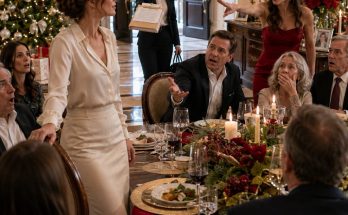
The house smelled of garlic and basil when everyone arrived.
My parents came first, carrying a pie and worry. My mother hugged Kyle too long. My father shook my hand the way men sometimes do when emotion has nowhere to go.
Linda’s parents arrived next from their retirement community. Her father, Frank, was a retired police officer with a booming voice and simple ideas about right and wrong. Her mother, Alice, was tiny, soft-spoken, and had spent Linda’s entire life smoothing what Frank made too sharp.
Rebecca arrived last with her latest boyfriend, who had the unfortunate timing of entering a family catastrophe with store-bought flowers.
We ate.
That is the part that seems impossible afterward.
People ate lasagna and salad and garlic bread. Kyle told the story of the accident with teenage exaggeration, making the car sound like it had hunted him personally. Madison showed my mother a drawing she was working on for the school art show. Emma crawled into my father’s lap and stole croutons from his salad. Linda moved around the table radiant in the blue dress, refilling glasses, touching shoulders, accepting praise for the meal she had not cooked.
At dessert, I stood.
My fork tapped the water glass once.
The room quieted.
Linda looked up at me with a smile.
I almost hated her most in that moment, because she still believed she was safe.
“Two weeks ago,” I said, “Kyle’s accident forced us to learn something unexpected.”
Linda’s smile disappeared.
My mother’s eyes moved to my face.
“At the hospital, I tried to donate blood. Dr. Okafor explained that Kyle’s blood type made it genetically impossible for me to be his biological father.”
The room froze.
Kyle, from the couch where he had moved after dinner, looked up sharply.
I turned toward him first.
“Kyle,” I said gently, “this is not your fault. None of what I am about to say is your fault.”
Linda stood.
“Thomas, don’t.”
Her father frowned. “Linda?”
I looked back at the adults.
“I had DNA tests performed. For all three children. Three separate labs. The results are conclusive.”
My mother made a small sound.
“Thomas,” Linda whispered.
I placed copies of the results on the dining table. Not in front of the children. In front of the adults.
“Kyle, Madison, and Emma are not biologically mine.”
For a moment, nobody moved.
Then Frank opened the report.
His face turned red, then gray.
Alice covered her mouth.
Rebecca said, “Oh my God, Linda,” in a voice so broken it sounded like prayer.
Kyle stood too fast, forgetting his crutches. He nearly fell, and I crossed to him before anyone else moved.
“Dad?” he said.
That word.
Dad.
It held.
I gripped his shoulders.
“I am your dad. Listen to me. Nothing changes that. Do you hear me?”
His eyes were wide, terrified.
“Is this true?”
I looked at Linda.
She was crying now, hands pressed to her mouth.
“Ask your mother.”
Kyle turned toward her.
“Mom?”
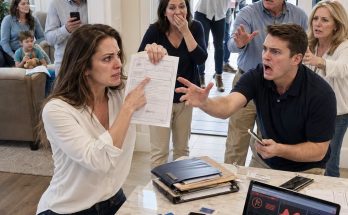
Linda broke.
Not with a confession shaped by courage. With collapse.
“I thought—I didn’t know for sure—I was scared, and I thought maybe—”
Frank slammed his hand on the table.
“Who?”
Linda flinched.
“Who?” he roared.
Emma began crying.
Madison stood in the doorway between dining room and hall, tears running down her face, old enough to understand too much, young enough not to survive the whole truth at once.
I gathered the children toward me.
“Girls, come here.”
Madison came first, sobbing. Emma followed because Madison did. Kyle leaned against me on one side, rigid and shaking.
I faced them, not the adults.
“Your mother and I have adult problems,” I said. My voice shook, but I kept it steady enough. “Very serious ones. She lied to me. She lied to all of us. But I need you to hear this clearly. I am your father. I have been your father every day since you were born. I love you. I am not leaving you. None of this is because of you.”
Madison sobbed into my shirt.
Emma whispered, “But are we still Brennans?”
I closed my eyes for half a second.
“Yes,” I said. “If you want to be.”
Kyle said nothing.
His face had gone hard in a way I had never seen before.
Linda stepped toward us.
“Kyle, honey—”
“Don’t,” he said.
She stopped.
The room erupted after that, but it happened around us, not inside us.
Frank shouted. Alice cried. Rebecca demanded how long, who, why. My parents asked whether I was sure, whether the labs could be wrong, then stopped asking when they saw my face. Linda offered fragments: mistakes, rough patches, loneliness, fear, thinking the babies might be mine, wanting the family to survive, never meaning harm.
Never meaning harm.
A phrase people use when the harm has become too large to deny.
I served her divorce papers that night in the dining room after the children were upstairs with my mother.
Not because I wanted drama. Because Sharon had told me not to leave room for confusion.
“Linda,” I said, placing the envelope on the table, “I have filed for divorce. There is a temporary order preventing either of us from moving marital funds or removing the children from the county. I am requesting primary custody. You need an attorney.”
She stared at the papers.
“Thomas, please.”
“No.”
“We can go to counseling.”
“No.”
“The kids need their mother.”
“They needed honesty.”
She looked smaller then. Not because I had defeated her. Because the life she had built out of control had finally stopped obeying.
Frank left without hugging her.
Alice kissed Linda’s forehead and whispered something I did not hear, then followed him out.
Rebecca lingered.
“I had no idea,” she told me.
“I believe you.”
She cried harder at that than if I had accused her.
That night, Kyle asked to sleep in the den downstairs because he did not want to be near Linda’s room. Madison slept in Emma’s bed. Emma cried until I lay on the floor beside them with one hand through the bars of the little white bed frame she refused to replace because she liked feeling “cozy.”
At 2:00 a.m., Kyle came into the room on crutches.
“Dad?”
I sat up.
He stood in the doorway, tall and broken.
“If I’m not yours,” he said, voice cracking, “why do you want me?”
I got up and crossed the room.
“Because you are mine.”
“But the test—”
“Tests know biology. They don’t know who taught you to ride a bike. They don’t know who sat up with you during fevers, who built the treehouse with you, who watched every baseball game, who knows you hate onions but pretend not to because your mother puts them in meatloaf.”
His face twisted.
“They don’t know love,” I said.
Then he folded into me, fourteen years old and suddenly small again.
I held him while he cried.
The divorce was not simple.
No divorce is simple when children are old enough to have opinions and young enough to be shattered by adult truth.
The court recognized me as the children’s legal father. I had been married to Linda when they were born. I was on their birth certificates. I had raised them. More importantly, I wanted them. Linda’s deception did not erase my legal role; it complicated hers. Sharon argued stability. Linda’s attorney argued maternal bond. The judge ordered temporary shared legal custody but granted the children primary residence with me after an evaluator interviewed them and reviewed the circumstances.
Kyle refused to stay overnight with Linda.
Madison tried once and came home crying.
Emma visited for short afternoons, confused and desperate for everyone to be normal.
I did not stop them from seeing her. That was the hardest part. My rage wanted walls. My love for them required doors, even if guarded ones.
Linda moved into a small apartment across town.
She looked shocked by how quickly her old life disappeared. The house stayed with me because I had purchased it through the business before transferring it into our family trust, and the settlement compensated her for marital contributions without handing her the structure that kept the children stable. She received less than she expected, more than I emotionally wanted, and exactly enough for the court to call fair.
She wanted to apologize constantly.
To me.
To the kids.
To everyone.
Apology became another form of pressure until Sharon advised we communicate through parenting software only.
Six months after the dinner, Kyle asked about his biological father.
We sat in the garage, the same place where he had helped me hang shelves and asked why levels mattered.
“Do you want to know?” I asked.
He shrugged, eyes fixed on the workbench.
“I don’t know. Maybe. Maybe I just want to know if he knows.”
We did a DNA ancestry database together. Slowly. Carefully. With counseling in place. We found distant relatives, not a direct match. No name emerged cleanly.
Kyle stared at the screen.
Then he said, “You’re my dad.”
“I know.”
“That guy is just… biology.”
I had to step outside and stand in the driveway until I could breathe again.
Madison drew less for a while.
That scared me more than Kyle’s anger.
Her art had always been the room where her feelings went before language found them. After the truth, her sketchbooks stayed closed. She went to school, did homework, smiled when spoken to, and became too polite. Her therapist said she was managing uncertainty by becoming careful.
One Saturday, I found a drawing on the kitchen table.
Four figures.
Me, Kyle, Madison, Emma.
No Linda.
Above us, in careful pencil, she had written: Still Family?
I sat down and wrote beneath it: Always.
She found it later and taped it to the refrigerator.
Emma asked questions at strange times.
“Do I have another dad?”
“No. You have me.”
“But someone else made me?”
I swallowed.
“Biologically, yes.”
“Like ingredients?”
I smiled despite everything.
“Sort of.”
“Do I have to meet him?”
“No.”
“Can I still be your princess who fights dragons?”
“Always.”
She nodded, satisfied for the moment, and demanded the next chapter of her bedtime story.
Eighteen months later, people still asked if I regretted the way I told the truth.
Some thought I should have confronted Linda privately first. Some thought exposing her in front of our parents was cruel. Some thought I had been too merciful. Some thought a man who learned none of his children were biologically his should walk away and start over.
People love clean opinions about other people’s wreckage.
Here is the truth.
I regret that my children had to learn their mother lied.
I regret that Kyle heard enough of the adult conversation to understand betrayal before he had the language to hold it.
I regret the shock on Madison’s face.
I regret Emma asking if she was still mine.
But I do not regret telling the truth with witnesses.
Linda had lived behind secrecy for fifteen years. Secrets were her architecture. If I had confronted her alone, she would have cried, negotiated, delayed, minimized, and shaped the story before the people who mattered knew the foundation was already gone. I needed adults in the room who loved the children and could not unknow what had happened.
I do not regret taking control of the blast.
But the real work was not the exposure.
It was breakfast.
That sounds too small, but it is true.
Breakfast together every morning rebuilt us more than lawyers did. Pancakes on Saturdays. Cereal on school days. Kyle at the counter with his crutches, then later without them. Madison sketching between bites. Emma making orange juice mustaches and asking whether dragons needed building permits.
Homework at the kitchen table.
Friday movie nights.
Physical therapy.
Art shows.
Baseball games.
Counseling appointments.
My parents filling gaps without trying to replace anyone.
My brother Mike showing up to fix the fence with Kyle and teaching him to drive a manual transmission badly.
Family reformed not through blood, but through repetition.
Showing up.
Again.
Again.
Again.
Linda still writes letters.
The kids decide whether to read them. Kyle usually does not. Madison reads sometimes and then puts them away. Emma likes the stickers Linda sends but forgets to answer. I do not interfere unless the letters contain guilt, and if they do, I return them.
Once, a year after the divorce, Kyle agreed to meet Linda for coffee with me nearby.
She looked worn down. Smaller. Her hair cut shorter, her clothes practical in a way they never were when she lived in the house with flower beds and polished floors. She apologized. Then explained. Then apologized again. Kyle listened without warmth.
Finally he said, “You keep saying you made mistakes.”
Linda nodded, crying.
“You made choices,” he said. “Big difference.”
The meeting ended without reconciliation.
It ended honestly.
That is not nothing.
I met Angela because of Kyle’s accident.
She had been one of the nurses on the orthopedic floor, though we did not speak beyond hospital basics at the time. Months later, I ran into her at a hardware store while buying paint. She recognized me as “the dad who brought decent coffee to the nurses’ station.” We talked in aisle seven between rollers and drop cloths.
I did not ask her out then.
I was not ready.
But over time, slowly, carefully, we began having coffee. Then dinner. Then Sunday walks. Angela had no interest in replacing Linda or healing children she had not broken. She simply showed up with warmth and honesty, and in our house, that became the highest credential.
The kids liked her because she did not try too hard.
Kyle approved first.
“She actually respects you,” he said one night while helping me carry groceries.
“What does that mean?”
“It means she listens when you talk.”
I did not know how much I needed my son to notice that until he did.
Two years after the accident, we went to Kyle’s first baseball game back after recovery.
He limped slightly when tired, but he stood at bat with that same stubborn set to his jaw. Linda came too, sitting on the far end of the bleachers alone. The girls saw her and waved. Kyle did not. Not at first.
In the fifth inning, he hit a double.
I stood and shouted like a fool.
So did Linda.
So did Angela.
So did my parents.
For one second, everyone who loved him stood in the same sunlight.
Not healed.
Not whole.
But present.
After the game, Kyle walked past Linda, paused, and said, “Good game, right?”
She cried.
He did not hug her.
But he spoke.
Sometimes that is all a bridge can hold at first.
That night, I stood in the garage holding the old level I had used when Kyle and I built the shelves. He was taller than me now, or nearly. Madison’s newest drawing was on the refrigerator: a house with four people, then five, Angela added carefully near the porch, not inside yet, not outside either. Emma had lost two front teeth and informed me she was too old for princess stories unless the princess also had a business plan.
I thought about blood.
How much power we give it.
Bloodlines. Blood relatives. Blood tells the truth.
But blood had not packed lunches. Blood had not checked homework, cleaned scraped knees, taught bike riding, sat beside hospital beds, watched bad cartoons, built treehouses, kissed foreheads, worked overtime, read bedtime stories, or stayed after the truth made staying hard.
Blood told me what Linda had done.
It did not tell me who my children were.
I chose them.
They chose me back.
That was the truth that held.
Not because biology did not matter. It mattered. It hurt. It changed things. It raised questions that may take years to answer.
But family, real family, is not created once. It is built daily. In ordinary acts. In staying when leaving would be easier. In telling the truth even when the truth burns down the house. In rebuilding something honest from the ashes instead of moving back into the lie because it was furnished nicely.
Linda gave birth to three children and lied about how they came into the world.
I raised them.
I loved them.
I remained.
In the end, that was the foundation no test could crack.
THE END.