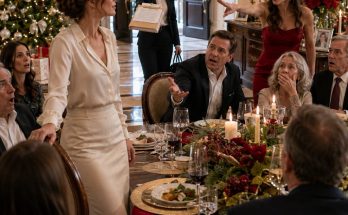
Father’s Day Brunch. Dad Opened Gifts. My Brother Gave Him A Golf Club Membership. My Sister Gave Him A Luxury Watch. I Handed Him My Envelope. He Glanced Inside: “A Restaurant Gift Card. How… Practical.” He Set It Aside Without Another Word. A Waiter Approached Nervously: “Sir, That Restaurant…”
A Restaurant Gift Card
### Part 1
There are families that hurt you with screaming, slammed doors, and ugly words thrown like dishes.
Mine hurt me with tiny smiles.
My father, Richard Ditt, had perfected the art of looking at me as if I were a useful chair. Reliable. Present. Easy to forget until someone needed a place to sit.
He was sixty-eight, retired from insurance, still wearing suits on weekdays because he said casual clothes made a man look unemployed. He believed in country clubs, legacy memberships, polished shoes, and watches heavy enough to announce themselves before he entered a room.
My older brother, Gregory, was forty-one and worked in hedge funds. He had the kind of voice that made every sentence sound like a quarterly report. He spoke in numbers, returns, assets, margins, and occasionally, when he remembered I existed, advice.
My younger sister, Nicole, was thirty-seven, a corporate attorney with sharp heels, sharper cheekbones, and a husband named Preston whose last name made hostesses straighten their posture.
Then there was me.
Shaina Ditt.
Middle child. Forty-three. Still in the Army, as my family liked to put it, with the same soft pity people used for a neighbor’s son who never moved out of town.
They never asked many questions. That was the trick. If you never asked, you never had to learn that your assumptions were wrong.
For years, my father described me as “steady.” Gregory called me “disciplined,” which sounded like praise until he added, “That’s why the military suits you.” Nicole once told a room full of relatives that I was “very organized,” as if I spent my days alphabetizing paper clips in a basement office.
I used to correct them.
At twenty-five, I tried to explain what my first command meant. My father nodded while checking a golf score on his phone.
At thirty-two, I mentioned a promotion. Gregory said, “That’s great. Is that like middle management?”
At thirty-eight, after a ceremony that had taken months of work and twenty years of sacrifice to reach, Nicole asked if I still had to move around a lot “like the junior people.”
Eventually, you learn not to offer diamonds to people committed to calling them glass.
That Father’s Day, I stood in my quarters before sunrise, watching pale North Carolina light slide across the hardwood floor. My dress uniform hung on the back of the bedroom door, dark fabric pressed so sharply it looked cut from shadow. My shoes waited beneath it, polished to a black mirror.
But I did not wear the uniform.
I chose a navy wrap dress, low heels, and a pearl necklace my mother had left me before cancer reduced her voice to a whisper and then took even that. My mother had been the only person in the family who looked at me like I might become something surprising.
On my dresser sat the gift.
A cream card in a leather folder, embossed with a seal most civilians would not recognize. My aide had placed it there three weeks earlier with the careful expression of a man who knew exactly what kind of operation it was.
“Ma’am,” Captain Lewis had said, “are you sure you want this worded so plainly?”
“Yes.”
“And transferable to immediate family at your discretion?”
“Yes.”
His mouth twitched. “Understood.”
Now I ran my thumb over the leather. It smelled faintly of polish and new paper. Expensive, but not flashy. Official, but not loud.
My father would hate that.
He liked gifts that announced their price. Golf memberships. Watches. Wine club subscriptions from places with waiting lists. Things that told a room, I am loved by successful children.
This gift did not do that.
Not at first glance.
At first glance, it looked like a restaurant gift card.
And that was exactly why I chose it.
My phone buzzed on the dresser.
A text from Nicole.
Don’t be late. Dad hates waiting. Also Gregory got something huge this year, so maybe prepare yourself lol.
I looked at the message until the screen dimmed.
Prepare yourself.
I almost laughed.
Outside, somewhere beyond the window, a bugle call floated over the morning air, clear and lonely. Tires hissed on distant roads. A helicopter thudded somewhere far off, low and familiar as a second heartbeat.
I picked up the leather folder and slid it into my purse.
For twenty years, my family had built a version of me small enough for them to understand. Today, I was going to hand my father the one object that could crack that version open.
I just didn’t know yet who would be standing close enough to hear it break.
### Part 2
The Waterford sat behind two stone gates and a quarter mile of manicured drive, the sort of place where the grass looked ironed and the fountains sounded expensive.
I arrived at 11:27 for an 11:30 brunch because military punctuality had long ago fused itself into my bones. The valet, a college kid with red hair and nervous hands, opened my door and glanced at my Ford Explorer without enthusiasm.
“Good morning, ma’am.”
“Morning.”
He handed me the ticket with the careful politeness reserved for people whose cars did not match the restaurant.
Through the tall glass doors, the lobby smelled of lilies, butter, and money. Sunlight poured through arched windows, turning marble floors white and cold. Somewhere, silverware chimed softly against china.
A hostess in a black dress looked up from her tablet.
“Name?”
“Ditt. Private dining room.”
Her expression changed at once. “Of course. Mr. Ditt’s party has already arrived.”
Of course they had.
Not because they were early. Because my father liked to be seen waiting.
She led me down a hallway lined with framed photographs of governors, CEOs, athletes, and men in tuxedos gripping wineglasses. At the end, double doors opened into a private room overlooking the golf course.
My family filled it like actors who had rehearsed their positions.
Dad sat at the head of the long table, white hair neatly combed, navy blazer crisp, a folded pocket square blooming from his breast pocket. Patricia, his second wife, sat beside him, pleasant and smooth-faced, already two mimosas deep and laughing at something Gregory had said.
Gregory stood near the windows, one hand in his pocket, the other wrapped around a Bloody Mary. His watch flashed every time he moved. His wife, Lauren, sat beneath him like an accessory in beige silk.
Nicole and Preston occupied the middle of the table with their two children, both dressed in tiny linen outfits no child could possibly enjoy wearing.
“Shaina!” Dad called, too loudly. “We were beginning to think you got lost.”
Every head turned.
That was the first little cut of the day.
I smiled. “Traffic on 95.”
Gregory smirked. “You should really upgrade your navigation. Or your car.”
“Greg,” Nicole said, but softly, smiling into her glass.
My father waved me toward the seat halfway down the table, not close enough to matter, not far enough to claim independence. My assigned place since childhood.
“Come sit. We were just talking about Gregory’s new fund.”
Of course they were.
I sat between Aunt Marlene, who wore perfume thick enough to taste, and Preston’s cousin Blake, who asked me what branch I was in every single year.
The first thirty minutes passed exactly as expected.
Gregory explained emerging markets as if he had personally discovered Asia. Nicole described a case without naming the client, which somehow made it sound more important. Preston told a story about a senator who had recognized him at a charity dinner. My father laughed with his whole chest.
I buttered a piece of toast and watched sunlight crawl across the tablecloth.
Every now and then someone remembered me.
“So, Shaina,” Aunt Marlene said, “are you still stationed in Virginia?”
“North Carolina.”
“Oh, that’s right. And what do you do there again?”
Before I could answer, Gregory leaned back. “Logistics, right?”
I looked at him. “Among other things.”
“That’s useful,” he said. “The world needs organized people.”
Nicole gave me the same sympathetic look she used when tipping hotel staff. “And the benefits must be good.”
“They’re adequate.”
Preston smiled. “Well, stability is nothing to sneeze at.”
Stability.
That was what they called it when they couldn’t imagine ambition wearing boots.
A waiter entered carrying a silver coffee pot. He moved along the wall quietly, but I noticed him before anyone else did.
Not because of the uniform.
Because of the posture.
Straight spine. Controlled steps. Eyes aware without wandering. Haircut close enough to suggest old habits. He poured coffee for Patricia, then my father, then Gregory, his face professional and blank.
When he reached me, his hand paused for half a second.
Just half a second.
His eyes flicked to mine.
Recognition passed between us so quickly no one else saw it.
I knew him.
Not immediately by name, but by bearing, by the way his shoulders tightened when he realized who sat at the table.
Former enlisted. Possibly still Reserve. Young, mid-twenties. A scar near his jaw. Careful hands.
He poured my coffee.
“Ma’am,” he said.
The word was soft, ordinary enough to anyone else.
But not to me.
My fingers tightened around the handle of my cup.
He knew.
And suddenly, the trap I had set became something else entirely.
Because I had planned for my father to dismiss the gift.
I had not planned for a soldier to be in the room when he did it.
### Part 3
By the time dessert arrived, my jaw ached from smiling.
The Waterford served lemon tartlets on white plates with raspberry sauce dragged into perfect red commas. Gregory took a photo of his before eating. Nicole’s daughter whispered that she wanted chicken nuggets and was immediately shushed by Preston.
My father leaned back in his chair, satisfied and glowing.
There is a particular expression a man wears when he believes the room has arranged itself correctly around him. Dad had it then. The best seat. The best view. Successful son on one side. Impressive daughter on the other. The middle child present enough to complete the portrait but not bright enough to disturb it.
He tapped his spoon lightly against his coffee cup.
“Well,” he said, “I believe there are some presents to open.”
Patricia clapped once, delighted. “My favorite part.”
Gregory went first. Naturally.
He rose halfway from his chair and pulled a large leather envelope from behind Lauren’s purse. It bore the logo of Pinehurst Resort, stamped in gold.
“Dad,” he said, voice pitched for the table, “you’ve been talking about playing more. I made a few calls.”
My father’s eyes widened before he even opened it.
Gregory slid the packet across with theatrical humility. “Full membership. Unlimited tee times, clubhouse access, guest privileges, priority tournament events. The works.”
The room erupted.
“Oh, Gregory.”
“That’s incredible.”
“Richard, you’ll be impossible now.”
My father opened the packet with reverent fingers. The paper inside looked heavy enough to qualify as architecture.
“Gregory,” he said, voice thick. “This is far too generous.”
Gregory smiled. “You raised me to appreciate quality.”
Then his gaze flicked to me.
A small thing. A needle, not a knife.
Nicole followed.
She produced the unmistakable blue box before saying a word. Even the children straightened.
“Tiffany?” Patricia breathed.
Nicole smiled. “Dad, Preston and I wanted you to have something timeless.”
Inside was a rose-gold watch with a leather band so smooth it looked poured. My father removed it as if handling a newborn.
“Nicole,” he whispered. “My God.”
Preston leaned forward. “A man who built what you built should wear something that reflects it.”
That sentence landed warmly over the room.
A man who built what you built.
I thought of my mother sitting at a Formica kitchen table late at night, paying bills while Dad traveled for conferences. I thought of her sewing Gregory’s school blazer buttons back on, helping Nicole memorize spelling words, driving me to early morning track practice with coffee breath and tired eyes.
But dead women rarely get credit at brunch.
Dad fastened the watch around his wrist. Everyone admired it. Gregory joked that now Dad had no excuse to be late for tee time. Nicole lifted her phone and took pictures.
Then it was my turn.
The air changed almost imperceptibly.
Not hostile. Worse.
Expectant in the way people become when they are preparing to be kind about disappointment.
I reached into my purse and removed the leather folder.
It was smaller than Gregory’s packet. Less dazzling than Nicole’s box. Cream-colored, plain except for the embossed seal.
“Happy Father’s Day, Dad.”
He accepted it with a smile that had already apologized for me.
“Thank you, sweetheart.”
Sweetheart.
He opened the folder.
His eyes moved across the card once.
Then again, slower.
For one wild second, I thought he might understand enough to ask.
Instead, his expression settled into polite confusion.
“A restaurant gift card,” he said.
The words fell softly, but everyone heard them.
Nicole looked down at her plate.
Gregory covered his smile with his glass.
Dad cleared his throat and added, “How practical.”
He set the folder beside his coffee cup, closed, forgotten before his hand had fully left it.
Something inside me went very still.
I had imagined this moment many times. I had pictured anger, embarrassment, maybe satisfaction. Instead, I felt nothing at first. Just a clean, white silence opening in my chest.
Then I heard a sound behind me.
A coffee pot touching a saucer too hard.
The waiter stood near the sideboard.
His face had gone pale.
He wasn’t looking at my father.
He was looking at the leather folder.
His eyes moved to me, asking a question no one else in the room knew existed.
I gave him no signal.
No nod. No permission.
But sometimes dignity has witnesses, and witnesses make their own decisions.
The waiter stepped forward, both hands tense at his sides, and my father frowned at the interruption.
“Excuse me, sir,” the waiter said, voice controlled but tight. “May I see that card?”
My father blinked.
And for the first time that day, the room stopped revolving around him.
### Part 4
My father stared at the waiter as if the coffee had spoken.
“I beg your pardon?”
The waiter swallowed once. “The card, sir. The one your daughter gave you.”
Gregory leaned back, amused. “Problem with the restaurant gift card?”
The waiter did not look at him.
That told me everything.
His name tag read MARTINEZ. Beneath the restaurant vest and bow tie, beneath the careful civilian politeness, I finally placed him.
Sergeant Daniel Martinez. Formerly with the 82nd support battalion. I had last seen him two years ago after a training accident that left three soldiers injured and one supply chain miracle away from disaster. Martinez had been the young sergeant who found the missing equipment, rerouted fuel trucks through flooded roads, and then stood at attention with mud up to his knees while I thanked him in front of his unit.
He had a scar near his jaw because one of those trucks had clipped a branch into his face.
He remembered me.
And now he was looking at my father like a man trying very hard not to forget his place.
My father picked up the folder and handed it over reluctantly. “I don’t see why—”
Martinez opened it.
His expression hardened.
Not dramatically. Not theatrically. Worse. Professionally.
He read the card, saw the seal, the authorization line, the signature, the countersignature. Then he lifted his head.
“Sir,” he said, “this is not a restaurant gift card.”
Aunt Marlene stopped stirring her coffee.
Nicole’s phone lowered.
My father gave a short laugh. “Well, it says dining facilities.”
“Yes, sir. Private dining facilities at the Fort Liberty Officers’ Club.”
I felt the old correction rise automatically in my mind. Most people still called it Bragg out of habit. So did Martinez, probably, when he wasn’t choosing official words in a civilian dining room.
My father’s smile thinned. “I’m afraid I don’t follow.”
“No, sir,” Martinez said. “I can see that.”
Gregory’s amusement faded. “Careful.”
Martinez finally looked at him.
It was not a rude look. It was much worse. It was the look of a man who had taken orders under pressure and did not frighten easily.
Then he turned back to my father.
“This card grants lifetime access to one of the most restricted military dining facilities on the East Coast. Private rooms, command events, ceremonial functions, official receptions. Access like this is not sold. It is authorized.”
My father’s hand drifted toward his new watch.
“Authorized by whom?”
Martinez opened the folder fully and placed it on the table, turning it so the signature faced my father.
The room leaned in.
My signature sat there in black ink.
Colonel Shaina M. Ditt
Installation Commander
For a moment, no one breathed.
Then Nicole whispered, “Colonel?”
The word sounded foreign in her mouth.
Gregory laughed once, sharp and wrong. “That’s ceremonial. Right? Like an honorary thing?”
Martinez’s jaw flexed.
“No, sir.”
My father looked from the card to me. His face had lost color beneath the tan. “Shaina?”
I folded my hands in my lap.
“Yes, Dad.”
“You’re a colonel?”
“Yes.”
His eyes dropped again.
“Installation commander,” he read slowly, as if the words might rearrange themselves into something easier.
Martinez spoke before I could.
“Sir, your daughter commands Fort Liberty. The installation. Personnel, operations, infrastructure, readiness support. Tens of thousands of soldiers and civilians.”
The silence became physical.
The kind of silence that presses against your ears.
Preston sat up straighter. “That can’t be right.”
Martinez turned to him. “It is, sir.”
Nicole’s legal instincts came alive. She grabbed her phone and began typing. Her nails clicked fast against the screen.
Gregory shook his head. “No. Shaina does paperwork.”
I looked at him. “A lot of command involves paperwork.”
“No, I mean administrative work.”
“That too.”
Nicole made a small choking sound.
“Oh my God.”
Everyone turned toward her.
Her phone trembled in her hand. On the screen was a photograph from eighteen months earlier: me in dress blues, standing beside a three-star general as the installation colors changed hands. The caption beneath it was perfectly clear.
Colonel Shaina Ditt assumes command.
Nicole looked up at me, eyes wide.
“You didn’t tell us.”
I felt a laugh almost break loose, but it died before it reached my mouth.
“I did.”
My father flinched.
I looked at him across the table, past the abandoned leather folder, past the rose-gold watch, past every year he had nodded through my life as if waiting for the interesting part to return.
“I told you for twenty years,” I said. “You just never heard me.”
And that was when Gregory’s face changed from disbelief to calculation.
### Part 5
Gregory always processed humiliation as a financial event.
You could see it in his eyes: assess damage, control exposure, redirect narrative.
He set down his glass carefully. “Okay,” he said, forcing a laugh. “Obviously there’s been a misunderstanding.”
Nobody answered.
The golf course outside glowed violently green under the noon sun. A cart rolled silently across the fairway, two men in polos laughing about something that had nothing to do with us. Inside the private room, forks lay abandoned. Coffee cooled in porcelain cups. My father’s new watch ticked against his wrist, suddenly loud.
Gregory pointed at the card.
“You can understand why Dad thought it was just a gift card. The wording is confusing.”
Martinez did not move.
I said, “The wording is official.”
“Well, official to military people, sure. But civilians don’t know these things.”
I looked at him. “Civilians can read.”
Nicole inhaled sharply.
Gregory’s mouth tightened. “That’s not what I meant.”
“It usually isn’t.”
My father finally spoke. “Shaina, why didn’t you explain when I opened it?”
I turned toward him.
His face looked older than it had ten minutes ago. Not softer. Just older. The skin beneath his eyes had sagged; his lips pressed together like he was holding back something too large for the room.
“Because you didn’t ask.”
“That’s not fair.”
The words came quickly, wounded and defensive.
And there it was. The emotional reversal I had seen in boardrooms, family dinners, command disputes, and every room where someone realized they had been wrong too publicly to enjoy it.
They did not feel guilty first.
They felt accused.
Nicole slid her phone across the table toward Dad. “There are dozens of articles.”
“I don’t need articles,” he snapped.
She froze.
Dad never snapped at Nicole.
Patricia reached for his arm. “Richard—”
He pulled away without looking at her.
I had not expected that.
For years I had imagined the reveal ending with their embarrassment. Maybe an apology. Maybe stunned respect. I had not considered that truth might make them angry at me for bringing it into the room.
Gregory seized the opening.
“Look, Shaina, if you’ve had this impressive career, that’s wonderful. Really. But you can’t blame everyone else for not knowing if you downplayed it.”
I stared at him.
“Downplayed?”
“You always said logistics. Administration. North Carolina. You never said, ‘By the way, I run one of the biggest Army bases in the country.’”
“I said battalion command. Brigade staff. Garrison command. Senate testimony. Hurricane response.”
He waved a hand. “That’s military jargon.”
Nicole’s eyes were still on the phone. “Greg, stop.”
“No, seriously.” He leaned forward, finding confidence in his own voice. “This feels staged.”
The room chilled.
Martinez’s shoulders squared.
I lifted one hand slightly. He stayed silent.
Gregory saw the gesture. His eyes narrowed.
“You planned this.”
I said nothing.
He leaned back, triumphant now. “You knew Dad wouldn’t recognize it. You brought some obscure military thing to a family brunch, waited for someone to explain it, and now we all get to feel terrible. Congratulations.”
My father looked at me.
That hurt more than Gregory’s accusation.
Because beneath his shock, I saw the question forming.
Did you?
I picked up my coffee and took a sip. It had gone bitter.
“Yes,” I said.
Aunt Marlene made a tiny sound.
Nicole whispered, “Shaina.”
I set the cup down.
“I knew there was a chance Dad would dismiss it. I did not know Sergeant Martinez worked here. I did not ask him to say anything. But yes, I gave Dad a gift that required him to look closer than the price tag.”
My father’s eyes dropped.
“And he didn’t,” I said.
No one moved.
The waiter station hummed faintly in the corner. From the kitchen came the muffled clatter of pans, a burst of laughter cut short when a door swung closed.
Martinez placed the folder gently in front of my father.
“Sir,” he said, quieter now, “for what it’s worth, soldiers would consider that an extraordinary honor.”
My father did not touch it.
Gregory muttered, “Soldiers, sure.”
That was the second mistake.
The first had been dismissing my gift.
The second was forgetting there was a soldier in the room.
Martinez turned his head slowly.
“What did you say, sir?”
Gregory’s wife put a hand on his sleeve. “Greg.”
But Gregory, embarrassed and cornered, did what men like him often do. He reached for contempt because it felt like power.
“I said soldiers would consider it an honor. Fine. That doesn’t mean civilians have to understand every internal status symbol.”
I stood.
My chair legs scraped across the floor.
The sound cracked through the room like a shot.
Every face turned to me.
I looked at my brother, and for the first time in my adult life, I let him see the part of me that did not exist at family brunches.
“Careful,” I said.
One word.
Gregory went still.
Not because I shouted. I didn’t.
Because authority, real authority, does not need volume.
And judging by the way my father’s face drained completely, he had finally heard it.
### Part 6
I did not storm out.
Storming out gives people permission to call you emotional later.
Instead, I folded my napkin and placed it beside my plate. I picked up my purse. I looked at my father.
“Happy Father’s Day.”
His mouth opened. “Shaina, wait.”
That single word, wait, had followed me all my life.
Wait while Gregory finishes talking.
Wait, Nicole needs more attention right now.
Wait, your father is tired.
Wait, don’t make this awkward.
Wait for people to recognize you.
Wait for love to arrive properly packaged.
I was done waiting.
But I stayed one more moment because endings matter.
“Dad,” I said, “I have a readiness briefing at fifteen hundred, a call at sixteen thirty, and visiting officers arriving this evening. I came because you asked me to come. I gave you something meaningful. You called it practical and set it aside.”
His eyes shone, but whether from shame or anger, I could not tell.
“I didn’t know.”
“No. You didn’t care.”
The words landed hard.
Patricia whispered, “That’s unfair.”
I looked at her, and she immediately lowered her eyes.
She had been married to my father for twenty-two years and had never once asked what my job title meant. She mailed Christmas cards addressed to Major Ditt for five years after I had stopped being one.
Unfair had lived at our table a long time.
Nicole stood halfway. “Can we just talk about this privately?”
“We could have,” I said. “For years.”
Gregory’s face tightened. “So now what? We’re all villains because we didn’t decode your career?”
“No,” I said. “You’re adults who were comfortable with a smaller version of me because it made your own stories easier.”
That shut him up.
For a second, I saw my brother at twelve years old, standing in our driveway with a baseball glove, telling me I threw like a girl after I struck him out. He had always needed me beneath him. It stabilized something inside him.
I turned to Martinez.
“Sergeant, thank you for your service.”
His expression flickered.
“Thank you, ma’am.”
Dad flinched again at ma’am.
Good.
Let him hear it.
I walked out past the table, past the gift bags and half-empty champagne glasses, past Nicole’s daughter watching me with wide eyes.
At the door, she spoke.
“Aunt Shaina?”
I stopped.
She was nine, maybe ten. Linen bow in her hair. Raspberry sauce at the corner of her mouth.
“Do you really command soldiers?”
I looked at Nicole, whose face twisted with something like grief.
Then I looked back at the child.
“Yes.”
Her eyes widened.
“Like, a lot?”
Despite everything, I smiled. “A lot.”
She nodded solemnly. “That’s cool.”
The room breathed differently after that.
One honest sentence from a child can humiliate a table full of adults more thoroughly than any speech.
I left before anyone could soften it.
The hallway outside was cool and dim. My heels sank into the thick carpet. Behind me, voices rose all at once, muffled by the closing door.
I made it to the lobby before my phone started buzzing.
Nicole.
Then Dad.
Then Gregory.
Then Nicole again.
I silenced it.
Outside, the June heat hit my face like an open oven. The valet hurried for my Explorer, but another voice called from the side of the building.
“Colonel.”
Martinez stood near the service entrance, apron off now, bow tie loosened. He looked younger in the sunlight, and tired. A cigarette rested unlit between his fingers.
“I’m sorry,” he said.
I walked over. “For what?”
“I may have made it worse.”
“You made it honest.”
He studied me for a moment, then nodded as if that answer satisfied something in him.
“They shouldn’t have talked to you like that.”
“No,” I said. “They shouldn’t have.”
He looked down at the cigarette, then tucked it behind his ear without lighting it.
“I knew the seal the second I saw it. Thought maybe I was mistaken. Then I saw your signature.”
“You’re at UNC now?”
His eyebrows lifted.
“I remember my soldiers,” I said.
A small grin broke across his face. “Business degree. Nights and weekends. Restaurant pays better than you’d think.”
“You need a recommendation, call my office.”
The grin disappeared into something more serious. “That would mean a lot, ma’am.”
Behind the glass doors, I saw movement.
My father.
He had come into the lobby, scanning for me.
For one second, old habit tugged at me. Go back. Smooth it over. Make him feel better.
Then Martinez saw him too.
My father stepped outside clutching the leather folder in one hand and wearing the watch in the other.
The two gifts caught the sunlight at the same time.
One glittered.
One did not.
And I realized only one of them had frightened him.
### Part 7
“Shaina,” my father called.
The valet froze halfway to my car, sensing drama the way civilians sense rain.
I turned.
Dad walked toward me across the circular drive. For once, he did not look polished. His blazer hung open, his tie had shifted crooked, and his face had the stunned, bruised expression of a man who had discovered a hidden room in his own house.
Martinez stepped back respectfully.
My father noticed him and stopped.
That irritated me more than it should have. Even now, Dad seemed embarrassed to speak in front of the waiter. Not because Martinez had witnessed his mistake, but because Martinez mattered in a way Dad had not expected.
“Can we talk?” Dad asked.
“We are talking.”
“Privately.”
I glanced toward the restaurant. Through the windows, I could see Gregory pacing near the table, phone already pressed to his ear. Damage control. Nicole sat with her head bowed while Preston spoke at her.
“No,” I said. “Here is fine.”
Dad’s fingers tightened around the leather folder.
“I handled that badly.”
I waited.
“I was surprised.”
Still I waited.
His throat moved. “I’m proud of you.”
There it was.
The sentence I had once wanted so badly I used to imagine it at stoplights, on deployment nights, during ceremonies when other officers’ families cheered from folding chairs.
I had thought those words would enter me like warmth.
Instead, they landed at my feet, late and tired.
“Are you?” I asked.
Pain crossed his face. “Of course.”
“What are you proud of?”
He blinked.
I watched him search.
Not because he knew too much and needed to choose.
Because he knew too little and needed to improvise.
“Your service,” he said.
“That’s a category.”
“Your rank.”
“That’s a label.”
He looked down.
The leather folder trembled slightly in his hand.
I softened my voice, not out of mercy, but because the truth deserved clarity.
“Dad, you’re proud now because someone translated my life into status you could understand.”
His eyes flashed. “That is not fair.”
“You keep saying that.”
“Because you’re making me sound like some terrible father.”
“I’m describing what happened.”
Martinez had moved farther away, but not out of earshot. I knew he was pretending not to listen. I also knew he would intervene if Gregory came outside hot. Soldiers recognize escalation before civilians name it.
Dad took one step closer.
“I loved you.”
That one nearly got through.
Not because it was enough.
Because it was true.
He had loved me. In his inattentive, limited, self-centered way, he had loved me. He paid tuition. Showed up at my high school graduation. Sent birthday checks. Asked if my car needed maintenance. Kept framed pictures of all three children on his office wall.
He had loved me like a man waters a plant in a room he never enters.
“I know,” I said.
His eyes filled.
“But love without attention is just possession.”
He flinched as if I had slapped him.
The restaurant doors opened again.
Nicole came out first, walking quickly, phone in hand. Gregory followed, face red now, Lauren behind him. Preston stayed inside, probably calculating whether this scene could affect his social standing.
Nicole stopped when she saw us.
“Shaina,” she said, breathless. “Please don’t leave like this.”
Gregory barked a humorless laugh. “Oh, let her. She got her moment.”
My father turned. “Gregory, shut up.”
The entire driveway seemed to freeze.
Gregory’s mouth opened.
Dad had never said that to him. Not like that. Not in public.
For one beautiful, terrible second, my brother looked exactly like a spoiled boy denied dessert.
Nicole whispered, “Dad.”
But Dad was staring at Gregory as if seeing him, too, for the first time.
Maybe truth is contagious when it finally breaks skin.
Gregory recovered quickly, but not gracefully.
“You’re all buying into this performance,” he said. “She humiliated Dad on Father’s Day.”
I looked at him. “Dad humiliated himself.”
Gregory pointed at me. “You always do this. You act quiet, then punish people for not guessing what you want.”
I almost smiled.
There it was. The family myth.
Shaina the quiet one. Shaina the difficult one. Shaina who never asks, then resents.
Nicole wiped under one eye. “Greg, stop talking.”
“No, she needs to hear it.”
I stepped closer to him.
His finger dropped.
“I have heard you my entire life,” I said. “At Thanksgiving, when you offered to get me an entry-level corporate interview. At Christmas, when you told Preston I stayed in the Army because I liked being told what to do. At Mom’s grave, when you said she would have wanted me to find a stable office job before it was too late.”
Nicole gasped.
Dad turned slowly. “You said that?”
Gregory’s face shifted.
Because yes, he had.
Three years earlier, under a gray sky, while wet leaves stuck to our shoes and my mother’s headstone shone with rain. He had said it softly, almost kindly, as if rewriting the dead woman’s hopes for me was his right.
I had never told Dad.
Gregory looked from me to him.
“That’s not how I meant it.”
I laughed once.
The sound surprised even me.
“It never is.”
My father’s face had gone from pale to ashen.
Nicole covered her mouth.
And Gregory, trapped by memory, did the worst possible thing.
He looked at my father and said, “Well, someone had to say it.”
### Part 8
The slap never came.
My father was not a man who hit. His violence was disappointment, withdrawal, the cold turn of attention. But for one second, his hand twitched like his body had considered becoming someone else.
Gregory saw it and stepped back.
Lauren whispered his name.
Nicole looked sick.
The valet had vanished entirely, abandoning my Explorer near the curb with the driver’s door open. Smart boy.
“Someone had to say it,” Dad repeated.
His voice sounded hollow.
Gregory straightened, trying to reclaim authority. “Dad, come on. We’ve all thought it.”
“No,” Nicole said.
Everyone looked at her.
She was crying now, silently, angrily, mascara darkening beneath one eye.
“No, Greg. We didn’t all think that.”
He stared. “You literally called her a lifer last Thanksgiving.”
Nicole closed her eyes as if struck by her own past.
“I know.”
The admission hung there.
That was the thing about public truth. Once it entered a room, it started calling witnesses.
Nicole turned to me.
“I did say that. I’m sorry.”
I said nothing.
Her face crumpled slightly, but she kept going.
“And I told Preston you were probably never leaving the Army because you wouldn’t know what to do outside it.”
Preston appeared in the doorway behind her right on cue, expression tight.
Nicole did not look back.
“I said it because it made me feel better.”
That surprised me.
Not the cruelty. The honesty.
Gregory scoffed. “This is ridiculous.”
Nicole spun on him. “No, Greg, it’s not. You needed Shaina to be beneath you because otherwise your whole personality gets shaky.”
His face went red.
“And I needed her to be simple,” Nicole continued, voice breaking, “because I was the smart daughter. The successful daughter. The one who mattered after Mom died. If Shaina was also successful, then maybe Dad just wasn’t looking at her, and that was too ugly to think about.”
For the first time all day, I saw my sister clearly.
Not as the polished attorney, not as the baby of the family, not as Dad’s favorite girl after Mom disappeared from the world.
As a woman who had also built herself inside the broken architecture of our family.
That did not excuse her.
But it explained the shape of the damage.
My father looked physically ill.
“Nicole,” he whispered.
She shook her head. “No. Don’t. You did it. We all did it.”
Gregory laughed again, but it cracked down the middle. “Fine. Everyone confess. Very moving. Does that make Shaina happy?”
“No,” I said.
He turned to me.
“It doesn’t.”
That stopped him.
I looked at all of them: my father clutching the folder, Nicole crying in sunlight, Gregory armored in anger, Patricia hovering uselessly behind the glass, Preston checking whether anyone important was watching.
“I didn’t want a confession circle in a parking lot,” I said. “I wanted a father who knew what his daughter did for a living.”
My father’s lips parted.
No sound came out.
“I wanted a brother who didn’t need to shrink me to feel tall. I wanted a sister who asked one real question without preparing pity before I answered.”
Nicole folded in on herself.
“And because I did not get those things,” I continued, “I learned to stop wanting them from you.”
A breeze moved across the drive, carrying the smell of cut grass and hot asphalt. Somewhere behind the building, dishes crashed in the kitchen.
Dad looked down at the folder.
“Can I still use this?”
The question was so small, so human, that for a moment I almost felt sorry for him.
Almost.
Gregory made an incredulous sound. “Dad.”
But Dad ignored him.
He looked at me like a man asking whether a door was locked forever.
I took the folder from his hand.
He let me.
“The access is at my discretion,” I said.
His shoulders sank.
“I gave it to you because I wanted you to see my world. Not as a tourist. Not as a man collecting another exclusive room. As my father.”
He nodded quickly. “Yes. I understand.”
“No,” I said. “You don’t. Not yet.”
I closed the folder.
“I’m suspending it.”
Nicole inhaled.
Dad’s face collapsed.
“For how long?” he asked.
“Until I decide whether letting you into that room would honor what I’ve built or insult it.”
His eyes filled again.
Gregory snapped, “That’s cruel.”
I turned to him.
“No. Cruel was twenty years. This is a boundary.”
Then my phone rang.
Not buzzed.
Rang.
Only three people could break through my silence settings during personal time: my executive officer, my aide, and emergency command operations.
I looked at the screen.
Captain Lewis.
I answered.
“Ditt.”
His voice came through sharp and clipped.
“Ma’am, I’m sorry to interrupt. We have a situation at the east gate, and the deputy commander is requesting your immediate return.”
My family watched my face change.
Whatever they had seen at brunch was nothing compared to command taking hold.
I turned toward my Explorer.
“On my way.”
My father whispered, “Shaina?”
I opened the driver’s door and looked back once.
The leather folder sat on the passenger seat now, no longer his.
“Duty calls,” I said.
And for the first time, not one of them mistook it for an excuse.
### Part 9
By the time I reached the installation gate, I had stopped being a daughter.
That is one of the strange mercies of command. It does not care if your family disappointed you before lunch. It does not care if your father finally learned your rank in a restaurant parking lot. It strips the world down to decisions, consequences, and the people depending on you to know the difference.
The guard recognized my vehicle before I lowered the window. He snapped a salute, face serious.
“Good afternoon, ma’am.”
“What do we have?”
“Protest activity near east access control. Civilian vehicle stalled intentionally across one inbound lane. Local law enforcement on site. No injuries reported.”
“Good. Keep traffic diverted and tell Major Henson I’m five minutes out.”
“Yes, ma’am.”
As I drove through, the commander’s pennant fluttered from the front of my vehicle, bright against the blue hood. My phone sat in the cup holder, lighting up every few seconds.
Dad.
Nicole.
Gregory.
Dad again.
I ignored them.
Headquarters rose ahead, beige and severe beneath the hard afternoon sun. Inside, the air smelled of floor wax, coffee, and printer toner. Staff officers moved quickly through the corridors, conversations clipped, eyes alert.
Captain Lewis met me outside the conference room with a tablet in hand.
He was thirty, sharp as a blade, and loyal in the quiet way competent officers often are.
“Ma’am.”
“Status.”
He briefed while we walked.
A small group had gathered at the east gate over a contracting dispute. One man had parked his truck across the lane and refused to move. Local police were handling the civilian side, but the backup was snarling traffic, and reporters had started sniffing around because reporters could smell inconvenience from three counties away.
“Any threat indicators?”
“None confirmed. Mostly noise. But one live stream is framing it as the Army detaining civilians.”
“Of course it is.”
We entered the operations room.
Screens glowed across the walls. Maps, gate cameras, incident logs. My deputy commander stood at the head of the table, already speaking with the provost marshal. Conversations shifted as I entered.
Not because I demanded it.
Because the room knew where the decision point had arrived.
For the next two hours, there was no Richard, no Gregory, no Nicole. There was only traffic control, public affairs guidance, legal authority, liaison with county officials, and the careful balance between firmness and restraint.
We cleared the gate without force. The truck was towed under civilian authority. The protest dispersed after public affairs released a statement so boring it killed the live stream’s momentum. No one got hurt. No one got arrested by soldiers. No one handed a hungry camera the image it wanted.
At 1507, I stood alone in my office, reading the final update while the air conditioner hummed overhead.
My office was not grand in the way my father would understand. No leather couch meant to impress visitors. No wall of wine. No golf trophies.
There was a large desk, two flags, framed photographs of units I had served with, challenge coins arranged in a case, and a plaque outside the door with my name.
Colonel Shaina M. Ditt
Installation Commander
I looked at it longer than usual when I walked out.
Captain Lewis waited near his desk.
“Everything all right, ma’am?”
“Yes.”
He hesitated.
That was unlike him.
“What is it?”
“Sergeant Martinez called the office.”
I stopped.
“He apologized if he created any difficulty.”
A tired laugh escaped me. “Of course he did.”
“I told him you were unavailable and that his message would be passed along.”
“Thank you.”
Lewis shifted the tablet from one hand to the other. “He also said, and I quote, ‘Tell the colonel her family looked like somebody pulled the pin and forgot to throw.’”
I laughed for real then.
The sound startled both of us.
Lewis smiled faintly.
Then his expression sobered. “Families can be difficult, ma’am.”
That was all he said.
No prying. No sympathy performance. Just a fact placed gently between us.
“Yes,” I said. “They can.”
At 1630, I took the call with Forces Command. At 1900, I hosted German officers at the club my father had mistaken for a restaurant. We ate in the Eisenhower Room beneath oil portraits and old unit flags. Outside the tall windows, the parade grounds lay gold in the evening light.
The German brigadier complimented the facilities. My deputy discussed training integration. The club director, Mr. Alvarez, checked twice to ensure everything was perfect.
At the end of dinner, he walked me toward the entrance.
“Colonel,” he said, “your aide mentioned a family access authorization. Should I keep it active?”
I paused.
Through the glass doors, I could see the reflection of my uniform. Silver eagles at my shoulders. Ribbons aligned. Face composed.
“Not at this time,” I said.
Mr. Alvarez nodded once. “Understood.”
Outside, the evening air was warm and smelled faintly of pine. My phone had twenty-three unread messages.
One from Gregory caught my eye.
We need to discuss how your new visibility affects the family.
I stared at the words.
Not apology. Not shame.
Visibility.
A slow, cold understanding moved through me.
The reveal had not humbled Gregory.
It had given him a new asset to manage.
And when my phone buzzed again with his name, I knew the real fight had just started.
### Part 10
I did not answer Gregory that night.
I slept badly, woke before dawn, ran four miles along a road lined with longleaf pines, and let sweat carry the worst of my anger out through my skin.
By 0700, I was in uniform.
By 0730, I had already signed three memos, corrected a briefing slide, and approved a family readiness event request.
At 0812, Captain Lewis appeared in my doorway wearing the expression he used when nonsense had entered the building wearing shoes.
“Ma’am, you need to see this.”
He handed me his tablet.
On the screen was a social media post from Gregory.
Proud beyond words to learn that my sister, Colonel Shaina Ditt, commands one of America’s most important military installations. Our family has always believed in service, leadership, and excellence.
Beneath the caption was the photo Nicole had found at brunch. Me at the change of command ceremony.
My stomach tightened.
“He tagged you,” Lewis said. “Or tried to. Your official page settings blocked it.”
“Of course he did.”
“There’s more.”
He swiped.
Gregory had posted again on his firm’s professional account, this time with language polished enough to involve a communications team.
At Ditt Capital, leadership is personal. We are honored to come from a family with deep ties to national service and strategic command.
I stared at the phrase deep ties.
My brother had gone from calling my career administrative to leveraging it before breakfast.
Lewis waited.
“Public affairs?” I asked.
“Already monitoring. No press pickup yet.”
“Good. Ask legal to advise whether his use of the official image violates any policy. Quietly.”
“Yes, ma’am.”
“And Lewis?”
He stopped.
“No one engages.”
“Understood.”
After he left, I sat behind my desk and felt the old family machinery grinding to life.
Gregory had always done this. If something embarrassed him, he repackaged it until it served him. When Mom died, he became the grieving eldest son who “held the family together,” though I had been the one driving Nicole to school and picking up prescriptions. When Dad remarried too quickly, Gregory called it “resilience” because Patricia’s father invested in one of his early ventures.
Now I was not his disappointing military sister.
I was proximity to power.
My phone rang at 0841.
Nicole.
I considered ignoring it. Then I answered because avoidance was also a kind of waiting, and I was finished with that.
“Ditt.”
A pause.
“Wow,” Nicole said softly. “You really do answer like that.”
“I’m at work.”
“I saw Greg’s posts.”
“So did I.”
“I told him to take them down.”
“Did he?”
“No.”
Of course not.
Nicole exhaled shakily. “Shaina, I’m sorry. For yesterday. For years, honestly. I know that doesn’t fix anything.”
“No, it doesn’t.”
Another pause.
In the background, I heard a car door slam, then traffic. She was probably outside her office building, wearing heels expensive enough to hurt.
“Dad didn’t sleep,” she said.
“That’s unfortunate.”
“He keeps reading articles about you.”
I looked at the framed photo on my shelf: me with soldiers after hurricane relief operations, everyone soaked, exhausted, grinning.
“He could have read them when they were published.”
Nicole was silent.
Then she said, “I deserved that.”
“Yes.”
Her breath caught, but she stayed on the line.
“Preston asked why I never mentioned your position.”
That almost made me smile. “What did you say?”
“That I didn’t know because I didn’t want to know.”
Honesty again.
It looked painful on her, like a new pair of shoes.
“Nicole, why are you calling?”
She took a long breath.
“Gregory is planning to invite you to some investor dinner.”
I closed my eyes.
“There it is.”
“He told Dad it would be ‘good for family optics’ if you came. He wants to introduce you to people. Not as his sister. As Colonel Ditt.”
Cold anger settled low in my body.
Not hot. Not loud.
Useful.
“When?”
“Friday. At the Harrington Club.”
I opened my calendar. Friday had been blocked for an internal review and a rare free evening I had planned to spend doing laundry and eating takeout in silence.
“Did Dad agree?”
Nicole hesitated.
That was answer enough.
“He said maybe it would help everyone move forward,” she admitted.
Move forward.
Families love that phrase when they mean move past what we did without consequences.
I looked toward the window. A formation moved across the parade field in the distance, boots striking pavement in rhythm.
“Tell Gregory no.”
“I did.”
“Tell Dad no.”
Her voice lowered. “He asked if I thought you’d come for him.”
There it was.
The hook beneath the bait.
Not for Gregory. For Dad.
Because Dad had learned one thing correctly: the old Shaina might still come if he sounded wounded enough.
I picked up a pen and wrote two words on the pad before me.
No more.
Then I said them aloud.
“No more.”
Nicole whispered, “Okay.”
But ten minutes after we hung up, my father called.
This time, I answered.
And before he even said hello, I knew he was about to ask me to make his shame comfortable.
### Part 11
“Shaina,” Dad said, “I’d like you to hear me out.”
His voice had that careful softness men use when they believe calm delivery makes manipulation more respectable.
I leaned back in my chair.
“You have three minutes.”
That startled him. “Three?”
“I’m working.”
“Yes. Of course.”
Paper rustled on his end. I pictured him in his study, surrounded by framed degrees, golf photos, and the large mahogany desk he had once told me was “where important decisions happen.” As a child, I was not allowed to touch anything in that room except the vacuum.
“I spoke with Gregory,” Dad began.
“I know.”
“He should not have posted without your permission.”
“No, he should not have.”
“I told him that.”
I waited.
Dad cleared his throat.
“But I do think there may be an opportunity here.”
There it was, dressed in a blazer.
“No.”
“You haven’t heard what I’m asking.”
“I heard the shape of it.”
He sighed. “Shaina, please don’t be difficult.”
The old phrase struck like a match.
Difficult.
I had been called difficult when I stopped letting Gregory speak over me. Difficult when I refused to skip training to attend Nicole’s last-minute engagement brunch. Difficult when I told Dad I could not come home for Thanksgiving because my unit was deploying support personnel and I would not abandon them.
Difficult meant inconveniently unwilling.
I looked at the clock. Two minutes left.
“Choose your next words carefully,” I said.
He fell silent.
When he spoke again, the softness was gone. “I am trying to repair this family.”
“No. You are trying to repair how this family looks.”
“That’s unfair.”
“Dad.”
He stopped.
The single word carried warning.
I had spent yesterday letting him see my rank. Today he was hearing my command voice over the phone, and some part of him recognized that argument would not bend it.
He tried another route.
“Gregory’s dinner is with serious people. People connected to defense contracting, policy, investment. You could make contacts.”
I almost laughed.
“I brief members of Congress, Dad.”
“Yes, but these are private-sector leaders.”
“I am not a centerpiece for Gregory’s dinner.”
“No one said centerpiece.”
“He posted my official photograph next to his firm’s brand.”
Dad said nothing.
“Did he ask you to call me?”
A pause.
Too long.
“Not exactly.”
“Did he ask you to make me feel guilty?”
“Shaina.”
“Answer.”
Another silence.
Then, quietly, “He thought you might listen to me.”
There it was.
At least he had the decency to sound ashamed.
I turned the pen between my fingers.
“Dad, yesterday you learned what I do. Today you are trying to use it.”
“No.”
“Yes.”
“I’m trying to include you.”
“No. Inclusion is being asked about my life before it benefits someone.”
His breathing grew uneven.
“I don’t know how to fix this,” he said.
For the first time, he sounded honest.
That made what came next harder, but not less necessary.
“You don’t fix it by asking me to perform forgiveness in public.”
“I apologized.”
“I know.”
“What else do you want?”
The question was raw, frustrated, almost childlike.
I looked at the wall where my mother’s picture sat in a simple frame. She was thirty-nine in the photo, younger than I was now, wearing a yellow sweater and squinting into beach sunlight. I wondered what she would have said if she had lived long enough to watch us become these people.
“I wanted you to know me when it didn’t impress you,” I said.
Dad made a sound like he had been winded.
“And since you didn’t, I want space.”
“How much?”
“I don’t know.”
“Shaina, I’m almost seventy.”
There it was.
Mortality as leverage.
I closed my eyes.
When I opened them, something inside me had settled.
“Yes,” I said. “You are. Which means you had decades.”
He whispered my name.
“My answer is no. I will not attend Gregory’s dinner. I will not let him use my rank, my position, or my image for private gain. If he keeps posting, my office will handle it formally.”
“You’d do that to your brother?”
“No,” I said. “Gregory would do that to himself.”
The line crackled faintly.
Then Dad said, very softly, “You’ve changed.”
I looked down at my uniform, at the silver eagles, at hands that had signed casualty letters, commendations, budgets, orders.
“No,” I said. “You’re just meeting me.”
I ended the call.
For thirty seconds, I sat perfectly still.
Then Captain Lewis knocked once and stepped in.
“Ma’am?”
“Yes.”
“Legal says the image use is questionable but manageable. Public affairs recommends a direct request first, then escalation.”
“Send it.”
He nodded.
“And Lewis?”
“Yes, ma’am?”
“Get me Gregory’s professional email.”
A tiny spark of approval appeared in his eyes, then vanished.
“Yes, ma’am.”
At 1015, I sent my brother a message from my official account, copied to appropriate legal and public affairs staff, written in language so dry it could have started a brush fire.
Cease unauthorized use of my name, rank, image, and position in connection with private business activity.
At 1022, Gregory called my personal phone.
I let it ring.
At 1024, he texted.
Are you insane?
At 1026, he wrote again.
You’re embarrassing the family.
I looked at that one for a long moment.
Then I typed back:
No, Gregory. I’m done absorbing the embarrassment you create.
His reply came almost instantly.
You’ll regret this.
I stared at the words, feeling no fear at all.
Because threats sound different when you have finally stopped needing the person making them.
### Part 12
Gregory took the posts down by noon.
Not because he understood. Because his general counsel did.
By late afternoon, Nicole texted me a screenshot of his cleaned-up page, followed by one sentence.
He is furious.
I replied:
He’ll survive.
Then I put the phone facedown and went back to work.
The next three days passed in a strange double exposure. On one layer, my life continued exactly as before: briefings, inspections, meetings, signatures, calls, decisions. On the other, my family unravelled in messages I mostly did not answer.
Dad sent articles about me with comments like Incredible and I had no idea. He wrote that he wanted to visit the installation. Then he wrote that he understood if I was not ready. Then he asked whether the Officers’ Club access could be reinstated “eventually.”
Nicole sent apologies that grew less polished and more human. She did not ask for anything. That mattered.
Gregory sent nothing after the legal email.
That mattered too, but differently.
On Thursday evening, I stayed late in my office after everyone else had gone. Rain tapped against the windows, soft at first, then harder. The parade field disappeared under a silver blur. My desk lamp cast a warm circle over a stack of folders.
At 1910, my personal phone rang.
Patricia.
I almost ignored it.
Then curiosity won.
“Hello, Patricia.”
“Shaina.” Her voice was thin. “I hope I’m not disturbing you.”
“You are, but go ahead.”
A pause.
She was not used to honesty without cushioning.
“I wanted to tell you your father is devastated.”
I leaned back.
There it was again. The family weather report, always centered on Dad’s emotional climate.
“I’m sure he is.”
“He keeps saying he failed you.”
“He did.”
She inhaled sharply.
“Shaina, he did his best.”
“No, he did what was comfortable.”
“That is a cruel thing to say.”
“Cruelty is not the same as accuracy.”
Rain thickened against the glass.
Patricia’s voice cooled. “You know, your father paid for your college.”
“My ROTC scholarship paid for most of it. Mom’s savings covered the rest. Dad paid what remained and mentioned it for ten years.”
Silence.
She had not expected me to know the ledger.
But daughters like me always know the ledger. We know every debt used as a leash.
Patricia tried again.
“He lost your mother too.”
That one was dangerous.
My fingers tightened around the phone.
“Yes,” I said. “And then he replaced the household structure as quickly as possible while his children learned grief alone.”
She gasped. “I did not call to be insulted.”
“Then why did you call?”
“To ask you to stop punishing him.”
I laughed softly.
Not because it was funny.
Because the script was so old I could have recited it with her.
“I’m not punishing him. I’m refusing to comfort him through the consequences of his own neglect.”
“He is your father.”
“And I am his daughter.”
She had no answer to that.
For years, father had been a title that demanded tribute. Daughter had been a role that required accommodation. Nobody in my family had considered that the second might deserve anything from the first.
Patricia lowered her voice.
“You will regret this when he’s gone.”
I closed my eyes.
There it was.
The grave used as a weapon before it had even been dug.
“No,” I said. “I will grieve him when he’s gone. That is not the same thing as letting him use his age to escape accountability while he’s alive.”
She made a small, angry sound.
“You have become very hard.”
I looked around my office: the casualty notification protocols, the emergency binders, the framed unit photos, the flag folded in a case from a soldier’s memorial service years earlier.
“No,” I said. “I became very clear.”
I ended the call.
For a long moment, I listened to rain.
Then I opened my bottom drawer and removed an envelope I had kept for years.
Inside was a letter from my mother, written during the early weeks of her illness when everyone still pretended there would be more time.
My Shaina,
You notice everything. One day, that will either make you lonely or powerful. Try to let it make you kind, but never let it make you small.
I had read those lines on deployments, after promotions, before hard conversations, and once in a hospital bathroom after Dad introduced Patricia to relatives as “the woman who helped us all heal,” though she had not helped me do anything.
That night, I read them again.
Never let it make you small.
My phone buzzed with a new text.
Nicole.
Dad wants to come Friday night. Not to Greg’s dinner. To you. He says he’ll drive down alone and wait outside the gate if he has to.
A second message followed.
I don’t think he’s bluffing.
I looked out at the rain, at the dark beyond the glass, at my reflection layered over the storm.
My father had finally decided to show up.
The question was whether showing up late entitled him to enter.
### Part 13
My father arrived Friday at 6:12 p.m.
Not at the gate. Not dramatically waiting in the rain like Nicole had warned. He called from a gas station ten miles away, voice subdued, and said, “I’m here. I won’t come any closer unless you say I can.”
That was the first right thing he had done.
I considered sending him home.
I truly did.
Then I thought of my mother’s letter, of kindness without smallness, and told him to meet me at a diner off post.
Not the Officers’ Club. Not my office. Not the world he had ignored until it impressed him.
A diner.
Neutral ground with cracked vinyl booths, burnt coffee, and waitresses who called everyone honey.
He arrived before me. I saw his car in the lot, spotless and expensive beneath a buzzing neon sign. Through the window, he sat alone in a booth near the back, both hands wrapped around a mug.
He looked smaller without an audience.
I went in.
The diner smelled of bacon grease, coffee, and rain-soaked pavement. A bell jingled above the door. Dad looked up quickly, stood, then seemed unsure whether to hug me.
I slid into the booth.
He sat.
For a moment, neither of us spoke.
A waitress poured coffee without asking. “You folks need menus?”
“Just coffee,” I said.
Dad nodded.
When she left, he reached into his jacket and removed the leather folder.
My body went still.
“I brought it back,” he said.
I looked at it on the table between us.
“It’s already suspended.”
“I know.” His fingers withdrew. “I didn’t come to ask for it.”
That surprised me.
He saw it and winced.
“I deserved that look.”
“Yes.”
He nodded slowly.
The neon sign flickered red across his face. Outside, trucks hissed along the wet road.
“I read everything I could find,” he said. “Articles. Speeches. That Senate testimony. The hurricane response. The change of command ceremony.”
I stirred my coffee though I had not added sugar.
“And?”
“And I kept looking for myself in it.”
I looked up.
His eyes were wet, but he did not use the tears. That mattered.
“I thought maybe there would be a picture of me in the audience somewhere,” he continued. “Or a mention that your family attended. Or some memory I had forgotten.” His voice broke. “There wasn’t.”
“No.”
“I wasn’t there.”
“No.”
He swallowed.
“I told myself you didn’t invite me because military ceremonies were small or far away or not important. But then I found pictures. Families were there.”
“Yes.”
“Other fathers were there.”
The coffee between us steamed.
I let him sit with that.
He deserved the full weight of it.
Finally, he said, “Why did you stop inviting me?”
I gave him the truth.
“Because the first time I invited you, you said you had a golf tournament. The second time, you asked if it was mandatory. The third time, you said Patricia wasn’t comfortable traveling that weekend. After that, I decided I would rather look at an empty chair I chose than one you abandoned.”
He covered his mouth.
A tear slipped down his cheek.
I looked away, not to spare him, but to keep myself steady.
“I don’t remember,” he whispered.
“I do.”
That was the cruelty of neglect. The person doing it often forgot. The person receiving it had to build a life around the holes.
Dad lowered his hand.
“I can’t undo it.”
“No.”
“I don’t know how to be your father now.”
I looked at him then.
Really looked.
The man across from me was not the towering figure of my childhood or the polished king of brunch. He was old, ashamed, frightened, and late.
Part of me wanted to rescue him from that.
The trained part. The daughter part. The child who had waited for him to notice her report cards, her medals, her tired eyes.
But another part of me, older and clearer, knew that rescuing him would only rebuild the same prison with softer walls.
“You start by telling the truth,” I said. “Not to me. To yourself.”
He nodded.
“And then?” he asked.
“Then you live with it.”
Pain crossed his face.
“You won’t forgive me.”
It was not a question.
I took a slow breath.
Forgiveness had been sold to women in my family like a housekeeping product. Apply generously. Removes stains. Leaves everyone comfortable.
“No,” I said.
His eyes closed.
“I am not forgiving you tonight. I may never forgive you in the way you want.”
He nodded, tears slipping freely now.
“But I am not going to hate you,” I continued. “That is what I can offer.”
He opened his eyes.
“It doesn’t feel like enough,” he said.
“It wasn’t enough when you offered me less.”
That landed.
He bowed his head.
For several minutes, we sat in the diner while rain blurred the windows and the waitress refilled coffee around us without comment.
When Dad finally spoke, his voice was barely above a whisper.
“Can I earn a place in your life?”
I looked at the leather folder on the table.
Then at him.
“A small one,” I said. “Slowly. Privately. Without Gregory. Without using my position. Without asking me to make you feel like a good father.”
He nodded quickly. “Yes.”
“And if you fail, I step back.”
“I understand.”
“I hope you do.”
He touched the folder with two fingers.
“What about this?”
I picked it up.
The leather felt warm from the table.
“This was a gift for a father who saw me,” I said. “That man doesn’t exist yet.”
Dad flinched, but he did not argue.
Good.
I placed the folder in my bag.
“Maybe someday,” I said. “Not soon.”
He nodded again.
Outside, the rain had slowed to mist.
When we left the diner, he did not ask for a hug. He stood beside his car with his hands in his coat pockets and said, “Thank you for meeting me.”
“You’re welcome.”
I turned to go.
“Shaina?”
I stopped.
He looked like he wanted to say he was proud again.
Instead, he said, “I’ll call next week. Just to ask how you are. Not what you can do. Not where you can appear. Just how you are.”
That was better.
Not enough.
But better.
“We’ll see,” I said.
Then I got in my Explorer and drove back toward the gate.
The guards saluted as I entered. The road stretched ahead, dark and shining under the lamps. My phone was quiet. My uniform jacket lay folded on the passenger seat, the leather folder resting on top of it.
For the first time in years, my family’s disappointment was not riding in the car with me.
I had left it where it belonged.
On the other side of the gate.
### Part 14
Six months later, my father called every Sunday at 7 p.m.
Not 6:58. Not 7:12.
Seven.
He had learned, perhaps too late, that respect sometimes begins with honoring another person’s time.
The calls were awkward at first.
He asked stiff questions, then caught himself when they sounded like interviews. I gave short answers, then caught myself when old defenses made every sentence a locked door. Some Sundays lasted eight minutes. Some lasted twenty. Once, after a training accident ended safely but badly enough to leave me exhausted, he simply listened while I described the smell of wet canvas, diesel, and fear.
He did not say he understood.
That helped.
Nicole changed too, though not dramatically. Real change rarely makes a satisfying montage. She sent fewer apologies and asked better questions. She brought her daughter to visit a public ceremony months later, not as family demanding access, but as civilians standing behind a rope line with everyone else. My niece waved when she saw me. Nicole cried quietly and did not make the day about her tears.
Gregory did not change.
He waited three weeks, then tried to mention me in a private pitch deck. Not by name, technically. Just “immediate family connection to senior military leadership.”
Unfortunately for Gregory, one of the investors had better ethics than he did and forwarded the slide to a contact who forwarded it to someone who knew my office.
The cease-and-desist that followed was not gentle.
Dad called me that night, voice shaking with anger.
“At him?” I asked.
“Yes,” he said. “At him.”
It was the first time I believed him without checking for hidden motives.
Gregory blamed me, naturally. He sent a long email accusing me of destroying family unity, humiliating him professionally, and acting “above everyone.”
I read it once, then deleted it.
No reply.
Some people experience silence as cruelty because they are used to using access as proof of control.
On a cold December evening, the Officers’ Club hosted a holiday reception. The parade grounds outside glittered under frost. Inside, garlands hung along the mantels, and candlelight trembled in tall glass holders. Officers, spouses, civilian leaders, and visiting guests moved through the rooms with plates of roast beef and cranberry tartlets.
I stood near the window, speaking with a brigadier general, when Mr. Alvarez approached.
“Colonel,” he said quietly, “your guest has arrived.”
For a second, I thought he meant a visiting official.
Then I saw my father standing near the entrance.
Alone.
No Gregory. No Patricia. No golf-club friends. No camera-ready smile.
He wore a dark suit and held his coat over one arm. His eyes moved around the room, not greedily, not like a man inventorying status, but carefully. Taking in the flags, the portraits, the soldiers greeting one another, the spouses laughing near the piano, the young lieutenant nervously balancing two plates.
When he saw me, he did not wave me over.
He waited.
I excused myself and crossed the room.
“Dad.”
“Shaina.”
His gaze flicked briefly to my uniform, then to my face.
“You look tired,” he said.
I almost smiled. “I am.”
“Long day?”
“Always.”
He nodded.
A server passed with champagne. Dad declined. Another came with coffee, and he accepted that.
Progress, I thought.
Small, strange progress.
“I wasn’t sure you’d come,” I said.
“You invited me.”
“I did.”
He looked around again. “Thank you.”
The words were quiet.
Not for access. Not for prestige.
For trust.
I let him stand beside me near the window. Outside, soldiers crossed the parade field in dress uniforms, their breath visible in the cold. The lamps cast long gold lines across the pavement.
After a while, Dad said, “I told Gregory I wouldn’t attend Christmas if he talked about your career like an asset again.”
I looked at him.
“He said I was choosing you over him.”
“And what did you say?”
Dad’s mouth tightened.
“I said I was choosing honesty over convenience.”
That was new.
Very new.
I turned back to the window before he could see too much on my face.
“Good,” I said.
We stood in silence.
Then he added, “I don’t expect that to fix anything.”
“Good,” I said again.
This time, his mouth curved faintly.
We ate dinner in one of the smaller rooms, not the grand private suite the original gift would have granted him. Just a table near the wall with white linens, warm bread, and a view of the darkened parade grounds.
He asked about my work.
Not the impressive parts first.
He asked what was hard.
I told him.
Not everything. Not the classified things. Not the pieces too heavy for a first real conversation. But enough.
He listened.
Once, he started to say, “I’m proud,” then stopped himself.
I noticed.
He took a breath and said instead, “I’m grateful you told me.”
That was better than pride.
Pride can still be about the person feeling it.
Gratitude leaves room for the person who earned it.
At the end of the evening, he walked with me to the entrance. Snow had started falling, thin and silver under the lights.
“I know you haven’t forgiven me,” he said.
“No.”
He nodded. “I’m learning to live with that.”
I studied him.
There was sadness in his face, but not resentment. That mattered more than any apology he had given me.
“I’m learning too,” I said.
His eyes lifted.
“To let people change without handing them the keys to everything they broke.”
He absorbed that slowly.
Then he nodded.
Outside, his driver pulled up. He had hired one for the night because, he admitted, he no longer liked driving long distances after dark. Another truth. Another small surrender.
Before leaving, he turned back.
“Good night, Colonel.”
For a moment, the title hung between us.
Not as a joke. Not as a status marker. Not as a borrowed shine.
As recognition.
“Good night, Dad.”
He smiled, and this time he did not look like a king receiving tribute.
He looked like a man grateful to be allowed in the room.
After he left, I stood beneath the portico while snow settled on the shoulders of my coat. The night smelled of pine, cold stone, and distant woodsmoke. Behind me, the Officers’ Club glowed with warmth and voices. Ahead, the road curved toward headquarters, toward duty, toward the life I had built without waiting to be seen.
I had not forgiven my family.
Not in the soft, convenient way they once would have wanted.
I did not erase the empty chairs, the missed ceremonies, the small smiles, the years of being treated like a footnote in my own bloodline.
But I had stopped asking the past to become kinder.
That was the freedom.
The gift card had not bought my father dinner. It had not bought him access. It had not bought him forgiveness.
It had opened a mirror.
For years, my family thought success was a watch, a golf membership, a last name that opened restaurant doors.
They were wrong.
Sometimes success is a gate you pass through alone at dusk while the guards salute.
Sometimes it is a room you built with discipline, sacrifice, and silence.
And sometimes it is taking back the gift, closing the folder, and deciding that anyone who wants a place at your table will have to learn, finally, how to see you first.
THE END!
Disclaimer: Our stories are inspired by real-life events but are carefully rewritten for entertainment. Any resemblance to actual people or situations is purely coincidental.