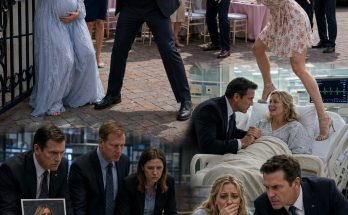
I Was In A Billion-Dollar Board Meeting When My Secure Phone Pinged. A Video. My Daughter Screaming In A Garage. A Dealer Smashed A Landscaping Brick Into Her Face And Laughed Into The Camera: “Your Dad’s Money Can’t Fix This. We Own The Cops.” He Was Right. Money Couldn’t Fix It. But My Past Could. I Didn’t Call My Lawyers. I Unlocked The Biometric Safe And Dusted Off My Old SEAL Trident. They Thought They Broke A CEO. They Woke Up A Ghost. “They Screamed For Mercy When The Dirt Fell.”
### Part 1
I was halfway through the biggest merger of my life when my secure phone vibrated against the polished boardroom table.
Not my public phone. Not the one assistants could reach, or lawyers, or investors, or reporters pretending to be friends.
The secure one.
Only five people in the world had that number.
The room smelled like leather chairs, expensive coffee, and cold air conditioning. Twelve men in tailored suits stared at me from around the mahogany table, waiting for me to sign a deal that would turn Sterling Tech into a company big enough to scare governments. A fountain pen rested between my fingers. Its gold nib hovered over the final page.
Then the phone buzzed again.
I glanced down, expecting an encrypted update from my security chief or a board-side risk warning.
Instead, I saw a video.
A parking garage. Concrete pillars. Fluorescent lights flickering in sickly white strips. A row of cars shining under the ceiling lamps.
Then my daughter walked into frame.
Laya.
She wore a yellow sundress and white sneakers, the same dress she had laughed about buying the week before because, in her words, “Dad, I’m twenty-two, not eighty. Let me look like sunshine once in a while.”
She was holding her keys. Her head was tilted slightly, like she was listening to music through one earbud.
Three shadows moved behind a pillar.
My body knew before my mind accepted it.
One grabbed her arms. Another swept her legs. The third picked up a landscaping brick from the planter beside the elevator.
The screen blurred when she hit the ground.
The sound that followed was not cinematic. It was ugly. Heavy. Final.
The men around me kept talking for half a second before the silence swallowed them.
I did not stand right away. I did not shout. I did not drop the phone.
That is what people misunderstand about men like me. Panic is a luxury for civilians. Training does something cruel to you. It turns terror into stillness.
On the video, the attacker looked straight into the camera.
He wore a mask, but I saw his eyes.
Cold. Flat. Familiar in a way I could not place.
Then he said, “Package delivered, Victor.”
My name.
The phone screen went black.
Someone cleared his throat. “Mr. Sterling?”
The pen snapped in my hand.
Ink spread across my fingers like blood.
I stood so fast my chair crashed backward onto the marble floor. Nobody moved. Nobody asked another question. They saw my face and decided their billions could wait.
I walked out of that room and left the merger unsigned.
The elevator dropped forty floors in silence. My reflection stared back from the mirrored wall: gray suit, open collar, billionaire face, soldier eyes.
By the time I reached the garage, Victor Sterling the CEO had stepped aside.
The man who climbed into the car was the one I buried ten years ago.
The SEAL. The ghost. The weapon.
I drove to St. Jude’s Medical Center without remembering the route. Red lights became suggestions. Horns screamed. Rain streaked the windshield even though the sky had been clear an hour earlier. Or maybe my eyes were lying to me.
At the emergency entrance, the smell hit first.
Antiseptic. Burned coffee. Fear.
I walked straight past the front desk.
“Sir, you can’t—”
“Laya Sterling,” I said.
The nurse froze. Her hand hovered above the keyboard. She saw something in me and decided rules were smaller than grief.
“Trauma surgery. Sixth floor.”
I ran.
My dress shoes slapped against linoleum. A little boy holding a stuffed dinosaur watched me pass. A janitor backed his cart against the wall. Somewhere, a woman was crying into a paper cup.
At the surgical doors, a doctor stepped out in blue scrubs.
His mask hung loose. His eyes were tired.
“I’m her father.”
He nodded like he had expected me. “Mr. Sterling.”
“Is she alive?”
He hesitated too long.
“She is alive,” he said. “But the injuries are severe. Facial fractures. Brain swelling. She is in a medically induced coma. We’re doing everything we can.”
The hallway shifted sideways.
I put one hand against the wall.
“Will she wake up?”
“We don’t know.”
Behind the glass doors, machines beeped with mechanical patience, as if my daughter’s life were just another rhythm to monitor.
Later, they let me see her.
Her face was wrapped in white bandages. Tubes ran into her mouth. Her hands were bruised. One fist was still clenched, tight enough that the nurses had not forced it open.
I pressed my palm against the glass and whispered, “I’m here, baby.”
Then my secure phone vibrated again.
A message from an unknown number.
Not done.
Attached was a photo of me standing outside Laya’s room.
Taken from behind me.
Inside the hospital.
My grief turned cold.
They were not finished with her.
And whoever had hurt my daughter was close enough to watch me breathe.
### Part 2
The police arrived two hours too late and already bored.
Two uniforms stood near the nurses’ station, hands on belts, speaking softly into radios. With them was a detective in a wrinkled brown jacket who smelled faintly of mint gum and old cigarettes.
“Mr. Sterling,” he said. “Detective Kyle.”
I looked at his badge, then at his face. He had the tired expression of a man who had decided what happened before he entered the building.
“Your daughter appears to have been the victim of a robbery,” he said.
“No.”
His eyebrows lifted. “Excuse me?”
“It was not a robbery.”
“Her purse is missing. Phone missing. Car keys missing.”
“They said my name.”
The detective stopped chewing his gum.
I pulled out the secure phone and showed him one frozen frame from the video. Not the whole thing. Not yet.
He leaned closer, squinting.
“You received this directly?”
“Yes.”
“From who?”
“If I knew that, Detective, we wouldn’t be having this conversation.”
He did not like that. Men like him never liked being reminded they were late to the only part that mattered.
“We’ll need the device as evidence.”
“No.”
“Mr. Sterling—”
“You can have a copy when I decide you can have a copy.”
His face hardened. “This is an active investigation.”
I stepped closer. He was shorter than me by four inches, softer by thirty years.
“So investigate.”
For a moment, neither of us moved.
Then his phone rang. He answered, turned away, and spoke in a low voice. His posture changed while he listened. Not much. Just enough.
A little too stiff.
When he hung up, he looked at me differently.
Not like a grieving father.
Like a problem.
“We’ll be in touch,” he said.
I watched him walk away and knew, with absolute certainty, that I could not trust him.
Back in Laya’s room, the machines breathed for her.
I sat beside her bed and held her hand. Her skin was cold. A thin line of dried blood had escaped the bandage near her temple. I wanted to wipe it away, but I was afraid to touch anything.
Her clenched fist drew my attention again.
A nurse had placed her personal effects in a clear plastic bag on the side table. Torn yellow fabric. A broken watch. One white sneaker. A hospital form with her name spelled correctly but her life reduced to boxes.
I waited until the nurse stepped into the hallway.
Then I opened the bag.
Inside the torn fabric was something small, metal, and heavy.
A coin.
Not currency. A challenge coin.
Military grade. Silver, worn smooth at the edges.
On one side was an eagle over an anchor. On the other, scratched so faintly I almost missed it, were two initials.
B.T.
My throat closed.
Blake Turner.
For five years, I had believed Blake was dead.
I had watched his helicopter fall into a burning valley in Afghanistan. I had stood at his memorial. I had folded a flag for his mother and lied with my hands because there had been no body to bury.
Blake had been my brother once.
My friend.
The man who saved my life in Fallujah and cursed me for living through Kandahar.
And now his coin had been clenched in my daughter’s fist after she was attacked.
I turned it over under the hospital light.
On the rim, almost hidden by scratches, was a symbol I remembered too well.
A scorpion tail curled around a dagger.
The Viper mark.
A mercenary unit we were supposed to have erased.
The floor beneath my chair seemed to drop away.
Laya had not been attacked by street trash.
She had been marked by professionals.
And one of those professionals carried a ghost from my past.
A soft knock came at the door.
I slipped the coin into my pocket before turning.
My ex-wife Morgan stood in the doorway, one hand over her mouth. Her eyes were red, her blond hair pulled into a careless knot that probably took thirty minutes to make look careless.
“Oh God,” she whispered when she saw Laya. “Our baby.”
She came to me and collapsed against my chest.
I held her because I did not know what else to do.
She smelled like expensive perfume and rain.
“I came as soon as I heard,” she said.
But as she cried into my shirt, my fingers closed around Blake Turner’s coin in my pocket.
The metal edge cut into my palm.
And I realized something worse than grief.
Laya had known something.
She had fought hard enough to leave me a clue.
But why would my daughter have a dead man’s coin in her hand?
And why did Morgan’s tears feel rehearsed?
### Part 3
At midnight, I left the hospital through the service exit.
I did not tell Morgan. I did not tell Detective Kyle. I did not tell the board, my lawyers, or the private security team that normally followed me like shadows in better suits.
The rain had returned, thin and cold, turning the ambulance bay lights into blurry halos.
My driver was waiting near the curb in the black Bentley.
I walked past him.
“Sir?”
“Go home, Daniel.”
“But Mr. Sterling—”
“Go home.”
He knew that tone. Everyone who had ever worked for me knew that tone. It meant the conversation was already over.
Three blocks away, under an old apartment building I owned through a shell company, was a storage unit. Inside sat a dusty gray Ford sedan with mismatched plates, a duffel bag, and a life I promised myself I would never need again.
I changed out of the suit.
Jeans. Work boots. Hoodie. Dark jacket.
Then I opened the duffel.
Inside was an encrypted laptop, cash, burner phones, lock tools, a compact pistol, and a small black notebook filled with names that respectable people would pay anything to keep out of court.
The old Victor fit too easily.
That scared me more than the gun.
I powered up the laptop and connected to a private backdoor in Sterling Tech’s traffic system. Years earlier, we had built the city a “smart congestion platform,” which was just a polite phrase for cameras everywhere.
The police had one garage camera.
I had the whole city.
The attack had happened at 4:03 p.m.
At 4:05, a black SUV left the garage through the west exit. Mud covered the plates. Smart. But mud does not hide bumper damage, tire alignment, or the little flicker of a cracked taillight.
I tracked it across eight intersections.
They used side streets, avoided toll cameras, circled twice near the river, then slipped into the port district.
At 4:42, the SUV entered Iron Grave Salvage.
A scrapyard.
Of course.
Places like that swallowed evidence for breakfast.
I parked two blocks away and walked in through the rain.
Iron Grave was surrounded by chain-link fence topped with razor wire. Beyond it, crushed cars rose in crooked towers, their metal bodies stacked like dead animals. The air smelled of rust, oil, and wet dirt.
I climbed the fence without cutting it.
Cutting leaves a story. Climbing leaves doubt.
In the center of the yard stood a trailer office with yellow light leaking from cracked blinds. Laughter came from inside. Cards slapped a table. A beer bottle rolled.
I moved closer and looked through the window.
Three men.
One large and bald. One skinny with nervous shoulders. One young, maybe mid-twenties, with a scar running from his cheekbone to his jaw.
When Scar reached for his beer, his sleeve lifted.
Scorpion tail. Dagger.
My vision narrowed.
The world became angles and distances.
Door. Window. Table. Weapons. Hands.
I knocked.
The laughter died.
“Who the hell is that?” someone muttered.
The bald one opened the door.
I hit him in the throat before he saw my face. He folded backward, choking. I stepped over him into the trailer and shut the door behind me.
The skinny one grabbed for a pistol on the table. I threw a glass ashtray. It caught him above the eye. He dropped hard.
Scar had his gun halfway up when I pulled back my hood.
His eyes widened.
Not recognition from television.
Recognition from a briefing file.
“You,” he whispered. “You’re supposed to be at the hospital.”
“I was.”
His finger twitched.
The gun fired once, wild. The bullet punched through the trailer wall.
I crossed the room before he could fire again, caught his wrist, and twisted until the gun fell. He screamed when bone gave under my grip.
I drove him to the floor and put my boot on his chest.
“Who gave the order?”
He sucked air through his teeth. “I don’t know.”
I pressed down.
His face went purple.
“Who?”
“A broker,” he gasped. “Vinnie. Pier 42. He paid us. That’s all.”
“Who hired Vinnie?”
“I don’t know! We get numbers, drops, encrypted messages. Please.”
“What was Laya doing there?”
His eyes flickered.
There it was.
He knew.
I crouched beside him, lowering my voice. “Tell me.”
“She saw something,” he whispered. “Some shipping files. She wasn’t supposed to. They said scare her, grab her phone, make sure she couldn’t talk.”
A sound left my throat that did not feel human.
He started crying. “We weren’t supposed to kill her.”
“But you tried.”
“I just did what I was paid to do.”
I zip-tied his hands to a radiator pipe.
“I’m not going to kill you,” I said.
Hope lit his eyes for one stupid second.
Then I took his phone, found a number I recognized from the old days, and placed a call to a local crime boss who hated unauthorized crews operating on his territory.
“Package for you at Iron Grave,” I said when the line answered.
Scar heard the voice on the speaker and began begging.
I walked out before the begging turned into screaming.
Outside, the rain had stopped.
My burner phone buzzed.
Unknown number.
A photo appeared.
Laya’s ICU room. Her bed. Her monitors.
A hand in the foreground holding a syringe.
Under it, one sentence.
Docks can wait. Your daughter can’t.
My blood turned to ice.
I had found the first rat.
But someone else had already reached the nest.
### Part 4
I drove back to St. Jude’s with both hands steady on the wheel and murder sitting quietly beside me.
The city was different at two in the morning. Office towers were black. Traffic lights blinked over empty intersections. Steam rose from manholes. Every passing car looked like a threat until it vanished in the rearview mirror.
I parked behind a Thai restaurant, three blocks from the hospital, and entered through the loading dock.
Hospitals sleep lightly at night. Lights dim, voices drop, machines keep whispering. A linen truck idled by the service entrance. I waited until the driver turned away, then slipped inside behind a cart stacked with sheets.
In a laundry bin, I found a white coat.
Too short in the sleeves. Coffee stain near the pocket. Good enough.
I took the stairs.
On the ICU floor, the hallway was wrong.
Too quiet.
The nurse’s station was empty. The monitors glowed blue and green. Somewhere, an IV pump beeped in a patient’s room, ignored.
A man in scrubs stood outside Laya’s door.
Not a doctor. Not a nurse.
He held himself like a rifle was part of his skeleton. Feet apart. Shoulders still. Head turning just enough to check both ends of the corridor.
I backed into the stairwell.
Direct confrontation would be loud. Loud would bring staff. Staff would bring panic. Panic would kill time.
I went down one floor, found a break room, and opened the microwave.
A foil-wrapped snack bar sat on the counter beside a half-finished crossword puzzle.
I placed it inside and hit five minutes.
Then I ran back upstairs.
Ninety seconds later, the fire alarm screamed.
Red lights flashed. Doors slammed. Nurses rushed from rooms, confused and frightened. The man in scrubs reached into his pocket.
I moved with the crowd.
“Doctor!” I shouted, grabbing his arm. “Room four, now!”
He turned, annoyed.
I drove my fist into his solar plexus, caught him as he folded, and dragged him into a supply closet before anyone understood what they had seen.
Inside, I found a compact pistol, a hospital badge, a burner phone, and a small camera clipped under his collar.
He had been livestreaming.
I took everything.
Then I went into Laya’s room.
She lay still beneath the hospital lights, bandaged and fragile, her chest rising because the machine insisted it should.
For the first time that night, my hands shook.
Not from fear.
From the horrible gentleness required.
“I’m moving you,” I whispered. “I know you hate when I make decisions for you, but you can yell at me later.”
I called the one man I trusted with a life more than mine.
“Miller.”
The voice that answered was gravel and sleep. “Victor? Haven’t heard that name in years.”
“Code black. Medical evac. St. Jude’s roof. Five minutes.”
A pause.
“How bad?”
“My daughter.”
The line changed. No jokes. No questions.
“Four minutes.”
I disconnected the main monitors and switched Laya to portable support. The machine complained loudly. The fire alarm covered it. I wrapped her in blankets, hid the tubes as best I could, and pushed her gurney toward the service elevator.
A nurse stepped into my path.
“Where are you taking her?”
“Smoke migration,” I said, flashing the stolen badge. “Temporary relocation to roof triage.”
She looked at Laya. Then at the flashing lights. Then at the hallway chaos.
“Do you need help?”
“No.”
She moved aside.
The elevator rose too slowly.
When the doors opened onto the roof, cold rain slapped my face.
Miller’s helicopter descended through the dark like a black insect. Its blades chopped the rain into mist. Two medics jumped out before the skids fully touched down.
Miller was older, heavier, with a scar down one side of his neck, but his hands were the same: steady enough to thread a needle during artillery fire.
He looked at Laya once and swallowed.
“Hell, Vic.”
“Keep her alive.”
He nodded. “Where?”
“Cabin safe house first. Then move her again. Don’t tell me where unless you have to.”
His eyes narrowed. “You think you’re compromised?”
“I know I am.”
They loaded Laya into the helicopter.
Before Miller climbed in, he gripped my shoulder. “Don’t become something she can’t come back to.”
I looked at my daughter’s bandaged face through the open door.
“I’m already there.”
The helicopter lifted into the rain and vanished over the city.
For five seconds, I stood alone on the roof, letting the storm hit me.
Then I checked the burner phone taken from the fake doctor.
One outgoing text, sent ten minutes before I arrived.
Subject moved?
Reply from unknown:
Pier 42. Broker waiting. Architect impatient.
Architect.
The word felt like a key turning in a locked door.
I knew where to go next.
And whoever this Architect was, he had just lost his only leverage over me.
### Part 5
Pier 42 smelled like diesel, salt, and old money hiding behind dirty hands.
Orange sodium lights buzzed above rows of shipping containers stacked three high. Forklifts growled in the distance. Chains clanged against metal. Men with rifles stood in pockets of shadow, pretending not to be soldiers.
I drove through the gate using the fake doctor’s badge.
The guard barely looked up. “Blue stack. Third level.”
So they were expecting someone.
Good.
I parked near a crane and moved on foot through the container maze. My boots found puddles, gravel, strips of torn plastic. Somewhere nearby, a radio played a country song under the whine of machinery.
The blue containers had been welded into an office above the yard. Light leaked from the seams. Voices argued inside.
“Hospital feed went dead,” one man said.
Another voice, thick and angry, replied, “Then find the girl. If she wakes up, we all burn.”
Vinnie.
I kicked the door in.
The first guard reached for his weapon. I shot the floor beside his foot and he froze long enough for me to slam him into the wall. The second came around a desk with a knife. I broke his wrist against the metal doorframe and shoved him down.
Vinnie was behind the desk.
He was not what I expected. Not a monster. Not a kingpin. Just a soft man in a silk shirt with sweat shining on his upper lip, gold rings tight around thick fingers, and eyes that had spent a lifetime measuring exits.
“Victor Sterling,” he said, voice trembling. “I was wondering when you’d come.”
“You sent men after my daughter.”
“I sent nobody. I arrange introductions. That’s all.”
I grabbed him by the collar and slammed him onto the desk. Papers flew. A coffee mug shattered. A framed photo of a yacht toppled face down.
“Introductions?”
He coughed. “The crew wanted work. The client wanted pressure. I connect needs.”
“She is twenty-two.”
His eyes darted toward the guards, both groaning on the floor.
“I didn’t know they’d go that far.”
“But you knew they’d touch her.”
Silence.
I pressed the barrel of my pistol against his cheek.
“Who is Architect?”
“I don’t know.”
I moved the barrel to his knee.
“I swear,” he hissed. “Voice changer. Encrypted payments. Dead drops. But there’s a meeting.”
“When?”
“Tomorrow night. Meatpacking district. Warehouse 19.”
He was lying.
Not about the place. About the time.
His left eyelid twitched before he said tomorrow. Old interrogation habits never leave you.
“What did Laya find?”
Vinnie swallowed.
“A shipment discrepancy.”
“What shipment?”
He hesitated.
I leaned closer.
“Military prototypes,” he whispered. “Guidance modules. Drone targeting hardware. Supposed to be destroyed after testing. They weren’t. Somebody redirected them overseas through relief containers.”
Laya had been volunteering with a watchdog nonprofit that audited humanitarian shipments. She had told me about it over dinner two weeks ago. I remembered nodding while answering emails, half-listening while she talked about missing manifests and fake shell charities.
I felt shame cut through the anger.
My daughter had been telling me the truth.
I had been too busy building an empire to hear her.
“Who else?”
Vinnie’s mouth opened, closed.
“Who else?” I repeated.
He looked toward a laptop on the desk.
I turned it around. Open email. Private logistics schedules. Titan Security logos in the corner.
My stomach tightened.
Titan Security belonged to Grant Vale.
My best friend.
Laya’s godfather.
The man who had stood beside me at the hospital with wet eyes and a hand on my shoulder.
Vinnie saw my face and knew I understood.
“Grant isn’t the top,” he said quickly. “He’s muscle with a boardroom. Architect is above him.”
“Name.”
“I don’t have one.”
I zip-tied him to his chair and took the laptop.
“Wait,” Vinnie said, panic rising. “You can’t leave me like this.”
I paused at the door.
“You helped turn my daughter into leverage.”
“I didn’t swing the brick.”
“No,” I said. “You just paid for the hand.”
Outside, the dock lights shimmered in puddles.
As I descended the stairs, Vinnie shouted behind me, offering names, money, escape routes, anything.
Then my phone buzzed.
A message from Harper Lane, my attorney. I had not contacted her yet.
Victor. Grant just called an emergency Titan board meeting. 3:00 a.m. You need to see this.
Attached was a security still from Titan headquarters.
Grant stood in his office.
Across from him, back turned to the camera, was a woman in a cream coat.
Blond hair. Perfect posture.
Morgan.
My ex-wife.
My daughter’s mother.
The dock noise faded until all I heard was my own pulse.
The conspiracy had not crept near my family.
It had started inside it.
### Part 6
Titan Security’s headquarters rose from downtown like a blade.
Forty stories of glass, steel, and arrogance. Grant used to joke that the building was designed to make enemies feel poor before they even reached the lobby.
I knew its security better than anyone outside his inner circle because I had helped design it.
That was Grant’s mistake.
Powerful men always forget the difference between a locked door and a door built by a friend.
I entered through the cooling tunnels beneath the building, where the air was hot and wet and tasted like metal. My shoulder scraped concrete. Pipes hummed above me. At the service access panel, I bypassed the lock with an old maintenance code Grant never changed because nostalgia makes men stupid.
The server room was freezing.
Blue lights blinked in tall black racks. Fans whispered like insects. I connected my laptop and pulled the internal camera feed.
Executive floor.
Grant’s office.
The woman in the cream coat sat on his couch with her legs crossed.
Morgan.
She held a glass of water but did not drink. Grant paced in front of her, hair disheveled, tie loose.
Audio took a minute.
Then her voice filled my earpiece.
“You promised control.”
Grant snapped, “I promised pressure. Not a dead girl, not Victor loose in the city, not Vinnie tied to a chair.”
“Laya is not dead.”
“Not yet,” he said.
I gripped the table until my fingers hurt.
Morgan did not flinch.
“That makes her a liability,” she said. “And so does Victor.”
My ex-wife spoke about us with the calm of someone discussing stock movement.
Grant rubbed his face. “This is going too fast.”
“It was always going to move fast once she found the manifests. Your men failed to retrieve the files. My daughter held onto evidence long enough to pass something to Victor.”
My daughter.
Not our daughter.
My.
Possession, even in betrayal.
Grant stopped pacing. “If Victor finds Blake—”
“He won’t.”
“You underestimate him.”
Morgan smiled faintly. “No. I know exactly what Victor is. That’s why we’re giving him a target. He’ll chase Blake, kill him, and become the violent grieving father every prosecutor expects.”
“And the trust?”
“Once Victor is indicted and Laya is declared incapacitated, control passes to me.”
Grant looked sick.
But not sick enough to stop.
I recorded everything.
Every word. Every face. Every betrayal.
Then another figure entered the office.
Only half his body appeared on camera at first. Black jacket. Gray hair. A cane with a silver head.
Grant straightened.
Morgan’s smile vanished.
“Senator,” Grant said.
I froze.
Senator Julian Thorne stepped into frame.
Defense Appropriations Committee. Presidential hopeful. Law-and-order saint on Sunday news shows. A man who smiled at veterans while selling their wars back to them.
“The shipment leaves in six hours,” Thorne said. “I don’t care about your domestic drama.”
Morgan’s jaw tightened. “Domestic drama?”
“Your daughter interfered with an international operation worth more than your divorce settlement fantasy.”
Grant said, “Victor is active. We need to contain him.”
Thorne turned toward the camera without knowing I was watching. His face was smooth and pale under the office lights.
“Then use what he loves. That has always worked with men like him.”
The meeting ended two minutes later.
I copied the footage, wiped my access trace, and exited through the stairwell.
On the twentieth floor landing, my burner phone vibrated.
Harper again.
Do not go after them alone. Call me.
I almost ignored it.
Then I thought of Laya, lying still under hospital lights because she had tried to do the right thing alone.
I called.
Harper answered on the first ring. “Tell me you’re not inside Titan.”
“I was.”
“Victor.”
“I have video. Morgan, Grant, Senator Thorne. They discussed the trust, the shipment, Blake, and framing me.”
Silence.
Then Harper said, “Come to my office. Now. Not your office. Not your house. Mine.”
“Why?”
“Because if a senator is involved, your money won’t save you. Your rage definitely won’t. Evidence might.”
I stood in the stairwell, breathing concrete dust, with a gun under my jacket and my whole past burning behind my eyes.
“Victor,” Harper said, softer now. “If you kill them, they win.”
That sentence stopped me.
Because she was right.
I wanted blood.
They wanted me bloody.
At Harper’s office, she watched the footage three times without speaking. The sun was beginning to thin the sky outside her windows by the time she removed her glasses.
“This is enough to open doors,” she said. “Not enough to lock them inside.”
“What do you need?”
“Morgan.”
“No.”
“Yes. She’s the emotional link, the financial motive, the mother. If she says it in her own words, on clean audio, we have the spine of the case.”
“She won’t confess.”
Harper opened a drawer and removed a silver ring.
“She will if she thinks you’re broken.”
I stared at the ring.
“A microphone?”
“Old tech. Short range. Hard to hack. You wear it. You meet her somewhere she thinks she owns.”
I knew the place instantly.
The hospital chapel.
Morgan always loved a stage with candles.
I took the ring.
By sunrise, I was sitting in the back pew beneath stained glass, waiting for the mother of my child to explain the price she had put on our daughter’s life.
### Part 7
The chapel smelled like wax, old wood, and flowers left too long in water.
Colored light from the stained glass fell across the pews in muted reds and blues. A small electric candle flickered near a statue in the corner. Somewhere beyond the walls, hospital machines beeped and carts rolled over tile.
I sat with my head bowed and the silver ring on my finger.
Harper was parked across the street, recording.
Federal agents were nearby, but not close enough to save me if Morgan saw through the act.
That was fine.
I had survived worse than a woman with polished nails and no soul.
Her heels clicked softly behind me.
“Victor?”
I let my shoulders sag before turning.
Morgan looked perfect.
Not beautiful in the way I remembered from our early marriage, when she wore my shirts and drank coffee barefoot on the balcony. This was curated grief. Pale coat. No jewelry except pearl earrings. Eyes red enough to be believable. Hair smooth enough to tell the truth.
She sat beside me and took my hand.
“You look destroyed,” she whispered.
“I am.”
Her thumb stroked my knuckles. Once, that gesture could calm me. Now it made my skin crawl.
“I went after someone,” I said.
Her hand paused.
“What do you mean?”
“At the docks. One of the men connected to Laya.” I swallowed hard, letting my voice crack. “I hurt him. Maybe killed him. I don’t know.”
Morgan’s eyes sharpened for a fraction of a second.
Not fear for me.
Calculation.
“Did anyone see you?”
“I don’t think so.”
“Did you tell anyone?”
“Only you.”
The smallest smile touched her mouth and vanished.
“Oh, Victor.”
She leaned closer, lowering her voice as if comforting me.
“This doesn’t have to ruin you.”
I stared at her. “My daughter is in a coma.”
“Our daughter,” she corrected gently, but the word sounded borrowed.
“What are you saying?”
She looked toward the altar. “I’m saying tragedy can become freedom if we stop pretending life is fair.”
In my ear, Harper’s voice whispered, “Easy. Let her talk.”
Morgan squeezed my hand.
“You built a cage around all of us. The trust. The company. The legacy. Laya was going to waste it on charity work, lawsuits, shelters, all those sad little causes she collected. You encouraged that weakness.”
“She wanted to help people.”
“She wanted to embarrass us.”
I looked at her then.
No acting required. The disgust came naturally.
Morgan mistook it for pain.
“You never understood,” she continued. “That money should have been ours. Mine. After everything I tolerated. Your wars. Your absences. Your moral superiority. Then you locked it away for a girl who would rather chase criminals around shipping docks than enjoy the life she was born into.”
“Did you know they would hurt her?”
Morgan exhaled slowly.
“They were instructed to scare her. Retrieve what she had. Make sure she couldn’t testify for a while.”
“For a while.”
“She was not supposed to die.”
“But if she did?”
Her silence answered first.
Then she said, “The documents are clear. If Laya is permanently incapacitated and you are legally unfit, the custodial parent gains control.”
“Legally unfit because I kill the men you hired.”
Her eyes flicked toward me.
There it was.
The moment she realized she had stepped too close to the edge.
“I didn’t hire them directly.”
“No. You used Grant.”
“Grant owed me.”
“And Blake?”
Her expression changed.
Surprise. Then amusement.
“So she did give you the coin.”
My heart slammed against my ribs.
“Blake is alive.”
“Very.”
“Where?”
Morgan smiled.
“Still commanding men from the shadows, still blaming you for his ruined life. He was easy to recruit. Men who feel cheated always are.”
I felt the ring cold against my finger.
“How much was my daughter worth to you?”
Her face hardened. “Don’t be dramatic.”
“How much?”
“Five million to the crew. More to Blake. Grant handled logistics. Senator Thorne handled protection. I handled the family.”
I stood.
The pew creaked under my hand.
Morgan rose too, suddenly wary.
“Victor, don’t.”
“I’m not going to touch you.”
Relief flashed across her face.
I lifted my hand so the ring caught the candlelight.
“I don’t need to.”
The chapel doors opened.
Harper walked in first, calm as a blade. Two federal agents followed. Behind them stood Judge Nathaniel Warren, gray-haired and grim, a man known for turning rich people into inmates when the evidence deserved it.
Morgan looked from them to me.
Her face emptied.
“Morgan Sterling,” Harper said, “you are under arrest for conspiracy to commit attempted murder, fraud, money laundering, and obstruction.”
Morgan backed into the pew.
“No. Victor. Wait.”
The agents moved.
“I’m Laya’s mother,” she snapped, panic cracking her voice. “You can’t do this to me.”
I looked at the woman who had given birth to my daughter and sold her pain like a business asset.
“You stopped being her mother the moment you put a price on her silence.”
As they cuffed her, she twisted toward me.
“Blake will kill you,” she spat. “And when he does, Laya will have no one.”
The agents dragged her out, her heels scraping tile.
Harper came to my side.
“We got every word.”
“Good.”
“Grant’s warrant is being signed now. Thorne is more complicated.”
“And Blake?”
Harper’s face tightened.
“We need him alive.”
I looked toward the chapel doors Morgan had vanished through.
I had buried enemies before.
But Blake Turner knew my training, my habits, my weaknesses.
And now he knew I had taken Morgan.
The ghost would come for me next.
### Part 8
We did not arrest Grant immediately.
That was Harper’s idea, and I hated it because it was smart.
“Grant is insulated,” she said in her office, spreading files across the table. “Private army, political friends, lawyers on retainer, federal contracts. If agents walk into Titan without the senator tied directly to him, he screams witch hunt and half the country believes him.”
“So we let him breathe.”
“We let him panic.”
Panic makes powerful men sloppy.
I called my CFO at 8:12 a.m.
Colin answered like a man already afraid of the day. “Sir?”
“Trigger Protocol Red.”
The silence on the line was immediate.
“Mr. Sterling, that liquidation sequence was designed for hostile government seizure.”
“I know.”
“It will crash confidence across half our holdings.”
“I know.”
“The board will revolt.”
“Let them.”
“Sir—”
“Do it now.”
By 9:30, financial news channels were bleeding my name across their screens. Sterling Tech subsidiaries sold. Emergency liquidity event. Rumors of federal investigation. Billionaire founder under pressure. Analysts with perfect hair explained my collapse to people eating toast.
Harper leaked just enough to make it look worse.
At 10:07, Grant called.
I let it ring twice.
“Victor,” he said, too quickly. “What the hell is happening?”
I put fear into my voice. Not much. Just enough.
“They know.”
“Who knows?”
“The feds. The accounts. The docks. Vinnie. Everything.”
Grant breathed hard into the phone.
“Where are you?”
“Leaving.”
“You can’t leave.”
“I’m taking Laya and disappearing.”
That was the hook.
Grant went quiet.
“Laya is with you?”
“She’s safe.”
“Victor, listen to me. You’re emotional. You need friends right now.”
“Friends?” I laughed, broken and sharp. “I don’t have those.”
“Where are you going?”
I waited three seconds.
“The Burke cabin.”
Another silence.
He knew the place. Of course he did. He had fished there with me. Drank there. Held baby Laya there while Morgan slept on the porch swing.
“You shouldn’t be alone,” Grant said carefully.
“I don’t care anymore.”
I hung up.
Harper, sitting across from me, closed her laptop.
“He’ll call Blake.”
“Good.”
“The cabin?”
“Empty by the time they arrive.”
At noon, I reached the cabin in the mountains.
Miller had Laya stabilized in the basement ICU, surrounded by portable equipment, medication charts, backup generators, and three ex-medics who looked like they had slept with rifles under their pillows.
“Move her,” I said.
Miller glanced at my face and did not argue.
“Where?”
“Somewhere even I don’t know.”
His jaw tightened. “That bad?”
“Worse.”
They lifted Laya carefully, every tube and monitor treated like a thread holding the world together. Before they carried her out, I touched her hand.
“I need you to keep fighting,” I whispered. “Just a little longer.”
Her fingers did not move.
But the monitor kept its steady rhythm.
After the helicopter left, the cabin seemed too quiet.
I walked room to room, remembering every laugh that had ever lived there.
Laya at six, running barefoot with a marshmallow stuck to her cheek.
Grant teaching her to cast a fishing line.
Morgan on the porch, pretending to love the wilderness while secretly checking her reflection in the window.
Memory can be crueler than evidence.
I prepared the cabin as a trap.
Not with gasoline. Not with explosives. I had no intention of giving Blake the death he wanted.
Cameras in birdhouses. Motion sensors under pine needles. Floodlights wired to a hidden switch. Steel shutters on the windows. Tear gas canisters in the barn loft. Restraints in the old tack room.
A kill box without the kill.
By dusk, the forest had gone still.
No birds.
No wind.
Just the smell of pine, damp earth, and something coming.
At 6:42, a twig snapped north of the creek.
On the basement monitors, three thermal signatures moved through the trees.
Professional spacing. Slow advance. No wasted motion.
Blake had come himself.
I turned on the speakers hidden along the property line.
“Welcome home, Blake.”
The lead figure stopped.
For a long moment, nothing moved.
Then he stepped into a clearing and pulled off his mask.
Time had carved him down into something harder and uglier. Gray in his beard. Scars on his neck. One eye covered by a black patch.
Blake Turner smiled up at the camera.
“Victor,” he called. “Still hiding behind toys?”
“Still sending cowards after women?”
His smile vanished.
“Come out and say that.”
I picked up my rifle and walked toward the stairs.
On the monitor, Blake raised one gloved hand.
His men spread toward the cabin.
The ghost had entered my woods.
Now I had to prove he could bleed.
### Part 9
The first shots hit the cabin windows.
The steel shutters absorbed them with a sound like hail on a coffin lid.
I moved through the hallway in darkness, counting impacts. Blake’s men were testing angles, searching for weakness. I had built the cabin for privacy years ago, then rebuilt it for paranoia after I left the Teams.
Paranoia finally paid rent.
I hit the floodlights.
The forest exploded into white.
Two of Blake’s men flinched, goggles reflecting back like animal eyes. Blake dropped low and fired at the light source with discipline. Three bulbs shattered. He always had been good under pressure.
“Move!” he shouted.
I fired once into the dirt near the left flank.
Not to kill. To guide.
The man dove behind a woodpile, exactly where I wanted him. A hidden wire snapped around his ankle and yanked him sideways into a shallow pit lined with netting. He cursed as he fell.
One contained.
The second moved toward the barn.
Blake followed.
I let them.
I exited through the rear crawlspace and circled wide, using the creek noise to cover my steps. The air was cold enough to sting my lungs. Mud sucked at my boots. Branches scratched my face.
The second man reached the barn door and kicked it open.
Blake paused outside.
Smart.
He looked at the roofline, the windows, the dirt.
Then he laughed.
“You still love overbuilding everything.”
I stayed in the tree shadow, rifle trained but finger still.
“Your daughter overbuilt her conscience,” he called. “That was her problem. She should have looked away.”
I nearly fired.
Nearly.
Instead, I pressed the remote.
The barn’s side lights snapped on. The second man inside spun toward them. Tear gas dropped from the rafters with soft metallic clinks.
White smoke filled the barn.
He stumbled out coughing.
I took him down with a hard strike behind the ear and zip-tied him before he hit full panic.
Two contained.
Blake clapped slowly from the edge of the light.
“There he is,” he said. “The civilized billionaire using restraint.”
“You wanted me to kill you.”
“I wanted you honest.”
He moved fast.
Faster than a man with one eye and five years of hate should have been.
His first shot clipped the tree beside my head. Bark sprayed my cheek. I rolled behind a fallen log and returned fire into his cover. He circled left. I anticipated right. He anticipated that I would anticipate.
Old partners are the worst enemies.
We met near the barn door, both weapons empty at almost the same moment.
He drew a knife.
I drew mine.
For a second, the years collapsed. We were younger, covered in dust in some country nobody at home could find on a map, laughing because we had survived something we should not have.
Then Blake lunged.
The knife grazed my forearm. Heat flashed down to my wrist. I caught his elbow, drove my shoulder into his chest, and slammed him against the barn wall. He headbutted me, hard enough to make stars pop behind my eyes.
We fell into the barn together.
Smoke lingered low around our knees. The floor smelled of hay, oil, and old rain.
Blake slashed again. I blocked. He kicked my bad knee, the one nobody but my old team remembered. Pain buckled me. He smiled when he saw it.
“You got soft.”
“You got predictable.”
I drove my elbow into his throat.
He stumbled, recovered, and laughed through a cough.
“Laya was brave,” he said. “I’ll give her that. She held onto the coin even after the first hit. Wanted Daddy to know.”
I hit him then.
Not tactical. Not clean.
A father’s punch.
He crashed into a support beam. The knife fell.
I pinned him with my forearm across his chest and pressed my blade under his jaw.
“Why?”
His one eye burned.
“Because you left us behind.”
“No.”
“Yes. You built towers. We crawled out of wars with nothing. Grant begged for scraps. I took contracts. You got applause.”
“Laya had nothing to do with that.”
“She found the shipping trail. She gave evidence to someone she trusted.”
“Who?”
Blake grinned, blood on his teeth.
Before he could answer, his vest buzzed.
A secure phone.
The caller ID read Architect.
I pulled it free.
Blake started laughing.
“Go on,” he said. “Meet the man who owns all of us.”
I answered.
The screen lit with Senator Thorne’s face.
Not in a campaign office. Not in shadows. In a private study lined with flags and books he probably never read.
“Is it done?” Thorne asked.
“No,” I said.
His expression tightened, then smoothed.
“Mr. Sterling.”
“Senator.”
Behind me, the barn door creaked.
A woman’s voice cut through the smoke.
“Keep him talking, Victor.”
I turned.
Paige, my wife, stepped into the light wearing tactical gear and holding a suppressed pistol.
The woman I thought was safe at home.
The woman I thought I had protected from this world.
She looked at the phone and smiled without warmth.
“Hello, Julian,” she said. “FBI. You’re live.”
### Part 10
For a moment, nobody moved.
Not Blake under my blade. Not Paige in the barn doorway. Not Senator Thorne on the phone screen.
The only sound was the slow drip of water from the rafters and Blake’s rough breathing.
Then Thorne laughed.
It was small, polite, political.
“You’re making a mistake,” he said.
Paige stepped closer, pistol steady. “You’ve been making them for two years.”
I stared at her.
“Paige?”
Her eyes flicked to me for half a second. “Not now.”
“Not now?” My voice sounded strange, even to me.
She ignored the anger in it and focused on the phone.
“Senator Julian Thorne,” she said clearly, “this call is being recorded and transmitted to a federal grand jury under seal. You are speaking to Special Agent Paige Ross, FBI Organized Crime Division.”
Thorne’s face changed.
Not fear yet.
Recognition.
“You.”
“Me.”
Blake laughed under me, then coughed when I pressed harder.
Paige continued, “We have the warehouse footage. Morgan Sterling’s confession. Titan financial transfers. Port manifests. Vinnie’s broker records. Blake Turner alive and in operational command. And now you, personally confirming the termination order.”
Thorne leaned toward the camera.
“I confirmed nothing.”
“You asked if it was done.”
“I could have meant anything.”
“You are welcome to test that in court.”
His smile sharpened. “You think court frightens me? I built half the judges you people bow to.”
“Not this one.”
On Paige’s earpiece, I heard faint radio chatter.
“Alpha team breaching Titan.”
“Bravo secure at Thorne residence.”
“Target Grant Vale in custody.”
Paige looked at me then.
“It’s happening.”
I should have felt relief.
Instead, all I felt was the cold weight of another betrayal.
“You knew,” I said.
Her face softened, and that almost made it worse.
“Yes.”
“How long?”
“Two years.”
The words landed harder than Blake’s knife.
Two years of marriage. Two years of breakfasts, quiet evenings, soft hands on my shoulders when nightmares woke me. Two years of me believing I had found one person untouched by the old world.
All of it with a badge hidden underneath.
Blake wheezed, “Everybody lies to you, Vic.”
I knocked him unconscious with the butt of my knife handle.
Paige did not stop me.
Federal agents emerged from the tree line minutes later. They took Blake, then his men, then began tagging weapons, phones, shell casings, restraints, cameras. The cabin property filled with flashing blue lights that nobody outside the mountain could see.
Thorne had ended the call, but not before a final burst of radio chatter confirmed he had been arrested at his estate.
Grant was taken at Titan.
Morgan was transferred to federal custody.
Vinnie, according to Harper, had started talking before the ink dried on his rights form.
The machine was collapsing.
I stood outside the barn while agents moved around me.
Paige approached slowly.
Her tactical vest made her look like someone from my past, not my present.
“Laya is safe,” she said. “Miller moved her to a federal medical site. She has twenty-four-hour protection.”
“You sent Miller.”
“Yes.”
“Harper?”
“I briefed her once we knew Morgan was involved.”
“The financial crash?”
“My idea. We needed Grant desperate.”
I looked at the woman wearing my wedding ring beneath a glove.
“You used me.”
“I used what they feared,” she said. “Your rage. Your reputation. Your predictability.”
That hurt because it was true.
“You let me think I was alone.”
Her jaw tightened. “I tried to keep you alive.”
“You lied to my face every day.”
“I came into your life under assignment,” she said quietly. “I won’t insult you by pretending otherwise. But marrying you was not assignment. Loving you was not assignment. Loving Laya was not assignment.”
The forest was cold, but I barely felt it.
“Did Laya know?”
Paige looked away.
That was answer enough.
“She came to me three weeks ago,” Paige said. “With copies of manifests and photos from the docks. She suspected Titan. She didn’t know about Morgan or Thorne. I told her to stop digging. She didn’t.”
“She is my daughter.”
“Yes,” Paige whispered. “She is.”
My anger broke open in a way that left only exhaustion.
Agents loaded Blake into an armored vehicle. Even unconscious, he looked smaller than the ghost I had carried for five years.
Harper arrived near dawn, coat over pajamas, face pale but composed.
“It’s enough,” she said. “We have enough.”
“No,” I said.
Harper frowned.
“No?”
“I want public trials. No secret deals. No quiet resignations. No health excuses. No sealed endings.”
Paige nodded. “That will be dangerous.”
I looked at her.
“I’m done letting powerful people bury truth.”
The sun rose behind the pines, turning the smoke above the barn gold.
For the first time since the video arrived, the hunt was over.
But when Paige reached for my hand, I stepped back.
Justice had begun.
Trust had not.
### Part 11
Laya woke up ninety-one days after the attack.
I was reading beside her bed when her fingers moved.
Not much. A twitch against the blanket.
At first, I thought I had imagined it. Grief teaches you to see miracles in muscle spasms and meaning in machine noise.
Then she squeezed.
The book fell from my lap.
“Laya?”
Her eyelids fluttered.
The room was quiet except for the monitors and the hum of air through vents. Morning light slipped through blinds, striping the white walls. A vase of wildflowers sat near the window because Paige brought fresh ones every week even when I refused to speak to her outside medical updates.
Laya opened her eyes.
One was swollen less than the other. Both were alive.
I forgot how to breathe.
“Dad,” she whispered.
Her voice was dry, broken, beautiful.
I pressed my forehead to her hand and cried like a man with nothing left to hide.
“I’m here,” I said. “I’m right here.”
Her mouth tried to smile. Pain stopped it.
“Did we get them?”
Not am I okay.
Not what happened.
Did we get them?
That was my girl.
I nodded. “We got them.”
“All?”
“All.”
Her eyes closed, and for one terrible second I thought she had slipped away again.
Then she whispered, “Good.”
Recovery was not a montage.
It was ugly, slow, and unfair.
There were surgeries. Swelling. Nightmares. Speech therapy. Days when she refused mirrors. Days when she demanded them, stared at her reflection until tears ran silently down her healing face, then ordered everyone out.
She asked about Morgan on the fifth day.
I told her the truth.
All of it.
Not the softened version. Not the father version. The truth she had earned by surviving it.
Laya listened without interrupting. When I finished, she stared at the ceiling for a long time.
Then she said, “I don’t want to see her.”
“You don’t have to.”
“Ever.”
“No.”
She turned her head toward me. “Don’t forgive her for me.”
The words settled into me like law.
“I won’t.”
The trials began six months later.
By then Laya could walk short distances with a cane. She hated the wheelchair, so naturally she used it only when doctors threatened to sedate everyone involved.
The courthouse was a circus.
Cameras. Reporters. Protesters. Veterans defending Grant. Supporters of Thorne calling it political theater. True crime vultures whispering into phones. People love betrayal when it belongs to someone else.
Morgan arrived first, wearing a navy suit and the face of a victim.
She looked smaller than I remembered.
Not sorry.
Just diminished.
Grant sat two tables away from her, jaw clenched, refusing to look at anyone. Blake stared straight ahead, one eye dead and the other burning. Thorne smiled for the cameras until the judge entered.
The prosecution built the case brick by brick.
Port records. Offshore transfers. Titan invoices. Warehouse footage. Chapel recording. The call in the barn. Vinnie’s testimony. Grant’s panic. Morgan’s confession after she realized Grant had already blamed her.
But the courtroom changed when Laya testified.
She walked in wearing a cream blouse, black pants, and no scarf.
The scar along her cheek caught the overhead light.
A ripple moved through the room.
Not pity.
Shock.
The judge asked if she needed water.
“No, Your Honor,” she said. “I need them to hear me.”
She told the jury how she found missing relief shipments during volunteer work. How one container listed medical supplies but carried sealed military crates. How Titan Security appeared on documents where no private contractor should have been.
Then her voice trembled.
“I followed the trail because I thought my father’s company might be unknowingly involved. I wanted to protect him.”
I closed my eyes.
She kept going.
“I saw my mother at the docks two nights before the attack. She was giving an envelope to a man I later recognized as Vinnie.”
Morgan looked down.
Laya turned toward her.
“I thought maybe she was helping. I wanted to believe that.”
The courtroom was silent.
“Then the men came for me in the garage.”
The prosecutor asked if she could identify anyone connected to the attack.
Laya looked at Blake.
Then Grant.
Then Morgan.
Finally Thorne.
“Yes,” she said. “All of them. Different hands. Same weapon.”
The verdict came after four hours.
Guilty.
On every major count.
Morgan screamed when the judge sentenced her to fifty years. Not because she was sorry. Because consequences still offended her.
Grant and Blake received life.
Thorne received life without parole.
When deputies led Morgan past us, she twisted toward Laya.
“Baby, please.”
Laya did not flinch.
“My mother died in that garage,” she said. “You’re just the woman who paid for it.”
Morgan broke then, but nobody in my family reached for her.
Not me.
Not Laya.
Not Paige.
Outside, reporters shouted questions.
“How do you feel, Mr. Sterling?”
I stopped on the courthouse steps.
The sky was bright. The air smelled like rain on concrete.
“I feel,” I said, “like the trash has finally been taken out.”
Then I walked away.
But justice has a sound people rarely talk about.
It is not the gavel.
It is the prison door closing.
And I needed to hear it myself.
### Part 12
ADX Florence sat under a hard Colorado sky, surrounded by fences, towers, cameras, and silence.
I watched from a ridge a mile away with binoculars in my hands and Harper beside me in the passenger seat.
“You don’t have to do this,” she said.
“Yes, I do.”
Below us, a white prison transport bus rolled through the outer gate. Armed guards stood in rows. Dogs pulled against leashes. The facility looked less like a building than a decision made of concrete.
The bus stopped.
The doors opened.
Grant stepped out first.
His shoulders were rounded now. The old military posture had finally lost its war with fear. Shackles linked his wrists to his waist and ankles. A guard touched his elbow, and Grant flinched like a man unused to being handled by anyone he could not fire.
Blake came next.
He limped from the injuries I gave him in the barn. His head was shaved. His face was thinner. Without weapons, without shadows, without myth, he looked ordinary.
That was almost disappointing.
Thorne followed, chin raised, still performing dignity for an audience that did not exist. His silver hair had been cut short. His expensive suit was gone, replaced by orange. He looked like every other ruined man who had believed power was permanent.
Morgan was last.
She paused at the bottom of the bus steps.
Even from a distance, I could see how prison had already started eating her. No cream coat. No pearls. No perfect hair. Her face was bare, sharp, hollow.
For a second, she turned toward the ridge.
Impossible, of course.
She could not see me.
Still, I felt the old chill.
“She’ll spend twenty-three hours a day alone,” Harper said softly. “No interviews. No memoir. No society friends. Nothing but concrete, lights, and time.”
“Good.”
The intake doors opened.
One by one, they disappeared inside.
Morgan went last.
The steel door shut behind her with a distant clang that carried across the dry air.
I lowered the binoculars.
The knot in my chest did not vanish.
But it loosened.
“Buried,” I said.
Harper started the car.
“Alive,” she replied.
We flew home on a charter, not the corporate jet. I had sold it along with three houses, two art collections, and half a dozen unnecessary trophies from a life that now felt embarrassing.
Money had once looked like protection.
Now it looked like noise.
Laya slept across from me on the plane, a blanket over her knees, a book open on her chest. The scars on her face were still visible, but she no longer hid them. She said hiding made her feel like they still owned part of her.
Paige sat beside me.
We had not fixed everything.
Some nights, I still looked at her and saw the badge before the wife. Some mornings, she woke to find me on the porch because trust, once cracked, does not mend because two people want it to.
But she stayed.
She answered every question, even the ugly ones. She gave me access to files she legally should not have. She told Laya the truth and accepted her anger without defending herself.
That mattered.
It did not erase the lie.
But it mattered.
“You still have the coin,” Paige said.
I reached into my pocket.
Blake Turner’s challenge coin rested in my palm, silver dulled by years and blood.
Laya opened her eyes.
“Throw it away,” she said.
“Where?”
She looked out the window at the mountains below. “Somewhere deep.”
At home in Montana, we drove to a lake high above the ranch. The water was dark blue and cold enough to steal breath from lungs. Pines crowded the shore. Snow still clung to the shaded rocks.
I stood at the edge with Laya on one side and Paige on the other.
The coin felt heavier than it should.
For Blake. For Grant. For Morgan. For Thorne. For every ghost I had carried because I thought pain deserved a shrine.
I threw it.
It flashed once in the sunlight, spinning end over end, then vanished into the lake with a sound too small for all it represented.
Laya took my hand.
“Do you feel better?”
I watched the ripples fade.
“No.”
She nodded like she understood.
“But I feel lighter.”
“That’s better than nothing.”
Paige stood a few steps behind us, giving us space.
Laya looked at her, then at me. “You two are exhausting.”
I almost laughed.
It came out rough, but real.
“I know.”
“Fix it or don’t,” she said. “But don’t bleed all over the rest of our life.”
My daughter had always been better than me at saying what war really cost.
That night, we ate dinner on the porch as the sun dropped behind the mountains. Nobody mentioned prison. Nobody mentioned court. Nobody mentioned the video.
For the first time in months, silence did not feel like a threat.
It felt like room.
### Part 13
Six months later, the snow began to melt.
Montana smelled like pine needles, wet earth, and animals waking under the thaw. The ranch sat in a valley wide enough to make old nightmares feel small. Mornings arrived gold over the ridgeline. Nights came full of stars instead of sirens.
I stood on the porch with coffee cooling in my hand and did not scan the tree line.
That was new.
The screen door creaked behind me.
Laya stepped out wearing jeans, boots, and one of my old Navy sweatshirts. Her hair was tied back. Her scars showed in the clean morning light.
She saw me noticing and raised an eyebrow.
“Careful, Dad. You’re doing that face.”
“What face?”
“The tragic father face.”
“I don’t have a tragic father face.”
“You have at least seven.”
She leaned against the railing beside me.
“How did the board meeting go?” I asked.
She smiled.
Not the careful smile from physical therapy.
A real one.
“The Sterling Initiative is funded for five years.”
I looked at her.
She had used settlement money, seized assets, and donations from people who once wanted proximity to scandal to build something I never would have imagined. Legal aid. Financial protection. Emergency relocation. Investigative support for people trapped by family betrayal, corporate violence, and powerful abusers.
The money Morgan tried to steal had become a shield for strangers.
“You did that,” I said.
“We did.”
“No. You.”
She looked out over the valley. “I kept thinking about how many people don’t have a billionaire father with a terrifying past.”
“Terrifying?”
“Dad.”
“Fair.”
“They need systems. Lawyers. Safe places. People who believe them before the worst happens.”
The words settled in the morning air.
“You’re doing better work than I ever did.”
Laya bumped my shoulder with hers. “I learned from your mistakes.”
“That is less flattering.”
“It’s supposed to be.”
Paige came outside carrying a basket of laundry. Domestic life still looked strange on her, like a wolf politely wearing an apron, but she had chosen it every day.
A simple gold band shone on her finger.
Not a microphone this time.
A promise she was still earning.
“Breakfast in ten,” she said.
Laya looked between us. “I have a meeting in town, so please don’t use my absence to have another emotionally constipated staring contest.”
Paige coughed to hide a laugh.
I stared into my coffee.
After Laya went inside, Paige joined me at the railing.
For a while, we watched sunlight move down the slopes.
“I sent in my resignation,” she said.
I turned.
“From the Bureau?”
“Yes.”
“Why?”
“Because I’m tired of belonging to secrets.”
I did not answer right away.
The old Victor wanted to examine the statement for hidden doors. The father in me, the husband still limping behind, heard the cost.
“What will you do?”
“Consult. Teach. Maybe help Laya’s foundation with investigations, if she lets me.”
“She will make you fill out forms.”
“I deserve forms.”
I smiled despite myself.
Paige reached for my hand slowly, giving me time to refuse.
I did not.
Her fingers were warm.
“I don’t forgive you all at once,” I said.
“I know.”
“I may never forgive all of it.”
“I know that too.”
“But I’m still here.”
Her grip tightened.
“So am I.”
Inside, Laya shouted, “If you two are being weirdly quiet, I’m assuming progress!”
We both laughed then.
Real laughter.
Rusty, but ours.
Later that afternoon, after Laya drove into town, I walked the fence line alone. Not because I expected danger. Because the body remembers patrol even when the war is gone.
At the far end of the property, where the land sloped toward the creek, I stopped.
The water ran clear over stones. Tiny yellow flowers pushed through the mud.
I thought about Morgan in her concrete cell. Grant in silence. Blake limping through the rest of his life inside walls. Thorne forgotten by voters who had already found a new man to cheer.
For the first time, I felt nothing.
No heat.
No pull.
No need to rehearse what I would say if I saw them again.
That was the final burial.
Not prison.
Indifference.
When I returned to the house, Laya’s truck was back. She and Paige stood on the porch arguing about whether pancakes counted as dinner.
The setting sun painted them both in gold.
They looked alive.
Not untouched. Not unbroken.
Alive.
I used to believe protection meant becoming the most dangerous thing in the dark. I thought love was a perimeter, a weapon, a locked door, a hand ready to strike first.
I was wrong.
Love was staying after the truth.
Love was letting the people you saved become stronger than your saving.
Love was watching your scarred daughter build a world where fewer daughters had to be rescued at all.
Laya saw me and waved.
“You coming, Dad?”
I looked past her at the mountains, at the wide sky, at the house that held what was left of us and what we were becoming.
“Yeah,” I said.
I walked toward them.
The soldier in me was not dead. Men like me do not get to bury that part completely.
But he was finally quiet.
The father was home.
And this time, nobody could take that from us.
THE END!
Disclaimer: Our stories are inspired by real-life events but are carefully rewritten for entertainment. Any resemblance to actual people or situations is purely coincidental.