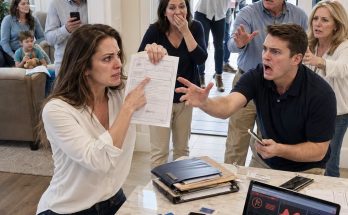
My Son Called While I Was Still In My Hospital Bed: “We Listed Your House. You’re Going To Assisted Living.” I Said: “Interesting. And Whose House Exactly Did You List?” He Said: “What Do You Mean?” I Couldn’t Stop Smiling Because The House He Listed Was Actually…
### Part 1
The call came at 7:14 in the morning.
I know because I had been staring at the clock across from my hospital bed, counting the slow red minutes until breakfast. Hip replacement surgery gives you too much time to think. The room smelled faintly of disinfectant and weak coffee, and the machine beside my bed made a soft, steady sound like someone breathing for me.
My phone buzzed on the rolling table.
Marcus.
For one foolish second, I smiled.
My son had not called in almost two weeks. He lived twelve minutes from the hospital, fifteen if the traffic light near the pharmacy was acting stubborn. I had told myself he was busy. Work. His wife. Life. At seventy-one, you learn to make excuses for the people you love because the truth often arrives wearing shoes too heavy for your heart.
“Marcus, honey. Good morning.”
There was a pause.
Not long. Two seconds, maybe three.
But in that pause, the air changed.
“Mom,” he said, “I need you to stay calm.”
I looked at the pale eggs on the tray a nurse had just set down. My orange juice was sweating inside its little plastic cup.
“Why would I need to stay calm?”
He cleared his throat. “Vanessa and I have been talking. A lot. About your future.”
My fingers tightened around the phone.
“My future?”
“You’re getting older. You just had surgery. The house is too much for you now.”
The word house landed first. Not old. Not surgery. House.
“Marcus,” I said slowly, “what did you do?”
He exhaled, like I was already being difficult.
“We listed it.”
I stared at the wall clock.
“You listed what?”
“Your house, Mom. Carver Street.”
For a moment, everything in the room became too sharp. The corner of the breakfast tray. The crease in the blanket over my knees. The thin blue vein on the back of my hand.
“You listed my house?”
“We didn’t want to stress you before surgery,” he said quickly. “Vanessa’s cousin Craig handled it. He knows real estate. The listing went live yesterday. We already have interested buyers.”
My stomach went cold, but my voice did not.
“And where exactly am I supposed to live?”
“There’s a beautiful assisted living community in Millbrook. Sunrise Gardens. Vanessa toured it. It’s not a nursing home, Mom. Don’t make that face.”
He could not see my face.
That was the part that almost made me laugh.
I looked at the eggs again. They were cooling, turning rubbery at the edges.
“How did you list a house,” I asked, “that may not be yours to list?”
Silence.
This time it was longer.
“Mom, don’t start with that. We have the power of attorney you signed.”
“The one from three years ago?”
“Yes.”
“The one you think still matters?”
His breathing changed.
I could hear someone in the background. Vanessa. Her voice was low but sharp, like glass scraped across a countertop.
“She’s saying something about the document,” Marcus muttered away from the phone.
Then Vanessa said, clear enough for me to hear, “That’s impossible.”
I picked up my fork and cut into the eggs.
“Marcus,” I said, “I am going to finish my breakfast. When I am discharged, I am going home to my house.”
“Mom, you can’t—”
“I can.”
“You’re not thinking clearly.”
That hurt more than the house.
Not because it was true, but because he had practiced saying it.
I swallowed one bite of cold eggs and placed the fork down carefully.
“Tell Craig to remove the listing.”
“He won’t.”
“Then someone else will.”
The line went quiet again.
For the first time, my son sounded unsure.
“Mom… what did you do?”
I looked toward the window. Morning light was sliding across the hospital floor, clean and thin and merciless.
What I had done was not new.
What I had done had started fourteen months earlier, in a quiet law office with brown carpet, a dying fern, and a man named Howard Bellamy who never smiled unless something was legally airtight.
But Marcus did not know that yet.
And the moment he realized it, I heard the first crack in his confidence.
### Part 2
After I hung up, I did not cry.
That surprised me.
I had cried when Marcus was born because his tiny fist wrapped around my finger like he had already chosen me. I had cried when he left for college, though I waited until his taillights disappeared. I had cried when Gerald died, cried until there seemed to be no water left in my body.
But that morning, with my son trying to sell the roof over my head while I lay in a hospital bed, I felt something else.
Recognition.
The kind that arrives quietly and says, You knew.
Gerald had known too.
Six years earlier, in our bedroom on Carver Street, my husband lay propped against three pillows, thinner than a man should ever be. The cancer had eaten him down to his eyes, but those eyes were still Gerald’s. Gray. Careful. Engineer’s eyes. Eyes that measured weight, stress, pressure, risk.
“Dorothy,” he had said one night, while the rain tapped against the window, “you need to be careful with Marcus.”
I remember folding a towel that did not need folding.
“He’s our son.”
“I know.”
“You love him.”
“I do.”
“Then why would you say that?”
Gerald looked toward the hallway, even though Marcus was not there. Vanessa had taken him to dinner that evening, some new restaurant downtown where the plates were large and the portions looked embarrassed.
“I know what he married,” Gerald said.
That sentence sat between us like a third person.
I did not answer because wives know when their husbands are speaking from fear and when they are speaking from evidence.
Vanessa had always been pleasant. That was the problem. Pleasant like a locked gate painted white. She remembered birthdays, brought wine, complimented my curtains, asked where Gerald kept financial documents in the same tone another person might ask for sugar.
After Gerald died, she changed only in small ways.
She started using words like “practical” and “burden.”
She offered to help organize my files.
She told me her parents had put everything in her name “for simplicity.”
Once, during Thanksgiving, I caught her in the hallway outside Gerald’s old office. The door was open just enough for me to see her standing by the file cabinet with her phone in her hand.
When she noticed me, she smiled.
“I was looking for extra napkins.”
The napkins were in the dining room sideboard. They had always been in the dining room sideboard.
I put that memory away.
People my age are good at drawers. We put grief in drawers, suspicion in drawers, loneliness in drawers. We shut them gently and tell ourselves the house is tidy.
Fourteen months before my surgery, I opened that drawer.
I called Howard Bellamy.
His office was on the second floor of a brick building near the courthouse. It smelled like old paper, lemon polish, and money that had learned to wait. Howard had handled our wills, Gerald’s estate, and one unpleasant property dispute with a neighbor who thought a fence could move six inches if he stared at it long enough.
I sat across from him with my purse in my lap.
“I may be worrying over nothing,” I said.
Howard clicked his pen once.
“Most people say that right before they describe something worth worrying about.”
So I told him.
Not dramatically. Not with tears. I told him about Vanessa’s questions, Marcus’s silence, the power of attorney I had signed three years earlier, back when it seemed harmless and responsible. I told him about the way my son had begun speaking to me in a patient voice, the voice people use when they have already decided you are the problem.
Howard listened without interrupting.
Then he opened a yellow legal pad.
“We should discuss a trust,” he said.
I frowned. “Isn’t that for rich people?”
“It is for people who want rules around their property.”
“I have rules.”
“Not enough.”
That was Howard. No poetry. No hand-holding. Just a clean blade.
We spent weeks on it. My home. My savings. My investment accounts. My car. My medical directives. My old power of attorney. Every document examined, corrected, revoked, replaced, filed.
Marcus was not named successor trustee.
Caroline was.
My younger sister Caroline had never met a form she could not alphabetize. She lived in Asheville, wore practical shoes, and had once made a plumber apologize in writing. Gerald used to say Caroline could organize a hurricane.
When I signed the final papers, Howard slid a copy across the desk.
“Do you plan to tell Marcus?”
I looked down at my name in blue ink.
“Not yet.”
Howard did not ask why.
That was one reason I trusted him.
Now, lying in the hospital bed fourteen months later, I reached for my phone again. My eggs were cold. My son was panicking. Vanessa was probably pacing a kitchen somewhere, discovering that confidence is not the same as control.
I dialed Howard.
He answered on the third ring.
“Dorothy?”
“Good morning,” I said. “It happened.”
Howard was silent for half a breath.
Then he said, “Tell me everything.”
By the time I finished, my hand was no longer trembling.
Howard asked one question.
“Did they remove anything from the property?”
“I don’t know.”
“Find out.”
A shadow moved across the doorway. A nurse passing by. The hospital smelled suddenly too bright and too clean.
I thought of my neighbor Margaret, who had a key to my house and a talent for seeing what people hoped she would miss.
When I called her, she answered before the first ring finished.
“Dorothy,” she said, “I was just about to call you.”
And that was when I knew the house was not the only thing they had touched.
### Part 3
Margaret did not waste words when something was wrong.
That was one of the things I loved about her.
She was seventy-four, widowed twice, and built like a woman who could carry groceries, secrets, and grudges without switching arms. She lived next door in a pale yellow house with bird feeders in every window and a front porch full of potted herbs. Gerald used to say if the FBI ever needed a neighborhood watched, they should hire Margaret and give everyone else the day off.
“What happened?” I asked.
Her voice dropped.
“There was a truck.”
My hospital room seemed to narrow.
“What kind of truck?”
“White moving truck. No company name on the side. It pulled into your driveway Monday afternoon.”
Monday.
The day before the listing went live.
I gripped the phone so hard my knuckles ached.
“Did you talk to them?”
“No. I took pictures.”
Of course she did.
“License plate?”
“Yes.”
“Faces?”
“One clear, one side view.”
“What were they carrying?”
There was a pause, and in it I heard Margaret decide how gently to hurt me.
“Boxes from the garage. Maybe seven. One looked like that old portable safe Gerald used to keep in the closet.”
I closed my eyes.
The safe was empty.
Thank God.
I had moved the important papers to Howard’s office months ago. Deeds. account information. Gerald’s military documents. My mother’s ring. A few bonds so old the bank teller had blinked twice when I brought them in.
But Marcus did not know the safe was empty.
Vanessa did not know.
That meant they had taken it believing it mattered.
That told me more than any confession could have.
“Margaret,” I said, “please send the photos to Howard Bellamy. I’ll text you his number.”
“Already saved them in three places,” she said. “And David across the street saw them too. He thought maybe you were downsizing.”
Downsizing.
Such a clean word for having your life packed without permission.
A nurse came in to check on me and found me sitting perfectly still with my phone against my ear. She asked if I was in pain.
“Yes,” I said.
She reached toward the chart.
“Not the hip.”
She looked at me then, really looked, and her face softened in that tired, professional way nurses have when they recognize a kind of injury no machine will measure.
After she left, I called Howard again.
He listened as I told him what Margaret had seen.
This time, his voice changed.
It became colder.
“Dorothy, I’m going to contact Craig’s brokerage immediately. I’m also going to bring in Ellen Price.”
“Who is Ellen Price?”
“An attorney who handles elder financial abuse and property exploitation.”
I looked at the bland hospital wall.
The word abuse made me feel embarrassed.
That may sound strange. I was the one wronged. Yet shame is a sneaky thing. It crawls toward the person who was hurt and asks why they allowed it.
“Howard, I don’t want a circus.”
“You won’t have one unless they force it.”
“He’s still my son.”
“I know.”
“I don’t want him destroyed.”
Howard sighed softly.
“Dorothy, protecting yourself is not destroying him.”
I turned my face toward the window.
Outside, the morning had turned gray. A thin rain streaked the glass, blurring the parking lot and the line of bare trees beyond it.
For the rest of the day, Marcus called twice.
I let it ring.
Vanessa texted once.
Dorothy, I think emotions are high. Let’s not involve outsiders before we talk as a family.
Outsiders.
That was what she called my attorney after trying to sell my home through her cousin.
I did not answer.
Instead, I asked a nurse for a pen and wrote a list on the back of a hospital menu.
Wooden box from Japan.
Silver candlesticks.
Garage safe.
Gerald’s old tools.
Christmas ornaments?
File boxes?
Blue ceramic bowl?
Then I stopped because the list hurt.
A home is not just walls and furniture. It is the argument you had in the hallway and the pencil mark where your child grew taller. It is the smell of cedar in the closet and the chipped mug your husband refused to throw away. It is evidence that you lived.
By Wednesday, Howard had pulled the listing.
Craig’s office claimed there had been a “miscommunication.”
Howard sent them paperwork.
The word miscommunication disappeared.
By Wednesday evening, Ellen Price had reviewed Margaret’s photos and left me a voicemail so calm it made the situation sound even worse.
“Mrs. Whitaker, based on what I’ve seen, there may be multiple civil issues and possibly criminal exposure depending on intent and authorization. We should speak before you make any direct agreements.”
Intent.
Authorization.
Exposure.
Words that sounded nothing like motherhood but were now sitting at my bedside.
I was discharged Thursday morning.
Marcus was supposed to pick me up at ten.
At nine-fifteen, the door opened.
Vanessa walked in first.
She carried yellow tulips wrapped in brown paper and wore a cream coat that probably cost more than my first car. Her hair was smooth, her lipstick soft, her smile arranged.
“Dorothy,” she said, leaning down to kiss my cheek. “You look wonderful.”
The flowers smelled sweet and false.
I thanked her.
She placed them on the windowsill, sat beside my bed, and folded her hands in her lap like we were at church.
“Before Marcus comes up,” she said, “I think you and I should clear the air.”
I looked at her carefully.
Behind her smile, I saw calculation moving fast.
And for the first time in years, I stopped pretending I didn’t.
### Part 4
Vanessa had always known how to make a room smaller.
She did it without raising her voice. Without slamming doors. Without any of the messy habits that make manipulation easy to identify. She simply stepped into a space and rearranged the emotional furniture until everyone else had to walk around her.
That morning in my hospital room, she sat beside my bed with yellow tulips on the windowsill and concern painted across her face.
“Dorothy,” she began, “everything we did was out of love.”
I watched her hands.
Perfect nails. Pale pink. Wedding ring turned slightly outward, as if even diamonds could testify.
“Was the moving truck out of love too?” I asked.
Her smile did not vanish.
It tightened.
“I don’t know what Margaret thinks she saw.”
“Margaret has photographs.”
That did something.
Not much. A flicker at the corner of her mouth. But I had been married to an engineer for forty-two years. I knew how to read small failures in a structure.
“People misunderstand things,” Vanessa said. “You’ve been under stress. Surgery is traumatic. Hospitals can make anyone feel vulnerable.”
There it was.
The careful beginning.
Not You are confused.
Not yet.
Just the path toward it.
I reached for the cup of water beside my bed and took a slow sip. The plastic rim was soft from use.
“Vanessa, I’m going to say this once.”
Her eyes sharpened.
“The house on Carver Street is not available for sale. It is held in a revocable living trust. It has been for fourteen months. My old power of attorney was revoked at the same time. My accounts are protected. My vehicle is titled properly. The successor trustee is not Marcus.”
The room became very still.
Outside the door, someone pushed a cart down the hall. Wheels squeaked. A patient coughed somewhere nearby. Life continued with rude indifference.
Vanessa stared at me.
For the first time since I had known her, she had no immediate sentence ready.
“That’s not possible,” she said finally.
“You said that on the phone too.”
Her cheeks colored.
“Marcus is your son.”
“Yes.”
“You should have told him.”
“I should have been able to trust him.”
That one landed harder.
She looked toward the door, probably wishing Marcus would walk in and save her from being alone with a woman she had mistaken for furniture.
I continued.
“Howard Bellamy has already contacted Craig’s brokerage. The listing is down. Ellen Price has reviewed Margaret’s photographs. If everything removed from my property is returned by tomorrow morning in the same condition, I will consider my next steps carefully.”
Vanessa leaned forward.
“Are you threatening us?”
“No.”
“Because after everything Marcus has done for you—”
“What has Marcus done for me recently?”
Her mouth closed.
It was not a cruel question. It was a factual one.
Had he sat with me at pre-op? No. Had he brought groceries after Gerald died without being asked? Twice, in the first month. Had he visited on Sundays like he promised? For a little while. Then Vanessa’s brunches became important, and work became impossible, and my driveway became a place he passed on the way to other obligations.
“Marcus has a family,” she said.
“So do I.”
Her eyes moved around the room as if searching for a witness who would agree with her.
“You are making this ugly.”
“No, Vanessa. You made it ugly. I am making it documented.”
That was when the door opened.
Marcus stepped in holding a blue discharge folder.
He stopped immediately.
His eyes went from me to Vanessa to the tulips, as if the flowers might explain everything.
“What’s going on?”
Vanessa stood too quickly.
“Your mother has involved lawyers.”
Marcus looked at me.
The boy I remembered flashed across his face. Ten years old. Mud on his sneakers. A broken window behind him. Fear and guilt fighting for space.
“Mom…”
I held up one hand.
“Tomorrow morning. Everything returned. Boxes. Safe. Tools. Anything else removed from my house.”
He swallowed.
“We were just trying to—”
“No.”
The word surprised all three of us.
It came out low but solid.
“No more sentences that begin that way.”
Marcus lowered the folder.
His wedding ring caught the hospital light.
Vanessa’s face had gone hard. The softness was gone now. The cream coat, the tulips, the careful voice—all of it had failed, and what stood underneath was colder than I expected.
“You’re making a mistake,” she said.
I looked at my daughter-in-law and felt no anger.
That was the strangest part.
Only clarity.
“I made my mistake years ago when I confused silence with peace.”
Marcus flinched.
A nurse appeared at the door, cheerful and unaware, asking if I was ready to go home.
Home.
The word filled my chest.
“Yes,” I said. “I am.”
The ride back to Carver Street lasted eighteen minutes, and no one spoke for seventeen of them.
But when we turned onto my street, I saw something taped to my front door.
A white envelope.
And Marcus saw it too.
### Part 5
The envelope was taped at eye level, just above the brass knocker Gerald had polished every spring whether it needed it or not.
Marcus parked crookedly in the driveway.
Vanessa reached for the door handle.
“Stay in the car,” Marcus snapped.
She turned toward him.
“Excuse me?”
He did not answer her. He got out and came around to help me, moving with that clumsy tenderness people use when guilt has entered their hands.
“I can manage,” I said.
“I know. Let me help anyway.”
For a second, I almost softened.
That is how it happens, you know. Not all at once. A hand under your elbow. A familiar face. The memory of a little boy sleeping with one arm thrown over his stuffed bear. Love comes back wearing old clothes and asks to be let in.
But the envelope on the door waited.
The porch boards creaked under us. The wind chime Caroline had given me made a low, hollow sound in the cold air. I could smell wet leaves and the faint metallic scent of winter coming.
Marcus reached for the envelope.
“It’s addressed to me,” I said.
He froze.
Then he took his hand back.
I pulled it down myself.
Dorothy Whitaker
Private and Confidential
Howard’s handwriting.
My heart steadied.
Inside was a single page.
Dorothy,
Per our conversation, do not allow Marcus or Vanessa unsupervised access to the property. I have arranged for new locks at 2 p.m. today. Ellen recommends preserving all communications. Call me once you are inside.
—H.B.
I folded the letter.
“What does it say?” Marcus asked.
“That my locks are being changed at two.”
Vanessa got out of the car then.
“What?”
Her voice carried across the yard.
A curtain shifted at Margaret’s house. I almost smiled.
Marcus turned toward his wife. “Vanessa, stop.”
“No, you stop.” She came up the walk, heels clicking. “This is ridiculous. Dorothy, you are escalating something that could have been handled privately.”
I looked at my house.
My green front door. My dormant hydrangeas. The porch chair where Gerald used to drink iced tea in July, one ankle crossed over the other, pretending not to nap.
“This is private,” I said. “This is my private property.”
Marcus unlocked the door.
The first thing I noticed inside was absence.
People think theft looks like a missing television or an empty wall where a painting used to hang. But theft inside your own home is quieter. It is a wrongness in the air. A shelf breathing differently. A drawer not closed the way your hand closes it. A patch of dust shaped like something beloved.
The wooden box from Japan was gone from the mantel.
My mother’s silver candlesticks were gone from the sideboard.
Gerald’s old leather tool roll was missing from the hallway bench.
I did not gasp.
I walked slowly through the living room with my crutches, each step sending a dull ache up my leg, and cataloged the damage.
Vanessa stayed near the door.
Marcus followed me.
“I didn’t know about the candlesticks,” he said quietly.
I turned.
“But you knew about the boxes.”
He looked down.
The silence answered for him.
“Marcus.”
His face twisted.
“She said we needed to start sorting. She said it would make the sale easier. She said if we waited until you were home, you’d get emotional and refuse to see reason.”
“And you believed her.”
“I wanted to.”
That was honest enough to hurt.
Vanessa made a sharp sound.
“Oh, please. Don’t stand there acting like a victim. You agreed.”
Marcus looked back at her.
For the first time that morning, his face changed in her direction instead of mine.
“I agreed to talk to her,” he said. “Not steal from her.”
Vanessa laughed once.
A small, ugly sound.
“Steal? From your own inheritance?”
There it was.
Finally.
The word she had been standing behind for years.
Inheritance.
Not my life. Not my home. Not my grief. Not the place where Gerald’s coffee mug still sat in the cabinet because I could not bring myself to move it.
Inheritance.
Marcus went pale.
I felt something inside me close.
Not slam. Not break. Just close, like a door pushed firmly into its frame.
“My inheritance,” Vanessa continued, too angry now to see what she was revealing, “our inheritance, is being locked away because your mother got paranoid and let some small-town lawyer turn her against her own son.”
I took out my phone.
Her eyes dropped to it.
“Who are you calling?”
“Howard.”
“Dorothy—”
I pressed the number.
Marcus whispered, “Mom, wait.”
But I had waited for years.
I had waited through hints, excuses, missing visits, false concern, strange questions, and a moving truck in my driveway.
Howard answered.
“I’m home,” I said. “And Vanessa just used the word inheritance.”
Vanessa stared at me with pure hatred.
And Marcus, standing between us, finally looked afraid of his wife.
### Part 6
The locksmith arrived at 2:03.
He was a broad man named Pete with a gray beard, a tool belt, and the quiet cheerfulness of someone who had seen every kind of domestic disaster and learned not to ask too many questions. Margaret stood on her porch pretending to water plants that were already dead for the season. David across the street took his trash bin to the curb twice.
By then, Marcus and Vanessa were gone.
Not peacefully.
After my call with Howard, Vanessa had demanded Marcus leave with her. He stood in my living room looking like a man watching two roads split in front of him. For one second, I thought he might choose the harder road.
Then Vanessa said, “Now, Marcus.”
And he followed her.
That hurt.
Of course it hurt.
You do not stop being a mother because your child disappoints you. There is no switch for that. The pain simply changes shape. It becomes less like a knife and more like weather. Something you wake up inside.
After they left, I moved slowly through the house with a notebook.
Missing:
Wooden box from Japan.
Silver candlesticks.
Gerald’s tool roll.
Portable safe.
Two file boxes from garage shelf.
Blue ceramic bowl.
Christmas ornament case.
Small framed photograph from den.
The photograph stopped me.
It had been taken in Maine thirty-two years earlier. Gerald and I standing near the water, wind ruining my hair, Marcus between us with one missing front tooth and a lobster bib around his neck. The frame had sat on the den shelf for decades.
Why take that?
Money did not explain it.
Cruelty did.
Or panic.
I wrote it down anyway.
Pete changed the front lock, the back lock, and the door from the garage into the kitchen. Each old key dropped into his palm with a small, final clink.
“Want me to reset the keypad too?” he asked.
“Yes.”
The keypad was Gerald’s idea. He had installed it after I locked myself out carrying groceries and had to sit on the porch with melting ice cream until he came home laughing.
I used to love that code.
Marcus’s birthday.
I changed it to something no one living would guess.
When Pete left, he handed me three new keys sealed in plastic.
“Keep one with someone you trust,” he said.
“I will.”
I gave one to Margaret that evening.
She cried when I did.
Not dramatically. Margaret did not cry dramatically. Her eyes just filled while she held the key in her palm like I had handed her something sacred.
“You sure?” she asked.
“I should have done it sooner.”
She closed her fingers around it.
“Well,” she said, clearing her throat, “I’m bossy, armed with a flashlight, and home most days. Good choice.”
I laughed for the first time since the hospital call.
We sat at my kitchen table eating the casserole she brought, something with chicken, rosemary, and enough garlic to frighten strangers. The kitchen smelled warm and human. The overhead light buzzed faintly. Outside, the maple branches scratched softly against the siding.
“You all right?” Margaret asked.
“No.”
She nodded.
“That’s fair.”
“I keep thinking about when Marcus was little. He used to bring me dandelions from the yard. Whole muddy handfuls. He thought they were flowers.”
“They are flowers.”
“I know. But Gerald would say, ‘That boy could sell sunshine back to the sun.’”
Margaret’s mouth tightened.
“Maybe someone taught him he could sell your house too.”
I looked at her.
The casserole turned heavy in my stomach.
“You think he was always capable of this?”
“I think people are capable of things when they convince themselves they’re owed.”
Owed.
Another word with teeth.
After Margaret left, the house felt different. Not safe exactly. Safer. There is a difference. Safety is a feeling. Protection is a system. I had the second, and the first would have to catch up.
At 9:38 that night, my phone buzzed.
Marcus.
I let it ring.
Then a text appeared.
Mom, please don’t make this legal. Vanessa is scared.
I stared at the message.
Not I’m sorry.
Not Are you okay?
Not I’ll bring everything back.
Vanessa is scared.
My thumb hovered over the screen.
Then another message came.
Craig says Howard threatened his license. This could ruin him.
Craig.
The cousin who listed a house without verifying authority.
I placed the phone face down.
A minute later, it buzzed again.
This time, it was a photo.
No message.
Just a picture of my wooden box from Japan sitting on a table I did not recognize.
And beside it, half visible at the edge of the frame, was the missing photograph from Maine.
Someone had arranged them deliberately.
Someone wanted me to know they still had pieces of my life.
### Part 7
I did not sleep that night.
Pain does strange things after surgery. It pulses in time with your heartbeat. It makes every position wrong after twenty minutes. But that night, my hip was not the reason I lay awake staring at the ceiling.
The photograph was.
In the picture Marcus sent, only half the frame was visible. Gerald’s shoulder. My younger face. Marcus’s small hand caught in mine. Whoever took the photo of the wooden box had not centered it by accident. They had placed the framed picture close enough to be seen.
A message inside the message.
We can still hurt you.
At 6:12 the next morning, I sent the screenshot to Howard.
He called at 6:19.
“You need to stop communicating with them directly.”
“I didn’t respond.”
“Good. Keep not responding.”
His voice was sharper than usual. Howard was not a man easily rattled, which meant I paid attention when he sounded even mildly disturbed.
“What happens now?” I asked.
“Ellen is drafting a demand letter. Full return of property by noon tomorrow. Written acknowledgment. No further access. No direct contact except through counsel.”
“That sounds severe.”
“It is severe.”
“He’s my son.”
“And he is sending photographs of property removed from your house after being told to return it.”
I sat at the kitchen table in my robe, watching dawn turn the windows from black to gray. The house smelled like old heat from the furnace. Somewhere in the walls, pipes clicked.
Howard softened his voice.
“Dorothy, I know you’re trying to leave a bridge standing.”
I swallowed.
“Yes.”
“Make sure he isn’t using it to carry things out.”
That sentence stayed with me all morning.
A physical therapist came at ten. Her name was Janine, and she had bright sneakers and no patience for self-pity. She made me walk from the living room to the kitchen and back while my body complained loudly. I focused on the rubber tips of my walker against the floor.
Step. Breath. Step.
Pain was honest. It told the truth and then passed.
Family was harder.
After Janine left, Margaret came over with mail and a grocery bag.
“There’s a black SUV that drove by twice,” she said.
“Vanessa?”
“Couldn’t see. Windows tinted.”
I almost laughed.
“My life has become a cheap crime show.”
“No,” Margaret said, setting bananas on the counter. “Crime shows have worse curtains.”
At noon, Howard sent the demand letter.
At 12:17, Marcus called.
At 12:18, Vanessa called.
At 12:19, Marcus again.
At 12:25, a text from Vanessa arrived.
You are destroying your son because you are lonely and bitter.
I stared at those words for a long time.
Lonely.
Bitter.
Old women are always accused of bitterness when they stop being useful. It is easier than admitting we have boundaries.
I forwarded the message to Howard.
Then I deleted Vanessa’s contact photo from my phone.
It was a small act. Petty, perhaps. But it felt clean.
That evening, Caroline called from Asheville.
Howard had contacted her as successor trustee, and my sister entered the situation like a storm system with reading glasses.
“Dorothy,” she said, “why didn’t you call me first?”
“Because you would have driven here at midnight.”
“I still might.”
“You hate night driving.”
“I hate thieves more.”
I smiled despite myself.
Caroline asked for details. I gave them. Unlike other people, she did not interrupt with disbelief. She believed me immediately, which made me realize how much energy I had spent preparing to be doubted.
When I finished, she was quiet.
Then she said, “Do you want me there?”
I looked around my kitchen.
The new key sat on the table. The missing objects echoed from their places. My walker leaned against the chair like an accusation.
“Yes,” I said.
Her answer came without pause.
“I’ll leave tomorrow morning.”
I slept better after that.
Not well. Better.
The next day was Friday.
At 11:46 a.m., a white van pulled up in front of my house.
Margaret called before I reached the window.
“Dorothy, don’t open the door yet.”
“I see it.”
Two men got out. Not Marcus. Not Craig. Movers, maybe. One opened the back of the van.
Boxes.
Seven of them.
My breath caught.
Then another car turned onto the street and parked behind the van.
Vanessa stepped out.
She was holding my mother’s silver candlesticks in one hand and the framed Maine photograph in the other.
And she was smiling.
### Part 8
Vanessa did not come to the door immediately.
She stood beside the white van in my driveway, holding my mother’s candlesticks like props in a play she had written for herself. The afternoon sun hit the silver and threw bright slashes of light across the garage door.
Margaret was already halfway down her front walk with her phone in her hand.
David across the street had stopped pretending not to watch.
I stayed inside.
Howard had been clear.
Do not let them in.
Do not engage alone.
Record everything you legally can.
Call if they arrive.
So I called.
“Put me on speaker,” Howard said.
His calm voice filled my kitchen.
Vanessa finally walked up the porch steps. Her heels struck the boards hard enough to make the wind chime tremble.
She rang the bell.
I did not open the door.
“Dorothy,” she called, sweetly. “We brought your things.”
Howard said, “You may speak through the door.”
I hated that.
I hated standing inside my own house, speaking through a locked door to my son’s wife while neighbors watched like my life had spilled onto the lawn.
But humiliation is often the price people expect you to pay so they can avoid accountability.
I decided not to pay it.
“Leave everything on the porch,” I called.
Vanessa’s smile flickered.
“We need a signature.”
“Howard Bellamy will handle signatures.”
Her voice sharpened.
“Marcus couldn’t be here because he is devastated.”
I heard Howard make a small sound through the phone. Not quite a laugh.
I said nothing.
Vanessa tried again.
“You have no idea what you’re doing to this family.”
The word family had become one of her tools. Like a screwdriver used to pry open a locked box.
I looked toward the mantel, where the wooden box from Japan should have been.
“My family does not remove my belongings while I’m in the hospital.”
For a second, there was no sound.
Then she stepped closer to the door.
“You think you’re so clever because you moved some papers around with Howard. But you’re seventy-one, Dorothy. Do you really want to spend whatever time you have left alone in this house, surrounded by dust and old memories?”
My face went hot.
Howard said quietly, “Do not answer that.”
But I did.
Not because I lost control.
Because I found it.
“Yes,” I said. “If the alternative is being managed by you.”
That broke her mask.
I saw it through the narrow glass beside the door. The smile vanished. Her mouth twisted.
“You selfish old woman.”
There it was.
Not concern. Not love. Not family.
Just resentment.
The movers had begun unloading boxes. Margaret stood by the sidewalk filming openly now. Vanessa noticed and straightened at once.
“Are you recording me?” she snapped.
Margaret smiled.
“Beautiful day for it.”
I almost laughed.
Then Marcus arrived.
He parked at the curb, not in the driveway. He got out of his car wearing the gray jacket Gerald had bought him years ago for interviews. He looked tired, unshaven, smaller than he had in my memory.
“Vanessa,” he said.
She turned on him.
“You were supposed to stay home.”
He looked at the boxes, the movers, Margaret, then the front door.
“Mom?”
I closed my eyes briefly.
Howard said, “Dorothy, you do not have to open the door.”
I knew that.
I also knew this moment mattered.
I opened the inner door but kept the storm door locked.
Marcus came up the steps slowly.
His eyes went to my walker first, then my face. Shame moved across him, but shame is not repair. Shame is only the smoke after something burns.
“I brought the rest,” he said.
Vanessa laughed bitterly.
“He brought nothing. I arranged this.”
Marcus ignored her.
“Mom, the boxes are all there. The safe. Dad’s tools. The Christmas ornaments. The file boxes. The wooden box.”
“And the photograph?”
He looked toward Vanessa.
She still held it.
“Give it back,” he said.
Her eyebrows lifted.
“Don’t talk to me like that.”
“Give my mother her picture.”
For one fragile second, I saw him.
My son.
Not innocent. Not forgiven. But present.
Vanessa’s hand tightened around the frame. Then she stepped forward and shoved it against the storm door so hard the glass rattled.
“Here,” she said. “Keep your museum.”
The corner of the frame cracked.
My breath left me.
Marcus stared at the broken frame.
Then he looked at Vanessa, and whatever was left between them shifted.
“You did that on purpose,” he said.
She rolled her eyes.
“Oh, grow up.”
He took one step back from her.
It was not enough.
But it was something.
Howard spoke through the phone. “Dorothy, close the door.”
I did.
Outside, Vanessa began shouting. Not words at first. Just anger, stripped of elegance.
Then Margaret’s voice cut across the yard.
“Vanessa, honey, the whole block can hear you.”
The shouting stopped.
When the van left twenty minutes later, seven boxes sat on my porch.
The candlesticks were wrapped in a towel.
The framed photograph lay on top.
The glass had cracked across Gerald’s face.
And when I lifted it with shaking hands, something slipped from behind the picture and fell onto the porch floor.
A folded document I had never seen before.
### Part 9
The paper was old but not ancient.
It had been folded twice and tucked behind the cardboard backing of the frame. I stood on my porch with my walker beside me, the cracked photograph in one hand and the paper at my feet.
For a moment, I only stared.
Gerald’s face smiled up at me through broken glass.
Margaret came over quietly.
“You want me to pick that up?”
“Yes, please.”
My voice sounded far away.
She bent, retrieved the paper, and handed it to me without looking at it. That is friendship too, knowing when curiosity has no rights.
Inside the house, I set the photograph on the kitchen table and unfolded the document.
It was not legal paperwork.
It was a letter.
Gerald’s handwriting.
Dorothy,
If you are reading this, it means someone took the Maine picture apart, or you finally decided to replace that cheap frame I always hated. Either way, hello, sweetheart.
I sat down hard.
Margaret reached for my shoulder.
“I’m okay,” I whispered.
I was not.
I read on.
I am putting this here because you never throw away photographs, and because Marcus has always liked this one. If the day ever comes when you feel pressured to give up the house, I want you to remember something: this house was never meant to be a prize for anyone else. It was our shelter. Then it became yours. Do not let loneliness sign documents. Do not let guilt pack boxes. Do not confuse being needed with being loved.
The words blurred.
Gerald had written this before he died.
Of course he had. Practical Gerald. Careful Gerald. My husband, who had trusted love but still checked the locks.
There was more.
I love Marcus. But love does not make a weak man strong, and marriage does not make a selfish person kind. If he comes to you with open hands, listen. If he comes with someone else’s hunger in his mouth, close the door.
I pressed the letter against my chest.
Margaret’s eyes were wet.
“That man,” she said softly.
“Yes.”
Howard called while I was still sitting there.
I told him about the returned boxes, the cracked photograph, the letter.
“Photograph the damage,” he said gently. “Then put the letter somewhere safe.”
I almost laughed.
Everything precious in my life had become evidence.
Caroline arrived that evening at 7:30 with two suitcases, a stack of labeled folders, and the expression she wore when a hotel tried to charge her twice.
She hugged me carefully.
Then she inspected the boxes like a customs officer.
“Where is the inventory list?” she asked.
“There isn’t one.”
Her eyes sharpened.
“There will be.”
For the next three hours, my kitchen became a command center.
Caroline opened each box while I sat at the table with my notebook. Margaret stayed to help, reading items aloud. David came over with a flashlight and a roll of packing tape, delighted to be useful in a crisis that did not require emotional language.
Wooden box from Japan: returned, scratched.
Silver candlesticks: returned, undamaged.
Portable safe: returned, empty.
Tool roll: returned, missing two screwdrivers and Gerald’s old measuring tape.
Christmas ornaments: returned, one broken.
File boxes: returned, contents disturbed.
Blue ceramic bowl: returned, chipped.
Photograph: returned, frame cracked.
Caroline’s mouth became a thin line.
“This was not sorting,” she said.
“No.”
“This was looting.”
The word was ugly.
It was also accurate.
At 10:14 p.m., Marcus texted.
Mom, I didn’t know she broke the frame. I’m sorry.
I showed Caroline.
She read it once.
“Do not respond.”
“I know.”
“Do you?”
I looked at her.
My little sister had become older without asking my permission. Her hair was silver now, cut blunt at her chin. Her hands, sorting my stolen things, had the same veins as mine.
“I know,” I said.
She softened.
“Good.”
The next morning, Ellen Price came to the house.
She was in her fifties, Black, sharply dressed, with a voice like polished stone. She sat in my living room, reviewed the inventory, the photos, the texts, the attempted listing, and the old revoked power of attorney.
Vanessa had made one fatal mistake.
She had believed paperwork was boring.
Ellen did not.
By noon, she had a plan.
Civil demand.
Brokerage complaint.
Formal notice to Marcus.
Preservation of evidence.
Possible report if harassment continued.
“And your estate documents?” Ellen asked.
“Updated fourteen months ago.”
“Beneficiaries?”
I looked at Caroline.
Then at Gerald’s letter on the table.
“My son is still included,” I said quietly.
Caroline said nothing.
Ellen waited.
The room seemed to hold its breath.
I thought of Marcus following Vanessa out of my house. Marcus texting about Craig. Marcus saying Vanessa was scared before asking if I was safe.
Then I thought of Gerald’s sentence.
Do not let guilt pack boxes.
I looked at Ellen.
“I want that changed.”
My voice did not shake.
Outside, a car slowed in front of my house.
Margaret, standing by the window, stiffened.
“It’s Marcus,” she said.
And this time, Vanessa was not with him.
### Part 10
Marcus sat in his car for almost five minutes.
We watched through the living room curtains like children hiding from a storm. Caroline stood with her arms crossed. Ellen Price remained seated, her leather folder closed on her lap. Margaret whispered that she could go outside and scare him off if I wanted.
“No,” I said.
My voice surprised me.
“I’ll speak to him.”
Caroline turned. “Dorothy.”
“On the porch. With all of you inside. Door open.”
Ellen nodded once. “That is reasonable. Keep it brief.”
Reasonable.
Such a strange word for facing the child who tried to sell your home.
I opened the door before Marcus could knock.
He looked worse than he had the day before. His hair was uncombed. His eyes were red. He held a paper grocery bag in both hands.
“Mom.”
“What’s in the bag?”
He looked down, as if he had forgotten.
“Dad’s measuring tape. The screwdrivers. A few ornaments that were in our garage. I found them last night.”
Our garage.
The words scraped, but I let them pass.
He set the bag on the porch between us like an offering.
“I didn’t know she kept those things separate.”
“Did you ask?”
His face tightened.
“No.”
There was the whole marriage, maybe. The whole betrayal. So much damage born from not asking the question that might make comfort impossible.
“Vanessa said if we didn’t move fast, you’d change everything,” he said.
“I had already changed everything.”
“I know that now.”
“You knew enough then.”
He flinched.
Good.
Not because I wanted pain for him, but because some truths should hurt when they enter.
Marcus looked past me into the house. He saw Caroline. Then Ellen. Then Margaret hovering behind them with the subtlety of a porch goose.
“Is that the attorney?”
“Yes.”
He swallowed.
“Am I in trouble?”
The question was so young that it almost undid me.
Almost.
“You are in consequences.”
His eyes filled.
“I’m sorry.”
I looked at him carefully.
Sorry is a word people use for stepping on your foot and for burning down your life. It is asked to carry too much.
“For what?”
He blinked.
“What?”
“What are you sorry for?”
He rubbed his face with both hands.
“For letting it happen.”
“That’s passive.”
His hands dropped.
“For helping it happen.”
I waited.
He stared at the porch boards.
“For signing the listing paperwork. For letting Craig use the old power of attorney. For not checking. For taking the boxes. For telling myself it was temporary. For thinking the house was basically mine someday anyway.”
There it was.
Ugly, but real.
My throat tightened.
“Why?”
He let out a broken laugh.
“Debt. Vanessa’s business failed last year. She didn’t tell anyone. Credit cards. A private loan. Craig knew someone who was interested in the neighborhood, and she kept saying the house would solve everything.”
The house would solve everything.
My home reduced to a number in someone else’s emergency.
“And Sunrise Gardens?”
His face crumpled.
“She found it. I told myself it wasn’t bad. That maybe you’d like having people around. Activities. Meals.”
“Did you ask me?”
“No.”
“Why not?”
“Because I knew you’d say no.”
The honesty came too late, but at least it came.
I gripped the doorframe.
“Marcus, you did not make one mistake. You made a series of choices. Every time there was a door where you could have stopped, you opened it and kept walking.”
Tears ran down his face now.
“I know.”
“Do you?”
“Yes.”
“Then hear me clearly. I am changing my estate documents. You will not inherit this house.”
His head came up.
I watched the shock hit him.
Even after everything, some part of him had still expected the ending to bend back in his favor.
“Mom…”
“No.”
“I’m your only child.”
“Yes.”
“That was Dad’s house too.”
“And Gerald trusted me to protect it.”
His mouth opened, but no words came.
I thought of my husband’s letter inside the house. The sentence about open hands and hunger.
“I love you,” I said. “That has not saved you from who you became.”
He cried harder then.
A neighbor’s dog barked down the street. Somewhere a leaf blower started, absurdly loud and ordinary.
“I’m leaving Vanessa,” he whispered.
I did not react.
Maybe it was true. Maybe it was another attempt to find the sentence that would open the door.
“That is your marriage,” I said. “Not my repair bill.”
He looked at me then as if I had slapped him.
Maybe I had, with words.
“Can we ever fix this?”
The question hung between us.
Behind me, the house was warm. Caroline, Ellen, and Margaret waited like witnesses to a new life I had not chosen but had entered anyway.
I looked at my son and saw every age he had ever been.
Then I saw him carrying boxes out of my garage.
“I don’t know,” I said. “But you cannot come home by stealing mine.”
He lowered his head.
For a moment, I thought he would argue.
Instead, he nodded.
“I’ll cooperate with the attorneys.”
“That would be wise.”
He stepped off the porch, then turned back.
“Mom?”
“Yes?”
“Did Dad know I’d do something like this?”
The question broke something small in me.
I did not tell him about the letter.
Not then.
I only said, “Your father knew people should be protected before they are tested.”
Marcus drove away with his shoulders shaking.
And I stood on my porch holding the grocery bag of returned tools, knowing the next betrayal would not come from him.
It would come from Vanessa.
### Part 11
Vanessa filed first.
Not a lawsuit. She was too smart for that, or maybe her attorney was.
She filed a complaint with Adult Protective Services, claiming Marcus and I were both “under the undue influence” of Howard Bellamy and my sister Caroline. According to Vanessa, I had become isolated, confused, and paranoid after surgery. She said Caroline had swept in from out of state to seize control of my assets.
When Ellen read the complaint aloud at my kitchen table, Caroline started laughing.
Not because it was funny.
Because if she did not laugh, she might have driven to Vanessa’s house and committed several crimes of vocabulary.
“Undue influence?” Caroline said. “I alphabetized her pantry, not her bank accounts.”
Ellen held up one hand.
“This is not unusual.”
“It should be,” I said.
“Yes.”
That was all she gave me. Yes. It should be.
APS called. A woman named Linda came to the house two days later. She was kind, observant, and impossible to charm. I liked her immediately. She asked to speak with me alone.
Caroline objected.
I said, “It’s fine.”
Linda and I sat in the living room. The wooden box from Japan was back on the mantel, scratch and all. The cracked Maine photograph had been placed in a new frame, though I kept the broken one in a labeled bag because Ellen told me to preserve it.
Linda asked about my surgery, my finances, my understanding of the trust, my relationship with Marcus, Caroline, Howard, and Vanessa.
I answered everything.
At one point she asked, “Do you know what day it is?”
I told her the day, date, year, and what garbage pickup schedule the city had changed to after Labor Day.
She smiled.
“Fair enough.”
Then she asked, gently, “Do you feel safe in your home?”
I looked toward the mantel.
“I do now.”
That was the truest answer.
Before she left, I showed her copies of the revoked power of attorney, the trust documents, Howard’s letters, Margaret’s photos, Vanessa’s texts, and the attempted listing.
Linda’s face gave away very little.
But when she closed the folder, her tone had changed.
“Mrs. Whitaker, I don’t see evidence that you are being exploited by your attorney or your sister.”
“No.”
“I do see evidence that someone attempted to make decisions about your property without your informed consent.”
“Yes.”
She gave me her card.
“Call me if there is further contact that concerns you.”
After she left, Caroline made coffee strong enough to revive the dead.
“Well,” she said, “that backfired beautifully.”
But Vanessa was not finished.
Three days later, Craig’s brokerage sent a letter distancing itself from him. Craig had apparently “misunderstood the scope of authority” under the old power of attorney. Ellen filed a formal complaint anyway.
Craig called Marcus.
Marcus called me.
I did not answer.
He left a voicemail.
“Mom, Craig might lose his license. Vanessa says you can stop this. Please, just call Ellen and tell her it was a misunderstanding.”
I played the voicemail once.
Then again.
Caroline watched my face.
“What are you thinking?”
“That he still says Vanessa says.”
She nodded slowly.
“And?”
“And I am done letting Vanessa speak through my son into my life.”
I forwarded the voicemail to Ellen.
That evening, I sat alone in Gerald’s chair.
Not because it was comfortable. It was not. It had always been too firm. But sitting there made me feel closer to the part of myself that had planned ahead when my heart wanted to deny what my eyes were seeing.
I read his hidden letter again.
Do not let loneliness sign documents.
Do not let guilt pack boxes.
I whispered, “I’m trying.”
The house answered with its usual sounds. Furnace. Pipes. Wind chime. A branch tapping glass.
A week passed.
Then two.
Physical therapy became easier. I graduated from walker to cane. Caroline stayed longer than planned, then longer than that, organizing my freezer, frightening my insurance company into correcting a bill, and pretending she did not love having a crisis to manage.
Marcus stopped calling.
Vanessa did not.
She sent one final email.
Dorothy,
You have chosen legal cruelty over family. One day you will need us, and we will remember this.
I read it twice.
Then I replied with the only direct message I sent her after the porch.
Vanessa,
You already remembered me as an asset instead of a person. That is why this is happening.
Do not contact me again.
Ellen approved the wording before I sent it.
There was no immediate answer.
A month later, Howard completed the estate changes.
My house would go to a local housing nonprofit Gerald and I had supported for years, with a provision allowing Caroline to manage the transition. A separate portion would fund scholarships at the community college where Gerald had once taught evening math classes. Marcus would receive a modest fixed amount, released through conditions he could not manipulate.
Not punishment.
Structure.
Protection.
The day I signed the papers, Howard looked at me across his desk.
“Are you certain?”
I thought of Marcus asking whether Gerald knew.
I thought of Vanessa holding my mother’s candlesticks in the driveway.
I thought of my home under someone else’s listing, strangers clicking through photos online, deciding whether my life had good lighting.
“Yes,” I said.
Howard nodded.
Then he slid me one more document.
“What is this?”
“A formal no-contact notice for Vanessa. Ready if needed.”
I picked up the pen.
Outside his office window, downtown traffic moved under a hard blue sky.
For the first time since the hospital call, I felt something close to peace.
Then Howard’s receptionist knocked and opened the door.
“Dorothy,” she said carefully, “Marcus is here.”
### Part 12
Howard looked at me before answering his receptionist.
The question was silent.
Do you want to see him?
I did not know.
That was the honest answer.
Some decisions arrive clean. Changing the locks. Removing Vanessa. Updating the trust. Those had been hard, but clean. Marcus was not clean. Marcus was blood, memory, failure, love, disappointment, and a thousand ordinary afternoons I could not erase.
“Is he alone?” I asked.
The receptionist nodded.
Howard said, “You are under no obligation.”
“I know.”
But I stood.
My cane clicked against the floor as I walked into the small conference room.
Marcus was standing by the window.
He turned when I entered.
He looked older than he had a month earlier. Not wiser necessarily. Just worn. His jacket hung loose. His face had the gray tint of someone sleeping badly.
“Mom.”
“Marcus.”
Howard came in behind me and sat at the far end of the table. Not intrusive. Present.
Marcus noticed.
“I understand.”
That was new.
He waited until I sat before sitting himself.
Another new thing.
“I signed the acknowledgment,” he said.
“I know.”
“Craig’s situation is… bad.”
“That is Craig’s situation.”
He nodded.
“Vanessa and I separated.”
I folded my hands.
“Is that why you came?”
“No. I mean, partly. But not to use it.”
I said nothing.
He took a breath.
“She wanted me to fight you. She said we could claim you weren’t competent when you changed everything. She said people would believe it because of your surgery and your age.”
Howard’s expression did not change, but the room temperature seemed to drop.
Marcus continued.
“I told her no.”
I watched his face.
He seemed to want praise.
I had none to give.
“Good,” I said.
The word landed smaller than he hoped.
He looked down.
“I deserve that.”
“Yes.”
Silence.
Then he reached into his coat pocket and pulled out an envelope.
“I found this in our house. Vanessa had copies of some of your old documents. The old power of attorney. An old bank statement. A property tax notice. Notes about Sunrise Gardens.”
My skin prickled.
He pushed the envelope across the table.
Howard took it before I could.
“Where were these kept?” Howard asked.
“In a folder in her desk.”
“How did she get them?”
Marcus closed his eyes briefly.
“I gave her some. Years ago. When Dad died. She said she was helping me understand what I’d need to handle someday.”
Someday.
That word again. The future used as a crowbar.
“And the rest?” Howard asked.
“I don’t know.”
But I did.
The hallway. The file cabinet. Vanessa looking for “napkins.”
I felt anger then.
Real anger.
Hot, clean, late.
“She went through Gerald’s office.”
Marcus flinched.
“I’m sorry.”
I turned to him.
“You keep saying that as if it changes the shape of what happened.”
“I know it doesn’t.”
“Then what do you want?”
His eyes filled, but he did not cry this time.
“I want to stop being a coward.”
That was not the answer I expected.
“I don’t know if I can fix anything with you,” he said. “Maybe I can’t. Maybe I don’t deserve to. But I don’t want to keep pretending Vanessa made me do things. She pushed. I walked.”
The conference room hummed softly with fluorescent light.
Outside the window, a delivery truck reversed with three sharp beeps.
I thought of him as a boy again, standing at the bottom of the stairs after breaking the hallway lamp. Back then, he had blamed the dog. We did not own a dog.
Gerald had laughed so hard he had to leave the room.
I did not laugh now.
“What will you do?” I asked.
“Therapy. A financial counselor. Sell my house if I have to. Pay my debts honestly. Cooperate with Ellen.”
“And Vanessa?”
“She can do what she wants. I’m done letting her decide who I am.”
I wanted to believe him.
That was the dangerous part.
Hope is not always soft. Sometimes it is the sharpest thing in the room.
“Marcus,” I said, “I am glad you came. I am glad you brought the folder. I am glad you are saying these things.”
His shoulders lowered slightly.
“But you are not coming back into my house.”
He froze.
“Not now. Maybe not ever. I don’t know. I am not making promises to comfort you.”
A tear slipped down his face.
He wiped it away quickly.
“I understand.”
“I am also not changing my estate documents back.”
His mouth trembled.
“I figured.”
“No, you hoped.”
He looked at me then, and after a second, nodded.
“Yes.”
That small honesty mattered.
Not enough to heal the wound.
Enough to mark where the wound was.
“I love you,” I said.
He broke then, quietly.
“I love you too, Mom.”
“Love will have to live outside the locked door for a while.”
Howard looked down at his papers, giving us the dignity of pretending not to hear.
Marcus stood to leave.
At the doorway, he turned.
“Dad would be disappointed in me.”
“Yes,” I said.
The truth hurt him.
It hurt me too.
Then I added, “But disappointment is not death. What you do next is yours.”
He nodded once and left.
I watched through the office window as he crossed the parking lot alone.
No Vanessa. No hurry. No swagger.
Just a man carrying the weight of what he had chosen.
Howard stood beside me.
“You handled that well.”
“I don’t feel well.”
“No.”
He paused.
“Peace often feels terrible at first.”
On the drive home, Caroline was quiet. That alone told me she was thinking hard.
Finally she said, “You didn’t forgive him.”
“No.”
“You didn’t destroy him either.”
“No.”
She reached over and squeezed my hand.
When we turned onto Carver Street, the maple tree stood bare against the winter sky.
My house waited.
Mine.
But on my porch sat one last box.
No delivery label.
No return address.
Just my name written in Vanessa’s handwriting.
### Part 13
Caroline wanted to call the police.
Margaret wanted to open it with a shovel.
Howard, reached by phone, told us not to touch it until Ellen arrived.
So the box sat on my porch for forty-three minutes while four grown adults stared at it through the front window like it might hatch.
It was small. Shoebox size. Brown cardboard. Taped neatly. Vanessa had always wrapped danger beautifully.
Ellen arrived at dusk.
She wore a navy coat and latex gloves, which made Margaret whisper, “Oh, I like her.”
Ellen photographed the box from every angle before opening it on the porch.
Inside was tissue paper.
Then my mother’s ring.
My breath stopped.
I had moved that ring to Howard’s office months ago.
Or thought I had.
Ellen lifted it carefully.
Beneath it was a note.
Dorothy,
You think you won because you hid things first. You didn’t. You just proved Marcus was right about you. Enjoy dying alone in your locked house.
—V
For a moment, no one spoke.
The winter air smelled like smoke from someone’s fireplace. The porch light buzzed above us. A car passed slowly, tires whispering over damp pavement.
“My ring,” I said.
Howard had the real ring in his office safe.
This was not it.
I knew by the weight before Ellen even handed me a closer look. My mother’s ring had a tiny flaw in the blue stone, a pale crescent near the edge. This one did not.
“A copy,” I said.
Ellen’s eyes sharpened.
“A threat disguised as a return.”
Caroline’s face went white with rage.
“She wants Dorothy to think she can still get to protected property.”
“Yes,” Ellen said. “And she put it in writing.”
Vanessa’s final mistake was believing cruelty made her powerful.
It made her clear.
The no-contact notice went out the next morning. So did a formal harassment complaint. Ellen included the note, the fake ring, the prior texts, the APS complaint, the property removal, and the attempted listing.
Craig’s license issue moved forward.
Vanessa’s business debts, once private, became less private when creditors began calling the house Marcus no longer shared with her. I did not celebrate that. There is a difference between justice and entertainment. But I also did not rescue anyone from the consequences they had carefully built.
Spring came slowly.
My hip healed.
Caroline went home after making me promise to call every Tuesday and label my freezer properly. Margaret kept the spare key. David installed a motion light over my garage and then acted offended when I paid him in cash and banana bread instead of letting him “be neighborly.”
The hydrangeas bloomed in May.
Blue, mostly. A few purple at the edges.
I began volunteering twice a week at the community college library. Not because I needed to fill my days, but because I wanted my life to contain people who asked me where books were instead of where documents were kept.
Marcus wrote letters.
Actual letters, on paper.
The first one was too full of apology. The second was better. By the fifth, he stopped asking for anything. He told me he had moved into a small apartment. He told me he was seeing a counselor. He told me he had sold his second car. He told me Vanessa had moved in with a friend and was “pursuing options,” which sounded exactly like her.
I read every letter.
I answered three.
Briefly.
Kindly.
Carefully.
I did not invite him over for Thanksgiving.
That was the choice people found hardest to understand.
Even Caroline asked, gently, “Are you sure?”
I was sure.
Forgiveness, the way most people use the word, often means giving someone access again because they feel bad. I had no interest in that kind of forgiveness. Marcus could become a better man without using my dining room as proof. Vanessa could disappear from my life without receiving one more piece of me to chew on.
On Thanksgiving morning, I cooked a small turkey breast, too many sweet potatoes, and Gerald’s cornbread dressing from the recipe card he once stained with melted butter. Margaret came over. David came. Caroline video-called from Asheville with pie in her lap. We laughed more than I expected.
At sunset, I stood by the mantel.
The wooden box from Japan sat where it belonged. Its scratch remained, a thin pale line across the lid. I had decided not to repair it. Some marks are useful. They remind you not only of what happened, but of what survived.
Beside it sat the Maine photograph in its new frame.
Gerald, me, Marcus as a boy with a missing tooth.
I did not hide it.
The past was real. Love had been real. Betrayal was real too.
A full life contains all of it.
Later that night, after everyone left, I made tea and sat on the porch under a blanket. The wind chime moved softly in the dark. Across the yard, Margaret’s kitchen glowed gold. My new motion light clicked on when a stray cat crossed the driveway, then clicked off again.
My phone buzzed.
A message from Marcus.
Happy Thanksgiving, Mom. I know I’m not owed a reply. I hope you had a peaceful day.
I looked at it for a long time.
Then I typed:
I did. I hope you did too.
Nothing more.
No invitation.
No open door.
No promise.
Just a sentence with a boundary around it.
I set the phone down and listened to my house.
My house.
Not my son’s inheritance. Not Vanessa’s solution. Not a burden to be managed. Mine.
At seventy-one, I learned that starting over does not always mean moving somewhere new. Sometimes it means staying exactly where you are and changing every lock, every document, every rule about who is allowed to reach you.
Gerald had told me I was stronger than I thought.
For years, I believed him only because he loved me.
Now I believed him because I had proof.
And when the wind chime sounded again, low and steady in the cold night air, I smiled into the dark, not because everything had been restored, but because I had not been taken.
Not my house.
Not my name.
Not my life.
THE END!
Disclaimer: Our stories are inspired by real-life events but are carefully rewritten for entertainment. Any resemblance to actual people or situations is purely coincidental.