For twelve years, Ava learned how to turn panic into procedure.
A burst pipe at midnight became a vendor call. A tenant complaint became a file note. A broken elevator became a repair schedule. And another family emergency became money leaving her account before anyone even thanked her.
By thirty-four, she had built a successful property management company in Denver from the kind of exhaustion most people never see. She knew invoices by smell, almost. Fresh toner, cheap paper, the metallic edge of staple scratches, the dust that came off old lease folders when a building changed hands. She knew what it meant to own something because ownership never felt glamorous to her. It felt like responsibility. It felt like answering the phone when no one else wanted to.
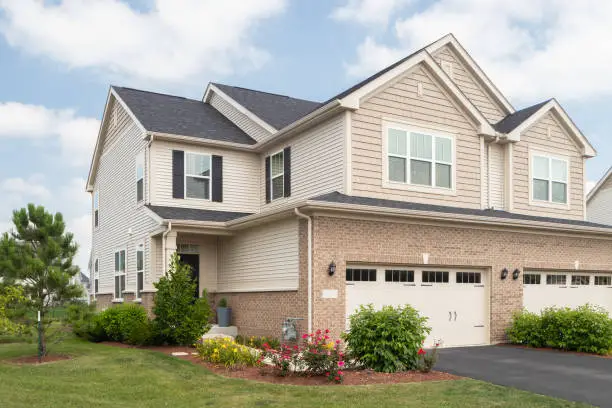
The duplex had been her first real triumph. Not the biggest property she managed, not the most profitable asset in her life, but the first building that was fully hers. Every brick meant something. Every repair had a memory attached to it. The cracked upstairs bathroom tile reminded her of the winter she had worked through bronchitis because the contractor needed payment before Christmas. The marble counters in the kitchen reminded her of the first year her company finally turned enough profit that she allowed herself one renovation just because she wanted it beautiful. The little key hook beside the door reminded her of the day she handed her parents the upstairs keys.
That had been three years earlier.
Her parents had retired early with almost no savings, partly because they had always believed tomorrow would somehow behave better than today. Her mother called it faith. Ava privately called it avoidance. Still, when they needed somewhere to live, Ava did what she had always done. She helped.
She let them move into the upstairs unit rent-free, covered the utilities, bought groceries more often than she admitted, and even signed for a black Mercedes SUV after her father’s old car broke down. He had stood in the dealership lot looking ashamed, one hand on the hood of the rusted sedan, saying he could not keep arriving to interviews in a car that sounded like loose bolts in a coffee can. Ava remembered the way his shoulders dropped when she said she would handle it.
That was the trust signal she gave him. Comfort. Dignity. A way not to feel small.
She gave her mother a different trust signal. Keys. Access. The right to treat the upstairs unit like a home instead of a favor.
For a while, her parents were grateful. Her mother sent little texts about how pretty the morning light looked through the upstairs windows. Her father offered to take out the trash cans and sweep the porch. They called the arrangement temporary, though nobody ever defined what temporary meant.
Then Tyler started coming around more.
Tyler was Ava’s younger brother, thirty-one, charming when he needed something and wounded when someone asked for accountability. He had been unemployed for the fourth time when Rachel became pregnant. Before that, Ava had covered his gambling debts twice. Before that, she had loaned him money for a landscaping business that collapsed within six months because Tyler liked buying equipment more than he liked finding clients. Not once did he repay her. Ava did not even bring it up anymore. Some debts are not unpaid because people forget. They are unpaid because remembering would require shame. Tyler had trained everyone around him to avoid making him feel ashamed. Her parents protected him from consequence with the devotion of people who called enabling love.
Ava, meanwhile, became the family utility. Useful, necessary, invisible until interrupted.
That was the old rhythm before the kitchen confrontation.
The day it happened, the dishwasher was breathing warm steam into the room and her father’s coffee sat untouched on the marble counter. Her mother stood with crossed arms beneath the recessed lights, eyes sharp, mouth already shaped around judgment.
“You’re a very arrogant girl,” she said.
Ava heard the dishwasher click into its drying cycle. She remembered that sound because it was the only thing in the room that did not pretend the sentence was normal.
Tyler sat on the couch with his phone in his hand, scrolling but not really reading. He was listening. He was enjoying it. Rachel was not there that afternoon, but her pregnancy had become the moral weapon everyone else carried into Ava’s kitchen.
“Tyler and Rachel are having a baby,” her mother said.
Ava looked at both of her parents. “I know.”
“They need this apartment more than you.”
The words landed flat and heavy. Ava looked around the kitchen slowly, as though the room might explain what her mother had just failed to hear herself say.
“You mean my apartment?” Ava asked.
Her father sighed. He had perfected that sigh over the years, the one that made Ava feel argumentative before she had even finished a sentence.
“Don’t start this again,” he said.
Tyler finally looked up from his phone. “You have money, Ava. You can buy another place.”
There it was. The whole family philosophy compressed into one sentence. Ava had money, so Ava had less right to say no. Ava worked constantly, so Ava could absorb more loss. Ava planned, saved, signed, paid, and repaired, so Ava’s stability became a resource everyone else could redistribute.
She gripped the counter until her knuckles turned pale. In her mind, for one ugly second, she saw herself sweeping every key off the hook and telling them all to leave before sunset.
She did not.
Cold rage is still rage, but it has better posture.
“I’m not giving Tyler my building,” she said.
Her mother’s expression hardened instantly. “See? Arrogant.”
The word should not have hurt anymore. It did. Not because Ava believed it, but because it proved how thoroughly they had rewritten her in their minds.
Her father leaned forward. “You should help family.”
“I already have,” Ava said.
Tyler rolled his eyes. “You act like we owe you something.”
Silence followed that sentence.
Her mother looked at the backsplash. Her father stared into his coffee. Tyler looked back down at his phone. Nobody corrected him. Nobody laughed nervously and said he had gone too far. Nobody reminded him of the gambling debts, the failed landscaping loan, the Mercedes, the upstairs unit, the utilities, the groceries, the thousand small rescues Ava had folded into normal family life until they no longer counted as sacrifice.
Nobody moved.
That silence changed something in her more permanently than yelling would have. Yelling can be dismissed as emotion. Silence is testimony.
Ava understood then that they were not asking her for help. They believed the duplex was already theirs in every way that mattered, and her name on the deed was a technical inconvenience.
She nodded. “Okay.”
Her mother relaxed immediately. “I knew you’d calm down.”
Ava did not correct her.
The next morning, she began gathering documents.
On Monday at 8:12 a.m., she pulled the utility records showing every payment had come from her business account. On Tuesday, she scanned the deed, mortgage statements, insurance policy, renovation invoices, and lease history. On Thursday, she emailed a real estate attorney at Denver Residential Property Counsel.
Her question was simple. What happens when a permitted occupant starts acting like an owner?
The attorney’s reply was careful, dry, and useful. Document everything. Avoid verbal arguments. Do not accept any rental money. Preserve proof of ownership, unauthorized occupancy, and any third-party representations.
Ava created a folder titled DUPLEX OCCUPANCY ISSUE. Then she created subfolders for deed, mortgage, utilities, vehicle, communications, and Tyler.
The Tyler folder made her pause. Inside it, she placed screenshots of old transfer confirmations, the landscaping loan agreement he had never honored, and two text chains about gambling debts he had described as temporary problems.
Temporary had been doing a lot of work in her family for years.
Two weeks later, Ava flew to Phoenix for a property management conference. She remembered the smell of hotel carpet and lemon cleaner in the lobby. She remembered the dry Arizona heat pressing against the glass doors when she checked in. She remembered feeling, for the first time in months, like there was enough distance between herself and Denver to breathe.
That lasted until Marlene called at 6:47 p.m.
Marlene lived next door to the duplex and had known Ava since the year she bought it. She was not dramatic by nature. So when Ava answered and heard a whisper, her stomach tightened before any words came.
“Ava,” Marlene said, “there are strangers moving into your downstairs unit.”
Ava sat up on the hotel bed. “What?”
“A moving truck is outside. Two men are carrying boxes. Your father gave them keys.”
Ava looked at the conference badge still hanging around her neck. For a second, the words would not assemble themselves into meaning.
“My father did what?”
Marlene lowered her voice. “Your parents rented it out. Your mother told them the building belongs to the family.”
The room seemed to shrink around Ava. Outside the hotel window, the sunset burned orange over the parking lot. The air-conditioning hummed against her skin. Her hand went cold around the phone.
“Can you take pictures?” Ava asked. Her voice sounded calmer than she felt.
Marlene did not hesitate. “Already did.”
Within minutes, Ava had photographs of the moving truck, the license plate, the two strangers carrying boxes, and her father standing on the porch with keys in his hand.
At 7:21 p.m., Marlene sent one more photo. It was taken from the hallway, slightly crooked, but clear enough. A handwritten rental receipt sat on the entry table. The bottom carried her mother’s signature.
Ava stared at it for a long time.
Not a misunderstanding. Not confusion. Not a family conversation that had gotten out of hand.
Paperwork. A signature. Cash exchanged under someone else’s roof.
At 9:03 p.m., Ava opened her laptop. She saved Marlene’s photos into the evidence folder. She downloaded every payment record tied to the duplex. She forwarded the entire file to her attorney with the subject line: UNAUTHORIZED RENTAL OF OWNER-OCCUPIED PROPERTY.
Then she called the listing agent she had once considered using if she ever sold.
By 11:18 p.m., three decisions were made.
She would list the duplex for sale. She would cancel the Mercedes payments. She would accept the Charleston job offer she had been delaying for six weeks.
The Charleston company had wanted her to lead a regional property portfolio in South Carolina. Better pay. Cleaner structure. No family ten minutes away treating her boundaries like a temporary illness.
At sunrise, Ava sent one email to her parents with the deed attached. She wrote that they had no authority to rent any portion of the property, that unauthorized tenants would be handled through counsel, that the vehicle financing would no longer be maintained by her after the current billing cycle, and that all further communication should happen in writing.
Her mother’s reply arrived at 7:06 a.m. The first line said, “Ava, what did you do?”
For years, Ava had been taught to hear that tone as a summons. That morning, she heard it as confirmation.
Her father called five times. She did not answer. On the sixth call, he left a voicemail. “Ava, this is getting serious. Call your mother.”
It was already serious. It had been serious when they decided her labor belonged to everyone. It had been serious when Tyler looked at her and asked why she acted like they owed her something. It had been serious when her mother signed a receipt for property she did not own.
The attorney moved quickly. The unauthorized tenants were notified that the people who accepted their money had no legal right to lease the unit. Ava did not blame them. They were embarrassed, angry, and scared, but they had paperwork, messages, and a receipt. Her mother’s receipt. Ava’s attorney arranged for their deposit to be returned from her parents, not from Ava.
That detail mattered. Consequences have to know where to land.
Her parents tried to argue. Her mother claimed Ava had basically agreed during the kitchen conversation. Her father said family arrangements were different from legal arrangements. Tyler sent a text calling Ava cruel and unstable. Rachel sent nothing. Ava answered only through counsel.
The duplex was listed within days. The market was strong, and the building showed beautifully because Ava had spent years making sure it would. Potential buyers walked through the marble kitchen, the renovated bathrooms, the clean basement storage, and the upstairs unit where her parents suddenly behaved like guests in a museum.
Her mother cried during one showing. Ava was not there to see it, but Marlene told her later. “She kept saying you were tearing the family apart,” Marlene said.
Ava looked at the moving boxes stacked in her own living room and felt almost nothing. That frightened her at first. Then it freed her.
The Mercedes became the next explosion. Her father had assumed Ava would keep paying because she always had. When the financing issue became real, he called from the dealership parking lot, voice shaking with outrage.
“You humiliated me,” he said.
Ava stood in her bedroom folding work blouses into a suitcase. “No,” she said. “I stopped funding you. Those are different things.”
He called her cold. She did not argue. Cold was better than hollow.
The sale closed faster than anyone expected. Ava used part of the proceeds to settle the last property expenses, paid off remaining business obligations, and placed the rest into accounts her family could not touch, influence, or guilt their way into. Her attorney sent final notices. Her parents had to leave the upstairs unit. Tyler and Rachel never moved in. The downstairs unit remained under proper legal handling until the closing process resolved it.
There was no dramatic courthouse scene. No screaming confession. No final dinner where everyone admitted she had been right. Real endings are often quieter than people want them to be. They happen in notarized signatures, wire confirmations, forwarding addresses, and the first morning you wake up without dread sitting on your chest.
Ava left Denver before dawn.
She packed only what belonged to her. She took the framed photo of the duplex from the hallway because she wanted to remember what she had built before other people mistook it for something they were owed.
Marlene stood on the porch in a robe and slippers, holding two travel mugs. “For the road,” she said.
Ava hugged her longer than expected. Then she drove east.
The sky over Colorado was pale blue when she crossed the first long stretch of highway. Her phone kept lighting up in the cup holder. Mother. Father. Tyler. Unknown number. She turned it face down.
In Charleston, the air smelled like salt and wet brick after rain.
Her new apartment was smaller than the duplex kitchen had been, and for the first week she slept on a mattress on the floor because her furniture had not arrived. Still, she slept better than she had in years. No footsteps above her from people who resented the roof she gave them. No brother arriving with another emergency. No mother standing in her kitchen calling entitlement by the name of family.
She had not expected that. She had expected grief, or anger, or the particular loneliness of a person who has burned a bridge they once loved crossing. What she got instead was quiet. The specific, almost strange quiet of a life no longer organized around managing other people’s feelings about her own choices.
It took her a few weeks to trust it. She kept waiting for the guilt to arrive in full force, the way it always had before, that familiar undertow that said maybe she had been too hard, maybe she had misread things, maybe the right version of her would have found a way to make everyone comfortable without losing everything. But the guilt was thinner than it used to be. She noticed that too.
She began to understand why. The guilt had always been loudest when she was still inside the situation, still in reach, still available to be called back by the right combination of tears and accusations. Distance did not eliminate it, but it changed the acoustics. Out here, she could hear herself think. And what she thought, consistently and without drama, was that she had done exactly what the situation required.
She had not abandoned anyone. She had stopped subsidizing the story they told about who she was.
Months later, an email came from Rachel. It was short. She said Tyler had not changed. She said the baby was healthy. She said she understood more now than she had then. Ava read it twice and did not reply immediately. She was learning that not every message required her labor. Eventually, she sent one kind sentence back. “I hope you and the baby are safe.”
That was all.
Her parents continued telling relatives that Ava had abandoned them. Some cousins believed it. Some did not. Ava stopped auditioning for fairness in rooms where the verdict had been written before she entered.
The sentence that stayed with her was still Tyler’s.
“You act like we owe you something.”
For a long time, she thought the answer was yes. They owed her gratitude, repayment, respect, apology, recognition. She had wanted those things for years. She had softened her edges waiting for them. She had absorbed insults and pretended they were misunderstandings and driven to dealerships on her lunch break to sign paperwork for a car she would never sit in.
But in Charleston, with her new office overlooking a row of bright windows and her phone finally quiet, she understood something sharper.
They did not need to agree that they owed her anything. She only needed to stop giving them more.
That was the real ending. Not revenge. Not disappearance. Recovery.
A lot of people, when they hear this story, focus on the wrong part. They focus on the sale, or the attorney, or the canceled car payments, or the job offer that arrived at just the right time. They see the mechanics and assume that was the power. But the power was earlier. It was the moment Ava walked out of her own kitchen after Tyler’s sentence landed and her parents said nothing, and instead of crying or arguing or trying one more time to be understood, she went home and opened her laptop and started a folder.
She did not start a fight. She started a record. That is a different thing entirely.
There is a version of this story where Ava collapses. Where she pays Tyler’s debts again, hands over the downstairs unit, tells herself she is doing it for the baby, and folds herself smaller so that no one has to confront what they are actually asking of her. That version is common. It has been playing out in families like hers for generations, the one competent person absorbing the failures of everyone who decided competence was a renewable resource.
She did not choose that version. Not because she stopped loving her family, but because she finally understood that loving people and financing their refusal to grow are not the same thing. One is a gift. The other is a structure, and if you build it for long enough, they stop being able to imagine living without it, and they stop being grateful for it, and eventually they sign receipts for property they do not own because in their minds, it was already theirs.
The duplex was the clearest example, but it was not the only one. It was just the one with paperwork.
Now, in the evenings, Ava sometimes sits on her Charleston apartment balcony with a glass of wine and watches the light change over the water. The city is quieter than Denver, or maybe she just hears it differently now. Her work is good. Her accounts are clean. Her emergency contacts are people who have never made her an emergency.
She still has the framed photo of the duplex on her desk. The building she bought with bronchitis money and overtime and the stubborn belief that something could be fully hers. She kept the photo not as a wound but as a reminder.
She built that. From nothing. In a kitchen with marble counters she chose herself, on a street where the morning light came through the upstairs windows in a way that her mother once texted to say was beautiful.
Before everything else, it was beautiful. She remembers that.
And this time, she is the one holding the keys.
There is one thing about the Tyler sentence I have not finished saying.
You act like we owe you something.
The reason it landed so hard was not because it was cruel, though it was. It was because nobody at that table disputed it. Her father stared at his coffee. Her mother looked at the backsplash. Nobody said, Tyler, that is not fair. Nobody said, actually, yes, we do. Nobody said anything at all. They let the sentence stand and the silence that followed was, in its own way, a vote.
That was the family math, laid bare in a single moment. Ava had spent twelve years building, paying, rescuing, covering, and absorbing, and the consensus in that kitchen was that none of it created an obligation. It was simply what she did. It was the weather. It was the function of her existence in their lives. You act like we owe you something. As if the audacity of the question were the problem, not the twelve years behind it.
What Ava had always given her family was the interpretation. She interpreted the demands as love. She interpreted the silence as gratitude she was not hearing directly. She interpreted the entitlement as clumsiness, the forgetting as busyness, the taking as a kind of rough affection that would someday resolve into something warmer if she was just patient enough.
She had been patient enough for twelve years.
The kitchen taught her that patience, in the wrong relationship, is not a virtue. It is a subsidy. And when you withdraw a subsidy, the people who depended on it do not thank you for having provided it. They resent you for withdrawing it. They call you arrogant. They say you are tearing the family apart. They stand on your porch as a group and expect the number of them to persuade you of something the evidence already contradicted.
Her mother signing that receipt was the evidence. Not of malice, exactly. Her parents were not villains in the cinematic sense. They were people who had never been asked to account for what they took because Ava had always been there to absorb the consequences of their accounting. Remove the person who absorbs the consequences and the consequences finally become visible. That is not cruelty. That is just math.
In Charleston, Ava hired two new staff members for her regional portfolio role in the first quarter. Both were younger, and both had come from situations where their competence had been treated as a resource rather than a quality. She recognized it immediately. The way they apologized for asking questions. The way they over-delivered without being asked and under-claimed when credit was distributed. The way they had learned to make themselves small enough not to threaten anyone while being useful enough to be kept.
She did not give them a speech about it. She just gave them clear expectations, fair compensation, and the specific experience of being told their work was good when it was good and corrected when it needed correction, which is less common than it should be and more sustaining than most people realize.
One of them said to her once, at the end of a long week, that this was the first job where she did not feel like she needed to earn the right to exist in the room.
Ava thought about that sentence for a long time afterward.
Earning the right to exist in the room. She had spent the first thirty-four years of her life doing exactly that, in her own kitchen, in her own building, at her own family table, and the terrible thing was that it had never worked. You cannot earn your way into unconditional belonging. Either it is there or it is not. Either the people around you see you or they see what you produce for them. And if it is the second thing, no amount of effort will convert it into the first.
That was the lesson the duplex taught her. Not about property. About category. She had been categorized incorrectly by her family for thirty-four years and had spent the entire time trying to correct the categorization through behavior. More help. More patience. More forgiveness. More money. More presence. More. More. More.
It never worked because the category was doing a job for them. Keeping her useful kept them from having to confront what they were not doing. Her competence was a cover story for their avoidance, and they needed her to stay in her role for the story to hold together.
When she refused the role, the story fell apart. That was not her fault. She had not invented the story. She had only, finally, stopped performing it.
In her desk drawer, beside the framed duplex photo, Ava keeps one other thing. It is a sticky note from Marlene, pressed against the travel mug she sent with Ava for the road that morning in Denver.
It says: You built something. Don’t forget that.
She reads it sometimes when the day is hard, when a negotiation drags or a property issue escalates or she comes home tired and sits in her Charleston kitchen with the particular exhaustion of someone who has not yet fully learned to receive help rather than only give it.
She is still learning that part. Asking for things. Accepting them when offered. Trusting that receiving will not cost her the same thing it always cost her in the family that taught her what cost meant.
It is slower work than buying a duplex. Less concrete. No deed to file, no invoice to scan, no evidence folder to organize.
But she is doing it.
One morning, one quiet room, one question she asks before answering someone else’s need first.
What do I actually want here.
The answer, more and more, is hers to keep.