The cold autumn wind whipped through the Oak Creek Promenade, carrying the scent of roasted pecans and expensive espresso. I sat alone on an iron bench near the central fountain, pretending to read a paperback novel.
In truth, my eyes hadn’t moved past the first page in twenty minutes. I was busy maintaining the illusion of normalcy.
I kept my left hand buried deep inside the pocket of my faded canvas jacket, my fingers clamped tightly around the seams to hide the subtle, rhythmic tremors. With my right hand, I habitually twisted the silver bezel of my dive watch—a grounding technique my therapist had taught me years ago. Click, click, click. The mechanical sound was a tiny anchor in an ocean of invisible anxiety.
Beneath my heavy wool sweater, pressed against my wrist, was a silver medical alert bracelet. I never let it show. I hated the pitying looks. I hated the sudden shift in people’s voices when they realized the thirty-four-year-old man sitting in front of them wasn’t just a quiet guy enjoying a Sunday afternoon, but a walking liability.
Lying quietly across my boots was Buster. He was a seventy-pound Golden Retriever, his golden coat shimmering in the patchy California sunlight. He wore a heavy red harness with bold white lettering that read: MEDICAL ALERT DANGER – DO NOT DISTURB. Buster wasn’t just a pet; he was the only reason I was still alive.
It had been three years since the “drop”—the massive grand mal seizure that had struck without warning while I was driving down Interstate 95. That day cost me my car, my career as a high school history teacher, and ultimately, my marriage. Sarah couldn’t handle the unpredictability. She couldn’t handle waking up at 3 AM to the violent shaking, the emergency room visits, the crushing medical debt. I didn’t blame her. I couldn’t even handle it myself.
But the heaviest weight I carried wasn’t the illness itself. It was the lie I was telling my seven-year-old daughter, Maya.
Maya lived with her mother two towns over. She thought her dad just worked all the time. She thought I missed her ballet recitals and school plays because I was busy, not because my neurologist had revoked my driver’s license and confined me to a four-block radius of my apartment. I let her think I was a neglectful father because, in my twisted, broken logic, I believed it was better for her to be mad at me than to be terrified for me.
Today was Maya’s birthday. I had braved the upscale, crowded promenade for one specific reason: there was a boutique here that sold handmade silver lockets. I had saved for three months to buy her one. It was resting in my breast pocket right now, wrapped in crisp tissue paper.
I took a deep breath, letting the icy air fill my lungs. I was doing okay. The tremors in my left hand were just baseline anxiety. Buster was calm. The world was safe.
Then, I heard the sharp, rhythmic click-clack of designer heels on the cobblestone.
“Excuse me. Are you illiterate, or do you just think the rules don’t apply to you?”
I blinked, pulling my gaze away from the fountain. Standing three feet in front of me was a woman in her late fifties. She wore a tailored beige trench coat, oversized tortoiseshell sunglasses, and a silk scarf pulled tightly around her neck. She held a clipboard against her chest like a shield.
“I’m sorry?” I asked, my voice slightly raspy from disuse.
“The sign,” she snapped, pointing a manicured finger toward a brass plaque mounted on the nearest lamppost. “No pets allowed on the Promenade. This is a private commercial property, not a dog park. You need to leave. Now.”
I sighed, feeling a familiar exhaustion wash over me. I reached down and gently patted Buster’s head. “He’s not a pet, ma’am. He’s a service animal. His vest—”
“I don’t care what you bought on the internet,” she interrupted, her voice rising in pitch. A few shoppers walking past stopped and turned their heads. The false peace I had built all morning began to fracture. “Every entitled millennial thinks they can slap a fake vest on their mutt so they can bring them into restaurants. It’s unhygienic and it’s illegal.”
“Ma’am, I have his paperwork if you’d like to see it,” I said, keeping my tone perfectly level. Anger only elevated my heart rate, and an elevated heart rate was dangerous. I slowly began to reach into my jacket pocket for my wallet.
Before my fingers could grasp the leather, Buster moved.
He didn’t just stand up. He broke his “tuck” command entirely, pulling his weight off my boots and stepping directly between my legs. He planted his front paws firmly on the cobblestone, pushed his chest out, and let out a sharp, resonant bark.
*Woof.*
My blood ran cold. Buster was trained to be silent. He had been in movie theaters, crowded subways, and bustling restaurants without making a single sound. He only barked for one reason.
He was alerting me.
“See!” the woman shrieked, taking a dramatic step back as if she had been physically struck. “He’s aggressive! He’s lunging at me!”
“No, wait,” I stammered, my heart suddenly hammering against my ribs. I looked down at Buster. He bumped his wet nose hard against my kneecap and let out a second, louder bark. *Woof!*
The alert meant I had less than three minutes. The chemical shifts in my body, completely undetectable to human senses, were radiating off me. A massive neurological storm was brewing in my brain.
I needed to lie down. I needed to get away from the hard edges of the iron bench, away from the concrete fountain.
I tried to stand up, but my legs felt like they were moving through wet cement. The air around me suddenly smelled strongly of burning copper—the phantom scent that always preceded the darkness. The aura was beginning.
“Security!” the woman yelled, waving her clipboard wildly at a man in a yellow windbreaker across the plaza. “We have a hostile animal! He’s letting his dog attack people!”
A crowd was forming now. A ring of curious, judging faces tightened around us. I saw cell phones being raised. The red recording lights blinked like tiny, malicious eyes.
“Please,” I gasped, my tongue suddenly feeling thick and uncoordinated. I reached out a trembling hand. “Medical… need… space.”
“Oh, don’t you dare play the victim!” she sneered, stepping closer now that she saw I was struggling. “You’re clearly intoxicated. It’s ten in the morning and you’re slurring your words! Disgusting. Give me that leash!”
She lunged forward, her manicured hand snatching the nylon leash from where it rested on my lap.
Buster went frantic. He planted his feet and pulled back against her grip, barking continuously now. *Woof! Woof! Woof!* The sound echoed violently across the plaza. He wasn’t trying to bite her; he was trying to break free so he could get underneath me. His training dictated that he had to brace my head before I fell.
“Stop!” I tried to shout, but it came out as a hollow, guttural moan. The edges of my vision were turning gray. The world began to tilt. The sound of the fountain distorted into a deafening, mechanical roar in my ears.
“Let go of the dog!” a man from the crowd shouted at me, entirely misreading the situation. “He’s vicious!”
“I’m taking this animal to security,” the woman declared, yanking the leash with all her strength. Buster whimpered but refused to abandon me, his claws scraping uselessly against the cobblestone as he fought to stay by my side.
I felt the first violent spasm tear through my right shoulder. The electrical fire was spreading across my cortex. I lost all control of my motor functions. My hands went numb.
I tried to look at Buster, to tell him he was a good boy, but my neck locked, pulling my head forcefully to the side. The faces of the crowd, the angry woman, the blue sky—everything smeared into a terrifying blur of motion and noise.
My knees buckled. The last thing I heard before the concrete rushed up to meet my face was the collective gasp of the crowd, and Evelyn’s shrill voice shouting, ‘Somebody call the police on this maniac!’
CHAPTER II
The world didn’t just go dark; it shattered. It was the sound of a thousand tuned-out radio stations screaming at once, a white-hot static that burned through my synapses before the physical world even had a chance to tilt. I felt the concrete rising up to meet me, not as a floor, but as a predator. My knees buckled, the strength in my legs dissolving into a useless, electric jelly.
I heard Buster. Not his bark—that was gone—but the frantic, wet sound of his paws scraping against the pavement as he tried to dive beneath my head. He knew. He always knew. But Evelyn didn’t.
“Get up!” her voice pierced the rising tide of the seizure, shrill and jagged. “You think you can just lay down here? You’re pathetic! Officer! Someone!”
I tried to tell her. I tried to form the word ‘help,’ or ‘medical,’ or ‘epilepsy.’ But my tongue was a heavy, leaden weight in a mouth that no longer belonged to me. A thick, metallic taste—the copper tang of a coming storm—flooded my throat. My vision tunneled until Evelyn was just a distorted, screaming shadow in a halo of mocking California sunshine. Then, the rhythmic jerking began.
I was gone, and yet, I was trapped inside a body that was throwing a violent, uncontrollable tantrum against the ground.
***
“Back away! Everyone back away!”
The voice was deep, authoritative, and laced with the kind of adrenaline that usually precedes a drawing of a weapon. Officer Miller—I would later see the name on the brass plate—pushed through the gathering circle of Sunday shoppers. He didn’t see a man in medical distress. He saw exactly what Evelyn Vance wanted him to see.
“Officer, thank God!” Evelyn’s voice was a theatrical tremolo now, the sound of a victim who had finally found her savior. She was clutching her designer handbag to her chest, her face twisted into a mask of performed terror. “He tried to sick that beast on me! I told him he couldn’t have the dog here, and he just… he went into some kind of drug-induced rage! Look at him! He’s overdosing right in front of the children!”
Miller looked down. I was on my side now, my limbs snapping out in agonizing, involuntary arcs. Buster was plastered against my back, his heavy head tucked firmly under my neck to keep my skull from fracturing against the Promenade’s decorative stone. He was growling—a low, guttural warning—not at the crowd, but at the hands reaching for his harness.
“Get the dog off him!” someone shouted from the back.
“He’s dangerous!” Evelyn added, her voice rising to a screech. “He’s foaming at the mouth! It’s fentanyl, I’m telling you! I saw him swaying before he even got to the fountain!”
Miller unholstered his taser. The yellow plastic glinted in the light. “Sir! Cease your movement! Put your hands behind your back!”
It was an absurd command to give to a man whose brain was currently experiencing a massive electrical short-circuit, but the logic of the law often fails in the face of a perceived threat. To Miller, I wasn’t Elias Thorne, the history teacher who loved jazz and forgot to buy milk. I was a ‘subject.’ A ‘threat.’ A ‘junkie’ in the middle of a crowded, upscale shopping center.
“The dog is aggressive, Officer!” Evelyn urged, stepping closer now that she felt protected. “He almost bit me when I tried to move him away from the walkway. You have to do something!”
Miller stepped forward, his boot inches from my twitching fingers. “I said get the dog away!”
He reached down, grabbing Buster’s tactical harness—the one clearly labeled MEDICAL ALERT: DO NOT PET—and tried to yank him away.
Buster didn’t bite. He didn’t snap. But he braced his seventy-pound frame, his claws digging into the cracks of the concrete, and let out a roar of a bark that shook the air. He was a wall of gold fur standing between me and a world that didn’t understand I was dying.
“He’s attacking!” Evelyn screamed, retreating behind a heavy concrete planter. “Shoot it!”
“Wait! Stop!”
The intervention didn’t come from a doctor or a fellow officer. It came from a girl, maybe nineteen, wearing a tie-dye shirt and holding a smartphone with a cracked screen. She had been recording the whole thing from the moment Evelyn started her tirade by the fountain.
“He’s not on drugs, you idiot!” she yelled, her voice cracking with indignation. “Look at the dog’s vest! It’s a service animal! He’s having a seizure!”
Miller hesitated, his finger hovering near the trigger of the taser. He looked down, really looked, past the chaotic movement and the foam at my lips. He saw the blue patch on Buster’s side. He saw the medical ID tag jingling on the collar.
“Ma’am, step back,” Miller said, his tone shifting from combat to confusion.
“I am not stepping back!” Evelyn snapped, her facade of fear slipping for a second to reveal the raw, ugly entitlement beneath. “I am a resident of the Heights! I pay the association fees that fund this security! I’m telling you, this man is a menace. I want him arrested and that animal impounded!”
“He’s sick!” the girl with the phone shouted, stepping into the clearing. She pointed her camera directly at Evelyn’s face. “I have it all on video. I saw her grab the dog’s leash. I saw her screaming at him while he was trying to sit down. She caused this!”
Evelyn’s face went pale, then a mottled, angry purple. “How dare you? I was enforcing the rules!”
At that moment, the rhythmic snapping of my muscles began to slow. The grand mal was receding, leaving behind a hollowed-out shell of a man. My eyes fluttered open, but I couldn’t process the images. The sky was too blue, the faces too sharp. I felt the cold dampness of the concrete and the warmth of Buster’s body.
I tried to breathe, but my chest felt like it had been crushed by a hydraulic press. A thick, gooey sob escaped my throat—not out of sadness, but as a reflex of a nervous system trying to reboot.
“Sir? Can you hear me?”
Miller was kneeling now, his taser holstered, but his hand was still cautious. He didn’t know if I would wake up combative.
I looked at him, my pupils blown wide. I saw his badge. I saw the crowd. And then, I saw her.
Evelyn was standing just a few feet away, her eyes darting between the girl with the phone and the officer. She realized the tide was turning. The ‘concerned citizen’ act was failing.
“I… I was just trying to help,” she stammered, her voice suddenly small and feminine again. “He looked so unstable. I thought he was going to hurt someone. The dog was barking so loudly, I thought it was rabid…”
“You grabbed his leash,” the girl with the phone said, her voice cold. “He was trying to get to a safe spot, and you blocked him. You’re the reason he hit his head so hard.”
The sound of sirens began to wail in the distance, cutting through the ambient noise of the Promenade. Paramedics.
I tried to push myself up, my hands shaking so violently I couldn’t get any leverage. The locket—the small, velvet box I had been holding for Maya—had fallen out of my pocket. It lay a few feet away, the lid popped open, the gold chain glittering in the dirt.
“Stay down, sir,” Miller said, placing a firm hand on my shoulder. “The EMTs are almost here.”
“My… my daughter,” I croaked. The words felt like broken glass in my throat.
“Don’t talk. Just breathe.”
Two paramedics, a man and a woman in dark navy uniforms, came charging through the crowd with a gurney. They didn’t ask questions. They went straight to work. The woman, whose name tag read ‘Rodriguez,’ knelt by my head.
“Postictal state,” she noted loudly to her partner. “Check his vitals. He’s got a service dog, so keep the dog close or he’s going to spike a panic attack.”
Buster didn’t move. He let Rodriguez work, but his eyes never left mine. He was the only thing keeping me anchored to the earth.
As they lifted me onto the gurney, the world started to spin again. I saw the crowd—dozens of people, all with their phones out. I wasn’t a teacher anymore. I wasn’t a father. I was a viral video in the making. ‘Man has seizure while Karen screams.’ I could see the headlines already.
“Wait!” Evelyn stepped forward as they began to wheel me away. “Officer, what about my statement? He threatened me!”
Officer Miller stood up, his face set in a hard, grim line. He looked at the girl with the phone, who was still recording, then back at Evelyn.
“Ma’am, I have three witnesses here saying you interfered with a service animal during a medical emergency,” Miller said. “Under California Penal Code 600.5, that’s a crime. And if he has sustained a serious injury because you prevented that dog from doing its job, we’re looking at a lot more than a citation.”
Evelyn’s mouth dropped open. “You… you can’t be serious! I live in the Gables! My husband is—”
“I don’t care where you live,” Miller interrupted. “I need you to stay right here. Don’t move. We’re going to have a very long talk about what ‘enforcing the rules’ actually looks like.”
The last thing I saw before they pushed me into the back of the ambulance was Evelyn Vance, the queen of the Promenade, being led toward a patrol car. She looked small. She looked hateful.
But as the doors hissed shut, the victory felt hollow. My secret was out. I looked down at my hands, still trembling, and realized the gold locket was still sitting in the dirt by the fountain, abandoned.
I had lost the gift. I had lost my dignity. And as the oxygen mask was pressed over my face, I realized I was probably about to lose my daughter, too. If Maya saw this—if she saw her father broken and twitching on the ground like a dying animal—she would never look at me the same way again.
The siren began to scream, a high-pitched wail that echoed the terror in my own heart.
CHAPTER III
The hum of the hospital was a low-frequency vibration that seemed to synchronize with the throbbing behind my eyes. Every time the fluorescent lights above my bed flickered, a spike of white-hot needles drove into my temples. I was in Room 412 of the Oak Creek Memorial Hospital, a place that smelled too much like bleach and failed promises. My body felt like it had been put through a meat grinder, then haphazardly stitched back together. This was the ‘post-ictal’ state—the biological hangover that follows a grand mal seizure. My muscles were screaming, a deep, structural ache that made even breathing feel like a chore.
Buster was there, of course. His chin was resting on the edge of my mattress, his large, soulful eyes never leaving mine. He knew. He knew I’d failed him out there on the Promenade floor. He’d tried to warn me, and I’d let a woman in a designer tracksuit stop us. I reached out a shaky hand, my fingers tangling in the soft fur of his neck. ‘I’m sorry, buddy,’ I whispered, my voice a gravelly wreck. ‘I’m so sorry.’
I reached for my phone on the bedside table. My hand trembled so violently I almost knocked it over. When the screen illuminated, the world fell out from under me. I didn’t just have missed calls; I had a digital execution waiting for me. I opened a news app, and there I was. The headline read: ‘SHOCKING ALTERCATION AT OAK CREEK PROMENADE: ADDICT OR VICTIM?’
The video had over two million views. It wasn’t the full story. It was a forty-second clip of me on the ground, my body arching, my limbs flailing in the rhythmic, terrifying dance of a seizure. But the way it was edited—the way Evelyn Vance’s voice screamed over the footage about ‘dangerous drug use’ and ‘protecting the children’—made me look like a monster. The comments were a cesspool. Some defended me, but hundreds of others were calling for me to be barred from public spaces. ‘Why is he allowed around kids?’ one asked. ‘Keep your needles at home,’ another sneered.
Then I saw the email from Diane’s lawyer. Diane, my ex-wife. The subject line was cold: ‘Urgent: Visitation Rights and Public Safety.’
The email stated that in light of the ‘recent public incident’ and the ‘video evidence of my instability,’ my scheduled birthday weekend with Maya was being ‘suspended indefinitely pending a full medical and psychological evaluation.’ They were using my greatest vulnerability as a weapon to take my daughter away. The locket. I’d lost the locket in the chaos. It was the only thing I had to give her, the only way to prove I hadn’t forgotten her birthday despite the haze I lived in.
A doctor walked in—Dr. Aris. He looked at me with a mix of professional pity and exhaustion. ‘Mr. Thorne, you’ve had a significant event. We need to run a full EEG and adjust your Levetiracetam dosage. You’re staying at least forty-eight hours for observation.’
‘I can’t,’ I said, swinging my legs over the side of the bed. The world tilted dangerously to the left. ‘My daughter’s birthday is tomorrow. I have to go.’
‘Elias, you’re not thinking clearly,’ Aris said, stepping in my path. ‘You’re post-ictal. You’re confused. If you leave now, you’re at extreme risk for a cluster seizure. Your brain needs rest.’
‘What my brain needs is my daughter,’ I snapped, the desperation clawing at my throat. I stood up, and for a second, I thought I was going to vomit. I pushed past him, my heart hammering against my ribs. ‘I’m checking out. Against Medical Advice. Just give me the paperwork.’
It was the first of many bad decisions I would make that day. I was operating on pure adrenaline and a fractured sense of duty. I signed the forms with a signature that looked like a bird’s nest, ignored the nurse’s warnings, and walked out into the blinding afternoon sun of Oak Creek. I had no car—it was still at the mall—and I had no dignity left. But I had to find that locket.
The Uber ride back to the Promenade was a blur of nausea and flashing lights. I felt like I was being watched. When I stepped back into the mall, the air felt different. Thicker. The security guards at the entrance didn’t just look at me; they stared. I was ‘The Mall Junkie’ now. I was the viral freak show.
I made my way to the Lost and Found office, tucked away in a sterile corridor near the back of the building. My vision was tunneling, the edges of my sight blurring into a hazy gray. I had to keep moving. I had to fix this.
‘Can I help you?’ the clerk asked. She was young, maybe twenty, and she was looking at her phone. When she looked up and saw me, her eyes widened. She recognized me. I saw her hand instinctively move toward the landline on her desk.
‘I lost a small velvet box,’ I said, leaning against the counter to keep from collapsing. ‘Yesterday. Near the jewelry store. A gold locket. It says “Maya” on the back.’
She hesitated, her gaze darting to the security camera in the corner. ‘We… we don’t have anything like that registered.’
‘Check again,’ I pleaded. ‘Please. It’s for my daughter. I have the receipt.’ I fumbled for my wallet, but my hands wouldn’t work. I spilled my cards onto the floor. As I bent down to pick them up, the dizziness hit me like a physical blow. I stayed on the floor for a moment too long, gasping for air.
‘Sir, are you okay? Do I need to call security?’ her voice was sharp, panicked.
‘I’m fine,’ I barked, standing up too fast. ‘Just look for the box.’
She disappeared into the back room for what felt like an eternity. When she returned, she wasn’t alone. A man in a high-end charcoal suit followed her out. He wasn’t mall security. He was older, with silvering hair and the kind of posture that only comes from decades of holding power. He looked at me not with fear, but with a calculated, cold appraisal.
‘Mr. Thorne, I presume?’ he said. His voice was smooth, like polished stone. ‘I’m Julian Vance. Evelyn’s husband.’
My blood ran cold. The man whose wife had triggered my collapse was standing five feet away from me in a room full of lost umbrellas and forgotten jackets.
‘Where is my locket?’ I asked, trying to keep my voice steady.
Julian reached into his pocket and pulled out the small, blue velvet box. He held it between his thumb and forefinger, dangling it like bait. ‘A beautiful piece. It was found near the fountain. My wife felt… well, she felt quite terrible about the misunderstanding yesterday. She’s a very sensitive woman, Elias. Very concerned with the safety of her community.’
‘She’s a liar,’ I spat. ‘She stopped me from getting my medicine. She’s the reason I’m on every phone screen in this state.’
Julian’s expression didn’t change. He stepped closer, dropping his voice to a conspiratorial whisper. ‘The video is unfortunate. It’s amazing how quickly things move on the internet. It would be a shame if more footage surfaced. Perhaps footage from your past? I did a little digging, Elias. That teaching job you lost in Ohio? The incident in the classroom? People might think this is a pattern of instability.’
He was threatening me. He was going to dig up every mistake I’d ever made to protect his wife’s reputation.
‘What do you want?’ I asked, the words tasting like ash.
‘My wife is a prominent member of several boards in this town. A lawsuit, or even a public apology from her, would be… inconvenient,’ Julian said. He pulled a folded document from his inner coat pocket. ‘This is a settlement agreement. In exchange for your silence—and a signed statement admitting that your episode was a result of personal medical mismanagement, not my wife’s interference—I am prepared to offer you fifty thousand dollars. Today.’
Fifty thousand. It was more than I made in a year. It could pay for Maya’s private school. It could pay for the best specialists in the country. It could fix everything Diane’s lawyers were using against me.
‘And the locket?’ I asked.
Julian placed the blue box on the counter. ‘And the locket. And the video of the incident? I have friends in the right places. I can make sure the primary sources are scrubbed. We can make this go away, Elias. You can go back to being a father, and my wife can go back to her life. Everyone wins.’
I looked at the blue box, then at the legal papers. My head was screaming. I was tired. I was so incredibly tired of fighting a world that didn’t want me in it. If I signed this, I was lying. I was letting Evelyn Vance get away with endangering my life. I was telling the world that it was my fault for being sick.
But if I didn’t? Diane would take Maya. Julian would destroy what was left of my name. I’d be the ‘Mall Junkie’ forever.
My hand reached for the pen. My pride was a luxury I couldn’t afford anymore. I felt like I was signing my own death warrant, not of my body, but of my soul. I dragged the pen across the line, my hand still shaking, the ink bleeding into the paper just like the blood had bled into the carpet at the jewelry store.
‘Wise choice,’ Julian said, sliding the papers back into his pocket. He pushed the locket toward me. ‘Happy birthday to your daughter.’
He walked out without another word. I picked up the locket, clutching it so hard the edges dug into my palm. I had the gift. I had the money. But as I looked into the mirror on the wall of the Lost and Found, I didn’t recognize the man looking back. I was a ghost of myself, hollowed out by a secret I had just agreed to bury in a shallow grave of hush money.
I walked out of the mall, Buster trailing silently at my side. He didn’t wag his tail. He didn’t look at me. Even he knew I’d just betrayed the truth. And as I stood on the curb, waiting for a ride, the sky began to darken, the first signs of a storm rolling in from the coast. The locket was in my pocket, but the weight of it felt like it was going to pull me straight through the pavement and into the earth.
CHAPTER IV
The air in Diane’s backyard was thick with the cheerful sounds of a child’s birthday party – balloons bobbing, kids shrieking with laughter, the rhythmic thump of some awful pop song. It was exactly the kind of normal I craved, the kind of normal I knew I was destroying just by being here.
Buster, bless his furry heart, nudged my hand. He sensed it, too – the tension humming beneath the surface of the party like a faulty wire. Diane had greeted me with a tight smile, Maya with a hesitant hug. The lawyers’ letter hung in the air between us, unspoken but ever-present.
The locket felt heavy in my pocket. I kept touching it, a talisman against the storm I felt brewing. Fifty thousand dollars sat in a new bank account, earmarked for Maya’s future. That was the lie I was clinging to: that I was doing this for her.
I spotted Maya by the bouncy castle, her eyes glued to something on a phone held by one of her little friends. My stomach twisted. Was it…the video? Had it already gotten to her?
I forced a smile and walked over, Buster padding silently beside me. “Hey, birthday girl,” I said, trying to sound upbeat. “I have something for you.”
Maya looked up, her expression unreadable. The other kids scattered, sensing the awkwardness radiating from me.
“Dad,” she said quietly. “Mom said you weren’t feeling well.”
The locket felt like lead in my hand. “I’m okay,” I lied. “Just…a little tired. But I wanted to give you this.”
I opened the small velvet box, the silver heart gleaming in the sunlight. Maya gasped, a genuine smile finally breaking through.
“It’s beautiful!” she whispered, taking it carefully. She opened it, revealing the tiny picture of us from years ago, when things were simpler, when I was still… whole.
“I love it, Dad. Thank you.”
Relief washed over me, so potent it almost brought me to my knees. Maybe, just maybe, I could salvage this. Maybe I could explain, apologize, make her understand.
That’s when the music cut out.
A hush fell over the yard, broken only by the distant sound of sirens. Diane was standing by the patio table, her face pale and drawn. Julian Vance stood beside her, his expression a mask of carefully controlled fury. In his hand, he held a tablet.
“Everyone,” Diane said, her voice trembling. “There’s something you need to see.”
She pressed play. The tablet screen flickered, and then…there I was. On the ground at Oak Creek Promenade, convulsing. Evelyn Vance’s shrill voice filled the air, calling me a junkie. The video played out in its entirety, unedited, brutal in its honesty. The gasps of the parents, the confused murmurs of the children – it all slammed into me like a physical blow. This wasn’t the ‘cleaned up’ version Julian had promised. This was the raw, unfiltered truth.
And then, after the seizure, came the recording of my ‘negotiation’ with Julian Vance. Someone had recorded our conversation, the offer of money, my desperate agreement, my signature on the NDA. The words hung in the air, damning me more effectively than any lie could have.
The silence that followed was deafening. Maya stared at me, her face crumpled in confusion and hurt. Diane’s eyes were filled with a mixture of pity and disgust. Julian Vance stood there, a smug look slowly spreading across his face.
“I…I can explain,” I stammered, my voice cracking.
“Explain what, Elias?” Diane asked, her voice dangerously low. “Explain why you lied? Explain why you took money to cover up your…your problem? Explain why you’re doing this to Maya?”
“It wasn’t like that,” I pleaded. “I did it for her! The money…it’s for her future. And the video…I just wanted it to go away. I didn’t want her to see me like that.”
“So you sold your dignity?” Julian interjected, his voice dripping with contempt. “You sold your integrity for a few dollars and a promise? Some father you are.”
My vision started to blur. The noise of the party faded into a distant hum. I could feel the familiar tingling sensation in my limbs, the warning signs I had learned to ignore for so long.
“Dad?” Maya’s voice, small and scared, cut through the fog. “What’s happening?”
I tried to focus on her, to reassure her, but the words wouldn’t come. My body was betraying me, seizing control. I stumbled, Buster barking in alarm as he tried to steady me. But it was no use. The world tilted, and I knew I was going down.
This time, there was no hiding it. No pretending it was something else. This time, everyone would see. The full force of my disorder, exposed for all to judge.
I hit the ground hard, the impact jarring my already overloaded system. The seizure hit me like a freight train – muscles spasming, vision blurring, consciousness slipping away. I heard screams, shouts, the frantic barking of Buster. But I was already gone, lost in the electrical storm raging within my brain.
When I came to, the world was a kaleidoscope of blurry faces and flashing lights. I was lying on the grass, surrounded by paramedics. Diane knelt beside me, her face a mask of concern. Maya stood behind her, clutching the locket, tears streaming down her face.
“Elias, can you hear me?” Diane asked, her voice tight with emotion.
I nodded weakly, my body aching, my mind still struggling to catch up.
“They’re taking you back to the hospital,” she said. “You need to get help, Elias. Real help.”
I looked at Maya, her eyes wide with fear and confusion. I wanted to reach out to her, to tell her I was sorry, but I couldn’t move. I was trapped, a prisoner of my own body, my own lies.
Then, I saw the police. Two officers were talking to Julian Vance, their expressions grim. One of them approached Diane.
“Ma’am,” he said, his voice respectful but firm. “We need to ask Mr. Thorne some questions. There are some serious allegations being made.”
“Allegations?” Diane asked, her voice laced with disbelief.
“Bribery, obstruction of justice…” the officer rattled off the charges, each word a nail in my coffin.
I closed my eyes, the weight of it all crushing me. The locket, the money, the lies – it had all been for nothing. I had tried to protect Maya, but I had only made things worse. I had sold my soul, and in the end, I had lost everything.
Even my daughter’s trust. The sirens wailed, a mournful soundtrack to my complete and utter destruction.
I was being loaded onto the ambulance when I saw Maya break free from her mother and run toward me. She stopped a few feet away, her small body trembling.
“Dad,” she whispered, her voice barely audible above the noise. “Why?”
I opened my mouth to answer, to explain, but no words came. All I could do was look at her, my eyes filled with shame and regret. The ambulance doors slammed shut, cutting me off from her, perhaps forever.
As we pulled away, I saw her standing there, alone in the yard, clutching the silver locket. The last image I saw before the world faded away was her face, etched with betrayal and heartbreak. The party was over. And so was everything else.
There was no bottom. I had found it. This was it.
My phone began buzzing with notifications as the Ambulance siren faded. My life was over. My freedom was over. My relationships were over.
And it had all happened at once.
CHAPTER V
The ambulance siren faded into a dull hum, replaced by the sterile quiet of the hospital room. This time, there were no concerned faces, no frantic calls from Diane, just the rhythmic beeping of machines and the distant murmur of nurses. Buster wasn’t here. They wouldn’t allow him after… everything. I was alone. Utterly, completely alone.
They said it was the worst seizure I’d had in years. That the stress, the lies, the sheer desperation had pushed me over the edge. They asked questions. Gently, probing questions about the settlement, about Julian Vance, about the video. I answered numbly, the words feeling hollow, detached from the reality of the situation. The police came, too. More questions. Accusations. Bribery. Obstruction. It was a mess. A tangled, ugly mess of my own making.
Days blurred into weeks. The hospital became my sanctuary, a place where I didn’t have to face the judgment, the disappointment, the… emptiness. The news cycle moved on, as it always does. Oak Creek Promenade faded from the headlines, replaced by newer, more sensational stories. But for me, it was always there, a dark stain on my conscience.
The charges were eventually dropped. Julian Vance, facing scrutiny himself, recanted his statement, claiming he’d been pressured. I wasn’t sure if I believed him, but it didn’t matter. The damage was done. The truth was out, and with it, any semblance of a normal life.
Diane came to see me. Once. She stood by the bed, her face etched with a mixture of pity and anger. She didn’t yell, didn’t scream. Her voice was low, controlled, but the words cut deeper than any shout.
“Maya is… confused,” she said, her eyes avoiding mine. “She doesn’t understand. She doesn’t understand why you lied, why you… risked everything.”
I wanted to explain. To tell her about the fear, the desperation, the all-consuming need to protect my relationship with Maya. But the words caught in my throat, choked by the weight of my own failures. What could I say? That I’d made a deal with the devil to keep my daughter’s love? That I’d prioritized a childish birthday present over her trust?
“I… I messed up,” was all I managed to stammer.
Diane nodded slowly, her expression unreadable. “Yes, Elias. You did. You messed up badly.”
She turned to leave, then paused at the door. “She asked about the locket,” she said softly. “She wanted to know if it was real.”
And then she was gone.
I lay there, staring at the ceiling, the weight of her words crushing me. The locket. A symbol of my love, now tarnished by lies and deceit. I had tried so hard to make everything perfect, to create a moment of joy for Maya, and in doing so, I had destroyed everything.
They released me from the hospital. I had nowhere to go. The apartment felt empty, haunted by the ghosts of my past. Buster wasn’t there to greet me, the silence amplified the hollow ache in my chest. The locket was on the table. I picked it up, turning it over in my hands. The delicate gold was still gleaming, but the clasp was broken, useless. Just like me.
I called Diane. I had to hear Maya’s voice. Even if it was just for a moment.
“Can I talk to her?” I asked, my voice barely a whisper.
There was a long silence on the other end of the line. “No, Elias,” she said finally. “Not now. Maybe… someday. But not now.”
The line went dead. I sat there for a long time, the phone still clutched in my hand, the broken locket lying beside me. I had lost her. I had lost everything.
I started going to group therapy. It was awkward and uncomfortable at first, sitting in a circle with strangers, sharing my deepest fears and insecurities. But slowly, gradually, it helped. I met others who understood, who had faced their own demons and come out on the other side. People living with epilepsy, with other hidden conditions, others who felt shame and isolation. I learned to accept my condition, not as a curse, but as a part of who I am.
I found a new apartment, smaller and more manageable. I volunteered at an animal shelter, helping to care for abandoned dogs. It wasn’t the life I had envisioned, but it was a life. A quiet, simple life. A life of acceptance.
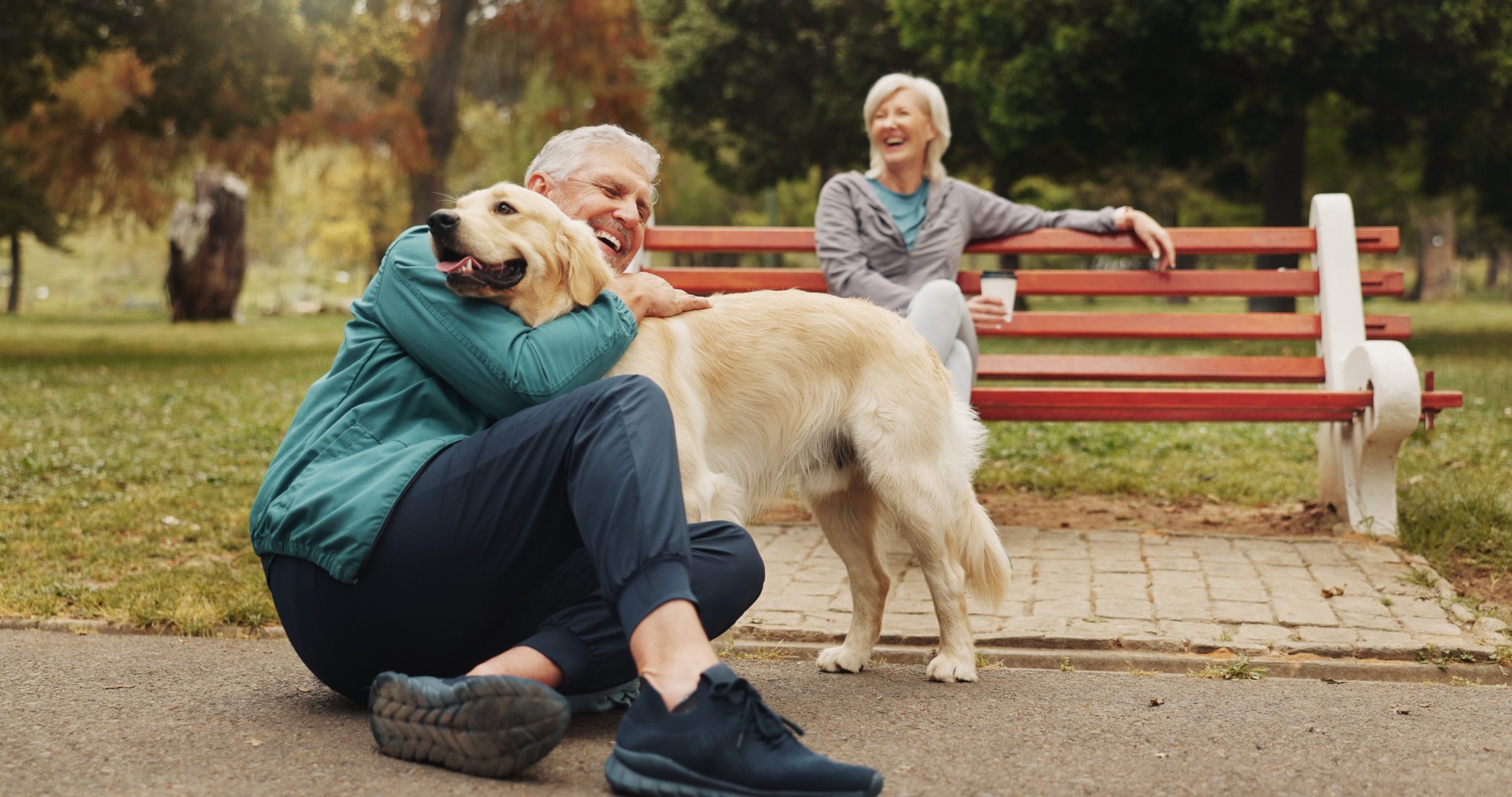
One afternoon, months later, I was walking Buster in the park. He was older now, his muzzle graying, but his loyalty was unwavering. We passed a group of children playing near the fountain. One of them looked familiar. It was Maya. She was older, taller, but I recognized her instantly.
She saw me, too. Our eyes met. There was a flicker of recognition in her gaze, a hint of something… I couldn’t tell what. She looked away, then back again. She started to walk towards me, hesitantly. My heart pounded in my chest.
“Dad?” she said, her voice barely audible.
I knelt down, my hand trembling as I reached out to touch her cheek. “Hey, Maya,” I said softly. “It’s good to see you.”
She didn’t smile. Her expression was guarded, wary. “Mom said… Mom said you were sick,” she said.
“I am,” I replied. “But I’m okay. I’m getting better.”
She looked at Buster, then back at me. “He’s still with you,” she said.
“Always,” I said, scratching Buster behind the ears.
We stood there in silence for a moment, the distance between us palpable. I wanted to say so much, to apologize, to explain, to beg for forgiveness. But the words wouldn’t come. I knew that I had a long way to go to earn back her trust, that it might never happen. But I was willing to wait. I was willing to try.
“I have to go,” she said finally. “Mom’s waiting.”
“Okay,” I said. “I understand.”
She turned to leave, then paused. “The locket…,” she said, her voice barely a whisper. “Is it… can I have it?”
I reached into my pocket and pulled out the locket. I had repaired the clasp, as best as I could. I handed it to her.
“It’s yours,” I said. “Always.”
She took it, her fingers brushing against mine. Then she turned and walked away, disappearing into the crowd.
I watched her go, Buster by my side. The locket was gone, but something else remained. A fragile hope. A glimmer of possibility. A chance for redemption.
The sun was setting, casting long shadows across the park. The fountain sparkled in the fading light, a familiar scene, yet somehow different. Changed. I closed my eyes, took a deep breath, and let the warmth of the sun wash over me.
Buster nudged my hand with his nose. I opened my eyes and looked at him, his loyal, unwavering gaze filled with unconditional love. I smiled, a small, hesitant smile.
Maybe, just maybe, I could learn to live with the ruins and start again.
It turns out the hardest thing isn’t always fixing what’s broken, but learning to live with the pieces.
END.