The man stared at the photograph until his hands began to shake.
The image wasn’t clear anymore—creased edges, faded ink—but the boy in it was unmistakable. The woman beside him, too. Her smile looked like it belonged to a life he’d once thought he was promised.
“Where did you get this?” he whispered.
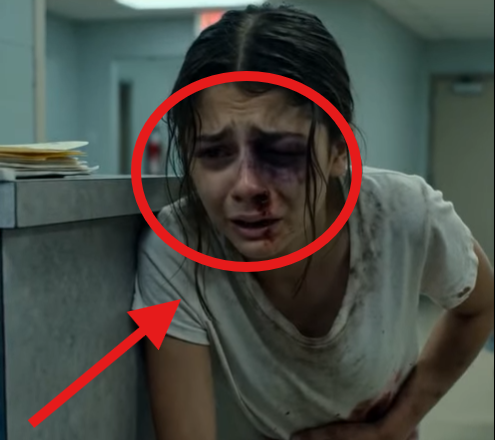
The girl stood in front of him, bruised and exhausted. Her knees barely held her up. Her hair clung to her forehead from sweat and rain.
“My mom gave it to me,” she said, voice thin. “Before she died.”
Something inside him fractured.
“What was her name?”
The girl blinked at him, as if the answer was written on her tongue.
“Anna.”
The man closed his eyes.
For twelve years, he had believed Anna had left him—had taken their baby and disappeared into a life where he didn’t exist. He’d lived with that story so long it became a comfort blanket. Something easier than the truth: that he’d been kept out of her life on purpose.
His family had repeated it whenever he asked questions.
She wanted nothing from you.
She made her choice.
Stop searching. It’ll only hurt.
And he had tried—he truly had.
But now a bruised little girl was standing in front of him, and the photograph in his hand felt heavier than grief.
“What’s your name?” he asked, voice breaking.
The girl’s shoulders curled inward as if she expected punishment for speaking.
“Lena.”
His breath caught so hard it hurt.
That was the name he and Anna had chosen together.
The name he’d only ever said in silence.
The nurse shifted behind the desk. Her gaze flicked between the man and the girl like she was measuring danger.
“Sir,” she warned, “this isn’t appropriate.”
He didn’t hear her at first. His anger was too sharp, too raw—because the girl didn’t look like she’d wandered here by choice. She looked like she’d been carried through pain and left to find help alone.
“This is a hospital,” he said, stepping closer. “And you tried to throw out an injured child.”
The nurse’s mouth tightened. “We didn’t—”
“You did,” he snapped. “She’s bleeding.”
Lena clutched her stomach like it was the only shield she had. Then she made a small sound—half whimper, half cry—and buckled.
His anger turned instantly into fear.
He moved before anyone could stop him. He lifted Lena gently into his arms, careful like she might break.
“She needs a doctor now,” he said.
The nurse finally stepped aside.
But the man was already carrying Lena past the desk—already pushing through doors that led to a trauma room where time moved faster and excuses didn’t exist.
Doctors rushed in. Trauma staff assembled. Voices blended into blur—urgent questions, the sound of wheels rolling, the sharp smell of antiseptic.
Lena’s head tilted toward him as she held tightly to his jacket with both hands, fingers clutching like she was terrified he might vanish too.
He held her tighter.
“Are you really my dad?” she whispered, one eye open, the other swollen shut.
Tears fell down his face before he could stop them.
“I should have been,” he said. “I’m so sorry.”
Her breath trembled.
“Mom said you would come if you knew.”
His throat tightened until speaking hurt.
“I know now,” he said, pressing his forehead gently against her small hand.
Hours later, Lena lay safe in a hospital bed.
Police stood outside the room while the adults behind glass filled out forms and asked questions that didn’t matter as much as one heartbeat at a time.
The man sat beside her, holding the old photograph in one hand and her tiny fingers in the other—like proof could keep her from slipping away again.
She was half asleep when she spoke, her voice foggy but clear enough to pierce him.
“Do I have to go back?”
He looked at her, and the old fear returned—fear that the world would try to take her from him again, fear that he’d lose her after finding her.
His face crumpled.
“No,” he said, firm as a vow. “Never again.”
He didn’t know if the answer came from strength or desperation.
Maybe both.
But when Lena’s eyes finally fluttered closed, her grip loosened only slightly—just enough for him to feel she was resting.
And under the cold hospital lights, the girl who had been told to leave finally had someone who refused to let go.
🎬 PART 3 — The Lie That Bled Into the Present
The paperwork didn’t feel real.
Not the police statements. Not the hospital incident report. Not the careful questions about where Lena had been found, who had brought her in, and why she’d been alone.
For the first few hours, the man—still shaking, still holding the photograph like it might burn his hands—kept waiting for someone to correct the story.
To say: This can’t be true. She’s mistaken. You were never meant to be here.
But no one corrected it.
Instead, the nurse returned with a clipboard and a quiet voice.
“Sir,” she said gently, “we have to ask some standard questions.”
He nodded, jaw clenched. “Ask.”
“What is Lena’s relationship to you?”
He opened his mouth—then stopped.
How did you explain a father-daughter bond that had been stolen before it could even start?
He swallowed. “She’s my—” He forced the words out. “She’s my daughter.”
The nurse’s expression softened, and she wrote it down.
When Lena woke again, her eyes searched his face with that same half-hopeful, half-afraid look.
“Are you leaving?” she asked.
“No,” he promised immediately. “I’m not leaving.”
She relaxed a fraction—like she’d only just remembered how to breathe.
That night, the hospital was quiet enough that every sound became loud: the hiss of monitors, the shuffle of footsteps outside, the small scrape of Lena shifting in the bed.
And then a detective came in.
“Sir, we have a lead,” the detective said. “Someone reported that Lena was in temporary custody with a woman… a relative.”
The man’s stomach dropped.
A woman.
A relative.
Someone who had known Anna.
Someone who had known where he’d been.
He stood up so fast the chair scraped.
“Where is she?”
The detective hesitated, choosing words carefully. “We can’t accuse without proof. But we found records—attempts to block your contact years ago. Someone filed paperwork stating Anna died without a legal guardian identified.”
His hands went cold.
Anna hadn’t died “without” anything.
Anna had left a life. A child. A name.
He looked down at Lena, asleep now, eyelashes trembling. And the anger finally found its shape.
They weren’t just keeping him away.
They were erasing him.
🎬 PART 4 — The Woman With Anna’s Signature
The next morning, he demanded to see the paperwork.
He didn’t ask politely anymore.
He sat in the hospital waiting room like a storm held in a chair, while legal staff and detectives brought files in thick folders.
Anna’s name appeared again and again.
Anna’s signature—dated. Not guessed. Not forged enough to be obvious.
That was the worst part: whoever had done this didn’t rely on confusion.
They relied on documents.
A judge, years ago. A custody ruling. A “relative placement.”
And one name attached to every attempt to shut him out.
Maribel Holt.
When he heard it, his chest tightened like a fist.
He remembered Maribel—not as family, exactly. But as someone who had “helped” after Anna disappeared. Someone who’d called him when he’d asked too many questions, someone who’d cried at him with rehearsed sympathy.
He had believed her because she spoke the language of grief.
Now he realized grief was just a costume.
That afternoon, Lena was stable enough to move to a private room with child advocates. The man stayed at her side, refusing to hand her off to anyone.
“I’m going home with you,” he told her as they waited for transport.
Lena frowned slightly. “But… are you sure they can’t take me?”
“They can try,” he said. “But they won’t.”
Her lips trembled. “Promise.”
He cupped her cheek with one hand, forehead to hers with the other.
“I promise.”
🎬 PART 5 — The Ending That Didn’t Let Her Go
Maribel Holt appeared at the courthouse hearing with a smooth smile and expensive clothes, like she’d come to manage a small inconvenience.
Her attorney began with sympathy.
“She was just a child,” he said. “She needed stability. Mr. — the father—was absent. Anna’s wishes were clear.”
The man stood up.
He didn’t raise his voice.
He didn’t need to.
“Clear?” he repeated. “Then why does Anna’s last letter exist?”
Maribel blinked once—too quickly.
Inside the man’s folder was a single envelope Anna had written just before her death. It wasn’t filed. It wasn’t used for guardianship.
It was evidence of intent.
And attached to it was something no one had expected: Lena’s birth certificate annotation with a handwritten addendum Anna had requested.
“If anything happens, Lena is to be taken to her father.”
The handwriting wasn’t identical to Anna’s normal style—because she’d written it in pain.
But it was Anna.
Maribel’s smile faltered.
The judge turned toward the detective, then toward the man.
“Where is Lena’s current documentation?”
“Hospital notes, guardian reports, and the police incident regarding abandonment—plus the original court filings attempting to block contact,” the detective said.
The judge looked at Maribel’s attorney.
“And the signature on those filings—was it authenticated?”
Maribel’s attorney shifted.
“Your Honor, that signature has—”
The man stepped forward.
“Your Honor,” he said, voice breaking just once, “she forged it.”
It wasn’t bravado.
It was exhaustion finally turning into truth.
And then the prosecutor produced what sealed it: a chain-of-custody discrepancy showing Maribel had held Anna’s legal documents in her possession long after the supposed date Anna “died with no guardian.” A signature verification expert testified the handwriting pressure and ink composition didn’t match Anna’s other submitted records.
Maribel Holt didn’t look shocked.
She looked exposed.
The judge delivered the ruling without drama.
Custody returned to the father.
Temporary guardianship revoked.
Records corrected.
A criminal inquiry authorized.
And Lena—Lena got what she deserved most.
A life with someone who refused to be lied to.
That evening, back at the private room, Lena held the photograph again. Her bruises were healing, but her eyes were still alert, still expecting betrayal.
He sat beside her and smoothed her hair back gently.
“Is it over?” she whispered.
He looked at her—really looked.
“It’s the beginning,” he said.
Lena’s shoulders sagged, the tension finally releasing like air leaving a held breath.
“Thank you,” she murmured.
“For what?”
“For finding me,” she said. “Even when you weren’t supposed to.”
He kissed her forehead softly.
“I was always supposed to,” he replied.
Then, when the nurse came in with discharge instructions, he took Lena’s hand and stood up—steady now, not because fear was gone, but because it didn’t get the last word.
Outside the hospital, the night air was cold and clean.
And for the first time in years, Lena didn’t ask if she’d have to go back.
She walked forward.
THE END