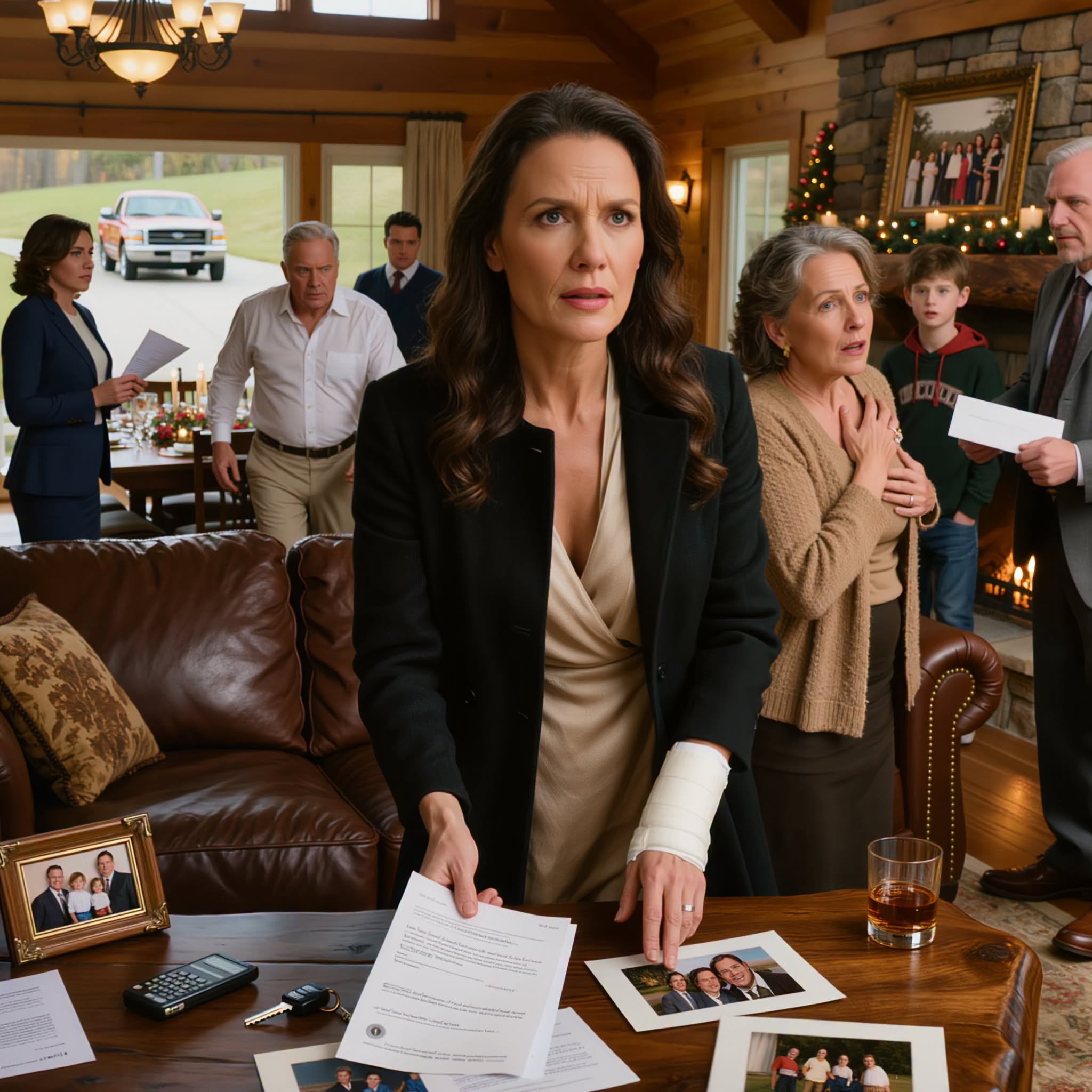
My mom drained my life savings for my brother’s bail while I was fighting for my life in the ICU, then called me selfish for needing surgery money, so I looked at the eviction notice and told her he better enjoy the place he chose over me.
I collapsed at work on a Tuesday morning, right between the quarterly tax folders and the humming server room.
One moment, I was standing in the hallway of the accounting firm with a paper cup of bitter breakroom coffee in my hand, trying to remember whether I had already emailed a revised depreciation schedule to a client in Cleveland. The next moment, the carpet seemed to tilt upward, the fluorescent lights stretched into long white streaks, and the whole hallway folded sideways.
The floor felt shockingly cold against my cheek.
That was the last clear thing I remembered.
Not the shouts from the junior associate who found me.
Not the office manager calling for an ambulance.
Not the paramedics asking me questions I could not answer.
Just the cold floor, the smell of burnt coffee drifting from the breakroom, and the steady hum of the server room behind the locked glass door.
Then everything went black.
When I woke up, everything was white.
White ceiling.
White sheets.
White walls.
White light.
The kind of white that did not feel clean so much as final.
A monitor beeped beside me in steady mechanical intervals. Somewhere beyond the curtain, rubber soles squeaked across polished hospital flooring. The air smelled like antiseptic, plastic tubing, hand sanitizer, and the strange metallic fear that seems to hang inside every cardiac unit, no matter how kind the nurses are.
I tried to move, but my body felt as if someone had poured wet cement into my bones.
A nurse beside me noticed immediately.
“Don’t sit up yet, Margaret,” she said gently, placing one hand near my shoulder. “You’re safe. You’re at Riverside.”
Riverside Methodist Hospital.
Columbus, Ohio.
A hospital I had driven past a hundred times without ever imagining I would wake up inside it wearing wires on my chest and a plastic bracelet on my wrist.
I swallowed, but my mouth was dry.
“What happened?”
The nurse gave me the careful smile of a person trained not to alarm patients before the doctor arrives.
“You had a cardiac episode at work. The doctor will explain everything.”
Cardiac episode.
The phrase was too neat for the way my body felt.
A doctor entered a few minutes later with a tablet tucked under one arm. He looked young enough to be one of Kyle’s old college friends, but his expression carried a weight that made my stomach drop before he even spoke.
“Margaret,” he said softly. “I’m Dr. Evans.”
He pulled up a chair instead of standing over me. That frightened me more.
Doctors do not sit unless the news requires gravity.
“You had a serious cardiac event,” he said. “It appears to have been brought on by extreme stress combined with an underlying condition we have just identified.”
I stared at him, trying to make the words fit together.
Stress.
Condition.
Cardiac event.
The monitor beside me kept beeping, indifferent to my confusion.
“You are stable right now,” he continued, “and that is good. But you are going to need a specialized procedure. Soon. I need to be honest with you. It will be expensive, and your recovery time will be significant. You will not be working for at least three months.”
Three months.
Those two words hit harder than everything else.
I was an accountant. My life had been built around calendars, deadlines, cash flow, insurance statements, contingency plans, and emergency reserves. I understood numbers better than I understood most people. The numbers began arranging themselves in my head immediately, sharp and cruel.
Three months without working.
A major hospital deductible.
Specialist fees.
Recovery costs.
Medication.
Follow-up appointments.
My mortgage.
Utilities.
Health insurance premiums.
Groceries.
My new condo.
The condo I had just bought.
The one decision I had made for myself after two decades of being the responsible one.
I tried to push myself upright, but a wave of weakness rolled through me. The nurse eased me back before I could embarrass myself further.
“Expense isn’t the issue,” I said.
It was a lie.
Everyone in the room was polite enough not to call it one.
“I have savings,” I added, my voice rough and thin. “I have family.”
Dr. Evans nodded, but something in his eyes told me he had heard that sentence from many patients before. Maybe he knew exactly how often people discovered that family was not the same thing as support when the numbers became real.
As the medication fog slowly cleared, panic began creeping in around the edges.
I did have savings.
Technically.
But the market had been volatile, and I had just put a massive down payment on a condo in Grandview Heights. My first real indulgence in twenty years. I had lived modestly for so long that even signing the closing documents felt almost shameful, as though I had stolen comfort from someone else.
It was a small two-bedroom unit with a balcony facing a row of maple trees. New appliances. Warm oak floors. A bathtub deep enough to soak in. A second bedroom I had imagined turning into a painting studio someday, when I finally allowed myself to become someone other than the family emergency contact.
That condo was supposed to be my reward.
My quiet place.
My proof that I had not spent my whole adult life only cleaning up after other people.
I had stretched to get it.
Not irresponsibly, but tightly.
My liquid cash was low.
Dangerously low.
Still, I told myself I was fine.
Because I had a backup plan.
I always had a backup plan.
For the last fifteen years, I had been sending my mother, Brenda, a monthly stipend. It had started after my father died, when grief swallowed her ability to manage even basic bills. At first, the money was simply for groceries, utilities, property taxes, and the small comforts she had never learned how to budget for.
But later, once my own career stabilized, we made an agreement.
Half of what I sent would go into a joint high-yield emergency account.
Not for vacations.
Not for Kyle’s business dreams.
Not for Brooks’s hobbies.
For emergencies.
Real emergencies.
Medical emergencies.
Home emergencies.
Legal emergencies.
The kind of crisis that knocks without asking whether you are emotionally ready.
There should have been at least sixty thousand dollars in that account by then. Maybe a little more. I had contributed faithfully every month, even when it meant postponing repairs on my own car, skipping trips with friends, buying generic groceries, or telling myself dental work could wait another few months.
It was my safety net disguised as hers.
I had done that deliberately.
Mom had pride, and I had always been careful with it.
I let her believe she was saving.
I let her believe the house was hers.
I let her believe she was still the center of a family that had, in reality, been held together by my paycheck since I was twenty-two years old.
Lying in that hospital bed, with wires taped to my skin and my heart reduced to a blinking line on a machine, I reached for my phone.
My hand trembled so badly that I had to use both hands to unlock the screen.
I needed to hear my mother’s voice.
More than that, I needed my mother.
I needed someone to say, “We’ll handle this.”
I needed, for once, not to be the person handling everything.
She answered on the second ring.
But the voice that came through was not warm, not worried, not maternal.
It was frantic.
“Margaret, thank God you called,” Brenda said, breathless. “I’ve been trying to reach you all morning. Where have you been?”
I closed my eyes.
“Mom, I’m in the hospital.”
There was a pause.
A very small one.
“What?”
“I collapsed at work,” I said. Tears gathered before I could stop them. “It’s my heart. I need surgery. Mom, I need help.”
The silence on the other end stretched long enough that I heard the monitor beside me begin to speed up.
“Oh, Margaret,” she finally said.
The concern in her voice was there, but thin. Like cheap paint brushed over damp wood.
“That sounds awful,” she continued. “But listen, honey, we have a crisis here too. A real crisis.”
A real crisis.
I opened my eyes and stared at the ceiling.
“Mom,” I said slowly, “I’m in the cardiac unit.”
“It’s Kyle,” she rushed on, as if my words were a minor obstacle in the way of her real emergency. “He was arrested again. Something about that car dealership investment. Brooks says the bail is fifty thousand dollars. They’re going to keep him in county if we don’t pay by noon.”
For a second, the hospital room disappeared.
All I could see was my brother’s face.
Kyle.
Handsome, charming, careless Kyle.
The boy who had grown into a man while everyone continued treating him like a misunderstood teenager.
The dreamer.
The sensitive one.
The fragile one.
The one who never had to finish anything because someone else always arrived with a broom, a checkbook, and an apology he had not earned.
A cold dread moved through me.
“Mom,” I whispered. “You didn’t.”
“I had to.”
Her voice sharpened defensively.
“He’s your brother, Margaret. Brooks said if he spends even one night in county, it will ruin his reputation. He won’t be able to start the new business.”
“The emergency fund,” I said.
My heart monitor began beeping faster.
“The money I sent you. The money for emergencies.”
“This is an emergency,” Brenda snapped.
I heard Brooks in the background, his low voice muttering something I could not make out.
“And don’t be selfish,” she added. “You have a good job. You have insurance. Kyle has nothing. I wired the money an hour ago.”
The room tilted, though I was lying flat.
“It’s gone?” I asked.
My voice sounded small.
“All of it?”
She hesitated.
“All of it,” she said. “And Brooks says we might need a little more for the lawyer, so if you could transfer—”
I hung up.
I did not scream.
I did not beg.
I did not explain that my heart was failing.
I did not tell her again that the money she had sent away might have been the difference between timely treatment and a dangerous delay.
I did not ask her how a grown man’s reputation had become more urgent than her daughter’s heartbeat.
I simply let the phone fall from my hand onto the white hospital sheets.
The betrayal was not just about the money.
Money was numbers.
Money could be earned, lost, moved, hidden, invested, recovered, or replaced with enough time and discipline.
This was different.
This was the realization that my life, my health, my actual survival, weighed less to my mother than Kyle’s newest disaster.
It was the moment I understood that I had never been protected by my family.
I had been used by them.
Three days later, I was discharged.
I was not healed. I was not even close. But every additional night in that hospital room felt like another number I could not afford to carry. Dr. Evans gave me strict instructions that sounded almost impossible.
Absolute rest.
No stress.
No driving unless necessary.
No heavy lifting.
No emotional strain if it could be avoided.
Schedule the procedure within the month.
He looked directly at me when he said that last part.
“Margaret, I know this is overwhelming, but delay increases risk. You need the deposit and specialist coordination handled quickly.”
“How quickly?” I asked.
“Within weeks,” he said. “Not months.”
Weeks.
Maybe days, if another episode came.
I left the hospital with discharge papers, a pharmacy bag, and a body that no longer felt trustworthy.
My legs shook as I crossed the parking lot. The Ohio sky above me was gray and flat, the kind of overcast sky that makes everything feel colder than it is. Cars moved along the street beyond the hospital entrance. People bought coffee, answered phones, complained about traffic, kept living normal lives.
I wanted to be one of them.
Instead, I slid into my old sedan, sat behind the steering wheel, and rested my forehead against the leather for several minutes.
I should have driven home to my condo.
There was a brand-new couch there still wrapped in plastic. Boxes of dishes on the kitchen floor. A bedroom that smelled faintly of fresh paint. A balcony waiting for a chair I had not yet bought. It was supposed to be the safest place in my life.
But I did not go there.
I drove to my mother’s house.
The house sat in a clean, aging suburb northeast of Columbus, on a wide street lined with maple trees, trimmed lawns, basketball hoops in driveways, and mailboxes shaped like miniature barns. It was a sprawling ranch-style home with pale siding, dark green shutters, and a massive oak shading the driveway.
In October, the whole front yard turned gold with leaves.
In December, Mom liked to hang white lights along the gutters.
In spring, the flower beds bloomed with tulips and hydrangeas.
Because I paid a landscaper to come twice a month.
I pulled my ten-year-old sedan into the driveway behind Brooks’s shiny pickup truck and Kyle’s leased sports car.
Those two vehicles sat side by side like insults.
Brooks’s truck was polished and lifted, the kind of unnecessary machine men buy when they want the world to believe they are stronger than they are. Kyle’s black sports coupe looked new enough to still smell like leather and bad decisions.
My hands tightened around the steering wheel.
I had been discharged from a cardiac unit that morning, and my brother’s freedom was parked in the driveway.
I grabbed my discharge folder from the passenger seat and stepped out slowly.
The air smelled like cut grass and distant barbecue smoke. Somewhere down the street, a dog barked. A kid rode past on a bike, baseball cards clipped to the spokes, the sound rattling cheerfully through a world that had not collapsed.
I unlocked the front door with my key.
The living room was warm and smelled of cinnamon, old wood, and the artificial vanilla candle my mother burned in every season. Afternoon light spilled across the rug. The television was on, some daytime host laughing with an audience that seemed cruelly loud.
Brenda sat on the plush sofa I had bought her for Christmas three years earlier.
Brooks sat in the recliner near the window with a glass of scotch in his hand at two in the afternoon.
He looked up first.
“Margaret,” he said, not moving. “You look terrible. They let you out looking like that?”
He was a large man, still broad in the shoulders, with a face that had probably been handsome twenty years ago before entitlement settled into it. He wore a polo shirt tucked into khakis, expensive loafers, and the expression of a man who had never once doubted his right to occupy space someone else paid for.
My mother turned from the television.
For one brief second, guilt moved across her face.
Then she covered it with annoyance.
“Brooks is right,” she said. “You look pale. You shouldn’t be driving.”
“I need the money back, Mom.”
No hello.
No small talk.
No careful approach.
I stayed standing near the doorway because I did not trust my legs. One hand gripped the frame for support. The hospital bracelet was still on my wrist, bright white against skin that looked almost gray.
Brenda blinked.
Brooks leaned back, already amused.
“I can’t book the surgery without a deposit,” I said. “I have almost no cash flow right now because of the condo closing. I need you to get the bail money back.”
Brenda sighed.
Not a tired sigh.
A theatrical one.
A sound designed to make me feel unreasonable before I had even finished speaking.
“We’ve been over this,” she said. “The money is with the court. We can’t just ask for a refund like it’s a pair of shoes. When Kyle goes to trial, which could be months from now, we’ll get it back. You just have to be patient.”
“I don’t have months.”
My voice rose before I could control it.
“I have weeks. Maybe days. I could have another cardiac episode at any moment.”
Brooks snorted.
“Stop being so dramatic. You always were the drama queen.”
I looked at him.
He lifted his glass.
“Kyle is facing prison time,” he said. “That is real stress. You just need to take some vitamins, rest, maybe ask your boss for an advance. You make plenty.”
“I can’t work.”
The words burst out of me.
“I am on medical leave. I have no income coming in.”
The shout cost me. A hot ache spread beneath my ribs. I pressed my hand lightly to my chest and breathed through it.
Brenda stood.
She smoothed her skirt, walked over, and placed one hand on my shoulder.
For half a second, I thought she might hug me.
Instead, she squeezed.
Hard.
“Margaret, listen to me,” she said. “We are a family. Families sacrifice for each other. You have always been the strong one. The successful one. The rich one.”
“I am not rich.”
“Kyle is sensitive,” she continued. “He cannot handle being locked away. You can handle being poor for a few months.”
I stared at her.
A line of tears slid down my cheeks before I even felt them.
“I’m not asking to be rich,” I said. “I’m asking to be alive.”
Brooks waved one hand.
“Well, you can’t get money from a stone. The money is gone. Deal with it.”
I looked at them then.
Really looked.
My mother, who I had sheltered and supported since my father died.
Brooks, the man who had moved into this house five years earlier and never paid a dime toward the mortgage, utilities, taxes, repairs, groceries, or the expensive imported scotch in his hand.
Somewhere in the back of the house, Kyle was probably sleeping off whatever celebration he had thrown after being bailed out.
Safe and sound.
Because of my labor.
Because of my savings.
Because my life had been converted into his convenience.
They looked at me with disdain.
Not concern.
Not regret.
Disdain.
To them, I was not a daughter. Not a sister. Not family in the way they used that word when they wanted something.
I was a utility.
An ATM that had malfunctioned.
And now they were irritated because the machine had begun asking questions.
A strange calm settled over me.
Cold.
Hard.
Familiar.
It was the calm I felt at work when a balance sheet finally revealed the missing number.
“Okay,” I said softly.
Brenda’s face changed.
“What?”
I wiped my cheeks.
“Okay. If the money is gone, it’s gone.”
Relief spread across her face so quickly it almost made me laugh.
“See?” she said. “I knew you’d understand. You’re a good girl, Margaret.”
Good girl.
I was forty-two years old, wearing a hospital bracelet and staring at the people who had emptied my emergency account, and my mother was still patting my obedience like a trained dog.
“I’m going to go now,” I said.
“Good,” Brooks called as I turned.
Then he added, “And hey, next time you come over, bring some of those steaks we like. Fridge is looking a little empty.”
I walked out.
The afternoon air hit my face.
I got into my car and closed the door.
I did not scream.
I did not cry.
I just sat there looking at the house.
The house with the new roof I had paid for.
The house with the updated HVAC system I had installed the previous summer.
The house with freshly painted shutters, trimmed hedges, sealed driveway, clean gutters, and a kitchen backsplash Brenda had chosen after sending me seven photos from Pinterest.
They thought they had won.
They thought they had drained me dry and discarded me.
But they had forgotten one crucial thing.
They had forgotten to check whose name was on the deed.
To understand why that mattered, you have to understand the history.
My father died when I was twenty-two and Kyle was eighteen.
Dad did not leave much life insurance. He had been a kind man, a steady man, and like many steady people, he thought there would always be more time to plan. There was not.
After the funeral, my mother fell apart.
Not dramatically at first. She did not throw plates or refuse to get out of bed. She simply stopped functioning in small, dangerous ways.
Bills sat unopened on the kitchen counter.
The car insurance lapsed.
The mortgage company called every day.
The water bill became a final notice before anyone realized it had not been paid.
She cried when the refrigerator light went out because Dad had always replaced it.
Brenda had been a homemaker in the most traditional sense. She cooked. She decorated. She wrote birthday cards. She remembered which neighbor liked lemon bars and which cousin was allergic to walnuts. She could plan a church luncheon for forty people without breaking a sweat.
But she had never balanced a checkbook.
She had never negotiated a bill.
She had never called a contractor.
She had never dealt with a bank beyond smiling at the teller.
She had never pumped her own gas without asking someone which button to press.
She did not know where Dad kept the mortgage papers.
I was finishing my accounting degree.
I stepped up.
That phrase sounds noble until you understand what it really means.
It means I became the adult because no one else would.
I moved back home.
I took a job I did not love because it came with benefits.
I managed the small inheritance.
I called creditors.
I negotiated late fees.
I sold Dad’s fishing boat.
I canceled subscriptions.
I created spreadsheets.
I made grocery lists.
I learned which utility companies offered hardship plans and which banks sent warning letters before foreclosure.
I became fluent in the language of survival.
My mother believed I used Dad’s remaining money to pay off the mortgage.
That was the story she repeated for years.
“Your father took care of me,” she would say.
But that was not true.
The bank was about to take the house.
I used my credit, my first job salary, and every ounce of professional credibility I had not yet earned to refinance the property. Because my credit was the only thing holding us up, the bank and title company put the house in my name.
I tried to explain this to Mom at the time.
She was in a grief fog.
She signed where I told her to sign. Then she cried into my shoulder and thanked me for saving Daddy’s house.
Over the years, I let her believe it was hers.
It seemed kinder.
It gave her dignity.
And I told myself dignity was worth the lie.
Kyle, on the other hand, never stepped up.
He stepped out.
He dropped out of community college after one semester because, according to him, the professors did not understand innovation.
He started a DJ business and spent more on speakers than he ever made in bookings.
He started a T-shirt company and ordered hundreds of shirts with a typo on the logo.
He got into cryptocurrency after watching three online videos and lost money he had borrowed from a friend.
He tried day trading.
He tried flipping sneakers.
He tried personal training, though he never became certified.
He tried a podcast, a food truck idea, a luxury watch resale page, a car cleaning brand, and something he called high-ticket mindset coaching, despite never achieving anything high-ticket except debt.
Through it all, I was the safety net.
I paid for car repairs so he could get to interviews he often missed.
I paid rent deposits after roommates asked him to leave.
I paid off a credit card because Mom said the interest rate was cruel.
I bought groceries when he was between opportunities.
I covered his phone bill when he said he needed it for business.
I drove him to court once for a traffic matter he swore was not his fault.
I was the responsible, boring sister.
Kyle was the dreamer.
No one ever asked whether the dreamer planned to wake up.
Then came Brooks.
Brooks Carter met my mother at a church social five years earlier. He arrived wearing a navy blazer, expensive cologne, and a smile polished smooth by practice. He claimed to be a retired investment consultant. He said he had advised private clients, moved money quietly, and gotten tired of the corporate world.
He spoke in little phrases designed to impress people who did not know enough to challenge him.
Private equity.
Market timing.
Legacy wealth.
Strategic liquidity.
Mom loved the way he sounded.
Kyle loved that Brooks treated him like a misunderstood genius.
I disliked him from the beginning.
Not because he was charming.
Because he was charming in the way a lockpick is useful.
He moved in within two months.
From the moment Brooks entered the house, the dynamic shifted.
He realized quickly that I was the gatekeeper of the family finances.
And he hated me for it.
He began with jokes.
“Careful, Brenda, don’t let the CFO find out you bought the good coffee.”
“Margaret keeps this place on a budget tighter than Fort Knox.”
“Your daughter thinks spreadsheets are a personality.”
My mother laughed because she liked being chosen by a man again.
Kyle laughed because Brooks made him feel important.
Then the jokes became whispers.
“Margaret controls you with money, Brenda.”
“She thinks she’s better than us because she has a degree.”
“Why does Margaret get a new condo while you’re stuck in this old house?”
It did not matter that I paid for the old house.
It did not matter that my so-called new car was ten years old.
Truth was never Brooks’s tool.
Pressure was.
He groomed Kyle too.
Brooks saw in my brother a perfect mixture of ego, resentment, and laziness.
“The system is rigged, Kyle,” he would say at family dinners, leaning back with a cigar he smoked on the back patio. “Your sister is part of the system. Accountants, banks, lawyers, all of them. You and I are disruptors.”
Kyle loved that word.
Disruptors.
It made his failures sound like strategy.
It was Brooks who convinced Mom that my monthly stipend was not generosity but obligation.
It was Brooks who encouraged Kyle to get involved in the luxury car arbitrage scheme that eventually got him arrested for fraud.
And it was Brooks who stood in the living room with a glass in his hand, telling me the money meant for my medical emergency was gone and I should deal with it.
Sitting in my car outside that house, I finally understood the extent of the infection.
And I needed to know what else they had done.
So I did not go home.
I drove to the county clerk’s office.
The records room smelled like dust, toner, and old paper. A clerk with silver hair and cat-eye glasses pointed me toward a public computer terminal, and I sat there with my discharge papers tucked into my purse, scrolling through property records while my chest ached in warning pulses.
I was not looking for the deed.
I knew what the deed said.
I wanted to know whether Brooks had tried anything else.
And then I found it.
A lien attempt.
Six months earlier, a document had been filed in connection with an attempted second mortgage on the house.
Applicants listed: Brenda Hayes and Brooks Carter.
Denied.
Reason: title mismatch.
The title search had revealed the truth.
Brenda did not own the house.
I did.
I sat back slowly.
The blue light of the computer screen reflected in my eyes.
They knew.
The rejection letter would have been mailed to the house. Brooks would have opened it. He would have seen my name. My mother would have known too, or at least been told enough to understand that the property she called hers was legally mine.
They had not forgotten.
They had lied.
Brooks knew he had no claim to the house.
He knew he was living there at my mercy.
Which meant his comment about getting money from a stone was not ignorance.
It was calculation.
He was betting on guilt.
He was betting that I would be too soft, too loyal, too afraid of being called cruel to ever take the one action that could save me.
He thought I was weak.
My phone buzzed.
A text from Kyle appeared on the screen.
Hey sis, heard you’re out of the hospital. Mom said you were tripping about money. Don’t worry, this business deal is going to pop off soon and I’ll pay you back double. Can you spot me $500 for groceries? Brooks said you’d be cool with it.
I stared at the message.
Can you spot me $500 for groceries?
Brooks said you’d be cool with it.
The audacity was almost beautiful in its purity.
The old Margaret would have sent it.
The good daughter.
The reliable sister.
The woman who complained privately and complied publicly.
I would have sighed. I would have texted a friend. I would have told myself Kyle needed food, Mom needed peace, and I needed to avoid conflict until after surgery.
Then I would have transferred the money.
But the old Margaret had been left in that hospital room, staring at a phone after her mother chose Kyle’s freedom over her daughter’s heart.
I did not reply.
Instead, I drove to the office of a lawyer I knew through my firm.
Sarah Miller specialized in real estate and elder law. She was sharp, direct, and allergic to drama unless it came with documentation. I did not have an appointment, but when she stepped into the lobby and saw me standing there pale, drawn, and holding a folder of hospital discharge papers, she changed direction immediately.
“Margaret,” she said. “You look like you’ve seen a ghost. Are you okay?”
“I need to evict my mother,” I said.
Sarah stopped.
“And her husband,” I added. “And my brother.”
She studied my face for one long second.
Then she opened her office door.
“Come in.”
Her office overlooked a busy street downtown, with buses groaning past the window and the late afternoon sun reflecting off glass buildings. Normally, I would have noticed the neatness of her desk, the framed diplomas, the stack of organized case files, the faint smell of coffee and printer paper.
That day, I only noticed the chair.
I sat before my legs could give out.
Sarah closed the door and took the seat across from me.
“Start at the beginning,” she said.
So I did.
I laid out everything.
The house title.
The refinance after Dad died.
The years of mortgage payments.
The taxes.
The insurance.
The repairs.
The landscaping.
The stipend.
The emergency account.
The drained funds.
The hospital diagnosis.
The denied second mortgage attempt.
Kyle’s arrest.
Brooks’s behavior.
The text asking for another five hundred dollars.
Sarah listened without interrupting, taking notes on a yellow legal pad in small, aggressive handwriting.
When I finished, she sat back and exhaled.
“This is messy,” she said.
“I figured.”
“But not hopeless.”
That was the first sentence all week that made me breathe easier.
She tapped the pen against her desk.
“The deed is in your name, which is good. Very good. But they have been living there for years, so they likely have tenant rights, even without a written lease. In this state, if someone has lived there more than thirty days, you usually need proper notice. Often thirty days to vacate. If they refuse, then we file for an unlawful detainer action, and that can take time.”
“I don’t have time,” I said.
Panic came back fast, hot in my chest.
“I have weeks before the surgery deposit is due. Maybe less.”
Sarah held up one hand.
“There may be a faster route. Did you ever have a lease agreement with them?”
“No. It was family.”
“Did you ever document the living arrangement? Emails? Texts? Tax treatment?”
“I’m an accountant,” I said. “I documented everything. I declared the fair market value of the rent as a gift every year to avoid issues later. I have emails where Mom thanks me for letting them stay and acknowledges that I pay the mortgage.”
Sarah’s eyes sharpened.
“That’s excellent.”
“It is?”
“That helps establish they are tenants at will, not owners. We can terminate that tenancy. But here is the faster angle. If we can prove waste, nuisance, property damage, or unlawful activity on the premises, we can pursue expedited removal.”
“Unlawful activity?”
“Fraud activity, stolen property, running a questionable operation from the home, anything that puts the property at risk.”
“Kyle was arrested for fraud, but I thought that happened outside the house.”
“Are you sure?” Sarah asked.
I thought of the garage.
Kyle called it his office.
He kept it locked. He had installed a separate deadbolt, supposedly because he had inventory and client equipment inside. Whenever I visited, he got irritated if anyone went near it. The electric bill had been higher lately, but I had been too busy with tax season and the condo closing to investigate.
“I think he used the garage,” I said slowly.
Sarah leaned forward.
“Go check. Legally and safely. You own the property. If the garage is part of your property and you find evidence that they are using it for something improper or damaging the premises, document everything. Photos. Dates. Utility bills. Anything. Do not confront them alone if you can avoid it.”
I almost laughed at that, because confronting them alone was the only thing my family had ever trained me to do.
But I nodded.
I left Sarah’s office with a plan.
I was not just a patient.
I was not just a betrayed daughter.
I was the property owner.
And I needed to see what was in that garage.
I waited until Tuesday night.
Every Tuesday, Brenda and Brooks went to bingo at the community center. They treated it like an appointment with destiny, mostly because Brooks enjoyed holding court with older women who thought he was charming. Kyle usually went out afterward to network, which meant standing in a bar with other men who used business terms instead of having jobs.
At seven o’clock, I drove to the house.
The driveway was empty.
The neighborhood was quiet, American-suburban quiet, with porch lights glowing, sprinklers clicking, and someone down the street grilling burgers. It was the kind of evening that looked safe from the outside.
My heart hammered as I unlocked the front door.
Inside, the house was still.
The vanilla candle had burned low on the coffee table. A blanket was thrown over the sofa. Brooks’s sports section lay open on the recliner. Someone had left a plate with crumbs near the television.
Ordinary mess.
Ordinary signs of life.
For a moment, I remembered being ten years old in that same room, sitting cross-legged on the floor while Dad watched Ohio State football and Mom folded laundry. I remembered Kyle racing toy cars along the baseboards. I remembered believing houses could hold families together if you just loved them enough.
Then I remembered the hospital bracelet on my wrist.
I walked through the kitchen to the door connecting to the garage.
Locked.
Not just locked.
Deadbolted.
A deadbolt I did not have a key for.
That was new.
I stood there for a few seconds, staring at it.
My house.
My garage.
My money paying the electric bill.
And a lock I had not approved.
I went back outside, around the side of the house, stepping carefully over the landscaping stones I had paid to install. The garage side door was locked too, but the narrow window beside it had been left slightly open.
I dragged a plastic garden crate under the window, climbed onto it, and peered inside.
My breath caught.
The garage was not an office.
It was a warehouse.
Stacks of high-end electronics lined the walls. Televisions. Gaming consoles. Laptops. Tablets. Boxes of designer handbags. Unopened shipping cartons with labels half torn off. In one corner, a server rack hummed loudly, lights blinking in frantic green and blue patterns.
Extension cords snaked across the floor.
Power strips overloaded every outlet.
There were folding tables covered with shipping materials, bubble wrap, label printers, and receipts. A whiteboard on the far wall listed names, amounts, and codes I did not understand.
The place looked like a resale operation, a data setup, or both.
A business, yes.
But not the kind that came with clean invoices and quarterly filings.
I took out my phone and began taking photos through the glass.
Wide shots first.
Then close-ups.
Serial numbers where I could see them.
The server rack.
The boxes.
The overloaded cords.
The new locks.
The timestamp.
My hand shook, but I kept taking pictures. Some part of my accountant brain took over, the part that understood evidence must be clear, organized, and undeniable.
Then, as I zoomed in on a workbench at the back, I saw a stack of mail.
At first, I assumed it was Kyle’s.
Then I saw my name.
My mail.
Bank statements.
Credit card offers.
Insurance forms.
Letters from a cardiac specialist regarding my condition.
Letters I had never received at my apartment.
I lowered the phone slowly.
They had been intercepting my mail.
Not accidentally.
Not once.
A stack of it.
A cold fury moved through me, replacing fear.
This was not just selfishness.
This was not just neglect.
This was calculated malice.
They were taking from me while living under my roof.
They were draining me while hiding information about my health.
I climbed down, nearly losing my balance as my knees trembled.
For the first time in days, the fear inside me became useful.
I had leverage.
And I was going to use it.
The next morning, I returned to the house.
This time, I did not go alone.
Sarah came with me in a navy suit and low heels, carrying a slim leather folder. Beside her stood Tony Reed, the process server she used for difficult cases. Tony was a broad-shouldered man in his fifties who looked like he could bench-press a Buick and apologize politely while doing it.
I wore black slacks, a cream blouse, and a long wool coat. I had put on makeup for the first time since the hospital, mostly because I did not want Brooks to see how exhausted I was.
My heart was still unstable.
My body was still weak.
But I had never felt clearer.
Brenda answered the door in her bathrobe.
Her face tightened as soon as she saw us.
“Margaret, what are you doing here this early? And who are these people?”
“We need to talk, Mom,” I said, stepping past her.
She grabbed for the door.
“You can’t just barge in.”
“Actually, she can,” Sarah said calmly. “Margaret is the legal owner of the property. Given the circumstances, she has the right to inspect potential damage and misuse of the premises.”
“Owner?” Brenda scoffed. “It’s my house. Your father bought it.”
“And the bank was taking it back twenty years ago,” I said. “I bought it from the bank. The deed is in my name. You signed the papers.”
Her face flickered.
Not surprise.
Recognition.
That hurt more.
Brooks came down the hallway in a robe, water still damp in his hair.
“What the hell is this noise?” he barked. “Margaret, get out.”
“Sit down, Brooks.”
My voice was low, but it carried in a way I did not recognize.
“We’re done playing happy family.”
Kyle appeared behind him, hair messy, eyes swollen from sleep.
“What’s going on?” he asked. “Who’s the suit?”
“This is my lawyer,” I said. “And this is a process server.”
Tony stepped forward and handed three envelopes to Brenda, Brooks, and Kyle.
“You have been served,” he said.
Brooks tore his open.
“Served with what?”
“A three-day notice to quit for nuisance and unlawful use of the property,” Sarah said. “You have seventy-two hours to vacate.”
Kyle laughed, but it came out thin.
“Unlawful use? You’re crazy. I’m an entrepreneur.”
I reached into my folder and pulled out the photos.
I laid them on the coffee table one by one.
The boxes.
The electronics.
The server rack.
The designer bags.
The intercepted mail.
The overloaded cords.
The new lock.
“Entrepreneur,” I said. “Is that what we’re calling this?”
Kyle’s face went pale.
Brooks stepped forward.
Tony shifted half a step.
Brooks stopped.
“You went into my office,” Kyle shouted.
“It’s my garage,” I said.
“That’s invasion of privacy.”
“It’s my property.”
“They’re inventory,” Brooks snapped.
“Then you’ll have invoices,” Sarah said.
He glared at her.
“We’re holding items for a friend.”
“Wonderful,” Sarah replied. “You can explain that to a judge if this proceeds.”
Brenda picked up one of the photos with trembling fingers.
Her eyes moved over the stack of electronics and landed on the mail.
She looked at me.
For one terrible moment, I wanted her to say she had not known.
I wanted her to be horrified.
I wanted my mother to appear from under whatever mask she had been wearing.
Instead, she looked scared for Kyle.
“Margaret,” she whispered. “You can’t do this. He’s your brother. If authorities get involved, he could go back in.”
“Back in?” I asked.
The room went quiet.
My mother’s mouth opened and closed.
“He’s on probation,” she said weakly.
I stared at her.
“You told me he had never been in trouble before.”
“It was a misunderstanding.”
Kyle looked away.
Brooks muttered something under his breath.
I felt every remaining thread between us pull tight and snap.
“You all lied to me,” I said.
Brenda began to cry.
“Please, Margaret. We’re family. You have plenty of money. Let us stay. We’ll clean the garage. We’ll make this right.”
“I do not have plenty of money.”
My voice cracked.
“I have a life-threatening heart condition. I need surgery. And you gave my surgery money to a bail bondsman for him.”
I pointed at Kyle.
“You chose him over my life.”
Brenda’s face twisted.
“He needed it more,” she cried. “You’re strong. You always figure it out. Kyle is fragile.”
The words hung in the room like smoke.
You’re strong.
Kyle is fragile.
The anthem of my entire life.
The excuse for every skipped birthday, every borrowed dollar, every crisis I was expected to solve and never mention again.
I looked at my mother and felt the last soft thing inside me harden.
“I’m not strong anymore,” I said. “I am ill. I need treatment. And I am taking my house back to pay for the procedure that may save me.”
“You selfish little—” Brooks started.
Tony took another step.
Brooks stopped himself.
“You would put your own mother on the street?” he sneered.
“You have three days,” I said.
Then I turned toward the door.
Sarah followed.
Tony followed.
Behind us, Brenda sobbed, Kyle cursed, and Brooks yelled that we would never get them out, that they had rights, that he knew people, that I would regret humiliating him.
I believed one thing.
He was bluffing.
I believed another thing too.
A desperate man can still cause damage.
The next three days proved it.
Brooks did not pack.
He went on offense.
He posted on Facebook, tagging relatives, neighbors, church friends, and old family acquaintances I had not spoken to in years. The post was long, rambling, and full of righteous outrage.
According to Brooks, his greedy stepdaughter was evicting her elderly mother because she was jealous of her brother’s success. I was painted as a cold-hearted career woman, bitter because I had no husband and no children, hungry to sell the family home for profit.
My phone exploded.
Cousins texted me.
Aunt Linda left a voicemail calling me cruel.
A high school friend of my mother’s messaged me to say she hoped I never experienced the loneliness I was forcing on Brenda.
A cousin from Indiana wrote, “Family is family, Margaret. You don’t throw your mom away over money.”
Over money.
I read that sentence three times.
Over money.
The same people who had no idea where the mortgage payment came from suddenly had moral clarity about what I owed.
No one asked for my side.
No one asked why my mother had access to fifty thousand dollars of my money.
No one asked why Brooks, a supposedly retired investment consultant, needed my support to keep a roof over his head.
No one asked why Kyle’s emergencies always required someone else’s bank account.
They simply saw the story Brooks wanted them to see.
Poor Brenda.
Cruel Margaret.
Fragile Kyle.
Successful people are so selfish.
It was a clean narrative.
People like clean narratives because they do not require courage.
But Brooks made one critical mistake.
In his anger, he posted a photo of himself in the garage.
The caption said something about a real man working hard to support his family while greedy people tried to destroy him.
Behind him, clearly visible, were stacks of boxed electronics.
I screenshotted everything.
Then I sent it to Sarah.
She replied with three words.
Keep every post.
So I did.
I saved screenshots.
I downloaded images.
I copied comments.
I created folders by date and time.
If they wanted to make the family court of public opinion their battlefield, I would bring evidence to the real one.
Meanwhile, Sarah and I built the case.
We pulled the attempted second mortgage records.
We documented the utility bills, which had doubled because of the server rack in the garage. Bills I had paid on autopay without looking closely because I trusted my mother.
That mistake was mine.
I owned it.
Trust without verification is not kindness.
Sometimes it is self-abandonment with better manners.
On the second day, my phone rang from a number I did not recognize.
I almost ignored it.
Then some instinct made me answer.
“Is this Margaret?” a woman asked.
Her voice was timid.
“Yes.”
“My name is Jessica. I saw Brooks’s post on Facebook. I used to date Kyle.”
My stomach tightened.
“Okay.”
A pause.
Then she said, “He did this to me too.”
I sat down slowly at my kitchen table.
Jessica told me that three years earlier, she and Kyle had lived together in a small apartment near Dayton. He convinced her to take out a personal loan for one of his businesses. He promised he would pay her back in two months. He said it was temporary, that she was investing in their future, that nobody believed in him the way she did.
Then he stopped paying rent.
Then he stopped answering calls from creditors.
Then he sold equipment he had purchased with the loan money and claimed the profit had gone into reinvestment.
When she tried to end things and make him leave, Brooks showed up at her apartment.
“He didn’t yell at first,” Jessica said. “That was the scary part. He just stood there in my living room and told me I was ruining Kyle’s life. He said he knew people. He said if I pushed, everyone would find out I had taken advantage of Kyle when he was vulnerable.”
I closed my eyes.
It was the same script.
Different woman.
Same pressure.
“They spread rumors,” Jessica continued. “They told people I was unstable. They told my landlord I was creating a hostile environment. I lost the apartment. I’m still paying that loan.”
“I’m so sorry,” I said.
“I have texts,” she said. “Emails too. Brooks threatening me. Kyle admitting things. I kept everything because I knew someday they’d do this to someone else.”
“Would you send it to me?”
“Yes,” she said. “I want them stopped.”
Jessica sent a treasure trove.
Not just emotional messages.
Evidence.
Screenshots.
Threats.
Admissions.
Patterns.
Kyle and Brooks had targeted girlfriends, friends, and family with the same routine.
Charm.
Pressure.
Money.
Victimhood.
Threats.
When Jessica’s files came through, I sat at my kitchen table for almost an hour reading message after message.
Kyle apologizing, then blaming.
Brooks warning her not to make things public.
Kyle promising repayment that never came.
Brooks implying consequences if she spoke up.
It was all there.
Not one isolated disaster.
A system.
With Jessica’s evidence, Sarah filed for an emergency protective order against Brooks and Kyle, citing past threats and the current property dispute as reasons to take the risk seriously.
The judge granted it.
The sheriff was scheduled to execute the removal and serve the order on the morning of the fourth day.
For the first time since I collapsed at work, I thought maybe I might make it through this.
Not easily.
Not without damage.
But through.
Then, on the night of the third day, my phone buzzed at 11:47 p.m.
A security notification.
Motion detected: Garage.
I sat up in bed.
Another notification.
Motion detected: Back door.
Years earlier, after a string of break-ins in the neighborhood, I had installed cameras at the house. Brenda never learned to use the app. Brooks dismissed it as paranoid accountant nonsense.
I opened the live feed.
The image was grainy, but clear enough.
Brooks and Kyle were loading boxes from the garage into a U-Haul truck.
They moved fast, frantic and angry.
Kyle kept looking over his shoulder.
Brooks pointed, barked orders, disappeared into the garage, came back with more boxes.
The driveway lights cast harsh shadows across the truck.
Then Brooks stopped.
He picked up a crowbar from the garage floor.
He turned toward the back door of the main house.
My breath caught.
He was going to damage the house.
The asset.
My surgery.
My future.
I called the police immediately.
“This is an emergency,” I told the dispatcher. “I own the property. The occupants have been served with notice. There is a protective order pending, and I can see them on camera removing items and damaging the premises.”
The dispatcher told me officers were being sent.
She told me to stay away.
I should have listened.
I know that now.
But fear does not always make wise choices.
Sometimes it makes desperate ones.
I got in my car and drove.
The streets were slick from a light rain. Porch lights blurred through my windshield. Every red light felt personal. My chest ached, not sharply, but with an unstable flutter that made me grip the wheel and breathe slowly through my nose.
I kept telling myself to slow down.
I kept seeing Brooks with the crowbar.
I kept seeing the cracked numbers in my head.
House value.
Insurance.
Surgery deposit.
Recovery time.
Survival.
When I pulled up, the U-Haul was still running.
The front door stood wide open.
A lamp lay broken on the porch.
I ran inside.
The living room was wrecked.
The television had been smashed.
The sofa was slashed open, stuffing spilling out like snow.
Family photos had been knocked from the mantel.
The coffee table was overturned.
The vanilla candle had shattered on the floor, wax smeared across the rug.
“Mom!” I shouted.
I found her in the kitchen, sitting at the table, sobbing into both hands.
Brooks stood near the cabinets, crowbar in hand, breathing hard.
Kyle was under the sink, yanking at copper piping.
“Stop it,” I yelled. “Stop it right now.”
Brooks turned.
His smile was wild.
“You want the house, Margaret? You can have it. We’re making a few renovations first.”
He raised the crowbar and brought it down on the granite countertop.
The stone cracked with a sound that went through my body.
“Brooks, please,” Brenda wailed. “That’s enough.”
“Shut up, Brenda,” he roared. “This is your fault. You raised a stingy, ungrateful brat.”
He lifted the crowbar again.
This time, he turned toward the wall behind Brenda.
Or maybe toward Brenda herself.
“No!” I screamed.
I moved between them before I had time to think.
The crowbar did not strike me.
But the motion, the fear, the strain of it all hit my body at once.
My chest seized.
Air vanished.
The room narrowed.
I clutched at the edge of the table, gasping as my heart fluttered in a terrifying rhythm.
Brooks paused.
For a second, there was something like uncertainty in his face.
Then contempt returned.
“You’re pathetic,” he said. “You’re going to end up alone, Margaret.”
“Maybe,” I managed, breath thin and painful. “But at least I won’t end up remembered as a thief.”
Sirens sounded in the distance.
Red and blue light flashed across the living room walls.
Kyle dropped the pipe.
Brooks turned toward the window.
“It’s too late,” I said, sinking toward the floor. “They’re here.”
The front door burst open.
Officers entered fast, voices sharp and controlled.
“Drop it.”
Brooks shouted something about rights.
The crowbar hit the floor.
Kyle raised both hands, shaking.
Brenda sat frozen at the kitchen table, mascara running down her face.
I lay on the floor among broken glass, ruined cabinets, and the shattered remains of a life I had spent twenty years funding.
The officers moved through the house.
Brooks was restrained.
Kyle was taken outside, crying that he was just helping his mother move.
Paramedics checked my vitals.
My rhythm was erratic, but stable enough that they did not insist on immediate transport once I refused. One of them, a woman with kind eyes and a silver cross on her badge lanyard, told me I needed to stop putting myself in dangerous situations.
I almost laughed.
Dangerous situations had been calling me daughter for most of my adult life.
The real climax, though, was not the police lights.
It was not Brooks being led out in handcuffs or Kyle sobbing near the U-Haul.
The real climax came three days later.
At my Uncle Jerry’s funeral reception.
Uncle Jerry had passed away suddenly the week before, a quiet man who had always treated me with a softness my own family often withheld. He was the kind of uncle who remembered your favorite pie, asked about work without needing money, and once changed my flat tire in a snowstorm without making me feel foolish for calling.
I had not planned to go.
I was weak.
I was exhausted.
And I knew the family had been poisoned against me.
Brenda had been bailed out, not by me, but by Aunt Linda, who believed Brooks’s version of events long enough to take pity on her sister. Brooks and Kyle remained in custody pending further review, but the family gossip had already run ahead of the facts.
In their version, I had snapped.
In their version, I had thrown my elderly mother onto the street because I wanted quick money from a house that should have belonged to everyone.
In their version, Brooks was a proud man defending his wife.
In their version, Kyle was a young entrepreneur who made one paperwork mistake.
In their version, I was cold.
I was greedy.
I was jealous.
I was successful and therefore incapable of being harmed.
Sarah called me the morning of the reception.
“Are you going?” she asked.
“I don’t think I can handle it.”
“If you don’t tell your story, Margaret,” she said, “they will write it for you. And in their version, you are the villain.”
I looked across my condo at the boxes I still had not unpacked.
My medication sat on the counter.
My hospital folder lay open beside a glass of water.
For once, I did not want to be silent.
So I put on a black dress that hung too loosely on my frame.
I brushed my hair.
I applied concealer under my eyes and gave up when it did not help much.
Then I gathered the documents.
The property deed.
The mortgage payment history.
The tax records.
The denied second mortgage application.
The police report.
The photos from the garage.
The screenshots from Brooks’s posts.
The hospital diagnosis.
The estimate for the procedure.
Jessica’s messages.
I placed everything in a neat folder.
Because if my family wanted a confrontation, I would bring receipts.
The community hall sat behind a Lutheran church, the kind of low brick building found in every Midwestern suburb. Inside, folding tables had been covered with white plastic cloths. There were trays of ham sandwiches, pasta salad, deviled eggs, grocery-store cookies, and coffee in silver urns.
The room smelled like lilies, coffee, and grief.
I arrived just as the eulogies were ending.
The room went silent.
Not gradually.
Instantly.
Brenda sat in the front row, dabbing her eyes with a tissue, surrounded by relatives who had clearly been comforting her. Aunt Linda stood beside her, one hand on her shoulder like a guard.
When Linda saw me, she stepped into the aisle.
“Margaret,” she hissed. “You have some nerve showing your face here after what you did to your mother.”
I looked at her.
“I’m here to pay my respects to Uncle Jerry.”
“And to what? Make another scene?”
“No,” I said. “To set the record straight.”
A cousin near the back muttered, “We don’t want to hear your lies.”
“Lies?” I repeated.
I walked past Aunt Linda.
She reached for my arm, then stopped when she saw the folder in my hand.
I placed it on the table beside the guest book.
“These are not lies,” I said. “These are public records.”
The room shifted.
People leaned in despite themselves.
That is the thing about scandal.
Everyone claims to hate it until documentation appears.
I opened the folder and lifted the deed.
“This is the deed to the house. I bought it twenty years ago when the bank was preparing to take it back. I have paid the mortgage, taxes, insurance, utilities, and major repairs ever since.”
Aunt Linda frowned.
“That house was your father’s.”
“It was,” I said. “Then the bank nearly took it. Then I saved it.”
I held up the payment history.
“Every mortgage payment. Every tax bill. Every insurance premium. My name. My account. My responsibility.”
Someone near the coffee urn whispered, “I didn’t know that.”
“Most people didn’t,” I said. “Because I let Mom keep her dignity.”
Brenda looked down.
I held up the police report.
“This is the report from three nights ago. Brooks and Kyle were found damaging the property after being served notice. There was also evidence of questionable inventory being stored and moved from my garage.”
A murmur moved through the room.
Brenda’s face went pale.
Aunt Linda reached for the report, but I kept speaking.
“This is the attempted second mortgage application,” I said, lifting another page. “Six months ago, Brenda and Brooks tried to borrow against the house. They were denied because the title search showed the house was mine. That means they knew. They knew the house was not legally hers, and they let all of you believe I was stealing something from my mother.”
The murmuring grew louder.
I could see the story beginning to crack.
Not enough yet.
But enough for air to get in.
I held up the medical report next.
“This is my diagnosis. I had a serious cardiac event. I need an expensive procedure to stabilize my condition. My mother knew this. I called her from the hospital.”
I looked directly at Brenda.
“Tell them what you did with the emergency fund I built for fifteen years.”
Her mouth trembled.
“It was for the family.”
“Kyle was in trouble,” someone whispered.
“Kyle is always in trouble,” I said.
My voice cracked, but it did not weaken.
“You took fifty thousand dollars that could have paid for my surgery deposit and gave it to a bail bondsman for a fraud charge. You chose his freedom over my heartbeat.”
“He’s your brother,” Brenda cried.
“And I am your daughter.”
The words came out louder than I intended.
The room froze.
“I am the one who kept the lights on,” I said. “I am the one who fixed the roof. I am the one who paid the taxes, replaced the HVAC, bought groceries, covered Kyle’s emergencies, and made sure Mom never had to face the consequences of the life she pretended to afford. When I needed help, she called me selfish.”
Brenda began to sob.
This time, fewer hands reached for her.
I pulled out the final set of papers.
“These are messages from Jessica, Kyle’s former girlfriend. They show a pattern. Brooks and Kyle have done this before. Pressure, money, threats, blame. Over and over.”
I placed the stack on the table.
“And Brooks is not a retired investment consultant. He is a con man with a long history of draining women and moving on. He tried to take a second mortgage out on my house behind my back. When the bank denied it, he learned the house was mine. He knew. They all knew.”
The family began passing papers from hand to hand.
Expressions changed.
Anger became confusion.
Confusion became shock.
Shock became shame.
Aunt Linda picked up the police report, read the first page, and slowly lowered herself into a chair.
No one spoke for several seconds.
I looked at my mother one last time.
She was crying openly now.
But no one was comforting her.
“I’m done,” I said quietly. “I’m selling the house. I’m getting the surgery. And I am never letting anyone use me again.”
Then I turned and walked out.
No one stopped me.
No one called me cruel.
No one asked me to stay.
The silence followed me all the way to the parking lot.
And for the first time in my life, the silence did not feel like abandonment.
It felt like freedom.
The fallout was swift.
Once the evidence spread through the family, Brooks’s version collapsed. Aunt Linda, who had been Brenda’s strongest defender, read the police report in full and then went to the jail demanding answers. Brooks could not keep his story straight. He blamed Kyle. Then Brenda. Then me. Then the police. Then a mysterious business partner no one had ever met.
Linda pulled her support immediately.
Brooks remained in custody.
The inventory in the garage was later connected to a series of thefts in the next county. With his prior history, the district attorney took the case seriously.
Kyle did not fare much better.
His fraud charge from the car investment scheme, combined with the property case and the items in the garage, put him in deeper trouble than even Brenda could excuse. Without my money and without the family rushing to rescue him, he had to rely on a public defender.
He eventually accepted a plea agreement.
For once, Kyle’s charm did not erase the paperwork.
As for the house, the damage was extensive.
The countertop was cracked.
Cabinets destroyed.
Copper pipes removed.
The sofa ruined.
Walls gouged.
The garage overloaded and unsafe.
The living room looked like someone had taken all my years of patience and broken them into visible pieces.
But insurance covered much of the damage because I had called the police immediately and documented everything. Sarah helped me coordinate the claim, the cleanup, and the sale.
I sold the property as-is to a developer for cash.
It was not the top-of-market price I could have received if the home had been pristine. I knew that. The accountant in me winced at the lost value.
But it was enough.
Enough to pay the surgery deposit.
Enough to cover recovery.
Enough to put distance between survival and desperation.
A week later, I had the procedure.
The morning of surgery, I woke before dawn in my condo. The city was quiet outside, the maple trees beyond my balcony only dark shapes against the blue-gray sky. I stood in the bathroom and looked at myself in the mirror.
I looked thinner.
Older.
But not defeated.
For years, I had mistaken exhaustion for maturity.
I had mistaken endurance for love.
I had mistaken being needed for being valued.
Now, with a hospital bag on the floor and a surgical consent form tucked into my purse, I finally understood the difference.
Sarah drove me to the hospital because I refused to call my mother.
A coworker named Denise met us in the waiting area with a thermos of tea I could not drink and a stack of magazines neither of us opened. She hugged me carefully, the way people hug someone they know has been through too much.
“You don’t have to talk,” she said.
So I didn’t.
That was the first kindness.
Not advice.
Not guilt.
Not a demand.
Just presence.
The procedure went as planned.
Recovery was brutal.
The first two weeks, I could not lift anything heavier than a milk jug. Walking from the bedroom to the kitchen felt like crossing a football field. I had to set alarms for medication, track blood pressure, check incision care, and accept help from people who did not attach invoices to kindness.
A coworker brought soup.
A neighbor carried packages upstairs.
Sarah stopped by with paperwork and a terrible casserole she admitted she had bought from the freezer section.
Denise came over one Saturday and unpacked my kitchen while I sat at the table giving useless directions about mugs and mixing bowls.
For the first time in my life, help did not come with a hook hidden inside it.
The silence in my condo was not lonely.
It was peaceful.
There were no frantic calls about Kyle’s car.
No messages from Mom saying Brooks thought I should cover a bill.
No family emergencies that somehow always arrived with a dollar amount.
No one asking me to prove love through payment.
No one calling me strong as a way to deny me rest.
About a month after surgery, I was sitting on my balcony at sunset, wrapped in a blanket, watching the sky turn pink over the maple trees.
My phone buzzed.
Mom.
I stared at the screen until it stopped.
Then I let it go to voicemail.
Later, when I felt ready, I listened.
Her voice was small.
Broken.
“Margaret, I’m so sorry,” she said. “I didn’t know. I didn’t see what Brooks was doing. Kyle… I just wanted to help him. I miss you. Please call me.”
I sat with the phone in my hand for a long time.
There was a part of me that wanted to believe her.
A part of me that missed the mother I had kept alive in my imagination. The mother who would rush to my hospital bed. The mother who would choose me without needing to be cornered by evidence. The mother who would say, “I’m sorry,” before the consequences arrived.
But forgiveness is not the same as access.
I could forgive her weakness someday.
Maybe.
I could forgive her blindness.
Maybe.
But I could not forget that when the choice was between my life and her delusions, she chose the delusions.
I did not call back.
Not that day.
Not the next day.
Not when Aunt Linda texted to say Mom was staying on her pullout couch and crying every night.
Not when another cousin messaged that family healing required both sides to be humble.
Both sides.
I stared at that phrase for a long time.
There are people who will watch you crawl out of a fire and still ask whether you could have escaped more politely.
I used the rest of the house money carefully.
I paid off the condo.
I strengthened my retirement fund.
I created a real emergency account in my name only.
No joint access.
No family language.
No hidden obligations.
Just survival, properly titled.
I returned to work part-time after my doctor cleared me. My coworkers treated me differently at first, like I might crack if someone placed a file too loudly on my desk. Eventually, they relaxed. So did I.
A little.
The firm smelled the same as it had that morning when I collapsed. Coffee. Printer toner. Carpet cleaner. Stress.
But I was not the same.
I no longer answered every call immediately.
I no longer volunteered to fix problems that did not belong to me.
I no longer confused competence with obligation.
When Kyle wrote from custody, I did not open the letter for three days.
When I finally did, it was exactly what I expected.
He said he had made mistakes.
He said Brooks had influenced him.
He said Mom needed me.
He said he hoped I remembered that we were siblings before I let lawyers turn us into strangers.
At the bottom, in smaller handwriting, he asked whether I could send a little money for commissary.
I folded the letter back into the envelope.
Then I put it through the shredder.
I also signed up for painting classes.
It felt ridiculous the first night, walking into a community arts center with a canvas bag of supplies and no idea how to hold a brush. I was surrounded by retirees, college students, a nurse, a widower, and one cheerful woman who painted only birds.
I painted a lopsided bowl of oranges.
It was terrible.
I loved it.
For twenty years, I had told myself there would be time later.
Later to rest.
Later to create.
Later to live without being useful.
Later almost did not come.
So I stopped postponing myself.
I bought the balcony chair I wanted.
I planted herbs in small clay pots.
I learned how afternoon light moved across my living room floor.
I took short walks when my doctor allowed it.
I ate dinner without checking my phone.
I watched storms roll across the Ohio sky from behind my own windows, in a home no one could take from me with guilt.
Sometimes I missed my father.
Sometimes I missed the version of my mother I wished had existed.
Sometimes I even missed Kyle when he was ten years old and used to leave comic books outside my bedroom door after we fought because he did not know how to apologize.
But missing someone does not mean handing them the keys again.
I have a scar now.
A thin pink line on my chest that catches the light in the mirror.
It reminds me every morning that I survived more than a medical crisis.
I survived a family system built to drain me and call it love.
I survived being the strong one.
I survived the people who believed my boundaries were cruelty because my sacrifice had been convenient.
And I learned the most expensive lesson of my life.
You cannot set yourself on fire to keep other people warm.
Especially when they are the ones holding the match.