She Wore My Secret Gown to Fashion Week. By Midnight, I Owned the Scandal.
Preview
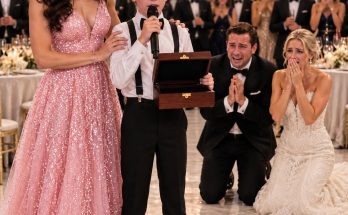
My husband’s mistress wore my unreleased couture gown to New York Fashion Week and told a wall of cameras that he had chosen her as the designer’s new muse.
Bennett posed beside her while I stood backstage, one hand resting on the control panel that could stop the entire show.
They thought fashion forgot ownership once the flashbulbs started.
They did not know the gown was protected by a nondisclosure agreement, tagged with a private security chip, and owned by a woman who had spent three silent weeks preparing for exactly this betrayal.
PART 1 — THE WOMAN IN MY FINALE
At twenty-seven, I had already learned that wealth spoke most clearly when it did not raise its voice.
That evening, I wore an ivory silk suit with a narrow waist, pearl buttons, and no visible label.
My dark hair fell in a polished wave over one shoulder, framing a youthful heart-shaped face, soft brows, and gray-green eyes that photographers often described as gentle until they saw me negotiate.
I looked younger than most people expected the founder of a seventy-million-dollar fashion house to look.
That misunderstanding had always been useful.
The final model was supposed to step onto the runway at exactly 9:17 p.m.
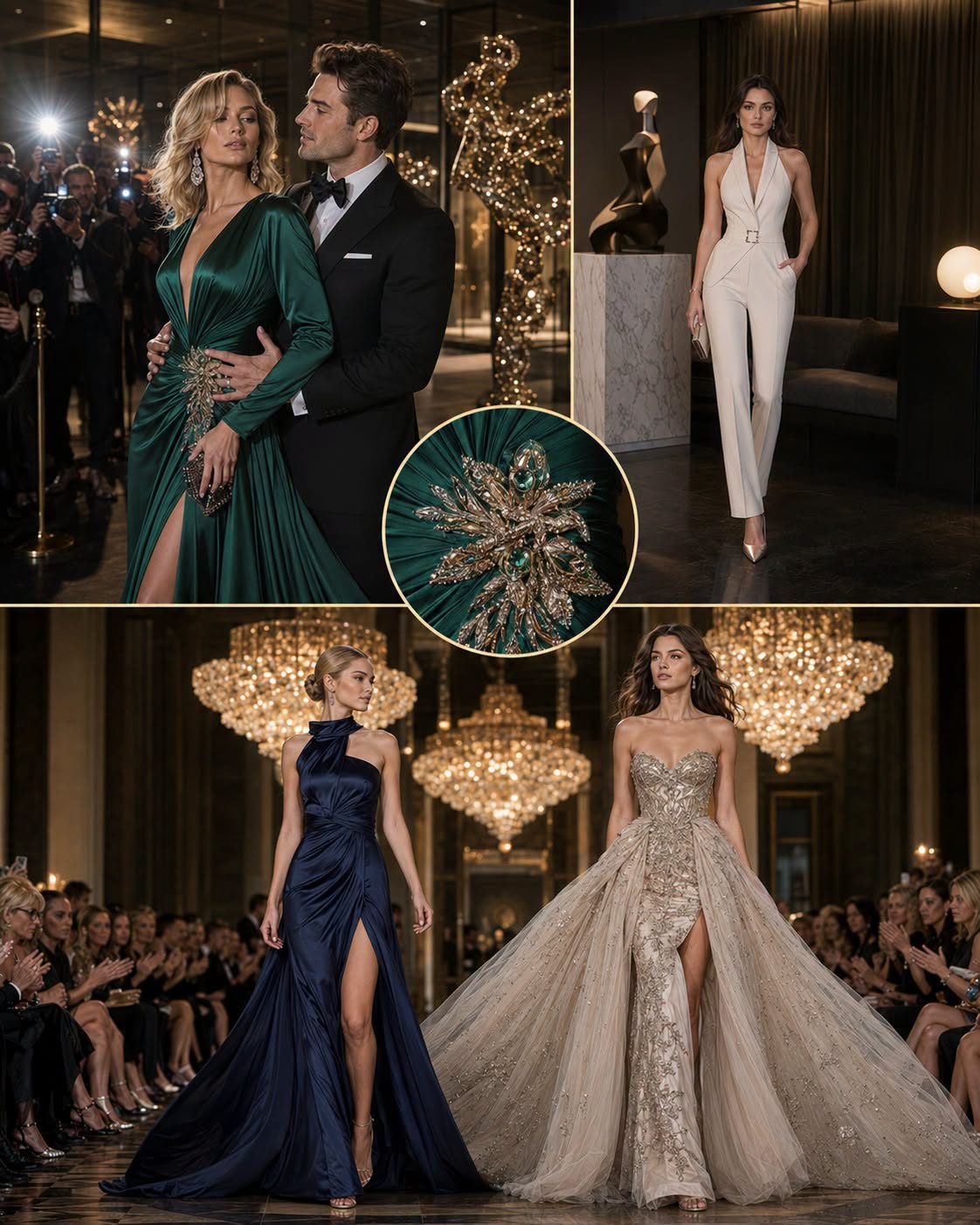
She would wear a silver-white gown called Winter Orchid, a dress that had taken nine women, six hundred hours, and nearly twelve thousand hand-cut crystals to complete.
The bodice was sculpted from translucent silk organza, and the train opened behind the wearer like frost spreading across a midnight window.
No journalist had seen it.
No buyer had photographed it.
Even the investors attending the show had been required to sign confidentiality agreements before entering the final fitting room.
Winter Orchid was not merely the last dress in my collection.
It was the dress that would determine whether Vesper Row remained independent or accepted one of the acquisition offers waiting on my desk.
At 8:42 p.m., seventeen minutes before the first model was scheduled to walk, my production manager rushed into the backstage control room without knocking.
“Vivian,” Lena whispered.
Her face had gone pale beneath her headset.
I looked up from the seating chart.
“What happened?”
She held out her phone.
For one second, I thought she was showing me a photograph from our press line.
Then I saw Ava Sterling standing beneath the gold entrance arch of the Halcyon Hotel ballroom.
She was wearing Winter Orchid.
The train that four seamstresses had wrapped in archival tissue that afternoon was spread across the black carpet.
One of my unreleased crystal flowers glittered above her left hip.
Bennett stood beside her with his hand at the bare center of her back.
He was smiling with all his teeth.
Ava was twenty-five, beautiful in the deliberate, expensive way social media rewarded.
She had honey-blonde hair, blue eyes sharpened by smoky liner, and the confidence of someone who had never entered a room without first asking who might be watching.
Three months earlier, Bennett had introduced her to me as a digital consultant.
“She understands the younger market,” he had said.
I had noticed that he did not look at her when he said it.
Now Ava turned toward a reporter from Style Ledger and tilted her body so the gown caught the light.
“Bennett wanted tonight to be a surprise,” she said into the microphone.
“He told me every great designer needs a muse who represents the future.”
The reporter glanced at Bennett.
“And Vivian Hale approved this?”
Ava’s smile became almost tender.
“Vivian has had a difficult year creatively.”
Bennett lowered his eyes in a performance of private pain.
“Our marriage has been over for some time,” he said.
“We wanted to wait until after the show to announce it, but sometimes life refuses to follow a schedule.”
The control room fell silent around me.
Twenty-four screens displayed the ballroom, the runway, the entrances, the front row, and the press area.
On nine of them, my husband held his mistress as she wore the dress I had designed in the months after my mother died.
Lena stared at me.
“Should I call security?”
“Not yet.”
My voice sounded calm enough that everyone in the room obeyed it.
On the screen, Ava touched Bennett’s lapel.
The gesture was intimate, practiced, and small enough to look accidental in photographs.
Bennett leaned down and kissed her temple.
The press line erupted.
Camera shutters sounded like rain against glass.
Lena swallowed.
“Vivian, she stole the finale.”
“No,” I said.
“She was given access.”
That distinction mattered.
The gown had been locked inside Atelier Room Four at five that afternoon.
Only three people possessed active access credentials: Lena, me, and Bennett.
Lena had been beside me since four.
I had never left the production floor.
Which meant my husband had used the executive access card I had authorized for emergencies to enter the atelier, remove a protected design, and give it to his mistress.
On camera.
In front of investors.
While claiming the right to speak for my company.
I looked at the digital clock above the monitors.
8:45 p.m.
“Keep every camera recording,” I said.
“Back up the feeds to the legal server, including audio.”
Lena blinked.
“You knew something like this could happen?”
“I knew Bennett planned to make an announcement.”
I had not known he would be arrogant enough to wear the evidence.
Three weeks earlier, a security alert had appeared on my private phone at 2:13 in the morning.
Someone had attempted to access the Winter Orchid design file from Bennett’s office.
I had been awake beside him in our Upper East Side bedroom.
Bennett had been sleeping with one arm across my waist, breathing softly against my shoulder.
At least, I had thought he was sleeping.
The next morning, I checked the access log.
His executive credentials had opened the file.
When I asked whether he had been working late, he kissed my forehead and told me I worried too much.
That afternoon, I hired a forensic accountant.
By the end of the first week, she found hotel charges hidden beneath client-entertainment codes.
By the end of the second, she found a private apartment in Tribeca leased through a shell consulting company.
By the end of the third, she found Ava.
I never confronted him.
Bennett mistook silence for ignorance because he had always believed the loudest person in a marriage possessed the most power.
I let him believe it.
I let him kiss me before work.
I let him tell me he was proud of the collection.
I watched him stand in our kitchen and rehearse concern into his reflection while lying about late investor meetings.
Then I quietly changed the authorization structure of the company.
I transferred key intellectual-property licenses into a protected holding entity.
I suspended his ability to approve expenditures above twenty-five thousand dollars.
I instructed our legal team to prepare termination documents that required only one final triggering event.
Public misuse of protected company property.
Bennett had just provided it in high definition.
On the press-line screen, Ava turned as another reporter approached.
“Is it true you’ll be joining Vesper Row officially?” the woman asked.
Ava laughed.
“I think Bennett should answer that.”
My husband placed his hand over hers.
“Ava will be helping us shape the next chapter.”
Us.
He said it as if I had already been removed from my own life.
A text appeared on my phone.
BENNETT: Where are you? We need to talk before the show.
I read it twice.
Then I typed one sentence.
ME: I can see you.
Across the ballroom, Bennett took his phone from his pocket.
The moment he read my message, the color left his face.
He looked toward the backstage entrance.
Ava continued smiling, unaware that the man beside her had stopped breathing.
BENNETT: Vivian, this is complicated.
ME: It looks very simple from here.
He turned away from the cameras and called me.
I declined.
He called again.
I declined again.
Then he sent the message that ended whatever small mercy I might still have considered giving him.
BENNETT: Do not embarrass me tonight.
I looked at those six words while my team waited around me.
My husband had brought his mistress to my runway in my stolen gown, announced the end of our marriage to the press, questioned my professional stability, and asked me not to embarrass him.
I placed my phone facedown.
“Where is Naomi?” I asked.
“Our attorney is in the east lounge,” Lena said.
“Bring her to the control room.”
“And security?”
“Tell them to remain in position until I give the instruction.”
The ballroom doors opened at 8:55.
Guests began taking their seats beneath chandeliers made from five thousand strands of handblown glass.
Editors, actors, athletes, buyers, and investors moved through the room carrying champagne beneath soft gold light.
No one knew that the finale had already appeared on the carpet.
No one knew the show’s chief executive had stolen it.
No one knew his wife was watching from behind a black velvet curtain.
At 9:01, Naomi Brooks entered the control room wearing a navy tuxedo and the expression of a woman who had never once been surprised by human greed.
She was forty-three, brilliant, and the only person outside my private trust who knew the complete ownership structure of Vesper Row.
She looked at the screens.
“So he did it.”
“He did more than we expected.”
“That was always the most likely outcome.”
Naomi opened her leather folder.
“We have the access logs, the footage, the press statements, and the signed executive conduct agreement.”
“Is it enough?”
“It was enough when he opened the atelier.”
She watched Bennett escort Ava toward the front row.
“Everything after that is a gift.”
I felt no triumph.
Not yet.
Betrayal did not become painless simply because you had prepared for it.
Bennett and I had met when I was twenty-two and still sewing samples in the back room of my mother’s old bridal shop in Connecticut.
He had been charming without appearing to try.
He remembered waiters’ names, sent flowers to my mother on her birthday, and listened when I spoke about fabric as if silk and grief were subjects worthy of the same attention.
When my first collection sold out, he helped me pack boxes.
When my second attracted investors, he volunteered to study finance.
When my mother died, he held me on the floor of our apartment and promised I would never have to carry the company alone.
I had believed him.
That was the wound beneath all the others.
I had not married a stranger.
I had married the man who knew exactly how much Winter Orchid meant to me.
The gown was inspired by the white orchids my mother kept in the shop window every winter.
She used to say flowers survived cold weather by learning when not to bloom.
Bennett knew that.
He gave the dress to Ava anyway.
At 9:06, the house lights dimmed.
The audience settled.
Ava sat in my front-row seat.
Bennett had placed her between himself and the president of Crown Meridian Group, the investment firm he believed would buy Vesper Row after the show.
My name card had been removed.
The small white rectangle lay crushed beneath Ava’s silver heel.
Lena saw it on camera and whispered a curse.
I only adjusted the cuff of my jacket.
“Begin on schedule,” I said.
The first model stepped onto the runway at 9:09.
Music filled the ballroom.
The collection opened with black wool coats cut close to the body, followed by pearl-gray dresses that moved like smoke.
The audience lifted their phones.
Editors leaned toward one another.
The show continued exactly as rehearsed.
Backstage, models changed beneath the swift hands of dressers.
Pins flashed.
Zippers rose.
Heels struck the floor in clean, measured rhythm.
I stood beside the curtain and watched six months of work enter the light.
Bennett looked over his shoulder every few minutes.
He expected me to appear angry.
He expected a confrontation he could describe later as instability.
He had spent weeks preparing a story in which I was emotional, exhausted, jealous, and no longer capable of leading the company.
All I had to do was refuse the role.
At 9:15, the second-to-last model entered the runway.
The finale cue blinked on the production screen.
Winter Orchid’s music began with a single violin note.
The audience turned toward the curtain.
No model appeared.
The violin continued.
Ten seconds passed.
Then twenty.
A whisper moved across the ballroom.
Bennett’s head snapped toward the control booth.
I lifted my microphone.
“Kill the runway lights.”
The room went black except for the emergency aisle lamps and the white glow of hundreds of phones.
Ava’s stolen crystals shone in the darkness.
A spotlight came on above the empty entrance.
I walked into it.
For the first time that evening, the ballroom became completely silent.
My heels touched the runway with soft, precise clicks.
I stopped at the center and looked toward the woman wearing my finale.
Ava straightened.
Bennett stood.
I did not look at him.
“Good evening,” I said.
“My name is Vivian Hart Hale, founder and creative director of Vesper Row.”
Cameras rose.
The livestream viewer count climbed so quickly that the control-room server sent an automatic capacity warning.
“Tonight’s final piece will not be presented as scheduled,” I continued.
“The gown was removed from our secured atelier without authorization before the show.”
Ava’s smile disappeared.
Bennett stepped into the aisle.
“Vivian.”
I turned my eyes toward him.
He tried to communicate an entire threat through one careful expression.
Do not do this.
Do not expose me.
Do not take away the future I arranged without you.
I gave him nothing.
“The gown currently being worn in the front row is protected intellectual property,” I said.
“It is also physical evidence.”
A murmur moved through the audience.
Ava looked down at herself as if the fabric had suddenly become dangerous.
Bennett forced a laugh.
“This is a misunderstanding.”
Naomi entered through the side doors with two hotel security officers.
She was followed by Lena and our head of corporate compliance.
I tilted my head.
“Then please explain it.”
Bennett looked around at the cameras.
He had always been good in rooms full of people.
For years, I watched him convert attention into authority by speaking before anyone else could.
“I gave Ava the gown,” he said.
“As chief executive, I have the authority to make promotional decisions.”
Naomi stopped three feet behind him.
I felt something inside me settle.
The confession was now public.
Clear.
Voluntary.
Perfect.
“Thank you,” I said.
“I needed you to say that on camera.”
His face changed.
Not dramatically.
Bennett was too controlled for that.
But I saw the moment fear entered his eyes.
Ava rose from her seat.
“You told me this was approved.”
Her voice was louder than mine, and panic sharpened every word.
Bennett reached for her wrist.
“Sit down.”
She pulled away.
“You said Vivian knew.”
I watched them turn on each other beneath the chandeliers.
Neither had expected betrayal to become uncomfortable for them.
Naomi handed Bennett a sealed envelope.
“Mr. Hale, your authority as chief executive has been suspended pending an emergency board review.”
He did not take it.
Naomi placed it on his chair.
“Your building access, financial permissions, and company credentials have been revoked effective at 9:19 p.m.”
“You cannot do that,” he said.
“I just did,” I replied.
His eyes moved from Naomi to me.
“You need a board vote.”
“I have one.”
“The board is not here.”
“Six members are seated in this ballroom.”
The president of Crown Meridian slowly lowered his champagne glass.
Two editors in the second row began typing.
Behind Bennett, a venture partner who had served on our board for four years looked away.
I had spoken to each independent director that afternoon.
I had not told them what Bennett would do.
I had only provided the financial evidence and requested an emergency conditional vote if he publicly misused company property.
Five had voted yes.
The sixth was me.
Ava grabbed the edge of the gown’s train.
“You are not taking this off me in front of everyone.”
“No one asked you to undress in public,” I said.
“A private suite has been prepared beside the ballroom, along with a robe and your original clothing.”
Her lips parted.
I turned to the security officers.
“Please escort Ms. Sterling to the east suite.”
Ava looked at Bennett.
He stared at me.
For the first time since arriving, neither of them knew where to stand.
The cameras continued recording.
The runway lights stayed dark while security removed the stolen gown.
PART 2 — LET THE CAMERAS KEEP ROLLING
The ballroom did not erupt until the doors closed behind Ava.
Then every whisper became a voice.
Phones vibrated across tables.
Reporters rushed toward the aisles.
Within three minutes, clips of my announcement appeared on every major social platform.