He Gave My Yacht to His Mistress. My Daughter Owned the Ocean.
Preview
My husband brought his mistress to the private yacht registry and called her the new owner’s wife.
Not “my girlfriend.” Not “my assistant.” Not even the polite lie wealthy men use when they want to keep their sins wrapped in silk.
His wife.
The clerk at the Newport Harbor Private Registry looked at me first, because my name was still on every invitation, every charity wall, every polished brass plaque in Rhode Island that mattered.
Then she looked at the woman on Julian’s arm.
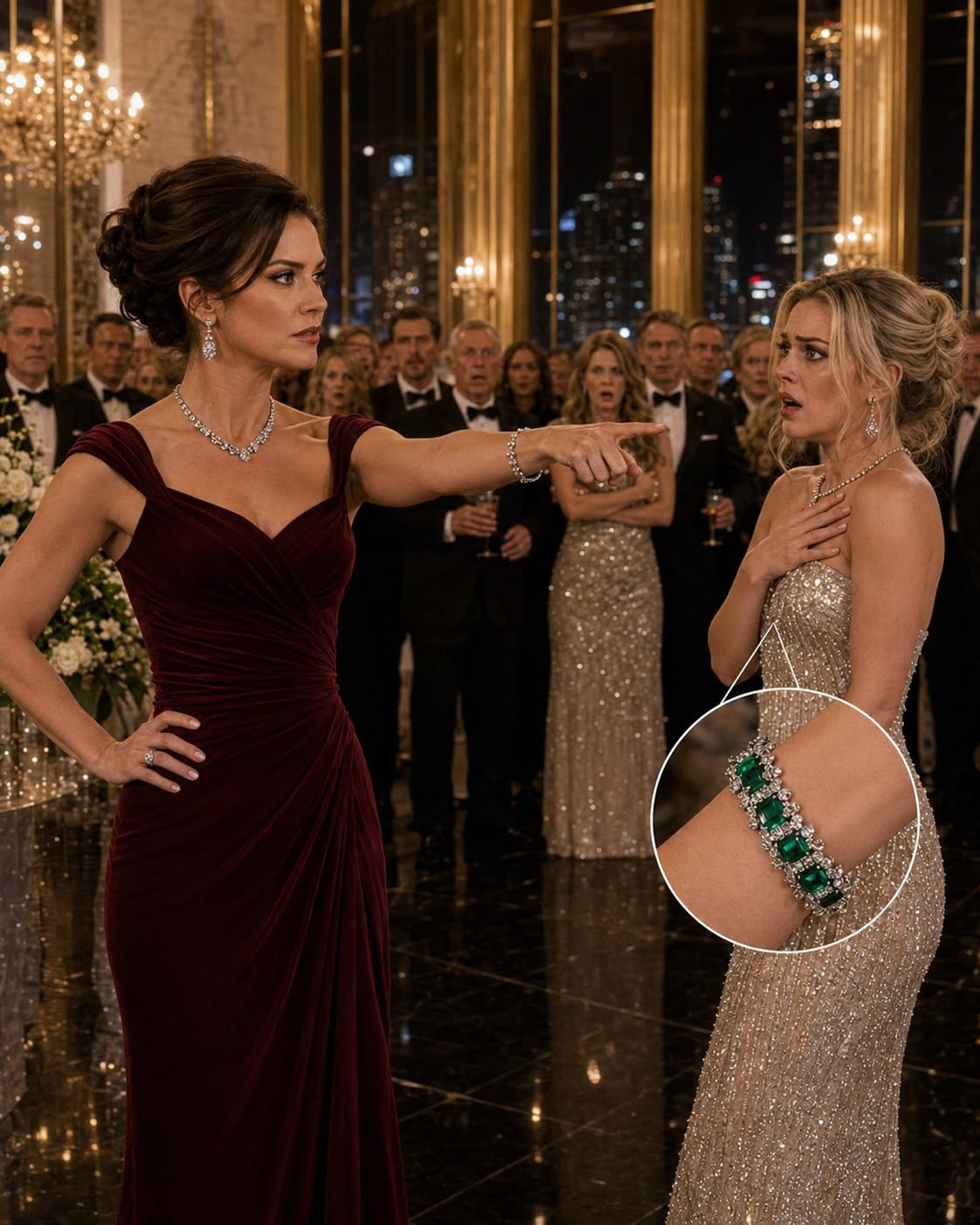
Sienna Hart smiled like she had never paid full price for anything in her life. She wore a white linen dress in February, gold sandals, and my mother’s emerald bracelet.
The bracelet was what almost broke me.
Not the affair. I had known about that for seven months.
Not the way Julian’s hand rested at Sienna’s waist, possessive and lazy, as if he were guiding her into a restaurant rather than into the legal dismantling of our marriage.
Not even the yacht.
It was the bracelet.
My mother had worn those emeralds the night before she died. Julian had told me they were locked in the vault at our Boston brownstone. But there they were, glittering against Sienna’s wrist while she leaned over the counter and whispered to the clerk, “Can we rename her today? I was thinking Sienna Blue.”
Behind the tinted glass wall, Newport Harbor flashed silver beneath a cold morning sun. Our yacht waited at the farthest slip, three decks of white steel and dark teak, the name Aurora Belle painted across the stern in navy script.
I had named her after my daughter.
Aurora was seven years old, missing her two front teeth, obsessed with sea turtles, and convinced every boat had a soul.
Julian cleared his throat.
“Evelyn,” he said, in the voice he used when photographers were near, “don’t make this difficult.”
There were six people in the registry office: the clerk, two junior associates from Julian’s firm, a registry director, Sienna, Julian, and me.
That was the audience he had chosen for my humiliation.
Small. Private. Rich.
The kind of room where cruelty could happen quietly and still echo for the rest of your life.
He slid a folder toward me. “Your signature is only a formality.”
Sienna’s smile grew.
I looked down at the paperwork. Vessel transfer acknowledgment. Spousal consent. Change of beneficial use. Temporary authorization for title modification.
They had printed little yellow arrows beside the signature lines, as if I were a child.
“Only a formality?” I asked.
Julian’s jaw tightened. He was beautiful when he was angry. That had fooled me for years. He had the kind of face magazines called patrician: sharp cheekbones, gray eyes, silver at the temples before forty-five. A face made for boardrooms, opera boxes, and apologies that cost nothing.
“Yes,” he said. “The boat is a marital asset.”
Sienna laughed softly, as if the word marital amused her.
I touched the edge of the folder but did not pick up the pen.
The clerk typed something into her terminal. The director stood a little straighter. One of the associates shifted his weight.
Julian noticed none of it. Men like him rarely notice the floor moving until the chandelier falls.
He leaned closer. His cologne was the same one he had worn on our wedding day in Charleston: cedar, bergamot, arrogance.
“Sign, Evie,” he murmured. “Do not embarrass yourself.”
That was when I smiled.
Not because I was calm.
Because my rage had gone cold enough to shine.
“Let’s wait,” I said.
“For what?” Sienna asked.
“For the registry,” I said.
The clerk’s printer woke with a low mechanical hum. The director took the page, read it, and his face changed.
Julian finally turned.
On the glass display mounted behind the front desk, the registry file appeared in clean black letters.
VESSEL: AURORA BELLE
OFFICIAL NUMBER: 1198-74-NP
LEGAL OWNER: THE AURORA WHITMORE IRREVOCABLE TRUST
TRUSTEE OF RECORD: EVELYN ROSE WHITMORE
BENEFICIARY: AURORA JUNE WHITMORE
TRANSFER STATUS: RESTRICTED
SPOUSAL CLAIM: NONE
Sienna stopped smiling.
Julian blinked once.
I looked at him, then at the emerald bracelet on her wrist.
“My signature,” I said, “was never a formality.”
Chapter 1: The Registry Where He Tried to Crown Her
The first lesson my father taught me about wealth was that the loudest money is usually borrowed.
He taught me this on a rainy Sunday in Maine when I was eleven, sitting barefoot in the galley of his old fishing boat while he repaired a brass compass with hands that smelled like salt and engine oil.
“Remember this, Evie,” he said. “Real ownership doesn’t need to shout. It sits quietly in a drawer, notarized.”
At the time, I thought he was talking about boats.
Years later, standing in the Newport registry while my husband tried to hand my daughter’s yacht to his mistress, I understood he had been talking about survival.
Julian Whitmore came from the kind of Boston family that pronounced “summer” as a verb and treated old houses like bloodlines. His grandfather had sat on bank boards. His mother chaired museum committees. His father had lost most of the family money with the quiet dignity of men who never go to prison for mistakes that ruin other people.
When I met Julian, he wore a tuxedo like a second skin and carried debt like a fragrance nobody else could smell.
I was twenty-six, newly in charge of Calder Marine after my father’s sudden heart attack, and too young to understand the difference between being desired and being targeted.
Julian understood that difference perfectly.
He courted me in expensive rooms with soft lighting. He sent handwritten notes. He remembered my coffee order. He held my hand at my father’s memorial and did not flinch when I cried into his shirt.
For two years, he was flawless.
Then we married, and he became inevitable.
The first betrayal was not Sienna Hart.
It was a sentence.
“You’re emotional, Evie. Let me handle the complicated things.”
He said it after Aurora was born, when I was exhausted and stitched and half-mad with love for the six-pound girl sleeping against my chest. He said it again when I wanted to review investment accounts. Again when I questioned a bridge loan. Again when I saw Calder Marine money moving through a consulting company I did not recognize.
By our tenth anniversary, Julian had turned my caution into a personality flaw and his control into protection.
He did not shout. That would have been vulgar.
He corrected.
He sighed.
He touched the small of my back in public and pinched the soft skin above my hip in private when I spoke out of turn.
He bought apologies in diamonds.
He taught me to smile while bleeding.
Sienna Hart entered our life as a lifestyle consultant for the redesign of our Palm Beach house. She was twenty-nine, ambitious, and bright in the way polished knives are bright. She had grown up in Scottsdale, reinvented herself in Los Angeles, and arrived on the East Coast with a portfolio of cream interiors, celebrity clients, and a laugh that made men believe they were young again.
I disliked her immediately, which made Julian call me insecure.
“She’s talented,” he said.
“She called our daughter ‘the kid,’” I said.
“She was joking.”
“She asked whether the yacht has a master suite or an owner’s suite because ‘master is problematic now.’”
“You’re being unkind.”
Three weeks later, he bought her a Cartier watch.
Four months later, she began wearing my perfume.
Seven months later, I found her earring under the passenger seat of Julian’s Aston Martin.
By then, I had already stopped asking questions out loud.
That was my second lesson in wealth: when a man builds a cage out of concern, do not rattle the bars. Study the lock.
I hired a forensic accountant named Margaret Cho, a woman with blunt silver hair, quiet shoes, and the terrifying patience of a surgeon. I told Julian she was helping with charitable tax compliance for the Whitmore Ocean Foundation.
Margaret found three shell companies in Delaware, two in Nevada, and one charming little fraud wrapped in a Wyoming LLC called Hartline Creative Holdings.
Hartline.
Sienna Hart.
Julian had paid her $1.8 million in “design consulting” from accounts tied to Calder Marine procurement. He had moved another $4.6 million through equipment leases that did not exist. He had pledged part of his expected divorce settlement as collateral for a loan from a private lender in Palm Beach.
Expected.
That word sat in my chest like a bullet.
Julian was not simply having an affair. He was planning an exit.
A glamorous one.
The Aurora Belle was supposed to be the centerpiece.
He wanted the yacht because it looked like victory. Because rich men measure freedom in engines, hull length, and women young enough to believe cruelty is confidence. Because Sienna had posted a photo from the aft deck at sunset with the caption, “Some women inherit the sea. Others are born to take it.”
I did not comment.
I sent the screenshot to Margaret.
Then I called Sebastian Cross.
Sebastian had been my father’s maritime attorney for twenty years. He was six-foot-three, disciplined, and elegant in a way that did not ask to be admired. Former Navy. Harvard Law. A widower. The kind of man who could silence a room without raising his voice.
He had known me when I wore braces and stole peppermints from the reception bowl outside his office.
When I arrived at his brownstone on Beacon Hill with a folder full of lies, he opened the door himself and said, “How long has he been stealing from you?”
Not “Is he?”
Not “Are you sure?”
How long.
That was the first time I cried.
Not because I was weak.
Because somebody had finally believed me without making me perform my pain.
Sebastian did not touch me. He did not rush me. He put a glass of water on the table and waited until I could breathe.
Then he read every page.
At midnight, he removed his glasses and said, “Julian thinks the yacht belongs to the marriage.”
“It doesn’t?”
“No.” His mouth tightened. “Your father placed Aurora Belle into an irrevocable trust eighteen months before your wedding.”
I stared at him.
“I knew there was a trust,” I said. “For Aurora. For education, medical needs, future protection. But the yacht?”
“Your father amended the trust after your engagement.” Sebastian slid a document across the table. “He named you trustee. Your daughter became beneficiary at birth.”
“My daughter wasn’t born yet.”
“The trust anticipated future issue.” He tapped the page. “Your father was very careful.”
The room blurred.
My father had disliked Julian.
Not openly. My father was too polite for that. But whenever Julian spoke about legacy, my father’s eyes went flat. The week before my wedding, he had taken my hand and said, “Love him if you must, Evie. But do not ever confuse a husband with a harbor.”
I thought he meant marriage was not an anchor.
Now I understood.
A harbor is where you go to survive storms.
Julian was the storm.
For the next eight weeks, I became the kind of wife men underestimate into immortality.
I hosted dinners.
I kissed Julian’s cheek for cameras.
I let Sienna sit across from me at Le Jardin in Palm Beach while she praised the caviar and asked whether Aurora would be “confused” when things changed.
“What things?” I asked.
She looked at Julian.
Julian looked at his wine.
I smiled and ordered dessert.
Meanwhile, Margaret traced transfers. Sebastian filed quiet notices with the registry. My private investigator photographed Sienna entering Julian’s condo in Back Bay wearing my emerald bracelet and leaving with a Birkin I had purchased in Paris.
The bracelet mattered for reasons Sienna could not imagine.
It was listed in my mother’s estate inventory. Separate property. Not marital. Not Julian’s to lend, gift, display, or use as bait.
Every stolen thing tells a story.
You only have to make the right people read it.
The registry ambush happened on a Tuesday because Julian liked Tuesdays. He believed bad news landed more softly before lunch. He told me the night before over roasted branzino at our Beacon Hill dining table.
“We need to update some paperwork for Aurora Belle,” he said.
Aurora, our daughter, sat beside me drawing sea turtles on her napkin.
“What paperwork?” I asked.
“Administrative.”
I cut Aurora’s fish into small pieces. “Administrative how?”
Julian’s smile was patient. “Please don’t start.”
Aurora looked up. Children hear temperature before words.
I softened my voice. “Of course.”
After dinner, Aurora followed me upstairs and watched me remove my earrings.
“Is Daddy mad?” she asked.
“Daddy is busy,” I said.
“Are you sad?”
I looked at her in the mirror. She had my dark hair and Julian’s gray eyes, though hers had not learned to lie.
“A little,” I admitted.
She wrapped her arms around my waist. “When I’m big, I’ll buy you a boat with a library and no sad people allowed.”
I laughed into her hair.
“You already own more than you know, baby.”
Preview
The next morning, I wore black.
Not funeral black. Not widow black.
War black.
A tailored wool coat, silk blouse, pencil skirt, pearl earrings, and my mother’s empty bracelet clasp tucked inside my handbag like a relic.
At the registry, Julian arrived ten minutes late with Sienna on his arm.
That was deliberate.
He wanted me waiting.
He wanted me seen waiting.
He wanted every person in that room to understand I had been replaced before the ink dried.
Sienna’s dress was white. Her lipstick was soft pink. Her hair fell in expensive waves over one shoulder. She smelled like my perfume.
“Evie,” she said brightly. “You look tired.”
“Motherhood,” I said. “You should try accountability sometime. I hear it matures a woman.”
One of Julian’s associates coughed.
Julian’s eyes flashed. “Enough.”
The clerk asked for identification. Sienna placed her driver’s license on the counter as if she were checking into a honeymoon suite.
“And your relationship to the owner?” the clerk asked.
Sienna glanced at Julian, delighted.
Julian said, “She’s the new owner’s wife.”
The room went still.
It was a strange sensation, hearing your own erasure spoken so cleanly.
The clerk’s eyes flicked to my wedding ring.
Sienna noticed and slipped her left hand forward. There was a ring there. A diamond oval on a platinum band.
Not an engagement ring.
A wedding ring.
For one second, the world narrowed.
Julian had not only betrayed me.
He had rehearsed my disappearance so completely that he had costumed another woman for the role.
Later, I would learn the ceremony had been symbolic, performed on a beach in St. Barts by a friend with no valid license. Sienna believed it was real because Julian needed her to believe she had won.
That morning, I only saw the ring and felt something inside me go silent.
He slid the folder across the counter.
“Evelyn’s signature is only a formality,” he told the clerk. “We’re all aligned.”
Aligned.
I looked at the yellow arrows.
I thought of my father in the rain, repairing a compass.
I thought of Aurora drawing sea turtles.
I thought of my mother’s emeralds on Sienna’s wrist.
Then I folded my hands.
“Please pull the title record,” I said.
Julian laughed softly. “Evie.”
The registry director appeared from his office. Sebastian had warned me he might. Once a restricted trust vessel is accessed for transfer, the system alerts counsel of record.
The clerk typed.
Sienna leaned toward Julian and whispered, “After this, can we go see her?”
Her.
The yacht.
Not Aurora Belle. Not even the boat.
Her, the way a woman speaks of a rival she intends to rename.
The display blinked.
The record appeared.
Legal owner: The Aurora Whitmore Irrevocable Trust.
Trustee: Evelyn Rose Whitmore.
Beneficiary: Aurora June Whitmore.
Transfer status: restricted.
Spousal claim: none.
Sienna’s hand withdrew from the counter.
Julian stared at the screen as if his name might appear if he hated mine hard enough.
The clerk cleared her throat. “Mr. Whitmore, we cannot process this request without trustee authorization and court approval.”
“I am her husband,” Julian snapped.
The director’s voice was calm. “That does not create ownership.”
Sienna looked at him. “Julian?”
He ignored her. “This is a mistake.”
“It isn’t,” I said.
He turned slowly.
For the first time in our marriage, he looked at me as though I were a door he had never noticed and suddenly found locked from the inside.
“What did you do?” he asked.
I picked up the folder and slid it back to him.
“Nothing,” I said. “That’s the part you never understood.”
Chapter 2: A Woman Who Signs Nothing Learns Everything
Julian did not explode at the registry.
That would have been too honest.
He laughed, apologized to the clerk, blamed a “documentation conflict,” and guided Sienna toward the door with two fingers at her elbow. His associates followed, pale and silent.
Outside, the harbor wind cut between the buildings. Sienna’s white dress fluttered at her knees. For the first time, she looked cold.
Julian waited until we were beside the valet stand before he dropped the mask.
“You humiliated me,” he said.
I put on my sunglasses. “You brought a mistress in bridal jewelry to steal from a child.”
His face hardened. “Do not weaponize Aurora.”
“You tried to transfer her trust asset.”
“I built this life.”
“No,” I said. “You decorated it.”
That landed.
Julian stepped closer, lowering his voice to the tone that had once made me apologize for things he had done.
“You have no idea what you’re playing with.”
I looked at Sienna. “Neither does she.”
Sienna lifted her chin. “At least he wants me.”
There it was.
The anthem of the other woman who mistakes selection for victory.
I almost felt sorry for her.
Almost.
“Sienna,” I said, “he wants anything that reflects him back larger than he is. Today it was you. Tomorrow it will be someone with better lighting.”
Her mouth parted.
Julian grabbed her hand and pulled her toward the waiting Range Rover.
He did not open the door for her.
I noticed that.
So did she.
My car arrived next, a black Mercedes with a driver Julian thought he paid for. In truth, I had switched the account three months earlier. The driver, Marcus, had worked for my father before me. He opened the door and did not ask if I was all right.
Good staff understand dignity.
As we pulled away from the registry, my phone buzzed.
Sebastian: Clean?
Me: Clean enough.
Sebastian: He’ll move fast now.
Me: So will we.
I watched the harbor disappear behind us.
The world thinks revenge is fire.
It is not.
Fire is emotional. Fire consumes evidence. Fire leaves you standing in ashes with everyone pretending they cannot smell the gasoline.
Real revenge is refrigeration.
You preserve everything.
The next morning, Julian froze my primary credit card.
By noon, three society women had canceled lunch.
By four, Page Six had received an anonymous tip that Evelyn Whitmore was “unstable amid divorce tensions.”
By six, Julian’s mother called and said, “Whatever he’s done, dear, men like Julian require patience.”
I asked if she wanted the emerald bracelet back after the police photographed it.
She hung up.
That night, Julian came home.
Not because he lived there anymore. He had moved most of his clothes to the Back Bay condo in November, though he still kept enough suits in our closet to maintain legal theater.
He found me in the library, reading trust documents beneath a green banker’s lamp.
The room smelled of leather, wood smoke, and the lilies he sent whenever he wanted to erase a bruise without admitting he made one.
He poured himself a drink from my father’s crystal decanter.
“Where is Aurora?” he asked.
“Asleep.”
“I want to see her.”
“No.”
His laugh was quiet. “You don’t get to say no.”
I turned a page. “The temporary custody filing says I do.”
The glass paused halfway to his mouth.
“What filing?”
“Emergency motion. Sealed exhibits.”
His eyes narrowed. “On what grounds?”
“Financial misconduct involving a minor beneficiary. Attempted unauthorized transfer of trust property. Misappropriation of funds. Emotional instability in the home.”
He smiled. “You can’t prove instability.”
“No,” I said. “But your girlfriend can.”
That wiped away his smile.
I took a document from the folder and placed it on the desk.
It was a screenshot from Sienna’s private Instagram story, recorded by an account Margaret had found through a design assistant. In it, Julian stood barefoot on the yacht, drunk before noon, saying, “Once Evie signs, I’m free. The kid gets summers. Sienna gets the sea.”
The kid.
Julian stared at the photo.
“You hacked her account,” he said.
“She accepted a follow request from a fake wellness coach named Tiffany.”
He threw the paper down. “That’s inadmissible.”
“Maybe. Maybe not. But it helped us subpoena the original.”
His face changed again.
Small shifts. Tiny fractures.
Marriage makes you fluent in another person’s fear.
“You’ve been planning this,” he said.
I closed the folder.
“No, Julian. I’ve been surviving this. Planning came later.”
He leaned over the desk. “You think Sebastian Cross will save you?”
There it was. The jealousy he had no right to feel.
“Sebastian is counsel.”
“He’s been waiting around your family for decades like a dog.”
I stood.
The room seemed to straighten with me.
“Speak about him like that again in my father’s house and you’ll leave through the service entrance.”
Julian laughed, but his eyes went to the door.
Men like Julian are not afraid of women until the house stops obeying them.
He changed tactics.
“Evie,” he said softly, “you’re angry. I understand that. But we can make this graceful. You keep the Boston house. I take Palm Beach. We sell the yacht, divide the proceeds, establish a schedule for Aurora. Sienna doesn’t have to be involved.”
“Sienna is wearing my mother’s bracelet.”
His mouth tightened. “It was a gift.”
“From whom?”
Silence.
“Because you can’t gift what you don’t own,” I said. “That lesson seems to be haunting you this week.”
He finished the drink in one swallow.
“You were always cold,” he said.
“No. I was trained by you.”
For a moment, something like hatred moved across his face.
Then he smiled.
That smile scared me more than the hatred.
“You’ll lose friends,” he said. “You’ll lose invitations. You’ll lose the foundation. You’ll become the bitter wife in black who couldn’t keep her husband.”
I walked to the door and opened it.
Marcus stood outside.
Julian’s smile faded.
“You remember Marcus,” I said. “He’ll show you out.”
Julian looked from him to me.
“This isn’t over,” he said.
“No,” I agreed. “It’s finally documented.”
After he left, I went upstairs to Aurora’s room.
She was asleep under a quilt printed with whales. Her nightlight turned the ceiling into a soft blue ocean. One small hand rested on a stuffed turtle named Captain Pancake.
I sat beside her and let myself shake.
Only there.
Only in the dark.
Only where no camera, lawyer, mistress, or husband could convert my grief into weakness.
The next two weeks were a masterclass in controlled demolition.
Julian filed for divorce first, because men like him prefer being the plaintiff. His petition described me as erratic, vindictive, financially opaque, and “increasingly influenced by outside male advisors.”
Sebastian laughed when he read that line.
We filed our response with 412 pages of exhibits.
Bank records.
Trust documents.
Appraisals.
Photographs.
Emails.
Invoices from Hartline Creative Holdings.
A valuation of the emerald bracelet.
An affidavit from the jeweler who had cleaned it after Sienna scratched the clasp.
A sworn statement from the registry director.
A notarized letter my father had written fifteen years earlier, addressed to future trustees of the Aurora Whitmore Irrevocable Trust.
I read that letter alone in Sebastian’s office.
My dearest Evie,
If you are reading this, it means someone has challenged the boundaries I built around you. Forgive an old sailor for believing storms can be forecast by the pressure in a room. I have met charming men who look at a woman and see a shoreline to develop. I have also raised a daughter who mistakes loyalty for duty. This trust is not a lack of faith in your judgment. It is my faith in your future.
Protect the child. Protect yourself. Let no one rename what was meant to carry you home.
By the last sentence, I could not see the page.
Sebastian turned toward the window.
He always knew when to give me privacy without abandoning me.
“Did my father know?” I asked.
“That Julian was dangerous?” Sebastian said. “Yes.”
“Why didn’t he stop the wedding?”
“Because you were in love. And because your father knew that forbidding Julian would only make him a tragedy instead of a warning.”
I wiped my face with the heel of my hand. “I hate that he was right.”
Sebastian looked at me then.
“Your father wasn’t right about everything.”
“What was he wrong about?”
“He thought you would need the trust to save you.” His voice softened. “I think it only reminded you who you already were.”
That was the closest Sebastian Cross came to tenderness.
It was enough to ruin my sleep.
I did not have time for feelings.
Julian escalated.
He leaked that I had restricted his access to Aurora. He sent flowers to my charity office and paparazzi to photograph them. He arranged for Sienna to be seen at the Palm Beach house holding fabric samples for “the nursery,” though she was not pregnant.
She posted a reel on the yacht at sunset with the caption: New chapters require new names.
It got 1.2 million views.
The comments were vicious.
Upgrade energy.
Old wife lost the plot.
He chose peace.
She looks like luxury.
I watched the reel once.
Then I called Margaret.
“Find the videographer.”
She did.
His name was Cody Miller, twenty-four, from Fort Lauderdale, hired through Sienna’s assistant and paid from Hartline Creative. He had filmed two hours aboard Aurora Belle without trustee authorization, including footage of Sienna opening drawers in the owner’s suite and joking about “Evie’s sad beige towels.”
People think arrogance makes enemies.
It also makes content.
Cody signed an affidavit after Sebastian explained maritime trespass, trust property violations, and what happens when a young freelancer becomes the least wealthy defendant in a rich man’s lawsuit.
He sent us the raw files.
That was where we found the third twist.
Not the affair.
Not the theft.
Not the fake wedding ring.
The plan.
Julian stood on the upper deck with a banker named Graham Voss, discussing a $22 million loan secured against “anticipated vessel liquidation.” Graham asked whether the wife would contest.
Julian laughed and said, “By the time she understands the paper, the boat will already be renamed.”
Graham asked, “And the trust?”
Julian said, “Trusts are only as strong as the women too scared to challenge them.”
I replayed that sentence three times.
Then I stopped shaking forever.
Chapter 3: The Gala Where the Knives Wore Diamonds
The Newport Winter Conservancy Gala was Julian’s favorite battlefield.
Every February, three hundred of New England’s richest donors gathered beneath chandeliers to pretend their money loved the ocean more than their yachts did. There were ice sculptures, string quartets, silent auctions, and women in gowns sharp enough to cut reputations.
This year, Julian had insisted the gala be moved from the Vanderbilt ballroom to a heated glass pavilion built on the marina beside Aurora Belle.
He told the committee it would be “symbolic.”
Of course it would.
He planned to unveil Sienna as his future wife, Aurora Belle as Sienna Blue, and me as a cautionary tale in black.
He underestimated my respect for symbolism.
Three days before the gala, Sebastian advised me not to attend.
“Julian wants a reaction,” he said.
We were standing in his office after sunset. Snow tapped softly against the windows. The city outside looked expensive and indifferent.
“He wants an audience,” I said.
“Yes.”
“Then we should give him one.”
Sebastian leaned back against his desk. “Evelyn.”
My full name in his mouth was a warning.
I liked it too much.
“We have enough for court,” he said. “We do not need theater.”
“No,” I said. “We need correction.”
“Public humiliation is not evidence.”
“Neither is silence.”
His eyes held mine.
Sebastian was handsome in a severe way, all dark hair, controlled posture, and grief pressed into discipline. He had loved his wife, Elise, through cancer and buried her before forty. He wore his wedding ring on a chain beneath his shirt. I had seen it once when he loosened his tie after a twelve-hour mediation.
That should have made him safe.
It did not.
There are men who desire you like a room they want to own.
There are men who desire you like a locked door they want to break.
And then there are men who stand outside in the rain and say, “I will not enter unless you open it.”
Sebastian was the third kind.
Which made him dangerous in a completely different way.
“You think I’m being reckless,” I said.
“I think you’ve spent years being punished for having emotions. I don’t want revenge to become another cage.”
That made me look away.
The snow thickened.
“I want Aurora to inherit a true story,” I said. “Not whispers. Not headlines. Not whatever Julian buys after court. A true story.”
Sebastian was quiet for a long moment.
Then he opened a drawer and removed a black folder.
“What is that?”
“Your father’s final trust amendment. I was going to hold it unless Julian forced disclosure.”
My pulse changed. “What does it say?”
Sebastian hesitated.
For the first time since this began, he looked almost sorry.
“The yacht is only one asset.”
I took the folder.
Inside were documents tied to an entity called Black Heron Holdings LLC, formed in Delaware, owned by the Aurora Trust, managed by the trustee of record.
Me.
Black Heron owned minority stakes in three marinas, a marine insurance portfolio, and a quiet but significant note on Whitmore Development Group.
Julian’s company.
I looked up slowly.
“My daughter’s trust owns Julian’s debt?”
“Not all of it,” Sebastian said. “Enough.”
“How enough?”
“If he defaults, Black Heron can call the note, seize pledged collateral, and force a restructuring.”
“What collateral?”
“The Palm Beach house. Two commercial buildings in Seaport. His shares in Whitmore Development. And the Back Bay condo.”
The Back Bay condo.
Sienna’s nest.
I sat down.
My father had not built a lifeboat.
He had built a fleet.
“Why didn’t I know?”
“You were named trustee upon Aurora’s birth, but your father’s instructions limited disclosure unless marital assets or trust assets were threatened.”
“And you followed that?”
“Yes.”
I should have been angry.
Maybe someday I would be.
But in that moment, all I felt was my father’s hand reaching through time to steady my shoulder.
Sebastian sat across from me.
“Evelyn, if we use this, Julian will claim manipulation.”
“Let him.”
“He will say your father trapped him.”
“My father did trap him,” I said. “With consequences.”
A reluctant smile touched Sebastian’s mouth.
It vanished quickly.
“There’s more,” he said.
Of course there was.
He slid one final page toward me.
A morality clause from my prenuptial agreement.
I remembered signing the prenup. Julian had been offended by it, then charming, then dismissive once his lawyers assured him the asset schedules were “manageable.”
Apparently, they had not read page thirty-seven carefully enough.
If either spouse attempted fraudulent transfer, concealed debt secured against marital expectations, or used marital status to access protected trust property, that spouse forfeited all claims to discretionary distributions, residences owned by separate property entities, and foundation appointments connected to Calder Marine.
At the bottom, Julian’s signature swept across the page in arrogant black ink.
I laughed.
It was not a happy sound.
It was better.
“The loudest money is borrowed,” I whispered.
Sebastian heard me.
“What?”
“Something my father said.”
“He was right.”
“He usually was.”
At the gala, I arrived alone.
The pavilion glowed beside the marina like a jewel box. Outside, Newport was frozen and dark; inside, everything glittered. Champagne passed on silver trays. Violin music floated above the low hum of gossip. Women wore diamonds with the defensive posture of generals. Men in tuxedos discussed philanthropy with the same voices they used for acquisitions.
Aurora Belle waited beyond the glass, lit from bow to stern.
They had covered her name.
A navy silk drape hung across the stern where Aurora Belle should have been visible.
My breath caught.
Not because of the yacht.
Because Aurora had painted a tiny sea turtle on the underside of the stern rail last summer with permission from the captain. She called it the boat’s secret heart.
They had draped over that too.
Sienna stood near the stage in a silver gown that looked poured onto her body. My mother’s emerald bracelet flashed on her wrist again, now paired with matching earrings I recognized from a locked drawer.
Julian stood beside her, accepting congratulations.
For a man allegedly devastated by divorce, he looked radiant.
He saw me ten minutes after I entered.
His smile sharpened.
Then he kissed Sienna’s temple.
I felt the room watch me absorb it.
The old Evelyn might have left.
The old Evelyn might have found a bathroom stall and pressed tissue against her mouth to keep the sob from escaping.
The woman I had become took champagne from a passing tray and walked toward them.
Conversation thinned around us.
“Evie,” Julian said. “I’m surprised you came.”
“I was invited.”
Sienna tilted her head. “That must have been an oversight.”
I looked at her bracelet.
“You enjoy wearing dead women’s jewelry.”
Her face flushed.
Julian’s hand tightened around his glass. “Careful.”
“I am.”
The gala chair, Patricia Ames, hurried over in a panic disguised as pearls.
“Evelyn, darling,” she said, “we’re just about to begin.”
“How wonderful.”
Patricia’s eyes begged me not to be poor in public, which is what rich people call pain when it makes them uncomfortable.
Julian stepped onto the small stage.
The room settled.
“My friends,” he began, “tonight is about preservation. The ocean. Our coastline. Our shared legacy.”
His voice was warm, practiced, expensive.
He thanked donors. He praised the Conservancy. He made a tasteful joke about winter sailing. Then his tone softened.
“Many of you know this has been a year of transition in my personal life.”
A murmur moved through the pavilion.
I felt phones rise.
“But transition,” Julian continued, “can be a gift. It reveals what is true. It teaches us who belongs beside us when the water gets rough.”
Sienna lowered her eyes at precisely the right angle.
I sipped champagne.
“Tonight,” Julian said, “I am honored to share not only a renewed commitment to the sea, but a renewed vision for a vessel dear to my family. Ladies and gentlemen, the newly christened—”
The microphone died.
So did the music.
For half a second, everyone looked confused.
Then the screens behind Julian changed.
Not to Sienna’s branding deck.
To the registry record.
VESSEL: AURORA BELLE
LEGAL OWNER: THE AURORA WHITMORE IRREVOCABLE TRUST
BENEFICIARY: AURORA JUNE WHITMORE
TRANSFER STATUS: RESTRICTED
A sound moved through the room.
Not a gasp.
Something better.
Recognition.
Julian turned toward the screen.
His face emptied.
I stepped onto the stage from the side stairs.
Sebastian had offered to do this part.
I refused.
Some truths require the voice they tried to bury.
“Good evening,” I said.
My voice carried through the restored microphone, clear as cut glass.
“My name is Evelyn Rose Whitmore. I am the trustee of the Aurora Whitmore Irrevocable Trust, the legal owner of the vessel currently docked behind us. No transfer has been authorized. No renaming has been approved. No marital claim exists.”
Sienna stared at me with pure hatred.
I could live with that.
The next screen appeared: Julian at the registry, calling Sienna the new owner’s wife.
Then the raw yacht footage: Julian laughing with Graham Voss.
“By the time she understands the paper, the boat will already be renamed.”
People turned toward him.
Julian stepped forward. “This is a private matter.”
Preview
“No,” I said. “It became a trust matter when you tried to transfer property belonging to a minor child.”
The word child changed the room.
Wealth forgives affairs.
It forgives cruelty.
It forgives almost anything except being caught stealing from a child in front of donors.
Sienna reached for Julian’s hand.
He did not take it.
The next slide showed Hartline Creative Holdings payments.
Then the forged authorization request.
Then my mother’s emerald bracelet, photographed beside the estate inventory and jeweler’s affidavit.
Sienna looked at her wrist as if the bracelet had become a snake.
Two uniformed officers entered quietly through the side doors with a woman from the Rhode Island Attorney General’s office and a court-appointed process server.
I did not look at them.
I looked at Julian.
“You told me I would be remembered as the bitter wife in black,” I said. “I decided black suited the occasion.”
The process server reached him first.
“Julian Whitmore?”
He did not move.
“You have been served.”
The envelope touched his hand.
Cameras captured everything.
Sienna backed away from him.
That was the first honest thing she had done all night.
Chapter 4: The Mistress Learned the Price of Borrowed Diamonds
The internet did what the internet does.
By midnight, the gala video had been posted from twelve angles.
By morning, it had a name.
Yacht Wife Meltdown.
Then Trust Fund Yacht Twist.
Then, finally, the one that stuck:
The Child Owned the Boat.
Sienna’s sunset reel disappeared.
Her apology appeared six hours later, filmed in soft lighting with no bracelet and too much lip gloss.
She said she had been misled.
She said she believed Julian was separated.
She said she had no knowledge of any trust.
She did not mention the fake wedding ring.
She did not mention my mother’s emeralds.
She did not mention laughing about my daughter on the yacht while drinking my wine from glasses etched with my initials.
The comments did.
Julian’s statement came through his attorney.
Mr. Whitmore denies all allegations and looks forward to resolving this private family matter with dignity.
Dignity is what guilty men request after spectacle fails.
The court froze contested assets within forty-eight hours. Julian’s access to Aurora remained supervised. The Attorney General’s office opened an inquiry into attempted fraudulent transfer involving trust property. Calder Marine’s board suspended all contracts connected to Whitmore Development pending review.
Patricia Ames resigned from the Conservancy after emails surfaced showing she had known Julian intended to announce Sienna at the gala and had described me as “an unfortunate obstacle.”
She sent me a handwritten apology on ivory stationery.
I recycled it.
Sienna tried to return the emerald bracelet through a messenger.
I refused delivery.
Then I filed a police report.
There is a special pleasure in watching people discover that elegance is not the same as mercy.
But revenge, even perfect revenge, does not tuck your child into bed.
It does not explain why Daddy is suddenly on television.
It does not soothe a seven-year-old who hears her last name on a stranger’s phone in the grocery store.
The morning after the gala, Aurora refused pancakes.
That was how I knew her world had cracked.
She sat at the kitchen island in her dinosaur pajamas, turning a blueberry around her plate with one finger.
“Did Daddy try to take my boat?” she asked.
I sat beside her.
The nanny quietly left the room.
“It’s more complicated than that,” I said.
“Did he?”
Children deserve gentleness.
They also deserve truth with soft edges.
“Yes,” I said. “He tried to make decisions about something that was protected for you. He was wrong.”
Her chin trembled. “Does he not love me?”
The question hit harder than anything Julian had done.
I pulled her into my lap though she was getting too big for it.
“Adults can love badly,” I said. “Sometimes they love themselves so loudly they can’t hear anyone else. That is not your fault.”
She cried into my sweater.
I held her and looked out at Boston Harbor, gray under a winter sky.
No victory is clean when a child has to survive it.
That afternoon, Sebastian came by with documents and a stuffed sea turtle wearing a tiny captain’s hat.
Aurora accepted it with solemn suspicion.
“What’s his name?” Sebastian asked.
She studied him. “Objection.”
Sebastian blinked.
I laughed for the first time in weeks.
Aurora hugged the turtle. “Because Mommy says you say that a lot.”
His mouth curved. “Objection is a strong name.”
“He can be Captain Pancake’s lawyer.”
“A noble calling.”
She ran upstairs to introduce them.
The house quieted.
Sebastian placed a folder on the kitchen island.
“What is it?” I asked.
“Julian’s emergency motion to restrict your public statements.”
“Because truth is so inconvenient?”
“Because your silence was his favorite asset.”
I leaned against the counter.
The exhaustion hit me all at once. Not physical. Something deeper. The fatigue of being believed too late.
Sebastian noticed.
“Sit down,” he said.
“I’m fine.”
“You are not required to be fine in rooms where you are safe.”
That undid me more than it should have.
I sat.
He poured tea because he knew where everything was in my kitchen, which should have frightened me. Instead, it steadied me.
“Do you ever hate them?” I asked.
“Who?”
“The people who force you to become someone harder.”
Sebastian stood on the other side of the island, sleeves rolled to his forearms, tie loosened. For a moment, he looked less like an attorney and more like a man who had survived his own private weather.
“Yes,” he said. “But I try not to give them authorship.”
“Authorship?”
“Of me.”
I looked down at my hands.
My wedding ring was gone. I had removed it before the gala and placed it in the same drawer where I kept receipts for repairs. That felt appropriate.
“I don’t know who I am without fighting him,” I admitted.
Sebastian’s voice softened. “Then we will make sure the fight ends.”
We.
It was a dangerous word.
I pretended not to hear it.
The next legal blow came from Sienna.
Her attorney sent a demand letter claiming I had defamed her, damaged her brand, and caused emotional distress by displaying “private romantic materials” at the gala.
Sebastian read the letter twice and said, “This is either desperate or badly advised.”
“Can we respond with a laughing emoji?”
“No.”
“A tasteful one?”
“No.”
Instead, we responded with a draft civil complaint for conversion of separate property, trespass aboard trust-owned vessel, conspiracy to commit fraudulent transfer, and receipt of misappropriated funds.
Attached were photographs of Sienna wearing three pieces from my family collection, invoices paid by Hartline, and a video clip of her telling Cody the videographer, “Make sure you get the old name before we erase it.”
Her lawsuit vanished by dinner.
But Sienna did not.
She came to the Boston house four nights later.
Not to the front door.
To the garden gate.
The security camera caught her first: hair tucked under a cashmere hood, face pale, no makeup. Marcus called me before approaching her.
“She says she needs to speak with you,” he said.
Sebastian happened to be there, reviewing deposition prep.
“No,” he said immediately.
I watched Sienna on the monitor.
She looked smaller without diamonds.
That did not make her harmless.
“Let her into the garden,” I said.
Sebastian’s jaw tightened. “Evelyn.”
“Stay by the door.”
The garden was cold and silver with frost. Sienna stood beside the bare rose trellis, arms wrapped around herself.
Up close, she looked less like a villain and more like a woman who had bet her soul on the wrong man and discovered the receipt was itemized.
“Five minutes,” I said.
Her eyes were red. “Julian lied to me.”
“Yes.”
“He said the divorce was done emotionally.”
I almost smiled. “That phrase should be illegal.”
“He said you were cruel. That you used Aurora to control him. That your father’s company should have been his because he was the one who understood growth.”
“There it is.”
Sienna flinched.
“He said the yacht was his wedding gift to me,” she whispered.
“Your fake wedding?”
Her face crumpled. “I didn’t know.”
I believed her.
Not because she was innocent.
Because humiliation has a smell, and hers was fresh.
“Why are you here?” I asked.
She reached into her coat and pulled out a flash drive.
“I kept things,” she said. “Messages. Voice notes. Wire instructions. He made me sign documents after St. Barts. I thought they were for the boat.”
Sebastian stepped closer from the doorway.
Sienna saw him and laughed bitterly.
“Of course you have a beautiful lawyer in the shadows.”
“He’s not in the shadows,” I said. “He’s on the deed of his own life. Try it sometime.”
She looked at me, and for the first time there was no performance between us.
“He’s going to say it was all me,” she said.
“Yes.”
“I want immunity.”
“You want a deal.”
“I want not to go to prison for loving a man who saw me as furniture.”
The garden was quiet.
There are moments in revenge when mercy appears wearing the enemy’s face. You do not have to embrace it. But you should recognize it.
I took the flash drive.
“No promises.”
Sienna nodded.
At the gate, she stopped.
“I hated you,” she said. “Because he made your life sound like something you didn’t deserve.”
I looked at her.
“And now?”
Her eyes filled.
“Now I think he wanted us both looking at each other so neither of us looked at him.”
She left through the frost.
Sebastian waited until the gate locked.
Then he said, “That drive could end him.”
“No,” I said. “He ended himself. The drive just keeps the minutes.”
Chapter 5: The Final Transfer
Sienna’s flash drive changed everything.
There were voice notes of Julian instructing her to sign as “authorized spouse” once he added her to the vessel paperwork. There were texts between Julian and Graham Voss discussing how quickly a Bahamian entity could be created to receive the yacht after transfer. There was a scanned draft of a press release announcing Julian and Sienna as co-founders of the Blue Hart Ocean Initiative, funded by the “sale of underutilized family marine assets.”
Underutilized.
That was what he called my daughter’s inheritance.
There was also a recording from the St. Barts villa.
Julian, drunk and laughing, told Sienna, “Evie’s father thought he was clever with trusts. But women like Evie always sign when they’re embarrassed enough.”
I listened to that recording once.
Then I sent it to Margaret, Sebastian, and the Attorney General’s office.
After that, I took Aurora to the aquarium and watched jellyfish move through blue light like living ghosts.
My daughter pressed her hands against the glass.
“They don’t have bones,” she said.
“No.”
“How do they stay themselves?”
I looked at the translucent bodies drifting, fragile and ancient.
“They know how to move with what would crush other things.”
Aurora considered this.
“Mommy?”
“Yes?”
“Can the boat still be Aurora Belle?”
I knelt beside her.
“It was never anything else.”
The divorce settled faster than anyone expected because Julian’s empire was not an empire. It was a chandelier hanging from bad wiring.
Once Black Heron Holdings called the note, his lenders panicked. Once lenders panic, loyalty becomes math. Graham Voss cooperated. Hartline’s bank records opened. Whitmore Development’s board removed Julian pending investigation. His mother stopped calling me and started calling attorneys.
Julian agreed to supervised visitation, forfeited claims under the prenup, resigned from the foundation, vacated the Palm Beach house, and surrendered any alleged interest in marital residences tied to separate property entities.
He fought only one thing.
The narrative.
Through attorneys, friends, and anonymous sources, he tried to paint himself as a man destroyed by an unforgiving wife. He said he had made mistakes. He said love was messy. He said Evelyn had always been controlled by her father’s ghost and Sebastian Cross’s ambition.
That last part reached me on a Sunday morning.
I was on the terrace with coffee when my phone lit up with a link from a friend.
WHITMORE DIVORCE TURNS UGLY: IS THE WIDOWED LAWYER BEHIND EVELYN’S REVENGE?
I stared at the headline until the words blurred.
Not because it hurt me.
Because I knew exactly what it was meant to do.
Julian could not defeat my evidence, so he attacked the man who helped me carry it.
Sebastian arrived an hour later for a scheduled meeting with the trust accountant. He looked calm, but there was a tightness around his eyes.
“I’m sorry,” I said before he removed his coat.
He paused. “For what?”
“The article.”
“Don’t.”
“He’s trying to make us look—”
“Human?” Sebastian asked.
I stopped.
Preview
He set his briefcase down.
“Evelyn, I have survived worse than gossip.”
“I know.”
“No,” he said gently. “You know I lost my wife. You do not know what people said after.”
I said nothing.
He looked toward the harbor.
“Elise was ill for a long time. Near the end, she asked me to promise I would not turn grief into a shrine and live inside it. Six months after she died, I had dinner with an old friend. Someone photographed us. The headline called her my replacement.”
His voice did not break.
That made it worse.
“I did not date again for five years,” he continued. “Not because I was noble. Because I was ashamed of being alive in public.”
I stepped closer.
“Sebastian.”
He looked at me then, and everything unsaid between us stood in the room like weather.
“I will not be used to diminish you,” he said. “But I will also not pretend I feel nothing.”
My heart moved painfully.
Outside, a gull cut across the gray sky.
“What do you feel?” I asked.
His laugh was soft and humorless. “This is wildly inappropriate timing.”
“My marriage ended long before the court noticed.”
“I am your attorney.”
“You are one of them.”
“One of what?”
“The people who never asked me to become smaller so you could stand closer.”
For a moment, he looked younger. Almost defenseless.
Then he stepped back.
“After the case,” he said.
It was not a rejection.
It was a boundary.
For the first time in years, a man’s boundary made me feel respected instead of contained.
The final hearing took place in Providence on a clear March morning.
Julian arrived in a navy suit, no wedding ring, no Sienna. His hair had been cut too short, which made him look less powerful and more recently managed. He did not look at me when I entered.
I wore cream.
Not because I had forgiven him.
Because I no longer needed black to remind anyone I could survive a funeral.
The courtroom was smaller than the gala, but far more dangerous. Chandeliers impress donors. Judges prefer paper.
Our settlement entered cleanly. The trust protections remained intact. The court referred certain findings to the appropriate authorities. Julian’s attempt to claim interest in Aurora Belle was denied with language so precise it felt like music.
Then his attorney stood.
“Your Honor,” he said, “my client requests one clarification for the record regarding the vessel. Given its association with the marriage, he asks that the court acknowledge his sentimental connection and allow occasional supervised use with the minor child.”
I almost admired the audacity.
Almost.
The judge looked over her glasses.
“Ms. Whitmore?”
Sebastian started to rise.
I touched his sleeve.
He paused.
I stood for myself.
“Your Honor, my daughter is welcome to invite her father into her life according to the custody order. But the vessel is not a marital memory for Mr. Whitmore to borrow when reputation requires scenery. It is protected property, placed beyond his reach by a settlor who anticipated exactly this kind of pressure.”
Julian looked at me then.
For one second, I saw not the handsome husband, not the liar, not the man who tried to crown his mistress at my expense.
I saw a boy raised to believe wanting was ownership.
The judge nodded.
“Request denied.”
The gavel sounded once.
That was it.
No thunder.
No music.
No slow-motion collapse.
Just the sound of a door closing where a wall used to be.
Outside the courthouse, reporters waited behind barriers.
Julian’s attorney guided him toward a side exit, but Julian stopped.
For a wild moment, I thought he would apologize.
Instead, he said, “Was any of it real to you?”
The cruelty of that question was almost nostalgic.
I looked at him.
“Our daughter was real,” I said. “My loyalty was real. Your access was conditional. You confused the three.”
His face tightened.
“You’ll regret this when you’re alone.”
I smiled.
There was no rage in it now.
That surprised him most of all.
“Julian,” I said, “I was never more alone than when I was your wife.”
He flinched.
Then he left.
The reporters shouted questions.
I ignored them all except one.
“Mrs. Whitmore, who owns the yacht now?”
I stopped.
Cameras lifted.
Sebastian stood a few feet away, silent.
I thought of the registry. Sienna’s white dress. My mother’s emeralds. Julian’s hand on another woman’s waist. My father’s letter. Aurora’s sea turtle painted under the stern rail.
Then I answered.
“The yacht belonged to my daughter’s trust.”
Conclusion: The Harbor That Carried Us Home
Three months later, Aurora Belle left Newport under a soft June sky.
Aurora wore a yellow life jacket over a dress with embroidered turtles. Captain Pancake and Objection sat beside her in matching doll-sized sunglasses. She had lost another tooth and gained the solemn authority of a child who had survived adult storms and still believed in magic.
The yacht’s name gleamed across the stern, uncovered and untouched.
Aurora Belle.
Not Sienna Blue.
Not Blue Hart.
Not any name chosen by people who thought love meant possession.
Mine was not a perfect ending. Perfect endings belong to fairy tales and deposition summaries. Julian still had supervised Sundays. Sienna gave testimony in exchange for limited immunity and moved to California, where she became briefly famous for a podcast about narcissists before disappearing into the algorithm she once worshiped. The emerald bracelet returned to my safe, repaired but not erased.
Some scratches remain even after polishing.
I kept them.
Aurora deserved to know that beautiful things can be damaged and still remain valuable.
As for Sebastian, he resigned as my personal counsel after the final trust matters closed.
Then he waited thirty-one days and invited me to dinner at a small restaurant in Marblehead with paper menus and no photographers.
“That was very ethical of you,” I said.
“I’m known for restraint.”
“You’re known for terrifying bankers.”
“Also restraint.”
We took things slowly.
Not because the feeling was small.
Because it was not.
He never tried to move into the spaces Julian left behind. He did not rename my rooms with his preferences. He did not tell me who I was now. He asked. He listened. He knocked.
The first time Aurora saw him aboard Aurora Belle after everything ended, she handed him Objection and said, “You can come, but Mommy is captain.”
Sebastian looked at me.
I looked at the harbor.
For years, I had believed survival meant becoming untouchable.
But that morning, with my daughter laughing at the rail and the city shrinking behind us, I understood something softer and far more frightening.
Survival had been the crossing.
This was the shore.
And for the first time in a very long time, I was not watching the water for storms.
I was letting it carry us home.