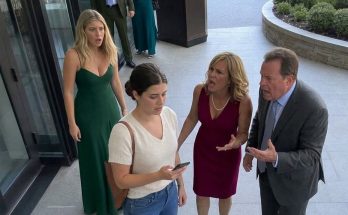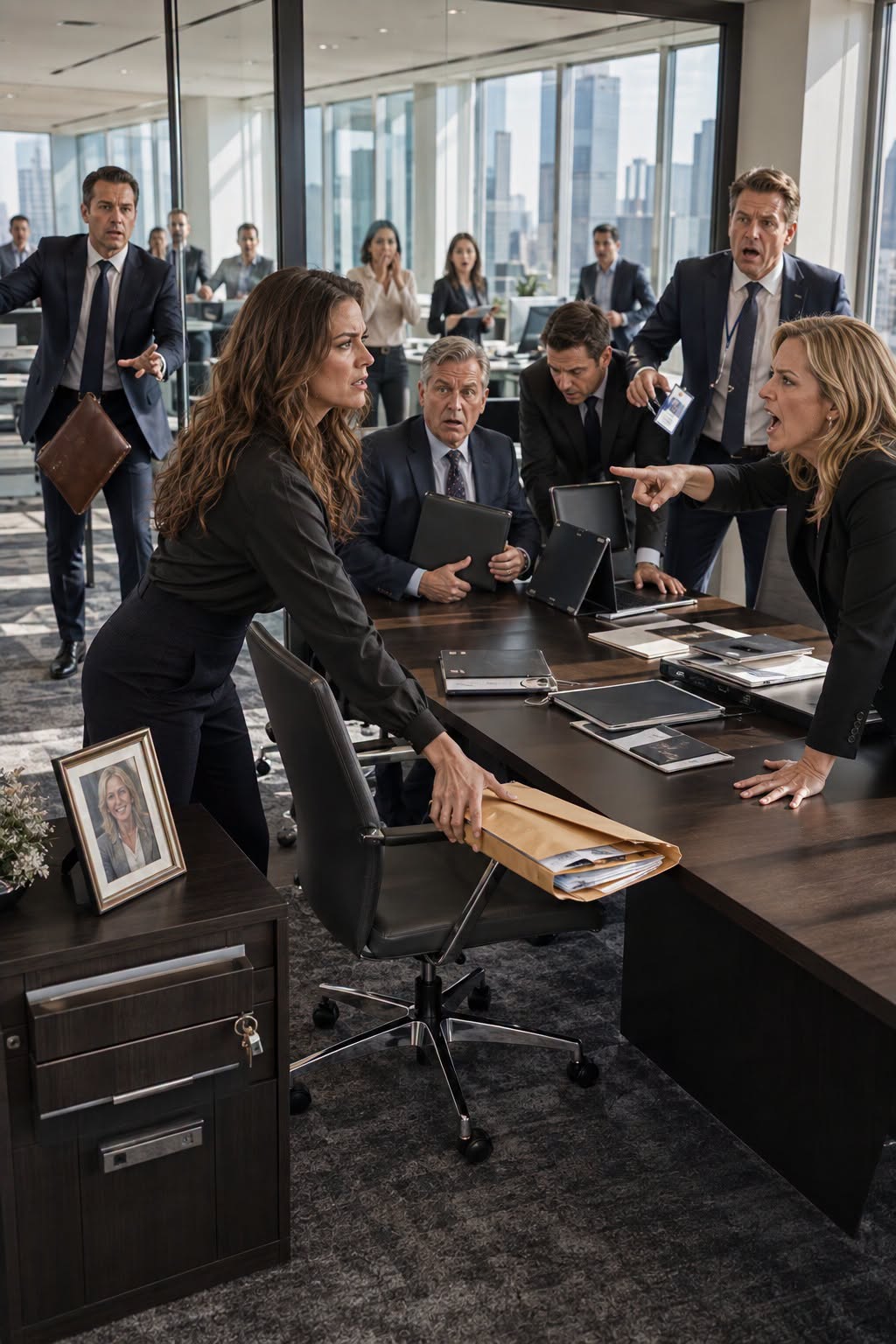
“Your Dead Mother Isn’t Our Problem!” My Supervisor Screamed When I Returned. The Office Froze. I Nodded Slowly, Walked To My Desk, And Pulled Out An Envelope. What Was Inside Made Three Executives Resign That Afternoon, Because I Hadn’t Been At A Funeral. I’d Been At…
### Part 1
The silence hit me harder than the shouting.
I pushed through the glass doors of Halcyon Advan.ced Materials wearing the same black coat I had slept in the night before, and every conversation on the operations floor stopped.
Twenty-seven people looked up.
I counted them because counting was easier than thinking.
Three days earlier, my mother had died with my hand wrapped around hers. Since then, I had picked a casket I could barely afford, argued with a funeral director about flowers, signed forms until my name stopped looking real, and spent one sleepless night inside her apartment surrounded by half-finished knitting, unopened mail, and the faint smell of cinnamon tea.
I had also missed the most important quarterly presentation of the year.
My department manager, Malcolm Reed, came toward me so fast his shoes snapped against the polished floor.
His tie was crooked. A thick binder was crushed against his chest.
“Where were you yesterday?”
Nobody moved.
I stared at him.
“My team had to scramble because you decided not to show up. Do you understand how important that presentation was?”
My mouth was dry.
“Malcolm—”
“No. I’m tired of excuses.”
He stepped closer.
“You were supposed to be at your mother’s funeral. Fine. But your dead mother isn’t our problem.”
Someone inhaled sharply behind me.
I saw my coworker Jenna Cole stop typing.
The receptionist lowered her eyes.
Malcolm apparently mistook everyone’s horror for agreement.
“We have contracts,” he continued. “Deadlines. Clients. You think we can tell them, ‘Sorry, Evelyn has family matters’?”
Something strange happened inside me.
For seventy-two hours I had been barely functioning.
I had cried in grocery store parking lots. I had forgotten to eat. I had stood in my mother’s bedroom holding one of her sweaters against my face because it still smelled like her hand lotion.
But as Malcolm spoke, the grief went quiet.
Not gone.
Just quiet.
It hardened.
I nodded once.
“You’re right.”
Malcolm blinked.
I walked to my desk without taking off my coat and removed a thick manila envelope from my bag.
“I understand deadlines matter.”
His shoulders relaxed slightly.
“So do safety regulations.”
His expression changed.
“What?”
The office became so quiet I could hear the ventilation system humming above us.
I ran my thumb along the sealed edge of the envelope.
“I wasn’t at my mother’s funeral yesterday.”
Malcolm looked almost triumphant.
“So you admit—”
“I was at Riverside Medical Center.”
His smile disappeared.
“I spent yesterday in a conference room with the hospital’s ethics committee, state health investigators, workplace safety officials, and two attorneys.”
Jenna slowly pushed her chair away from her desk.
Malcolm stared at the envelope.
“What are you talking about?”
I looked toward the executive elevators at the far end of the room.
“My mother cleaned this building for fifteen years.”
That got everyone’s attention.
“Night shift,” I continued. “She emptied your trash twice a week. She cleaned the conference rooms after everyone went home. She scrubbed the bathrooms you complained about when there were spots on the mirrors.”
Malcolm’s mouth opened.
Nothing came out.
“Nobody here knew she was my mother. She wanted it that way.”
I pulled one page from the envelope.
Just one.
Not the photographs.
Not the test results.
Not the notebooks.
Not yet.
“She spent fifteen years cleaning up after people who never learned her name.”
Malcolm glanced toward the executive floor.
“Evelyn, maybe we should discuss this privately.”
“No.”
My voice came out stronger than I felt.
“Yesterday was supposed to be her funeral.”
My throat tightened, but I forced myself to continue.
“I missed it because she made me promise that if I ever had to choose between standing beside her coffin and finishing what she started…”
I looked directly at Malcolm.
“…I would choose the living.”
The executive elevator chimed.
Our CEO stepped out with the company’s general counsel.
And from the way both men were looking at me, I knew someone had already warned them about the envelope in my hand.
### Part 2
My mother, Nora Bennett, had spent most of her life being invisible.
She was five feet three, wore her brown hair in a loose bun, and owned exactly two pairs of shoes she considered “good.”
One pair was for church.
The other was for my graduation.
She raised me alone after my father disappeared before I was old enough to remember his voice. She never complained about money in front of me, even when I knew there wasn’t enough.
When I was twelve, I caught her watering down soup.
At sixteen, I discovered she sometimes skipped dinner so I could afford school supplies.
By the time I entered college, she worked nights at Halcyon and mornings helping at Riverside Medical Center.
“Knowledge is protection,” she used to tell me.
Her hands would be red and cracked from cleaning products while she helped quiz me for chemistry exams at our tiny kitchen table.
That sentence was one reason I eventually earned a master’s degree in environmental health.
It was also why I noticed something was wrong before her doctors did.
The headaches came first.
Then exhaustion.
Then strange recurring symptoms she blamed on getting older.
“Mom, this isn’t normal.”
“I’m fifty-eight, Evie. Everything hurts after fifty.”
She laughed.
I didn’t.
Then one morning she became so sick that I drove her to Riverside myself.
The diagnosis arrived two days later.
Advan.ced cancer.
Aggressive.
The doctor kept looking at the floor while explaining how limited our options were.
I remember gripping the arm of the plastic chair so hard my fingernails hurt.
Mom only asked one question.
“Could this come from work?”
The doctor hesitated.
That hesitation changed everything.
Three other night cleaners who had worked inside Halcyon’s restricted executive level had suffered unusually similar illnesses.
Different ages.
Different backgrounds.
One common workplace.
Mom finally told me something she had hidden for years.
Unmarked waste containers sometimes appeared on the sixth floor after certain late-night projects.
The cleaning staff were told to dispose of them with ordinary trash.
Sometimes the containers leaked.
Sometimes they damaged gloves.
Sometimes the odor was strong enough that Mom would open windows even during winter.
“You knew this?” I asked.
She looked ashamed.
“I knew something wasn’t right.”
“Why didn’t you tell me?”
“Because you were building your life.”
I almost screamed.
Instead, I cried.
Then she showed me the notebooks.
Seven years of dates.
Locations.
Container descriptions.
Shift schedules.
Names.
Photographs.
Copies of maintenance requests that mysteriously disappeared after being submitted.
She hadn’t simply noticed a problem.
She had built a record.
“Why?” I whispered.
She looked at me from her hospital bed.
“Because nobody listens to cleaners.”
Riverside did.
One of the hospital administrators connected us with investigators.
Samples Mom had quietly preserved were tested.
The results were disturbing enough to trigger a preliminary review.
Then her health collapsed.
Her final week became a blur of alarms, disinfectant smell, paper cups of untouched water, and whispered conversations in hallways.
On Sunday evening, she squeezed my hand.
Her fingers felt weightless.
“Promise me something.”
“Anything.”
“If they make you choose between burying me and protecting the people still working there…”
I shook my head immediately.
“Don’t ask me that.”
“Evelyn.”
Her voice was barely audible.
“Some things matter more than ceremony.”
She died that night.
Her funeral was scheduled for Tuesday afternoon.
At the exact hour my relatives gathered around her casket, I was sitting under fluorescent lights at Riverside, placing seven years of my mother’s records in front of investigators.
I hated myself for it.
I still did.
But I kept hearing her voice.
Some things matter more than ceremony.
Now, standing inside the office she had cleaned for fifteen years, I watched CEO Richard Vale approach me.
Behind him walked Halcyon’s chief legal officer.
Vale’s face was calm.
Too calm.
“Ms. Bennett,” he said, “I’d like you to come upstairs.”
Malcolm immediately spoke.
“Sir, I was just handling—”
Vale didn’t even look at him.
“Mr. Reed, you’re coming too.”
Then his eyes landed on Jenna.
She had quietly stood beside me.
“I’ll come as her witness,” she said.
Vale’s expression tightened.
“That won’t be necessary.”
I closed the envelope.
“It is to me.”
And for the first time that morning, somebody in that building chose my side.
### Part 3
The sixth floor felt different from the rest of Halcyon.
The carpet was thicker.
The lights were softer.
The doors were heavier.
My mother had cleaned up there for years while executives held meetings behind glass walls and discussed numbers worth more than she earned in a lifetime.
Now I was walking through the same hallway beside the CEO who had probably passed her dozens of times without knowing her name.
Vale’s office occupied the entire corner.
Beyond the windows, downtown Chicago shimmered beneath pale morning sunlight.
“First,” Vale said as we sat, “please accept my condolences.”
The words sounded practiced.
I stared at him.
“Did you know my mother worked here?”
“We use several outside maintenance contractors.”
“She wasn’t technically employed by an outside contractor.”
Vale’s legal officer looked up.
I continued.
“The maintenance company that paid her is owned by your brother-in-law.”
Silence.
“And funded through Halcyon.”
Vale’s face changed for less than a second.
That was enough.
Malcolm cleared his throat.
“Evelyn, you’re emotional. Understandably. Maybe this isn’t the right time—”
I turned toward him.
“My mother spent fifteen years cleaning your office.”
He stopped.
“Her final coherent conversation with me wasn’t about saying goodbye. It was about making sure nobody else got sick.”
My voice cracked.
I hated that it did.
But grief wasn’t weakness anymore.
It was simply present.
Vale folded his hands.
“What exactly are you alleging?”
“I’m not alleging anything.”
I placed the envelope on the desk.
“The investigators will determine what happened.”
“Which investigators?”
His desk phone buzzed.
His assistant’s voice came through.
“Mr. Vale, there are government officials downstairs requesting access to the building.”
No one moved.
Vale pressed the intercom button.
“Which agency?”
“Several, sir.”
His legal officer was already reaching for his phone.
“Tell security not to let anyone—”
I looked at him.
“That would be a mistake.”
He stared back.
A few minutes later, three investigators entered.
The woman leading them had silver hair cut close to her jaw and the relaxed confidence of someone who didn’t need to raise her voice.
She introduced herself as Director Helen Mercer.
“We’re beginning an immediate inspection of specific areas associated with hazardous-material handling.”
Vale stood.
“This is highly irregular.”
Mercer handed his attorney several pages.
“No, Mr. Vale. It’s highly documented.”
Malcolm’s face lost all color.
The investigators requested access to the sixth-floor storage rooms, maintenance closets, waste areas, and ten years of disposal records.
Vale tried charm.
Then authority.
Then technical objections.
None worked.
Finally, he turned toward me.
“This could destroy hundreds of jobs.”
There it was.
Not denial.
Not concern for my mother.
Jobs.
Shareholders.
Reputation.
Anything except the workers who had become sick.
Director Mercer left with part of her team.
Jenna remained beside me.
Vale waited until the door shut.
Then he leaned across his desk.
“Let’s speak realistically.”
His attorney said nothing.
I had heard enough corporate language to know what was coming.
Vale lowered his voice.
“What would resolve this for you?”
I stared at him.
“What?”
“A settlement.”
The room seemed suddenly smaller.
“Confidential, obviously. We acknowledge your mother’s suffering. You receive significant compensation. Everyone avoids a long, destructive fight.”
Jenna’s chair scraped against the floor.
“Are you serious?”
Vale ignored her.
“Think about your future, Evelyn.”
“My future?”
“Your career.”
His eyes held mine.
“People associated with major investigations can have difficulty finding employment afterward.”
Jenna stood.
“That sounds like a threat.”
Vale smiled faintly.
“It’s reality.”
My hands started shaking under the table.
Not from fear.
From rage.
My mother had died in a hospital bed after years of breathing what these people refused to properly handle.
And he thought this was a negotiation.
Before I could answer, the office door opened.
Director Mercer returned.
Her expression had changed.
“Mr. Vale, we’ve sealed two areas of the sixth floor.”
His attorney stood.
“Based on what?”
“Initial readings.”
Mercer looked toward me.
“Ms. Bennett, your mother’s records identified the locations almost perfectly.”
My breath caught.
Then she said the words that made the room go completely silent.
“We also found evidence that someone tried to remove material from one of those rooms last night.”
Vale stopped blinking.
Someone had known investigators were coming.
And suddenly, this was no longer only about what my mother had documented.
It was about who had been warned.
### Part 4
The first anonymous message arrived before lunch.
YOU SHOULD HAVE BURIED THIS WITH HER.
I read it three times.
Jenna saw my face.
“What happened?”
I handed her the phone.
Her mouth tightened.
“Show Mercer.”
I did.
She photographed the message, took my phone number, and told me not to respond.
By early afternoon, the building had transformed.
Employees clustered near windows watching government vehicles below. Security blocked access to the executive elevators. Men and women in protective equipment moved through areas my mother had cleaned alone for years with nothing but gloves and a rolling cart.
The absurdity made me physically sick.
Around two o’clock, Adrian Shaw arrived.
Adrian had been my closest friend in graduate school and now worked in the district attorney’s office. He couldn’t officially represent me in every matter, but he had connected me with counsel and spent the past two days making sure I didn’t walk blindly into a trap.
He found me in an empty conference room.
“You okay?”
“No.”
“Good answer.”
I almost laughed.
Almost.
He pulled out a chair.
“The evidence your mother collected is stronger than anyone expected.”
I stared at the tabletop.
“She should have told me.”
“You would have made her stop.”
“Exactly.”
Adrian nodded.
“That’s probably why she didn’t.”
That hurt because it was true.
An hour later, Jenna dropped another surprise.
“I knew your mother.”
I looked up sharply.
“What?”
“Not well. I work late. She used to come by sometimes.”
Jenna smiled sadly.
“She’d ask whether I’d eaten. Once she brought me this spinach pastry she made.”
I could see it instantly.
Mom wrapping leftovers in foil.
Mom telling strangers they were too skinny.
Mom caring for everybody except herself.
“She talked about you constantly,” Jenna continued. “Your degree. Your work. How proud she was.”
“You knew who I was?”
Jenna nodded.
“She asked me not to tell you.”
I stared at her.
“Why?”
“She thought you’d be embarrassed that she cleaned the building.”
The words cut deeper than anything Malcolm had shouted that morning.
I stood so quickly the chair rolled backward.
“I was never embarrassed by her.”
“I know.”
“She put me through school.”
“I know.”
“She worked harder than anyone here.”
“I know, Evelyn.”
The anger collapsed as fast as it had risen.
I covered my face.
Jenna walked around the table and hugged me.
I hadn’t realized how badly I needed someone to.
Then she whispered something near my ear.
“There’s something else.”
I pulled away.
“For the past year, I’ve been collecting records too.”
“What kind?”
“Internal approvals. Budget transfers. Maintenance complaints.”
My stomach tightened.
“Why?”
“Because numbers kept disappearing.”
Jenna opened her laptop.
She showed me expense reports routed through subsidiaries. Disposal fees that dropped dramatically without a corresponding reduction in production. Internal requests for specialized waste handling that had been rejected.
Then she showed me an email.
I read it twice.
The language was carefully vague, but the meaning wasn’t.
Senior management knew the legitimate disposal process was expensive.
They also knew someone had found a cheaper way.
“Who has this?”
“Only me.”
“Not anymore.”
We took everything to Director Mercer.
By evening, the investigation had expanded.
Four executives were asked to surrender company devices.
The board announced an emergency meeting.
Malcolm disappeared from the office.
And Richard Vale stopped pretending this was a misunderstanding.
As I left the building, he stood near the lobby windows with his attorney.
Our eyes met.
He walked toward me.
“You have no idea what you’ve started.”
I tightened my grip on my mother’s envelope.
“No.”
I looked through the glass at the crews entering the building.
“She started it.”
That night, alone in Mom’s apartment, I opened a kitchen drawer looking for tape.
Instead, I found a small brass key taped beneath it.
There was only one thing in the apartment I had never been able to open.
A narrow wooden cabinet at the back of her bedroom closet.
My mother had left me seven years of evidence.
But as I held that key, I realized she might have left much more.
### Part 5
The key turned with a soft click.
Inside the cabinet were three journals, two small storage drives, a stack of photographs, and an envelope with my name written across the front.
EVELYN.
Mom’s handwriting.
I sat on the bedroom floor.
For ten minutes, I couldn’t open it.
The apartment was so quiet I could hear the refrigerator cycling in the kitchen.
Finally, I broke the seal.
My girl,
If you’re reading this, then I ran out of time.
I covered my mouth.
The rest took me nearly an hour because I kept stopping.
Mom explained that she never believed the environmental violations were the only thing happening at Halcyon.
Cleaners worked when offices were empty.
They saw what people left behind.
Discarded drafts.
Notes forgotten beside printers.
Conversations that continued after executives assumed everyone important had gone home.
Mom had spent years observing patterns.
Not stealing.
Not hacking.
Observing.
She had written down dates and incidents, then preserved information whenever she believed it showed wrongdoing.
The journals contained references to questionable trades made shortly before major announcements, private favors granted to certain vendors, retaliation against employees who raised safety concerns, and executives quietly moving money between related companies.
The deeper I read, the colder I felt.
This wasn’t one bad decision.
It was a culture.
The final page of Mom’s letter contained one instruction.
If the proper authorities do their job, let them.
If powerful people stop them, don’t let my work disappear.
I called Adrian.
Then Jenna.
They arrived within an hour.
We spent most of the night cataloging materials without disturbing originals.
Adrian repeatedly reminded us to let investigators determine what was legally useful.
“Do not turn this into revenge,” he warned.
“I don’t want revenge.”
He looked at me carefully.
“What do you want?”
I looked toward Mom’s empty chair.
“Consequences.”
For the next three weeks, life became depositions, interviews, grief paperwork, and coffee.
The company publicly promised full cooperation.
Privately, everything began changing.
People resigned.
Departments were reorganized.
Servers were placed on preservation orders.
Halcyon’s stock price fell.
Vale and several executives were put on administrative leave.
Then came the news Adrian had feared.
The company was negotiating.
The settlement would sound enormous to the public.
Halcyon would pay penalties, fund cleanup efforts, and establish compensation for affected workers.
But criminal accountability for senior leadership?
Uncertain.
Adrian called me late one evening.
“They’re trying to pin most of it on two operations managers.”
“What about Vale?”
“Lawyers are arguing he didn’t know specifics.”
I laughed once.
There was no humor in it.
“He asked me how much money it would take to make this disappear.”
“I know.”
“He threatened my career.”
“I know.”
“So that’s it?”
“I’m fighting it.”
I looked around Mom’s apartment.
Half-packed boxes surrounded me.
Her journals sat inside evidence sleeves on the table.
“What if fighting isn’t enough?”
Adrian went quiet.
“Then we keep using lawful channels until it is.”
The following Monday, Vale returned to the office.
Not permanently.
Not officially cleared.
But he walked past my desk wearing a charcoal suit and the expression of a man who believed the worst had passed.
Malcolm appeared later.
He didn’t apologize.
He simply avoided me.
At five that afternoon, HR summoned me upstairs.
Vale was waiting with two board members and a crisis consultant.
“We’d like to help you move forward,” the consultant said.
She slid a packet across the table.
Six months’ salary.
Benefits.
A confidentiality agreement.
I looked at Vale.
“You’re firing me.”
“Your position is being eliminated.”
“Convenient.”
“Given everything that’s happened, we believe separation benefits all parties.”
I didn’t touch the documents.
Instead, I asked one question.
“Did you know my mother kept journals?”
Vale’s jaw tightened.
One of the board members glanced at him.
I stood.
“Thank you for the offer.”
The HR director exhaled.
“Then you’ll sign?”
“No.”
I walked toward the door.
Vale’s voice followed me.
“You should think carefully before turning this into something personal.”
I stopped.
“It became personal when my mother died.”
Then I left.
The following morning my badge no longer worked.
And that afternoon, Jenna called me from inside the building.
“They’re destroying records.”
### Part 6
“What do you mean, destroying?”
I stood in Mom’s kitchen gripping my phone.
“Paper shredders on six. Boxes being removed. IT is doing something with archived systems.”
“Are you sure?”
“Evelyn, I’ve worked here seven years. I know what normal looks like.”
I immediately called Adrian.
Within twenty minutes, investigators had been notified.
Within an hour, preservation teams were on their way.
That was the difference between what Mom had done and what Halcyon expected.
They thought ordinary employees were powerless because ordinary employees usually acted alone.
Mom hadn’t.
Not anymore.
The attempted cleanup became another investigation.
So did my termination.
Halcyon’s public statement claimed routine restructuring.
My attorneys disagreed.
Meanwhile, portions of Mom’s journals helped investigators identify witnesses who had left the company years earlier.
One former maintenance supervisor admitted he had complained repeatedly about unsafe disposal.
Another worker produced copies of emails he had kept after being fired.
A former finance analyst described unusual transfers approved from the executive level.
The case widened.
Then it became public.
Not because I leaked anything.
Because court filings did.
Reporters camped outside my apartment building.
News vans returned to Halcyon.
Workers from other facilities started coming forward.
For the first time since Mom died, I stopped feeling like I was carrying her entire promise alone.
Then Malcolm called.
I almost didn’t answer.
“Evelyn?”
His voice sounded different.
Smaller.
“What do you want?”
“I need to talk to you.”
“You had your chance.”
“I didn’t know about your mother.”
“You knew she was dead.”
Silence.
“I shouldn’t have said what I said.”
“No.”
“I was under pressure.”
I laughed.
“Do you think that helps?”
“I could lose everything.”
There it was.
Not I’m sorry I hurt you.
Not I’m sorry your mother died.
I could lose everything.
“You publicly humiliated me less than twenty-four hours after my mother died because you thought I had no power.”
“That’s not fair.”
“It’s exactly fair.”
He started speaking faster.
“Vale pushed everyone. We were terrified of missing targets. You don’t understand what it was like.”
“My mother cleaned toxic waste for people who couldn’t be bothered to learn her name.”
He stopped.
“Don’t explain pressure to me.”
I ended the call.
A week later, Director Mercer asked to meet me at Riverside.
She brought preliminary findings.
The pattern of exposure among cleaning staff was stronger than originally believed.
More former workers were being contacted for medical screening.
The sixth-floor handling procedures had violated multiple safety requirements.
And someone high enough in management had repeatedly approved budget decisions that made proper disposal almost impossible.
“Your mother gave us the timeline,” Mercer said.
“Other witnesses are filling in the names.”
I looked out the hospital window.
Mom had volunteered in that building for fourteen years.
Even during treatment, nurses stopped by her room just to say hello.
“Was it worth missing her funeral?”
The question escaped before I could stop it.
Mercer didn’t answer immediately.
“That’s not a question anyone else gets to answer for you.”
My eyes burned.
“I keep thinking about her casket.”
“Then think about what she asked you to do.”
I nodded.
That evening, I visited the cemetery alone.
No cameras.
No attorneys.
No investigators.
Just wind moving through maple trees and dirt still dark above Mom’s grave.
I sat beside the headstone.
“I’m angry at you,” I whispered.
“For making me choose.”
The wind moved through dead leaves.
“I’m angry because I would’ve chosen you.”
My voice broke.
“I wanted one last ceremony where I could just be your daughter.”
I stayed until sunset.
Then I stood.
“But I kept my promise.”
For the first time, saying it didn’t feel like betrayal.
It felt like goodbye.
When I returned home, Adrian was waiting outside my apartment.
His expression told me something had happened.
“They found a second set of financial records.”
“Where?”
He held up his phone.
“Exactly where your mother’s journal said they’d be.”
### Part 7
The second set of records changed everything.
Until then, Richard Vale’s defense had been simple.
He claimed operational decisions happened below him.
He knew the company generated specialized waste, but he supposedly trusted managers to handle it properly.
The recovered records made that argument difficult.
Years of internal spending reports showed upper management had repeatedly reviewed disposal costs.
Proper handling was expensive.
Improper handling was not.
Someone had made a choice.
Then renewed it.
Again and again.
The board turned on Vale almost immediately.
Not because they suddenly developed morals.
Because shareholders started asking which directors knew what.
Vale was terminated.
Two other executives resigned.
Malcolm was placed on leave after investigators discovered he had forwarded internal warnings upward but continued ordering staff to meet impossible targets.
His attorneys described him as “a pressured middle manager.”
I described him differently.
A man who knew how to punch downward.
The company offered me another settlement.
Larger this time.
My lawyer read the number twice.
It was enough money to erase every debt I had.
Enough to buy a home outright.
Enough to stop working for years.
The agreement still required silence about certain matters.
I refused.
My lawyer looked at me over her glasses.
“You’re allowed to take care of yourself, Evelyn.”
“I know.”
“This isn’t betraying your mother.”
“I know.”
“Then why?”
I thought about Malcolm crossing the office toward me.
Your dead mother isn’t our problem.
I thought about Vale asking for a price.
I thought about Mom’s cracked hands.
“Because they’re still trying to buy the ending.”
My attorney closed the folder.
“Then we continue.”
Jenna left Halcyon two weeks later.
She had supplied enough documentation to receive formal whistleblower protections.
We began meeting for coffee every Sunday.
At first, we mostly talked about the investigation.
Eventually, we stopped.
She told me about her grandmother.
I told her how Mom once drove fifty miles because I had called from college crying over a failed exam.
Normal stories.
The kind grief had temporarily stolen from me.
Meanwhile, criminal proceedings continued.
Not every charge investigators considered survived review.
Some conduct was too old.
Some records were incomplete.
Some decisions had been spread among enough people that proving individual intent became difficult.
I learned an uncomfortable truth.
Justice wasn’t a door you opened.
It was a hallway.
Long.
Ugly.
Full of side exits.
But consequences came anyway.
Vale was charged in connection with concealment and obstruction-related conduct.
Other executives faced regulatory and civil actions.
Halcyon paid substantial penalties and entered years of outside monitoring.
Families of affected workers pursued separate claims.
Several former cleaners received compensation and medical support.
Malcolm eventually lost his management position.
He emailed me once.
I deleted it without reading beyond the first line.
“I hope someday you can forgive me.”
Maybe I could.
Forgiveness, I learned, did not require reopening a door.
Three months after Mom’s death, the board invited me to meet.
The new interim CEO sat across from me.
“We want you to come back.”
I almost smiled.
“Why?”
“Your expertise.”
“You had my expertise before.”
He looked uncomfortable.
“We failed to value it.”
“No. You failed to value people you thought couldn’t hurt you.”
He had no response.
They offered me a senior environmental compliance role.
A salary nearly double what I had made.
My own team.
Direct access to the board.
For a moment, I imagined saying yes.
Walking into the building every morning.
Changing it from inside.
Then I pictured Mom pushing a cleaning cart down those hallways after midnight.
“No.”
The interim CEO leaned forward.
“You could make a real difference here.”
“I already did.”
I stood.
As I reached the door, he asked where I planned to go.
I looked back.
“Somewhere I don’t have to wait for someone to die before people decide safety matters.”
At the time, I didn’t know exactly what that somewhere would be.
But Mom had left me one final envelope I hadn’t opened yet.
And inside it was an idea she had apparently been planning for years.
### Part 8
The envelope was labeled AFTER.
Inside were four pages.
No evidence.
No names.
No secrets.
Just an idea.
Mom wanted to start a small fund for night-shift workers.
Nothing grand.
She had imagined helping cleaners pay for certification classes, safety training, protective equipment, or emergency legal advice when employers ignored complaints.
At the bottom of the final page she had written:
People who work when nobody is watching should still have someone watching out for them.
I cried harder reading that sentence than I had at the hospital.
Because even while dying, she hadn’t been imagining punishment.
She had been imagining protection.
That became my next life.
I used part of the eventual wrongful-termination settlement to start the Nora Bennett Worker Safety Initiative.
Jenna joined me six months later.
She handled operations.
I handled environmental cases and training.
Adrian helped connect us with legitimate legal resources while maintaining appropriate boundaries with his government role.
Our first office was terrible.
Two rooms above a laundromat.
The heater clanged like someone attacking the pipes.
The carpet smelled permanently of old coffee.
I loved it.
Our first client was a hotel cleaner who had reported burning eyes and dizziness from an unlabeled supply product.
The hotel manager told her she was “too sensitive.”
We helped her document the issue properly and reach the appropriate safety channels.
Our tenth client was a warehouse custodian whose complaints had been ignored for months.
Our fiftieth was an entire overnight maintenance team.
Within a year, we had partnerships with labor clinics, workplace-safety nonprofits, and several hospitals.
The organization became bigger than anything Mom had imagined.
Halcyon became smaller.
Not physically.
Symbolically.
The building no longer represented power to me.
It represented a lesson.
One evening, almost eighteen months after Mom died, I was speaking at a worker-safety conference when I saw Malcolm in the back row.
He waited until most people left.
“I just wanted to listen,” he said.
I folded my notes.
“Okay.”
“I owe you an apology.”
“You already sent one.”
“You didn’t respond.”
“That was my response.”
He looked down.
“I was cruel.”
“Yes.”
“I’ve thought about that morning every day.”
“I haven’t.”
That surprised him.
It surprised me too.
But it was true.
For months, I had carried his words like broken glass.
Then one day I noticed they didn’t cut anymore.
He asked quietly, “Do you forgive me?”
I considered lying.
Instead, I told him the truth.
“I don’t hate you.”
Hope appeared on his face.
I continued.
“But I don’t need a relationship with you. I don’t need your apology to heal. And I don’t need to make you feel better about what you did.”
His hope disappeared.
“I understand.”
“Good.”
He left.
I felt nothing.
That was freedom.
Richard Vale’s story ended less quietly.
His criminal case dragged on, accompanied by civil litigation, regulatory penalties, and years of public scrutiny.
He never contacted me directly again.
His attorneys did.
I ignored anything that didn’t require a response.
The last time I saw him was outside a courthouse.
Reporters surrounded him.
For one second, our eyes met.
I waited for anger.
Triumph.
Satisfaction.
Nothing came.
He was simply another man walking past me.
That night I drove to the cemetery.
I sat beside Mom’s grave with two paper cups of cinnamon tea, one for me and one I placed on the grass even though I knew how ridiculous it looked.
“You won,” I told her.
Then I shook my head.
“No. That’s not right.”
I looked at the sunset spreading orange across the sky.
“We kept going.”
And that mattered more.
### Part 9
Two years after the morning Malcolm yelled at me in front of twenty-seven coworkers, I found myself standing inside Halcyon’s lobby again.
I hadn’t planned to return.
The building’s new leadership had invited our organization to help launch mandatory safety training for contractors and overnight staff.
My first instinct was to refuse.
Then Jenna said, “Your mother would walk straight through those doors.”
She was right.
So I did.
The lobby looked almost identical.
Same marble.
Same glass.
Same ridiculous abstract sculpture nobody understood.
But something near the reception desk was different.
A bronze plaque.
IN MEMORY OF NORA BENNETT AND THE WORKERS WHO REFUSED TO REMAIN INVISIBLE.
I stared at it for a long time.
The interim CEO approached.
“We thought you should see it first.”
My throat tightened.
“Who approved this?”
“The employees.”
That surprised me.
Not the board.
Not management.
Employees.
Several cleaners stood nearby wearing company-issued protective gear far better than anything Mom had ever been given.
One older woman recognized me.
“Your mother trained me my first week.”
I smiled through tears.
“What did she tell you?”
The woman laughed.
“That executives leave coffee cups everywhere.”
I laughed too.
Then she became serious.
“She also told me to write down anything that didn’t look safe.”
Of course she did.
Later that afternoon, I gave a presentation on workplace reporting systems to nearly one hundred people.
I didn’t tell them my mother was a hero.
She would have hated that.
I told them she was observant.
Stubborn.
Careful.
Sometimes impossible.
I told them she believed details mattered.
Then I told them no employee should ever have to become a secret investigator just to survive a job.
When I finished, the room stood.
I didn’t expect that.
Applause rolled across the same building where, years earlier, my mother had moved quietly after midnight.
I looked toward the back.
For half a second, I imagined her standing there with her cleaning cart.
She wasn’t.
And that was the hardest part of grief.
You can rebuild your life.
You can find purpose.
You can win cases, start organizations, make speeches, and create changes people once said were impossible.
The person you wanted to show all of it to is still gone.
After everyone left, I walked alone to the sixth floor.
The restricted laboratory was gone.
The space had been converted into an employee training center.
I stood beside the windows.
Chicago glowed below.
Two years earlier, Richard Vale had sat in an office nearby and asked how much money it would take to make my mother’s death disappear.
He had misunderstood the situation completely.
My mother wasn’t dangerous because she had money.
She had almost none.
She wasn’t dangerous because she had authority.
Nobody gave her any.
She was dangerous because she paid attention when powerful people assumed she didn’t matter.
That evening, I visited her grave.
The cemetery was nearly empty.
I placed fresh flowers beside the stone.
“I still wish I’d gone to your funeral,” I whispered.
That truth would never change.
I would always wish I had heard the final prayer.
I would always wonder what the room looked like when they closed the casket.
I would always hate that my relatives had stood beside her while I sat beneath fluorescent lights explaining evidence to strangers.
But I no longer believed I had abandoned her.
I had done exactly what she asked.
I had carried her voice into a room where people had spent fifteen years refusing to hear it.
And when they finally listened, it wasn’t because they suddenly developed compassion.
It was because the woman they considered invisible had left behind a record too precise to ignore.
I touched the top of her headstone.
“Malcolm once said my dead mother wasn’t their problem.”
The evening wind moved through the trees.
I smiled.
“He was right about one thing.”
I stood and brushed grass from my knees.
“You were never their problem, Mom.”
I looked toward the city.
“You were their consequence.”
Then I walked back to my car, not toward revenge, not toward forgiveness, but toward the life she had worked so hard to give me.
And I never looked back.
THE END!