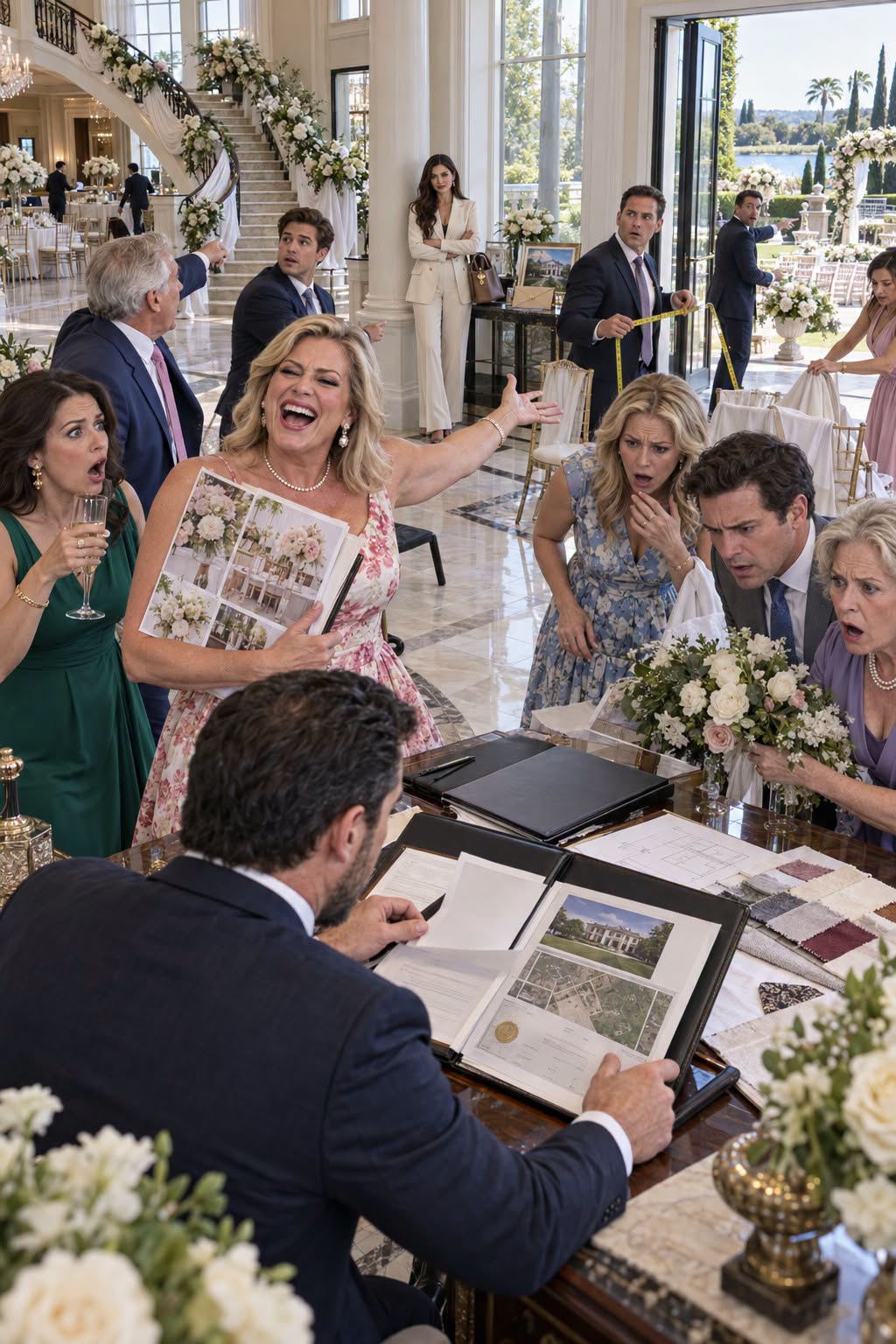
“Nobody’s Lived Here In Years. It’s Free Money,” My Sister Laughed With The Realtor While Trying to Sell My “Abandoned” $3 Million Beach House to Pay for Her Dream Wedding. The Entire Family Planned Their Wedding Venue Upgrades. I Stood In The Corner Silently. Then the Closing Agent Opened the Property Records
My Sister—I sat quietly while my sister called me a freeloader inside the beach house she was already planning to sell for millions. My mother discussed how much of “their” money would pay for the wedding, while my future brother-in-law photographed rooms they intended to empty of my belongings. I could have stopped them with one sentence, but I didn’t. I wanted to see how far they would go before somebody finally opened the one file they should have checked first.
### Part 1
“Nobody has really lived here in years,” my sister Marissa announced, sweeping one manicured hand across my living room as if she were presenting an abandoned warehouse instead of the place where I had slept the night before. “At this point, selling it is basically free money.”
Salt air moved through the open windows behind her, carrying the clean smell of the Atlantic and making the thin linen curtains lift and settle against the white-painted frames. I sat in my father’s old armchair beside the bay window with a mug of coffee cooling between my hands while Claire Whitmore, the real estate agent Marissa had hired, tapped notes into a tablet.
“The location is extraordinary,” Claire said, glancing toward the dunes and the blue water beyond them. “Oceanfront homes along this stretch have been listing above three million dollars, depending on condition and improvements.”
My mother, Diane, appeared from the kitchen so quickly you would have thought someone had called her name over a loudspeaker. “Three million?” she repeated, pressing both hands to the front of her blouse. “Marissa, did you hear that?”
Marissa’s face lit up, and the diamond on her engagement ring flashed in the afternoon sunlight as she grabbed the arm of her fiancé, Caleb Mercer. “I told you this was finally going to pay off,” she said. “After everything this family has carried, we deserve something good.”
Caleb had spent the previous ten minutes photographing my deck, my fireplace, and the view from my bedroom as though he were assembling a sales brochure. He lowered his phone and grinned. “Three million changes the wedding conversation completely.”
“Absolutely,” Marissa said. “Forget the smaller venue. We can book Harbor Crest Resort, upgrade the reception terrace, add the full seafood dinner, and actually have the honeymoon we wanted.”
My mother laughed with her, already caught up in the fantasy. “Your father would have loved seeing you married somewhere beautiful.”
I took a sip of coffee and tasted nothing but bitterness and cold cream.
Claire’s smile remained professional. “Before anyone starts making commitments, I’ll need to verify ownership, confirm the title is clear, and make sure there are no estate or occupancy issues.”
Marissa seemed prepared for that question. She opened a cream-colored folder from her handbag and handed Claire several documents. “Our father, Thomas Hale, bought the house in 1998. He died a little over two years ago, and his estate went through probate.”
Claire flipped through the pages. “And the beach property was distributed through the estate?”
“That’s correct,” Marissa said without hesitation.
I looked at her over the rim of my cup.
The strange thing about a confident lie is that it rarely sounds like a lie. Marissa spoke with the absolute certainty of someone who had repeated a story so many times that she no longer considered checking whether it had ever been true.
My mother stepped closer. “There is one minor complication.”
Claire looked up.
“Our youngest son, Noah, stays here occasionally,” Mom said, nodding toward me without meeting my eyes. “He’s always been… unsettled.”
That got my attention.
Marissa gave a theatrical sigh. “He drifts in and out. We don’t even know where he lives half the time.”
Caleb snorted. “He calls it working remotely. Looks more like permanent vacation to me.”
“Minimalist lifestyle,” Mom added with a tight little smile. “No proper office, no real roots, no responsibilities.”
I slowly lowered my coffee onto the side table.
The ceramic cup made a soft click against the wood, but in that room it sounded strangely sharp. Claire glanced at me for the first time with something more curious than polite.
“Are you saying there’s a tenant?” she asked.
“Not exactly,” Marissa replied. “More like a family squatter.”
My jaw tightened, but I said nothing.
I had paid the electric bill for five straight years. The insurance premium came from my business account, the property taxes came from the same account, and the new roof above Marissa’s head had cost me more than her first two cars combined.
Claire tapped something into her tablet. “Occupancy can complicate a sale if the occupant has tenancy rights.”
“Oh, Noah won’t be a problem,” Marissa said. “He barely owns enough to fill a car.”
I almost laughed at that.
My mother had no idea I owned the SUV parked behind the detached garage because I normally drove an older sedan around family. Marissa had no idea my consulting firm had eight full-time contractors, three corporate clients, and enough annual revenue that I hadn’t worried about rent in years.
They had decided who I was long ago.
Facts had become inconvenient.
Claire walked toward the window. “Assuming the title is clean, I could probably prepare the listing by next week.”
Marissa actually clapped. “Next week?”
“Potentially.”
Caleb put an arm around her waist. “Then we should visit Harbor Crest tomorrow before somebody grabs the June date.”
“June is expensive,” Mom warned.
Caleb laughed. “Not when you’re selling a three-million-dollar house.”
I finally spoke.
“This house isn’t abandoned.”
Marissa’s expression changed immediately. “Here we go.”
I nodded toward the ceiling. “The exposed beams are original cypress. The floors are heart pine, and the west wall was rebuilt after the storm using the original framing pattern. You’ll damage the value if you let a staging company start ripping things out because they look old.”
Claire looked genuinely interested. “You know the property well.”
“Unfortunately, he thinks that makes him an expert,” Marissa said before I could answer. “Noah gets emotionally attached to things. Business decisions are difficult for him.”
My mother crossed her arms. “This property needs to benefit the family, not become a private vacation cabin for someone who refuses to grow up.”
“What does Noah even need a five-bedroom beach house for?” Marissa asked. “A few weekends a year?”
I looked at her. “How often do you think I’m here?”
She shrugged. “Who knows?”
That answer told me everything.
Claire’s phone rang before I could respond. She looked at the screen and excused herself, stepping through the sliding glass door onto the deck while Marissa immediately began discussing what furniture should be removed before photographs were taken.
“The old armchair has to go,” she said.
I rested my hand on the armrest.
That chair had belonged to Dad.
“The dining table too,” Caleb added. “Too heavy.”
“My books are in the upstairs study,” I said.
Marissa waved impatiently. “Then move them. We’re not operating free storage for you.”
Mom gave me that familiar disappointed look. “You could make this easier for everyone, Noah.”
“For everyone?”
“For your sister,” she clarified. “She’s starting a new life.”
I leaned back. “And what exactly is my portion of this imaginary sale?”
Marissa narrowed her eyes. “Why are you calling it imaginary?”
“I’m curious about the math.”
Mom glanced at Marissa.
Marissa recovered quickly. “Mom gets her share first. Caleb and I need enough to cover the wedding and down payment on a condo. Whatever remains, we can split fairly.”
“With me?”
“Yes.”
“How generous.”
“Don’t act offended,” she snapped. “Considering what you’ve contributed, you should be grateful you’d get anything.”
I studied her face.
“Name one major thing you’ve done for this family,” she challenged. “One.”
The roof replacement came to mind.
Then the flood repairs.
Then five years of insurance.
Then county legal fees when a proposed zoning change threatened the shoreline lots.
Then the months I spent coordinating contractors while Marissa posted vacation pictures from California and Mom told relatives she was “the responsible child.”
I could have answered.
Instead, I shrugged.
Marissa smiled in triumph. “Exactly.”
Claire returned from the deck, her expression carefully neutral. “The title company has started pulling the records. I should have preliminary results tomorrow.”
“Perfect,” Marissa said.
Claire looked from her to me. “Once ownership is verified, every legal owner will need to be involved in the listing agreement.”
Mom frowned. “That’s only Marissa and me.”
“Probably,” Claire replied. “But title records occasionally contain transfers people have forgotten about, especially after probate.”
For the first time, I saw uncertainty flicker across Marissa’s face.
It vanished almost immediately.
“Dad’s will was clear,” she said. “Everything was divided among his wife and responsible children.”
I stood, picked up my jacket, and slipped my phone into my pocket.
A message had arrived from my attorney while they were talking.
Naomi Park: I pulled the original recorded documents. Everything is exactly where it should be. See you at four.
“Leaving already?” Mom asked.
“I have a meeting.”
Marissa laughed. “Of course you do.”
I walked toward the door.
Behind me, Caleb was already asking Claire how quickly a buyer could close on an all-cash offer.
I paused beside her.
“Nice meeting you, Claire.”
She held my gaze for an extra second. “I suspect we’ll speak again soon.”
I drove away while my sister stood in my living room spending money she had never owned. By the time I reached Naomi’s office, I was no longer wondering whether Marissa had misunderstood something—I was wondering how much farther she had gone before bringing a realtor through my front door.
### Part 2
Naomi Park had represented me for seven years, and she had the unnerving habit of becoming calmer whenever everyone else had reasons to panic. Her office overlooked the harbor from the third floor of an old brick building, and when I walked in that afternoon, she already had a thick file open across her desk.
“So,” she said, pushing her glasses higher. “Your sister is selling your house.”
“Apparently.”
Naomi’s mouth twitched. “Ambitious.”
“She has already upgraded the wedding venue in her head.”
“And the honeymoon?”
“Luxury bungalow.”
“Of course.”
I dropped into the chair across from her desk and stared through the window at sailboats rocking in their slips. The harbor always reminded me of Dad because he used to bring me there as a kid, buy two lemon sodas from the marina store, and tell me that people made terrible decisions whenever they confused wanting something with being entitled to it.
Naomi turned several documents toward me. “Let’s remove all possible doubt before tomorrow becomes noisy.”
The first document was dated eight years earlier.
Thomas Hale Irrevocable Property Trust.
I ran my thumb over Dad’s signature.
Three years before his death, my father had removed the beach house from his personal estate and transferred it into a trust established specifically for me. Naomi had prepared the later amendments, overseen the recording, and handled every annual filing since.
“The property never entered probate,” she said. “Your father’s will divided his remaining estate among your mother, you, and Marissa, but this house was no longer his probate asset.”
“I know.”
“I know you know. I want you to hear me say it again because your family is about to behave as if confidence can rewrite county records.”
That made me smile despite myself.
Naomi continued. “The recorded transfer is clean, the trust is valid, and the chain of title is boringly straightforward. The documents Marissa showed the realtor may be authentic probate documents, but they don’t establish any ownership interest in this property.”
“Dad expected trouble.”
“He expected pressure.”
There was a difference.
When Dad first explained the trust to me, I’d been offended by his caution. I was twenty-eight and still believed grown adults eventually became reasonable if given enough facts.
He had smiled and said, “Property changes people, Noah. Sometimes it only reveals them.”
I understood that sentence now.
“Why me?” I asked, though I already knew much of the answer.
Naomi leaned back. “You were the one maintaining the place even before the trust was created. You helped him after his surgery, managed the storm repairs, learned the maintenance schedule, and actually loved the house.”
“Marissa thinks he rewarded me for being his favorite.”
“She can think anything she wants.”
“She also thinks I don’t have a job.”
Naomi stared at me. “You own a consulting company.”
“They think I answer emails at coffee shops.”
“You do answer emails at coffee shops.”
“Fair.”
She laughed, then turned serious again. “You don’t owe anyone a detailed financial résumé just because they decided to underestimate you.”
That had always been the problem.
My work was remote, quiet, and invisible to people who measured success by suits, office towers, and job titles printed beneath company logos. I had built my firm slowly, reinvested nearly everything for several years, and learned that looking unimpressive was often more peaceful than explaining myself to relatives who treated every accomplishment like an invitation to compare.
The beach house fit the same pattern.
I didn’t post photographs from it.
I didn’t call it “my oceanfront property.”
I simply lived there when I wanted, worked from the upstairs office, repaired what broke, paid what was due, and watched storms roll in from the Atlantic.
To Marissa, silence meant absence.
To Mom, modesty meant failure.
My phone buzzed.
Marissa: We’re having a junk removal crew come next week. Tell me which of your things you actually care about.
I showed Naomi.
She read it twice.
“Reply in writing.”
I typed: I care about everything in the house. Do not remove, discard, sell, or alter anything.
The response arrived almost instantly.
Marissa: Then move your stuff before staging. We are not delaying a multimillion-dollar sale because you’re sentimental about old furniture.
Naomi exhaled through her nose. “Keep that.”
“I planned to.”
“What exactly happened between you two after your father died?”
“Nothing dramatic.”
That was almost worse.
Marissa took charge of family gatherings because Mom preferred her company. I stopped getting invited to smaller dinners, then started hearing about holidays after arrangements were already made, and every attempt I made to help was interpreted as either insufficient or suspicious.
When Mom needed a new furnace, I quietly paid half through Dad’s old household account.
Marissa later told relatives she had “handled everything.”
I never corrected her.
Naomi closed one folder and opened another. “Here are the property tax payments, insurance records, major repair invoices, and storm restoration receipts.”
The total on the restoration work alone made me wince even though I had paid it years earlier.
“What happens when the title company calls them?” I asked.
“They stop the listing.”
“And then?”
“That depends on whether your family experiences embarrassment as a reason for reflection or as a reason to attack.”
I laughed once. “Attack.”
“My guess too.”
She handed me certified copies of the trust and recorded deed. “Take these home.”
“Should I tell Marissa before the title search does?”
Naomi considered that.
“Legally, you are under no obligation to rescue someone from the consequences of making false assumptions about an asset they attempted to sell without confirming ownership. Morally, that is your decision.”
I looked down at Marissa’s message again.
We are not delaying a multimillion-dollar sale because you’re sentimental.
“I think I’ll wait.”
Naomi nodded. “Then make coffee tomorrow.”
That evening I drove back along the coast with the windows cracked, listening to the tires hum over the causeway. The sun was dropping behind the marshes, turning the water silver, and for a few minutes I remembered being twelve years old beside Dad in his old truck.
He had bought the beach house when Marissa and I were kids.
It had never been glamorous.
There were years when the roof leaked, summers when the air conditioner failed, winters when sand blew under the doors, and weekends when Dad made me hold a flashlight while he cursed rusty plumbing.
Marissa remembered photographs on the deck.
I remembered work.
When I arrived home, I found a bright orange contractor sticker attached to the front door.
SITE MEASUREMENT — TUESDAY, 9 A.M.
A phone number was written underneath.
I peeled it off.
Marissa had apparently scheduled people to enter the property without even asking me.
I called the company.
A man named Luis answered and confirmed that Marissa Hale had requested measurements for staging, furniture removal, and preliminary renovation estimates.
“Did she say she owns the house?” I asked.
“She said it’s a family property she’s preparing for sale.”
“Cancel the appointment.”
There was a pause. “Are you authorized to do that?”
“I’m the owner.”
Another pause.
“Then yes, sir.”
Afterward I changed the alarm code.
Not because I thought Marissa would break in.
Not yet.
But because I was finally beginning to understand that my habit of avoiding conflict had trained my family to believe boundaries around me were optional.
The next morning was clear and cold.
I carried coffee onto the deck just after seven and watched pelicans dive beyond the breakers. My laptop sat open on the patio table, and I had just started reviewing a client proposal when an unfamiliar number appeared on my phone.
“Hello?”
“Is this Noah Benjamin Hale?”
“Yes.”
“My name is Elliot Kim with Seaside Title and Escrow. I’m calling regarding the property at 214 Seagrass Lane.”
My pulse remained surprisingly steady.
“I know the property.”
“I also have Claire Whitmore from Atlantic Shore Realty joining us. We encountered something in the ownership records that doesn’t match the documents submitted yesterday.”
Claire came onto the line.
Her voice was noticeably less warm than it had been in my living room.
“Noah, I apologize for contacting you so early.”
“No problem.”
Elliot continued. “The probate paperwork submitted by Marissa Hale is valid as far as we can determine, but the beach property was not part of Thomas Hale’s probate estate.”
I looked toward the horizon.
The moment had arrived.
“The county records show a transfer into an irrevocable trust several years before your father’s death,” Elliot said. “The trust documents identify you as the beneficiary associated with the property, and the recorded ownership structure gives your side exclusive authority over any sale.”
Claire was silent.
Elliot asked, “Do you have any intention of selling 214 Seagrass Lane?”
“No.”
The word felt lighter than I expected.
Claire finally spoke. “Noah, yesterday your sister represented that she and your mother had authority to list the property.”
“She was wrong.”
“You knew that while we were there.”
“Yes.”
“Why didn’t you say anything?”
I watched another wave fold against the shore.
“Because nobody asked me who owned the house.”
There was a long silence.
Then Claire said quietly, “I’m going to call your sister.”
Twelve minutes later, my phone began vibrating so hard against the patio table that it moved nearly an inch. Marissa called six times, Mom called four, Caleb sent three messages, and when I finally read the first text, the words were almost funny.
WHAT DID YOU DO?
I stared at the screen, feeling the last little piece of guilt disappear.
I hadn’t done anything.
That was exactly their problem.
### Part 3
I let the calls ring until my coffee was finished.
Marissa left two voicemails, Mom left one, and Caleb sent a message saying there had obviously been “some paperwork confusion” that adults should resolve calmly. After spending an entire afternoon planning to remove my belongings from my property, they had suddenly discovered a deep respect for calm discussion.
Marissa called again.
This time I answered.
“You knew!” she screamed before I finished saying hello.
I held the phone away from my ear. “Good morning to you too.”
“You sat there yesterday and let us plan everything!”
“I sat in my living room drinking coffee.”
“Your living room,” she repeated bitterly. “So you’re enjoying this?”
“Not especially.”
“You knew the house was legally yours.”
“Yes.”
“Then why didn’t you tell us?”
I stood and walked toward the deck railing. “Why didn’t you ask?”
She made a sound of disbelief. “Because Dad bought the house! Because it was family property!”
“And then Dad transferred it.”
“To you?”
“Yes.”
“All of it?”
“Yes.”
I heard movement and voices behind her.
Then Mom came onto the call.
“Noah, this is your mother.”
“I recognized your voice.”
“Don’t be sarcastic.”
“I’m not.”
She sounded breathless, almost offended by reality itself. “Your father would never have given you that entire property without discussing it with me.”
“He did.”
“When?”
“Eight years ago.”
“That is impossible.”
I looked back through the glass doors at the dining table where Dad and I had once signed the first set of maintenance schedules together. “The county recorder, the trust attorney, and the title company all seem comfortable with the possibility.”
“Why would he do that?”
There it was.
Not congratulations.
Not curiosity.
Why you?
“He wanted me to have a permanent home base,” I said. “He knew I was maintaining the house, and he wanted it protected from future family disputes.”
The silence lasted long enough that I could hear gulls crying over the dunes.
Marissa returned. “So Dad secretly gave you a multimillion-dollar property while the rest of us got whatever was left.”
“That isn’t what happened.”
“It’s exactly what happened.”
“You received assets through the estate. Mom received assets through the estate. I received assets too.”
“But this house is worth more now.”
“Now.”
Marissa went quiet.
When Dad transferred the house, it needed major work and sat in a shoreline district that had just been hit with rising insurance costs. Marissa had called it a money pit back then.
I reminded her.
“You told Dad he should sell it.”
“I was younger.”
“You were thirty-one.”
“That’s not the point.”
“No, the point is that you liked the house only after Claire said three million dollars.”
Mom interrupted. “This is becoming ugly.”
I actually laughed.
“Yesterday you called me a squatter in front of a realtor.”
“We misunderstood the legal situation.”
“You called me unemployed.”
“We worry about you.”
“You said I contributed nothing.”
Mom’s voice softened slightly. “Noah, you never told us otherwise.”
That hurt more than I expected.
“You never asked.”
Nobody answered.
I continued before I lost the nerve. “The taxes come from me. Insurance comes from me. The roof after the storm came from me. The foundation stabilization, replacement HVAC, deck reinforcement, window restoration, flood barriers—me.”
Marissa spoke first.
“That doesn’t mean you paid for everything yourself.”
“I have invoices.”
Another silence.
“The county zoning attorney?” I added. “Mine too.”
Mom sounded genuinely confused now. “We thought your father’s old account was covering those things.”
“Dad has been dead for two years.”
“I assumed there was money set aside.”
“There was. Mine.”
The anger on the other end shifted.
I could almost hear the calculations changing.
Caleb’s voice suddenly appeared, which told me they had me on speakerphone.
“Okay, man, clearly there was a huge misunderstanding.”
“Was there?”
“Yeah. Nobody realized you were carrying those expenses.”
“You also didn’t realize I owned the house.”
“Exactly. So let’s reset.”
I closed my eyes.
That phrase always seemed to appear when the person who had been aggressive lost leverage.
“What does reset mean?”
Caleb cleared his throat. “Maybe selling isn’t the move. But the property still has equity.”
I already knew where he was going.
“You could borrow against it,” he continued. “Give your mom and Marissa some liquidity without actually giving up the property.”
I stared at the ocean.
“You want me to take out a loan on my house so you can pay for your wedding?”
“When you say it like that—”
“How should I say it?”
“It would be a family distribution.”
“Distribution of what?”
“Dad’s legacy.”
I almost admired the speed with which they had renamed my property.
Marissa jumped in. “We’re not asking for three million anymore.”
“How generous.”
“Stop saying that!”
“Then stop proposing ways to spend my money.”
Her breathing became audible.
“You know what, Noah? Fine. Keep everything.”
“That’s the plan.”
“Don’t expect us to pretend this is normal.”
“What wasn’t normal was hiring a realtor to sell a house you didn’t own.”
“We thought we owned it!”
“You didn’t check.”
“Because we trusted Dad’s will!”
“The house wasn’t in the will.”
“You could have warned us.”
I leaned my elbows against the railing.
That was the center of it.
Marissa wasn’t sorry she had tried to sell my house.
She was furious I hadn’t prevented her embarrassment.
“You walked into my home,” I said, “called me a squatter, told a stranger I contributed nothing, planned to throw out Dad’s chair, and calculated how little money you could leave me after paying for your wedding.”
“We were angry.”
“You were excited.”
That stopped her.
Mom tried another approach. “Noah, family should be able to move past misunderstandings.”
“I agree.”
“So you’ll talk with us?”
“I am talking.”
“You know what I mean.”
She wanted surrender disguised as reconciliation.
“Family should also apologize,” I said.
“I’m sorry you were hurt.”
I looked down at the weathered deck boards.
“No.”
“What?”
“That’s not an apology.”
Mom’s tone sharpened. “I am trying.”
“You’re apologizing for my reaction, not your behavior.”
Marissa exploded. “Oh, for God’s sake, what do you want us to do, crawl?”
“I want you to leave my property alone.”
“That’s it?”
“Yes.”
“And the wedding?”
“Your wedding budget is not my responsibility.”
There was a brittle pause.
Then Marissa’s voice went cold.
“Fine. Don’t come.”
“To the wedding?”
“To anything. Birthdays. Holidays. Family dinners. If you care more about a house than your own sister, then you can have your precious house.”
I almost reminded her that twenty-four hours earlier she had cared more about that same house than she cared about whether I had somewhere to live.
Instead I said, “Okay.”
She clearly hadn’t expected that.
“What?”
“Okay.”
“You’re seriously willing to lose your family over this?”
“No. I’m refusing to buy access to people who already decided I was worthless.”
I ended the call.
Then I blocked Marissa.
I blocked Caleb.
I hesitated over Mom’s name for several seconds before blocking her too.
The silence afterward was startling.
No accusations.
No explanations.
No demand that I justify why I deserved something already mine.
I walked down the steps, crossed the dune path, and stood barefoot at the waterline while cold foam curled around my ankles. I thought I would feel victorious.
Instead I felt tired.
Truth winning doesn’t always feel like winning.
Sometimes it just leaves you staring at the wreckage of whatever illusion you had been protecting.
For three days, nothing happened.
I worked.
I repaired a loose shutter.
I had dinner with two friends downtown.
On the fourth day, a cousin texted to ask why I was “stealing Dad’s beach house from Mom.”
I stared at the message.
So that was the story now.
By evening, three more relatives had contacted me.
One said Marissa was “devastated.”
Another said Mom felt “betrayed.”
A third suggested I sell the house voluntarily and split the proceeds “for peace.”
I answered none of them.
Instead I forwarded the messages to Naomi.
Her reply arrived fifteen minutes later.
Do not argue with relatives. Save everything. Call me if they threaten legal action.
The threat arrived one week later by certified mail.
I was standing in the kitchen chopping onions when the courier knocked, and the envelope smelled faintly of rain from the storm outside. Inside was a complaint filed on behalf of Marissa Hale and Diane Hale accusing me of unjust enrichment, improper influence, and manipulation of my father in connection with the trust.
For several seconds, I simply read the first page again.
Then my phone rang.
Naomi.
“I just received service electronically,” she said.
“Tell me they don’t have a case.”
“They don’t.”
I let out the breath I had been holding.
“But Noah?”
“Yes?”
“They’re not trying to win with evidence.”
Her voice became colder.
“They’re trying to make keeping your own home expensive enough that you’ll pay them to go away.”
### Part 4
Naomi filed our response eleven days later.
By then, Marissa’s version of events had traveled through half the family: Dad had supposedly been frail, I had isolated him, the trust had been “hidden,” and I had waited until after his death to spring some mysterious legal trap. None of it matched the timeline, but timelines mattered less at family gatherings than the emotional convenience of having a villain.
The actual records were painfully ordinary.
Dad had signed the trust while still working part-time.
His physician’s records from that year showed no cognitive concerns.
The signing had two witnesses, independent counsel, notarization, recorded transfer documents, property insurance updates, tax notices, and years of correspondence between Dad, Naomi, the trust office, and me.
There was no secret midnight signature.
There was paperwork.
Mountains of it.
Naomi spread copies across her conference table. “Your sister’s attorney has a problem.”
“Only one?”
She smiled. “Several, but the biggest is timing.”
Dad had created the trust eight years earlier.
He continued traveling, driving, managing finances, attending neighborhood association meetings, and arguing with contractors for years afterward. Marissa had exchanged emails with him during that same period and had never once suggested he lacked capacity.
Naomi tapped another page.
“This is useful.”
It was an email from Marissa to Dad written shortly after he transferred the property.
Dad, if Noah wants to keep pouring money into that old beach place, let him. I’d rather have cash someday than inherit another maintenance problem.
I stared at it.
“I forgot about that.”
“Your father saved everything.”
“He really did.”
“This establishes she knew you were managing the property years before his death, even if she claims she didn’t understand the trust.”
I leaned back and laughed.
For the first time since the lawsuit arrived, my shoulders loosened.
Naomi did not share my amusement for long.
“They could still drag discovery out if the judge allows the claims to survive. We’re moving for dismissal based on the recorded documents and the failure to establish facts supporting undue influence.”
“How expensive can they make this?”
“For you? Manageable.”
“For them?”
She gave me a look.
“That depends how committed they are to being wrong.”
Two days later, Mom called from an unfamiliar number.
I answered because I thought it was a client.
“Noah?”
I shut my eyes.
“Mom.”
“Please don’t hang up.”
I remained silent.
She sounded exhausted. “This has gotten out of control.”
“You filed a lawsuit.”
“Marissa’s attorney said we needed to protect our rights.”
“What rights?”
“Please don’t start.”
I looked across my upstairs office at the gray afternoon ocean beyond the windows. “Then tell me why you called.”
She hesitated.
“The wedding is in five months.”
I nearly laughed.
Of course.
“Marissa lost the Harbor Crest date because she couldn’t pay the deposit.”
“That’s unfortunate.”
“Her original venue has already booked someone else.”
“I’m sorry to hear that.”
“She’s your sister.”
“I know.”
Mom exhaled sharply. “Why do you sound like a customer service representative?”
“Because every conversation we have becomes a request for money.”
“That isn’t fair.”
“You called me after suing me and mentioned her wedding in less than thirty seconds.”
She went silent.
I waited.
“We all said things we regret,” she finally whispered.
“What do you regret?”
Her answer took too long.
“I regret that everything became so hostile.”
“That’s not what I asked.”
“Noah, why are you making this so difficult?”
That sentence snapped something into focus.
For years, being “easy” had meant swallowing insults because correcting people felt exhausting. Being “easy” meant fixing problems quietly, letting Marissa collect praise, accepting Mom’s assumptions, and laughing when relatives joked that I was the family wanderer.
The moment I required accountability, I became difficult.
“I’m not making it difficult,” I said. “I’m refusing to make it painless for everyone except me.”
Mom started crying.
Real crying.
For a second, I almost folded.
Then I remembered her standing in my kitchen telling a realtor that I was a squatter.
“I thought you weren’t doing well,” she said.
“You never checked.”
“You stopped telling me things.”
“Because every conversation became a comparison with Marissa.”
“That’s not true.”
“It is.”
She breathed shakily. “She needed more support.”
“And I learned not to need any.”
“Noah—”
“I don’t want money from you, Mom. I don’t want apologies you don’t mean. I want you to stop trying to take something Dad intentionally gave me.”
“We just want fairness.”
“You mean redistribution.”
“I mean family.”
I closed my laptop.
“Then drop the lawsuit.”
Silence.
“We can discuss that if there’s some compromise.”
There it was.
I smiled sadly.
“No.”
“What do you mean, no?”
“No compromise.”
Her voice hardened almost immediately. “So you won’t even help with legal costs?”
I actually pulled the phone away and stared at it.
“You’re asking me to pay the legal costs of suing me?”
“When you say it like that—”
“Everyone keeps saying that.”
She began defending herself, but I stopped listening.
“I have to go.”
“Noah, wait.”
“Goodbye, Mom.”
This time I didn’t feel guilty when I hung up.
The court ruled on our motion six weeks later.
There was no dramatic packed courtroom and no emotional speech.
The judge reviewed the filings, found that Marissa and Mom had failed to allege facts capable of overcoming the recorded trust documents, and dismissed the claims.
Naomi called me at 9:14 on a Thursday morning.
“It’s over.”
I was standing on a ladder cleaning leaves from a gutter.
I climbed down slowly.
“Completely?”
“The claims are dismissed. Their attorney has also filed notice that he is no longer representing them.”
I sat on the bottom step.
The ocean wind pushed my hair across my forehead.
I had expected relief.
Instead I felt something quieter.
Closure, maybe.
Not with my family.
With the version of myself that kept waiting for them to become people they had repeatedly shown me they weren’t.
That afternoon, Claire Whitmore stopped by the house.
She carried no tablet this time.
“I wanted to apologize in person,” she said.
“You didn’t do anything wrong.”
“I should have asked more questions before walking into a property discussion where one family member was being described as an occupant in front of me.”
I appreciated that.
We stood on the deck while the late sunlight turned the water pale blue.
Claire told me Marissa had blamed her for “ruining the sale,” then threatened to report her agency before being reminded that real estate professionals were required to verify title.
“She had already told people she was getting more than a million dollars,” Claire said.
“That explains a lot.”
“She was humiliated.”
I nodded.
Humiliation had fueled nearly everything afterward.
Not loss.
Not grief.
Humiliation.
Marissa had built a fantasy publicly before checking whether the foundation existed, and when reality collapsed it, she blamed the person who had been standing quietly beneath it.
Two nights later, another envelope arrived.
Not legal this time.
A handwritten note from Mom.
Noah, I’m sorry this became what it became. I hope someday you can forgive us and come back to the family.
I read it twice.
Then I put it in a drawer.
She still hadn’t written what she was sorry for.
She wanted forgiveness without naming the wound.
I no longer needed to argue with that.
A month passed.
Then another.
The wedding date moved closer, and through cousins I heard Marissa had found a small venue inland. The honeymoon had been shortened, the luxury resort abandoned, and the condo plan disappeared completely.
None of that made me happy.
It simply wasn’t my problem.
The final test came three weeks before the wedding when an ivory envelope appeared in my mailbox.
Marissa and Caleb Mercer request the pleasure of your company.
No personal note.
No apology.
Just an invitation.
I carried it to the deck and watched the wind tug at the corners.
For ten minutes, I thought about Dad.
Then I tore the RSVP card in half.
Not because I hated my sister.
Because I finally understood that sharing blood with someone did not require volunteering for the next round of disrespect.
### Part 5
Marissa got married on a bright Saturday in June.
I knew because a cousin posted photographs that afternoon, and although I had muted most family accounts, one image slipped through. Marissa stood beneath a simple white arch beside Caleb in the garden of a small inn about forty miles inland.
She looked genuinely happy.
For a moment, I was glad for her.
Then I noticed the caption.
Family is everything.
I laughed so suddenly that coffee nearly came out of my nose.
I did not comment.
I did not send a private message.
I did not ask why a person who believed family was everything had once decided her brother deserved whatever money remained after funding her wedding.
Silence was no longer something I used because I was afraid of conflict.
Now it was a boundary.
That evening I had dinner at the beach house with six people who had somehow become more like family than many of the people whose last name I shared.
Naomi came with her husband.
My longtime friend Marcus brought grilled fish.
Elena, who managed operations for my company, arrived with homemade pie and immediately complained that my outdoor chairs were uncomfortable.
Nobody asked what the house was worth.
Nobody asked why I needed it.
Nobody suggested I sell it.
We ate on the deck while the sky faded from blue to lavender, and I realized I had spent years treating loneliness and peace as though they were the same thing.
They weren’t.
Loneliness was sitting at a family dinner where everyone had already decided who you were.
Peace was sitting beside people who did not require you to perform gratitude for basic respect.
My company changed that year too.
One of our larger clients offered a long-term contract, and for the first time I hired a full-time managing director instead of trying to oversee everything myself. When Elena signed the agreement, she looked around my upstairs office and said, “So the beach bum empire continues.”
I laughed harder than the joke deserved.
Apparently the insult had lost its power.
By autumn, Mom called again.
She used her own number this time.
I had unblocked her months earlier, not because things were repaired, but because I no longer felt the need to build my life around avoiding her.
“Hi, Noah.”
“Hi, Mom.”
Her voice sounded older.
“How are you?”
“Good.”
“I saw the photos from the work you did on the south deck.”
That surprised me.
“How?”
“Your cousin showed me.”
We spoke awkwardly for several minutes about weather, repairs, and an aunt who had moved to Arizona. I could hear Mom circling something she wanted to say.
Finally she stopped.
“I was wrong.”
I said nothing.
She continued.
“I was wrong about you.”
Those words landed differently from all the vague apologies before them.
“I thought because your life didn’t look like Marissa’s, you weren’t building anything,” she said. “I let myself believe that because it was easier than admitting I didn’t really know what your life looked like.”
I sat at the kitchen table.
Outside, rain tapped gently against the windows.
“And I was wrong to call you a squatter.”
“Yes.”
“I was wrong to support selling the house without checking ownership.”
“Yes.”
“I was wrong to sue you.”
I closed my eyes.
“Yes.”
Her voice broke. “I don’t know how to fix it.”
For once, she was not asking me to solve that problem for her.
“I don’t know either.”
“I miss you.”
I believed her.
That didn’t erase anything.
“I miss parts of what we had,” I said.
She inhaled softly.
“Can we start again?”
“No.”
The word surprised both of us.
Mom was silent.
I continued carefully. “We can have something new eventually. Maybe. But I’m not pretending the old relationship was good just because we were used to it.”
“I understand.”
I wasn’t sure she did.
But for once, she didn’t argue.
Marissa took longer.
Almost a year passed before I heard from her directly.
Her message arrived on Dad’s birthday.
I’ve been thinking about him today. I know you probably don’t want to hear from me, but I’m sorry for what happened with the house.
I read it and waited.
Another message came five minutes later.
I was embarrassed, and I blamed you because admitting I’d been wrong in front of everyone felt unbearable. That doesn’t excuse what I did.
That was the first apology from her that sounded real.
I typed three different replies before settling on one.
Thank you for saying that.
She responded almost immediately.
Do you think we can ever be brother and sister again?
That question hurt.
Because the truth was, some part of me still remembered Marissa teaching me to swim when I was six, sneaking cookies into my backpack during road trips, and crying beside me when Dad died.
But those memories existed beside other ones now.
She had tried to sell my home.
She had called me worthless in it.
She had sued me when embarrassment became more important than truth.
Forgiveness, if it ever came, would not be the same thing as access.
I replied.
We are brother and sister. That doesn’t mean we go back to how things were.
She didn’t answer for several hours.
Then she sent one word.
Fair.
That became the shape of our relationship.
Occasional birthday messages.
Brief conversations when relatives were sick.
No holidays together.
No financial discussions.
No invitations to stay at the beach house.
I never gave her a key again.
Some people would call that cold.
I call it remembering.
Dad once told me that boundaries were like sea walls: nobody appreciated them on a sunny day, but during a storm you discovered why they had been built.
He had given me more than property.
He had given me time.
Time to grow into someone strong enough to keep it.
Three years after Marissa tried to sell the house, I finally renovated the upstairs bedroom Dad used to sleep in.
I kept the old cypress trim.
I restored the original windows.
I refinished the heart-pine floors rather than replacing them.
And I kept his armchair by the bay window.
The same chair Marissa wanted hauled away for staging.
One Sunday morning I sat there with coffee while sunlight spread across the Atlantic and turned the water almost white.
My phone buzzed with a message from Mom asking whether I wanted to meet for lunch the following month.
I checked my calendar.
Then I replied that I could.
Our relationship was cautious now.
Smaller.
More honest.
I had never forgiven her in the way she once wanted, where forgiveness meant erasing consequences and returning everyone to their old positions.
I no longer hated her either.
Indifference to the old drama had eventually replaced anger.
Marissa and Caleb built a modest life together in the city.
They never got their luxury condo.
They never took the extravagant honeymoon they had planned.
As far as I knew, their marriage was fine, and I hoped it stayed that way.
Her happiness did not require my sacrifice.
That was the lesson I wished our family had understood sooner.
The beach house appreciated in value, although I stopped checking estimates after a while.
Its price had become the least interesting thing about it.
Its real value was in the scratches Dad left on the workshop bench, the penciled height marks from our childhood inside a pantry door, the smell of salt that settled into the wood after summer storms, and the quiet upstairs room where I built a business nobody in my family had bothered to ask about.
For years they saw my silence as evidence that I had nothing.
They were wrong.
I had built a career.
I had built friendships.
I had built a home.
Most importantly, I had finally built enough respect for myself to stop bargaining with people who believed family entitled them to pieces of my life.
Sometimes I think back to that afternoon when Marissa stood in the middle of my living room and declared, “Nobody’s lived here in years. It’s free money.”
The memory doesn’t make me angry anymore.
It makes me smile.
Because I remember Claire opening that title report.
I remember Marissa’s first furious phone call.
I remember the moment everyone who had called me irresponsible discovered that I had quietly been the only person taking responsibility all along.
Dad understood something they didn’t.
A person does not have to look impressive to be secure.
A person does not have to argue loudly to know the truth.
And sometimes the strongest thing you can do while someone confidently plans to take what belongs to you is simply let them finish talking.
Then let the records speak.
Every morning I still carry coffee onto the deck.
The Atlantic looks different every day—gray during storms, silver in winter, almost blue-green under clear summer skies—but the house is still here.
So am I.
Not as my sister’s failed brother.
Not as my mother’s disappointing son.
Not as anybody’s squatter, freeloader, backup plan, or source of wedding money.
Just Noah.
Standing in the home my father trusted me to protect, surrounded by a life I built quietly while everyone else was too busy underestimating me to notice.
And for the first time in a long time, that is more than enough.
THE END!