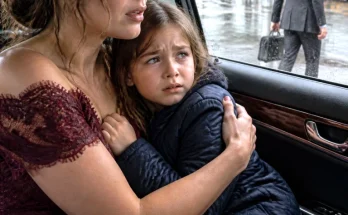
My Neighbor Broke Into My House To Save My Daughter. He Sent Me The Video. Broken Glass On The Floor. My Daughter Walking Across It, Barefoot And Crying. My Father-In-Law Pushing Her. “Keep Going. Pain Makes You Strong.” My Wife Blocking The Door. “She’s Fine. My Father Did This To Me.” 10 Relatives Cheering. Blood On The Tiles. I Was Overseas And Couldn’t Fly Back For 4 Hours. I Made Two Calls. First To A Lawyer. Second To Someone With No Laws. 1 Hour Later, The Screaming Started…
### Part 1
I learned discipline in the Marine Corps, but I learned patience after I came home.
Patience was smiling when my father-in-law, Gerald Kaufman, called me “the help in a better suit” at his own daughter’s engagement dinner. Patience was sitting through seven years of Thanksgiving meals where every sentence in the room seemed to wait for Gerald’s approval before it could breathe. Patience was watching my wife, Mercedes, shrink two inches whenever her father cleared his throat.
I told myself I was doing it for peace.
I told myself a lot of stupid things.
Mercedes and I lived in Newton, outside Boston, in a house with white trim, polished floors, and a kitchen too pretty for real life. She came from Kaufman money. I came from a mother who cleaned offices at night and a Marine recruiter who told me I had two choices: stay angry or get useful.
I got useful.
At thirty-four, I coordinated international freight routes for companies that needed cargo moved through complicated places without excuses. Southeast Asia. The Gulf. Eastern Europe. If something was stuck at a port, I knew who to call. If a shipment got flagged, I knew which document had been filed wrong. It paid well enough to give Mercedes the life she’d grown up expecting and to give our daughter Lily the life I had promised myself she’d have.
Lily was five years old then, almost six. She had my dark eyes, Mercedes’ soft curls, and a laugh that could make a whole room loosen its grip.
Gerald called her “a Kaufman girl” from the day she was born.
I hated that.
“She’s a Hood too,” I said once, not loudly, just enough.
Gerald looked at me over his glass of scotch. “Names are legal details, Russell. Blood is inheritance.”
Mercedes touched my knee under the table, not to comfort me, but to warn me.
That was our marriage in one gesture.
On a Tuesday in March, I was in Dubai, sitting in a hotel room that smelled faintly of lemon cleaner and stale air conditioning. I had a container problem, two missing signatures, and a client in Singapore threatening to pull a contract worth more than my first house. My laptop glowed on the desk. The city outside the window glittered like someone had spilled diamonds across black velvet.
It was 11:47 p.m. in Dubai.
Back home, it was mid-afternoon.
Mercedes had texted me earlier about Lily’s birthday party. The cake was ordered. The decorations had arrived. Gerald had apparently vetoed the balloon artist Lily wanted because, in his words, “cheap entertainment creates cheap memories.”
I had typed back, Let her have the balloon guy.
Mercedes sent a heart emoji and never answered the point.
Then my phone buzzed.
Norman Rios.
I stared at the name for a second, confused. Norman lived three doors down from us. Quiet man, mid-fifties, widower, worked from home doing architectural drafting. We had spoken maybe four times in two years: trash pickup, neighborhood watch, a storm drain issue, and once when his orange cat wandered into our garage.
I almost let it ring.
Then something in my chest tightened.
I answered. “Norman?”
“Russell,” he said. His voice was low, controlled, too careful. “I’m at your house.”
I sat up straighter. “Why?”
“I need you to stay calm and listen to me.”
The hotel room seemed to lose oxygen.
“What happened?”
“I heard screaming. A child screaming. I went over. Nobody opened the door. I looked through the side window and saw your daughter in the kitchen.”
My hand closed around the phone so hard my knuckles went white.
“Where is Lily?”
“She’s out now. Police are coming. Ambulance too.” Norman swallowed, and I heard glass crunch faintly under his shoes. “Russell, I broke a window to get in. I had to. I’m sending you a video, but you need to prepare yourself.”
“No,” I said, because the body rejects truth before the mind can name it. “Tell me she’s okay.”
“She’s alive. She’s conscious. But you need to see what they did.”
They.
Not she.
Not accident.
They.
The video came through before I could ask another question.
Forty-seven seconds.
That was all it took to destroy the life I thought I had.
My kitchen floor was covered in broken glass, shining under the recessed lights like ice chips. Lily stood in the middle of it, barefoot, her little pink dress wrinkled at the hem, her face swollen from crying. Gerald Kaufman stood behind her with both hands on her shoulders, pushing her forward.
“Keep going,” he said, voice sharp and proud. “Pain makes you strong.”
Lily sobbed so hard her words broke apart.
“Daddy. I want Daddy.”
My daughter was calling for me from the other side of the world.
And I wasn’t there.
Mercedes stood in the doorway.
My wife.
The woman who kissed Lily’s forehead every night when I was home. The woman who sent me pictures of lunchboxes shaped like bunnies. The woman who had once cried because Lily got a fever after her first preschool field trip.
She was blocking the door with her arms crossed.
“She’s fine,” Mercedes said. “My father did this to me when I was her age. It’s tradition.”
The camera shook. Norman must have been outside the broken window then, filming before he climbed in.
I saw more people.
Gerald’s brother Cecil. Cecil’s wife Joan. Mercedes’ sister Graciela and her husband. Cousins I had endured at Christmas. Gerald’s mother in a chair like some ancient queen watching a ceremony. Around ten of them, gathered in my kitchen, watching my little girl cry.
Some looked uncomfortable.
Some smiled.
One was recording on her phone.
“Blood on the floor means she’s learning,” Gerald said.
The video ended there.
For thirty seconds, I didn’t move.
My laptop fan hummed. A car horn sounded far below. Somewhere in the hallway, a hotel door closed softly.
Then I stood, walked to the bathroom, and threw up until there was nothing left.
When I looked in the mirror, the man staring back at me had calm eyes.
That scared me more than rage would have.
Because rage burns wild.
Calm chooses targets.
I rinsed my mouth, wiped my face, and called Aaron Lacey, the best family attorney I knew in Boston.
When he answered, I said, “My wife’s family tortured my daughter. I need emergency custody, restraining orders, and every legal weapon you can file before sunrise.”
Aaron didn’t ask if I was exaggerating.
“Send me everything,” he said.
I sent the video.
Then I made the second call.
The one I had promised myself years ago I would never make for anything personal.
The contact in my phone said Jackson Supply Company.
There was no Jackson Supply Company.
There was only Andrew Herman.
He answered on the third ring.
“Russell,” he said. “Been a while.”
“My daughter has been hurt,” I said. “I’m overseas. I need help.”
The silence on the line changed shape.
“Tell me everything.”
So I did.
And when I finished, Andrew asked one question.
“How far?”
I looked back at the frozen frame of Lily’s face on my phone.
“However far it takes,” I said.
Andrew exhaled slowly.
“Then keep your phone close.”
An hour later, while I was booking the earliest flight home, Norman texted me.
Police here. Ambulance taking Lily to Children’s. Cuts aren’t life-threatening. She keeps asking for you.
I pressed the phone against my forehead and closed my eyes.
Then another message appeared.
Andrew.
I’m outside your house. Police left twenty minutes ago. Your wife and her family are still inside.
I stared at the words until they blurred.
Then Andrew sent one more line.
Last chance to tell me no.
I thought of Mercedes at the doorway.
I thought of Gerald’s hands on Lily’s shoulders.
I typed back two words.
No mercy.
And sixty-three minutes later, my phone rang again.
Andrew was breathing hard.
“It’s done,” he said.
Behind his voice, faint and distant, someone was screaming.
And for the first time that night, I felt nothing but the beginning of consequences.
### Part 2
The flight home from Dubai felt like punishment designed by someone who hated fathers.
Fourteen hours of recycled air, quiet footsteps, plastic cups, and a glowing map that seemed to move slower every time I looked at it. I didn’t sleep. I didn’t eat. I sat in a business-class seat that could recline into a bed and watched the Atlantic crawl beneath a small digital airplane icon.
Aaron kept sending updates.
Emergency custody filing ready.
Restraining order petitions drafted.
Police report received.
Hospital records requested.
Judge availability pending.
Every message was neat, professional, lawful.
None of it reached the part of me still standing in that kitchen with my daughter.
At 6:47 a.m., the plane touched down at Logan. Boston was gray and wet, a thin spring rain dragging lines down the airport windows. The city looked ordinary, which offended me. Coffee shops opening. Taxi drivers yawning. Businessmen complaining into phones.
My daughter had walked barefoot over broken glass while her family watched, and the world still had the nerve to continue.
I took a cab straight to Boston Children’s Hospital. The driver tried to talk twice. I must have answered in a way that made him stop, because the rest of the ride passed in silence except for windshield wipers and my own breathing.
The pediatric wing smelled like antiseptic, apple juice, and fear.
A young officer sat outside room 412. He checked my ID twice, his eyes flicking from the card to my face.
“Mr. Hood,” he said. “Your neighbor gave a full statement. Detective Finley will want to speak with you.”
“Later.”
He hesitated, then nodded. “Your daughter is awake.”
I opened the door.
Lily sat propped up in bed, both feet wrapped in white bandages. She held a stuffed elephant I had never seen before, the kind hospitals give children when the adults around them have failed too badly.
Her face turned toward me.
For half a second, she looked confused, like she was afraid I might be another dream.
Then her mouth trembled.
“Daddy.”
I crossed the room in three steps and gathered her into my arms as carefully as I could. She smelled like hospital soap and strawberry shampoo. Her hands gripped my shirt with desperate strength.
“I’m here,” I said into her hair. “I’m here, baby.”
“Grandpa hurt me,” she whispered.
Something inside me split cleanly in two.
“I know.”
“Mommy said I had to be strong.”
Her voice was tiny, ashamed, as if she had failed some test no child should ever be given.
I pulled back enough to see her face. “Listen to me, Lily. Crying when something hurts doesn’t mean you’re weak. Asking for help doesn’t mean you’re weak. What they did was wrong. Not you. Them.”
She blinked at me.
“Am I in trouble?”
“No.”
“Is Mommy mad?”
“No,” I said, and then corrected myself because she deserved truth, not comfort wrapped around a lie. “Mommy doesn’t get to be near you right now.”
Lily looked down at the elephant.
“Because she didn’t help?”
I had negotiated with customs officers in countries where one wrong word could cost a company millions. I had stood before commanders after operations went bad. I had told men’s mothers things no mother should hear.
Nothing had ever been harder than answering my five-year-old daughter.
“Yes,” I said. “Because she didn’t help.”
The doctor came in a few minutes later. Dr. Heather Hartman, gray at the temples, kind eyes, voice steady in the way people get when they’ve had to learn how not to cry at work.
She asked Lily if she could talk to me outside.
Lily clutched my hand.
“I’ll stand right here where you can see me,” I promised.
In the hallway, Dr. Hartman held a clipboard against her chest.
“Your daughter has multiple lacerations on both feet,” she said. “None life-threatening, but several required stitches. She’ll need wound care, follow-up appointments, and monitoring for infection.”
I nodded because the facts needed somewhere to land.
“There’s more,” she said.
My eyes found hers.
“Lily disclosed other incidents. Being locked in small spaces as punishment. Being forced to hold uncomfortable positions. Being told pain was obedience. She described your father-in-law and several family members, but she also described your wife being present.”
The hallway lights hummed overhead.
“How long?”
“I can’t say with certainty. Based on the way she talked, not just once. Not just yesterday.”
I looked through the glass panel in the door. Lily was arranging the elephant’s ears with solemn concentration.
Months.
Maybe longer.
While I was on work calls. While I was moving freight across oceans. While Mercedes texted me pictures of Lily’s drawings and told me Gerald was “just old-fashioned.”
My stomach turned cold.
Dr. Hartman lowered her voice. “I’ve filed the required reports. The police have photographs and medical documentation. Child Protective Services has been notified. Mr. Hood, I’m going to be direct. Your daughter needs a safe adult who will not minimize this.”
“She has one.”
The doctor searched my face.
Then she nodded.
I spent the next hour beside Lily’s bed, talking about ordinary things because ordinary things were life rafts. The balloon artist. Pancakes. Scout, the dog she wanted someday. Her birthday cake with purple frosting.
Eventually, she fell asleep.
Her little fingers stayed curled around mine even after her breathing evened out.
My phone buzzed.
Unknown number.
“This is Detective Caesar Finley,” a man said when I stepped into the hallway. “I’m at your house. We need to talk.”
“I’ll come now.”
The cab ride to Newton took thirty minutes. My neighborhood looked exactly as it had in every photograph Mercedes had ever posted: clean lawns, expensive SUVs, wreaths on doors even when no holiday required them.
Three police cruisers sat in my driveway.
A side window was boarded. Yellow tape crossed the kitchen entrance. Shards of glass still glittered near the back steps.
Detective Finley waited on the porch. Tall, mid-forties, tired eyes, the kind of man who had learned to keep judgment behind his teeth.
“Mr. Hood.”
“Detective.”
He let me inside.
The smell hit first.
Lemon cleaner, old coffee, rain-damp wood, and beneath it a metallic memory that made my throat close. Someone had cleaned the floor, but not well enough. The kitchen looked staged after a storm: chairs pushed back, one cabinet open, a dish towel on the floor, a pink hair clip near the island.
Lily’s hair clip.
I picked it up before anyone could stop me.
Finley watched but said nothing.
“Your neighbor broke the window to enter,” he said. “Given the circumstances, no one is considering charges against him.”
“Good.”
“Your wife and her family were taken in for questioning. Their initial statements described the event as a family discipline tradition.”
I closed my fist around the hair clip.
“Say that again.”
“They claimed it was normal.”
“Normal.”
Finley’s jaw tightened slightly. “They’ve since adjusted that wording with counsel present.”
“Of course they have.”
He looked toward the hallway, then back at me. “There’s another matter.”
I knew what was coming before he said it.
“About an hour after officers left with your daughter, your house was entered by three men. Security cameras caught them briefly before they were disabled. Masks, gloves, no clear identifiers.”
I said nothing.
“They restrained the adults present. No property taken. Several injuries reported. Your father-in-law’s injuries were the most severe. Your wife had bruising. Others had minor to moderate injuries.”
Rain tapped the kitchen window.
Finley studied me.
“Gerald Kaufman claims one of the men said your name.”
I met his eyes.
“I was over the Atlantic.”
“We verified that.”
“Then you know I wasn’t here.”
“That isn’t what I asked.”
“You haven’t asked anything.”
For a moment, the house seemed to hold its breath.
Finley closed his notebook halfway. “Did you arrange for someone to come here?”
I looked at the kitchen floor where my daughter had screamed.
“I asked a friend to check whether my daughter was safe.”
“And when she wasn’t here?”
“Apparently he found the people who hurt her still standing in my house.”
“Convenient friend.”
“Useful one.”
Finley’s expression didn’t change, but something flickered behind his eyes.
“Mr. Hood, I’m investigating a violent home invasion.”
“And I’m preparing for a custody hearing after my daughter was tortured by ten adults in her own kitchen.”
He took that without flinching.
“Your attorney’s Aaron Lacey?”
“Yes.”
“Then don’t answer anything else without him.”
That was not what I expected.
I looked at him.
He looked back, tired and unreadable.
As I walked out, Finley said, “Mr. Hood.”
I stopped.
“Whatever happened here after we left doesn’t change what happened before we arrived. I know that.”
I nodded once.
Then my phone buzzed again.
Aaron.
Hearing at 2 p.m. Mercedes is claiming she was also a victim.
I looked down at Lily’s pink hair clip in my palm.
And for the first time since watching the video, I smiled.
Not because anything was funny.
Because Mercedes had just made the mistake of thinking tears could erase a doorway.
### Part 3
Aaron Lacey’s office overlooked downtown Boston from the twenty-third floor, all glass, steel, and expensive silence.
I arrived with rain still on my coat and Lily’s hair clip in my pocket.
Aaron looked like he’d been awake all night. His tie was loose, sleeves rolled up, legal pads spread across his desk in yellow layers. On one screen, the video was paused before the worst part. On another, a custody petition sat open with my name and Mercedes’ name separated by a line that suddenly looked like a battlefield.
He didn’t ask how I was.
Good attorney.
“What did you tell Detective Finley?” he asked.
“That I was overseas and asked a friend to check on my daughter.”
Aaron took off his glasses and rubbed the bridge of his nose.
“Russell.”
“I know.”
“No, I don’t think you do. I’m going to say this once as your lawyer and as someone who has no interest in becoming a witness. Whatever you did or did not arrange, I do not want details. Do not give me details. Do not volunteer details to police. Do not act righteous in front of a prosecutor. Righteous men still go to prison.”
“I understand.”
He watched me for a second, then nodded.
“Custody first. Everything else later.”
He slid a file across the desk.
“The hearing is in Suffolk County. Judge Patricia Morrison. She’s fair, but not sentimental. That helps us.”
“How does it help?”
“She doesn’t like theatrics. Mercedes’ attorney, Douglas Maguire, is going to give her theatrics.”
“Who hired him?”
“The Kaufmans. For now.”
“For now?”
Aaron leaned back. “Their money may become less stable than they think. But that’s another conversation.”
I caught the phrasing but let it pass.
“What is Mercedes saying?”
“That she was raised under Gerald’s control. That she believed the abuse was discipline because she had been conditioned since childhood. That she froze. That she now understands it was wrong. She wants supervised visitation.”
“No.”
“I know.”
“No, Aaron. Not supervised. Not through glass. Not across a table. Not after therapy. Never.”
He folded his hands.
“Family court doesn’t run on never. It runs on evidence, risk, and what a judge believes serves the child’s best interest.”
“My daughter’s best interest is never seeing Mercedes again.”
“Then we prove it.”
The courtroom was smaller than I expected.
I don’t know why I imagined something grand. Maybe because life-changing decisions feel like they should happen under high ceilings. Instead, it was just a beige room with fluorescent lights, wooden benches, and a faint smell of paper, dust, and coffee.
Mercedes sat at the other table.
I had not seen her since the video.
Her left eye was darkened. Her lip was split. She moved carefully when she turned, like breathing hurt. For one second, old instinct tried to rise in me. The husband instinct. The trained response to ask if she was okay.
Then I saw her hands in the video again, crossed at the doorway.
The instinct died.
She looked at me with wet eyes.
“Russell,” she whispered.
I walked past her and sat beside Aaron.
Judge Morrison entered without drama. Gray hair, sharp eyes, no wasted motion. Everyone stood. Everyone sat.
Aaron went first.
He did not shout. He did not perform. He built a wall, brick by brick.
The video.
Norman’s statement.
The doctor’s report.
Photographs.
Lily’s words.
A pattern of punishments disguised as discipline.
The room changed while the evidence unfolded. At first, people watched with professional distance. The clerk typed. The bailiff stood near the wall. Maguire shuffled papers.
Then the video played.
Lily’s voice filled the courtroom.
“Daddy. I want Daddy.”
The typing stopped.
Someone behind me inhaled sharply.
Mercedes covered her mouth and sobbed.
I did not look at her.
I watched Judge Morrison.
Her face did not move, but her eyes hardened.
Norman testified by phone. His voice shook once when he described hearing Lily scream through the walls. He apologized for breaking my window.
Judge Morrison said, “Mr. Rios, based on what I have seen, that window was fortunate to be there.”
Then Dr. Hartman testified.
She described the injuries clinically, carefully. She did not dramatize. She did not need to.
When she spoke about Lily asking whether she had “failed the strong test,” my vision narrowed until the courtroom was nothing but the grain of the table beneath my hand.
Then Mercedes took the stand.
She looked smaller up there, wrapped in a cream sweater, hair pulled back, no jewelry except her wedding ring. She twisted it once before speaking.
“I love my daughter,” she said.
I heard a woman behind me sniffle.
Mercedes cried softly, beautifully, the way people cry when they know others are watching.
“I made a terrible mistake. I know that. My father raised us to believe pain was part of discipline. He did this to me. To my sister. To my cousins. I thought I was helping Lily become strong. I know now how wrong that was.”
Aaron’s pen stopped moving.
Maguire asked gentle questions.
Was Gerald controlling?
Yes.
Was Mercedes afraid of disobeying him?
Yes.
Had she been conditioned since childhood?
Yes.
Did she regret what happened?
“Yes,” she whispered. “More than anything.”
Then Judge Morrison leaned forward.
“Mrs. Hood.”
Mercedes looked up.
“Yes, Your Honor?”
“When your daughter was crying, did she ask for help?”
Mercedes swallowed. “Yes.”
“Did she ask for you?”
A pause.
“Yes.”
“What did you do?”
Mercedes’ lips parted, but nothing came out.
Maguire stood. “Your Honor, my client has already explained the psychological—”
“Sit down, Mr. Maguire.”
He sat.
Judge Morrison kept her eyes on Mercedes.
“What did you do?”
Mercedes’ voice thinned to almost nothing.
“I stood by the door.”
“Did you move away from the door?”
“No.”
“Did you call emergency services?”
“No.”
“Did you tell your father to stop?”
Mercedes closed her eyes.
“No.”
“Did you tell your daughter she was fine?”
A tear slid down Mercedes’ cheek.
“Yes.”
Judge Morrison made one note.
That was the moment I knew Mercedes had lost.
Not because the judge hated her.
Because the judge saw her.
The ruling came twenty minutes later.
Full emergency custody to me.
Restraining orders against Mercedes, Gerald, and every family member present.
No visitation pending criminal proceedings.
No contact with Lily.
Psychological evaluation required before any future custody motion could even be considered.
Mercedes made a sound like something had been torn out of her.
“Please,” she said, standing. “She’s my baby.”
Judge Morrison looked over her glasses.
“She was your baby when she was screaming.”
The gavel came down.
Next case.
Outside the courtroom, reporters had already gathered. The Kaufman name carried weight in Boston, and weight made good headlines when it fell.
Aaron guided me through a side hallway.
“You did well,” he said.
“I didn’t do anything.”
“You didn’t explode. That matters.”
My phone buzzed.
A message from Andrew.
Custody?
I typed back.
Mine.
His reply came fast.
Good. Now decide if you want justice or peace.
I stared at the screen.
Aaron noticed.
“Problem?”
I put the phone away.
“No,” I said. “Just someone asking the right question at the wrong time.”
But that was a lie.
Because as I walked out of the courthouse with temporary custody papers in my hand, I understood something that made the air feel colder.
The law had protected Lily today.
But the law had not protected her yesterday.
And I didn’t know if I could ever trust it enough to stop there.
### Part 4
I didn’t take Lily home.
The house in Newton had sunlight in the breakfast nook, her drawings on the refrigerator, a purple toothbrush beside the sink, and a kitchen floor I could never let her stand on again.
Aaron arranged a furnished apartment in Brookline under a corporate lease. Two bedrooms, fourth floor, secure entry, underground parking, a doorman who looked like he had played linebacker before his knees gave out. It smelled like fresh paint and new carpet, not memory.
I picked Lily up from the hospital the morning after the hearing.
She wore yellow pajamas under a soft coat because shoes were impossible. A nurse carried her to the wheelchair, and Lily kept apologizing every time someone touched her bandages.
“Sorry,” she said when I lifted her into the car.
“You don’t have to be sorry for hurting.”
She looked out the window as Boston moved past in wet gray streaks.
“Are we going home?”
“No.”
“Why?”
I tightened my hands on the steering wheel.
“Because home is where you feel safe. That house doesn’t feel safe right now.”
She nodded like that made more sense than it should have to a child.
At the apartment, I carried her inside. She studied the living room, the bare walls, the couch still wrapped in delivery plastic at one corner.
“Is Mommy coming here?”
“No, baby.”
“Does she know where we are?”
“No.”
She looked relieved first.
Then guilty for looking relieved.
I hated Mercedes for putting that expression on her face.
We spent the afternoon arranging her room. I let Lily decide everything. Bed near the window or near the wall. Elephant on the pillow or the shelf. Nightlight in the outlet by the door or by the dresser.
Control.
Tiny choices.
Safe choices.
A child who had been forced forward needed to learn she could say stop and have the world obey.
That evening, after she fell asleep, I stood in the kitchen and listened to the apartment settle. The refrigerator hummed. A siren faded somewhere blocks away. Rain clicked against the windows.
My phone rang.
Aaron.
“Mercedes took the DA’s offer,” he said.
I closed my eyes.
“What offer?”
“Misdemeanor plea, probation, mandatory therapy, cooperation against Gerald.”
“She gets no prison.”
“Likely not.”
“She stood in the doorway.”
“I know.”
“She helped.”
“I know.”
“Then why?”
“Because Gerald is the bigger target. The prosecution wants him. They want her testimony about prior abuse, family patterns, coercive control. It strengthens the case.”
I stared at the counter. Someone had left a faint circular stain on the cheap laminate. A coffee mug from a previous tenant, probably.
“What about custody?”
“This doesn’t give her access. Not with Judge Morrison’s order. Not with Dr. Hartman’s report. But she will use therapy and cooperation to look rehabilitated later.”
“No.”
“Russell—”
“No.”
Aaron exhaled. “Then we prepare for a long fight.”
“Prepare.”
After I hung up, I checked Lily’s room. She was asleep on her side, one hand curled against her cheek. The elephant lay under her arm like a guard dog.
I went back to the kitchen and opened my laptop.
Gerald Kaufman had spent forty years building Kaufman Medical Supply into a New England institution. Hospitals used his products. Clinics used his products. Charity boards praised him. Politicians shook his hand. His family lived off the company like branches off a thick old tree.
I typed his name into search bars until the screen filled with articles, corporate filings, foundation pages, social photos.
Gerald cutting ribbons.
Gerald at hospital galas.
Gerald beside Mercedes at our wedding, one hand on her shoulder like ownership.
I made notes.
Subsidiaries.
Warehouse addresses.
Board members.
Suppliers.
Charities.
Properties.
The deeper I looked, the stranger the pattern became. Companies registered under cousins’ names. Import records that routed through shell distributors. Sudden contract wins after donations. A warehouse inspection delayed three times in four years.
I knew logistics.
I knew when paperwork smelled wrong.
At 9:12 p.m., Mercedes called.
I let it ring.
She called again.
Then a text appeared.
Please. I need to hear her voice.
I deleted it.
Another.
I know I failed. I know. But you don’t understand what my father is.
That one I stared at longer.
Not because I felt sympathy.
Because she was wrong.
I understood exactly what Gerald was.
I had met men like him in war zones wearing different clothes. Men who built little kingdoms from fear. Men who called cruelty order. Men who taught everyone around them to confuse obedience with love.
My phone buzzed again.
Unknown number.
For one wild second, I thought it was Gerald.
But the message was from Andrew.
Tomorrow. 10 a.m. Somerville. Come alone.
I should have ignored it.
I should have focused on Lily’s wound care, custody filings, therapy appointments, school applications, the thousand practical tasks of becoming a single father overnight.
Instead, I was standing in a borrowed kitchen, looking at a spreadsheet of Gerald Kaufman’s companies, feeling the cold clarity return.
The next morning, I dropped Lily at a trauma-informed child care center Aaron recommended. She cried when I left. Not loudly. Quietly, like she didn’t want to be trouble.
I crouched in front of her cubby.
“I’m coming back at three,” I said.
“Promise?”
“Promise.”
“Even if I cry?”
“Especially then.”
She hugged me hard.
Then I drove to Somerville.
Andrew’s office was on the fifth floor of a plain building above a gym and a tax preparer. The hallway smelled like rubber mats and burnt coffee. His door had no name on it.
He opened before I knocked twice.
Andrew Herman looked like a man who could disappear in any crowd. Average height, average build, plain dark sweater, calm face. Only his eyes gave him away. They missed nothing.
“You look terrible,” he said.
“You look the same.”
“That’s the point.”
Inside, the office held a desk, two chairs, a laptop, and no personal items.
He gestured for me to sit.
“Before we talk,” he said, “your daughter?”
“Safe. Hurt. Trying.”
He nodded once. “Good.”
Then he opened a folder and slid it across the desk.
I looked down.
Invoices.
Import documents.
Supplier certifications.
Emails printed without headers but full enough to understand.
Kaufman Medical Supply.
“You found these overnight?”
“No,” Andrew said. “I started looking after I left your house. Men like Gerald usually have rot somewhere. His wasn’t hard to smell.”
I flipped through the papers.
Uncertified manufacturers.
Relabeled inventory.
Hospital-grade pricing for products routed through questionable suppliers.
Inspection notes altered.
I knew enough to know what I was seeing.
Fraud.
Not small fraud.
Empire-ending fraud.
Andrew leaned back.
“Your father-in-law built his throne out of bad paperwork and worse arrogance.”
“Can it be proven?”
“Yes.”
“Legally?”
“If the right agencies receive the right documents from the right sources.”
I looked at him.
“You’re offering to destroy his company.”
“No,” Andrew said. “I’m telling you his company is already destroyable. I’m offering to make sure someone notices.”
Outside the window, traffic moved along the street like nothing historic was happening five floors above it.
“If this goes forward,” Andrew said, “it touches all of them. Gerald. Mercedes. Her sister. Cousins. Cecil. They’re tied into payroll, property, investment accounts. When the company freezes, the family freezes.”
I thought of ten adults in my kitchen.
All watching.
All choosing.
“Good.”
Andrew studied me for a long moment.
“Russell, last time was anger. This is not anger. This is a campaign.”
I closed the folder.
“No,” I said. “This is pest control.”
His mouth twitched, but he didn’t smile.
“Then understand the cost. Once a family like that starts falling, they grab at anything. They’ll blame you. They’ll come for custody harder. They’ll sell stories. They’ll play victims. They may even convince themselves they are.”
“They already did.”
“And you?”
“I have Lily.”
Andrew nodded slowly.
“That’ll have to be enough.”
As I stood to leave, he said one more thing.
“Gerald asked about you from custody.”
I stopped.
“What?”
“He wanted to know when you landed. Whether you visited the house. Whether you looked scared.”
My hand tightened around the folder.
Andrew’s voice stayed mild.
“He doesn’t understand yet. But he’s trying to.”
I walked out into the hallway with the documents under my arm.
And halfway to the elevator, my phone rang.
The child care center.
My heart stopped before I answered.
“Mr. Hood,” the director said carefully. “Lily is safe. But someone came here asking for her.”
The elevator doors opened.
I did not step inside.
“Who?”
A pause.
“A woman named Mercedes Hood.”
### Part 5
By the time I reached the child care center, my hands were so calm on the steering wheel that I knew I was dangerous.
The building sat on a quiet Brookline street between a dentist’s office and a small bakery. Painted paper flowers covered the front windows. A sign by the door read, Little Harbor Early Learning, in cheerful blue letters.
A patrol car was parked outside.
Good.
I walked in and found Lily in the director’s office, sitting on a small couch with a blanket around her shoulders. She wasn’t crying when I entered. That hurt worse. She looked beyond crying, pale and still, holding the elephant so tightly its trunk bent sideways.
“Daddy,” she said.
I went to her first.
Always her first.
“I’m here.”
“Mommy came.”
“I know.”
“She said she just wanted a hug.”
The director, Mrs. Alvarez, stood near her desk with a tight expression. Late fifties, silver hair, soft voice, spine of iron. Aaron had chosen well.
“She did not get past the front office,” Mrs. Alvarez said. “Your daughter saw her through the interior window before we could move her.”
“Did Mercedes touch her?”
“No.”
“Did she threaten anyone?”
“She cried. Then she demanded. Then she cried again. We called police when she refused to leave.”
The officer stepped forward. “She was gone when we arrived. Staff recorded part of the interaction on security video. We’ll attach it to the restraining order violation report.”
I nodded.
Restraining order violation.
Less than twenty-four hours.
Mercedes had always been bad at hearing no when it wasn’t softened for her.
Lily leaned into my side.
“Do I have to hug her if she cries?”
“No.”
“What if she says sorry?”
“No.”
“What if she’s sad?”
I crouched in front of her.
“Other people’s sadness does not give them permission to hurt you.”
She blinked, absorbing that like a new rule of physics.
“Even Mommy?”
“Even Mommy.”
Mrs. Alvarez’s eyes glistened, but she turned away before Lily could see.
I took Lily back to the apartment. On the way, we stopped at a drive-through because she asked for fries, and if fries were the bridge back from fear to ordinary childhood, I would have bought the whole restaurant.
That night, Aaron filed an emergency notice about the violation.
Mercedes’ attorney claimed she misunderstood the order.
Judge Morrison did not appreciate that.
By the next afternoon, Mercedes had been formally warned: another attempt and she would be detained.
She called me that evening from a blocked number.
I answered because part of me wanted to hear the hole she was digging.
“You scared her,” I said.
Mercedes sobbed into the phone. “I needed to see her.”
“You violated a court order.”
“I’m her mother.”
“You were her mother in the kitchen too.”
Silence.
Then, softer, “You don’t know what it was like growing up with him.”
“You’re right. I know what it was like growing up without money, with a mother who came home too tired to speak and still never once made me bleed to prove a lesson.”
“That’s not fair.”
“No, Mercedes. What happened to Lily wasn’t fair. This is consequence.”
Her breathing shook.
“My father is telling everyone I betrayed him. Graciela won’t answer my calls. The family says I ruined everything by talking to prosecutors.”
“You ruined everything when you blocked the door.”
“I froze.”
“No. Freezing is doing nothing. You explained it to her while it happened.”
She made a wounded sound.
I felt no pull toward it.
“I’m going to get better,” she whispered. “I’m going to therapy. I’ll prove I can be safe.”
“For someone else, maybe.”
“Russell—”
“Never for Lily.”
I hung up and blocked the number.
Three days later, Kaufman Medical Supply received its first surprise inspection.
Aaron called me before the story broke publicly.
“FDA and state health officials are at two warehouses,” he said. “Hospital procurement departments are being notified. This is going to move fast.”
“How fast?”
“Fast enough that the Kaufmans will feel the floor drop before they know who cut it.”
I stood by the apartment window, watching Lily draw at the table. She was making a house with a red roof, a sun in the corner, and two stick figures in the yard.
Only two.
“What happens to the company?”
“If the documents are accurate? Suspended contracts. Frozen inventory. Civil penalties. Possible criminal exposure.”
“And the family?”
“Tied to it.”
“Good.”
Aaron was quiet for a second.
“Russell, I’m your lawyer. I’m not your priest. But I need to ask whether any of this is going to blow back on the custody case.”
“No.”
“You sound certain.”
“I am.”
He sighed. “Then I’ll keep doing my job.”
The news broke that evening.
Local first.
Then regional.
Kaufman Medical Supply Under Investigation Over Product Certification Concerns.
By morning, it was worse.
Hospitals Suspend Contracts With Longtime Vendor.
By the end of the week, it was a flood.
Former employees came forward.
Auditors found discrepancies.
Suppliers denied certifications.
A retired warehouse manager gave an interview from his porch, face shadowed under a baseball cap, saying, “Everybody knew Mr. Kaufman wanted things done his way. You didn’t ask too many questions if you wanted your paycheck.”
Gerald was still in custody awaiting trial for what he had done to Lily.
Now his company was collapsing without him.
His lawyers tried to separate the business scandal from the child abuse case. The public did not.
People understood patterns, even when attorneys pretended not to.
A man who would make a child walk on glass was not hard to imagine cheating hospitals.
Within two weeks, the Kaufman mansion had news vans outside the gate. Gerald’s country club suspended his membership. Graciela’s husband moved out. Cecil was photographed leaving a law office looking ten years older.
And Mercedes?
She sent one email through Aaron.
Please ask Russell to stop. My whole family is being destroyed.
Aaron forwarded it with no comment.
I read it twice.
Then I typed back.
They should have stopped when Lily asked.
He did not forward my answer.
He said it was “emotionally satisfying but legally unhelpful.”
Fair enough.
Lily improved in small, uneven steps. She let me change the bandages without trembling. She started laughing at cartoons again. She asked if she could have purple curtains in her room. She woke up from nightmares three nights in a row, then slept through the fourth.
Her therapist, Dr. Naomi Bell, had an office full of soft lamps, wooden toys, and one very calm gray dog named Muffin who seemed professionally trained to absorb sorrow.
After Lily’s third session, Dr. Bell spoke with me alone.
“She is trying to protect you from her fear,” she said.
“What does that mean?”
“She worries that if she cries too much, you’ll be sad. She worries that if she misses her mother, you’ll be angry. She worries her feelings might cause more trouble.”
The words landed hard.
“What do I do?”
“Give her permission to have messy feelings. Don’t make Mercedes a forbidden subject. Make safety the rule, not silence.”
So that night, over macaroni and peas, I said, “It’s okay if you miss Mommy.”
Lily stared at her fork.
“I don’t want to.”
“I know.”
“Sometimes I do.”
“That’s okay.”
“Are you mad?”
“No.”
She pushed one pea around her plate.
“I miss when she sang the bunny song.”
My chest hurt.
“I remember that song.”
“She did bad.”
“Yes.”
“But she did the bunny song good.”
I nodded.
“Both can be true.”
Lily thought about that.
Then she whispered, “I don’t want to see her.”
“You don’t have to.”
Her shoulders dropped with relief.
That was the reversal no courtroom could give me.
Not revenge.
Not headlines.
A five-year-old breathing easier because she believed no.
Then, one month after the incident, Aaron called late.
His voice was different.
Careful.
“Russell, Gerald’s attorney filed a motion today.”
“For what?”
“To subpoena your communications.”
“With who?”
“Anyone they can connect to the home invasion.”
I went still.
Aaron continued, “They’re trying to argue you’re unstable, dangerous, and unfit for custody.”
I looked toward Lily’s bedroom door.
Inside, she was singing softly to the elephant, making up words.
“What do they have?”
“I don’t know yet,” Aaron said. “But they named Andrew Herman.”
For the first time since Dubai, the room tilted.
And I realized Gerald Kaufman might have been falling, but he was still reaching for my daughter on the way down.
### Part 6
Aaron told me not to panic.
That was how I knew there was something to panic about.
We met the next morning in his office before sunrise. Boston was still dark, office cleaners moving like ghosts behind glass doors, delivery trucks hissing at curbs. Aaron had two coffees waiting. I didn’t touch mine.
He slid the motion across the desk.
Gerald Kaufman’s attorney had written it like a man throwing mud with both hands. Allegations of retaliation. Allegations of hired violence. Allegations that I had “weaponized extralegal intimidation” against Mercedes and her family. Allegations that my “military background and overseas contacts” made me a danger to my own child.
At the bottom, under requested discovery, I saw the name.
Andrew Herman.
“How?” I asked.
Aaron tapped the page.
“Phone metadata. They don’t have content, but they know a call occurred. Dubai to a Connecticut number. Then the attack happened later that night. They’re building implication.”
“Can they subpoena him?”
“They can try.”
“Will it work?”
“Depends on what Andrew is on paper.”
I almost laughed. “On paper, Andrew is whatever he wants to be.”
Aaron did not laugh.
“Russell, this is exactly why I warned you.”
“I know.”
“If this becomes a custody issue, Mercedes doesn’t need to prove you arranged anything beyond reasonable doubt. She only needs to make a judge worry.”
Judge Morrison’s words returned.
Best interest of the child.
Risk.
Evidence.
Aaron leaned forward.
“Tell me there is no money trail.”
“There is no money trail.”
“Tell me no messages say anything stupid.”
“No messages say anything stupid.”
“Tell me Andrew will not decide to be dramatic.”
I paused.
Aaron closed his eyes. “That pause concerns me.”
“He won’t talk.”
“That’s not what I asked.”
“He won’t hurt the case.”
Aaron studied me.
Then his phone buzzed.
He read the message and let out a slow breath.
“What?”
“Mercedes’ attorney is joining the motion.”
I felt the old cold spread through me.
Of course she was.
The woman who cried about wanting to heal had found the first sharp object within reach and aimed it at my custody.
By noon, the press had it.
Former Marine Father Accused of Retaliatory Attack After Daughter Abuse Case.
They didn’t name Lily. Thank God. But they named me. They named Gerald. They named Kaufman Medical Supply. They used words like alleged and possible and questions remain.
The article included a quote from an unnamed family source.
Russell Hood has always had a temper.
I read that line standing in the apartment kitchen while Lily colored at the table.
Always had a temper.
That was what they called it when a man stopped politely swallowing disrespect.
My phone rang.
Norman Rios.
“I saw the article,” he said. “It’s garbage.”
“Yeah.”
“I gave another statement.”
“To who?”
“Detective Finley. I told him what I saw before I broke that window. I told him no father on earth could be more dangerous than those people were that day.”
My throat tightened.
“Thank you.”
“Don’t thank me. Just don’t let them spin this.”
I promised I wouldn’t.
Then Andrew called.
I stepped onto the balcony.
“You’ve seen it,” he said.
“Yes.”
“They’re fishing.”
“Can they catch anything?”
“No.”
“You sure?”
“Russell.”
“Answer me.”
His voice sharpened. “No money trail. No usable communication. No witness who will talk. No identifiable participants. The men who entered your house no longer exist in any way that matters to a subpoena.”
The wind was cold against my face.
“They named you.”
“I saw.”
“Does that create risk?”
“For them, maybe.”
“Andrew.”
He sighed. “I won’t touch them. Not now. That would be stupid.”
“Good.”
“But you need to understand something. Gerald isn’t trying to win that motion. He’s trying to dirty you before trial. If the public sees you as violent, he looks less monstrous. If Mercedes looks afraid of you, she looks more sympathetic.”
I looked through the glass. Lily had drawn a dog now. Big ears. Purple collar.
“So what do I do?”
“You let your lawyer crush it.”
“I don’t like waiting.”
“I know. That’s why I’m reminding you.”
The hearing on the motion happened three days later.
Mercedes appeared in court with no wedding ring.
I noticed immediately and hated myself for noticing.
She looked different. Less polished. Thinner. Hair unwashed at the roots. Her old world was collapsing, and for once no one was fixing it before she had to feel the consequences.
Her attorney argued that I had used my “military and logistics network” to orchestrate violence against her family, and that such conduct suggested I might expose Lily to danger.
Aaron rose slowly when it was his turn.
He was not flashy.
He was worse.
He began with the timeline: I was overseas. Police removed Lily before the home invasion. No evidence connected me to any participant. No charges filed. No identified suspects. No money exchanged. No threats from me to Mercedes in writing. No violation of any court order by me.
Then he pivoted.
Mercedes had violated the restraining order at Lily’s child care center.
Mercedes had joined a speculative motion while refusing to accept responsibility for the documented harm.
Mercedes was attempting to shift focus from a child’s injuries to an unproven theory about adult retaliation.
Aaron played the child care security footage.
Mercedes at the front desk.
Crying.
Then demanding.
Then saying, “I have rights. He can’t just take her from me.”
Judge Morrison watched without blinking.
When the video ended, she turned to Mercedes’ attorney.
“Your client was ordered not to contact the child.”
“Yes, Your Honor, but she was emotionally distressed—”
“Most people in this courtroom are emotionally distressed. Court orders remain court orders.”
The motion was denied.
Discovery into my personal communications was rejected as speculative and irrelevant to emergency custody.
Mercedes received a formal warning.
Gerald’s attorney looked furious.
Mercedes looked at me as if I had done this to her.
That was the thing about people like the Kaufmans.
They could stand in a burning room holding matches and still point at the person who called the fire department.
Outside court, she approached me before Aaron could block her.
“Russell, please,” she said.
I stopped but did not turn fully toward her.
“I didn’t want to file that. My attorney said—”
“You signed it.”
Her face crumpled.
“I’m losing everything.”
I looked at her then.
“No. Lily lost something. You’re just paying.”
She flinched.
Good.
That evening, I took Lily to the park. She couldn’t run yet, but she sat on a bench with me and watched other kids chase each other through wood chips under golden late-afternoon light.
“Can I run again when my feet are better?” she asked.
“Yes.”
“Fast?”
“Very fast.”
“Faster than you?”
“Probably.”
She smiled.
Small.
Real.
My phone buzzed.
Aaron.
Kaufman Medical Supply accounts frozen. Federal fraud inquiry expanded. Gerald’s assets tied up.
I looked at Lily’s smile and felt two truths sit side by side.
My daughter was healing.
And the people who hurt her were finally bleeding in ways no bandage could cover.
Then Lily pointed across the playground.
“Daddy?”
Mercedes stood on the sidewalk beyond the fence.
Not approaching.
Not speaking.
Just watching.
In her hand was a small stuffed bunny.
And beside her stood a man I didn’t recognize, holding a camera.
### Part 7
I moved before I thought.
One second I was sitting beside Lily on the bench. The next, I was standing between her and the fence, my body blocking her view.
“Stay behind me,” I said.
Lily’s voice trembled. “Is that Mommy?”
“Yes.”
“Is she allowed?”
“No.”
Mercedes stood frozen on the sidewalk, clutching the stuffed bunny against her chest. The man beside her lifted the camera slightly.
That was when I understood.
Not a reunion.
A scene.
A grieving mother outside a playground, holding a toy, while the cruel father refused access.
I took out my phone and started recording them back.
Mercedes saw and shook her head.
“Russell, please,” she called. “I just brought her bunny.”
The man with the camera adjusted his angle.
I raised my voice enough for the recording to catch every word.
“Mercedes, you are violating a restraining order. Leave now.”
“I’m not near her!”
“You are close enough for her to see you. Leave.”
“She’s my daughter!”
Lily made a small sound behind me.
That sound erased the last thin layer of restraint I had left for Mercedes.
I called 911 with the camera still running.
Mercedes’ face changed. Fear, then anger, then panic.
The cameraman stepped back.
“Ma’am,” he said, “maybe we should—”
“Keep filming,” she snapped.
There she was.
Not broken.
Not helpless.
A Kaufman.
By the time police arrived, Mercedes was crying again. The cameraman claimed he was an independent documentarian working on “family court injustice.” He had no permit, no release, and no good explanation for filming a minor from across a playground.
Mercedes was detained for violating the restraining order.
Lily watched from inside my coat as officers spoke to her mother.
“Is Mommy going to jail?” she whispered.
“I don’t know.”
“Because of me?”
I knelt, ignoring the damp grass soaking through my jeans.
“No. Because of her choices.”
That night, Lily had her worst nightmare since the hospital.
She woke screaming, kicking at blankets, crying, “I’m going, I’m going, I’m sorry.”
I held her on the floor because she didn’t want the bed. Scout didn’t exist yet, no dog, no backyard, no permanent life, just me, a rented apartment, and a child trying to survive memories her own mother kept reopening.
At three in the morning, after she finally slept, I called Aaron and left a voicemail.
“No more warnings. I want Mercedes detained. I want supervised psychiatric review. I want every violation documented and filed. I want the cameraman identified. I want her attorney sanctioned if he knew. I want this finished.”
Aaron called back at six.
“I’m already filing.”
Mercedes spent forty-eight hours in custody.
Not long.
Long enough.
Her attorney claimed she was emotionally unstable due to trauma and family pressure. Judge Morrison ordered a full psychological evaluation and suspended even the possibility of future visitation petitions until completion and review.
The cameraman turned out to be a freelancer hired through a reputation management consultant connected to the Kaufman family.
That consultant’s emails later became public because people in collapsing empires get careless.
Public sympathy turned.
Hard.
The headline changed from Mother Seeks Contact to Mother Violates Order at Playground After Child Abuse Ruling.
That difference mattered.
Meanwhile, Gerald’s business continued to fall apart.
Hospitals sued.
State agencies opened inquiries.
Employees stopped protecting him.
One former accountant turned over records showing family members had received salaries for work they never performed. Graciela had been paid as “compliance liaison” despite never setting foot in a warehouse. Cecil’s wife had billed consulting fees through a shell company. Cousins had company cars, company cards, company apartments.
The Kaufmans had not just watched Lily suffer.
They had lived for years inside Gerald’s machine.
And now the machine was eating them.
I learned all of this through Aaron, through news reports, and sometimes through Andrew, who sent short messages with no emotion.
Warehouse manager cooperating.
Supplier flipped.
Federal grand jury likely.
Gerald knows this came from inside logistics.
That last one made me pause.
I called Andrew.
“Does he know it was me?”
“He suspects everyone,” Andrew said. “That’s what happens to men who rule by fear. They can’t tell enemy from family once the walls crack.”
“Is he dangerous from custody?”
“Less dangerous than he was free. More dangerous than I’d like.”
“What does that mean?”
“It means desperate men still have phones, lawyers, loyalists, and money hidden in places investigators haven’t found yet.”
I looked toward Lily’s room. She was napping after therapy, exhausted.
“What should I do?”
“Keep routines unpredictable. Vary routes. Make sure the child care center has updated photos of every Kaufman relative. Don’t open packages you don’t recognize. Don’t engage with Mercedes.”
“You think Gerald would use Mercedes?”
“I think Gerald already has.”
The idea sat heavily in the room after we hung up.
That evening, I went through every message Mercedes had sent since the incident. Please. I need to see her. I’m losing everything. My father is telling everyone I betrayed him. I just brought her bunny.
Some sounded desperate.
Some sounded coached.
One I had ignored days earlier now looked different.
You don’t understand what my father is.
Maybe that had been a warning.
Maybe it had been bait.
Maybe both.
I was learning that in the Kaufman family, truth and manipulation wore the same perfume.
Lily’s sixth birthday arrived in April.
The original party had been canceled, of course. No mansion cake. No proper entertainment. No Gerald-approved guest list.
Instead, we had four children from Little Harbor, Mrs. Alvarez’s assistant, Norman Rios, Aaron dropping by with a gift, and a balloon artist named Marco who made Lily a purple dragon with wings.
The apartment smelled like frosting and pizza. Sunlight came through the windows. Lily wore slippers over soft bandages and laughed when the dragon balloon bonked her in the nose.
For two hours, she was six.
Just six.
Not a witness.
Not a victim.
Not a custody case.
When everyone sang happy birthday, she looked at me before blowing out the candles.
I nodded.
She blew them out.
Everyone clapped.
She smiled.
Later, after guests left and wrapping paper covered the floor, Norman helped me carry trash downstairs.
In the elevator, he said, “She looked happy today.”
“Yeah.”
“You did good.”
“I should have known sooner.”
He turned to me. “No. They should have not done it.”
The elevator hummed down.
Norman added, “There’s a difference.”
I wanted to believe him.
That night, after Lily fell asleep under her new purple blanket, I found a small envelope slipped under the apartment door.
No stamp.
No address.
Just my name.
Inside was a photograph.
Lily at the playground.
Taken the day Mercedes came.
On the back, written in black ink, were four words.
You can’t watch forever.
For the first time, I did not feel cold.
I felt afraid.
And fear, when it belongs to a father, is just another kind of fuse.
### Part 8
I didn’t call Andrew first.
That surprised me later.
I called the police.
Then Aaron.
Then Mrs. Alvarez.
Then Norman.
Only after the report was filed, the building cameras requested, Lily’s child care pickup list updated, and Aaron had arranged an emergency security consultation did I call Andrew Herman.
He answered with, “What happened?”
I told him.
He went quiet.
Not silent.
Quiet.
There was a difference.
“Do not send me a picture of the photo,” he said.
“Why?”
“Because I’m going to tell you to give everything to police, and if you send it to me, I become part of that chain. Keep it clean.”
“That’s unusually legal of you.”
“This involves your daughter. Clean matters.”
I looked at the envelope sealed in a plastic bag on my counter.
“Who sent it?”
“Could be Gerald. Could be someone loyal to him. Could be someone trying to make you think it’s Gerald.”
“Mercedes?”
“Maybe. But this doesn’t feel like her. Too controlled.”
I rubbed my eyes.
“What do I do?”
“Exactly what you’re doing. Formal reports. Security upgrades. No cowboy decisions.”
“Funny advice from you.”
“I’m serious, Russell.”
So was he.
That landed.
The next week became a blur of locks, cameras, procedures, and controlled panic. The apartment building found footage of a delivery driver entering with packages and leaving near my hallway, but the angle missed his face. The company name on the jacket was fake. The police took it seriously because of the ongoing case, but seriousness did not equal answers.
I moved Lily again.
Not far. Different building. Different lease. Different commute.
She did not complain.
That told me how much fear she had learned to carry.
“Is the bad person going to find us?” she asked while I packed her books.
“No.”
“You promise?”
I used to think promises were shields.
Now I knew they were debts.
“I promise I’m doing everything to keep you safe.”
She considered that.
“Can my purple curtains come?”
“Yes.”
“Then okay.”
The new apartment was in Cambridge, smaller but harder to access. I told Lily it was an adventure. She humored me with the weary kindness of a child who knew adults needed help pretending.
Gerald’s criminal trial approached through summer heat.
The city grew sticky. Sidewalks smelled like rain and asphalt. Lily’s bandages came off. Her steps were careful at first, then stronger. The scars on her feet looked like thin pale threads. She hated looking at them.
Dr. Bell told me not to rush her.
“She needs ownership over her body again,” she said. “Let her decide when she talks about the scars.”
So I didn’t talk about them unless Lily did.
One night, while brushing her teeth, she looked down and said, “They look like little lightning.”
I leaned against the bathroom door.
“They do.”
“Lightning is strong.”
“Yes.”
She frowned at her reflection.
“But Grandpa was wrong.”
My heart stopped.
“About what?”
“Pain didn’t make me strong. You coming did.”
I had to grip the doorframe.
She spit toothpaste into the sink.
“Can we get ice cream tomorrow?”
Children walk through sacred moments and ask for sprinkles.
“Yes,” I said. “Absolutely.”
In August, Gerald Kaufman went on trial.
I did not bring Lily.
I would never bring Lily.
But I attended every day.
Gerald entered the courtroom in a suit instead of jail clothes, because his attorney knew optics. He looked older. His jaw had healed slightly crooked. He moved carefully, one shoulder stiff. The first time he saw me, his eyes burned.
Good.
Let him look.
The prosecution opened with the video.
No warning could make it easier.
I watched strangers watch my daughter suffer. Jurors shifted. One woman covered her mouth. A man in the second row looked down at his hands as if ashamed to have eyes.
Gerald sat still.
That almost broke me more than if he had reacted.
He believed discipline sometimes looked ugly. He believed bloodlines mattered more than pain. He believed he had been entitled to shape Lily because she came from Mercedes, and Mercedes came from him.
The prosecution called Norman.
He wore a navy jacket and answered clearly. He described the screaming, the locked door, the broken window, the sight of Lily in the kitchen.
Gerald’s attorney tried to make him sound intrusive.
“So you entered a private home by force?”
Norman looked at the jury.
“I entered a private home because a child was screaming and no adult inside was helping her.”
No further damage was done to Norman.
Dr. Hartman testified next.
Then a child psychologist.
Then a former Kaufman cousin-in-law who described “family discipline rituals” from years past. Nothing as severe as Lily’s incident, but enough to show the rot had roots.
Mercedes took the stand on the fourth day.
She wore black.
Her hair was pulled back. No makeup. No wedding ring.
I expected tears.
They came.
But not at first.
At first, she spoke in a flat voice, like someone reading from a room deep underground.
“My father controlled everything,” she said. “What we wore. Who we dated. How we spoke. If we embarrassed him, we were punished. If we cried, he said crying was manipulation. If we resisted, he said pain was the only honest teacher.”
Gerald stared at her.
She did not look at him.
The prosecutor asked, “Did you believe what happened to Lily was acceptable?”
Mercedes closed her eyes.
“That day, part of me did. That is the most shameful truth of my life.”
The courtroom was silent.
“I heard her call for me,” she said. “And I repeated my father’s words instead of listening to my child.”
Then she cried.
For once, I believed the tears were real.
It changed nothing.
During cross-examination, Gerald’s attorney tried to paint her as a liar saving herself.
“You accepted a plea deal, correct?”
“Yes.”
“You avoided prison by blaming your father.”
Mercedes looked at Gerald then.
“No,” she said. “I avoided telling the truth for thirty years by obeying him.”
Gerald’s face changed.
Just slightly.
But I saw it.
The first crack that came from inside the family.
The jury deliberated for four hours.
Guilty on all counts.
Gerald stood for sentencing three weeks later.
His attorney cited age, health, reputation, charitable contributions, years of service to the medical community.
Judge Morrison listened.
Then she said, “Mr. Kaufman, you called cruelty tradition because tradition sounded cleaner. You called terror discipline because discipline sounded respectable. You hurt a child and taught others to stand by while you did it. This court will not confuse wealth with character.”
Twelve years.
Gerald’s knees bent slightly when the sentence landed.
As the bailiffs moved him, he turned and found me.
For seven years, Gerald had looked at me like I was beneath him.
This time, he looked at me like he finally understood that I had been the last man he should have underestimated.
I did not smile.
I did not need to.
After court, Mercedes waited near the exit.
Aaron muttered, “Do not engage.”
But she spoke before I passed.
“Russell.”
I stopped.
She held a folded letter.
“For Lily. Not now. Someday, maybe.”
“No.”
Her hand shook.
“I’m not asking to see her.”
“No.”
“I just want her to know I’m sorry.”
“She knows what sorry sounds like. She also knows what safety feels like. I won’t let you confuse the two.”
Mercedes lowered the letter.
“I’ll never forgive myself.”
“That’s your job now.”
I walked away.
Outside, August heat pressed against the courthouse steps. Reporters shouted questions. Cameras flashed.
My phone buzzed.
Andrew.
Verdict reached me. Good. Check your car before you drive.
I stopped walking.
Aaron noticed. “What?”
I scanned the parking lot.
My car sat exactly where I had left it.
Too exactly.
And tucked under the windshield wiper was another envelope.
### Part 9
Aaron grabbed my arm before I could move closer.
“Don’t touch it.”
“I know.”
“You were about to touch it.”
“I was about to look.”
“With your hands.”
He called Detective Finley directly. No 911 routing, no waiting at a desk. Finley arrived within twenty minutes with two officers and the expression of a man who hated being right.
The envelope was removed, photographed, bagged.
Inside was a single printed page.
Not a photo this time.
A copy of Lily’s new child care emergency contact form.
Cambridge address blacked out.
My name circled.
At the bottom, typed in plain font:
Fathers get tired.
My vision narrowed.
Finley watched me carefully.
“Mr. Hood.”
“Find who did this.”
“We’re working on it.”
“Work harder.”
Aaron stepped in. “Russell.”
“No.” I looked at Finley. “This is not a prank. This is not grief. This is someone tracking a child connected to an active criminal case.”
Finley’s jaw flexed. “I agree.”
“Then treat it like that.”
“We are.”
He sounded tired, not dismissive. That helped me stop before anger made me stupid.
The investigation moved faster after that. The child care form had been accessed through a compromised email account belonging to a temporary administrative assistant. The assistant had clicked a fake payroll link. Someone had pulled files. Not just Lily’s. Dozens of children’s records.
But only mine had been printed and left on my car.
The source bounced through servers in three states.
Andrew called it “basic but competent.”
That phrase did not comfort me.
I changed Lily’s school again before fall.
This time, I enrolled her under additional privacy protections Aaron arranged. No online directory. No parent contact list. No photos. Pickup password changed weekly.
Lily noticed all of it.
Kids notice everything adults hope they won’t.
“Do we move because of Grandpa?” she asked one night.
I sat beside her bed. The room smelled like lavender lotion and clean laundry.
“Because some people connected to him still don’t understand boundaries.”
“Is Grandpa mad?”
“Yes.”
“Because he got in trouble?”
“Yes.”
“But he did the bad thing.”
“I know.”
She picked at the edge of her blanket.
“Sometimes people do bad things and still think they’re the hurt one.”
She thought about that for a long time.
“That’s dumb.”
I smiled despite everything.
“Very.”
Fall came with red leaves and court filings.
Kaufman Medical Supply officially collapsed in October. Bankruptcy. Liquidation. Civil suits lined up like planes waiting to land. Gerald’s properties were tied up. The mansion was listed under court supervision. The Cape house went next. The Florida condo after that.
The family scattered.
Graciela filed for divorce and moved in with a friend in Rhode Island. Cecil sold his boat. Cousins who once smirked at me across holiday tables deleted their social accounts after reporters found their payroll records.
Mercedes moved to California to live with an aunt.
Aaron told me before she left.
“She signed the divorce agreement.”
“What terms?”
“Full legal and physical custody to you. No visitation. No direct contact. No claim on the house proceeds beyond what we already negotiated, and most of that is being swallowed by her legal debts.”
“She fought?”
“Not anymore.”
The divorce finalized on a windy Thursday in September.
I did not celebrate.
I signed where Aaron pointed. Mercedes had signed earlier.
Seven years of marriage ended in paper, ink, and a filing stamp.
I expected grief.
Instead, I felt like I had set down a heavy box I’d been carrying so long my arms no longer remembered empty.
That night, Mercedes called from a new number.
I almost didn’t answer.
Then I did.
Not for her.
For closure, maybe. Or curiosity. Or the last weak ghost of the man who once loved her.
“I’m leaving tomorrow,” she said.
I could hear traffic behind her. Maybe outside a motel. Maybe an airport road.
“Okay.”
“My aunt says there’s a treatment program near Sacramento. Trauma therapy. Family systems. I’m going.”
“Good.”
“I know that doesn’t change anything.”
“No.”
“I know I don’t deserve to see Lily.”
“No.”
Her breath shook.
“I need to say this without asking for anything. I failed her. I failed you. I failed myself. I let my father’s voice come out of my mouth while my daughter cried for me.”
I closed my eyes.
For once, she had named it exactly.
“I hope you get better,” I said.
She sobbed once, quietly.
“Do you mean that?”
“Yes.”
“Do you hate me?”
I looked toward Lily’s closed bedroom door.
“No,” I said after a moment. “Hate keeps people close. I don’t want you close.”
Silence.
Then, “Will you ever tell her I loved her?”
“No.”
Mercedes made a small broken sound.
“If she asks, I’ll tell her the truth. That you had love in you, but not enough courage when it mattered.”
“That’s fair,” she whispered.
“It’s more than fair.”
“I won’t call again.”
“Goodbye, Mercedes.”
“Goodbye, Russell.”
I blocked the number after we hung up.
Then I sat alone in the dark living room for nearly an hour, listening to the radiator tick.
Lily woke and came out rubbing her eyes.
“Daddy?”
“Yeah, baby?”
“I had a dream Mommy was singing the bunny song.”
I opened my arms. She climbed into my lap.
“Was it a scary dream?”
“No. Just sad.”
“That happens.”
She rested her head against my chest.
“Can people be gone and still in your dreams?”
“Yes.”
“Okay.”
We sat there until she fell asleep again.
I carried her back to bed and understood something I had avoided because anger was simpler.
Lily’s healing would not look like mine.
I could cut people out cleanly.
She would have to grow around missing pieces.
My job was not to make those pieces disappear.
My job was to make sure they never cut her again.
The threatening notes stopped after Mercedes left.
At least for a while.
Gerald entered prison. The family lost the company. Andrew stopped sending updates unless I asked. Aaron told me to breathe. Norman came over Sundays with soup and terrible jokes. Life did not become normal, but it became patterned.
Then, in January, a letter arrived at Aaron’s office.
Prison mail.
From Gerald Kaufman.
Aaron called me in before opening it.
“You don’t have to read this.”
“Yes, I do.”
He slit the envelope.
The letter was handwritten, shaky but legible.
It was addressed to me.
Russell,
You believe you have won because courts and cowards turned against me. You believe my family is broken. You believe your daughter is safe because I am behind walls.
You misunderstand blood.
Lily is a Kaufman whether you like it or not.
One day she will want to know where she comes from.
One day she will come looking.
And when she does, she will learn you stole her from her real family.
Aaron stopped reading aloud.
I took the page.
The final line was darker, pressed hard enough to dent the paper.
You can guard a child. You cannot guard the truth.
I folded the letter carefully.
Aaron said, “It’s pathetic.”
“No.”
“No?”
I looked at Gerald’s handwriting.
“It’s useful.”
“Useful how?”
“Because now I know what story he plans to tell if he ever gets the chance.”
Aaron leaned back.
“And?”
“And I’ll make sure Lily hears the truth from me first.”
That night, I pulled out a blank notebook.
On the first page, I wrote:
For Lily, when you are ready.
Then I sat there for a long time, pen in hand, trying to decide how to tell a child that love and danger can wear the same face.
The first sentence took me an hour.
The second took longer.
And by the time dawn touched the windows, I had written only one full page.
But it was the truth.
And this time, no Kaufman would get to stand in the doorway and block it.
### Part 10
Two years passed in uneven layers.
The first layer was survival.
Court dates. Therapy appointments. New routines. Security checks. School forms. Nightmares. Bandage changes. Questions I answered badly, then better, then badly again because fatherhood does not come with a clean draft.
The second layer was rebuilding.
I left the overseas logistics job. I couldn’t be a fourteen-hour flight away from Lily anymore. I started consulting from home, fixing supply chain problems for companies that didn’t care where I sat as long as their containers moved and their numbers made sense.
We moved to Lexington after the divorce money cleared and the last legal knots loosened. A modest house, not Kaufman grand, not polished for guests. A real house. Wooden floors with scratches. A backyard big enough for running. A maple tree that dropped leaves into the gutters no matter what I did.
Lily chose her room because it got morning sun.
We adopted Scout from a rescue that spring.
He was a golden retriever with one torn ear, no sense of personal space, and a heroic commitment to stealing socks. Lily loved him immediately. Scout slept at the foot of her bed like he had been hired for night security and paid in peanut butter.
By seven, Lily looked mostly like any other second grader. She loved art. She hated peas. She read books about animals and asked questions about planets at inconvenient times. She still saw Dr. Bell once a month. She still flinched if glass broke. She still checked doorways when voices got loud.
But she laughed more than she looked over her shoulder.
That was victory.
Not loud.
Not cinematic.
Just a child laughing in a backyard while a dog chased bubbles.
Gerald died in prison in the third year of his sentence.
Heart attack.
Aaron called me with the news on a cold morning while I was packing Lily’s lunch.
I stood with a sandwich knife in my hand, peanut butter on one slice, jelly on the other.
“How do you feel?” Aaron asked.
“I don’t know yet.”
“That’s allowed.”
“Does Mercedes know?”
“She was notified.”
I looked out the kitchen window. Lily was in the yard wearing pajamas under her coat, throwing a tennis ball for Scout before school.
“Any legal fallout?”
“No. His remaining estate is a disaster of claims and debts. Nothing that touches you unless someone tries something sentimental.”
“Like what?”
“Funeral attendance. Letters. Family reconciliation. That kind of nonsense.”
“No.”
“I assumed.”
I told Lily after dinner.
We sat at the kitchen table. Scout’s head rested on her slipper.
“Grandpa Gerald died,” I said gently.
Lily’s spoon paused over her ice cream.
She was quiet for a moment.
“Does that mean he can’t ever come here?”
“Yes.”
“He couldn’t before.”
“No. But now, not ever.”
She nodded.
Then she took another bite.
“Can Scout have a little vanilla?”
I stared at her.
Not because she was cold.
Because she was free.
“Just a little,” I said.
Mercedes sent a request through Aaron asking if she could attend the funeral without objection from me.
I almost admired the audacity.
Aaron sent my answer.
No.
Gerald’s funeral was small, according to the article someone forwarded before I deleted it. Rain. A handful of relatives. No public praise. No hospital board members. No old business partners lining up to tell stories about generosity.
Men like Gerald expect a statue.
Sometimes they get a folding tent and wet shoes.
A month later, Gerald’s sister Evelyn wrote to Aaron. She had been living in Vermont during the incident, she said. She had not been in the kitchen. She believed the family needed healing. She wanted, someday, to know Lily.
I asked Aaron to send one line.
You stood with the family after you knew the truth. The answer is no.
He softened it slightly because lawyers can’t help themselves.
The answer remained no.
Lily turned eight in May.
We held the party in the backyard. Purple streamers. A cake she decorated herself with uneven frosting stars. Six classmates. Norman Rios, now an actual friend, not just the neighbor who saved my daughter. Aaron came with his wife and two boys. Dr. Bell did not come, of course, but sent a card with a watercolor dog on it.
Andrew sent a gift through a courier.
No return address.
Inside was a signed baseball in a glass case and a note that said:
For Lily. Tell her it belonged to someone who knew how to swing hard and run home.
I had no idea how much it cost.
I had a suspicion I didn’t want confirmed.
“Who’s it from?” Lily asked.
“An old friend.”
“Do I know him?”
“No.”
“Is he nice?”
I thought about Andrew standing in my ruined house while the Kaufmans learned fear.
“He’s complicated.”
Lily considered that with the seriousness of eight.
“Can complicated people give good presents?”
“Yes.”
She nodded. “Then thank you, complicated man.”
That night, after everyone left, I sat on the back porch with a beer I barely drank. The yard smelled like cut grass, melted candle wax, and summer coming early. Through the window, I could see Lily asleep on the couch, Scout stretched across her feet, birthday crown crooked on her head.
Peace is a strange thing after violence.
At first, you distrust it.
Then you test it.
Then one day, you realize you’re sitting in your own backyard with no immediate threat to solve, and your body doesn’t know what to do with the quiet.
My phone buzzed.
Unknown number.
I almost ignored it.
Then something made me answer.
“Mr. Hood?” a woman said. “My name is Special Agent Cara Boyd. FBI.”
I sat up.
“I was overseas when the Kaufmans were attacked,” I said. “That’s public record.”
“I know.”
Her voice was calm, professional, not surprised.
“I’ve verified your alibi thoroughly.”
“Then why are you calling?”
“I’ve been reviewing the home invasion case connected to Gerald Kaufman. It crossed into federal interest during the broader fraud investigation.”
I said nothing.
“I’ve spent nearly two years following leads. Money trails. Travel records. Known associates. Former military contacts. Private security contractors. People who owed people favors.”
My grip tightened on the bottle.
Agent Boyd continued.
“If I wanted to make noise, Mr. Hood, I could make some noise.”
“Should I call my attorney?”
“You can.”
“Am I being charged?”
“No.”
The porch light hummed above me.
“Then what do you want?”
She was quiet long enough that I heard a car pass on the street beyond the trees.
“I wanted to tell you the investigation is being closed.”
I did not move.
“Why?”
“Insufficient evidence to support charges.”
“After two years.”
“Yes.”
“That seems like a long time to find insufficient evidence.”
“It can take time to confirm what isn’t there.”
I stared into the dark yard.
“What aren’t you saying, Agent Boyd?”
Another pause.
When she spoke again, her voice was lower.
“I have a daughter. She’s five.”
My throat tightened.
“I’m sorry,” she said. “That’s not official.”
“No.”
“If someone did to her what Gerald Kaufman did to your daughter, I would want the world to burn.”
I closed my eyes.
“Wanting and doing are different.”
“Yes,” she said. “They are. And officially, I found no prosecutable evidence that you did anything.”
“Officially.”
“Officially.”
The word settled between us.
Then she added, “Your daughter is lucky to have someone who chose her completely.”
“I don’t know what you think I did.”
“I know.”
“Good.”
“Take care of her, Mr. Hood.”
She hung up.
I sat there for a long time, phone in hand, beer forgotten, night pressing gently against the porch screens.
Then I deleted the call from my history.
Not because it mattered.
Because some doors should stay closed even after the house is safe.
I went inside and checked on Lily.
She had shifted in sleep, one hand resting on Scout’s head. The birthday crown had fallen to the floor. Her scars, visible where her pajama pants had ridden up, were pale now. Little lightning, she had once called them.
I covered her with a blanket.
“Daddy?” she murmured without waking.
“I’m here.”
She slept on.
And I realized that after everything—the courtrooms, the calls, the collapse of the Kaufmans, Gerald’s death, Mercedes’ exile, the investigation that had just vanished into official silence—the only sentence that still mattered was the first promise I made in the hospital.
I’m here.
### Part 11
When Lily was nine, she asked to read the notebook.
Not all of it.
Not yet.
But enough.
We were in the kitchen on a Sunday morning, making pancakes shaped like things that were supposed to be stars but looked more like injured clouds. Scout sat beside her chair, drooling with optimism.
Lily had grown taller, all elbows and questions. Her curls were usually escaping whatever clips she put in them. She had started choosing her own clothes, which meant bright socks, mismatched patterns, and absolute confidence.
“Daddy,” she said, pouring too much syrup.
“Yeah?”
“Dr. Bell says sometimes kids make stories in their heads when grown-ups don’t tell them enough.”
I set the spatula down.
“She’s right.”
“I think I made some stories.”
“About what?”
She looked at her plate.
“Mommy. Grandpa. The glass.”
The kitchen seemed to hold still.
I pulled out the chair across from her and sat.
“What kind of stories?”
“Sometimes I think maybe Mommy tried to stop it but I forgot. Or maybe Grandpa was sick. Or maybe I was bad before and that’s why everyone was mad.”
I felt the old rage rise, but it had nowhere useful to go. Gerald was dead. Mercedes was gone. The relatives were scattered. The only person in front of me was a little girl trying to understand why love had failed her.
“You were never bad,” I said.
“I know.”
But she didn’t.
Not all the way.
“I wrote something,” I told her. “For when you were ready. Not to force you. Not to scare you. Just so the truth is somewhere safe.”
She looked up.
“Can I see one page?”
I had imagined this moment many times. In every version, I was prepared.
In real life, my hands shook when I took the notebook from the locked drawer in my office.
We sat on the living room couch. Scout climbed up despite being too large and rested his chin on Lily’s knee.
I opened to the first page.
For Lily, when you are ready.
She touched the words.
“You wrote it to me?”
“Yes.”
“Does it say everything?”
“It says the truth as gently as I could write it.”
“Will it make me sad?”
“Probably.”
“Will you sit here?”
“The whole time.”
She read the first page slowly.
It did not describe the video.
Not yet.
It started with her birth. How she came into the world angry and loud. How I cried when I held her. How Mercedes cried too. How people can love you and still fail you later, and how the failure belongs to them, not you.
Lily leaned against me halfway through.
When she finished, she closed the notebook.
“Can I read more another day?”
“Yes.”
“Did Mommy love me when I was born?”
I swallowed.
“Yes.”
“Then what happened?”
I looked at the family photo on the bookshelf. Not the old family. The real one. Me, Lily, Scout, Norman making a ridiculous face in the background at her birthday picnic.
“Sometimes love is real but not strong enough to beat fear. Your mother was afraid of Gerald. She chose obedience when she needed courage.”
Lily frowned.
“So love isn’t enough?”
“No,” I said softly. “Love has to do the right thing, or it’s just a feeling.”
She was quiet.
Then she said, “You did the right thing.”
I thought of Andrew’s call.
The screaming.
The envelope.
The FBI agent.
The documents that destroyed a company.
I thought of all the lines I had crossed and all the lines I had refused to let others cross again.
“I did what I had to do.”
“That’s not the same.”
“No,” I admitted. “It isn’t always.”
She leaned against me again.
“Did you ever do bad things because of me?”
The question hit like a door opening in a room I had locked.
I could have lied.
A clean lie. A fatherly lie. A lie with soft edges.
Instead, I said, “I did things I wouldn’t want you to do.”
She looked up.
“Why?”
“Because I was scared. Because I was angry. Because adults who should have protected you didn’t. Because I wanted to make sure they never hurt you again.”
“Did it work?”
“Yes.”
“Then was it bad?”
I stared at the floor.
There are questions children ask that philosophers spend centuries failing to answer.
“It was complicated.”
She nodded slowly.
“Like the baseball man.”
Despite everything, I laughed once.
“Yes. Like him.”
She didn’t ask more that day.
Over the next year, she read the notebook one page at a time. Sometimes weeks passed between pages. Sometimes she asked questions. Sometimes she closed it and went outside to throw a ball for Scout as if truth needed fresh air.
When she reached the page about the kitchen, she cried.
Not like that night.
Not helpless.
This was different.
Grief with a hand to hold.
“I remember Mommy’s shoes,” she said. “They were white.”
I had not known that.
“She stood so still,” Lily whispered.
I put my arm around her.
“I know.”
“I kept thinking if I cried better, she would move.”
That sentence took something from me I never got back.
“You should never have had to cry the right way to be saved.”
Lily sobbed into my shirt.
“I hate her.”
“That’s okay.”
“I miss her.”
“That’s okay too.”
“I don’t want to.”
“I know.”
She pulled back, furious through tears.
“Why do I miss someone who let it happen?”
“Because hearts don’t heal in straight lines.”
She hated that answer.
I did too.
When Lily was ten, Mercedes wrote again through Aaron.
Three years of therapy, the letter said. Stable job. No contact requested unless Lily wanted it. Acknowledgment of harm. Apology without expectation.
Aaron sent me a copy.
I read it twice.
Mercedes had learned the right language.
Maybe she even meant it.
I put the letter in a folder marked For Later and locked it away.
Not destroyed.
Not delivered.
Later belonged to Lily, not Mercedes.
That night, I asked Lily, carefully, “Do you ever think about hearing from your mother someday?”
She was drawing at the table, shading a dragon wing.
“No.”
“Okay.”
“Maybe when I’m a grown-up.”
“Okay.”
“Will you be mad?”
“No.”
She looked skeptical.
“I might be scared,” I admitted. “But I won’t be mad at you.”
“Would you let me?”
“When you’re old enough to decide safely, I’ll support you.”
“What if she cries?”
“Then you can leave.”
“What if she says sorry?”
“You can still leave.”
“What if she says she loves me?”
I took a breath.
“You can believe her and still leave.”
Lily looked down at her dragon.
“That’s a good rule.”
“It took me a while to learn.”
At eleven, Lily stopped asking whether Gerald was dead.
At twelve, she stopped flinching when a glass fell, though she still left the room afterward.
At thirteen, she told a friend, “I don’t see my mom,” with a tone that invited no follow-up.
At fourteen, she asked for the full notebook.
I gave it to her.
She read it alone in her room.
That was harder than sitting beside her.
For two hours, I heard nothing. Scout, old now, slept outside her door like he had resumed active duty.
When Lily came out, her eyes were red but dry.
She handed the notebook back.
“I’m glad you didn’t forgive them,” she said.
That was not what I expected.
“Forgiveness is yours to decide, not mine.”
“No,” she said. “I mean you. I’m glad you didn’t let them come back because it would have been easier for adults.”
I sat very still.
She continued, “A lot of people forgive because they want the story to be pretty. You didn’t.”
“No.”
“Good.”
She hugged me then. Teenagers ration hugs like wartime supplies, so I understood the value.
Later that night, after she went upstairs, I stepped onto the porch.
Norman, older and slower but still Norman, sat in the chair beside mine. He had come for dinner and stayed because he always knew when I needed quiet company.
“She okay?” he asked.
“She’s strong.”
He looked at me.
“She was always strong.”
“Yeah.”
“You just helped her know it wasn’t pain that made her that way.”
The porch light flickered. Crickets sang in the yard. Inside, Lily laughed at something on her phone, a normal teenage laugh, careless and bright.
For years, Gerald’s voice had lived in my memory.
Pain makes you strong.
That night, finally, another truth replaced it.
No.
Being loved right after pain is what teaches you strength.
And Lily had learned.
### Part 12
Lily turned sixteen on a clear May afternoon that smelled like lilacs and charcoal smoke from a neighbor’s grill.
She had grown into someone Gerald Kaufman would not have understood. Sharp, funny, stubborn in the best way. She wore combat boots with summer dresses and painted tiny moons on her fingernails. She volunteered at an animal shelter. She argued with teachers respectfully enough to avoid detention but precisely enough to win.
She had Mercedes’ curls, my eyes, and a spine that belonged only to herself.
For her birthday, she asked for no big party.
“Just the people who are actually ours,” she said.
So we had Norman, Aaron and his family, Mrs. Alvarez from Little Harbor, Dr. Bell stopping by briefly with a card, and Andrew Herman standing at the edge of the yard like a man attending a barbecue undercover.
Lily knew him now as “Dad’s complicated friend.”
She liked him.
That worried me a little.
“You’re taller,” Andrew said when she approached him.
“That happens to children.”
“So I’ve heard.”
“Are you still complicated?”
“Deeply.”
She grinned. “Good. Normal adults are boring.”
He handed her a small wrapped box. Inside was a brass compass, old but polished.
“For when people try to tell you where north is,” he said.
Lily studied it.
Then she looked at me.
I shrugged. “Complicated.”
She hugged Andrew.
He froze for half a second before awkwardly patting her shoulder.
Norman saw and nearly choked on lemonade.
The afternoon passed in laughter and paper plates. Scout, old and gray around the muzzle, slept under the table and accepted tribute from anyone holding meat. Lily blew out candles on a cake she had baked herself, slightly tilted but excellent.
After dinner, she found me by the porch steps.
“Can we talk?”
“Always.”
We walked to the back of the yard, where the maple tree threw long shadows over the grass.
She held the compass in one hand.
“I want to contact Mercedes.”
The world did not stop.
That surprised me.
Maybe because I had spent years preparing for those words.
Maybe because some part of me always knew they would come.
“Okay,” I said.
She looked at me carefully.
“You’re not going to say no?”
“You’re sixteen. You’re asking, not sneaking. That matters.”
“I don’t want a relationship.”
“Okay.”
“I don’t want her to hug me.”
“Okay.”
“I don’t want her to cry at me like I’m responsible for making her feel better.”
“Very okay.”
“I just want to see if she tells the truth without you in the room.”
That one hurt.
Not because it was wrong.
Because it was necessary.
“I understand.”
“I want Aaron there. Or Dr. Bell. Not you.”
I nodded slowly.
“Also understandable.”
Her mouth trembled.
“I don’t want you to think I’m choosing her.”
I stepped closer.
“Lily, you can ask questions about where you came from without choosing what hurt you.”
She blinked fast.
“I’m scared.”
“Me too.”
That made her laugh through her nose.
“You’re not supposed to say that.”
“I tried pretending I wasn’t scared. It made me worse at everything.”
She leaned against my shoulder.
“If she lies, I’m leaving.”
“Good.”
“If she blames Grandpa for everything, I’m leaving.”
“Good.”
“If she says she loved me the whole time—”
“You can decide whether that matters.”
Lily nodded.
Aaron arranged the meeting three months later in a therapist’s office in Sacramento. Lily wanted to go there, not have Mercedes come to Massachusetts. She wanted control of arrival and exit.
I flew with her.
I waited in the hotel.
That was the longest ninety minutes of my life.
Longer than Dubai to Boston.
Longer than the courtroom verdict.
Longer than any night beside a hospital bed.
When Lily returned, she looked exhausted but intact.
I stood too fast.
She held up a hand. “I’m okay.”
I sat back down because she needed me to.
She kicked off her boots and dropped into the chair by the window.
“She looks older,” Lily said.
I nodded.
“She cried.”
I waited.
“But she tried not to make me take care of it.”
“That’s something.”
“She told the truth. Mostly. She said she heard me call her and didn’t move. She said she has dreams about my voice. She said she doesn’t expect forgiveness.”
Lily looked out at the hotel parking lot.
“Then she asked if I wanted to hear the bunny song.”
My jaw tightened.
“What did you say?”
“I said no.”
Pride and grief hit at the same time.
“She nodded,” Lily said. “She said okay.”
“And how do you feel?”
“I don’t know. Lighter? Sadder? Both.”
“Both is allowed.”
She smiled faintly.
“I know, Dad. You say that about everything.”
“Because it’s true about most things.”
She was quiet for a long time.
Then she said, “I don’t want to see her again right now. Maybe someday. Maybe never.”
“Okay.”
“She gave me a letter.”
My chest tightened.
“Do you want to read it?”
“Not today.”
“Okay.”
“Can we get burgers?”
I laughed, not because it was funny, but because life kept offering proof that children survive in ordinary appetites.
“Yes.”
Years later, when Lily left for college, she chose social work.
I pretended to be surprised.
She rolled her eyes.
“Dad, come on.”
She wanted to work with kids in crisis, she said. Not because trauma was destiny. Because someone had shown up for her, and she knew what showing up could change.
On move-in day, her dorm room smelled like cardboard, detergent, and nervous teenagers. She taped photos above her desk: me and Scout, Norman asleep in a lawn chair, Aaron’s family at a barbecue, Mrs. Alvarez holding a ridiculous retirement cake, Andrew standing half outside a frame like he was ready to deny being there.
No Mercedes photo.
Not then.
Maybe someday.
Maybe never.
As I carried the last box in, Lily looked around and said, “I think I’m good.”
Every parent knows that sentence is both victory and heartbreak.
I hugged her.
She hugged back hard.
“You okay?” she asked.
“No.”
She laughed. “Good. Both is allowed.”
I deserved that.
On the drive home, the passenger seat was empty. Scout had passed the year before, and the silence felt doubled. I stopped at a rest area halfway back and sat with coffee gone lukewarm in my hand.
My phone buzzed.
A message from Lily.
Made a friend. She likes frogs. Don’t spiral.
I smiled.
Then another message came.
Also, Dad?
I waited.
Thank you for not making forgiveness the price of healing.
I read it three times.
Then I put the phone down and looked out at the highway, cars moving toward cities, homes, disasters, reunions, ordinary dinners, all of it.
For years, I had wondered whether I had saved Lily at the cost of becoming someone too hard.
Maybe I had.
Maybe fathers are not marble statues. Maybe we are patched things, built from fear, love, mistakes, and promises we refuse to break.
I started the car.
Home waited.
Not the old house. Never that.
A quieter one.
A safe one.
And for the first time in years, safe did not feel like a temporary condition.
It felt like something we had built.
### Part 13
People ask about justice like it’s a place.
It isn’t.
It’s not a courtroom, though I sat in one and watched Gerald Kaufman lose his freedom. It’s not a bank account, though I watched his company collapse and his family fortune drain into lawsuits, penalties, and shame. It’s not revenge, though I know what people whispered. I know what some suspected. I know what one FBI agent chose not to say.
Justice is smaller than that.
Harder too.
Justice is my daughter sleeping through the night.
Justice is her saying no without apologizing.
Justice is her learning that love does not get to demand pain as proof.
Justice is an old golden retriever at the foot of her bed, a purple curtain in a safe room, pancakes shaped like clouds, a therapist’s lamp glowing softly while a child says the unsayable and survives hearing herself say it.
Gerald believed pain made people strong.
He died believing he had been wronged.
That used to bother me.
I wanted him to understand everything. I wanted a perfect moment where the truth entered him and stayed there. I wanted remorse. I wanted terror. I wanted his arrogance stripped down to a human shape small enough to regret.
But men like Gerald do not always give you that.
Sometimes they die inside the lie that kept them cruel.
So I stopped needing his understanding.
The Kaufmans learned consequences. That had to be enough.
Mercedes lives in California now. Lily has seen her four times in eight years. All on Lily’s terms. All with boundaries. Sometimes the meetings go well. Sometimes Lily comes home quiet and angry. Mercedes never asks me for more than Lily offers. Maybe therapy taught her. Maybe losing everything did. Maybe both.
I do not forgive her.
I do not need to.
Forgiveness belongs to people who want it, people who are ready, people who can offer it without betraying themselves. I built a life around a different principle.
Protection.
When Lily graduated college, she wore a blue dress under her gown and combat boots underneath because some habits become signatures. She walked across the stage with her head high, and I saw no trace of the child on the kitchen floor except the strength she had built afterward.
Not because of pain.
After it.
Against it.
Norman cried openly. Aaron pretended allergies were involved. Andrew sent flowers with no card, which meant everyone knew they were from him.
After the ceremony, Lily found me near a tree outside the auditorium.
“You look weird,” she said.
“I’m proud.”
“That’s your proud face?”
“It’s also my trying-not-to-cry face.”
“Needs work.”
She hugged me.
For a second, she was five again in my arms, hospital-small, shaking, asking whether she was in trouble.
Then she was twenty-two, strong and warm and alive, pulling back with tears in her own eyes.
“I’m okay, Dad,” she said.
I nodded.
“I know.”
And I did.
Not fixed. Not untouched. Not magically healed.
Okay.
Real okay.
The kind you earn.
That night, after the family dinner, after Lily left with friends, after Norman went home and Aaron hugged me harder than necessary, I sat alone on the porch of the Lexington house. The maple tree was bigger now. So was the silence.
My phone buzzed.
For a second, old reflex returned.
Unknown number.
Threat.
Past.
But it was Lily.
A photo of her and her friends, all laughing under streetlights.
Then a message.
I used to think my story started with what they did to me. It doesn’t. It starts with who came for me after.
I stared at the words until the screen blurred.
For years, I had carried guilt like a second spine.
I should have known.
I should have been home.
I should have seen Mercedes clearly.
I should have stopped Gerald before he touched my child.
Maybe all of that was true in some impossible universe where fathers are gods and hindsight arrives early.
But in this world, the only one we had, Norman broke a window. I answered the phone. I came home. I stayed. I fought. I told the truth. I refused to hand Lily back to people who wanted forgiveness without safety.
That was the story.
Not the glass.
Not Gerald.
Not Mercedes.
Not even the call I made from Dubai or the screaming that followed.
The story was a little girl who survived the worst lesson her family tried to teach her and grew into a woman who knew they were wrong.
I typed back.
You were always more than what happened.
Her reply came fast.
I know. You helped.
I set the phone down and looked up at the stars.
The night was quiet. No sirens. No shouting. No footsteps at the door. Just crickets, leaves, the distant sound of a neighbor laughing somewhere down the street.
Once, I thought peace would feel like victory.
It doesn’t.
Victory is loud.
Peace is soft.
Peace is a porch light left on because someone is coming home later. Peace is an unlocked laugh. Peace is knowing the people who hurt your child no longer have a chair at the table, no matter how sorry they are, no matter how much blood they share, no matter how pretty they make the word family sound.
I went inside and passed the hallway wall where Lily’s childhood photos still hung.
Sixth birthday, purple dragon balloon.
Eight, frosting on her nose.
Ten, holding Scout’s leash.
Sixteen, compass in hand.
Graduation, boots under gown.
A life in frames.
A life they did not get to ruin.
Before bed, I opened the old notebook one last time. The pages were worn now, edges soft from Lily’s hands and mine. On the final blank page, I wrote one more line.
Pain did not make her strong. Love with teeth did.
Then I closed it.
There was nothing left to add.
Gerald Kaufman had built a family on fear and called it tradition.
Mercedes had mistaken obedience for love and lost the right to mother the child she failed.
The relatives who watched had learned that silence has a price.
And me?
I learned that being a father is not about being gentle or hard, forgiving or vengeful, lawful or dangerous.
It is about being there when the voice on the other end of the world says Daddy, I want Daddy.
It is about answering.
Every time.
No matter the cost.
THE END!