“I’m 20 Minutes Away, Dropping The Kids For My Vacation In Honolulu!” My Sister Texted. I Replied, “No, I’m Not Home.” She Said, “No Problem, Mom Gave Me The Keys.” One Call Later, She Was Standing In The Lobby With Crying Children…
### Part 1
My sister was screaming at the doorman when I walked into the lobby.
Not talking. Not arguing. Screaming.
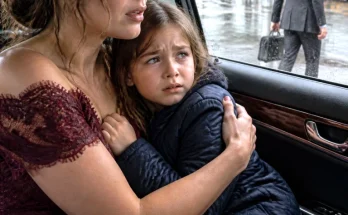
Her voice bounced off the marble walls and glass doors, sharp enough to make the delivery guy near the package room stop with a cardboard box halfway against his hip. Four kids sat on a pile of suitcases behind her, their faces red and damp, their little jackets twisted, their shoes kicking the wheels of luggage they didn’t understand. My mother stood beside Hannah with her purse clutched under one arm, pointing toward the elevators like she could force them open by sheer rage.
Carlos, our doorman, stood behind the desk with both hands folded in front of him. He had the kind of patience you only got from years of dealing with drunk residents, lost food orders, and people who thought money made them royalty.
“Ma’am,” he said, calm as winter glass, “he is not on the approved visitor list.”
Hannah’s face went bright red. “He’s my brother. Call him down here right now.”
I was standing ten feet away by the mailroom, close enough to hear everything, far enough that she hadn’t noticed me yet. My work boots still had dust in the treads. My hard hat was tucked under one arm. My whole body felt like concrete that had set overnight.
Carlos glanced at me.
I shook my head once.
That was all.
He looked back at my sister and said, “I’m following the resident’s instructions.”
My mother’s eyes found me then. For one second, her expression wasn’t angry. It was shocked. Betrayed, even. Like I had broken into her house instead of refusing to let her break into mine.
“There you are,” Hannah snapped. “Tell him to let us up.”
I looked at the kids first. That was the mistake. The youngest, Emma, was crying into the sleeve of her purple coat. Noah had his headphones on, staring at an iPad like he had learned early how to disappear. The twins were whispering to each other, scared and confused.
My stomach twisted.
Then I looked at the suitcases.
Six of them.
Enough clothes for ten days.
Hannah wasn’t asking for help. She had brought props.
I turned around, walked to the elevator, and pressed the button for the twelfth floor. Behind me, my mother shouted my name with that old tone, the one that used to make me stand up straighter, apologize faster, hand over whatever she wanted before she had to ask twice.
The elevator doors opened.
I stepped inside.
As they slid shut, I heard Hannah yell, “You’re really going to do this to family?”
And I almost answered.
Almost.
But the doors closed before my guilt could get its shoes on.
What Hannah didn’t know was that I had been watching the lobby from across the street for almost fifteen minutes. What my mother didn’t know was that Carlos had called me the moment they arrived. And what none of them knew was that this didn’t start with four crying kids and six suitcases.
It started three nights earlier, with one text message that made my whole apartment go silent.
### Part 2
Tuesday night, 8:47 p.m., I came home smelling like cold steel, drywall dust, and burnt coffee.
I’m a construction engineer in Chicago, which sounds cleaner than it is. People hear engineer and picture climate-controlled offices, whiteboards, maybe somebody tapping numbers into a laptop with soft hands. My job had laptops, sure, but it also had mud, steel-toe boots, concrete dust, angry contractors, inspectors with clipboards, and weather that didn’t care about deadlines.
The South Loop project was twenty-two stories of headaches. That week, we had a permit inspection that could delay the whole build if one section failed. Forty thousand dollars a day in penalties, my boss had reminded me twice before I left the site, like the number might slip out of my head if he didn’t nail it there.
My apartment was supposed to be the one place where numbers stopped chasing me.
One bedroom. Twelfth floor. Narrow kitchen. Gray couch. A little balcony just big enough for a chair and a dying basil plant I kept forgetting to water. No roommate. No wife. No kids. No dog. No one leaving wet towels on the floor or asking me where the cereal went.
Just quiet.
That quiet was expensive, and I paid for it gladly.
I dropped my hard hat on the kitchen counter, unlaced my boots by the door, and opened the fridge. Leftover pizza sat in a cardboard box beside a half-empty bottle of iced tea. I ate one slice standing over the sink, too tired to warm it.
My laptop was waiting on the table with an eighty-seven-page structural report open. I had rebar placement notes to review, load calculations to compare, and a list of inspection questions I already knew the city guy would ask because he liked asking them with a smile that said he hoped you failed.
I had just sat down when my phone buzzed.
Hannah.
My stomach dropped before I even read it.
That was the thing about my sister’s texts. They never started honestly. They started soft.
Quick question.
Hey, are you busy?
Can I ask you something?
You free for a sec?
The words were different, but my body always heard the same sound: a cash register drawer opening.
I stared at her name for a moment and let the phone buzz again on the table. Outside, a siren passed three streets over, fading into the night. My apartment smelled like cold pizza and dust from the job site. The laptop screen glowed white, waiting for me to be responsible.
I picked up the phone.
Hannah had written: Quick question.
I typed: What?
Three dots appeared. Disappeared. Appeared again.
Then: Luke surprised me with a Honolulu trip.
I blinked.
That was new.
I leaned back in my chair, rubbing my thumb along the edge of the phone. My sister and I were not vacation-update siblings. We didn’t send each other beach emojis or flight confirmations. We saw each other at family dinners and birthday parties, and between those events, she contacted me when something broke, bounced, got repossessed, needed fixing, or allegedly couldn’t wait.
I typed: That’s great.
Another message arrived.
Leaving tomorrow at 2 p.m. So excited.
I didn’t answer. I waited.
The next bubble came through so fast I knew it had been typed already.
We’re 20 min from your place. Dropping the kids off for 10 days. Already packed their bags.
For a second, I didn’t understand the sentence. The words were familiar, but they refused to connect.
Dropping.
Kids.
Off.
Ten days.
My apartment felt smaller. The report on my laptop blurred. Somewhere in my chest, something old and obedient started to rise, already preparing excuses for why I should make this work.
Then the next text came.
Relax. Mom has your spare key. She’s letting us in.
That was when the old obedient thing inside me stopped moving.
And something colder took its place.
### Part 3
The spare key had a history.
Three years earlier, I’d gone to Milwaukee for work and a pipe under my kitchen sink decided it was done participating in society. My downstairs neighbor noticed water dripping through his ceiling and called building maintenance. I couldn’t get back in time, so I gave my mother my spare key.
She cried then, not because of the leak, but because I had “finally trusted her with something.” That should have told me everything.
When I got home, she said she’d bring the key next time she visited. She never did. I asked twice. She forgot twice. Then I stopped asking because the leak was fixed, life moved on, and I didn’t want a fight over a piece of metal.
That was my specialty back then: avoiding fights by handing people future weapons.
I sat at my kitchen table on Tuesday night with Hannah’s text glowing in my hand and remembered every small surrender that had led to that moment.
The tires, for one.
Six months earlier, at Hannah’s house, I’d been helping Mom dry dishes after Sunday dinner. The kitchen smelled like meatloaf, dish soap, and the apple candle Hannah always burned to cover the smell of four children, a dog, and a husband who treated laundry baskets like decorative objects.
Hannah had come in chewing her bottom lip.
“Can I talk to you for a sec?”
I already knew.
She needed tires. The mechanic said the tread was dangerous. The kids were in the car every day. Luke’s hours had been weird. They were stretched thin. It was just this once.
Mom stood by the sink with a wet plate in her hand and said, “You’re single. You can afford it. Family helps family.”
Dad sat at the dining table with the newspaper open, pretending print was soundproof.
I sent Hannah $1,400 before dessert.
She hugged me so hard her perfume stuck to my shirt. “You’re a lifesaver.”
That was the ninth emergency that year.
I only realized how bad it was because one night, I couldn’t sleep, and my banking app became a horror story.
Hannah Collins.
Again.
Again.
Again.
Emergency rent: $850.
Dog surgery: $1,200.
Minivan down payment: $2,100.
Luke’s truck got repossessed: $3,400.
School clothes. Utility bill. Dentist. Groceries. “Just until Friday.” “I swear I’ll pay you back.” “Please don’t tell Mom I asked.” “Mom said you’d understand.”
Forty-seven transfers in two years.
$8,247, not counting cash, Target runs, Christmas gifts, and the automatic monthly payment I had forgotten existed because apparently I had trained myself not to notice bleeding if it happened slowly.
Last Christmas was the one that should have broken me.
Hannah pulled me into the hallway while the kids tore wrapping paper apart in my parents’ living room. The tree lights blinked red and gold behind her. Her eyes were shiny.
“Can you buy the kids Santa gifts this year?”
Luke had been laid off, she said. They were barely making rent. The kids needed iPads for school, and she had already told them Santa was bringing them.
There it was.
Not a request.
A trap with tinsel on it.
I bought two iPad minis, wrapped them myself, and watched the kids scream like I had handed them the moon.
Two weeks later, I stopped by Hannah’s house and found both iPads on the couch. One was playing Roblox. The other had TikTok open. No school apps. No homework. No educational miracle.
That night, I saw Luke’s Instagram.
Topgolf.
Three days before Hannah told me he had been laid off.
I didn’t confront her. I didn’t call him. I didn’t tell my mother.
I just stopped believing them.
But not believing them and saying no were different things. Not believing them was quiet. Saying no made noise.
Tuesday night, staring at that text, I knew noise was coming.
Then my mother replied to my message before I even asked a second question.
Yes, I knew. Hannah deserves a vacation. Stop being selfish.
I read it once.
Then again.
And for the first time in my life, I didn’t feel guilty first.
I felt calm.
That scared me more than the anger.
### Part 4
I called the front desk before I called my sister back.
Carlos answered on the second ring. “Front desk, this is Carlos.”
“Hey, Carlos. It’s Brennan in 12G.”
His voice changed immediately. “Evening, sir. Everything okay?”
“I need my locks rekeyed tonight.”
There was a small pause. Not dramatic, but enough that I heard the hum of the refrigerator behind me.
“Is there a security concern?”
“Yes,” I said. “My mother has an unauthorized copy of my apartment key, and she may attempt to enter my unit without my consent.”
Another pause.
Then Carlos said, carefully, “Your mother called earlier today.”
My fingers tightened around the phone.
“She asked about visitor policy,” he continued, “and whether family members could leave bags at the front desk if the resident wasn’t home.”
My kitchen lights hummed above me.
This wasn’t panic. This wasn’t a misunderstanding. This wasn’t Hannah being overwhelmed and making a desperate choice.
This was planned.
“Carlos,” I said, and my voice sounded like it belonged to someone else, “please put Linda Brennan on the no-entry list. She is not approved for my unit under any circumstances. If she arrives with minors or luggage, document it and contact me immediately.”
“Understood.”
“And Hannah Collins. Same instruction.”
“Understood.”
“I may need a written record later.”
“We’ll log it.”
Maintenance could come by ten, he said. Rush fee applied. I told him to bill me. When I hung up, I opened the notes app on my phone and created a file called Timeline of Events.
I wrote like I was preparing for court, which in a way, I was. Not legal court. Family court. The kind where everyone swore they loved you while cross-examining your boundaries.
8:47 p.m. Hannah informs me she is dropping off four children for ten days. No prior request.
8:49 p.m. Hannah states Mom has spare key and will let herself into my apartment.
8:51 p.m. Mom confirms she knew and calls me selfish.
8:55 p.m. Front desk confirms Mom called earlier asking about visitor/key policies.
I screenshotted everything.
Then my phone rang.
Mom.
I let it ring twice while I opened Voice Memos and hit record.
“Hi, Mom.”
“What is this I hear about locks?” she snapped before I finished the word Mom.
“I told Hannah no.”
“You don’t get to tell her no. She is already on her way.”
“That’s not how consent works.”
“Don’t you start with that internet therapy language,” she said. “This is family.”
I opened my laptop with one hand and pulled up my bank records. My pulse was steady in my ears.
“I have a permit inspection tomorrow morning,” I said. “If it fails, the delay penalty is forty thousand dollars a day. I cannot watch four children.”
“Oh, please,” Mom said. “You sit in an apartment alone every night. Hannah has four children. She deserves a vacation.”
“She has a husband.”
“Luke is going with her. It’s a couple’s trip. They need time.”
“Then they need a babysitter.”
“You are unbelievable.”
I started copying transfers into a spreadsheet.
March. $850.
June. $1,200.
August. $2,100.
October. $3,400.
My mother kept talking, her voice filling my clean little apartment with the same old smoke.
“We raised you. We gave you everything. We supported your dream.”
“You didn’t pay for college,” I said. “I still have student loans.”
“We gave you a home.”
“You charged me rent when I was eighteen.”
Silence.
It was tiny, but I heard it crack open.
Then she came back colder. “You are throwing our love back in our faces over money.”
“No,” I said. “I’m taking your hands out of my wallet.”
She gasped like I had slapped her.
I exported the spreadsheet to a PDF and named it Financial Documentation 2023-2025.
“You will open that door tomorrow,” she said. “Or you are out of this family.”
I looked around my apartment. The dusty boots by the door. The half-eaten pizza. The laptop full of work that actually belonged to me. The silence I paid for.
“Okay,” I said.
“What?”
“Then I’m out.”
She started to say something ugly.
I hung up before she could finish.
For the first time all night, my hands started shaking.
Not because I was afraid of what I had done.
Because I had finally done it.
### Part 5
Hannah called five minutes later, crying so hard I could barely understand her.
“Mom said you hung up on her.”
“She told me I was out of the family,” I said. “Seemed like a natural place to end the call.”
“Please,” Hannah sobbed. “Please just do this for us. Luke spent $4,200 on the trip. It’s nonrefundable.”
There it was again. The price tag placed gently on my conscience.
“You can spend $4,200 on Honolulu,” I said, “but not on childcare?”
“That’s different.”
“How?”
“The trip is for our marriage. A babysitter is just someone sitting there while the kids exist.”
I actually pulled the phone away from my ear and stared at it.
“Hannah, listen to yourself.”
“You don’t understand,” she said, and the crying vanished so fast it was almost impressive. “You’re single. You have no idea what it’s like to need a break from your own life.”
I looked at the eighty-seven-page report on my laptop. My eyes burned from twelve-hour days. My shoulders ached from standing on concrete. There was dust under my fingernails no matter how often I scrubbed.
“I work sixty-hour weeks,” I said. “The difference is I don’t make my exhaustion your emergency.”
“You owe me.”
The words came out flat.
No tears now.
“What did you say?”
“You heard me.” Her voice had turned hard and small. “I gave Mom and Dad grandchildren. Four of them. What have you given them?”
My mouth went dry.
Some sentences don’t hurt right away because your brain refuses to accept someone really said them.
“I gave you $8,247,” I said quietly.
“We didn’t ask for that.”
“You asked forty-seven times.”
Silence.
“I have the texts.”
“You’re counting?”
“I’m documenting.”
“You’re insane.”
“No,” I said. “I’m done.”
I hung up and immediately opened the family group chat.
Mom. Dad. Hannah. Me.
No one had used it since somebody sent a blurry photo of a casserole three weeks earlier.
I typed: For the record, I was not asked to babysit. I was informed tonight at 8:47 p.m. that four children would be dropped at my apartment for ten days. I declined. My door will not open tomorrow.
I hit send.
Then I muted it.
At 10:14 p.m., maintenance knocked.
Two guys with toolboxes stood outside my door. One smelled faintly like cigarettes and metal filings. The other nodded politely and asked if I was okay. I said yes too fast.
They removed the deadbolt and handle. The old lock came out with a dull scrape that sounded too final for such a small piece of hardware. I watched every second. When they installed the new one, the click sounded clean. New. Mine.
“These are the only copies,” one of them said, handing me two keys.
I held them in my palm. They were still cold.
After they left, I checked my email.
The building manager had written: Per your request, Linda Brennan and Hannah Collins have been removed from your approved visitor list. Front desk staff has been briefed.
I sat on my couch in the dark and stared at the screen until the words blurred.
Then guilt found me.
It didn’t come roaring in. It crept.
Four kids. Suitcases. Airport. Crying. Uncle Brennan saying no. Mom telling everyone I had turned cruel. Hannah crying into her hands. Dad shaking his head in silent disappointment.
Maybe I could take them for one night.
Maybe I could call in sick.
Maybe I could set up air mattresses in the living room, survive ten days, and never let it happen again.
That was how they always got me. Just this once. One more time. For the kids. For family. To keep peace.
My phone buzzed.
Instagram.
Hannah had posted a story.
I opened it.
She was at Target, smiling into a mirror, cart full of swimsuits, sunscreen, sandals, bright beach towels, and a floppy straw hat.
Caption: Can’t wait for island life.
The guilt disappeared so fast it left a vacuum.
I screenshotted it.
Then I added it to the folder.
Because tomorrow, when they arrived with crying children and lies packed tighter than luggage, I wanted to remember exactly who had planned what.
### Part 6
The inspection passed at noon.
I should have felt relieved. Actually, I did feel relieved for about seven minutes. The city inspector signed off, my boss slapped my shoulder hard enough to shift a vertebra, and one of the subcontractors yelled, “Drinks on Brennan,” even though I had no intention of buying drinks for men who argued with me about anchor bolts before sunrise.
But the relief didn’t last.
By 1:18 p.m., I was sitting in a coffee shop two blocks from my building, staring at my phone like it was a live wire.
Hannah texted: 15 minutes away.
I didn’t answer.
Steam rose from my coffee. Outside the window, Chicago moved like nothing important was happening. Buses groaned. People crossed streets with paper bags and earbuds. A woman in a red coat dragged a small dog away from a puddle of melting gray snow.
My sister was about to try to abandon four children in my apartment lobby, and the city did not care.
At 1:33 p.m., a silver minivan pulled to the curb.
I saw Hannah first. She got out of the driver’s side wearing leggings, a white puffer jacket, and sunglasses pushed up on her head like she was already halfway to the beach. Luke climbed out of the passenger seat and stretched like this was an inconvenience, not a crisis he helped build.
Then my mother stepped out from the sliding door.
That made me colder than I expected.
She had come along not to help, but to enforce.
The kids tumbled out next. Emma with her stuffed rabbit. Noah with headphones around his neck. The twins fighting over who had to carry a backpack. Luke opened the trunk and started unloading suitcases.
Six.
Still six.
I left my coffee half full and walked through the side entrance of my building, using the fob Carlos had told me to use if they came through the front.
By the time I reached the lobby, Hannah was already at full volume.
“He lives here. I’m his sister. You can’t keep me out.”
Carlos stood behind the desk. “I can keep any visitor out if the resident has not approved entry.”
“They’re children,” my mother snapped, as if that changed the lock code.
“They are not residents,” Carlos said.
I respected him forever in that moment.
Hannah spotted me.
“There you are.” She pointed at me, finger shaking. “Tell him.”
I walked closer. The lobby smelled like floor polish and wet wool. The kids looked smaller under the tall ceiling.
“Carlos is following my instructions,” I said.
My mother’s face hardened. “You are embarrassing us in public.”
“You embarrassed yourselves when you drove here.”
“We told you last night,” Hannah said.
I took out my phone, opened the text, and turned the screen toward Carlos. “At 8:47 p.m. she said they were twenty minutes away. That’s not asking. That’s ambushing.”
Carlos looked at the message and nodded once.
Hannah’s eyes flicked toward the couple by the mailboxes, the delivery guy near the wall, the old man from 8C pretending not to listen while absolutely listening.
“You’re really doing this?” she whispered.
“Yes.”
My mother stepped close enough that I could smell her perfume, the same powdery scent she wore to church and funerals.
“You are letting your nieces and nephews suffer because of pride.”
“They are not suffering,” I said. “They have two parents standing right here.”
Luke looked away.
That small movement told me more than any confession.
“We have a flight in forty-five minutes,” Hannah said.
I checked my watch. “Then you should leave now. Traffic to O’Hare is ugly.”
Her mouth opened.
Nothing came out.
For one beautiful second, nobody had a script ready.
Then Luke cleared his throat. “Babe, maybe we call that hotel babysitting service?”
Hannah turned on him like he had betrayed a nation.
My mother grabbed her purse strap. “We’re leaving.”
The kids started crying harder when Luke loaded the suitcases back into the van. Emma screamed, “I want to stay with Uncle Brennan,” and that one went right through me.
I stood still because moving felt dangerous.
Carlos came around the desk after they left. “You okay?”
I nodded.
I was not okay.
Upstairs, I sat on my couch and stared at the new lock from the inside.
For ten minutes, I almost called them back.
Then my phone lit up with a notification.
Hannah Collins tagged you in a post.
And what I saw next proved the whole lobby scene had been theater.
### Part 7
Six hours after my sister cried in my lobby about having “no backup plan,” she posted a sunset over an infinity pool.
I was still on my couch when I opened Instagram. I hadn’t eaten. My work jacket was still draped over the kitchen chair. The apartment lights were off except for the blue-white glow of my phone.
The first photo showed Hannah and Luke smiling at the edge of a pool so clear it looked fake. Palm trees leaned over them. Luke had one arm around her shoulder. Hannah wore oversized sunglasses and the same straw hat from her Target cart.
Caption: Finally taking time for US.
Location tag: Honolulu, Hawaii.
For a few seconds, my brain refused to accept the timeline.
They had made the flight.
They had gone.
They had left my lobby, loaded the kids back into the van, found another option, driven to the airport, boarded a plane, landed, checked in, changed clothes, and posed for a sunset photo.
I swiped.
Second photo.
My parents’ living room.
Four kids on the couch.
Emma still had her stuffed rabbit. Noah had the iPad. The twins were eating something from paper plates on the coffee table. Behind them, I recognized the floral wallpaper my mother refused to replace and the old brass lamp with the crooked shade.
Caption: Grandma and Grandpa time. So grateful.
I laughed.
It wasn’t funny. It came out like a cough from somewhere low in my chest.
No backup plan.
Forty-five minutes to the flight.
Kids will suffer.
You’re out of this family.
All of it had been pressure. Not truth. Pressure.
I screenshotted every image.
Then I put my phone face down and leaned back until my head hit the couch.
I should have felt vindicated. Instead, I felt stupid.
Not because I had said no, but because some part of me had still believed they were desperate.
That night around eleven, my cousin Jenna texted me.
Uh. You should probably see your mom’s Facebook.
I knew before opening it that I was already the villain.
Mom’s post had been up less than an hour and had over two hundred likes.
Some of us give everything for our children and receive nothing but cruelty in return. Imagine raising a son who values money over family. Praying for my broken heart tonight. God sees everything.
The comments were worse.
Stay strong, Linda.
Kids today are so selfish.
He’ll regret it when you’re gone.
You were always such a devoted mother.
I clicked into the comment box and started typing.
My version was long. Too long. It had timestamps, screenshots, dollar amounts, the unauthorized key, Carlos, the Honolulu post, everything. My thumbs moved so fast the words blurred.
Then I stopped.
Deleted it.
Public humiliation was my mother’s language. I didn’t have to speak it to defend myself.
Instead, I opened five private messages.
Aunt Rebecca. Uncle Rob. Aunt Michelle. Cousin Jenna. Cousin Mike.
I attached the voice recording of my mother telling me I was out of the family. I attached Hannah’s “twenty minutes away” text. I attached the PDF of transfers. I attached the Honolulu photos and the kids at my parents’ house.
Then I wrote the same message to each of them.
You’ll probably see Mom’s post. Here’s what happened. I’m not asking you to pick sides. I just want you to have the facts.
By morning, the extended family group chat had seventy-four unread messages.
Aunt Rebecca: Linda, why does he have a recording of you telling him he’s out of the family?
Uncle Rob: Wait, she had his apartment key and planned to let herself in?
Cousin Mike: Hannah is literally in Hawaii right now. I thought there was no backup plan.
Mom: This is a private family matter and I will not be discussing it in a group chat.
Aunt Rebecca: Eight thousand dollars in two years is not private. That’s exploitation.
Then the family split open.
Half said I was heartless.
Half said I had finally done what someone should have told me to do years ago.
I muted the chat and went to work.
But my phone kept feeling heavy in my pocket.
Because once people know the truth, they start telling truths of their own.
### Part 8
Aunt Rebecca called two days later.
I almost didn’t answer. By then, my phone had become a slot machine of family judgment. Every buzz could be support, blame, gossip, or someone asking if I had “calmed down yet,” as if boundaries were a fever.
But Rebecca had been one of the few people in the chat who sounded angry for me, not at me.
So I answered.
“Your mom’s version didn’t add up,” she said without hello. “Then I saw Hannah’s resort pictures.”
“I didn’t abandon the kids,” I said, because apparently my body still needed to defend itself.
“I know.” She sighed. “I’m sorry.”
That made me quiet.
People in my family didn’t apologize much. They explained. They justified. They changed subjects. They brought up things from 2009. But apologize? Rare.
Rebecca continued, “Your mother has been doing this to you since you were a teenager.”
I sat down slowly at my kitchen table.
“What do you mean?”
“She used to brag about it,” Rebecca said. “At cookouts. Holidays. She’d say, ‘My son helps with bills. He’s so responsible.’ You were what, sixteen? Working at Burger King?”
I remembered the smell of fryer oil in my hair. The black polo shirt. My feet aching after closing shifts. My mother asking for “a little help” with groceries, then gas, then Dad’s insurance, then Hannah’s school fees because “you don’t have real expenses yet.”
I remembered feeling proud.
That was the worst part.
I thought being useful meant being loved.
Rebecca’s voice softened. “I didn’t say anything. I should have. I think we all treated it like you were mature, but you were a kid.”
I stared at the grain of my cheap kitchen table, following one dark line with my eyes until it disappeared under my laptop.
“She made it sound like I was selfish if I kept anything.”
“She was wrong.”
My throat tightened.
Rebecca said she had been doing something similar with her own son. Slipping him money every time he got into trouble, calling it help, calling it love, then resenting him for needing her.
“When I saw you say no,” she said, “I thought maybe I could, too.”
After we hung up, I opened my banking app.
I don’t know what I was looking for. Maybe proof. Maybe punishment.
What I found made me laugh once, sharp and humorless.
Recurring payment: Hannah Collins. $400 monthly. First of every month.
I had set it up eighteen months earlier after Hannah cried about not being able to budget while Luke’s hours were “unstable.” She promised it would only be for a few months.
I had sent $7,200 without thinking.
Not because I was generous.
Because I had been trained to forget my own money once somebody else claimed need over it.
I clicked cancel.
The app asked: Are you sure?
I whispered, “Yes,” to an empty apartment.
Then I opened Venmo. Private settings. No request option. Block Hannah.
Each button felt small, almost silly. A few taps on glass. But my shoulders dropped lower with every one.
A week later, I booked a therapist.
Her name was Dr. Mallory, and she had kind eyes and a yellow legal pad. I told her everything. The money. The iPads. The key. The lobby. The Facebook post. The way guilt lived in my body like a second spine.
When I finished, she set her pen down.
“What you’re describing,” she said, “is financial parentification.”
I hated the phrase immediately because it sounded too clinical for something that had felt so normal.
“I’m the older sibling,” I said. “Isn’t that just what happens?”
“No,” she said. “Your parents made you responsible for adult burdens that were never yours. Then they taught you that refusing those burdens meant refusing love.”
I sat there blinking at my laptop screen. Her face was in a small square. Behind her was a bookshelf and a plant. Somewhere outside my own window, a car horn honked.
For years, I had been trying to earn a place I already should have had.
Dr. Mallory asked, “How do you feel right now?”
I thought about it.
Then I answered honestly.
“Lighter.”
And for the first time, lighter didn’t feel selfish.
### Part 9
Three weeks after the lobby incident, I had my first full weekend without a family emergency in almost two years.
No texts at midnight.
No “Can you call me?” from Hannah.
No “Your sister is crying” from Mom.
No Dad silently reading messages and letting everyone else do the damage.
Saturday morning, I slept until eleven.
When I woke up, sunlight was lying across my bedroom floor in a clean rectangle. My phone sat on the nightstand, silent. I reached for it with the old dread already rising, but there was nothing waiting except a weather alert and a coupon from a pizza place.
I made coffee. Real coffee, not job-site coffee that tasted like burnt pennies. I drank it on the balcony wearing sweatpants and a T-shirt from a 5K I never actually ran.
The city below made its usual noise, but it felt far away.
That afternoon, I saw an ad for a spa near my building.
Deep tissue massage, ninety minutes, $140.
My first thought was automatic.
That’s a third of Hannah’s electric bill.
Then I stopped.
I was not paying Hannah’s electric bill.
I was paying for my own back, which had been carrying steel, stress, and other people’s consequences for years.
I booked it.
Ninety minutes later, I walked out smelling like eucalyptus, my shoulders loose, my jaw unclenched. I sat in my car afterward and didn’t start the engine for a while because I was waiting for guilt.
It never came.
Four weeks after everything, Dad called.
He never called first. Dad existed in the background of my life like a lamp left on in another room. Present, quiet, useful only when someone else pointed him out.
I answered carefully. “Hey, Dad.”
He cleared his throat. “Your mother is still upset.”
“I know.”
The TV murmured behind him. Probably baseball. Maybe news. He always needed something making noise when he didn’t want to.
“I’ve seen your name on their bank statements,” he said.
I didn’t speak.
“Over the years. Hannah’s. Your mother’s. More than I should’ve.”
My hand tightened around the phone.
“I should’ve said something,” he said. “I didn’t. That’s on me.”
I looked at the new deadbolt on my door. The metal caught a thin strip of light.
“It was easier,” Dad continued, voice low, “to let your mother handle everything. Easier not to make waves.”
That was the closest he had ever come to describing our whole family.
“And?” I asked, before I could stop myself.
He was quiet so long I thought the call had dropped.
“You did the right thing,” he said.
My eyes stung.
Then he added, almost too softly, “That’s all I wanted to say.”
He hung up.
No long speech. No promise to fix anything. No dramatic father-son breakthrough.
Just one sentence.
But I kept it.
Four months later, Hannah texted.
Hey.
I stared at the word like it might explode.
Then: Not asking for money.
I let out a breath.
Another message: We found a babysitter for our next trip. Budgeted for it. $220 a day. Expensive, but we did it.
I waited.
Luke said if someone tried dropping four kids on us last minute without asking, we’d call the cops. So yeah. I get it now.
There was no apology.
No mention of $8,247. No mention of Mom’s post. No sorry for using the kids as weapons in a lobby full of strangers.
But something had shifted.
I typed: I’m glad you figured it out. You’re their parents. You’ll always find a way.
She responded: Yeah.
That was it.
I put the phone down and sat on my balcony with a beer as the Chicago skyline darkened into black glass and gold windows.
They had not fallen apart.
Hannah still had her husband. My parents still had the kids. Everyone had survived my no.
That was the part they never wanted me to learn.
My yes had never been the foundation.
It had been the cushion.
And without it, they had simply learned how to stand.
### Part 10
Ten months after the lobby, I moved.
Not because I was running. That surprised me. For years, I thought peace meant escape, and escape meant guilt. But this move felt different. It felt like stepping into a room that had been waiting for me to believe I deserved it.
Two bedrooms on the north side.
Better building. Better view. Quieter neighbors. A kitchen with enough counter space to chop vegetables without balancing a cutting board over the sink.
One bedroom was mine.
The second became a home office with a pullout couch for guests.
Guests.
Not obligations. Not surprise children with suitcases. Not family members holding spare keys they had no right to keep.
Friends.
People who asked before coming over and brought coffee when they did.
On the first of the month, I checked my savings account.
$11,847.
I stared at the number longer than I should have.
It was the first time in my adult life I had broken ten thousand dollars. Not because I got lucky. Not because I stopped caring. Because I stopped bleeding money into emergencies that somehow never taught anyone to plan.
My company promoted me to senior project engineer that fall. Salary jumped from $68,000 to $79,000. More responsibility, more meetings, more people asking me if steel deliveries were my fault when weather delayed trucks in Indiana.
But also more control.
I bought a better chair for my home office. I replaced my old mattress. I ordered groceries without choosing the cheapest version of everything. Small luxuries, maybe, but every one felt like evidence.
The family group chat stayed muted.
Sometimes I opened it and scrolled without responding. Mom sent photos of the kids. Hannah posted birthday reminders. Aunt Rebecca shared recipes. Dad never said much. No one tagged me directly.
Life became quiet enough that I had to learn what I liked.
That sounds ridiculous when you’re twenty-nine, but it was true.
I liked Saturday morning walks by the lake when the wind was mean enough to make me feel awake. I liked cooking steak badly and eating it anyway. I liked old movies. I liked not checking my bank account before buying a jacket.
In November, Mom texted me for the first time in seven months.
Thanksgiving dinner at our house. 3:00 p.m. You bringing anything?
No apology. No how are you. No I miss you.
Just an invitation shaped like a command.
I stared at it in the break room at work while a vending machine hummed beside me.
Then I typed: I have plans. Thanks for the invite.
I had no plans.
My plans were Chinese food, football, and sweatpants with a hole near the knee.
Mom replied two minutes later.
Plans with who?
I left her on read.
My thumb hovered over the screen afterward, waiting for panic. Waiting for the urge to explain. To soften. To lie better. To say maybe I could stop by later.
Nothing.
On Thanksgiving Day, family photos appeared on Facebook.
Turkey. Mashed potatoes. Green bean casserole. Hannah and Luke with the kids. My parents at the head of the table. Everyone smiling.
There was an empty chair near the corner where I usually sat.
Nobody mentioned it.
I zoomed in on the photo once, not because I missed the table, but because I wanted to see if the absence hurt.
It didn’t.
That evening, rain tapped against my windows while I ate lo mein from a cardboard container and watched the Lions lose in a way that felt traditional enough to be comforting.
My phone stayed quiet.
I realized peace wasn’t always beautiful.
Sometimes it was just no one yelling your name from the other side of a locked door.
### Part 11
In December, I booked myself a five-day trip to Vancouver.
I had never taken a real solo vacation. Work trips, yes. Family visits, yes. Long weekends where I spent half the time answering crisis texts, absolutely. But a trip chosen by me, paid for by me, planned around what I wanted?
No.
The total came to $1,840 for flight, hotel, and rental car.
The old voice in my head woke up immediately.
That’s four months of Hannah’s car payment.
The new voice answered faster.
That’s five days of my life.
I clicked book.
At the airport gate, I watched a family nearby managing three small kids and too many bags. The mother looked exhausted. The father had a backpack on his front and back, one child leaning against his leg, another arguing about snacks.
For a second, I thought of Hannah and Luke.
Then I thought of the Honolulu post. The infinity pool. The caption about taking time for us while everyone else was supposed to absorb the cost.
I boarded my flight with one carry-on and no guilt.
Vancouver was cold, damp, and beautiful. I walked until my legs hurt. Ate fish and chips near the water. Took pictures of mountains half-hidden in fog. Slept in a hotel bed with too many pillows and woke up whenever my body felt like it.
No one needed me.
That became the luxury.
In March, eighteen months after the lobby incident, cousin Jenna got married.
Jenna had been one of the first people to ask for evidence instead of accepting Mom’s performance. So when the invitation came, I RSVP’d yes.
I brought Sarah as my plus-one.
Sarah worked in scheduling at my company. She was funny, practical, and had once told a concrete supplier, “Your emergency is not a law of physics,” which made me respect her immediately. We weren’t dating exactly. Not yet. We were friends with a question mark, and for once, I didn’t feel the need to define something before enjoying it.
My parents, Hannah, and Luke were seated near the front.
I was at table nine with Sarah, cousin Mike, and a few relatives I hadn’t seen in years.
During the ceremony, I watched my mother dab her eyes with a tissue. She looked older. Gray streaks in her hair. Softer around the mouth. Tired in a way that made my chest ache despite everything.
Missing someone doesn’t always mean you should move closer.
During cocktail hour, Mom passed me on the way to the bathroom. Our eyes met.
For half a second, I saw it. The opening. The possibility of a scene, an apology, an accusation, a hug, a trap.
She looked away first.
No words.
I went back to the bar and ordered a drink.
Later, I was at the dessert table choosing between chocolate cake and something with raspberries when Hannah appeared behind me.
“Hey.”
I turned.
She held a glass of white wine with both hands. Her dress was navy. Her face looked thinner than I remembered.
“Hey,” I said.
Long silence.
The music from the reception thumped softly through the floor.
“The kids ask about you sometimes,” she said.
That landed somewhere tender.
“Yeah?”
“I tell them Uncle Brennan is busy with work,” she said. “But that you love them.”
My voice came out quieter than I expected. “You can tell them that’s true.”
She nodded. Looked down at her wine.
“We’re managing okay,” she said. “With babysitters and stuff. Luke got promoted. Sales manager.”
“That’s good.”
“Yeah.”
There was space for an apology there.
She didn’t fill it.
I didn’t fill it for her.
She walked away with her cake, and I let her.
At ten, I found Dad outside near the parking lot with a cigarette in his hand.
He had quit ten years earlier.
“Hey,” he said.
“Hey, Dad.”
We stood under the yellow glow of the entrance lights while cars pulled away and music leaked through the doors behind us.
“Your mother misses you,” he said.
“I know.”
“She won’t say it.”
“I know that, too.”
He took one drag and crushed the cigarette under his shoe.
“I should’ve stood beside you that day,” he said. “In the lobby. Before that, too.”
My throat tightened.
“You’re saying it now.”
He looked at me then. Really looked.
“You did good, kid.”
Then he patted my shoulder once and went back inside.
On the drive home, Sarah fell asleep in the passenger seat. My phone sat silent in the cup holder.
For once, silence didn’t feel like abandonment.
It felt like permission.
### Part 12
People think setting boundaries gives you one clean ending.
It doesn’t.
It gives you a door with a lock you have to keep choosing to use.
My mother still posts about family on Facebook. Blessings. Gratitude. Loyalty. Sometimes I can tell which posts are aimed at me because they have that polished wounded tone she uses when she wants sympathy without naming the crime.
I don’t respond.
Hannah still sends photos of the kids every few months. Emma missing a front tooth. Noah at a soccer game. The twins covered in frosting at a birthday party. I heart-react sometimes. I visit occasionally, in public places, with my own car and my own exit plan.
I love those kids.
I do not raise them.
Those two truths can stand beside each other without fighting.
Dad calls every few weeks now. Not long calls. Baseball scores. Weather. Something about his knee. Once, he asked about work and actually listened when I explained a foundation issue on a new project. He didn’t understand half of it, but he stayed on the phone anyway.
That counted.
As for Mom, we are polite.
That is the word.
Polite.
She invited me to Easter. I came for two hours and brought pie. When she made one comment about how “some people only show up when it’s convenient,” I picked up my coat.
She saw me do it.
Then she said, “The pie looks nice.”
I stayed another twenty minutes.
That was progress, maybe. Or maybe it was just a ceasefire. I’ve learned not to confuse the two.
Sarah and I did start dating eventually. Slowly. Carefully. She has a laugh that makes people turn their heads in restaurants, and she asks direct questions without making them feel like attacks.
The first time she stayed over, she noticed the little bowl by my door where I keep my keys.
“Only two?” she asked.
“Only two.”
She smiled like she understood more than I had said.
One evening, almost two years after the lobby, I came home from work covered in the familiar dust of a job site. I dropped my hard hat on the counter, kicked off my boots, and stood in the kitchen for a second listening.
No yelling.
No buzzing phone.
No crisis waiting in the dark.
Just the hum of the refrigerator, rain against the window, and Sarah in the living room asking if I wanted Thai food.
My phone buzzed then.
For one old second, my stomach tightened.
I looked.
Hannah had sent a photo of Emma holding a school certificate.
Proud uncle moment, she wrote.
No request attached.
No emergency.
No hook.
I smiled and typed: Tell her I said great job.
Then I put the phone down.
That was when I understood the real ending.
I didn’t destroy my family by saying no. I didn’t punish Hannah. I didn’t abandon my parents. I didn’t choose money over love.
I stopped letting them charge rent inside my life.
There are people who will call that selfish because they benefited when you had no walls. They will stand outside your door with suitcases, guilt, crying children, old sacrifices, and words like family held up like crowbars.
Let them stand there.
A locked door is not an act of cruelty.
Sometimes it is the first honest thing in the whole house.
I am still Linda Brennan’s son. Still Hannah’s brother. Still Uncle Brennan to four kids who did nothing wrong. But I am also a man with a home, a future, a savings account, a body that needs rest, and a life that belongs to me.
And if being loved requires me to be available for theft, then it is not love.
It is access.
I learned that a construction engineer should have known this from the start: you cannot build anything solid on a foundation of guilt.
And what I did wasn’t revenge.
It was repair.
THE END!