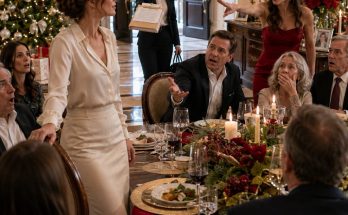
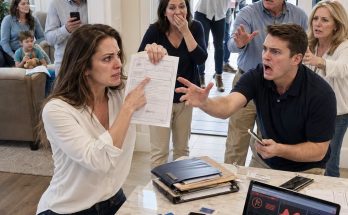
My Brother Got Caught Stealing $400 From My Wallet. My Parents Sat Me Down And Made Me Apologize To Him For “Leaving Temptation Around.” He Smirked The Entire Time. I Didn’t Argue. I Just Moved Out That Weekend. A Month Later, $6,000 Went Missing From Dad’s Safe.
### Part 1
My brother stole four hundred dollars from my wallet, and my parents made me apologize to him.
Not for yelling. Not for hitting him. Not for calling him names.
They made me apologize for “leaving temptation around.”
That was the phrase my father used while sitting in his recliner with the TV muted behind him, a baseball game frozen mid-pitch on the screen. My mother sat on the edge of the couch with her hands folded so tightly her knuckles looked like little white stones. Tyler sat across from me with one ankle resting over his knee, pretending to look ashamed.
But I knew his face.
I had known Tyler’s face since he was two years old and learned that if he cried first, he won.
My name is John. I was twenty-six when this happened, old enough to know better than to expect fairness in that house, but apparently still young enough to feel shocked when I didn’t get it.
I had been living at home because rent in our town had turned into a bad joke. I worked full-time at an accounting firm, paid my parents five hundred dollars a month, bought my own groceries, handled my own bills, and kept my head down. Tyler was twenty-three, unemployed, living rent-free, and somehow still described by my mother as “figuring things out.”
Tyler had been figuring things out since he dropped out of college the first time.
And the second time.
The four hundred dollars came from a bonus I had earned at work. I had cashed it because my truck needed new tires, and I didn’t want to put them on a credit card. Friday evening, I came home tired, tossed my wallet on the dresser, changed out of my work shirt, and fell asleep with the smell of tire rubber and wet pavement still stuck in my head from the drive home.
Saturday morning, the cash was gone.
My cards were still there. My license was still there. Even the old coffee punch card I never used was still tucked behind my insurance card.
But the bills were missing.
I stood in my room for a minute, staring at that empty slot in my wallet, hearing Tyler’s video game explosions thudding faintly through the wall. The house smelled like burnt toast and my mother’s vanilla candle, the one she lit whenever she wanted the place to feel calmer than it was.
I walked downstairs.
Tyler was at the kitchen table eating cereal straight from the mixing bowl because regular bowls were apparently too small for his ambitions.
“Did you take money from my wallet?” I asked.
He didn’t even blink at first. That was his first mistake. Tyler always blinked when he was innocent. When he was guilty, he went still.
“What? No,” he said. “Why would I do that?”
My mother looked up from the sink. “John, don’t start.”
I pulled out my phone. My dad had installed a hallway camera two months earlier after packages started disappearing from the porch. He had been proud of it, bragging to our neighbor that nothing happened in his house without him knowing.
That morning, his own little security system betrayed the favorite son.
At 2:17 a.m., Tyler slipped into my room. The camera caught him clearly in the hallway, my wallet in his hand when he came out thirty seconds later. He moved like someone who had done it before.
My mother stopped washing the same coffee mug over and over.
Tyler’s spoon froze halfway to his mouth.
My father came in wearing his old gray bathrobe, watched the footage once, then twice, and turned—not to Tyler—but to me.
“Living room,” he said.
For one stupid second, I thought justice was finally coming.
Instead, my father sighed like I had disappointed him.
“John,” he said, “you know Tyler’s been under pressure. Why would you leave that kind of cash sitting around?”
I stared at him.
Mom nodded softly. “Your brother made a mistake, but you also put him in a difficult position.”
Tyler lowered his eyes, but the corner of his mouth twitched.
Then Dad said, “I think you owe him an apology.”
The room went quiet enough that I could hear the refrigerator humming.
Something inside me didn’t explode. It snapped quietly.
I looked at Tyler, at that little smirk he couldn’t quite hide, and said, “I’m sorry I left temptation around. It won’t happen again.”
And the strange thing was, I meant every word.
Because upstairs, behind my closet door, I had a lockbox, three duffel bags, and enough clarity to finally leave.
### Part 2
I packed twenty-six years of my life in less than four hours.
That sounds impossible until you realize how little of your childhood actually belongs to you. The bed stayed. The dresser stayed. The framed picture of Tyler in his Little League uniform stayed on the hallway wall, right beside Tyler’s graduation photo, Tyler’s fishing trip photo, Tyler holding a trophy for a tournament he didn’t even win.
My photos were in a shoebox under my bed.
I found them while packing socks.
There was one of me at sixteen, standing outside the hardware store where I worked after school. My shirt was too big, my haircut was terrible, and I looked exhausted. On the back, in my grandfather’s handwriting, were the words: This kid shows up.
I sat on the edge of the bed for a while with that picture in my hand.
Downstairs, Tyler laughed at something on his phone. My father’s recliner creaked. My mother clanked dishes in the kitchen like if she made enough noise, the morning would become normal.
The house had always worked that way. Tyler damaged something; Mom cleaned around it. Dad explained it away. I absorbed the consequences.
When Tyler crashed Dad’s lawn mower into the mailbox at nineteen, I helped rebuild the post because “you’re better with tools, John.” When Tyler borrowed my laptop and returned it with a cracked screen, I was told not to make him feel worse. When Tyler forgot Mom’s birthday, I was asked to sign both our names on my card.
But that morning was different.
Four hundred dollars wasn’t life-changing money. It was tires. It was bills. It was a long Saturday at work turned into cash. But the apology—that was the part that burned clean through whatever loyalty I still had left.
I called Greg, a guy from work who had mentioned his roommate was moving out.
“You still need someone for that spare room?” I asked.
“You serious?” he said.
I looked around at my half-empty room, at the trash bags full of clothes, at my wallet lying open on the dresser like a mouth that had finally stopped asking.
“Very.”
By evening, everything I owned was either packed or waiting by the door.
My mother noticed first. She came upstairs holding a folded towel, stopped in the doorway, and stared at the bags like they were evidence from a crime scene.
“What are you doing?”
“Moving out.”
She laughed once. Not because it was funny. Because she needed it not to be real.
“John, don’t be dramatic.”
I zipped my duffel. “I found a place.”
“Over four hundred dollars?”
I looked at her then. Really looked.
Her hair was coming loose from its clip. She had flour on one sleeve from making biscuits nobody had asked for. She looked tired, worried, annoyed—and still completely convinced I was the problem.
“It was never just the money,” I said.
She went downstairs, and a minute later my father came up.
He stood in my doorway, blocking half the hall, arms crossed over his chest. He had spent my whole life doing that, turning his body into a wall and calling it parenting.
“Your mother says you’re leaving.”
“I am.”
“Because Tyler made one mistake?”
“No,” I said. “Because you made me apologize for it.”
His jaw shifted. “We were trying to keep the peace.”
“That’s what you always call it when I’m the one who has to swallow something.”
He looked away first, which surprised me.
Then he said, “You won’t last a month out there.”
Maybe he meant it as a warning. Maybe he meant it as a curse. Either way, I kept packing.
Tyler appeared later, leaning against the frame with that lazy confidence of someone who had never had to carry the weight of his own actions.
“You’re really leaving?” he asked.
“Yep.”
“Dude, I said I’d pay you back.”
I paused with a stack of shirts in my hands.
“No, you didn’t.”
He shrugged. “I would’ve.”
“No,” I said. “You would’ve waited until everyone forgot.”
For the first time all day, he didn’t have an answer.
The next morning, I loaded my truck while the neighborhood was still blue with early light. Wet grass soaked the cuffs of my jeans. Somewhere down the street, a dog barked like it knew something was ending.
My mother stood in the kitchen doorway crying quietly.
My father didn’t come outside.
Tyler didn’t get out of bed.
I took one last look at the house, not because I wanted to remember it, but because I wanted proof that I had survived it.
Then my phone buzzed.
A text from Tyler.
You’re seriously doing all this just to make me look bad?
I looked at the message, then at my packed truck.
For the first time in my life, I didn’t answer him.
And as I drove away, I saw my father standing in the upstairs window, watching me leave with a look on his face I couldn’t read.
Not regret.
Not anger.
Fear.
### Part 3
Greg’s apartment smelled like coffee, laundry detergent, and old carpet.
It was on the second floor of a brick building behind a gas station, with a parking lot full of cracked asphalt and one flickering security light that made every night look like a low-budget crime scene. My room barely fit a twin mattress, a desk, and the three duffel bags I refused to unpack for the first week because unpacking felt too much like admitting I was staying.
But it was quiet.
No Tyler shouting at a video game through the wall. No Dad clearing his throat before telling me how reasonable I needed to be. No Mom hovering with sad eyes, asking me to smooth over whatever Tyler had broken.
The first night, I slept six hours straight.
The second night, I woke up at 3 a.m. panicked because the apartment was too peaceful.
Freedom, I learned, has its own kind of noise. It sounds like the refrigerator kicking on when nobody is mad at you. It sounds like your keys on your own counter. It sounds like eating peanut butter toast for dinner because you chose it, not because someone else emptied the groceries.
Money was tight. Brutally tight.
After rent, deposit, utilities, gas, student loans, and groceries, I had just enough left to feel poor with precision. I picked up weekend bookkeeping work for a local landscaping company and started packing lunches that looked depressing even to me.
Still, every dollar was mine.
That mattered.
For two weeks, my family barely contacted me. Mom left voicemails that began soft and ended sharp.
Honey, call me back. We’re worried.
Then:
John, this silent treatment is unnecessary.
Then:
You’re hurting your father.
Dad sent nothing.
Tyler sent one meme and the words: still mad?
I deleted it.
At work, I buried myself in numbers. Spreadsheets made sense in a way family never had. If something didn’t balance, there was a reason. You could trace an error. You could find the missing amount.
Claire, my boss, noticed.
Claire was a woman in her fifties with steel-gray hair, reading glasses on a chain, and the emotional warmth of a locked filing cabinet. She didn’t praise people. She acknowledged completed work with tiny nods, like a judge allowing evidence.
One Thursday, she stopped by my desk.
“You’re early every day now,” she said.
“I was early before.”
“Now you don’t look miserable.”
I almost laughed. “Thanks?”
She placed a folder on my desk. “Callaway account. I want you reviewing it.”
The Callaway account was office legend. A regional dealership chain with messy books, missing invoices, and an owner who treated accountants like raccoons in his garage.
“That’s senior associate work,” I said.
Claire looked at me over her glasses. “Then act like one.”
That was the closest thing to faith I had felt in a long time.
I was still staring at the folder when my phone buzzed.
Mom.
I almost let it go to voicemail, but something about the third call in two minutes made me answer.
“John?” Her voice was thin.
“What happened?”
She breathed in shakily. In the background, I heard Dad yelling. Not words. Just a low, ugly roar.
“Your father’s safe,” she said. “Money is missing.”
My fingers tightened around the phone.
“How much?”
Silence.
“Mom.”
“Six thousand dollars.”
The office lights buzzed above me. Someone laughed near the printer. Outside the window, traffic crawled past under a gray afternoon sky.
Six thousand dollars.
Dad kept a fireproof safe in the master bedroom closet. Emergency money, insurance cash, and what he called his boat fund. He had been saving for that fishing boat since I was in middle school, talking about it every summer like the boat was a person who had promised to come home.
“Why are you calling me?” I asked.
Mom hesitated half a second too long.
My stomach turned cold.
“Your father is upset,” she said. “He wants to know if you ever knew the combination.”
I stood up so fast my chair rolled backward into the cubicle wall.
“Are you asking if I stole from Dad?”
“No, honey, I’m not saying that.”
“But he is.”
She didn’t deny it.
And right then, through the phone, I heard Tyler’s voice in the background.
Tell him to check his truck. He packed in a hurry, didn’t he?
My mother went quiet.
The office around me blurred.
The brother who stole from me was now planting my name beside six thousand missing dollars.
And my parents were listening.
### Part 4
I drove to my parents’ house that night against my better judgment.
Rain came down in hard silver lines, the kind that turned every traffic light into a smeared wound. My windshield wipers squeaked every third pass. I remember that clearly because it gave me something to focus on besides the fact that my own family was apparently deciding whether I was a thief.
When I pulled into the driveway, Tyler’s car was parked crooked across the left side, blocking the spot I used to use. It was such a small thing, but it hit me anyway. Even my absence had been claimed.
Dad opened the door before I knocked.
He looked older than he had two weeks earlier. His face was unshaven, and his eyes were red around the edges. Behind him, the house smelled like coffee burned down to sludge.
“Come in,” he said.
Not hello.
Not thanks for coming.
Just come in, like I had been summoned.
Mom sat at the kitchen table with a tissue twisted in her hands. Tyler leaned against the counter, arms crossed, wearing the same wounded expression he used whenever consequences got too close.
Dad placed the safe on the table.
It was small, black, and scratched along one edge. I remembered him buying it after a storm knocked out power for three days and he decided civilization was more fragile than people admitted.
“The money was there last month,” Dad said. “Now it isn’t.”
“I didn’t take it.”
“I didn’t say you did.”
“You called me here to ask if I knew the combination.”
His eyes hardened. “Did you?”
“No.”
Tyler snorted.
I turned to him. “Something funny?”
He lifted both hands. “I’m just saying, you left mad. You packed fast. You had access.”
“I had access to my own wallet too. Didn’t stop you.”
Mom flinched.
Dad slapped his palm on the table. The sound cracked through the kitchen.
“Enough.”
For a second, nobody moved.
The kitchen looked exactly the way it always had. Rooster clock above the pantry. Chipped blue mug by the sink. A grocery list on the fridge in Mom’s handwriting: milk, eggs, paper towels, Tyler’s cereal.
Still Tyler’s cereal.
Dad rubbed his forehead. “This family is falling apart.”
“No,” I said quietly. “It’s being exposed.”
Tyler rolled his eyes. “Oh my God, here we go.”
I took out my phone and opened my banking app. Then I turned the screen toward Dad.
“You want to see my accounts? Fine. Look. Every deposit, every withdrawal. My rent payment. My utilities. Gas. Groceries. No mystery six thousand dollars.”
Dad stared at the screen but didn’t take it.
“John,” Mom whispered, “nobody wants to accuse you.”
“But you’re comfortable letting the idea sit in the room.”
That landed. I saw it in her face.
Then Tyler pushed off the counter. “Maybe if you hadn’t bailed on everyone, this wouldn’t be happening.”
I laughed once. It came out harsher than I meant.
“Right. I moved out, so money teleported out of Dad’s safe.”
Tyler’s face changed. Just a flicker. Annoyance. Just a flicker. Annoyance, maybe. Or fear. I would have missed it if I hadn’t spent my whole life watching him lie.
I looked at the safe again.
“Was it forced open?”
Dad shook his head.
“Combination used?”
“Yes.”
“Who knew it?”
“Me.”
I waited.
Dad looked away.
Mom’s tissue stopped moving.
There it was. A tiny crack in the story.
“Who else?” I asked.
Dad said nothing.
Tyler suddenly became very interested in the rain hitting the window.
Mom closed her eyes.
And I remembered something: Tyler sitting at this same kitchen table months earlier, joking that Dad used birthdays for every password because he was “old-school predictable.” Dad had laughed. Mom had swatted Tyler with a dish towel.
I looked at my father.
“You used a birthday, didn’t you?”
His face went gray.
Tyler said, “Lots of people know family birthdays.”
“Which birthday?” I asked.
Nobody answered.
But I already knew. Dad would never use mine. He would never use Mom’s because he forgot it half the time.
Tyler’s birthday.
The safe holding Dad’s money opened with Tyler’s birthday.
I stood there as that fact settled over the kitchen like dust after a collapse.
Then my mother whispered, “Tyler, tell me you didn’t.”
Tyler’s mouth opened.
For the first time in my life, no lie came out right away.
### Part 5
Tyler didn’t confess.
People like Tyler rarely hand you the truth wrapped neatly in remorse. They circle it. They fog the windows. They make everyone squint until exhaustion feels like doubt.
“I didn’t take six thousand dollars,” he said finally.
Not I didn’t open the safe.
Not I didn’t touch it.
Just that one careful sentence.
Dad grabbed onto it like a drowning man grabbing a rope.
“There,” he said. “He said he didn’t.”
I stared at him. “That’s enough for you?”
His face tightened. “What do you want me to do, John? Throw my own son out based on suspicion?”
The words hit the room strangely.
My own son.
Like I wasn’t standing right there.
I nodded slowly. “You threw me out of your trust based on less.”
Mom started crying. Softly at first, then with both hands pressed over her mouth. Tyler looked irritated by the sound. Dad looked trapped. I looked around that kitchen and realized I had come hoping for something I would never get: not an apology, exactly, but a line. A point where my parents would say, This is wrong, and we will stop protecting it.
They still hadn’t found that point.
So I left.
I didn’t slam the door. I didn’t make a speech. I walked out into the rain and drove back to Greg’s apartment with my shirt damp against my back and my hands shaking on the steering wheel.
That night, I called my cousin Brady.
Brady was my mother’s nephew, technically my cousin, but he had always felt more like an older brother than Tyler ever had. He lived two hours away, worked as a mechanic, and had the kind of calm voice that made bad news easier to hold.
I told him everything.
The $400. The apology. Moving out. The safe. The birthday combination.
Brady was quiet for a long time.
Then he said, “I’ve been wondering when you’d finally see it.”
That sentence hurt more than I expected.
“You knew?”
“Everybody knew, John.”
Outside my bedroom window, rainwater dripped from the gutter onto the metal railing below. Ping. Ping. Ping.
“Then why didn’t anybody say anything?”
“Some of us did. Your grandpa did.”
I sat up straighter.
“Grandpa Walt?”
Brady exhaled. “Yeah. More than once.”
Grandpa Walter had died two years earlier. Dad’s father. Retired electrician. Quiet man. Sharp eyes. Hands rough as sandpaper. He lived in a little white house outside town and kept peppermints in the glove compartment of his truck.
He was the only adult in my family who ever made me feel chosen.
When I was fifteen, he got me my first job at the hardware store because he knew the owner. When I was seventeen, he taught me how to replace a porch railing and told me, “A man doesn’t need to be loud to be strong.” When I graduated community college, he shook my hand so hard my knuckles popped and said, “You built that yourself.”
Tyler rarely visited him.
“He argued with your dad about Tyler all the time,” Brady said. “Said they were raising a boy who thought love meant no consequences.”
My throat tightened.
“I didn’t know that.”
“You weren’t supposed to,” Brady said. “Your dad hated it.”
After the call, I dug through one of the duffel bags I still hadn’t fully unpacked. At the bottom was the shoebox of old photos. Inside, beneath receipts and birthday cards, I found the picture of me outside the hardware store.
This kid shows up.
Behind it was something I had forgotten: a folded envelope with my name written in Grandpa’s blocky handwriting.
I opened it carefully.
Inside was a single business card.
Trent Patterson, Attorney at Law.
On the back, Grandpa had written: If things ever don’t add up, start here.
My skin prickled.
Because in my life, things had never added up.
And for the first time, I wondered whether Grandpa Walt had left me more than advice.
### Part 6
I called Trent Patterson’s office the next morning from my truck before work.
The sun had barely cleared the dealership across the street, and the air smelled like gasoline, cold coffee, and the breakfast burrito Greg had left in the microwave too long. My hands were cold around the steering wheel. I told myself I was only calling because Grandpa had given me the card. Nothing more.
Still, my heart thudded hard when the receptionist put me through.
“Trent Patterson,” a man said.
His voice was dry and steady, like old paper.
“My name is John Miller. My grandfather was Walter Miller.”
Silence.
Then his tone changed.
“I was wondering when you’d call.”
A strange pressure built behind my ribs.
“You knew my grandfather?”
“I handled some personal documents for him near the end of his life,” Trent said. “He spoke highly of you.”
I looked out at the parking lot. A woman in scrubs hurried past with a travel mug in one hand and her keys in the other. Normal morning. Normal people. My world quietly tilting.
“What documents?” I asked.
“Mr. Miller left a formal will,” Trent said. “I’m surprised your father didn’t tell you.”
There are moments when your body understands betrayal before your mind has finished reading the sentence.
My father had handled Grandpa Walt’s estate after the funeral. He told everyone there wasn’t much. The house had been sold, debts paid, medical bills covered, nothing left to distribute. I had believed him because back then I still thought fathers might bend the truth, but they didn’t bury it.
“What was in the will?” I asked.
“I’d rather discuss that in person.”
“I need to know if my name is in it.”
Another pause.
“Yes,” Trent said. “It is.”
I sat very still.
A horn honked somewhere behind me, but I barely heard it.
“How soon can I come in?”
“Tomorrow afternoon.”
I spent the rest of that day making mistakes on spreadsheets I never made mistakes on. Claire noticed by lunch.
“You look like someone found a body in your numbers,” she said.
“Family stuff.”
She studied me over her glasses. “Family stuff has a way of becoming work stuff if you let it. Take tomorrow afternoon.”
I thanked her.
She nodded once. “And John?”
I stopped.
“Whatever it is, bring copies of everything.”
That was Claire. Comfort disguised as procedure.
Trent’s office sat on Main Street between a bakery and a taxidermy shop, because small-town America has no sense of emotional transitions. The waiting room smelled like lemon polish and old carpet. Framed certificates lined the wall. A clock ticked too loudly.
Trent was in his late fifties, narrow-faced, with silver hair and the patient expression of a man who had watched families destroy themselves over furniture.
He placed a folder in front of me.
“Your grandfather left a savings account,” he said. “Forty-two thousand, four hundred and twenty-eight dollars. Half to your father. Half to you.”
My ears rang.
Twenty-one thousand dollars.
To me.
Not to “the family.” Not divided among grandchildren. Me, by full legal name.
John Michael Miller.
I stared at the page, at Grandpa’s signature, familiar and firm. My eyes burned, but I refused to cry in a lawyer’s office beside a taxidermy shop.
“Why didn’t I know?” I asked.
Trent’s mouth tightened.
“I sent notice to your father as executor. He acknowledged receipt.”
The room seemed to shrink.
“He knew?”
“Yes.”
“When?”
“Shortly after your grandfather’s death.”
Two years.
My father had known for two years.
Trent turned another page. “There’s more. Your father contacted me yesterday.”
“Yesterday?”
“He asked whether your share could be redirected. Split between himself, your brother, and you.”
I let out a laugh that didn’t sound like me.
“Can he do that?”
“No.”
“Did he know he couldn’t?”
“I made that clear.”
I pressed my palms against my knees under the table.
Four hundred dollars from my wallet. Six thousand from Dad’s safe. Tyler’s birthday as the combination. And now Grandpa’s will, hidden for two years until Dad needed something from me.
Trent leaned back.
“Your grandfather added a note to the file. It’s not legally binding, but he asked that you receive it when the account was released.”
He slid over a sealed envelope.
My name was on the front.
My hands shook as I opened it.
Inside, Grandpa had written only two lines.
John,
When they ask you to save them from what they created, don’t.
I read it three times.
And then I understood that Grandpa hadn’t just seen me.
He had seen the storm coming.
### Part 7
The money arrived five business days later.
I didn’t spend a cent.
I opened a separate savings account and moved almost all of it there before I could do anything stupid, emotional, or guilt-driven. Then I sat at my tiny desk in Greg’s apartment, staring at the balance until the numbers stopped looking real.
$21,214.
It was not a fortune.
But when you have spent your whole life being told your needs are secondary, money with your name on it feels like proof of existence.
That night, Leah came over with Thai takeout and two iced coffees because she worked twelve-hour shifts at urgent care and apparently caffeine had replaced blood in her body.
Leah and I had been dating for six weeks. We met when I sprained my wrist playing pickup basketball with Greg, which sounds more charming if you leave out the part where I tripped over my own shoe. She had dark hair, a sharp sense of humor, and a way of listening that made silence feel safe.
I told her everything.
The will. The hidden notice. Dad calling the lawyer. Grandpa’s note.
She sat cross-legged on my bed, chopsticks paused halfway to her mouth.
“John,” she said carefully, “they’re going to come for that money.”
“I know.”
“No, I mean really come for it. Not just ask. They’ll dress it up as love, family, forgiveness, emergency, whatever works.”
I leaned back in my chair. “You sound like you’ve met them.”
“I’m a nurse,” she said. “I’ve seen families fight over parking validation while someone’s in surgery. Money doesn’t create character. It reveals it.”
The next day, Mom called.
Not texted. Called.
I watched her name glow on my phone while I sat in my truck outside work. The afternoon sun turned the windshield hot, and the steering wheel smelled faintly of dust and vinyl.
I answered.
“Hi, Mom.”
“Oh, honey.” Her voice was too sweet. Syrupy. Practiced. “How are you?”
“Fine.”
“That’s good. That’s really good. We miss you.”
I waited.
She talked about the weather. About a neighbor’s new fence. About the grocery store changing the layout again. I listened to the performance warm up.
Then she said, “Your dad told me about Grandpa’s account.”
“There it is.”
She sighed. “John, please don’t be like that.”
“Like what?”
“Cold.”
I looked at the accounting firm’s front doors, where Claire was walking in with a stack of folders under one arm like she was going into battle.
Mom continued, “Tyler is in a bad place. He needs structure. Maybe classes. Maybe his own apartment. A fresh start.”
“Paid for by Grandpa’s money.”
“Paid for by family helping family.”
I closed my eyes.
There it was. The old hook. Family.
In my parents’ house, family meant Tyler needed and I provided. Tyler fell and I cushioned. Tyler stole and I apologized.
“No,” I said.
The silence on the line sharpened.
“You haven’t even heard us out.”
“I’ve heard this story my whole life.”
Her voice trembled. “He’s your brother.”
“He stole from me.”
“He apologized.”
“No, he didn’t. He got caught.”
Mom inhaled like I had slapped her.
Then Dad came on the line. He must have been listening.
“Your grandfather would be ashamed of how selfish you’re being.”
I looked down at the envelope sitting on the passenger seat. Grandpa’s note was inside. I had started carrying it with me, not because I needed courage, but because I needed a witness.
“No,” I said. “He wouldn’t.”
Dad’s voice dropped. “You think twenty-one thousand dollars makes you better than us?”
“No. But it does make me harder to control.”
He hung up.
For the rest of the week, the pressure campaign rolled in.
Mom cried in voicemails. Tyler texted long paragraphs about growth and second chances. An aunt I hadn’t seen since Thanksgiving sent me a message about forgiveness. Dad sent one sentence: Don’t forget who raised you.
I typed back before I could stop myself.
I remember exactly who raised me.
Then, on Friday evening, Mom left a voicemail that changed the temperature of everything.
“Come to dinner Sunday,” she said. “Tyler wants to apologize properly. Your father does too.”
There was a pause.
Then, softer:
“And there are things about Grandpa’s estate you don’t understand.”
I replayed that last sentence three times.
Because it didn’t sound like guilt.
It sounded like a warning.
### Part 8
Sunday dinner at my parents’ house had always been theater.
Mom believed roast beef could fix emotional damage. Dad believed sitting at the head of the table made him fair. Tyler believed clean clothes counted as effort. I believed none of it anymore, but I went anyway because some doors need to be closed in person.
The house smelled like garlic, gravy, and lemon cleaner.
That lemon scent hit me first. Mom only used it when guests were coming over or when she was trying to scrub tension out of the air. The dining table was set with the good plates, the ones with blue edges that we used for Easter and apologies.
Tyler was already seated.
Button-down shirt. Hair combed. Face arranged into humility.
I almost admired the production value.
Dad sat at the head of the table, jaw tight. Mom hovered between kitchen and dining room, touching serving spoons, napkins, chair backs—anything but the truth.
We ate for six minutes in near silence.
I know because I watched the clock above the pantry.
Then Dad cleared his throat.
“Tyler has something to say.”
Tyler put down his fork. He looked at me with damp eyes that might have worked on someone who hadn’t seen him practice emotions in bathroom mirrors before school meetings.
“John,” he said, “I’m sorry I took the money from your wallet. I was in a bad headspace. I know that doesn’t excuse it. I hurt you, and I’m trying to be better.”
Not bad.
He had probably rehearsed it with Mom.
I nodded. “Thank you for saying that.”
Mom’s shoulders loosened.
Dad looked relieved.
Tyler looked briefly confused that I had not hugged him, forgiven him, or handed him a symbolic check.
Then Mom reached for the second act.
“We’re proud of Tyler for owning that,” she said.
I waited.
“And now we need to talk about how we move forward as a family.”
There it was.
She folded her hands. “Your grandfather’s money could help Tyler get stable. Not all of it. Just enough for a deposit, maybe some training, maybe to pay back a few people.”
“A few people?” I asked.
Tyler looked at his plate.
Dad’s face darkened.
“How many people does he owe?” I asked.
Mom’s mouth opened, then closed.
I turned to Tyler. “How many?”
He muttered, “It’s not like that.”
“It’s exactly like that.”
Dad snapped, “Don’t interrogate him.”
I looked at him. “You interrogated me over your safe.”
The words landed hard.
Mom whispered, “John, please. Your brother needs help.”
“No,” I said. “He needs consequences.”
Tyler’s face finally cracked.
“Easy for you to say,” he snapped. “Grandpa handed you twenty grand.”
I laughed softly. “Grandpa handed me money he hid from you for a reason.”
Dad stood so fast his chair scraped the floor.
“Watch your mouth.”
“No, Dad. You watch yours. You knew about that will for two years.”
Mom went pale.
Tyler looked up.
That was interesting.
He hadn’t known.
Dad said, “This isn’t the time.”
“It’s exactly the time.”
I reached into my jacket and took out copies. The will. Trent’s note confirming Dad had acknowledged notice. The distribution page with my name. I placed them beside the roast beef like evidence at a trial.
Mom stared at the papers.
Tyler leaned over, reading fast.
Then his head snapped toward Dad.
“You knew there was money?”
Dad didn’t answer.
And for the first time, Tyler’s anger turned away from me.
“How much did you get?” Tyler demanded.
Dad said, “That’s not your concern.”
Tyler’s chair hit the wall when he stood.
“Not my concern? You let me sit here begging John like an idiot while you already got half?”
Mom whispered, “Robert…”
The room shifted.
All those years, my parents had protected Tyler from truth. Now truth had entered the room and picked its own target.
Tyler’s face twisted—not with remorse, but betrayal.
Then he said something that made my father grip the table.
“You told me John stole from the safe.”
I went still.
Dad’s eyes jumped to mine.
Mom covered her mouth.
And suddenly I understood: they hadn’t merely suspected me.
They had used me.
### Part 9
The dining room went silent except for the old refrigerator clicking on in the kitchen.
I looked at my father.
“You told him I stole the six thousand?”
Dad’s mouth tightened. “I said it was possible.”
Tyler laughed, ugly and sharp. “No, you didn’t. You said John probably took it to punish us.”
My skin went cold.
Mom was crying again, but this time I didn’t look at her. Her tears had been used too many times as curtains.
I kept my eyes on Dad.
“You knew I didn’t take it.”
“I didn’t know anything.”
“Yes, you did.”
He pointed at Tyler. “Your brother was out of control. I was trying to keep this family from tearing itself apart.”
“No,” I said. “You were trying to keep the blame useful.”
Tyler shoved his plate away. Gravy splashed onto the tablecloth.
“This is unbelievable,” he said. “You had money from Grandpa and still made me ask John?”
Dad turned on him. “You stole from me.”
Tyler froze.
There it was.
Not a question. Not suspicion. A fact.
Mom made a small sound like a glass cracking.
Dad seemed to realize what he had said, but it was too late. The truth sat down at the table with us, heavy and breathing.
Tyler’s face changed three times in two seconds. Shock. Fear. Rage.
“You can’t prove that.”
Dad’s laugh was tired. “You think I didn’t check? Hank told me everything. The pawn shop called about my watch. And you used your birthday on the safe because you knew I was stupid enough to use it as the combination.”
My hands curled slowly around the edge of my chair.
Dad had known.
He had known Tyler stole the safe money, and he still let my name float in the room like smoke.
I looked at Mom.
“Did you know too?”
She shook her head, but not fast enough.
“Mom.”
Her lips trembled. “I didn’t want to believe it.”
“That’s not what I asked.”
She looked down at her napkin.
That was my answer.
Something inside me that had been wounded for years finally stopped bleeding. Not because it healed, but because there was nothing left to cut.
I stood.
Mom reached toward me. “John, wait.”
“No.”
Dad said my name in the warning tone I had obeyed since childhood.
I turned to him.
“You accused me, or let me be accused, because it was easier than admitting your favorite son robbed you. You hid Grandpa’s will because giving me what he wanted me to have didn’t fit your version of this family. Then you tried to take part of my inheritance and hand it to Tyler.”
Dad’s face was gray.
“I made mistakes,” he said.
“Mistakes are when you forget milk. This was a pattern.”
Tyler muttered, “Oh, here comes the speech.”
I looked at him.
“You stole from me while I slept. You stole from Dad. You borrowed money from people and let him clean it up. You lied so often that everyone started treating truth like an inconvenience.”
His face flushed. “You think you’re so much better.”
“No. I think I’m done being worse in everyone else’s story so you can feel okay.”
Mom sobbed into her hands.
Dad sat down slowly, like his knees had failed.
I took Grandpa’s note from my pocket. I hadn’t planned to show them, but suddenly I wanted the words in that room.
I unfolded it and read aloud.
“When they ask you to save them from what they created, don’t.”
No one spoke.
Even Tyler looked uneasy.
“Grandpa knew,” I said. “He knew all of you better than you knew yourselves.”
Dad stared at the table.
I gathered my copies.
Mom whispered, “Are you really going to walk out?”
I looked at the blue-edged plates, the roast cooling in the center, Tyler’s gravy-stained napkin, Dad’s hands trembling beside his fork. I looked at the people who had taught me that love meant losing.
“Yes,” I said.
At the front door, Tyler called after me.
“You’ll come back. You always do.”
I turned with my hand on the knob.
“Not this time.”
When I stepped onto the porch, the evening air smelled like cut grass and rain on concrete. I made it halfway to my truck before my phone buzzed.
A message from an unknown number.
John, this is Hank. You don’t know the whole story about Tyler. Call me before your father buries it too.
### Part 10
I sat in my truck under the maple tree and stared at Hank’s message until the porch light clicked on behind me.
Through the front window, I could see shadows moving in the dining room. Tyler pacing. Mom sitting. Dad standing with both hands on his hips like he was trying to hold himself together.
My first instinct was to drive away.
That instinct had kept me sane.
But the message sat there glowing.
You don’t know the whole story.
I called.
Hank answered on the second ring. His voice was rough, older, the kind of voice that sounded permanently coated in sawdust.
“John?”
“Yeah.”
“You alone?”
I looked at the house. “For once.”
He exhaled. “Good. I’m sorry to drag you into more of this, but I figured you deserved to hear it from someone who isn’t trying to sell you a version.”
“What did Tyler do?”
“It’s not just Tyler.”
My stomach tightened.
Hank owned a landscaping company. I had done weekend bookkeeping for a different landscaping business, but I knew his name. Dad had fished with him, grilled with him, complained about property taxes with him. In my mind, Hank belonged to the category of Dad’s friends who smelled like motor oil and judged men by their lawn stripes.
“Your brother borrowed three grand from me,” Hank said. “That part you probably know.”
“I heard.”
“He told me it was for rent on a place. Said your dad would guarantee it.”
“Did Dad?”
“Not at first.” Hank paused. “Then your dad came by and asked me not to press Tyler. Said he’d cover it eventually, but only if I kept quiet. He said your mother couldn’t take another scandal.”
I closed my eyes.
Another scandal.
As if Tyler’s behavior were weather damage. Bad luck. A storm passing through.
“There’s more,” Hank said. “Tyler tried to sell me tools. Old electrician tools. Said they were from your grandfather’s garage.”
My eyes opened.
Grandpa Walt’s tools.
I remembered that garage perfectly: pegboard walls, coffee cans full of screws, the smell of sawdust and machine oil, every wrench outlined in black marker so you knew where it belonged. Grandpa treated tools like promises. You returned them clean, or you didn’t borrow them twice.
“Did you buy them?” I asked.
“No. I knew those weren’t Tyler’s to sell. But he said something weird when I turned him down.”
“What?”
“He said, ‘Doesn’t matter. Dad already sold the good stuff before John could get sentimental.’”
For a moment, I couldn’t breathe.
After Grandpa died, Dad told me the garage had been cleared out to pay estate expenses. He said there wasn’t much worth keeping.
But I had asked for Grandpa’s red toolbox.
The one with the dented lid and his initials burned into the handle.
Dad said it had been donated.
My hand tightened around the phone.
“Hank,” I said, “did you ever see a red toolbox?”
Silence.
Then, “Yeah. In your dad’s shed.”
The world narrowed to the porch light, the rain smell, and the blood pounding in my ears.
Dad hadn’t donated it.
He had kept it from me.
Or hidden it.
Or sold pieces out of it.
“Why are you telling me this?” I asked.
“Because Walt was my friend too,” Hank said. “And because your granddad told me once that if your father ever started deciding what you did and didn’t deserve, I should remember who actually showed up for him.”
My throat closed.
Behind me, the front door opened.
Dad stepped onto the porch.
He saw me on the phone. Saw my face. Understood something had shifted.
“Hank?” he called.
I didn’t answer him.
Hank said quietly, “Check the shed, John.”
Dad started down the steps.
I ended the call and got out of the truck.
“What are you doing?” Dad demanded.
I walked past him toward the backyard.
The grass was wet under my shoes. The shed stood behind the garage, half-hidden by the lilac bushes Mom never trimmed right. A rusted padlock hung from the latch.
Dad grabbed my arm.
“John, stop.”
I looked down at his hand, then back at him.
“Let go.”
For once, he did.
The spare key was still under the fake rock by the fence. Some habits never die. I opened the lock, pulled the shed door wide, and the smell hit me first.
Oil.
Dust.
Old wood.
And there, beneath a tarp in the corner, was Grandpa Walt’s red toolbox.
Not donated.
Not gone.
Waiting.
I lifted the lid with shaking hands.
Inside, resting on top of the tools, was a sealed envelope with my name on it.
Not in Grandpa’s handwriting.
In my father’s.
### Part 11
Dad said, “Don’t open that.”
Which, of course, meant I opened it.
The envelope was thick, yellowed slightly at the edges, sealed but not old enough to be from Grandpa. My name was written across the front in Dad’s square, impatient handwriting. Not John Michael. Not son. Just John.
Inside were papers.
Copies of Grandpa Walt’s estate inventory. A handwritten list of tools, savings, personal items, and small assets. Some lines had check marks. Others had amounts written beside them. The red toolbox was listed clearly: To John.
So was Grandpa’s watch.
His workbench.
A small savings bond.
A box of letters.
My heart beat so hard I felt it in my throat.
I looked up at Dad.
He stood in the shed doorway with the porch light behind him, his face half-shadowed. For the first time in my life, he didn’t look powerful. He looked like a man caught holding a shovel beside a hole.
“You told me there was nothing,” I said.
Dad rubbed both hands over his face.
“I was going to give it to you later.”
“When?”
He didn’t answer.
Mom appeared behind him in the yard, arms wrapped around herself. Tyler lingered near the back steps, far enough away to run from responsibility but close enough not to miss the show.
I held up the inventory.
“Grandpa left me specific things.”
Mom’s eyes moved to the toolbox. Her face crumpled.
“You knew too,” I said.
She whispered, “Your father said it would only cause problems.”
“Me receiving what Grandpa left me would cause problems?”
Dad snapped, “Tyler was already feeling rejected by him!”
There it was again.
Tyler’s feelings, placed like a bowl beneath every leak in the house.
I laughed, but there was no humor in it.
“So you erased me to protect him from feeling left out.”
Dad’s voice rose. “I was trying to keep my family together.”
“No. You were trying to keep Tyler comfortable.”
Tyler shouted from the steps, “Why is everything my fault?”
I turned so fast he took one step back.
“Because some of it is.”
He looked away.
That, from Tyler, was practically a confession.
I went back to the toolbox. Beneath the envelope was Grandpa’s old tape measure, the silver one with his initials scratched into the side. I picked it up, and suddenly I was sixteen again, standing on his porch while he taught me to measure twice and cut once.
“Rushing makes waste,” he had said. “And pretending crooked things are straight doesn’t make a house stand.”
I understood him better now.
Dad stepped into the shed.
“John, we can talk about this.”
“No.”
“Don’t say no to me.”
“I just did.”
His face flushed.
For a second, the old fear sparked in my chest. The child in me still knew that tone. Still wanted to explain, smooth, shrink, survive.
But I was holding Grandpa’s tape measure.
And Grandpa had never taught me to shrink.
I gathered the papers, closed the toolbox, and lifted it. It was heavier than I expected. Not too heavy. Just real.
Dad blocked the doorway.
“Leave it,” he said.
I looked him dead in the eye.
“It has my name on it.”
Mom began crying again. “Please, both of you.”
I said, “No, Mom. You don’t get to both-of-you this. You stood by while he hid what Grandpa left me.”
“I thought I was protecting the family.”
“You were protecting the lie.”
That broke something in her face.
Dad moved aside.
I carried the toolbox across the wet grass to my truck. The metal handle dug into my palm. Behind me, nobody spoke. Even Tyler stayed quiet.
When I set the toolbox in the passenger seat, something shifted inside it.
A small object slid from beneath the tray and landed against the side with a dull tap.
I opened the lid again.
There was a key taped underneath the removable tray.
A brass key with a paper tag.
On the tag, in Grandpa Walt’s handwriting, were three words:
Safe deposit box.
### Part 12
The safe deposit box was at a credit union forty minutes outside town.
I barely slept that night. The toolbox sat on my bedroom floor, red paint chipped, metal corners worn silver, smelling faintly of oil and dust and Grandpa’s garage. Every time I woke up, I looked at it to make sure it was still there.
By morning, I had made three decisions.
First, I would not tell my parents about the key.
Second, I would call Trent Patterson.
Third, I would stop confusing access with love. Just because people knew how to reach me didn’t mean they had the right to.
Trent met me at the credit union that afternoon. He didn’t seem surprised when I showed him the key.
“Your grandfather was thorough,” he said.
“That’s one word for it.”
The credit union smelled like carpet cleaner and printer toner. A woman with silver bracelets led us into a private room with beige walls and a table polished so brightly I could see the overhead lights reflected in it. She brought the box in both hands like it contained a sleeping animal.
My pulse thudded in my ears as Trent checked the paperwork.
Then the lid opened.
Inside was not treasure in the dramatic sense. No gold bars. No secret deed to a mansion. Just a bundle of envelopes, a small velvet pouch, and a folded letter with my name on it.
The pouch held Grandpa’s watch.
The one Dad said had been lost.
I picked it up carefully. The leather band was cracked. The face was scratched near the two. I remembered that scratch from when Grandpa hit it against a ladder fixing my parents’ porch light. Tyler had been inside playing video games. I had been holding the ladder.
The envelopes contained savings bonds, a few old family documents, and receipts for items Dad had claimed were sold to cover estate expenses.
Trent reviewed them quietly.
“This complicates things,” he said.
“Legally?”
“Yes.”
I was tired of that word. Legally. It made betrayal sound organized.
I opened Grandpa’s letter.
John,
If you are reading this, it means your father did not do what I asked. I hope I am wrong about that. I would like to be wrong about my own son.
But if I am not, then listen carefully.
You are not responsible for repairing damage you did not cause. You are not selfish for keeping what is yours. You are not cruel for refusing to be used.
I left your father money because he is my son.
I left you certain things because you were the one who came, the one who listened, the one who understood that showing up matters.
Do not let them turn your decency into a leash.
Build your own life.
Walt
I read it once.
Then again.
By the third time, the words blurred.
Trent looked away politely.
I folded the letter and placed it back in the envelope with hands that no longer shook.
“What happens now?” I asked.
“That depends,” Trent said. “You can pursue your father for breach of duty as executor. You can demand return of specific property. If items were sold improperly, there may be financial remedies.”
I thought of Dad’s face in the shed. Mom’s tears. Tyler’s anger. The old house with its blue siding and crooked driveway. The version of me that would have wanted revenge.
Then I thought of Grandpa’s note.
Don’t let them turn your decency into a leash.
“I don’t want a long legal war,” I said. “But I want every item that belongs to me. And I want a formal record that he hid them.”
Trent nodded. “That can be done.”
That evening, I sent one message to my parents.
I found the safe deposit box. From now on, all communication about Grandpa’s estate goes through Trent Patterson. Do not contact me about money again.
Dad called within thirty seconds.
I didn’t answer.
Mom called next.
I didn’t answer.
Tyler sent a text an hour later.
Must be nice stealing from the family legally.
I blocked him.
Then I sat on the floor beside Grandpa’s toolbox, put his watch on my wrist, and listened to the quiet.
For once, the silence didn’t feel empty.
It felt like a locked door.
And I had the key.
### Part 13
Six months later, I passed my CPA exam on the first try.
I found out in my truck outside the testing center, with rain tapping lightly on the windshield and a gas station coffee cooling in the cup holder. For a minute, I just stared at the results on my phone.
Passed.
One word.
No parade. No family dinner. No father clapping me on the back. No mother crying happy tears. No brother making a joke to pull the room back toward himself.
Just me, the rain, and the quiet knowledge that I had built something nobody in that house could take credit for.
I called Leah first.
She screamed so loudly I had to pull the phone away from my ear.
That night, she and Greg surprised me with grocery-store cupcakes, a crooked paper banner, and a six-pack of beer. Claire sent an email that said, Good. Promotion discussion Monday. From Claire, that was basically fireworks.
My life did not become perfect.
Real freedom is not a movie montage. It is paperwork, therapy appointments, grocery budgets, laundry, oil changes, and learning not to apologize when someone else bumps into you.
But it was mine.
Trent handled Grandpa’s estate issues with clean, professional force. Dad returned the toolbox, the workbench, the letters, and the items he still had. The watch stayed with me. The formal record was filed. I did not sue him for every possible dollar, not because he deserved mercy, but because I deserved an ending.
Tyler’s life went exactly where consequence had been waiting to take it.
Hank stopped covering for him. Dad stopped paying people quietly. Mom stopped calling his disasters misunderstandings, at least out loud. Tyler got a warehouse job, lost it, got another one, and discovered that bosses were less impressed by charm than our parents had been.
He tried contacting me from three different numbers.
I blocked all three.
My mother wrote letters.
At first, they were full of explanations. Then memories. Then apologies. Some sounded real. Some sounded lonely. I read them, folded them, and put them in a box. I did not answer.
My father sent one text after my promotion became official.
Proud of you.
I looked at those three words for a long time.
A younger version of me would have lived on them for months.
The man I had become deleted the message and went back to making dinner.
One year after I moved out, Leah and I signed a lease on a small one-bedroom with big windows and terrible water pressure. It had a balcony just wide enough for two chairs and a basil plant Leah kept forgetting to water. On move-in day, I placed Grandpa’s red toolbox in the hall closet, not hidden, not buried, just stored where useful things belong.
A week later, Mom and Dad showed up.
No warning.
I saw them through the peephole: Mom holding a covered dish, Dad standing stiffly beside her in his church jacket. They looked smaller in the hallway of my building than they ever had in their own house.
Leah touched my arm. “You don’t have to open it.”
“I know.”
That was the difference.
I opened the door but kept the chain on.
Mom’s eyes filled immediately. “John.”
Dad looked at the chain, then at me. Something like shame crossed his face.
“We wanted to see your place,” Mom said.
“No.”
Her mouth trembled. “I brought casserole.”
“I’m not hungry.”
Dad cleared his throat. “Son, we made mistakes.”
I studied him through the narrow gap.
Mistakes.
Still such a small word for years of being unseen.
“I know,” I said.
“We’re trying,” Mom whispered.
“I hope you are.”
Her face lifted with hope, and I hated how familiar that hook still felt.
“But not with me,” I said.
Dad looked stunned. “You’re cutting us off?”
“I’m accepting what already happened.”
Mom began to cry. “We’re your parents.”
“And I was your son.”
That stopped both of them.
The hallway smelled like someone’s laundry detergent and the garlic from Mom’s casserole. Downstairs, a dog barked. Behind me, Leah stood quietly, not rescuing me, not speaking for me, just there.
For years, I had imagined this moment differently. I thought if my parents ever looked sorry, forgiveness would rush out of me like water from a broken pipe.
It didn’t.
What I felt was sadness.
And peace.
“I don’t forgive you,” I said. “Maybe that makes you uncomfortable. Maybe it makes holidays awkward. But I spent my whole life paying for Tyler’s comfort and your denial. I’m done paying.”
Mom covered her mouth.
Dad looked down.
I softened my voice, but not my words.
“I hope Tyler gets better. I hope you both become honest with yourselves. I hope your house gets quieter in a way that teaches you something. But I won’t be your proof that it wasn’t that bad. It was that bad.”
No one spoke.
Then Dad nodded once.
Not enough. Too late. But real, maybe.
They left the casserole by the door.
I threw it away.
Not because I hated my mother’s cooking, but because I had finally learned that guilt can come covered in foil.
That night, Leah and I sat on the balcony under a warm June sky. Traffic hummed below. The basil plant leaned dramatically to one side, fighting for its life. Grandpa’s watch ticked softly on my wrist.
Leah rested her head on my shoulder.
“You okay?” she asked.
I thought about the four hundred dollars. The apology. The safe. The will. The toolbox. The locked door. The boy in the old photo standing outside the hardware store, tired but still showing up.
“Yeah,” I said. “I think I am.”
The next morning, I taped Grandpa’s note inside the lid of the red toolbox.
When they ask you to save them from what they created, don’t.
Then I closed it, locked my apartment door, and went to work.
And for the first time in my life, I did not look back.
THE END!
Disclaimer: Our stories are inspired by real-life events but are carefully rewritten for entertainment. Any resemblance to actual people or situations is purely coincidental.