My Dad Mocked: “She Couldn’t Command A Cat.” His Voice Echoed, And The Guests Laughed. Then The Groom Leaned In And Said: “Funny… Every Soldier Here Takes Orders From Her.” The Room Fell Silent.
### Part 1
My father waited until the champagne was poured before he decided to make me small.
That was his gift to me on my wedding night.
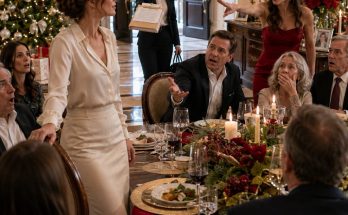
The Mayflower Ballroom had been dressed to look like a dream—soft gold lights dripping from crystal chandeliers, white roses climbing silver stands, candles trembling inside glass cylinders on every table. Outside, Washington, D.C. was wet from a spring rain, and through the tall windows the streets shone black and gold like polished shoes.
I should have been thinking about my husband’s hand around mine. I should have been thinking about the way Ethan had looked at me at the altar, like I was the only stable thing in a city built on performance. I should have been tasting the honeyed frosting from our cake or laughing at the flower girl who had fallen asleep under the head table with one shoe off.
Instead, I watched my father cross the ballroom with a microphone in his hand.
Senator William Abbott never walked into a room. He occupied it.
Even at my wedding, people shifted toward him the way sunflowers turned toward light. Donors straightened their jackets. Reporters pretending not to be reporters lifted their phones. My father smiled with that practiced warmth that had made half the country trust him and half the Senate fear him.
“Ladies and gentlemen,” he said, tapping the microphone once.
The sound cracked through the speakers.
Ethan’s thumb moved gently over my knuckles beneath the tablecloth. I looked at him. His face was calm, but there was something tight around his mouth.
“He’s going to behave,” I whispered.
Ethan did not answer.
My father lifted his glass, his silver hair catching the chandelier light. “Tonight, we celebrate my daughter, Marceline Abbott.”
Applause rose around me.
For one second, I let myself believe he might actually say something kind.
He looked at me and smiled.
“My daughter has always been brilliant,” he said.
The room softened. My mother lowered her eyes. Ethan’s hand went still.
My father paused, waiting for attention to gather.
“Brilliant,” he continued, “at typing other people’s words.”
The laughter came fast.
It rolled across the ballroom, bright and easy, bouncing off crystal and marble. A man near the back slapped the table. Someone whistled. My cousin Beth covered her mouth like she was embarrassed for me, though she was still laughing.
I smiled because I had been trained to smile.
That was how girls survived men like my father in rooms like this. Smile. Don’t embarrass the family. Don’t ruin the evening. Don’t make a scene when someone else cuts you open in public.
My father chuckled with them, delighted by his own cruelty.
“She’s always been the quiet one,” he said. “Behind the scenes. Helpful. Careful. The kind of girl who keeps the coffee warm while real heroes do the hard work.”
More laughter.
Not from everyone.
At the front table, Deputy Secretary Harold Vance did not laugh. Neither did the two foreign officials seated beside him. Neither did Mara Ellison from the National Security Committee, who had barely touched her dinner all night.
Their silence felt louder than the laughter.
My father did not notice. He never noticed people who stopped clapping.
Ethan leaned closer. “Marcy.”
I kept looking at my father.
For years, he had taken my silence as proof that I had nothing worth saying. He had mistaken restraint for weakness. He had built a whole family mythology around it, one where he was the giant and I was the useful little shadow holding his notes.
But shadows remember the shape of everything they stand behind.
As he raised his glass higher, the ballroom lights blurred slightly at the edges. Not from tears. From focus.
Because beneath my plate, tucked under the linen napkin, my phone buzzed once.
I looked down.
Unknown Number: He’s going off-script. Be ready.
A cold line moved through my spine.
My father smiled wider into the microphone, and I suddenly understood that tonight’s humiliation was not going to be casual.
It was planned.
And the worst part was, someone else knew.
### Part 2
I grew up in a house where silence had rules.
Not the peaceful kind of silence, like snowfall or a church before music begins. Our silence was polished, weaponized, set carefully between dinner plates and campaign schedules. It lived in the pause before my father corrected my mother, in the way forks stopped moving when I spoke too long, in the click of his pen when he decided a conversation was over.
Our dining room smelled of lemon oil, roasted chicken, and control.
Every night, my father sat at the head of the table beneath a framed photograph of himself shaking hands with a president. My mother sat opposite him in pearls, perfect posture, soft voice. I sat between them, learning early that questions were traps and ambition was permitted only if it reflected well on him.
When I was twelve, I won a statewide essay contest.
I remember the certificate had a blue ribbon pressed into the corner. I carried it home in both hands, my palms sweaty with excitement. My mother kissed my forehead. My father read the first paragraph, smiled faintly, and said, “Not bad. Who helped you?”
No one had.
But I learned that saying so only made it worse.
At sixteen, I qualified for a national debate final. He told everyone at church that I had inherited his public speaking instincts. When I lost in the final round by one point, he told me in the car, “You’re good with preparation, Marcy. But pressure reveals people.”
The car smelled like leather and his peppermint breath mints. Rain slid down the windshield in broken silver lines. I watched my reflection in the window and made myself memorize the sentence.
Pressure reveals people.
Years later, I would realize he had been right. Just not in the way he meant.
My mother had once been extraordinary.
Before she married him, Evelyn Abbott had worked in diplomatic affairs. There were photographs hidden in a blue storage box in the back of her closet: my mother in a navy suit beside ambassadors, my mother at a conference table in Geneva, my mother laughing with a woman whose name I later learned appeared in history books.
But in our house, she became decorative.
She hosted donor dinners. She remembered birthdays. She corrected place cards. She smiled when my father interrupted her. Once, when I was twenty-two, I found her standing in the laundry room holding one of her old State Department badges.
The dryer hummed behind her. Warm cotton filled the air.
“Do you miss it?” I asked.
She closed her fingers around the badge. “Some doors close slowly enough that you can pretend you chose it.”
That was the most honest thing she had ever said to me.
When I told my father I had been accepted into the State Department’s international security track, he laughed.
Not loudly. That would have been kinder.
He gave a small, amused exhale over his morning coffee and said, “Well, that’s cute.”
“Cute?” I asked.
He folded the newspaper. “Marcy, you’re organized. You’re careful. Those places need people who can keep things running.”
“I’m not applying to be an assistant.”
He looked at me then, really looked, and his smile thinned. “Don’t mistake proximity to power for power.”
My mother froze beside the sink.
I said nothing.
That evening, he introduced me to a donor as “our little note-taker at State.” The nickname stuck. At Thanksgiving, it became “the typist.” By Christmas, “the girl who files papers for serious people.”
Each laugh carved out a small room inside me where I stored what I could not say.
Then, two years before my wedding, something happened in a basement under Washington that no one in my family was ever supposed to know about.
The room had no windows.
It smelled like burnt coffee, hot cables, and panic.
Screens covered the walls. Red warnings pulsed across them like wounds opening and closing. A breach had ripped through a NATO-linked defense communications network, and every minute we failed to contain it brought allied systems closer to exposure.
Men with better titles shouted over each other.
I stood at the center table with a headset pressed to one ear, watching patterns move through encrypted traffic.
Something about the breach felt wrong.
Too clean. Too deliberate. Too familiar.
“Kill the main relay,” someone barked.
“No,” I said.
Several heads turned.
I pointed at the screen. “That’s what they want. If we sever the main relay, the backup authentication keys dump into the compromised channel.”
A senior official stared at me. “Are you sure?”
No.
But my whole life had trained me to read what powerful people missed while they were busy sounding powerful.
I swallowed once. “Route through the secondary protocol. Freeze external handshakes. Nobody touches the main relay until I say.”
For three seconds, no one moved.
Then Ethan Crawford, White House liaison, looked at the room and said, “Do what she said.”
That was the first time Ethan ever chose my voice over someone else’s volume.
Twenty-seven minutes later, the breach stopped.
Three weeks later, a cybersecurity accord was drafted under emergency classification.
My name was removed from the visible record.
My father’s signature was not.
And when the cameras flashed around him as he called the accord one of the proudest achievements of his career, I stood alone in my apartment, watching the broadcast with cold coffee in my hand.
That night, he texted me one sentence.
Proud day for the family.
I stared at the words until the screen went dark.
He had no idea what I had done.
Or maybe, a small voice whispered, he did.
### Part 3
Ethan proposed on a Thursday morning while I was late for work.
That sounds unromantic, but it was perfect for us.
My apartment was full of half-packed briefing folders, one dead basil plant, and a pair of heels I could not find because I had kicked them under the sofa after a reception the night before. I was standing in the kitchen, eating toast over the sink, when Ethan walked in holding two coffees and wearing the expression he usually saved for diplomatic disasters.
“What happened?” I asked immediately.
He set the coffees down. “Nothing happened.”
“That is exactly how people sound when something happened.”
He took the toast from my hand, placed it on a plate, and lowered himself onto one knee right there on the kitchen tile.
The refrigerator hummed. Somewhere outside, a garbage truck groaned down the street. My hair was wet. My blouse had one sleeve half-buttoned.
“Marceline Abbott,” he said, voice suddenly unsteady, “I have watched you stay calm in rooms where everyone else wanted credit more than they wanted truth. I have watched you save people who will never know your name. I have watched you carry silence like armor. I don’t want to take that from you. I just want to stand close enough that you don’t have to carry it alone.”
I cried before he opened the box.
The ring was simple. An oval diamond on a thin gold band. No dynasty piece. No political symbol. Nothing selected to impress donors. Just beautiful.
When I told my parents, my mother covered her mouth with both hands and whispered, “Oh, Marcy.”
My father asked, “Crawford? The White House Crawford?”
“He works in policy coordination,” I said.
He leaned back in his chair. “Good family?”
I looked at Ethan. Ethan looked at his coffee.
“Yes, Dad,” I said. “A human one.”
My father ignored that.
At first, he seemed pleased. Too pleased. He offered to pay for the wedding. He suggested the Mayflower because “history should have proper walls.” He offered his communications team for invitations, his preferred florist, his photographer, his security consultant, his donor liaison.
“It’s my wedding,” I told him.
“It’s our family,” he corrected.
That was how he took things. Not by force at first. By vocabulary.
My mother called me later that night.
“Let him help with some of it,” she said quietly. “It will be easier.”
“For whom?”
She did not answer.
In the months that followed, my wedding became less a wedding than a production schedule. Seating charts arrived with names I had not invited. A former ambassador called to congratulate me and mentioned that my father had described the reception as “an informal policy reunion.” A reporter from a political magazine emailed my office asking whether cameras would be allowed during the toasts.
I forwarded it to Ethan with one line.
Did you know about this?
He called within thirty seconds.
“No,” he said. “Absolutely not.”
His anger was different from my father’s. My father’s anger filled a room and demanded witnesses. Ethan’s went quiet and sharp, like a knife being placed carefully on a table.
That evening, we met at a small Thai restaurant near Dupont Circle. The windows were fogged from steam. The table smelled like lime, basil, and chili oil. I told him everything: the reporter, the donor names, the way my father kept referring to “the optics,” the way he had asked if he could give “a real speech” instead of “sentimental fluff.”
Ethan listened without interrupting.
When I finished, he said, “He’s not planning a toast. He’s planning a scene.”
“I know.”
“Then why are you letting him speak?”
Because I still wanted a father.
The answer sat between us, embarrassing and raw.
Instead, I said, “Because if I refuse, he’ll turn that into a story too.”
Ethan looked down at his plate. “Marcy, has it ever occurred to you that he doesn’t misunderstand you?”
The question made the restaurant seem suddenly louder.
A waiter laughed near the kitchen. Ice clattered into a glass. Someone at the next table said, “No, I swear, she knew.”
I folded my napkin once, then again.
“What do you mean?”
“I mean maybe he knows exactly what you are,” Ethan said. “Maybe that’s why he keeps calling you less.”
I went cold.
For years, I had told myself my father dismissed me because he could not see me. But Ethan was suggesting something worse.
That he saw me clearly.
And hated what it meant for him.
Two days later, I visited my father’s Capitol office.
His assistant, Lila, gave me a strange look as I passed. She was young, efficient, always smelling faintly of vanilla lotion. That day her smile flickered and died before it settled.
“He’s expecting you,” she said.
My father’s office was all dark wood, framed newspaper covers, and photographs arranged to suggest destiny. He stood behind his desk reviewing a printed speech.
“My girl,” he said warmly.
Not Marcy. Not Marceline.
My girl.
I glanced at the pages in his hand. “Is that for the wedding?”
“Just a few thoughts.”
“Can I read it?”
His fingers tightened almost imperceptibly.
Then he smiled.
“Superstitious, sweetheart. Let a father have his moment.”
Behind him, on his desk, lay a silver pen, a glass of amber liquor, and a folder stamped with an old classification handling label that should not have been anywhere near his personal office.
My eyes stopped on it.
He noticed.
For the first time in my life, my father moved too quickly.
He flipped another folder over it.
“Still curious about other people’s paperwork?” he said lightly.
I smiled.
But inside, something old and buried opened one eye.
### Part 4
I did not tell Ethan about the folder right away.
That was my mistake.
I told myself I needed to be sure before I dragged him into whatever my father was hiding. I told myself there were innocent explanations, though in Washington “innocent explanation” was usually just another term for “better lawyer.” Mostly, I told myself I was tired.
The week before the wedding, I barely slept.
Every night, I woke around 3:00 a.m. with the taste of metal in my mouth and the same image in my head: my father’s hand sliding over that folder, covering it as if it were a flame he had forgotten could burn him.
At work, I searched what I legally could search and asked only questions that would not leave marks. Nothing obvious surfaced. The accord’s public record remained clean. Classified archives remained sealed behind channels I would not abuse.
Still, little things began to happen.
A former colleague stopped speaking when I entered the elevator.
A man I did not recognize sat too long in the lobby of my building pretending to read a newspaper upside down.
My mother called three times and hung up twice.
On the third call, she said, “Marcy, your father has been under pressure.”
“For what?”
A pause.
The line hissed softly between us.
“For being your father,” she said finally.
I almost laughed. “That sounds exhausting for him.”
“Please don’t make jokes.”
“I learned from the best.”
She exhaled, and I pictured her in the pale blue sitting room of my childhood home, one hand at her throat, pearls cool beneath her fingertips.
“He wants the wedding to go smoothly,” she said.
“Then he can behave.”
“He doesn’t always know when he’s hurting people.”
That old excuse.
I had heard it so many times it had grooves worn into it.
“He knows,” I said.
My mother went quiet.
Then, so softly I almost missed it, she said, “Yes.”
The word landed harder than any warning could have.
Before I could ask more, she whispered, “I have to go,” and ended the call.
That evening, I found an envelope taped under my apartment door.
No stamp. No return address.
Inside was a single printed sentence.
You think the truth belongs to you because you survived it.
There was no signature.
I stood in the hallway holding the paper while Mrs. Alvarez from 4B carried groceries past me and complained about the elevator again. The normalness of it made everything worse. Her oranges rolled in a mesh bag. Her perfume smelled like powder and roses. Somewhere downstairs, a dog barked.
I called Ethan.
He arrived sixteen minutes later in a rain-dark coat, hair damp, jaw tight. He read the note once, then again.
“Why didn’t you tell me?” he asked.
I looked away.
He softened immediately. “Marcy.”
“I didn’t know what it was.”
“You knew enough to be scared.”
“I wasn’t scared.”
He touched the edge of the paper. “Your hand is shaking.”
I hated that he noticed. I loved that he noticed. Both feelings sat in my chest like strangers refusing to leave.
We sat at my kitchen table while rain tapped the window. I told him about the folder, my mother’s call, Lila’s face, the feeling I had carried all week.
Ethan listened, then said, “There’s something I need to show you.”
He opened his laptop.
The screen lit his face blue-white in the dim kitchen. He pulled up a secure message chain—not classified, but sensitive enough that he had clearly hesitated before bringing it to me.
“After the breach,” he said, “there were concerns about attribution. About how certain draft language moved from internal channels to your father’s office.”
“My father said his staff prepared briefing material.”
“Yes,” Ethan said. “But the timeline never made sense.”
My pulse slowed in the way it did when fear became analysis.
“What are you saying?”
“I’m saying someone may have fed him pieces of your work before the accord was finalized.”
The refrigerator clicked on.
For a second, that was the only sound.
“Who?”
Ethan turned the laptop toward me.
There was a name in the thread. Not my father’s. Not mine.
Lila Grant.
My father’s assistant.
Vanilla lotion. Flickering smile. Young, efficient, invisible.
A perfect shadow.
The page blurred. My first emotion was not anger.
It was humiliation.
I had spent years thinking my father stole from me by accident, by privilege, by proximity. But if Lila had passed him my work, if he had known where it came from, then every joke afterward had been something far uglier than dismissal.
It had been cover.
Ethan reached for my hand.
Before he could speak, my phone buzzed.
Unknown Number: Ask your groom what else he knows.
I looked up slowly.
Ethan’s face changed.
And for the first time since I had known him, I wondered whether his silence had secrets too.
### Part 5
Trust is not broken all at once.
Sometimes it cracks quietly under the sound of a phone buzzing on a kitchen table.
I stared at the message until the words seemed to detach from the screen.
Ask your groom what else he knows.
Ethan did not reach for the phone. He did not deny anything. That was what frightened me most.
“What does that mean?” I asked.
His eyes stayed on mine. “It means someone wants you looking at me instead of them.”
“That isn’t an answer.”
“No,” he said. “It isn’t.”
Rain dragged silver lines down the window. The kitchen smelled like cold coffee and wet wool from Ethan’s coat. I heard the radiator hiss, then knock twice in the wall like someone trying to get in.
Ethan closed the laptop halfway.
I noticed.
“Open it,” I said.
“Marcy—”
“Open it.”
He did.
His hands were steady, but his face had lost color.
“I knew there were irregularities after the accord,” he said. “Not enough to prove theft. Not enough to accuse a senator. Especially not your father.”
“You never told me.”
“I wanted to.”
“But you didn’t.”
His silence answered.
I stood so quickly the chair scraped the floor.
“Was I being protected,” I asked, “or managed?”
His expression tightened as if I had slapped him.
“That’s not fair.”
“No. What’s not fair is finding out three days before my wedding that my fiancé may have known my father stole from me and decided I didn’t need the truth.”
He flinched.
Good, I thought.
Then hated myself for thinking it.
Ethan closed his eyes briefly. “After the accord, you told me you were tired of being used as a weapon in other people’s power games. You said you wanted your work to matter more than your name.”
“I said that before I knew my name had been erased on purpose.”
“I know.”
“Do you?”
He stood. “Yes. I do.”
For a moment we were not bride and groom. We were two people in a kitchen, surrounded by evidence and weather, discovering that love did not automatically make silence harmless.
He walked to the counter, gripped its edge, and looked down.
“There was a sealed review,” he said. “Quiet. Internal. It never reached a formal investigation because the breach response was still politically fragile. NATO confidence was delicate. Your father’s office had become the public face of the fix. No one wanted a scandal attached to the accord.”
“And you?”
“I was told to leave it alone.”
“You always follow instructions?”
He turned back. “I followed yours.”
The words hit me strangely.
“What?”
“You told me you didn’t want your father anywhere near that part of your life. You told me you survived him by keeping one place he couldn’t enter. I thought if I brought you suspicions without proof, I’d be dragging him into the only room where he hadn’t already taken something from you.”
My anger faltered, then sharpened again because the explanation was almost good enough.
Almost.
“So you decided for me.”
“Yes,” he said quietly. “And I was wrong.”
That mattered.
Not enough to erase it. But enough to stop me from walking out into the rain.
I sat back down slowly.
“What else do you know?”
He reopened the file and showed me the pieces. Message timestamps. Transfer logs. A calendar entry from my father’s office the morning before he first publicly described the accord’s framework. Lila’s name appeared twice, then vanished. A redacted memo suggested someone on my father’s staff had received “informal language support” from an unnamed State Department source.
Not enough for court.
Enough for truth.
“Why now?” I asked. “Why send threats now?”
“Because your father is planning to use the wedding speech,” Ethan said. “Maybe to remind people that the accord was his. Maybe to humiliate you before anyone can question the story.”
“Or someone wants him exposed.”
“Yes.”
“Lila?”
“Maybe.”
I thought of her face outside his office. The nervous smile. The way she had looked at me like I was standing too close to a cliff.
“She could be warning me,” I said.
“Or baiting you.”
The next morning, I went to see my mother.
Our family house sat on a quiet street lined with old trees and expensive discretion. Inside, nothing had changed. The foyer still smelled of beeswax and lilies. My father’s awards still occupied the best-lit wall. My mother’s old diplomatic photographs remained hidden.
She was in the sunroom arranging white tulips.
“Where is Dad?” I asked.
“At the studio. Interview prep.”
“Good.”
Her scissors paused.
I placed the anonymous notes on the glass table between us.
She read them without sitting. Her face did not move, but her throat did.
“Do you know who sent these?”
“No.”
“Do you know about Lila?”
The scissors slipped from her hand and struck the floor.
There it was.
Not guilt.
Fear.
My heart began to pound.
“What happened?” I asked.
My mother looked toward the door as if the house itself might report her.
Then she whispered, “Your father isn’t afraid you’ll embarrass him at the wedding.”
She reached into the pocket of her cardigan and pulled out a small folded card.
“He’s afraid someone else will.”
### Part 6
The card my mother handed me was an invitation.
Not a wedding invitation. Mine were cream cardstock with pressed edges and simple black lettering. This one was smaller, heavier, private. At the top, in my father’s campaign font, it read:
A private conversation on legacy, leadership, and national security.
The date was my wedding day.
The time was thirty minutes before the reception toast.
The location was a side salon inside the Mayflower.
My father had scheduled a political gathering inside my wedding.
For a moment, all I could do was stare at it.
The sunroom around me looked too pretty for what I was feeling. White tulips leaned in a glass vase. Pale afternoon light touched the wicker chairs. Somewhere in the kitchen, the old ice maker dropped cubes with a hollow clatter.
“He told me it was just a donor reception,” my mother said.
“At my wedding.”
“He said people were already in town.”
I laughed once. It sounded nothing like me. “How convenient.”
My mother sat across from me and folded her hands so tightly her knuckles whitened.
“There’s more,” she said.
I looked up.
She seemed smaller in that room than she had when I arrived, like every sentence cost her an inch of height.
“He has been nervous for weeks. Not normal nervous. He checks his phone constantly. He snaps at Lila. He asked me if I had spoken to you about the accord.”
“And what did you say?”
“I said no.”
“Was that true?”
Her eyes filled.
“Mom.”
She turned toward the window. Outside, a gardener moved along the hedge with electric shears, the buzz rising and falling like an insect trapped in the walls.
“Years ago,” she said, “after the accord signing, I found your father in his study late at night. He had printed pages spread across the desk. Draft language. Technical notes. Things I knew he could not have written.”
My chest tightened.
“I asked where they came from,” she continued. “He told me not to concern myself with operational details.”
“And you accepted that?”
She looked at me then, wounded by the simplicity of the question.
“No,” she said. “I recognized your phrasing.”
The room tilted slightly.
“What?”
My mother’s mouth trembled. “You have a rhythm when you write. You always have. Even as a child. Clear, precise, almost too restrained until the final sentence. I knew.”
I stood because sitting still felt impossible.
“You knew he used my work?”
“I suspected.”
“Suspected?”
“I asked him. He said your contribution was minor. He said everything had been reviewed. He said if there had been anything improper, officials would have objected.”
“And you believed him?”
She closed her eyes.
“I wanted to survive him.”
That stopped me.
Not because it excused her.
Because it was honest.
The anger in me did not disappear. It simply changed shape. For years, I had imagined my mother as a silent witness because she had been weak. Now I saw something worse and more complicated: she had made calculations. Daily ones. Tiny surrenders traded for household peace. She had let me become part of the price.
I picked up the private invitation.
“Why show me this now?”
“Because last night he told someone on the phone that after the wedding, no one would ever question the Abbott legacy again.”
A coldness spread through me.
“What exactly did he say?”
She swallowed.
“He said, ‘Once she sits there and smiles, the story is sealed.’”
The tulips blurred.
Once she sits there and smiles.
That was what I had been to him. A living signature. Proof of consent. The quiet daughter at the head table, laughing along while he reminded the world who owned the story.
My phone buzzed.
For one stupid second, I thought it was another threat.
It was Ethan.
I stepped into the hallway and answered.
“Tell me you’re sitting down,” he said.
“I’m not.”
“Then lean against something.”
I pressed my palm to the wall.
“Lila Grant just resigned from your father’s office.”
“When?”
“Twenty minutes ago. But before she left, she sent a packet to three people.”
“Who?”
“Me. Deputy Secretary Vance. And you.”
I looked at my inbox.
There it was.
No subject line. One encrypted attachment.
My mouth went dry.
“Do I open it?”
Ethan’s voice lowered. “Not on your phone. Come home.”
I glanced back at my mother through the sunroom doorway. She had bent to pick up the scissors, but she was not cutting flowers anymore. She was just holding them.
“I have one more question first,” I said.
My mother looked at me.
“When Dad covered that folder in his office,” I asked, “was it Lila’s?”
My mother’s face answered before she did.
“No,” she whispered. “It was mine.”
### Part 7
My mother’s confession did not come like thunder.
It came like dust.
Quiet, choking, everywhere at once.
We sat in my father’s study because she said the walls there had already heard everything. The room smelled of old paper, leather polish, and the expensive smoke of cigars he claimed he no longer used. Afternoon light cut through the blinds in pale stripes across his desk.
My mother placed a key in front of me.
It was small, brass, and taped to a white tag with no label.
“I kept copies,” she said.
“Of what?”
“Enough.”
That word carried years inside it.
She walked to the built-in bookshelves, removed a biography of Lincoln, and pressed her finger against the back panel. A narrow compartment clicked open.
For a second, I forgot to breathe.
Inside were three folders, a flash drive, and a stack of handwritten notes tied with gray ribbon.
My father had hidden his legacy behind a dead president.
Of course he had.
My mother lifted the folders with both hands and brought them to the desk.
“I told myself I was keeping them for protection,” she said. “In case he turned on me. In case he needed to be stopped.”
“But not when he turned on me.”
She flinched.
“No.”
The answer was immediate. No defense. No softening. Somehow that hurt more.
I opened the first folder.
There were printed emails, calendar logs, internal talking points. My name did not appear, but my language did. Whole paragraphs I remembered drafting in a windowless room under emergency lighting. Technical safeguards I had fought to keep when older men insisted they were too cautious. Phrases from my classified framework, stripped of context and repackaged for my father’s policy team.
The second folder held notes in my father’s handwriting.
Use “allied trust architecture” phrase.
Ask L. if daughter’s section can be simplified.
Frame as Senate leadership, not agency response.
My stomach turned.
Ask L.
Lila.
The third folder contained something else: a draft of the wedding toast.
I read the first page.
My daughter has always understood the value of support roles.
My fingers tightened on the paper.
There were edits in the margins.
Too harsh? Keep light.
Mention accord joke—crowd will like.
Tie to legacy: she helped in small way; I carried burden publicly.
I set the page down carefully because if I held it any longer, I would tear it apart.
“He wasn’t just going to insult me,” I said.
My mother shook her head, tears slipping silently down her face.
“He was going to use you to protect the lie.”
The study seemed to shrink.
All my life, I had imagined some final confrontation where my father would reveal himself by accident, pushed too far by pride. But this was not impulse. It was architecture. Drafted, revised, rehearsed.
“What did Lila send?” my mother asked.
“I don’t know yet.”
“She came here two nights ago.”
My head snapped up.
“What?”
My mother wiped her cheek. “Your father was at the studio. Lila was shaking. She said she had done something terrible years ago and that he had promised it was harmless. She said now he wanted her to confirm things at the wedding if anyone asked.”
“Confirm what?”
“That you only assisted. That you had exaggerated your role privately. That he had protected you from embarrassment.”
A sound left my throat before I could stop it.
It was almost a laugh.
He had planned to humiliate me and then call it protection.
My mother reached toward me, then stopped before touching my hand.
“I told Lila to leave town.”
“Why?”
“Because your father knows fear better than guilt. If she stayed, he would use one to bury the other.”
I gathered the folders, the flash drive, the toast draft, the invitation card.
My mother watched me.
“What are you going to do?”
For years, I had answered that question in small ways. I would stay quiet. I would be strategic. I would protect the work. I would survive the family.
Not anymore.
“I’m going to get married,” I said.
She blinked.
“And then?”
I slid the wedding toast draft into my bag.
“Then I’m going to let him talk.”
My mother went pale.
“That is dangerous.”
“No,” I said. “Dangerous is letting him think silence still belongs to him.”
At home, Ethan waited with his laptop open and the encrypted file ready. We plugged in Lila’s flash drive first, then opened her packet.
The first document was a signed statement.
The second was a timeline.
The third was a video.
In the thumbnail, my father stood in his office, one hand around a glass, speaking to someone off-camera.
Ethan looked at me. “Are you ready?”
I wasn’t.
I clicked play anyway.
My father’s voice filled the room.
“After Saturday,” he said, “Marceline will never be able to claim that accord without looking like a bitter little bride trying to steal her father’s legacy.”
The video froze on his smile.
And I finally understood what kind of man I was marrying in front of—and what kind of man I was done calling Dad.
### Part 8
The morning of my wedding, I woke before my alarm.
For a few seconds, I did not know where I was.
Then the hotel room came into focus: cream walls, heavy curtains, my dress hanging from the wardrobe like a ghost, pale sunlight pushing through the gap in the drapes. The air smelled faintly of roses, hairspray, and the coffee someone had left outside my door in a silver pot.
My wedding day.
Also, apparently, the day my father planned to bury me in front of two hundred witnesses.
I sat up slowly and listened.
The city beyond the glass was already awake. Tires hissed over damp pavement. Somewhere below, a delivery truck beeped as it backed into an alley. My phone lay face-down on the nightstand, silent for once.
No new threats.
That should have comforted me.
It didn’t.
Ethan had slept in another room because my mother had insisted on one wedding tradition untouched by politics or espionage. Before we separated the night before, he had stood in the hallway holding both my hands.
“We don’t have to do this publicly,” he said.
“Yes, we do.”
“Marcy.”
“If we do it privately, he survives publicly. That has been the pattern my whole life.”
He nodded once, but his eyes were troubled.
“I’m not asking you to forgive me for keeping things back,” he said. “I just want the chance to stand with you now.”
That was why I loved him.
Not because he was perfect.
Because when he was wrong, he did not build a throne out of excuses.
He owned the ground he stood on.
At nine, my bridesmaids arrived in silk robes and excitement. Beth, my cousin, burst in holding a mimosa and immediately started crying. My college friend Naomi took charge of the makeup schedule like she was coordinating a hostage rescue. Someone opened a window, and cool spring air slipped in carrying the smell of wet stone and early traffic.
For a while, the room became almost normal.
Laughter. Lipstick. Curling irons. The rustle of garment bags. My mother fastening a pearl bracelet around my wrist with fingers that trembled only once.
“You look beautiful,” she said.
I looked at our reflections in the mirror.
She stood behind me in silver-blue silk, elegant and tired. For the first time, I noticed the lines near her mouth not as signs of age, but as records of everything swallowed.
“Mom,” I said.
Her eyes lifted.
“I’m not doing this for you.”
She absorbed that.
Then nodded. “I know.”
“And I’m not saving you from him.”
Her lips pressed together.
“I know that too.”
The old me would have softened it. Added something kind. Made her feel less guilty so I could feel less cruel.
The new me let the truth stand.
She fastened the clasp.
“Good,” she whispered.
At noon, I walked down the aisle.
The ceremony room glowed with white flowers and afternoon light. Ethan stood at the front in a black suit, eyes shining when he saw me. For the length of that aisle, everything else faded.
Not disappeared.
Faded.
My father sat in the front row, smiling for the cameras. He looked proud, but not emotional. Pride, for him, had always been a mirror. He enjoyed seeing himself reflected in the importance of the moment.
When the officiant asked who gave me away, my father rose.
My hand rested on his arm.
His sleeve smelled of starch and sandalwood cologne.
“Her mother and I do,” he said.
His voice carried beautifully.
I almost laughed.
Even giving me away, he made sure to be heard.
The vows saved me.
Ethan’s voice broke on the second line. Mine held steady until I said, “I choose a life where truth is not treated as an inconvenience.” His eyes flickered because he knew exactly what I meant.
We kissed to applause that felt real.
For one hour, maybe two, I let myself be happy.
At the reception, the ballroom looked even more unreal than I remembered from the walkthrough. Gold light. White roses. Crystal. Music soft as poured cream. Guests moved in clusters, laughing, drinking, pretending not to measure one another’s access.
My father moved through them like a king returning to court.
At 7:12 p.m., Ethan’s phone buzzed.
He looked down, then at me.
“What?” I asked.
He leaned close.
“The private donor salon is full.”
My father had not canceled it.
Of course he hadn’t.
At 7:19, Deputy Secretary Vance arrived and squeezed my hand longer than polite.
“Whatever happens tonight,” he said softly, “you are not alone.”
At 7:26, Mara Ellison took her seat at the front table.
At 7:31, two NATO officials entered quietly through the side doors.
My father saw them.
For the first time all day, his smile faltered.
Then the band lowered the music.
A server dimmed the side lights.
My father stood and reached for the microphone.
And my mother, seated beside him, did not look at him.
She looked at me.
Like she was watching a match strike in a room full of gas.
### Part 9
My father began with charm.
He always did.
“Friends, family, honored guests,” he said, lifting his glass. “And a few people who are pretending not to be honored guests because Washington never really takes the night off.”
A polite ripple of laughter moved through the ballroom.
He relaxed into it.
That was the danger of applause. It made careless men feel chosen.
I sat beside Ethan at the head table, my bouquet lying near my plate, white roses beginning to brown at the edges. The steak in front of me had gone cold. A candle flame trembled in the draft from the service doors.
My father turned slightly, making sure the cameras caught his good side.
“Today, I watched my daughter marry a fine man. A patient man. And anyone who knows Marceline knows patience is useful.”
A few people laughed.
Beth glanced at me nervously. Naomi stopped smiling.
Ethan’s hand found mine under the table.
My father continued.
“Marceline has always been careful. Quiet. Very good behind the scenes. When she was little, she used to sit outside my study with a notebook, copying phrases she heard through the door.”
That was not true.
But he said it warmly, and warmth made lies easier to swallow.
“I used to tell her, sweetheart, one day all that typing will pay off.”
More laughter.
The sound did not hurt this time.
It clarified.
Across the room, I saw a campaign adviser glance down at his lap. Lila was not there, but her absence had weight. My father’s private salon guests had filtered into the reception now, their wine glasses held too carefully, their smiles too alert.
He was not just speaking to family.
He was speaking to the record.
Then he said it.
“Some of you may know about the NATO cybersecurity accord my office helped shepherd two years ago.”
The front table went still.
My father smiled as if he had reached the main course.
“It was a difficult time. Long nights. Hard decisions. Real pressure. The kind that reveals people.”
My stomach tightened.
Pressure reveals people.
He had used that line on me when I was sixteen. Now he was using it to crown himself.
“I’ve heard, over the years,” he said, “little stories about who did what behind the scenes. Washington loves stories. But leadership means carrying the burden publicly when others can only assist privately.”
Ethan’s fingers tightened.
My father looked directly at me.
“To Marceline’s credit, she assisted. In small but meaningful ways.”
Small.
The word entered the air like poison.
Deputy Secretary Vance slowly set down his glass.
My father noticed this time. His smile flickered, then returned harder.
“And that is what I admire about my daughter. She understands support. She understands that not everyone is built to stand in front when history is being made.”
The silence after that was not complete.
There were still small sounds: a fork touching porcelain, someone coughing, the faint mechanical hum from the speakers.
But emotionally, the room stopped breathing.
My father raised his glass higher.
“So tonight, to Marceline. The girl who helped type for real heroes, and somehow convinced one of them to marry her.”
There it was.
The line from the draft.
The joke he had sharpened in private and carried into my wedding like a knife wrapped in ribbon.
A few people laughed automatically.
Then stopped when no one important joined them.
My father’s eyes darted toward Vance, then Mara, then the NATO officials. Confusion crossed his face. He had expected discomfort, maybe. Not resistance.
The projector behind him flickered.
At first, guests thought it was part of the slideshow. A childhood photo of me at the beach vanished. The screen went black. Then white text appeared:
Live transcript enabled.
My father turned slightly.
“What is this?” he said, still smiling.
His words appeared on the screen behind him.
What is this?
A murmur moved through the room.
The live feed had switched on.
Not to millions. Not yet. Ethan and I were not reckless. The stream was routed first to a private channel shared with officials, counsel, and one journalist we trusted to verify before publishing.
But my father did not know that.
He only knew he was being recorded.
His smile tightened.
Ethan stood.
Every head turned toward him.
He adjusted his jacket once, then walked toward the microphone with the calm of a man stepping onto a bridge he had already decided might burn.
“Senator Abbott,” Ethan said, “may I respond?”
My father laughed too quickly.
“Of course, son. Though I hope this isn’t a cross-examination. It’s a wedding.”
“It became something else when you lied.”
The words landed like glass breaking.
My father’s face emptied.
Ethan reached for the microphone.
But before he could take it, my father pulled it back.
And in that small, ugly movement, everyone saw the truth before hearing it.
### Part 10
My father recovered faster than I expected.
Politicians are trained to bleed internally while smiling.
“Careful, Ethan,” he said, voice low but still amplified. “Emotions run high at weddings.”
The sentence appeared behind him on the screen.
Careful, Ethan.
I saw guests reading it. Saw the shape of it change in their faces. It did not look paternal in text. It looked like a warning.
Ethan did not step back.
“No,” he said. “They run high when a man insults his daughter in a room full of witnesses to protect a lie.”
My father’s jaw shifted.
Mara Ellison rose from her seat.
“Senator,” she said, “I suggest you let him speak.”
My father looked at her with a flash of pure hatred so quick most people missed it.
I did not.
He released the microphone.
Ethan took it.
For one second, the room seemed too bright. Every candle flame, every glass rim, every pearl earring glinted with cruel clarity. I felt my own pulse in my wrists.
Ethan looked at me, not the crowd.
I nodded.
He turned back.
“Two years ago,” he said, “during the NATO network crisis, an emergency framework was drafted that became the basis for the cybersecurity accord Senator Abbott just referenced.”
My father gave a short laugh. “This is absurd.”
Ethan continued.
“The author of that framework was not Senator Abbott. It was not his office. It was not a committee.”
He paused.
My mouth went dry.
He was about to say it, and even though I had chosen this, my body still reacted like a child bracing for punishment.
“It was Marceline Abbott.”
The room did not gasp.
Real shock is quieter than movies promise.
It moved through people in tiny betrayals: parted lips, lowered glasses, shoulders turning, eyes searching for confirmation.
My father shook his head. “She assisted with language. That’s all.”
Deputy Secretary Vance stood.
His chair scraped the marble floor.
“No,” he said.
One word. Plain. Heavy.
My father turned toward him slowly.
Vance looked older than he had at dinner, but his voice carried with the authority of a man tired of letting cowardice dress itself as caution.
“Marceline Abbott authored the core framework. Her recommendations contained the breach and formed the backbone of the accord. Her name was withheld from public documentation for classification reasons, not because her role was minor.”
The ballroom changed temperature.
At least, it felt that way.
Someone near the back whispered, “Oh my God.”
My father opened his mouth.
Vance lifted a hand.
“I was there.”
That silenced him.
Then one of the NATO officials stood. A woman with silver hair and a black dress, Ambassador Elise Moreau, whom my father had greeted earlier as if she were an old friend.
“She was the reason our delegation stayed at the table,” Moreau said. Her accent sharpened the edges of every word. “Not you, Senator.”
The screen behind them continued to caption everything.
Not you, Senator.
My father looked up and saw the words hanging above his head.
For the first time all night, he looked afraid.
Then Ethan did something we had not rehearsed.
He turned toward the projector technician and nodded.
A video appeared.
My stomach dropped.
“Ethan,” I whispered.
He did not look back.
The video showed my father’s office. The angle was slightly tilted, likely from Lila’s phone hidden against a stack of folders. My father stood near the window holding a drink.
His recorded voice filled the ballroom.
“After Saturday, Marceline will never be able to claim that accord without looking like a bitter little bride trying to steal her father’s legacy.”
A woman’s voice—Lila’s—said, “But she did write the language.”
My father laughed.
“My daughter writes plenty of things. That doesn’t make her a leader.”
On-screen, he lifted his glass.
“Besides, she’ll smile. She always does.”
The video stopped.
No one moved.
My mother covered her mouth, but she was not crying. Not this time. Her eyes were fixed on my father with something harder than grief.
My father stared at the blank screen.
Then he turned to me.
“Marceline,” he said.
It was the first time all night he had used my full name without contempt.
Too late.
I stood.
The chair beneath me made a soft sound against the floor. My dress whispered around my legs as I stepped forward. The microphone waited in Ethan’s hand.
When I took it, my father’s face changed again.
Not fear now.
Recognition.
He had finally understood that I was not waiting to be defended.
I was about to speak.
### Part 11
For most of my life, I had imagined that if I ever spoke against my father, my voice would shake.
It didn’t.
The microphone felt cold in my hand. The ballroom lights pressed against my skin. I could smell wax, roses, wine, and the faint metallic heat of the speakers. Two hundred people watched me with the stunned stillness of witnesses at an accident.
I looked first at my father.
Not the senator. Not the public man. The father who had made me smaller at dinner tables, in hallways, in front of relatives, beneath every ceiling that had ever belonged to us.
“I used to think you didn’t see me,” I said.
The words appeared behind me.
“I used to think that if I became useful enough, excellent enough, quiet enough, you would finally look up and realize I was more than the little girl outside your office.”
My father swallowed.
I heard it through the microphone.
“But you did see me,” I continued. “You saw enough to steal from me. You saw enough to fear me. You saw enough to spend years turning me into a joke so no one would ask why the joke sounded smarter than the man telling it.”
A woman at table six inhaled sharply.
My father’s face reddened.
“That is not—”
I lifted one hand.
He stopped.
That small obedience nearly undid me.
Not because it was satisfying.
Because it was proof he had always been capable of stopping.
He had simply never chosen to.
“You planned this speech,” I said. “You revised the insult. You scheduled donors inside my wedding. You used my smile as strategy.”
My eyes moved to my mother.
She held my gaze. This time, she did not look away.
“And for anyone wondering why I stayed quiet before tonight, let me be clear. I stayed quiet because the work mattered. Because alliances mattered. Because classified service often means doing necessary things without applause.”
I turned back to the room.
“But silence in service is not the same as silence under abuse.”
The sentence seemed to settle over the guests.
I saw Vance bow his head slightly. I saw Mara’s eyes shine. I saw Beth crying now, one hand pressed to her lips, finally understanding jokes she had laughed at for years.
My father tried to step closer.
“Marcy,” he said, voice raw enough to almost fool someone who had not survived him.
I did not move.
“My name is Marceline.”
He stopped.
There it was.
The smallest correction. The largest boundary.
For years, he had shortened me when he wanted to own me. Marcy, sweetheart, my girl, the typist. Names as handles. Names as leashes.
Not tonight.
“My name is Marceline Abbott,” I said. “I wrote the framework you signed. I helped stop the breach you built speeches around. I kept quiet because I believed protecting the outcome mattered more than protecting my pride.”
My throat tightened for the first time.
“But you mistook my restraint for permission.”
Behind me, Ethan stood still. Not rescuing me. Not interrupting. Just there.
That steadiness gave me the final inch I needed.
“So here is what happens now,” I said.
My father blinked.
I was speaking his language now. Consequences. Public record. Terms.
“The evidence already exists in multiple hands. The appropriate officials will review it. Your donors will decide what they want to defend. Your colleagues will decide whether legacy is worth perjury. The press will receive verified materials, not gossip.”
The campaign adviser near the back lowered his head.
My father whispered, “You would ruin me?”
The microphone caught it.
You would ruin me?
I almost smiled.
“No,” I said. “I’m done maintaining you.”
That was when the room finally broke.
Not into applause. This was not that kind of story yet.
It broke into movement. Whispering. Phones lighting. Chairs shifting. A senator’s aide rushing toward the hallway. A guest saying, “Turn that off,” and someone else replying, “Are you crazy? Keep it on.”
My father looked around for help.
The same room that had laughed for him twenty minutes earlier now refused to meet his eyes.
Power leaves quietly at first.
Then all at once.
My mother stood.
My father turned to her with desperate relief, as if surely she would come to him. She crossed the space between them slowly. Her silver-blue dress caught the light like water.
“Evelyn,” he said.
She stopped beside him.
For a second, I thought she might touch his arm.
Instead, she removed her wedding ring.
She placed it on the table beside his untouched champagne.
The sound it made was tiny.
Everyone heard it.
“I should have done this years ago,” she said.
Then she walked past him and sat beside me.
My father stared at the ring.
And for the first time in my life, nobody filled the silence for him.
### Part 12
The rest of the reception did not become normal.
How could it?
A wedding cannot absorb a public collapse and simply return to cake.
But it became something honest, which was better.
My father left through the side doors with two aides and no farewell. Cameras followed him as far as security allowed. His campaign adviser stayed behind long enough to whisper apologies to people who were no longer listening. Several donors disappeared without collecting their coats.
The band stopped playing for fifteen minutes.
Then Naomi marched over to the musicians, pointed at them, and said, “This is still a wedding. Play something with a pulse.”
They did.
A soft drumbeat filled the room first, uncertain, then stronger. Someone laughed from nerves. Someone else started crying harder. The servers resumed pouring wine with the haunted efficiency of people who had seen too much and still needed to clear salad plates.
Ethan stood beside me near the head table.
“Are you okay?” he asked.
“No.”
He nodded.
I appreciated that he did not ask again.
My mother sat with both hands around a glass of water. She looked exhausted, almost translucent, but lighter too, like someone who had stepped out of a room without windows.
“Where will you go tonight?” I asked her.
“Not home.”
“Good.”
She looked at me carefully. “May I stay at the hotel?”
“Yes.”
That was not forgiveness.
It was logistics.
Her eyes understood the difference.
Later, when the cake was cut, my hands shook so badly Ethan had to steady the knife. White frosting smeared across his thumb. I started laughing, not because anything was funny, but because my body had run out of appropriate reactions.
Ethan laughed too.
Then Naomi shouted, “That’s the first normal bride thing you’ve done all day,” and the room loosened.
People danced.
Not everyone. Some guests remained glued to corners, refreshing news feeds that had not yet caught up. But my real friends danced. Beth danced while crying mascara down her cheeks. Mara Ellison danced badly and with the seriousness of a woman signing a treaty. Deputy Secretary Vance danced once with my mother, both of them silent, both of them looking twenty years older and somehow relieved.
At midnight, Ethan and I stepped onto a balcony outside the ballroom.
The air smelled like rain and exhaust and wet stone. Below us, D.C. moved on, indifferent to the end of my father’s empire. Taxi lights slid through the dark. Somewhere, a siren rose and faded.
Ethan took off his jacket and placed it over my shoulders.
“I’m sorry about the video,” he said.
I looked at him.
“I should have told you I planned to use it.”
“Yes.”
“I was afraid if I asked, you’d tell me not to.”
“I might have.”
“I know.”
The wind lifted a strand of my hair and stuck it to my lip. I pulled it free.
“I don’t want a marriage where you make strategic decisions around my pain,” I said.
He looked down. “Neither do I.”
“I mean it, Ethan. I love you. But I will not leave my father’s house just to live in a nicer version of it.”
He absorbed that without defending himself.
Then he said, “Tell me what repair looks like.”
Not forgiveness. Not absolution.
Repair.
That was why I stayed on the balcony instead of walking back inside alone.
“It looks like truth before protection,” I said. “Even when the truth hurts me. Especially then.”
He nodded. “Done.”
“And if you ever decide for me again because you think I’m too fragile to know my own life, I will leave.”
His eyes met mine.
“I believe you.”
Good.
I needed to be believed more than I needed to be comforted.
Inside, the music changed to something slower. Through the glass, I saw my mother sitting alone, turning her bare ring finger with her thumb.
My phone buzzed.
This time it was not unknown.
Dad: We need to talk before you make this worse.
I stared at the message.
Then another came.
Dad: I am still your father.
A third.
Dad: You owe me the chance to explain.
I felt nothing at first.
Then, slowly, a clean anger rose through me.
Not hot. Not wild.
Clean.
I typed back:
No. I owed you the truth. You got it.
I blocked his number.
When I looked up, Ethan was watching me.
“Are you sure?” he asked.
I slipped the phone into the pocket of his jacket.
“For the first time tonight,” I said, “yes.”
Behind us, the ballroom doors opened, spilling music and gold light onto the balcony.
My wedding was not ruined.
It had simply stopped being his stage.
### Part 13
The scandal broke before breakfast.
By 6:00 a.m., my father’s face was on every screen in Washington.
Not the polished campaign portrait. Not the flag-backed interview shot. A freeze-frame from my wedding reception showed him under chandelier light, mouth half-open, the words Not you, Senator captioned behind him like a verdict.
Ethan and I watched from the hotel bed in silence.
My dress lay over a chair in a collapsed satin heap. His bow tie hung from a lampshade. Outside, morning light turned the curtains pale. Room service coffee steamed on the tray between us, untouched.
The headline was careful at first.
Questions Emerge Over Senator Abbott’s Role in Landmark Cybersecurity Accord.
By noon, careful had become brutal.
Video Contradicts Abbott Legacy Claim.
By evening, the committee announced a preliminary review.
My father released a statement calling the matter “a painful family misunderstanding exploited during a private event.”
Private.
There were two hundred guests, three cameras, a live transcript, and half the national security establishment watching him dissolve under his own words.
Still, he tried.
Men like my father always try.
He called from blocked numbers. His aides emailed. A family friend left a voicemail saying, “Whatever happened, he loves you in his way.” I deleted it before the message ended.
In his way had cost me enough.
Three days later, my mother moved into a small apartment near Georgetown with two suitcases, one jewelry box, and the blue storage bin of old diplomatic photographs. She did not ask me to help her unpack. She did not ask if I was proud of her. She only sent a text.
I should have left sooner. I am sorry I let you pay for my fear.
I read it twice.
Then I replied:
I know.
That was all I had.
A week later, I testified behind closed doors.
The hearing room smelled like coffee, carpet glue, and old anxiety. Men and women in dark suits asked precise questions. I answered precisely. Ethan waited outside because I asked him to. Not because I didn’t trust him, but because some rooms I needed to enter under my own power.
When it ended, Deputy Secretary Vance met me in the hallway.
“You did well,” he said.
“I told the truth.”
“That is often harder.”
I thought of my father, who had built a career on sounding truthful when he was only being effective.
“Yes,” I said. “I know.”
The review took months.
My father did not go to prison. Washington rarely gives endings that clean. But he lost what mattered most to him. His committee chairmanship. His donors. His speaking invitations. The reverent introductions. The myth of the man who had carried history on his shoulders.
He resigned “to spend time with family.”
None of us joined him.
He sent one letter.
It arrived in a thick cream envelope, his name embossed on the flap, because even apology had to wear formal clothes when it came from William Abbott.
I opened it at my kitchen table while Ethan made coffee.
Marceline,
I have replayed that night many times. I said things no father should say. I allowed ambition to distort my judgment. I see now that your contributions were greater than I understood.
I stopped reading there and laughed.
Greater than I understood.
Still negotiating with reality.
I skipped to the end.
I hope someday you will allow us to rebuild what was damaged.
Not what he damaged.
What was damaged.
Passive voice, the coward’s favorite hiding place.
I folded the letter and placed it back in the envelope.
Ethan looked over. “What do you want to do with it?”
“Nothing.”
“Keep it?”
“No.”
I carried it to the sink, struck a match, and held the corner to the flame.
The paper curled black slowly, then all at once. Smoke rose in a thin gray ribbon. It smelled sharp and final.
I watched until the last piece fell into ash.
There was no dramatic peace afterward. No sudden lightness. No magical release. Just a quiet kitchen, warm coffee, and the ordinary sound of Ethan rinsing a mug.
That was enough.
One year later, I no longer used Abbott professionally.
My office door read:
Marceline Vale
Deputy Director, Office of International Security
Vale was my grandmother’s name on my mother’s side. A woman who had run a bookstore in Vermont and once told me, “Never keep a name that feels like a locked room.”
I kept Marceline.
I kept my work.
I kept my marriage because Ethan kept his promise. Truth before protection. Even when it was uncomfortable. Especially then.
We did not become a perfect couple. Perfect couples belong in speeches. Real ones have difficult mornings, burnt toast, badly timed honesty, and conversations that begin with “I need to tell you something before I try to manage it.” Those became our sacred words.
My mother returned to consulting work quietly. She grew her hair out. She wore less jewelry. Sometimes we had lunch. Sometimes we talked about nothing but soup and weather. Sometimes we sat with the long shadow of what she had allowed.
I did not forgive her quickly.
I did not forgive my father at all.
People dislike that part.
They want daughters to heal in ways that make fathers comfortable. They want endings where an old man cries once and decades of cruelty become “complicated love.” They want late regret to arrive wearing a halo.
But late love, when it comes after theft, humiliation, and years of deliberate erasure, is not love to me.
It is debris.
I cleared it from my life.
On the anniversary of my wedding, Ethan and I returned to the Mayflower—not to reclaim it, not to prove anything, but because they had excellent coffee and because I refused to let one man own a room forever.
We sat near a window in the lobby while rain polished the street outside.
The chandeliers glowed above us. Silver spoons clicked against porcelain. A bride in a cloud of tulle crossed the marble floor with her bridesmaids laughing behind her.
Ethan watched me watching her.
“You okay?” he asked.
I smiled.
“Yes.”
And I meant it.
Not because the past had vanished. It never does. It becomes texture. A scar under silk. A note in the margin. A door you no longer open.
I thought about my father’s face under the lights, the microphone in his hand, his certainty that I would sit there and smile while he turned my life into his punchline.
He had been right about one thing.
Pressure reveals people.
It revealed him.
It revealed Ethan.
It revealed my mother.
And finally, after years of silence, it revealed me.
I lifted my coffee, warm between both hands, and looked at the rain-bright city beyond the glass.
For once, no one else was holding the microphone.
And I had nothing left to prove.
THE END!
Disclaimer: Our stories are inspired by real-life events but are carefully rewritten for entertainment. Any resemblance to actual people or situations is purely coincidental.