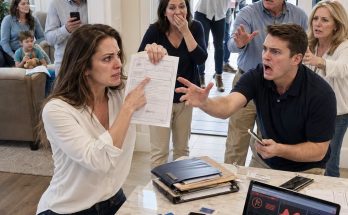
I Found My Son In The ER, Both Legs Snapped, Boot-Prints On His Skin, While The Cop Who Did It Joked About “Gravity” At The Nurse’s Desk. My Wife Told Our Boy To Lie And Say: “He Fell.” Then She Ran Into The Parking Lot To Meet The Same Sergeant Who Stomped My Kid For Fun. They Thought I Was Just Some Washed-Up Suburban Father, Not The Former Black Ops Commander Who Spent Years Hunting Men Who Hurt Children. He Turned My Son’s Knees Into Targets. Now He’s The Target. Now It’s The Badge That’s Breaking.
### Part 1
The first sound I heard was my son screaming behind a hospital curtain.
The second was a police officer laughing.
That laugh was worse.
It bounced down the emergency room hallway, sharp and careless, mixing with the smell of bleach, old coffee, and rainwater tracked in from the parking lot. I sat in a plastic chair with my hands folded between my knees, looking like any other tired father in a flannel shirt and worn boots.
Across from me, Sergeant Cole Ryder leaned against the nurse’s station like the whole building belonged to him. He was tall, thick through the shoulders, with a buzz cut and a smile that never reached his eyes. His badge caught the fluorescent light every time he moved.
He lifted an invisible golf club and swung.
“I told the kid,” Ryder said to his partner, “if you don’t want to fall, don’t run. Gravity’s a law, too.”
His partner gave a weak laugh.
Behind the curtain, Mason cried out again.
My son was sixteen. He weighed less than the duffel bag I used to carry through mountain passes in places that never made the news. He played soccer. He hated onions. He still left socks under the couch and pretended he didn’t. That morning, he had argued with me about borrowing the truck. That night, a surgeon was telling me both of his legs were broken badly enough that walking might never feel normal again.
I stood up.
Ryder noticed right away. Men like him always notice when someone stops acting small.
“Officer,” I said.
He turned slowly. “Yeah?”
“My son says he stopped when you told him to. He says he had his hands up. He says you kicked his legs out and stepped on him after he was already down.”
Ryder chewed his gum, smiling like I had brought him entertainment.
“Your son says a lot for a kid who assaulted an officer.”
“He was walking home from the library.”
“Then he should’ve kept walking.”
“There’s a boot print on his thigh.”
Ryder stepped close enough that I smelled mint gum over stale tobacco. “Listen, Dad. Kids lie. Especially mouthy kids who think rules don’t apply to them. You file a complaint, and suddenly your boy’s backpack gets searched again. Maybe something shows up. Maybe he gets charged. Maybe colleges don’t like what they see.”
He tapped two fingers against my chest.
“Take him home. Let him heal. Be grateful I’m generous.”
I looked at those fingers. Then I looked at him.
Once, a man in another country had put a knife to my throat and told me I had ten seconds to pray. My pulse had been steadier then than Ryder’s was now.
“I understand,” I said.
Ryder smirked. “Smart man.”
He walked away.
My wife arrived ten minutes later in a rush of perfume, wet hair, and panic. Brooke’s heels clicked across the linoleum. Normally, she could turn a school board meeting into a courtroom if someone looked at Mason wrong. I expected fire.
Instead, when I told her what Ryder had done, she went pale.
“Keep your voice down,” she whispered.
I stared at her. “He broke our son’s legs.”
“I know, but accusing a police officer is serious.”
“Our son is in there asking if he’ll ever run again.”
“Mason can be difficult,” she said quickly. “You know that. Maybe he mouthed off. Maybe he moved wrong.”
The hallway seemed to bend around me.
“Why are you defending him?”
“I’m protecting us,” she snapped, then looked over her shoulder at Ryder. “You don’t know how things work in this town.”
I almost laughed. Not because anything was funny, but because she had no idea what I knew about how power worked when bad men thought no one could touch them.
I went into Mason’s room.
He was awake, face gray, lips cracked, hair stuck to his forehead with sweat. Both legs were wrapped and propped, one knee swollen under a brace, the other ankle fixed tight in plaster.
“Dad,” he whispered.
“I’m here.”
“I didn’t run.”
“I know.”
“He smiled when he did it.” Mason’s voice broke. “He asked if I wanted to cry.”
Brooke stood in the doorway.
“Honey,” she said carefully, “maybe you’re remembering it wrong.”
Mason looked at her like she had slapped him.
“Mom.”
“Fear changes things,” she said. “You were scared.”
“He broke me.”
“Lower your voice.”
The room went still.
I left before I said something I couldn’t take back. Outside, the ambulance bay was slick with rain. I stood in the shadows near the vending machines, trying to breathe through the heat behind my ribs.
Then Brooke came outside with her phone pressed to her ear.
She didn’t see me.
“I told him to stop,” she whispered. “But he’s angry. You went too far, Ryder. You said you were only going to scare him.”
My blood turned cold.
She listened, trembling.
“No,” she said. “He won’t file anything. I’ll handle Adrian. Just stay away from us for a while. If he finds out, he’ll destroy us both.”
She hung up and walked back inside.
I stayed in the dark, staring at the rain until the world became very quiet.
My wife had known.
My wife had helped.
And the man who had broken my son’s legs had just made the worst mistake of his life.
### Part 2
I did not confront Brooke that night.
A younger version of me might have. The man I used to be before Mason was born might have stepped through those automatic doors, dragged every secret into the open, and watched the whole hallway burn.
But I had learned long ago that anger is loud, and loud things are easy to track.
So I carried Mason home in silence.
Brooke sat in the passenger seat with her body turned toward the window. She kept glancing at her phone, her thumb tapping the black screen, waiting for a message that never came while our son drifted in and out of pain behind us.
Every traffic light washed her face red, then green, then red again.
When we reached the house, I lifted Mason out of the back seat. He groaned when the cold night air touched him.
“Sorry, buddy,” I whispered.
“Dad?”
“Yeah?”
“Am I in trouble?”
I nearly stopped breathing.
“No,” I said. “Never.”
“Then why does Mom keep acting like I did something wrong?”
Brooke’s keys rattled in her hand.
I carried him inside and set him up in the guest room because the stairs might as well have been a mountain now. His soccer trophies were still upstairs, lined along the shelf over his bed. Golden little men frozen forever in mid-kick. I thought about bringing them down, then decided not to. He didn’t need reminders yet of what Ryder had tried to take.
Brooke stood in the doorway.
“I’m going to the pharmacy,” she said.
“I’ll go.”
“No.” Too fast. Too sharp. She softened her voice. “Stay with Mason. He needs you.”
She left before I could answer.
From the front window, I watched her car pull out of the driveway.
The pharmacy was to the right.
She turned left.
I waited until her taillights disappeared. Then I walked into my office, closed the door, and opened the locked drawer under my desk.
Inside was a phone wrapped in an oilcloth bag, a small black notebook, and a coin from a country whose government officially denied I had ever been there.
I had not touched that phone in eleven years.
When I powered it on, it took nearly a minute to wake. Three numbers appeared on the cracked screen. No names. No photos. No history.
I dialed the first.
A man answered on the second ring.
Nobody said hello.
“It’s Vance,” I said.
The silence changed.
“Status?” the man asked.
“Home front compromised.”
“Family?”
“My son is injured. Wife may be involved. Local police corrupt. One target is Sergeant Cole Ryder. I need eyes, records, and distance. No noise.”
A long pause.
Then he said, “Arclight still owes you.”
I closed my eyes.
Arclight.
Most men from my old life had scattered after the unit dissolved. One became a security consultant. One taught wilderness survival. One drank himself halfway to death before sobering up and marrying a nurse in Montana. One disappeared completely, though I knew better than to believe he was dead.
We had been called many things by people who never signed the orders. Advisors. Contractors. Ghosts. The papers never used the name Arclight because the papers never knew we existed.
I had commanded them for eight years.
I had led men into rooms where governments hid their monsters. I had dismantled networks that thought money, badges, and fear made them untouchable. Then I came home, bought a house with a porch, married Brooke, raised Mason, and tried very hard to become ordinary.
Ryder had looked at me and seen a tired dad.
That was his first mistake.
Brooke came home at 2:17 a.m.
She smelled faintly of cigarette smoke and the cheap citrus cleaner used in bars. Not pharmacy alcohol. Not medicine. She slipped into the house quietly and froze when she saw me standing in the kitchen.
“You scared me,” she said.
“Did you get the prescription?”
She held up the white bag.
I took it from her. The receipt showed the purchase time: 2:04 a.m.
The pharmacy was six minutes from our house.
She had been gone nearly two hours.
“Long line?” I asked.
Her mouth tightened. “I drove around. I needed air.”
I nodded. “Mason’s asleep.”
She looked relieved, not concerned.
The next morning, I told her I was going to file a formal complaint.
Her coffee cup hit the counter hard enough to spill.
“Adrian, don’t.”
“Why?”
“Because they’ll ruin him.”
“Ryder already tried.”
“You’re making this worse.”
“No,” I said. “I’m making it visible.”
At the police station, the front desk officer stopped smiling when I said Ryder’s name. He sent me straight to Captain Frank Grant, a polished man with soft hands and dead eyes.
Grant already had a folder open.
“Body camera malfunction,” he said before I asked.
“Convenient.”
“It happens.”
“So does obstruction.”
His smile thinned. “Careful, Mr. Vance. Your son’s future is fragile right now.”
There it was.
A threat in a suit.
When I walked out, a thin man in a wrinkled jacket waited near the side exit.
“Felix Ward,” he said quietly. “Internal Affairs. Ryder turned that camera off himself.”
“How do you know?”
“I saw the log before Grant buried it.”
“Why tell me?”
Felix looked toward the precinct windows. “Because Ryder broke a kid last year and they made the mother apologize for wasting department time.”
My phone buzzed before I reached the car.
A message from Arclight.
Subject Brooke texted Subject Ryder five minutes after you left home.
Attached was a screenshot.
He’s going to the station. Get your story straight.
I sat behind the wheel, gripping the phone until my knuckles went white.
Brooke hadn’t panicked because Ryder hurt Mason.
She had panicked because I had started digging.
And suddenly I understood the truth was not hiding in one night.
It had been living in my house for months.
### Part 3
The first rule of an operation is simple: do not chase the thing that wants to be seen.
Ryder wanted me angry. Grant wanted me reckless. Brooke wanted me confused. All three of them expected a father, not a commander.
So I became boring.
For two days, I made soup for Mason, adjusted his pillows, argued with insurance, and answered Brooke’s questions with short, tired sentences. I let her think grief had made me dull. I let Ryder think his warning had landed. I let Grant think the blue wall had closed before I reached it.
At night, while the house slept, I worked.
Arclight sent me pieces.
Not dramatic pieces. Not smoking guns at first. Just small things that ordinary people overlook because they don’t know where to place them.
Brooke had withdrawn three hundred dollars every Friday for sixteen weeks from an ATM near the Iron Rail, a bar on the east side where cops drank after shift.
Ryder’s personal phone pinged near that same bar every Friday.
Brooke had opened a new credit card I didn’t know about.
Ryder had deposited cash in uneven amounts that didn’t match his salary.
Three months earlier, Brooke had signed paperwork for a second mortgage on our house using a digital signature that was supposed to be mine.
I sat in my office staring at that document until the lamp blurred.
My signature was there.
It was good.
Too good.
Someone had practiced.
Downstairs, a floorboard creaked.
I closed the laptop and slid it into the desk drawer.
Brooke’s voice came through the door.
“Adrian?”
“Yeah?”
“You okay?”
“Working.”
A pause.
“I’m worried about you.”
That almost got a laugh out of me.
“You should sleep,” I said.
“I love you.”
The words arrived dressed as comfort, but they smelled like strategy.
I did not answer.
In the morning, Mason asked me if his mother was mad at him.
He asked it while picking at a piece of toast, his legs propped under the kitchen table, his face still soft with sleep and pain.
“No,” I said.
He looked at me.
Mason had my habit of staring until lies gave up.
“She looks at me like I ruined something,” he said.
I placed his orange juice in front of him.
“You ruined nothing.”
“Then why won’t she sit with me?”
There are moments when fatherhood is not about fixing the world. Sometimes it is about swallowing a truth whole so your child does not have to choke on it yet.
“Your mom is scared,” I said.
He pushed the toast away. “Not for me.”
Brooke came in wearing gym clothes and too much perfume.
“I have a client meeting,” she said.
“At ten in the morning?”
She gave me a sharp look. “Yes.”
“What client?”
“Do we report our schedules now?”
Mason flinched.
I saw it. Brooke did, too. For half a second guilt crossed her face. Then she buried it under irritation.
“I’ll be back later,” she said.
I waited twelve minutes after she left, then drove out.
Not behind her. Not directly. That was amateur work.
A friend from Arclight named Cal had already placed a discreet tail at distance. He sent me updates in plain language. South on Main. East on Porter. Parking behind Iron Rail.
I watched from a hardware store lot across the street as Brooke entered the bar.
Ten minutes later, Ryder walked in wearing jeans, boots, and a jacket pulled up around his neck. Without the uniform, he looked smaller, but not less dangerous. Predators do not need badges. Badges just give them better lighting.
They sat in the rear booth.
Brooke leaned forward. Ryder reached across the table and took her wrist.
She did not pull away.
My wedding ring felt suddenly too tight.
I did not storm in. I did not break the window. I sat there with the engine off and recorded their entrance, their body language, the way Ryder checked the street twice before leaving.
They drove separately to a small house outside town.
Ryder’s house.
Cal had already placed a directional microphone in a parked utility van nearby. The audio came through my earpiece rough with static, but clear enough.
Brooke’s voice shook.
“He knows about the camera.”
Ryder laughed. “Then make him doubt himself.”
“I tried. He’s not stopping.”
“Then cry harder.”
“You said you’d only scare Mason.”
“I did scare him.”
“You broke both his legs.”
“Kid needed a lesson.”
My hand tightened on the steering wheel.
Brooke started crying. “This wasn’t the plan.”
Ryder’s voice dropped.
“The plan changed when your husband started acting like a hero. You wanted out, remember? You wanted money, the house, the insurance, and no messy divorce. Don’t pretend you grew a conscience because the kid got in the way.”
The world narrowed.
Insurance.
Money.
No messy divorce.
Brooke whispered something I couldn’t hear.
Then Ryder said, “Either you get Adrian under control, or I will.”
For a moment, I couldn’t feel my hands.
My wife had not simply betrayed me.
She had placed my son between herself and a monster.
And Ryder had just confirmed there was another target waiting.
Me.
### Part 4
I drove home slowly because speed would have told the world too much.
Inside the house, everything looked the same. The blue dish towel hung from the oven handle. Mason’s crutches leaned against the couch. Brooke’s gardening gloves sat by the back door, still crusted with soil from a life that had apparently been half pretend.
A home can look peaceful while already being a crime scene.
Mason was asleep in the guest room with one hand curled near his chest. The television played low, some old sitcom with canned laughter that sounded cruel in the dark. I turned it off and stood there a moment, watching him breathe.
Then I went to my office.
By midnight, Arclight had pulled the thread tighter.
The second mortgage money had been split three ways. Ten thousand dollars went directly into Ryder’s personal account. Fifteen thousand went to Granite Consulting, a fake business registered through a chain of forms that ended with Ryder’s cousin. Five thousand had been withdrawn in cash.
Eight months earlier, Brooke had paid a family law attorney in the city.
Six months earlier, she had changed the beneficiary percentages on one of my old military insurance policies. The system had sent the confirmation to an email address I did not recognize.
Mine was not the only signature she had practiced.
I sat very still.
I had survived ambushes, roadside bombs, and rooms where men smiled over maps while deciding who lived. But betrayal at home did not arrive with gunfire. It arrived with your wife asking if you wanted coffee. It sat beside you at parent-teacher night. It kissed your cheek after forging your name.
At 1:43 a.m., Julian called.
Julian had never been officially Arclight, but he had built half the tools we used. Thin, nervous, brilliant. The kind of man who could look at a locked server and see bad habits instead of walls.
“I found the offsite backup,” he said.
My throat tightened. “The body cam?”
“All of it.”
“Send it.”
“No.” His voice was strained. “Not over the line. We meet.”
“Where?”
“Old rail yard. Thirty minutes.”
I left a note for Mason in case he woke. Back soon. Dad.
Brooke’s door was closed when I passed. Blue light glowed underneath. She was awake.
The rail yard smelled like rust, wet gravel, and weeds. Freight cars sat abandoned under sodium lights, their graffiti shining dull orange. Julian stood near a broken signal box with his hood up and a paper bag in one hand.
“Coffee,” he said, handing it to me. “You look terrible.”
“You look scared.”
“I am.”
He passed me a small drive.
“Before Ryder turned off the camera, it uploaded a few seconds to the local unit. When he turned it back on, Grant thought deleting the gap from evidence control was enough. But the raw stream copied to an offsite archive.”
“What’s on it?”
Julian swallowed. “Mason. Hands up. Ryder kicking his left leg out. Mason falls. Then Ryder steps down on the right knee. Hard. Mason screams. Ryder laughs.”
My jaw locked.
“There’s more,” Julian said. “Grant was there.”
I looked at him.
“He wasn’t in the report. But his voice is clear. He tells Ryder, ‘Make it quick before the system catches up.’”
The cold moved through me from the inside out.
This was not one corrupt cop losing control.
This was permission.
Julian glanced around the rail yard.
“You need a lawyer, Adrian. A real one. Not local.”
“I have one in mind.”
“Good. Because once they know you have this, they will come at you from every angle.”
“Let them.”
“No.” Julian stepped closer. “Listen to me. I know what you used to be. Everybody in certain circles knows. But this isn’t overseas. You can’t make people disappear here.”
“I don’t want them gone.”
“Then what do you want?”
I looked down at the drive in my palm.
“I want them seen.”
By morning, I was sitting across from Harper Sinclair in my office.
She wore a charcoal suit, no jewelry except a plain silver watch, and the expression of someone who had spent years listening to powerful men lie badly. She reviewed the documents without interrupting. Bank records. Text logs. Audio transcript. Mortgage papers. Old complaints against Ryder. Grant’s signatures on each dismissal.
When she reached the body cam footage, she watched only once.
Then she closed the laptop.
For the first time since she arrived, her voice softened.
“Your son is very brave.”
“He shouldn’t have had to be.”
“No,” she said. “He shouldn’t.”
She tapped the folder.
“This is federal. Civil rights violations, conspiracy, obstruction, assault, evidence tampering. Ryder goes down. Grant goes down. Your wife is exposed.”
“She helped set it up.”
“Yes.” Harper held my stare. “And that means she may try to save herself by turning against you first.”
“She already has.”
Harper nodded as if that confirmed something.
“Then we move before they do.”
But we didn’t move fast enough.
At 4:12 that afternoon, two police cruisers pulled into my driveway.
Not for Ryder.
For Mason.
### Part 5
Mason was in the living room when the knock came.
He had been trying to stand with the physical therapist, both hands shaking on the walker, sweat shining along his hairline. He lasted seven seconds before collapsing back into the wheelchair with a frustrated sound he tried to turn into a joke.
“World record,” he muttered.
Then blue light flashed across the curtains.
The therapist froze.
I opened the door before the second knock.
Two officers stood on my porch. Neither was Ryder. One was young and uncomfortable. The other was old enough to know exactly what he was doing.
“Adrian Vance?” the older one asked.
“Yes.”
“We have a summons for Mason Vance.”
Mason’s chair creaked behind me.
“For what?” I asked.
The young officer looked at the paper instead of me.
“Assault on a police officer. Resisting arrest. Disorderly conduct.”
For a moment, all I heard was Mason breathing.
Then Brooke appeared at the top of the stairs.
She had been home for less than an hour. She wore the same cream sweater she wore to church, soft and innocent-looking. Her eyes dropped to the paper, then to me.
Not surprised.
I stepped onto the porch and closed the door halfway behind me.
“You’re serving charges on a child in a wheelchair?”
The older officer’s face tightened. “We’re just doing our job.”
“That sentence has carried a lot of rot through history.”
His eyes flicked away.
The summons required Mason in court the next morning. Emergency hearing. The timing was not accidental. Ryder and Grant had moved before Harper could file fully.
Brooke followed me into the kitchen after the officers left.
“This is what I warned you about,” she said.
I turned slowly.
“Our son is being charged because the man you called hurt him.”
Her face twitched.
“I didn’t call Ryder to hurt him.”
“No. You called Ryder to scare him. You just didn’t mind what fear cost.”
Her mouth opened.
I placed the folder on the kitchen table.
“Sit down.”
“Adrian—”
“Sit down.”
She sat.
I opened the folder and spread the papers in front of her. Her withdrawals. The payments. The fake consulting company. The forged mortgage signature. The texts. The insurance change.
Her face drained piece by piece.
“What is this?” she whispered.
“The part of your life you thought was hidden.”
She touched the mortgage page with trembling fingers.
“You had no right.”
I almost smiled. “That’s your defense?”
“You spied on me.”
“You conspired with a violent cop to intimidate our son.”
“I was desperate.”
“For what?”
She stared at the table.
“For a way out.”
The words landed quietly. Not like an explosion. More like a door closing.
“A divorce would have worked,” I said.
“You don’t understand.” Her voice cracked. “You were never here. Even when you were sitting at dinner, you weren’t here. Mason worshiped you and ignored me. Everything in this house became about your silence, your moods, your past.”
“So you brought Ryder into it.”
“He listened.”
“He hunted.”
“He said he could help me. He said if Mason stopped acting out, if you stopped treating me like furniture, maybe I could breathe again.”
“Mason wasn’t acting out. He was sixteen.”
“He was asking questions,” she snapped. “About where I went. About why money was missing. About Ryder pulling him over that first time. He wouldn’t let it go.”
I leaned across the table.
“So you let Ryder break him.”
Tears spilled down her face.
“I didn’t know he would go that far.”
“But you knew he would go somewhere.”
She covered her mouth.
That was answer enough.
A sound came from the hallway.
Mason.
He sat in his wheelchair, pale, one hand gripping the wheel so hard his knuckles shone.
“Mom?” he said.
Brooke stood too fast. “Mason, honey—”
“Did you ask him to stop me?”
She cried harder. “I was trying to protect you.”
He looked down at his legs.
“From walking?”
No one spoke.
The house had never been so quiet.
Mason turned the chair with clumsy, angry pushes and rolled back toward the guest room. The door shut with a soft click that hurt more than a slam.
Brooke reached for me.
“Please,” she whispered. “Don’t let him hate me.”
I stepped back.
“You should have thought about that before you gave him a reason.”
That night, Harper prepared for court at my dining table while Mason refused dinner and Brooke packed a suitcase upstairs. She said she was staying with her sister. I didn’t ask which sister, because Brooke didn’t have one within four hundred miles.
At 11:38 p.m., Harper’s phone buzzed.
She read the message twice.
“They’re calling Brooke as a witness,” she said.
I already knew before she finished.
“For them?” I asked.
Harper’s eyes met mine.
“Yes.”
Upstairs, Brooke’s suitcase wheels rolled toward the front door.
And my son, broken in the next room, was about to watch his mother choose the people who broke him.
### Part 6
The courthouse smelled like floor polish, wet wool, and old paper.
Mason sat beside me in his wheelchair, wearing a navy button-down shirt because he said sweatpants made him feel like a patient. His hands rested in his lap, but I could see the tremor in his fingers. Every time someone in uniform walked past, his shoulders tightened.
The back rows filled with officers.
Some came in uniform. Some came in civilian jackets with department pins on their lapels. They weren’t there for truth. They were there to make Mason feel surrounded.
Ryder arrived late.
No uniform, but he still walked like he was wearing one. His jaw was shaved clean. His hair was trimmed. A bruise-dark smirk sat at the corner of his mouth when he saw Mason.
I leaned down.
“Look at me,” I told my son.
Mason dragged his eyes away from Ryder.
“You are not alone in this room.”
He swallowed. “Feels like it.”
“I know. Feelings are allowed to lie. I’m not.”
Judge Daphne Carver entered at nine sharp. Late sixties, silver hair cut blunt at her chin, glasses on a chain, voice dry as sand.
The prosecutor, Colin Drake, stood first. He had a smooth face, expensive suit, and the confidence of a man used to selling poison in clean bottles.
“This is not a police brutality case,” Drake began. “This is the tragic result of a troubled teenager resisting a lawful officer, then being used by an unstable father with a military background and a personal vendetta.”
Mason went rigid.
Harper’s hand touched his shoulder before mine did.
Drake continued, painting me as paranoid, Mason as violent, Ryder as decorated, Grant as honorable, and Brooke as the only clear-eyed parent brave enough to tell the truth.
Then he called her.
Brooke walked to the stand in a pale blue blouse I had bought her for our anniversary. She didn’t look at Mason. That told me everything.
Drake approached gently.
“Mrs. Vance, how would you describe your husband’s emotional state in recent months?”
She folded her hands.
“Distant. Angry. Suspicious.”
“And your son?”
“Mason has been… difficult. Defiant. He talks back. He doesn’t respect authority.”
I felt Mason shrink beside me.
Drake nodded with fake sadness.
“Did Mr. Vance immediately blame Sergeant Ryder?”
“Yes,” Brooke said. “He didn’t even ask if Mason had done anything wrong.”
Something inside me went still.
A small, final mercy died there.
Harper rose for cross-examination.
“Mrs. Vance, are you currently in a romantic relationship with Sergeant Ryder?”
The courtroom went silent so quickly I heard a camera shutter from the hallway.
Brooke blinked. “No.”
Harper walked to the evidence table and picked up a folder.
“Your Honor, I’d like to submit phone records, bank transfers, hotel receipts, and recovered text messages establishing an ongoing affair between this witness and Sergeant Ryder.”
Drake shot up. “Objection.”
Judge Carver lifted one hand.
“Approach.”
They gathered at the bench. I watched Drake’s confident face fade. I watched Carver turn one page, then another. Her expression did not change, but the air around her did.
When the lawyers returned, Carver looked directly at Brooke.
“Mrs. Vance, you are under oath. I will ask once. Are you having an affair with Sergeant Ryder?”
Brooke’s lips trembled.
“Yes.”
The room erupted.
Carver’s gavel cracked like a rifle shot.
Harper did not pause.
“Did you ask Sergeant Ryder to approach Mason before the night of his injuries?”
Brooke looked at Ryder.
For the first time that morning, his smirk disappeared.
“Answer,” Judge Carver said.
Brooke began crying.
“I asked him to talk to Mason.”
“Talk?”
“To scare him a little.”
Mason made a sound I had never heard from him before. Not a sob. Not anger. Something smaller.
Harper’s voice stayed calm.
“Did you tell Sergeant Ryder Mason had been asking questions about your relationship and the missing money?”
Brooke covered her face.
“Yes.”
“Did Sergeant Ryder then threaten Mason during an earlier traffic stop?”
“Yes.”
“Did you warn Sergeant Ryder that Mr. Vance was going to the police station?”
“Yes.”
Drake looked like he wanted the floor to open.
Harper turned to the judge.
“Your Honor, the defense has unedited body camera footage contradicting the state’s evidence and showing Sergeant Ryder using force after Mason Vance had surrendered. The footage also contains Captain Grant’s voice at the scene.”
This time, even the officers in the back row moved.
Judge Carver removed her glasses.
“Play it.”
No one breathed while the screen rolled down.
The video flickered.
Mason appeared on the pavement, hands raised, voice shaking.
“Please, I’m not running.”
Ryder stepped into frame.
Then came the kick.
The stomp.
The scream.
And Ryder laughing.
From somewhere off camera, Captain Grant’s voice said, “Make it quick.”
When the lights came back on, Ryder was staring at me.
Not smug anymore.
Afraid.
Judge Carver dismissed the charges against Mason on the spot and ordered the footage sealed for federal review. Then she directed court security to prevent Ryder and Grant from leaving until state investigators arrived.
Mason didn’t cheer.
He didn’t smile.
He just stared at his mother.
Brooke whispered, “I’m sorry.”
Mason’s voice was flat.
“No, you’re not. You’re caught.”
And when he turned his wheelchair away from her, I knew there were bones in this family no surgeon could set.
### Part 7
Winning in court did not feel like winning.
It felt like standing in the ashes of your own house while people applauded because the fire was finally out.
Reporters shouted Mason’s name as we left. Harper blocked them with her body. I pushed the wheelchair through the side exit while Mason stared straight ahead.
“Did your mother betray you?”
“Do you forgive her?”
“Mr. Vance, were you really special forces?”
The last question made me look up.
Someone had leaked enough of my past to make me useful as a headline.
Mason heard it, too.
In the car, he said nothing until we were halfway home.
“Were they right?”
“About what?”
“You. Special forces.”
I kept my eyes on the road.
“Some of it.”
“What does that mean?”
“It means I had a job before I became your dad.”
“What kind of job?”
“The kind I left so I could be your dad.”
He looked out the window.
“Mom used to say you were dangerous.”
I breathed in slowly.
“I was trained for dangerous places. That isn’t the same as being dangerous to people I love.”
“She loved me,” he said, like he was testing the sentence and hating how it sounded.
“She did,” I said. “In whatever broken way she understands love.”
“That’s not enough.”
“No.”
He turned toward me.
“You’re not going to forgive her, are you?”
I thought of Brooke’s face on the witness stand. The way she only cried when cornered. The way she had called Mason difficult while sitting ten feet from the chair Ryder put him in.
“No,” I said. “I’m not.”
Mason nodded once, almost relieved.
That night, the news broke wide open.
At first, the local station ran a cautious segment. Teen’s charges dismissed after shocking courtroom footage. By dinner, a national outlet had obtained still frames. Ryder’s boot above Mason’s leg. Grant’s patrol car in the background. Brooke leaving the courthouse with her face hidden.
The town divided itself the way towns do when truth becomes inconvenient.
Some neighbors left casseroles.
Some crossed the street to avoid our house.
Someone taped a note to the mailbox calling Mason a liar.
By midnight, three dozen people were outside the police station holding signs.
By dawn, there were hundreds.
I watched from the kitchen, one hand around a coffee mug that had gone cold. Mason slept fitfully in the guest room. Every few hours he woke from dreams and reached for his legs like he expected them to still be under Ryder’s boot.
Harper arrived at seven with Federal Prosecutor Natalie Cross.
Natalie was compact, direct, and carried no sympathy she didn’t intend to use. She sat across from Mason with a recorder on the table.
“I know you’re tired,” she told him. “But your statement matters.”
Mason looked at me.
I nodded.
He told the story.
Not dramatically. Not like court. He spoke in fragments. The rain. The headlights. Ryder’s gum. The feeling of pavement under his palms. The sound his right leg made. The moment he realized his mother didn’t believe him because she had already chosen not to.
Natalie listened without interrupting.
When he finished, she clicked off the recorder.
“What happened to you was a crime,” she said. “Not a misunderstanding. Not an accident. A crime.”
Mason’s face tightened.
“Then why does it feel like I’m the one on trial?”
Natalie paused.
“Because corrupt systems are built to make victims defend the obvious.”
After Mason rolled back to his room, Natalie laid out the next steps. Federal civil rights investigation. Arrest warrants. Search warrants. Department audits. Financial subpoenas. Brooke’s cooperation agreement if she chose to confess fully.
“If she lies again,” Natalie said, “she goes down with them.”
“She’ll cooperate,” I said.
Harper looked at me. “How do you know?”
“Because Brooke doesn’t protect people. She protects herself.”
My phone rang.
Unknown number.
I answered and put it on speaker.
Ryder’s voice came through, low and shaking with fury.
“You think this is over?”
Natalie’s eyes sharpened.
I said nothing.
“You ruined my life, soldier boy.”
“You did that when you hurt my son.”
“You have no idea what I can still do.”
“Yes,” I said. “I do.”
He laughed once, ugly and thin.
“You should’ve stayed buried.”
Then he hung up.
Natalie looked at the phone.
“Was that recorded?”
I smiled without warmth.
“Everything is now.”
At 3:16 p.m., federal agents entered the police station.
At 3:24, Ryder ran.
And by 3:29, Arclight found him.
### Part 8
Ryder didn’t run like a trained man.
He ran like a bully who had never believed consequences had legs.
Federal agents moved toward the precinct’s front entrance. Ryder slipped out the back, crossed the alley, and got into his truck with his head ducked low. A uniform does strange things to a man’s imagination. He thought because people had feared him inside one building, the whole world would keep opening doors.
Cal called me from a rooftop across the street.
“He’s moving.”
“Direction?”
“South on County Nine. Fast.”
Natalie was standing in my kitchen when I relayed it. Her face hardened.
“How do you know that?”
“Old friends.”
“I need you not to interfere.”
“I’m not.”
She stared at me.
“I mean it, Mr. Vance.”
“So do I. I’m giving you location, not bullets.”
Cal stayed far enough back to avoid being seen. Another Arclight man, Reeves, picked Ryder up at the interstate entrance. A third, Lena, monitored scanner traffic from a motel room two towns over. None of them touched him. None of them blocked him.
We simply made sure the people with warrants knew where to look.
Ryder abandoned his truck behind a hunting supply store and tried to walk into the woods.
That told me he was scared.
He was not a woodsman. He was a parking lot predator. He knew how to lean over teenagers, not disappear under wet pine with helicopters overhead.
The agents found him before sunset, half a mile from the highway, muddy to the knees, one hand bleeding from a fence he had climbed badly.
When the news showed him in cuffs, Mason watched from the couch.
Ryder’s face was swollen with panic. His eyes darted everywhere. No badge. No vest. No laugh.
Mason did not smile.
“Does that make me bad?” he asked.
“What?”
“That I wanted him to look worse.”
“No,” I said. “It makes you hurt.”
He nodded, but his eyes stayed on the screen.
Brooke called that night.
I let it ring.
Then she texted.
Please. I need to talk to Mason.
I did not answer.
A minute later:
I’m cooperating. I told them everything.
Then:
Adrian, I know you hate me. But I’m still his mother.
I typed back one sentence.
Being his mother did not stop you from choosing Ryder.
I put the phone face down.
The house felt strange without Brooke’s things. Her closet was half empty. Her coffee mug still sat on the shelf, chipped near the handle. The lavender candle she liked had burned down to a gray crater. Every ordinary object seemed to accuse me of missing the obvious.
Later, while Mason slept, I found Violet sitting on the back steps.
Violet was twelve, Brooke’s daughter from her first marriage, Mason’s half-sister in paperwork and full sister in practice. She had been staying with Brooke’s cousin during the first wave of chaos, sheltered from the worst of it as much as anyone could be sheltered from a story that reached every phone in town.
She hugged her knees under a sweatshirt too big for her.
“Is Mom going to jail?” she asked.
“I don’t know.”
“Did she really tell that cop to scare Mason?”
I sat beside her.
“Yes.”
Violet wiped her nose with her sleeve.
“That’s evil.”
I did not soften it.
“Yes.”
“Do I have to hate her?”
“No.”
“Do you?”
I looked out at the dark yard. Mason’s soccer goal leaned crooked near the fence, the net torn in one corner from a storm last spring.
“I don’t know if hate is the word,” I said. “But I don’t trust her. And I won’t live with her again.”
Violet leaned against my shoulder.
“Good.”
That broke my heart in a quieter way.
The next morning, Natalie returned with news.
Ryder was refusing to talk. Grant was not. The captain had already begun blaming Ryder, Brooke, bad procedure, faulty memory, anything except himself. In exchange for a reduced sentence, he was offering names.
Lots of names.
“Your son’s case may open the whole department,” Natalie said.
Harper, standing near the window, added, “Prior complaints. Suppressed footage. False reports. Civil settlements hidden through city insurance. This is bigger than Ryder.”
Mason heard from the hallway.
“How many?” he asked.
Natalie turned. “How many what?”
“How many people did they hurt before me?”
No one answered quickly enough.
His face changed.
Not sadness this time.
Purpose.
“I want to know their names,” he said.
Harper stepped forward gently. “Mason—”
“No,” he said. “If I’m going to be the kid on the news, then I want it to matter.”
I saw it then. The first spark of something Ryder had failed to break.
Not revenge.
Resolve.
And that was the moment I realized my son might become stronger than all of us.
### Part 9
Names began arriving like ghosts.
Felix brought the first folder himself. He came to the house after dark, shoulders hunched, tie loosened, eyes red from too little sleep.
“I shouldn’t have copied this,” he said.
“But you did.”
He placed the folder on the table.
“Because Mason asked.”
Inside were twelve complaints tied to Ryder over fifteen years. Broken wrist. Split eyebrow. Cracked ribs. Threats. False charges. A homeless veteran found unconscious behind a grocery store. A college kid who dropped out after the department called him unstable. A mother who moved her family three states away after Grant warned her that pressing forward could affect custody.
Every complaint ended the same way.
Unsubstantiated.
Insufficient evidence.
Officer acted within policy.
Mason read three pages before he had to stop. His hands shook so badly the paper rattled.
“He did this before,” he said.
“Yes.”
“And everyone knew.”
“Some did.”
He looked at Felix. “Did you?”
Felix’s face folded inward.
“I suspected.”
“That’s not what I asked.”
Felix took the hit because he deserved it.
“Yes,” he said. “I knew enough to keep looking. I didn’t know enough to stop him.”
Mason’s jaw tightened.
“That’s what adults always say.”
The room went quiet.
Felix nodded slowly. “You’re right.”
That answer surprised Mason. It surprised me, too.
Over the next week, the town changed shape.
The police station became a place people pointed cameras at instead of running to for help. Protesters painted signs in church basements. Parents stood at school pickup whispering Mason’s name. People who once treated Ryder like a local hero now remembered small things. A shove at a football game. A threat outside a diner. The way conversations stopped when he walked in.
Power is loud when it rises, but when it falls, it sounds like everyone suddenly admitting they heard the cracks all along.
Brooke’s confession came through Harper first.
“She signed a cooperation agreement,” Harper said. “She admitted she asked Ryder to intimidate Mason because he had discovered the affair and financial records. She admitted warning Ryder about your complaint. She admitted helping him craft the first false statement.”
“And the insurance?”
Harper hesitated.
“She says Ryder brought it up. She claims she never agreed to harming you.”
I laughed once.
Not because it was funny.
Because there are lies so thin they embarrass the air.
“What sentence?”
“Probation is possible if she testifies fully.”
Mason was in the doorway.
“So she walks.”
Harper turned. “She may avoid prison, yes.”
He nodded like he expected it.
Then he looked at me.
“You said justice.”
“I know.”
“This doesn’t feel like justice.”
“No,” I said. “It feels like math done by people who didn’t bleed.”
His eyes glistened, but he did not cry.
Brooke came by two days later.
Not inside.
She stood on the porch in the rain, hair stuck to her cheeks, mascara washed down her face. She looked smaller without her certainty.
I opened the door only halfway.
“Please,” she said. “Let me see him.”
“No.”
“I need to apologize.”
“You needed to protect him.”
She flinched.
“I know.”
“No,” I said. “You know you got caught. That’s not the same.”
She gripped the porch railing.
“Adrian, I was lonely. I was stupid. Ryder made me feel like I had choices.”
“You had choices before Ryder. You chose the one that put our son in a wheelchair.”
Her face crumpled.
“I’ll spend the rest of my life regretting that.”
“You can do that somewhere else.”
Behind me, Mason’s wheelchair rolled softly into the hall.
Brooke saw him and sucked in a breath.
“Mason.”
He looked at her for a long time.
“You don’t get to cry at me,” he said.
She covered her mouth.
“I’m sorry.”
“I know,” he said. “You said that already.”
“Can I hug you?”
“No.”
The word landed like a gavel.
Brooke nodded, tears falling harder.
“Okay.”
Mason’s voice stayed quiet.
“When I can walk again, maybe I’ll talk to you. Maybe I won’t. But you don’t get to come here while I’m still broken and ask me to make you feel better.”
I had never been prouder of him.
Brooke stepped back from the door.
“I love you,” she whispered.
Mason looked down at his casts.
“Love came too late.”
Then he rolled away.
I closed the door before Brooke could answer.
Outside, she stood in the rain for another minute before leaving.
Inside, Mason stopped in the hallway and lowered his head.
His shoulders shook once.
I went to him, but he held up a hand.
“Not yet,” he whispered.
So I stood close enough for him to know I stayed.
And far enough to let him remain standing inside himself, even from a wheelchair.
### Part 10
Ryder’s preliminary hearing took place under federal custody.
The courthouse steps were packed so tightly the marshals had to create a walkway. Cameras. Protesters. Former victims. Officers pretending not to be afraid. Mothers holding photos of sons who had once been called liars by men in clean uniforms.
Mason insisted on going.
“You don’t have to,” I told him.
“Yes, I do.”
He wore the navy shirt again. This time, he also wore a brace under his pants and held the armrests of the wheelchair with a steadiness that had not been there before.
Violet walked beside him, chin raised like she was daring the world to look away.
Inside, Ryder sat at the defense table without his badge. Orange jail clothes washed all the color from his face. When he turned and saw Mason, his mouth tightened.
Good.
Let him see the life he tried to crush still breathing.
Natalie presented the case with brutal clarity. Body cam footage. Audio of Grant. Brooke’s confession. Financial records. Prior complaints showing pattern and department knowledge. Ryder’s threats after court. His attempt to flee.
His attorney tried to paint it as one tragic mistake.
Natalie played the laugh.
Just the laugh.
No image. No scream. Only Ryder laughing after Mason’s bone broke.
The courtroom changed.
Even people who had avoided watching the footage could not hide from that sound. It was too naked. Too pleased.
Ryder stared at the table.
For the first time, he looked like what he was.
Not powerful.
Small.
Judge Carver, assigned temporarily to handle related state matters but present as a witness to procedural misconduct, sat in the front row behind the prosecutors. Her face was carved from stone.
The federal judge denied bail.
Ryder was remanded pending trial.
Mason exhaled like he had been holding his breath for weeks.
In the hallway afterward, a woman approached us. Late forties, tired eyes, hair pulled back in a loose bun. She held a photograph of a young man with a crooked smile.
“My son, Aaron,” she said. “Ryder broke his wrist three years ago. Said Aaron reached for his belt. He didn’t. He was trying to show his license.”
Mason looked at the photo.
“I’m sorry,” he said.
“No.” She touched his shoulder gently. “I’m sorry we couldn’t stop him before you.”
More people came.
One by one.
A veteran with a scar over his eyebrow. A former waitress whose false disorderly conduct charge had cost her a nursing program. A father whose complaint had disappeared after Grant warned him his business permits might get reviewed.
Mason listened to each of them.
By the time we reached the car, he looked exhausted.
“Too much?” I asked.
He shook his head.
“It’s weird.”
“What is?”
“I thought knowing other people got hurt would make me feel less alone.” He stared out at the crowd. “It does. But it also makes me angrier.”
“That anger can help if you make it carry something useful.”
“Like what?”
“Truth. Reform. Testimony. Boundaries.”
He gave me a tired look. “You always make revenge sound like homework.”
“Because revenge usually gives the wrong person control.”
He smiled faintly.
It was the first real smile I had seen since before the hospital.
That afternoon, we drove straight from court to physical therapy. Mason hated therapy. He hated the rubber bands, the sterile mats, the way his right knee refused to bend without shaking. But that day, when the therapist asked if he wanted to stop early, he said no.
He stood.
Eight seconds.
Then twelve.
Then twenty.
His face went white, but he stayed upright with both hands on the parallel bars.
“Again,” he said through his teeth.
The therapist looked at me.
I nodded.
Again.
That became our life for months. Court filings in the morning. Therapy in the afternoon. Bad nights. Better mornings. Protest signs. Depositions. Pain. Small victories. Violet learning to cook eggs because she said the house needed normal smells again.
Brooke called every Sunday at six.
I never answered.
Mason answered twice.
The conversations lasted under five minutes.
After the second call, he put the phone down and said, “She keeps asking when things go back to normal.”
“What did you say?”
“I told her normal was what let this happen.”
Winter settled over the town.
Ryder took a plea three days before trial.
Twelve years federal. No parole for the first ten. Permanent loss of certification. Civil rights violations. Aggravated assault. Conspiracy.
Grant took a deal, too. Evidence tampering. Perjury. Obstruction. Pension stripped. No badge ever again.
The department audit reopened forty-one cases.
But the day that mattered most did not happen in court.
It happened in our hallway.
Mason stood from his wheelchair, gripped the walker, and took one step.
Then another.
His knees shook. His face twisted with pain. Violet started crying. I forgot how to breathe.
Mason looked up at me, sweating and grinning.
“Told you,” he said.
I caught him before he fell.
And in that moment, justice was not a verdict.
It was my son’s foot touching the floor by choice.
### Part 11
Spring came slowly.
The kind of spring that first pretends to be winter, then changes its mind one morning and fills the yard with wet grass, birdsong, and sunlight strong enough to show dust on every window.
Mason walked with a brace and one crutch now. His gait was uneven. When he got tired, his right foot dragged slightly, and he hated that more than he admitted. But he walked.
Every step made a small, stubborn sound across the hardwood floor.
To me, it sounded like victory.
Ryder’s sentencing hearing was smaller than the first circus, but heavier. The cameras were fewer. The people who came this time came because they had skin in the story. Aaron’s mother. The waitress. The veteran. Felix. Harper. Natalie. Mason.
Brooke was there, too.
She sat three rows behind us, hands folded, face bare of makeup. She looked at Mason’s crutch, then away.
Mason saw her.
He did not move toward her.
When Ryder stood to address the court, his lawyer placed a hand on his arm like a warning.
Ryder cleared his throat.
“I made mistakes,” he said.
A sound moved through the gallery. Not quite laughter. Not quite disgust.
“I let stress affect my judgment. I regret the pain caused to the Vance family.”
Mason leaned toward me.
“Pain caused,” he whispered. “Like it was weather.”
The judge did not look impressed either.
Natalie stood and read Mason’s victim statement because he had chosen not to give Ryder the satisfaction of hearing his voice shake.
The statement was simple.
He wrote about the sound of his bones. About missing soccer season. About learning that adults with badges could lie and adults without badges could still fight. About his mother. About fear. About standing again.
The last line was his.
“You did not teach me respect. You taught me the difference between authority and character.”
Ryder stared straight ahead.
Twelve years.
When the sentence came down, nobody cheered. Real justice doesn’t always make noise. Sometimes it just releases a room from holding its breath.
Outside, Brooke waited near the courthouse steps.
“Mason,” she said.
He stopped, leaning on his crutch.
I stayed beside him but said nothing.
Brooke’s eyes filled. “I read your statement. It was beautiful.”
Mason’s face stayed calm. “It wasn’t for you.”
“I know.”
“Do you?”
She swallowed.
“I’m trying to.”
He looked older than sixteen in that moment. Not hard. Just clear.
“I don’t hate you,” he said.
Brooke broke down instantly.
I saw relief flood her face, too fast, too hungry.
Mason saw it as well.
“But I don’t trust you,” he continued. “And I don’t want you at the house. Not for a long time.”
Her relief died.
“I’m your mother.”
“You were my mother that night, too.”
Brooke flinched.
He adjusted his crutch.
“If someday I want a relationship, I’ll decide. You don’t get to rush me because guilt hurts.”
She nodded, crying silently.
Then she looked at me.
“Adrian…”
“No,” I said.
Just one word.
It carried our marriage, our house, our son’s screams, every lie, every forged signature, every late apology that arrived only after evidence did.
She understood.
Maybe for the first time, she understood that some doors do not close dramatically. They simply lock.
The divorce finalized in June.
I kept the house. Brooke kept enough to start over somewhere else. The judge was not kind about the forged mortgage, but because of her cooperation, she avoided prison. Probation. Community service. Mandatory counseling. Public shame that would follow longer than any sentence.
People said she got off easy.
Maybe she did.
But Mason once told Violet, “Mom lives with herself. That’s probably not easy.”
I did not correct him.
By summer, the town had a new police chief, an outside monitor, and a civilian review board Harper bullied into having real power. Felix resigned and took a job investigating misconduct statewide. Julian vanished again, which was Julian’s way of saying he was fine. Cal sent Mason a signed soccer ball with no return address.
Arclight faded back into shadow.
That was where it belonged.
One evening, Harper called.
“Judge Carver wants you on the review board,” she said.
I laughed. “That town wants me gone.”
“No. Half the town wants you gone. The other half wants someone in the room who knows how rot hides.”
I looked through the window.
Mason and Violet were in the backyard. Mason leaned on one crutch while Violet kicked a soccer ball too gently toward him. He trapped it badly, stumbled, then laughed.
That laugh went straight through me.
Not the laugh from the hospital.
A different sound.
A living one.
“I’ll think about it,” I said.
And for the first time in a long while, thinking about the future did not feel like preparing for impact.
### Part 12
We rented a cabin on the coast in August.
No reporters. No courthouse steps. No therapy rooms smelling like disinfectant and rubber mats. Just salt air, gulls, cold water, and a porch with three rocking chairs that complained every time someone moved.
Mason insisted on carrying his own bag from the car.
It took him four minutes to cross thirty feet of gravel.
Violet started to help twice. I stopped her twice with a look.
Some victories are slow, and helping too soon can steal them.
When he finally dropped the bag inside the doorway, he was sweating, pale, and furious.
Then he smiled.
“Easy,” he lied.
“Clearly,” I said.
That night we built a fire in the pit behind the cabin. Violet roasted marshmallows until they caught fire, then declared burnt sugar a culinary style. Mason found an old guitar with three good strings and made a terrible song about federal prosecutors, bad cops, and crutches.
I laughed so hard my ribs hurt.
For months, I had thought peace would arrive like a door opening.
It didn’t.
It arrived in pieces.
A burnt marshmallow.
A bad song.
Mason standing at the shoreline with his brace visible below his shorts, not trying to hide the scar running along his knee.
Later, when Violet went inside to find blankets, Mason and I sat alone by the fire.
“You ever miss it?” he asked.
“What?”
“Your old life.”
The flames snapped.
“No.”
He gave me a look. “That was fast.”
“I miss parts of the men. Not the work.”
“Were you good at it?”
“Yes.”
“Were you scary?”
I thought about lying, then didn’t.
“Yes.”
He poked the fire with a stick.
“Ryder was scared of you at the end.”
“He was scared of being exposed.”
“Same thing?”
“No.” I looked at him. “Fear of a person fades. Fear of truth lasts longer.”
He nodded slowly.
“Mom called yesterday.”
“I know.”
“I didn’t answer.”
“That’s your choice.”
“She left a voicemail. She said she’s moving to Oregon. Starting over.”
“How do you feel about that?”
He watched sparks drift upward and disappear.
“Relieved. Then guilty for being relieved.”
“That’s normal.”
“I don’t want to forgive her just because she’s sad.”
“You don’t have to.”
“People say forgiveness is for me.”
“People say many things when they aren’t the ones who got hurt.”
He looked at me then.
“You don’t forgive her.”
“No.”
“Does that make you bitter?”
I considered the question.
“No. Bitterness would mean she still controls the taste of my life. She doesn’t. I don’t forgive her, and I don’t carry her around all day either.”
Mason smiled faintly. “That’s a very dad answer.”
“It came with the gray hair.”
He leaned back, face lit orange by the fire.
“I think I can live with not knowing yet.”
“That’s enough.”
The next morning, Mason walked down to the beach without his crutch.
Not far. Maybe twenty yards.
The sand made every step uncertain. His leg trembled. Twice he nearly fell. Violet hovered behind him pretending not to hover.
He reached the waterline and stood there while the tide washed over his feet.
Then he raised both arms like he had scored a goal.
Violet screamed.
I took a photo with shaking hands.
That picture never went online. It never appeared in court. No one used it in a reform campaign or news segment.
It sat on our mantel in a plain wooden frame.
Mason at the ocean, scar visible, arms raised.
The boy Ryder tried to turn into a warning had become proof instead.
On our last night at the cabin, Mason spoke at a small community gathering organized by Harper near the town hall. He had agreed only because several families from the reopened cases would be there.
He stood at the microphone with one hand on the podium, his brace under dark jeans, his voice unsteady for the first sentence and firm after that.
“I used to think being broken meant the story was over,” he said. “Now I think sometimes it just means the story changes.”
He looked at me.
“You don’t stand because it’s easy. You stand because someone tried to teach you to stay down.”
People cried.
I did, too.
Mason pretended not to notice, which was kind of him.
Afterward, Aaron’s mother hugged him. Felix shook his hand. Harper wiped her eyes and threatened to deny it under oath.
Brooke was not there.
Mason had not invited her.
And that absence did not ruin the night.
That was how I knew we were healing.
Not because everything was restored.
Because what was missing no longer controlled the room.
### Part 13
A year after the hospital, I drove Mason to the soccer field.
He was not cleared for full play. Maybe he never would be. His surgeon had used careful words like permanent limitation and managed expectations. Mason had listened politely, then asked how long before he could coach.
So that was what he did.
Saturday mornings, eight-year-olds in shin guards chased the ball in all directions while Mason stood with a whistle, a brace, and the patience of a saint he did not possess at home.
“Spread out!” he shouted. “The ball is not a campfire!”
One kid immediately ran into another.
Mason looked at me across the field.
I shrugged.
He laughed.
The sound still caught me sometimes.
After practice, he sat beside me on the bleachers with a sports drink and grass stains on one shoe.
“Harper texted,” he said.
“Oh?”
“She said the review board voted to reopen another group of cases.”
“That’s good.”
“She also said you skipped the meeting.”
“I had a better offer.”
He looked at the empty field. “Me?”
“You.”
He pretended to think it over. “Acceptable.”
The department was different now. Not perfect. Nothing built by people ever is. But different. Cameras were audited by an outside system. Complaints no longer disappeared into Grant’s drawer. Officers with patterns got flagged before patterns became graves. The review board had teeth because Harper made sure of it, and because enough people had finally stopped whispering.
Ryder was in federal prison.
Grant lived in a smaller house with closed curtains and no pension.
Brooke lived in Oregon.
She sent birthday cards. Mason kept them in a drawer unopened for months, then one day opened all of them at once. He did not cry. He did not call her. He only said, “She sounds like she’s learning English as a second language, except the language is accountability.”
Violet laughed so hard she fell off the couch.
I signed the divorce papers without ceremony.
No second chance.
No dramatic goodbye.
No late-love redemption.
Brooke had asked through her attorney if we could meet for closure. I declined. Some people use closure as a crowbar to reopen doors they burned from the other side.
I wished her no harm.
That was all.
My life became smaller after that, and better.
Mason finished school from home for a while, then returned part-time. Some kids treated him like a hero. Some avoided him. A few repeated things their parents had said. He handled it with more grace than I would have at sixteen.
One afternoon, I found him in the garage holding his old soccer cleats.
“You okay?” I asked.
“Yeah.”
“You sure?”
He turned one cleat over in his hand. Dried mud still clung between the studs.
“I used to think getting back meant getting back to this.” He lifted the cleat. “Now I think maybe getting back means not needing it to be the same.”
“That’s a hard lesson.”
“Yeah,” he said. “I hate character development.”
I laughed.
He tossed the cleats into a storage bin, not the trash.
That mattered.
That night, we made dinner together. Violet burned the garlic bread. Mason over-salted the pasta. I set off the smoke alarm with chicken because apparently surviving classified operations does not qualify a man to use a broiler.
We ate anyway.
The house smelled like tomato sauce, smoke, and something close to normal.
After dinner, Mason stood from the table without thinking. No crutch. No pause. Just stood.
He noticed it after I did.
We looked at each other.
“Don’t make it weird,” he said.
“I wouldn’t dream of it.”
“You’re making it weird with your face.”
“I’m proud.”
“That’s worse.”
But he was smiling.
Later, after Violet went upstairs and Mason fell asleep on the couch with a movie still playing, I stepped onto the porch.
The street was quiet. No cruisers. No reporters. No strangers with cameras. Just porch lights, crickets, and the far-off hum of a normal American night.
I thought about the man I had been in the hospital hallway, sitting under fluorescent lights while Ryder laughed.
I had wanted to destroy him.
In some ways, I did.
But not the way he understood destruction.
I did not need to become his monster to beat him. I only needed to make sure everyone saw the monster he already was.
Behind me, Mason stirred.
“Dad?” he called sleepily.
“Yeah?”
“You coming in?”
I looked once more at the quiet street.
For years, some part of me had lived outside every room, watching doors, measuring exits, waiting for the next threat. That part was still there. Maybe it always would be.
But it no longer ran the house.
“Yeah,” I said. “I’m coming.”
Inside, Mason shifted to make room on the couch. Violet had left a blanket over the armrest. The movie flickered blue across the walls. Our family was smaller now. Scarred. Changed. Honest in ways we had paid for.
Mason’s legs would never be exactly what they were.
Brooke would never come home.
Ryder would never wear a badge again.
And I would never again mistake quiet for peace.
Peace was not what existed before violence.
Peace was what we built after truth survived it.
I sat beside my son, pulled the blanket over us both, and let the house settle around us.
For the first time in a year, I did not listen for footsteps outside.
I listened to Mason breathing.
Steady.
Alive.
Free.
And that was enough.
THE END!
Disclaimer: Our stories are inspired by real-life events but are carefully rewritten for entertainment. Any resemblance to actual people or situations is purely coincidental.