On My Way Home For Thanksgiving, I Crashed And Needed Emergency Surgery For Broken Ribs And Internal Bleeding. My Parents Told The Doctor: “We’ll Come If She Dies.” I Woke Up Alone—Until A Hospital Clerk Handed Me A Wrapped Box: “The Man In The Black Jacket Paid Your Bill… And Said Not To Open It Until You Get Home.”
### Part 1
My name is Judy Brewster, and for most of my life, I believed being easy to ignore was just part of my personality.
I was twenty-nine years old on Thanksgiving morning, driving south from Portland to Eugene in my little gray Honda Civic with a pumpkin pie on the passenger seat and a knot in my stomach that had nothing to do with holiday traffic.
The sky over I-5 was the color of wet concrete. The wipers scraped back and forth even though the rain had mostly stopped, leaving thin silver trails across the windshield. I had worked the night before at OHSU Doernbecher Children’s Hospital, twelve hours in the pediatric ICU, and my whole body felt hollow from coffee, fluorescent light, and lack of sleep.
Still, I was going.
My mother had texted twice that morning.
What time are you arriving?
Then, thirty minutes later:
Don’t forget the pie. Try not to be late this year.
Not drive safe. Not we’re excited to see you. Not how was your shift.
Just the pie.
I kept telling myself this Thanksgiving would be different. Maybe my father would ask about my work. Maybe my mother would notice I had cut my hair. Maybe Amanda, my younger sister, would actually talk to me like I was a person instead of an awkward guest at our own family table.
That was the kind of hope I hated in myself. It was stubborn, embarrassing, and almost impossible to kill.
Amanda was the golden daughter. She lived in a nice house in West Linn with her husband and their baby boy. She had a corporate job, framed wedding photos, matching holiday pajamas, and a mother who called her “our pride.”
I was the nurse who worked nights, rented a studio apartment, ate cereal over the sink, and knew how to make scared children stop crying after surgery.
My father once said, while carving turkey, “Amanda builds a real career. Judy changes bedpans.”
I had said, quietly, “I save children’s lives.”
He had looked at me like I had missed the point.
As traffic slowed near Salem, I rubbed my eyes and rolled my shoulders. My ribs ached from leaning over hospital beds all night. The heater blew stale warmth against my face. The pumpkin pie slid a little in its plastic container every time I tapped the brakes.
Then everything happened at once.
A horn blasted.
A wall of metal appeared from my left.
I saw the white side of a semi-truck, too close, moving too fast, cutting through the intersection like the rules of the world didn’t apply to it.
I slammed the brake.
The pie flew.
The truck hit my driver’s side with a sound so huge it seemed to swallow every other sound on earth.
Glass burst inward. Metal folded. My car spun. My head snapped sideways. The airbag exploded against my chest, and for one strange second, all I smelled was smoke, plastic, and cinnamon.
Then pain came in.
Not one pain. Many.
My chest felt split open. Every breath stabbed. My left side burned. Something wet ran down my temple. I tried to move, but my body didn’t seem to belong to me anymore.
A man was shouting somewhere outside.
“Ma’am! Can you hear me?”
I tried to answer, but only a broken sound came out.
My phone had landed near the passenger floor, its screen cracked but glowing. Through one half-open eye, I saw another text from my mother.
Turkey goes in at three. Where are you?
I remember thinking, stupidly, that the pie was ruined.
Then the world tilted black.
When I woke again, I was under harsh white lights. People moved around me quickly. A woman in blue scrubs leaned over my face.
“Judy, my name is Dr. Hartman. You were in a serious crash. You have broken ribs, a punctured lung, and internal bleeding. We need to take you into surgery.”
I understood the words separately, but not together.
Surgery.
Bleeding.
Lung.
My throat was dry. I tried to ask if I was going to die, but the doctor had already turned to a nurse.
“Call her emergency contact.”
My emergency contact was my father, because some old part of me still believed parents were who you called when the world fell apart.
The phone rang.
Once. Twice.
Then my father’s voice filled the room, irritated and distant.
“This is Charles Brewster.”
Dr. Hartman spoke fast but clearly. “Mr. Brewster, this is Salem Hospital. Your daughter Judy has been in a serious accident. She is critical and needs emergency surgery. Can you come?”
There was a pause.
In that pause, I heard dishes clinking in the background.
Then my father said, “How serious is serious?”
The doctor’s jaw tightened. “Life-threatening.”
My mother’s voice cut in from farther away, sharp enough to slice through the machines around me.
“Charles, ask if she’s exaggerating again.”
I tried to turn my head. Pain flashed white.
Dr. Hartman said, “This is not an exaggeration. Your daughter has internal bleeding and a collapsed lung.”
Another pause.
Then my mother said, loud and clear, “Tell them we’ll come if she dies. We have sixteen people coming at four.”
The room went silent around me.
For a moment, even the machines seemed quieter.
I couldn’t see my father’s face, but I heard him breathe into the phone before saying, “Call us if her condition worsens.”
And that was when I understood something cold and final.
I was not hard to love.
They had simply decided not to.
### Part 2
The last thing I saw before surgery was Dr. Hartman looking down at me with tears she was trying not to show.
That frightened me more than the crash.
Doctors were trained to stay calm. Pediatric ICU nurses knew that. We all learned how to keep our voices steady when blood pressure dropped, when alarms screamed, when parents folded into chairs and whispered prayers into their hands.
So when Dr. Hartman touched my shoulder and said, “We’re going to take care of you,” I heard what she didn’t say.
No one else is coming.
A mask lowered over my face. The lights smeared into long white ribbons. My chest felt like it was being held together with wire and prayer.
Then I was gone.
When I woke up, the first thing I noticed was the sound.
Beep.
Breath.
Beep.
Breath.
The second thing I noticed was pain, deep and heavy, like someone had packed my left side with hot stones.
The third thing I noticed was the empty chair.
It sat beside my hospital bed, angled toward me, with a folded blanket over one arm. The kind of chair family members used when they stayed overnight. The kind of chair mothers curled up in when their children were sick. The kind of chair I had seen fathers sleep in with their shoes still on.
Mine was untouched.
No purse on the floor. No coffee cup on the windowsill. No wrinkled jacket. No flowers. No balloon. No worried sister scrolling her phone and pretending not to cry.
Just a blank visitor log clipped at the foot of my bed.
Name: Judith Brewster.
Visitors: none.
A nurse came in quietly. Her badge said Carla. She had soft brown eyes and a voice that sounded like warm soup.
“You’re awake,” she said. “That’s good, honey. Surgery went well.”
I tried to speak. My throat scraped.
“Family?”
Her face changed.
Only a little, but I saw it.
“I can call someone for you,” she said.
I stared at the empty chair.
“No.”
She checked my IV, my chest tube, the monitors. She moved with the kind of gentle efficiency I trusted. I had done the same movements for my own patients a thousand times. Adjust the blanket. Lower the lights. Touch the shoulder before leaving so they knew they weren’t invisible.
When Carla left, I reached for my phone with my good hand.
Three missed calls from Amanda.
No calls from Mom.
No calls from Dad.
Amanda had left two voicemails. I played the first one with the volume low.
“Hey, Judy. Are you still bringing the pie? Mom’s getting annoyed. Call me.”
The second one was later.
“Okay, so I guess you’re not coming. Mom says this is exactly what she expected. Anyway, hope you’re fine.”
Hope you’re fine.
I laughed once, but it came out like a cough and pain ripped through my chest so sharply that tears filled my eyes.
I stayed in the ICU for three days.
Carla was there for two of them. She never asked why no one came. That made her kinder than the people who would have asked with pity in their voices.
On the second night, she found me staring at the visitor log.
“You know,” she said quietly, “some people don’t know how to show up.”
I turned my head toward the dark window.
“My parents know how. They show up for my sister.”
Carla didn’t answer right away. She adjusted the blanket near my feet, then said, “Then they know. They just chose.”
That sentence stayed in my room long after she left.
On the third day, a woman from billing came in. I knew her department before she introduced herself. Hospital staff had a particular way of entering rooms when money was involved: apologetic, careful, already bracing for panic.
She was in her forties, with tired eyes and a neat black cardigan.
“Miss Brewster? I’m Nancy Rodriguez from patient accounts.”
My stomach sank.
“I know,” I whispered. “The bill.”
She looked at the clipboard in her hand, then back at me.
“That’s actually why I’m here. Your bill has been paid in full.”
I blinked.
“What?”
“A gentleman came in Thanksgiving evening. Well-dressed. Silver hair. Black jacket. He met with administration and paid the full amount by bank check.”
I thought I had misunderstood.
“How much?”
Her mouth tightened with sympathy.
“One hundred twelve thousand, three hundred forty dollars.”
The machines kept beeping.
I stared at her.
“I don’t know anyone who could do that.”
“He didn’t give me his name,” she said. “But he left something for you.”
She held out a small wooden box tied with brown string.
It was dark walnut, smooth, and heavier than it looked. There was a white card tucked beneath the string.
I lifted it with shaking fingers.
Don’t open until you’re home.
You’re not alone.
W.
The letter W seemed to pulse in my hand.
“Did he say anything else?” I asked.
Nancy hesitated.
“He said he was keeping a promise.”
Outside my room, someone laughed down the hall. A food cart rattled past. Life continued in all its ordinary ways.
I looked at the box, and for the first time since the crash, fear moved through me that had nothing to do with pain.
Someone had come for me.
But the only person I knew whose name began with W had been dead for three years.
### Part 3
I was discharged on December first with a folder full of instructions and no one waiting at the curb.
A nurse wheeled me through the automatic doors into a morning so cold it made my lungs tighten. Every breath had to be negotiated. Too deep, and my ribs punished me. Too shallow, and panic crawled up my throat.
I ordered an Uber to Portland.
One hundred eighty-six dollars.
The driver was a quiet man with a gray beard and an air freshener shaped like a pine tree swinging from his mirror. He helped me place my bag in the back seat and glanced at the wooden box in my lap.
“You okay back there?”
I almost said yes.
Then I looked out at the wet hospital entrance, at families loading flowers and overnight bags into cars, and said, “Not really.”
He nodded like that was a complete answer.
For two hours, I watched Oregon slide by through a rain-speckled window. Fir trees. Gas stations. Fast-food signs. Fields lying flat and brown under winter clouds. Every mile north took me farther from my parents’ house and closer to the apartment where I had spent years convincing myself that loneliness was independence.
My studio in Portland was on the third floor of an older building with no elevator.
I climbed the stairs one at a time, gripping the railing, the box pressed against my side. By the second landing, sweat had broken out across my forehead. By the third, I was crying soundlessly, not because of the pain but because no one had thought to ask how I would get home.
Inside, everything was exactly as I had left it.
A coffee mug in the sink. Scrubs over the back of a chair. A half-open bag of rice on the counter. My bed unmade. My life waiting, small and quiet, unaware that something had split open.
I placed the wooden box on my kitchen table.
Then I did not open it.
Not that day.
Not the next.
For almost two weeks, I moved around it like it was alive.
I took my medicines without reading the labels too closely. I slept in short, broken pieces. I learned how to cough while holding a pillow against my ribs. I shuffled to the corner store for soup and crackers because delivery fees felt ridiculous even after a stranger had paid six figures to keep me alive.
My mother called once on December fifth.
I let it go to voicemail.
“Judy, it’s Mom. Amanda said you may have been in some kind of accident. If that’s true, you should have told us. We can’t help if you don’t communicate. Anyway, Christmas is coming, and I need to know if you’re planning to attend.”
I listened twice.
Not because I wanted comfort, but because I wanted to confirm what I had heard.
If that’s true.
My father did not call at all.
Amanda texted:
Mom wants to know if you’re coming for Christmas.
Not are you okay.
Not I’m sorry.
Just Christmas.
On the tenth day home, I woke from a dream about my grandfather.
Walter Brewster had smelled like cedar, pipe tobacco, and peppermint gum. He had big hands, careful hands. When I was little, he used to let me sit in his lap and hold his old gold watch. He would point to the second hand and say, “See that, Judy? It keeps going. Steady and true.”
I had asked him once if I could have it someday.
He had smiled and said, “Someday, sweetheart.”
Then, when I was thirteen, he disappeared from my life.
My father said Grandpa Walter didn’t respect boundaries. My mother said some people used love to control others. Amanda was too young to care.
I believed, because children believe the version of the story adults leave them with.
At fourteen, when my appendix ruptured after my mother told me I was being dramatic, Grandpa was already gone.
At nineteen, when I drove myself to urgent care half-blind from pain because my mother said I was wasting money, Grandpa was gone.
At twenty-three, when I limped around campus on a fractured foot after my father told me to walk it off, Grandpa was gone.
Or that was what I thought.
On December fourteenth, at 10:58 p.m., I sat at the kitchen table and pulled the brown string loose.
The knot gave way easily.
The lid lifted with a soft wooden sigh.
Inside lay the gold watch.
Not a similar watch. Not a memory.
The watch.
My grandfather’s Omega, its leather strap worn dark and smooth, its face faintly scratched, its second hand still moving.
Tick.
Tick.
Tick.
Beneath it was a folded letter, a USB drive, several envelopes, and a small business card.
I turned the watch over first.
There, engraved on the back, were words I had never seen before.
For Judy, who was never alone.
Grandpa Walter.
November 2022.
The room blurred.
My grandfather had died in November 2022.
My parents had told me after the funeral.
They had said it was small, private, family only.
I picked up the letter with fingers that no longer felt like mine.
The first line read:
My dearest Judy, if you are reading this, I am gone. But I need you to know I never left you.
By the time I reached the third sentence, my breath caught so hard my ribs screamed.
By the time I reached the bottom of the first page, I knew my parents had not merely failed me.
They had stolen sixteen years of love and buried it under a lie.
### Part 4
I read my grandfather’s letter once.
Then again.
Then a third time, slower, with the watch laid flat beside my hand like a heartbeat made of gold.
He wrote that my father had cut him out of my life when I was thirteen, after a fight I barely remembered from behind my bedroom door. Grandpa had accused my parents of hurting me, of comparing me to Amanda until I disappeared inside myself. My father told him to stay away. My mother backed him up.
Grandpa wrote anyway.
Birthday cards. Christmas cards. Graduation cards. Letters after my school play. Notes when he heard I had gotten into nursing school.
My parents returned them all.
He called. They blocked him.
He sent gifts. They vanished.
He hired an attorney, Jonathan Pierce, to keep records. He hired a private investigator, not to stalk me, he wrote, but to monitor public records in case I ever appeared in danger, hospitalized, or missing.
I paused there, my hand over my mouth.
It sounded strange at first. Dramatic, maybe. But then I remembered the stranger in the black jacket. The paid bill. The timing.
My grandfather had built a safety net underneath me while my parents were busy teaching me there was no net at all.
The letter continued.
When I entered nursing school, Grandpa set up an education trust in my name.
Sixty-eight thousand dollars.
He wrote that he wanted me to graduate without debt. He wanted me to become exactly who I had chosen to become, not who my parents preferred.
I stopped reading.
The apartment became too quiet.
Because I knew that number.
Sixty-eight thousand dollars.
My father had told me he and Mom had taken out a private family loan for my nursing school. He had said they were sacrificing for me, even though money was tight. He said I could repay them slowly after graduation, because family helped family.
Since 2018, I had paid them four hundred fifty dollars a month.
Every month.
Six years.
Thirty-two thousand four hundred dollars.
For money they never gave me.
I stood up too fast and nearly blacked out. The room tilted. I grabbed the table until the black spots faded from my vision.
Then I sat down and kept reading.
Grandpa wrote that he was dying when he made the final arrangements. Pancreatic cancer, late stage. He had begged my father to let him see me one last time.
My father said I was too busy.
That sentence was underlined twice, the ink shaky.
I pressed my fingers to it as if I could touch the hand that had written it.
The USB drive was black, small, and labeled in Grandpa’s handwriting.
For Judy’s eyes only.
The truth they hid.
I plugged it into my laptop.
Three folders appeared.
Emails_to_Charles.
Returned_Cards.
Messages_for_Judy.
The first folder held eighty-seven emails.
I opened one from June 2009, my thirteenth birthday.
Charles, I know you are angry, but Judy is still my granddaughter. Please let me take her to lunch. I will follow whatever rules you set. I only want to see her smile on her birthday.
No reply.
Another from May 2015.
Charles, I heard Judy was accepted to nursing school. I am so proud of her. I have created a trust to cover tuition. She does not need to know the money is from me if that makes things easier. Please do not punish her because you are angry with me.
No reply.
Then November 2022.
Charles, the doctors have told me I have very little time. I am not asking you for anything except mercy. Please let me speak to Judy once before I die. I need to tell her she was loved.
This one had a reply.
My father wrote:
She is too busy. Do not contact us again.
I sat there until my screen dimmed.
Then I opened Returned_Cards.
Scanned images filled the folder. Envelopes addressed to me. Stamps. Postal marks. RETURN TO SENDER printed across my name like a verdict.
Happy 16th, sweetheart. I miss you every day.
Merry Christmas, Judy. I hope you are warm and happy.
Congratulations on graduating. I always knew you would become someone extraordinary.
I never saw them.
Not one.
Finally, I clicked Messages_for_Judy.
The first recording began with static.
Then his voice filled my apartment.
“Hi, Judy. It’s Grandpa Walter. I don’t know if this will reach you, but today you turn fifteen…”
I covered my mouth.
He sounded older than I remembered, but still warm. Still him.
He said he had bought me a leather journal because I loved writing stories. He said he would always answer if I called. He repeated his phone number twice.
The second message was from when I got into nursing school. He cried while saying he was proud of me.
The third was the hardest.
His voice was weak. He had to stop to breathe.
He said he hoped I remembered the watch.
He said my parents had made me feel small, but I had never been small to him.
He said, “You were never the problem, Judy. Never.”
When the recording ended, I sat on the kitchen floor with my laptop open in front of me and the watch ticking beside me.
I expected grief to break me.
Instead, something colder arrived.
Clarity.
I picked up Jonathan Pierce’s business card from the box.
On the back, someone had written:
Call me when you’re ready.
I was ready before sunrise.
### Part 5
Jonathan Pierce answered on the second ring.
“Pierce and Associates.”
His voice was low, formal, and careful.
“My name is Judy Brewster.”
Silence.
Then, softer, “Judy. I’ve been waiting for your call.”
That was the first time in my life an adult said my name like my arrival mattered.
I sat at my kitchen table with my grandfather’s watch around my wrist. The leather was too loose, so the face slid against the bone. Every time it touched my skin, I felt both comforted and accused.
“You paid my hospital bill,” I said.
“I did.”
“Why?”
“Because your grandfather instructed me to intervene if you were ever in serious danger and unsupported.”
Unsupported.
It was such a polite word for abandoned.
“How did you know?”
“Walter arranged monitoring of public emergency records connected to your name. Nothing invasive. No private medical access. But when your accident generated a state police report and hospital trauma admission, my office was notified. I drove to Salem that evening.”
I stared at the rain crawling down my kitchen window.
“You were there?”
“Yes.”
“My parents weren’t.”
“I know.”
The gentleness in his voice nearly undid me.
He continued. “Dr. Hartman told me enough to understand the situation. Hospital administration confirmed no family had arrived. Your grandfather left funds specifically for emergency care.”
“He’s dead.”
“Yes,” Jonathan said. “But he planned carefully.”
I closed my eyes.
“My parents knew about the will, didn’t they?”
A long pause.
“Yes.”
The word landed harder than any detail before it.
Jonathan explained the timeline like an attorney, but underneath his precision was anger he had clearly carried for years.
Walter Brewster died on November twenty-third, 2022. His will was filed in Lane County Probate Court on December fifth. My father, Charles Brewster, was notified as next of kin. Because I was listed as primary beneficiary, notice was sent to the address Walter had for me: my parents’ house in Eugene.
My father signed for it.
Then another notice.
And another.
Jonathan sent certified letters in January, March, and June 2023.
Each was received.
None reached me.
“What did he leave?” I asked.
Jonathan exhaled.
“Everything.”
The word emptied the room.
“His house on Alder Street. Current value around six hundred eighty thousand. Investment accounts totaling approximately four hundred fifty thousand. Personal property, including the watch. A life insurance policy that added another one hundred thousand to the estate. After taxes and expenses, the total is approximately one point two million.”
I looked around my studio apartment: cracked ceiling, thrift-store table, one chair with a wobbly leg, drying rack near the radiator.
“One point two million,” I repeated.
“Yes.”
“My father got nothing?”
“Correct.”
“Did he contest it?”
“He threatened to. Repeatedly. But the will is solid. Walter had medical evaluations confirming competency. It was witnessed, notarized, and drafted well before his final decline. Your father has no legal claim.”
The word legal mattered.
Because what my parents had done to me existed in that murky place where cruelty wore the costume of family. But now there were documents. Dates. Signatures. Certified mail receipts. Bank records.
Proof.
“I paid them back,” I said.
Jonathan went quiet.
“For nursing school. They told me they took out a loan. I’ve been paying them since graduation.”
“How much?”
“Thirty-two thousand four hundred dollars.”
I heard him inhale sharply.
“That trust paid your tuition directly.”
“I know now.”
“Judy,” he said, and for the first time his controlled tone cracked, “I’m sorry.”
People had said sorry to me before. Usually as a reflex. Sorry you feel that way. Sorry this is inconvenient. Sorry, but Amanda needs us more.
Jonathan’s sorry felt like a door opening.
“What can I do?” I asked.
“Legally, we can pursue repayment if you choose. Fraud may be difficult because of family context and verbal claims, but the documentation is strong. At minimum, a civil demand letter may pressure them.”
“No,” I said.
The answer surprised even me.
“No?”
“Not yet.”
I looked at the watch.
“I don’t want money first. I want the truth.”
Jonathan was silent for a moment.
Then he said, “Walter believed you would.”
Over the next hour, he told me things my grandfather had done in secret.
He saved every returned card.
He kept copies of every email.
He recorded messages for me because he suspected my parents would never let him speak to me again.
He asked Jonathan to wait to contact me unless I truly needed help, because he didn’t want his money to feel like another obligation placed on my shoulders.
“He said you had spent your life being made responsible for other people’s feelings,” Jonathan said. “He didn’t want to become one more weight.”
I pressed my palm to my eyes.
In my parents’ house, love always came with an invoice.
Grandpa had left his with the balance paid.
Jonathan asked if I wanted to schedule a meeting to review the estate documents in person. I said yes. Then, just before hanging up, I asked one more question.
“Did he suffer?”
The attorney’s voice softened.
“He missed you. That was the suffering he talked about most.”
After the call ended, I sat very still.
Outside, Portland traffic hissed on wet pavement. Upstairs, a neighbor’s dog barked twice. My refrigerator hummed.
Ordinary sounds.
Ordinary life.
But something enormous had shifted under it.
My parents had not only ignored my crash.
They had spent sixteen years engineering my loneliness.
And now, for the first time, I had the receipts.
### Part 6
My mother called three days later.
I almost didn’t answer.
Her name appeared on my screen while I was standing at the bathroom sink, trying to wash my hair without lifting my left arm too high. A towel was wrapped around my shoulders. My scar pulled every time I breathed deeply.
I stared at the phone until it nearly stopped ringing.
Then I answered.
“Judy?” she said, too bright. “Oh, thank goodness. We’ve been worried sick.”
I watched water drip from my hair onto the cracked tile floor.
“No, you haven’t.”
A pause.
Then the old tone arrived. Tight. Corrective.
“That’s unfair. Amanda told us you may have been in an accident, but you never communicated clearly. You know how you get when you’re upset.”
“The ER doctor communicated clearly.”
Silence.
I could hear something in the background. Television. Maybe a Christmas movie. Maybe my father turning a page of the newspaper.
“Mom,” I said, “do you remember what you told the doctor?”
Another pause.
“Judy, we were hosting Thanksgiving.”
“You said you’d come if I died.”
Her breath caught, not with shame, but annoyance at being quoted accurately.
“That was taken out of context.”
“What context makes that sentence better?”
“You have a history of dramatizing medical situations. Your father and I had to make a judgment call.”
“I had internal bleeding.”
“Well, we know that now.”
The mirror reflected a woman I barely recognized. Pale. Bruised yellow along the collarbone. Hair wet and stringy. My grandfather’s watch on one wrist.
“You knew then,” I said. “The doctor told you.”
My mother sighed.
That sigh had raised me. It meant I was being difficult. Ungrateful. Too emotional. It meant the conversation would soon turn until I was apologizing for bleeding at an inconvenient time.
“Anyway,” she said, “what matters is that you’re recovering. Christmas is next week, and I need to know whether you’re coming.”
I almost laughed.
“Why?”
“Because I need an accurate count.”
Of course.
Not because they wanted me there.
Because chairs and food had to be managed.
“Will Dad be there?”
“What kind of question is that? It’s his house.”
“And Amanda?”
“Of course. Everyone will be there.”
I leaned my hip against the sink.
“Then yes,” I said. “I’ll come.”
Her relief was immediate. “Good. Please don’t make things uncomfortable. Your father has been under stress.”
“Don’t worry,” I said. “I’ll bring something.”
“Dessert would be nice.”
“I was thinking the truth.”
She went quiet.
“What does that mean?”
I ended the call.
My father called two days later, which told me my mother had understood enough to panic.
He did not say hello.
“Judith, we need to discuss your grandfather’s estate.”
I was sitting at my kitchen table with folders spread around me: printed emails, copies of returned cards, bank records from the education trust, certified mail receipts Jonathan had scanned and sent.
“Do we?”
“There has been a misunderstanding. Walter was unstable near the end. Whatever papers you received should not be taken at face value.”
“He was evaluated. He was competent.”
My father’s silence sharpened.
“You’ve spoken to Pierce.”
“Yes.”
“That man poisoned Walter against us.”
“No, Dad. You did that yourself.”
His voice dropped.
“Be careful.”
For the first time in my life, the warning did not work.
I was not fourteen with a ruptured appendix, being told I should have explained my pain better. I was not nineteen, sick in a dorm room, asking for permission to take myself seriously. I was not twenty-three, limping on a broken foot while my father compared me to Amanda’s marathon medals.
I was twenty-nine years old.
I had survived a crash.
I had a dead man’s watch on my wrist and sixteen years of evidence on my table.
“No,” I said. “You be careful.”
He laughed once, coldly.
“What exactly do you think you’re going to do? Humiliate your own family over an old man’s confusion?”
“I’ll see you Christmas.”
“Judy—”
I hung up.
The next few days moved strangely.
I printed everything twice. I placed the USB drive in a small envelope. I asked Jonathan to write a one-page summary of the estate timeline on firm letterhead. He did. He also offered to come with me.
I said no.
Not because I didn’t want support.
Because I needed to walk into that house alone and leave it that way, too.
On Christmas morning, I dressed carefully.
Black pants. Cream sweater. Flat shoes. My hair tied low because raising my arms still hurt. Grandpa’s watch on my wrist.
Before leaving, I stood in my apartment and opened one of the returned birthday cards again.
Happy 21st, Judy. I wish I could buy you your first legal drink and tell you embarrassing stories about your father. I hope someone makes you laugh today. You deserve laughter.
I never laughed on my twenty-first birthday.
I worked a double shift, ate vending machine crackers, and cried in my car after my mother forgot to call.
I placed the card back in the folder.
Then I drove south.
The same highway.
The same gray sky.
This time, every mile felt less like returning home and more like approaching a courtroom.
When I pulled onto River Road, my parents’ house glowed with warm yellow light. Cars lined the driveway. Through the front window, I could see movement: cousins, coats, wine glasses, Amanda bouncing her baby on one hip.
For a moment, my hand froze on the steering wheel.
Then the watch ticked against my wrist.
Steady.
True.
I picked up the folder and walked toward the door.
Inside that house were sixteen people who had eaten turkey while I was cut open on an operating table.
And in less than an hour, none of them would be able to say they didn’t know.
### Part 7
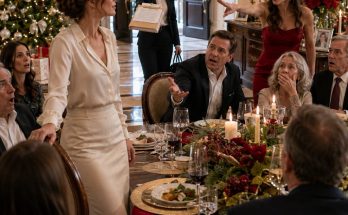
My mother opened the door wearing pearls and an apron that said thankful.
For one second, she looked genuinely startled by the sight of me.
Not happy. Not relieved.
Startled.
As if some part of her had assumed I would never actually come.
“Judy,” she said, recovering quickly. “You’re early.”
“It’s four thirty.”
“Dinner was at four.”
“You told me five.”
Her smile tightened.
“Oh. Did I?”
Behind her, the house smelled like roasted turkey, cinnamon candles, and the expensive pine cleaner she only used before company arrived. Voices overlapped from the living room. Someone laughed too loudly. A baby squealed.
My father stood near the fireplace with a glass of red wine. He saw the folder in my hand and went still.
Amanda noticed my wrist first.
She came from the dining room carrying Ethan, her face carefully arranged into concern.
“Judy. Oh my God. Are you okay?”
“I’m recovering.”
“I didn’t know it was that serious.”
I looked at her.
“The doctor called Mom and Dad while I was being prepped for surgery.”
Amanda’s eyes flicked toward our mother.
Mom clapped her hands once.
“Well. Let’s not start with unpleasantness. It’s Christmas.”
That sentence did something strange to me.
It made me calm.
All those years, I had imagined confrontation as loud. Screaming. Crying. Throwing accusations across the room. But standing there in my mother’s perfect holiday house, with my ribs aching and my grandfather’s watch ticking, I felt almost peaceful.
The truth did not need volume.
It only needed air.
Aunt Betty hugged me gently, smelling like lavender and hairspray. My mother’s sister Linda touched my arm and said she had heard about “some accident” and was glad I was “up and moving.”
Some accident.
My father must have described it like a fender bender.
I accepted a glass of water, ignored the wine, and waited.
Dinner was mostly over. Plates were being cleared. Dessert sat untouched on the sideboard: pecan pie, cheesecake, cookies shaped like stars. The living room filled as people settled with coffee cups and half-full glasses.
My father approached me near the hallway.
“Put the folder in your car,” he said under his breath.
“No.”
“This is not the place.”
“It’s exactly the place.”
His eyes hardened.
“You always did enjoy making yourself the center of attention.”
I smiled then.
Not because anything was funny.
Because he had just handed me the oldest script in the family.
Judy was dramatic. Judy exaggerated. Judy ruined things. Judy made people uncomfortable by bleeding where everyone could see.
I stepped past him.
“Everyone,” I said.
Conversations thinned, then stopped.
My mother turned from the sideboard.
“Judy, what are you doing?”
“I brought something to share.”
I placed the folder on the coffee table.
The sound it made was small, but everyone looked down.
“This is a letter from Grandpa Walter.”
Aunt Betty frowned.
“Walter? Charles’s father?”
“Yes.”
My mother’s face went pale beneath her foundation.
I opened the folder and took out the first page.
“He wrote it three weeks before he died.”
Cousin Mark sat forward. “Walter died?”
The room shifted.
My aunt Betty looked at my father. “Charles?”
My father said nothing.
“November twenty-third, 2022,” I said. “Pancreatic cancer. Late stage. Apparently, there was a funeral. I wasn’t invited.”
Amanda whispered, “Judy…”
I began reading.
My voice did not shake.
“My dearest Judy, if you are reading this, I am gone. But I need you to know I never left you.”
The room became very quiet.
I read about the fight when I was thirteen. About Grandpa accusing my parents of hurting me. About my father cutting him off.
My mother stepped forward.
“That is private.”
I looked up.
“No. What you did was private. This is evidence.”
Then I kept reading.
“Every birthday, every Christmas, every graduation, I wrote. I called. I sent gifts. Your parents made sure you never received a single one.”
Aunt Betty covered her mouth.
Amanda looked at our father like she had never seen him before.
I lifted the stack of scanned envelopes.
“These were returned to sender. Thirty-four cards.”
I passed them to Linda first. She took them with trembling fingers.
My father finally spoke.
“Walter was manipulative. He used gifts to undermine us.”
I turned to him.
“He sent me birthday cards.”
“You don’t understand the history.”
“No,” I said. “You made sure I didn’t.”
Then I took out the bank records.
“When I got into nursing school, Grandpa set up a sixty-eight-thousand-dollar education trust. It paid my tuition directly.”
Amanda’s lips parted.
I looked at my parents.
“You told me you took out a loan. I’ve paid you thirty-two thousand four hundred dollars for a debt that never existed.”
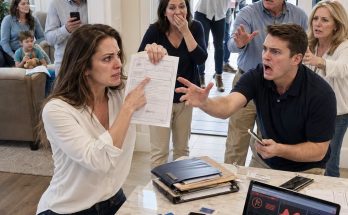
The room erupted.
“What?”
“Charles?”
“Patricia, is that true?”
My mother began crying immediately. Not softly. Not from regret. It was a performance of collapse, one hand pressed to her chest.
“We were going to tell you eventually.”
“No, you weren’t.”
My father slammed his glass onto the mantel.
“That money helped this household. You benefited from being part of this family.”
“I benefited from Grandpa. You invoiced me for his love.”
Silence fell again, heavier this time.
I pulled out my phone.
“There’s more.”
My father moved toward me. “Judy, don’t.”
For the first time, I saw fear on his face.
Not anger.
Fear.
I connected my phone to the Bluetooth speaker beside the Christmas tree.
Then my grandfather’s dying voice filled the room.
“Judy, it’s Grandpa Walter. I don’t know if you’ll ever hear this…”
My mother sat down as if her knees had failed.
My father stood frozen.
And as Grandpa began to cry in the recording, the entire family finally heard the man they had let disappear.
### Part 8
No one moved while the recording played.
Even Ethan, Amanda’s baby, had gone quiet against her shoulder, his little fist curled into her sweater.
My grandfather’s voice trembled through the room.
“I asked your father if I could see you one last time. He said you were too busy. Maybe that’s true. Maybe you don’t remember me…”
Amanda started crying then.
Not loudly. Just tears slipping down her face while she stared at Dad.
The recording continued.
“I hope you remember the watch. You sat on my lap when you were eight, and I showed you the second hand. Time keeps going, sweetheart, even when we want it to stop.”
I looked down at my wrist.
Tick.
Tick.
Tick.
“You were never the problem, Judy. Never.”
When the recording ended, the grandfather clock in the hallway took over.
Tick.
Tick.
Tick.
My father cleared his throat.
It was such a normal sound that I almost hated him for it.
“Judy,” he said, using the voice he used with bank managers and restaurant hosts, “your grandfather was a sick, bitter man at the end.”
Aunt Betty stood up.
“Charles, stop.”
He looked at her, shocked.
She was my father’s older cousin, though I had always called her aunt. She had silver hair pinned neatly at the back of her head and the kind of face that seemed built for kindness until she was crossed.
“You told us Walter withdrew from the family,” she said. “You said he didn’t want contact.”
My mother wiped her cheeks. “He was difficult.”
“He was dying,” Linda said.
“And he begged to see your daughter,” Aunt Betty added.
Dad’s face reddened. “This is none of your business.”
“It became our business when you lied to all of us.”
The room shifted again.
For most of my life, family gatherings had followed one rule: my parents set the temperature, and everyone else adjusted.
But the thermostat had broken.
I took out the final page.
“This is from Jonathan Pierce, Grandpa’s attorney. It confirms the probate notices sent to this house after Grandpa died. January, March, and June 2023. Certified mail. Signed for.”
I placed the page on the coffee table.
My father didn’t look at it.
“You knew I inherited everything,” I said.
Amanda whispered, “Everything?”
“His house. His savings. His watch. All of it.”
My mother’s crying stopped.
That was how I knew money had entered the room.
Her eyes sharpened behind the tears.
“Judy, sweetheart, that estate belongs to the Brewster family.”
I laughed once.
“No. It belongs to me.”
“You can’t manage that kind of responsibility,” Dad said. “You live in a studio apartment and work nights.”
“I manage ventilators, trauma patients, grieving parents, and children who wake up screaming after surgery. I think I can manage a house.”
His mouth flattened.
“You’re being vindictive.”
“No. Vindictive would be suing you tonight for the fake loan payments.”
My mother flinched.
I let that sit in the room.
Then I said, “I haven’t decided yet.”
Amanda looked at me sharply.
Dad took a step forward. “You wouldn’t dare.”
I looked straight at him.
“Three weeks ago, you told a doctor to call you if I died. Don’t test what I dare.”
No one spoke.
I reached into the folder and removed a small envelope. Inside was a single page I had written that morning.
“I’m not here to negotiate Grandpa’s estate. I’m not here for your apology, because anything you say now is about being exposed, not about what you did. I’m here so everyone knows why this is the last Christmas I will ever spend in this house.”
My mother shook her head. “Don’t be dramatic.”
There it was.
One last time.
I turned toward her.
“When I was fourteen, my appendix ruptured because you told me I was dramatic.”
Her lips parted.
“When I was nineteen, I went to urgent care alone because you said I was wasting money. When I was twenty-three, I walked on a fractured foot because Dad said Amanda was tougher. And on Thanksgiving, I was bleeding internally while you served turkey.”
My voice stayed steady.
“You don’t get to use that word on me again.”
Linda was crying now. Aunt Betty held one of Grandpa’s returned cards in both hands, like something holy.
I turned to the rest of them.
“If you want copies of anything, Jonathan Pierce has them. I’m not hiding the truth anymore.”
Then I looked at Amanda.
She looked devastated.
For a moment, I saw the little sister who used to crawl into my bed during thunderstorms. The one who had not created the golden child system, only benefited from it. But pain had made me clear, not cruel.
“You may not have known,” I told her. “But you saw enough.”
She lowered her eyes.
“I know,” she whispered.
Finally, I faced my parents.
“Grandpa loved me. You made sure I didn’t know. You took his money, took my money, took my chance to say goodbye, and when I almost died, you chose dinner.”
My mother’s face crumpled.
“We’re your parents.”
“No,” I said. “You’re people I survived.”
I picked up the folder, leaving copies on the table.
At the door, I stopped.
My mother was sobbing now. My father stood stiff and furious beside the fireplace, already planning how to rewrite the night.
But not everyone was looking at him anymore.
That was the difference.
“Oh,” I said, turning back. “You asked me to bring something.”
No one breathed.
“I brought the truth. I hope it was enough.”
Then I walked out.
Behind me, voices rose. A chair scraped. Someone said my father’s name like an accusation.
I closed the door softly.
In the car, my hands shook for the first time all night.
Not because I regretted it.
Because I knew the war had finally begun.
### Part 9
My phone started ringing before I reached the freeway.
First Amanda.
Then my mother.
Then my father.
Then Amanda again.
I turned the phone off and drove through Christmas lights blurred by rain. Every house looked warm from the outside. Every window held a version of family I had once wanted so badly I kept walking into rooms where I was only tolerated.
By the time I got back to Portland, my side hurt so badly I had to sit in the parking lot for fifteen minutes before climbing the stairs.
Inside my apartment, I set the folder on the table and unfastened Grandpa’s watch.
The skin beneath it was red from where the old leather had rubbed my wrist.
I held it in my palm and whispered, “I did it.”
The second hand kept moving.
The next morning, the messages began.
Amanda left a voicemail first.
“Judy, I swear I didn’t know about Grandpa. I didn’t know about the cards or the trust. I knew Mom and Dad were harder on you, but I thought…” Her voice broke. “I thought that was just our family. I’m sorry. Please call me when you can.”
My father sent an email with the subject line:
Your behavior last night.
I opened it while drinking lukewarm coffee.
Judith,
What you did on Christmas was cruel, unnecessary, and deeply embarrassing. Your grandfather manipulated you from beyond the grave. He had a long history of undermining my authority as a father. You have allowed a bitter old man and a self-interested attorney to poison you against your own parents.
Your mother is devastated. Your sister is confused. The family is divided because you chose spectacle over private conversation.
We need to discuss the estate like adults.
Dad
I read it twice.
Then I created a folder labeled Evidence and saved it there.
My mother texted from her phone.
Your father had chest pains last night from stress. I hope you’re satisfied.
Then, ten minutes later:
Family means forgiveness.
Then:
Grandpa would be ashamed of you.
That one made me laugh.
Actually laugh.
It hurt my ribs, but it was worth it.
I blocked her number.
Then my father’s.
Then their emails.
For the first time in my life, silence did not feel like abandonment.
It felt like oxygen.
Two days later, Aunt Betty called.
I almost ignored it, but something made me answer.
“Judy,” she said. “I’m so sorry.”
I gripped the phone.
“You didn’t know.”
“No. But I should have asked questions. Walter didn’t just vanish. I let your father explain it, and I accepted that because it was easier.”
Her honesty startled me.
“I have one of the cards,” she continued. “The Christmas one from when you were seventeen. You left copies, and I kept looking at it. He wrote that he hoped you had someone saving you the corner piece of pie because you liked extra crust.”
I had to sit down.
“I did,” I whispered.
“I know,” she said. “He knew.”
Aunt Betty told me the house had erupted after I left. Linda confronted my mother. Amanda demanded to know whether the trust was real. My father tried to order everyone out, but no one moved.
“Your mother kept saying they were protecting you,” Betty said. “But she couldn’t explain from what.”
From love, I thought.
From knowing there was another version of me. One who had been wanted.
On December twenty-ninth, I met Jonathan Pierce at his Eugene office.
The building was old brick with ivy crawling along one side. His office smelled like coffee, paper, and lemon furniture polish. He was in his early sixties, with silver hair and a black jacket hanging on the back of his chair.
The stranger.
When he saw me looking at it, he smiled sadly.
“I suppose that jacket has become part of the story.”
“You looked like you’d been crying,” I said.
“I had.”
He showed me the estate documents. The will. The trust. The deed to Grandpa’s house on Alder Street. The investment accounts. The insurance payout. Everything was organized, clean, undeniable.
Then he slid one more envelope across the desk.
“Walter asked me to give you this after you knew everything.”
Inside was a photograph.
Me at twelve years old, on stage in a red dress, playing Annie in the school musical.
I remembered that night. My parents missed it because Amanda had a soccer game. Grandpa sat alone in the front row and clapped louder than anyone.
On the back of the photo, he had written:
She shines whether they look or not.
I pressed the picture to my chest.
Jonathan gave me time.
When I finally looked up, I said, “I want the house.”
“It’s yours.”
“I mean I want to live there.”
His expression softened.
“I think Walter hoped you would.”
That afternoon, we drove to Alder Street.
The house sat on a quiet road near the Willamette River, pale blue with white trim, winter-bare roses along the porch, and a brass knocker shaped like a fox.
Jonathan unlocked the door and stepped back.
“You should go in first.”
The air inside smelled faintly of cedar, dust, and old books.
Grandpa’s books still lined the shelves. His armchair sat angled toward the window. The grandfather clock stood in the hallway, ticking steadily as if it had been waiting for me to hear it again.
On the mantel was a framed photo of my grandmother, who had died when I was six, and beside it, another photo I did not expect.
Me.
Age eight, sitting on Grandpa’s lap, holding the gold watch.
I walked to it slowly.
Behind me, Jonathan said, “He never took that down.”
The house blurred around me.
For sixteen years, I thought I had been erased.
But in this house, I had been kept in a frame.
### Part 10
I moved into Grandpa’s house on January tenth.
Not all at once. My body still protested if I lifted anything heavier than a grocery bag, so I hired movers with money from an account I still felt strange calling mine. They carried my small apartment life into his quiet house in less than three hours.
A mattress.
Six boxes of books.
Two boxes of scrubs.
One chipped blue mug.
A lamp from a thrift store.
The movers were kind enough not to comment on how little there was.
When they left, I stood in the living room surrounded by cardboard and late afternoon light. The Willamette showed through the back windows, gray-green and restless. Bare branches scratched softly against the glass.
For the first time, I lived somewhere with more than one room.
I walked from bedroom to bedroom just because I could.
The first night, I slept in Grandpa’s old room.
Not in his bed—I wasn’t ready for that—but on my own mattress on the floor beside the window. The house made old-house sounds around me: pipes knocking, wood settling, the grandfather clock marking time from the hallway.
I expected to feel haunted.
Instead, I felt watched over.
The next morning, I made coffee in his kitchen and found a note taped inside a cabinet door.
Not for me. Just his handwriting on an old label.
Sugar, flour, coffee filters. Stop forgetting the filters, Walter.
I laughed so suddenly I spilled coffee on the counter.
Then I cried.
Grief came that way in the weeks after I moved in. Not dramatically. Not all at once. It arrived through objects.
His reading glasses in a drawer.
A blue sweater folded on a closet shelf.
A grocery list tucked into a cookbook.
A receipt from a diner where he had apparently ordered pancakes two days before a doctor’s appointment.
I learned him backward through the life he left behind.
I also learned myself.
In my parents’ house, I had been the difficult daughter.
In Grandpa’s house, I was the granddaughter whose school photo stayed on the mantel for sixteen years.
That difference changed the air I breathed.
Amanda texted every few days, but never pushed.
I’m thinking about you.
I found an old picture of us. Do you want it?
I asked Mom about the tuition. She admitted it. I’m so sorry.
That last message sat on my screen for a long time.
Finally, I wrote back:
I need time. I’m not ready to be close. But I believe you didn’t know everything.
She responded:
Thank you. I’ll wait.
That was new for a Brewster.
Waiting without demanding reward.
My parents found ways around the blocks.
Letters arrived.
The first, from my mother, smelled like her perfume.
Judy, you are letting money change you.
I threw it away.
The second, from my father, came in a legal-looking envelope, though no attorney had sent it.
Judith, refusing communication will not make this situation disappear.
I placed it in the Evidence folder.
Then came the third.
No return address.
Inside was a single sentence in my mother’s handwriting.
You will regret abandoning us when we are gone.
I stared at it for almost a minute.
Then I said aloud to the empty kitchen, “No. I’ll regret that I didn’t leave sooner.”
And I meant it.
On January seventeenth, I met Jonathan again to discuss something that had been forming in me since the night I played Grandpa’s recordings.
“I want to start a scholarship,” I said.
He smiled as if he had expected it.
“For nursing students,” I continued. “Students who don’t have family support. Estranged students. Foster kids. Queer kids who got kicked out. Anyone who knows what it’s like to build a life without a safety net.”
“How much would you like to start with?”
“One hundred thousand.”
He nodded slowly. “Walter would have loved that.”
The Walter Brewster Memorial Scholarship launched before the end of January through a local foundation.
I wrote the mission statement myself.
For students who were told they were too sensitive, too difficult, too much, or not enough—and chose care anyway.
The first application I read belonged to Emma Rodriguez, nineteen, accepted to nursing school, working two jobs, living with an aunt after her parents threw her out.
In her essay, she wrote:
I want to become a nurse because the night I left home, the ER nurse who treated me did not ask what I had done wrong. She asked if I was safe.
I read that sentence three times.
Then I called Jonathan and said, “She’s the first one.”
A week later, I met Emma at a coffee shop near campus. She was small, nervous, with chipped black nail polish and a backpack covered in pins. She thanked me five times before we even sat down.
“You don’t have to keep thanking me,” I said. “My grandfather left me love. I’m just passing some of it along.”
Her eyes filled.
“My parents said I’d never make it because I’m too emotional.”
I smiled.
“Good. Patients need people who feel things.”
She laughed through tears.
For the first time, I understood inheritance.
It wasn’t just money.
It was what love became after it passed through you.
That night, when I returned to Alder Street, a car was parked across from the house.
Dark sedan.
Engine running.
I slowed on the porch steps.
The driver’s window rolled down.
My father looked out at me.
And in his passenger seat sat my mother, holding a manila folder I had never seen before.
### Part 11
“Judith,” my father called.
His voice carried across the quiet street like an order.
I stood on the porch with my keys in my hand and Grandpa’s watch under my sleeve.
“You need to leave.”
My mother opened the passenger door and stepped out, clutching the folder to her chest. She looked smaller than usual in the cold, but I knew better than to mistake smallness for softness.
“We’re not here to fight,” she said.
“Then why are you here?”
Dad got out of the car.
Because the porch light was behind me, I could see his face clearly while mine stayed half in shadow. That gave me an unexpected sense of control.
“This has gone far enough,” he said. “You’ve made your point.”
“I wasn’t making a point. I was ending a relationship.”
My mother flinched as if I had slapped her.
“We are your parents.”
“You keep saying that like it’s a magic spell.”
Dad stepped toward the porch.
“You are living in my father’s house.”
“No,” I said. “I’m living in my house.”
His jaw tightened.
My mother opened the folder with trembling hands.
“We found something you should see.”
That was how she always began traps. Concern first. Evidence second. Guilt underneath.
She pulled out photocopied pages.
“Your grandfather wrote letters to your father too. Angry letters. Threatening letters. He was unstable, Judy. He hated us. He wanted to turn you against us.”
“Then send them to Jonathan.”
Dad snapped, “Stop hiding behind that attorney.”
“I’m not hiding. I’m documenting.”
My mother’s face hardened.
“You used to be kinder.”
I almost smiled.
“No. I used to be easier to hurt.”
A porch light flicked on next door. Mrs. Delaney, my grandfather’s neighbor, appeared behind her curtain. She was in her seventies and had already brought me banana bread twice since I moved in. I saw the curtain shift as she watched.
My father noticed too.
His voice dropped.
“Invite us inside.”
“No.”
“This is private.”
“You lost private on Christmas.”
For a moment, I thought he might actually come up the steps.
Instead, my mother started crying.
Real tears, maybe. Or practiced ones. I no longer cared enough to sort them.
“I made mistakes,” she said. “I admit that. But you have no idea what it was like. Walter interfered constantly. He criticized our parenting. He favored you over Amanda. He made everything harder.”
“He favored me because you didn’t.”
“That’s not fair.”
“It’s accurate.”
She wiped her cheek angrily.
“We had two daughters. Amanda needed us too.”
“Amanda had you. I had no one because you removed the one person who showed up.”
Dad said, “You’re rewriting history.”
“No. I finally have a copy.”
I took out my phone.
His eyes narrowed. “What are you doing?”
“Recording.”
My mother lowered the papers.
“Judy, don’t be ridiculous.”
“I live alone. I’m recovering from surgery. You came to my house uninvited after I asked for no contact. I’m recording.”
Dad’s face changed.
He had not expected me to become procedural.
Nurses know documentation saves lives. Dates. Times. Exact words. Pain level. Behavior. Witnesses.
Families like mine thrived in fog.
I was done providing fog.
My father pointed toward the house.
“You think Walter was a saint? He left you money to control you.”
“No. He left me choices. You’re angry because I’m making them.”
“He should have left that estate to the family.”
“He did,” I said. “Just not the family you meant.”
My mother let out a small, wounded sound.
Then she said the thing I think she had come to say all along.
“If you keep doing this, you will lose Amanda too.”
There it was.
The final hostage.
I looked at her for a long moment.
Then I said, “If Amanda requires me to accept abuse in order to keep her, then I’ve already lost her.”
A voice came from my phone.
Not mine.
Amanda’s.
I had accidentally accepted her incoming call when I started recording. Or maybe the phone had been ringing in my pocket and I had touched the screen without noticing.
Either way, her voice came through the speaker, shaking.
“Mom?”
My mother went white.
“Amanda,” she said.
“I heard you.”
No one moved.
Amanda’s breathing crackled through the line.
“You told me you went there to apologize.”
My father closed his eyes.
“Amanda, this is between us and your sister.”
“No,” Amanda said. “It’s not anymore.”
For once, my little sister’s voice did not sound golden or sheltered or careful.
It sounded furious.
“Judy,” she said, “don’t let them in.”
“I won’t.”
“I’m coming over.”
“No,” I said quickly. “Not tonight. Stay with Ethan.”
“But—”
“I’m okay.”
My mother gave a bitter laugh.
“Listen to you two. Walter would be thrilled. Sisters divided, parents humiliated.”
Amanda’s voice cut through the speaker.
“No, Mom. You did that.”
The silence after that was enormous.
My father took my mother’s arm.
“We’re leaving.”
“Good,” I said.
He looked back once before getting into the car.
“This isn’t over.”
I held up the phone.
“Thank you for saying that on recording.”
His mouth snapped shut.
They drove away.
I stood on the porch until their taillights disappeared.
Then Mrs. Delaney opened her front door across the street.
“You all right, honey?”
I looked down at the glowing phone in my hand, at Amanda still breathing on the other end, at the watch ticking beneath my sleeve.
“Yes,” I said.
And for once, it was true.
### Part 12
Amanda came two days later.
She arrived in jeans, sneakers, no makeup, and with Ethan asleep against her chest in a baby carrier. I had never seen her look so tired. Not polished tired. Real tired. The kind that leaves shadows under the eyes and crumbs on the sleeve.
“I brought muffins,” she said.
I looked at the paper bag in her hand.
“Did Mom make them?”
“No. Grocery store.”
“Good.”
That almost made her smile.
I let her in.
She stood in Grandpa’s living room for a long time, taking in the books, the clock, the mantel photos. Her eyes stopped on the picture of me at eight, sitting on his lap.
“I don’t remember being here,” she said.
“You were little.”
“I remember Dad saying Grandpa made everything about you.”
I crossed my arms carefully, mindful of my ribs.
“Did he?”
Amanda looked at the photo.
“No. I think Dad hated that someone saw you.”
That was the first thing she said that made me believe she might actually understand.
We sat at the kitchen table. Ethan slept between us in his carrier, his tiny mouth open, his breath making soft squeaking sounds.
Amanda wrapped both hands around her coffee mug.
“I need to tell you something ugly.”
I waited.
“When we were kids, I knew they treated me better.”
The honesty settled between us.
“I didn’t understand it,” she continued. “Not fully. But I knew. If we both had events, they came to mine. If we both needed something, I got it first. If you were upset, they rolled their eyes. If I cried, the whole house stopped.”
I looked out the window at the river.
“Why didn’t you say anything?”
“Because I liked being chosen.”
There it was.
No excuse. No decoration.
Just the truth.
I turned back to her.
“That’s the first honest thing anyone in this family has said to me in years.”
She nodded, tears sliding down her face.
“I’m sorry. I was a kid, and then I was a teenager, and then I was an adult who didn’t want to give up the version of our family that benefited me.”
That sentence hurt, but not in the old way.
Clean pain.
Pain with air around it.
“I don’t know what we can be,” I said.
“I know.”
“I’m not ready to be your big sister again.”
“I know.”
“I might never be.”
Her face crumpled, but she nodded.
“I’ll accept whatever you can give. Even if it’s just coffee once a year.”
Ethan stirred, making a tiny sound of protest. Amanda rocked him automatically. Watching her, I saw both versions of my sister: the girl who had received everything, and the woman who might choose differently for her son.
“Mom and Dad are telling people you’re unstable,” she said.
“I assumed.”
“They’re saying the crash affected your judgment.”
“That would be funnier if it weren’t so predictable.”
Amanda looked ashamed.
“Derek and I are distancing ourselves. I told them they can’t see Ethan until they take responsibility.”
I raised an eyebrow.
“That must have gone well.”
“Dad said you contaminated me.”
I laughed softly.
“Sorry.”
“Don’t be. It needed to happen.”
She reached into her diaper bag and pulled out an envelope.
“I found this in Mom’s desk.”
My stomach tightened.
“What is it?”
“I don’t know. I didn’t open it.”
The envelope was old, yellowed slightly at the edges, addressed to me in Grandpa’s handwriting.
No postal stamp.
No return mark.
Just my name.
Judy.
My hands trembled as I opened it.
Inside was a letter dated the day after my thirteenth birthday.
Sweetheart,
Yesterday was harder than I expected. Your father has asked me not to come around anymore. I do not know what he will tell you. I am afraid he will make you think I left by choice.
I need you to know this: if I disappear from your days, I did not disappear from loving you.
You may be too young to fight their version of things now. That is all right. Survive first. Understand later.
I will keep trying.
Always,
Grandpa
I read it once.
Then I handed it to Amanda.
She cried so hard she had to put her mug down.
“Mom kept this,” she whispered. “She kept it in her desk.”
Not returned.
Not lost.
Kept.
My mother had read that letter and hidden it where I might never find it.
The last sentence blurred in front of me.
Survive first. Understand later.
For sixteen years, that was exactly what I had done.
Amanda stayed for one hour. Before leaving, she paused at the door.
“Can I hug you?”
I thought about saying no.
Then I said, “Carefully.”
She hugged me like she was afraid I might break.
The strange thing was, I already had.
And I was still standing.
After she left, I called Jonathan.
“There’s another letter,” I said.
He listened as I read it.
When I finished, he was quiet for a long time.
Then he said, “Judy, this may matter.”
“For what?”
“For proving intent.”
I looked toward the hallway, where the grandfather clock kept steady time.
“Intent for what?”
Jonathan’s voice lowered.
“If you decide to pursue them, this shows they knew exactly what they were taking from you.”
### Part 13
I did not sue my parents right away.
That disappointed some people.
Aunt Betty wanted fire. Linda wanted consequences. Amanda said she would support whatever I chose, though I could hear the fear in her voice every time the subject came up.
But I had spent my whole life reacting to my parents’ weather.
Their disappointment.
Their silence.
Their anger.
Their needs.
I refused to make my healing another response to them.
So I waited.
I worked.
I recovered.
By late January, I returned to the pediatric ICU on night shift. My first night back, the hospital smelled exactly as it always had: sanitizer, warmed blankets, coffee burned too long in the staff room. Monitors sang their uneven songs. Sneakers squeaked on polished floors.
I had four patients.
One was a six-year-old girl named Maya, recovering after surgery. Her father was supposed to visit but didn’t. Her mother was a nurse across town and could not leave work until morning.
At 11:30 p.m., I found Maya awake, crying silently into her pillow.
“Hey, sweetheart,” I said, sitting beside her bed. “Pain?”
She shook her head.
“Scared?”
A nod.
“Where’s my dad?”
The question entered me like a key into an old lock.
I looked at her small hand gripping the blanket.
“He couldn’t come tonight,” I said. “But I’m here.”
“Are you gonna leave?”
“No.”
“Promise?”
I touched the watch on my wrist.
“I promise.”
Her eyes moved to it.
“That’s pretty.”
“It was my grandfather’s.”
“Did he give it to you?”
“Yes,” I said. “In a way.”
I pulled the chair closer and showed her the second hand.
“See how it keeps moving? My grandpa told me love should be steady like that. Not loud all the time. Not perfect. Just steady.”
Maya watched the hand circle.
“My dad says he’ll come, but then he doesn’t.”
“I’m sorry.”
“Does that mean I’m bad?”
My throat tightened.
“No, Maya. Adults failing to show up never means the child is bad.”
She looked at me for a long moment.
I wondered if anyone had ever said that to me when I needed it.
Then she whispered, “Can you stay until I sleep?”
“Yes.”
I read her a picture book from the bedside table. She fell asleep halfway through, her fingers still wrapped around mine.
I stayed anyway.
At 3:12 a.m., during a quiet stretch, I went to the staff room and checked my email.
There was a new message from my father.
Somehow, he had found another address.
Subject:
Final attempt.
I almost deleted it.
Instead, I opened it.
Judith,
Your mother and I are willing to forgive what happened if you stop this public campaign against us. You have made your point. We can discuss a reasonable division of Walter’s estate and repayment concerns privately. Families heal when everyone compromises.
Dad
I read the words twice.
Willing to forgive.
Reasonable division.
Repayment concerns.
I felt nothing.
No rage. No grief. Not even surprise.
Just a clean, empty space where obligation used to live.
I forwarded the email to Jonathan with one sentence:
Send the demand letter.
By February, my attorney had formally demanded repayment of the fake loan payments. Thirty-two thousand four hundred dollars, plus documentation costs. He also warned that continued harassment would result in further action.
My parents denied wrongdoing.
Then Amanda gave a written statement.
Aunt Betty gave one too.
So did Linda.
And when Jonathan included the hidden thirteenth-birthday letter and the education trust records, my father’s attorney advised settlement.
They paid.
Not because they were sorry.
Because they were cornered.
I donated every dollar to the Walter Brewster Memorial Scholarship.
The local paper ran a small follow-up story after the fund awarded its first scholarships. They used a photo of me and Emma outside the foundation office. I wore Grandpa’s watch. Emma held the certificate with both hands and smiled like she was still learning she deserved good things.
My parents saw the article.
My mother sent one final letter.
No apology.
Just two lines.
You have chosen strangers over your own family.
I hope it was worth it.
I placed the letter in the fireplace at Alder Street and watched the edges curl black.
“Yes,” I said to the empty room. “It was.”
Spring came slowly.
The roses along the porch began to green. The river changed color with the light. Mrs. Delaney taught me which corner of the yard got the best sun for tomatoes. Amanda came by sometimes with Ethan, never unannounced. We were not fixed. We were careful. But careful was better than false.
On Grandpa’s birthday, I invited Amanda, Aunt Betty, Linda, Jonathan, Emma, and Mrs. Delaney to the house.
We ate lemon cake because Jonathan said Walter loved it. We told stories. Some were mine. Some were new to me. Aunt Betty cried when she described him dancing badly at weddings. Jonathan admitted Grandpa once paid a parking ticket entirely in coins because he was annoyed at the city.
For the first time, grief felt shared instead of stolen.
Later, after everyone left, I stood alone on the back porch.
The air smelled like wet earth and river water. The clock ticked inside the house. The watch ticked on my wrist.
For years, I thought family meant the people who had a claim to you.
Now I know better.
Family is the nurse who sits beside your bed when the chair meant for your mother stays empty.
Family is the neighbor who turns on her porch light.
Family is the sister who tells the ugly truth even when it costs her.
Family is the dead grandfather who kept loving you through returned mail, blocked calls, hidden gifts, and sixteen years of silence.
My parents asked for forgiveness once the truth became expensive.
I did not give it to them.
Some people believe that makes me cold.
I think it means I finally stopped setting myself on fire to keep absent people warm.
On Thanksgiving morning, my parents told a doctor to call them if I died.
But I lived.
I live in the house of the man who loved me when I couldn’t see it. I wear his watch. I fund students who were told they were too much or not enough. I sit with children in hospital rooms so they never mistake someone else’s absence for their own worth.
And every night, when the world gets quiet and the second hand moves under the glass, I remember the truth my grandfather left me.
I was loved.
I am loved.
I was never the problem.
And I was never alone.
THE END!
Disclaimer: Our stories are inspired by real-life events but are carefully rewritten for entertainment. Any resemblance to actual people or situations is purely coincidental.