When I Walked Into The Courtroom, My Daughter Giggled, And My Son-In-Law Shook His Head. The Judge Went Pale, His Hand Trembling As He Whispered: “My God… Is That Really Him?” Everyone Turned And Stared. It Wasn’t Until That Day That They Knew Who I Truly Was.
### Part 1
The moment I walked into the courtroom, my daughter laughed.
Not a nervous laugh. Not the kind people make when fear spills out before they can stop it. This was small, sharp, and mean. It came from the side of her mouth, like she was trying not to waste the effort on me.
Victoria leaned toward her husband, Jared, and whispered loudly enough for the bailiff to hear.
“Look at him. He looks lost.”
Jared didn’t even bother turning fully. He glanced up from his phone, saw my gray suit, my steady hands, my polished shoes, then looked away with the same little smirk he had worn for fifteen years. The kind of smirk a man wears when he thinks the world owes him a second chance and everyone else owes him the money to pay for it.
They were sitting at the petitioner’s table in expensive black clothes I recognized immediately. Victoria’s jacket had been charged to one of my accounts three weeks earlier. Jared’s watch had been bought with money that should have paid my property taxes. They looked clean, grieving, respectable.
I looked, I suppose, like an old man dragged into court by his last remaining family.
That was the story they had written.
They had told everyone I was confused. Dangerous. Unfit. They claimed I wandered at night, forgot my own wife was dead, misplaced large sums of money, and shouted at imaginary people. They had brought medical letters, account statements, and a lawyer with silver hair who knew exactly how to sound sorrowful while asking a judge to strip a man of his life.
Their plan was simple. Have me declared incompetent. Take control of my estate. Sell my house. Empty the trust. Put me somewhere cheap and quiet.
Then wait.
The courtroom smelled of floor polish, paper, and old fear. I knew that smell. I had breathed it for decades.
Judge Anderson was reading the file when I entered. He was known for impatience. Lawyers feared his silence more than his anger. I watched his eyes move across the page, then lift toward the aisle.
At first, he looked irritated.
Then his face changed.
The color drained from him so quickly that the court clerk beside him looked up in alarm. His hand, which had been reaching for his glasses, paused in midair. He stared at me as if a dead man had walked out of the lake and into his courtroom.
The bailiff straightened.
The court reporter stopped typing.
Victoria’s laugh died in her throat.
Judge Anderson slowly removed his glasses. He wiped them once, though they were not dirty, then put them back on and looked again.
“My God,” he whispered into the microphone, his voice carrying through the speakers. “Is that really him?”
Every head turned.
Victoria’s eyes narrowed. She looked from the judge to me, then back again, trying to understand why a man in a robe would react like that to the helpless father she had brought in for disposal.
She did not know this courthouse had once been my second home.
She did not know that before I was the old man she fed like a child, before I was the widower she mocked, before I was the obstacle standing between her and twelve million dollars, I had been Judge Harrison Caldwell.
In these halls, they had called me the Gavel.
Not because I was loud. Because when I struck, things ended.
I walked past Victoria without greeting her. I felt her stare burning into my back. Jared finally looked up from his phone.
For the first time in months, his smirk slipped.
I placed both hands on the courtroom podium. They were steady. Not shaking. Not helpless. Not the hands of a man who had forgotten his own name.
I looked straight at my daughter.
Then I smiled.
And in that single second, she understood only one thing: the man she had tried to bury had arrived at his own funeral wide awake.
### Part 2
The war did not begin in court.
It began three months earlier, on the wet green slope of Lake Forest Cemetery, while my wife Catherine was being lowered into the ground.
The morning had been cold enough to make every breath visible. Rain clung to the black umbrellas and rolled down the sides in silver threads. The grass sank under our shoes. Lilies sat heavy and white beside the grave, their perfume so sweet it turned my stomach.
I stood with one hand on the polished wood of Catherine’s casket and the other wrapped around a glass of scotch someone had pressed into my palm at the house before we left. I had not taken a sip. It smelled like smoke and oak and a life that had ended without asking my permission.
Catherine had been my wife for forty-five years. She was the only person who could interrupt me mid-sentence and make me thank her for it. In court, I had been sharp. At home, because of her, I learned softness. She remembered birthdays, neighbors’ illnesses, the names of clerks’ children. She fed stray cats. She cried during old movies even when she knew the ending.
Standing over that hole in the ground, I felt less like a widower and more like a house after the power goes out.
People came to me in waves. Former clerks. Old attorneys. Neighbors. Men who had once trembled before my bench and now squeezed my hand like I might break. They said things people say when words are too small.
“She was wonderful.”
“She loved you so much.”
“You take care of yourself now, Judge.”
Judge.
I had not worn the robe in years, but some names never leave you.
Victoria stood ten feet away near Jared. My daughter wore black, but grief had not touched her face. She kept checking her reflection in a compact mirror, dabbing under her eyes where no tears had fallen. Jared stood behind her, whispering into his phone with one hand cupped over his mouth.
I watched them because old habits remain. In court, the truth was rarely in the testimony. It was in the glance before the answer, the thumb rubbing a wedding ring, the foot angled toward the door.
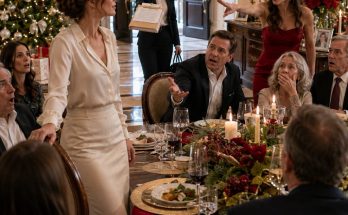
At the wake, my house filled with the smell of coffee, raincoats, flowers, and too much food. Catherine’s portrait stood on the mantel with candles on each side. Mrs. Higgins, our housekeeper of thirty years, moved through the rooms quietly, making sure guests had plates and tissues and somewhere to set down their grief.
I wandered into the hallway near the library because I needed air.
That was when I heard them.
Jared’s voice came first, low and greedy.
“Four and a half million easy. Maybe more if we don’t wait too long. Houses like this move fast.”
Victoria sighed. Not a sad sigh. An impatient one.
“We have to move before Dad does something stupid. He was talking about Catherine’s charities again.”
“He’s slipping,” Jared said. “Anyone can see it. He stared at the coffin like he didn’t understand what was happening.”
My hand tightened around the untouched glass.
Victoria lowered her voice, but not enough.
“We get power of attorney first. Then the accounts. Then the house. If he fights, we say grief made him unstable.”
Jared laughed softly.
“We move in next week. Tell him we’re caring for him. We control the mail, the phone, the bills. By the time he figures anything out, he won’t be able to prove it.”
The hallway seemed to shrink.
My wife was barely cold in the ground, and my daughter was already measuring the windows for curtains.
I stepped from behind the wall.
Both of them jumped.
“Dad,” Victoria said, her voice instantly softening into honey. “We were just talking about how worried we are.”
Jared walked over and put a hand on my shoulder. Heavy. Possessive.
“You shouldn’t be alone, Harry.”
I looked at them for a long moment.
Then I said, “No. I suppose I shouldn’t.”
Victoria smiled, thinking she had heard surrender.
But I had spent my life building cases.
And that day, I opened the file.
### Part 3
The first thing Jared stole was my car.
Not jewelry. Not money. Not documents.
My car.
A midnight-blue 1967 Shelby Mustang GT500 with white racing stripes, chrome so bright it caught the garage lights like ice. I bought it the year I passed the bar exam, back when I still believed success came with clear rules and fair rewards. Catherine used to say I polished that car more tenderly than I polished my shoes.
Every Sunday, weather permitting, I took it out along the lake. I never drove recklessly. I simply liked the feel of the engine beneath me, the low growl of old American muscle, the smell of leather warmed by sun. After decades of courtrooms and careful language, that car was one of the few places where I did not have to be measured.
Two days after the funeral, I was in the garage buffing the front fender when Jared walked in eating an apple.
He chewed with his mouth open.
“Nice machine,” he said. “Shame it just sits here.”
“I drive it every Sunday.”
He leaned against the doorframe, looking around as if the garage already belonged to him.
“Victoria and I were talking. We think it’s unsafe.”
I kept polishing.
“Unsafe.”
“Come on, Harry. A car like this? At your age? Reflexes slow down. Vision goes. It happens.”
“My vision is fine.”
He laughed lightly, as if I had made a child’s argument.
“Everybody says that. Until they wrap themselves around a tree.”
I stood and wiped my hands on a rag.
“What do you want, Jared?”
“The keys. I know a specialist in Chicago. I’ll take it in, get it inspected, maybe put it in storage. Save you the worry.”
There it was. The first probe at the fence.
“No.”
His smile flattened.
“No?”
“Nobody drives it but me.”
For a moment, he looked like a spoiled boy told he could not have dessert. Then the smirk returned.
“Have it your way.”
He threw the apple core into my trash can and left.
That night, I locked the garage deadbolt and placed the Mustang keys in the drawer beside my bed. I slept badly. Grief already made the house strange, but now there was another feeling inside it, something damp and crawling.
At dawn, I woke before the alarm.
The house was silent in the wrong way.
I put on my robe and went downstairs. The kitchen smelled of fresh coffee. Victoria sat at the island scrolling through her tablet. Jared ate cereal, one ankle crossed over the other like a man on vacation.
I walked past them to the garage.
The side door was unlocked.
The Mustang was gone.
In its place was a clean rectangle of concrete and one dark oil stain.
I stood there long enough to feel my pulse settle. Then I returned to the kitchen.
“Where is my car?”
Jared did not look up.
“Took it in.”
“To whom?”
“A guy.”
“Name.”
He shrugged.
“Relax, Harry. I handled it.”
Victoria’s eyes stayed on her tablet.
“He’s helping you, Dad.”
I went upstairs without answering. In my bedroom, I opened the drawer.
The keys were still there.
Jared had not borrowed my car. He had taken it without keys, without permission, without shame.
I could have called the police. But I knew how that conversation might sound.
My son-in-law took my car for service.
Did you give him permission?
He says you did.
You’re elderly, sir. Could you have forgotten?
No. Jared had not just stolen property. He had tested whether I would fight.
So I went back downstairs and sat across from him.
“You may be right,” I said quietly. “Maybe I shouldn’t drive anymore.”
Jared looked at Victoria.
See? his face said.
They thought the old man had folded.
But as I watched Jared finish his cereal in my kitchen with my stolen car already gone, I made my first private promise.
I would not stop him too soon.
I would let him build the gallows himself.
### Part 4
After the car, they took the people.
That is always the next move when someone wants control. First they take the thing you love. Then they take the witnesses.
Mrs. Higgins had worked in our house for thirty years. She was short, round-faced, and tougher than anyone guessed. She knew which floorboards groaned, which windows stuck in July, how Catherine liked her tea, and where I hid chocolate after my doctor told me to cut back. She had seen Victoria grow from a child with pigtails into a woman who never called unless she needed something.
To Victoria, that made Mrs. Higgins dangerous.
The accusation happened in the library on a Thursday afternoon.
I was in my leather chair, pretending to drift. The performance had begun by then. I let my mouth hang slightly open. I asked the same question twice. I stared too long at empty corners. Victoria watched me with satisfaction, not concern.
She entered the library holding a silver spoon pinched between two fingers.
Mrs. Higgins followed, pale and shaking.
“I found this in her coat pocket,” Victoria announced.
The spoon belonged to Catherine’s grandmother’s silver set. A small thing, but old, engraved, irreplaceable.
Mrs. Higgins wrung her hands.
“Mr. Harrison, I was polishing them. The phone rang, and I must have slipped it into my pocket without thinking. I would never steal from you.”
Her voice broke on the last word.
I looked at her. She looked back with pleading eyes.
She wanted me to stand. To become myself. To say what everyone in that room knew: that she had more honor in one apron pocket than my daughter had in her entire body.
But I could not break the act yet.
Victoria needed to believe I was declining. Jared needed to grow careless. If I showed my hand over a spoon, they would hide the larger crimes.
So I let my eyes go cloudy.
“Catherine?” I mumbled. “Where’s Catherine? She’ll know where the spoons go.”
Mrs. Higgins flinched as if I had slapped her.
Victoria smiled.
“See? He doesn’t even understand what’s happening.” She turned on Mrs. Higgins. “You’re fired. Get out before I call the police.”
“You can’t,” Mrs. Higgins whispered. “After all these years…”
“I just did.”
I forced myself to stand slowly, leaning on my cane though I did not need it as badly as I pretended.
“I want to say goodbye.”
Victoria rolled her eyes.
“Fine. But don’t let her touch anything else.”
Mrs. Higgins came to me crying silently. I hugged her with an old man’s awkwardness, my cheek brushing her gray hair. She smelled of starch, lavender soap, and the kitchen cinnamon rolls she used to bake when Victoria was little.
Into her apron pocket, I slipped a folded check and a note.
I leaned close to her ear.
“Take the money. Call the number. Trust no one but Sarah. Wait for my signal.”
Her body went stiff.
Then she pulled back and looked into my eyes.
For the first time that day, someone saw me.
Not the confused old widower.
Me.
She gave the smallest nod.
“Goodbye, Mr. Harrison,” she said clearly. “You take care now.”
When Victoria slammed the door behind her, the sound echoed through the house like a cell locking.
By dinner, the next stage began.
Jared walked through the rooms with a bundle of cords in his hands.
“Disconnected the landlines,” he said cheerfully. “Too many scam calls. Bad for your stress.”
He had also changed the Wi-Fi password.
“You need peace,” he said. “If you need anything, ask us.”
Then came dinner.
They sat at my dining table eating thick steaks from my freezer, drinking Catherine’s favorite red wine from my cellar. In front of me, Victoria placed a plastic bowl of gray porridge.
“Easier for you to swallow,” she said.
My throat worked. Not with weakness. With rage.
Jared cut into his steak.
“Eat up, Harry. It’s for your own good.”
I lifted the spoon.
The porridge tasted like wet cardboard and humiliation.
I ate every bite while they watched.
That night, they threw a party downstairs.
“To the new owners!” Jared shouted.
Laughter rose through the floorboards.
I lay awake in the dark, writing every word in a black notebook under my blanket.
Date. Time. Witness removed. Communication cut. Food controlled. Public humiliation.
The file grew.
And so did the storm.
### Part 5
The fog came slowly enough that I almost doubted myself.
That was the cruelest part.
At seventy, a man expects certain betrayals from his body. Names slip. Knees ache before rain. You walk into a room and forget why, then remember ten seconds later and curse yourself for becoming a stereotype.
But this was different.
This was a heavy gray pressure behind my eyes. A thickening of thought. Some mornings, the ceiling seemed too far away. My fingers trembled around my coffee cup. Twice, I dropped a spoon. Once, I woke in the armchair at noon with no memory of sitting down.
Victoria noticed everything.
Or pretended to.
“Dad, you’re getting worse,” she would whisper, touching my shoulder with cold fingers. “You forgot breakfast again.”
I had not forgotten. I had refused it because the soup smelled strange, metallic and sour beneath the chicken broth.
Jared began speaking about me while I sat in the room.
“He’s fading fast.”
“He doesn’t process things.”
“Sometimes he looks right through me.”
I let my eyelids droop. I let my mouth slacken. I gave them exactly what they wanted to see while fear crawled beneath my ribs.
Was it all an act anymore?
That question frightened me more than Jared ever could.
Then Dr. Evans arrived.
It was a humid Tuesday. The windows sweated. The whole house smelled of damp wood and Victoria’s perfume.
Jared entered the sunroom with a man in a white coat.
“Harry,” he boomed, too loudly. “This is Dr. Evans. A specialist.”
Evans looked nothing like the specialists I had known in my life. His coat was yellowing at the collar. His medical bag was cracked. His shoes were expensive but muddy, as though he had walked through an alley before stepping into my house. He avoided my eyes.
In court, I had trusted small details. They rarely lied.
He checked my pulse for three seconds. Listened to my heart through a sweater. Shone a light near my face without looking carefully at either pupil.
Then he stood and announced, “Rapid cognitive decline.”
Victoria pressed a hand to her chest.
“Oh, Dad.”
Jared nodded gravely.
“What do we do?”
Evans took out a plain orange bottle. No pharmacy label. No printed instructions. Just a container filled with small blue tablets.
“This will calm him,” Evans said.
I lifted my head.
“Where is the label?”
Jared moved between us.
“Concierge medicine, Harry. Don’t agitate yourself.”
Evans left quickly. In the hallway, I heard murmurs. Paper rustled. Money changed hands. I did not need to see it. Sound has texture when you learn how to listen.
Jared returned with a glass of water and one tablet in his palm.
“Time for your medicine.”
My instincts screamed.
If I refused, they would say I was combative. If I swallowed, I might not wake up fully again.
So I placed it on my tongue, drank, and tucked the tablet beneath it.
Jared smiled.
“Good man.”
When he left, I went to Catherine’s snake plant in the corner. She had loved that plant because, she said, it survived neglect and bad weather out of pure stubbornness.
“I’m sorry,” I whispered.
I spat the softened tablet into a tissue, mixed it with water, and poured it into the soil.
Then I waited.
The next morning, the leaves yellowed.
The second day, they sagged.
On the third, the plant collapsed into black, wet rot. The smell was foul, chemical, wrong.
I stood over it in the silent sunroom.
My tremors stopped.
The fog in my mind cleared like a curtain pulled back.
They were not simply making me look sick.
They were making me sick.
I photographed the plant with the hidden phone taped inside the bathroom vent. I bagged the soil and dead leaves. My hands were careful now, almost gentle.
Evidence deserves respect.
Footsteps sounded in the hall.
I covered the plant with a newspaper and sank into the chair.
Victoria appeared at the doorway.
“It smells like something died in here,” she said.
I stared past her and mumbled, “Catherine?”
She left, disgusted.
I waited until her footsteps disappeared.
Then I looked at the covered plant and whispered, “Not yet.”
### Part 6
My first day without their pills was a private war.
I lay in bed with sweat cooling on my chest, every muscle twitching as if tiny wires had been stitched under my skin. My heart beat too fast, then too slow, then hard enough to shake my ribs. I wanted to tear the sheets off, run into the hall, and shout that I was still alive.
Instead, I lay still.
At noon, Victoria came in and stood at the foot of my bed.
She did not bring lunch.
She watched my shaking hands with a strange satisfaction, then turned slightly and spoke into her phone.
“He’s declining faster now. Yes. I know. Jared is calling the realtor.”
I kept my breathing shallow.
She thought she was watching the end.
She was watching the beginning.
By late afternoon, my head had cleared enough to move. Jared had a routine. At four o’clock, he took a long shower and sang badly through the pipes. When the water started and his off-key voice rose from the guest bathroom, I threw back the blanket.
My legs nearly failed me.
I caught the bedpost, breathed through the pain, and reached into the hollow space beneath the frame. Inside was the plastic bag containing the dead plant sample, the soil, and a handwritten note.
Names. Dates. Symptoms. Suspicions. Instructions.
I moved to the window.
At seventy, climbing out a bedroom window is not heroic. It is ugly. My pajama sleeve caught on the latch. My shin scraped the sill. I dropped into the mulch with enough force to knock the air from my lungs.
For a moment, I lay there staring up at the gray sky.
Jared kept singing.
I crawled toward the oak tree Catherine and I had planted the year Victoria turned seven. Back then, Victoria had worn red sneakers and insisted the sapling was too small to count as a tree. Catherine told her everything strong begins small.
I dug at the base with a spoon I had stolen from my own dinner tray.
The earth was cool and smelled of rain.
I buried the bag deep, covered it, scattered leaves, and pressed the dirt flat with my palm.
Then I did not return through the window. Too risky.
I slipped through the side door into the mudroom and made my way to the basement.
Victoria and Jared avoided the basement. Too dusty. Too many boxes. Too many things that had belonged to a life before them.
Good.
In the far corner, behind the utility panel, I found the old phone taped where I had left it years before. Catherine used to call it paranoia. I called it insurance.
The battery came alive.
I dialed Sarah Jenkins.
She had been my law clerk twenty-two years earlier. Brilliant. Poor. Angry in the right way. I had watched her turn into one of the best attorneys in Chicago.
“Jenkins and Associates,” a woman answered.
I spoke in the code Sarah and I had created during an old cartel case.
“The docket is full. Evidence is filed at the oak. The client is compromised.”
There was a pause.
Then Sarah’s voice changed.
“Understood, Your Honor. Are you secure?”
“No.”
“Stay low.”
The line went dead.
I taped the phone back in place.
Then the basement door opened.
Light spilled down the stairs.
“Dad?” Victoria called. “What are you doing down there?”
My pulse kicked once, hard.
If she found the panel, the phone, anything, they would stop pretending. They would act.
I turned toward a dark corner and let my shoulders curve.
“Here, kitty,” I mumbled. “Whiskers? Come here, boy.”
Victoria came down two steps.
“Dad, Whiskers died five years ago.”
I looked up at her with wet eyes.
“No. Catherine said he was hungry.”
For one second, something like discomfort crossed her face.
Then disgust won.
“Mom is dead. The cat is dead. Come upstairs before you break a hip.”
She left the door open.
I stood in the basement darkness, my breathing slow, my mind clear.
Whiskers had been a good cat.
Even dead, he had helped me hunt.
### Part 7
That night, I learned what fear sounds like when greedy people start running out of time.
It sounds like whispers in a kitchen at midnight.
I lay in bed with my eyes open, listening to the house settle. Pipes ticked. Wind pressed against the windows. Somewhere below, an ice maker dropped cubes with a sharp crack.
Then came Jared’s voice.
Low. Angry.
I got out of bed.
My room had been locked from the outside after dinner. Victoria said it was for safety. “You wander, Dad,” she told me while sliding the key from the lock. “We can’t have you falling down the stairs.”
She had forgotten this was my house.
The hinges were inside.
Using the small multi-tool hidden in my suit jacket, I removed the pins in less than four minutes. I lifted the door free, set it gently against the wall, and stepped into the hallway.
The guest room door stood open.
I should have gone straight to the stairs, but something pulled me inside.
Their room smelled of perfume, sweat, takeout food, and entitlement. Clothes lay over Catherine’s reading chair. Jared’s sneakers were on my wife’s rug. On the dresser sat Catherine’s jewelry boxes.
My breath stopped.
I opened the first.
Empty.
Second.
Empty.
The pearl necklace I bought for our thirtieth anniversary was gone. The diamond bracelet she wore to Victoria’s wedding was gone. Her sapphire earrings, the ones that matched her eyes, gone.
Beside the boxes lay pawn shop receipts.
Fast Cash Pawn. Fourth Street. Dates. Ticket numbers. Amounts so insulting they felt like spit.
They had sold Catherine’s memory through a glass counter under fluorescent lights.
For a moment, I had to grip the dresser to stay upright.
Then I heard Jared downstairs.
“He has to go this week.”
I put the receipts back exactly as I found them and noticed a metal case under the bed. Heavy. Locked.
Jared was not imaginative.
I tried 777.
The latch clicked.
Inside were stacks of cash and a small handgun with no visible serial number.
I closed the case carefully.
The room seemed colder.
This was no longer just theft. Jared was desperate in a way that makes men stupid and dangerous.
I went to the top of the stairs.
Victoria’s voice floated up from the kitchen.
“The paperwork takes time.”
“Then call Evans,” Jared snapped. “Tell him to make it worse. Rocco called twice today. He said interest compounds daily.”
Rocco.
A name, finally.
Jared continued, his voice shaking under the anger. “I’m not getting my fingers broken because your father refuses to die on schedule.”
My hand tightened on the banister.
Victoria said, “Tomorrow we get the signature. After that, we move him.”
“Sunny Meadows?”
“It’s cheap.”
“He’ll hate it.”
There was a pause.
Then my daughter said, “He won’t know where he is.”
I closed my eyes.
Not from weakness.
To keep from going downstairs and ending the game with my hands.
A chair scraped.
“I’m checking on him,” Victoria said. “I want to make sure he swallowed tonight.”
I had ten seconds.
My bedroom was too far. One floorboard near the door screamed if stepped on. The linen closet was closer.
I slipped inside and pulled it shut.
Lavender sachets. Mothballs. Clean towels.
Victoria walked past. I heard the silk hush of her robe. My bedroom door opened.
Silence.
She was looking at the empty bed.
“Dad?”
I eased the closet door open while she moved toward the bathroom.
Barefoot, I stepped into the hall, circled behind her, and leaned against my own doorframe just as she turned back.
“Victoria?” I mumbled. “Is it morning?”
She jumped.
“Jesus, Dad. Where were you?”
“Thirsty. Got lost.”
Her suspicion battled contempt.
Contempt won.
“You’re a mess,” she whispered. “A total mess.”
She pushed me back into bed and locked the room again from the outside.
I waited until her footsteps faded.
Then I got up, lifted the door off the frame once more, and went to my study.
They had a deadline.
So did I.
### Part 8
My study had been turned into a crime scene of disrespect.
That was the first thought I had when I opened the door.
Not fear. Not urgency. Disrespect.
The room where I had written opinions that changed lives now smelled like pepperoni pizza, beer, and Jared’s cheap body spray. Empty cans sat on my desk. Grease stained a legal pad. One of Catherine’s framed photographs had been pushed aside to make room for a video game controller.
My laptop sat open in the middle of it all.
Jared believed I could not remember my own wife’s death, so he had not bothered with real security. The password prompt glowed on the screen.
I typed Victoria’s birthday.
Access granted.
Some betrayals are complicated. Some are not.
His email was open. So was my bank portal.
The Caldwell Family Trust balance stared back at me, thinner than it had been three months earlier. I clicked transaction history and found the wound immediately.
Consulting fees.
Care management.
Lifestyle coordination.
Wellness administration.
Each payment had gone to J&V Consulting LLC.
Jared and Victoria.
They had created a company using my address and paid themselves from my trust for the privilege of imprisoning me in my own home.
The total made my jaw tighten.
Four hundred and fifty thousand dollars.
I saved the statements to a small silver drive.
Then I searched his email.
Most of it was trash. Gambling notices. Realtor messages. Angry reminders from people who did not use last names.
One thread mattered.
Subject: Urgent Lake Forest Sale.
Jared had written to a broker named Eddie.
Need to move fast. Old man deteriorating. List at 3.8. Cash buyer preferred. Resident will be gone next week.
My house had been appraised at four and a half million.
They were willing to throw away seven hundred thousand dollars just to turn me into cash before anyone looked too closely.
Eddie had replied:
Can bring buyers once resident is removed. Need clean access.
Resident.
Not father. Not owner. Resident.
Jared answered:
Sunny Meadows paperwork in progress. He won’t be a problem.
I sat very still.
Sunny Meadows was not a care home. It was a warehouse for people whose families had stopped seeing them as human. I knew the place from old elder abuse cases. Understaffed. Underfunded. Forgotten by everyone except inspectors who gave warnings and politicians who gave speeches.
That was where my daughter planned to put me.
Not because she lacked money.
Because she wanted more.
I copied every email. Every attachment. Every draft document.
The progress bar moved slowly across the screen.
Thirty seconds.
A floorboard creaked in the hall.
I froze.
Twenty seconds.
Heavy footsteps. Jared.
Ten.
The bathroom door opened. Water ran.
Five.
A cough.
Complete.
I pulled the drive free, closed the laptop, and wiped the lid with my sleeve.
Jared’s footsteps returned to the guest room. The bed groaned under him. Snoring followed.
I went back to my room and hid the drive beneath the porcelain lid of the toilet tank, taped high where water would never touch it.
Then I looked at myself in the mirror.
My cheeks were hollow. My hair stood wild. There were dark circles under my eyes. I looked like the man they described in court papers.
But my eyes were clear.
In the morning, they came with documents.
Victoria wore a sharp navy suit and carried a thick envelope. Jared stood behind her, arms crossed.
“Good news, Dad,” she said brightly. “We found better medical coverage. We just need signatures.”
The first page was harmless.
The pages beneath were not.
Durable power of attorney. Asset control. Medical authority. Revocation of prior directives.
A full surrender.
Victoria placed a fountain pen in my right hand.
“Sign here.”
My hand trembled. Partly real. Mostly theater.
I dragged the pen across the page, ripping the signature line.
Jared cursed.
Victoria’s mask cracked.
“You useless old man,” she snapped.
I looked up.
She grabbed my wrist hard enough for her nails to break skin.
“Sign it and be done. Do you understand? Sign it so we can move on.”
Move on.
From me.
I coughed, shook, dropped the pen, then reached for it with my left hand.
“What are you doing?” Jared said.
“Right hand hurts,” I whispered.
Victoria saw the blood her nails had drawn. Fear flashed across her face.
“Fine. Use the left.”
So I signed.
Wrong hand. Wrong pressure. Wrong angle. A signature that looked valid to a careless eye and fraudulent to anyone trained to look.
A trap in ink.
Victoria snatched the paper up.
“Finally.”
Downstairs, a champagne cork popped.
I sat bleeding in my wheelchair and smiled at the wall.
They thought they had captured my name.
They had only captured evidence.
### Part 9
They came for me before sunrise.
The sky outside my bedroom window was the color of old bruises, purple fading into gray. I had not slept. Sleep would have been wasteful. Every hour had been spent listening, memorizing, rehearsing, preparing myself not to react when the final insult arrived.
Two men entered without knocking.
They wore medical uniforms, but nothing about them felt medical. One had a thick neck, tattooed fingers, and a coffee stain on his shirt. The other kept chewing gum and looking at his watch. They smelled of cigarettes, stale air, and impatience.
“Mr. Caldwell,” the thick-necked one said. “Time to go.”
Victoria appeared behind them in sunglasses, though the sun had barely risen.
She did not meet my eyes.
“It’s for the best, Dad,” she said. “Professionals can care for you now.”
I looked around the room as if confused.
“Catherine?”
The man grabbed my arm.
I let myself go limp.
There is a skill to appearing helpless. You must not fight too hard, because real weakness cannot afford defiance. You must sag, breathe wrong, blink too slowly. They dragged me from the house in slippers and pajamas, past Catherine’s portrait, past the library, past the front hall where Victoria had once come home from school and thrown herself into my arms.
She stood at the door while they loaded me into an unmarked white van.
Not an ambulance.
A van.
There were no windows in the back, only metal walls and a cage separating me from the driver. The engine smelled of oil and old vinyl. As we pulled away, I stared at the place where my house disappeared behind the trees.
I did not say goodbye.
After almost an hour, smooth road turned rough. The van bounced through potholes. Traffic sounds changed from suburban quiet to industrial clatter. Trucks. Brakes. Distant machinery.
When the doors opened, the smell hit first.
Urine. Bleach. Boiled cabbage. Human neglect.
Sunny Meadows.
The sign above the entrance was painted with a cheerful yellow sun, chipped at the edges. Beneath it stood a concrete building with barred windows and a chain-link fence. A woman in a wheelchair sat near the lobby doors, staring at nothing while a paper cup lay spilled beside her foot.
Inside, fluorescent lights buzzed overhead.
The floor stuck slightly under my slippers.
At intake, a bored woman behind glass popped gum and asked my name without looking at my face.
“Harrison Caldwell,” one of the men said. “Cash paid. First month.”
Cash.
Of course.
No easy trail.
“Room 304,” she said, sliding over a key. “Double occupancy.”
They took me down a hallway lined with doors that looked less like rooms than storage units. A man was shouting somewhere. A television played too loud in another room. No one responded to either.
Room 304 smelled of mold and disinfectant.
My roommate was curled on his side under a thin blanket, bones visible beneath his skin. The mattress on my bed crackled when I sat down. Plastic cover.
The thick-necked man pointed at me.
“Lunch is noon. Cause trouble, you get restrained.”
The door locked from the outside.
I sat still for a long time.
On the back of the door, a flyer listed monthly rates starting at eight hundred dollars.
I almost laughed.
They had stolen nearly half a million from my trust. They were preparing to sell a multimillion-dollar home. And this was what they chose for me.
Eight hundred dollars a month.
I was not worth care to them. I was overhead.
At 10:15, shouting erupted near the front entrance.
A woman’s voice cut through the building like a blade.
“I have a federal writ, and if you do not open room 304 within thirty seconds, this facility will be answering for unlawful confinement, fraud, and elder abuse before lunch.”
Sarah.
The key turned.
The door opened.
Sarah Jenkins stood there in a black suit, holding a court order in one hand and fury in the other. Behind her, the facility director sweated through his cheap tie.
“Mr. Caldwell,” she said, voice softening. “Ready to leave?”
I stood, straightening my pajama sleeve.
I looked at the director.
“I expect a refund.”
Sarah’s mouth twitched.
Then we walked out.
Behind me, Sunny Meadows swallowed its own silence.
Ahead of me waited court.
And I was done pretending.
### Part 10
Sarah’s car smelled of leather, clean air, and rescue.
The driver closed the door, and for the first time in weeks, no one was touching me without permission. That alone felt like a luxury.
Sarah handed me a garment bag.
“Your tailor opened early for me.”
Inside was my charcoal three-piece suit.
My armor.
As the car rolled toward Chicago, I changed in the back seat with more determination than grace. I shaved using the electric razor Sarah had brought. I wiped my face with a warm towel. I combed my hair back. The old pajamas went into a plastic bag like contaminated evidence.
Sarah watched without pity. That was one of the reasons I trusted her.
“We have the lab report,” she said.
“And?”
“The plant sample and pill residue show a toxic compound mixed with strong sedating agents. Enough to mimic decline. Enough, with continued use, to kill you slowly.”
I tied my Windsor knot.
“Evans?”
“Not a doctor. Former pharmacist. Lost his license years ago. Gambling debts. Jared found him through a debt contact.”
“Rocco.”
Sarah nodded.
“We’re tracing him too. But today is about stopping the guardianship.”
I slid my cufflinks into place.
“The financials?”
“Secured. Trust transfers. Shell company. Car sale. Pawn receipts. House listing. Audio from the recorder Mrs. Higgins placed before she left.”
I looked at her.
“You got her inside?”
“She never really left you, Harry.”
Something tightened behind my eyes.
I looked out the window as Chicago rose ahead, steel and glass catching the morning sun. Somewhere in that city, Victoria and Jared were likely enjoying brunch, believing I was locked away and drooling into a plastic cup.
They had no idea I was thirty minutes from standing in front of a judge.
Courtroom 3B was already in session when Sarah and I arrived.
The hallway outside smelled exactly as I remembered: floor wax, copier toner, damp wool coats, and fear. I paused before the doors.
For three months, I had shuffled. Mumbled. Bent my shoulders. Let them call me useless, lost, pathetic.
Now I stood upright.
Sarah touched the brass handle.
“Ready?”
“No,” I said. “But necessary.”
She opened the doors.
Mr. Sterling, their lawyer, was speaking when I entered.
“Your Honor, this is a heartbreaking matter. Mr. Caldwell was once respected. Brilliant, even. But grief has reduced him to paranoia, confusion, and dangerous behavior. His daughter has sacrificed enormously to protect him.”
Victoria dabbed at dry eyes with a lace handkerchief.
Jared sat beside her, head bowed in fake solemnity. His phone rested face down near his hand.
They had staged sorrow beautifully.
Then my shoes struck the marble aisle.
Click.
Click.
Click.
The courtroom quieted one head at a time.
Victoria turned first.
She saw me and laughed.
That same little laugh.
“Look at him,” she whispered to Jared. “He looks like a lost child.”
Jared glanced up, smirked, then looked away.
But Judge Anderson saw me fully.
His face went pale.
He removed his glasses.
“My God,” he whispered. “Is that really him?”
I walked to the podium.
Every sound in the room seemed to pull back from me.
I looked at Anderson, and I saw recognition become anger. Not at me. For me.
“Your Honor,” I said.
My voice filled the room. Deep. Clear. Familiar.
Victoria’s hand froze around her handkerchief.
Jared slowly lifted his head.
“I apologize for the interruption. My daughter and her husband appear to be laboring under a serious misunderstanding.”
Sterling stepped forward.
“Your Honor, my client is clearly—”
“Sit down,” Anderson said.
Sterling sat.
I placed my hands flat on the podium.
“They came here seeking control over a helpless old man. But I am not here merely to defend my competency.”
I turned and looked at Victoria.
The first trace of fear entered her face.
“I am here to present evidence of theft, fraud, elder abuse, unlawful confinement, and conspiracy to end my life.”
The courtroom erupted.
Judge Anderson slammed the gavel.
“Order.”
I did not move.
When silence returned, Anderson leaned forward.
“Judge Caldwell,” he said, using the title deliberately, “you may proceed.”
And just like that, the courtroom became mine again.
### Part 11
I called Dr. Evans first.
He was sitting in the third row, trying to disappear inside an ill-fitting suit. When I said his name, his whole body jerked as if someone had struck him.
The bailiff guided him to the witness stand.
He took the oath with a shaking hand.
I stood close enough that he could smell my aftershave.
“State your name and occupation.”
“Reginald Evans. I’m a medical specialist.”
“What kind?”
“Geriatric care. Neurological decline.”
“Interesting.”
I let the word hang.
“In your professional opinion, what condition did I have?”
“Rapid cognitive deterioration,” he said. “Severe. Dangerous.”
“What tests did you perform?”
He swallowed.
“Standard evaluation.”
“Name them.”
His eyes moved to Jared.
Jared looked away.
“Observation. Pulse. Reflexes.”
“Reflexes,” I repeated. “Which ones?”
“The standard ones.”
“Did you examine my gait?”
“Yes.”
“I was seated during your entire visit.”
He blinked rapidly.
“I meant generally.”
“Did you ask me to repeat phrases? Draw a clock? Recall three words? Identify objects? Follow multi-step commands?”
“No, but—”
“Did you review my medical history?”
“Not fully.”
“Did you speak to my primary physician?”
“No.”
“Did you have access to brain imaging, bloodwork, or prior cognitive testing?”
His lips parted, but nothing came out.
I turned to the judge.
“Your Honor, the witness diagnosed rapid neurological collapse after a three-minute house call in which he did not examine me, review records, or perform a recognized assessment.”
Sterling rose.
“Objection.”
Anderson did not look at him.
“Sit down.”
I returned to Evans.
“You gave my family an unlabeled bottle.”
“It was a calming medication.”
“A calming medication with no pharmacy label.”
“Concierge care sometimes—”
“No.”
The word cracked across the room.
Sarah handed me an evidence bag and a report.
“This bottle was recovered from my home. Samples were tested by a certified federal lab. The contents included a toxic compound and powerful sedating substances. Together, they produced tremors, confusion, weakness, memory lapses, and gradual organ damage.”
A murmur moved through the gallery.
Victoria’s face went gray.
I stepped closer.
“Those symptoms match the decline you claimed to diagnose. Isn’t that convenient?”
Evans began to sweat.
“I didn’t know what was in all of it.”
“In all of it,” I repeated softly.
His eyes widened. He had heard himself.
Jared stood.
“He’s lying.”
“Mr. Miller,” Judge Anderson barked, “sit down before I have you restrained.”
Jared sat.
Evans started crying.
“They said he was difficult,” he blurted. “They said he needed to be managed. I was told it would only make him compliant until the papers were signed.”
Victoria whispered, “Shut up.”
I turned slowly toward her.
She pressed her lips together.
I faced Evans again.
“Who paid you?”
He pointed at Jared.
“And who asked you to declare me incompetent?”
He pointed at Victoria.
A sound went through the courtroom that was almost a gasp, almost a growl.
“Are you a licensed physician?” I asked.
Evans covered his face.
“No.”
The word was small.
But it destroyed him.
Judge Anderson’s jaw tightened.
“Bailiff, take Mr. Evans into custody. The district attorney will receive a transcript of this testimony immediately.”
Evans was led away sobbing.
Jared watched him go as if watching a bridge collapse while he was still standing on it.
I adjusted my cuffs.
“That was the medical fraud,” I said. “Now let’s discuss the money.”
Jared’s face changed.
Fear has many shades. His became oily and pale.
I called his name.
He walked to the stand with a swagger that died before he reached it.
### Part 12
Jared swore to tell the truth.
That was the first lie.
He sat in the witness chair and tried to look wounded. Misunderstood. A decent son-in-law crushed beneath false accusations. His tie was slightly crooked. Sweat shone above his lip.
“Mr. Miller,” I began, “you moved into my home after my wife’s funeral.”
“To care for you.”
“You disconnected my phones.”
“To reduce stress.”
“You changed the internet password.”
“You were vulnerable to scams.”
“You sold my car.”
His mouth twitched.
“I took it for repairs.”
Sarah clicked the remote.
The screen beside the bench lit up with a bill of sale.
1967 Shelby Mustang GT500. Exotic Auto Salvage. Sale price: $80,000 cash. Seller: Jared Miller.
The courtroom murmured.
I faced him.
“You sold a car worth more than twice that amount to a salvage buyer for cash.”
“I intended to use the money for your care.”
The next slide appeared.
An online gambling deposit. Same date. Same amount.
$80,000.
Jared’s lips went white.
“Was that my care, Jared?”
No answer.
I moved on.
A spreadsheet filled the screen. Transfers from the Caldwell Family Trust to J&V Consulting LLC.
“Four hundred and fifty thousand dollars,” I said. “Paid to a company owned by you and Victoria. What services did you provide?”
“Care management.”
“You mean feeding me porridge while drinking my wine?”
He flinched.
“You cut me off from friends, fired my housekeeper, isolated me, and paid yourself nearly half a million dollars.”
“It was stressful,” he snapped suddenly. “You have no idea what it was like.”
There he was.
The real Jared. Always one inconvenience away from rage.
“No,” I said. “Tell us.”
He realized the trap too late.
“I mean—”
“You were stressed because Rocco was calling?”
His head jerked up.
Victoria looked at him sharply.
“Who is Rocco?” I asked.
“I don’t know.”
Sarah clicked again.
Phone records. Text messages. Threats. Payment demands.
Then a photo of the metal case under his bed, taken by police that morning after Sarah secured an emergency order.
Cash. Weapon. Debt notes.
Jared slumped.
“You were in debt,” I said. “Not unlucky. Not temporarily short. Desperate. You needed my estate liquidated fast.”
“I never meant for anyone to get hurt.”
“That is what cowards say after they choose harm.”
He began to cry.
Not grief. Not remorse. Fear.
Then I played the recording.
The courtroom speakers crackled. Glasses clinked. Music thumped faintly from my dining room.
Jared’s drunken voice filled the air.
“To the new owners!”
Laughter.
Victoria’s voice followed.
“Did you give him enough tonight?”
Jared laughed.
“He’ll sleep. Evans says another week and the decline looks natural.”
Someone asked about the house.
Victoria said, “Once he’s at Sunny Meadows, we list properly. I want the kitchen gutted first.”
Then Jared, lower and meaner:
“He’s worth more gone than breathing.”
The recording ended.
Silence.
True silence. The kind no gavel can create.
Jared stared at nothing.
Victoria looked as if the bones had vanished from her body.
I turned to him.
“You discussed my death over my wine, under my roof, while wearing a watch purchased with my money.”
Jared broke.
“It was her,” he sobbed, pointing at Victoria. “She hated you. She said you cared more about her dead mother than her. She said she deserved everything.”
Victoria screamed and lunged toward him.
“You coward! You found Evans. You sold the car. You begged me to do it!”
The bailiffs moved quickly.
Jared was pulled from the stand. Victoria was restrained at the table. Their lawyer sat motionless, the color of paper.
I watched them claw at each other.
Their marriage, their plan, their shared greed, all dissolved under one bright courtroom light.
When Jared begged, “Harry, please, we’re family,” I looked at him for a long moment.
Then I said, “No. You are a defendant.”
And I turned to Victoria.
Because the deepest wound was still waiting to speak.
### Part 13
Victoria would not look at me.
Not at first.
She sat with her wrists held by a bailiff, mascara streaked down her cheeks, hair slipping loose from its careful bun. She looked younger suddenly, but not innocent. Fear can strip polish from a person without revealing goodness underneath.
I walked to the petitioner’s table.
“Victoria.”
She stared at the floor.
“Look at me.”
Her chin trembled.
“Daddy—”
“No.”
The word stopped her.
“You lost the right to use that voice when you put me in that van.”
She squeezed her eyes shut.
“I was scared.”
“Of poverty?” I asked. “Of consequences? Of having to live within your means?”
Her face twisted.
“You don’t understand. You never understood me.”
For one terrible second, I saw the child she had been. Seven years old, red sneakers, cheeks flushed from running through the yard. Catherine calling her in for dinner. Victoria pretending not to hear because she wanted five more minutes under the oak tree.
Then the memory passed.
“I understood more than you think,” I said. “I understood when you stopped visiting unless you needed money. I understood when your grief at your mother’s funeral looked like impatience. I understood when you fired Mrs. Higgins because she knew too much.”
Victoria began crying harder.
“She was just staff.”
A sound moved through me, cold and final.
“She held your mother’s hand when you were too busy checking flights to come home.”
Victoria looked up, wounded by truth more than accusation.
“She ironed your prom dress. She made soup when you were sick. She remembered every birthday. You accused her of stealing a spoon because destroying an honest woman was convenient.”
I stepped back, letting the court see her fully.
“And Sunny Meadows. Eight hundred dollars a month. That was the value of my life to you.”
She shook her head.
“No. Jared chose that place.”
“You signed the papers.”
Her mouth closed.
“You drank champagne in my house after sending me there.”
She whispered, “I’m sorry.”
“No. You are sorry you failed.”
Judge Anderson leaned forward. His face was grim.
“The court has heard enough.”
Victoria turned toward him, desperate.
“Your Honor, please. I made mistakes, but he’s my father.”
Judge Anderson’s voice hardened.
“You attempted to erase your father while asking this court to help you hold the pencil.”
He struck the gavel once.
“The emergency guardianship petition is denied with prejudice. All powers of attorney presented by Victoria Caldwell or Jared Miller are revoked immediately. All transfers to J&V Consulting are frozen. The court refers this matter for criminal prosecution on charges including elder abuse, fraud, grand larceny, unlawful confinement, and conspiracy related to attempted homicide.”
Victoria made a small choking sound.
Anderson continued.
“Bailiffs, take Victoria Caldwell and Jared Miller into custody.”
“No!” Victoria screamed. “Daddy, please!”
The handcuffs clicked around Jared first. He sagged like wet cardboard.
Victoria fought.
Not bravely. Desperately.
She twisted against the bailiff, reaching toward me.
“Daddy, tell them! Tell them I’m your little girl!”
I looked at her hand stretched across the space between us.
Once, that hand had fit inside mine.
Once, I had crossed streets holding it.
Once, I would have stepped in front of any danger to protect her.
But love that arrives only after exposure is not love. It is bargaining.
I did not move.
The bailiffs dragged her toward the side door. Her voice cracked, then broke, then faded down the hall.
“Daddy!”
When the door closed, the courtroom felt hollow.
Judge Anderson looked at me.
“I’m sorry, Judge Caldwell.”
I straightened my tie.
“I’m not, Your Honor. I’m grieving. That is different.”
Sarah placed a hand on my arm.
I let it stay there.
The hearing ended. Papers were gathered. Lawyers whispered. Spectators avoided my eyes, as people do when they have witnessed something too intimate to treat as drama.
I walked out through the oak doors under my own power.
The hallway outside was bright.
For three months, I had been treated like a ghost.
Now I cast a shadow again.
### Part 14
Mrs. Higgins was waiting on my porch when I came home.
Sarah had called ahead. By the time the car turned into the driveway, the house lights were on, the curtains were open, and a familiar figure in a floral apron stood by the front door with both hands pressed to her mouth.
The sight nearly undid me.
For months, the house had looked occupied but not alive. Victoria’s perfume had clung to the hallway. Jared’s beer cans had collected near my study. Their voices had bounced off Catherine’s walls like thrown stones.
Now, when I stepped from the car, I smelled lemon polish, roast beef, rosemary, and something warm baking in the oven.
Mrs. Higgins came down the steps faster than I expected and wrapped her arms around me.
“Welcome home, Mr. Harrison.”
Her voice broke.
I held her carefully.
“I’m sorry,” I said. “For what you endured.”
She pulled back and wiped her eyes with her apron.
“You gave me ten thousand dollars and a plan. That is more than most people get when trouble comes.”
“You should never have needed either.”
“No,” she said. “But we are here now.”
Inside, the house had been cleaned of them.
My desk was clear. Catherine’s portrait was back in place. The dining room no longer smelled of humiliation. The plastic bowl was gone. In its place, Mrs. Higgins served pot roast, potatoes, carrots, and bread warm enough to steam when torn open.
I ate at the head of my own table.
Not porridge.
Real food.
After dinner, Sarah joined me in the library. She poured two glasses of Catherine’s favorite scotch.
“To victory,” she said.
“To justice,” I corrected.
She opened a leather folder.
“We need to discuss your estate.”
“I know.”
“With Victoria removed, the current plan is unstable. We can rebuild however you want.”
I looked around the library. The shelves. The photographs. The chair where Catherine used to read. The house had survived greed, but it no longer felt like something meant to be inherited by blood simply because blood demanded it.
“Create a scholarship trust,” I said.
Sarah’s pen moved.
“The Catherine Caldwell Legal Scholarship Fund. Full tuition and living support for students who commit to public defense, elder law, and financial abuse cases.”
Sarah looked up.
“All of it?”
“All of it. Investments. Bonds. The house after I’m gone. Everything not needed for my care and Mrs. Higgins’s pension.”
“That is over twelve million dollars.”
“I know.”
She smiled slowly.
“Victoria will hate that.”
“No,” I said. “Victoria will never touch it. That is enough.”
We signed the documents before midnight.
In ten minutes, I ended one legacy and began another.
Later, when the house settled quiet around me, I went to the garage.
The Mustang waited beneath the lights, midnight blue and alive again. Police had recovered it from the salvage buyer, who suddenly became very cooperative once federal charges entered the conversation.
I ran my hand over the fender.
Cold metal. Smooth paint. Mine.
I slid into the driver’s seat and turned the key.
The engine roared awake.
The sound filled the garage, deep and furious, like something caged finally remembering its teeth.
I drove slowly at first, past the house, past the oak tree, past the place where I had buried the evidence that saved my life.
Then I reached the lake road.
I pressed the accelerator.
Wind rushed through the open window, sharp with water and night. The streetlights stretched into gold lines. My hands gripped the wheel, steady and sure.
I was alone.
But I was not abandoned.
There is a difference.
Family is not a license to destroy you. Blood does not excuse cruelty. Love that asks you to disappear so someone else can profit is not love at all.
I had lost my wife. I had lost my daughter. I had nearly lost myself.
But I did not forgive what was unforgivable just because the person who harmed me once called me Dad.
Some betrayals do not deserve reconciliation.
They deserve a locked courtroom, a clean verdict, and a road leading away from them.
The engine climbed.
The lake flashed black and silver beside me.
For the first time in months, I smiled without performing it.
They had tried to make me a helpless old man in the final chapter of their story.
They forgot one thing.
I was the one holding the pen.
THE END!
Disclaimer: Our stories are inspired by real-life events but are carefully rewritten for entertainment. Any resemblance to actual people or situations is purely coincidental.