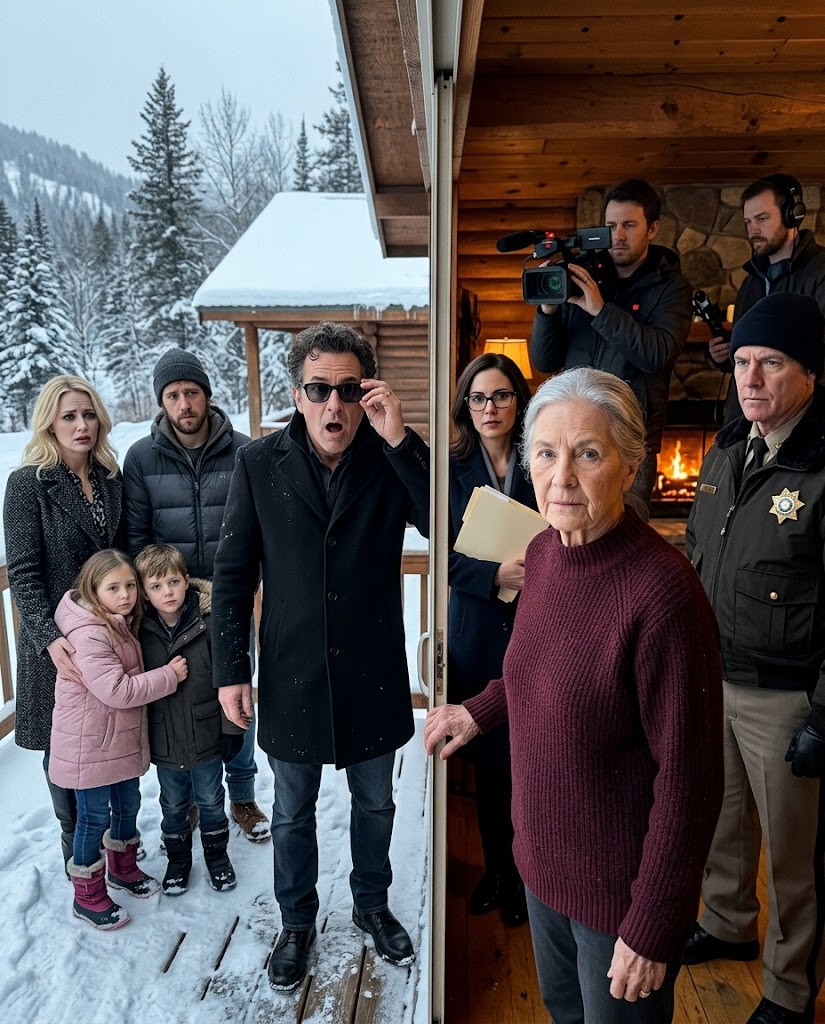
For five Christmases in a row, Margaret Sullivan’s children forgot to invite her.
Not forgot in the ordinary sense.
Not the kind of forgetting a person excuses with embarrassment, a scheduling mistake, or an honest misunderstanding.
They forgot her in the deliberate way people forget a bill they do not want to pay, a promise they never intended to keep, a person whose love they have decided is permanent enough to survive any insult.
Each year they gathered somewhere else.
At Richard’s sprawling colonial house in the suburbs.
At a ski lodge a friend supposedly arranged.
At Vanessa’s sister’s place “because it was easier for the kids.” At Ethan’s condo before he “unexpectedly” left town.
There was always a reason, always a smooth explanation, always a practiced voice telling Margaret not to be dramatic.
Then the photos would appear.
Warm lights.
Sparkling glasses.
Grandchildren in matching pajamas.
Smiling faces under a tree.
And Margaret, always alone.
By the fifth year, the pain had changed shape.
It no longer arrived as a sharp wound.
It settled into something quieter and more humiliating—a cold understanding that her children had built a holiday tradition that included everyone except the woman who raised them.
That last Christmas, she prepared anyway.
She set six places under the chandelier in the dining room of her house outside Chicago.
She ironed the tablecloth herself.
She polished the silver.
She basted the turkey the way her late husband had liked it, with rosemary butter and lemon.
She lit candles around six-thirty and checked the driveway every few minutes.
She wore her burgundy blouse because Richard once told her it made her look elegant, and mothers are foolish in the ways that break their own hearts—they remember small compliments for years.
At seven, she told herself the roads were bad.
At eight, she decided perhaps the children were making the rounds and would arrive late.
At nine, the turkey had dried at the edges.
The candles had burned low.
The mashed potatoes had gone stiff in the bowl.
Then her phone buzzed.
It was Stella, the widow next door.
Margaret, honey… I think you should check Facebook.
Margaret already knew before she opened the app.
She did it anyway.
There they were.
Richard in a navy sweater, arm around Vanessa.
Ethan holding a wine glass in one hand and his daughter’s shoulder with the other.
Sam grinning under Christmas lights.
Mia with frosting on her lip from a cookie.
The caption on one of the posts read, Blessed to have everyone together this year.
Everyone.
Margaret stared until the letters blurred.
She thought of all the explanations she had accepted over the years, all the apologies that never matched the cruelty.
She thought of the times she had defended her children to neighbors, to friends, even to herself.
Richard is under pressure.
Vanessa means well.
Ethan is lost, not bad.
They love me.
They’re just busy.
The house had never felt so quiet.
She stood in the darkened dining room with the glow of the tree reflecting in the window and realized something inside her had stopped pleading.
Not broken.
Finished.
She turned off the Christmas lights.
The house fell into shadow.
Then she walked upstairs to her bedroom, opened her wardrobe, and reached behind a stack of winter
blankets for the old green velvet box she had hidden years earlier.
The box was not pretty anymore.
The corners had dulled, the fabric worn smooth in places.
But inside it lay the history of her children’s betrayal.
Promissory notes.
Bank transfers.
Printed emails.
Screenshots.
Receipts.
Copies of checks.
Forty thousand dollars Richard borrowed for a restaurant partnership that never existed.
Twenty-five thousand Vanessa claimed she needed to stop a foreclosure, though Margaret later discovered the entire story had been invented.
Sixty thousand Ethan asked for as a condo down payment, then spent while posting sun-drenched photos from Spain, Italy, and Greece and claiming the closing had been delayed.
Those losses had hurt, but they were not what turned Margaret cold.
What lay beneath them did that.
A thick set of documents concerning a parcel of lakefront land near Wisconsin, worth roughly $1.5 million.
Land her husband, Thomas Sullivan, had left solely in her name because, as he once told her, If anything happens to me, I want one thing in this family no one can push you out of.
Attached to those papers was a signature purporting to be hers.
It was a good imitation.
Not good enough.
Margaret had not signed a single page.
She stood there in the half-lit bedroom holding the forged papers while Christmas dinner cooled downstairs and felt the truth settle fully into place: her children had not simply neglected her.
They had been working around her.
Past her.
Toward what she owned.
At eleven that night, she packed a brown leather weekender bag that had once belonged to her husband.
Clothes.
Medicine.
Personal documents.
The green velvet box.
Then she locked her house and drove north.
Snow flurried across the windshield as the city lights fell away behind her.
The farther she drove, the quieter the world became.
When she turned off toward Lake Geneva and the narrow road to the cabin, the trees rose dark on either side like sentries.
The cabin had always been dismissed by her children as impractical.
Too isolated.
Too rustic.
Too far from the city.
Too much work for an old woman.
But to Margaret, it was the only place left that still felt true.
Thomas had built half the bookshelves with his own hands.
He had proposed there again on their thirtieth anniversary, kneeling badly on a rug while she laughed and cried at the same time.
They had planned to grow old there, making coffee on winter mornings and watching fog rise off the lake in spring.
He had died before that future arrived.
But the cabin remained, quiet and solid and unashamed of its silence.
The next morning Attorney William Patterson sat across from her near the fireplace while she spread out the contents of the green velvet box on the coffee table.
He was a careful man, gray-haired, deliberate, not easily alarmed.
Margaret had chosen him years earlier after Thomas died because he spoke plainly and never once treated her like a woman who needed things simplified.
He examined every page without interrupting.
When he finished, he removed his glasses and rubbed the bridge of his nose.
“Mrs.
Sullivan,” he said, “you do not merely have concerns.
You have evidence of financial manipulation, attempted fraud, and possible conspiracy.”
The words should have shocked
her.
Instead they felt like relief.
Someone else had finally named the thing she had been living inside.
So she told him everything.
The repeated requests for money attached to emergencies that vanished once she paid them.
The pressure about the lakefront parcel.
Vanessa’s increasingly aggressive insistence that Margaret should simplify her estate planning.
Richard’s habit of speaking to her as though decisions were already made.
Ethan’s weakness for going along with whatever kept the peace, even when peace clearly meant joining the wrong side.
Then she played the recording.
Two months earlier, during a barbecue at Richard’s house, Margaret had left her phone recording beneath a sofa cushion before walking out to the patio.
She had not known exactly what she would hear.
She only knew she feared the truth more and more every day.
The truth came in voices she knew as well as her own heartbeat.
Poor Mom.
Always so trusting, Richard had said with a laugh.
Vanessa replied, It’s not about family.
It’s about timing.
We either move now, or we lose control of the land.
Later Richard added, If we can get a doctor to certify she’s slipping, we can put everything under a trust managed by us.
When the recording ended, the crackle of the fireplace sounded obscenely loud.
Patterson closed his briefcase halfway, then opened it again.
“We need to proceed carefully,” he said.
“And publicly enough that no one can later claim confusion.
If they come to pressure you, there should be witnesses.”
For the next week Margaret ignored every call.
At first her children sounded worried.
Are you okay? Please answer.
Mom, this isn’t funny.
Then they sounded annoyed.
Stop disappearing.
We’re trying to help you.
Vanessa says you’re being irrational.
Then urgency slipped through.
There are time-sensitive papers involving the property.
Please stop overreacting about Christmas.
It was a misunderstanding.
The message that finally arrived from Richard told her everything she needed to know.
I know where you are, Mom.
We’re coming tomorrow.
All of us.
You’re going to sign those papers.
The drama is over.
Margaret read the words twice, then called Patterson.
“They’re coming,” she said.
“Are you ready?” he asked.
Margaret stood at the cabin window looking at her reflection in the black glass.
Gray hair pinned back.
Fine lines around the mouth.
Eyes more tired than she liked to admit.
Her children saw an aging widow who still confused mercy with surrender.
“Yes,” she said.
“I’m ready.”
The next morning she dressed with unusual care.
Burgundy sweater.
Dark slacks.
Small gold earrings Thomas had bought her years ago.
She brewed fresh coffee, straightened the throw blankets in the living room, and placed the green velvet box at the center of the coffee table.
Attorney Patterson arrived first.
Sheriff Daniel Miller came next, invited not as an arresting officer but as a witness in anticipation of intimidation, trespass, or escalation.
He was a broad, steady man with a patient voice and the kind of presence that made liars nervous.
The last to arrive was a videographer Patterson had hired to document the exchange cleanly and continuously.
The cameras were legal, the notice prepared, the room arranged so no one could later deny what had happened.
At 11:30 two SUVs crawled up the dirt road.
Margaret watched from
the window as Richard stepped out in a wool coat, already irritated.
Vanessa followed, polished as ever, carrying outrage like an accessory.
Ethan climbed from the second vehicle looking pale and badly rested.
Then Sam and Mia emerged.
Margaret’s throat tightened.
She hated that the children had been brought into this.
But perhaps, she thought bitterly, people who were willing to steal from a mother were certainly willing to use children as emotional cover.
Richard reached the front door and tried the knob.
Locked.
He knocked hard, then pounded with the side of his fist.
“Mom! Open up! We drove all the way from the city!”
Margaret opened the door.
Richard stopped.
Sheriff Miller stood beside her in uniform.
Patterson was behind her shoulder.
The camera light was already on.
Vanessa’s face changed first.
Ethan’s second.
Richard slowly removed his sunglasses.
“What is this?” he demanded.
Margaret let him look.
Let them all look.
“This,” she said, “is the end of a lot of things.
Come in.
We need to talk.”
Inside, the cabin seemed to tighten around them.
The fire snapped in the stone hearth.
Snow tapped lightly at the window.
Margaret indicated the sofa and chairs.
Nobody sat comfortably.
Richard began talking immediately.
“Mom, whatever this stunt is, stop.
We came because those property papers—”
She raised one hand.
“No.
You will listen first.”
And because there was now a sheriff in the room and a camera recording, for once they did.
Margaret opened the green velvet box.
One by one, she laid out the evidence.
The loans.
The lies.
The transfers.
The false emergencies.
The forged land documents.
The screenshots discussing whether she could be declared mentally incompetent.
Vanessa went white.
Richard tried anger first.
“This proves nothing.”
Patterson slid copies of the records into neat stacks.
“It proves more than enough to begin.”
Ethan stared at the floor.
Then Sam, Margaret’s grandson, rose slowly from his chair.
He was thirteen and still at the age where grief shows plainly on the face.
“Grandma,” he whispered, “did Dad steal from you?”
The whole room seemed to hold its breath.
Margaret looked at the boy she loved and understood, in that instant, that protecting children from the truth can become another kind of lie.
She took his hands.
“They lied to me, sweetheart,” she said.
“And when they thought there was nothing left they could easily take, they tried to take my freedom too.”
Richard exploded.
“That’s not fair!”
Margaret turned to him.
“No,” she said quietly.
“What wasn’t fair was planning to bury your mother alive while she was still standing.”
Then she played the recording.
His own voice filled the room.
If we can get a doctor to certify she’s not all there, we can take control of everything.
Everything would go into a trust managed by us, Vanessa added.
Poor Mom.
Always so trusting, Richard said, laughing.
Mia burst into tears.
Sam recoiled from his father as though he had touched a hot stove.
Ethan covered his face.
Margaret stood motionless while years of carefully hidden rot surfaced in plain sound.
When the recording ended, Sheriff Miller spoke for the first time in several minutes.
“Mrs.
Sullivan, do you wish to pursue formal claims?”
Every eye turned to her.
This was the moment they expected
a mother’s weakness to return.
Forgive us.
Let’s handle this privately.
Think of the family.
Margaret reached once more into the green velvet box.
“There is one more document,” she said.
Even Patterson looked confused.
She unfolded the pages slowly and laid them flat on the table.
Richard leaned forward.
“Mom… what is that?”
“This,” Margaret said, “is the part none of you prepared for.”
It was an irrevocable transfer and trust activation package.
Years earlier, after seeing the first signs of entitlement in Richard and Ethan, Thomas Sullivan had quietly worked with Patterson on a protective estate mechanism for the lakefront parcel and certain investment accounts linked to it.
The provision was simple and merciless: if either son or their spouses attempted fraud, coercion, forged transfer, or legal manipulation against Margaret regarding those assets, their beneficial interest would be terminated immediately.
The property would bypass them entirely and be transferred into a protected trust for Sam and Mia, overseen by an independent fiduciary with no family member allowed discretionary control.
Thomas had not wanted to believe his sons might ever justify that clause.
Margaret had not wanted to activate it.
But the forged signature and recorded conspiracy had done what grief never could.
They had ended doubt.
Patterson read the document twice, then looked up with stunned recognition.
“This is enforceable,” he said.
Richard surged to his feet.
“No.
No, you can’t do that.
That land belongs in the family.”
“It does,” Margaret replied.
“Just not in your hands.”
Vanessa lunged toward the papers.
Sheriff Miller stepped between them with one calm movement.
“Sit down, ma’am.”
Mia was sobbing openly now.
Sam stood frozen, his face pale.
Then Ethan spoke in a voice Margaret barely recognized.
“Dad knew?” he asked.
Margaret nodded once.
“Your father understood greed better than either of you ever realized.”
Richard’s bravado cracked.
He sat heavily, then slid farther down until he was almost kneeling beside the chair, breathing hard, eyes moving from the trust papers to Sam to Margaret and back again.
“Mom,” he said, voice hoarse now, “don’t do this.
We can fix this.
We were under pressure.”
Pressure.
Margaret thought of the untouched Christmas dinners.
The humiliations.
The theft.
The plan to strip her of legal control over her own life.
She thought of how often abusers rename their choices with softer words.
“No,” she said.
“You were greedy.”
Ethan lifted his head.
“I signed one of the first property documents,” he admitted.
“Richard told me it was preliminary.
Routine.
I didn’t read it.”
Richard whipped around.
“Shut up.”
But Ethan was crying now, not dramatically, not for sympathy—just with the ugly, stunned tears of a man seeing himself clearly too late.
“Vanessa forged the later pages,” he said.
“Richard said if Mom resisted, we’d have her evaluated before spring.”
Sam made a sound Margaret would remember for the rest of her life—not a sob exactly, but the noise a child makes when trust breaks inside him.
Sheriff Miller looked to Patterson, then back to Margaret.
“With that statement and the documents already provided,” he said, “we can initiate criminal investigation immediately.”
Richard finally understood the floor had disappeared beneath him.
He turned to Margaret with naked fear.
“Please.
Don’t do this in front of the kids.”
Margaret almost laughed at the
cruelty of it.
For years he had done everything in front of the kids except tell the truth.
Instead she looked at Sam and Mia.
“This is not your fault,” she said gently.
“None of this belongs to you.
Not the shame.
Not the lies.
Not the choices your parents made.”
She turned back to the adults.
“Yes,” she said to the sheriff.
“I want to move forward.”
Richard stood so suddenly his chair tipped backward.
Vanessa began talking too fast, words tumbling over one another—misunderstanding, stress, family matter, private resolution.
Ethan sank onto the sofa, shattered.
Sheriff Miller radioed for a deputy unit to assist.
Patterson organized the documents into evidence folders with the same efficiency he might have used to close a real estate transaction.
The contrast was almost surreal.
A family collapsing in a warm cabin while the law proceeded in calm, orderly steps.
The deputies arrived within twenty minutes.
Because no formal arrest warrant had yet been issued, Richard and Vanessa were not handcuffed that day.
But statements were taken.
Copies secured.
Warnings delivered.
The forged documents were retained.
Ethan agreed to cooperate in exchange for counsel.
The scene that had once been designed to pressure an elderly mother into surrender instead became the beginning of a criminal case.
When the cars finally pulled away, Sam and Mia did not leave with their parents.
By arrangement with Patterson and at Margaret’s insistence, the children went with a maternal aunt who lived nearby and had come once the deputies requested a neutral family placement for the afternoon.
Sam hugged Margaret before he left.
Mia cried into Margaret’s sweater and asked in a shaking voice whether Grandma still loved them.
Margaret held her close and said the one thing she knew with certainty.
“Always.”
The months that followed were messy, public, and exhausting.
Richard fought everything.
He claimed the recordings were misunderstood.
He blamed Vanessa.
He blamed Ethan.
He blamed financial pressure, stress, alcohol, grief over his father, resentment over old family dynamics—everything except himself.
Vanessa hired a lawyer and tried to frame the forged signatures as clerical confusion.
The bank records buried that lie quickly.
Ethan, to Margaret’s lasting sadness, turned out to be exactly what she had feared: not innocent, but weak.
He had known enough to stop.
He had chosen not to.
Still, once cornered, he cooperated fully.
That cooperation spared him the worst consequences, though not the loss of Margaret’s trust.
The case did not end in a dramatic televised trial.
It ended the way many ugly truths do—in depositions, negotiated pleas, financial restitution orders, civil findings, and a set of legal outcomes devastating enough that nobody in the family ever again referred to the matter as a misunderstanding.
Richard lost his standing in the business community he had worked so hard to impress.
Vanessa’s name became tied to the fraud investigation in every way that mattered.
Ethan entered counseling, sold the condo he eventually did purchase, and spent the next year attempting a form of honesty that looked painfully unfamiliar on him.
The lakefront parcel and associated investments were transferred into the trust exactly as Thomas had designed.
Sam and Mia would one day benefit from it, but not in the way their parents had intended.
They could not access it early.
No
family member could raid it.
Their education, housing stability, and future needs would be protected under strict independent management.
Margaret updated her will, sold the Chicago house, and moved permanently to the cabin.
People expected her to feel lonely there.
Instead she felt something she had not felt in years.
Peace.
She planted winterberry shrubs near the porch.
She replaced the old curtains in the kitchen.
She learned how the lake looked in every season and discovered that silence, when not filled with dread, can sound almost like music.
Sam and Mia visited often once the custody arrangements settled and the adults around them stopped using access as leverage.
At first the children were tentative, carrying the raw confusion that comes when the people who defined home also defined betrayal.
Margaret never forced conversations.
She made cocoa.
She listened.
She told stories about their grandfather.
She let them ask hard questions in pieces.
One spring afternoon Sam stood with her by the dock and asked, “Did you know Dad was like that?”
Margaret answered honestly.
“I knew he was becoming someone I didn’t want to see clearly.”
Sam nodded, eyes fixed on the water.
“I think that’s worse,” he said.
She understood what he meant.
The deepest heartbreak is not always discovering evil.
Sometimes it is realizing how long love trained you not to name it.
On the sixth Christmas after the one that ended everything, Margaret set the table again.
But this time she did not set six places for people who would not come.
She set four.
One for herself.
One for Sam.
One for Mia.
And one at the head of the table beside a framed photograph of Thomas smiling in the old cabin light.
Snow gathered outside.
The fire burned steady.
The children helped decorate cookies in the kitchen, laughing when the icing slid sideways and made the snowmen look drunk.
Margaret stood in the doorway watching them and felt grief, yes, but not only grief.
There was relief too.
Relief that truth had finally cost what lies should have cost years earlier.
After dinner, Mia asked the question adults always try to outrun.
“Grandma… do you forgive them?”
Margaret looked at the tree lights reflected in the window before answering.
“I don’t know if forgiveness is the most important question,” she said softly.
“Sometimes the more important question is whether someone should still be trusted with your heart after they’ve shown you what they’ll do with it.”
Sam considered that for a long moment.
“Would Grandpa have done what you did?”
Margaret smiled faintly.
“He would have done it sooner.”
The children laughed.
So did she.
Later, after they were asleep upstairs, Margaret sat alone by the fire with a cup of tea and the old green velvet box resting closed on the table beside her.
She no longer needed to hide it.
It had done its work.
She thought about the woman she had been on that fifth Christmas—waiting in a decorated house, inventing excuses for people who had long since stopped deserving them.
She wished she could reach back through time and tell that woman one thing.
Love that has to kneel to survive is not love.
It is fear wearing a family’s face.
Thomas had once told her the pines around the cabin were honest because they did not bend toward every passing storm.
They held.
They shed what they must.
They stayed rooted.
At last, Margaret understood.
The end of a lot of things had also been the beginning of one: a life where mercy no longer required self-betrayal.
And if there was still an ache in that truth, there was also something cleaner.
A question that would likely follow her for the rest of her life.
When a mother spends years protecting her children from consequences, when exactly does love stop being love and start becoming permission?