PART I: THE FRAGILE DEFENSE
The courtroom was a theater of manufactured grief, where Clara Sterling—the refined, charcoal-clad widow—had successfully positioned herself as the victim of a calculated betrayal. The prosecution’s case against Mrs. Gable, the nanny who had served as the child’s only source of genuine comfort, was nearing its terminal point, with digitalis poisoning painted as the final act of a cold-hearted opportunist. As the judge prepared to deliver a verdict that would consign Mrs. Gable to a life behind bars, the silence was absolute, heavy with the weight of an impending, unjust conclusion.
In the back row, the eight-year-old witness was not preoccupied with the mechanics of the law, but with the stark, visceral memories of kindness—broken vases and bedside stories. The child’s perspective cut through the veneer of the proceedings, recognizing the illicit intimacy between Clara and her “cousin,” Julian. Driven by the instinct to save her protector, the child abandoned her seat, crossing the marble floor in pajamas and bare feet, her voice shattering the courtroom’s stifling atmosphere.
PART II: THE PLASTIC KEY TO JUSTICE
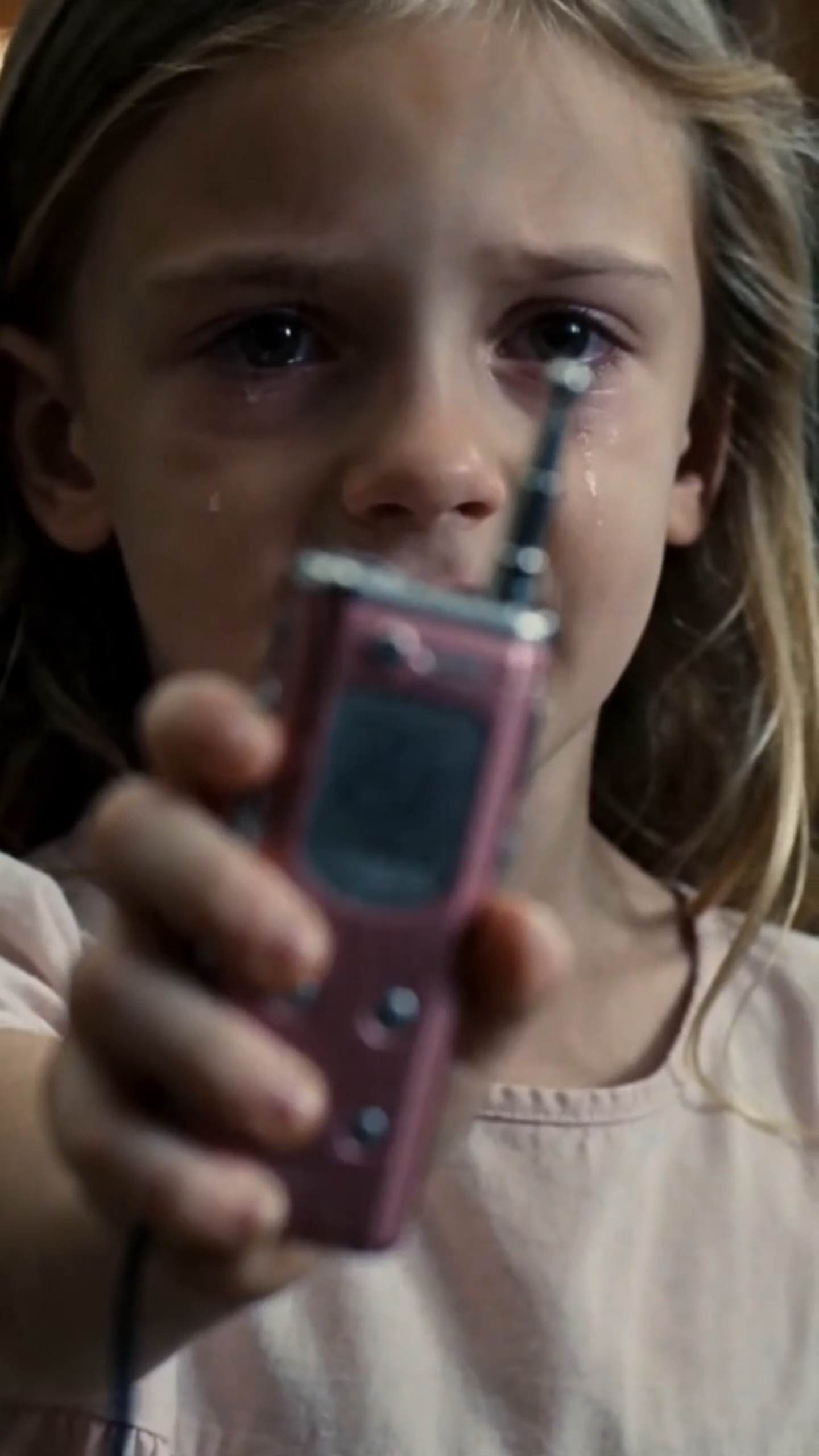
The child’s intervention was centered on a seemingly mundane object: a plastic, pink toy phone. To the court, it was a trivial toy, but to the eight-year-old, it was the repository of the truth. By reaching the judge’s bench and claiming that Mrs. Gable had merely been crying over Arthur’s cruelty, the child reframed the entire narrative. The accusation shifted directly to Clara, who had been the one to prepare the fatal tea.
The child’s testimony was not based on hearsay, but on direct, accidental surveillance from the darkness of the pantry. Hiding from Arthur Sterling’s temper, the child had utilized the toy phone’s recording function—an act of childhood ingenuity that had inadvertently captured the architects of the murder. As the judge paused, faced with a child claiming to hold the evidence of a conspiracy, the perfect, grief-stricken image Clara had curated began to dissolve. The secret buried beneath the layers of legal posturing was not just about digitalis or poison; it was about the surveillance of the adults by the one person they believed was too small to see them.
PART III: THE CROOKED MIRROR
The judge didn’t rush.
That was what frightened Clara most—the pauses where she could no longer steer the room with tears and perfect posture.
In the silence, the toy phone sat in a clear evidence bag on the table like a harmless trinket. A court officer placed it carefully in front of the bench.
Clara stared at it the way a guilty person stares at a lit match.
Across from her, Mrs. Gable sat with her hands folded, knuckles pale, eyes fixed on the judge as if willing him to see what the adults had tried so hard to hide.
The prosecutor cleared his throat. “Your Honor, we object. A child’s testimony—”
The judge raised a hand.
“Not testimony,” he said quietly. “Evidence.”
He looked down at the child. “Sweetheart, tell me what you pressed.”
The girl swallowed. Her voice trembled—but it didn’t collapse.
“I pressed the red button,” she said. “Because Julian says Arthur is… dangerous. And Clara says she’ll make him stop being angry.”
Clara’s lips parted as if she might laugh.
Then she remembered courtrooms punished arrogance. Not with shame. With consequences.
The judge nodded to the bailiff. “Play it.”
The courtroom lights seemed too bright as the audio began—thin at first, distorted by distance and the cheap plastic microphone, but unmistakable in its structure: fragments of adult speech that shouldn’t exist together in a home that claimed innocence.
A woman’s voice—calm, rehearsed.
A man’s voice—amused, impatient.
And then the clink of a cup against a saucer.
Tea. Not as a comfort.
As a decision.
The judge listened without blinking.
So did the jury.
So did the prosecutor—his face going from certainty to disorientation in a matter of seconds.
When the recording ended, the prosecutor tried to regain control with legal language, but even his words sounded hollow.
“Your Honor,” he began, “the recording is—”
“The recording,” the judge interrupted, “is the opposite of what she wants it to be.”
He turned to Clara.
“Mrs. Sterling,” he said, voice like cold steel, “you were claiming grief. You were claiming helplessness. Yet the audio captures planning.”
Clara’s composure held for one more breath.
Then it slipped.
Just enough for everyone to see fear beneath the widow’s veil.
PART IV: JULIAN’S COLLAPSE
Clara’s “refined” world depended on one thing: that no one could reach the truth without permission.
The child had reached it anyway.
The judge called for a forensic review—metadata, device handling, time stamps—anything to separate accident from fraud.
But the toy phone wasn’t the only crack.
As the officers collected statements, another detail surfaced—small, almost insulting in its obviousness.
The nanny had asked once, earlier, whether the pantry door had been left locked. Arthur had been found ill shortly after. The family had claimed it was an unfortunate oversight.
Yet the footage—audio captured by a child who didn’t even understand the stakes—showed the pantry wasn’t merely “unlocked.”
It was accessed.
Frequently.
Clara’s attorney tried to pivot: maybe the child had heard things out of context. Maybe adults spoke in the house without criminal meaning.
But the courtroom was no longer listening to meaning.
It was listening to patterns.
Then Julian Sterling was called.
He walked in like a man expecting sympathy, like the trial was an inconvenience rather than a verdict waiting to happen.
When the judge asked him to explain his recorded phrases, Julian’s smile didn’t fade immediately.
It sharpened—too confident.
Until he heard his own words repeated back to him, compressed into a thin strip of truth.
He froze when the child’s voice appeared in the audio—small, brave, pleading.
“Don’t put it in his cup,” the girl said on the recording. “You’re not making him better. You’re making him go away.”
The room shifted. The jurors sat forward as if the sentence physically pulled them.
Clara’s face went pale, finally stripped of performance.
Julian opened his mouth—then closed it again, searching for a story that didn’t exist.
The prosecutor didn’t even have to press hard after that.
“Is it true,” the prosecutor asked, “that you instructed Clara to keep the tea preparation away from Arthur’s care routine?”
Julian’s jaw worked once.
“I—” he began.
The judge leaned forward. “Answer the question.”
Julian’s eyes darted to Clara.
And for the first time, the widow looked away.
Not in grief.
In calculation failing.
Because the recording didn’t just implicate Mrs. Gable.
It implicated the ones who profited from being believed.
PART V: THE VERDICT THAT COULDN’T BE POLISHED
The judge summarized the case with the kind of clarity that ended performances.
He didn’t need to romanticize the child’s courage.
He didn’t need to attack Clara’s character.
He needed the facts to line up.
They did.
A dying man’s routine had been interrupted.
A cup of tea had been handled outside the nanny’s knowledge.
A toy phone recorded adult planning in the very moments the defense claimed the household was peaceful.
And the surviving witness—an eight-year-old—testified not from imagination, but from hiding, listening, and responding to danger.
Clara stood as if she might still negotiate the outcome with elegance.
Her attorney rose too, ready to object.
But the judge’s voice was already final.
“Mrs. Gable,” he said, “you are not guilty.”
The words struck the room like relief arriving late.
Then he turned to Clara and Julian.
“Mrs. Sterling,” he continued, “your curated story is contradicted by evidence. Your intent is reflected in what was said and done.”
Clara’s shoulders tightened. Her mouth trembled once—like a mask trying to hold.
The judge’s next words were clean and merciless.
“And you, Mr. Sterling—your involvement is established beyond reasonable doubt.”
The courtroom didn’t cheer.
It exhaled.
A jury’s verdict doesn’t feel like triumph. It feels like the end of a long nightmare.
The bailiff removed Clara with a careful, practiced grip—gentle, because the law tries to avoid spectacle.
But the child watched with steady eyes, already too tired to feel victory.
After the proceedings ended, the judge returned to the little witness—kneeling slightly so his face matched hers.
“You did the right thing,” he told her.
She didn’t smile.
“I just didn’t want Arthur to be hurt,” she said.
And in that answer was the simplest proof of all:
this wasn’t about heroism.
It was about someone finally refusing to let adults decide who gets protected.
FINAL ENDING: THE THING CLARA CAN’T TAKE BACK
In the hallway afterward, Clara tried to speak to her attorney, to demand a strategy, to pretend this was all misunderstanding.
But no one looked at her the same way anymore.
Mrs. Gable approached the child slowly, as if she feared sudden movement might shatter what had been repaired.
The nanny knelt so they were level.
“Thank you,” she whispered. “For listening.”
The girl shrugged, small and stubborn.
“I didn’t want anyone to lie about him,” she said.
Mrs. Gable’s eyes filled.
The child turned her toy phone over in her hands, evidence no longer, just a piece of plastic that had become a lifeline.
Clara’s voice echoed behind them, thinner now—less widow, more accused.
“This was supposed to be different,” Clara said.
But it wasn’t.
Because now the truth couldn’t be edited, only processed.
And the last thing the courtroom ever took from the child was her bravery.
She went home with a social worker to ensure her safety.
She sat with her fears and learned they wouldn’t always win.
And somewhere deep inside, the surveillance she’d used to survive became something gentler—
A lesson, not in violence or secrecy,
but in the quiet power of evidence and the courage to tell the truth before it’s too late.
THE END