The third time, Clare did not bring a plan.
She came to his apartment on a cold Thursday evening with wet hair and no makeup and stood in his kitchen while Ava did math homework at the table.
“I have never chosen anything important for myself,” Clare said quietly. “Not my schools. Not my friends. Not where I live. Not who I date. Not the boards I sit on. Not the man I’m supposed to marry.”
Ryan said nothing.
“I’m not asking you to save me,” she continued. “I’m asking you to stand beside me long enough for me to learn how to save myself.”
Ava looked up from her homework.
“Daddy,” she whispered, “she looks like when you don’t cry but your face does.”
Ryan’s jaw tightened.
Clare looked away, embarrassed by how close she was to breaking.
Ryan pulled out the chair across from him.
“Sit down,” he said.
They talked for three hours.
Not about money. Not about society. Not about revenge.
They talked about Ava.
“If I agree,” Ryan said, “my daughter is not a prop in your war with your mother.”
“Never.”
“She doesn’t get used.”
“She won’t.”
“She doesn’t get hurt.”
Clare swallowed. “I would rather walk back into that arranged marriage than hurt her.”
Ryan studied her for a long time.
Then Ava slid a drawing across the table.
It showed three stick figures under an umbrella.
One tall man. One small girl. One woman in a green dress.
Above them, Ava had written, family maybe.
Ryan stared at the paper.
Clare did too.
Finally, Ryan said, “This would be real. Even if it starts for practical reasons. Marriage is not a costume you put on to scare someone.”
“I know.”
“No,” he said softly. “You don’t. But you might learn.”
They were married at the county clerk’s office nine days later.
Clare wore a navy coat. Ryan wore the same charcoal suit with the crooked tie. Ava wore silver flats, carried a bouquet of grocery-store daisies, and insisted on standing between them.
When the clerk asked if anyone had rings, Ryan reached into his pocket and took out a simple gold band.
Clare blinked.
“I thought—”
“It was my grandfather’s,” he said. “Temporary, if you want.”
She looked at his hand. “What about you?”
Ava dug into her tiny purse and produced a black silicone ring.
“I picked it,” she announced. “Daddy burns pancakes, so he needs safe jewelry.”
The clerk laughed.
Ryan slid the gold band onto Clare’s finger.
Clare slid the black ring onto his.
No one cried.
But when Ava hugged Clare afterward and whispered, “Does this mean you can come to pancake day?” Clare had to look up at the ceiling until the feeling in her throat passed.
Four days later, Clare told her mother.
Eleanor received the news in her Beacon Hill sitting room beneath a portrait of Clare’s great-grandfather, a man who looked as if he had personally invented disappointment.
“I’m married,” Clare said.
Eleanor did not move.
“To Harrison?”
“No.”
Silence.
Then Eleanor set down her teacup with surgical care.
“Who is he?”
“His name is Ryan Walker.”
“What does he do?”
“He consults.”
“For whom?”
Clare hesitated.
Eleanor’s eyes sharpened.
“Oh, Clare,” she said. “What have you done?”
“I made a choice.”
“No,” Eleanor said. “You staged a tantrum with legal consequences.”
Clare flinched, but did not retreat.
“He has a daughter,” she said.
Eleanor’s expression cooled further. “A child.”
“Yes. Her name is Ava.”
“A widower with a child and no standing.” Eleanor leaned back. “How efficient of him.”
“He did not chase me.”
“Men like that don’t chase. They wait near vulnerable women and call it fate.”
Clare stood.
“I didn’t come here to ask permission.”
“No,” Eleanor said. “You came here hoping I would mistake defiance for strength.”
Clare walked to the door.
Her mother’s voice followed her.
“When this humiliates you, remember that I warned you before the entire city did.”
Clare did not look back.
But she heard every word.
And Eleanor Whitmore, who had never lost a social battle in her life, began preparing for war.
Part 2
The first punishment was silence.
Invitations stopped coming. Clare’s name disappeared from charity committees she had served on for years. Women who once kissed both her cheeks at museum lunches now smiled with their mouths closed and turned to speak to someone else.
Nobody said the word scandal.
They did not need to.
Boston’s old families had perfected the art of making exile look like scheduling conflicts.
Ryan noticed, of course.
He noticed everything.
But he never pushed Clare to talk before she was ready. He simply built ordinary days around her with a patience that felt, at times, more intimate than affection.
Every morning, Ava knocked on Clare’s door at 6:45.
At first, Clare had slept in the guest room. The arrangement was practical, respectful, and awkward in a way neither she nor Ryan acknowledged. Ava did not care.
“Breakfast meeting,” Ava would announce.
Then she would climb into Clare’s bed with a stuffed rabbit named Mr. President and present urgent matters.
“My class hamster is missing.”
“Daddy bought the wrong cereal.”
“Mrs. Patterson says I talk too much, but I think she listens too little.”
Clare, who had spent years discussing endowments and acquisitions over breakfast, found herself giving serious counsel on second-grade politics while wearing pajamas.
Ryan made coffee strong enough to survive winter.
Ava made toast that was usually burned.
Clare learned the school drop-off line, the bakery owner’s name, and how to braid hair badly enough that Ava begged Ryan to fix it.
“You’re improving,” Ryan told her one morning while redoing the braid.
“No, I’m not.”
“No,” Ava agreed. “But you try with your whole face.”
That was Ava’s gift. She saw effort and called it love.
For three months, Clare lived in a world her mother would have dismissed as small.
But it did not feel small.
It felt real.
Ryan’s apartment had no grand staircase, no formal dining room, no silver polished by someone whose name no guest remembered. But it had warmth. It had socks left near the sofa. It had Ava’s drawings taped to the refrigerator. It had Ryan standing barefoot in the kitchen at midnight, reading contracts on an old laptop while waiting for banana bread to cool because Ava had a bake sale.
Still, there were things that did not fit.
The phone calls came first.
Ryan kept his phone face down, and when it rang late at night, he stepped into the hallway or the bedroom. Clare heard fragments through walls.
“Final authorization.”
“Move the board meeting.”
“No, not Boston. Zurich first.”
“Tell Daniel I said no.”
The words were not suspicious by themselves.
The tone was.
Ryan did not sound like a man taking orders.
He sounded like a man deciding the fate of people who did.
Once, Clare woke at 2:13 a.m. and found the kitchen light on. Ryan stood by the window, phone to his ear, speaking so softly she could barely hear him.
“I don’t care what the valuation says,” he said. “If they lay off those workers before the audit clears, I’ll replace the entire executive team.”
Clare stepped back before he saw her.
The next morning, he was making dinosaur pancakes for Ava as if nothing had happened.
The second strange thing happened at a children’s hospital fundraiser.
Clare had not wanted to go. Eleanor was on the host committee. Harrison would be there. Half the room would be waiting to see whether Clare looked regretful.
Ryan said, “We can stay home.”
Ava said, “Is there cake?”
“There is always cake at adult events,” Ryan replied.
“Then we should support the children.”
So they went.
Ryan wore the same suit. Ava wore a blue dress and carried a picture she had drawn for “kids who are sick and bored.” Clare braced herself for the room’s careful cruelty.
It came.
A woman named Meredith Vale glanced at Ryan’s suit and said, “How brave of you both to come.”
Clare smiled. “Brave?”
“Well, after everything.”
Ryan put a hand lightly on Clare’s back.
Ava looked up at Meredith. “After what?”
Meredith’s face froze.
“Nothing, sweetheart.”
Ava narrowed her eyes. “Then why did you say it?”
Ryan coughed once into his fist.
Clare almost laughed.
Then a man across the room saw Ryan.
He was in his fifties, silver-haired, wearing a hospital board pin. He stopped mid-conversation. His expression changed from polite interest to something close to alarmed respect.
He crossed the room immediately.
“Mr. Walker,” he said.
Not Ryan.
Mr. Walker.
Ryan’s hand remained at Clare’s back.
“Dr. Ellis.”
“I didn’t know you were attending tonight.”
“Ava wanted cake.”
The doctor looked at Ava, and his face softened. “Then Ava has excellent judgment.”
He turned back to Ryan. “The neonatal wing opens next month. We would not have made it without—”
Ryan interrupted gently. “I’m glad the project stayed on schedule.”
Dr. Ellis stopped.
Something unspoken passed between them.
“Of course,” the doctor said. “Thank you again.”
When he left, Clare looked at Ryan.
“What project?”
Ryan’s expression stayed calm. “A funding project.”
“You fund hospital wings?”
“Sometimes.”
“With consulting money?”
He did not answer immediately.
That hesitation hurt more than a lie would have.
“Ryan.”
Ava tugged Clare’s hand. “Can I get cake now?”
The conversation died there, but it did not disappear.
Clare began noticing more.
The security guard at a downtown office building straightened when Ryan entered. A real estate executive abandoned a conversation with Harrison Grant to greet Ryan first. A woman from a venture capital firm looked at Clare with sudden curiosity after seeing Ryan beside her, as though Clare had become interesting only by proximity.
Then came the name.
Alden Group.
She heard it at a private investment dinner Ryan reluctantly attended.
Two men near the bar spoke in low voices.
“Alden delayed the announcement.”
“If Walker’s involved, no one knows until he wants them to know.”
Clare turned.
Ryan was across the room with Ava, who had fallen asleep against his side. He looked ordinary. Tired. Tender.
But the men at the bar said his name the way people said names that moved markets.
That night, after Ava was asleep, Clare stood in the kitchen while Ryan washed dishes.
“What is Alden Group?”
The plate in his hand paused for less than a second.
Less than a second, but Clare saw it.
“A technology infrastructure company,” he said.
“Do you work with them?”
“In some capacities.”
“What capacities?”
He dried the plate.
“Complicated ones.”
Clare stared at him.
“That is not an answer.”
“No,” he said. “It isn’t.”
“Are you in trouble?”
That surprised him.
He turned fully.
“No.”
“Is Ava?”
His face changed immediately. “No. Never.”
“Then why won’t you tell me what’s going on?”
Ryan leaned against the counter. For the first time since she had known him, he looked genuinely tired.
“Because once people know certain things about me, they stop seeing me clearly.”
“I’m your wife.”
“Yes,” he said quietly. “And that is why I’m trying not to lose the only part of this marriage that felt honest before the rest of the world got involved.”
Clare absorbed that.
“It doesn’t feel honest to be kept in the dark.”
Pain crossed his face.
“I know.”
“Then stop.”
“I will.”
“When?”
He looked toward Ava’s closed bedroom door.
“Soon.”
Clare laughed under her breath, but there was no humor in it.
“Soon is what powerful people say when they want patience without giving truth.”
Ryan flinched.
She regretted it, but not enough to take it back.
The distance between them began there.
Not dramatically. Not with slammed doors. It arrived in small, polite silences. Clare stopped asking questions because Ryan’s answers were careful. Ryan stopped volunteering details because Clare’s face closed before he finished speaking.
Ava noticed first.
Children always do.
At breakfast one morning, she looked between them and said, “Are you both mad or just quiet in a weird way?”
Ryan set down his coffee.
Clare looked at Ava’s worried eyes and hated herself a little.
“Grown-up things,” Clare said softly.
Ava frowned. “That’s what people say when they don’t want kids to know they’re scared.”
Ryan closed his eyes.
Clare reached across the table and took Ava’s hand.
“You’re safe,” she said. “That part is not complicated.”
Ava nodded, but she did not look convinced.
Meanwhile, Eleanor escalated.
She hired an investigator.
Clare learned it from her cousin Lydia, who called in the hushed tone people used when sharing something cruel while pretending to be concerned.
“Your mother is worried,” Lydia said.
“My mother is embarrassed.”
“She says there’s almost nothing on him before ten years ago.”
“Maybe he liked privacy.”
“Clare, men with nothing to hide don’t erase themselves.”
Clare hung up.
But the sentence stayed.
Men with nothing to hide don’t erase themselves.
That evening, Harrison appeared outside the small nonprofit office where Clare had started volunteering. She had taken the position quietly, helping with donor communications for a community housing program Ryan had recommended. It paid almost nothing. Eleanor would have called it beneath her.
Clare loved it.
Harrison stood beside a black town car, holding two coffees.
“Peace offering,” he said.
“No, thank you.”
“You look tired.”
“You look rehearsed.”
He smiled sadly. “Your mother is worried.”
“My mother sent you.”
“No. She didn’t.”
That was probably true. Harrison did not need to be sent. Men like Harrison felt entitled to rescue women from choices that excluded them.
“I’m married,” Clare said.
“I know.”
“Then stop waiting outside my office.”
His smile thinned.
“Is this really what you wanted? A single father in a walk-up apartment? School pickups? Burned toast? Being frozen out of every room you were raised to lead?”
Clare felt heat rise in her chest.
“You think leadership is being invited to the right dinners?”
“I think you were born for more than playing house with a man who won’t even tell you who he is.”
That hit too close.
Harrison saw it.
Softly, he said, “When this falls apart, call me before you call your mother.”
Clare stepped closer.
“If my life burns down, Harrison, I will warm my hands over it before I let you rebuild a cage from the ashes.”
She walked away shaking.
When she got home, Ava was in the living room building a cardboard castle. Ryan was at the table with documents spread before him. He looked up and immediately knew something was wrong.
“What happened?”
“Harrison.”
Ryan stood.
Clare held up a hand. “Don’t.”
“What did he say?”
“The same thing everyone says. Just with better tailoring.”
Ryan’s jaw tightened.
Then Clare saw the documents.
At the top of one page was the Alden Group logo.
She walked to the table.
Ryan did not move fast enough to hide it.
Her eyes scanned the page.
Board authorization. Acquisition structure. Walker controlling interest.
Her breath caught.
“Controlling interest,” she said.
Ryan was silent.
“You control Alden Group.”
“Yes.”
The word landed like a stone.
“How much of it?”
“Enough.”
“Ryan.”
He exhaled.
“All of it, through a parent company.”
Clare stared at him.
“All of it.”
“Yes.”
“What parent company?”
“Walker Alden Technologies.”
She stepped back.
The name had been in newspapers. Not often, because the company avoided press, but enough. A private technology infrastructure empire. Data centers. Energy systems. Government contracts. Global acquisitions. The founder was famously invisible.
“No,” she whispered.
Ryan said nothing.
Clare’s voice dropped. “You?”
“Yes.”
“How rich are you?”
He looked away.
That was answer enough.
Clare laughed once, but it broke at the end.
“My mother thinks you married me for money.”
“I know.”
“And you let me live with that?”
“No,” he said. “I let them live with that.”
“I lived with it too.”
His face changed.
She saw the regret, but she was too hurt to soften.
“For months,” she said, “I defended you without knowing whether I was a fool.”
“You were never a fool.”
“You don’t get to decide that for me.”
Ava appeared in the hallway, holding Mr. President.
“Daddy?”
Ryan turned instantly.
“It’s okay, bug.”
“No, it’s not,” Ava said.
Clare’s anger faltered.
The child looked terrified.
Clare crouched.
“Ava, sweetheart—”
“Are you leaving?”
The question destroyed the room.
Clare could not answer fast enough.
Ava’s eyes filled.
“Mommy left and didn’t come back because she was sick,” she said. “People can leave for other reasons too.”
Ryan went pale.
Clare crossed the room and gathered Ava into her arms.
“I am angry,” she whispered. “I am confused. But I am not walking out this door tonight.”
Ava clung to her.
Over Ava’s shoulder, Clare looked at Ryan.
“This conversation is not over.”
“I know,” he said.
But before they could finish it, Eleanor sent the invitation.
The Whitmore Spring Gala.
Two hundred guests.
Formal attire.
Addressed to Miss Clare Whitmore.
No mention of Ryan.
No mention of Ava.
Just one final public stage.
Ryan read the invitation at the kitchen table and set it down.
“She wants you to come alone,” he said.
“She wants the room to see me come alone.”
“Then don’t give her what she wants.”
Clare looked at him sharply.
“You think I should bring you?”
“I think you should decide what truth you want to stand in.”
“That sounds like billionaire advice.”
He accepted the blow.
“Yes,” he said quietly. “Maybe it is.”
Clare looked at Ava, who was pretending not to listen from the couch.
Then she looked back at Ryan.
“You will not use your money to humiliate my mother.”
“No.”
“You will not turn this into revenge.”
“No.”
“You will tell the truth.”
Ryan nodded.
“All of it?” she asked.
He held her gaze.
“All of it.”
Part 3
The Whitmore Spring Gala was held at the Harrow Club on Commonwealth Avenue, where the ceilings were high, the candles were real, and the portraits on the walls looked offended by anyone who had earned money after 1920.
Eleanor had chosen the venue carefully.
The room itself was a weapon.
It told every guest who belonged before a single word was spoken.
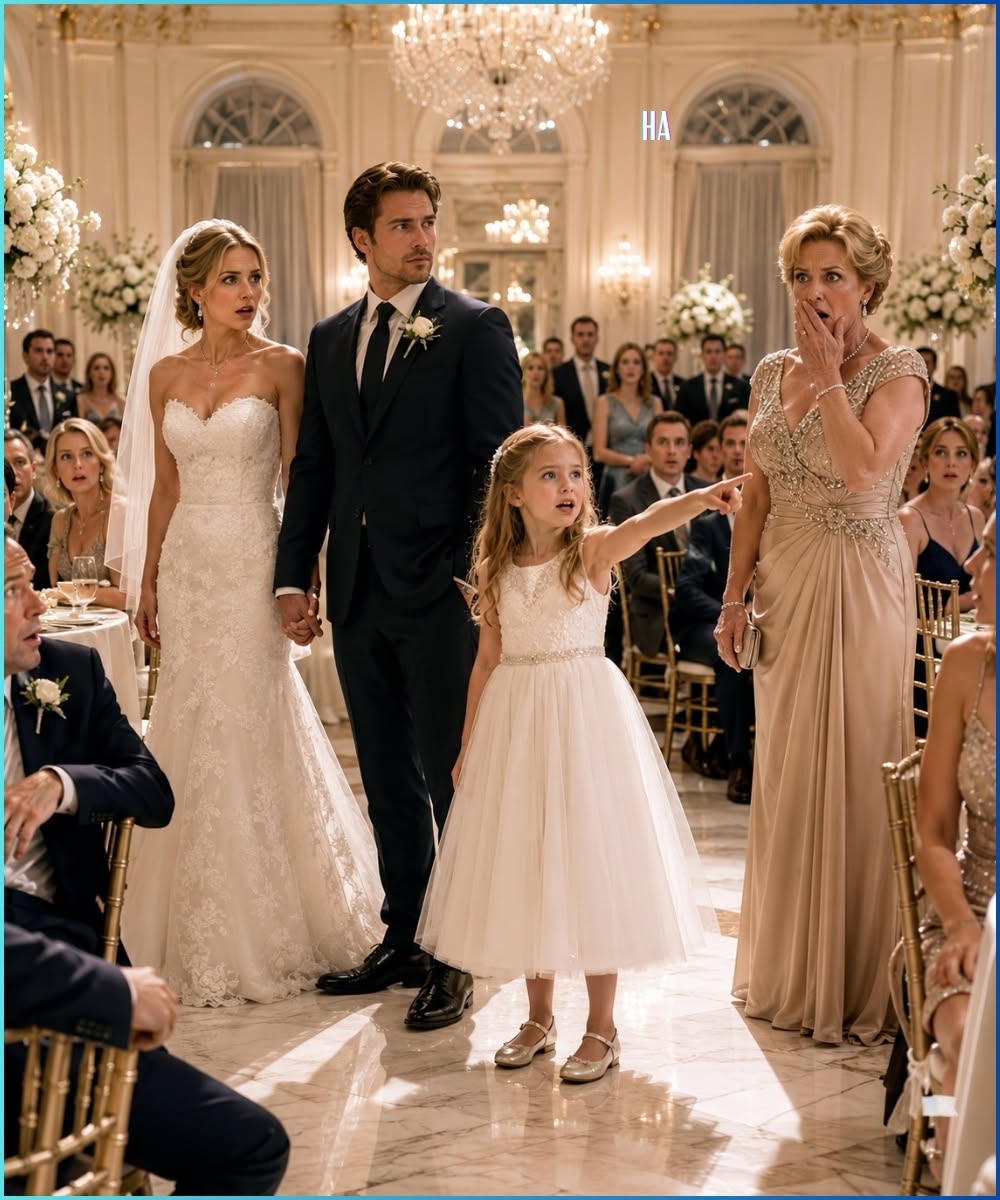
Clare arrived ten minutes late with Ryan on one side and Ava on the other.
The silence at the entrance was immediate.
Then came the whispers.
A child?
She brought the child?
Is that him?
That’s the husband?
Ryan kept his hand steady around Ava’s.
Ava looked up at the chandeliers. “This place has too many forks.”
Clare almost smiled.
“It does.”
“Rich people eat weird.”
Ryan murmured, “Ava.”
“What? You said honesty matters.”
Clare did smile then.
Across the room, Eleanor turned.
For a moment, even she could not hide her reaction. Her gaze moved from Clare’s wedding ring to Ryan’s worn suit to Ava’s silver flats.
Then her face rearranged itself into welcome.
“My darling,” she said, approaching with open arms.
Clare allowed the embrace.
Eleanor kissed the air beside her cheek.
“You brought guests.”
“I brought my family.”
The word family landed between them like a challenge.
Eleanor looked at Ryan.
“Mr. Walker.”
“Mrs. Whitmore.”
Then Eleanor looked down at Ava.
“And you must be…”
“Ava Walker,” the child said. “I’m six and a half. I don’t like mushrooms. I know when adults are fake nice.”
Clare coughed.
Ryan closed his eyes.
For the first time in Clare’s life, Eleanor Whitmore had no immediate response.
Finally, she said, “How charming.”
Ava leaned toward Clare and whispered, not quietly enough, “Fake nice.”
The dinner began with the usual rituals. Wine poured. Silverware lifted. Laughter rose in controlled waves. Guests approached Clare with careful smiles and sharper eyes.
Meredith Vale said, “Clare, you look well.”
“I am.”
“How… domestic life suits you.”
“It does,” Clare said. “You should try being kind sometime. It might suit you too.”
Meredith blinked and drifted away.
Harrison arrived during the first course.
He wore a tuxedo and the wounded dignity of a man who believed reality had made a clerical error.
“Clare,” he said.
“Harrison.”
His gaze shifted to Ryan. “Walker.”
Ryan nodded.
Then Harrison looked at Ava.
“Hello there.”
Ava stared at him.
“You’re the man Grandma Eleanor wanted Clare to marry.”
Harrison’s face stiffened.
Clare’s fork stopped halfway to her plate.
Ava continued, “That would have been bad. You look like you tell waiters your soup is the wrong temperature.”
A man at the next table choked on his wine.
Ryan leaned down. “Ava Grace.”
“What?”
“Inside thought.”
“But I said it outside already.”
Clare pressed her napkin to her mouth.
Harrison walked away.
For a while, Clare thought the evening might remain survivable.
Then Eleanor rose.
She moved to the small platform near the front of the ballroom with a glass of champagne in her hand. The room quieted immediately. Eleanor had trained rooms for decades. They knew when to obey.
“My dear friends,” she began, “thank you for being here tonight.”
Her voice was warm, elegant, wounded in exactly the right proportion.
She spoke of legacy. Family. Judgment. The responsibility of mothers to protect daughters even when daughters mistake protection for control.
Clare felt Ryan shift beside her.
Ava looked between the adults.
Then Eleanor turned toward their table.
“My daughter has made a choice this year,” she said. “A surprising choice. A painful choice. One I have struggled to understand not because I do not love her, but because I do.”
The room went very still.
Clare’s hands curled in her lap.
Ryan whispered, “You don’t have to sit through this.”
“Yes,” Clare said. “I do.”
Eleanor continued.
“I have spent months trying to learn who Ryan Walker is. What I found troubled me. Or rather, what I could not find troubled me. No clear history. No meaningful standing. No transparent source of income. A man with a child, a rented apartment, and sudden access to one of Boston’s oldest families.”
Someone murmured.
Ava’s face changed.
Clare saw it and felt fury rise so sharply she almost stood.
But Eleanor was not done.
“I say this not to shame my daughter,” Eleanor said, shaming her perfectly. “I say it because love sometimes requires us to name uncomfortable truths. Clare deserves more than a man who saw an opportunity and took it.”
That was when Ava stood on her chair.
The entire ballroom turned.
Ryan reached for her. “Ava, sit down.”
“No.”
Her small voice shook, but it carried.
“My daddy didn’t take anything.”
Eleanor froze.
Ava’s chin trembled.
“He didn’t even want to marry Clare at first because he said people with broken hearts should be careful with other people. But Clare was sad, and Daddy understands sad, and I liked her because she listened when I talked about my mom.”
The room had gone silent in a way no toast had ever achieved.
Clare’s eyes burned.
Ava looked directly at Eleanor.
“And you’re being mean. Not fancy mean. Just regular mean with better earrings.”
A sound moved through the room. Not laughter exactly. Shock trying to disguise itself.
Eleanor’s face went white.
Ryan lifted Ava gently from the chair.
“That’s enough, bug.”
“No,” Clare said softly.
Ryan looked at her.
Clare stood.
Her legs felt unsteady, but her voice did not.
“My daughter is right.”
Ava’s eyes widened at the word.
My daughter.
Ryan looked at Clare as if something in him had stopped breathing.
Clare turned to the room.
“My mother taught me many things. How to enter a room. How to read a room. How to survive a room that wants you smaller than you are.” She looked at Eleanor. “But she also taught me fear and called it wisdom. She taught me obedience and called it love. She chose a husband for me and called it my future.”
Eleanor’s lips parted.
Clare continued.
“I married Ryan Walker because I needed one decision in my life that belonged only to me. I did not marry him because he had money. I did not marry him because he had status. In fact, everyone in this room has spent months assuring me he had neither.”
A few guests looked down.
Clare’s voice sharpened.
“And what did you do with that belief? You mocked him. You dismissed his daughter. You treated kindness as poverty and privacy as guilt.”
Ryan stood slowly beside her.
He did not look angry.
That almost made him more powerful.
“Clare,” he said quietly, “may I?”
She looked at him.
This was the moment.
Not his reveal. Not the room. Not Eleanor.
Trust.
Clare nodded.
Ryan stepped forward.
“I owe my wife an apology first,” he said.
The first words startled the room.
Not a defense. Not a boast.
An apology.
“I was not transparent with her. I told myself I was protecting a private life. Some of that was true. Some of it was fear. I lost my wife, Ava’s mother, to cancer four years ago. After that, I removed myself from almost every public part of the company I built because I did not want my daughter raised as a headline, a target, or an inheritance with pigtails.”
Ava leaned into Clare’s side.
Ryan’s voice stayed even.
“I wanted a life where the woman at the diner treated Ava kindly because Ava was a child, not because of my last name. I wanted neighbors who argued with me about parking spaces without knowing I could buy the block. I wanted one place in the world where nobody recalculated my worth while looking me in the eye.”
Several people in the room had stopped pretending not to react.
Ryan turned slightly toward Eleanor.
“Mrs. Whitmore said I had no meaningful standing. That is not accurate.”
He paused.
“My name is Ryan Walker. I am the founder and controlling shareholder of Walker Alden Technologies. Alden Group is one of our subsidiaries. Our infrastructure, energy, and data systems operate in twenty-three countries. The company’s current private valuation is just under forty-two billion dollars.”
A fork hit a plate.
Somewhere near the back, a woman whispered, “Oh my God.”
Harrison Grant went perfectly still.
Eleanor did not blink.
Ryan continued, “I did not say that to impress anyone. I have spent years paying lawyers to avoid rooms exactly like this one. I’m saying it because silence stopped being privacy the moment my wife and my daughter were made to pay for it.”
Clare felt every eye in the room turn toward Ryan, then toward her, then toward Eleanor, recalculating.
It was ugly to watch.
People who had ignored Ryan all evening suddenly sat straighter. Men who had smirked at his suit now looked at the frayed cuff as if it might be a philosophical statement. Women who had pitied Clare five minutes earlier now seemed desperate to remember whether they had said anything unforgivable.
Ava tugged Clare’s sleeve.
“Is Daddy in trouble?”
Clare bent and whispered, “No, sweetheart.”
“Are we rich?”
Clare looked at Ryan.
Ryan looked at Ava.
Then he sighed.
“Yes, bug.”
Ava frowned. “Then why do you still make bad pancakes?”
A laugh broke through the room before anyone could stop it.
Ryan’s mouth twitched. “Money can’t fix everything.”
That laugh changed the air.
Not enough to make the room kind.
But enough to make it human.
Eleanor stepped down from the platform.
Every guest watched her walk toward Ryan and Clare.
For the first time Clare could remember, her mother looked older. Not weak. Never weak. But shaken in a way no lighting could soften.
“Clare,” Eleanor said.
Clare waited.
Eleanor looked at Ryan.
“Mr. Walker,” she said, and the title sounded different now. Stripped of insult. “I assessed you incorrectly.”
Ryan said nothing.
Eleanor swallowed.
“I did so publicly. Therefore, I will correct it publicly.”
She turned to the room.
“My remarks were wrong. My assumptions were wrong. My treatment of my daughter’s family was wrong.”
The word family seemed to cost her something.
But she said it.
Then she looked at Ava.
“And I owe you an apology most of all.”
Ava studied her.
“Because you were regular mean?”
Eleanor closed her eyes briefly.
“Yes,” she said. “Because I was regular mean.”
Ava nodded. “Okay. But you have to do better.”
Eleanor looked at Clare, and for once there was no strategy in her face.
“I know,” she said.
The gala did not recover.
Events like that never do. They fracture into stories people tell for years, each version adjusted to make the teller look wiser than they were.
Harrison left without saying goodbye.
Meredith Vale tried to approach Clare twice and lost her nerve both times.
Dr. Ellis from the hospital board came to shake Ryan’s hand, then bent to thank Ava for the drawing she had sent the children’s wing months before. Ava brightened and told him she was considering becoming “a doctor, an artist, or a person who names dogs.”
By ten o’clock, guests began leaving in elegant clusters.
Eleanor stood near the door, receiving goodbyes with the expression of a woman watching her own kingdom continue to stand while realizing she had mistaken the building for the people inside.
Clare found her near the coatroom.
For a moment, neither of them spoke.
Then Eleanor said, “I thought I was protecting you.”
“I know.”
“I was wrong.”
“Yes.”
The honesty of it hurt them both.
Eleanor’s eyes moved toward Ava, who was showing Ryan a loose tooth with great urgency.
“She called you her daughter,” Eleanor said.
Clare’s throat tightened.
“Yes.”
“Did you mean it?”
Clare looked at the little girl, at Ryan kneeling in his old suit, listening with grave attention to a dental crisis worth billions less than anything else he had handled that week and infinitely more important.
“Yes,” Clare said. “I did.”
Eleanor nodded slowly.
“I don’t know how to be part of that.”
“No,” Clare said. “You don’t.”
Her mother flinched.
Clare softened, but only slightly.
“But you can learn. If you stop trying to manage it.”
Eleanor looked at her daughter for a long time.
“You sound different.”
“I am different.”
“No,” Eleanor said quietly. “I think perhaps you always sounded this way. I simply spoke over you.”
Clare did not forgive her in that moment.
Life was not that simple.
But something opened.
Small. Fragile. Real.
In the car home, Ava fell asleep almost immediately, her head in Clare’s lap and her feet against Ryan’s thigh.
Boston moved past the windows in streaks of gold and black.
For several blocks, neither adult spoke.
Finally, Clare said, “Forty-two billion dollars.”
Ryan looked out the window. “Just under.”
She stared at him.
“That is not the humble correction you think it is.”
He nodded once. “Fair.”
She looked down at Ava, brushing hair from the child’s cheek.
“You should have told me.”
“Yes.”
“I understand why you didn’t.”
He turned to her.
“But understanding does not erase it,” she said.
“I know.”
“I need truth from now on. Not managed truth. Not partial truth. Not truth when a ballroom forces your hand.”
Ryan’s voice was low. “You’ll have it.”
“And I will not become an accessory to your empire.”
“No.”
“I mean it. I spent my life as part of my mother’s architecture. I won’t become part of yours.”
Ryan looked at her fully.
“You were never part of my architecture, Clare.”
“What was I?”
He glanced at Ava, then back at her.
“The first person in years who walked into my ordinary life and made me afraid to lose it.”
Clare’s anger did not vanish.
But it changed shape.
At home, Ryan carried Ava upstairs. Clare followed and watched from the doorway as he removed the silver flats, tucked the blanket under Ava’s chin, and placed Mr. President beside her.
Ava opened one eye.
“Clare?”
“I’m here.”
“Are you still mad?”
Clare sat on the edge of the bed.
“A little.”
“At Daddy?”
“Yes.”
“At me?”
“Never.”
Ava nodded sleepily. “Good. Because I think you’re my best grown-up friend who is a girl.”
Clare laughed softly.
“That is a very specific honor.”
“It’s important.”
“I know.”
Ava drifted back to sleep.
In the kitchen, Ryan made coffee out of habit. Clare sat at the table, still in her gala dress, still wearing the ring he had given her at the courthouse.
For a while, they talked.
Really talked.
Ryan told her about Emily, Ava’s mother, who had loved terrible reality television, hated roses, and made excellent pancakes. He told her about building Walker Alden in a borrowed office with three engineers and a folding table. He told her about the first billion, and how it had felt less like triumph than proof that people would never look at him normally again. He told her about Emily’s diagnosis, the hospitals, the reporters, the investors who sent condolences and asked about succession planning in the same breath.
He told Clare about disappearing.
Not legally. Not entirely.
Just enough.
Enough to raise Ava without cameras. Enough to sit in a diner and drink bad coffee in peace. Enough to meet a woman in a rainstorm and be offered nothing but her tired, honest self.
Clare told him about Eleanor. Not the public version. The private one. The mother who inspected birthday dresses. The mother who corrected laughter. The mother who could turn disappointment into weather and make everyone in the house breathe it.
“I thought marrying you was rebellion,” Clare said.
Ryan listened.
“But it became something else.”
“What?”
She looked toward Ava’s room.
“A doorway.”
The next year did not become a fairy tale.
Fairy tales end too early.
Clare and Ryan stayed married, but not because a clerk had stamped a document or a ballroom had learned a lesson. They stayed because they chose the marriage after the truth, not before it.
Clare moved out of the guest room in July.
Ryan did not ask. He simply found her standing in the hallway with a pillow and stepped aside.
Ava discovered the change the next morning and said, “Finally. The hallway was getting emotionally crowded.”
Clare built her own work piece by piece. She took a full-time role with the community housing nonprofit, then launched a foundation funded partly by her own inheritance after she legally separated her finances from Eleanor’s control. Ryan offered money once.
Clare said, “Not yet.”
He respected that.
When she asked later, it was not as a wife asking a billionaire.
It was as a director presenting a plan.
Ryan read all forty pages, made three notes, and approved the grant without changing a word of her vision.
Eleanor came slowly.
At first, she sent gifts too expensive for a child. Ava thanked her for a designer coat, then asked if she could exchange it for art supplies and soccer cleats.
Eleanor was horrified.
Then she did it.
The first time Eleanor attended Ava’s school play, she arrived in pearls and sat stiffly in the auditorium while twenty children dressed as vegetables sang about nutrition.
Ava played a carrot.
She forgot her line, waved at Clare, and shouted, “I’m doing my best!”
The room laughed.
Eleanor did too.
It startled her.
Afterward, Ava ran into her arms without warning. Eleanor froze for one painful second, then held her.
Clare saw her mother close her eyes.
Not managing.
Not arranging.
Just feeling.
Harrison married someone else within eighteen months, a woman from New York who smiled like a locked door. Meredith Vale joined Clare’s housing board after making a donation large enough to count as both apology and strategy. Clare accepted the money and ignored the strategy.
And Ryan?
Ryan still made terrible pancakes.
He still wore old suits when he could get away with it.
He still took late calls, but now he took them in the kitchen, where Clare could hear every word if she wanted to. More often than not, she didn’t need to. Truth, once given freely, did not demand constant surveillance.
One Sunday morning, nearly two years after the gala, Clare stood in the hardware store where she had first met Ryan and watched Ava build another tiny house out of paint stirrers.
This one had four stick figures in front.
Ryan. Clare. Ava.
And Eleanor, wearing what appeared to be enormous earrings.
Clare laughed. “Is that Grandma?”
Ava nodded. “She’s still learning, but she’s better.”
Ryan came up behind Clare and handed her coffee.
“Terrible evening?” he asked.
She looked at him, at the man she had married to defy her mother, the billionaire who had hidden inside an ordinary life, the father who had taught her that love was not architecture at all.
It was shelter.
“No,” Clare said, leaning into him as Ava taped a crooked paper roof into place. “Not anymore.”
THE END